 FlashBoards Learn
- Learn
- Post-Production & VFX
- Stock Footage
Post-Production & VFX · Film language
Stock Footage
Also called: library footage, B-roll footage, archive footage
Stock footage is pre-shot material licensed from a library, such as skylines, crowds, planes, weather or old newsreels, and cut into a film instead of being shot again. It buys scale, geography and period for a fraction of a unit's cost. It only works if the audience never notices the seam.
- What it does
- Supplies shots the production can't or won't film: aerials, distant cities, weather, historical events.
- Use it when
- The shot is generic, expensive to stage and short on screen: establishing views, transitions, cutaways.
- Watch out
- Mismatched frame rate, grain, color and light direction give a library clip away instantly.
- Try this prompt
Wide aerial establishing shot of a fictional harbor town at dawn, low mist, 35mm film grain, muted teal-amber grade
What is stock footage?
Stock footage is any clip shot once, stored in a library and licensed to other productions. The catalog is generic on purpose: skylines, traffic, crowds, airliners, waves, storms, wildlife and historical newsreel. An editor cuts it in where a new shot would cost more than it adds.
Royalty-free clips carry one fee for broad reuse; rights-managed clips are priced by use: territory, media, duration, exclusivity. Either way you license a use, not ownership. Stock is one of the oldest tools of post-production: chosen in the edit room, not planned on set.
Library shots: stock inside the studio
A library shot is the studio-era name for the same thing: a clip pulled from a vault or film library rather than shot for the picture. Studios reused establishing views, battle scenes, trains and planes across many productions.
The best-known modern case is the theatrical ending of Blade Runner (1982): the drive through green mountains was cut from unused aerial footage shot for The Shining (1980). Someone else's camera, repurposed by the edit. Today "library footage" and "stock footage" mean the same thing.
Why do filmmakers use stock footage?
Scale and geography. A helicopter over a city or a plane landing abroad can replace a day of second unit work and tell the audience where they are, the job of an establishing shot.
Period. Newsreel anchors a story in its year. Used as a historical record rather than scenery, it becomes archival footage, a different job with a different effect. Forrest Gump (1994) pushed this furthest by compositing its lead into real footage of presidents.
Impossible shots. Volcanoes, rocket launches, wildlife behavior that took a crew months to catch.
Transitions. Time-of-day changes, weather, traffic under a voice-over.
How to cut stock footage in without the seam
The audience forgives a generic image, not a clip that looks like another film. Match these:
- Frame rate. A 29.97 or 25 fps clip in a 23.976 timeline stutters. Filter the library by frame rate first.
- Resolution. Buy the largest master. Upscaled 1080p holds on a static wide and falls apart on a push.
- Light direction. If your scene's sun is low from frame left, an aerial lit from overhead breaks continuity even after grading.
- Lens perspective. A 300mm skyline against 24mm street coverage reads as a different place.
- Texture. Stock is usually clean digital. Add matching film grain and grade the clip into your look.
Clearances. Confirm the license covers your distribution, recognizable people have releases, and logos and artworks are cleared. Cut with the watermarked comp; license the master before picture lock.
Stock footage vs. B-roll (and archival footage)
B-roll names a function: secondary footage cut over or between the main track, such as an interview. Stock footage names a source: material someone else shot and licenses. A stock street can serve as B-roll under a narrator, but most B-roll is shot by the production's own crew.
Archival footage is also a source, but its value is authenticity: the viewer should know it is real and old. Stock footage succeeds when nobody asks where it came from.
Stock Footage in motion
1 clipsThese loops show stock footage in motion, where a still frame can't: watch how the effect plays out over a few seconds.
Stock Footage stills
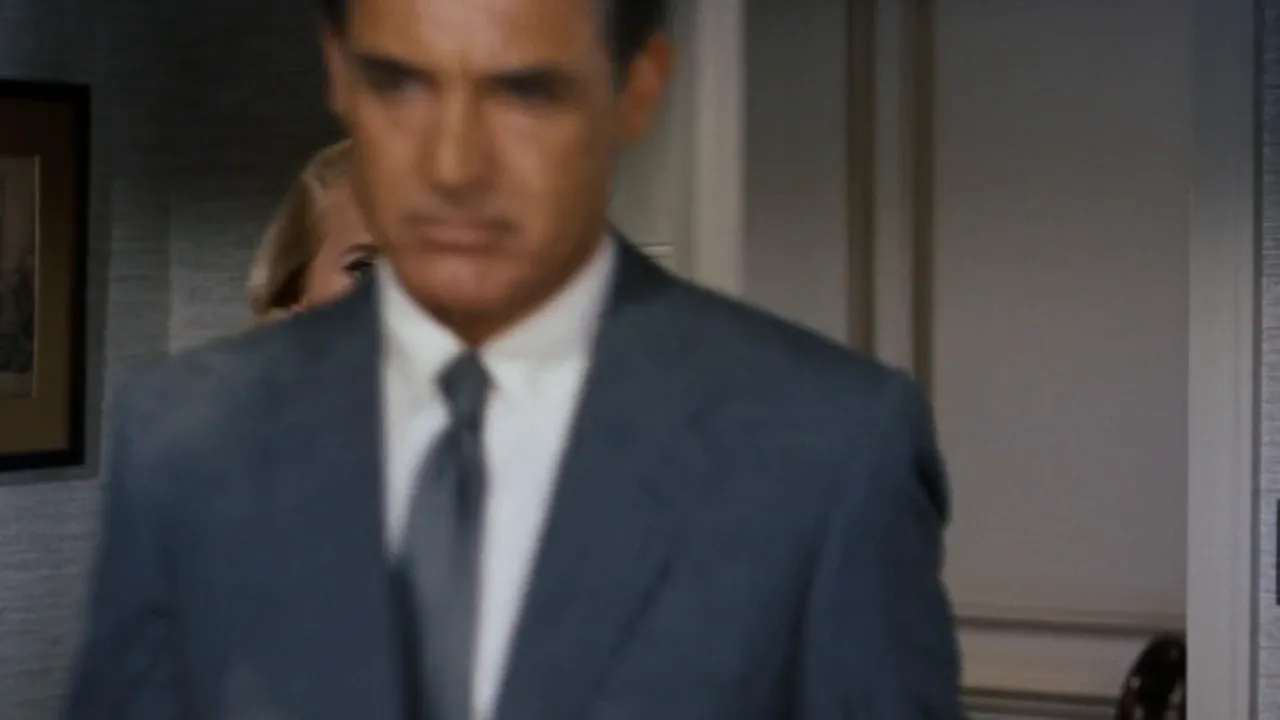
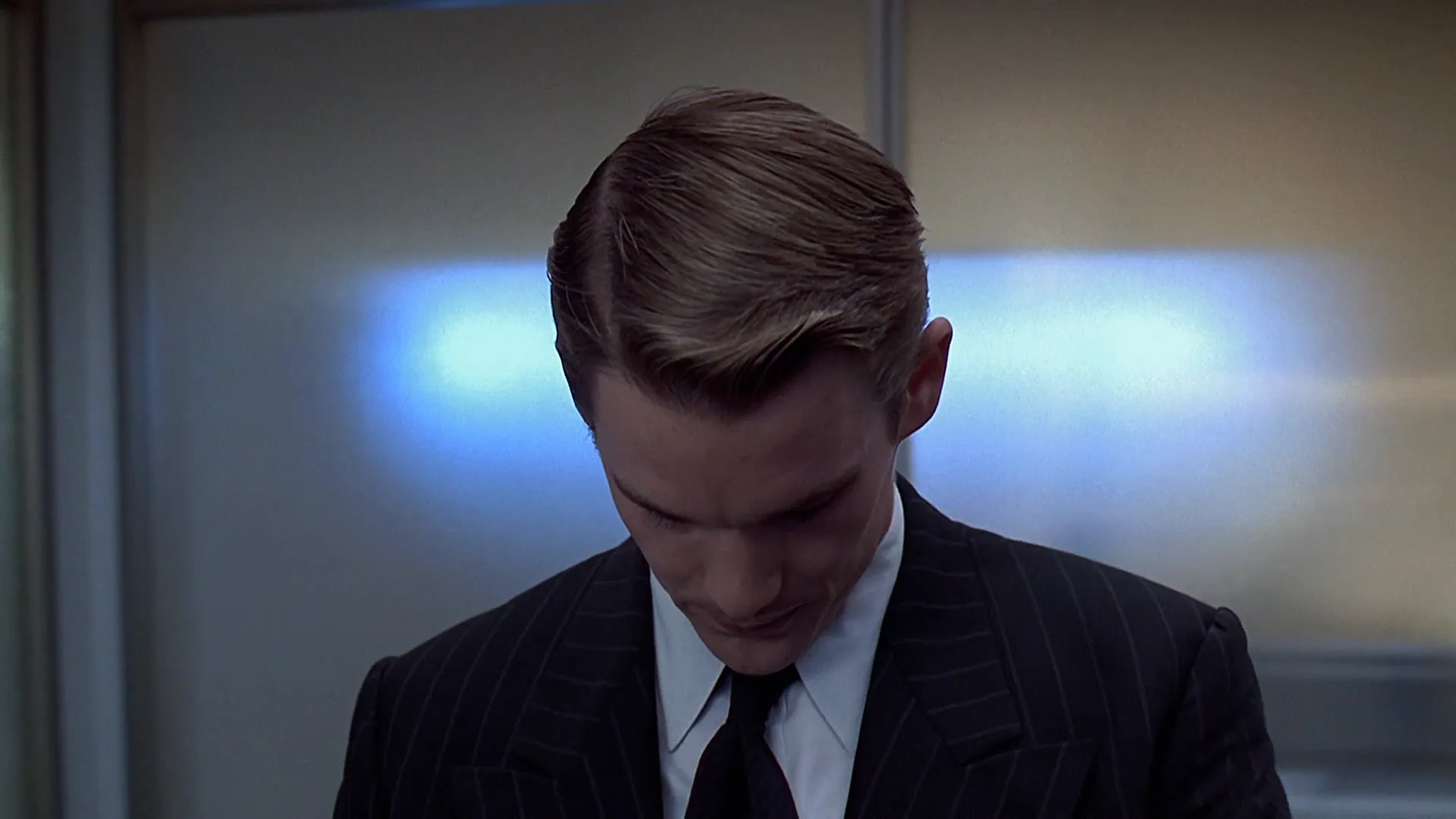
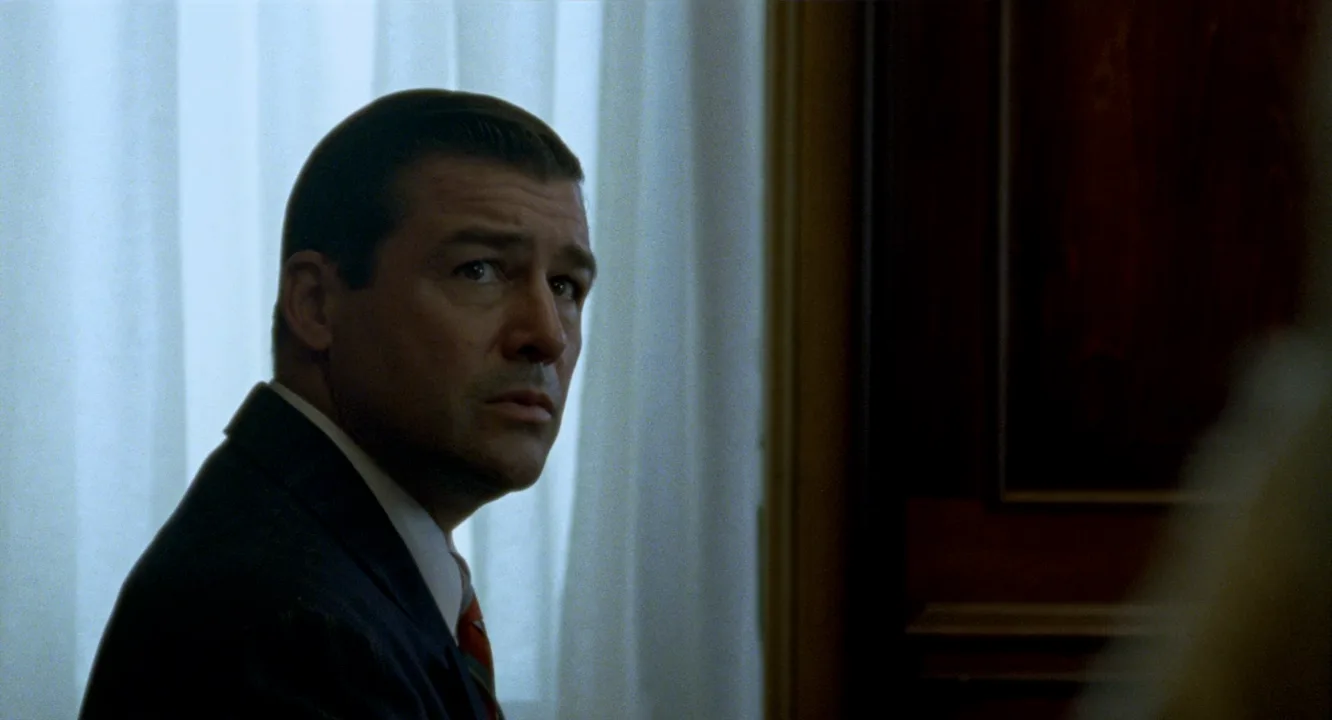
5 framesWhere a shot came from never shows in a frame; its look does, and that is what a library clip must match. Study the palette, contrast and texture of the coverage a stock insert gets cut against.
How to create a stock footage with AI
4 promptsAI can generate the generic shot you would otherwise license, already matched to your film's sun direction, lens and grain. Pin your hero frames on a FlashBoards board and compare library-style takes beside them before they reach the edit. The fourth prompt re-shoots a real film shot from a text description alone, and the original plays next to the result so you can compare.
Wide aerial establishing shot of a fictional small harbor town at dawn, seen from 150 meters high, red-roofed houses stacked on a hillside, a stone breakwater and three fishing boats in the bay, low mist on the water, sun low from frame left, 35mm lens look, fine 35mm film grain, muted teal-and-amber grade, plain unlettered buildings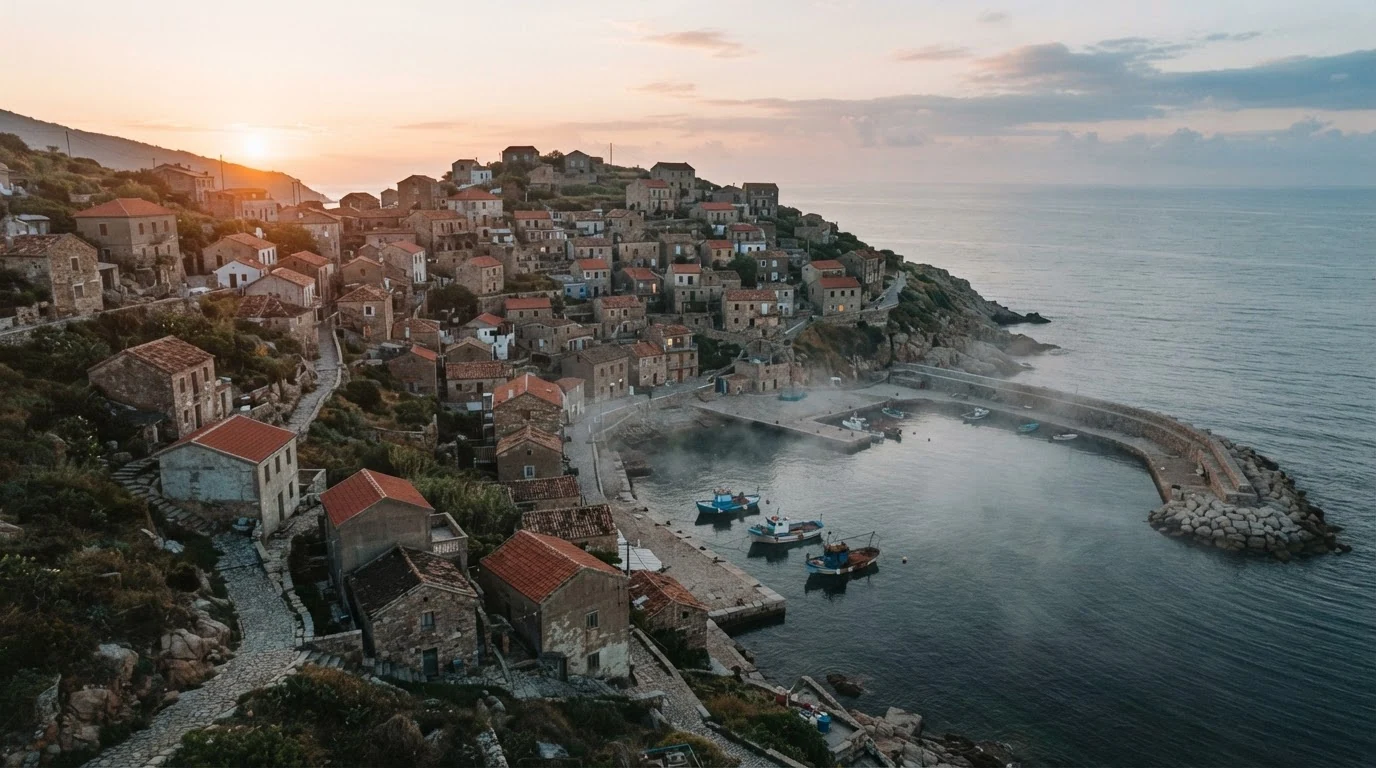
"Aerial establishing shot" and "150 meters high" set job and scale. "Sun low from frame left" and the grade are continuity words copied from your scene. "Plain unlettered buildings" keeps invented signage out.
Open FlashBoardsLibrary-style crowd shot of a busy crosswalk in a fictional rainy city at dusk, 200mm telephoto compression stacking dozens of anonymous pedestrians with dark umbrellas, in the foreground a tall man in his fifties with a gray beard, a mustard raincoat and a flat cap, wet asphalt reflecting red traffic lights, soft background blur, subtle film grain, cool blue grade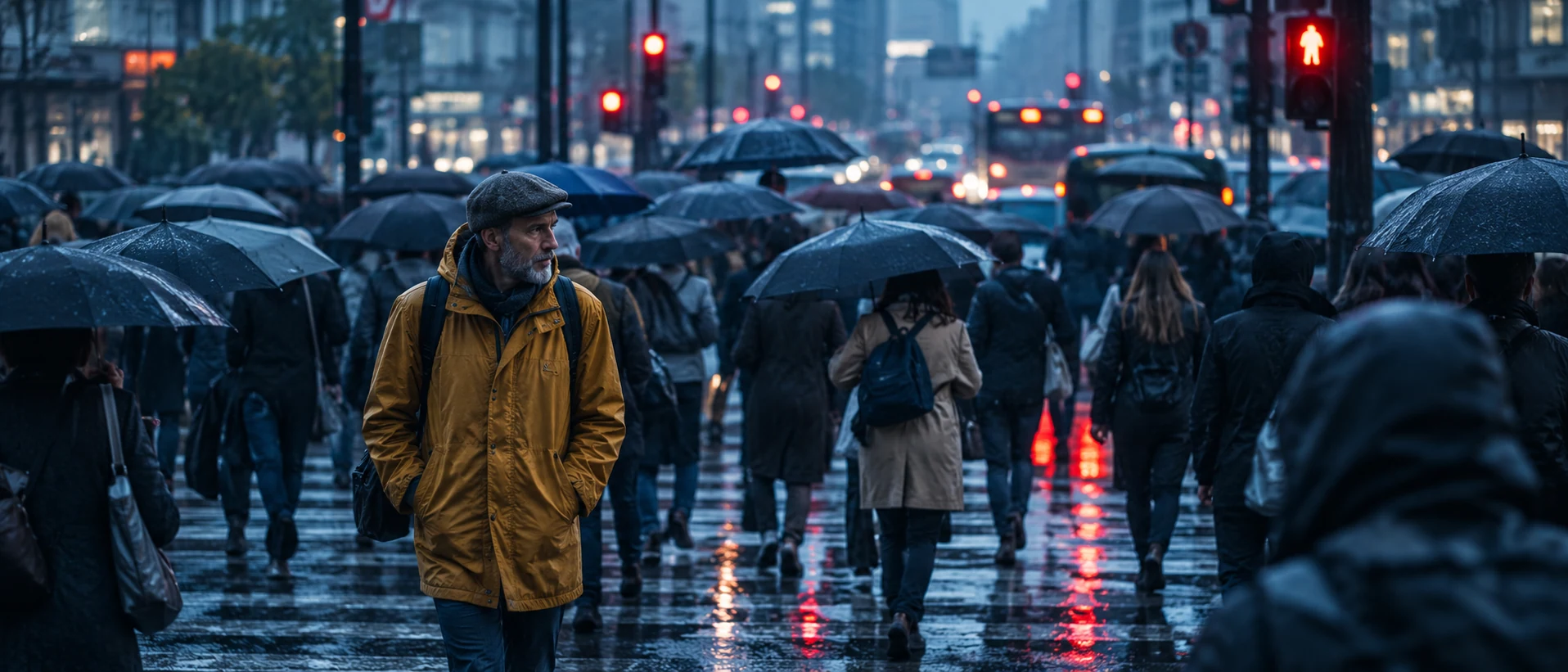
A second classic library shot. "200mm telephoto compression" gives the packed-crowd look libraries sell; one described foreground figure focuses the eye and keeps the people fictional.
Open FlashBoards{
"output": "Full-screen live-action aerial establishing shot, one continuous shot from its very first frame, over a fictional small harbor town at dawn: red-roofed stone houses stacked on the hillside at left, a curved stone breakwater at right, three small fishing boats in the bay below the quay, low mist on the water, sun low at frame left, fine 35mm film grain, muted teal-and-amber grade.",
"shots": [
{
"shot": 1,
"camera": "drone at 150 meters, slow, steady aerial glide forward over the bay toward the hillside houses, constant speed, same height, same downward angle, one smooth one-way move for the whole shot",
"action": [
"BEGINNING: alive from the first frame, low mist is already drifting across the water from left to right and the three fishing boats are already moving away from the quay",
"THEN: the three boats head slowly toward the open sea at right, past the end of the breakwater, each leaving a thin white wake",
"THEN: warm low sunlight from frame left spreads across the red roofs as the camera draws nearer the town",
"END: the camera is still gliding forward at the same speed and height, the boats small beyond the breakwater at right, the mist thinning over the bay"
],
"dialogue": [],
"voice": "silence: nobody speaks in this shot, no voice at all"
}
],
"sound": {
"ambience": "soft wind, gentle water lapping against the breakwater stones, the distant low putter of the boats' engines",
"speech": "no words in this video; the only sounds are wind, water and the boats' engines",
"never_spoken": "no narration and no voice-over: the descriptions, performance notes and step words of this prompt are never spoken aloud",
"music": "a film score under the scene, always below the voices: calm, airy strings with a slow, warm swell",
"subtitles": "none"
}
}Mist and boats already move in the BEGINNING step, so the clip is alive from frame one. "Constant speed, same height" gives the smooth one-way move editors want, and every object named is already in the start frame.
Open FlashBoards{
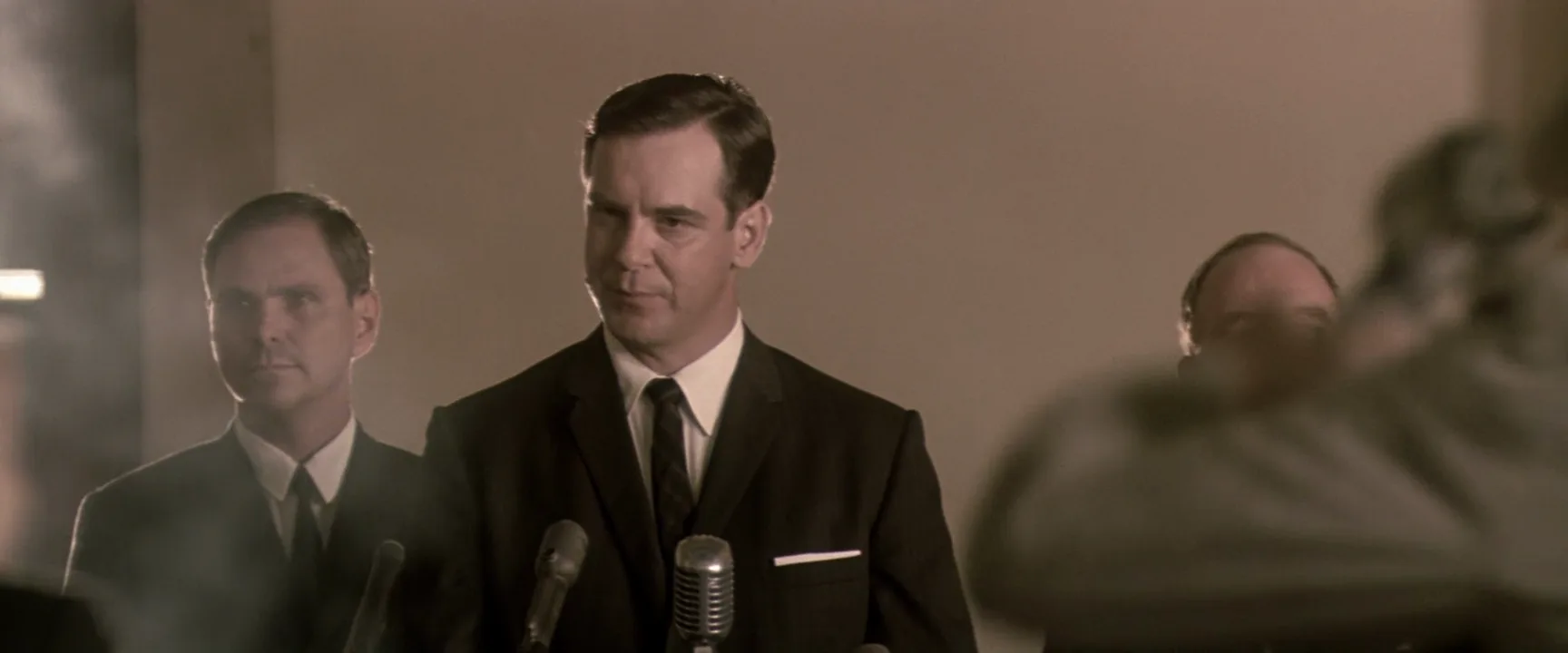
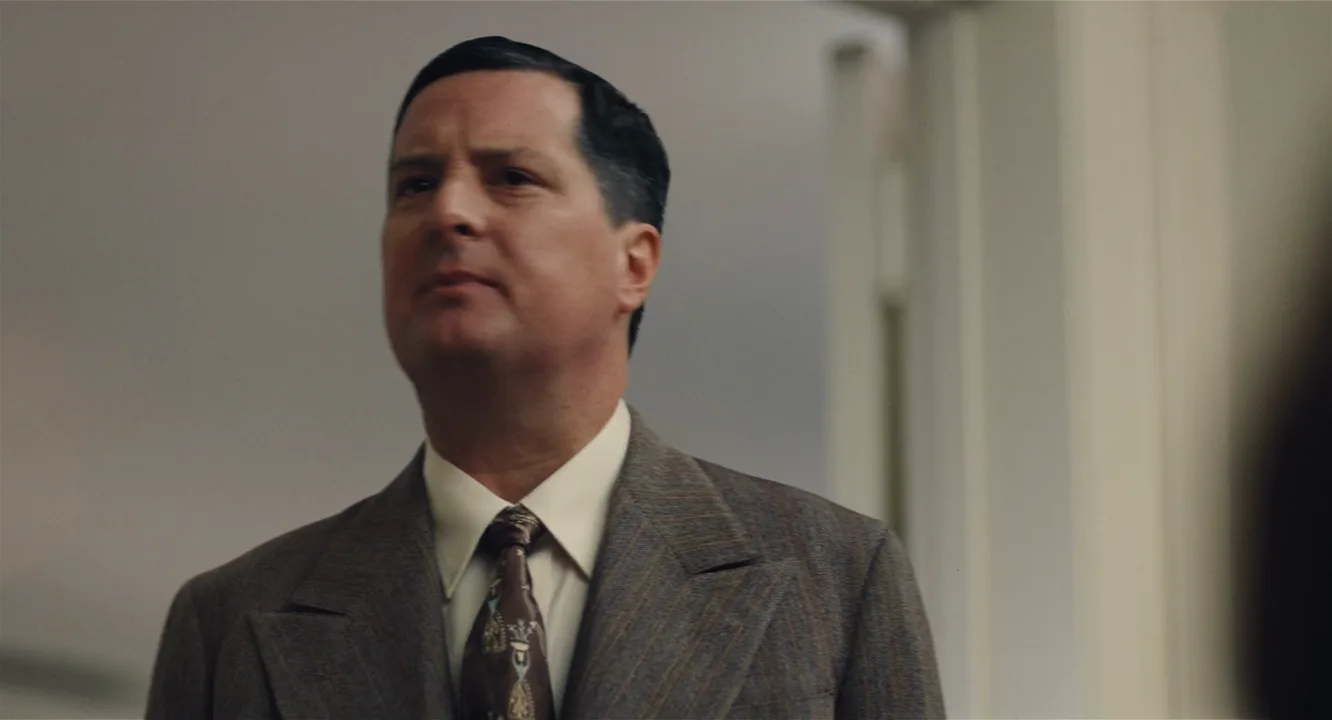
"output": "Full-screen live-action 1960s newsreel-style press conference re-created in JFK (1991), one continuous static shot from its very first frame. Warm sepia-beige grade, soft flat front light on a pale beige wall, visible film grain, slightly faded contrast so it matches archival 16mm news footage.",
"characters": {
"S1": {
"name": "FBI Spokesman, played by Ron Jackson",
"look": "man in his thirties at centre frame, dark slicked-back hair, black suit, white shirt, thin dark tie, white pocket square, standing behind a cluster of old chrome microphones",
"voice": "level, official, slightly clipped press-statement voice"
},
"S2": {
"name": "FBI agent",
"look": "younger man at left third, one step behind S1, short hair, dark suit and tie",
"voice": "silent"
},
"S3": {
"name": "FBI agent",
"look": "older balding man at right third, dark suit and tie, heavy face",
"voice": "silent"
}
},
"shots": [
{
"shot": 1,
"camera": "static medium-wide at chest height, normal lens, locked off; the corpus label is static; out-of-focus heads of reporters in fedoras occupy the right edge of the foreground",
"action": [
"BEGINNING: alive from the first frame, S1 at centre already reading his statement, eyes on the room ahead, both hands low out of frame behind the microphones; S2 at left stands still, gaze toward S1; S3 at right stands still, chin slightly raised, gaze forward past camera",
"THEN: S1 glances down at his notes and back up to the room, lips moving steadily; cigarette smoke drifts slowly up from lower left across S2",
"THEN: a blurred reporter's fedora in the right foreground bobs and leans toward the camera, partly covering S3; S2 and S3 stay still, no nod",
"THEN: S1 lifts his chin, turns his head slightly to screen left and then back to centre while speaking",
"END: S1 still speaking toward the room, S2 and S3 motionless, the foreground reporters' hats shift at the right edge"
],
"dialogue": [
{
"speaker": "S1",
"on_screen": true,
"when": "from the first frame",
"delivery": "formal press statement",
"line": "<d>[English] Gentlemen, this afternoon the FBI released David W. Ferrie of New Orleans.</d>"
},
{
"speaker": "S1",
"on_screen": true,
"when": "right after the first line, continuing to the end",
"delivery": "even, bureaucratic, unhurried",
"line": "<d>[English] After extensive questioning and a thorough background check, the Bureau found no evidence that Mr. Ferrie knew Lee Harvey Oswald, or has had any connection with the assassination of President Kennedy.</d>"
}
]
}
],
"sound": {
"ambience": "crowded room tone, camera shutters clicking, reporters shifting, faint murmur",
"speech": "exactly these spoken phrases, each said once, in this order",
"never_spoken": "no narration and no voice-over: the descriptions, performance notes and step words of this prompt are never spoken aloud",
"music": "a film score under the scene, always below the voices: low uneasy strings with a slow muffled drum pulse",
"subtitles": "none"
}
}Remakes the staged FBI press conference from JFK (1991), keeping its locked-off framing, three suited men behind microphones, sepia newsreel grade and the spokesman's exact statement.
The look line asks for faded 16mm newsreel grain, the same trick JFK used to pass a staged scene off as archive. The spokesman's lines come verbatim from the film, and the foreground hats sell the crowded-room feel.
Open FlashBoardsCommon mistakes
- Models default to a glossy stock-photo look. Name your film's grain, grade and weather.
- Light drifts between takes: repeat sun position and time of day in every prompt.
- Cities fill with gibberish signs. Ask for "plain unlettered shopfronts".
- Aerials without stated motion become a slow zoom on the still; give the camera a direction and the scene something that moves.
Keep the reference frames, prompts and every generated take side by side — images and video in one canvas.
FAQ
5 questionsWhat is stock footage in film?
Stock footage is video shot by someone else, stored in a library and licensed for reuse. Filmmakers cut it in for shots that are generic, expensive or impossible to film themselves, such as aerial city views, weather, wildlife or historical events, paying for permission instead of sending a crew.
What is the difference between archival footage and stock footage?
Both are pre-existing material with different jobs. Archival footage is valued as a record: the audience should recognize real, dated images like newsreels or home movies. Stock footage is a substitute: a skyline or storm that blends in unnoticed. The same newsreel can be either, depending on use.
Is stock footage the same as B-roll?
No. B-roll is a function: supporting shots cut over the main footage, such as an interview. Stock footage is a source: material licensed from a library. Much B-roll is shot by the production's own crew, and libraries label clips "B-roll" because that is their most common use.
What is a library shot?
A library shot is an existing clip taken from a studio vault or film library instead of being shot for the production, the studio-era name for stock footage. The theatrical ending of Blade Runner famously reused unused aerial footage originally shot for The Shining.
Can I use stock footage in a feature film?
Yes, if the license covers it. Check that the terms allow your distribution channels and territories, confirm releases for recognizable people and clearances for logos and artwork, and license the full-resolution master before picture lock so the final edit uses the real file.
Related terms
4- B-RollCamera Shots
B-roll is secondary footage — details, locations, actions, atmosphere — shot to be cut over or between the main material (the A-roll, such as an interview or dialogue), hiding edits and illustrating what is being said.
- Archival FootageEditing
Archival footage is previously shot material — newsreels, home movies, TV broadcasts — cut into a new film as historical evidence, texture or counterpoint, usually keeping the look of its original medium.
- Establishing ShotCamera Shots
An establishing shot opens a scene or sequence by showing where — and often when — it takes place, typically a wide view of a building, street, city or landscape before the film cuts closer to the characters.
- Post-ProductionPost-Production & VFX
Post-production is everything after the shoot that turns footage into a finished film: editing, sound design and mix, music, VFX, color grading, titles and delivery masters.
Further reading
Walter Murch, In the Blink of an Eye (Silman-James Press). Steven Ascher and Edward Pincus, The Filmmaker's Handbook (Plume).