 FlashBoards Learn
Genres · Film language
Mockumentary
Also called: mock documentary, fake documentary, docu-comedy
A mockumentary is fiction staged as a documentary: invented characters give interviews to camera, a handheld crew seems to catch moments as they happen, and captions and archive clips sell the illusion. It is usually played for comedy, because the fake-real camera shows the gap between how people describe themselves and how they actually behave.
- What it does
- Borrows documentary credibility to make scripted or improvised fiction feel caught, not performed.
- Use it when
- The comedy or satire depends on self-importance, lies to camera, or people who don't know how they look.
- Watch out
- Too polished a look breaks the illusion. Keep the camera slightly late and the light a little flat.
- Try this prompt
Documentary interview frame, fictional small-town bowling-league secretary in a wood-paneled office, looking just off-camera, handheld 35mm, flat window light
What is a mockumentary?
A mockumentary (also called a mock documentary, fake documentary or docu-comedy) uses the grammar of nonfiction to tell an invented story: sit-down interviews, observational coverage, on-screen titles, narration and archive material, all built around characters and staged events.
Woody Allen's Take the Money and Run (1969) and Zelig (1983) laid the groundwork. Rob Reiner's This Is Spinal Tap (1984) made it a comedy staple. Christopher Guest followed with the largely improvised Waiting for Guffman (1996), Best in Show (2000) and A Mighty Wind (2003). On TV, The Office and Parks and Recreation made it the default look for workplace comedy. It is a mode more than a genre, and mixes freely with the other film genres.
Why do filmmakers make mockumentaries?
The camera becomes a character. Everyone knows they are being filmed, so they perform. A character brags in an interview, fails in the next scene, and the cut between the two is the joke. A silent glance into the lens gives the audience an aside, the mockumentary's quiet way of breaking the fourth wall.
It borrows authority. Documentary style reads as evidence, which makes it sharp for satire. Borat (2006) put a scripted character among real people who didn't know the premise. The mode isn't only comic: Peter Watkins's The War Game (1965) staged a nuclear attack on Britain as reportage.
What makes the mockumentary style?
- The interview. A talking head framed off-center, eyeline just past the lens, with a name caption at the bottom of frame.
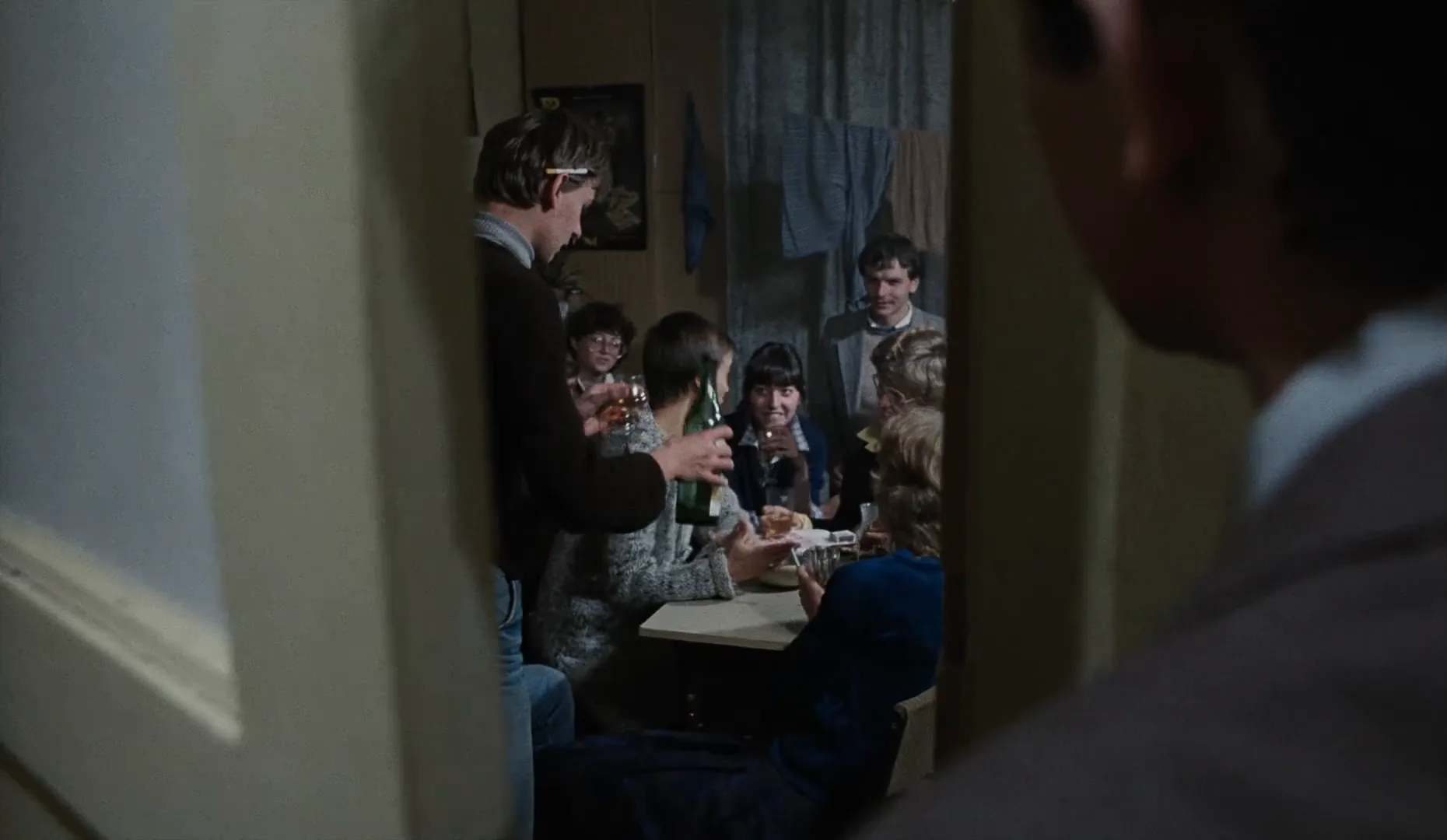
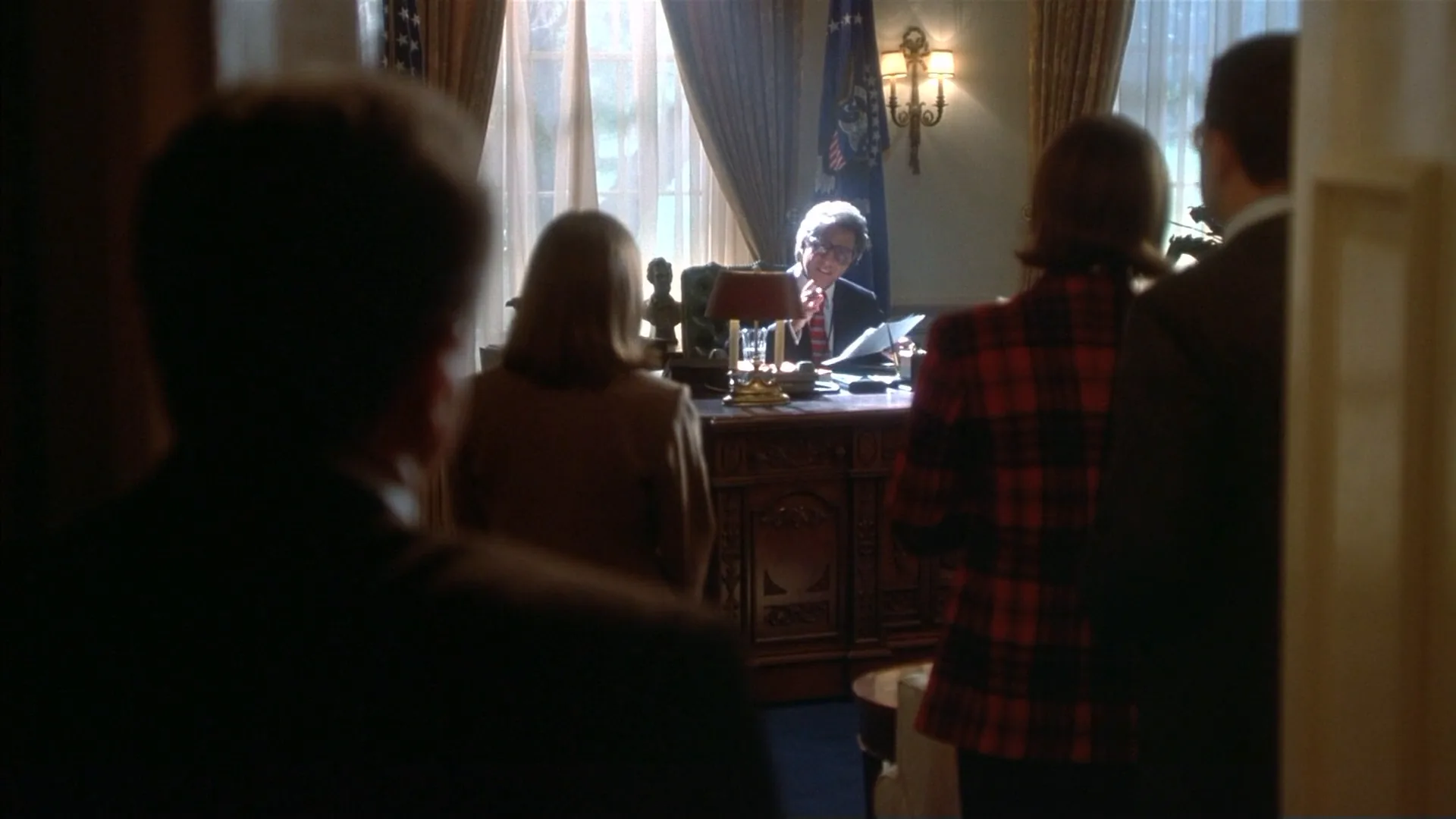
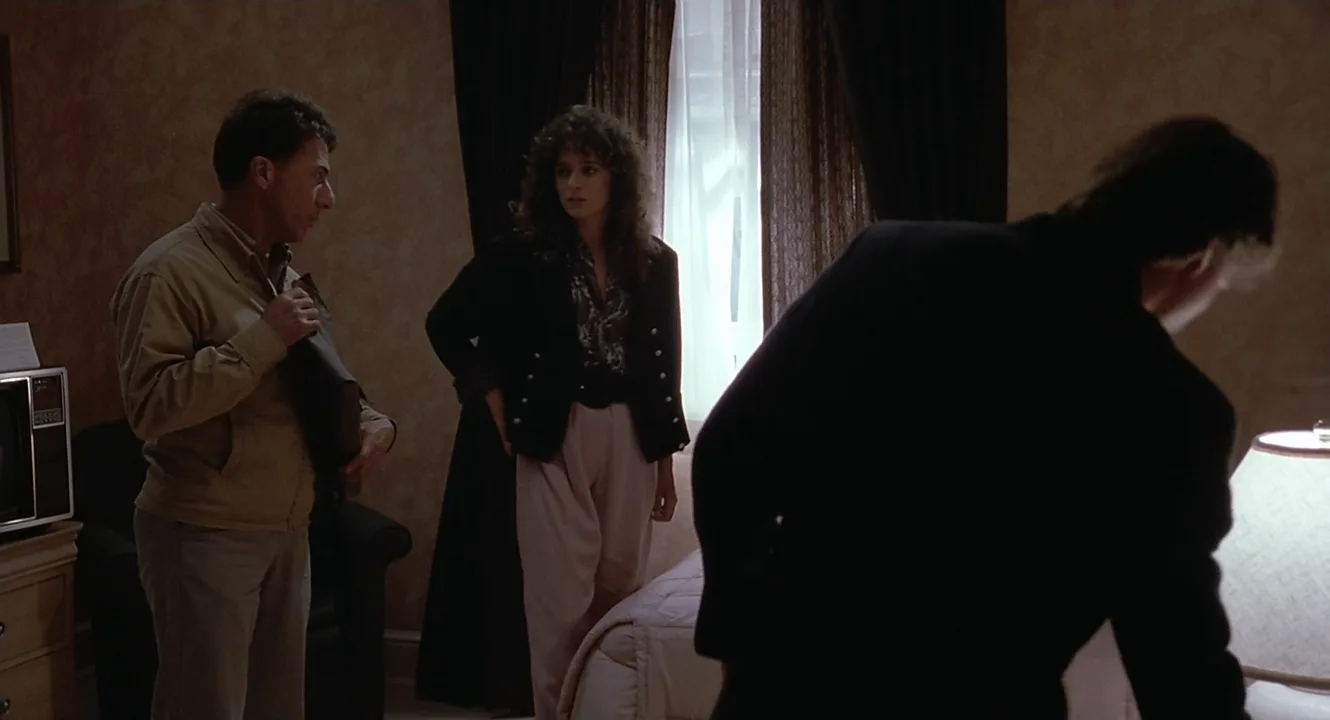
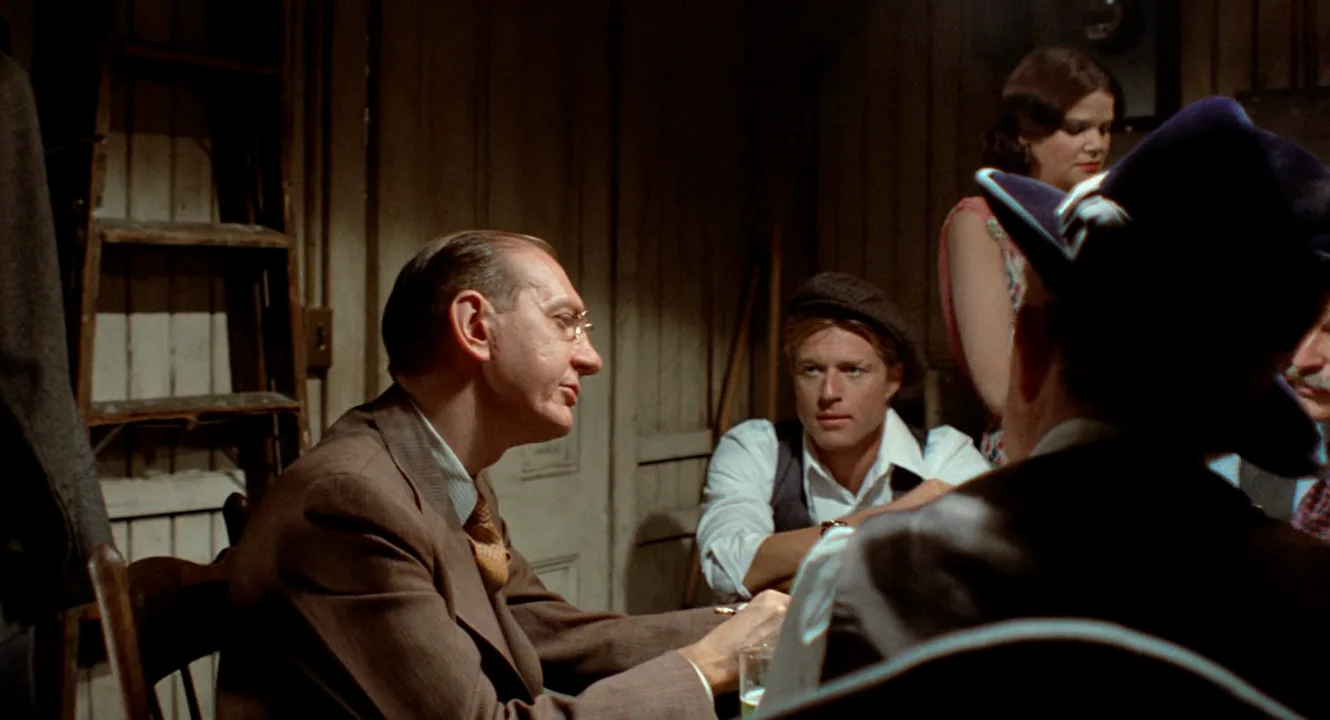
- Observational coverage. A handheld shot that seems unable to predict the action: late reframes, pans to whoever speaks, views through doorways and past shoulders.
- The snap zoom. A fast crash zoom onto a reaction the crew wasn't meant to see.
- The look to camera. A deadpan glance into the lens that makes the viewer an accomplice.
- Improvisation. Scenes shot from an outline, so overlaps and pauses sound unrehearsed.
How to shoot a mockumentary
Interviews. Seat the subject a third of the way across frame, looking at an interviewer who sits beside the lens at eye height. Use a medium close-up on a 35–50mm at f/2.8–f/4, so the location stays readable, because the background carries the joke. Key from a window or one soft source at 45°, practicals on.
Observational scenes. Shoulder-mount a 24–70mm zoom and let the operator find the action instead of hitting marks. Light broadly from above or through windows so actors can go anywhere.
Performance and edit. Actors underplay and never acknowledge the joke. Cut from the claim in the interview to the contradiction in the footage, and hold on awkward silences.
Mockumentary vs. cinéma vérité
Cinéma vérité is a real documentary method. In Chronicle of a Summer (1961), Jean Rouch and Edgar Morin filmed real people with lightweight sync-sound cameras and openly provoked events. A mockumentary copies that look, but everything in front of the lens is invented. Vérité uses the camera to find the truth; mockumentary uses our trust in that camera to tell a funny lie.
It also differs from found footage like The Blair Witch Project (1999), which poses as raw recordings by the characters. A mockumentary poses as a finished, edited film by an outside crew.
Mockumentary examples in film
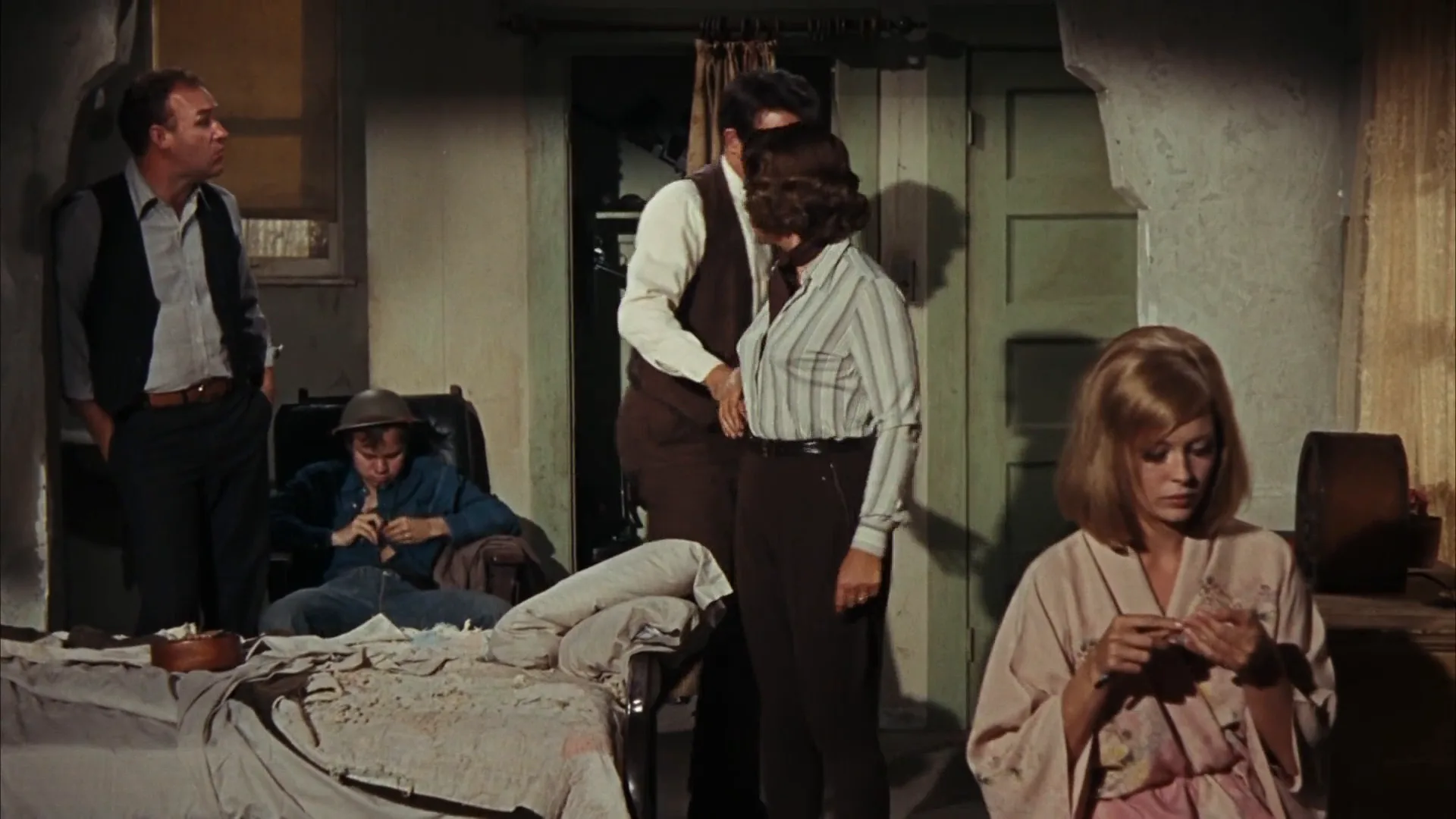
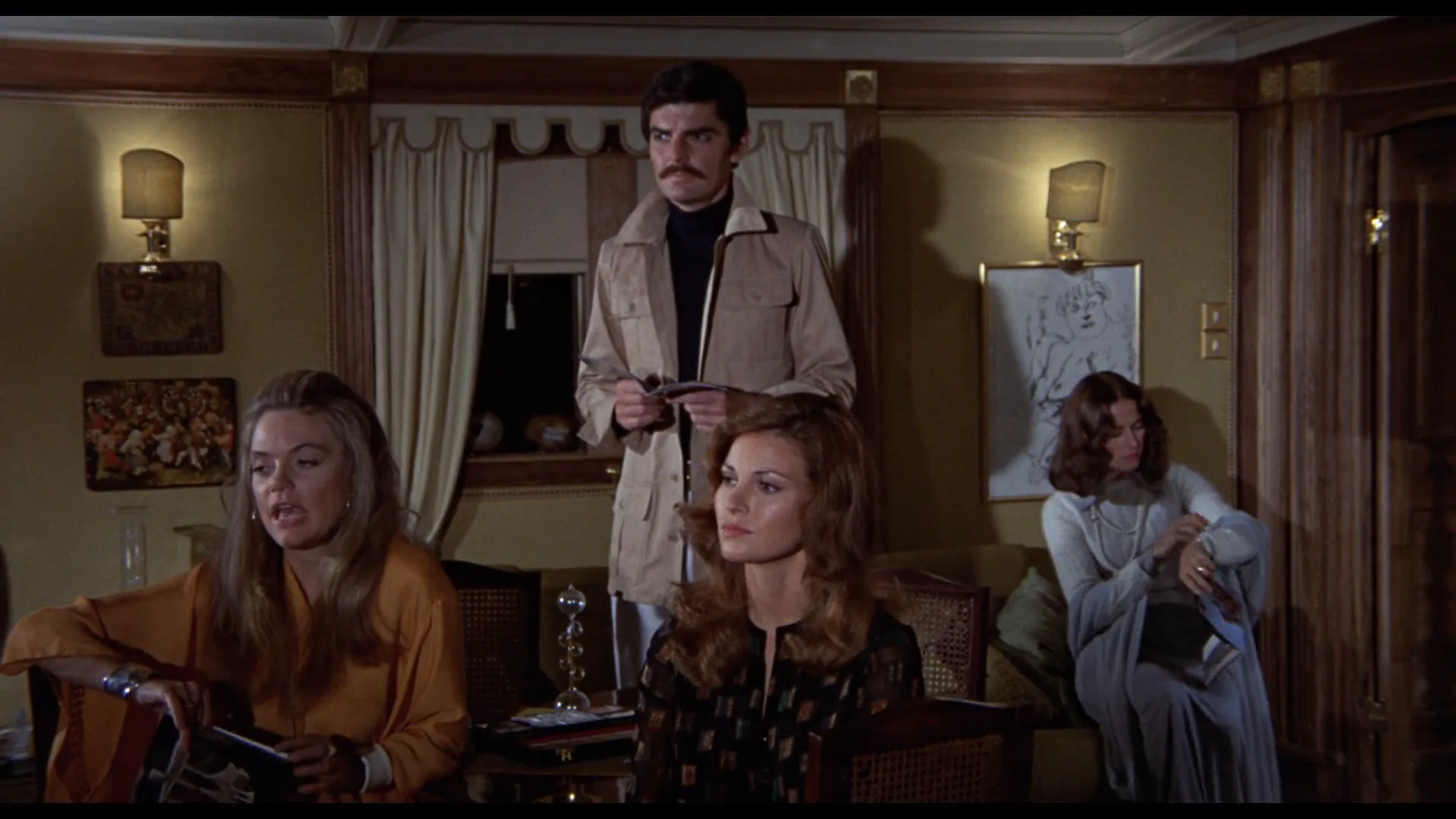
6 framesNone of these frames is from a mockumentary. They are fiction scenes shot from where a documentary crew would stand: eye level, at a doorway or the edge of a room, with people partly blocking the lens.
How to create a mockumentary with AI
4 promptsImage models default to a polished movie look, so prompt the documentary camera instead: ordinary lens, off-lens eyeline, flat light, late reactions. Keep takes and reference frames on one FlashBoards board. The fourth prompt re-shoots a real film shot from a text description alone, and the original plays next to the result so you can compare.
Documentary interview frame, medium close-up at eye level, 35mm lens. A fictional man in his late 50s with round wire glasses, a gray walrus mustache, a bald crown and a pale-blue polo shirt with a bowling-league patch sits left of center in a small wood-paneled office, looking just off-camera to the right at an unseen interviewer, earnest and proud, holding a small dented gold bowling trophy on his lap. Trophy shelves behind him. Flat soft daylight from a window on the left, desk lamp on, background readable.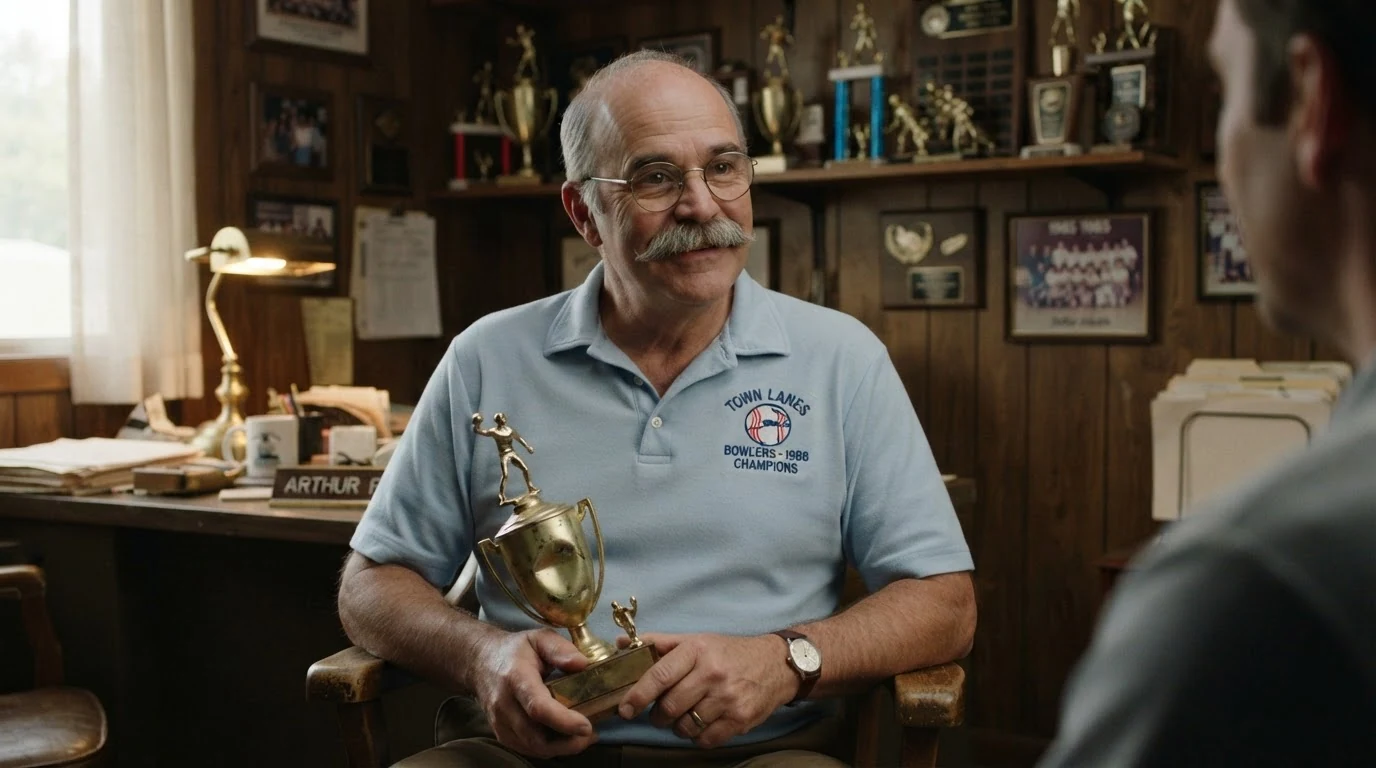
"Looking just off-camera to the right at an unseen interviewer" sets the talking-head eyeline. "Flat soft daylight" and "background readable" replace a glossy portrait with available light, and the trophy shelf puts the joke in the set.
Open FlashBoardsHandheld fly-on-the-wall documentary frame shot through a half-open doorway into a community-hall kitchen, 28mm lens at eye level, slightly tilted. The blurred edge of a white door frame fills the left side. A fictional woman in her 40s with a tight auburn bun, an oversized red cardigan and glasses on a beaded chain freezes mid-bite of a sheet cake labeled RAFFLE and glances straight into the lens. Fluorescent overhead light, faint green cast, soft video grain.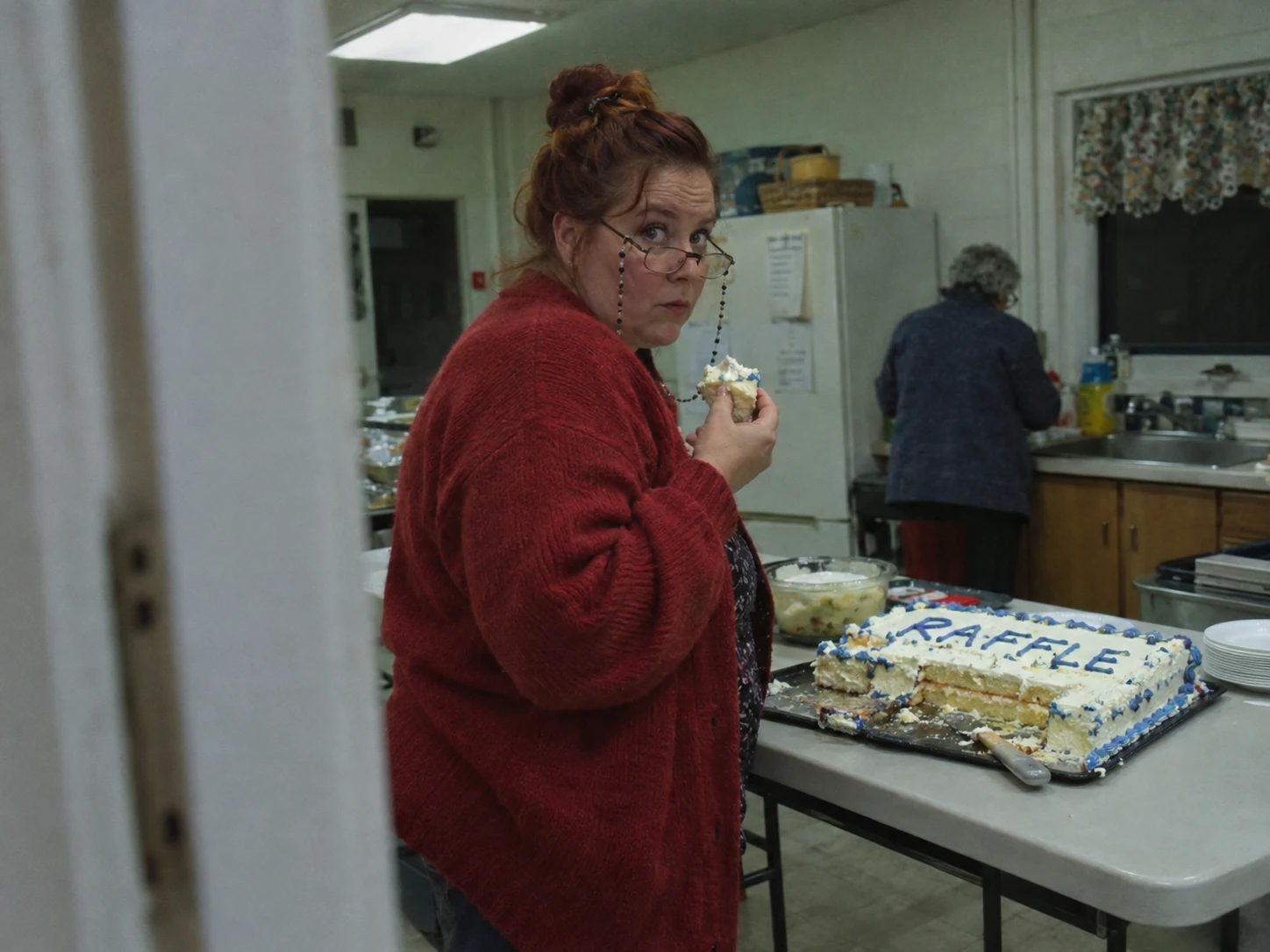
This is the caught moment. "Through a half-open doorway" and the blurred door frame put the crew in the room, "glances straight into the lens" is the aside, and 4:3 with video grain reads as TV documentary.
Open FlashBoardsCamera: handheld shoulder camera with small irregular sway from the start; after his first gesture a fast zoom-in punches from medium close-up to a tight close-up on his face, then holds. Action: The man is already talking to the interviewer off-camera right, lifting the gold trophy proudly. The little figure on top snaps off into his other hand. He stares at it, his eyes flick into the lens, and he turns back to the interviewer with a forced smile."Already talking" and "sway from the start" keep the shot alive from frame one. "Fast zoom-in" asks for the snap zoom; the action ends on the look to camera.
Open FlashBoards{
"output": "Full-screen live-action scene from Blind Chance (1987), from its very first frame: one continuous handheld shot, no cuts. Grainy 1980s 35mm color, a dim narrow hallway with olive-cream painted walls and a cream paneled door; the only warm light spills from the room beyond the door: tungsten lamps, muted browns and dusty blues.",
"characters": {
"S1": {
"name": "Witek, played by Bogusław Linda",
"look": "late twenties, short dark hair, pale neck, gray-brown tweed jacket over a pale blue shirt collar, seen only from behind",
"voice": "silent"
},
"S2": {
"name": "the host of the gathering",
"look": "lanky young man, light-brown hair, a cigarette tucked behind his ear, dark knit sweater, faded blue jeans",
"voice": "silent"
},
"S3": {
"name": "a young woman at the table",
"look": "short light-brown hair, pale gray knit cardigan, sitting at the center of the table",
"voice": "silent"
},
"S4": {
"name": "a young man inside the room, never seen clearly",
"look": "only his voice is heard",
"voice": "calm, flat, a little tired"
},
"S5": {
"name": "another student inside the room, never seen clearly",
"look": "only his voice is heard",
"voice": "quiet, curious"
}
},
"shots": [
{
"shot": 1,
"camera": "handheld at shoulder height just behind S1's right shoulder, 40mm lens, small irregular sway, static position; the soft out-of-focus back of S1's head and shoulder fill the right third of frame, the closed door fills the left and center; the camera never enters the room, like an uninvited crew member in the hallway",
"action": [
"BEGINNING: alive from the first frame, S1 stands facing the door in the right third, head in profile turned to screen left; his hand at screen left is raised in a fist and knocks twice on the door panel.",
"THEN: the same hand drops to the round knob at the lower right of the door, turns it, and leaves the frame downward; S1 stands still, looking down at the door, shoulders motionless.",
"THEN: the door swings slowly inward away from the camera; a thin vertical slit of warm lamplight opens between the door edge and S1's shoulder, showing slices of faces inside.",
"THEN: the gap widens into a narrow doorway: a cramped room with a bookshelf, posters, laundry hanging by a curtain, and a dozen students packed around a low table with green glass bottles and glasses; S2 stands at the left of the table, bent forward, handing drinks to the people sitting.",
"THEN: S2 straightens, then leans over the table again with a glass in his right hand; the seated students look at each other and at the table, nobody looks toward the door.",
"END: S3, at the center of the table, lifts her head and turns her eyes up toward the doorway and the camera; S2 stays bent over the table; S1 stays frozen in the blurred right foreground, watching over the threshold, never stepping in."
],
"dialogue": [
{
"speaker": "S4",
"on_screen": false,
"when": "once the door has opened a few inches, from inside the room",
"delivery": "flat, matter-of-fact, half-heard through the gap",
"line": "<d>[English] My answer to every question was, \"I don't know.\"</d>"
},
{
"speaker": "S5",
"on_screen": false,
"when": "right after that line, near the end of the shot",
"delivery": "quiet, curious",
"line": "<d>[English] Did they beat you?</d>"
}
]
}
],
"sound": {
"ambience": "two knuckle knocks on wood, a click of the doorknob and a hinge creak, then clinking glasses and a low murmur of the room growing louder as the door opens",
"speech": "exactly these spoken phrases, each said once, in this order",
"never_spoken": "no narration and no voice-over: the descriptions, performance notes and step words of this prompt are never spoken aloud",
"music": "a film score under the scene, always below the voices: a sparse low string drone with a slow, uneasy pulse",
"subtitles": "none"
}
}Remakes the doorway shot from Blind Chance (1987): the prompt carries over the handheld view past Witek's shoulder, his knock, the door opening onto a crowded student room and the two lines heard from inside.
The camera field parks the lens behind Witek's shoulder, in the hallway, like an uninvited crew. The phases carry the knock, the opening door and the reveal, and the two lines heard through the gap are the film's own.
Common mistakes
- Too cinematic: models add rim light and bokeh. Write "flat soft daylight", "background readable" and a plain 28–35mm lens.
- Eyeline into the lens: for interviews state "looking just off-camera at an unseen interviewer" and save the glance for the punchline.
- Garbled captions: add lower-thirds in the edit.
- Gimbal glide: video comes out floaty unless you write "handheld shoulder camera, small irregular sway".
Keep the reference frames, prompts and every generated take side by side — images and video in one canvas.
FAQ
4 questionsWhat is a mockumentary?
A mockumentary is a fictional film or series made to look like a documentary, with interviews, handheld observational camerawork, captions and archive footage, while the characters and events are invented. Most are comedies, like This Is Spinal Tap (1984) or Best in Show (2000), because the documentary camera exposes the gap between what characters claim and what they do.
What are the best-known mockumentary movies?
Classics include Woody Allen's Take the Money and Run (1969) and Zelig (1983), This Is Spinal Tap (1984), Christopher Guest's Waiting for Guffman (1996), Best in Show (2000) and A Mighty Wind (2003), and Borat (2006). On television, The Office and Parks and Recreation made the format mainstream.
What is the mockumentary style?
It is the borrowed look of documentary: off-center interviews with the eyeline just past the lens, handheld coverage that seems to discover the action, snap zooms onto reactions, deadpan glances into the camera and name captions. Dialogue is often improvised so it sounds unrehearsed.
Is a mockumentary the same as found footage?
No. Found footage, like The Blair Witch Project (1999), pretends to be raw recordings made by the characters themselves. A mockumentary pretends to be a finished documentary by an outside crew, with interviews, titles and an editorial point of view. Found footage leans toward horror, while mockumentary leans toward comedy and satire.
Related terms
4- Cinéma VéritéFilm Movements & Styles
Cinéma vérité is a 1960s documentary approach, born with Jean Rouch and Edgar Morin's Chronicle of a Summer, in which lightweight sync-sound cameras record real life and the filmmaker openly provokes and takes part in it.
- Talking HeadCamera Shots
A talking head is a head-and-shoulders shot of a person speaking — an interviewee, expert or presenter — the basic framing of documentaries, news and online video.
- Handheld ShotCamera Movement
A handheld shot is filmed with the camera held in the operator's hands or on the shoulder, without a stabiliser, so its natural sway and jolts make the scene feel immediate, documentary-like or anxious.
- Film GenresGenres
A film genre is a category of films that share recognizable conventions of story, setting, character and style — western, horror, musical, noir — letting audiences know what to expect and filmmakers play with it.
Further reading
Jane Roscoe and Craig Hight, Faking It: Mock-documentary and the Subversion of Factuality (Manchester University Press, 2001).