 FlashBoards Learn
- Learn
- Film Movements & Styles
- Mumblecore
Film Movements & Styles · Film language
Mumblecore
Also called: mumblecore movement
Mumblecore is a 2000s American indie movement of micro-budget films about twentysomethings talking, dating and drifting, made with improvised dialogue, friends instead of stars, cheap cameras and real apartments. It trades plot and polish for the texture of real conversation, so the viewer feels they are overhearing people rather than watching a performance.
- What it does
- Makes small talk, awkward pauses and unresolved relationships feel observed rather than staged.
- Use it when
- Your story lives in conversation between a few people and you have one camera, one room and a week.
- Watch out
- Loose is not the same as sloppy: bad sound and unmotivated wobble kill the intimacy the style depends on.
- Try this prompt
Handheld medium two-shot, two friends mid-conversation in a cluttered apartment kitchen at night, overhead ceiling light only, prosumer digital video look, muted color, slight noise
What is mumblecore?
In the early and mid-2000s a handful of American filmmakers, among them Andrew Bujalski, Mark and Jay Duplass, Joe Swanberg, Aaron Katz and Lynn Shelton, made features for almost nothing about people like themselves: educated, underemployed, romantically confused twentysomethings. Among the film movements, it is one of the few defined as much by budget as by aesthetics.
- Dialogue first. Conversation that is improvised or written to sound improvised, with overlaps and false starts.
- Friends, not stars. Directors cast each other and their roommates, and often act themselves.
- Real places, small stakes. Someone's apartment, car or office; a breakup, a road trip, an awkward party.
It is the textbook micro-budget film movement: constraint turned into identity.
Where did the name mumblecore come from?
The label began as a joke, usually credited to Eric Masunaga, a sound editor who worked with Bujalski, around the 2005 South by Southwest festival. Critics adopted it; the directors mostly disliked it. There was never a manifesto.
The core titles: Bujalski's Funny Ha Ha (2002) and Mutual Appreciation (2005), the Duplass brothers' The Puffy Chair (2005), Swanberg's Hannah Takes the Stairs (2007) with Greta Gerwig, and Shelton's Humpday (2009).
By the early 2010s the method went mainstream: the Duplasses made Cyrus (2010) and Jeff, Who Lives at Home (2011) with known stars, Swanberg improvised Drinking Buddies (2013) from an outline, and the same toolkit fed a horror strand nicknamed mumblegore, including You're Next (2011) and Creep (2014).
What makes a film look and sound mumblecore?
Camera. Mostly handheld, reframing between speakers instead of cutting. Swanberg and the Duplasses shot cheap digital video; Bujalski made his first two features on 16mm and Computer Chess (2013) on vintage black-and-white video cameras.
Light. Ambient light: the ceiling fixture, a desk lamp, a window. Faces go flat and nobody gets a flattering key.
Framing. Loose medium shots and two-shots that keep both people in frame so the improvisation can breathe.
Sound. Quiet, overlapping, sometimes hard-to-hear dialogue, which gave the movement its name.
The effect is naturalism: you watch less for what happens than for how people avoid saying what they mean.
How to shoot a mumblecore-style scene
- Outline, not lines. Give each actor a want and one thing they won't say; let them find the words.
- One camera at shoulder height. A 24–35mm equivalent, handheld, 1–2 m from the actors. Follow the speaker, keep the listener in frame.
- Shoot long. Let takes run 5–10 minutes so actors stop performing, then build the rhythm in the edit.
- Light with the house. Brighter bulbs of the same color, open curtains, one lamp out of frame at most.
- Protect the sound. Lavaliers plus a boom. Mumbling is a choice; unusable dialogue is a failure.
Mumblecore vs. Dogme 95
Both strip away gloss with handheld cameras, real locations and available light, so they get confused.
Dogme 95 was a written program: Lars von Trier and Thomas Vinterberg published a vow of fixed rules, among them handheld camera, location sound only and no added lighting. The rules were the point, as in Festen (1998).
Mumblecore had no rules. Its minimalism came from money and temperament, and it used music, scripts and lights whenever it could afford them. Dogme is provocation; mumblecore is eavesdropping.
Mumblecore examples in film
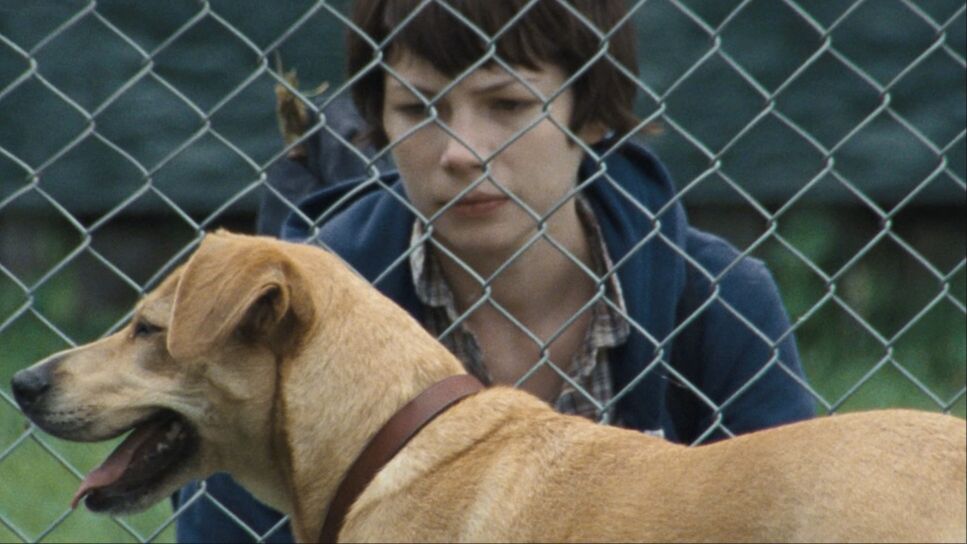
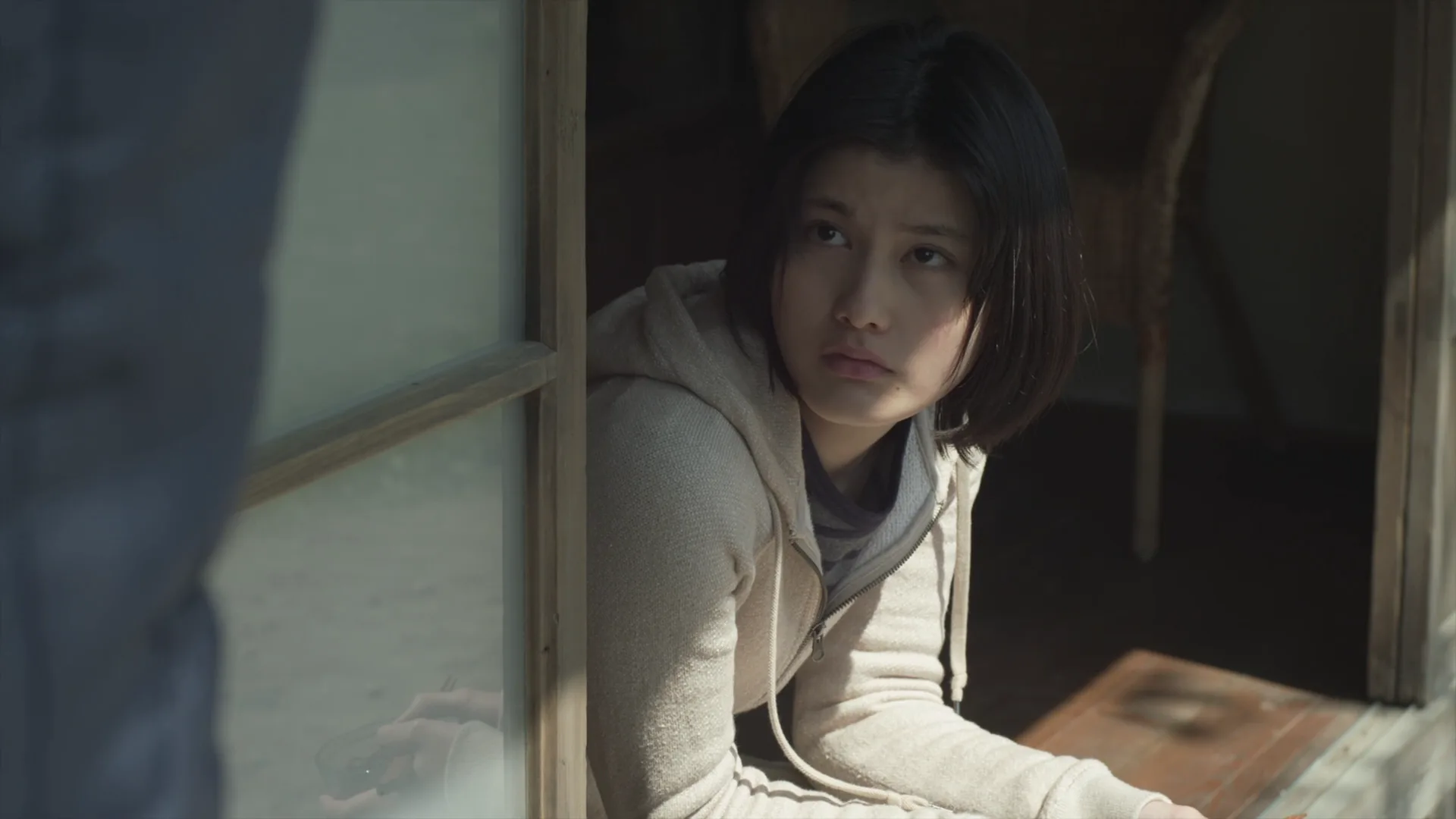
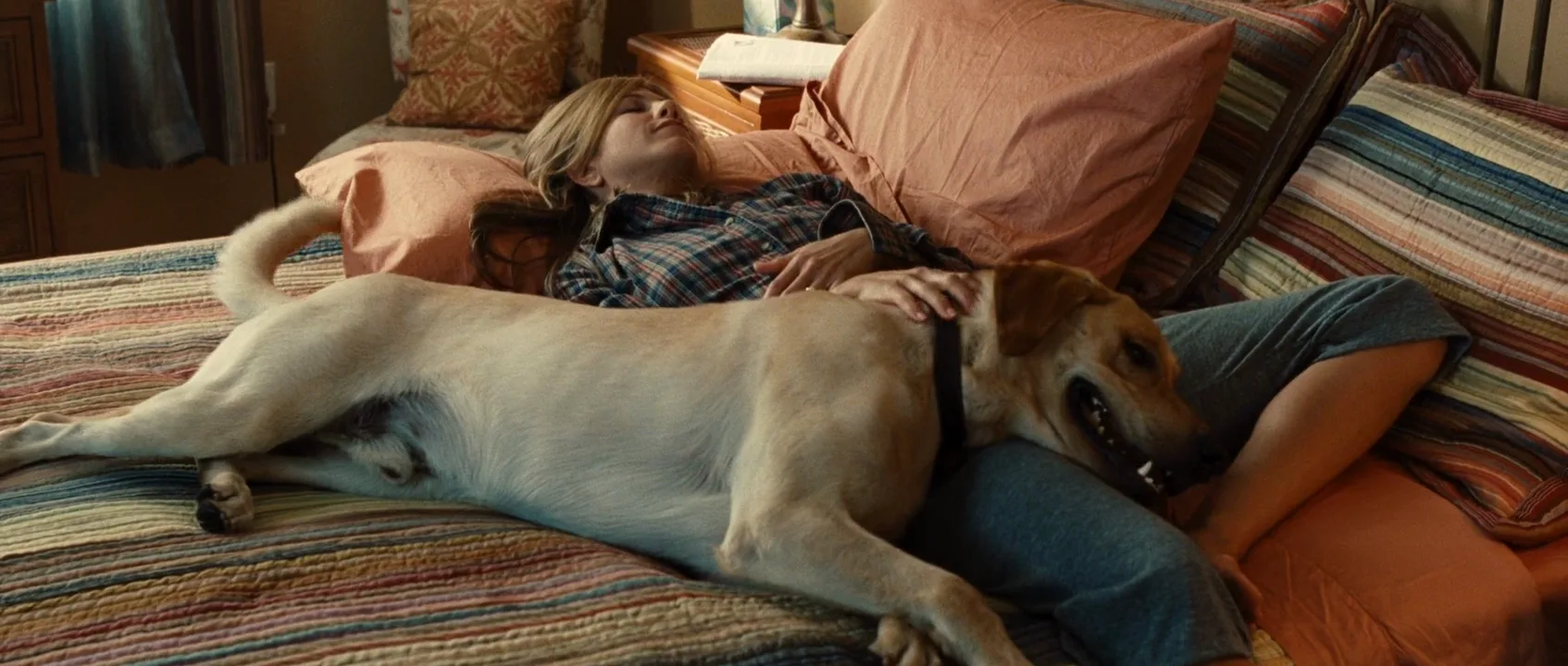
6 framesNone of these frames come from mumblecore films; each isolates one ingredient the movement relies on.
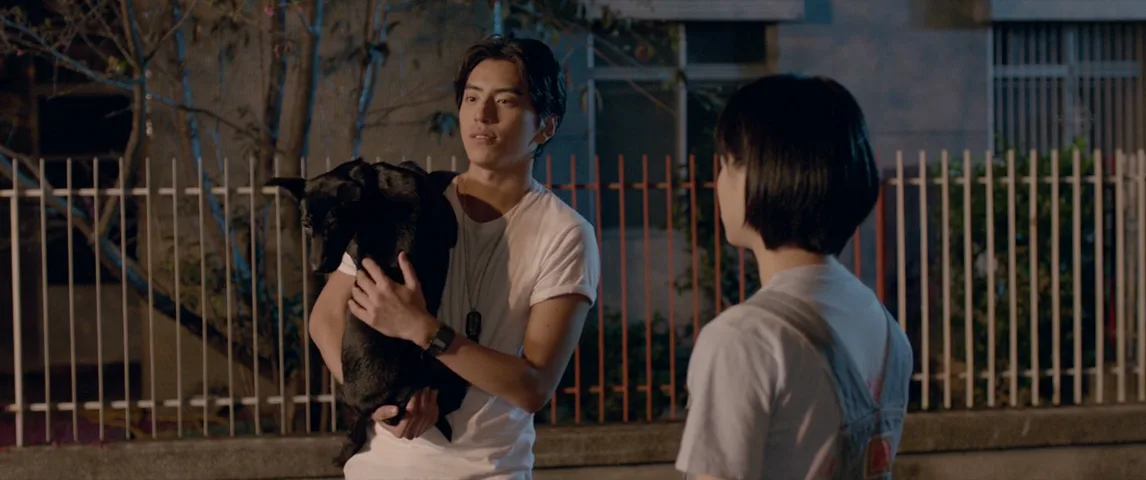
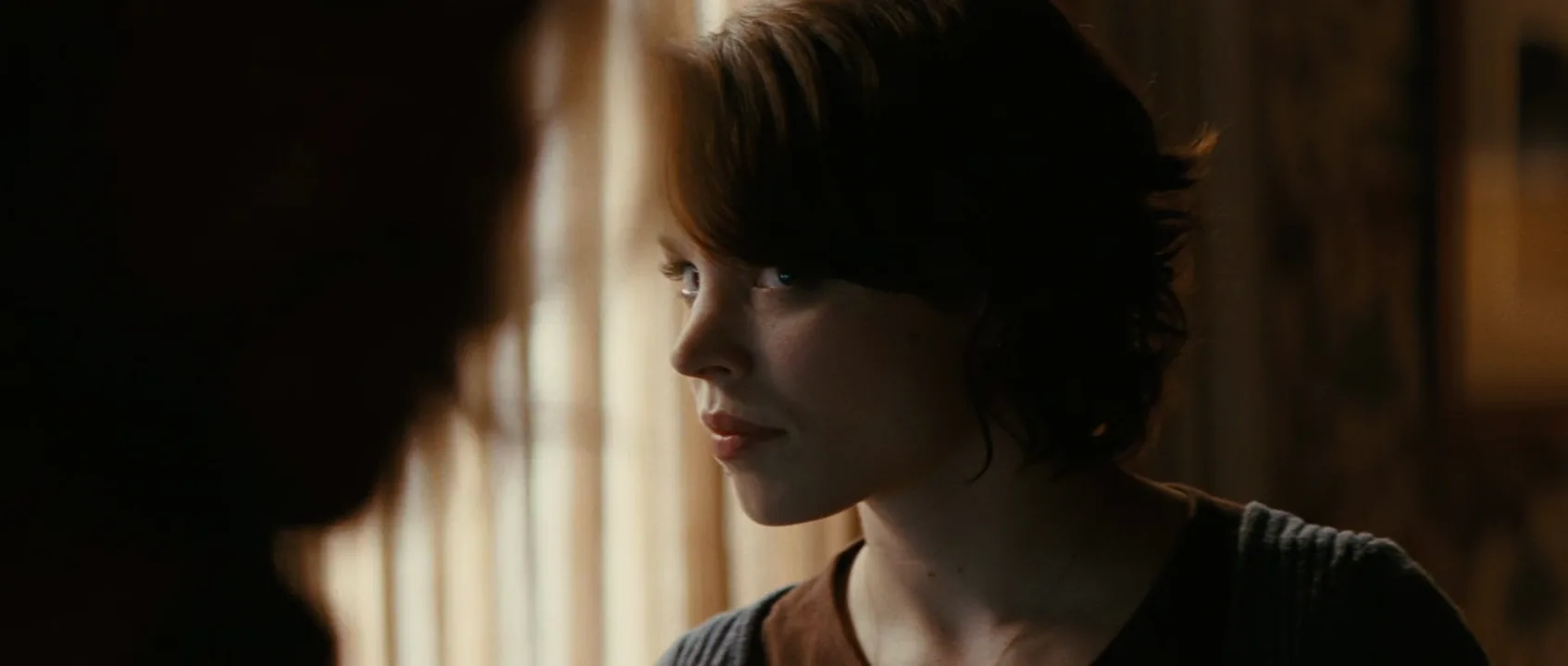
How to create a mumblecore with AI
4 promptsModels default to glossy, beautifully lit frames. Get the mumblecore look by naming the conditions of a cheap shoot: the format, the one light source, the mundane mess and people caught mid-conversation. Keep reference frames beside your takes on a FlashBoards board and compare them before animating. The fourth prompt re-shoots a real film shot from a text description alone, and the original plays next to the result so you can compare.
Handheld medium two-shot in a cramped apartment kitchen at night, framed loose and slightly tilted, shoulder height, 28mm lens. A woman in her late twenties with a blunt black bob, a small silver nose ring and a faded gray sweatshirt leans on the counter mid-sentence, looking down at her mug. A man in his early thirties with a patchy ginger beard and a wrinkled green flannel shirt leans on the fridge holding a beer bottle. Dirty dishes, a takeout bag, fridge magnets. Single flat overhead ceiling light, deep focus, early-2000s prosumer digital video look, muted color, light shadow noise.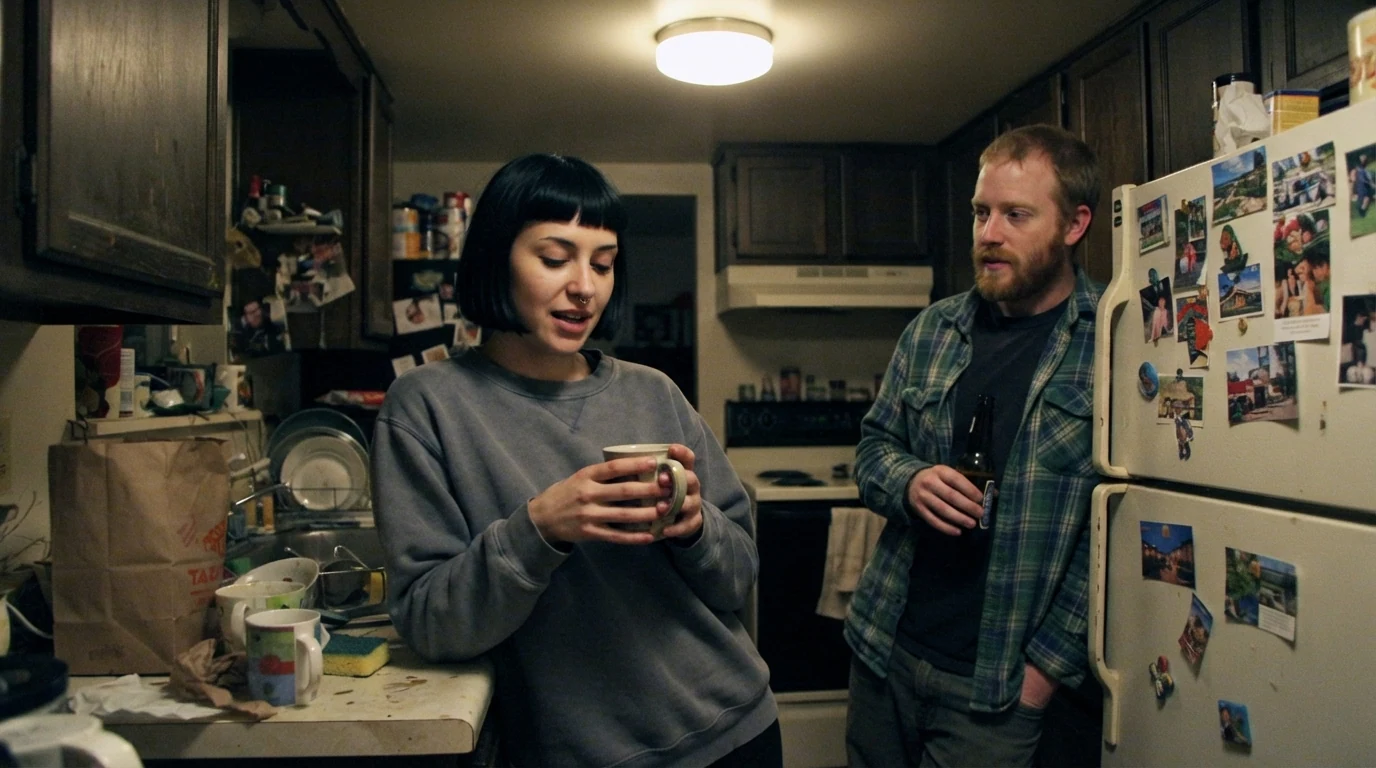
"Handheld," "framed loose and slightly tilted" and "shoulder height" put an operator in the room. "Single flat overhead ceiling light" blocks an invented key, and "prosumer digital video look" replaces cinema gloss. "Mid-sentence, looking down" keeps both people off the lens. This is the video's start frame.
Open FlashBoardsBlack-and-white 16mm film still, visible grain. Two friends in their mid-twenties at opposite ends of a sagging corduroy couch on a gray afternoon: a lanky man with curly brown hair, thick-framed glasses and a cardigan, a guitar resting on his lap; a woman with a shaved head, freckles and wooden earrings, knees pulled up, glancing at him mid-conversation. Paperbacks stacked on the floor. Soft daylight from one window, no fill, 25mm lens at seated eye height, static camera, deep focus.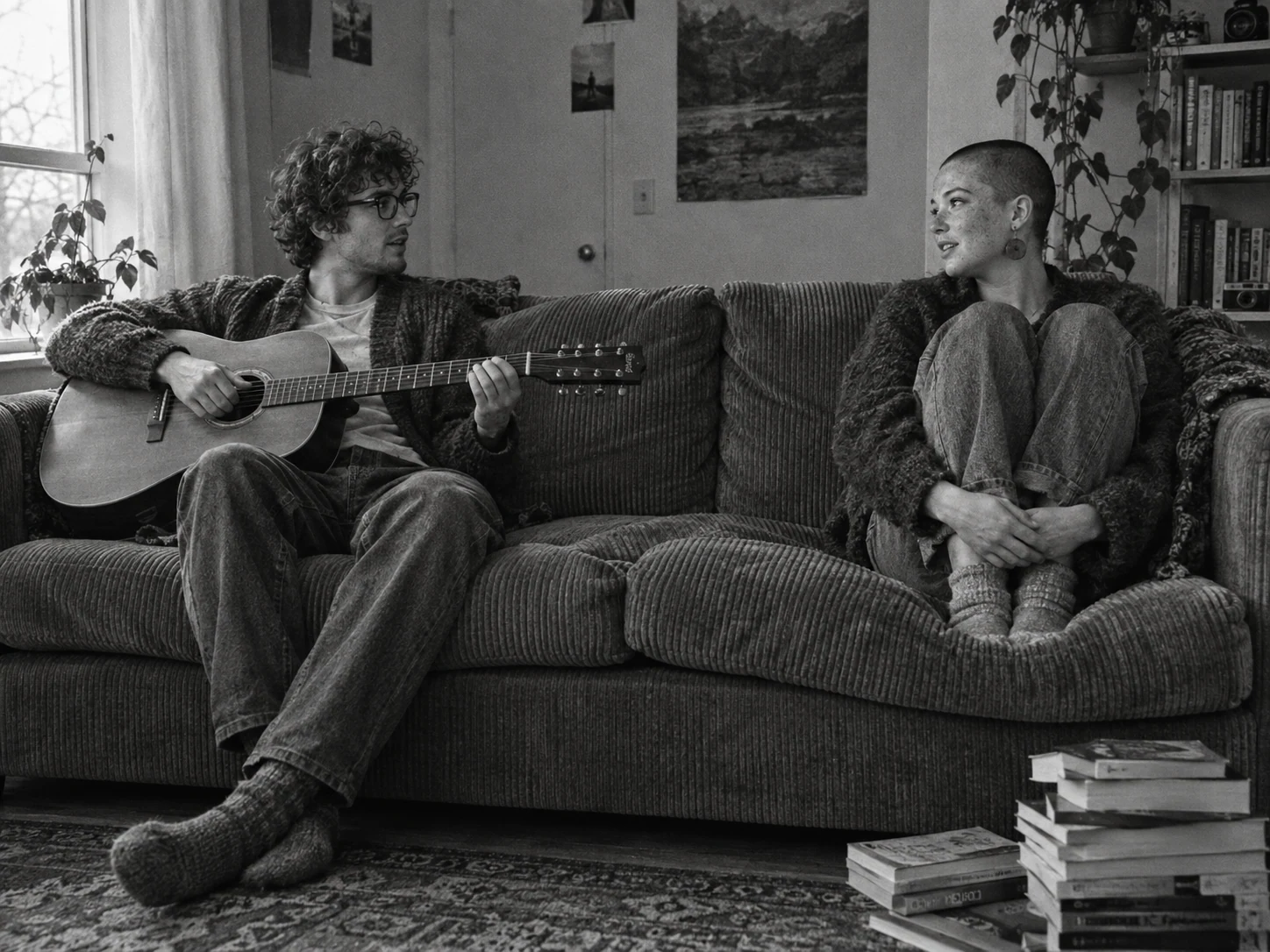
A second take closer to Bujalski's 16mm features. "Black-and-white 16mm" and 4:3 set the format, "one window, no fill" gives flat available light, and the opposite ends of the couch create the awkward distance these films live on.
Open FlashBoardsCamera: handheld at shoulder height from the first frame with a gentle sway, drifting slowly toward the man as he answers, then back to the woman, keeping a loose two-shot. Action: the woman is already talking quietly to her mug, glances up and gives a short awkward laugh. The man sips from the bottle, shrugs and answers in a few quiet words. She turns her mug on the counter, nods and looks toward the sink. Small mouth movements, small gestures, flat overhead light.Motion starts at frame one ("already talking," "gentle sway"), so the shot never freezes. The drift between speakers is how a single operator covers a conversation, and the action uses only objects already in the frame.
Open FlashBoards{
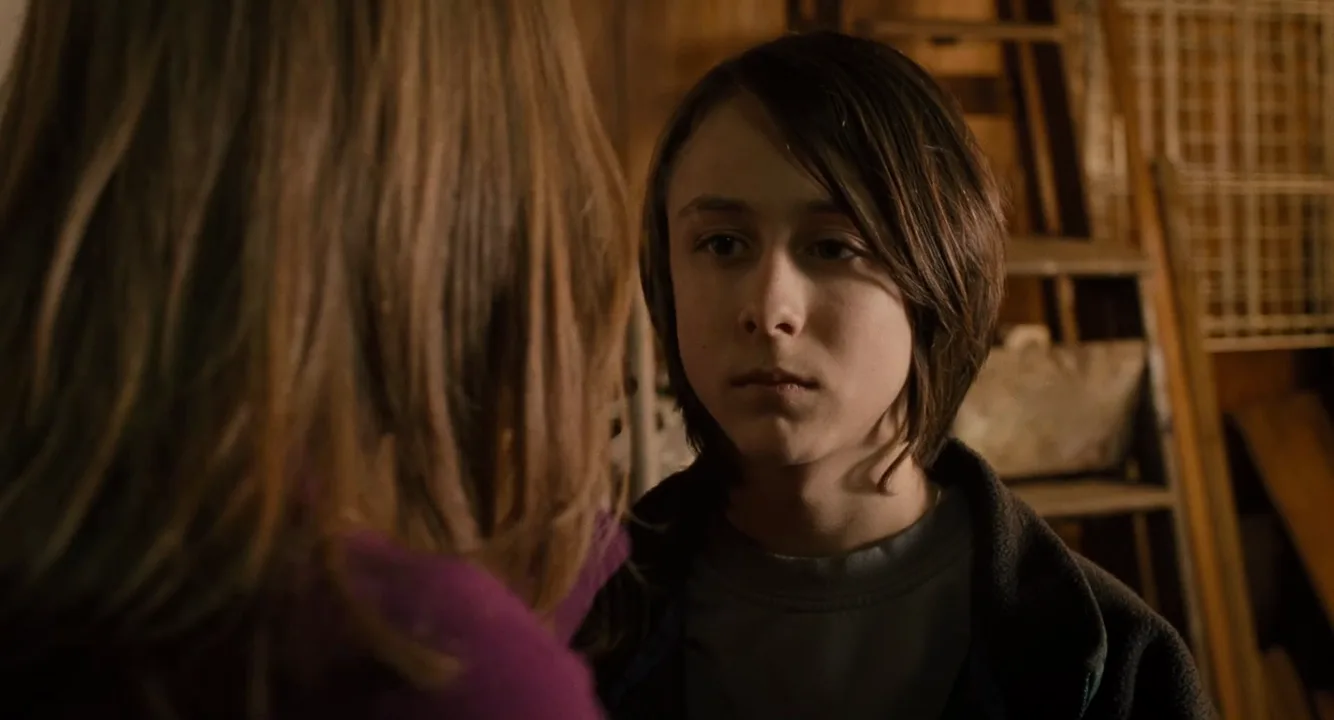
"output": "Full-screen live-action scene from Conviction (2010), alive from its very first frame: one continuous handheld shot with no cuts, a single operator reframing between family members instead of cutting. Grainy 35mm, a cluttered wooden garage workshop in late-afternoon amber light from one dusty window upper right, wooden shelves and ladders, pegboard, stacked cardboard boxes, muted warm browns with one magenta accent, flat available light, no glamour key.",
"characters": {
"S1": {
"name": "Richard Miller, played by Conor Donovan",
"look": "teenage boy, short tousled brown hair, plain navy crew-neck T-shirt",
"voice": "flat, sullen teenage voice"
},
"S2": {
"name": "Betty Anne Waters, played by Hilary Swank",
"look": "woman in her late thirties, straight shoulder-length light-brown hair, magenta turtleneck sweater",
"voice": "soft, low, guilty"
},
"S3": {
"name": "Ben Miller, played by Owen Campbell",
"look": "younger boy, long straight brown hair with a side fringe over one eye, dark jacket over a gray T-shirt",
"voice": "quiet, small, resigned"
}
},
"shots": [
{
"shot": 1,
"camera": "handheld at seated eye height, normal lens, gentle breathing sway; opens on a medium close-up of S1 at frame centre, then pans right as he leaves and settles into a loose two-shot of S2 at left and S3 at right, then drifts slightly right and closer so S2 becomes a soft back-of-head shape filling the left half and S3 sits right of centre in a medium close-up; focus stays on the faces",
"action": [
"BEGINNING: alive from the first frame, S1 at frame centre faces screen-left toward someone just off frame, mid-sentence, both arms down, the bright window glowing behind his right shoulder.",
"THEN: S1 lowers his eyes and his head, mouth closing, and stays looking at the floor.",
"THEN: head still down, S1 walks right-to-left across the foreground past the lens as the camera pans right; his blurred head crosses the frame and exits bottom-left.",
"THEN: the pan reveals S3 right of centre, gaze following his brother toward screen-left, and S2 in the left third facing the lens, eyes turned screen-left after S1, brow knitted, lips pressed.",
"THEN: S2 turns her head screen-right toward S3 and speaks, then keeps turning until her back is to the camera, her hair a soft brown mass filling the left half of the frame.",
"THEN: S2 raises her right hand and rests it on S3's cheek on the screen-left side of his face, stroking it slowly and brushing back his fringe; S3 looks up at her face, hands out of frame, body still.",
"THEN: S3 lowers his eyes to the floor and answers; S2's hand slides down off his jaw and out of frame.",
"END: S3 lifts his eyes back up to S2's face, lips pressed together, a small swallow, no nod; S2 stays still with her back to the camera."
],
"dialogue": [
{
"speaker": "S1",
"on_screen": true,
"when": "from the first frame, before he lowers his head",
"delivery": "flat, bitter, quiet",
"line": "<d>[English] When? When Uncle Kenny gets out of jail.</d>"
},
{
"speaker": "S2",
"on_screen": true,
"when": "as she turns her head from watching S1 go toward S3, after S1 has left the frame",
"delivery": "soft, apologetic, almost a whisper",
"line": "<d>[English] Honey, I'm sorry.</d>"
},
{
"speaker": "S3",
"on_screen": true,
"when": "as he lowers his eyes and her hand leaves his face",
"delivery": "barely audible, resigned",
"line": "<d>[English] I know.</d>"
}
]
}
],
"sound": {
"ambience": "quiet garage room tone, S1's footsteps on the wooden floor as he walks off, a soft rustle of the sweater as S2 raises her hand",
"speech": "exactly these spoken phrases, each said once, in this order",
"never_spoken": "no narration and no voice-over: the descriptions, performance notes and step words of this prompt are never spoken aloud",
"music": "a film score under the scene, always below the voices: a sparse, melancholy solo acoustic guitar over a soft warm string pad",
"subtitles": "none"
}
}Remakes the handheld garage shot from Conviction (2010), dir. Tony Goldwyn, DP Adriano Goldman; the prompt carries over the rightward pan past the departing son, the mother's turn and touch, and the three spoken lines.
The camera block carries the whole technique: one handheld operator pans off the son who walks out and settles on the mother and the brother, so the conversation is covered by reframing, not cutting. The three lines are the film's own, and each hand, gaze and screen direction is spelled out so the beats land in order.
Open FlashBoardsCommon mistakes
- Too cinematic: shallow focus, rim light, teal-orange. Name the one real light source and ask for deep focus and a video or 16mm look.
- Posing: people smile into the lens. Put them mid-sentence, looking at each other.
- Showroom rooms: list the everyday mess you want.
- Push-ins in video: state the handheld drift and its direction, and keep gestures small.
Keep the reference frames, prompts and every generated take side by side — images and video in one canvas.
FAQ
4 questionsWhat is mumblecore?
Mumblecore is a 2000s American indie film movement of micro-budget features about young adults and their relationships. The films use improvised or loosely scripted dialogue, friends instead of professional actors, handheld cameras and real apartments lit with available light. Andrew Bujalski, the Duplass brothers, Joe Swanberg, Aaron Katz and Lynn Shelton are its best-known directors.
What are the essential mumblecore movies?
Start with Funny Ha Ha (2002) and Mutual Appreciation (2005) by Andrew Bujalski, The Puffy Chair (2005) by the Duplass brothers, Hannah Takes the Stairs (2007) by Joe Swanberg and Humpday (2009) by Lynn Shelton. For the later phase, watch Jeff, Who Lives at Home (2011) and Drinking Buddies (2013).
Why is it called mumblecore?
The name points at the quiet, overlapping, sometimes hard-to-hear dialogue critics noticed across these films, plus the "-core" suffix borrowed from music genres. It began as a joke by sound editor Eric Masunaga around the 2005 South by Southwest festival.
Are mumblecore films improvised?
Many are, at least partly. A common method is an outline with scenes and goals but no fixed lines, then long takes in which actors find the dialogue; the scene is shaped in the edit. Some films, especially Bujalski's, are fully scripted but written to sound spontaneous. Believable conversation always comes before plot.
Related terms
5- Dogme 95Film Movements & Styles
Dogme 95 is the Danish movement launched by Lars von Trier and Thomas Vinterberg with a 'Vow of Chastity': handheld camera, real locations, no added lighting or non-diegetic music, no genre tricks — Festen and The Idiots are its first films.
- Micro-Budget FilmFilmmaking Process & Crew
A micro-budget film is a feature made for a tiny fraction of an average budget — often tens of thousands of dollars — with a skeleton crew, few locations and every constraint turned into style; El Mariachi and Paranormal Activity are classic cases.
- NaturalismFilm Movements & Styles
Naturalism in film aims for an illusion of unmediated life — unstylized acting, available light, real locations and hidden technique — often showing characters shaped by environment and circumstance.
- Handheld ShotCamera Movement
A handheld shot is filmed with the camera held in the operator's hands or on the shoulder, without a stabiliser, so its natural sway and jolts make the scene feel immediate, documentary-like or anxious.
- Ambient LightLighting
Ambient (available) light is whatever light already exists at a location — sun through windows, street lamps, shop signs — before the crew adds its own; DPs either shoot with it as it is or shape and supplement it.
Further reading
Dennis Lim, "A Generation Finds Its Mumble," The New York Times, 2007.