 FlashBoards Learn
Lighting · Film language
Ambient Light
Also called: available light, existing light
Ambient light, also called available light, is whatever light already exists at a location before the crew adds its own: sun through windows, sky, streetlamps, shop signs, office tubes. Cinematographers either shoot it as it is or shape and supplement it. On screen it reads as unforced, lived-in reality.
- What it does
- Lets the location light the scene, so the image carries the real color, level and mess of the place.
- Use it when
- You want realism, speed, small crews, 360-degree freedom for actors, or a look no lighting package can fake.
- Watch out
- It changes by the minute and rarely flatters faces; plan the time of day, and keep bounce, negative fill and ND ready.
- Try this prompt
cinematic wide shot of a 24-hour laundromat at night lit only by its overhead fluorescent tubes, woman folding towels, greenish cast, no film lights, 35mm
What is ambient light in film?
Ambient light is the existing light of a place. Outdoors that means sun and sky; indoors, window light plus the location's own fixtures: ceiling tubes, a desk lamp, an exit sign. It is defined by who put it there, not by how it looks. A crew-placed unit, however soft, is not ambient.
So ambient does not mean soft: noon sun in a parking lot is ambient and hard. Softness depends on source size, as the film lighting hub explains.
Why do filmmakers use ambient light?
Truth of place. A hospital corridor under greenish tubes already has a mood audiences recognize; ambient light sits at the core of naturalism.
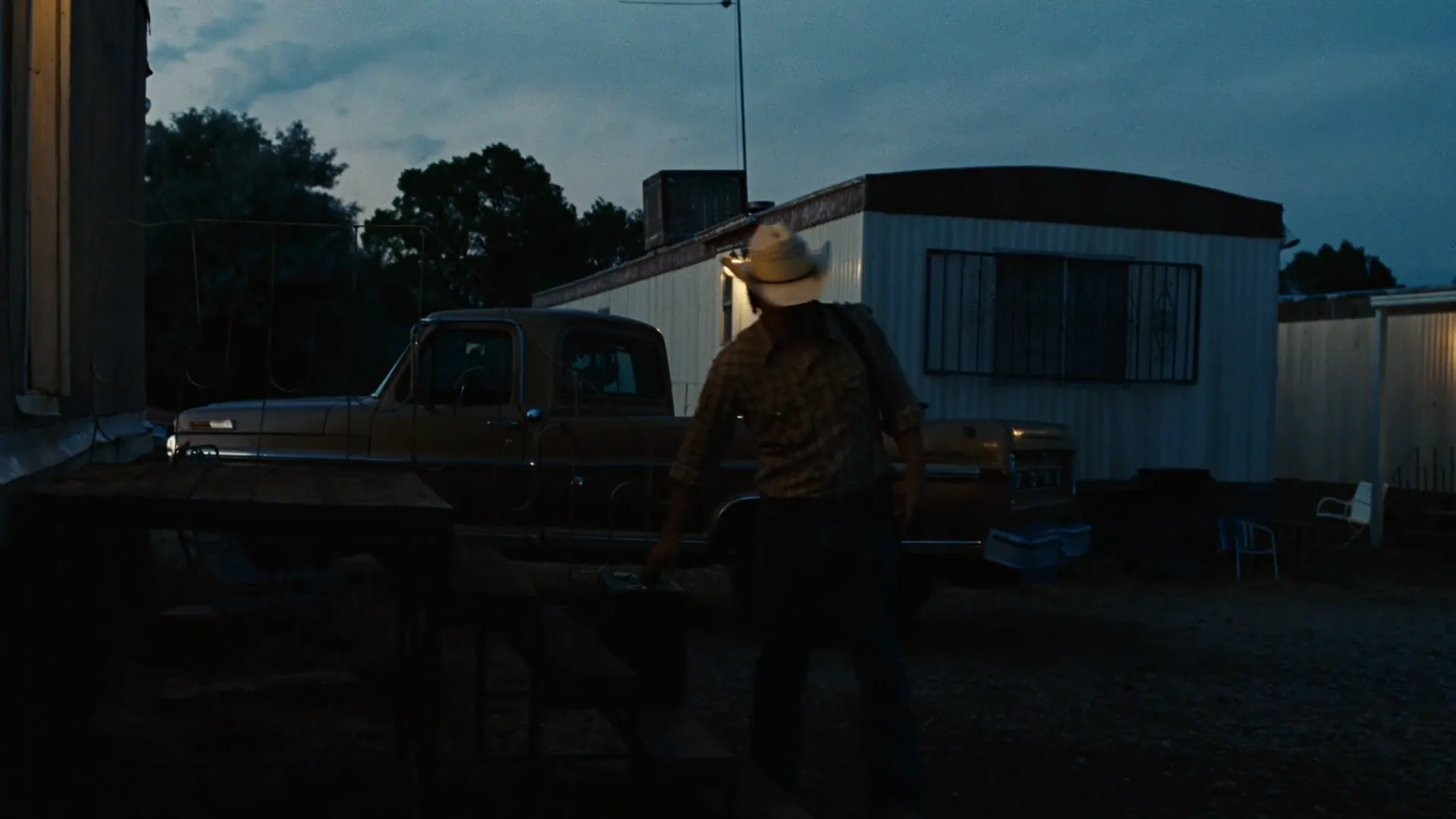
Speed and freedom. With no stands in the room, actors move anywhere and the camera turns around without relighting, as in Chloé Zhao's The Rider (2017).
A rule, not just a choice. The Dogme 95 vow banned special lighting.
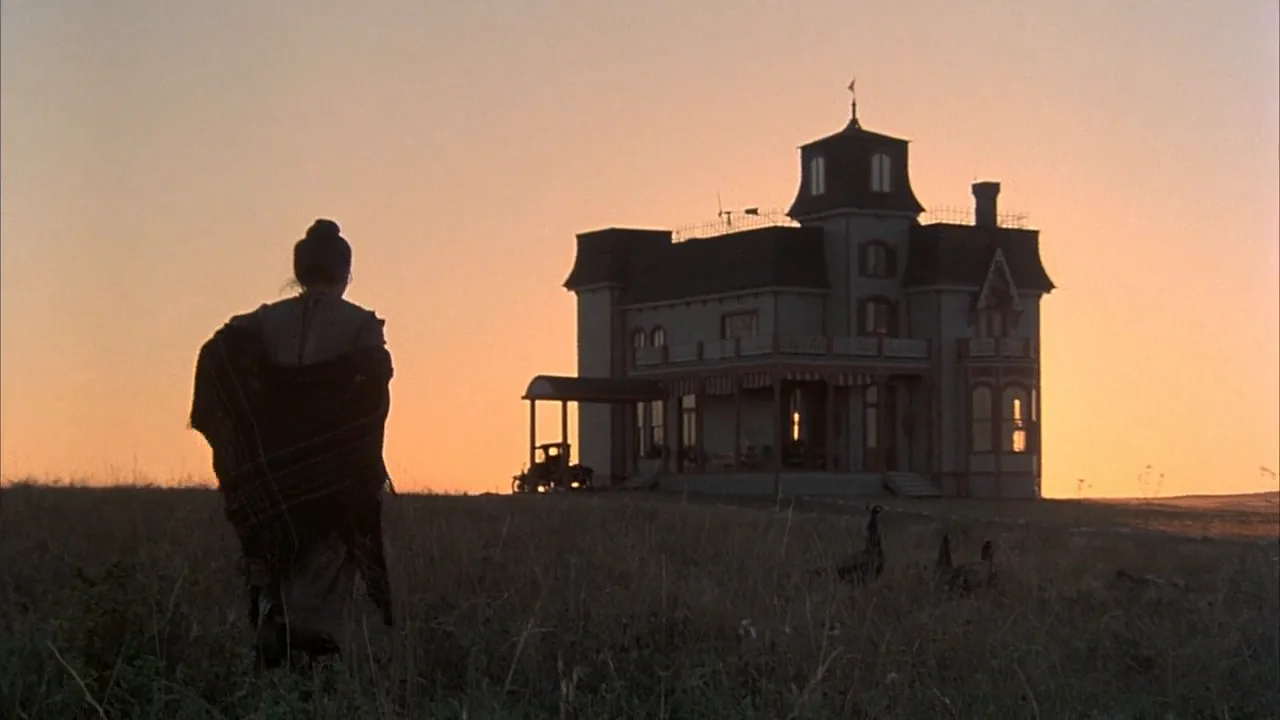
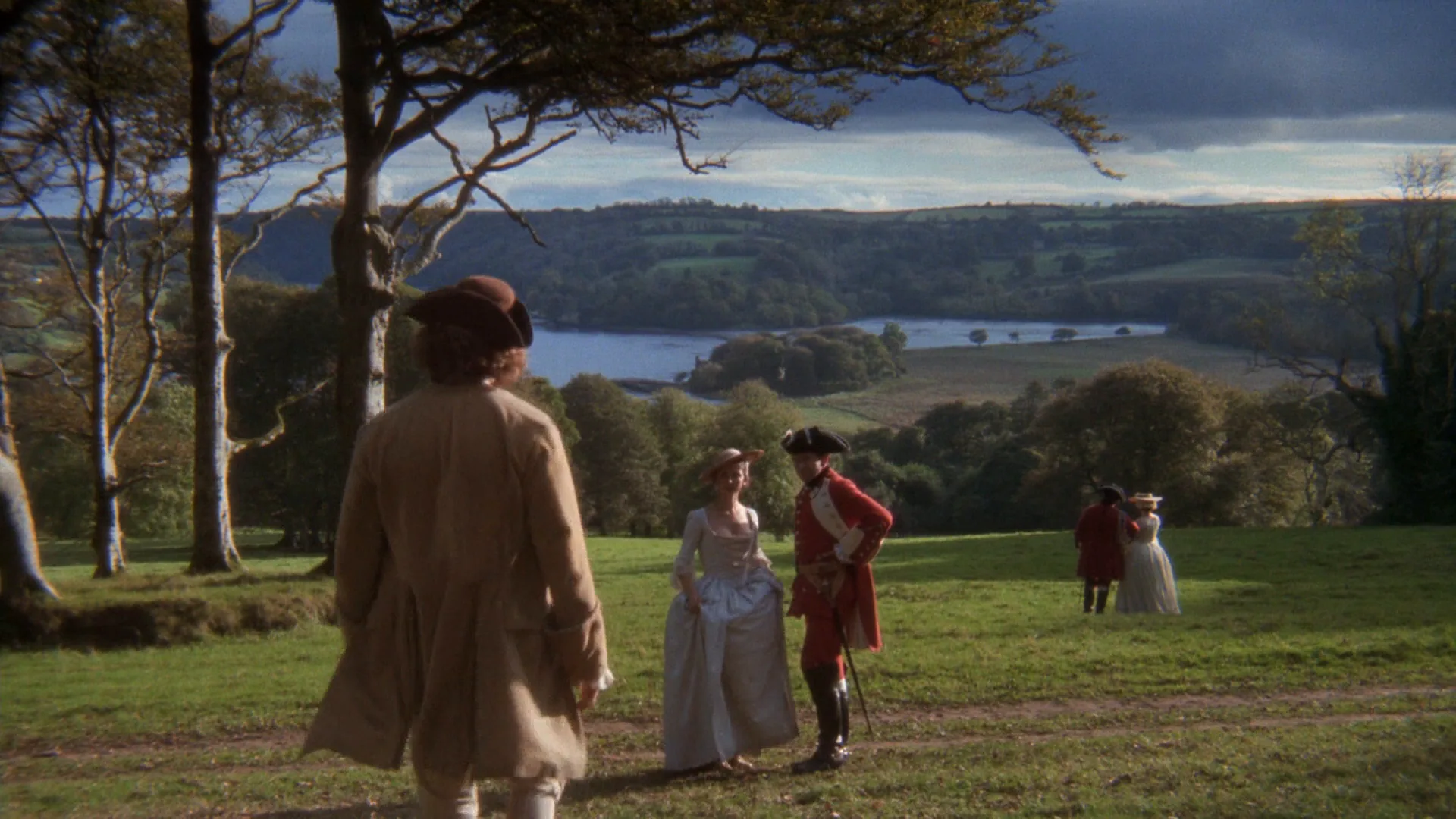
Looks you cannot build. The dusk exteriors of Days of Heaven (1978) and the candlelit rooms of Barry Lyndon (1975) start with light that was already there.
How to shoot with ambient light
Scout at shooting time. Note the sun's path, which fixtures work and their color.
Expose for the highlights that matter. Cinema cameras hold clean images at ISO 800 to 3200, and T1.3 to T2 lenses let one ceiling fixture carry a face. A thin, slightly noisy shadow looks more honest than a clipped window.
Shape, don't replace. Turn faces toward the window or fixture. Lift a cheek with a white card (bounce lighting), add black negative fill, and put ND gel on windows.
Decide on color. Daylight near 5600K, tungsten lamps near 2700K and green-tinted fluorescents often share one room. Commit to one white balance or swap bulbs; keeping the clash is mixed lighting.
Available light: shooting only what is there
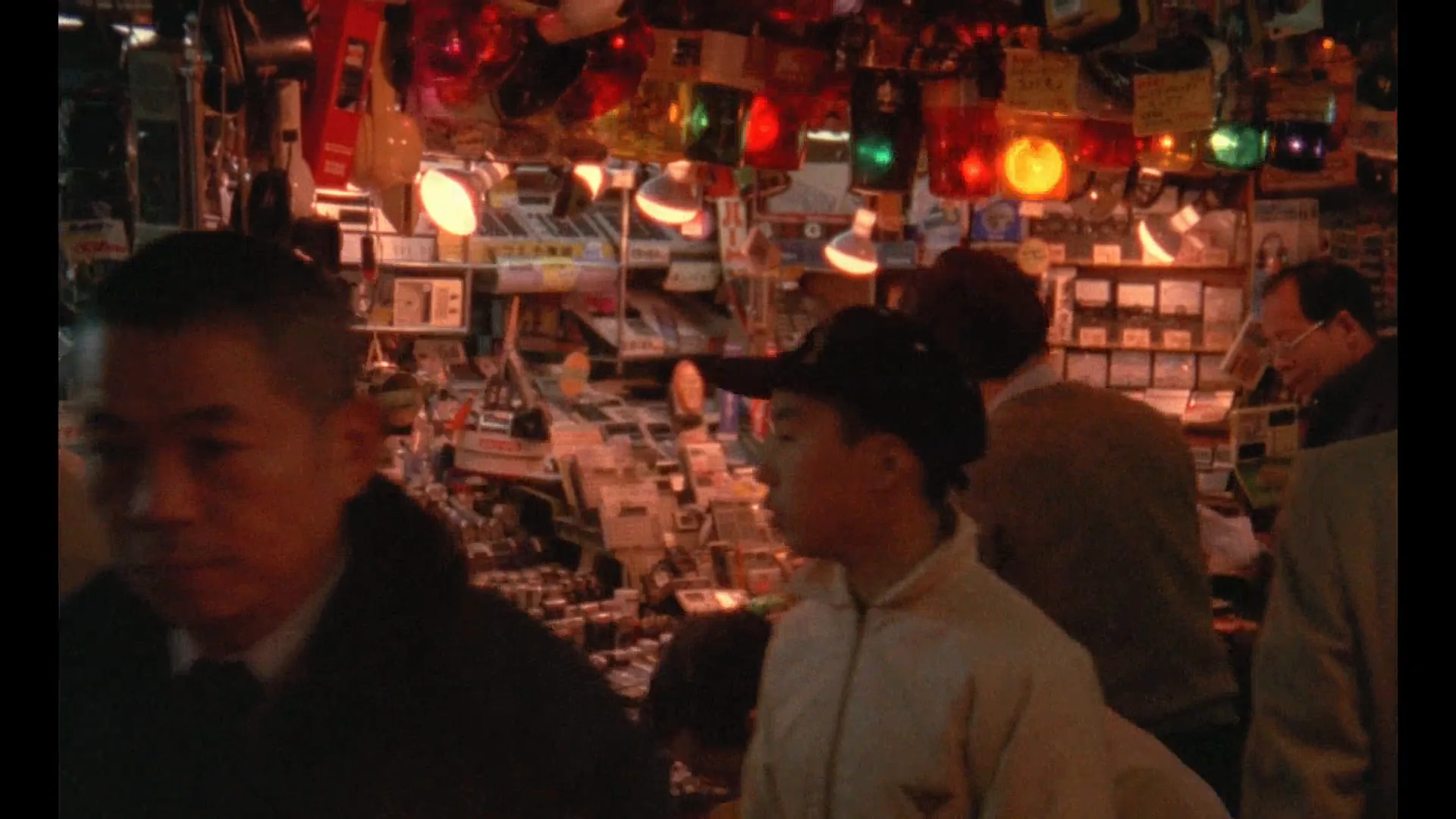
"Available light" is the strict form: location light used with little or nothing added. The term comes from documentary and photojournalism and moved into fiction with verité styles. Sans Soleil (1983) takes markets as it finds them.
The craft is choosing when and where: shoot dusk at dusk, and move the actor to the window instead of faking one.
Ambient light vs. natural light
Natural light means sun, sky and moon. Ambient light also includes every artificial source already at the location. A streetlamp is ambient but not natural; a sunbeam through a window is both.
| | Ambient light | Natural light | |---|---|---| | Sources | Anything already on location | Sun, sky, moon | | At night | Streetlamps, signs, shop tubes | Moonlight, twilight | | Control | Swap bulbs, bounce, flag | Pick hour, weather, direction |
Practical lighting means lamps visible in frame. One the crew dresses in is an added source.
Ambient Light examples in film
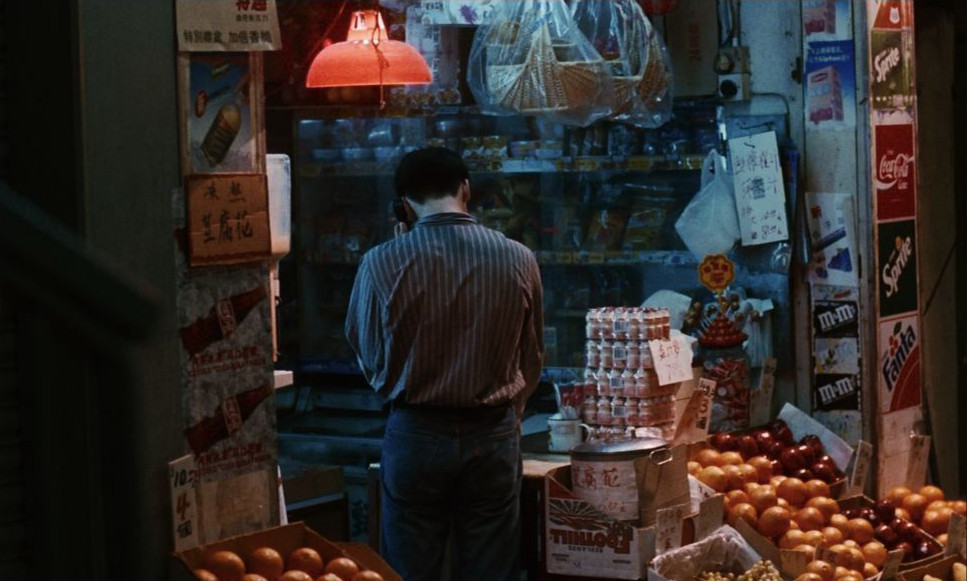
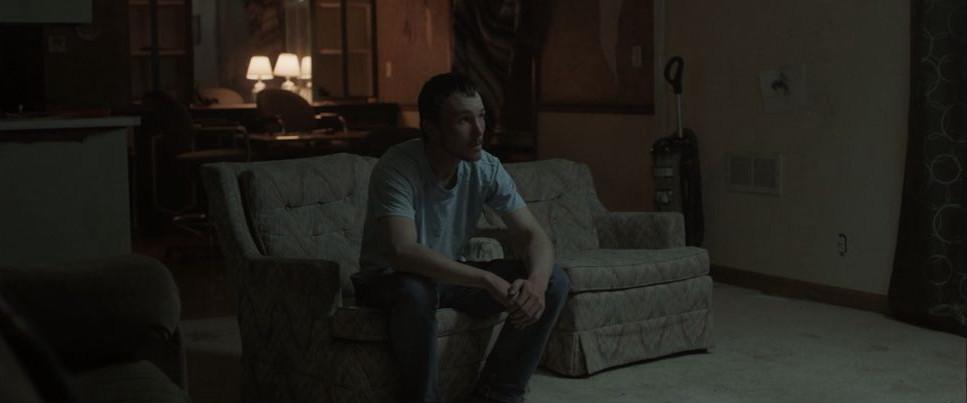
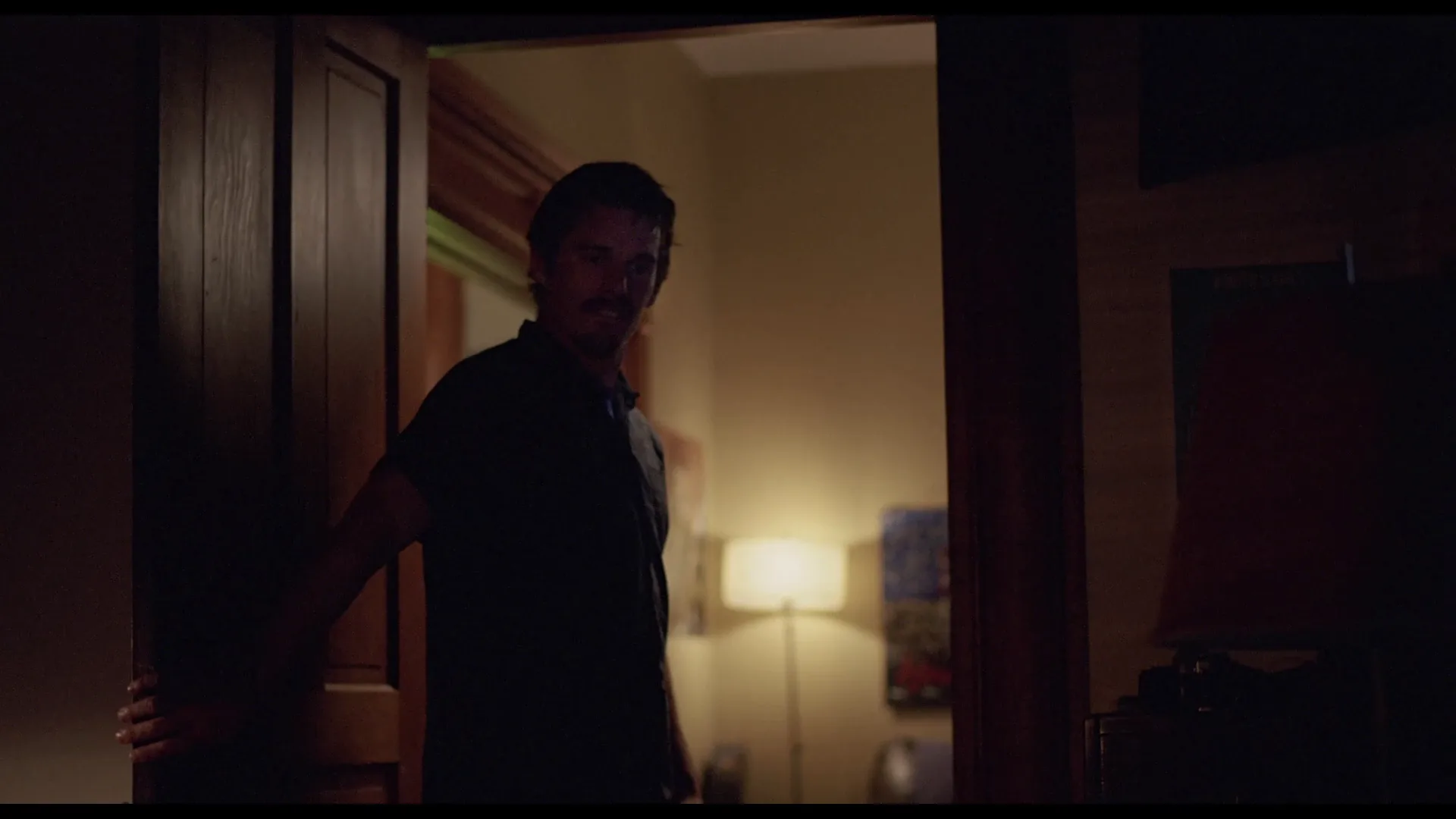
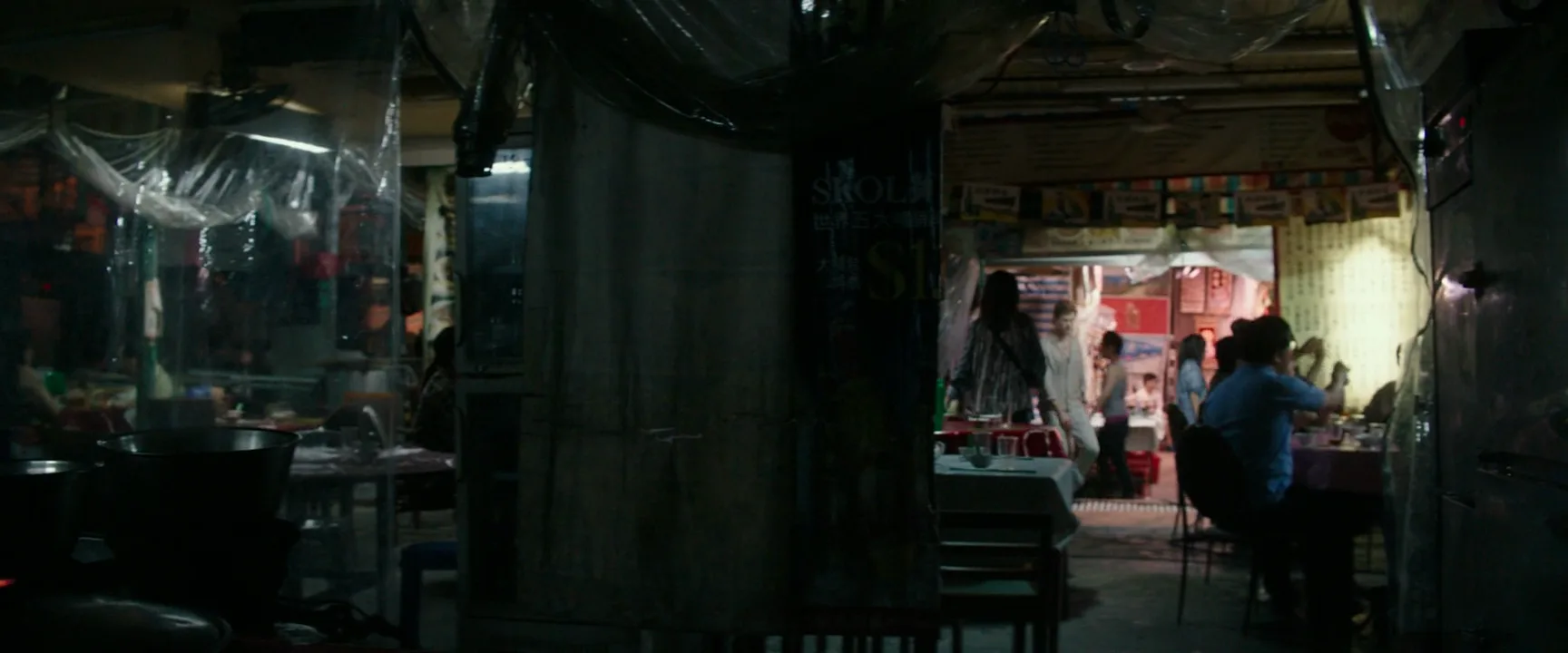
8 framesEach frame is lit mostly or entirely by what the location offered.
How to create a ambient light with AI
4 promptsImage models default to a flattering studio key, so name the location's own sources and say they are the only light. Build the start frame, try a second location and aspect, then animate the first frame, keeping takes on one FlashBoards board. The fourth prompt re-shoots a real film shot from a text description alone, and the original plays next to the result so you can compare.
Cinematic film still, wide shot inside a 24-hour laundromat at 2 a.m. A woman in her thirties with a copper-dyed undercut, a silver septum ring and an oversized navy raincoat folds a white towel. The only light is the laundromat's overhead fluorescent tubes, flat and slightly green, plus the glow of lit dryer windows behind her. Available light only, uneven brightness, soft shadows under her eyes, 35mm lens at chest height.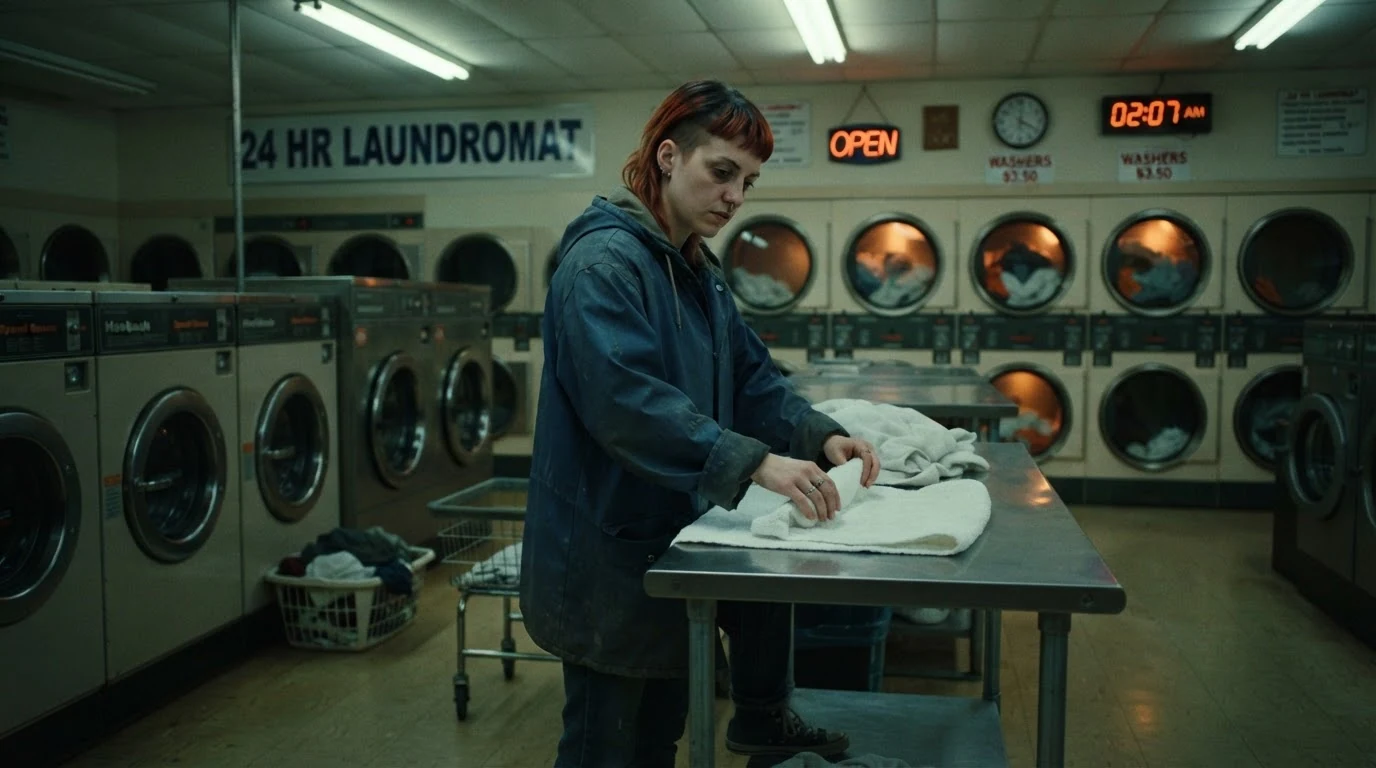
"The only light is" and "available light only" block a hidden key. The green cast and dryer glow give real-location color, and "uneven brightness, soft shadows under her eyes" keeps the unflattering top light that sells it.
Open FlashBoardsWide anamorphic cinematic frame of a rural gas station twenty minutes after sunset. An older man with a white handlebar mustache, a burgundy flannel shirt and a sun-faded cap fills a dusty pickup. The canopy's fluorescent panels throw cool white light straight down on him and the pump; the sky behind holds deep blue with a thin orange band. Existing light only, no fill on the far side of his face, 40mm anamorphic lens, eye level.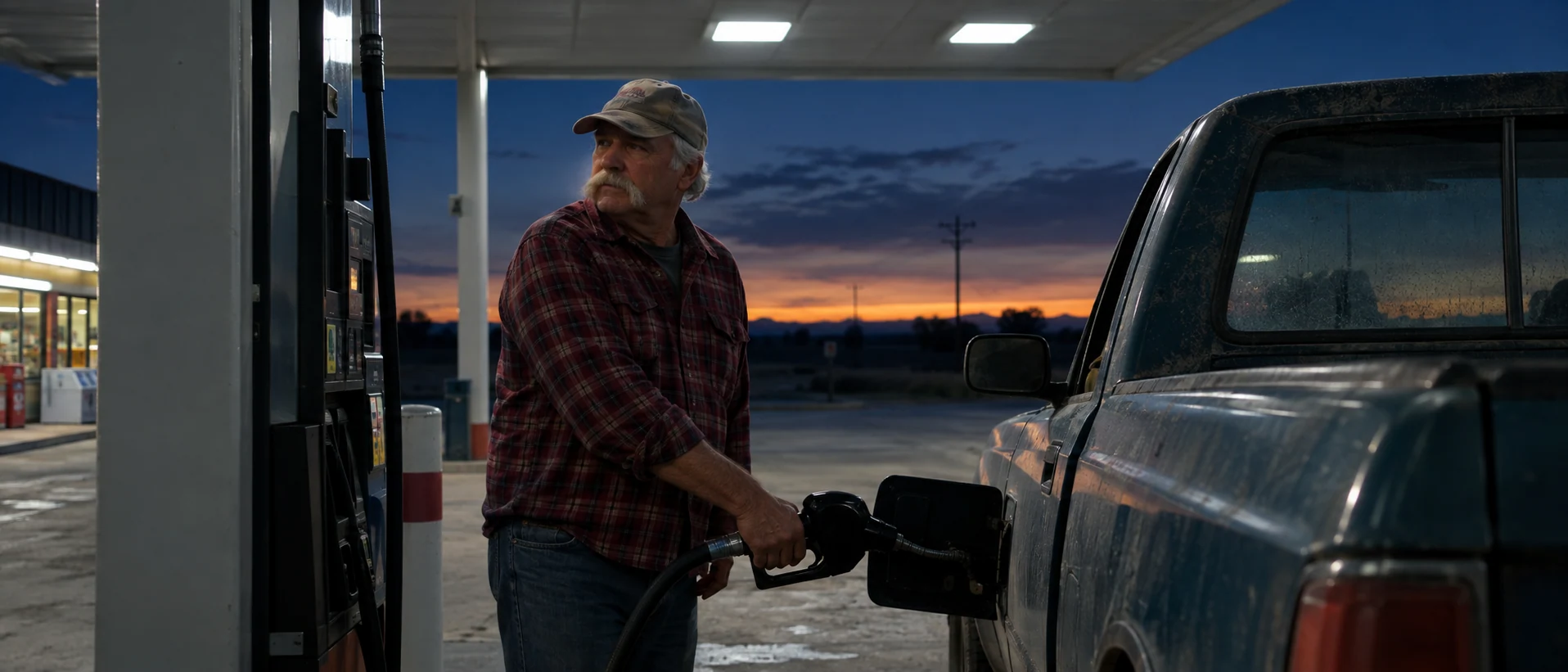
This take mixes a fixture with the sky. "Twenty minutes after sunset" pins the sky's level, and "no fill on the far side of his face" states the contrast so the model does not even it out.
Open FlashBoardsCamera: slow handheld drift to the right along the counter, starting immediately and ending closer on the woman in a medium shot. Action: The dryers behind her are already tumbling and she is already shaking out the white towel. She folds it in half and in half again, the fluorescent light flat and steady on her hands. At the end she stacks the towel and glances toward the dark front window.Motion starts in the first words, so the clip does not freeze and creep in. Only elements from the start frame appear, and "fluorescent light flat and steady" keeps the model from inventing moving light.
Open FlashBoards{
"output": "Full-screen live-action scene from Days of Heaven (1978) from its very first frame: one continuous shot. Grainy 1970s 35mm film, open Texas prairie at dusk just after the sun has set; the only light is the afterglow of the sky, a smooth gradient from pale apricot at the horizon to dusty rose and gray-blue above. Everything on the ground reads as a dark silhouette against the sky with no added fill: soft, low contrast, faces unreadable.",
"characters": {
"S1": {
"name": "Abby, played by Brooke Adams",
"look": "slim young woman, dark hair pinned in a small bun on top of her head, pale high-collared blouse, a dark coat bundled over one arm, seen only from behind as a silhouette",
"voice": "silence: she does not speak"
},
"S2": {
"name": "The Farmer, played by Sam Shepard",
"look": "lean young man in a dark three-piece suit, white shirt and tie, small and far away in the grass near the house",
"voice": "quiet, a little embarrassed, heard from a distance"
}
},
"shots": [
{
"shot": 1,
"camera": "handheld medium lens at shoulder height just behind S1, following her as she walks away; it pans right and tilts down smoothly, ending on a wide steady composition with a low horizon, S1 at frame left and the house at center right",
"action": [
"BEGINNING: alive from the first frame, S1 already walking away from the camera in a close back view, her head and shoulders dark against the glowing apricot sky; only sky fills the frame around her.",
"THEN: the camera pans right and tilts down, and a tall lone two-story Victorian farmhouse with a square cupola, a chimney and a covered porch slides into frame on the flat horizon, a few windows glowing faint warm orange; the house and the tall grass are dark shapes against the bright sky, and three dark geese stand in the grass in front of the house.",
"THEN: S1 keeps walking into the waist-high grass toward the house and grows smaller; to the right of the geese, S2 sits up out of the grass where he was lying.",
"END: S2 scrambles to his feet and stands facing S1, a small dark figure beside the house; S1 stops at frame left, and he speaks."
],
"dialogue": [
{
"speaker": "S2",
"on_screen": true,
"when": "at the very end, right after he is on his feet, never before",
"delivery": "quick, apologetic, heard from far across the grass",
"line": "<d>[English] Excuse me. I forgot where I was.</d>"
}
]
}
],
"sound": {
"ambience": "soft evening wind through tall prairie grass, crickets, her footsteps swishing in the grass, a goose honking once",
"speech": "exactly these spoken phrases, each said once, in this order",
"never_spoken": "no narration and no voice-over: the descriptions, performance notes and step words of this prompt are never spoken aloud",
"music": "a film score under the scene, always below the voices: a slow, wistful solo harp and strings, pastoral and quiet",
"subtitles": "none"
}
}This remakes the dusk shot from Days of Heaven (1978) where Abby walks toward the farmhouse and The Farmer rises from the grass; the prompt keeps the afterglow as the only source, the silhouettes, the pan-and-tilt reveal and the film's line.
The output line names the sky's afterglow as "the only light" with no fill, so the model keeps Abby, the house and The Farmer as dark shapes against the sky. The camera keeps the original's pan right and tilt down that reveals the house, and the one spoken line is the film's own, given to the man who rises from the grass.
Common mistakes
- Hidden studio key. Faces come out evenly lit. Write "the only light is" plus the fixture, and say where shadows fall.
- Too clean. Add "uneven brightness" and real casts: green fluorescents, orange sodium, cool window light.
- Ambient read as soft. The word alone yields a hazy glow; name the actual sources and their hardness.
- Invented lamps in video. Describe only fixtures in the start frame.
Keep the reference frames, prompts and every generated take side by side — images and video in one canvas.
FAQ
4 questionsWhat does ambient light mean in film?
Ambient light is the light already at a location before the crew adds anything: sun and sky, window light, streetlamps, signs and the building's own fixtures. The term describes where light comes from, not whether it is soft or hard.
Is ambient light the same as available light?
Nearly. Both mean existing light at a location. "Available light" implies adding little or nothing, as in documentary and Dogme-style fiction, while gaffers also say "ambient level" for the base light in any space.
How do you shoot a film with only ambient light?
Scout at the real shooting hour, block actors toward windows and fixtures, and expose for the highlights that matter. At night use fast lenses (T1.3 to T2) and ISO 800 to 3200; shape with bounce, flags and ND gel.
Is ambient light soft or diffused?
Not necessarily. Ambient describes origin, not quality. Overcast sky or a big window gives soft ambient light; noon sun, a bare bulb or a streetlamp gives hard light with crisp shadows.
Related terms
6- Natural LightLighting
Natural light is light from the sun, sky and moon rather than from lamps; its direction, color and softness change with the hour and the weather, and shooting with it is a hallmark of realist cinema.
- Practical LightingLighting
Practical lighting uses light sources visible in the shot — table lamps, neon signs, candles, TV screens — either as the real illumination or as the visible motivation for hidden film lights.
- Golden HourLighting
Golden hour — which filmmakers call magic hour — is the short window after sunrise and before sunset when the low sun gives warm, soft, raking light and long shadows; crews often keep shooting into the blue twilight that follows.
- NaturalismFilm Movements & Styles
Naturalism in film aims for an illusion of unmediated life — unstylized acting, available light, real locations and hidden technique — often showing characters shaped by environment and circumstance.
- Dogme 95Film Movements & Styles
Dogme 95 is the Danish movement launched by Lars von Trier and Thomas Vinterberg with a 'Vow of Chastity': handheld camera, real locations, no added lighting or non-diegetic music, no genre tricks — Festen and The Idiots are its first films.
- Film LightingLighting
Film lighting is the craft of shaping light for the camera — its direction, quality, color and contrast — to model faces, build space, set the time of day and carry the mood of a scene.
Further reading
Néstor Almendros, A Man with a Camera (1984). Dogme 95 manifesto and Vow of Chastity (1995).