 FlashBoards Learn
- Learn
- Film Movements & Styles
- Naturalism
Film Movements & Styles · Film language
Naturalism
Also called: naturalistic cinema, naturalist film
Naturalism in film is a style that tries to make the audience forget they are watching a film: unstylized acting, available light, real locations and hidden technique. It often shows people shaped by their environment, money and class, so the viewer reads behavior as observed life rather than performance.
- What it does
- Makes the viewer trust what they see, because nothing in the frame looks arranged for them.
- Use it when
- The story depends on behavior, place and circumstance more than on plot mechanics or spectacle.
- Watch out
- Naturalism is an illusion you build; a lazy flat image is not naturalism, it is just flat.
- Try this prompt
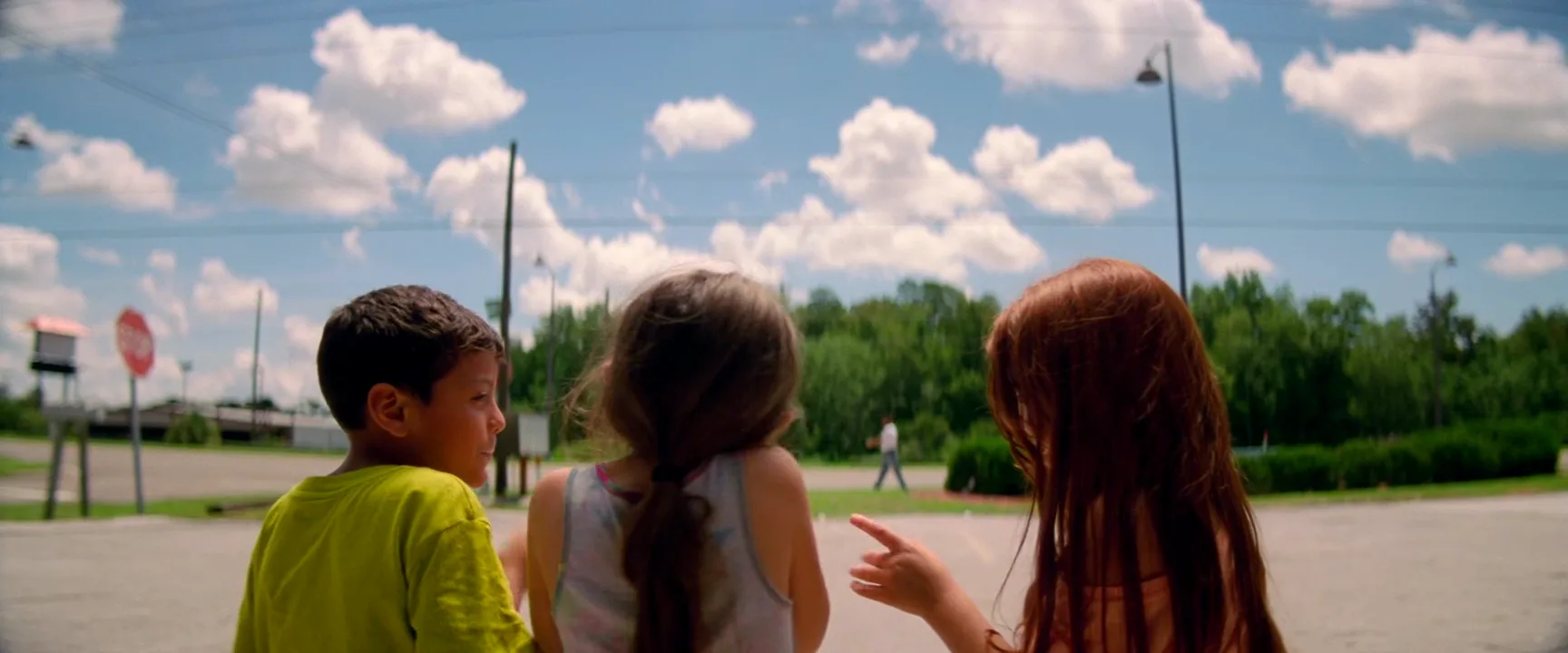
35mm film still, two kids on a sun-bleached motel parking lot, eye level, 32mm, flat afternoon sun, unposed, natural skin texture
What is naturalism in film?
Naturalism is an approach to acting, lighting, design and staging that aims for the illusion of unmediated life. The camera seems to have wandered into a real room, the actors seem to be living rather than performing, and the light looks like whatever the sun or the lamps were doing that day. The craft is hidden, not absent.
The word comes from 19th-century literature, where Émile Zola argued that people are products of heredity and environment. Film inherited both halves: on the surface, unrehearsed behavior, real places and ordinary light; underneath, characters pushed around by poverty, work and neighborhood.
Erich von Stroheim's Greed (1924) was shot largely on real San Francisco and Death Valley locations. Later the style became the default of much art-house cinema, from Ken Loach to the Dardennes' Rosetta (1999). Among the film movements it is less a dated movement than a style that returns whenever filmmakers tire of gloss.
Naturalism vs realism: what's the difference?
- Realism is the broad claim that cinema should show the world truthfully: long takes, deep focus, real places, restraint. André Bazin's writing is its theory.
- Naturalism is narrower: how things look and sound (behavior, light, lived-in sets), often with a view in which environment explains character.
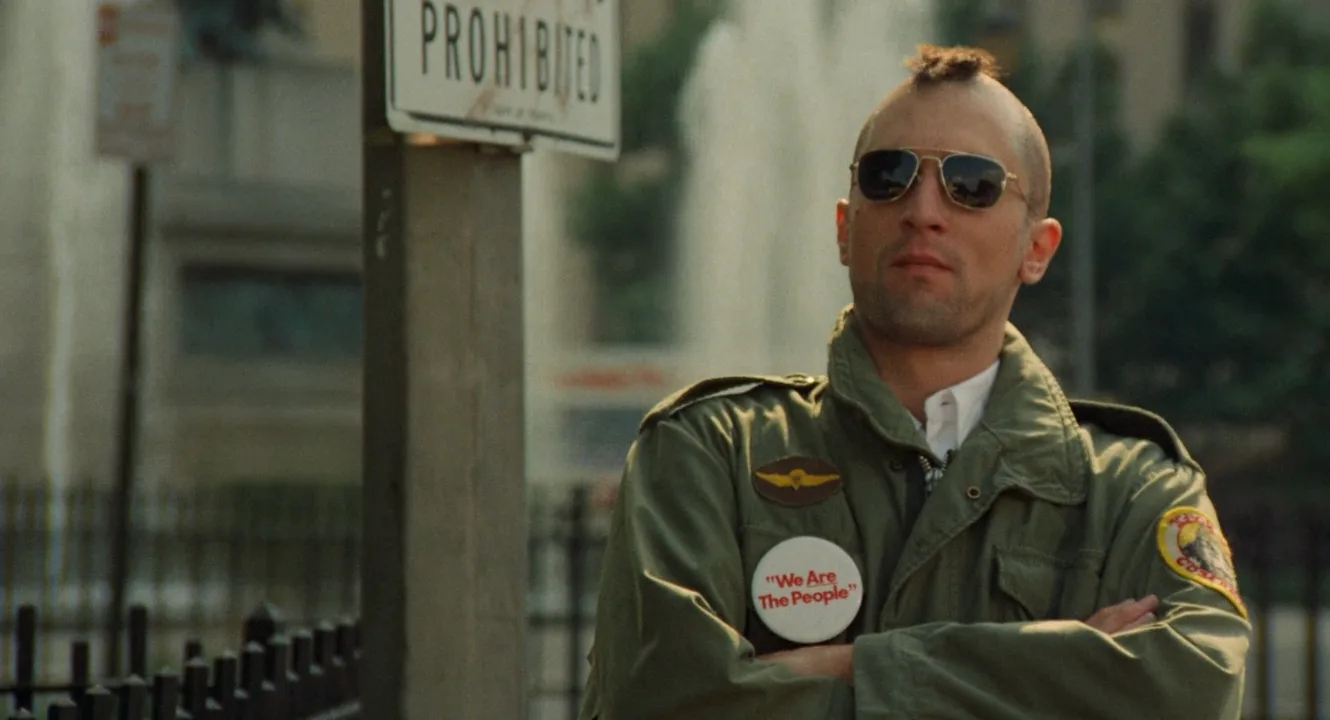
So a film can be naturalistic in every frame while telling a heightened story. Taxi Driver (1976) has naturalistic streets and rooms, but its voice-over and feverish climax are far from sober realism. Italian neorealism, filed under realism, was also a key source of naturalistic technique.
What is naturalistic acting?
Naturalistic acting hides its technique: overlapping lines, half-finished sentences, pauses and emotion that leaks out instead of being presented.
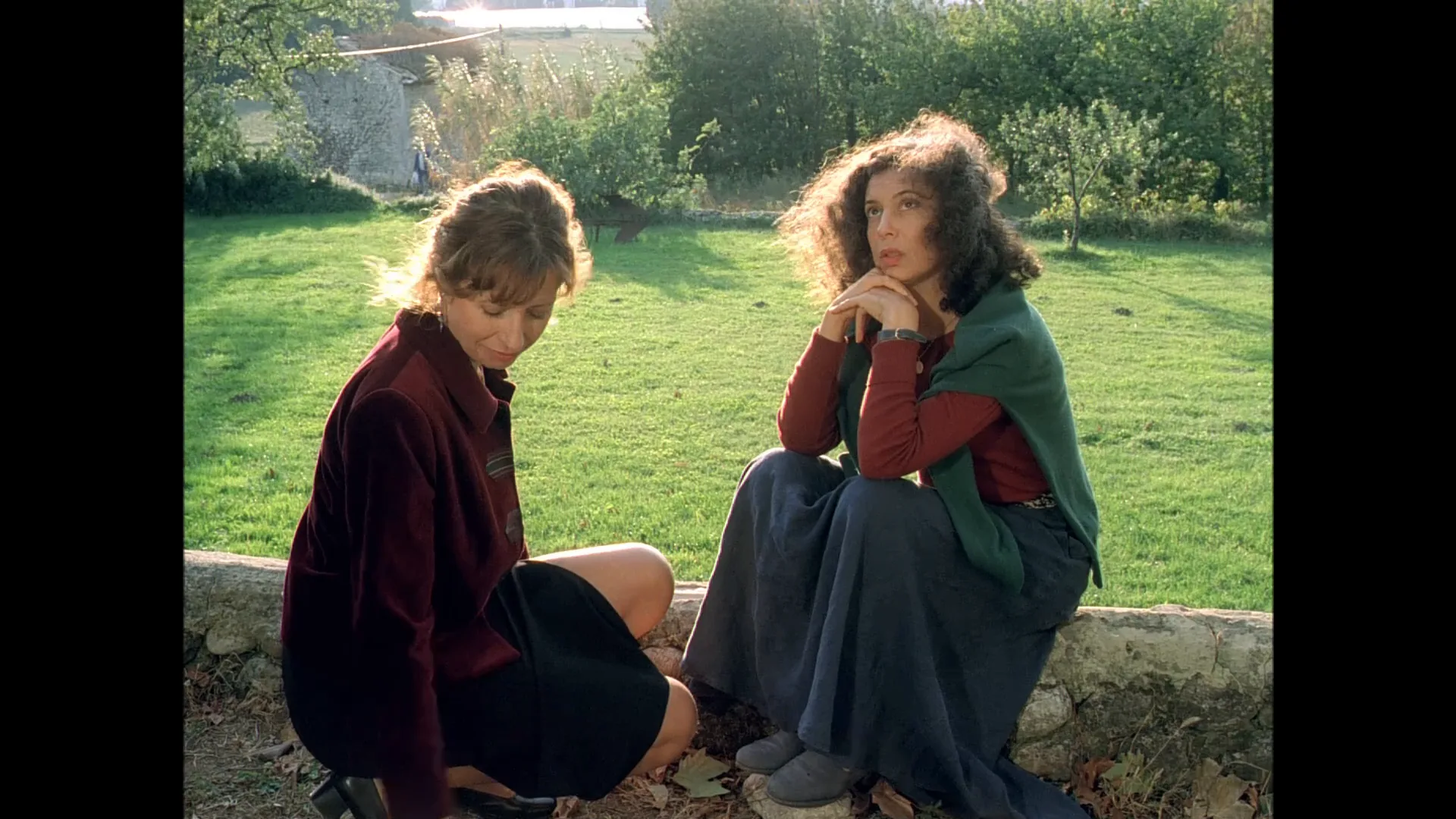
John Cassavetes let scenes run long. Mike Leigh develops characters with his cast before a script exists. Ken Loach often withholds pages so actors react freshly. The mumblecore films pushed the same instinct into improvised conversation.
Naturalistic does not mean small. Real people shout and interrupt; what matters is playing to the other person, never to the camera.
Why filmmakers choose naturalism
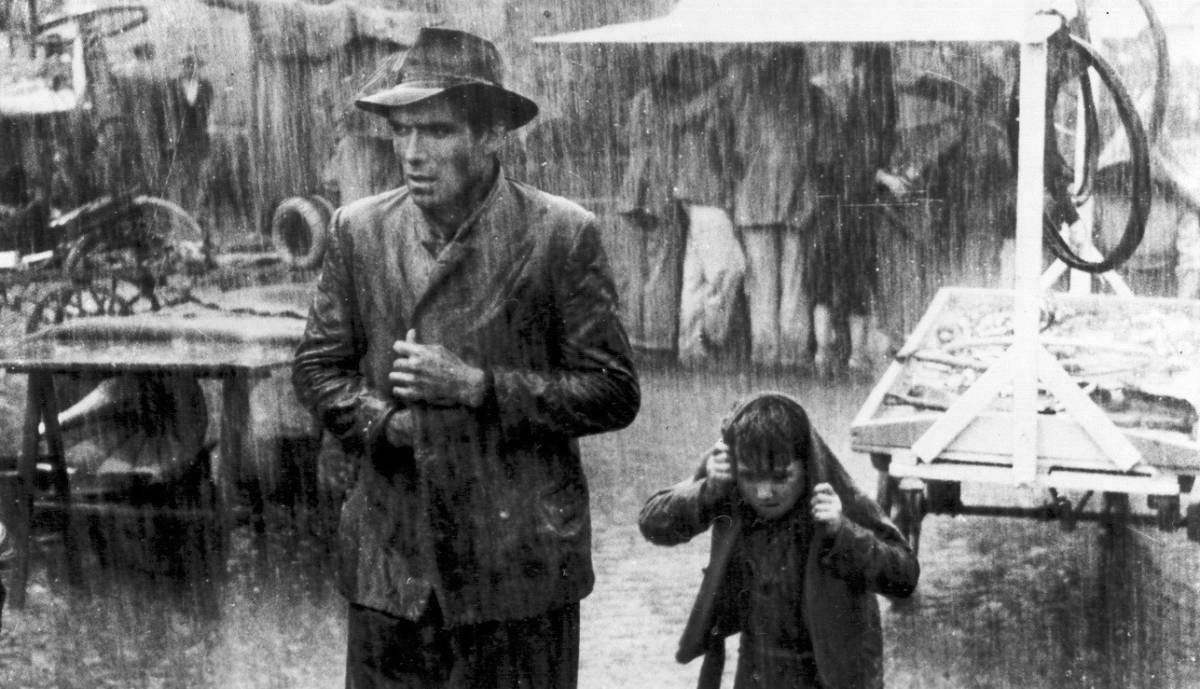
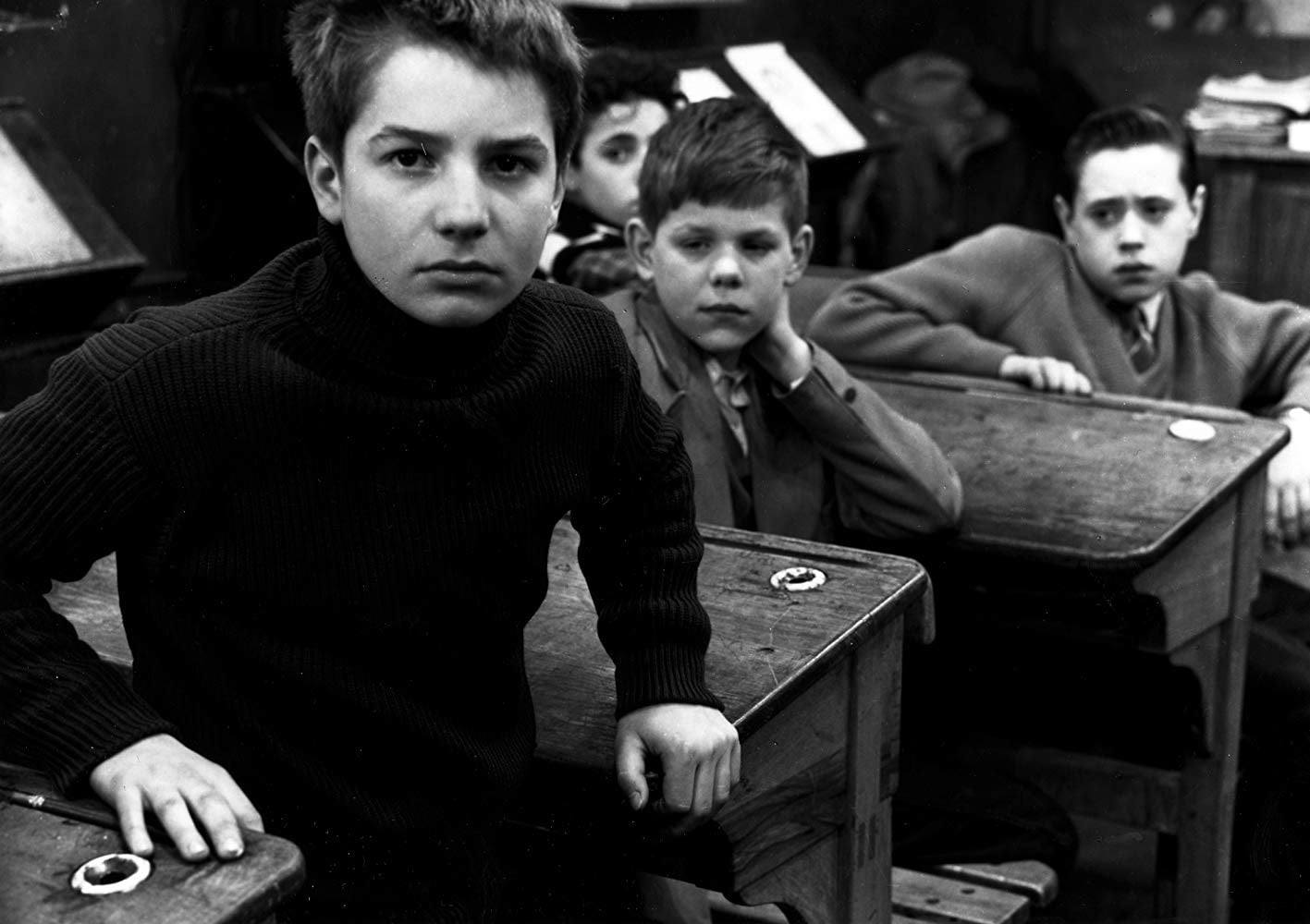
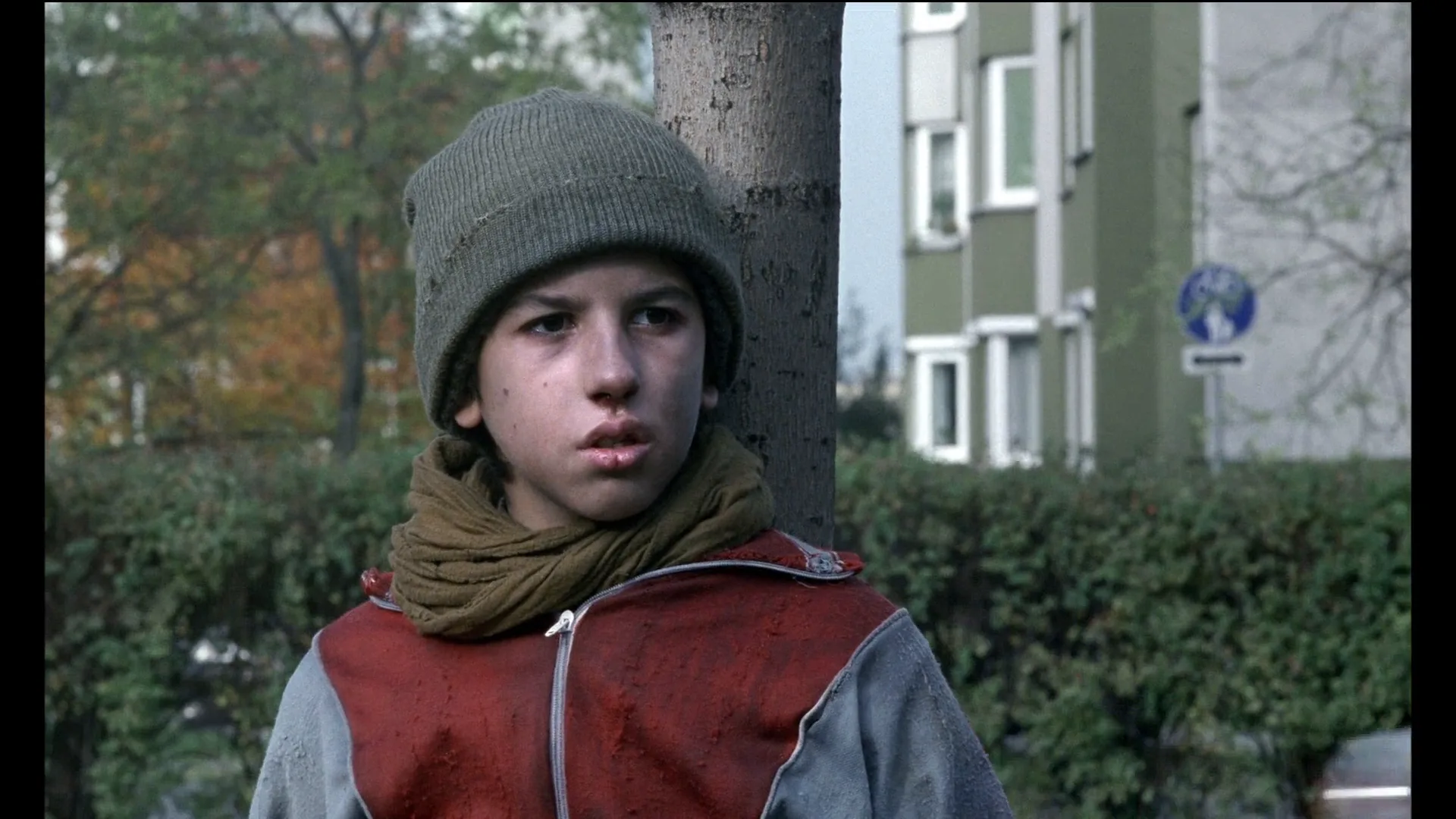
The main effect is trust. When nothing looks arranged, the viewer stops checking the seams and starts reading behavior. Small events gain weight: a stolen bicycle in Bicycle Thieves (1948), a boy adrift in Paris in The 400 Blows (1959), a summer at a motel in The Florida Project (2017).
The environment becomes the argument: the motel or the housing estate is why the characters behave as they do. In genre films, a believable first act makes later violence land harder.
How to shoot a naturalistic scene
- Start with the place. Pick a real location with its own clutter and noise, scouted at the hour you will shoot.
- Light from the sources. Build on ambient light: windows, fluorescents, a TV, a streetlight. Hide added units and match their direction and color to a visible source. Let faces fall into shadow.
- Lens and height. Stay between 24mm and 50mm on full frame, at the character's eye level: 1.5–1.7 m for adults, lower for children.
- Let the camera react. A handheld camera that follows a beat late feels observed; a tripod with modest pans works too. A move that anticipates the actor breaks the illusion.
- Block loosely. Mark actors for light, not every line, and cover with two cameras so overlaps survive the edit.
- Grade gently. Neutral whites, real skin.
Naturalism examples in film
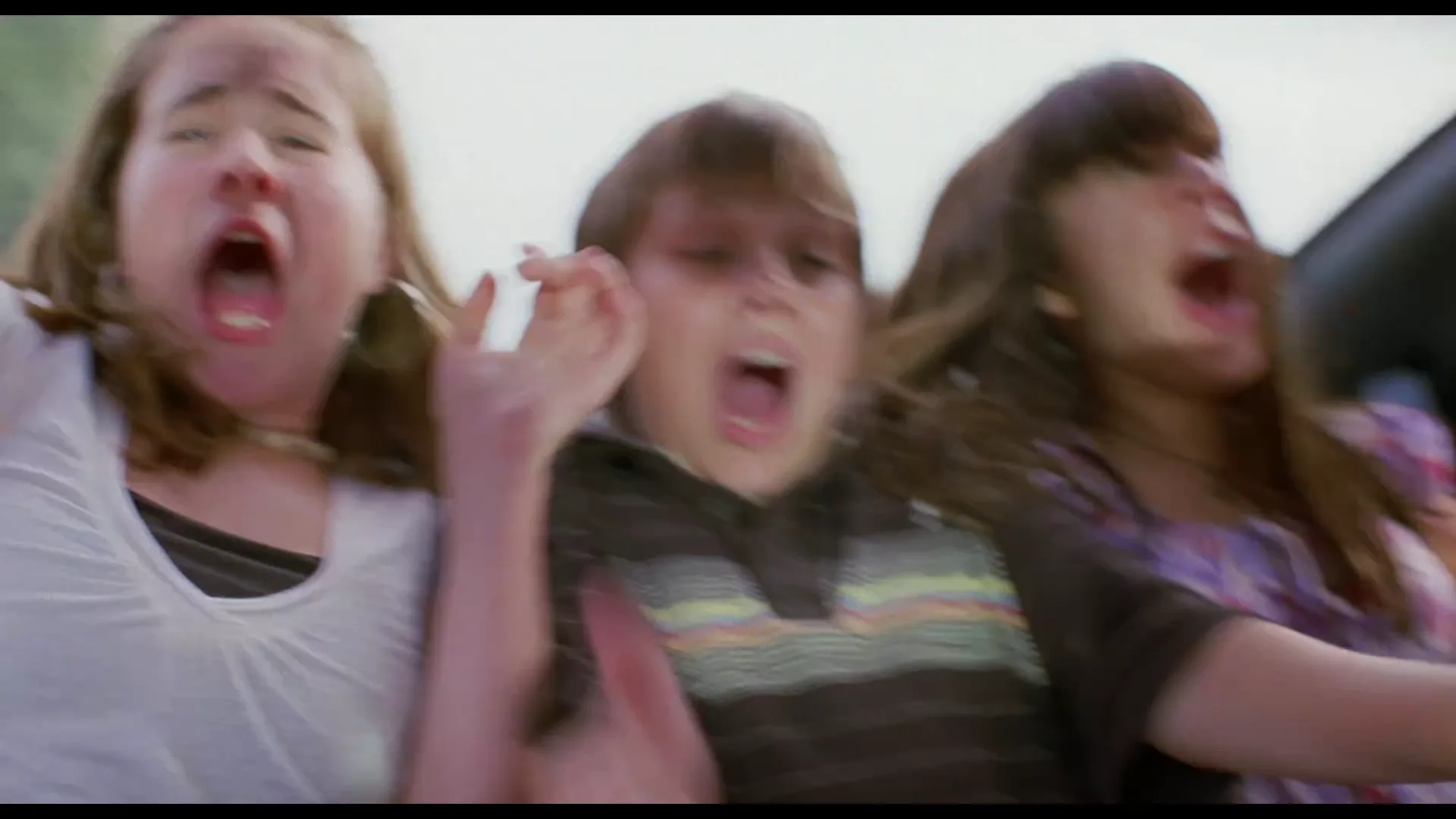
7 framesFrames from seven decades where light, place and behavior look found rather than staged.
How to create a naturalism with AI
4 promptsImage models default to polished, commercially lit pictures, so ask for naturalism explicitly: a named light source, eye-level height, an ordinary place, unposed bodies. On a FlashBoards board, keep reference frames beside each take and compare. The fourth prompt re-shoots a real film shot from a text description alone, and the original plays next to the result so you can compare.
35mm film still, naturalistic, unposed moment. A wiry 11-year-old girl with a sunburned nose, a chipped front tooth and a frayed yellow tank top sits on the curb of a motel parking lot eating a melting orange popsicle; her brother, about 6, in oversized red basketball shorts, crouches beside her poking at a crack in the asphalt. Camera at child eye level, 32mm lens, medium wide. Flat late-afternoon sun from the left, pale blue sky, faded lilac motel wall with numbered doors behind. Real skin texture, dusty knees, muted color, fine grain.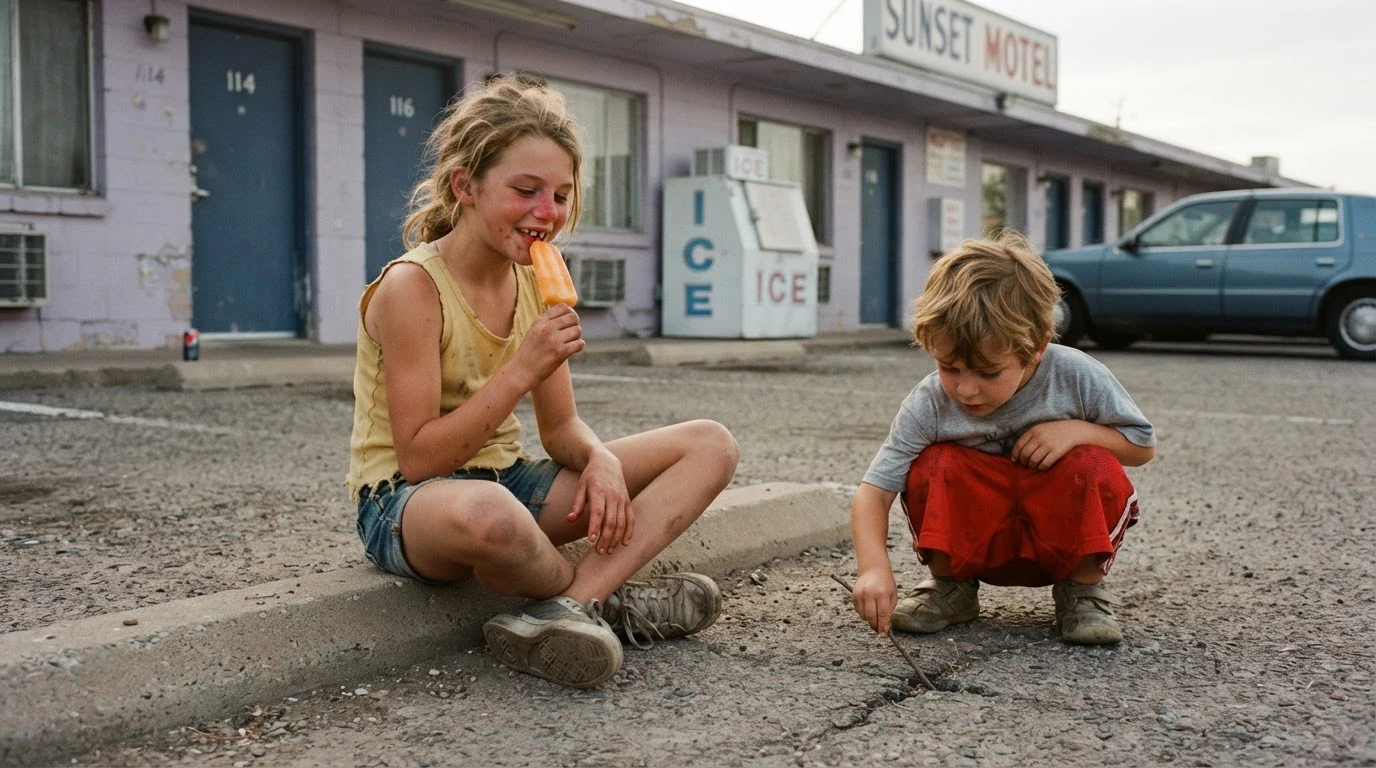
"Unposed moment" and unflattering details (sunburn, chipped tooth, dusty knees) keep the kids from looking like a catalog. "Child eye level, 32mm" keeps the frame human, and one named source, the late sun, prevents studio fill.
Open FlashBoardsNaturalistic film still. A heavyset man in his fifties with grey stubble, a stained work polo and a bandaged thumb pours instant coffee at the counter of a cramped apartment kitchen at dawn, while his teenage daughter with a messy auburn bun eats cereal standing up behind him. Only light: cold window light from the right and a small warm bulb over the stove; the far side of the room falls into shadow. Eye level, 35mm, off-center framing, dishes in the sink, bills on the fridge. Neutral grade, real skin, visible grain.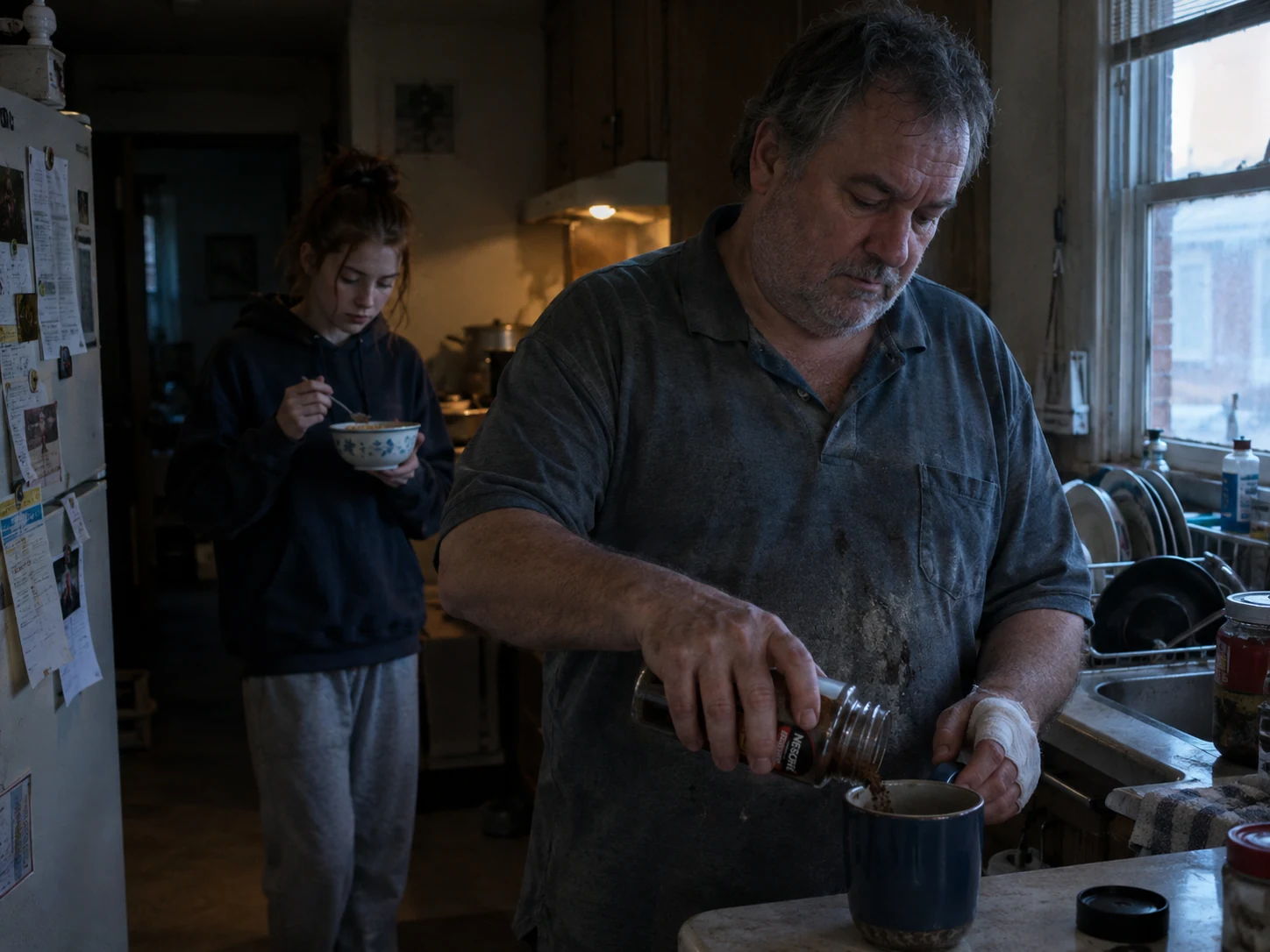
Interiors are where models over-light. Naming two practical sources and a shadowed far side keeps contrast honest; clutter makes the room lived in.
Open FlashBoardsCamera: handheld at the children's eye level, gentle natural sway, drifting slowly left about half a meter across the shot. Action: The girl is already licking the popsicle as orange drips run down her wrist, and she wipes it on her shorts. Her brother flicks a small stone across the asphalt and looks up at her, laughing. She nudges him with her elbow, he tips onto his side, and both laugh in the flat sun against the motel wall."Already licking" makes the shot alive from frame one. The small handheld drift reads as an observer, and every action uses only what recipe 1 shows.
Open FlashBoards{
"output": "Full-screen live-action scene from The Florida Project (2017) from its very first frame: one continuous shot. Sun-bleached 35mm color, fine grain, hard midday summer sun from high above as the only light, saturated blue sky with puffy white clouds over a wide empty parking lot, a line of green trees on the horizon, a red stop sign far left.",
"characters": {
"S1": {
"name": "Scooty, played by Christopher Rivera",
"look": "boy about 7, short dark hair, loose lime-green T-shirt; left third, his back to the camera, face only in three-quarter profile turned to the right",
"voice": "silent; he never speaks"
},
"S2": {
"name": "Moonee, played by Brooklynn Prince",
"look": "girl about 6, light-brown hair in a long low ponytail, faded gray-white tank top with pink trim; centre, her back to the camera, the one vanilla soft-serve cone in her right hand",
"voice": "high, bright little-girl voice"
},
"S3": {
"name": "Jancey, played by Valeria Cotto",
"look": "girl about 7, very long straight copper-red hair down her back, bare shoulders; right edge, closest to the lens, seen only from behind",
"voice": "small, hopeful little-girl voice"
}
},
"shots": [
{
"shot": 1,
"camera": "locked-off, the frame never moves; low at the children's shoulder height directly behind them, tilted slightly up so the sky fills the upper half; medium-wide, normal lens, the three kids cut at mid-back along the bottom edge; we watch them from behind like a passer-by, seeing the backs of their heads, their faces only in profile",
"action": [
"BEGINNING: alive from the first frame, the three stand in a row facing the empty lot, backs to the camera; Moonee holds the cone up between her face and Scooty's, and Scooty leans in and licks it, eyes lowered, his head pressed against hers; Jancey stands still.",
"THEN: Scooty pulls back and straightens up, looking down at the cone; Jancey stretches her hand nearest Moonee toward the cone, palm open, and holds it there.",
"THEN: Scooty turns his head a little further right, grinning, and wipes his mouth with his fingers; Moonee raises the cone and turns her head right into side profile toward Jancey, smiling, her face still turned away from the camera.",
"THEN: Moonee passes the cone to Jancey, both hands on it for a moment; Jancey licks it with both hands, her face hidden by her hair; Moonee and Scooty watch her in profile; far left a small gray car drives left to right along the road.",
"THEN: Jancey hands the cone back; Moonee bites into it with her mouth wide open, eyes squeezed, laughing; Jancey's hands flutter up near her face and drop.",
"END: Moonee eating the cone in side profile, Scooty grinning at her in profile, Jancey's red hair at the right edge; all three still have their backs to the camera, the frame unchanged."
],
"dialogue": [
{
"speaker": "S3",
"on_screen": true,
"when": "early, while Scooty licks the cone, before her hand reaches out; her face stays turned away",
"delivery": "hopeful, polite",
"line": "<d>[English] Can I have a bite on the ice cream then?</d>"
},
{
"speaker": "S2",
"on_screen": true,
"when": "at the very end, as she bites into the cone",
"delivery": "happy humming through a mouthful",
"line": "<d>[English] Mm, mm, mm.</d>"
},
{
"speaker": "S3",
"on_screen": true,
"when": "right after Moonee's hum, the last words of the shot",
"delivery": "pleased, quiet",
"line": "<d>[English] Pretty good.</d>"
}
]
}
],
"sound": {
"ambience": "open air of a quiet roadside lot on a hot afternoon, light breeze, a distant car heard passing, soft licking and small giggles",
"speech": "exactly these spoken phrases, each said once, in this order",
"never_spoken": "no narration and no voice-over: the descriptions, performance notes and step words of this prompt are never spoken aloud",
"music": "a film score under the scene, always below the voices: a light, sunny theme of soft plucked strings over a warm synth pad, playful and carefree",
"subtitles": "none"
}
}Remakes the ice-cream moment from The Florida Project (2017), dir. Sean Baker, DP Alexis Zabe: the prompt kept the static child-height frame from behind, the flat summer sky over an empty lot, the cone passing from Moonee to Jancey and back, and the film's own lines.
Naturalism is restraint: a locked-off camera at the kids' height, the sun as the only light, an empty lot, the film's own unscripted-sounding lines, and a small task (sharing one cone) instead of a performance.
Open FlashBoardsCommon mistakes
- Too pretty. Write specific imperfections (sunburn, stubble) and "real skin texture".
- Studio fill. Name one or two sources and where shadows fall.
- Posing. Describe a task in progress so people stop facing the lens.
- Showy video camera. Ask for handheld at eye level reacting a beat late.
Keep the reference frames, prompts and every generated take side by side — images and video in one canvas.
FAQ
4 questionsWhat is naturalism in film?
Naturalism in film is a style aiming for an illusion of unmediated life: unstylized acting, available or motivated light, real locations and technique the audience does not notice. Examples include Greed (1924), The 400 Blows (1959), Rosetta (1999) and The Florida Project (2017).
What is the difference between naturalism and realism?
Realism is the broad goal of showing the world truthfully, often through long takes, deep focus and restraint. Naturalism is narrower: it concerns behavior, light and sets that look unarranged, and often a view in which environment explains character.
What is naturalistic acting?
Naturalistic acting is performance without visible technique: overlapping dialogue, pauses, unfinished sentences and emotion that slips out rather than being displayed. It grew from Stanislavski and the Method and is often built through improvisation or non-professional casting.
Is naturalism the same as a documentary look?
Not quite. A documentary look borrows signs of news shooting: shaky handheld, zooms, searching focus. Naturalism can use them, but it can also be shot on a tripod with precise framing, as in many Rohmer or Haneke films. What defines it is that behavior, light and place feel found.
Related terms
5- RealismFilm Movements & Styles
Realism in film is the broad tradition — theorized by André Bazin — of showing the world as it is: long takes, deep focus, real places and restrained style that let reality speak rather than montage or spectacle.
- Italian NeorealismFilm Movements & Styles
Italian Neorealism is the post-WWII movement — Rossellini's Rome, Open City, De Sica's Bicycle Thieves — that took cameras into ruined streets with non-professional actors to tell stories of poverty and ordinary people.
- Ambient LightLighting
Ambient (available) light is whatever light already exists at a location — sun through windows, street lamps, shop signs — before the crew adds its own; DPs either shoot with it as it is or shape and supplement it.
- Filming LocationFilmmaking Process & Crew
A location is any real place used for filming outside a studio; location scouting finds and vets it for look, sound, light, access, permits and cost, and the location manager secures it.
- MumblecoreFilm Movements & Styles
Mumblecore is the 2000s American micro-budget indie movement — Andrew Bujalski, the Duplass brothers, Joe Swanberg — built on improvised, naturalistic dialogue among twentysomethings, cheap digital video and domestic locations.
Further reading
Émile Zola, The Experimental Novel (1880) — the literary theory of naturalism. André Bazin, What Is Cinema? — essays on realism and neorealism.