 FlashBoards Learn
- Learn
- Film Movements & Styles
- New Hollywood
Film Movements & Styles · Film language
New Hollywood
Also called: American New Wave, Hollywood Renaissance
New Hollywood, also called the American New Wave, is the period from about 1967 to 1980 when young directors such as Coppola, Scorsese, Altman and Friedkin made darker, more personal American films. Real locations, anti-heroes, open endings and loose camerawork made audiences feel the country's unrest rather than escape it.
- What it does
- Replaces studio polish with real streets, flawed heroes, grain and endings that refuse to reassure.
- Use it when
- You want 1970s American realism: moral ambiguity, natural light, zooms and a lived-in, unglamorous world.
- Watch out
- Brown grading and wide lapels are not the style; the unresolved characters and real places are.
- Try this prompt
1970s American film still, 35mm grain, zoom lens wide shot, fictional drifter at a desert gas station at magic hour, muted warm color
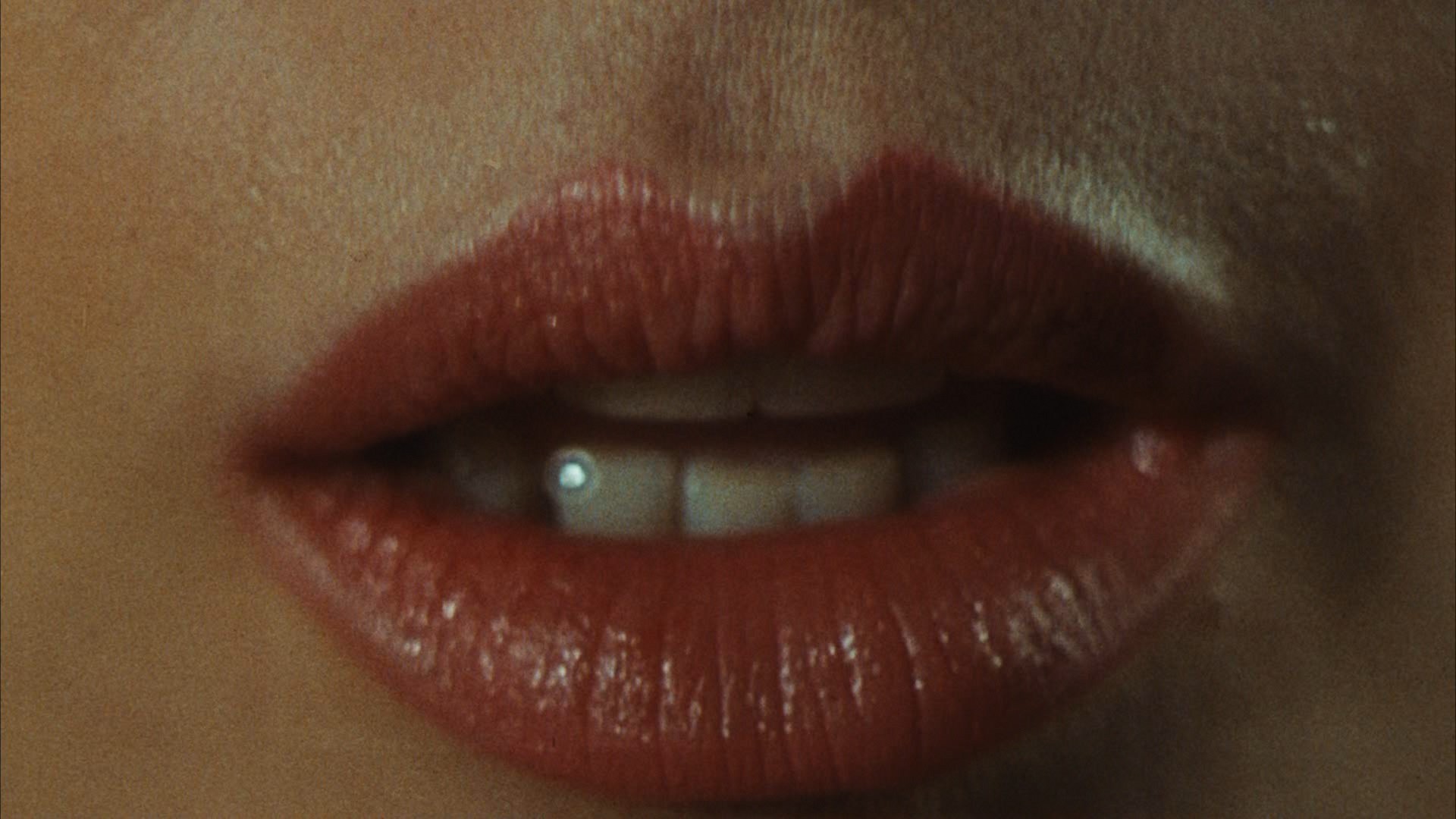
What is New Hollywood?
New Hollywood is a period of American filmmaking, not a manifesto or a school. Between the late 1960s and 1980 the major studios, losing money and audiences, handed unusual control to directors in their twenties and thirties. Many had studied European art cinema. They took up the idea of the director as author, the auteur theory, and applied it to crime films, westerns, road movies and satires.
It counts among the major film movements because the change was visible on screen: frank sex and violence, protagonists who lose, and a camera out in real American towns instead of on the backlot.
How did New Hollywood begin?
The Hollywood studio system was already broken. The 1948 Paramount decision forced studios to sell their theaters, television took the family audience, and costly roadshow musicals lost money.
Two 1967 films pointed the way. Arthur Penn's Bonnie and Clyde mixed comedy with shockingly bloody violence. Mike Nichols's The Graduate turned a young man's aimlessness into a hit. In 1968 the MPAA ratings replaced the Hays Code, and Midnight Cowboy (1969) won Best Picture with an X rating. The low-budget Easy Rider (1969) earned many times its cost and proved small, personal films could pay.
What defines a New Hollywood film?
Anti-heroes and open endings. Outlaws, drifters and burned-out cops who rarely win. Chinatown (1974) ends with the crime unpunished.
Real places. The French Connection (1971) shot its chase through actual New York traffic; The Last Picture Show (1971) used a real Texas town and black-and-white film.
A looser camera. Handheld operating, long telephoto lenses and the zoom shot as a storytelling tool. Robert Altman used slow, searching zooms in McCabe & Mrs. Miller (1971) and let actors talk over each other in Nashville (1975).
Darker images. Gordon Willis top-lit The Godfather (1972) so the eyes fell into shadow; Vilmos Zsigmond flashed the negative on McCabe & Mrs. Miller for a faded, smoky palette.
How to shoot the New Hollywood look
Format. 35mm color negative framed at 1.85:1, or anamorphic 2.39:1 for landscapes. Keep visible grain and lifted, never crushed, blacks.
Lenses. A 25–250mm zoom does most of the work. Use slow zoom-ins of 3–6 seconds to find a face, and 150–300mm telephoto from across the street so passersby ignore the camera.
Light. Motivate everything from windows, practicals and streetlights. For a Willis-style interior, put one soft source directly above the actor and let the room fall a stop or two under. Exteriors play at magic hour or under flat overcast.
Locations and blocking. Real diners, motels, highways and apartments with little dressing. Let dialogue overlap and hold wide masters longer than feels safe.
Color. Muted and warm: ochre, olive, faded red.
Why did New Hollywood end?
Success changed the business. Jaws (1975) and Star Wars (1977), made by directors of the same generation, showed that wide-release event films could earn far more than personal dramas, and studios reorganized around the blockbuster. When Michael Cimino's Heaven's Gate (1980) ran far over schedule and failed, studios took control back from directors through the 1980s.
New Hollywood vs. French New Wave
The French New Wave came first, from about 1958: critics turned directors making cheap films outside the industry, with jump cuts and playful form. New Hollywood absorbed those tools but worked inside the studios, with stars and genre stories. The French questioned how cinema tells a story; the Americans kept classical genres and filled them with doubt.
New Hollywood examples in film
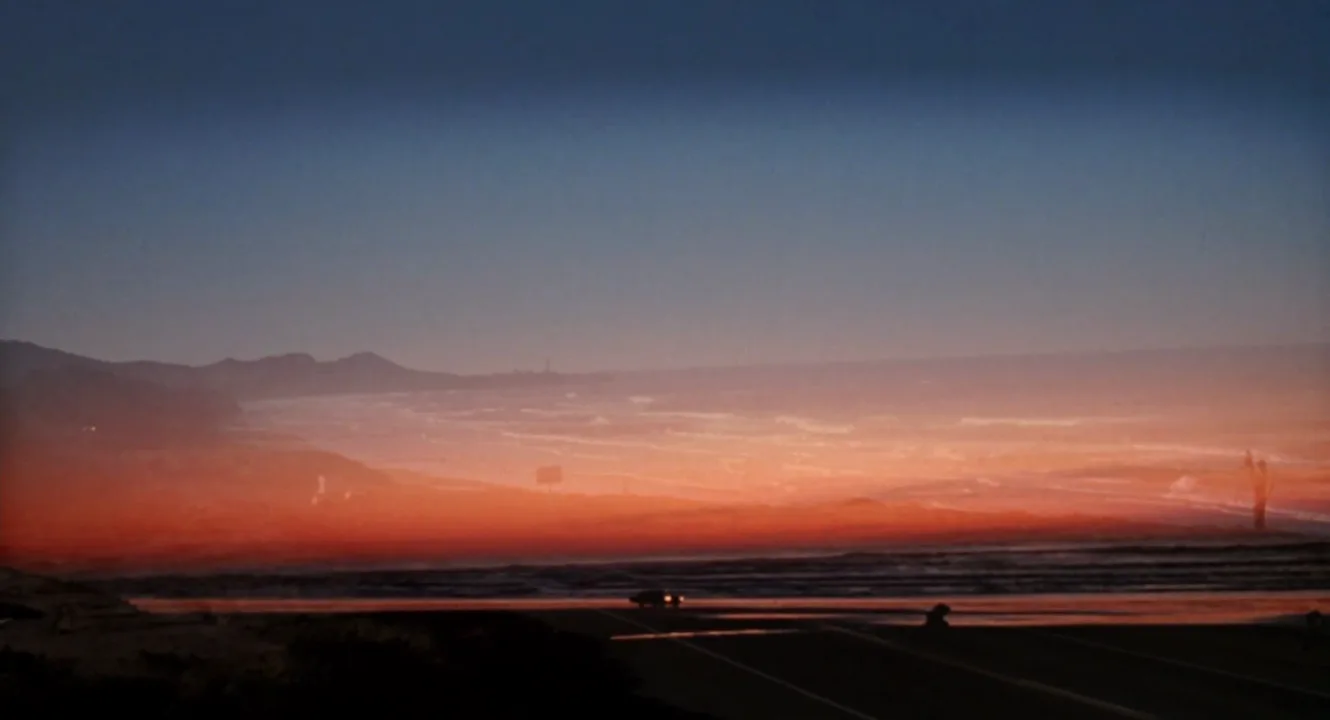
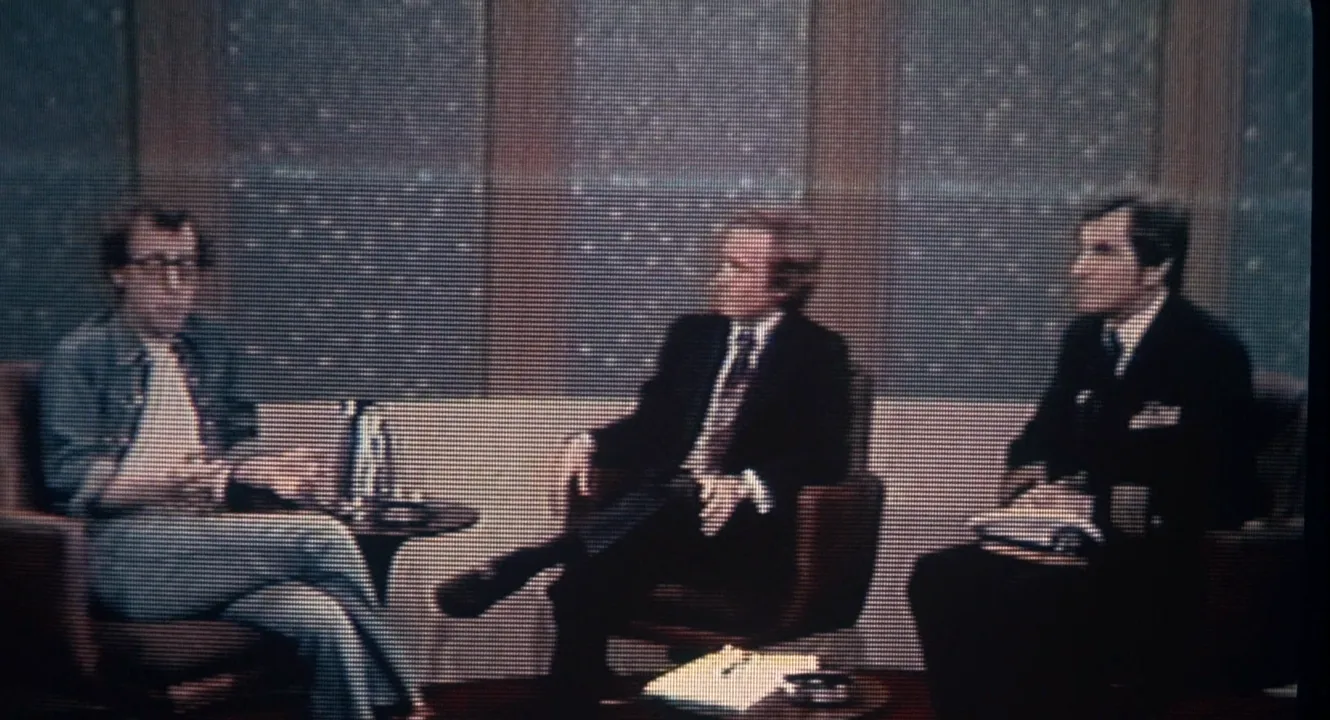
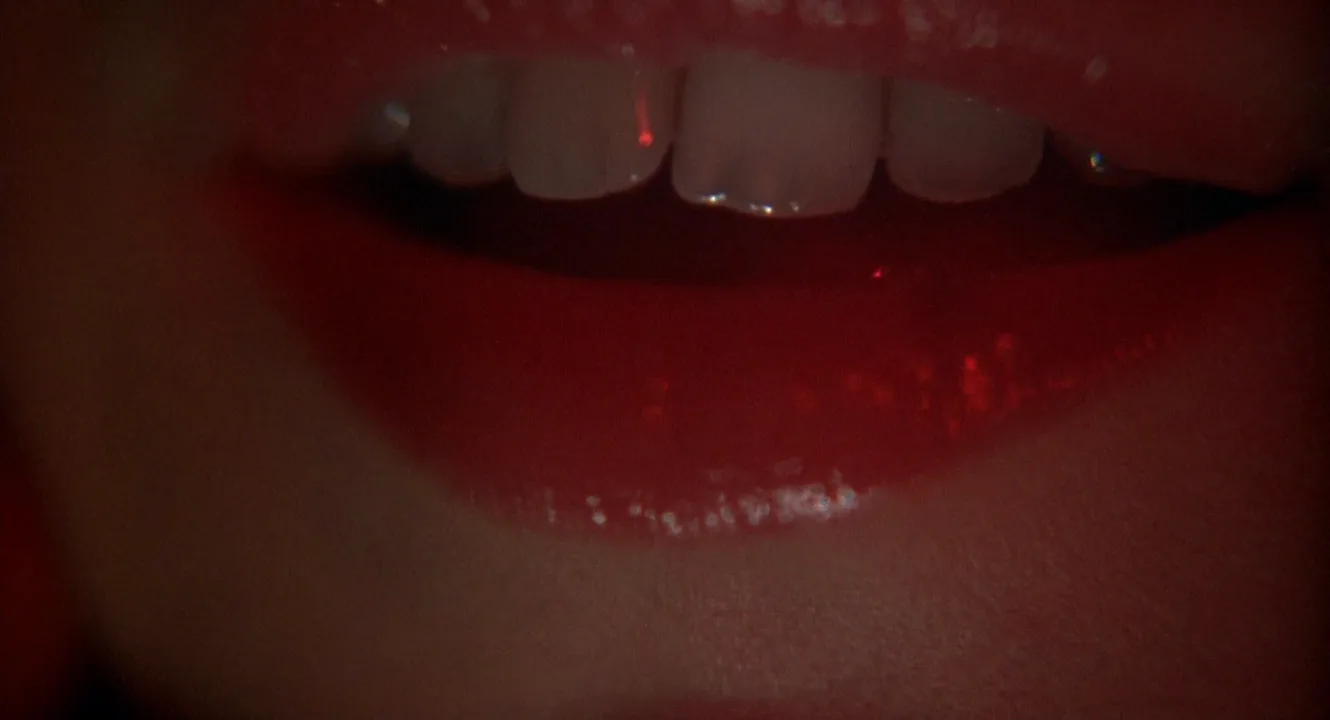
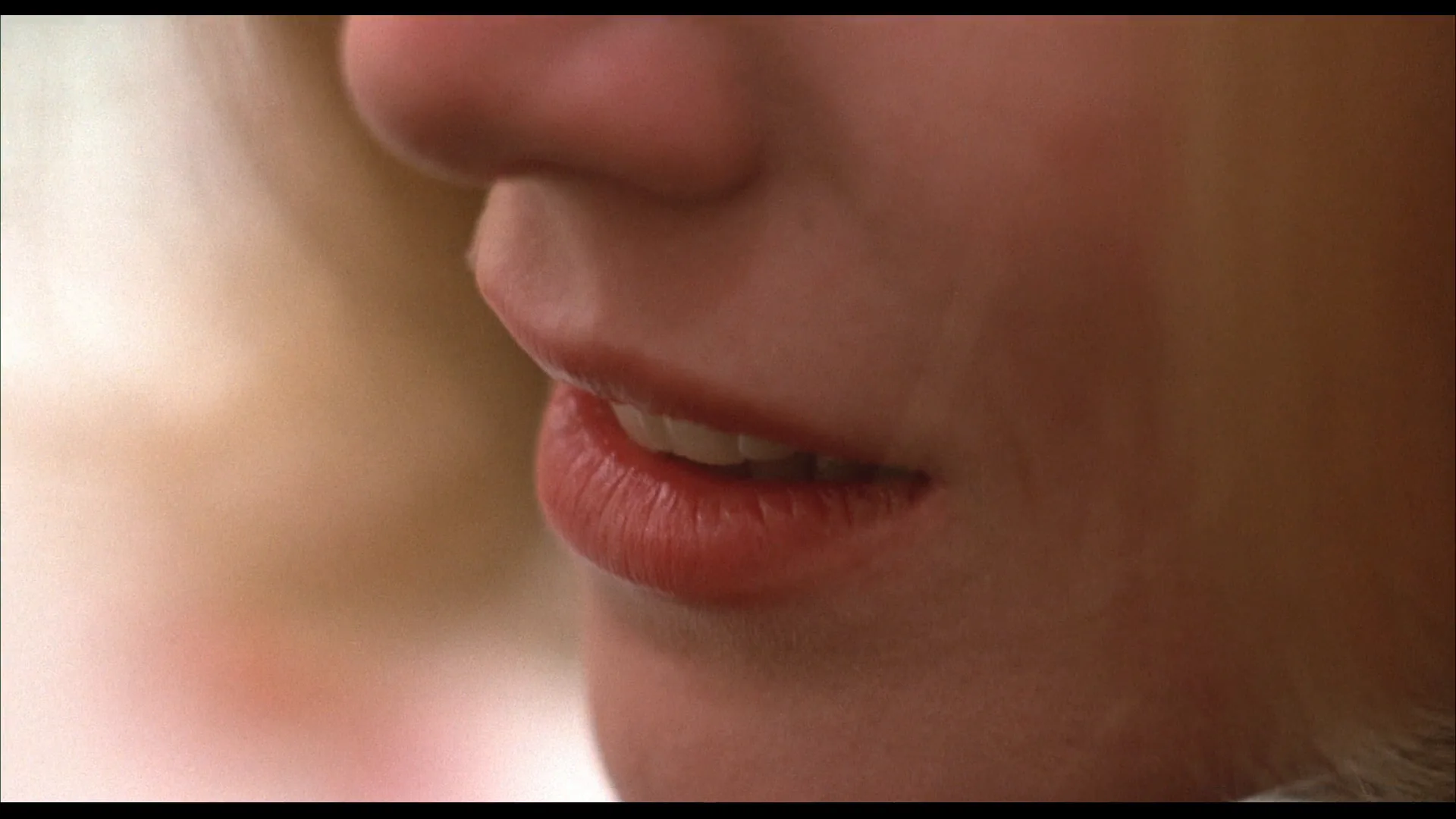
6 framesFrames from the era and its orbit, including a Cassavetes independent and the Scorsese film that followed it.
How to create a new hollywood with AI
4 promptsDescribe the film stock, the lens and a specific fictional person in a real-looking place; naming a famous film pulls models toward its actors. In FlashBoards, keep period stills, the start frame and every take on one board so grain and palette match across a sequence. The fourth prompt re-shoots a real film shot from a text description alone, and the original plays next to the result so you can compare.
1970s American film still, 35mm color negative, wide shot on a zoom lens at 40mm from eye level: a fictional drifter leaning against a dusty pale-blue pickup at a desert gas station at magic hour. Wiry man in his early thirties, shaggy sandy hair, drooping mustache, chipped front tooth, faded denim jacket over a mustard T-shirt. Two old gas pumps, low sun from frame left raking across the gravel. Muted warm color, soft contrast, visible grain, lifted blacks.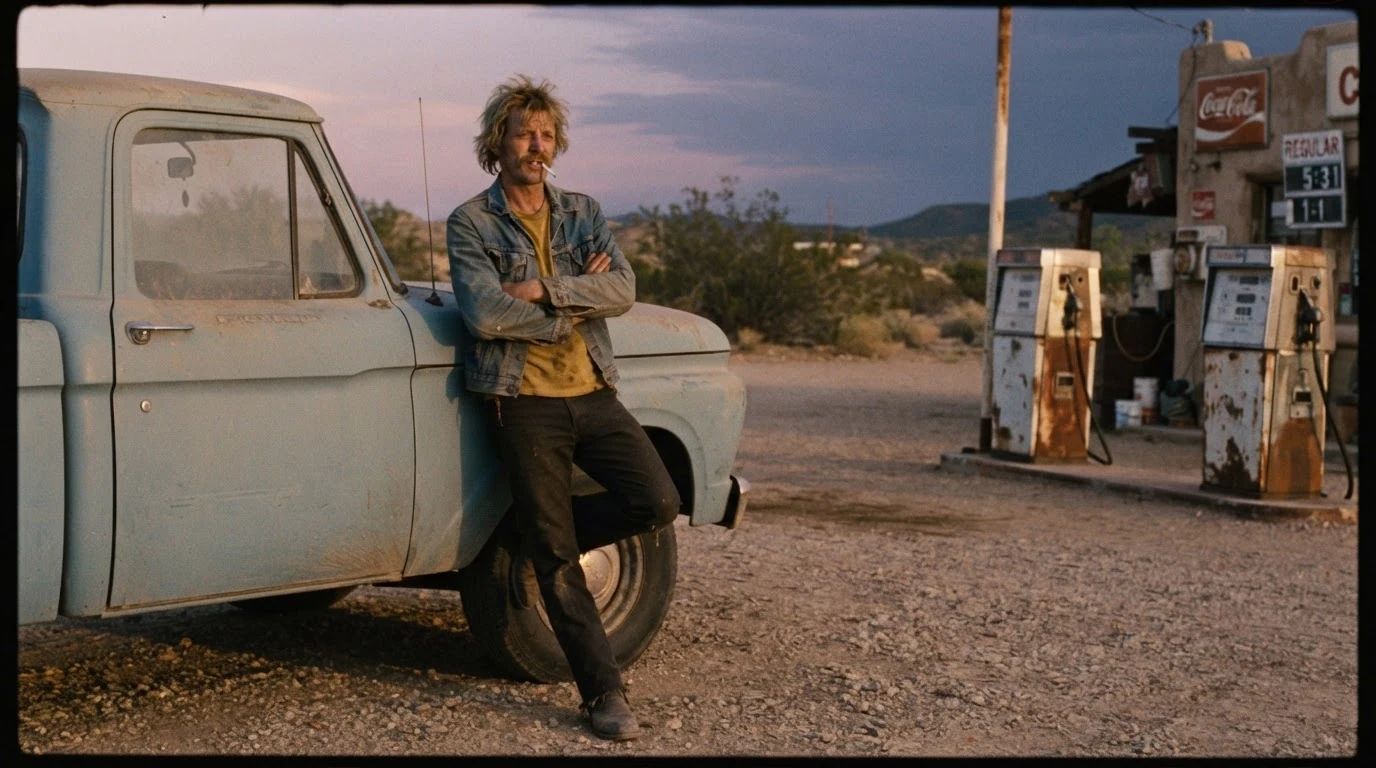
"35mm color negative," "visible grain" and "lifted blacks" set the stock; "zoom lens at 40mm from eye level" keeps the frame observational. The chipped tooth and mustache make him a specific fictional face.
Open FlashBoardsWidescreen 1970s crime drama still, anamorphic 2.39 frame: a dim wood-paneled back office at night, a fictional union boss behind a cluttered desk. Heavyset man in his late fifties, receding gray hair combed back, thick black-rimmed glasses, brown three-piece suit, hands folded. One soft overhead light directly above him, eye sockets in shadow, the room falling into near darkness. Underexposed, warm, heavy film grain.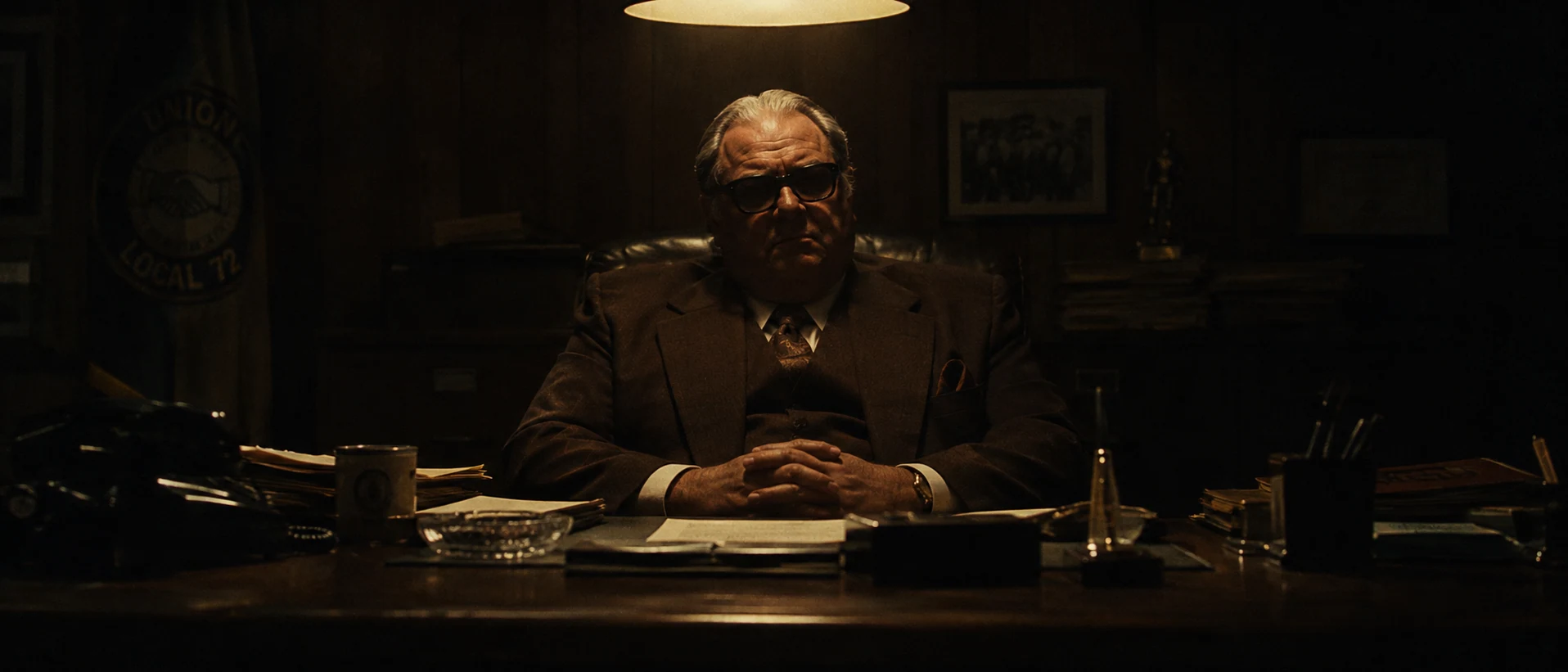
"One soft overhead light directly above him, eye sockets in shadow" and "underexposed" carry the era's top-lit interiors; the cluttered desk gives the widescreen frame depth.
Open FlashBoardsCamera: tripod-mounted, a slow, steady zoom in from the wide shot toward the drifter's face across the whole clip, ending in a medium close-up. Action: The drifter is already shifting his weight against the pickup, squinting into the low sun. He pushes off the truck, takes two slow steps toward the gas pumps and stops. He glances back at the pickup, then looks down the road."Tripod-mounted" plus "slow, steady zoom in" gives the period zoom rather than a dolly push. "Already shifting his weight" makes the shot alive from frame one; the action uses only what the start frame holds.
Open FlashBoards{
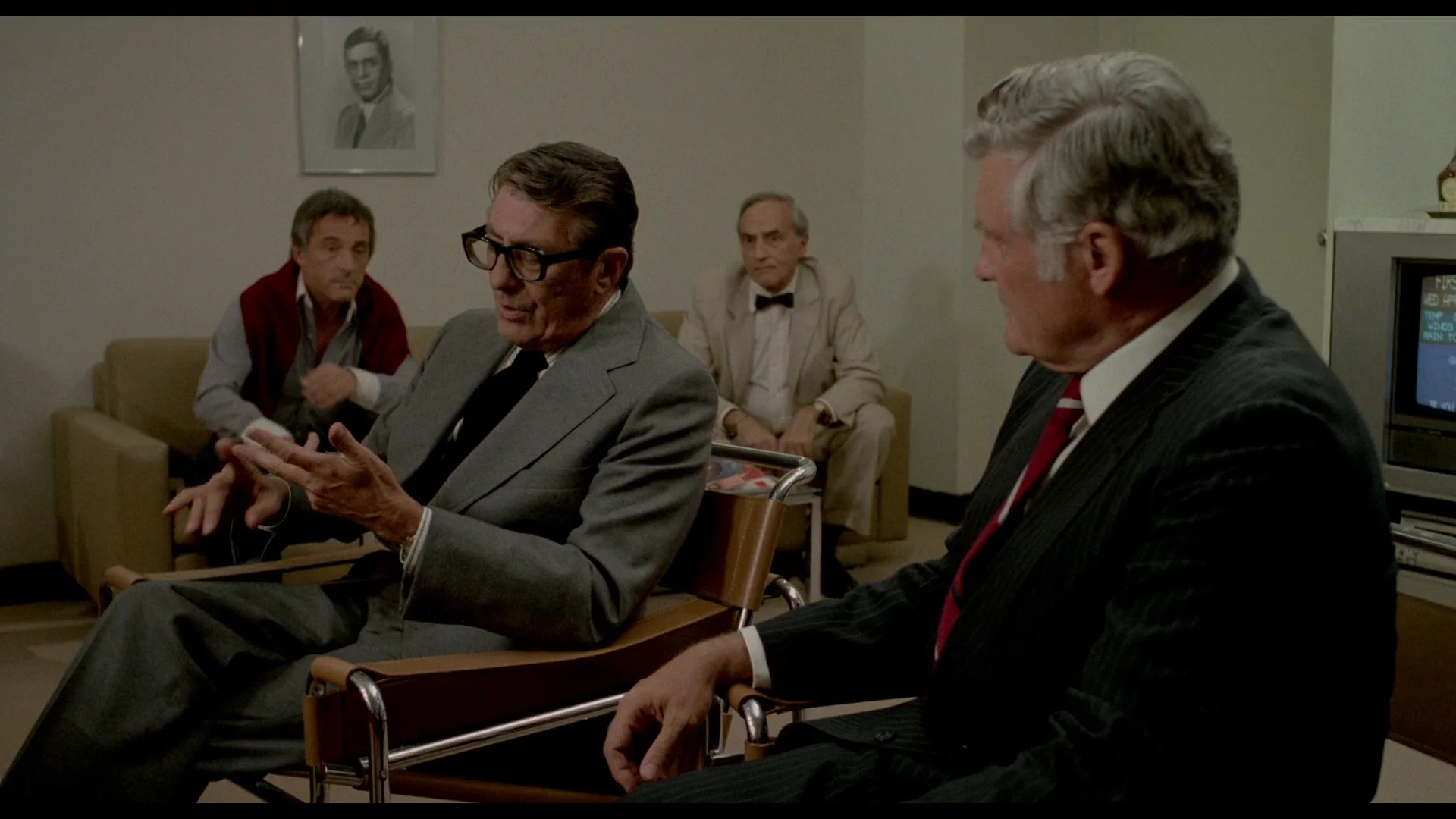
"output": "Full-screen live-action scene from The King of Comedy (1982) from its very first frame: one continuous shot, a static wide master of a tense meeting. Early-1980s 35mm color negative, fine visible grain, lifted blacks, flat, soft, even overhead office light, muted olive-gray walls, beige leather and gray suits, a plain bare-walled TV-network office in New York.",
"characters": {
"S1": {
"name": "Bert Thomas, played by Frederick de Cordova",
"look": "man around seventy, dark hair streaked with gray combed straight back, heavy black square-framed glasses, light gray suit, white shirt, dark tie, a gold ring on one hand; sits in a low chrome-tube armchair with a brown leather sling, angled toward frame right",
"voice": "dry, measured older man's voice, a little raspy, thinking aloud with pauses"
},
"S2": {
"name": "the man in the dark suit (an uncredited role in this scene)",
"look": "heavyset older man with thick silver-white hair, dark navy pinstripe suit, white collar, dark red tie; seen from behind at three-quarters in the right foreground, sitting in a matching chrome-and-leather armchair, turned toward S1",
"voice": "silence: he never speaks in this video"
},
"S3": {
"name": "the man in the red vest (an uncredited role in this scene)",
"look": "man in his forties, dark wavy hair going gray, maroon knit vest over a pale gray shirt; sits on a tan leather sofa in the far left background, leaning forward with elbows on his knees and hands clasped",
"voice": "silence: he never speaks in this video"
},
"S4": {
"name": "the older man in the bow tie (an uncredited role in this scene)",
"look": "thin, bald man in his seventies with gray hair at the sides, cream jacket, white shirt, black bow tie; sits upright on a chair against the back wall at frame centre, hands resting in his lap",
"voice": "silence: he never speaks in this video"
}
},
"shots": [
{
"shot": 1,
"camera": "locked-off tripod, completely static for the whole shot, at the eye level of the seated men, normal lens, wide group shot with four men in depth: S2's silver head and dark shoulder fill the right third in the near foreground, back three-quarters to camera; S1 in the left-centre third at mid-distance, facing frame right toward S2; S3 on a tan sofa in the far left background behind S1; S4 against the back wall at frame centre, between S1 and S2. High on the pale olive-gray wall behind S1 hangs a framed black-and-white portrait photograph of a man; a small TV monitor with a blue screen glows at the right edge. Framing, focus and exposure stay exactly the same from first frame to last; nobody enters or leaves.",
"action": [
"BEGINNING: alive from the first frame, S1 is already talking to S2, head turned to frame right, eyes on S2's face, both hands raised in front of his chest, fingers spread, palms tilted up; S2 sits still facing S1, the hand on the screen-left side resting on the chrome armrest; S3 leans forward on the sofa, eyes on S1; S4 sits upright, hands in his lap, eyes on S1.",
"THEN: S1 speaks slowly with pauses, both hands turning in small circles as he weighs each phrase, the gold ring catching the light; S2 tilts his head a touch further toward S1, then holds still, no nod.",
"THEN: S1 turns his face from S2 toward the front of the room, just right of the lens, eyebrows raised behind the glasses, still talking, then turns back to S2; his hands sink toward his lap, fingers still spread.",
"THEN: S3 turns his head to frame left and glances down at the sofa, then looks back at S1; S4 stays perfectly still.",
"THEN: S1 asks his question: the hand on the screen-left side swings out wide to frame left, palm up, while the other hand opens palm up in front of his chest, a two-handed shrug, his eyes back on S2.",
"THEN: S1 brings both hands together over his lap, then flicks the screen-left hand out to frame left once more, palm up.",
"END: S1 finishes the question as both hands settle on his lap, face turned toward the front of the room, eyebrows raised, waiting for an answer; S2, S3 and S4 sit still, all eyes on S1."
],
"dialogue": [
{
"speaker": "S1",
"on_screen": true,
"when": "from the first frame, stretched slowly over most of the shot with pauses between the phrases",
"delivery": "dry, measured, thinking it through aloud",
"line": "<d>[English] Suppose we tape him, he doesn't talk, it gets to be 11:30.</d>"
},
{
"speaker": "S1",
"on_screen": true,
"when": "right after the first line, as his hand swings out wide to frame left, running to the very end of the shot",
"delivery": "pointed, a real question to the room",
"line": "<d>[English] Do we put him on, no matter what?</d>"
}
]
}
],
"sound": {
"ambience": "quiet office room tone, a low air-conditioning hum, the soft rustle of S1's sleeves as he gestures, one faint creak of a leather chair",
"speech": "exactly these spoken phrases, each said once, in this order",
"never_spoken": "no narration and no voice-over: the descriptions, performance notes and step words of this prompt are never spoken aloud",
"music": "a film score under the scene, always below the voices: low, sparse sustained strings with a faint uneasy pulse, restrained and tense",
"subtitles": "none"
}
}Re-shoots the static office master from The King of Comedy (1982, DP Fred Schuler), carrying over Bert Thomas's two halting lines, his hand gestures, the three silent listeners fixed in depth and the locked-off eye-level frame that never cuts.
The JSON names Bert Thomas and gives him his two lines from the film, then locks the frame "completely static for the whole shot" with four men fixed in depth, so the argument plays out in one wide master held longer than feels safe.
Open FlashBoardsCommon mistakes
- Too clean. Models default to sharp digital. Write "35mm color negative, visible grain, lifted blacks."
- Costume party. "1970s style" gives disco outfits. Name worn materials: faded denim, a stained suit.
- Overlit interiors. Ask for "one overhead light, the room falling into near darkness."
- Dolly instead of zoom. In video, say "tripod-mounted, slow zoom in."
Keep the reference frames, prompts and every generated take side by side — images and video in one canvas.
FAQ
5 questionsWhat is New Hollywood?
New Hollywood is American filmmaking from about 1967 to 1980, when weakened studios gave young directors unusual creative control. Bonnie and Clyde, The Godfather and Taxi Driver brought anti-heroes, frank violence, real locations and downbeat endings into studio releases.
Who were the main New Hollywood directors?
The core group includes Francis Ford Coppola, Martin Scorsese, Robert Altman, William Friedkin, Peter Bogdanovich, Hal Ashby, Arthur Penn, Bob Rafelson, Brian De Palma and Terrence Malick. Cinematographers such as Gordon Willis, Vilmos Zsigmond and László Kovács shaped the era's darker, grainier look.
Is New Hollywood the same as the American New Wave?
Yes. American New Wave and Hollywood Renaissance name the same period. The first stresses the debt to the French New Wave; the second, the revival inside the studios after the Hays Code ended.
Why did the New Hollywood era end?
Blockbusters changed studio priorities. Jaws (1975) and Star Wars (1977) proved that heavily advertised event films earned far more than personal dramas, and after costly projects such as Heaven's Gate (1980) failed, studios took control back from directors.
What does a New Hollywood film look like?
Expect 35mm grain, muted warm color, motivated light and real locations. Interiors are often underexposed and top-lit; zooms, long telephoto shots and handheld operating replace the smooth dolly work of studio classics.
Related terms
5- Auteur TheoryFilm History & Theory
Auteur theory holds that the director is the true author of a film, whose personal style and themes recur across their work; it grew from Truffaut and Cahiers du cinéma's 'politique des auteurs' in the 1950s and was popularized in the US by Andrew Sarris.
- French New WaveFilm Movements & Styles
The French New Wave (late 1950s–60s) was launched by Cahiers du cinéma critics turned directors — Truffaut, Godard, Chabrol, Rohmer — who shot cheaply on the streets with handheld cameras, jump cuts and a personal, playful voice (The 400 Blows, Breathless).
- Hollywood Studio SystemFilm Industry
The Hollywood studio system (roughly 1920s–1950s) was the model in which a few major studios owned production, distribution and theaters, and kept stars, directors and crews under long-term contracts.
- Hays CodeFilm History & Theory
The Hays Code was Hollywood's self-censorship rulebook, adopted in 1930 and strictly enforced from 1934 to the late 1960s: it limited sex, violence, profanity and 'immoral' endings until the MPAA rating system replaced it in 1968.
- Zoom ShotCamera Movement
A zoom shot changes the lens's focal length during the take, so the image grows or shrinks from a fixed camera position; because the camera doesn't move, perspective stays the same — the key difference from a dolly.
Further reading
Peter Biskind, Easy Riders, Raging Bulls: How the Sex-Drugs-and-Rock 'n' Roll Generation Saved Hollywood (1998). David A. Cook, Lost Illusions: American Cinema in the Shadow of Watergate and Vietnam, 1970–1979 (2000).