 FlashBoards Learn
- Learn
- Film Movements & Styles
- Realism
Film Movements & Styles · Film language
Realism
Also called: cinematic realism, film realism, slice of life
Realism in film is the tradition of showing the world as it is rather than rebuilding it through montage or spectacle. Long takes, deep focus, real places, available light and restrained style let events unfold in their own time and space, so the viewer watches and judges instead of being told what to feel.
- What it does
- Keeps time and space intact so the audience believes the scene happened, not that it was assembled.
- Use it when
- The story lives in ordinary behavior, places and duration, and a cut or a flourish would feel like a lie.
- Watch out
- Realism is a set of refusals, not an absence of craft: long takes without blocking are just dead air.
- Try this prompt
wide static shot at eye level, 32mm at f/8, deep focus, a real rural kitchen in flat overcast daylight, a man peeling potatoes, unposed, 35mm grain
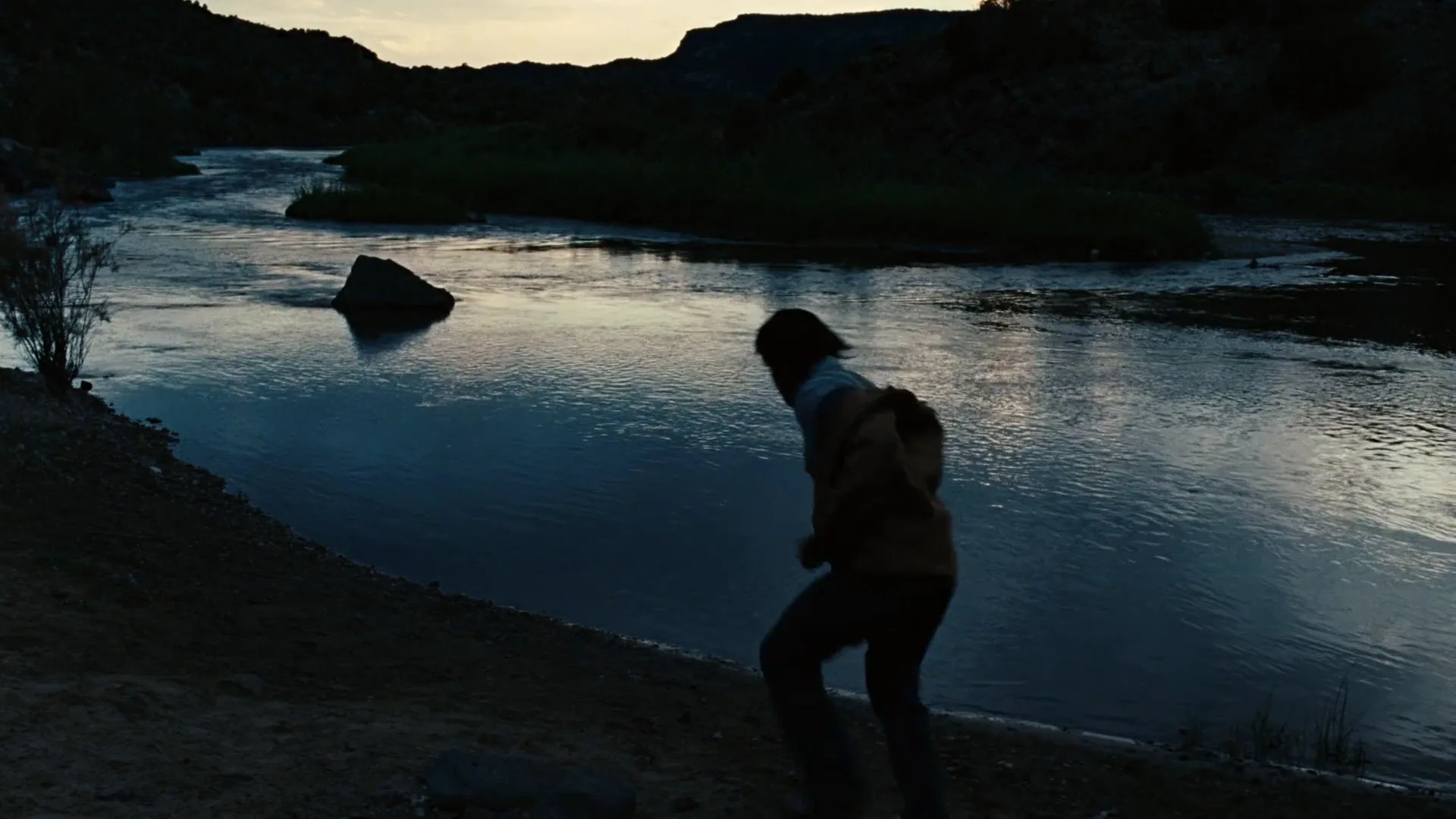
What is realism in film?
Realism is less a movement than a recurring conviction: the camera's first job is to record, and the filmmaker should interfere as little as the story allows. It runs from Robert Flaherty's Nanook of the North (1922) to Satyajit Ray's Pather Panchali (1955), Ken Loach's Kes (1969) and the Dardennes' Rosetta (1999). Post-war Italy produced its most famous chapter, Italian neorealism.
Its theorist is André Bazin. In "The Ontology of the Photographic Image" (1945) he argued that cinema's power is to preserve reality, not comment on it. He praised directors who kept events whole: Renoir in The Rules of the Game (1939), Welles and Gregg Toland's deep focus in Citizen Kane (1941). The opposing camp, formalism, builds meaning through the cut, as in Soviet montage. Among the film movements, realism is the baseline most others react to.
What are the characteristics of cinematic realism?
- The long take. A scene plays in one shot or a few, so the viewer feels real duration. Bazin's example was the seal hunt in Nanook: hunter and prey share one frame.
- Deep focus. Foreground and background stay sharp; the audience chooses where to look.
- Real places. A location that exists brings its own light, sound and clutter.
- Available light. Windows, overcast sky, the bulbs already in the room.
- Eye-level framing. Human distance, few extreme angles or lens effects.
- Ordinary time. Chores and waiting stay in; Jeanne Dielman (1975) holds whole kitchen tasks in static wides.
- Understatement. Sparse score, open endings, unforced performances.
Why filmmakers choose realism
Realism transfers trust. When a scene is not cut up, the audience senses nothing was arranged behind its back and watches like a witness. In Pather Panchali, children running through a field to see a train are held until the landscape becomes the feeling. Linklater's Before trilogy uses long walking two-shots through real streets, so conversation feels overheard.
The second effect is moral: a realist frame keeps characters inside their environment, so work and class are visible rather than explained. The Dardennes' camera behind Rosetta's shoulder makes her job hunt physical.
How to shoot a realist scene
- Lens and height. 28–40mm on Super 35, at about 1.5 m. Long lenses isolate faces; realism wants the world.
- Stop. f/8 for deep focus. Shoot near big windows or in overcast daylight, or raise ISO instead of adding lamps.
- Blocking. Plan one or two setups and move actors between planes. Rehearse until a two-minute take holds without coverage.
- Light. Keep what the location gives; if you add, bounce it through existing windows.
- Sound. Location sound and room tone, no score under the scene.
- Cutting. Cut at the end of an action, not inside it, and keep some dead time.
Realism vs. naturalism
Realism is about the camera's relationship to events: how long you hold, whether space stays intact, how little you cut. Naturalism is about what stands in front of the lens: lived-in texture, unstylized acting and, since Émile Zola, the idea that environment determines character.
A quick test: realism is defined by what you refuse to do, naturalism by what you put into the scene. Verisimilitude, the audience's belief in a world, is a third idea; realism is one way to earn it.
Realism examples in film
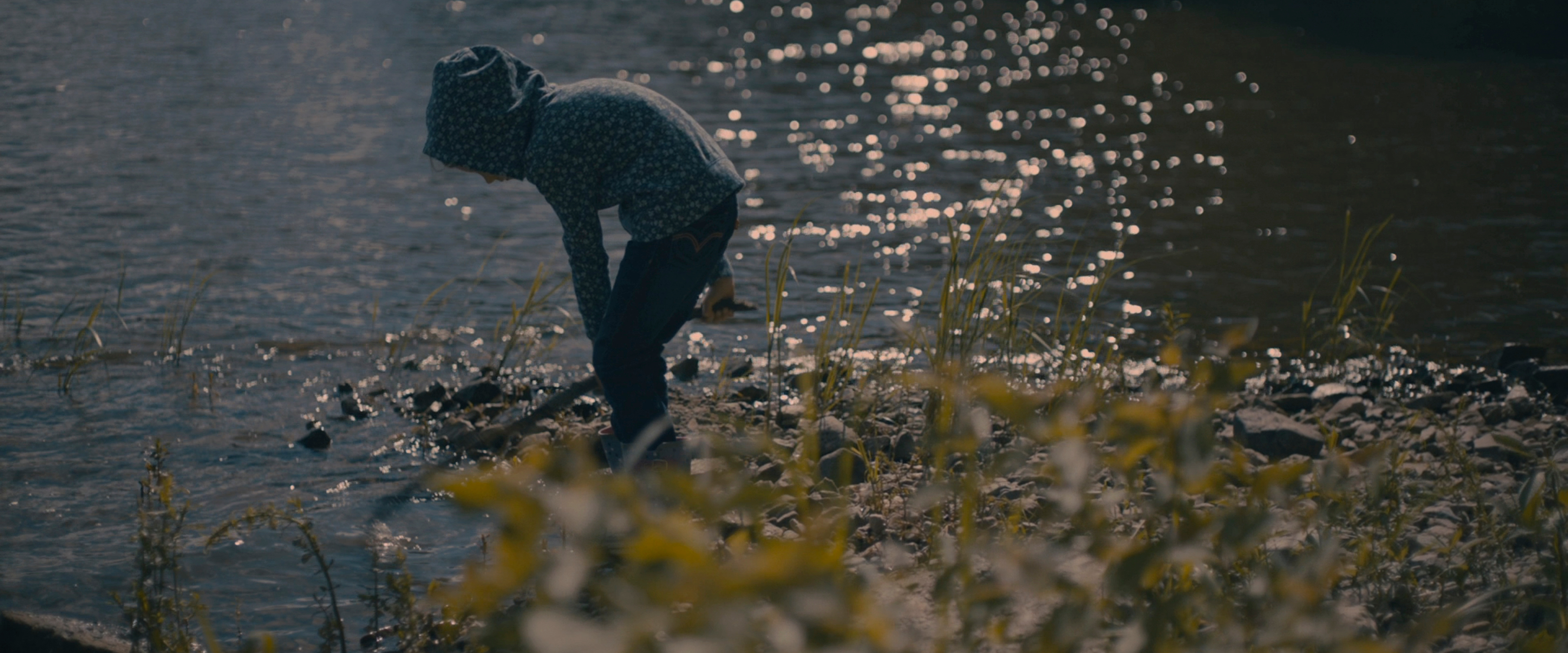
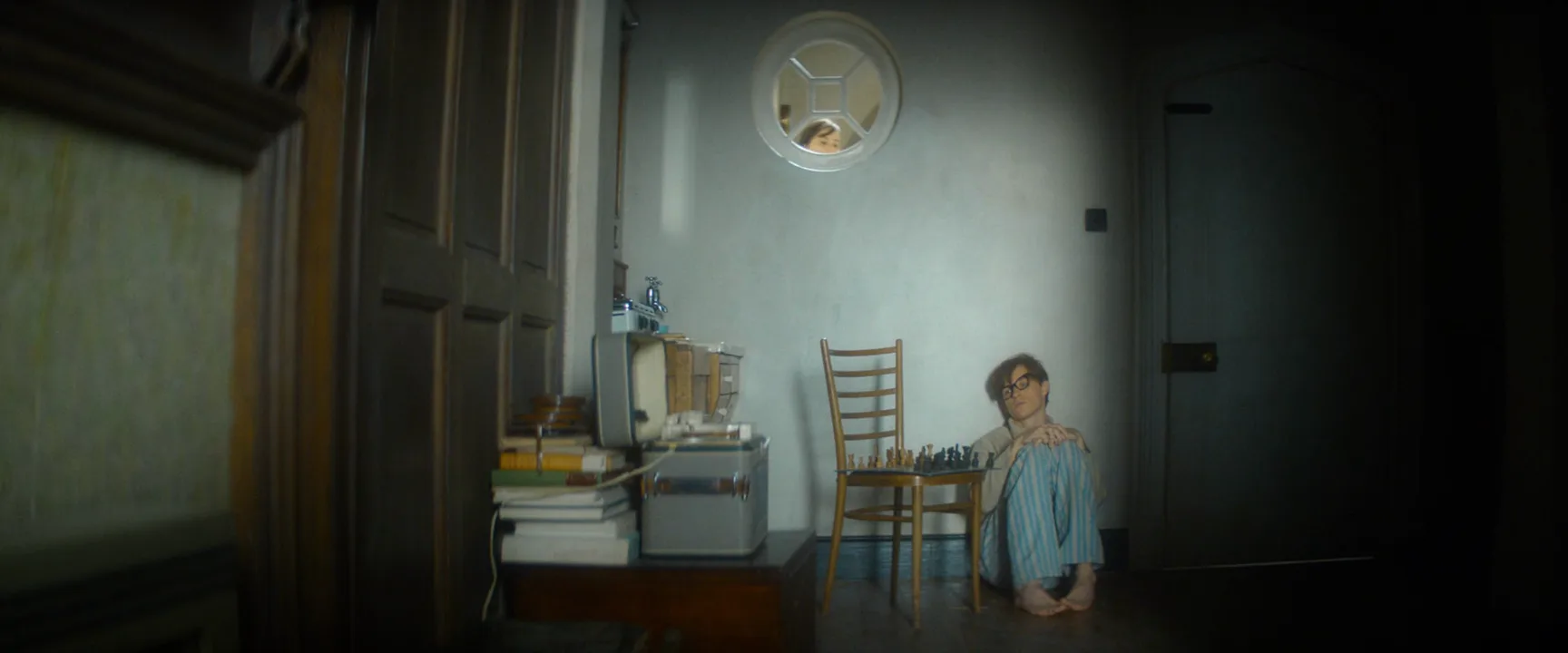
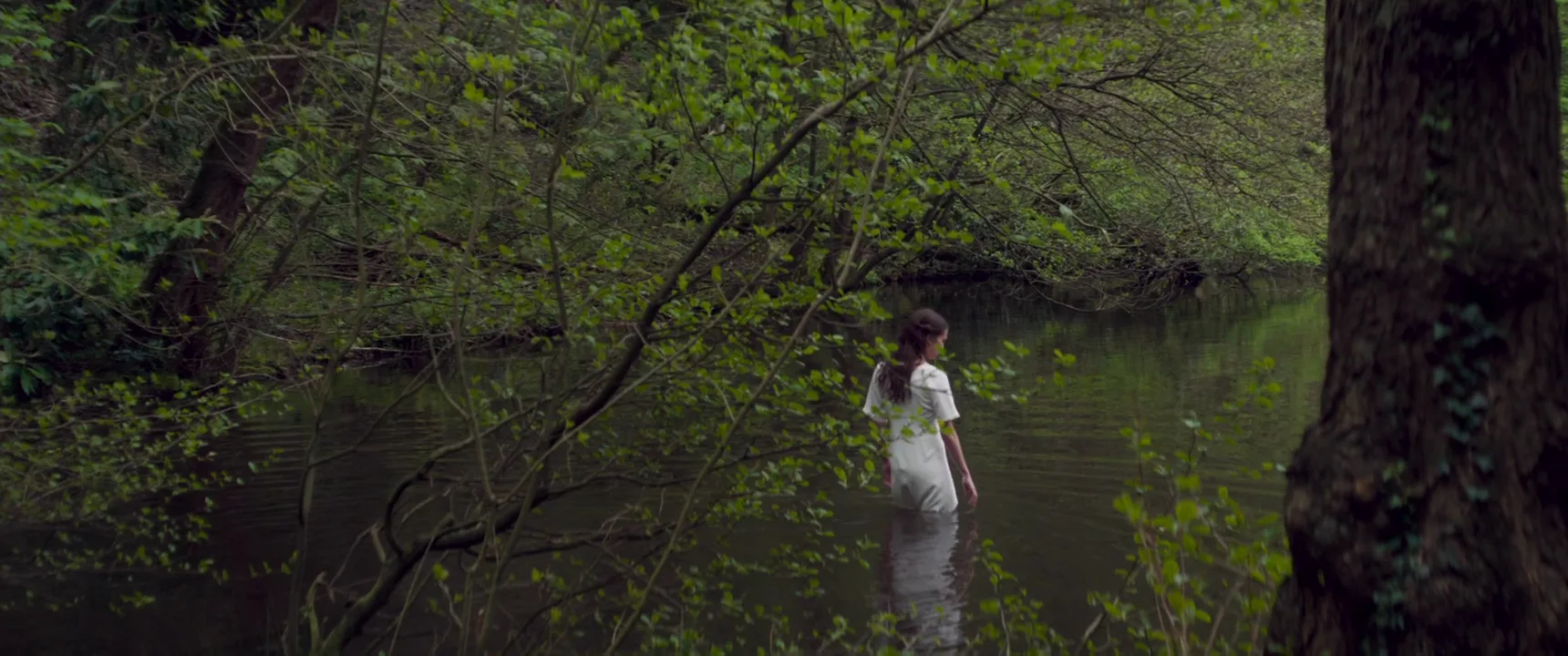
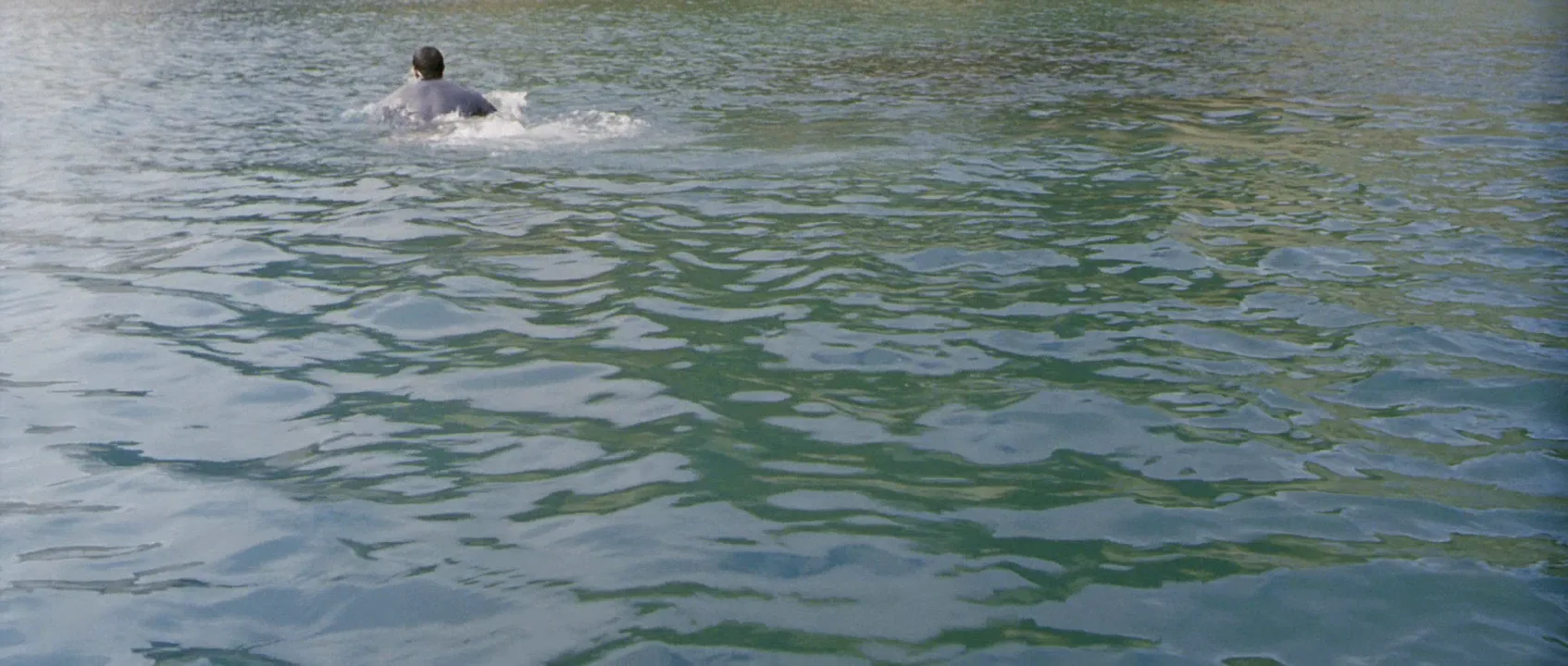
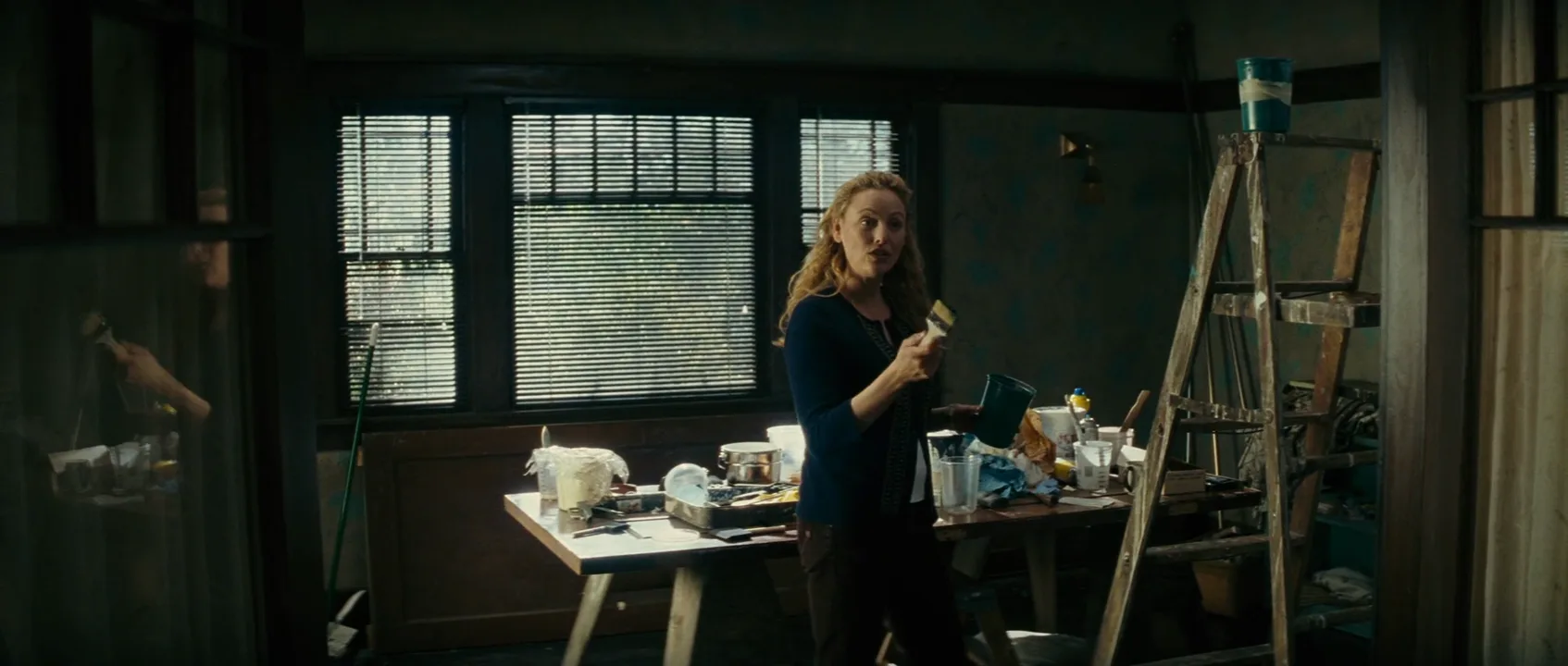
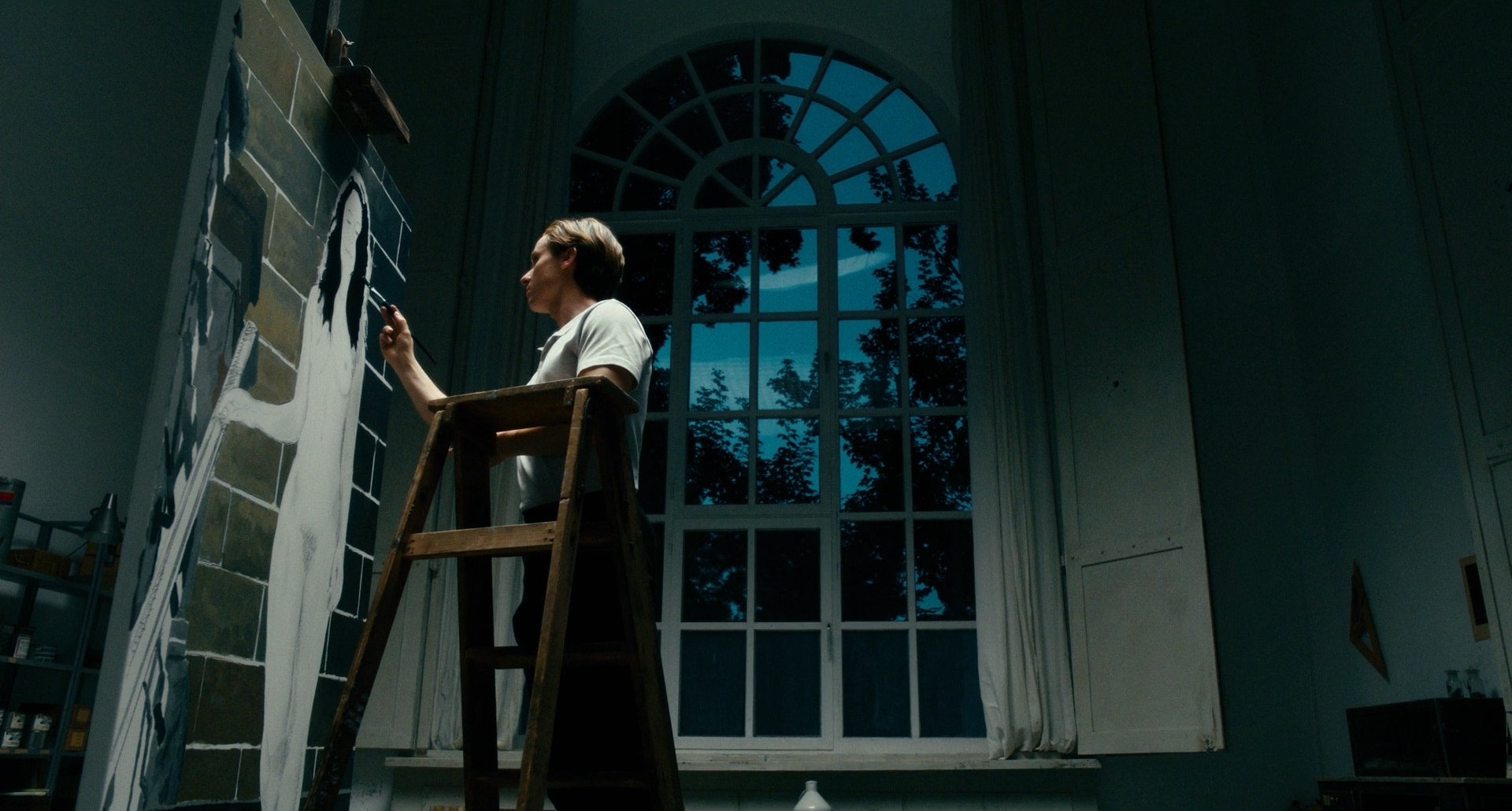
8 framesFrames using the realist toolkit: real places, available light, wide steady frames that keep people in their surroundings.
How to create a realism with AI
4 promptsImage models default to polish, so describe realism as method: lens, stop, height, real light sources, a person mid-task. Keep all four takes on one FlashBoards board to compare them. The fourth prompt re-shoots a real film shot from a text description alone, and the original plays next to the result so you can compare.
Wide static shot at eye level, 32mm lens at f/8, deep focus. A small rural kitchen, back door open to the yard: a stocky man in his late forties with a grey-flecked beard, a crooked nose and a faded green work jacket peels potatoes at a worn wooden table. Through the doorway a muddy yard, a leaning bicycle and washing on a line, all sharp. Flat overcast daylight from the door and one small window, muted true colors, film grain, unposed.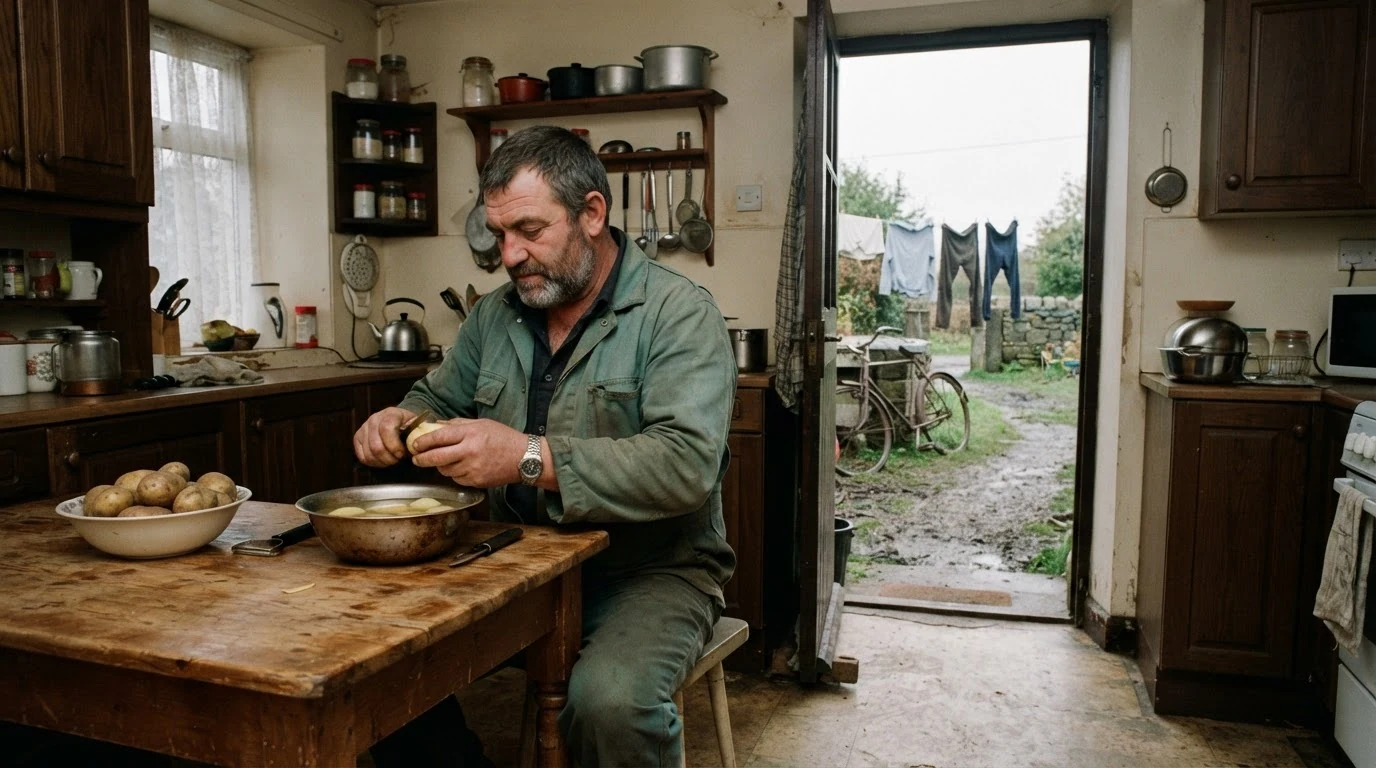
f/8, deep focus and all sharp keep two planes readable. Flat overcast daylight from the door and one small window names real sources, so no studio light appears. A weathered man mid-chore reads as a person, not a model.
Open FlashBoardsMedium-wide two-shot at eye level, 40mm lens: two strangers walking and talking along a canal embankment in an old European city, overcast afternoon. A tall woman in her early thirties with a shaved undercut and a mustard raincoat; a shorter man with thick round glasses, a ginger beard and a navy fisherman's sweater; both mid-step, mid-sentence. Cyclists and parked vans sharp behind them. Natural skin, soft grey daylight, film grain.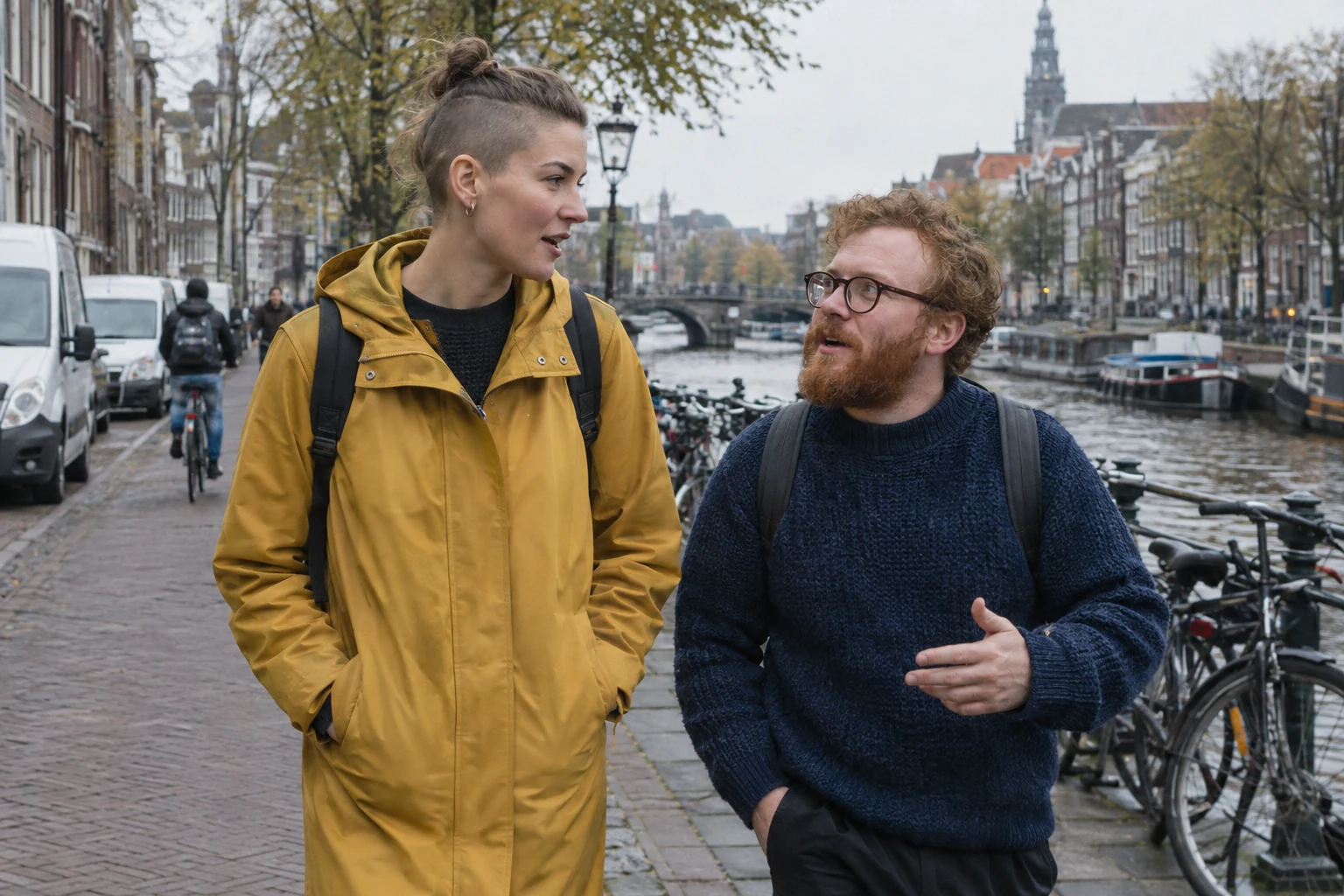
A nod to the Before films. Mid-step, mid-sentence avoids a posed portrait; sharp behind them keeps the city alive instead of melting it into bokeh.
Open FlashBoardsCamera: locked off on a tripod at eye level, completely still for the whole shot. Action: from the first frame the bearded man peels a potato in steady strokes while the washing outside sways in the wind. He drops the potato into a pot, wipes his hands on his green jacket and reaches for another. He keeps peeling at the same unhurried pace; the daylight stays flat and even.Completely still prevents a drifting push-in, and the action starts at once. Ten seconds of unhurried work is a small long take. Everything named is already in recipe 1.
Open FlashBoards{
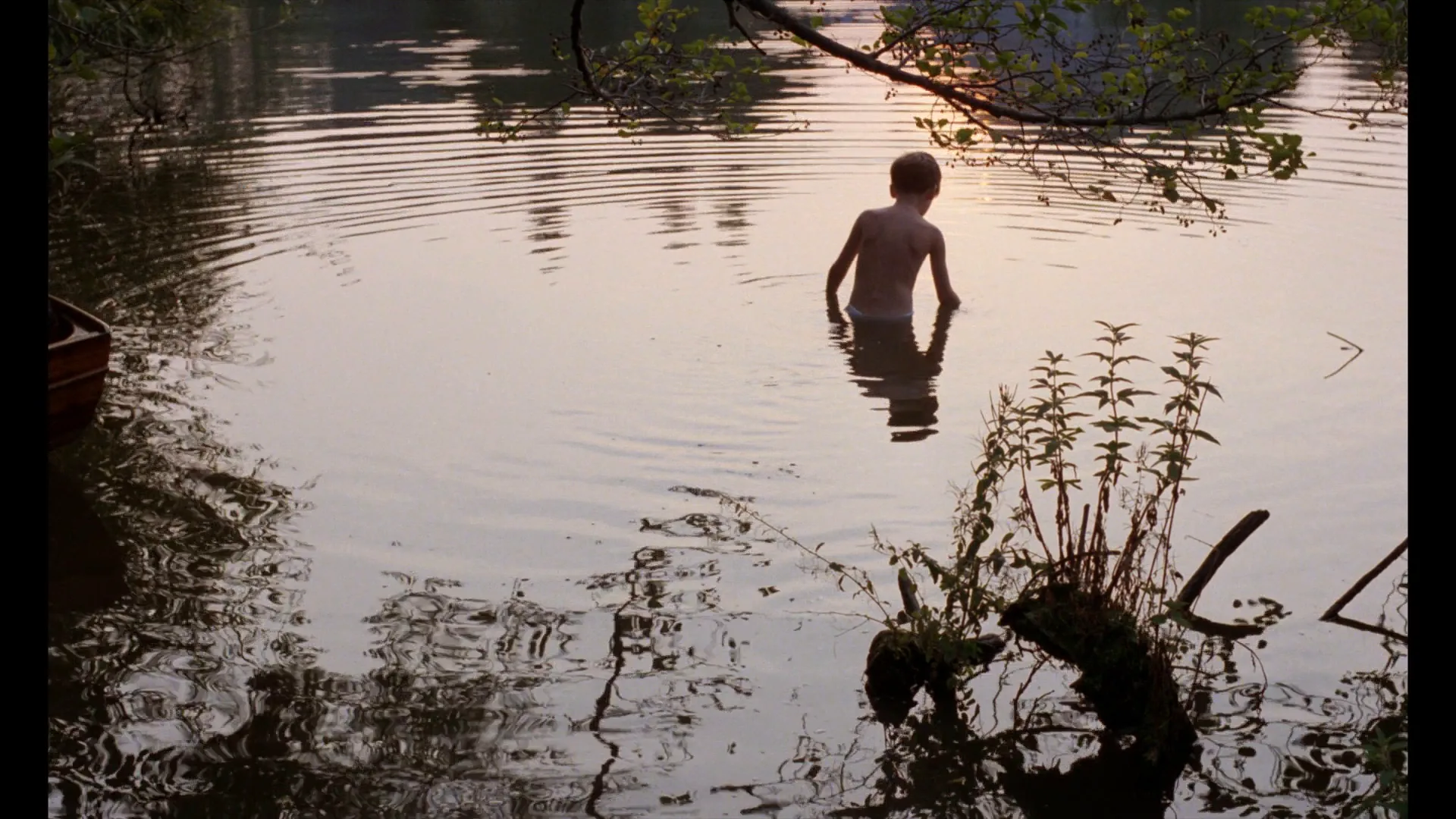
"output": "Full-screen live-action film shot from Hope and Glory (1987), filling the whole frame from its very first frame: one continuous shot with no cuts, a realist long take. 35mm film stock with soft grain, English river backwater at dusk, low sun behind the trees on the far bank, pale pink-gold water, dark green foliage, natural light only, no fill.",
"characters": {
"S1": {
"name": "a slim English boy of about ten",
"look": "bare-chested, short light-brown hair, white cotton underpants, seen only from behind and in partial silhouette against the bright water",
"voice": "silence: he never speaks"
}
},
"shots": [
{
"shot": 1,
"camera": "static wide shot from the bank, slightly above the water at standing eye level, locked off on a tripod and completely still for the whole shot, no pan, no zoom, deep focus with the boy, the water and the far bank all sharp",
"action": [
"BEGINNING: alive from the first frame, the boy stands thigh-deep in still water just left of frame centre, his back to the camera, head bowed toward the water, both arms hanging loose at his sides; wide concentric ripples spread outward from his legs across the whole river surface",
"THEN: he takes slow, careful steps straight away from the camera; the water climbs to his hips and covers the white underpants; both arms lift slightly away from his body, hands held just above the surface",
"THEN: still wading away and drifting a little toward the right of frame, the water reaches his lower ribs; elbows bend and both hands skim the surface on each side of him; his head stays bowed, he never looks back",
"THEN: the water rises to his chest, then his shoulders, until only his head and shoulders show above the bright surface",
"END: he leans forward, pushes off and swims away from the camera with a slow breaststroke, a small wake trailing behind his head, now a small dark shape right of centre on the shining water"
],
"voice": "silence: nobody speaks in this shot, no voice at all",
"dialogue": []
}
],
"world": "foreground stays fixed and dark: a clump of weeds and a half-sunken stump in silhouette at the lower right, a leafy branch hanging across the top right of frame, the edge of a small red rowing boat at the far left; the light stays the same soft dusk glow for the whole shot",
"sound": {
"ambience": "quiet river evening: gentle lapping, the soft wash of water around the boy's legs, distant birdsong",
"speech": "no words in this video; the only human sounds are breaths and movement through the water",
"never_spoken": "no narration and no voice-over: the descriptions, performance notes and step words of this prompt are never spoken aloud",
"music": "a film score under the scene, always below the ambience: a soft, wistful string line with a gentle solo woodwind, slow and unhurried",
"subtitles": "none"
}
}Remakes the static dusk long take from Hope and Glory (1987) of a boy wading into the river; the prompt carried over the locked frame, the slow wade away from camera and the swim-off.
The camera block locks the frame and asks for deep focus, so the long take survives. Each action step stages one stage of the wade, and the fixed foreground props anchor the space.
Open FlashBoardsCommon mistakes
- "Realistic" gets photorealism, not the realist tradition. Describe the method: wide, eye level, f/8, real light sources.
- Backgrounds melt into bokeh. Write all sharp and name the far plane.
- Faces come out glamorous. Give worn features, work clothes, a task in progress.
- A still video camera drifts into a zoom. Write completely still and start the action immediately.
Keep the reference frames, prompts and every generated take side by side — images and video in one canvas.
FAQ
5 questionsWhat is realism in film?
Realism in film is the tradition of recording the world with as little visible intervention as possible: long takes, deep focus, real locations, available light and restrained editing. Events keep their natural time and space, so the audience observes and judges for itself.
What is André Bazin's theory of realism?
Bazin argued that because a photograph is made by light from the real object, cinema's gift is to preserve reality. He favored long takes and deep focus that keep events whole, as in Renoir, Welles and Wyler, over editing that dictates meaning. His essays are collected in What Is Cinema?
What is the difference between realism and formalism in film?
Realism treats the shot as a window: meaning comes from what the camera records, intact in time and space. Formalism treats film as construction: meaning comes from editing, framing and stylization, as in Soviet montage. Most films mix both, and the balance shapes a style.
Is slice of life the same as realism?
Slice of life is a kind of story; realism is a way of filming. A slice-of-life film follows ordinary days with little plot, which suits realist technique, but the same story can be shot with a stylized, heavily edited look.
What are some examples of realist films?
Classic examples include Nanook of the North (1922), The Rules of the Game (1939), Pather Panchali (1955), Kes (1969), Jeanne Dielman (1975), Rosetta (1999), Wendy and Lucy (2008) and Linklater's Before trilogy. The Italian neorealist films are the tradition's best-known movement.
Related terms
6- NaturalismFilm Movements & Styles
Naturalism in film aims for an illusion of unmediated life — unstylized acting, available light, real locations and hidden technique — often showing characters shaped by environment and circumstance.
- VerisimilitudeFilm History & Theory
Verisimilitude is a film's appearance of truth — the sense that its world obeys consistent rules, so even a fantasy feels believable; it depends on internal logic and detail, not on being realistic.
- Italian NeorealismFilm Movements & Styles
Italian Neorealism is the post-WWII movement — Rossellini's Rome, Open City, De Sica's Bicycle Thieves — that took cameras into ruined streets with non-professional actors to tell stories of poverty and ordinary people.
- Deep FocusLenses, Focus & Exposure
Deep focus keeps foreground, middle ground and background sharp at the same time, so the director can stage action on several planes at once and let the viewer choose where to look.
- Filming LocationFilmmaking Process & Crew
A location is any real place used for filming outside a studio; location scouting finds and vets it for look, sound, light, access, permits and cost, and the location manager secures it.
- Film TheoryFilm History & Theory
Film theory is the body of ideas about what cinema is and how it produces meaning and pleasure — from Soviet montage and Bazin's realism to auteur theory, psychoanalytic and feminist criticism.
Further reading
André Bazin, What Is Cinema?, vols. 1–2, trans. Hugh Gray (University of California Press, 1967–1971). Siegfried Kracauer, Theory of Film: The Redemption of Physical Reality (Oxford University Press, 1960).