 FlashBoards Learn
- Learn
- Lenses, Focus & Exposure
- Deep Focus
Lenses, Focus & Exposure · Film language
Deep Focus
Also called: deep depth of field, deep focus cinematography, deep focus shot
Deep focus is a way of shooting in which the foreground, middle ground and background are all sharp at the same time. Nothing is blurred to point the way, so the director can stage action on several planes at once and the viewer decides where to look.
- What it does
- Keeps every distance in the frame sharp, so several actions and a whole space read in one shot.
- Use it when
- Two or more things at different distances matter at once, or the room itself is part of the story.
- Watch out
- It costs light and careful blocking; a frame sharp everywhere with nothing staged in depth just looks flat.
- Try this prompt
Deep focus interior, 21mm lens at f/11, old watchmaker sharp in the foreground, apprentice at the counter and a rainy street outside the window all in crisp focus
What is deep focus?
Deep focus is a sharpness property of the image. It means the depth of field stretches from something close to the lens all the way to the back of the set or the horizon. A face a meter from the camera, a figure crossing the room behind it and the street through the window are all crisp. It is not a camera angle, a shot size or a lighting style. You can have a deep-focus close-up, a deep-focus wide shot, a high or low deep-focus frame.
Two things are often confused with it. A frame where "everything is lit and visible" is not automatically deep focus. A bright, evenly lit room shot on a long lens at a wide aperture can still have a soft background. The test is sharpness through the depth of the frame, not exposure. And a busy frame is not deep focus either. The technique only earns its name when the sharp planes hold something worth seeing, which is why it is almost always paired with depth layering, deliberate foreground, middle ground and background.
How to recognize it in a still:
- Look at the nearest object and the farthest one. If you can read the texture on both (fabric, brick, leaves), the frame is in deep focus.
- Look for faces at different distances that are all readable at once.
- Notice perspective. Deep focus is usually shot on a wide or normal lens, so near objects look large and far ones shrink quickly.
Deep focus is one end of a scale. At the other end sits shallow depth of field, where only a thin slice is sharp. Most shots live somewhere between the two, and deciding where each shot sits on that scale is one of the core lenses and focus choices a cinematographer makes.
Why filmmakers use deep focus
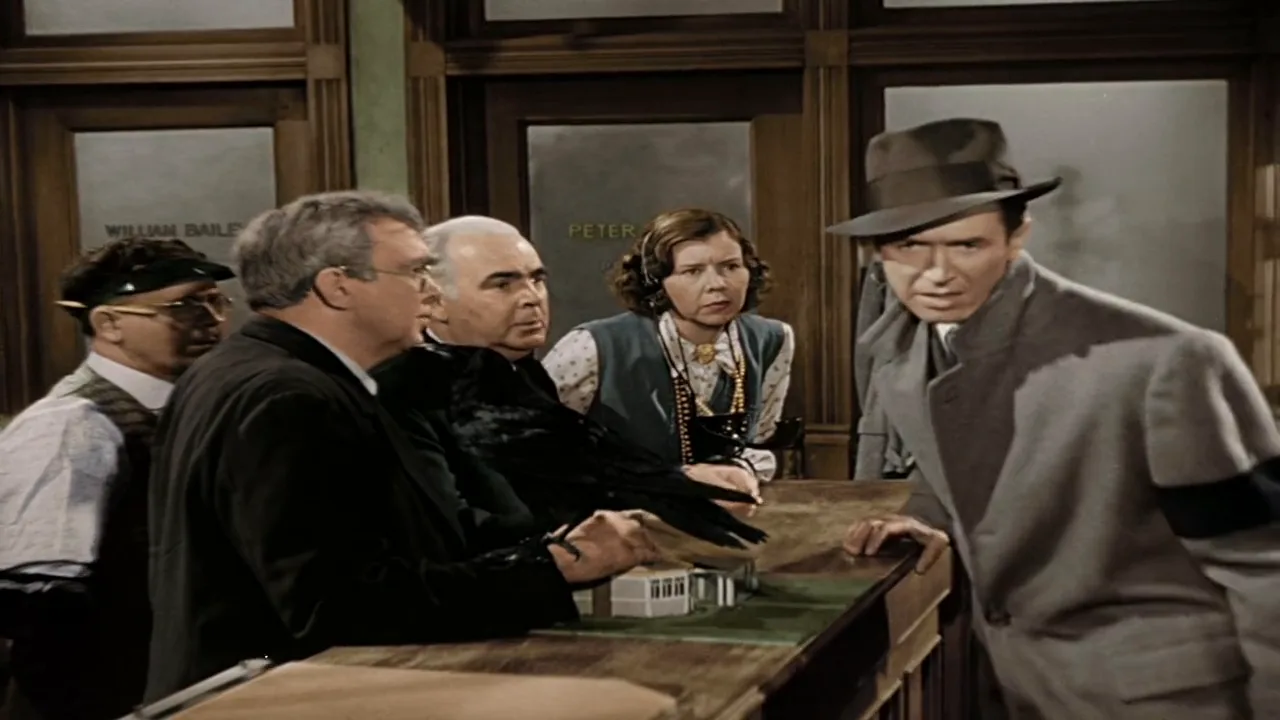
The textbook example is Citizen Kane (1941), directed by Orson Welles and shot by Gregg Toland. In the boarding-house scene, the mother signs away her son's future at a table in the foreground while the boy plays in the snow, seen through the window far behind. Both are sharp. One frame shows the decision and who pays for it. Toland pushed the same idea in The Best Years of Our Lives (1946) for William Wyler: a piano in the foreground, a phone booth deep in the background, and the tension lives in the distance between them.
What deep focus does for the viewer:
- It gives the eye a choice. With nothing blurred, the audience scans the frame and picks what to watch. The critic André Bazin argued that this kept the ambiguity of real life.
- It replaces cutting with staging. Instead of a wide, a close-up and a reaction shot, one frame holds all three. Actors move toward and away from the lens, and blocking does the work that editing would do.
- It puts people in relation. Who is near the camera and who is small in the back becomes a statement about power, distance or isolation.
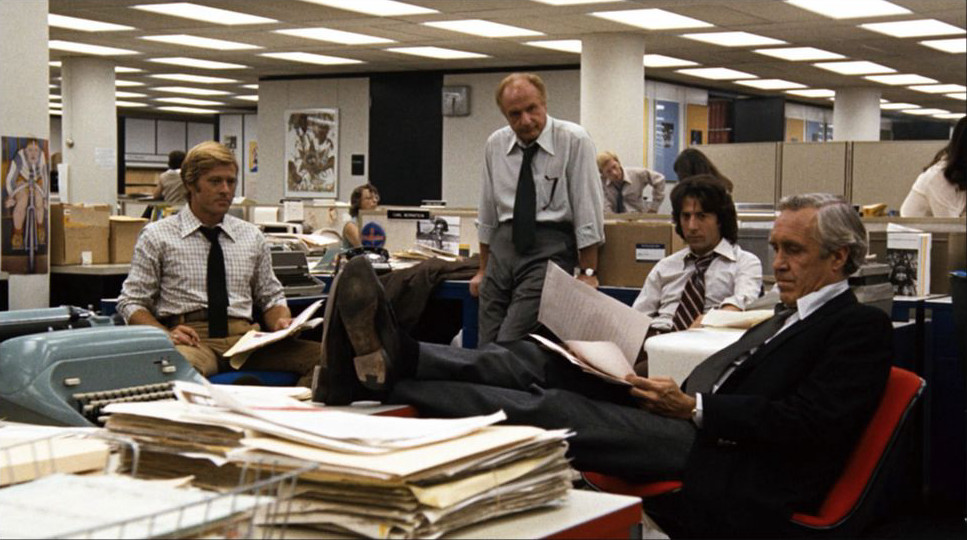
- It makes the space a character. A newsroom, a house or a landscape stays readable all the way back. All the President's Men (1976) uses the Washington Post newsroom this way: rows of desks keep receding behind the reporters, and the office never lets them off the hook.
Deep staging did not start with Kane: Jean Renoir staged action in several planes in The Rules of the Game (1939). Toland and Welles made it a deliberate style, and it has stayed part of the grammar of mise-en-scène ever since.
How to shoot deep focus
Four factors decide depth of field: aperture, focal length, focus distance and format size. Deep focus pulls every one of them in the same direction. The rest of the craft is about paying for that choice with light and blocking.
Lens and aperture
Start with a wide-angle lens. On Super 35, 18–32mm is the usual range, since a wider lens gives more depth of field at the same stop and distance. Then stop down. f/8 to f/11 is the practical sweet spot. Going past f/16 on a Super 35 sensor starts to soften the whole image through diffraction, so more is not always sharper. A smaller format helps too: Super 16 or a smaller sensor gives more depth at the same framing and stop than full frame or large format.
Hyperfocal focus
Don't focus on the subject. Focus at the hyperfocal distance, the point where everything from half that distance to infinity is acceptably sharp. On Super 35, a 25mm lens at f/8 has a hyperfocal distance of roughly 3 m, so focusing there holds about 1.5 m to the horizon. An 18mm at f/11 puts it near 1.2 m, and everything from about 60 cm on is sharp. Check it on a large monitor: small screens make almost everything look sharp.
Light
Every stop you close halves the light: f/2.8 to f/8 needs eight times the light or a higher ISO. That is the historical cost of deep focus: Toland used fast film stock and powerful arc lights for Kane. On digital, a clean native ISO of 800 or higher does a lot of the lifting, but night interiors still need real units. Light each plane separately so the depth reads: a slightly brighter background, a pool of practical light in the middle, a darker foreground edge. Haze or atmosphere gives far planes separation that focus no longer provides.
Blocking and composition
- Place something meaningful close to the lens, often 0.5–1.5 m away, and something else deep in the set.
- Keep the camera low or at chest height for interiors so ceilings and floors show the room's depth.
- Stage movement along the lens axis. People walking toward or away from the camera change size dramatically on a wide lens, which is the energy deep-focus scenes run on.
- Give the viewer one clear first read through size, contrast or light, then let the other planes pay off on a second look.
When the lens can't do it: split diopters, tilt and composites
Sometimes physics wins: a face 40 cm from the lens and a building 200 m away will not both hold at any usable stop, especially on large sensors or in low light. Filmmakers fake it.
- Split diopter. A half-lens over one side of the frame lets that side focus close while the other side focuses far. It creates a deep-focus look with a soft seam between the halves, so the seam is hidden along a vertical line: a door frame, a wall edge, empty sky.
- Tilt-shift lenses. Tilting the lens tilts the plane of focus, so it can run along a table or a street from near to far instead of lying flat across the frame.
- Composites. Some of Citizen Kane's most famous deep images were built in-camera or in post: the shot of the glass and medicine bottle in the foreground with the door far behind was assembled from separate exposures, each sharp on its own plane. Today the same thing is done by shooting two focus passes and blending them, or with a background plate.
These tools solve extreme cases. For most scenes, a wide lens, a deeper stop and careful staging are enough, and they leave you free to move the camera.
Deep focus vs. shallow depth of field
They are opposite answers to the same question: how much of the frame should be sharp?
| | Deep focus | Shallow depth of field | |---|---|---| | What is sharp | Foreground to background | A thin slice, often just the eyes | | Typical lens and stop | 18–32mm, f/8–f/11 | 50–135mm, f/1.4–f/2.8 | | Who guides attention | Staging, light and the viewer | Focus: blur hides everything else | | Feeling | Observational, social, spatial | Intimate, subjective, isolated | | Cost | Light, blocking, a dressed set | Focus pulling precision |
Shallow focus tells the audience where to look. Deep focus asks them to look. Shallow depth isolates a character from their world; deep focus keeps them inside it. Many films switch between the two by scene or even within one: a rack focus moves a shallow plane between subjects, which is the edited, guided alternative to showing both sharp at once. Soft bokeh in the background is the clearest sign that a shot is not deep focus.
Pick by the question the scene asks. If the drama lives between two people at different distances, or in the relationship between a person and a place, go deep. If it lives in one face, go shallow.
Deep Focus examples in film
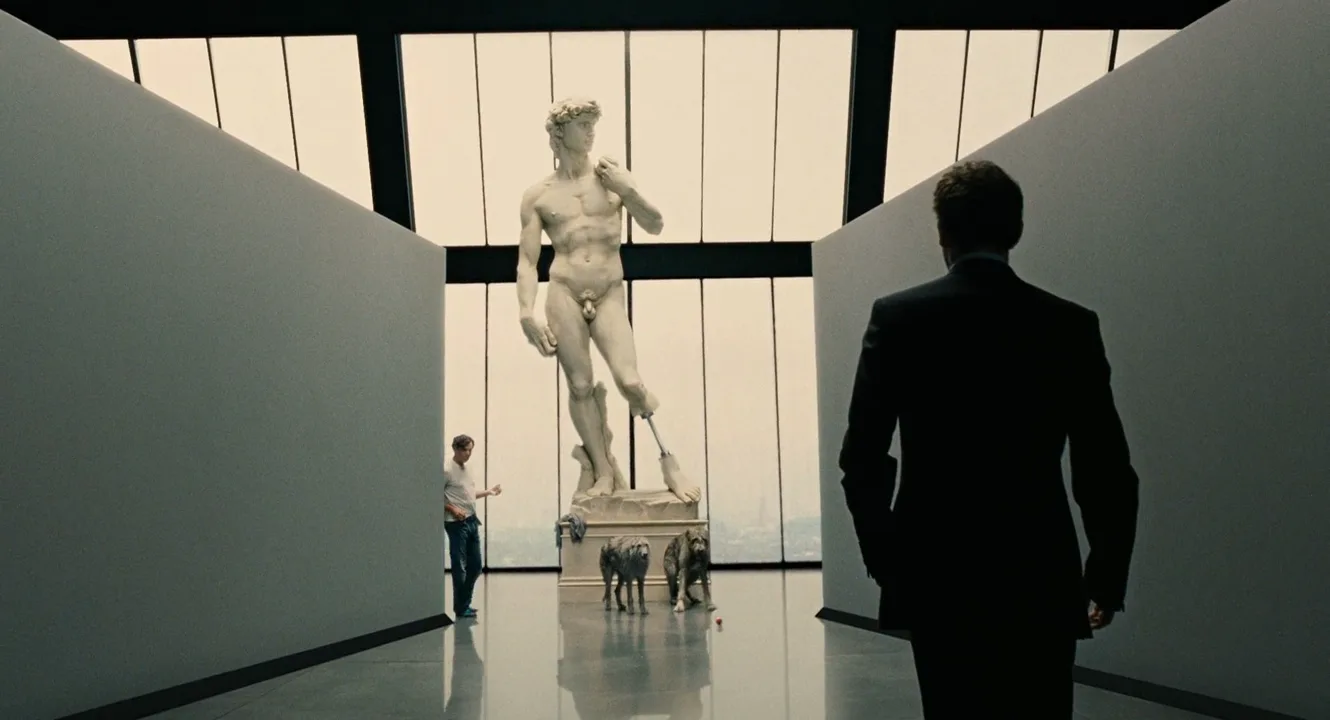
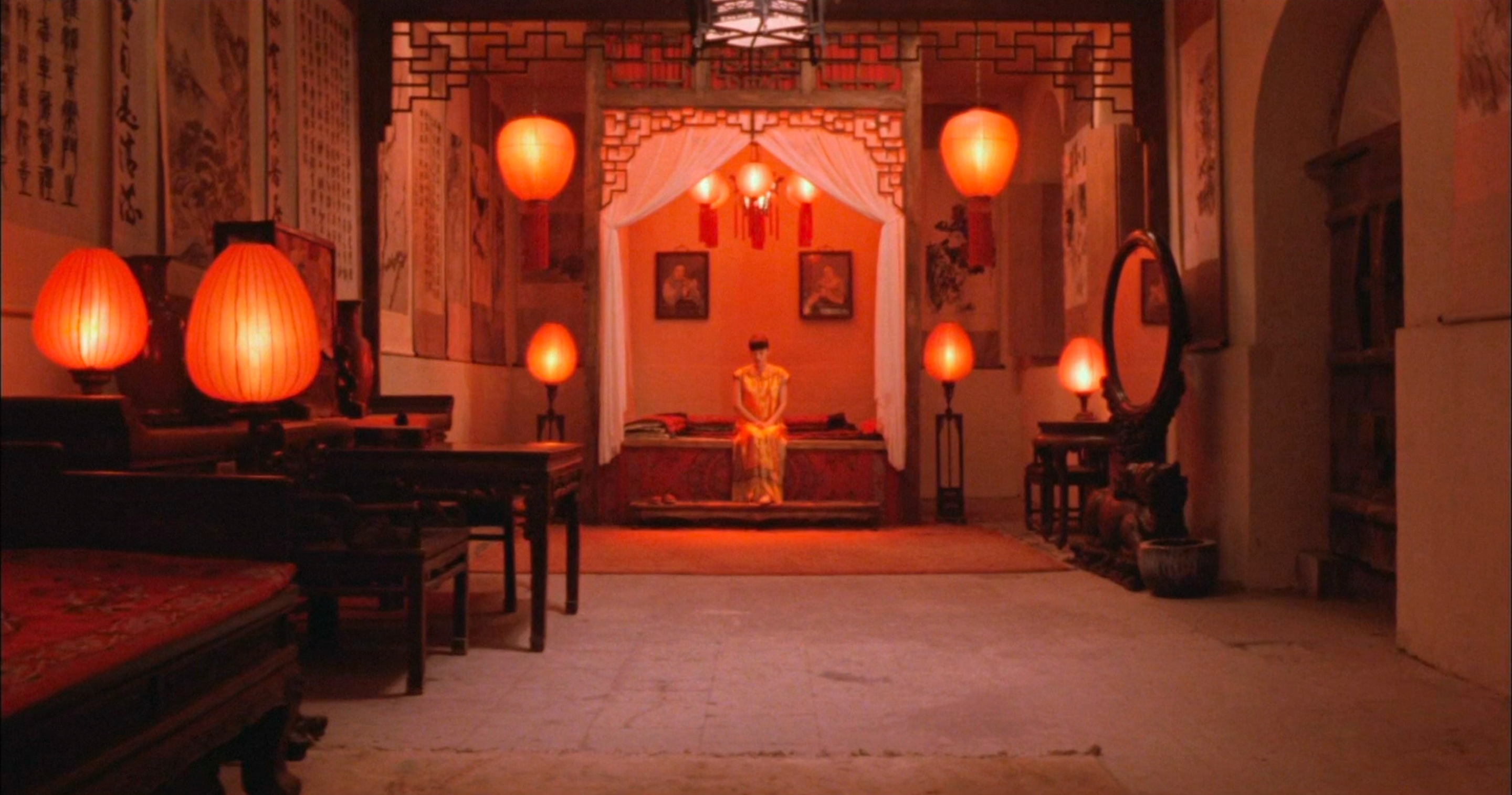
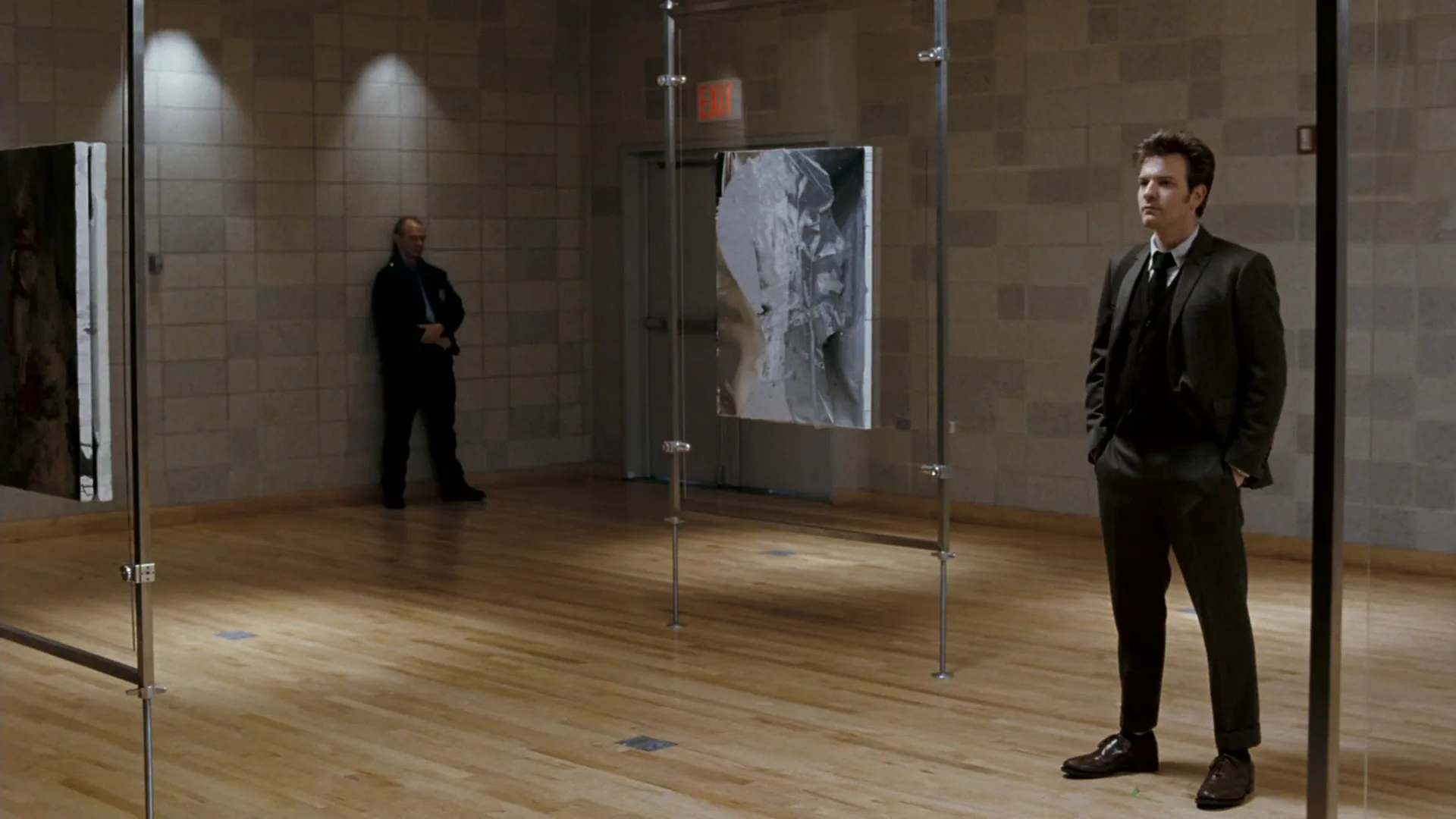
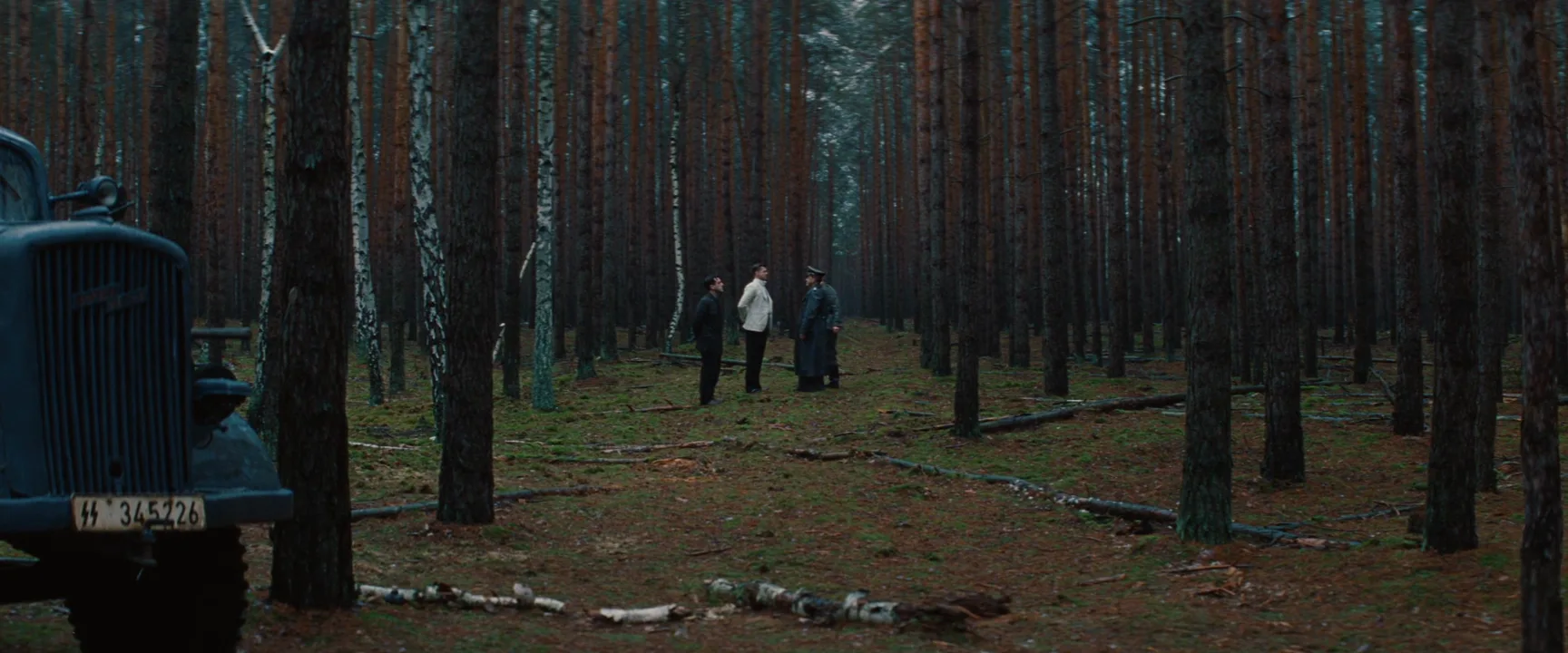
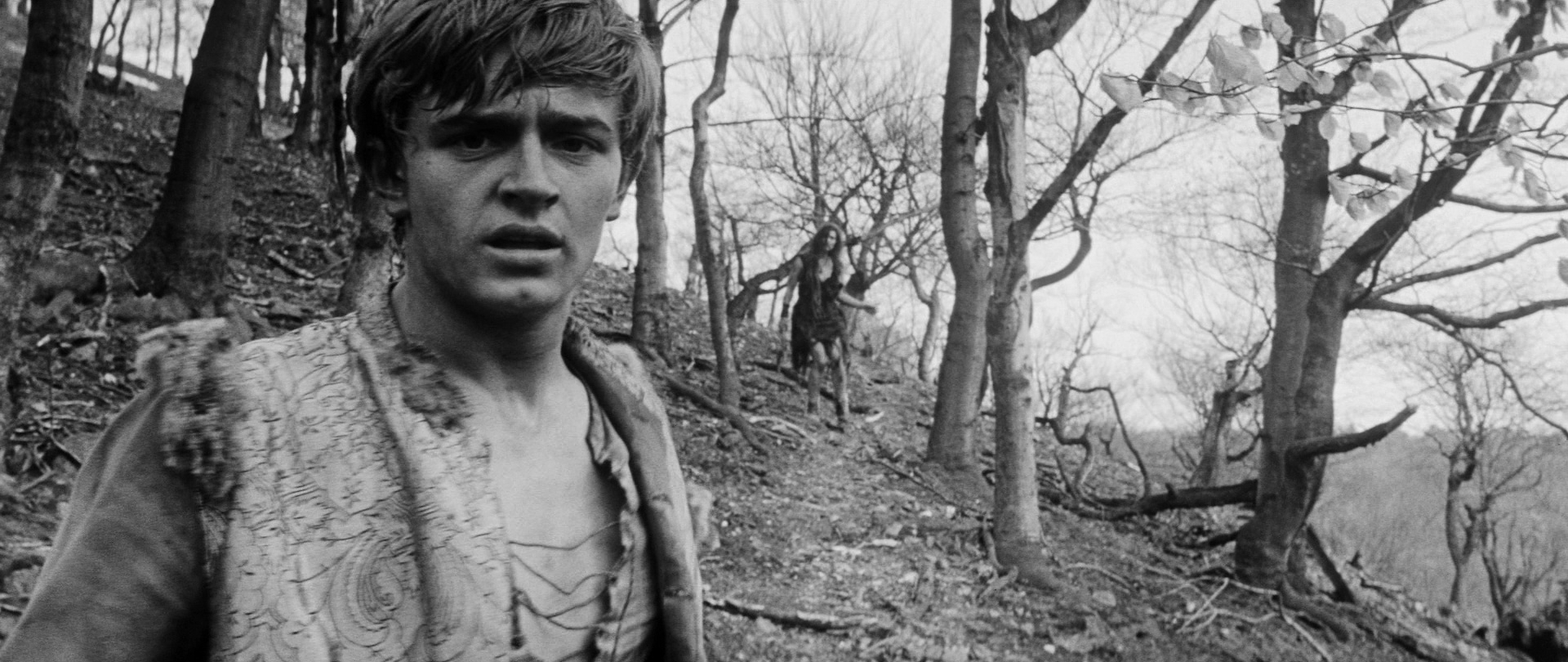
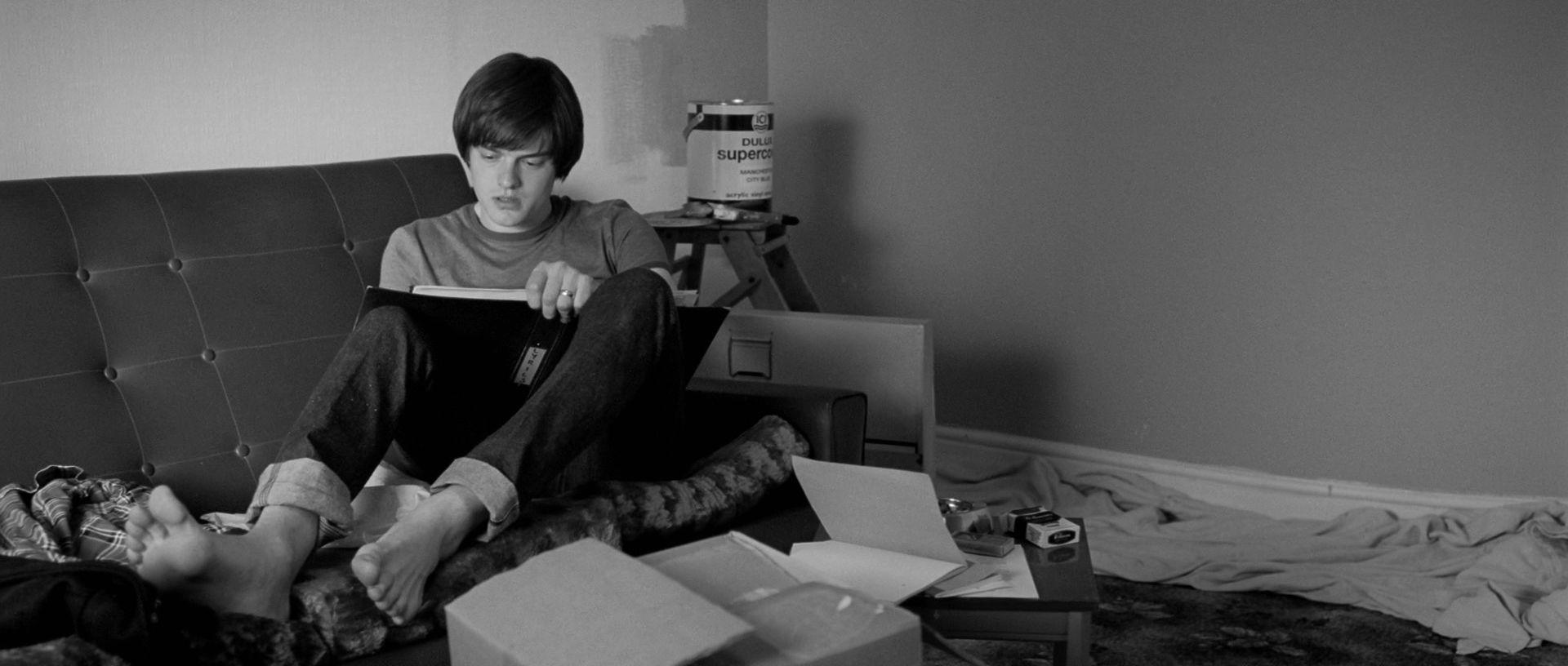
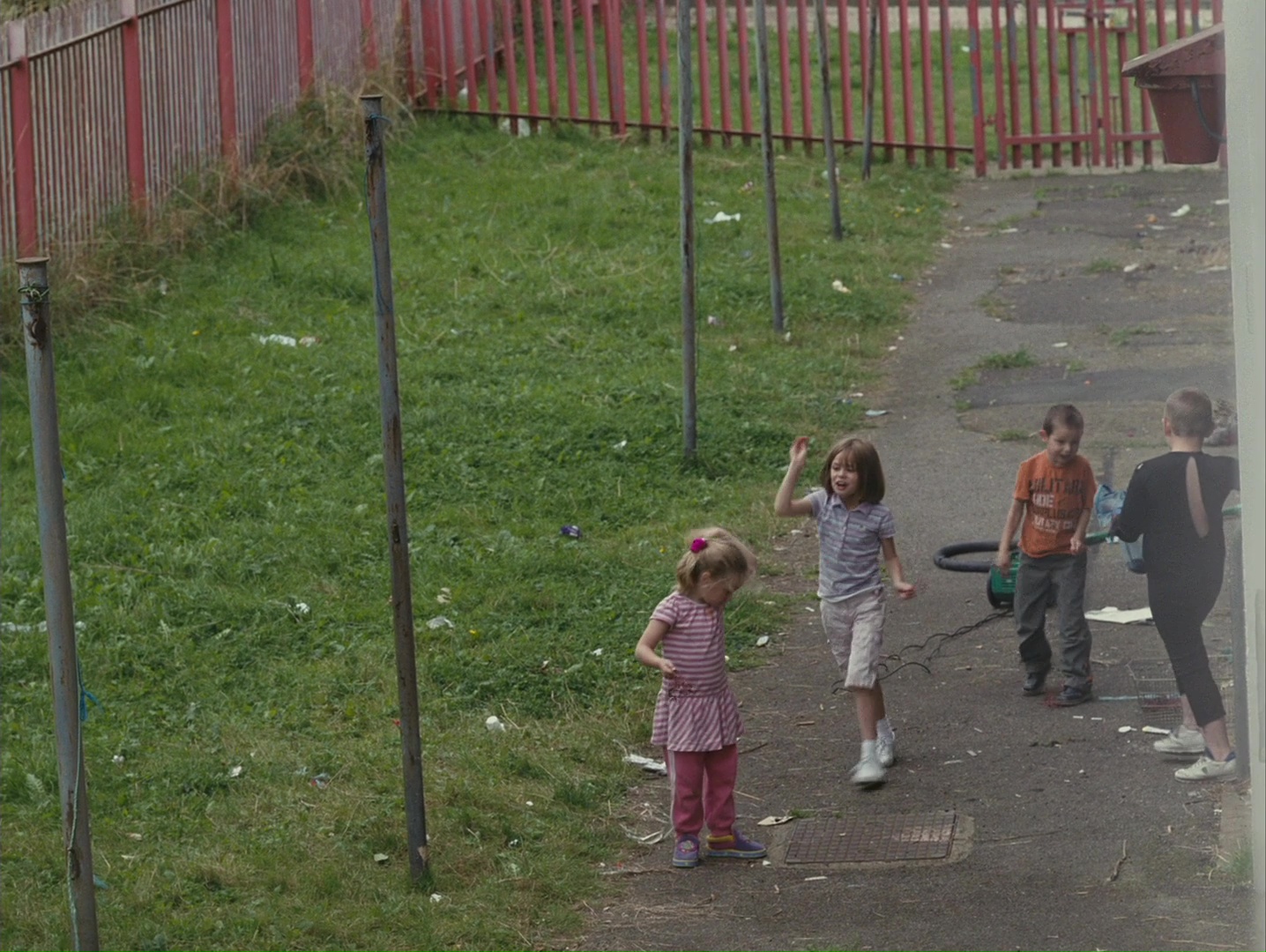
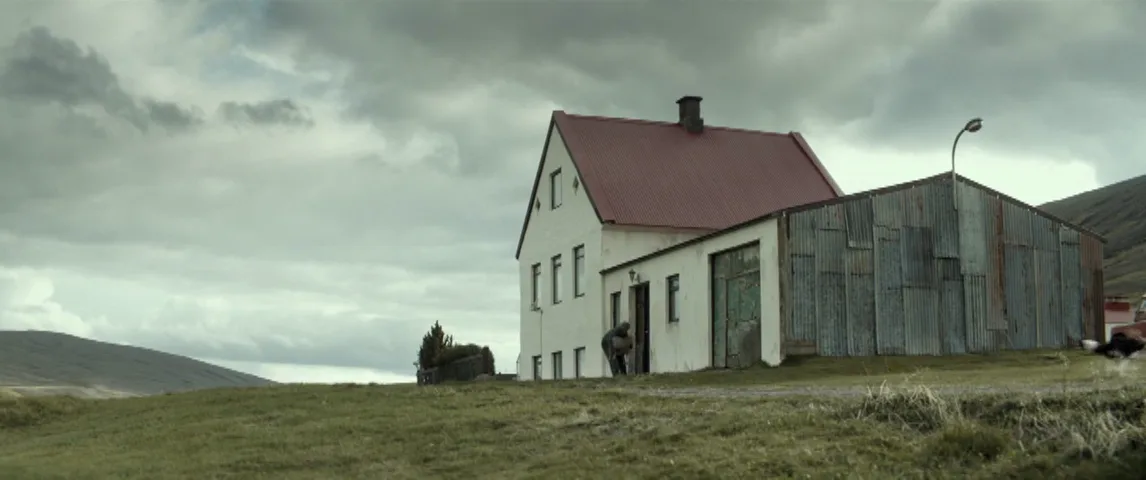
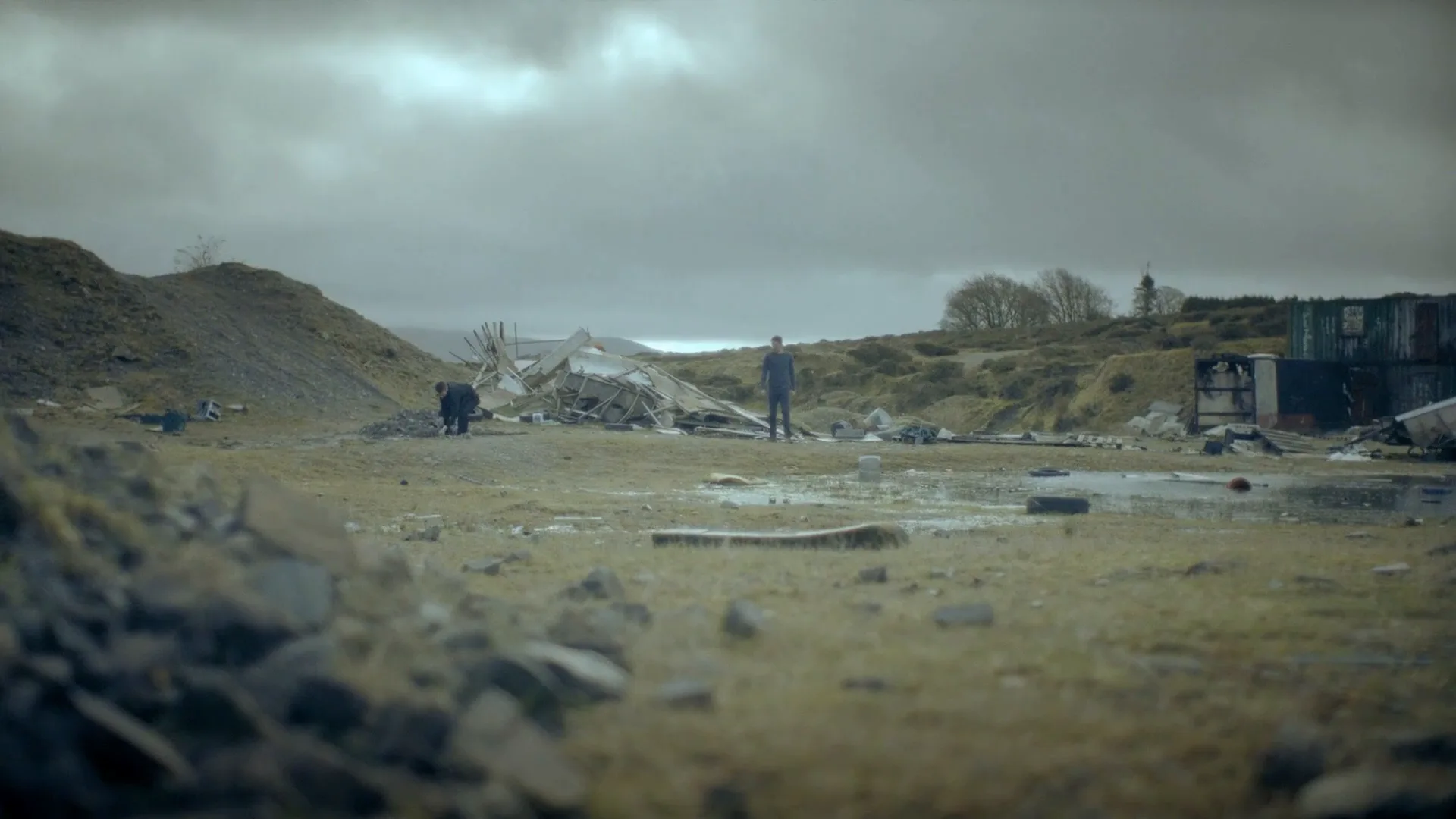
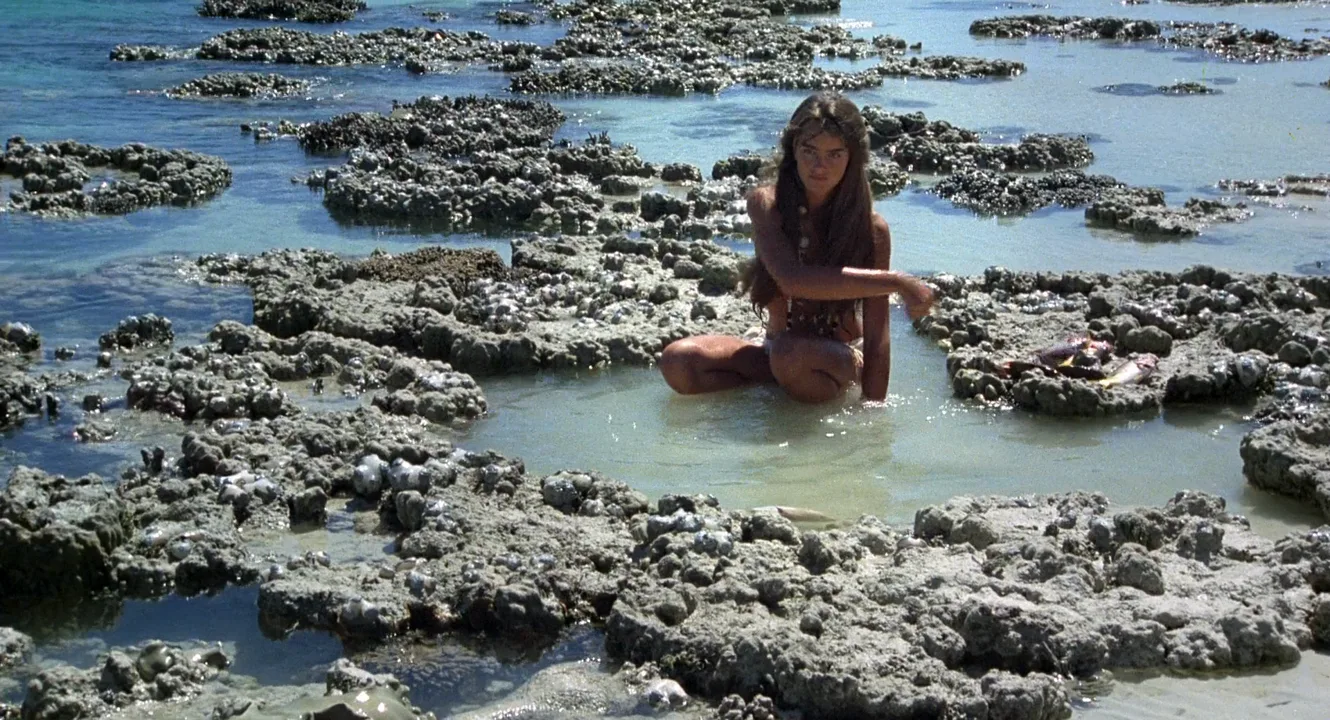
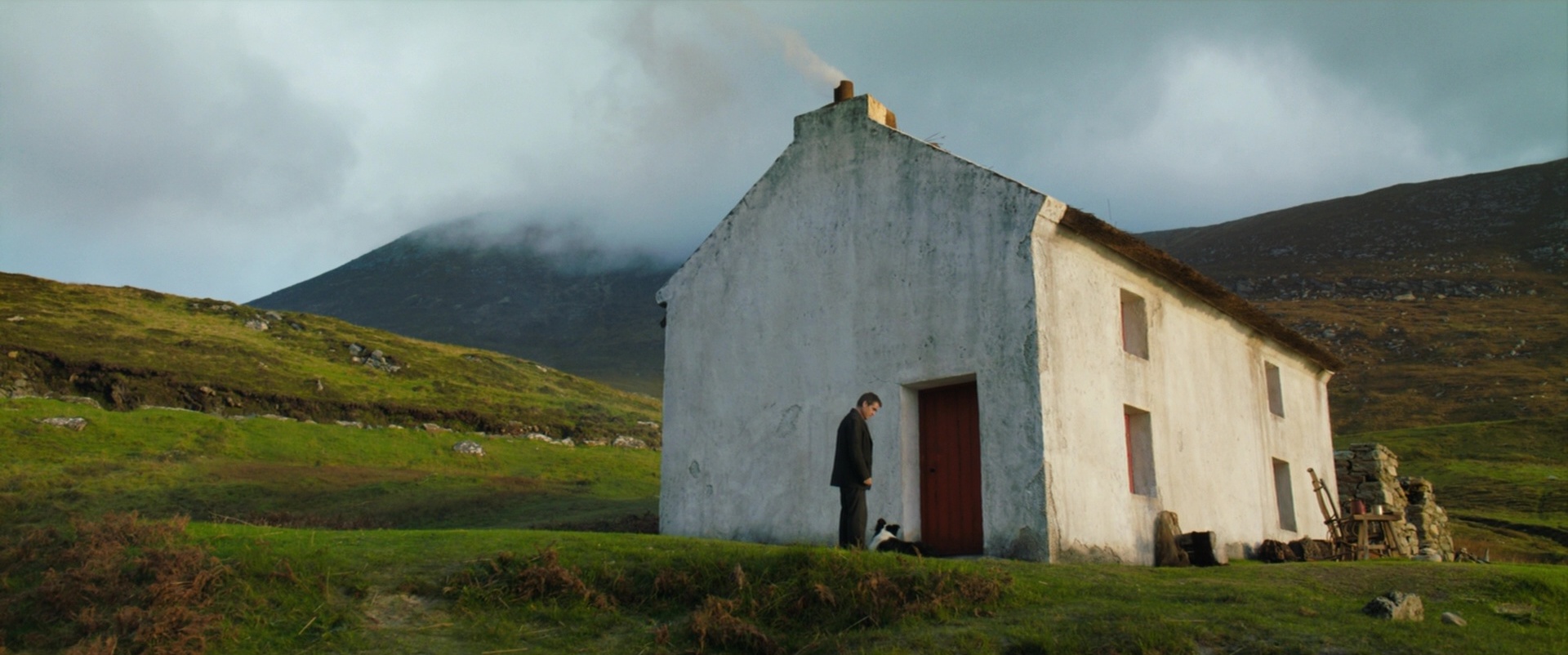
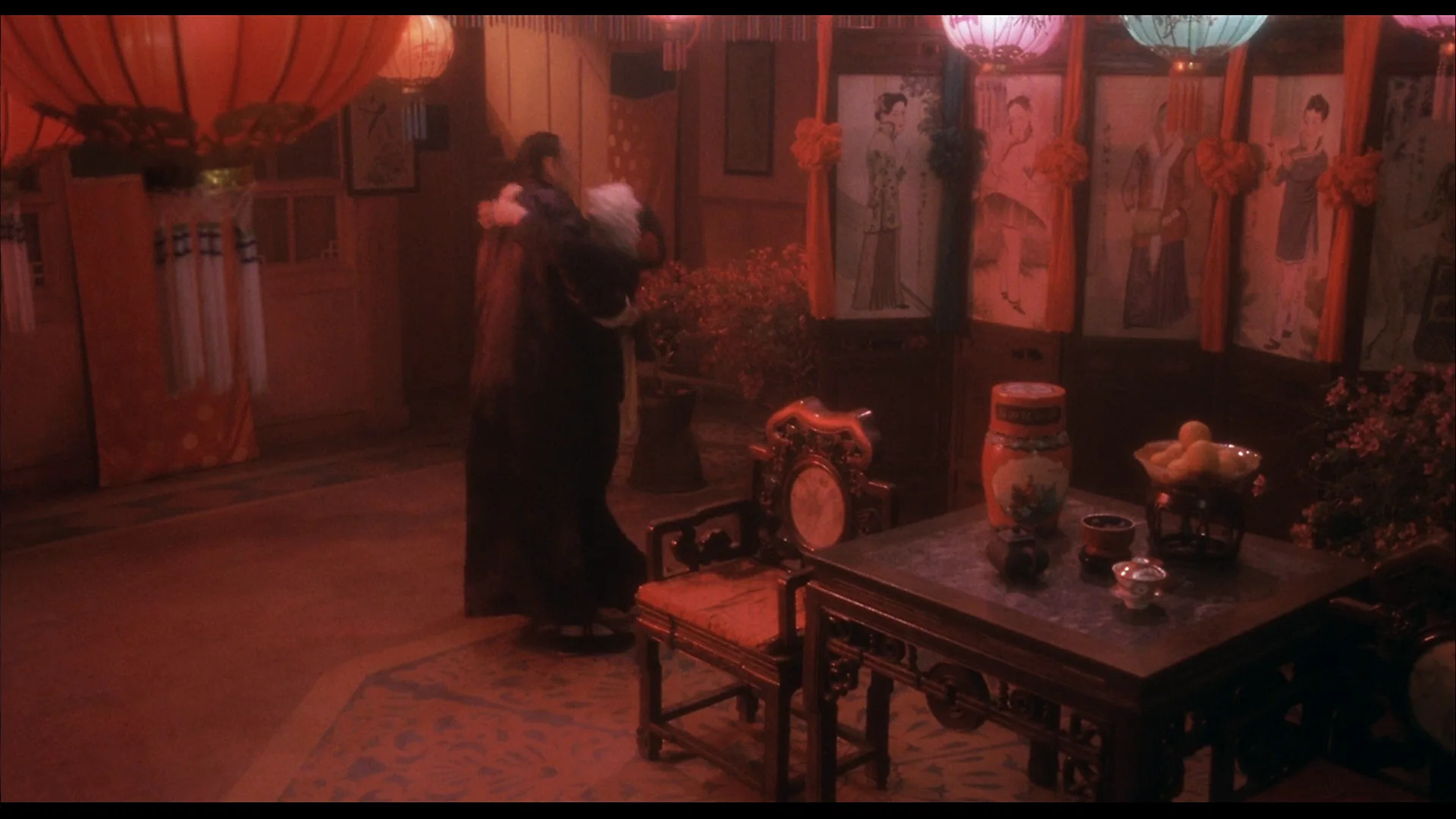
14 framesIn each frame, compare the nearest object with the farthest one: in deep focus both carry texture, and the staging, not the blur, tells you where to look first.
How to create a deep focus with AI
4 promptsImage models default to a "cinematic" look with a blurred background, so deep focus has to be asked for explicitly: a wide lens, a closed-down stop and named objects at named distances, each described as sharp. Build the start frame with Nano Banana 2 Lite, try a second deep-focus take with GPT Image 2.5, then animate recipe 1 with MiniMax H3 Max Turbo so action happens on all planes at once. Keep the film frames above and your takes on one FlashBoards board to compare how far back the sharpness really goes. The fourth prompt re-shoots a real film shot from a text description alone, and the original plays next to the result so you can compare.
Deep focus film still of a cluttered radio repair shop, 21mm lens at f/11, camera at chest height. Foreground, one meter from the lens: an old man with a white walrus mustache, round steel glasses and a brown cardigan solders a radio on the workbench, his face in sharp focus. Middle ground: a teenage girl with a long black braid and a green raincoat stands at the shop counter reading a letter, sharp. Background: through the front window, a rainy street and a red tram at a stop, also sharp. Crisp focus from the workbench to the street, deep depth of field. Soft grey window light and a warm desk lamp on the bench.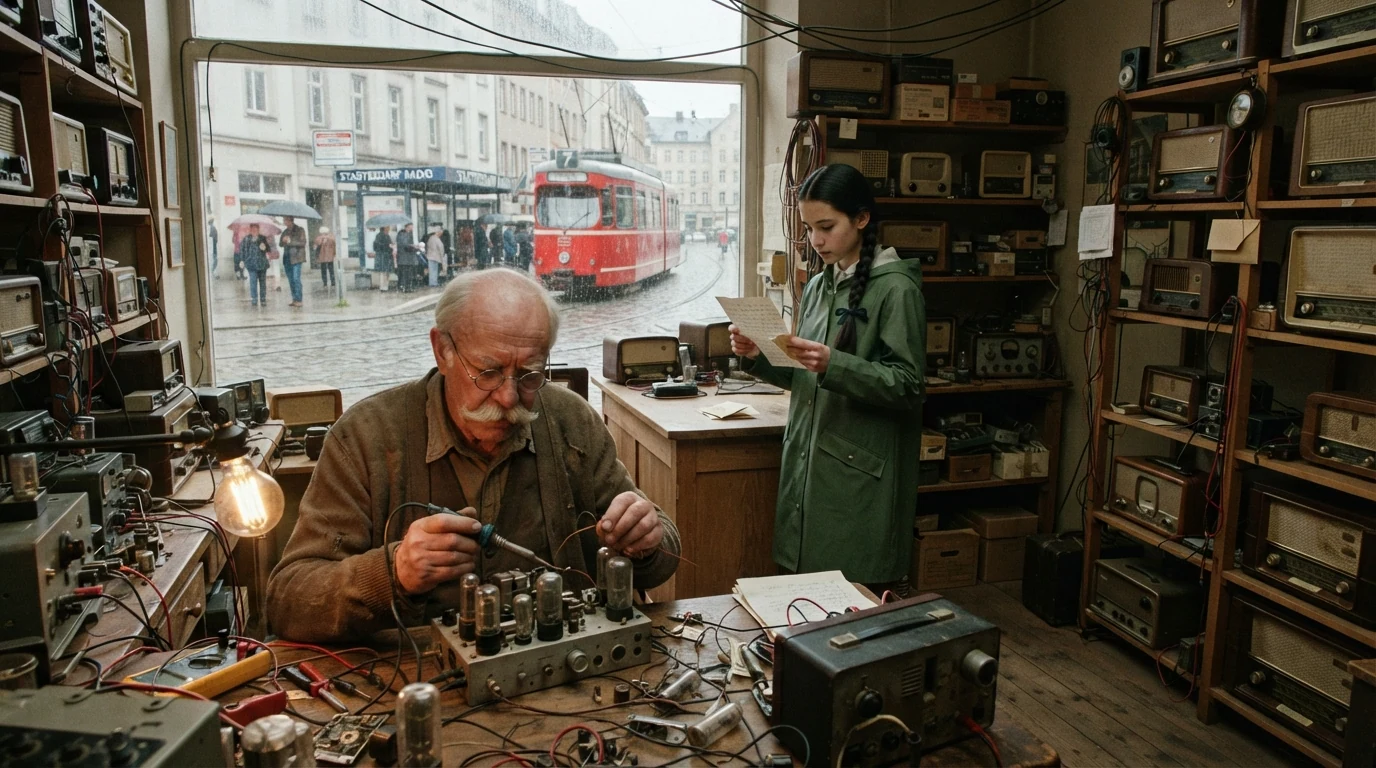
21mm lens at f/11 gives the model a physical reason for depth. Each plane gets a distance and the word sharp, and crisp focus from the workbench to the street names the whole range. The lamp and window light the planes separately, so depth reads without blur.
Open FlashBoards21:9 deep focus exterior, 18mm lens at f/16, low camera at hip height, late afternoon. Foreground, left third, very close to the lens: a woman in her forties with short grey-streaked hair, a freckled face and a faded denim jacket sits on a wooden porch step, looking out, fully sharp. Middle ground: a dirt yard with a rusted blue pickup truck. Background: across a flat wheat field, a man in a red cap walks along a fence line toward a grain silo on the horizon. Everything sharp from the porch boards to the silo, clear dry air, long shadows.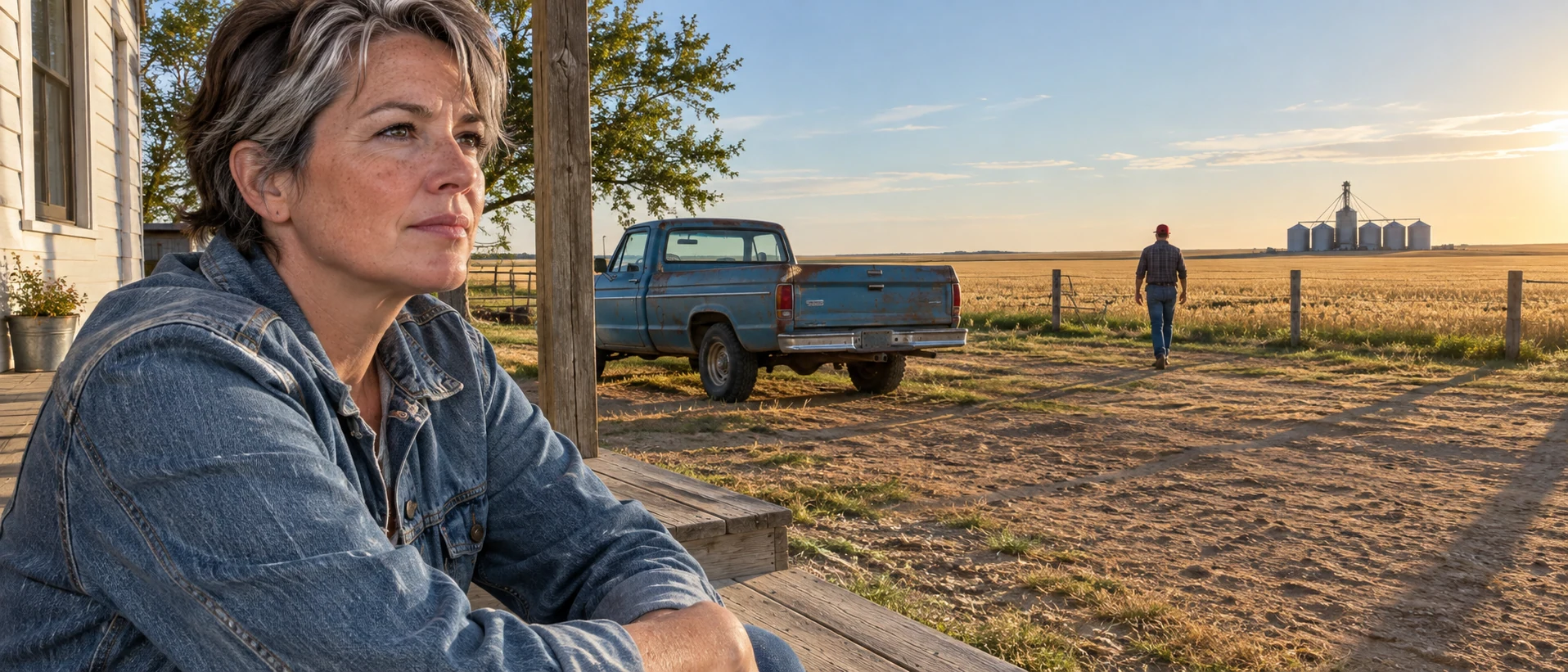
This take moves outside and widens to 21:9. Very close to the lens plus 18mm makes the woman large and the walking man tiny, the classic deep-focus size contrast. Clear dry air keeps the horizon from dissolving into haze that looks like blur.
Open FlashBoardsCamera: locked-off static shot at chest height for the whole shot, focus stays deep so the workbench, the counter and the street remain equally sharp. Action: from the first frame the old man moves the soldering iron along the radio's circuit board and a thin thread of smoke rises, while the girl at the counter turns the letter over. In the middle the red tram outside begins to pull away from the stop and rain streaks the window. At the end the girl lowers the letter and looks toward the old man, who keeps working without looking up.A static camera lets the staging carry the shot, as in classic deep-focus scenes. Motion starts at once on all three planes, and focus stays deep discourages the model from racking to one subject. Every action uses only what is already in the frame.
Open FlashBoards{
"output": "Full-screen live-action single continuous shot from its very first frame, a static deep-focus shot from Inglourious Basterds (2009): every plane is sharp at once, from the truck front at the lens to the farthest pine trunks in the haze. Wide-angle lens stopped down, 35mm scope film look, fine grain. Dense pine forest on an overcast autumn day, flat soft gray light between tall straight trunks, rust-brown bark, one pale white birch trunk, mossy green-brown floor with fallen pale branches, cool muted palette, light mist far back among the trees.",
"characters": {
"S1": {
"name": "Pfc. Smithson Utivich, played by B.J. Novak",
"look": "slim, short dark hair, plain dark suit, stands left of the group",
"voice": "silence: he does not speak"
},
"S2": {
"name": "Lt. Aldo Raine, played by Brad Pitt",
"look": "broad-shouldered, slicked dark hair, cream-white dinner jacket, black trousers, both hands clasped behind his back",
"voice": "silence: he does not speak"
},
"S3": {
"name": "Col. Hans Landa, played by Christoph Waltz",
"look": "long dark blue-gray greatcoat to the ankles, dark peaked officer's cap, black boots, arms down at his sides",
"voice": "silence: he does not speak"
},
"S4": {
"name": "a German radio operator",
"look": "gray-green field uniform, soft field cap, black boots",
"voice": "silence: he does not speak"
}
},
"shots": [
{
"shot": 1,
"camera": "locked-off static extreme wide shot, camera at chest height, very wide-angle lens stopped down, deep focus held for the whole shot, no camera movement. Framing: the front of a dark blue-green 1940s military truck fills the left edge very close to the lens, round headlamp and vertical grille crisp; a thick dark pine trunk stands just right of it; a wide stretch of mossy forest floor with fallen birch branches runs from the lens deep into the frame; far away, left of centre, the four men stand tiny, each figure about one fifth of the frame height; rows of pine trunks recede behind them into the haze, every plane sharp.",
"action": [
"BEGINNING: alive from the first frame, the four men stand in a row far off among the pines, from screen left to right S1, S2, S3, with S4 half hidden just behind S3's right shoulder. S1 and S2 face screen right toward S3; S3 faces screen left toward S2; S2 keeps both hands clasped behind his back, chin raised; S1's hands hang at his sides.",
"THEN: all four hold still; nobody nods, the truck stays still in the foreground.",
"THEN: S4 steps out from behind S3 and walks at a steady pace screen left, passing behind S2's back.",
"THEN: S4 reaches S1 and stops close behind S1's right shoulder, turning to face him; both of S4's hands go to S1's back at hip height.",
"END: S2 and S3 stay exactly as they were, facing each other, S2's hands still behind his back; S1 stands still while S4 works at his back; the group is tiny and sharp deep in the forest, the truck front still crisp at the left edge, the empty floor between them just as sharp."
],
"dialogue": [],
"voice": "silence: nobody speaks in this shot, no voice at all"
}
],
"sound": {
"ambience": "quiet forest stillness, soft wind high in the pine tops, faint footsteps on moss and needles far off",
"speech": "no words in this video; the only human sounds are breaths and movement",
"never_spoken": "no narration and no voice-over: the descriptions, performance notes and step words of this prompt are never spoken aloud",
"music": "a film score under the scene, always below the voices: a low sustained string drone with a slow, uneasy pulse",
"subtitles": "none"
}
}Remakes the static forest shot from Inglourious Basterds (2009), dir. Quentin Tarantino, DP Robert Richardson: the truck front crisp at the left edge, Utivich, Aldo and Landa standing tiny among the pines and the radio operator's walk behind them carried over, in silence under a low score.
Deep focus lives in the camera field: a very wide-angle lens stopped down, a truck front very close to the lens, four men tiny far away and every plane sharp. The radio operator's walk across the group gives the far plane motion, so the model has to keep the distance sharp while something happens there.
Common mistakes
- Background turns to bokeh. Words like cinematic, portrait or 85mm trigger blur. Name a wide lens and f/8–f/16, and call each plane sharp.
- Everything sits at one distance. Without distances, models line people up mid-frame. Give meters or very close to the lens for the foreground and a named far object.
- Sharp but flat. Deep focus with flat light looks like a snapshot. Light the planes differently: window, lamp, sun on the background.
- Video racks or pushes in. Ask for a locked-off or slow lateral camera and give each plane its own action from the first frame.
- Background people melt in motion. Keep far action simple: one walker, one vehicle, rain.
Keep the reference frames, prompts and every generated take side by side — images and video in one canvas.
FAQ
6 questionsWhat is deep focus in film?
Deep focus is a cinematography technique in which the foreground, middle ground and background are all sharp at the same time. It comes from a wide lens, a small aperture and careful focus placement. Because nothing is blurred, the director can stage several actions at different distances in one shot, and the audience chooses where to look instead of being guided by focus.
How do you get deep focus with a camera?
Use a wide-angle lens (about 18–32mm on Super 35), stop down to f/8 or f/11, and focus at the hyperfocal distance instead of on the subject. On Super 35, a 25mm at f/8 focused around 3 m holds roughly 1.5 m to infinity. Add light or ISO to pay for the smaller aperture, and stage something meaningful on each plane.
What is the difference between deep focus and depth of field?
Depth of field is the measurable zone of acceptable sharpness in any shot, from razor-thin to very deep. Deep focus is a style that uses a very deep depth of field on purpose, keeping near and far planes sharp so they can be read together. Every deep-focus shot has a large depth of field, but the term also implies staging in depth.
What are famous deep focus shot examples?
The classic is Citizen Kane (1941), shot by Gregg Toland, where the boy playing in the snow stays sharp through the window while his mother signs papers in front. Toland also shot The Best Years of Our Lives (1946), with a piano in front and a phone booth far behind. All the President's Men (1976) keeps its newsroom readable to the back wall.
Is a split diopter the same as deep focus?
No. A split diopter is a half-lens attachment that makes one side of the frame focus close and the other far, creating a deep-focus look while the middle distance may stay soft. True deep focus is optical depth of field through the whole frame. Split diopters are used when the lens cannot reach, and they leave a soft seam that has to be hidden.
Why don't more modern films use deep focus?
Large sensors, fast lenses and low-light shooting make shallow focus the easy default, and it reads as expensive. Deep focus needs more light, a fully dressed set and precise blocking because nothing can hide in blur. Many filmmakers still choose it for realism and ensemble scenes, and wide-lens landscapes on digital are often sharp front to back.
Related terms
7- Shallow Depth of FieldLenses, Focus & Exposure
Shallow depth of field keeps only a thin slice of the scene sharp — often just the eyes — while everything nearer and farther dissolves into blur, isolating the subject and steering attention.
- Depth of FieldLenses, Focus & Exposure
Depth of field is the zone in front of and behind the point of focus that looks acceptably sharp; aperture, focal length, focus distance and format size decide whether it is razor-thin or stretches to the horizon.
- Depth LayeringComposition & Framing
Depth layering builds a shot in distinct planes — foreground, midground and background — each holding something meaningful, so the flat screen gains volume and several actions or ideas can be read at once.
- Wide-Angle LensLenses, Focus & Exposure
A wide-angle lens has a shorter focal length than normal: it takes in more space, exaggerates the distance between near and far, and enlarges whatever is close to the camera — from immersive interiors to unsettling, distorted close-ups.
- Split DiopterLenses, Focus & Exposure
A split diopter is a half-lens attachment that lets one side of the frame focus close and the other far away, so a face in the foreground and a figure in the background are both sharp — with a tell-tale soft seam between them.
- Mise-en-ScèneFilm History & Theory
Mise-en-scène is everything placed and arranged in front of the camera — setting, props, costume, makeup, lighting, and the actors' positions and movement — and how it is composed in the frame to create meaning.
- ApertureLenses, Focus & Exposure
Aperture is the adjustable opening inside a lens that controls how much light reaches the film or sensor; opening it up brightens the image and makes depth of field shallower, stopping down does the opposite.
Further reading
Gregg Toland, "Realism for Citizen Kane," American Cinematographer (February 1941). André Bazin, What Is Cinema? (English translation, 1967). David Bordwell, On the History of Film Style (1997).