 FlashBoards Learn
- Learn
- Film History & Theory
- Golden Age of Hollywood
Film History & Theory · Film language
Golden Age of Hollywood
Also called: Classical Hollywood, Old Hollywood, studio era
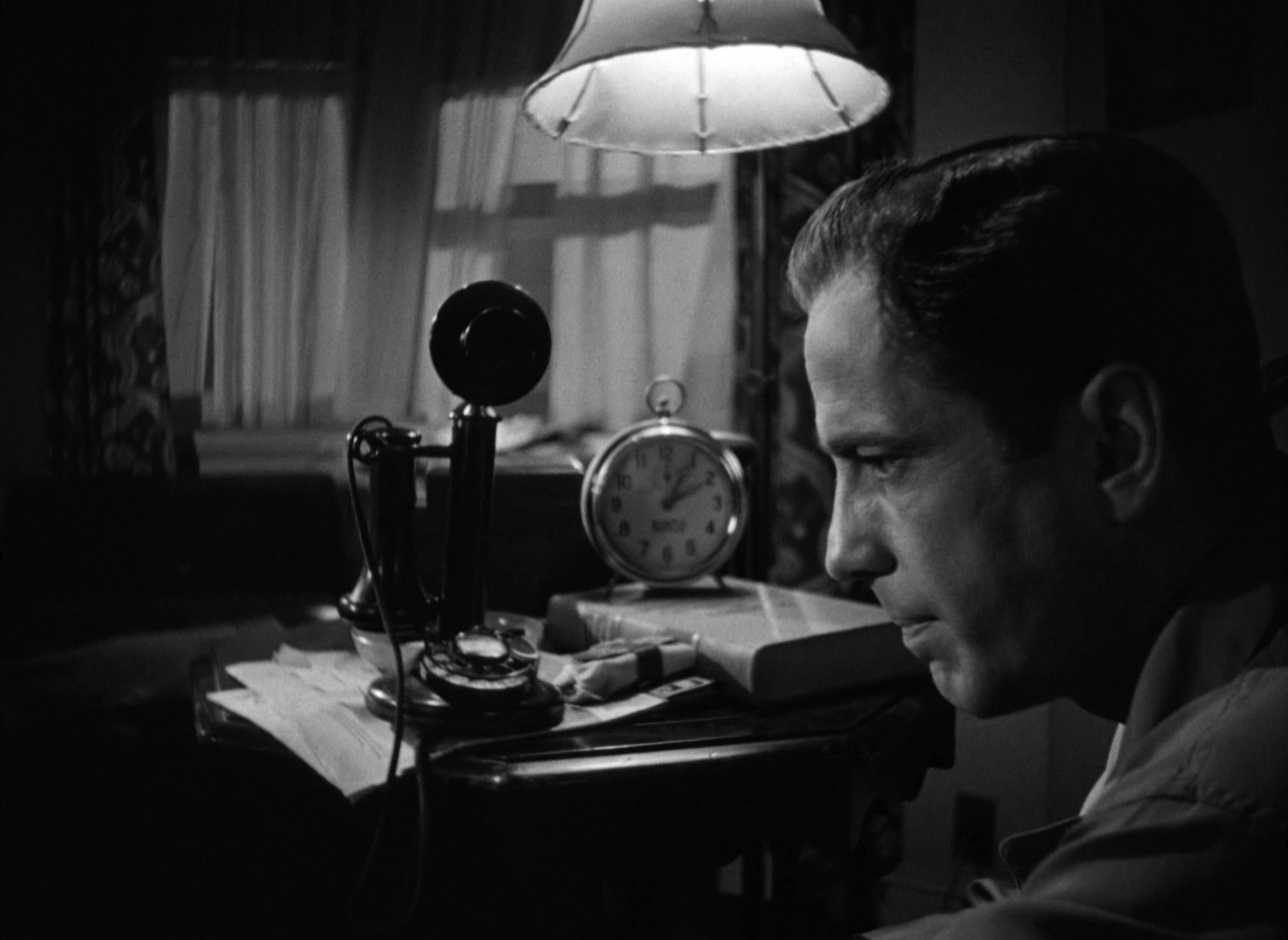
The Golden Age of Hollywood is the studio era that ran from the arrival of sound in the late 1920s to the early 1960s. A handful of studios owned the stars, the soundstages and the theaters, and they perfected an invisible, star-centered classical style seen in Casablanca, Citizen Kane and The Wizard of Oz.
- What it does
- Names the studio-era period and the polished classical style that still defines mainstream film grammar.
- Use it when
- You study classical continuity, build a period piece, or want the glamour-lit, soundstage look of 1930s–50s Hollywood.
- Watch out
- The glamour is a style, not a filter: it comes from lighting, sets and staging, not from black and white alone.
- Try this prompt
1940s Hollywood studio still, black and white, butterfly lighting, soft glow on highlights, art deco set, 4:3 frame, fine grain
What was the Golden Age of Hollywood?
The term covers about three decades of American filmmaking, from The Jazz Singer (1927) and the fast switch from silent film to sound, to the early 1960s. Historians also call it classical Hollywood cinema, Old Hollywood or the studio era. The dates are a convention: some end it with the 1948 Paramount decision, others as late as 1967.
Two things hold the period together. An industrial system, in which eight companies made most of the films Americans saw and controlled where they were shown, and a shared style that let those companies turn out hundreds of features a year for audiences who read them without effort.
How did the studio system shape the era?
The engine was the Hollywood studio system. The Big Five (MGM, Paramount, Warner Bros., 20th Century-Fox and RKO) produced, distributed and owned theater chains; the Little Three (Universal, Columbia, United Artists) competed without big chains. Stars, directors and cinematographers worked on long-term contracts.
Each studio had a house look: MGM bright and lavish, Warner Bros. fast, urban and shadowy, Universal built on horror. After 1934 every script also had to clear the strictly enforced Hays Code.
What does classical Hollywood style look like?
The classical style aims to be invisible. Cuts follow action and eyelines, the 180-degree rule keeps geography clear, and scenes tighten from establishing shot to close-up as the drama builds.
- Soundstage control. Streets, nightclubs and towns were built on the lot, with painted backdrops and rear projection.
- Star lighting. Three-point setups separated actors from sets; leading ladies got a high frontal key, now called butterfly lighting, plus lens diffusion for a glow.
- The Academy frame, close to 1.37:1, until widescreen arrived in the 1950s.
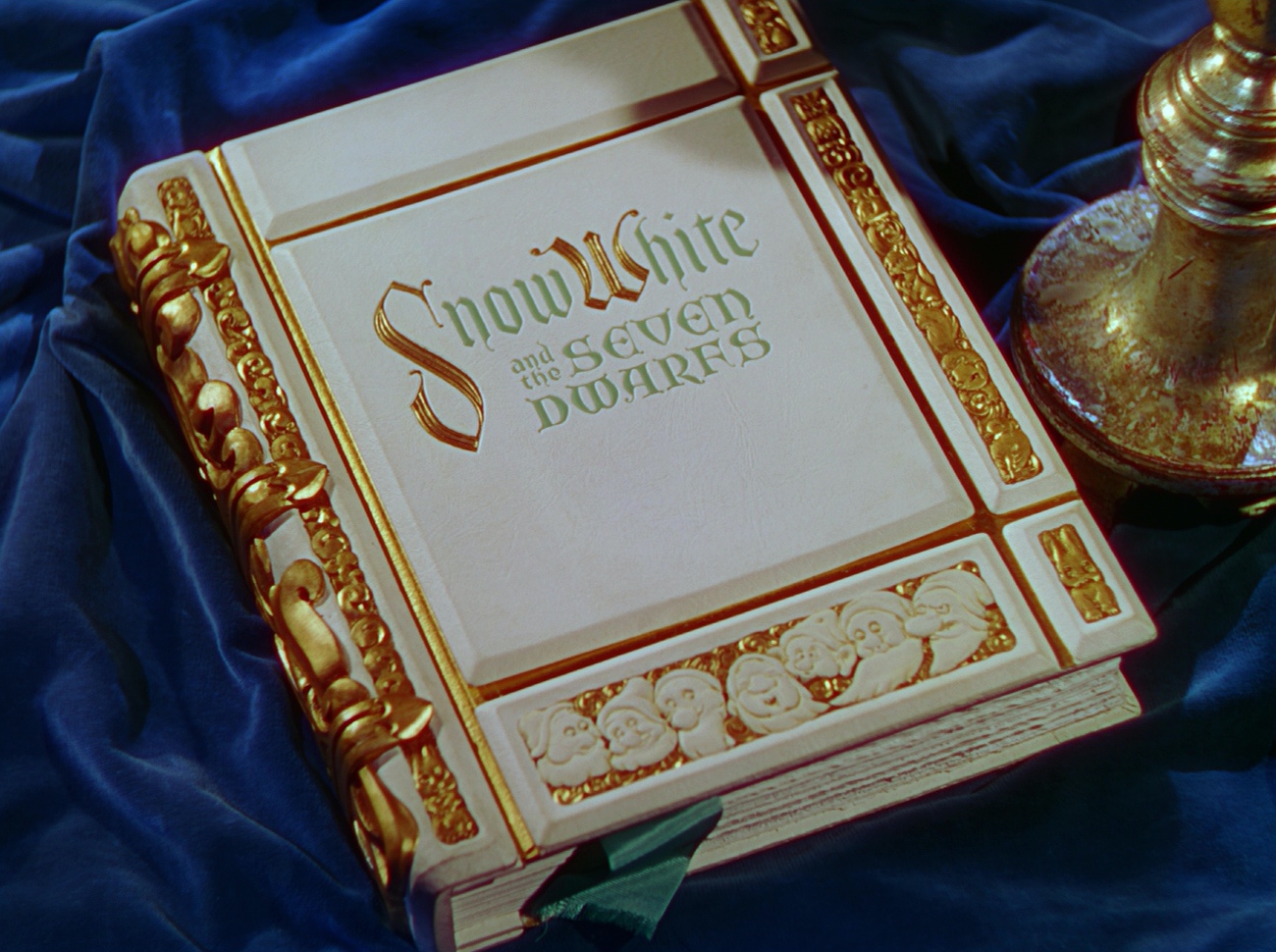
- Color as an event. Most features were black and white; three-strip Technicolor went to prestige musicals and fantasies.
- Genre. Musicals, screwball comedies, westerns, gangster films, melodramas and film noir.
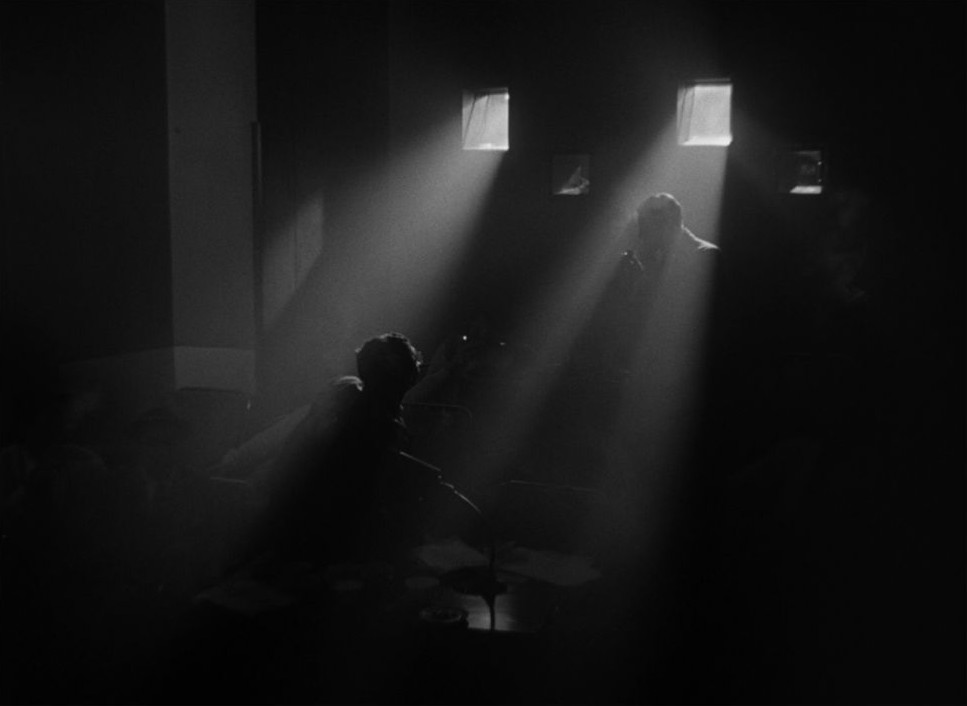
The style was not rigid: Citizen Kane (1941) broke rules from inside RKO with deep focus and a fractured flashback structure.
Which films define the Golden Age of Hollywood?
1939 is often called the peak year: Gone with the Wind, The Wizard of Oz, Stagecoach and Mr. Smith Goes to Washington all premiered within twelve months. Around it sit Disney's Snow White and the Seven Dwarfs (1937), The Maltese Falcon (1941), Citizen Kane (1941) and Casablanca (1942), a studio picture assembled from contract talent. The 1950s added Singin' in the Rain (1952) and Rear Window (1954), made as the system was coming apart.
Why did the Golden Age of Hollywood end?
- The Paramount decision (1948) forced the studios to sell their theater chains.
- Television cut weekly moviegoing through the 1950s; Hollywood answered with widescreen and color, starting with CinemaScope in The Robe (1953).
- Talent went independent, dealing film by film instead of on seven-year contracts.
- The Hollywood blacklist drove writers and actors out of work.
- Censorship weakened, and costly flops like Cleopatra (1963) exposed the old model.
By the late 1960s the studios were financiers rather than factories, and New Hollywood directors broke the classical rules on purpose.
How to recreate the Old Hollywood look
Start with the light: key high and in front of the face, a small backlight on the hair, soft fill. Add mild diffusion, a 40–50mm lens, and frame 4:3 for the 1930s–40s or ultra-wide for 1950s CinemaScope. Stage in depth on built sets, move on a dolly, cut on action.
In FlashBoards, pin period frames on one board by studio and decade, generate your shots beside them and compare light and framing side by side. More history in film history and theory.
Golden Age of Hollywood examples in film
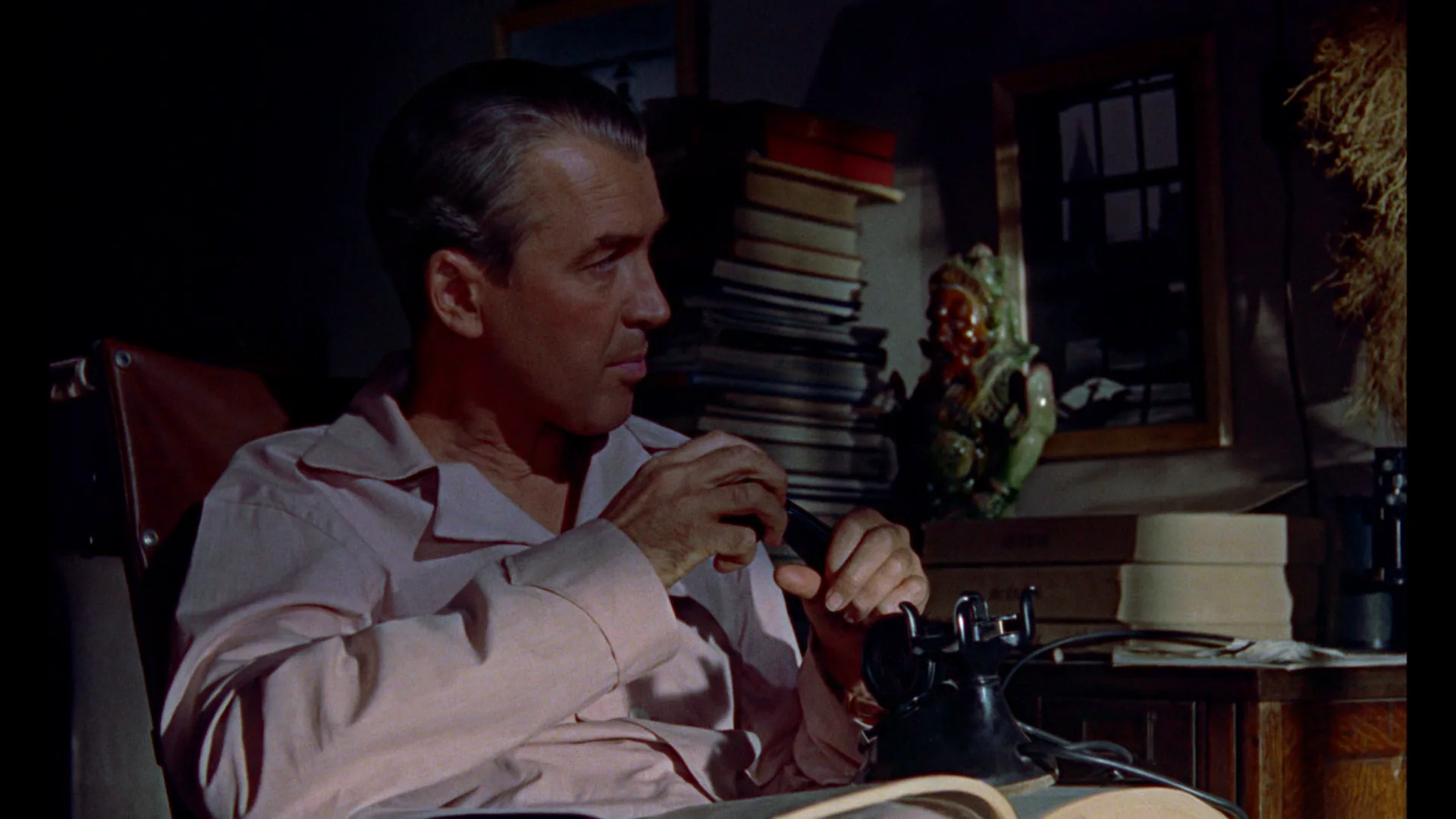
4 framesFour frames from inside the studio era.
How to create a golden age of hollywood with AI
4 promptsSay "old Hollywood" and models reach for sepia. Name the decade, the frame and above all the light, and keep period references and takes on one FlashBoards board so the look stays consistent. The fourth prompt re-shoots a real film shot from a text description alone, and the original plays next to the result so you can compare.
1940s Hollywood studio film still, black and white, 4:3. Medium close-up of a woman in her thirties with dark auburn hair in a finger-waved bob, a narrow face with a long straight nose, a thin scar through her left eyebrow, dark lipstick and long drop earrings, in a satin gown at a nightclub table on a soundstage set. High frontal key light above the lens casting a small shadow under her nose, soft fill, backlight rimming her hair. Out-of-focus art deco columns behind her. Diffusion glow on highlights, 50mm, fine grain.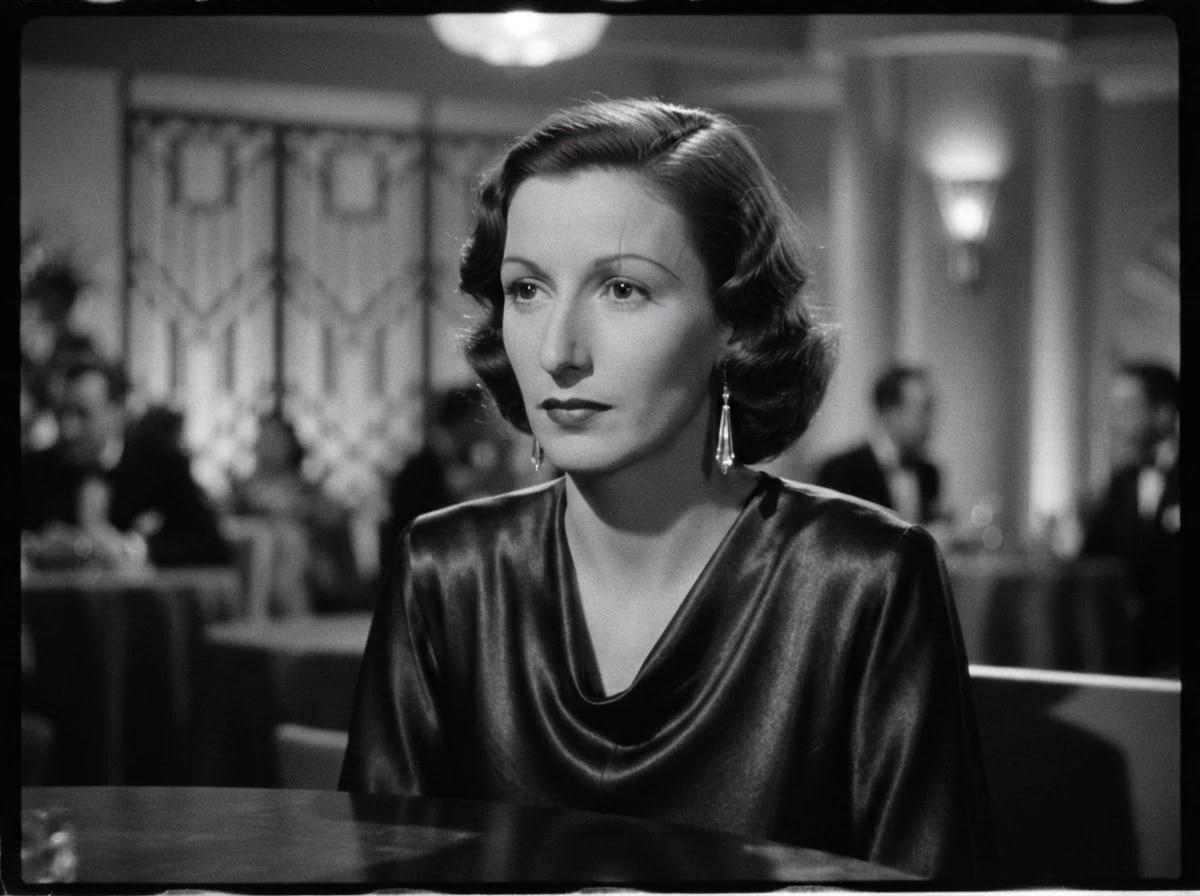
"High frontal key" with "small shadow under her nose" builds butterfly lighting; "backlight rimming her hair" and "diffusion glow" add studio polish; "soundstage set" keeps the world built.
Open FlashBoards1950s Hollywood musical still in saturated three-strip Technicolor, CinemaScope frame. Wide shot of a studio-built street at dusk: a lanky dancer in his twenties with a red crew cut, big ears and freckles, in a mustard suit, mid-leap off a lamppost. Six chorus dancers in pastel dresses in a line behind him. Painted orange and violet sky backdrop, wet cobblestones, bright high-key light, camera slightly above eye level.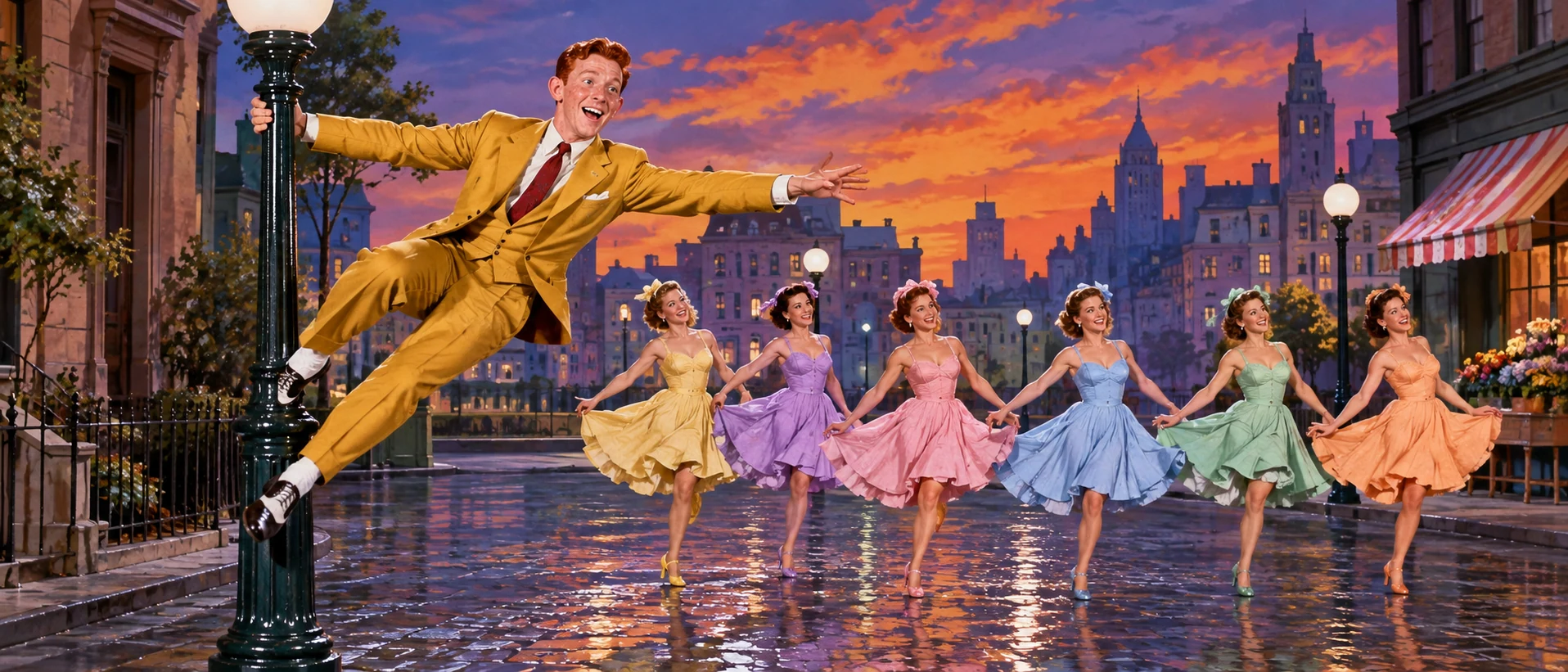
"Three-strip Technicolor" plus named colors gives the dye-transfer palette, and "CinemaScope" on a 21:9 canvas marks the 1950s answer to television.
Open FlashBoardsBlack and white 1940s studio film, fine grain. Camera: smooth, slow dolly in from medium close-up to close-up of her face. Action: Her drop earrings are already swaying as she turns her head toward the lens. She lifts her chin into the key light, lowers her eyes, then looks into the camera with a slow, knowing smile.Swaying earrings start the motion at frame one; the slow dolly in is the classical way to raise the stakes on a star.
Open FlashBoards{
"output": "Full-screen live-action scene from Rear Window (1954), from its very first frame: three shots joined by two hard cuts, the classical point-of-view pattern: the view across the courtyard, the man watching, the same view again. 1954 Technicolor studio look with fine grain, night on a soundstage-built apartment courtyard, deep blue-black shadows, warm tungsten lamps glowing in the lit rooms, brick red, amber and dusty teal palette, hard controlled studio light.",
"characters": {
"S1": {
"name": "Jeff (L.B. Jefferies), played by James Stewart",
"look": "lean man in his mid-forties, long face, graying dark hair combed straight back, pale pink pajama shirt with an open collar, seated in a wheelchair with a red-brown leather back, a black telephone handset held low against his chest in both hands",
"voice": "quiet, dry, drawling, under his breath"
},
"S2": {
"name": "Lars Thorwald, played by Raymond Burr",
"look": "big heavy-set man, thick wavy white hair, gray suit, white shirt, seen small and far away inside his lit living room",
"voice": "silent: he never speaks"
}
},
"shots": [
{
"shot": 1,
"camera": "locked-off, eye level, long lens, wide view straight across the dark courtyard at a red-brick apartment wall at night; a black drainpipe with a diagonal brace runs down the wall right of centre. A wide lit window centre-left with its casement panes open outward shows S2's living room: a yellow pleated table lamp at left, two framed pictures on a beige wall, a rust-red armchair, and at right a desk with a black telephone under a white-shaded desk lamp, sheer white curtains at the right edge. A dark iron balcony with red geraniums at the far left edge, a small lit bedroom window at the far right edge.",
"voice": "silence: nobody speaks in this shot, no voice at all",
"action": [
"BEGINNING: alive from the first frame, S2 stands behind the armchair in the middle of the lit window, seen small and far away, body turned to screen right and a little away from camera, head bowed, eyes down on the telephone on the desk at his right, both arms hanging empty at his sides.",
"THEN: he stays rooted to the spot, staring down at the telephone, shoulders heavy.",
"END: he lifts his head a little, still facing the telephone, without a step and without reaching for it."
],
"dialogue": []
},
{
"shot": 2,
"cut_at": "00:01.460",
"camera": "locked-off, eye level, normal lens, medium close-up of S1 in three-quarter profile facing screen right, seated low at left of frame, the red-brown leather back of his wheelchair at the left edge, a black desk telephone with an empty cradle in the lower right foreground; low-key light: warm light from screen right on his face, the room behind in deep shadow with stacks of books with red spines, a green ceramic figurine, a framed photograph on the dim wall and a bundle of dried grass hanging at top right",
"action": [
"BEGINNING: right after the cut, S1 sits still, eyes fixed off screen right toward the lit window across the courtyard, mouth closed, jaw set; his screen-left hand holds the black handset against his chest, his screen-right hand holds its lower end above the desk telephone.",
"THEN: his brow tightens, his lips part and he starts to mutter, his gaze never leaving screen right.",
"END: he keeps muttering, head unmoved, no nod, both hands still on the handset."
],
"dialogue": [
{
"speaker": "S1",
"on_screen": true,
"when": "a moment after the cut to this shot, never before the cut, while his eyes stay on screen right",
"delivery": "quiet, urging, under his breath",
"line": "<d>[English] Go on, pick it up, <scenetrans></d>"
}
]
},
{
"shot": 3,
"cut_at": "00:03.545",
"camera": "the same locked-off wide view across the courtyard as shot 1, identical framing, S2's lit window centre-left",
"action": [
"BEGINNING: S2 stands on the same spot behind the armchair, now with his head raised, looking down to screen right at the telephone on the desk, lips closed.",
"THEN: he turns his head further to screen right, arms still hanging at his sides.",
"END: he stands frozen, staring at the telephone at his right, hands empty, not reaching for it."
],
"dialogue": [
{
"speaker": "S1",
"on_screen": false,
"when": "carried straight over the cut, finishing the same sentence, S1's voice from off screen while S2 stays silent",
"delivery": "quiet, under his breath",
"line": "<d>[English] <scenetrans> Thorwald.</d>"
}
]
}
],
"sound": {
"ambience": "quiet city night heard from outside, faint distant traffic; a telephone rings steadily across the courtyard, small and far away",
"speech": "exactly these spoken phrases, each said once, in this order",
"never_spoken": "no narration and no voice-over: the descriptions, performance notes and step words of this prompt are never spoken aloud",
"music": "a film score under the scene, always below the voices: low suspense strings with a slow, ticking pizzicato pulse",
"subtitles": "none"
}
}Remakes the courtyard sequence of Rear Window (1954), dir. Alfred Hitchcock, DP Robert Burks: Thorwald staring down at his telephone, the cut to Jeff muttering in the dark and back, with the film's cut times and its own line split across the last cut.
The two cut_at values copied from the film give the classical point-of-view pattern: view, watcher, view. Jeff's real line runs across the second cut, so "Thorwald" lands over the shot of Thorwald, and "Technicolor" plus a "soundstage-built courtyard" carry the studio night look.
Common mistakes
- Sepia. Write "black and white" and the decade; age with grain, not tint.
- Flat modern light. Name the high frontal key and hair backlight.
- Real streets. Ask for "soundstage set" and "painted backdrop."
- Faded color. "Three-strip Technicolor" plus named colors, not "vintage."
Keep the reference frames, prompts and every generated take side by side — images and video in one canvas.
FAQ
4 questionsWhen was the Golden Age of Hollywood?
Most historians date it from the coming of sound, 1927–1929, to the early 1960s, when the studio system had broken down. Some end it at the 1948 Paramount decision, others with New Hollywood around 1967. The peak is usually placed in the late 1930s and 1940s, with 1939 often called Hollywood's greatest year.
What is classical Hollywood cinema?
It is the film style of the studio era: continuity editing that hides the cuts, clear cause-and-effect stories driven by a goal-oriented hero, star-centered lighting and strong genres. It is called classical because it became the standard grammar of mainstream film, and most films today still follow its rules.
What is the Old Hollywood glamour look?
The polished style of 1930s–50s studio close-ups and portraits: a high frontal key light that sculpts cheekbones and leaves a small shadow under the nose, a backlight on the hair, soft diffusion on highlights, and immaculate makeup and costume. Portrait photographers like George Hurrell made it famous.
Why did the Golden Age of Hollywood end?
The 1948 Paramount decision forced studios to sell their theaters, television took the weekly audience in the 1950s, stars and directors left long contracts for independent deals, the blacklist damaged the industry and censorship weakened. By the late 1960s the factory model was gone.
Related terms
6- Hollywood Studio SystemFilm Industry
The Hollywood studio system (roughly 1920s–1950s) was the model in which a few major studios owned production, distribution and theaters, and kept stars, directors and crews under long-term contracts.
- Hays CodeFilm History & Theory
The Hays Code was Hollywood's self-censorship rulebook, adopted in 1930 and strictly enforced from 1934 to the late 1960s: it limited sex, violence, profanity and 'immoral' endings until the MPAA rating system replaced it in 1968.
- TechnicolorColor
Technicolor is a family of color film processes; its three-strip version (from 1932 into the 1950s) split light onto three negatives and printed them by dye transfer, producing the saturated, jewel-like color of The Wizard of Oz and classic Hollywood musicals.
- Butterfly LightingLighting
Butterfly lighting puts the key light high and straight in front of the face, casting a small butterfly-shaped shadow under the nose; it sculpts cheekbones and was the classic Hollywood glamour look.
- Film NoirFilm Movements & Styles
Film noir is the cycle of 1940s–50s American crime films — named by French critics — defined by fatalistic plots, morally compromised heroes, femmes fatales and low-key black-and-white lighting full of hard shadows.
- New HollywoodFilm Movements & Styles
New Hollywood (c. 1967–1980) was the era when young auteurs — Coppola, Scorsese, Altman, Friedkin — took control from a collapsing studio system and made darker, personal, formally freer films, from Bonnie and Clyde to Taxi Driver.
Further reading
David Bordwell, Janet Staiger and Kristin Thompson, The Classical Hollywood Cinema: Film Style and Mode of Production to 1960 (1985). Thomas Schatz, The Genius of the System: Hollywood Filmmaking in the Studio Era (1988).