 FlashBoards Learn
Lighting · Film language
Butterfly Lighting
Also called: Paramount lighting, butterfly light
Butterfly lighting places the key light high and directly in front of the face, above the lens, so the nose casts a small, symmetrical butterfly-shaped shadow onto the upper lip. It carves cheekbones, slims the jaw and puts a catchlight at the top of each eye: the classic Hollywood glamour close-up.
- What it does
- Sculpts cheekbones and jaw with a symmetrical shadow under the nose and chin, giving a face polished, iconic glamour.
- Use it when
- You want a portrait close-up to feel classic, beautiful and a little untouchable: star entrances, period pieces, fashion and beauty shots.
- Watch out
- Raise the key too far and the eye sockets go dark; move it off-axis and the symmetry breaks into loop or Rembrandt light.
- Try this prompt
Close-up, butterfly lighting: hard key high and directly in front above the lens, small symmetrical shadow under the nose, black background
What is butterfly lighting?
Butterfly lighting is defined by where the key light sits: on the camera axis, above the eye line, angled down at the face. Both cheeks get equal light, so the strong shadows fall downward: a small wing-shaped shadow under the nose, shading under the cheekbones and a dark band under the chin.
Three signs identify it: a centered nose shadow pointing straight down, evenly lit cheeks and catchlights high in the eyes. A nose shadow sliding onto one cheek is loop lighting; one joining the cheek shadow is Rembrandt lighting.
It is also called Paramount lighting, after the studio where it defined 1930s star close-ups. In film lighting it is a pattern, not a lamp: a Fresnel, beauty dish or softbox can all produce it.
Why filmmakers use butterfly lighting
Butterfly light edits the face. Cheekbone shadows make them look higher, the chin shadow tightens the jaw, and frontal light hides skin texture while keeping the eyes bright.
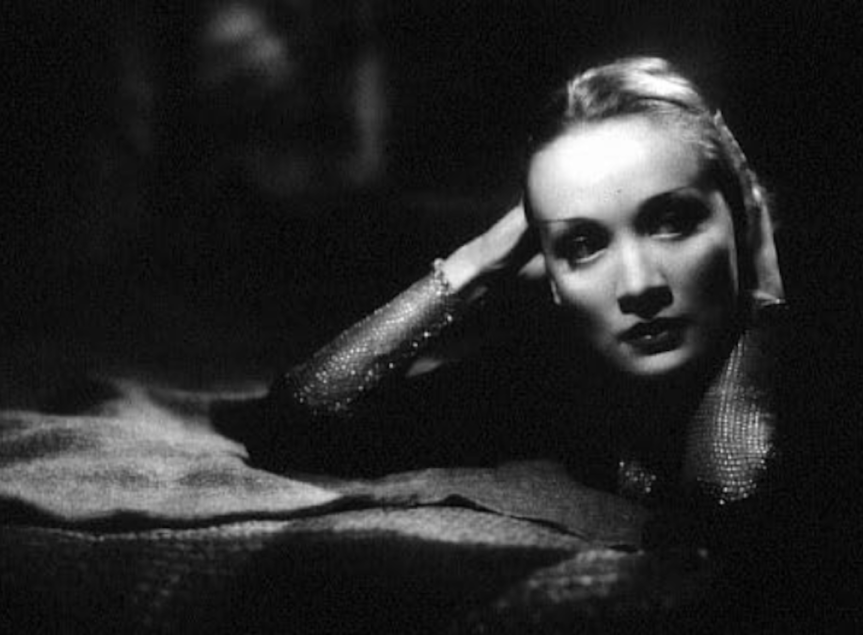
It also carries history. In Shanghai Express (1932) Marlene Dietrich is lit by a hard source high above the lens, and her face becomes an icon more than a person. That is why the look still signals glamour, stardom or a character performing an idealized self.
How to set up butterfly lighting
- Key on axis. Boom the light directly in front of the subject, above the camera; shoot underneath it.
- Height. Start 30–45° above the eye line, about 1–1.5 m away. The nose shadow should end roughly halfway to the upper lip.
- Eyes. Keep a catchlight at the top of each iris. If it vanishes, you have slid into top lighting and the sockets go dark.
- Quality. A small hard light such as a Fresnel gives crisp 1930s shadows; a beauty dish or large diffused source gives the smooth modern beauty look.
- Background. Light it separately or let it fall to dark.
It flatters high cheekbones but is harder on deep-set eyes, and glasses reflect a key this close to the lens.
Clamshell lighting: butterfly with fill from below
Clamshell is butterfly with a second source under the face: a white reflector or low softbox below the chin, angled up. It acts as fill light, softening chin and under-eye shadows and adding a second catchlight at the bottom of each eye. Keep it one to two stops under the key, or the butterfly shadow disappears. Clamshell is the beauty-shoot default.
Butterfly vs. Rembrandt lighting
Both keep the key above the eye line; the difference is the horizontal angle. Butterfly sits on the camera axis, so the face is symmetrical. Rembrandt swings the key about 45° to one side, leaving the far cheek dark except for a small triangle of light under the eye.
The effect is almost opposite. Butterfly idealizes; Rembrandt makes the face feel private and conflicted. Choose butterfly when the shot is about how the character looks to others, Rembrandt when it is about what they are thinking.
Butterfly Lighting examples in film
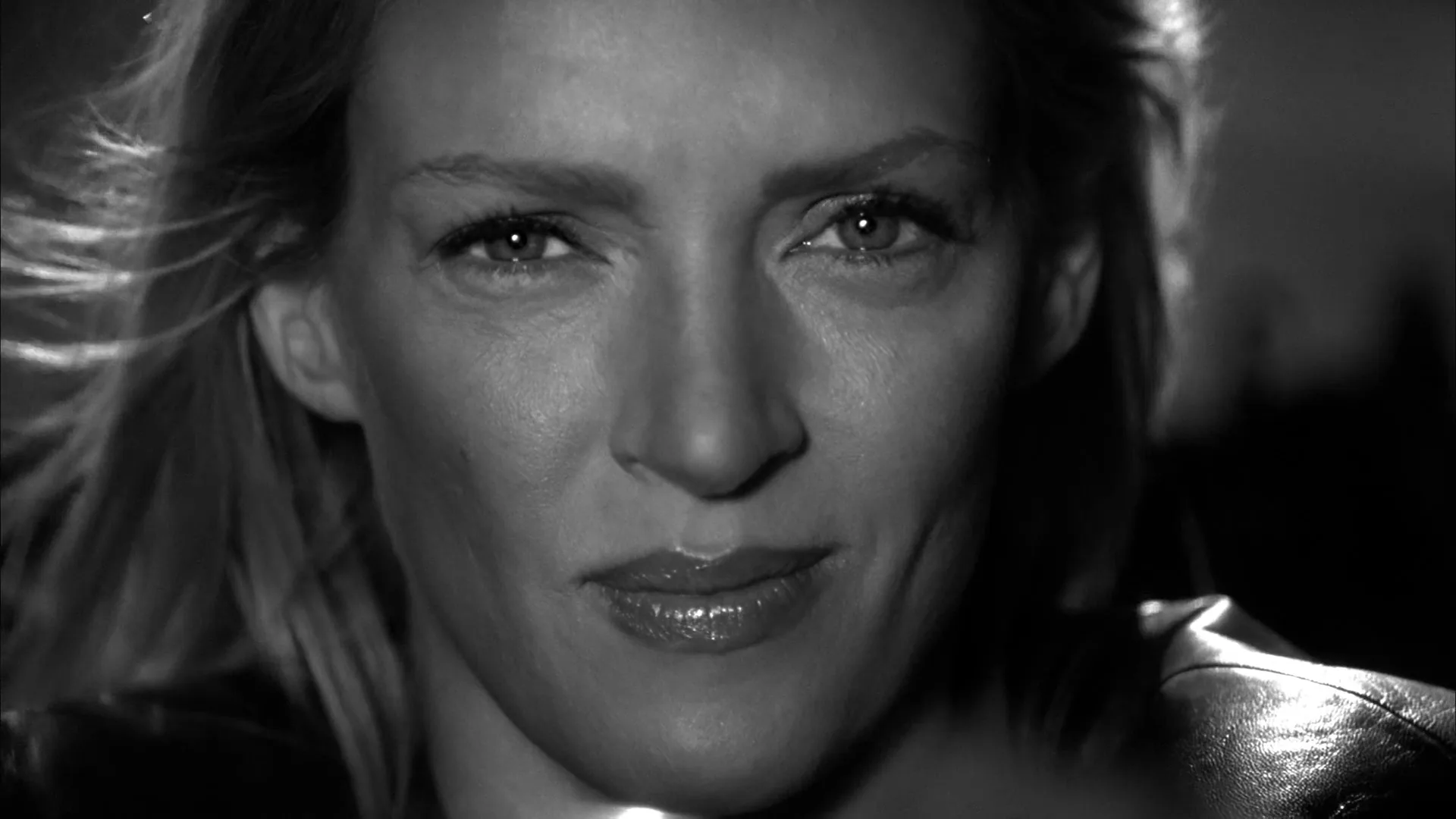
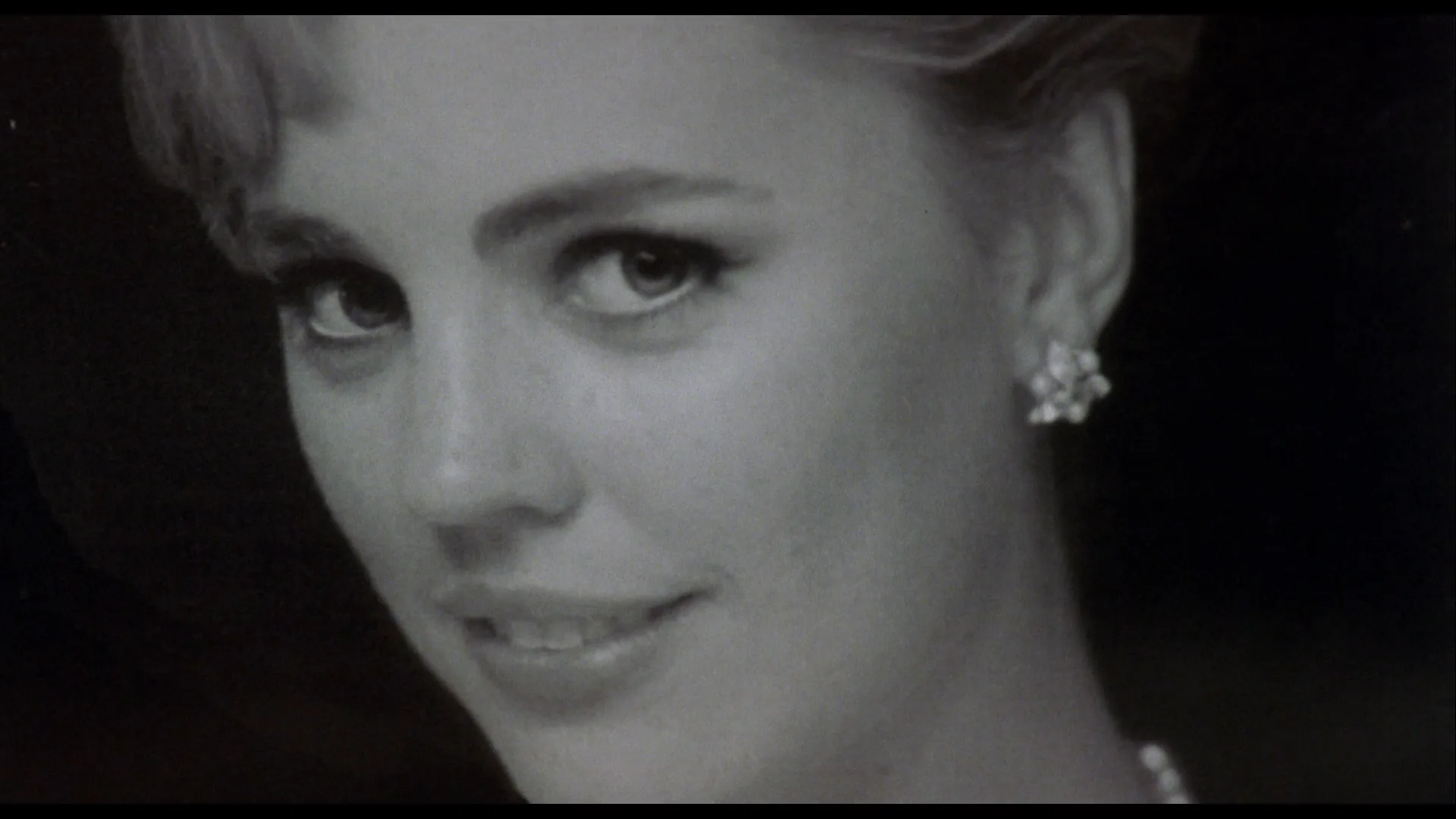
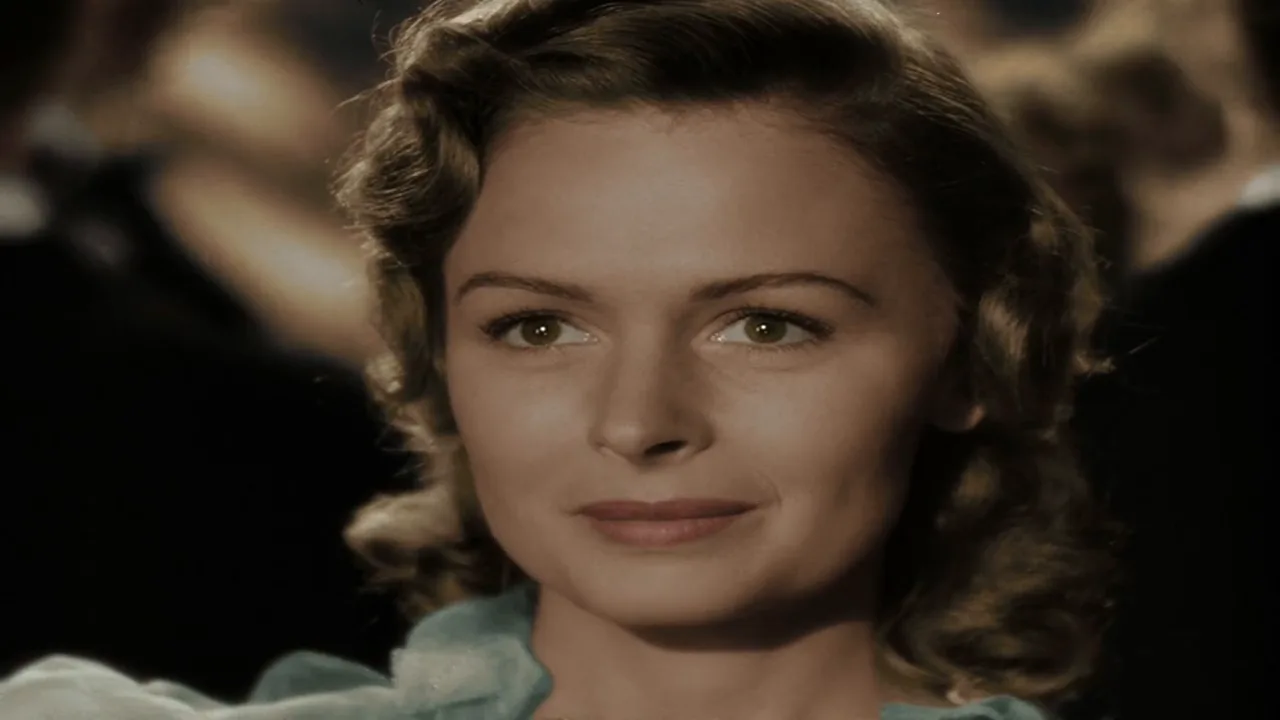
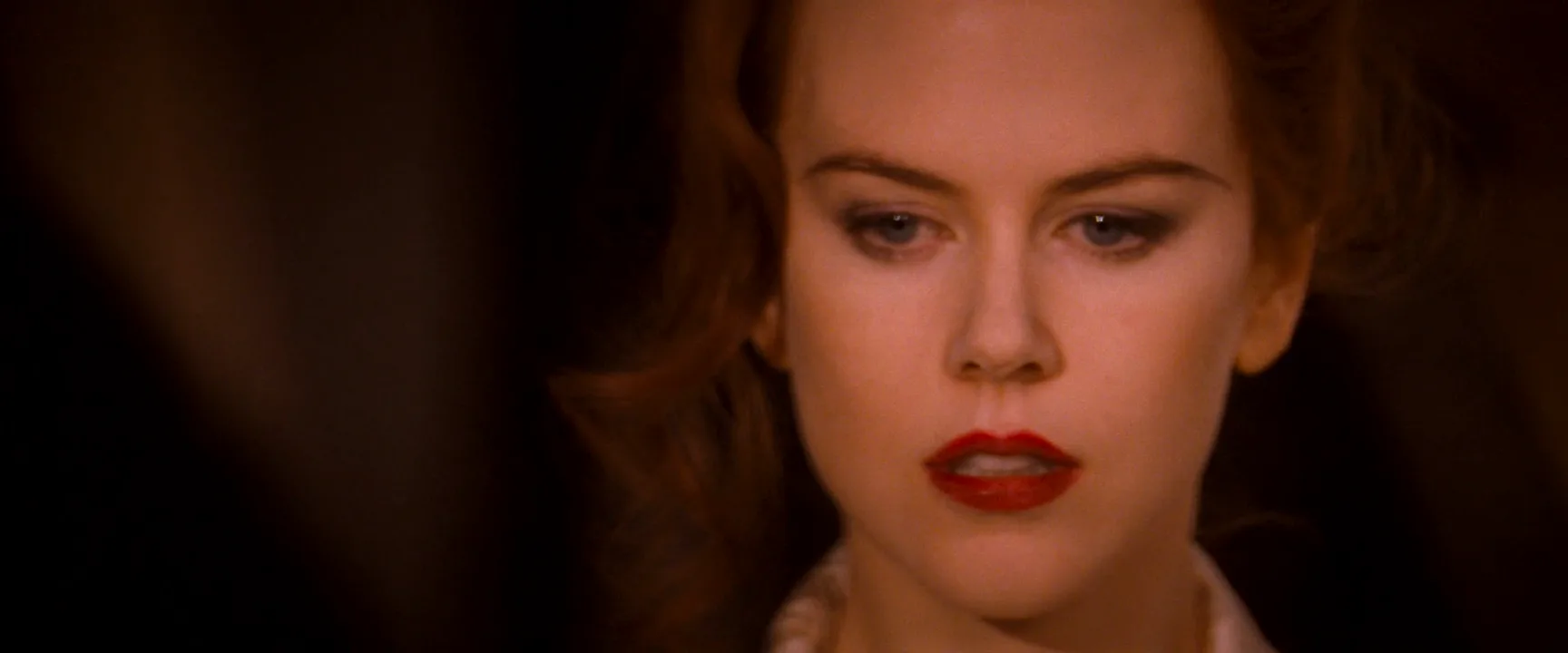
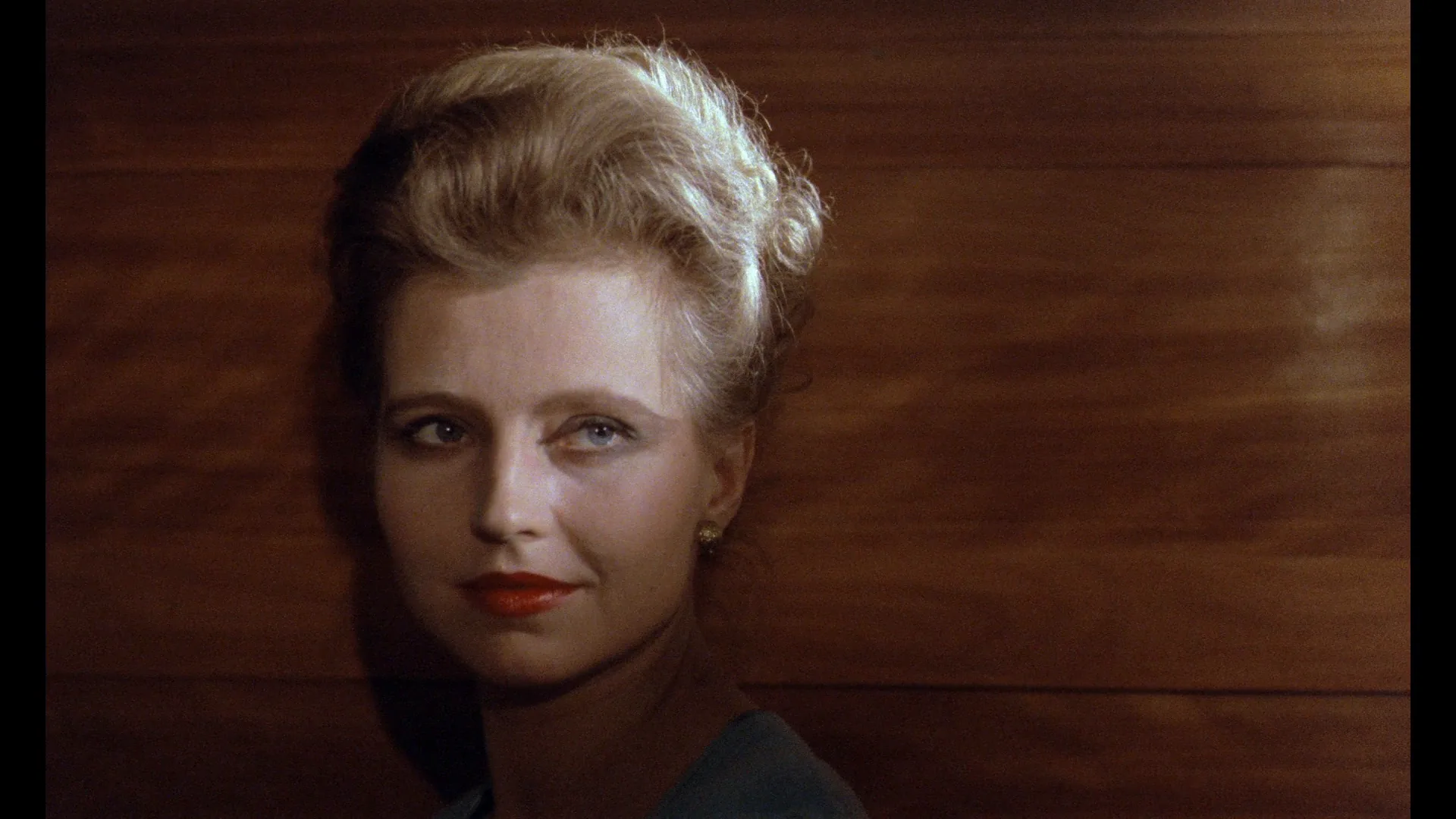
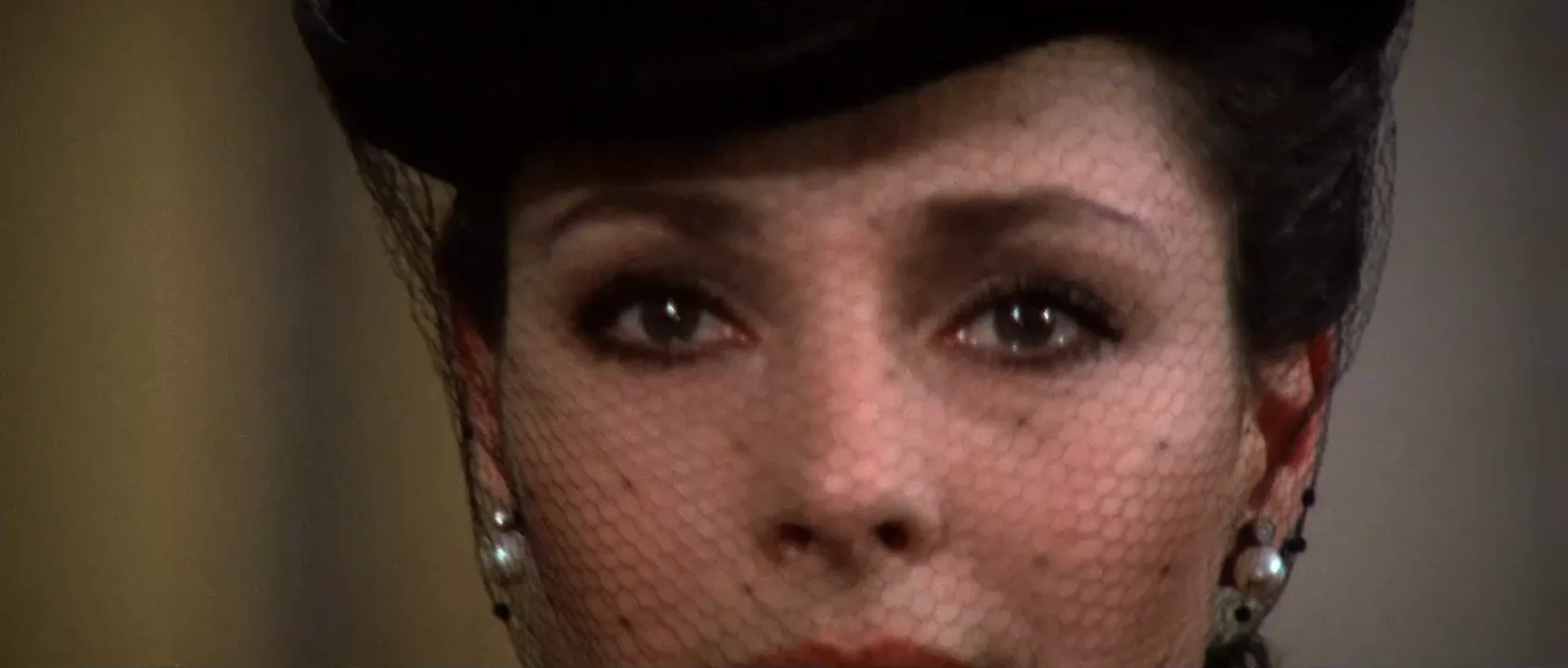
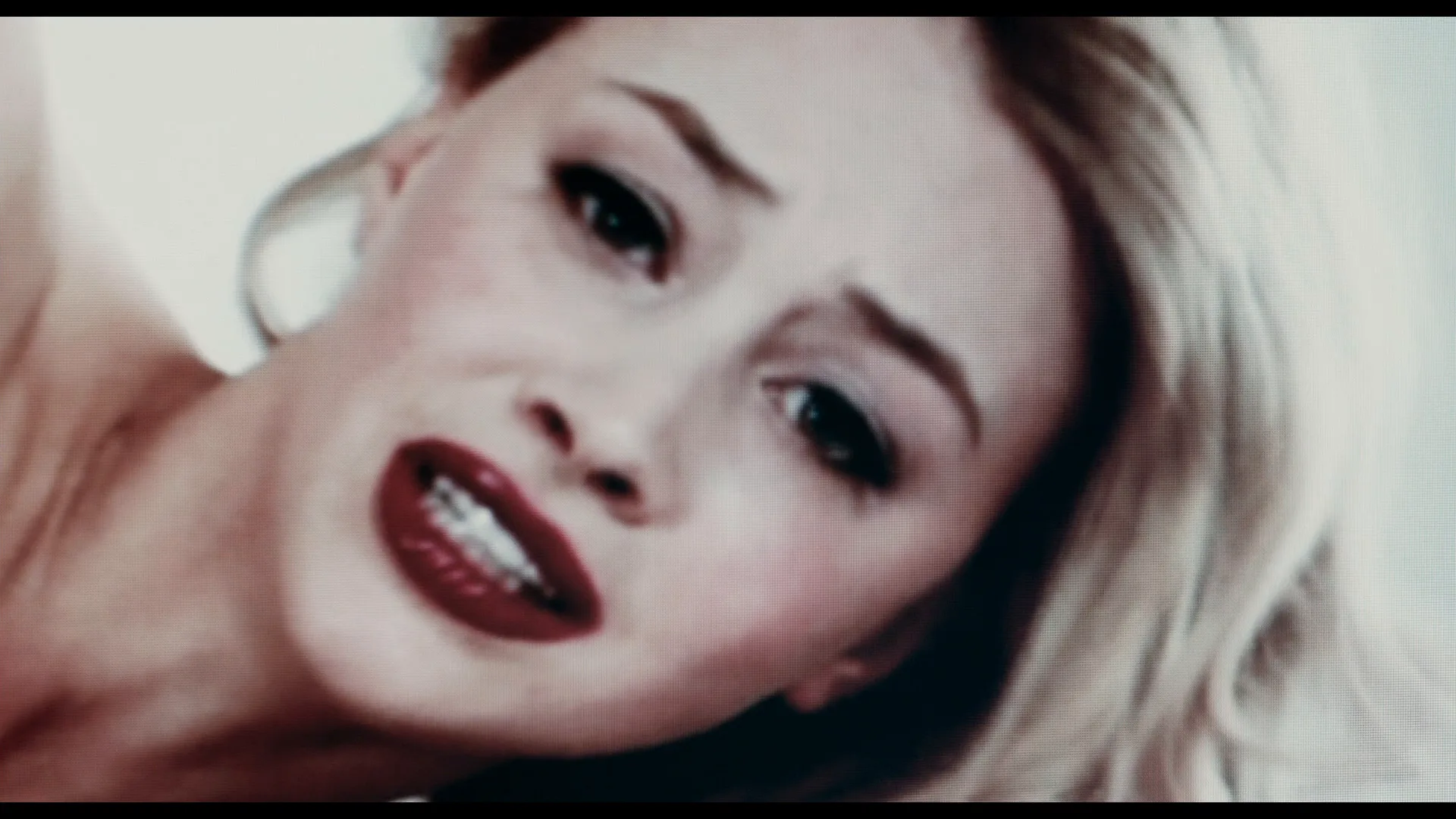
8 framesLook for a centered shadow under the nose, even light on both cheeks and high catchlights.
How to create a butterfly lighting with AI
4 promptsModels know "butterfly lighting" but often flatten it or slide the key sideways. Name the position (high, directly in front, above the lens) and the result (a symmetrical nose shadow, high catchlights). In FlashBoards, pin the film frames beside your takes and compare the shadows. The fourth prompt re-shoots a real film shot from a text description alone, and the original plays next to the result so you can compare.
Black-and-white cinematic close-up of a woman in her early thirties with a platinum finger-waved bob, thin arched eyebrows, a beauty mark above her lip and pale skin, black sequined collar, facing the camera, chin resting on a gloved hand. Butterfly lighting: one hard key high and directly in front, just above the camera lens, casting a small symmetrical shadow straight down under her nose, shading under the cheekbones and chin, a catchlight at the top of each eye. Pure black background, 85mm lens at eye level, 1930s studio glamour portrait, fine film grain.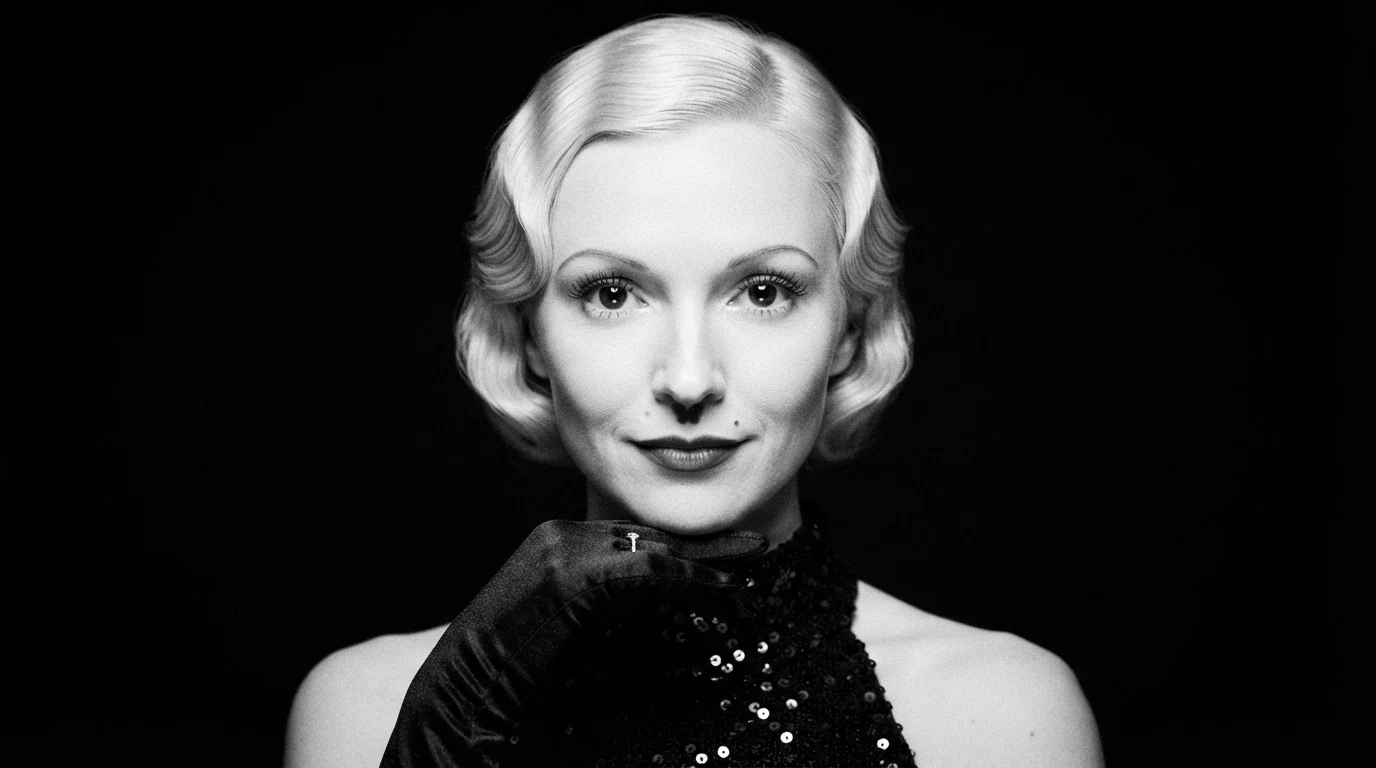
"Directly in front, just above the camera lens" fixes the position; "symmetrical shadow straight down under her nose" is the result the model checks against. "Catchlight at the top of each eye" stops the key from climbing into top light.
Open FlashBoardsWide-format editorial beauty close-up of a man in his late twenties with a shaved head, high cheekbones, deep brown skin and a thin gold hoop in his left ear, charcoal turtleneck, centered and looking into the lens, seamless gray backdrop filling both sides of the frame. Clamshell lighting: a large soft beauty dish directly in front, 40 degrees above his eye line, and a white reflector under his chin bouncing gentle fill up. Soft symmetrical shadow under nose and jaw, a large catchlight at the top of each eye and a smaller one at the bottom. 105mm lens.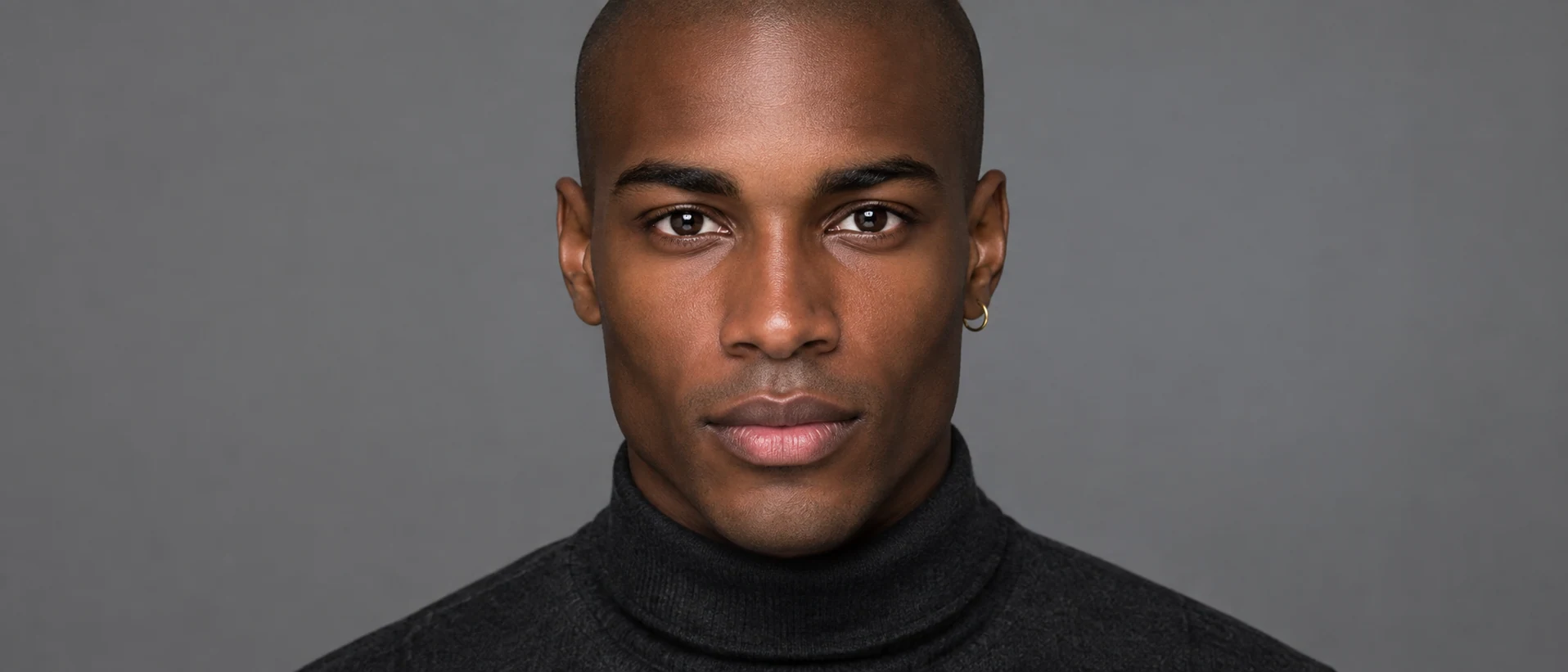
A different subject, soft source and a wide frame. The two catchlights, top and bottom, are clamshell's visible signature, so naming them makes the model add the lower fill.
Open FlashBoardsCamera: a very slow, steady push-in toward her eyes, starting immediately. Action: she is already lifting her chin off her gloved hand; she tilts her head slightly to her left so the shadow under her nose slides onto her cheek, then turns back to the lens and the shadow settles straight under her nose. She lowers her eyelids, raises her eyes to the camera and holds. The hard key stays high and directly in front; the background stays black.Motion starts in the first words, so the shot is alive from frame one; the small tilt shows the pattern depends on the face pointing into the light.
Open FlashBoards{
"output": "Full-screen live-action close-up from The Innocent (1976) from its very first frame: one continuous shot, a single unbroken take. 1970s 35mm color film, fine grain, soft warm contrast; an elegant 1890s salon during a charity auction, daytime. Butterfly lighting: one soft warm key high and directly in front of her face, just above the camera lens, casting a small shadow straight down under her nose, centered above her upper lip, and a soft shadow under her chin; both cheeks lit evenly with gentle shading under the cheekbones; a small catchlight at the top of each iris, reflected from the key above the lens. Behind her, out of focus: golden ochre drapes on the left, a pale gray wall on the right.",
"characters": {
"S1": {
"name": "Teresa Raffo, played by Jennifer O'Neill",
"look": "woman in her late twenties, oval face, pale skin, dark brown eyes with smoky eye makeup, dark brown hair pinned up under a small black felt hat, a sheer black veil of fine hexagonal net, small holes and thin threads, hanging from the hat brim over her whole face and lying flat on her skin, pearl drop earrings, a curly black fur boa around her shoulders over a red high-collared bodice with small black buttons, rose-red lipstick",
"voice": "silent: her lips stay closed for the whole shot"
},
"V1": {
"name": "an auctioneer's voice, heard off screen only, never seen",
"look": "not in the picture",
"voice": "male, clear, brisk, projecting to a room, Italian"
}
},
"shots": [
{
"shot": 1,
"camera": "slow, smooth dolly in straight toward her face at her eye level, long lens, starting at once; it starts as a centered medium close-up with the hat brim cut by the top edge and the fur boa and red collar along the bottom edge, passes a close-up where her mouth leaves the bottom of the frame, and ends as an extreme close-up where only her two eyes, the bridge of her nose and the veil mesh fill the frame",
"voice": "S1 never speaks; only the off-screen auctioneer is heard",
"action": [
"BEGINNING: alive from the first frame, S1 stands centered, face square to the lens, looking straight into the camera, lips closed in a faint polite smile, both pearl earrings visible, the camera already gliding toward her.",
"THEN: her head tips a touch toward frame left and her smile widens very slightly, as if politely amused by the bidding, eyes still on the lens.",
"THEN: her head straightens, the smile fades to a still, closed mouth; the shadow under her nose stays small and centered, pointing straight down.",
"THEN: her mouth leaves the bottom of the frame; the fine veil net sharpens across her cheeks, nose and forehead, her nose straight and clean under it; her brows draw together very slightly, her face turning serious.",
"END: only her eyes and the bridge of her nose fill the frame behind the fine net, both eyes evenly lit with a catchlight at the top of each iris, her gaze fixed on the lens, steady."
],
"dialogue": [
{
"speaker": "V1",
"on_screen": false,
"when": "from the first frame, while she smiles",
"delivery": "announcing the estimate and the opening price",
"line": "<d>[Italian] Stimato 10000. Parto con 1000</d>"
},
{
"speaker": "V1",
"on_screen": false,
"when": "right after, as her smile fades and the camera closes in, until the end of the shot",
"delivery": "brisk, rising, calling out the bids",
"line": "<d>[Italian] Chi offre di più? Mille, mille lire, duemila, duemila lire</d>"
}
]
}
],
"sound": {
"ambience": "the hush of a seated crowd in a large salon, a faint rustle of silk and a chair creaking",
"speech": "exactly these spoken phrases, each said once, in this order, all by the off-screen auctioneer",
"never_spoken": "no narration and no voice-over: the descriptions, performance notes and step words of this prompt are never spoken aloud",
"music": "a film score under the scene, always below the voices: a slow, melancholy romantic string melody with a soft piano line",
"subtitles": "none"
}
}Remakes the slow dolly-in on Teresa Raffo (Jennifer O'Neill) in The Innocent (1976), dir. Luchino Visconti, DP Pasqualino De Santis, keeping the on-axis key, the net veil, the fading smile and the off-screen auctioneer's Italian bids.
The lighting line names the key's position and its result: a centered nose shadow, even cheeks, high catchlights. Teresa Raffo stays silent under the film's own auctioneer, and the dolly-in to her eyes tests that the pattern holds at every size.
Open FlashBoardsCommon mistakes
- Key drifts sideways into loop or Rembrandt light: write "directly in front, just above the lens" and "symmetrical shadow under the nose".
- Dark eye sockets when "light from above" is all you write: add "catchlight at the top of each eye".
- Flat beauty light from "glamour lighting" alone: name the shadows under nose, cheekbones and chin.
- Pattern breaks in video on big head turns: keep moves small.
Keep the reference frames, prompts and every generated take side by side — images and video in one canvas.
FAQ
4 questionsWhy is butterfly lighting called Paramount lighting?
The name comes from Paramount Pictures, where the high frontal key became a house style for 1930s star close-ups, most famously in Josef von Sternberg's films with Marlene Dietrich. It gave stars a consistent, idealized face, and photographers kept the studio's name for the pattern.
How do you set up butterfly lighting with one light?
Boom the light directly in front of the subject, about 30–45° above the eye line and 1–1.5 m away, and shoot from underneath. Adjust until the nose shadow ends halfway to the upper lip and the catchlights sit at the top of the eyes. A white card under the chin softens the neck shadow.
What is the difference between butterfly and clamshell lighting?
Clamshell is butterfly with fill from below. Butterfly uses one high frontal key and leaves firm shadows under the nose, cheekbones and chin. Clamshell adds a reflector or soft light under the chin, one to two stops weaker, which opens those shadows and adds a second catchlight at the bottom of the eyes.
Who does butterfly lighting flatter?
It suits defined cheekbones and oval or wide faces, because the downward shadows slim the cheeks and tighten the jaw. It is less kind to deep-set eyes, which can fall into shadow, and to thin faces, where cheek shadows look gaunt. Glasses reflect the on-axis key into the lens.
Related terms
4- Rembrandt LightingLighting
Rembrandt lighting places the key high and about 45° to one side, so the far cheek falls into shadow except for a small triangle of light under the eye — a moody, painterly portrait look named after the Dutch painter.
- Key LightLighting
The key light is the main light on a subject: it sets the direction, hardness and color of the illumination, and every other source — fill, back, practicals — is balanced against it.
- CatchlightLighting
A catchlight is the reflection of a light source in a subject's eyes; its shape and position reveal the lighting and make eyes look alive, while its absence reads as dead, cold or menacing.
- Top LightingLighting
Top lighting comes from directly overhead, lighting heads and shoulders while sinking the eyes into dark sockets — as Gordon Willis did with Marlon Brando in The Godfather; it suggests midday sun, interrogation rooms or characters we cannot read.
Further reading
John Alton, Painting with Light (1949) — a working cinematographer's account of studio-era close-up lighting.