 FlashBoards Learn
- Learn
- Formats & Exhibition
- Film Still
Formats & Exhibition · Film language
Film Still
Also called: movie still, production still, frame grab, publicity still
A film still is a single image that represents a film: either a frame grab pulled from the finished footage, or a production still shot on set by the stills photographer with a separate camera. Both sell and explain the film, but they are made differently and look different.
- What it does
- Stands in for a moving film as one image: in press, posters, lookbooks, mood boards and film study.
- Use it when
- You need to show a film's look, cast or tone in a single frame, before release or long after it.
- Watch out
- A frame grab and a production still are not the same thing; label which one you have and credit it correctly.
- Try this prompt
Production still from a 1970s-style thriller, a woman in a camel coat at a rain-streaked phone booth, 50mm, shallow focus, tungsten light, film grain
What is a film still?
The term covers two different objects, and most confusion around "movie stills" comes from treating them as one.
A frame grab is a single frame exported from the picture itself, with the aspect ratio, grade and shutter of the finished film. A production still (also unit still or publicity still) is a photograph taken on set by the unit stills photographer with a separate still camera, usually during rehearsal or on a restaged moment. It shows the same scene, but it was never part of the film.
Both belong to formats and exhibition because they are how a film circulates outside the theater: press, posters, thumbnails and reference folders.
Production still vs. frame grab
- Source. A frame grab comes from the edited picture. A production still comes from a stills camera next to the cinema camera.
- Framing. A grab keeps the film's aspect ratio, say 1.85:1 or 2.39:1. A production still is usually 3:2, framed by the photographer from a slightly different angle and lens.
- Motion. At 24 fps with a 180-degree shutter, each frame is exposed for 1/48 of a second, so movement smears. Stills photographers shoot at 1/250 or faster.
- Resolution. A 4K frame is about 8.8 megapixels; a stills camera records several times that.
- Content. Production stills can show what the film never does: the cast posed together, a composition built for a poster.
That is why many famous "stills" are not in the movie at all. Credit a grab as "frame from" and a still with the photographer's name.
What are film stills used for?
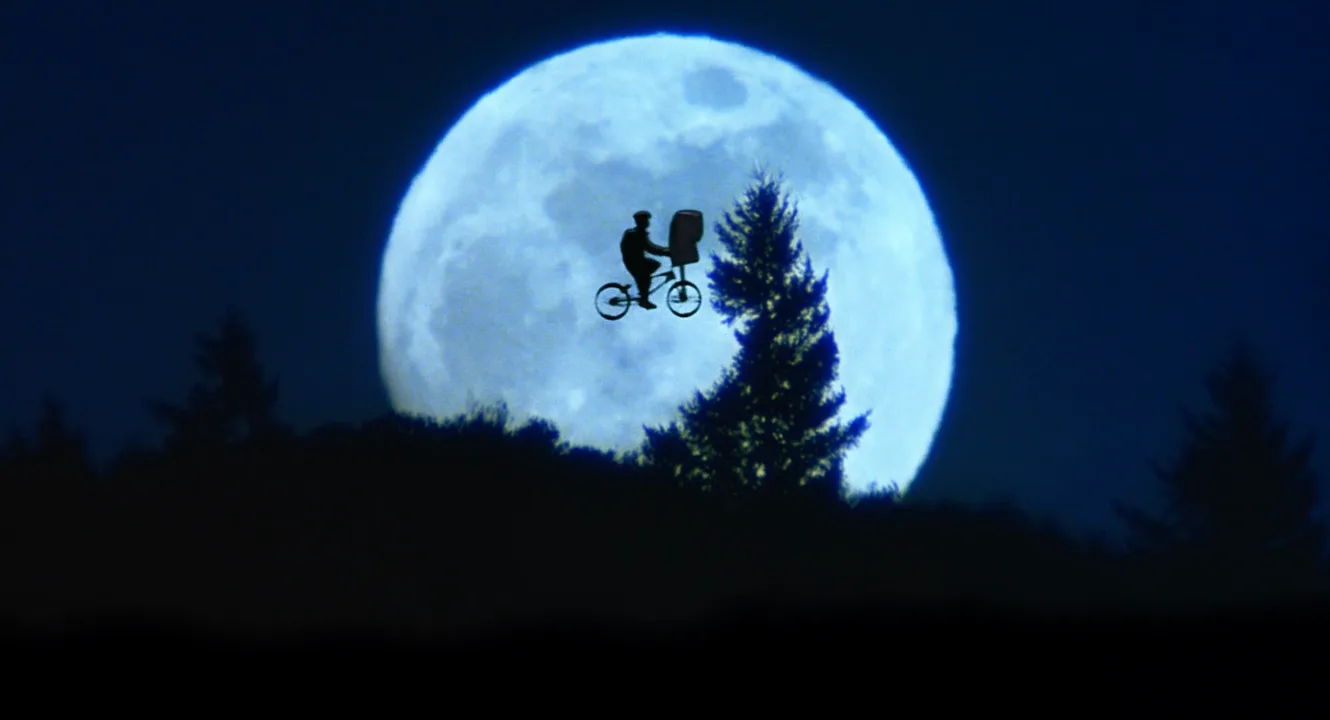
Studios have used production stills since the silent era for lobby cards and fan magazines; today they feed the press kit and the key art of film marketing. A few frames become shorthand for the whole film: the bicycle crossing the moon in E.T. the Extra-Terrestrial (1982) became the Amblin Entertainment logo.
For filmmakers, frame grabs are working material. A DP pulls grabs to show a gaffer the contrast they want; a director drops them into a mood board to find tone, then into a lookbook to pitch the look.
In FlashBoards, put reference grabs, your own test frames and AI takes on one board, note under each what you want to borrow, and compare them side by side before the look is locked.
How are production stills made?
On a live take the unit stills photographer needs a silent camera, a mirrorless body with an electronic shutter or a DSLR in a sound blimp, because a shutter click can ruin sound. They shoot from beside the lens, often on a 35mm, 50mm or 85mm prime, so the still matches the film's eyeline. The cleanest stills come when a setup is finished and the actors restage a beat for the stills camera under the existing lighting.
If you only have frame grabs, pick them like a stills editor: the key face sharp, eyes open, no motion blur, a composition that reads at thumbnail size, and the true aspect ratio.
Film still vs. freeze frame
A freeze frame is an editing device inside the film: the picture stops on one frame and holds while sound or narration continues, and the audience experiences it in time. A film still exists outside the running time, as a separate image that represents the film elsewhere. A freeze frame can become a famous still, but only the freeze frame is a decision in the cut.
Film Still examples in film
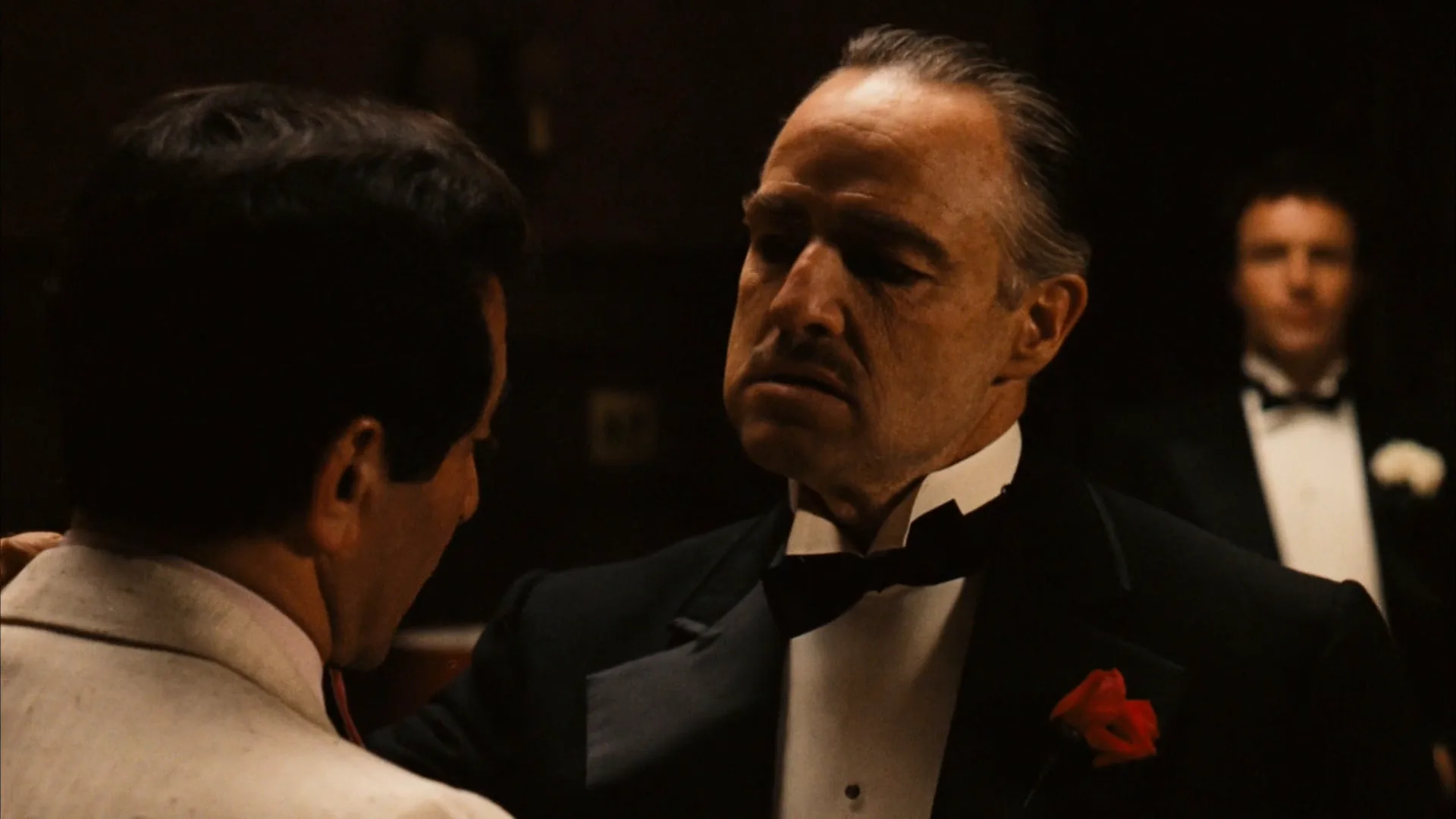
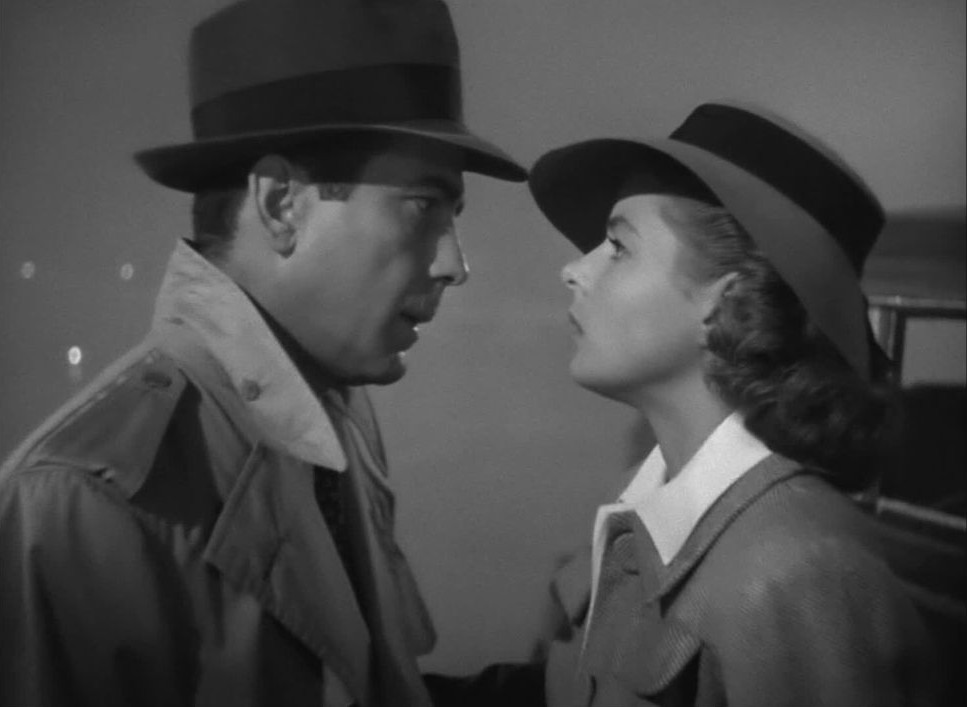
4 framesFrame grabs that work as stills: each reads at a glance and carries the film's light and palette.
How to create a film still with AI
4 promptsAI models can make both kinds of still for a film that doesn't exist yet: a frame grab with Nano Banana 2 Lite, a production still of the same scene with GPT Image 2.5, and the grab animated with MiniMax H3 Max Turbo to test the look in motion. Keep them beside your reference grabs on one FlashBoards board. The fourth prompt re-shoots a real film shot from a text description alone, and the original plays next to the result so you can compare.
Cinematic frame grab from a 1970s-style thriller, 2.39:1 widescreen. Night, a rain-streaked glass phone booth on an empty city corner. Inside, a woman in her forties with short copper-red hair and freckles, in a camel wool coat, holds the receiver and looks over her shoulder. Wet asphalt reflects a green neon sign and a sodium streetlamp. Medium wide shot, 40mm anamorphic lens at eye height, slight motion blur on the rain, heavy film grain.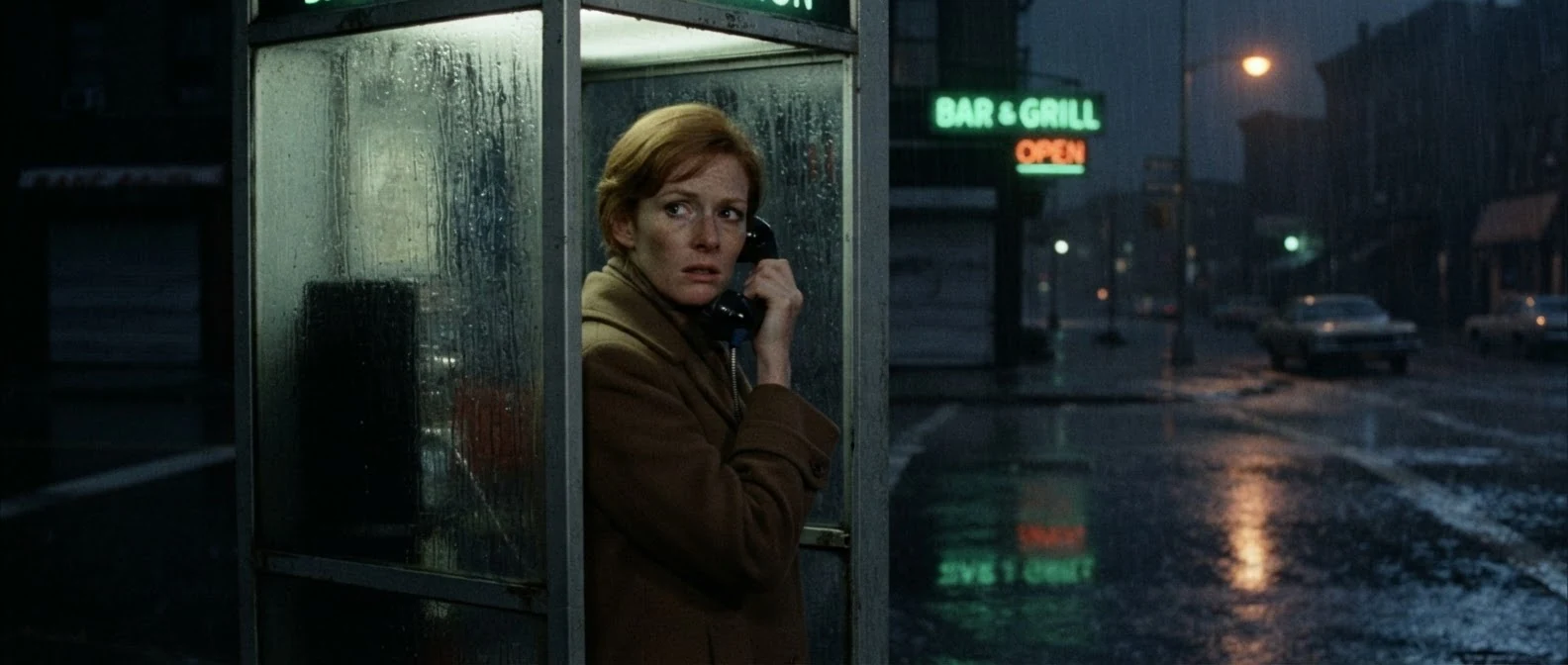
Frame grab and 2.39:1 widescreen ask for a moment inside a film. Slight motion blur on the rain and film grain mimic the 1/48-second exposure of a cinema frame; named light sources fix a palette you can reuse.
Open FlashBoardsProduction still for a 1970s-style thriller, shot by a set photographer. The same woman in her forties with short copper-red hair, freckles and a camel wool coat stands at the open door of a rain-streaked phone booth, looking straight into the lens. Night street, wet asphalt, a green neon sign out of focus behind her. 85mm lens, f/2, crisp focus on her eyes, raindrops frozen sharp, tungsten key light from the left, space above her head for a title.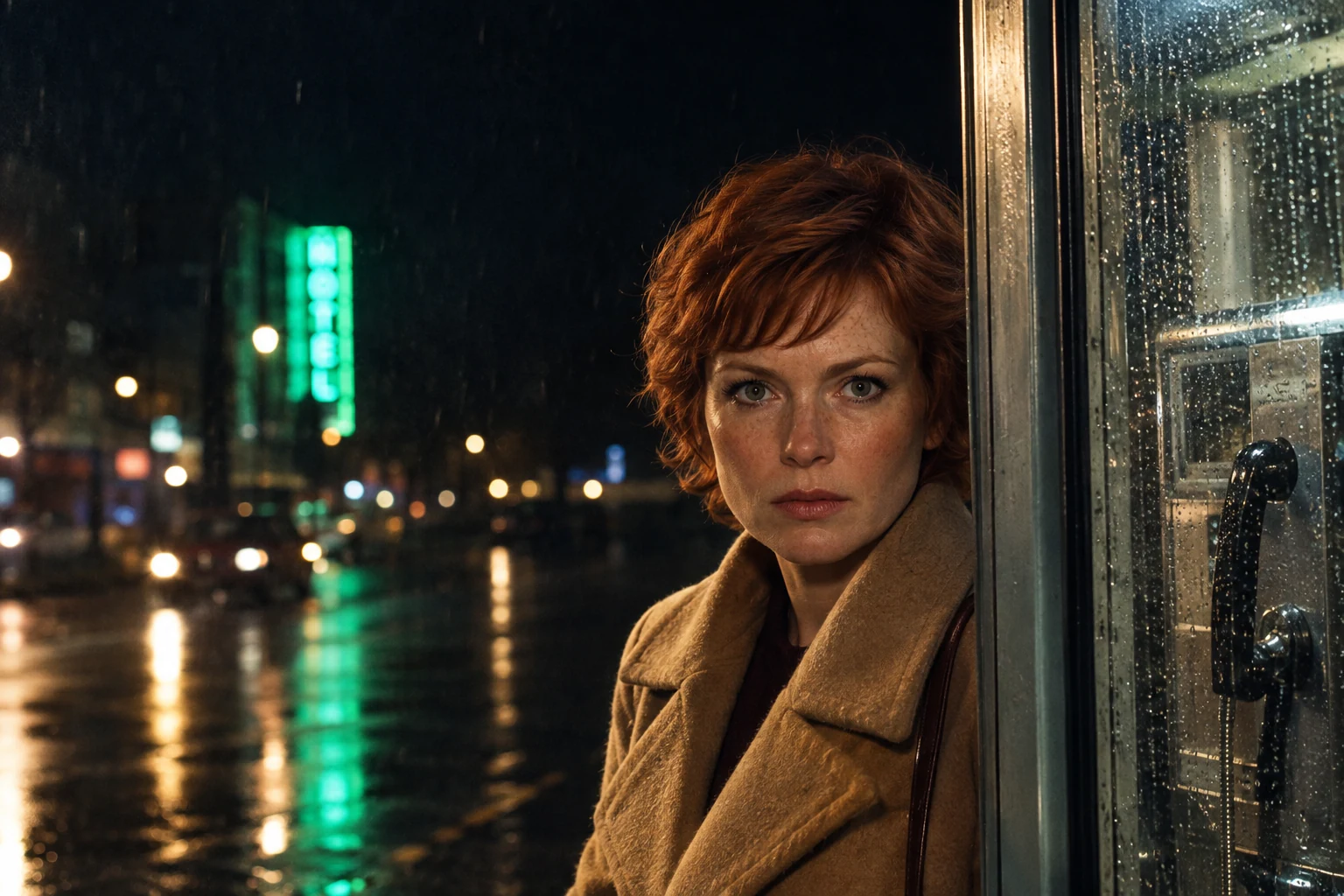
Production still, the 3:2 frame, 85mm and raindrops frozen sharp describe how a still differs from a grab: faster shutter, tighter lens, a posed look to camera. Space above her head for a title makes it usable as key art.
Open FlashBoardsCamera: static at eye height, then a very slow push-in toward the phone booth. Action: rain is already streaking down the glass as the shot starts. The woman presses the receiver to her ear and glances over her shoulder at the empty street. She turns back, says one short line and hangs up. The green neon flickers once in the puddles.Motion is stated from the first line, and the action uses only what is in the frame.
Open FlashBoards{
"output": "Full-screen live-action scene from The Truman Show (1998) from its very first frame: one continuous locked-off shot, no cuts. 1990s 35mm film, dusk on a seaside rock pile; the whole frame reads as one graphic picture: flat black silhouettes against a burning orange horizon and a dusky slate-blue sky full of mackerel clouds.",
"characters": {
"S1": {
"name": "Marlon, played by Noah Emmerich",
"look": "broad-shouldered man seen from behind as a flat black silhouette, short hair, sitting on the left of the pair",
"voice": "warm, easy, relaxed small-town drawl"
},
"S2": {
"name": "Truman Burbank, played by Jim Carrey",
"look": "slimmer man seen from behind as a flat black silhouette, short hair, sitting on the right of the pair, shoulder almost touching S1",
"voice": "quiet, content, short replies"
}
},
"shots": [
{
"shot": 1,
"camera": "static, locked-off tripod, low angle from the foot of the rock pile, wide lens, extreme wide shot; a broad black mound of jumbled boulders fills the lower third across the whole width, sky fills the upper two-thirds with a big full moon in its upper right; framing never changes",
"action": [
"BEGINNING: alive from the first frame, S1 and S2 already sit side by side on the crest of the mound, left of centre, two small black shapes about one tenth of the frame height, backs to the camera, both heads facing the horizon ahead; a big round copper-red full moon, textured with craters, hangs high in the upper right third of the sky.",
"THEN: they sit still, hands out of sight in their laps; S1's head tilts very slightly toward S2 and back; the full moon stays fixed in the upper right among dark clouds lit orange from below.",
"THEN: at the right of the mound a clump of tall dune grass sways gently in the breeze beside a small tilted signboard on a thin post, black against the half-sunk orange sun.",
"END: both men stay seated and motionless, heads toward the horizon, the composition unchanged like a photograph."
],
"look": "hard backlight from the sun half below the horizon at frame right; mound, grass, signboard and both men are pure black silhouettes with no detail; a glowing deep-orange band along the horizon fading up into slate blue; the full moon glows dull copper-red high in the upper right; soft film grain",
"dialogue": [
{
"speaker": "S1",
"on_screen": true,
"when": "from the first frame, already mid-sentence",
"delivery": "admiring, easy, voice carried on the breeze from the small seated figures",
"line": "<d>[English] Look at that sunset, Truman. It's perfect.</d>"
},
{
"speaker": "S2",
"on_screen": true,
"when": "after a short pause",
"delivery": "soft agreement",
"line": "<d>[English] Yeah.</d>"
},
{
"speaker": "S1",
"on_screen": true,
"when": "in the middle of the shot",
"delivery": "wry, fond",
"line": "<d>[English] That's the big guy.</d>"
},
{
"speaker": "S1",
"on_screen": true,
"when": "near the end",
"delivery": "wry, fond",
"line": "<d>[English] Quite a paintbrush he's got.</d>"
},
{
"speaker": "S2",
"on_screen": true,
"when": "right after, at the very end",
"delivery": "quiet",
"line": "<d>[English] Yep.</d>"
}
]
}
],
"sound": {
"ambience": "soft steady sea breeze, faint rustle of dry grass, one far-off gull",
"speech": "exactly these spoken phrases, each said once, in this order",
"never_spoken": "no narration and no voice-over: the descriptions, performance notes and step words of this prompt are never spoken aloud",
"music": "a film score under the scene, always below the voices: warm, wistful strings and a soft piano pulse, calm and a little unreal",
"subtitles": "none"
}
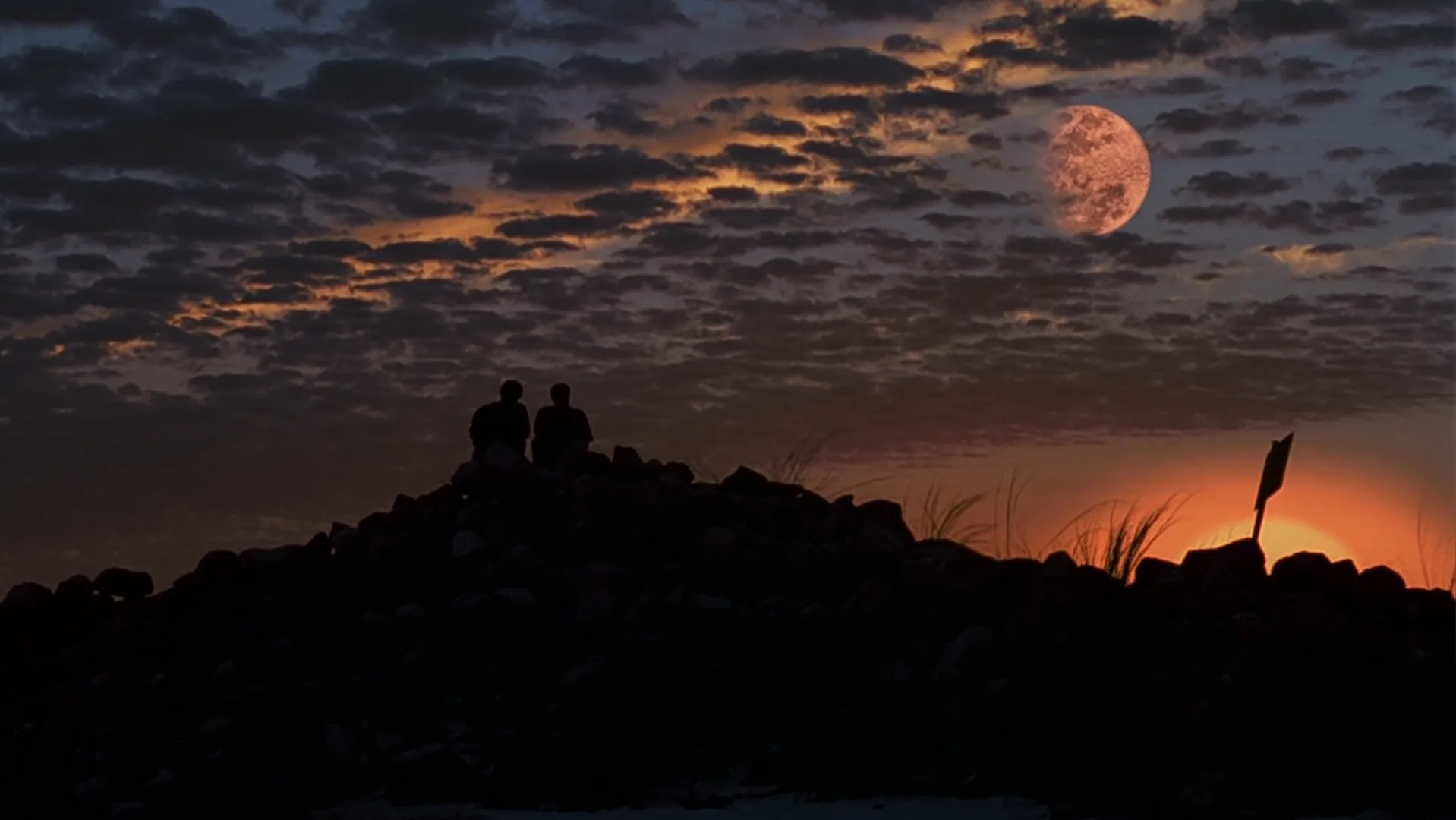
}Remakes the dusk rock-pile shot from The Truman Show (1998), dir. Peter Weir, DP Peter Biziou: static camera, Marlon and Truman as two small silhouettes, the moon upper right, the sun sinking behind grass and a signpost, and the film's exact dialogue.
A still-worthy frame is set before anything moves, so the prompt spends its words on composition: a locked-off camera, pure black silhouettes, men one tenth of the frame height, the moon in the upper right third. The film's own lines and a quiet score carry the sound.
Open FlashBoardsCommon mistakes
- "Film still" alone often returns a glossy stock photo; say frame grab with an aspect ratio, or production still with a lens.
- Models drop the widescreen shape; state 2.39:1 and pick 21:9.
- Repeat the character's features word for word.
Keep the reference frames, prompts and every generated take side by side — images and video in one canvas.
FAQ
4 questionsWhat is a film still?
A film still is a single image representing a film: either a frame grab exported from the finished footage, or a production still photographed on set by the unit stills photographer. Stills appear in press kits, posters and streaming artwork, and filmmakers collect them as references.
What is the difference between a production still and a frame grab?
A frame grab is one frame from the film itself, with its aspect ratio, grade and motion blur. A production still is a separate photograph taken on set, usually 3:2, sharper and higher resolution, often restaged or posed for publicity, and it can show moments that never appear in the film.
Is a publicity still the same as a movie still?
A publicity still is one type of movie still: a production photograph approved for press use, from on-set coverage or a separate portrait shoot. "Movie still" is the broader everyday term and is often used for frame grabs too.
Can I use film stills in my lookbook?
Yes. Frame grabs from other films are the standard way to show a DP or designer the lighting, palette and framing you want. Credit the film and replace grabs with your own test frames or generated images as the project's look develops.
Related terms
4- Freeze FrameEditing
A freeze frame holds a single frame on screen so the action stops dead — to end a film, introduce a character, underline a moment or cue narration.
- LookbookFilmmaking Process & Crew
A film lookbook is a curated document of reference images, frames, palettes and short text that shows how a specific film will look and feel — used to pitch the project and to align the director, DP and designers.
- Mood BoardFilmmaking Process & Crew
A mood board is a loose collage of images, colors, textures and frames that captures the emotional tone of a project before its look is locked — a starting point for a lookbook, storyboard or AI generation.
- Film MarketingFilm Industry
Film marketing builds awareness and want-to-see before release — trailers, posters, taglines, press, festivals, social media and paid media (P&A) — targeted at the audience the film can realistically reach.
Further reading
Blain Brown, Cinematography: Theory and Practice — shutter angle, exposure time and frame rate.