 FlashBoards Learn
Formats & Exhibition · Film language
IMAX
Also called: IMAX 70mm, IMAX 15/70, IMAX digital, Filmed for IMAX
IMAX is a large-format system of cameras, film, projectors and theaters built around enormous, tall screens. Its native 15-perforation 70mm frame has a 1.43:1 shape and roughly ten times the area of a 35mm frame, so the image fills your peripheral vision and holds detail even when you sit close.
- What it does
- Makes the image taller, sharper and bigger than your field of view, so scale and space feel physical.
- Use it when
- A scene lives on scale: landscapes, flight, crowds, machines, anything the audience should feel dwarfed by.
- Watch out
- The cameras are heavy, loud and shoot about three minutes per roll; compose for both the tall IMAX frame and the regular release.
- Try this prompt
Tall 1.43:1 large-format wide shot, horizon low, tiny figure at the bottom, huge sky above, 65mm film detail
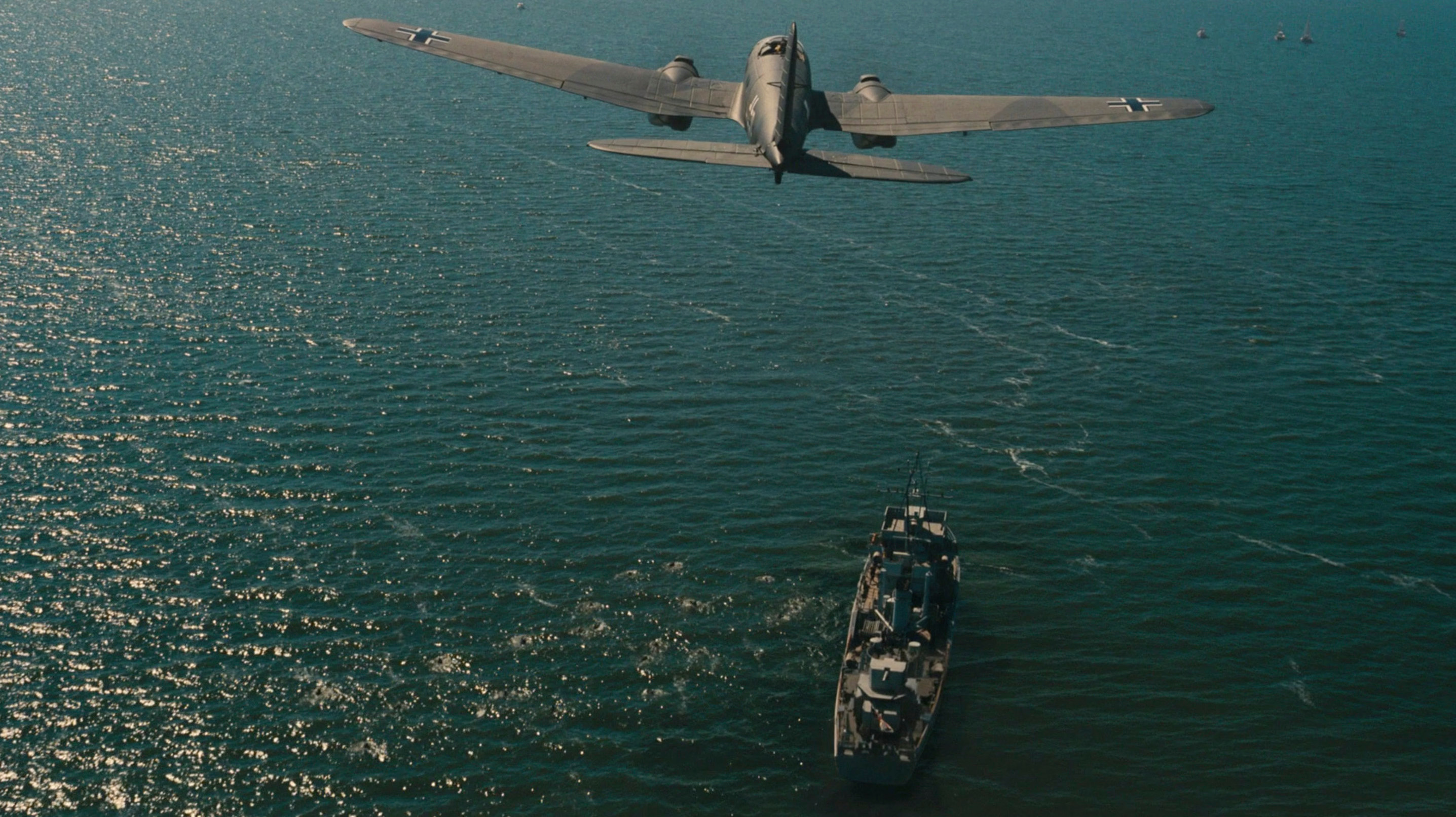
What is IMAX?
IMAX is a chain rather than a single camera: capture, print, projection and the room itself. It premiered at Expo '70 in Osaka. The core of the original system is 15/70: 70mm film runs horizontally, each frame spanning 15 perforations, about ten times the area of a 35mm frame.
That frame is 1.43:1, nearly square next to the widescreen shapes in the aspect ratio family, and the auditoriums match it: steep seating and a screen several stories high. Like Cinerama before it, IMAX sells immersion by size; see formats and exhibition for its neighbors.
For decades IMAX meant short documentaries. Fantasia 2000 was the first animated feature released in IMAX, and digital remastering later brought ordinary features, such as Apollo 13, to IMAX screens.
IMAX vs. regular cinema: what actually changes?
- Frame shape. Regular screens show 1.85:1 or 2.39:1. IMAX opens to 1.90:1 in most digital venues and to 1.43:1 in IMAX 70mm and the largest laser venues, but only for scenes shot or mastered for it; a 2.39:1 film just plays wide with bars.
- Projection. 15/70 film projection survives in only a few dozen theaters; most venues are digital, with laser adding brightness and contrast.
- The room. A purpose-built auditorium fills your vision; a converted multiplex screen with the logo is brighter and louder but far smaller.
IMAX also carries stereoscopic releases; see 3D film.
What does "Filmed for IMAX" mean?
"Filmed for IMAX" certifies digital cameras and productions, so a film can play in the expanded 1.90:1 frame for most or all of its runtime. Avengers: Endgame was shot entirely on IMAX-branded ARRI Alexa 65 cameras.
"Shot with IMAX film cameras" means real 65mm negative in 15-perf cameras, on film stock. The Dark Knight (2008) was the first major Hollywood feature to shoot sequences this way; Dunkirk was shot largely in IMAX, and Oppenheimer used black-and-white IMAX stock made for the production.
Why directors shoot in IMAX
Scale. A tall, sharp frame on a giant screen makes the audience feel the size of a landscape or the speed of an aircraft physically. It also changes close-ups: a face in 15/70 carries skin texture no other format matches, which is why Christopher Nolan uses IMAX for intimate moments too.
It is also a structural tool. When a film shot mostly in 2.39:1 opens to 1.43:1 for its biggest sequences, the frame literally grows. That aspect ratio change is a signature of The Dark Knight, Interstellar and Dunkirk.
How to shoot and compose for IMAX
Compose for two frames. Most IMAX films also play in 2.39:1, so keep essential action in the central band and spend the extra height on sky or ground. Viewers sit close: keep eyes and action near the center, slightly low.
Lenses feel longer. The 15/70 negative is about 2.8 times wider than Super 35, so an 80mm frames roughly like a 28mm there, with much shallower depth of field.
Plan around the camera. IMAX film cameras are heavy and loud, and a 1,000-foot roll lasts about three minutes. Productions save them for set pieces and often re-record dialogue in ADR.
Cut slower. On a screen this big the eye needs time to travel.
In FlashBoards, pin IMAX reference frames next to your storyboard, mark which scenes open to the tall frame, and compare 1.43:1 and 2.39:1 versions of the same shot side by side.
IMAX examples in film
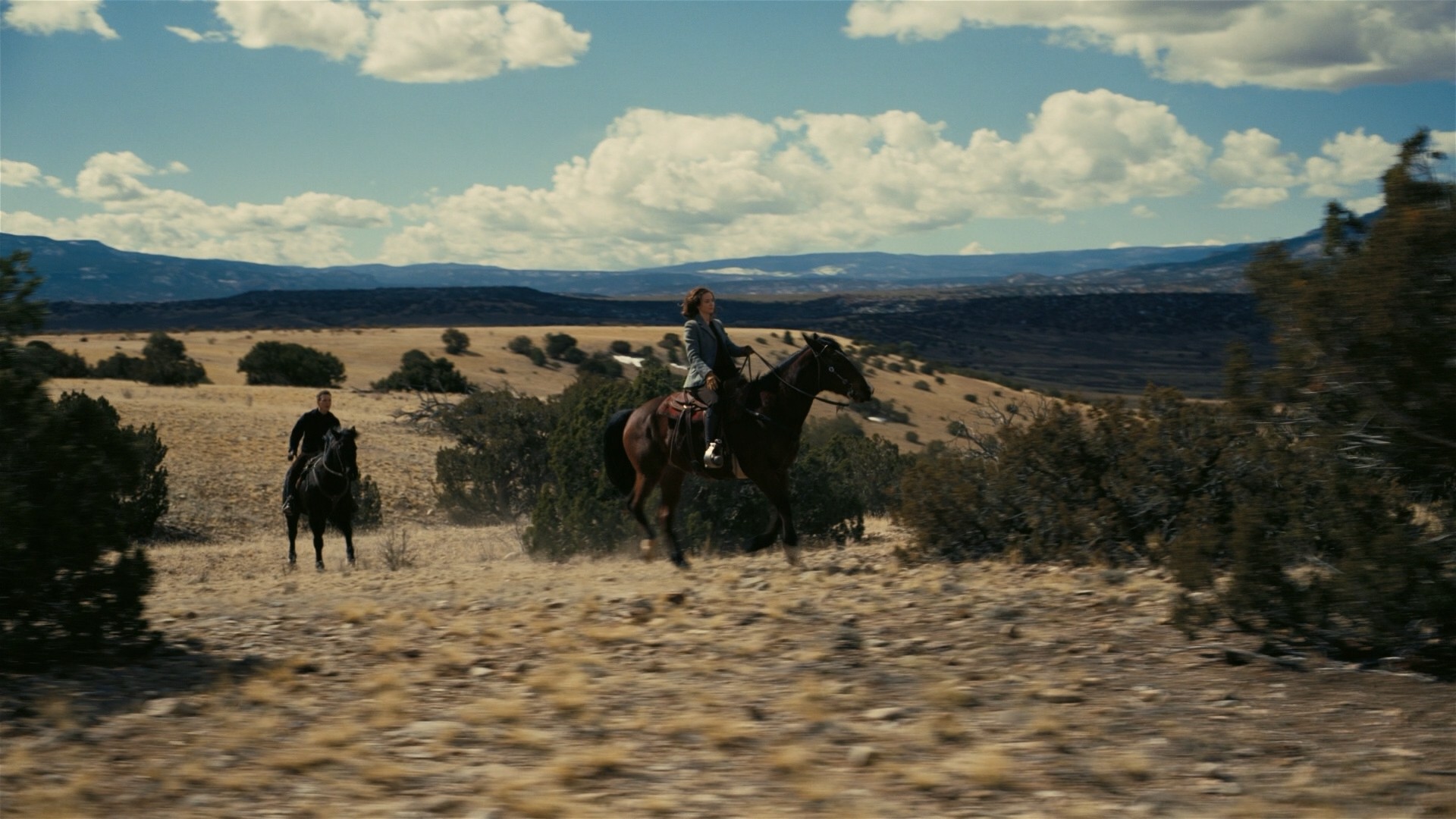
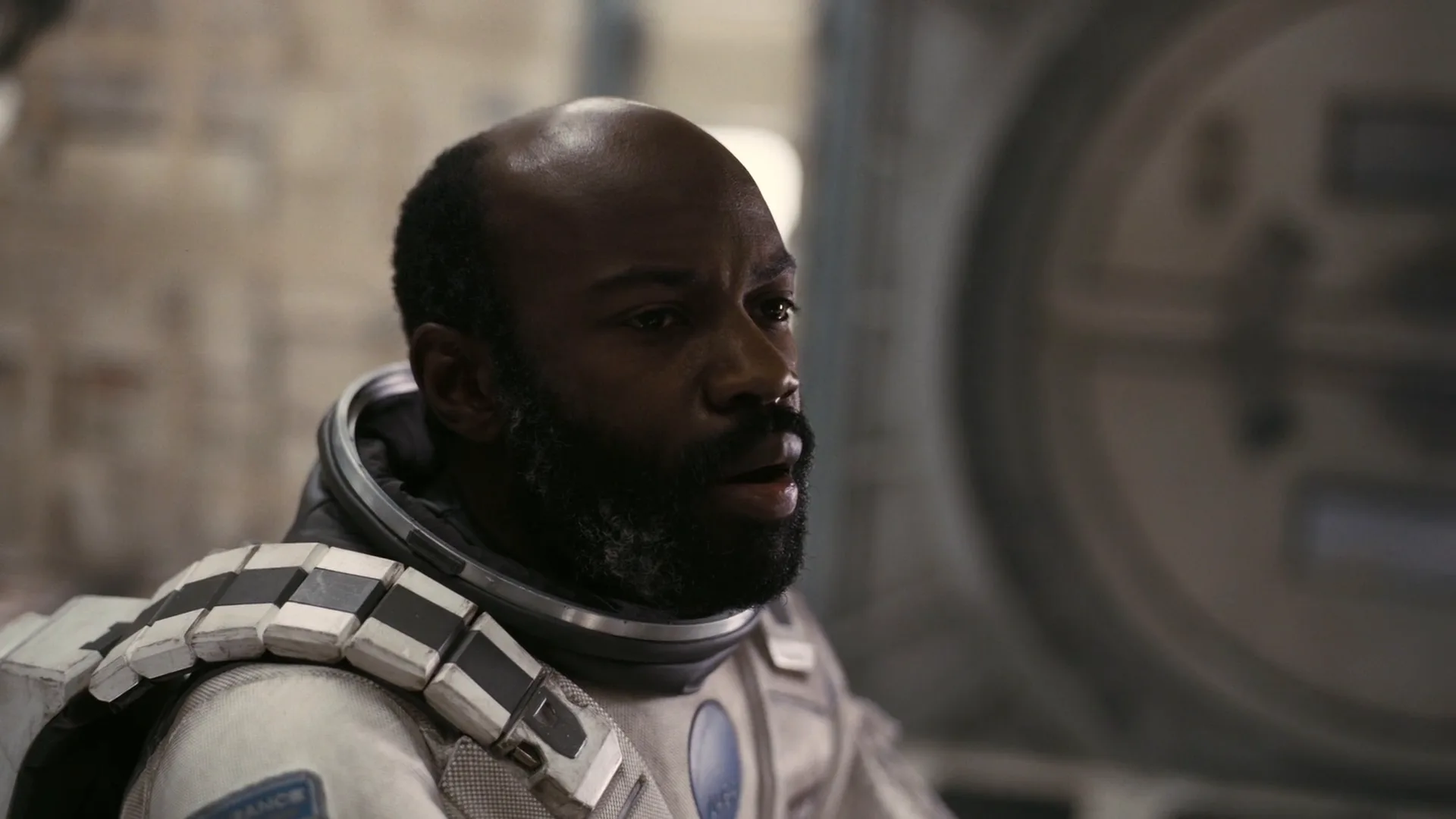
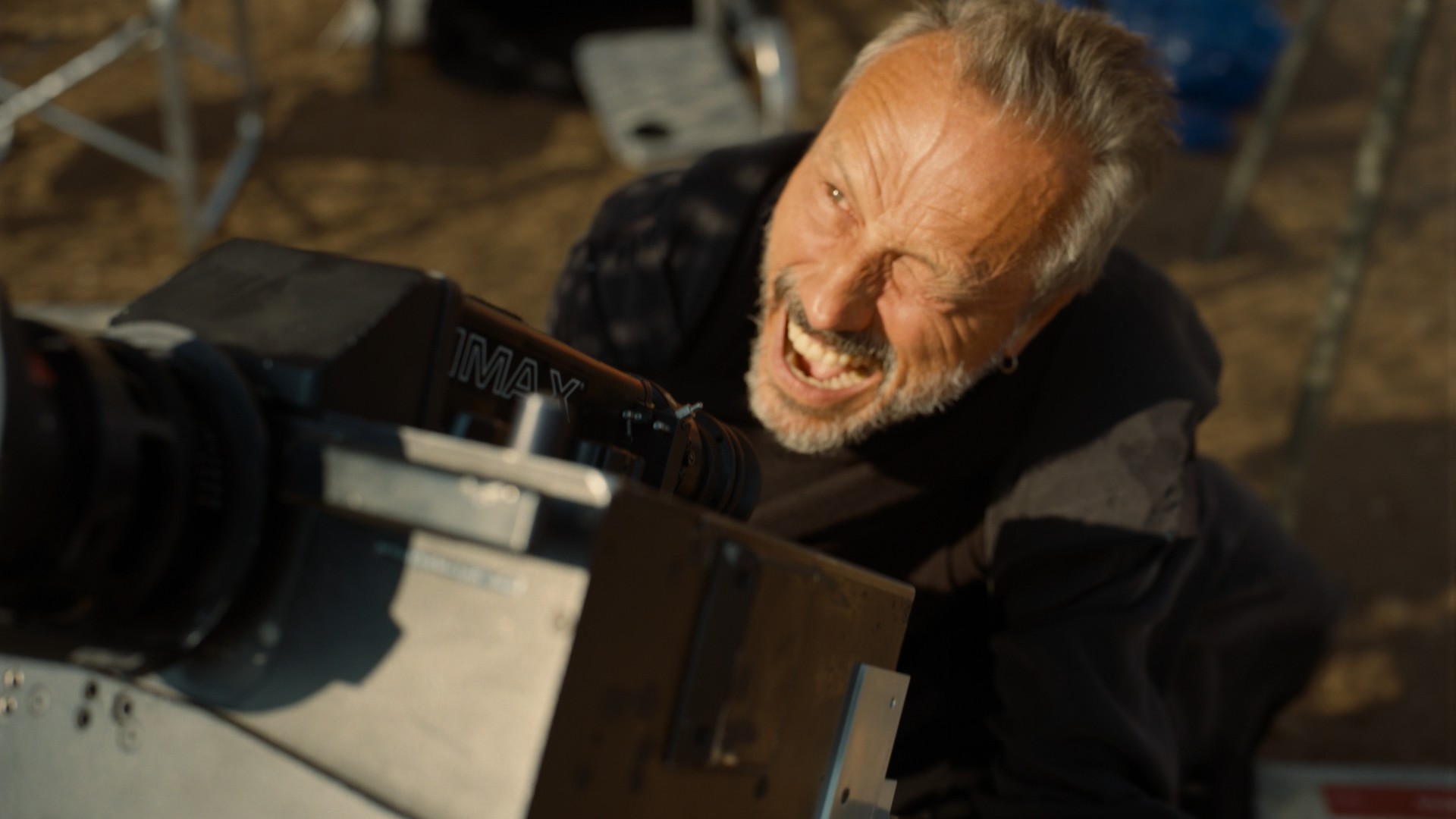
4 framesFrames from films Hoyte van Hoytema shot largely or partly on IMAX 65mm. Note what the extra height and resolution are spent on.
How to create a IMAX with AI
4 promptsThe word "IMAX" alone gives models a generic epic image. Describe what the format does: a tall frame, a low horizon, a small figure, fine detail. Keep these takes next to your 2.39:1 frames on the board to judge the switch. The fourth prompt re-shoots a real film shot from a text description alone, and the original plays next to the result so you can compare.
Large-format 65mm film wide shot, tall near-square frame. A woman in her fifties with cropped grey hair and a bright orange parka stands small in the bottom fifth of the frame on a ridge of black volcanic rock. A towering grey ash plume fills the upper two thirds against a pale sky. Horizon low, deep focus from the rocks to the plume, extremely fine grain, crisp rock texture, soft overcast daylight, muted colors.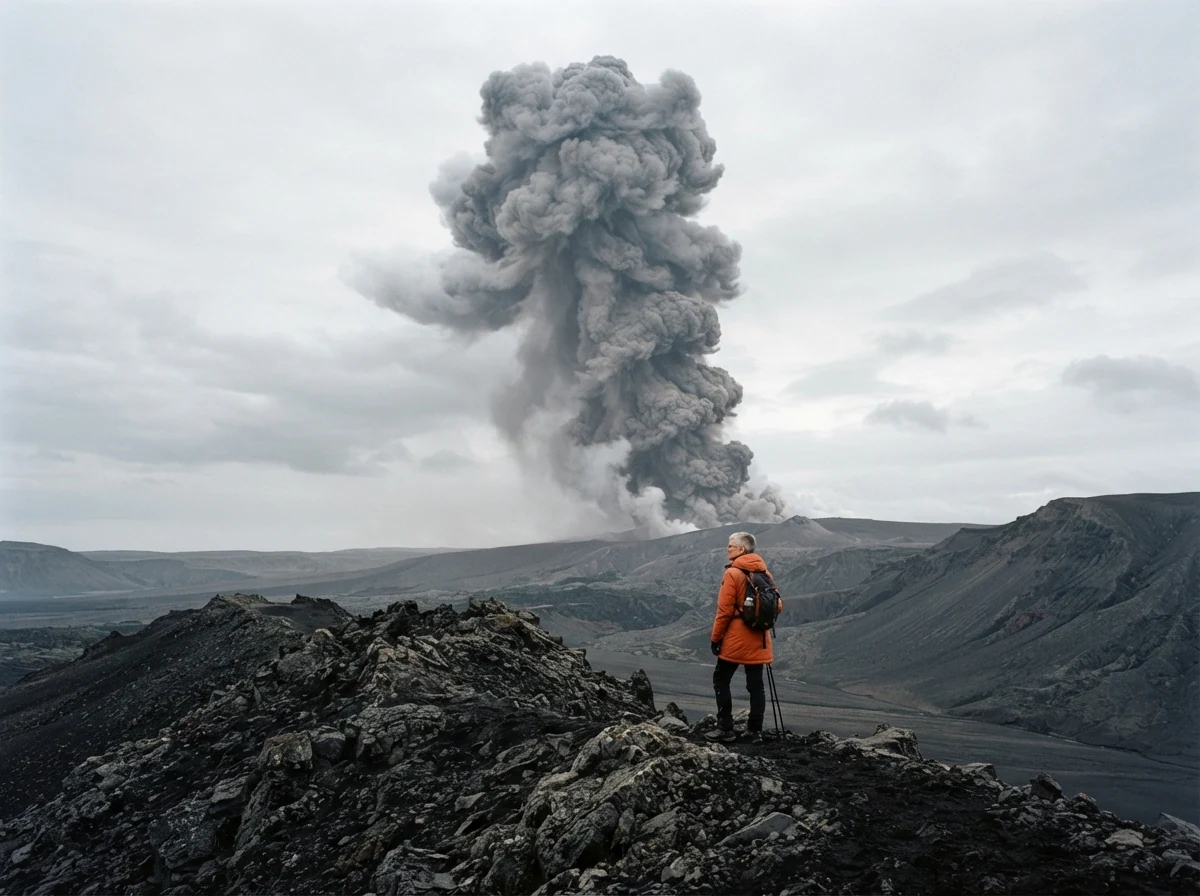
4:3 is the closest setting to 1.43:1. "Bottom fifth" and "horizon low" spend the height the way IMAX shots do; "deep focus" and "fine grain" ask for detail. This is the video's start frame.
Open FlashBoardsExpanded 1.90:1 large-format frame, low-angle wide shot of a white rocket on a steel launch tower at dawn, rising through the full height of the frame. In the lower right foreground, a bald engineer in his sixties with thick black-rimmed glasses and rolled white sleeves stands at a railing, looking up. Thin vapor drifting off the rocket, pink sky, sharp rivets and cables, 65mm film look, very fine grain.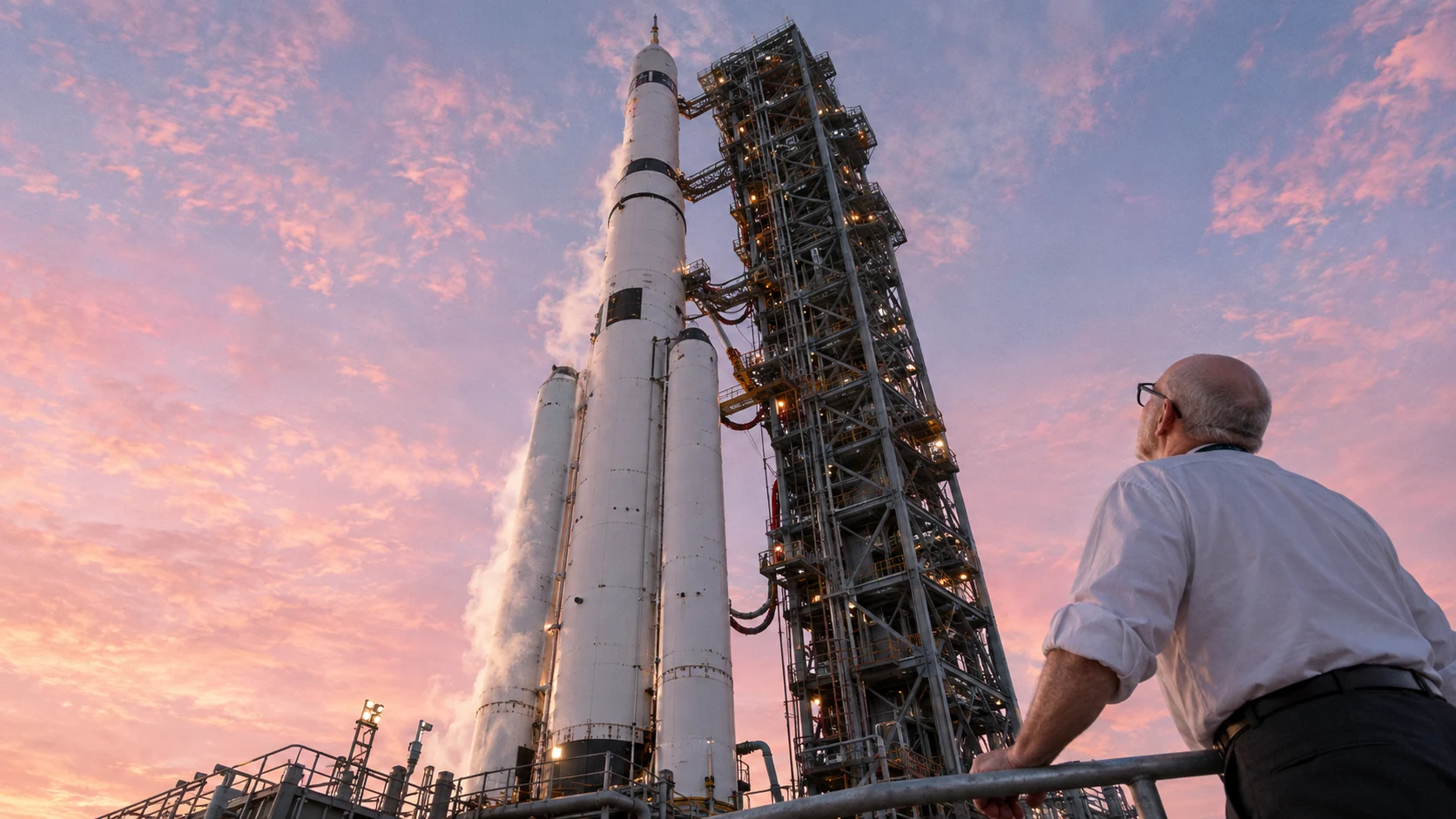
The digital IMAX shape. "Full height of the frame" makes vertical space the subject; the small foreground figure gives scale.
Open FlashBoardsCamera: a slow, steady pull back and rise, from this wide shot to a wider view of the ridge and plume, moving the whole time. Action: from the first frame the ash plume is already billowing upward and wind whips her orange parka. In the middle she lifts a hand to shield her eyes and looks up. At the end she stands still, smaller in the frame, while the plume churns above her."Already billowing" makes the shot alive from the first frame. A slow pull back and rise shrinks the subject and grows the scale, and the prompt names only what is already in the frame.
Open FlashBoards{
"output": "Full-screen live-action scene from Interstellar (2014), from its very first frame: one continuous shot. Shot on IMAX 65mm film: extremely fine grain, razor detail in suit fabric, skin and beard, deep tall frame with generous headroom; soft cool light from off frame left inside a cramped spacecraft cabin, muted gray, beige and off-white palette.",
"characters": {
"S1": {
"name": "Romilly, played by David Gyasi",
"look": "man in his late thirties, shaved head with a short dark fringe of hair at the back, full dark beard, bulky off-white pressure suit with ribbed gray padded shoulder panels, a polished metal neck ring and a small blue oval patch on the chest, head bare",
"voice": "silence: he listens and never speaks"
},
"S2": {
"name": "TARS, played by Bill Irwin",
"look": "never seen: the ship's robot, heard from off frame right",
"voice": "dry, level, deadpan male voice"
}
},
"shots": [
{
"shot": 1,
"camera": "static, eye level, medium close-up on a normal lens; S1 sits in the left-centre third in three-quarter profile facing frame right, a soft-focus round hatch and riveted beige wall panels behind him fill the right half, tall headroom above his head; the frame holds still and drifts only a touch to the right at the very end as he rises",
"action": [
"BEGINNING: alive from the first frame, S1 is seated, head up, eyes on someone off frame right, lips slightly parted, brow gathered, listening; both hands out of frame below.",
"THEN: his lips close, he holds the look toward frame right, blinks twice, jaw still; no nod.",
"THEN: he drops his eyes and turns his head down and to the right until his face is in near profile, looking at the floor off frame right, thinking.",
"THEN: he leans his whole upper body forward and to the right, starting to rise out of the seat.",
"END: he stands up and moves toward frame right, his padded near shoulder and back sweeping large and soft-focus across the foreground, a bright white rectangle of light revealed high on the wall behind at frame left."
],
"dialogue": [
{
"speaker": "S2",
"on_screen": false,
"when": "from the first frame, while S1 is still looking up, finished before he drops his eyes",
"delivery": "flat, matter-of-fact robot voice from off frame right",
"line": "<d>[English] It requires a person to access function.</d>"
}
]
}
],
"sound": {
"ambience": "low steady hum of the cabin air system, soft creak of the suit fabric and a padded rustle as he rises",
"speech": "exactly these spoken phrases, each said once, in this order",
"never_spoken": "no narration and no voice-over: the descriptions, performance notes and step words of this prompt are never spoken aloud",
"music": "a film score under the scene, always below the voices: a low sustained organ chord with a slow, quiet pulse",
"subtitles": "none"
}
}Remakes the IMAX-shot cabin close-up of Romilly from Interstellar (2014): the prompt keeps the locked-off eye-level framing, the round hatch behind, TARS's off-screen line, the downward glance and the exit to frame right.
The camera stays locked off, so the format does the work: "IMAX 65mm film", "razor detail" and "generous headroom" ask for large-format texture and spend the taller frame. The four phases carry the original's beat, and TARS's line is the real one from the film, heard off frame.
Open FlashBoardsCommon mistakes
- "IMAX" alone yields a generic blockbuster or a theater; describe frame shape, low horizon and small subject.
- Models center a big subject and waste the height; say where the figure sits and what fills the top.
- No model offers 1.43:1; generate at 4:3 (or 16:9 for 1.90:1) and crop.
- Fast video moves smear detail; keep them slow.
Keep the reference frames, prompts and every generated take side by side — images and video in one canvas.
FAQ
4 questionsWhat is IMAX?
IMAX is a large-format system of cameras, 15-perforation 70mm film, projectors and theaters with very large, tall screens. Its native frame is 1.43:1. The name now also covers digital and laser IMAX venues and IMAX-certified digital cameras, which usually work in a 1.90:1 frame.
IMAX vs. regular: is IMAX worth it?
It is worth it when the film was shot or mastered with expanded IMAX sequences, so you see more image, and when the venue is a large purpose-built auditorium. For a film shown only in 2.39:1 on a converted screen, the gain is mostly brightness and sound.
What does "Filmed for IMAX" mean?
It means the film was shot on IMAX-certified digital cameras and finished under IMAX supervision, so it can play in the expanded 1.90:1 frame in IMAX theaters, often for the whole runtime. It differs from films shot on IMAX 65mm film cameras, such as Dunkirk or Oppenheimer.
What is IMAX 70mm or 15/70?
IMAX 70mm, or 15/70, is the original IMAX film format: 70mm film runs horizontally and each frame spans 15 perforations. The frame is about ten times larger than a standard 35mm frame, with a 1.43:1 shape, and only a few dozen theaters can still project it.
Related terms
4- Aspect RatioFormats & Exhibition
Aspect ratio is the width of the frame relative to its height — 1.33:1 (Academy), 1.85:1 (flat), 2.39:1 (scope), 1.43:1 (IMAX), 16:9 (HDTV); it decides how much space surrounds a character and how a composition breathes.
- Aspect Ratio ChangeFormats & Exhibition
An aspect ratio change deliberately widens or narrows the frame within a film — to mark a time period, a shift into memory, or a burst of spectacle as with IMAX sequences.
- 3D FilmFormats & Exhibition
A 3D film is shot or converted as a stereoscopic pair — separate images for the left and right eye — so that, viewed with glasses, the picture gains depth; Avatar and Hugo are key digital-era examples.
- Film StockCameras & Capture
Film stock is the light-sensitive celluloid a movie is shot on: a base coated with emulsion whose format (16, 35, 65mm), speed and color response shape grain, contrast and palette before any grading.
Further reading
IMAX Corporation technical descriptions of 15/70 film and IMAX with Laser. American Cinematographer coverage of The Dark Knight, Interstellar and Dunkirk.