 FlashBoards Learn
- Learn
- Formats & Exhibition
- 3D Film
Formats & Exhibition · Film language
3D Film
Also called: 3D movie, stereoscopic film, stereo 3D
A 3D film is recorded or converted as a stereoscopic pair: one image for the left eye, one for the right, taken from slightly different positions. Glasses deliver each image to the matching eye, and the brain fuses the two into a picture with real depth, where objects sit behind, on or in front of the screen.
- What it does
- Adds binocular depth to the image, so the screen reads as a window into a space rather than a flat picture.
- Use it when
- The film is built on space and scale: flight, zero gravity, creatures, deep sets, spectacle meant for the big screen.
- Watch out
- Too much depth, fast cutting and objects cut by the frame edge cause eyestrain; glasses also make the picture noticeably darker.
- Try this prompt
Cinematic film still, deep focus, 24mm lens, glowing spores floating close to the lens, explorer in midground, canyon walls far behind
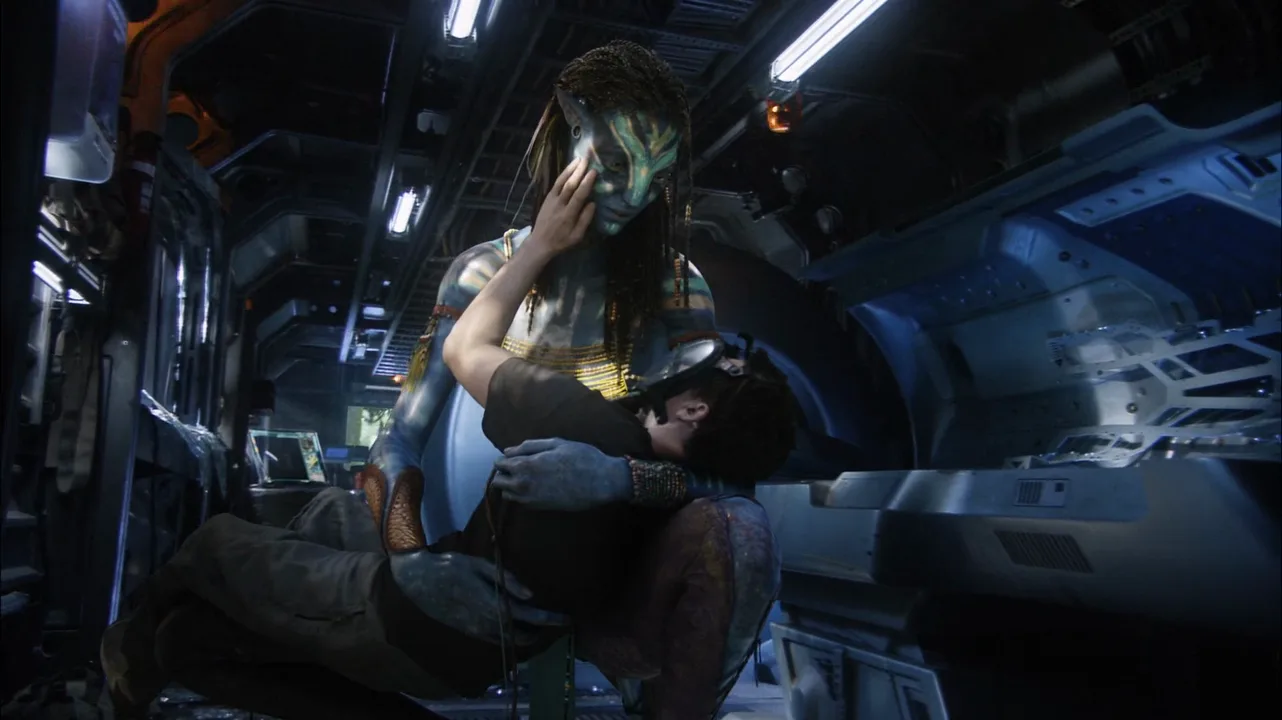
What is a 3D film?
In film language, "3D" means stereoscopic, not computer-animated. A 3D movie carries two images per frame, one per eye, and the small horizontal offset between them, called parallax, is what the brain reads as depth. A stereo camera imitates the roughly 6.5 cm spacing of human eyes.
3D is an exhibition format, in the same family of decisions as aspect ratio and IMAX on the formats and exhibition map.
How do 3D movies work?
Depth depends on where the two images line up:
- Zero parallax: the images overlap and the object sits on the screen surface.
- Positive parallax: the object appears behind the screen, where most comfortable 3D lives.
- Negative parallax: the images cross and the object floats in front of the screen, in the audience's space.
The theater then separates the images: polarized glasses, color-filter glasses that give each eye slightly different wavelengths, or active shutter glasses that black out each eye in turn.
A short history of 3D movies
3D arrives in waves. The first boom, in 1952–54, fought television with Bwana Devil (1952) and House of Wax (1953), shown from two synchronized projectors; Hitchcock's Dial M for Murder (1954) was shot in 3D but mostly seen flat.
Digital projection let one projector show both eyes, and Avatar (2009) turned 3D into a standard release format. Hugo (2011), Life of Pi (2012) and Gravity (2013) then won three straight cinematography Oscars, all released in 3D. High frame rate 3D followed with The Hobbit films.
Why filmmakers use 3D, and when it fails
Good 3D is about volume and scale, not objects flying at the audience. In Hugo, Martin Scorsese and DP Robert Richardson turn a railway station into a vast clockwork space. Stereo rewards shots you can explore: deep sets, slow moves and strong depth layering.
It fails when bolted on. Fast cutting forces the eyes to re-converge every second, heavy negative parallax tires viewers, and glasses swallow much of the light, so dark scenes turn muddy.
How to shoot and stage for 3D
Native 3D uses a stereo rig of two matched cameras, side by side or on a beam-splitter mirror that lets the lenses sit closer than the bodies allow. Two controls shape depth:
- Interaxial distance, the gap between lenses, sets how much depth there is. Too wide and people look like miniatures.
- Convergence picks what sits on the screen plane, usually the actor's eyes.
Stereographers plan a depth budget per scene and keep it smooth across cuts. Favor wider lenses, deeper depth of field, longer takes, and never let the frame edge cut an object that sits in front of the screen. On a FlashBoards board, lay out the sequence as depth-staged frames with a note on each shot's screen-plane object.
Native 3D vs. 2D-to-3D conversion
Native 3D records both eyes on set, so hair, smoke and reflections carry real stereo detail; the rigs are heavy. Conversion starts from 2D: artists isolate every element, build depth maps and paint in what the second eye would see. With time and budget, as on Gravity, it gives shot-by-shot control of depth; rushed, as on Clash of the Titans (2010), it produces flat cardboard layers. CG shots are simply rendered twice in any digital cinematography pipeline.
3D Film examples in film
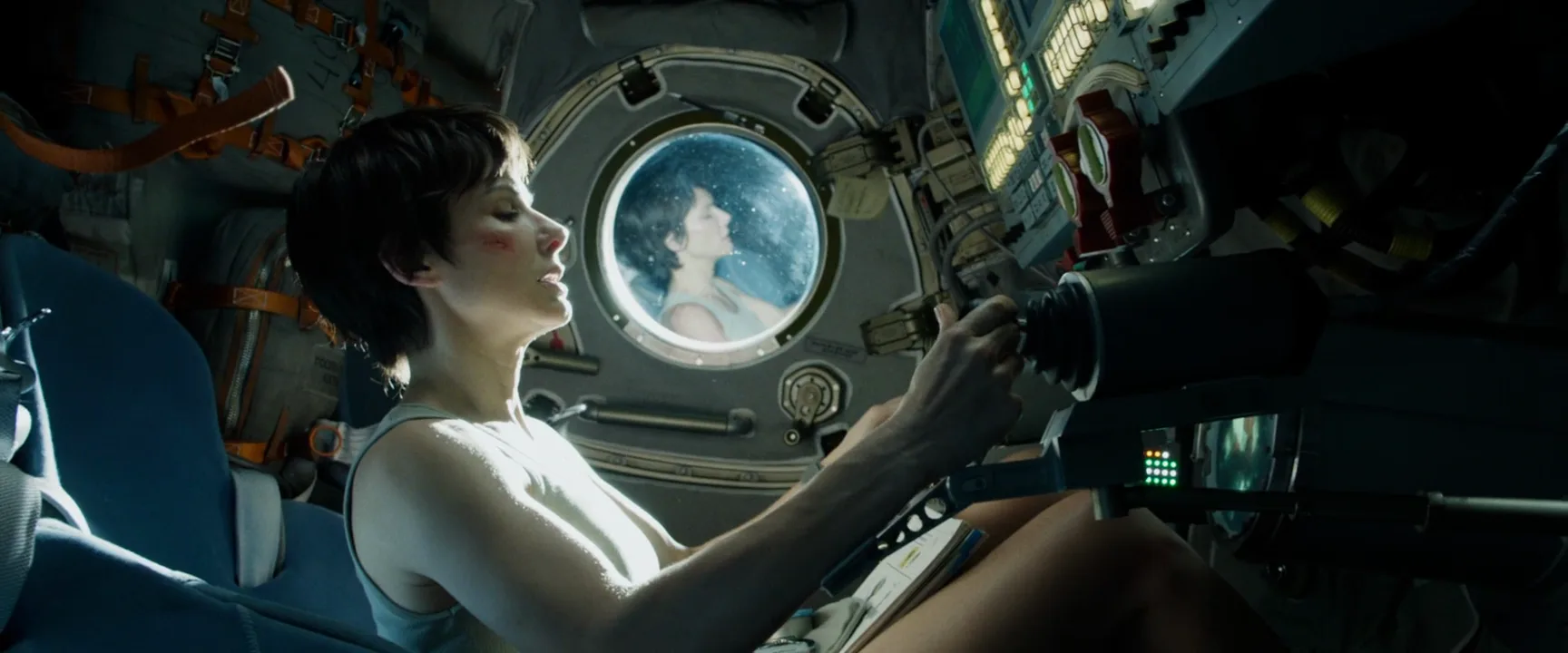
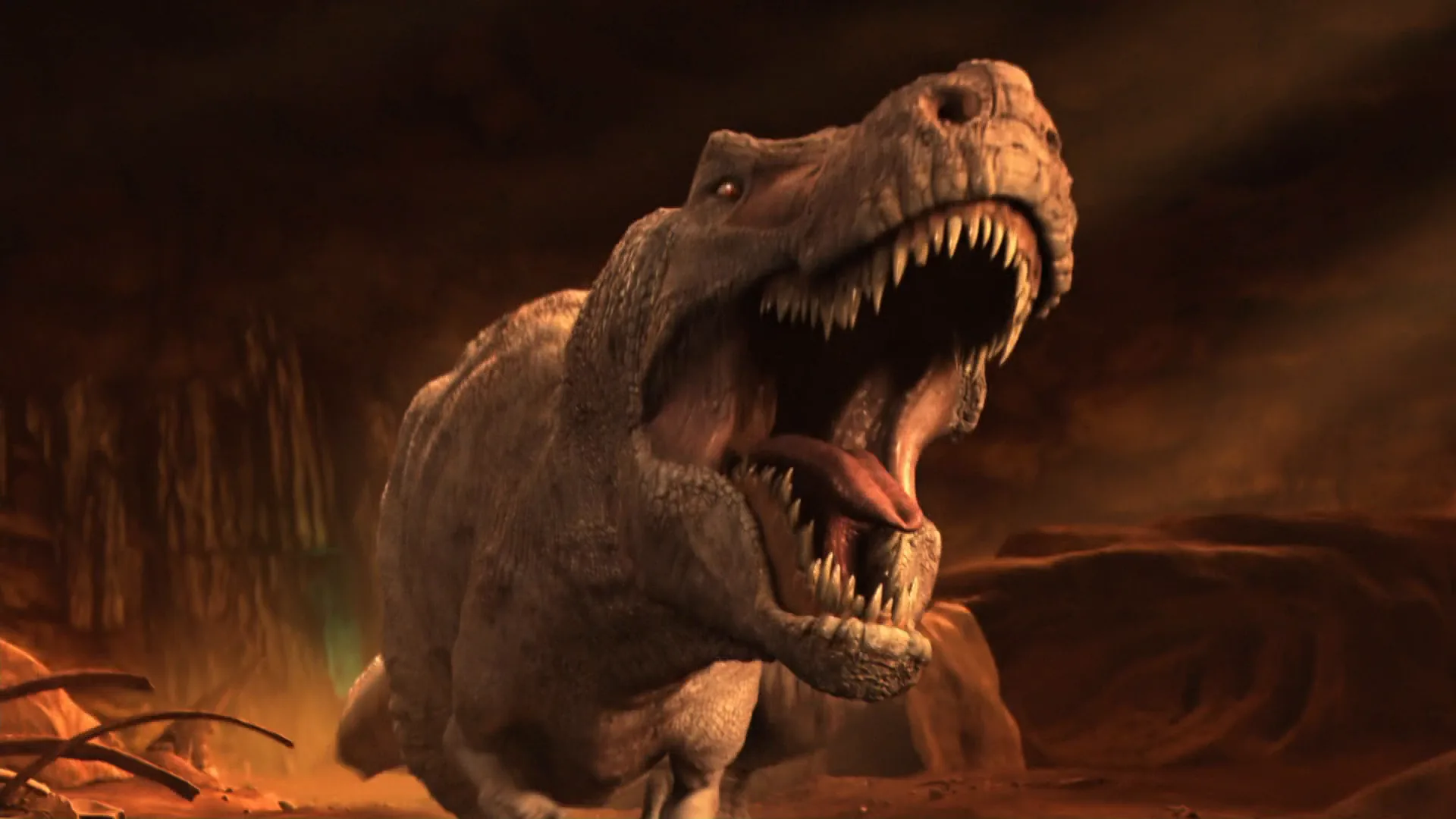
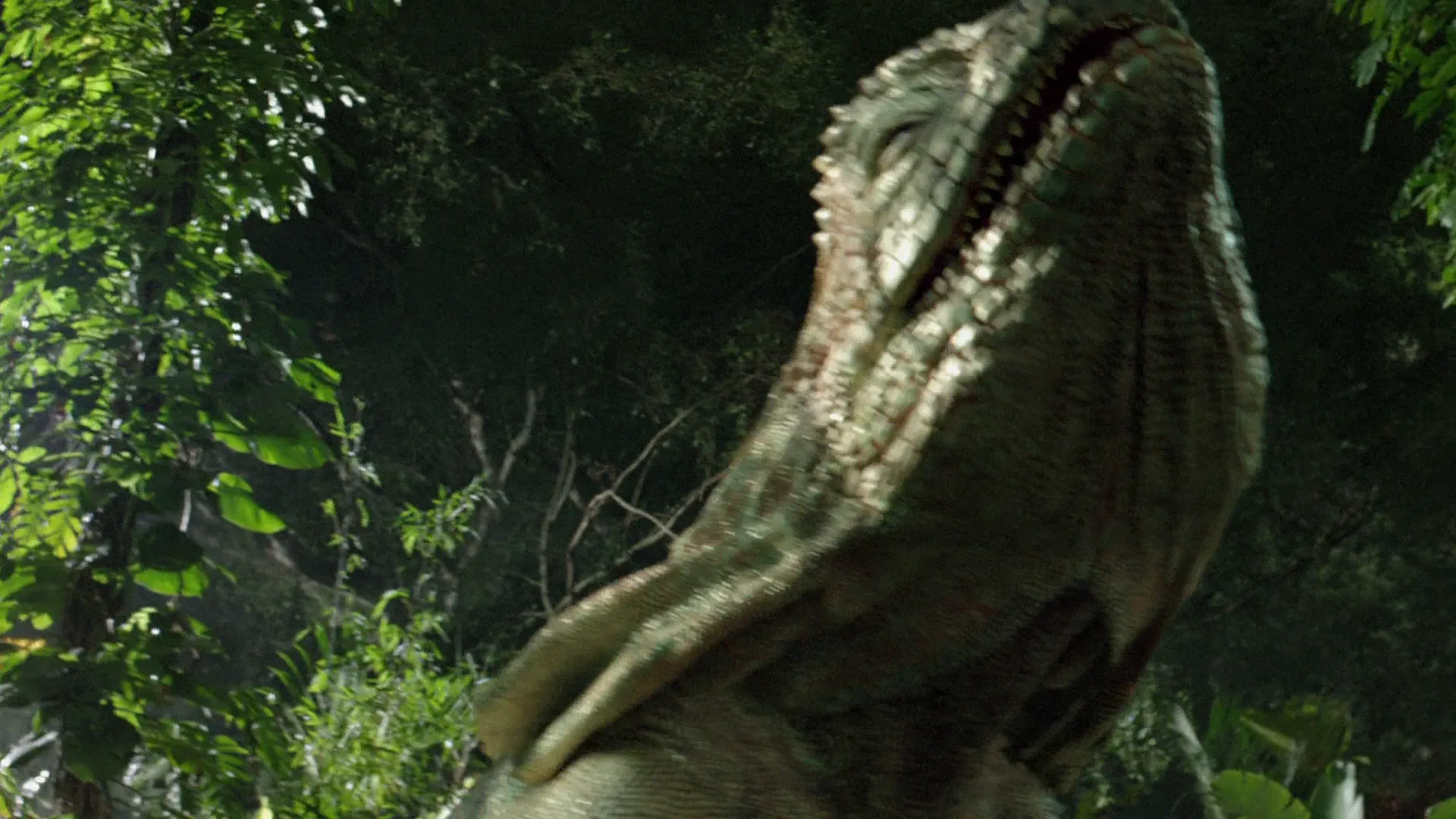
4 framesA still can't carry stereo, but it shows the staging 3D releases are built on: layered depth and objects pushed toward the lens.
How to create a 3D film with AI
4 promptsModels make flat 2D frames, but they're quick tools for designing the depth staging a 3D shot depends on: clear layers, deep focus and slow moves that reveal parallax. Keep the key frame, a second staging idea and a moving test beside your notes on one FlashBoards board. The fourth prompt re-shoots a real film shot from a text description alone, and the original plays next to the result so you can compare.
Cinematic film still, wide shot, 24mm lens, deep focus, camera at shoulder height. Foreground: glowing blue-green spores floating close to the lens. Midground: an explorer in her thirties with a cropped silver undercut, freckles and a scuffed orange flight suit stands on a rope bridge, holding a hand lamp. Background: misty canyon walls and a distant waterfall. Cool mist, warm lamp light on her face, sharp detail in every plane.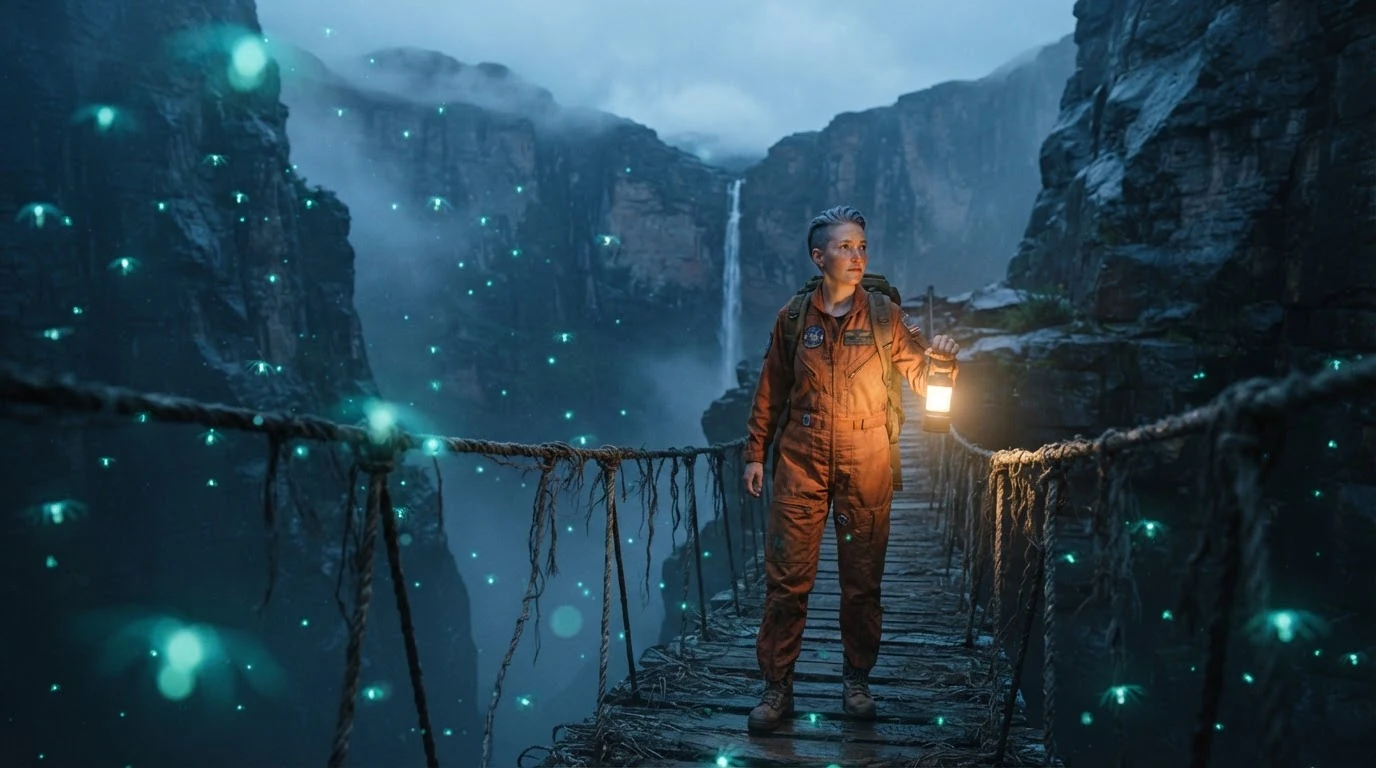
Foreground / Midground / Background spells out three depth planes, and deep focus keeps each readable, as stereo needs. The spores are what a 3D version would float in front of the screen.
Open FlashBoardsAnamorphic widescreen film still, one-point perspective down the corridor of an old night train, 28mm lens, deep focus, eye level. A brass lamp with a green glass shade hangs in the left foreground, fully inside the frame. Midground: a conductor in his sixties with a white walrus mustache, round spectacles and a navy uniform checks a ticket. Compartment doors recede to a far vanishing point. Warm practical lamps, blue night outside.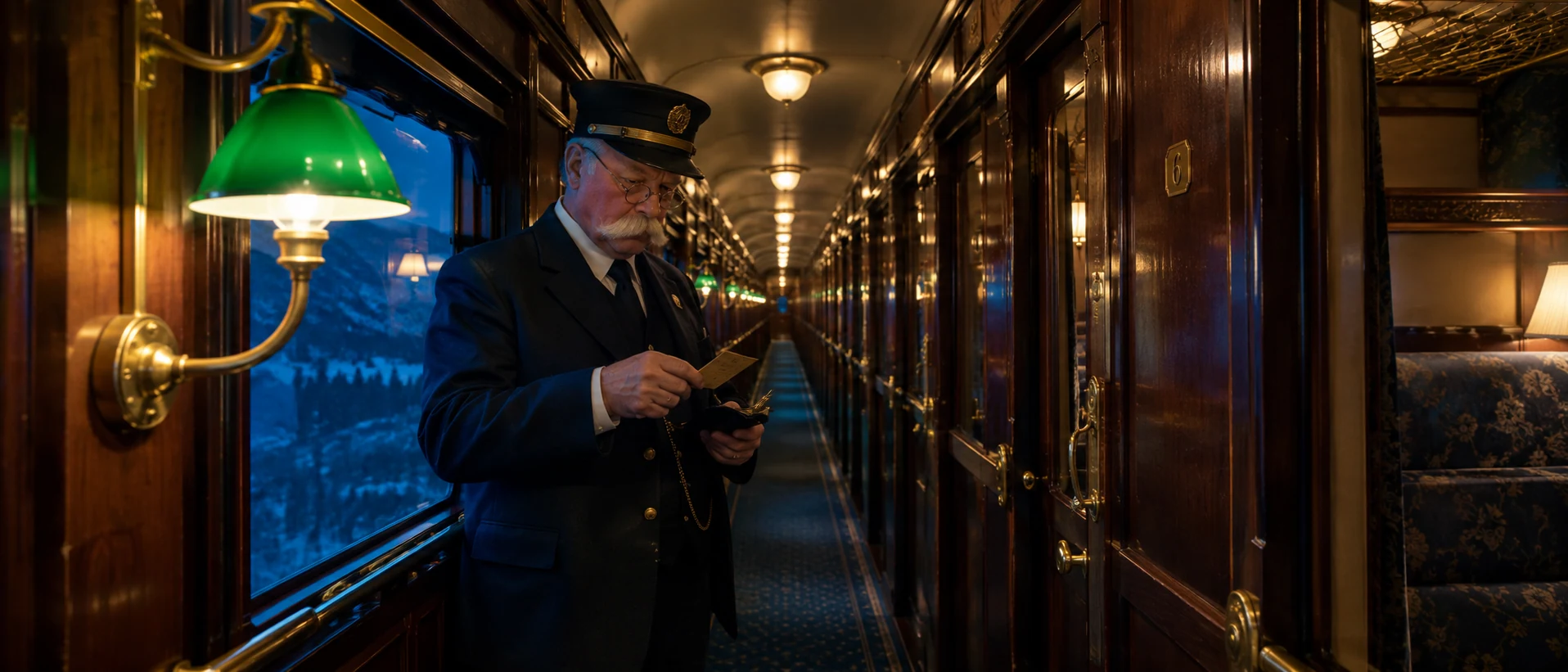
One-point perspective builds depth from lines alone. Fully inside the frame keeps the foreground lamp off the frame edge, the rule for anything placed in front of the screen.
Open FlashBoardsCamera: slow, steady push forward along the rope bridge from the first moment, ending in a medium wide shot of the explorer. Action: the glowing spores drift past the lens and slide out of frame as the camera advances. The explorer raises her hand lamp and turns toward the waterfall. Mist rolls across the canyon walls while the bridge sways gently under her feet.From the first moment keeps the clip alive. Spores sliding past faster than the explorer, and she faster than the canyon, is motion parallax: a quick test of whether the layers separate.
Open FlashBoards{
"output": "Full-screen live-action scene from Gravity (2013) from its very first frame: one continuous shot. Anamorphic widescreen digital cinema, the dark cramped interior of a Soyuz capsule in orbit, deep teal-blue shadows, cold rim light from a round porthole, hard white sunlight later in the shot, deep focus with every depth layer sharp, fine grain.",
"characters": {
"S1": {
"name": "Ryan Stone, played by Sandra Bullock",
"look": "woman in her forties, short tousled dark hair, a small red graze high on her cheek, white sleeveless tank top, bare arms and bare legs, weightless and half-seated in a padded blue seat with her head tipped back",
"voice": "soft, breathy, exhausted murmur, barely above a whisper"
}
},
"shots": [
{
"shot": 1,
"camera": "slightly low angle, side-on, wide lens, medium shot of S1 in the left-centre third, in profile facing frame right. Three clear depth layers: in the near foreground the curved padded edge of a blue seat at the lower left, a bulky black cylindrical control handle at the centre-right and her bare knees at the lower right; S1 in the middle; in the far background a round porthole with a thick metal rim, framed by dark equipment and orange-red cable bundles. The camera rolls slowly clockwise the whole time, a gentle tilt of the horizon rather than a full turn, so the near, middle and far layers slide against each other; the framing stays a side-on medium shot to the end.",
"action": [
"BEGINNING: alive from the first frame, S1 floats leaned far back with her eyes closed, both hands raised in front of her chest resting on the black control handle, lips moving softly as she murmurs; the porthole is a dark circle high above her head, the capsule almost black, a small green digital readout glowing under the handle.",
"THEN: the porthole fills with the blue curve of the Earth and slides down toward the space just in front of her face as the frame rolls clockwise; her body straightens from leaning back to sitting more upright in frame, while the handle in the foreground slides faster than she does.",
"THEN: a cold white rim light from the porthole catches her profile, hair and bare shoulder; she keeps her eyes closed, a faint calm smile on her lips, both hands still on the handle.",
"THEN: the sun rises into the upper edge of the porthole; S1 parts her lips and lets out a long sigh, her head tipping back a little further.",
"THEN: a burst of white sunlight washes across the whole cabin, turning the frame pale teal with a soft haze and a lens flare streaking toward the lower left; her face and arms glow white, fingers loose on the handle.",
"END: the sunlight drops away almost at once, the cabin goes dark teal again with the blue Earth back in the porthole beside her head; her eyes stay closed and her lips part for a last faint word, both hands lowered onto the handle over her bare knees."
],
"dialogue": [
{
"speaker": "S1",
"on_screen": true,
"when": "from the first frame, while the cabin is still dark",
"delivery": "soft, drowsy, soothing, eyes closed",
"line": "<d>[English] That's right, that's right. Come on, come on.</d>"
},
{
"speaker": "S1",
"on_screen": true,
"when": "right after the first line, while the Earth slides into the porthole",
"delivery": "slower, almost a whisper, a faint smile",
"line": "<d>[English] That's right, that's right, that's right.</d>"
},
{
"speaker": "S1",
"on_screen": true,
"when": "as the sun rises into the porthole",
"delivery": "a long tired sigh",
"line": "<d>[English] Ahh.</d>"
},
{
"speaker": "S1",
"on_screen": true,
"when": "at the very end, right after the sunlight drops away",
"delivery": "faint, coaxing",
"line": "<d>[English] Come on.</d>"
}
]
}
],
"sound": {
"ambience": "low electrical hum of the capsule, soft ventilation fans, a faint creak of the seat straps",
"speech": "exactly these spoken phrases, each said once, in this order",
"never_spoken": "no narration and no voice-over: the descriptions, performance notes and step words of this prompt are never spoken aloud",
"music": "a film score under the scene, always below the voices: slow, weightless sustained strings over a soft low pad, calm and aching",
"subtitles": "none"
}
}Remakes the Soyuz capsule shot from Gravity (2013), dir. Alfonso Cuarón, keeping Ryan Stone's murmured lines, the seat and handle in front, the porthole behind, the slow clockwise roll and the sunburst that floods the cabin.
The JSON names Ryan Stone and her murmured corpus lines, then stacks three depth layers (seat and handle, astronaut, porthole) under a slow clockwise roll, so they slide past each other: the parallax a 3D release turns into real depth.
Open FlashBoardsCommon mistakes
- Flat stacking. Name each layer and its distance: close to the lens, midground, far behind.
- Blurred foregrounds. Cinematic prompts default to shallow focus, which fights stereo. Ask for deep focus.
- Cut-off foreground objects. Keep near objects fully inside the frame.
- Writing "3D". The word pulls models toward CG renders or red-cyan images; describe depth staging instead.
Keep the reference frames, prompts and every generated take side by side — images and video in one canvas.
FAQ
5 questionsHow do 3D movies work?
A 3D movie shows two slightly different images at once, recorded from left-eye and right-eye positions. Glasses filter them so each eye sees only its own. The brain reads the horizontal offset between them, called parallax, as depth, placing objects behind, on or in front of the screen.
What is a stereoscopic 3D film?
It's the technical name for what theaters sell as 3D: a film carrying a pair of images per frame, shot by two cameras about an eye-width apart or created by converting a 2D film. It is different from 3D animation, which only means the images were built with computer graphics.
Is a 3D movie shot with special cameras?
Native 3D uses a stereo rig: two matched cameras, side by side or on a beam-splitter mirror, with adjustable spacing and convergence. Many releases, including Gravity, were shot in 2D and converted in post, where artists separate every element and rebuild the second eye's view.
Why do 3D movies look darker?
The glasses block part of the light, whether they filter by polarization, wavelength or shuttering, and each eye receives only its own image. Unless the theater raises projector brightness, 3D looks noticeably dimmer than 2D, and shadow detail suffers most.
Is IMAX the same as 3D?
No. IMAX is a large-format system of cameras, projection and tall screens; 3D is stereoscopic depth. They combine as IMAX 3D, but many IMAX screenings are 2D, most 3D screenings happen in regular theaters, and a film can be released in either format, both or neither.
Related terms
3- IMAXFormats & Exhibition
IMAX is a large-format system of cameras, film (15-perforation 70mm), projection and theaters with huge, tall screens; its native 1.43:1 frame is why films like Dunkirk and Oppenheimer switch ratio in IMAX scenes.
- Depth LayeringComposition & Framing
Depth layering builds a shot in distinct planes — foreground, midground and background — each holding something meaningful, so the flat screen gains volume and several actions or ideas can be read at once.
- Digital CinematographyCameras & Capture
Digital cinematography records motion pictures on an electronic sensor instead of film stock; since the 2010s it has been the industry standard, with cinema cameras such as the ARRI Alexa and RED.
Further reading
Bernard Mendiburu, 3D Movie Making: Stereoscopic Digital Cinema from Script to Screen (Focal Press). Ray Zone, Stereoscopic Cinema and the Origins of 3-D Film, 1838–1952 (University Press of Kentucky).