 FlashBoards Learn
- Learn
- Formats & Exhibition
- Letterboxing
Formats & Exhibition · Film language
Letterboxing
Also called: letterbox, black bars, cinematic bars, pillarboxing
Letterboxing shows a widescreen image in full on a narrower screen by adding black bars above and below it. Nothing is cropped: the viewer sees the whole composition the cinematographer framed, at the cost of unused screen area. Bars on the sides instead, for a narrow image on a wide screen, are pillarboxing.
- What it does
- Keeps the full width of a widescreen frame on a narrower display by filling the leftover height with black.
- Use it when
- Delivering a 1.85:1 or 2.39:1 film to 16:9 TV, streaming or any screen narrower than the picture.
- Watch out
- Bars belong to the delivery, not the picture: keep them pure black, fixed and free of titles or graphics.
- Try this prompt
Cinematic film still letterboxed to 2.39:1, solid pure black bars top and bottom, a lone figure small at the left third of a desert horizon
What is letterboxing?
Every screen has a fixed shape and every film has its own aspect ratio. When the picture is wider than the screen, you can shrink it until its full width fits and fill the leftover height with black (letterboxing), or cut off its sides to fill the screen (pan and scan).
The bars are not part of the image, just unused display. Related shapes:
- Pillarboxing — a narrow picture on a wide screen, bars left and right: a 4:3 archive clip on a 16:9 TV.
- Windowboxing — bars on all four sides, usually a mistake: a letterboxed 4:3 master shown pillarboxed again.
Of all formats and exhibition choices, this is the one viewers notice on every screening.
How big are letterbox bars?
Divide the screen ratio by the picture ratio: that is the share of the screen height the image fills.
| Picture | Screen | Image height | Each bar | |---|---|---|---| | 1.85:1 | 16:9 | 96% | about 2% | | 2.39:1 | 16:9 | 74% | about 13% | | 2.39:1 | 4:3 | 56% | about 22% |
On a 1920×1080 master, a 2.39:1 film fills about 1920×804 pixels, leaving roughly 138 black rows above and below. A 1.85:1 film leaves slivers few viewers notice, so the "black bars" complaint is mostly about CinemaScope-shaped films.
In theaters, masking usually hides the bars: on a constant-width screen scope films are letterboxed and the masking closes in from top and bottom.
Why do filmmakers insist on letterboxing?
Because widescreen staging lives at the edges. Two actors at opposite thirds, a rider tiny against a horizon, a threat entering at the far edge: none of these survive a 4:3 crop, which keeps only about 56% of a 2.39:1 frame.
In the VHS era most tapes were cropped and sold as "full screen." Woody Allen required Manhattan (1979) to be letterboxed on home video. HDTV settled the argument: 16:9 is close to 1.85:1, and bars on 2.39:1 films became normal.
The bars now carry meaning too. Audiences read them as "cinema," which is why a film can change aspect ratio as a story signal, and why IMAX sequences feel bigger when the letterbox falls away.
How to frame and deliver a letterboxed film
Pick the ratio before the shoot. Load 2.39:1 or 1.85:1 frame lines in the monitor so the operator composes for the final shape, not the sensor.
Letterbox in the master. Record the full sensor, then place the extracted image in a 16:9 delivery file (1920×1080 or 3840×2160) with pure black bars.
Keep the bars clean. Bars that shift between shots or sit at gray instead of black look like an error.
Plan it on one board. In FlashBoards, keep reference frames, generated shots and notes on one canvas, tag each with its ratio, and check every shot inside the bars before committing to the shape.
Letterboxing vs. pan and scan (and open matte)
All three fit a film made for one shape onto a screen of another.
- Letterboxing keeps the full frame and adds black bars. Nothing is lost; the image is smaller.
- Pan and scan fills the screen by cutting the sides, sometimes sliding the crop mid-shot. The screen is full; the composition is gone.
- Open matte fills the screen by revealing picture masked off above and below in theaters. Nothing is cut, but the extra headroom was never meant to be seen.
Only letterboxing shows exactly what the filmmakers approved. Anamorphic scope films have no extra picture above and below, so open matte isn't even an option for them.
Letterboxing examples in film
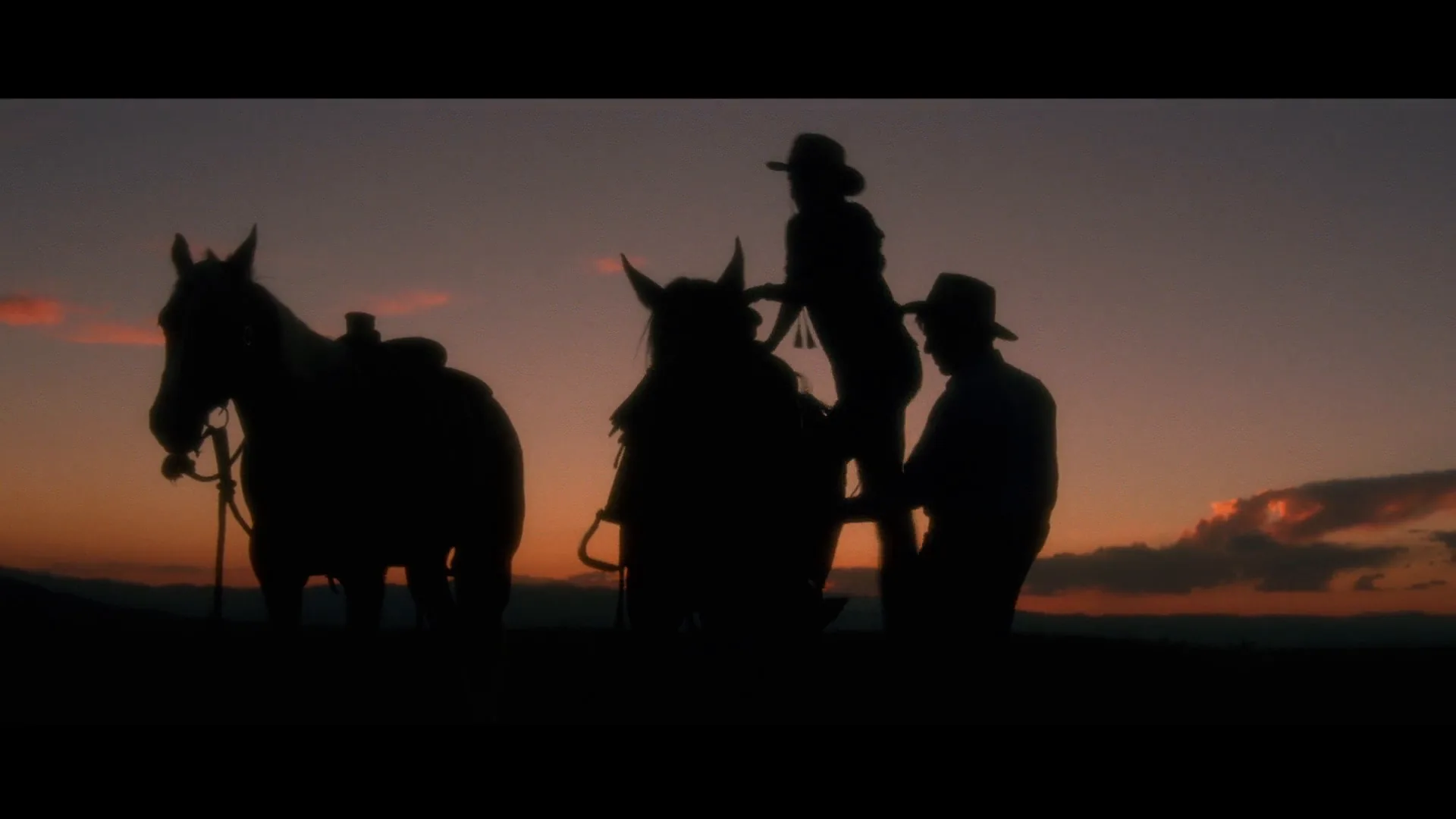
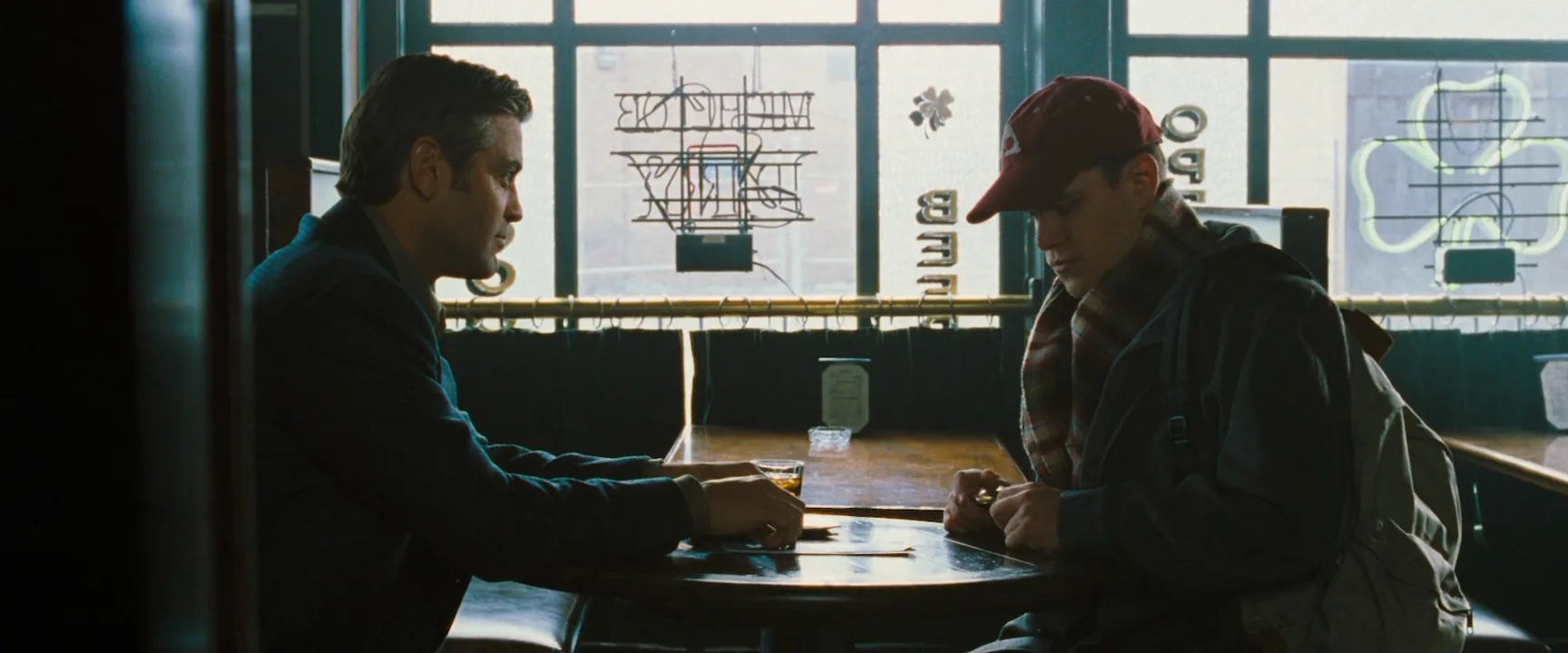
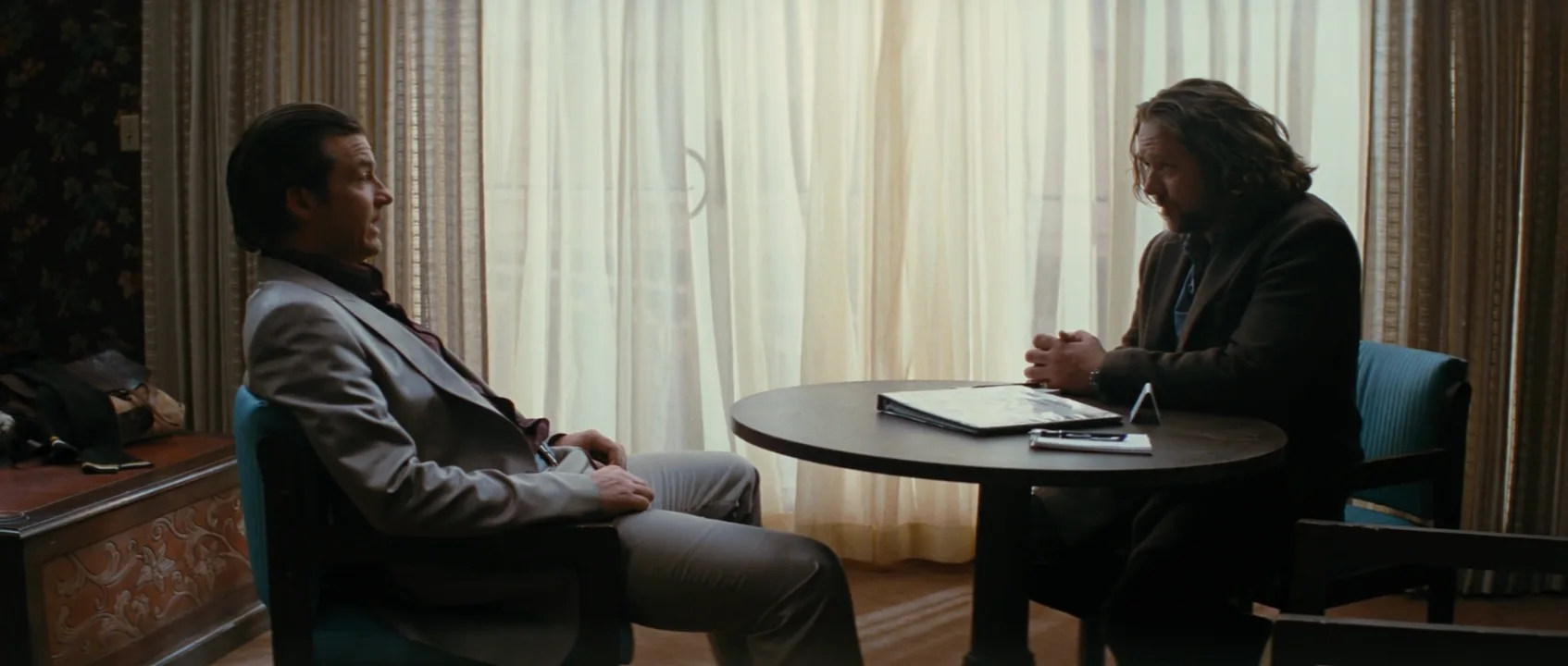
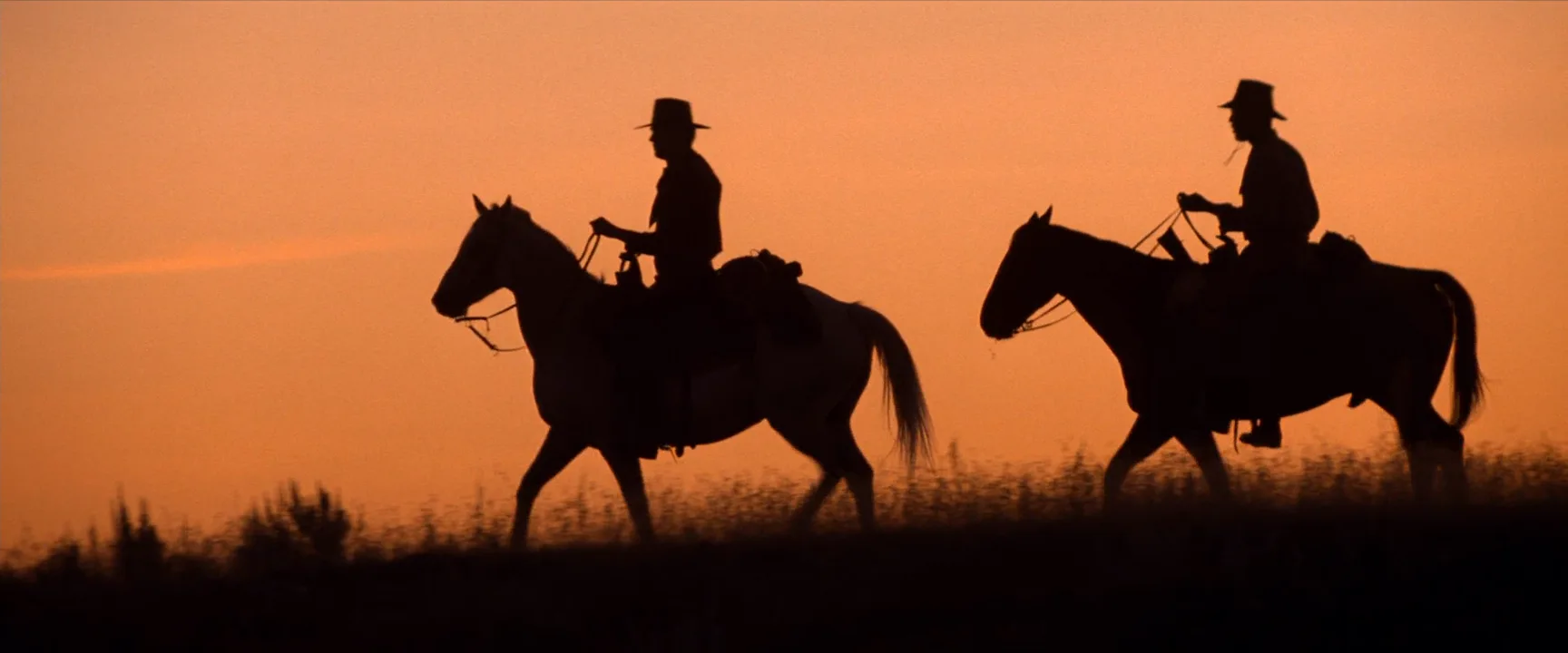
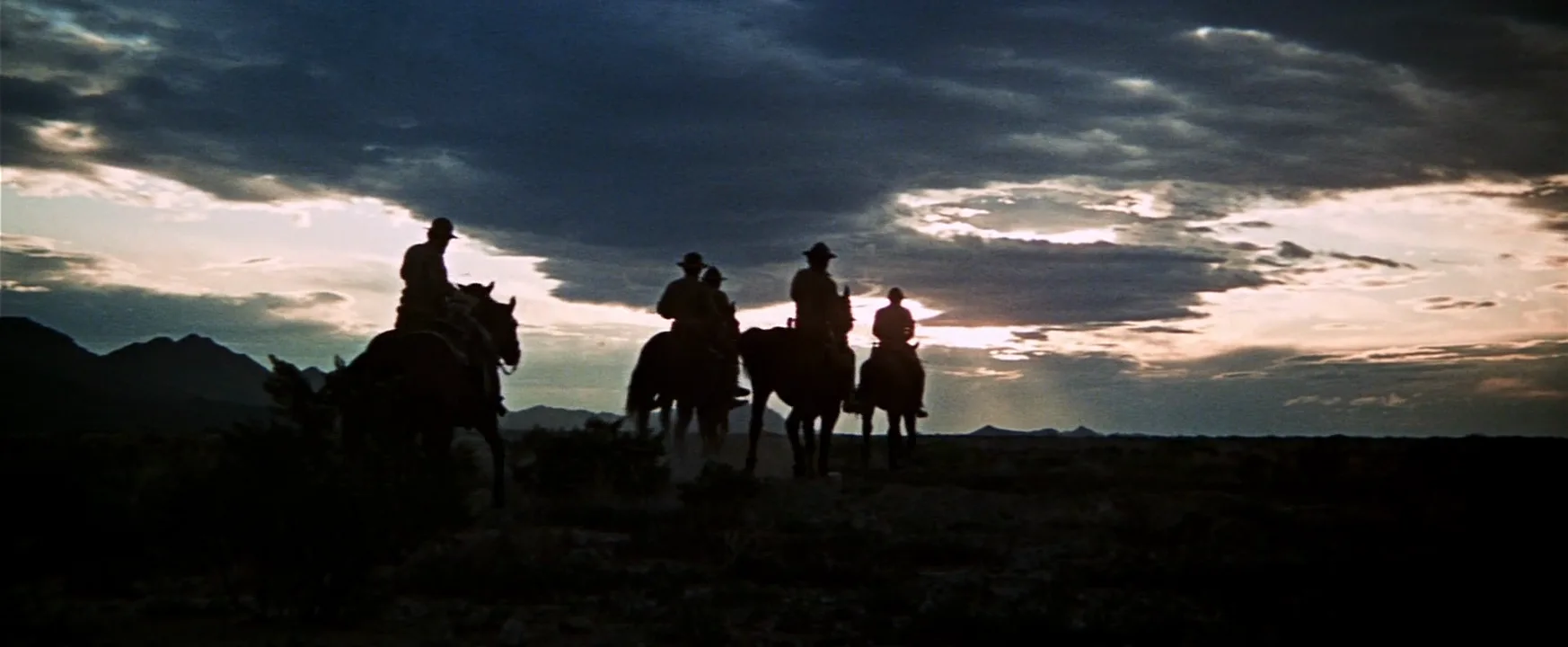
5 framesThe first frame shows real bars inside a 16:9 video frame; the others are scope frames at native width, the composition letterboxing protects.
How to create a letterboxing with AI
4 promptsImage models fill the canvas edge to edge unless the bars are part of the prompt. Put a letterboxed and a pillarboxed frame side by side on one FlashBoards board, then animate the first. The fourth prompt re-shoots a real film shot from a text description alone, and the original plays next to the result so you can compare.
Cinematic film still letterboxed to 2.39:1 inside a 16:9 frame, thick solid pure black bars across the full width at top and bottom. Inside the wide band: an extreme wide shot at dusk of a desert gas station, a woman in her sixties with a long white braid and a rust-colored canvas duster beside a dusty green pickup at the left third, violet sky on the right, 40mm anamorphic lens.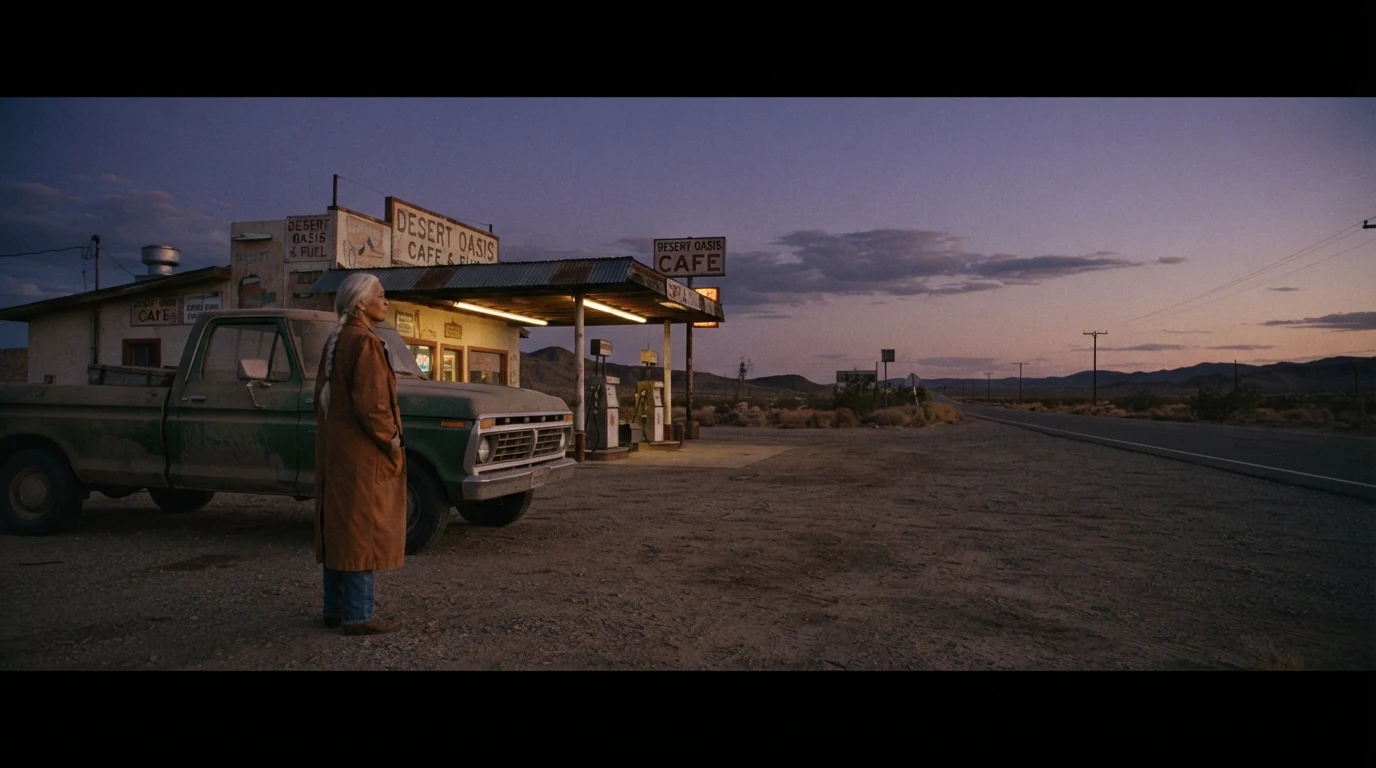
Letterboxed to 2.39:1 inside a 16:9 frame and solid pure black bars across the full width make the bars part of the image; the figure at the left third gives the width a reason.
Open FlashBoardsPillarboxed archive frame: a 4:3 picture centered in a 16:9 frame, solid pure black vertical bars left and right. Inside: a medium shot of a freckled boy of about ten in a red knit cap and yellow rain jacket at the end of a wooden pier in morning fog, gulls on the railing, 1970s 16mm color film, faded warm tones, visible grain.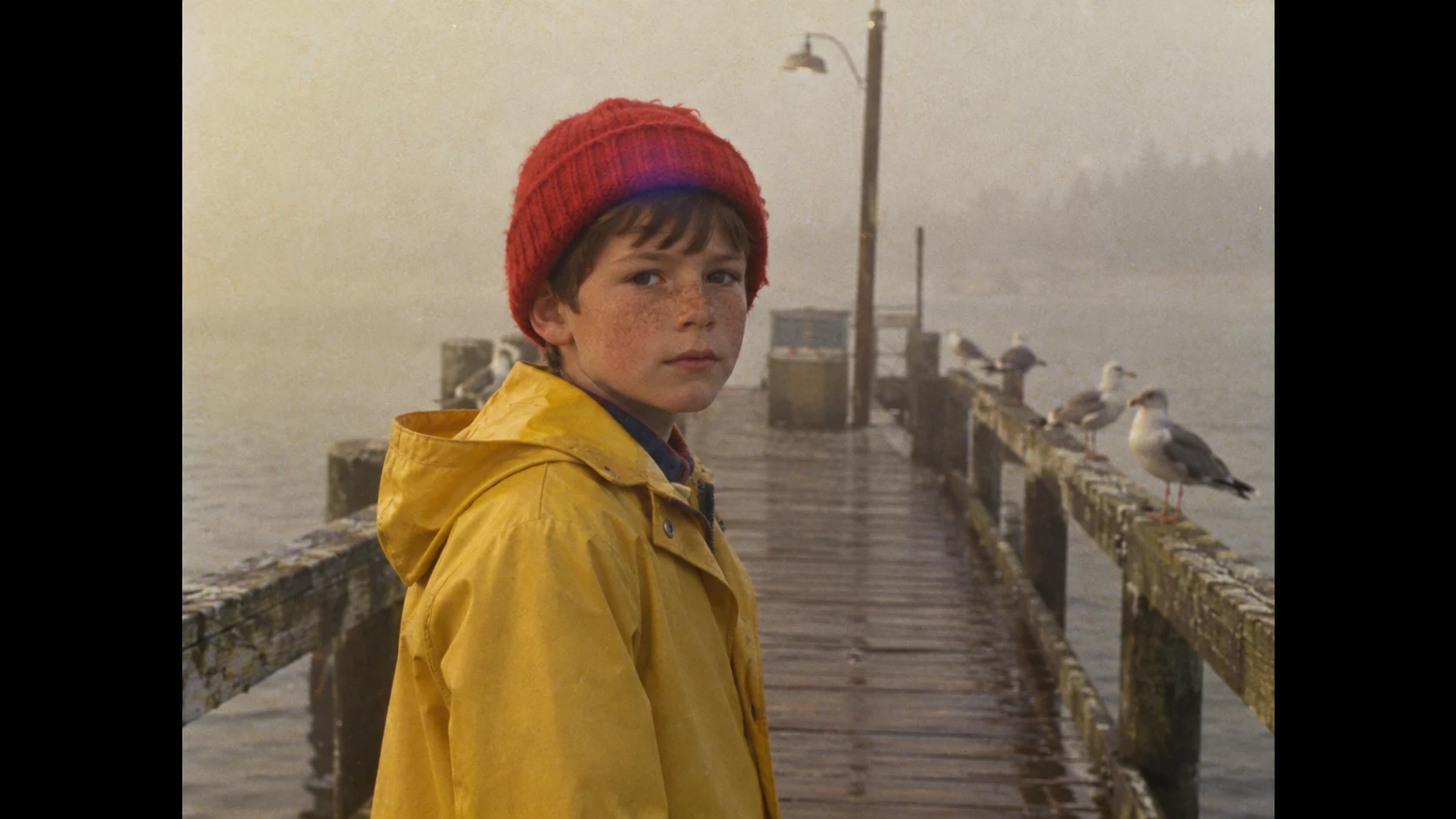
The reverse case: 4:3 picture centered with vertical bars left and right is pillarboxing; the 16mm archive look explains the narrow frame.
Open FlashBoardsCamera: a slow lateral truck to the right starts immediately at an even speed, the woman staying near the left third as the gas station slides past. Action: Wind already pulls at her duster as she walks to the pickup; she opens the door and climbs in; the headlights come on against the violet dusk. The black bars at top and bottom stay solid and fixed for the whole shot.Starts immediately keeps the frame alive; the bars stay solid and fixed makes the model treat them as the frame edge.
Open FlashBoards{
"output": "Full-screen live-action widescreen scope shot from Unforgiven (1992) from its very first frame: one continuous shot. 35mm anamorphic film stock, sun just below the horizon, the whole sky a smooth burnt-orange glow fading to pale peach at the top, riders, horses and prairie grass rendered as pure black silhouettes, fine grain, soft warm haze.",
"characters": {
"S1": {
"name": "Munny, played by Clint Eastwood",
"look": "lean rider in a wide-brimmed hat and a coat, upright in the saddle on a walking horse, seen only as a black silhouette, no face detail",
"voice": "low, dry, weathered drawl, unhurried"
},
"S2": {
"name": "Ned, played by Morgan Freeman",
"look": "rider in a flat-crowned hat and a jacket, a rifle stock angled up at the front of his saddle, on a slightly taller walking horse, seen only as a black silhouette, no face detail",
"voice": "warm, deep, easy baritone"
}
},
"shots": [
{
"shot": 1,
"camera": "wide side-on shot from grass height with a long lens, trucking left at the riders' walking pace and following them; the grass line runs along the lower fifth of the frame, the empty glowing sky fills the rest; both riders in full figure throughout",
"action": [
"BEGINNING: alive from the first frame, both horses already walking toward frame left in profile, S1 in front just left of centre, S2 right behind him so the two silhouettes overlap, S2's horse's head at S1's horse's tail; both men sit still, reins in the hand toward the camera, heads facing the direction of travel.",
"THEN: the horses keep the same slow walk, heads nodding with each step, tails swinging; the riders rock gently with the stride, neither man turns his head.",
"THEN: S2's horse drops back half a length and a clear band of orange sky opens between the two horses; S1 drifts to the left third, S2 holds the right third.",
"THEN: the gap widens to a full horse length; the ground in the foreground rises into a dark grassy slope, so S1 and his horse begin to sink lower in frame as he rides down the far side.",
"END: S1 near the left edge, sunk to the chest behind the dark slope, only his hat and shoulders and his horse's head above it; S2 at the right third still in full figure on the rise, rifle stock visible; wide glowing sky between them."
],
"dialogue": [
{
"speaker": "S2",
"on_screen": true,
"when": "from the first frame, while the two silhouettes still overlap",
"delivery": "casual, thinking aloud",
"line": "<d>[English] He must be moving right along.</d>"
},
{
"speaker": "S1",
"on_screen": true,
"when": "right after S2 finishes, before the gap opens between the horses",
"delivery": "flat, sure, unhurried",
"line": "<d>[English] We'll come across him tomorrow, I reckon.</d>"
}
]
}
],
"sound": {
"ambience": "slow hoofbeats on dry grass, creak of saddle leather, a soft evening wind across the prairie",
"speech": "exactly these spoken phrases, each said once, in this order",
"never_spoken": "no narration and no voice-over: the descriptions, performance notes and step words of this prompt are never spoken aloud",
"music": "a film score under the scene, always below the voices: a lone, slow acoustic guitar melody over soft sustained low strings",
"subtitles": "none"
}
}Re-shoots the sunset ride from Unforgiven (1992): the prompt keeps the left truck at walking pace, Ned's and Munny's exchange as spoken in the film, and the two silhouettes separating to opposite edges of the wide frame.
Generated at 21:9, the frame is already scope. Low angle, long lens and empty glowing sky leave the width open, and the riders drift apart to opposite thirds while trading two lines: the picture a 4:3 crop would cut and letterboxing keeps.
Open FlashBoardsCommon mistakes
- Asked for a "widescreen shot," models return full-bleed 16:9. Name the ratio and the bars: "letterboxed to 2.39:1, solid pure black bars."
- Thin or uneven bars, or sky leaking into them: say "thick" and "across the full width."
- In video, bars can drift. Describe them as fixed, or generate at 21:9 and add bars in the edit.
Keep the reference frames, prompts and every generated take side by side — images and video in one canvas.
FAQ
4 questionsWhat is letterboxing in movies?
Letterboxing shows a widescreen film in full on a narrower screen: the image is scaled to fit the screen's width, and the unused height above and below is filled with black bars. Nothing is cropped, so the composition stays exactly as shot. It is standard for 2.39:1 films on 16:9 TVs, laptops and phones. On a 16:9 screen, a 2.39:1 film gets bars of roughly 13% of the height at top and bottom.
What is the difference between letterbox and pan and scan?
Letterboxing keeps the entire widescreen frame and fills the leftover screen with black bars. Pan and scan fills the screen by cutting off the sides of the frame, sometimes sliding the crop during a shot. Letterboxing preserves the composition; pan and scan can lose over 40% of a scope image, including whole characters.
What is pillarboxing?
Pillarboxing is letterboxing turned on its side: black bars appear left and right when a picture is narrower than the screen, such as a 4:3 TV episode or an Academy-ratio film on a 16:9 display. Bars on all four sides at once are called windowboxing.
Are cinematic bars the same as letterboxing?
No. Letterboxing fits an existing widescreen picture onto a narrower screen without losing anything. "Cinematic bars" added in an editing app are a black matte over 16:9 footage: they crop the top and bottom to create a wider ratio, and look right only when the shot was framed for it.
Related terms
3- Pan and ScanFormats & Exhibition
Pan and scan crops a widescreen film to fill a 4:3 TV screen, moving a narrow window across the wide frame shot by shot — losing up to half the composition and sometimes whole characters.
- Aspect RatioFormats & Exhibition
Aspect ratio is the width of the frame relative to its height — 1.33:1 (Academy), 1.85:1 (flat), 2.39:1 (scope), 1.43:1 (IMAX), 16:9 (HDTV); it decides how much space surrounds a character and how a composition breathes.
- Aspect Ratio ChangeFormats & Exhibition
An aspect ratio change deliberately widens or narrows the frame within a film — to mark a time period, a shift into memory, or a burst of spectacle as with IMAX sequences.
Further reading
American Cinematographer Manual (ASC Press) — aspect ratios, frame lines and extraction. John Belton, Widescreen Cinema (Harvard University Press, 1992).