 FlashBoards Learn
Genres · Film language
Grindhouse
Also called: grindhouse cinema, exploitation film
Grindhouse is the name for the run-down downtown theaters of the 1960s and 1970s that ran cheap exploitation films around the clock, and for the films themselves: gore, sex, car wrecks and revenge sold on a lurid title. Tarantino and Rodriguez’s Grindhouse (2007) turned that battered look into a style.
- What it does
- Sells shock, speed and excess with a raw, worn texture that makes the audience feel they snuck into a disreputable show.
- Use it when
- Your story is pulpy and physical (revenge, cars, monsters) and a polished image would make it feel tame.
- Watch out
- Fake damage is seasoning. Pile on scratches and burns and the audience stops reading the shot.
- Try this prompt
1970s exploitation film still, desert highway at dusk, a woman with a platinum shag haircut drives a black muscle car, 16mm grain, faded magenta color, light scratches.
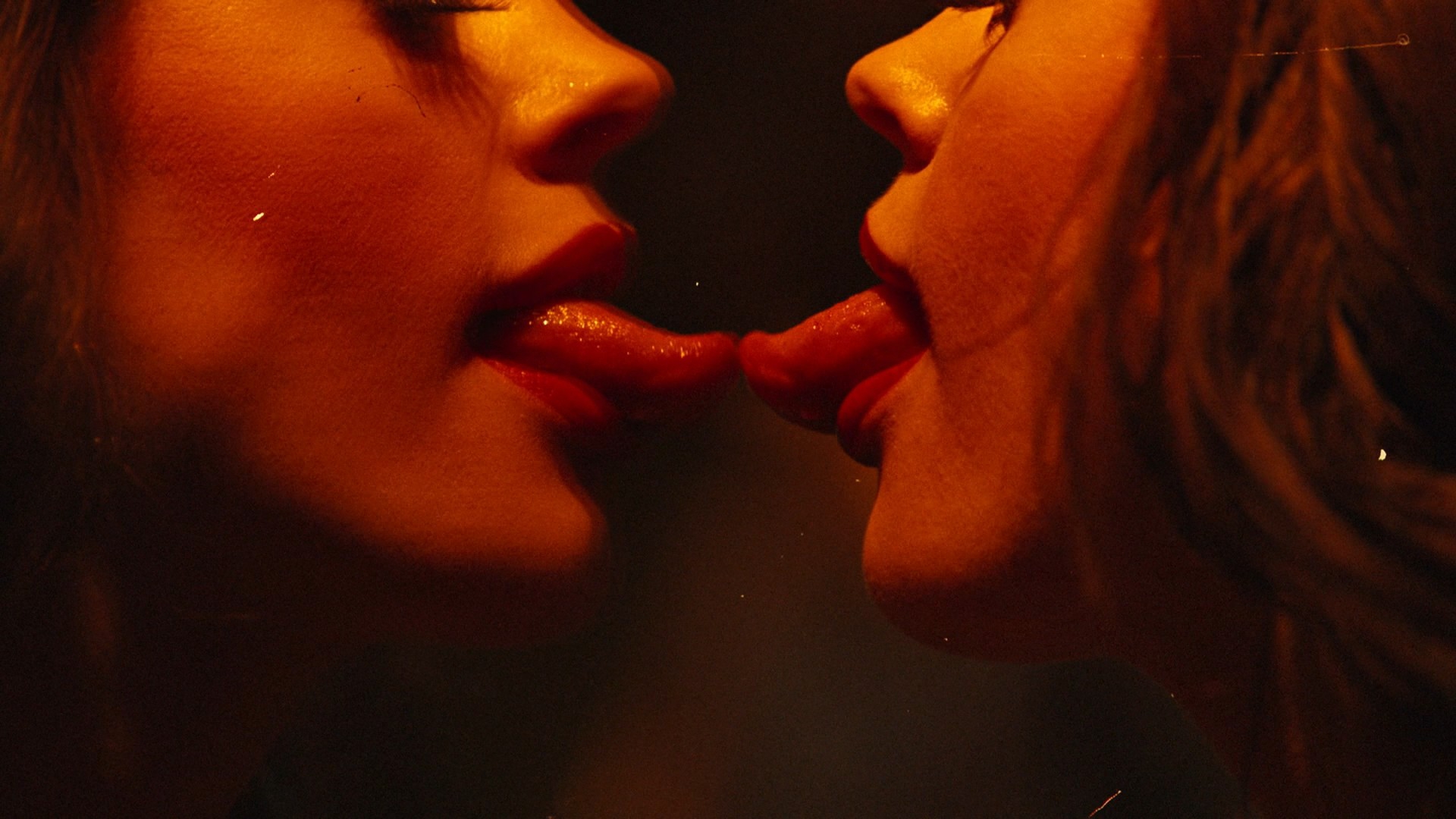
What is a grindhouse film?
A grindhouse was a theater before it was a genre. In the 1960s and 1970s, old picture palaces on streets like New York’s 42nd Street ran double and triple bills from morning to late night for a cheap ticket. The name is usually traced to that non-stop “grind” schedule, with people walking in and out mid-reel.
The films were exploitation pictures: low-budget movies built around what Hollywood would not show — gore, nudity, drugs, bikers, revenge. So grindhouse is less a single genre than a circuit inside the family of film genres: a horror film, a kung fu import and a car-chase movie could share one ticket. It is close kin to the B-movie, but defined by where the films played.
What played in a grindhouse?
Herschell Gordon Lewis’s Blood Feast (1963) opened the splatter lane; Russ Meyer’s Faster, Pussycat! Kill! Kill! (1965) sold go-go dancers and fast cars. The 1970s added blaxploitation, dubbed kung fu imports, Italian horror, biker films and rape-revenge pictures like Meir Zarchi’s I Spit on Your Grave (1978). Roger Corman’s New World Pictures released Paul Bartel’s Death Race 2000 (1975).
The selling happened before anyone saw a frame: a shocking title, a painted poster and a loud movie trailer. Home video — where many of these titles became a cult film — and the cleanup of Times Square closed most of the theaters by the 1990s.
Why filmmakers still use the grindhouse look
Much of the look was an accident of distribution. Prints traveled from theater to theater until they were scratched, spliced and faded; reels went missing. The films added their own economy: heavy film grain, available light, snap zooms, bright red blood, hissy mono sound.
In 2007 Quentin Tarantino and Robert Rodriguez packaged Planet Terror and Death Proof as one double feature, Grindhouse, with fake trailers in between. The damaged film effect was built in on purpose, down to a “missing reel” card. For the viewer, the damage signals permission and adds a wink, so excess plays as fun. Fake trailers later became features: Machete (2010), Hobo with a Shotgun (2011) and Thanksgiving (2023).
How to shoot a grindhouse-style film
- Capture. 16mm gives real grain. On digital, add grain in the grade.
- Lenses. A long zoom used like a 1970s crew: quick zooms into eyes and wounds, soft corners, no creamy bokeh.
- Light. Practical locations, one hard key or whatever the room offers. Let faces go hot and shadows go muddy.
- Color. Saturated reds against faded everything else; slightly lifted blacks and a magenta or yellow cast, like aging print stock.
- Damage. A few scratches, dust, 1–2 pixels of gate weave, a jump cut where a splice would be. Save heavy burns for reel changes.
- Sound. Mono, a little hiss, a pop at the cut.
Grindhouse vs. B-movie
A B-movie began as a budget category: the cheaper second feature of a 1930s–50s studio double bill, and today any low-budget genre film. Grindhouse names a venue and a sensibility: 1960s–70s urban theaters and the independent exploitation films made for them, usually rougher and more violent than a studio B picture. Many grindhouse films are B-movies by budget, but a tidy 1950s creature feature is not grindhouse.
Grindhouse examples in film
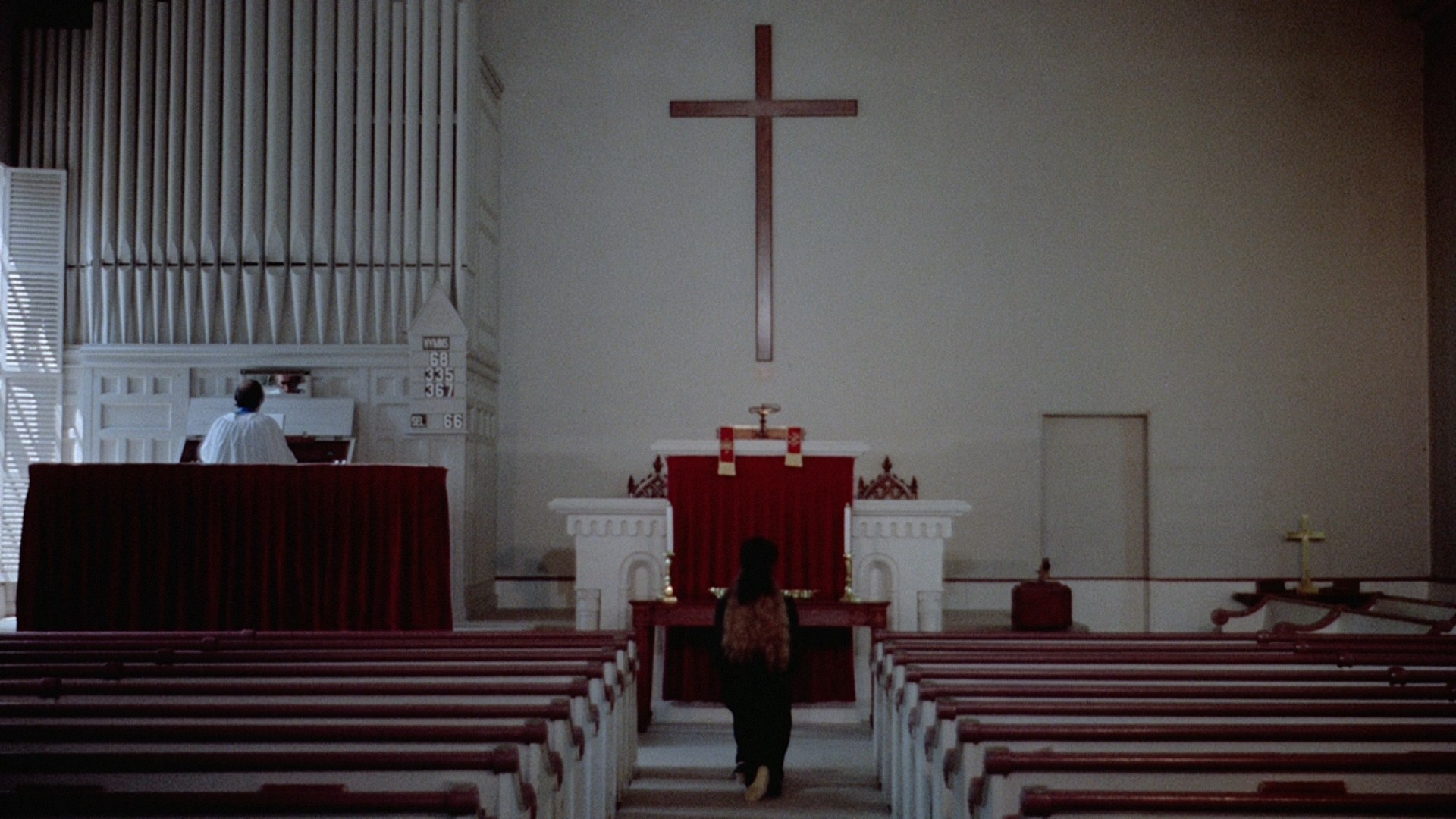
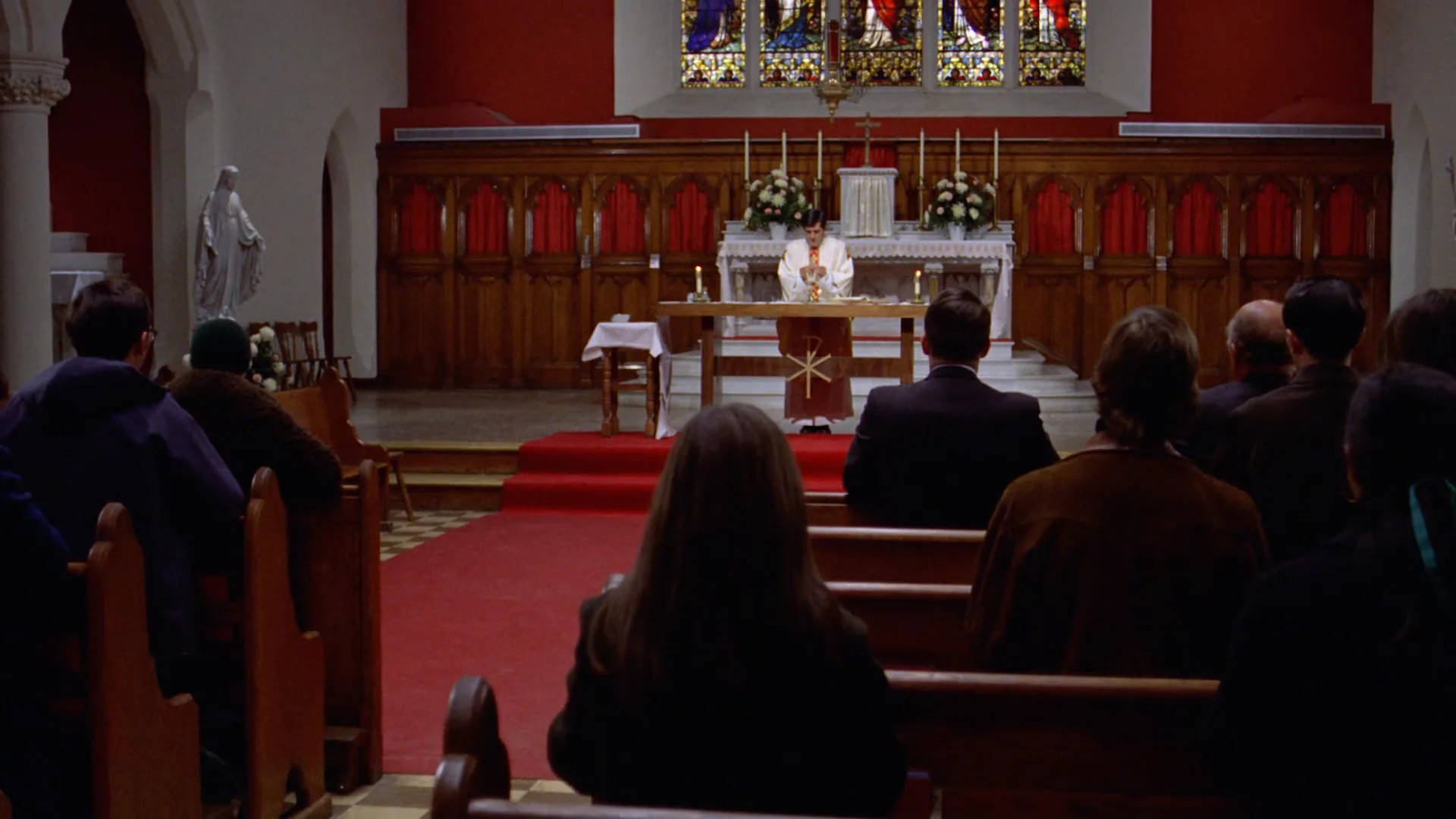
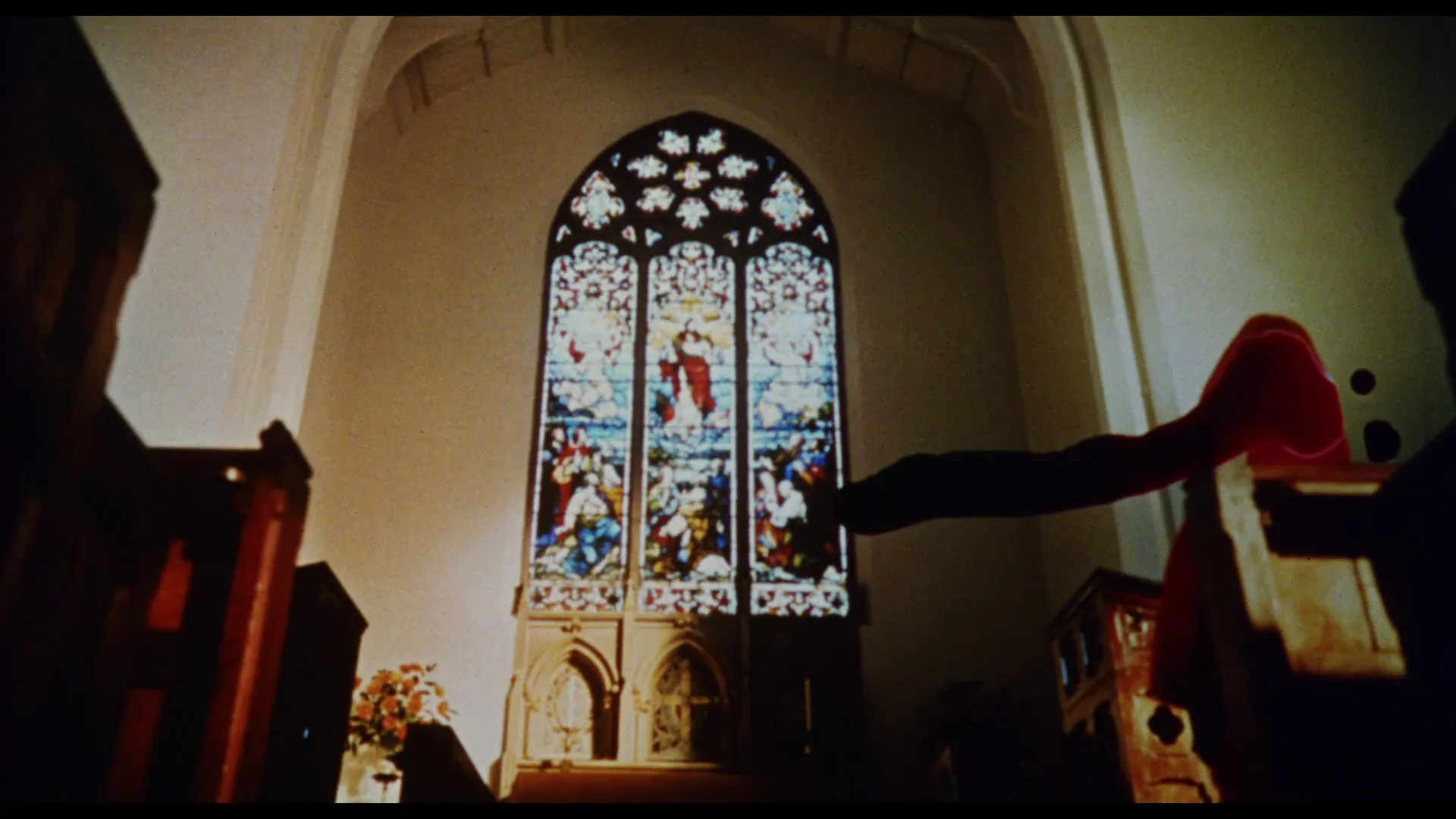
6 framesThe grindhouse, its best-known homage, and frames showing its raw materials: 1970s stock, menacing churches, cheap handheld sets.
How to create a grindhouse with AI
4 promptsImage models default to clean, sharp pictures, so spell out the decade, the stock, the lens, the color cast and a measured amount of damage. In FlashBoards, keep the reference frames, stills and the animated take on one board and compare how much damage each take can carry. The fourth prompt re-shoots a real film shot from a text description alone, and the original plays next to the result so you can compare.
1970s exploitation film still, medium close-up through the windshield of a black 1970s muscle car on a desert highway at dusk. A fictional stunt driver, a woman in her late thirties with a platinum shag haircut, a thin white scar through her left eyebrow, gold hoop earrings and a sweat-stained yellow racing jacket, grips the wheel and stares ahead. Orange side light, dust on the glass. Shot on 16mm with a zoom lens, heavy grain, soft corners, faded colors with a magenta cast, lifted blacks, a few thin vertical scratches and dust specks.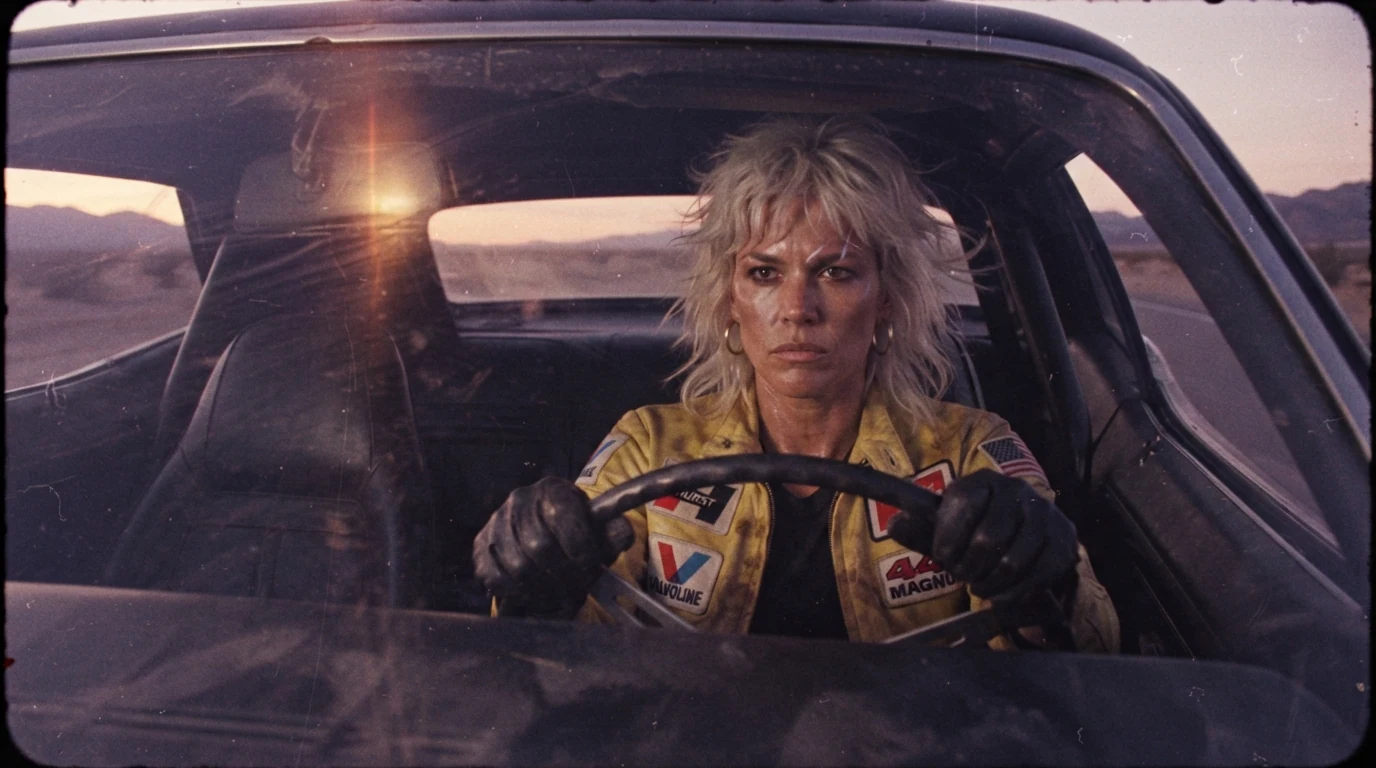
“1970s exploitation film still” and “16mm with a zoom lens” set era and texture; “faded colors with a magenta cast, lifted blacks” reads as an aged print. Damage is rationed to “a few thin scratches” so the face stays readable.
Open FlashBoardsGrindhouse horror film frame from 1974, cheap motel room at night lit only by a red neon sign through half-open venetian blinds. A fictional drifter, a gaunt man in his fifties with a gray handlebar mustache, a bolo tie and a bandaged right hand, sits on a sagging bed staring at the door. Hard red stripes across his face, muddy brown shadows. 16mm blown up to 35mm, coarse grain, crushed color, a cigarette-burn circle in the upper right corner.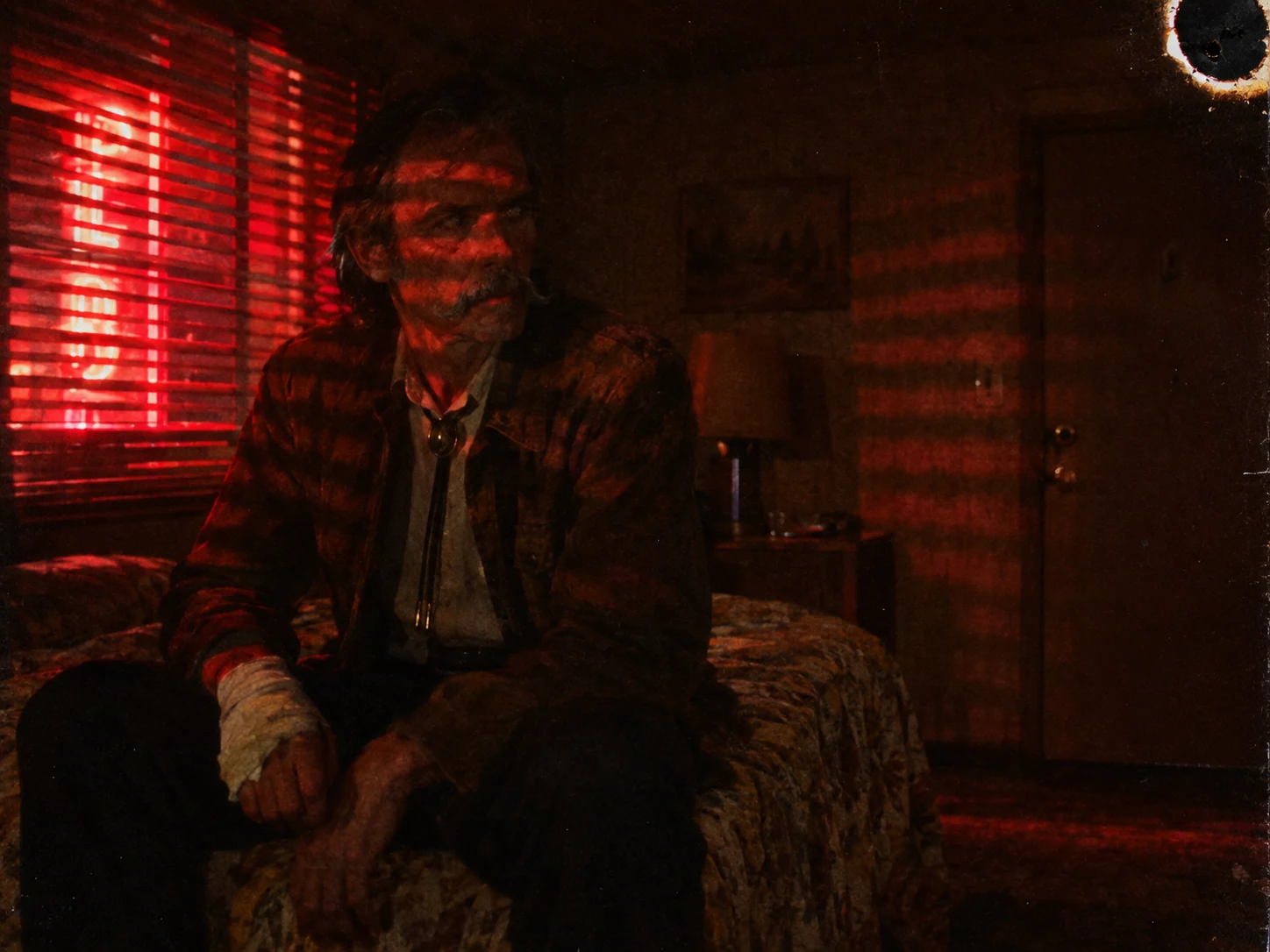
This take moves indoors and to 4:3. Neon through blinds is the single hard, colored source of cheap night interiors. “16mm blown up to 35mm” asks for rougher grain; the “cigarette-burn circle” adds the reel-change mark.
Open FlashBoardsCamera: hood-mounted and vibrating with the engine from the first frame, holding the medium close-up through the windshield, then a fast, jerky zoom in to the driver’s eyes near the end. Action: the car is already speeding; her hair whips in the wind and sunset light flickers across her face. She glances up at the rearview mirror, her eyes narrow, and she grins, leaning forward over the wheel. 16mm film grain throughout.“Vibrating from the first frame” and “already speeding” keep the shot alive from the start. The “fast, jerky zoom” is the 1970s reflex that sells the era in motion.
Open FlashBoards{
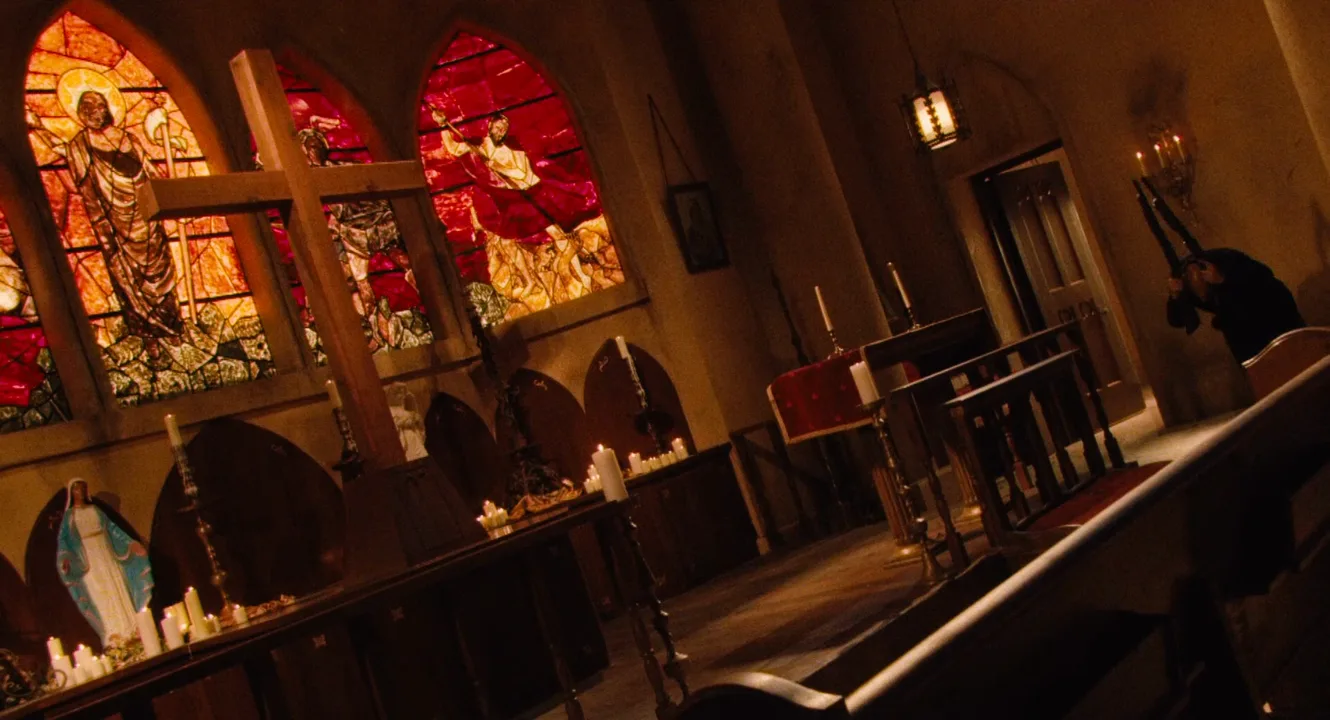
"output": "Full-screen live-action action scene in the style of Machete (2010), the Rodriguez homage grown from a Grindhouse fake trailer, alive from its very first frame: four shots joined by three hard cuts. A shootout inside an adobe Mexican church at night: candlelight and blazing red and gold stained glass, amber haze, gun smoke hanging in the air. Grainy 35mm with a hot, oversaturated orange-red palette, deep brown shadows, crushed blacks.",
"characters": {
"S1": {
"role": "gunman who is shot",
"look": "heavyset man in a dark jacket, gripping a pump shotgun",
"voice": "silence"
},
"S2": {
"role": "rifleman",
"look": "broad man in his fifties, short gray-blond hair, black leather jacket, black assault rifle",
"voice": "silence"
},
"S3": {
"role": "pistolero",
"look": "long dark hair, goatee, open brown leather jacket over a dark shirt, a big handgun",
"voice": "silence"
}
},
"shots": [
{
"shot": 1,
"camera": "locked-off, eye level, medium-wide on a side altar: rows of lit votive candles on the left, a plaster statue above them, a stone wall spattered dark red behind",
"voice": "silence: nobody speaks in this shot, no voice at all",
"action": [
"BEGINNING: alive from the first frame, S1 in the centre of frame is already flying backward off his feet, both arms thrown up over his head, the shotgun raised high in his right hand, smoke puffing around his chest.",
"THEN: he drops fast down and to the right past the altar, the candle flames shivering in the blast.",
"END: he crashes out of frame at the bottom right, smoke drifting across the empty altar."
],
"dialogue": []
},
{
"shot": 2,
"cut_at": "00:00.626",
"camera": "static, low wide Dutch angle, the whole frame tilted so the pews run down diagonally to the right; three tall stained-glass windows fill the upper left, glowing red and gold, a small blue-robed statue of the Virgin at the lower left among candles",
"voice": "silence: nobody speaks in this shot, no voice at all",
"action": [
"BEGINNING: the church is still, the stained glass burning red and gold; a small dark figure with a rifle stands far back in the upper right by a hanging lantern.",
"THEN: he runs to the right along the back rail, rifle up at his shoulder.",
"END: he reaches the right edge of frame, crouching behind the rail; the windows keep blazing."
],
"dialogue": []
},
{
"shot": 3,
"cut_at": "00:01.919",
"camera": "locked-off, eye level, medium-wide across the ends of two wooden pews; a carved wooden door, a red curtain and a hanging lantern behind",
"voice": "silence: nobody speaks in this shot, no voice at all",
"action": [
"BEGINNING: S2 at the left third and S3 at the right third stand side by side facing screen left, both already firing toward screen left, S2 with the rifle held level at his shoulder, S3 with the pistol in his right hand at chest height.",
"THEN: a huge star of muzzle flame bursts from S3's pistol toward the left, lighting his face white-orange; S2's rifle kicks with its own flash.",
"END: both keep their weapons level, faces hard and unblinking, smoke hanging between them."
],
"dialogue": []
},
{
"shot": 4,
"cut_at": "00:02.690",
"camera": "wide down the nave toward the altar, a gunman's dark shoulder and rifle out of focus in the right foreground; the camera whips fast to the left with him, the background smearing",
"voice": "silence: nobody speaks in this shot, no voice at all",
"action": [
"BEGINNING: a row of five red and gold stained-glass windows glows above the altar; the foreground gunman on the right lifts his rifle toward the pews.",
"THEN: a blinding white muzzle flash bursts from his rifle in the middle of frame.",
"THEN: the wooden pews in the middle ground explode into flying splinters and dust.",
"END: the camera swings left with him, the windows sliding across frame, a second flash, splinters still falling."
],
"dialogue": []
}
],
"sound": {
"ambience": "roaring gunfire echoing in a stone church, shotgun blast, wood splintering, a body hitting the floor, shell casings ringing on stone",
"speech": "no words in this video; the only human sounds are breaths and movement",
"never_spoken": "no narration and no voice-over: the descriptions, performance notes and step words of this prompt are never spoken aloud",
"music": "a film score under the scene, always below the voices: driving surf-rock guitar over a pounding tom-tom beat",
"subtitles": "none"
}
}Remakes four shots of the church shootout in Machete (2010), dir. Ethan Maniquis and Robert Rodriguez, DP Jimmy Lindsey, keeping its cut times, the tilted wide and the red-gold stained glass.
The prompt carries the grindhouse excess shot by shot: a body thrown back past candles, a Dutch angle under blazing stained glass, twin muzzle flames, pews bursting into splinters. The three cut_at times keep the frantic rhythm; the palette line holds the hot orange-red.
Common mistakes
- Too clean. “Grindhouse” alone often gives a sharp modern thriller. State the decade, “16mm”, grain and a color cast.
- Poster instead of a frame. Models add titles and taglines. Say “film still” and describe the scene.
- Over-damage. “Heavily damaged film” buries the subject. Name a few scratches; add heavier damage in the edit.
- Frozen scratches in video. Painted-in scratches stay still while the image moves. Keep them light and overlay moving damage in post.
Keep the reference frames, prompts and every generated take side by side — images and video in one canvas.
FAQ
4 questionsWhat is a grindhouse film?
A grindhouse film is a low-budget exploitation movie of the kind shown in run-down urban theaters in the 1960s and 1970s, which ran double and triple bills non-stop for cheap tickets. The films traded on gore, sex, violence and revenge. Today the word also names the scratched, lurid homage style of Grindhouse (2007).
Why is it called grindhouse?
The name is usually traced to the theaters’ “grind” policy: showing films continuously from morning until late at night, so audiences could walk in at any point. The name then moved to the exploitation films those theaters ran and to the worn visual style associated with them.
What are the best-known grindhouse movies?
Classics include Blood Feast (1963), Faster, Pussycat! Kill! Kill! (1965), Death Race 2000 (1975) and I Spit on Your Grave (1978), plus 1970s blaxploitation and dubbed kung fu imports. Modern homages include Planet Terror and Death Proof (2007), and Machete (2010) and Hobo with a Shotgun (2011), both spun off from fake trailers.
Is grindhouse the same as exploitation film?
Nearly. Exploitation film is the broader category: any movie that sells a sensational subject, from 1930s scare pictures to 1970s blaxploitation. Grindhouse ties it to a place and period — the 1960s–70s downtown theaters that ran these films around the clock — and to the worn-print look that came with them.
Related terms
4- B-MovieFilm Industry
A B-movie was originally the cheaper second feature of a studio-era double bill; today the term means any low-budget genre film — horror, sci-fi, crime — often made fast and loose by producers like Roger Corman.
- BlaxploitationGenres
Blaxploitation is a wave of early-1970s American exploitation films made for Black audiences, with Black heroes, urban settings, funk and soul scores — Shaft and Super Fly are its emblems.
- Cult FilmFilm History & Theory
A cult film gathers a passionate devoted audience — often after a commercial flop — that rewatches, quotes and ritualizes it: midnight screenings of The Rocky Horror Picture Show, The Big Lebowski fandom.
- Film GenresGenres
A film genre is a category of films that share recognizable conventions of story, setting, character and style — western, horror, musical, noir — letting audiences know what to expect and filmmakers play with it.
Further reading
Eddie Muller and Daniel Faris, Grindhouse: The Forbidden World of “Adults Only” Cinema (St. Martin’s Griffin, 1996). Bill Landis and Michelle Clifford, Sleazoid Express (Fireside, 2002).