 FlashBoards Learn
Genres · Film language
Romance Tropes
Also called: romance trope, rom-com tropes, love story tropes
Romance tropes are the recurring situations of love stories — the meet-cute, enemies to lovers, the fake relationship, the love triangle, the dash to the airport. The audience already knows the couple will end up together; a trope promises a specific kind of obstacle, so the pleasure comes from how the film gets them there.
- What it does
- Gives the audience a familiar obstacle and a familiar payoff, so they can relax into the chemistry.
- Use it when
- You want the viewer to recognize the kind of love story in the first ten minutes.
- Watch out
- A trope played without a specific twist or specific people reads as a cliché.
- Try this prompt
Two strangers sharing one umbrella at night, backlit rain, medium two-shot, 50mm, a hand's width apart
What are romance tropes?
A romance trope is a situation, not a shot: a reusable engine that brings two people together and keeps them apart. Romance is the most openly formula-driven of the film genres — the ending is a given — so its tropes carry most of the weight.
Most romances run one spine: the couple meets, often in a meet-cute; an obstacle keeps them apart; they get close; the obstacle wins for a while; a grand gesture resolves it. The trope decides what the obstacle is — pride, a lie, a third person, a family feud.
The most common romance tropes, with film examples
- Enemies to lovers. Two people who clash on sight discover respect under the friction — Pride & Prejudice (2005).
- Fake relationship. A pretend couple: a green card in The Proposal (2009), popularity in Can't Buy Me Love (1987), a contract in To All the Boys I've Loved Before (2018).
- Friends to lovers. When Harry Met Sally… (1989) builds a whole film on the question.
- Love triangle. Casablanca (1942) resolves it with sacrifice; the Twilight films stretch it across a franchise.
- Forbidden love. Family, class or nature forbids the couple: Romeo + Juliet (1996), the human and the vampire in Twilight (2008).
- Cinderella. Pretty Woman (1990): the makeover, then Edward climbing the fire escape.
- Second chance. Old lovers meet again years later, as in The Notebook (2004).
- The grand gesture. A public confession or a race — the airport dash in Love Actually (2003).
- The kiss in the rain. Weather as permission: Breakfast at Tiffany's (1961).
Each trope also brings its character archetypes: the wisecracking best friend, the wrong fiancé, the disapproving parent.
Why do filmmakers keep using romance tropes?
Because the audience comes for the how, not the whether. A trope is a promise made in the first act, and viewers enjoy seeing it kept by fresh people in a fresh place.
Good films bend one. (500) Days of Summer (2009) warns you up front it is not a love story; My Best Friend's Wedding (1997) lets the heroine lose. That is why a label like chick flick undersells the genre.
How to shoot romance tropes
Every trope has a visual shape; build coverage around the distance between the two people.
- Enemies to lovers. Start in separate singles on opposite sides of the line, tight on an 85mm. As they soften, move to over-the-shoulders, then to a shared two-shot.
- Fake relationship. Public act wide and bright; private moments closer, on a longer lens.
- Love triangle. Block in triangles; a rack focus between rivals says who is being chosen.
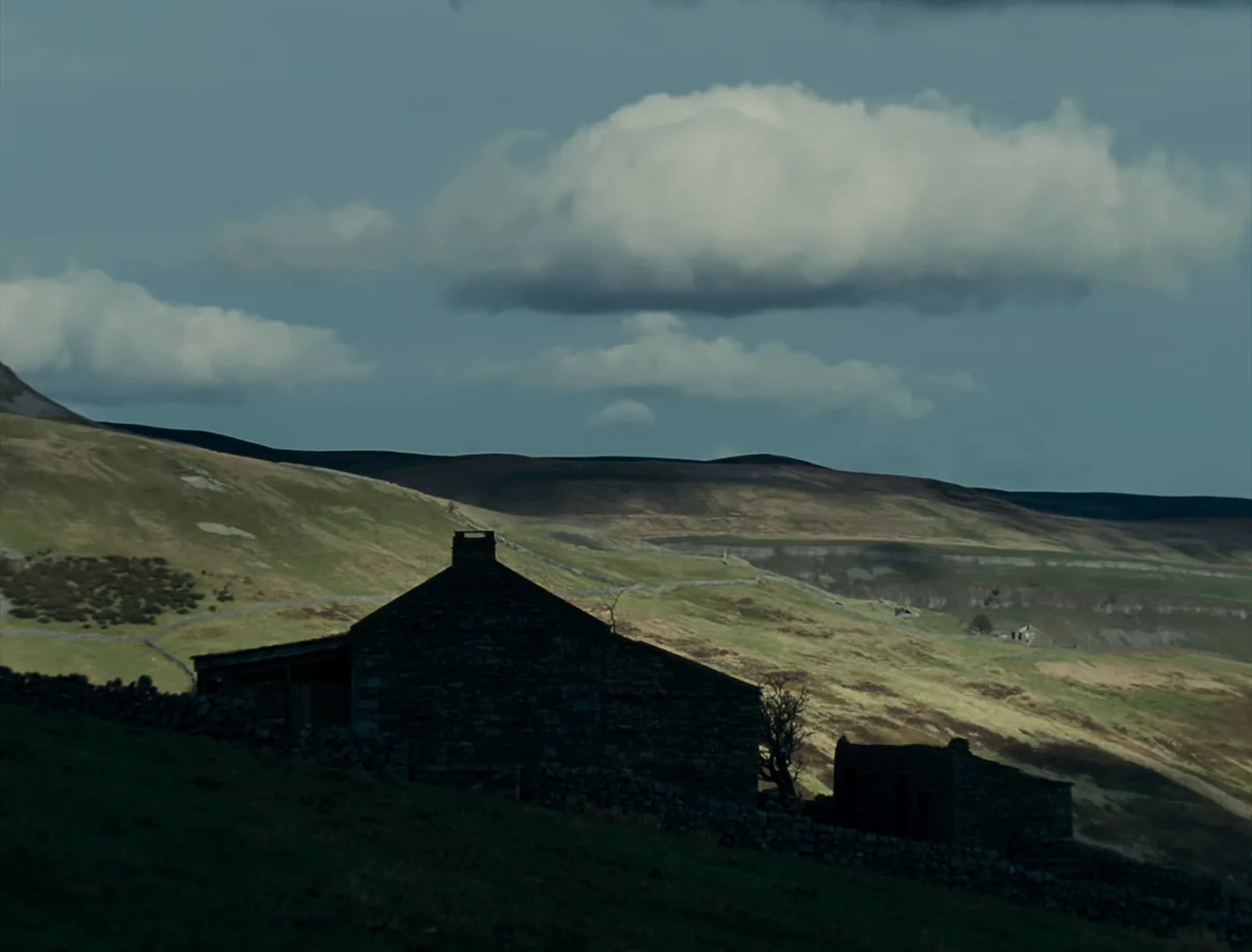
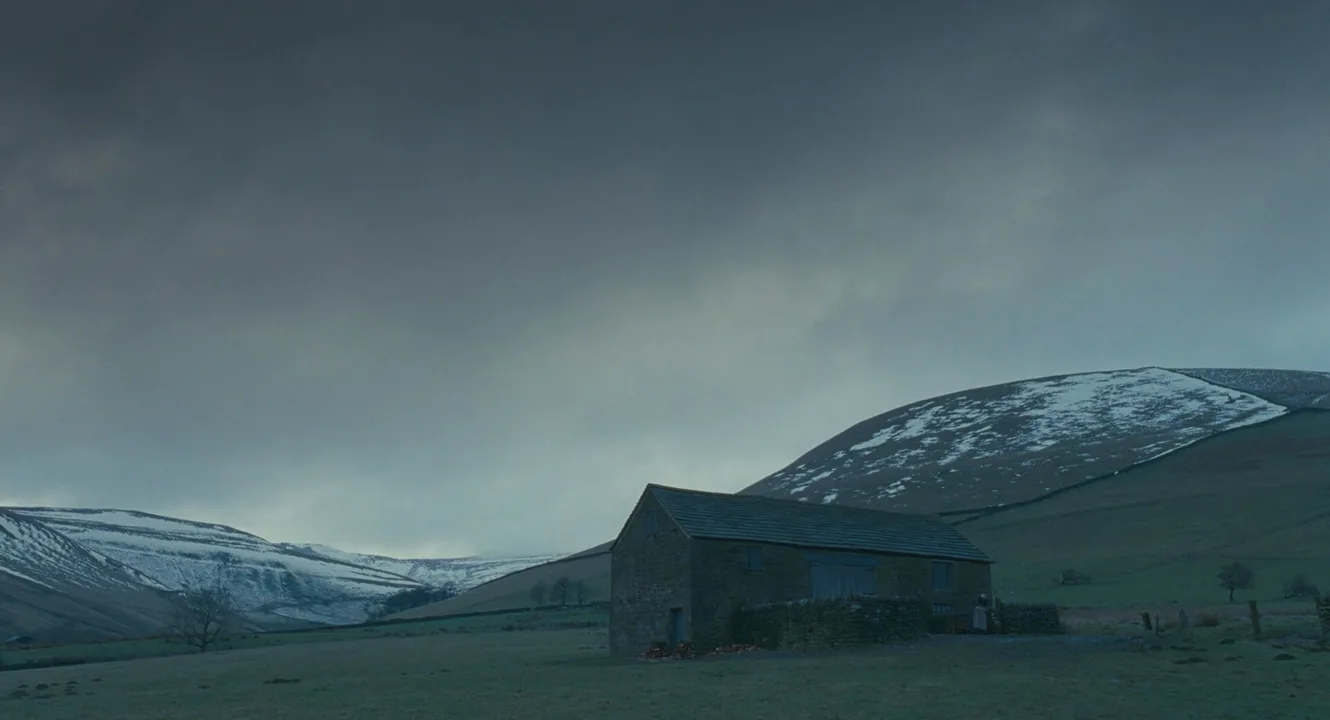
- Forbidden love. Extreme wides of moors and remote houses that dwarf the couple.
- Rain kiss. Rain reads only when backlit — a hard light 3–5 m behind the actors — and a 180° shutter makes the drops streak.
- Grand gesture. Track the run, crosscut with the person waiting.
Many romances save golden hour for the reconciliation.
Romance tropes vs. genre conventions
Genre conventions are the whole toolkit a genre's audience expects: settings, character types, images, music, the ending. Romance tropes are the narrower plot situations inside it. The wedding venue, the swelling strings and the happy ending are conventions; fake dating and enemies to lovers are tropes. A convention sets the world, a trope sets the obstacle.
Romance Tropes examples in film
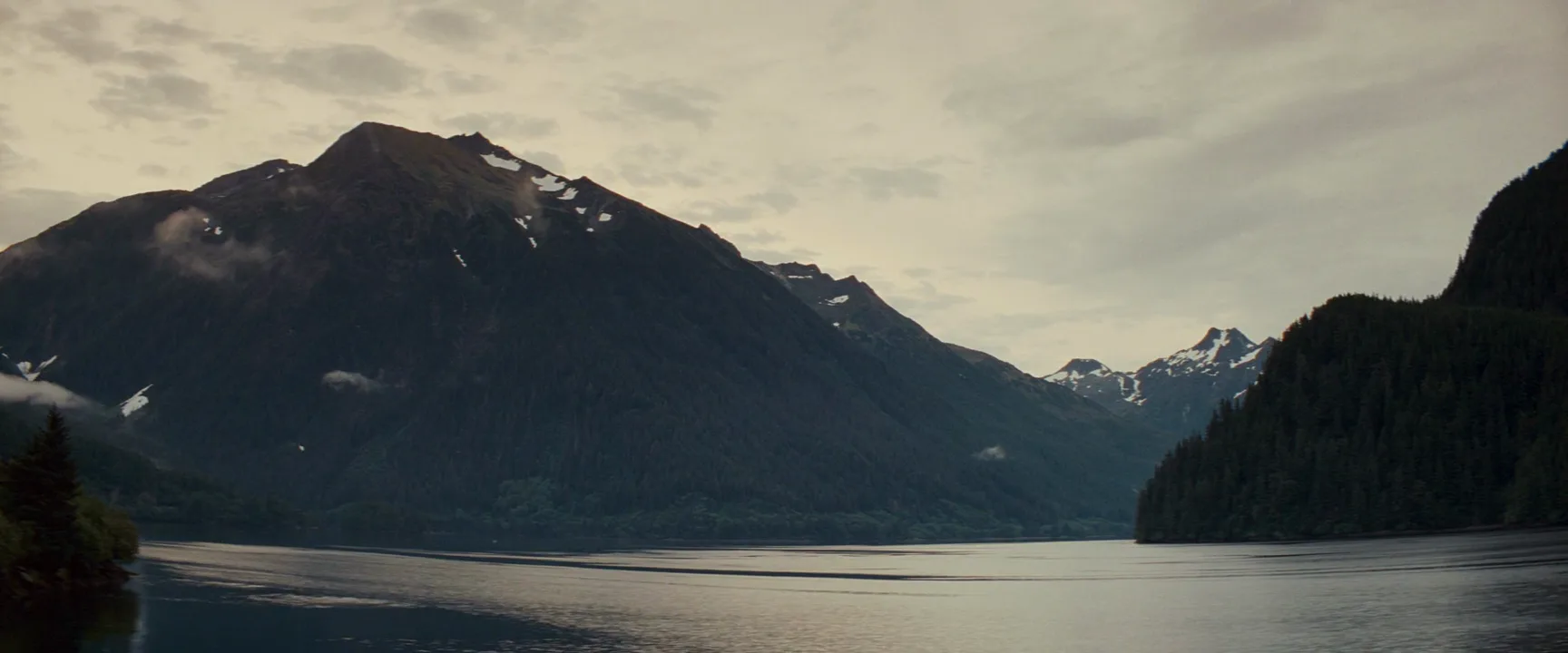
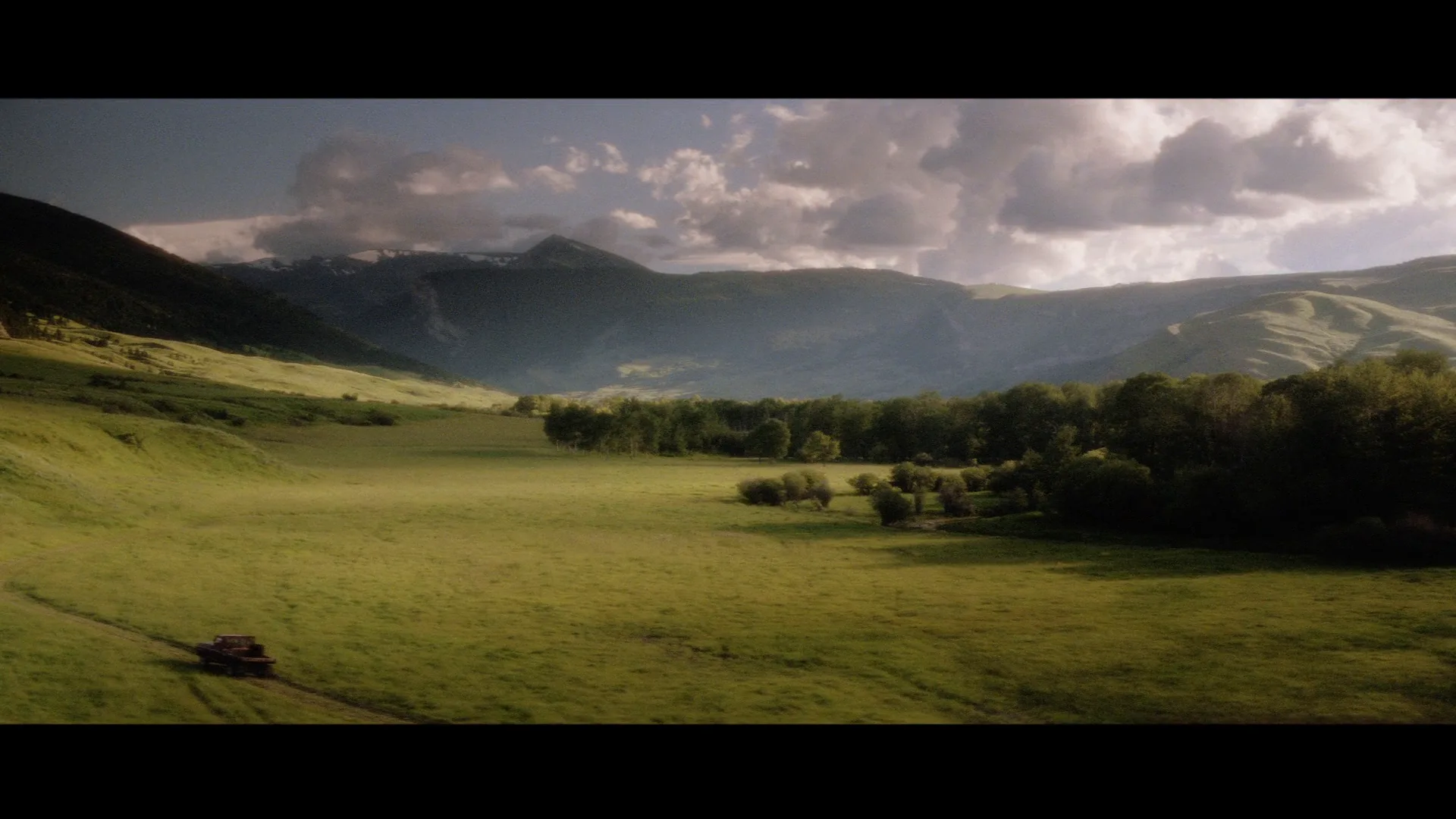
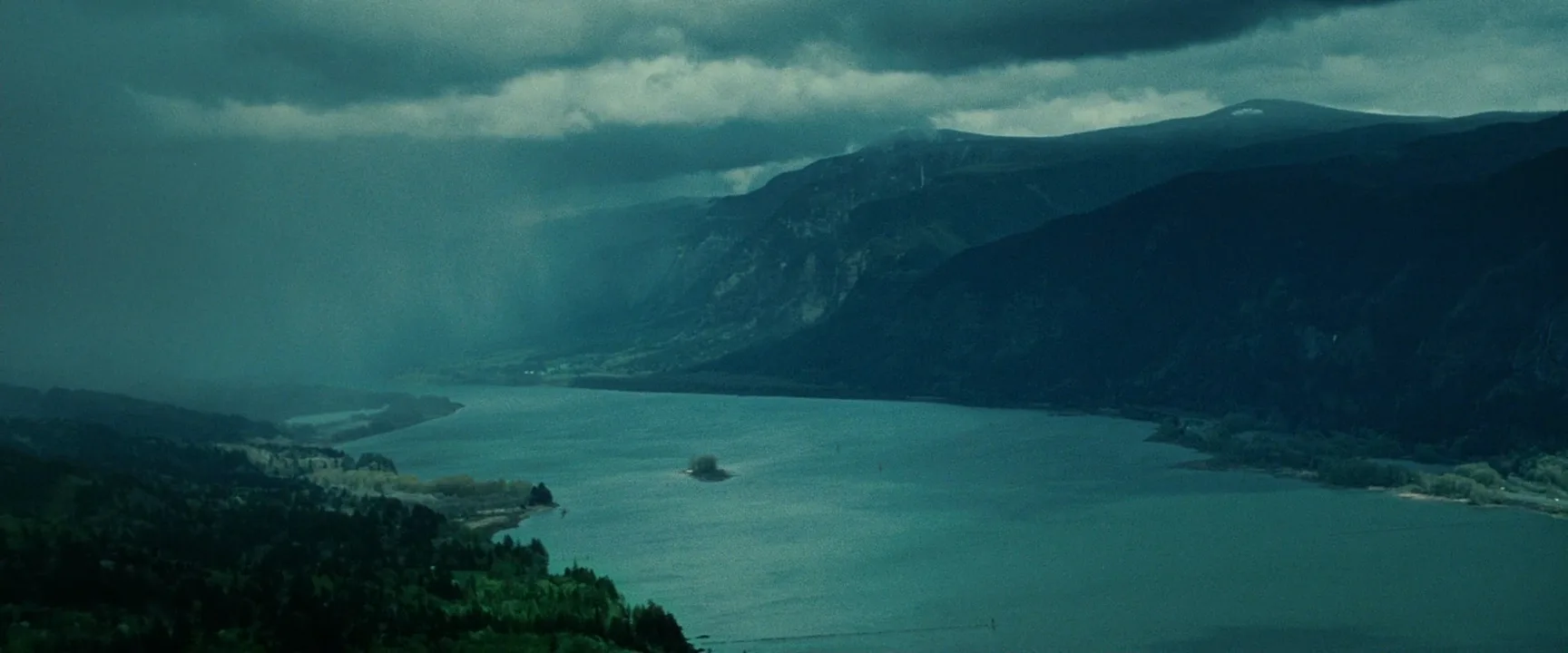
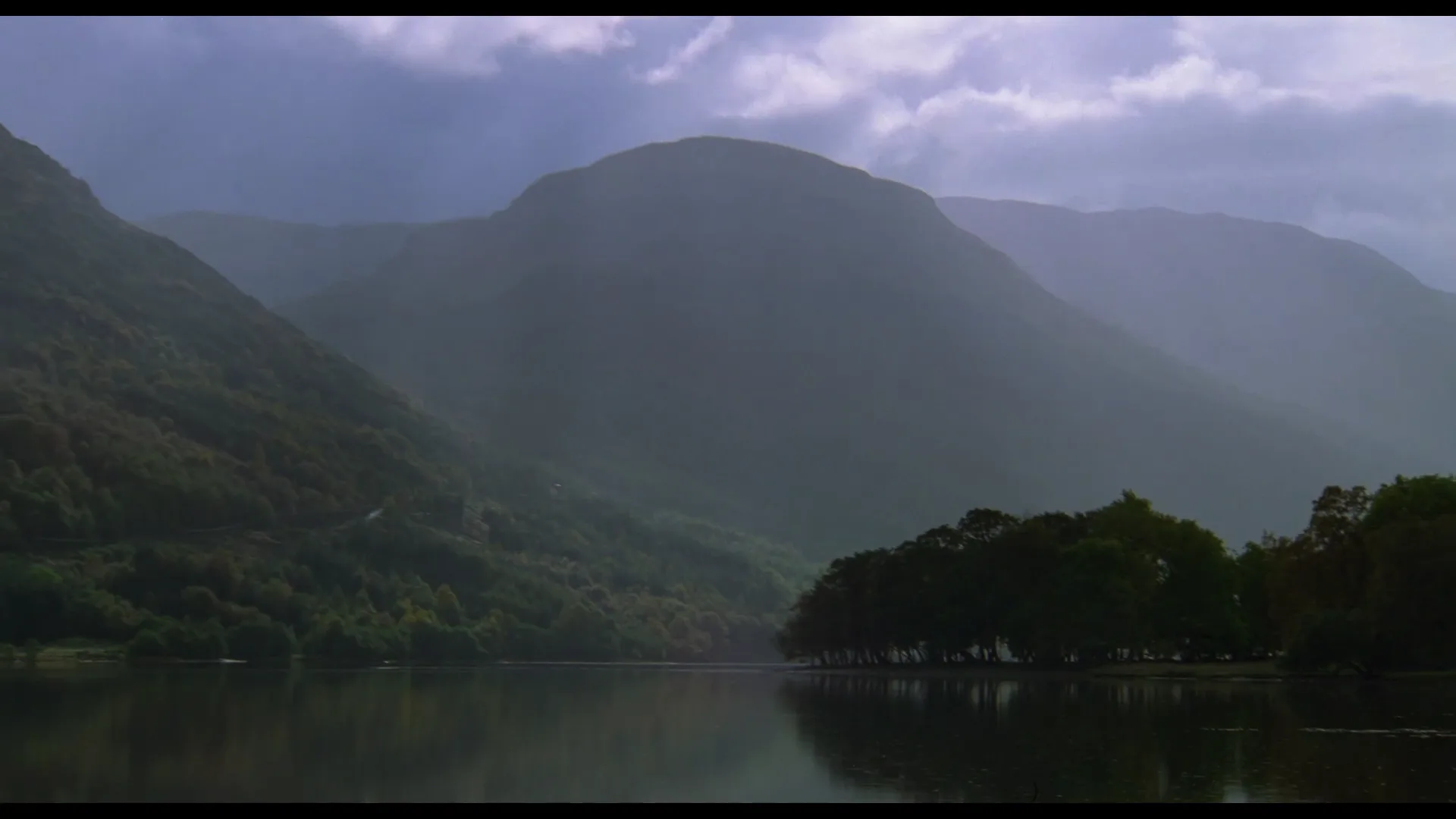
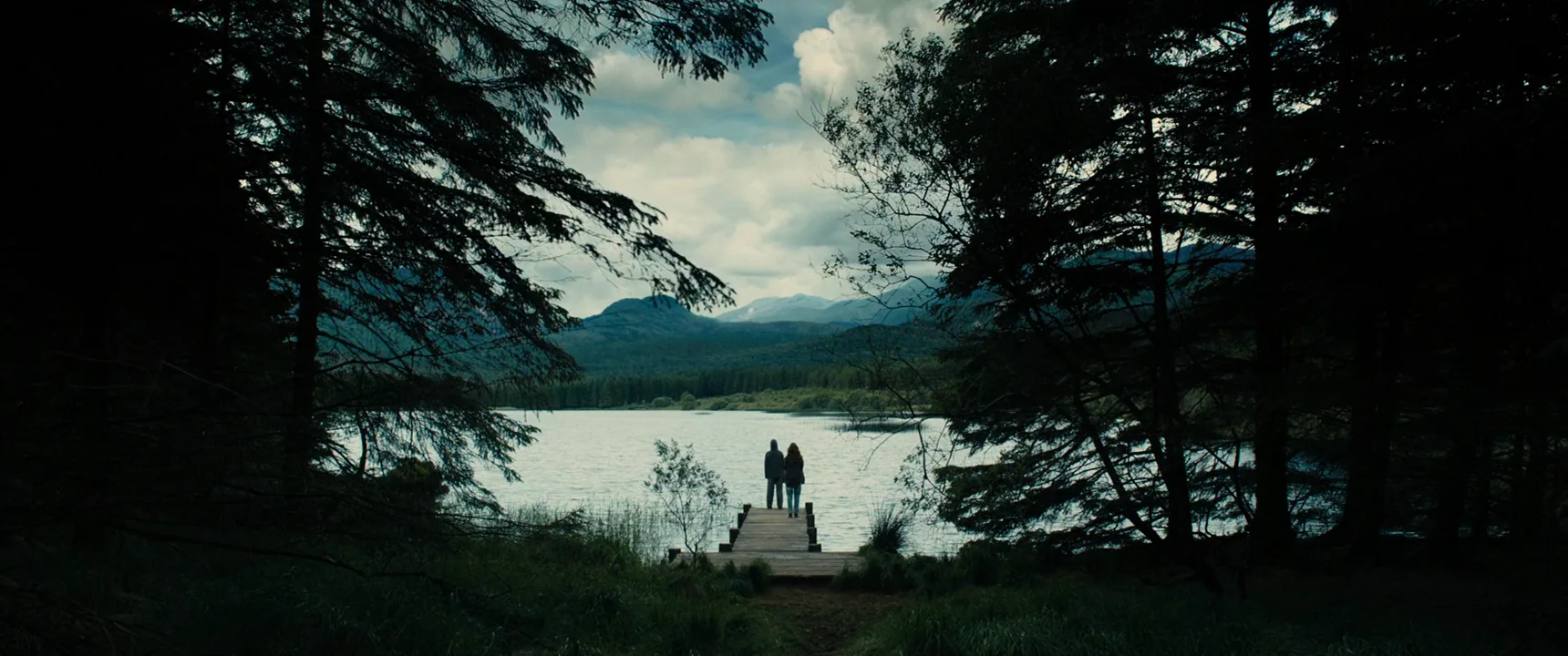
7 framesTropes are story situations, so no single frame can show them. These frames show one of romance's most visible conventions instead: the landscape that isolates or tests the lovers.
How to create a romance tropes with AI
4 promptsImage and video models know romance imagery too well, defaulting to perfume-ad kisses. Direct the trope by prompting the distance between two specific people and the obstacle between them. Keep references, takes and notes on one FlashBoards board and compare takes side by side. The fourth prompt re-shoots a real film shot from a text description alone, and the original plays next to the result so you can compare.
Forced-proximity romance at night: two strangers share one black umbrella on a wet city crosswalk. Medium two-shot, eye level, 50mm lens. She is early thirties, close-cropped silver-dyed curls, mustard raincoat, a small gap between her front teeth. He is late thirties, copper beard, freckled nose, navy peacoat, holding the umbrella over her side. They stand a hand's width apart, angled toward each other, half-smiling. Hard streetlamp backlight makes the rain glow in white streaks. Shallow depth of field.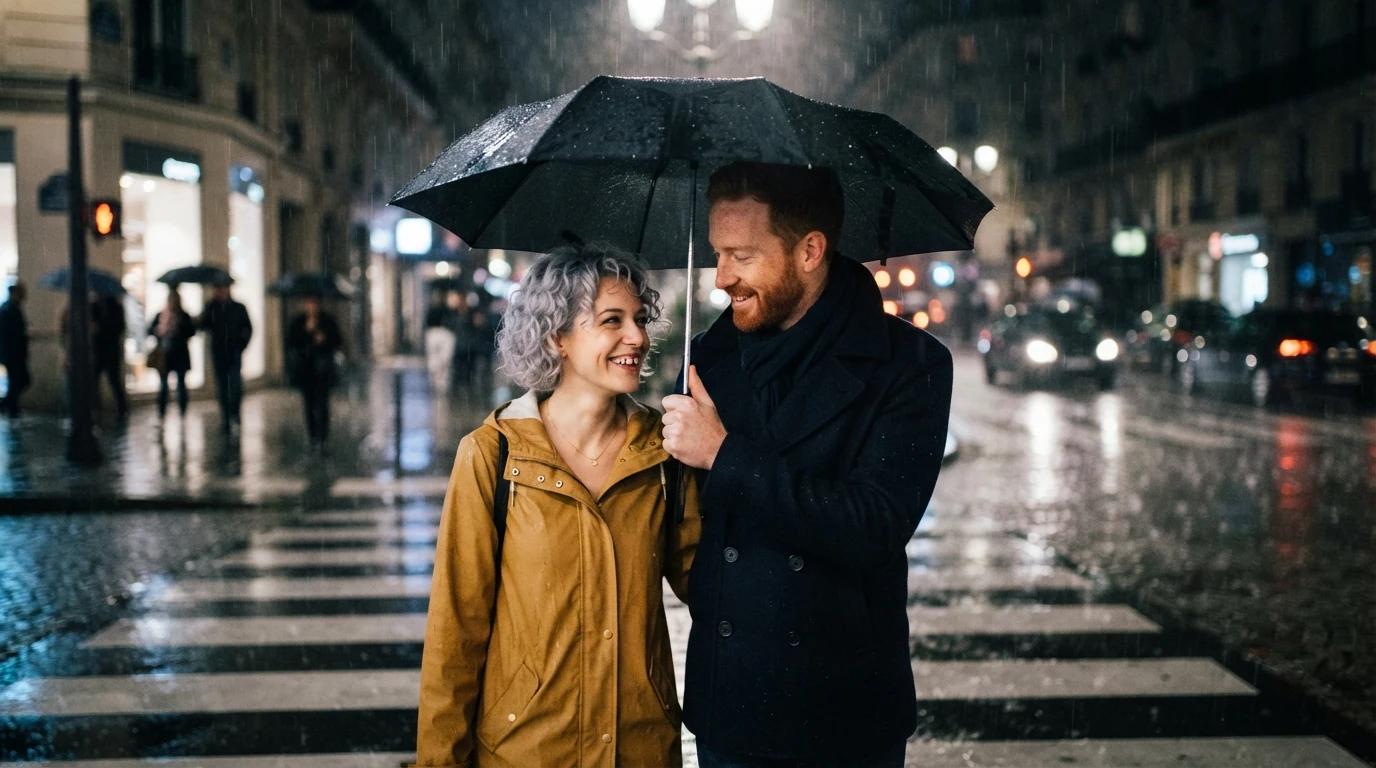
"Share one umbrella" sets the trope; "a hand's width apart" holds the tension instead of jumping to a kiss. "Hard streetlamp backlight" makes the rain visible, and the specific features keep the couple fictional and consistent.
Open FlashBoardsEnemies-to-lovers standoff, wide frame split in two: two rival food trucks parked nose to nose in a narrow brick alley at golden hour. In the left window, a woman in her forties with a grey-streaked black braid leans out, arms crossed. In the right window, a man in his forties with a shaved head and thick black eyebrows mirrors her pose. The dark gap between the trucks divides the frame down the middle. Low warm sun, long shadows, 35mm lens at chest height, symmetrical composition.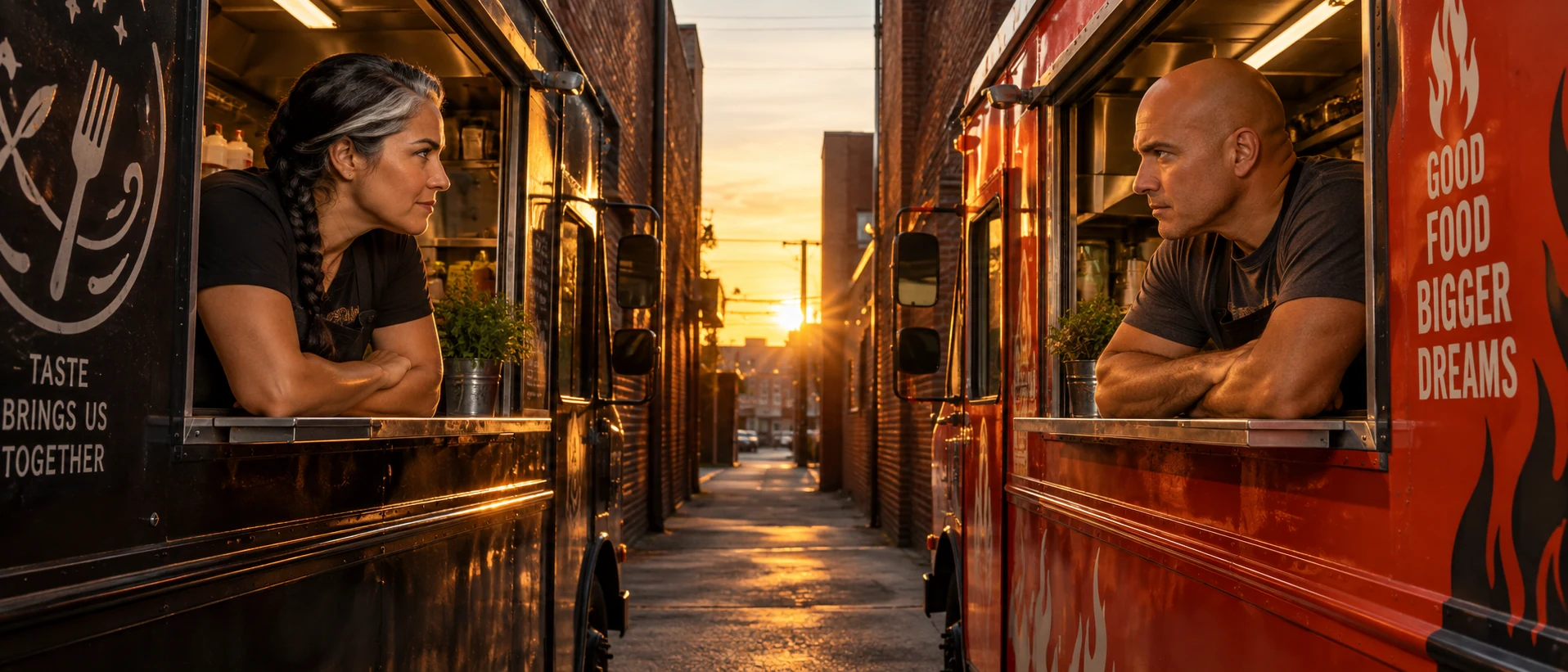
The second take trades intimacy for opposition. "Split in two" and "the dark gap divides the frame" keep the rivals in separate spaces, while "mirrors her pose" hints they are more alike than they think.
Open FlashBoardsCamera: a slow, steady dolly backward, moving ahead of the couple at walking pace and ending in a closer two-shot. Action: Rain is falling and the two are already walking toward the camera under the umbrella. She laughs; he tilts the umbrella further over her and his own shoulder gets wet. They stop at the curb, turn to face each other a hand's width apart, and hold the look while rain streaks through the backlight.Rain and walking are stated from the first frame, so the shot is alive at once. The action names only what recipe 1 contains and ends on the held look, keeping the trope's tension.
Open FlashBoards{
"output": "Full-screen live-action shot from Morgan (2016), from its very first frame: one continuous locked-off shot, no cuts, 2.39:1 widescreen. A lake in a remote pine forest at dawn under soft overcast light: the dark forest in the foreground falls to near-black silhouette, the lake and the cloudy sky are the brightest parts of the frame, cold desaturated teal-green and slate-blue palette, fine 35mm film grain.",
"characters": {
"S1": {
"name": "Morgan, played by Anya Taylor-Joy",
"look": "slight young woman seen only from behind as a small dark silhouette: charcoal-grey hoodie with the hood up over her head, dark grey trousers",
"voice": "silence: she does not speak"
},
"S2": {
"name": "Dr. Amy Menser, played by Rose Leslie",
"look": "young woman seen only from behind as a small silhouette: long wavy auburn-brown hair falling well past her shoulders over a dark jacket, light-blue jeans, dark ankle boots",
"voice": "silence: she does not speak"
}
},
"shots": [
{
"shot": 1,
"camera": "static locked-off tripod at standing eye level, set back inside the dark treeline, about forty metres back from the water, extreme wide shot on a longish lens; the camera does not move at all for the whole shot. Tall black pine trunks and drooping branches fill the left third and the right third of the frame and hang across the top corners, leaving an arched gap in the centre that looks out over the lake",
"action": [
"BEGINNING: alive from the first frame. Through the gap in the trees: a big white cumulus cloud in the upper centre of a grey-blue sky, misty blue mountains on the horizon with one pale snow-dusted peak, a dark forested far shore, and a wide silver lake across the middle of the frame, its surface rippling and glinting in a light wind. A long, low plank jetty runs from the dark grassy bank at the bottom centre straight out into the water, short square dark posts along both edges, its far end ending over open water, a worn dirt path leading to it, a small leafy sapling just left of the jetty and a clump of tall reeds just right of it. S1 and S2 are already standing, planted and motionless, side by side at the very far end of the jetty where the planks stop over the water, dead centre of the frame: two tiny figures, each only about one eighth of the frame height, dwarfed by the lake, the trees and the sky, backs to the camera, shoulders touching, both facing straight out over the lake toward the mountains. S1 is on the left, half a step further out on the planks; S2 is on the right, half a step nearer the camera. S1's left arm hangs straight at her side; S2's right arm hangs at her side; their inner arms stay hidden between their touching shoulders.",
"THEN: the two stay planted on the same spot at the end of the jetty for the whole shot, heads level, looking out at the far shore; their feet stay fixed on the planks and neither turns her head. Only the world moves: small waves glitter and roll across the lake behind them, the tips of the pine branches stir gently in the breeze, and the clouds drift very slowly.",
"END: the same frame as the start: the two dark figures still standing shoulder to shoulder at the end of the jetty, tiny against the bright water, framed by the black trees, the lake glinting around them."
],
"voice": "silence: nobody speaks in this shot, no voice at all",
"dialogue": []
}
],
"sound": {
"ambience": "a soft wind through the pine branches, small waves lapping against the jetty posts, one distant bird call across the water",
"speech": "no words in this video; the only human sounds are breaths and movement",
"never_spoken": "no narration and no voice-over: the descriptions, performance notes and step words of this prompt are never spoken aloud",
"music": "a film score under the scene, always below the voices: slow, sparse piano notes over soft sustained low strings, tender and uneasy",
"subtitles": "none"
}
}Remakes the lakeside shot from Morgan (2016), dir. Luke Scott: the prompt carries over the locked-off extreme wide through black pines and Morgan (Anya Taylor-Joy) and Amy (Rose Leslie) standing still, backs to us, at the end of a jetty, with no words spoken.
The landscape only isolates the pair if they stay small and still, so the prompt pins both: two tiny figures, each only about one eighth of the frame height at the very far end of the jetty, and only the world moves. A first take put them halfway along the jetty, walking, and the couple stopped reading as alone. Black pines on both sides frame the gap, nobody speaks, and a quiet score line carries the mood.
Open FlashBoardsCommon mistakes
- The kiss comes too early. Describe the gap: "a hand's width apart", "hold the look".
- Invisible rain. Front-lit rain disappears; write "hard backlight, rain glowing in white streaks".
- Generic faces. Give each person two or three concrete features and repeat them across takes.
- Enemies in one cozy frame. Say what separates them — two windows, a counter, a doorway.
- Faces merge in video. End the action on a held look, not two faces touching.
Keep the reference frames, prompts and every generated take side by side — images and video in one canvas.
FAQ
4 questionsWhat are the most popular romance tropes?
The staples are the meet-cute, enemies to lovers, friends to lovers, the fake relationship, the love triangle, forbidden love, second chances, the Cinderella story, the grand gesture and the kiss in the rain. Most romances combine two or three: The Proposal stacks a fake relationship on enemies to lovers.
What is the enemies to lovers trope?
Enemies to lovers is a romance in which two characters start in open conflict — rivals or people who simply can't stand each other — and the friction turns into attraction. The pleasure is watching respect grow under the insults. Pride & Prejudice is the classic model.
What are common rom-com tropes?
Romantic comedies favor tropes that generate comic situations: the meet-cute collision, the fake relationship, the bet, the makeover, the wisecracking best friend, the wrong fiancé, the misunderstanding that splits the couple, and the race through the city to confess in public.
Is a romance trope the same as a cliché?
No. A trope is a neutral, reusable pattern; a cliché is a trope used without thought, with generic characters and no twist. The same fake-dating setup feels fresh when the people, place and dialogue are specific and the film bends one expectation.
Related terms
4- Genre ConventionsGenres
Genre conventions are the recurring settings, characters, plot moves, images and sounds an audience expects from a genre; filmmakers follow, bend or break them to meet or subvert those expectations.
- Meet CuteStorytelling
A meet cute is the charming, often awkward or accidental first encounter of future lovers in a romantic comedy — a collision that sets up their chemistry and conflict.
- Chick FlickGenres
Chick flick is an informal, often dismissive label for films marketed mainly to women — usually romantic comedies and dramas about love, friendship and female self-discovery.
- Character ArchetypeStorytelling
A character archetype is a recurring role that audiences recognize across cultures — the mentor, the trickster, the shadow, the herald — which writers adapt rather than copy.
Further reading
Billy Mernit, Writing the Romantic Comedy (2000). Tamar Jeffers McDonald, Romantic Comedy: Boy Meets Girl Meets Genre (2007).