 FlashBoards Learn
Genres · Film language
Genre Conventions
Also called: convention, genre codes, genre tropes
Genre conventions are the recurring settings, characters, plot moves, images and sounds an audience expects from a genre: the lakeside camp in a slasher, the private eye in noir, the close-up of the beloved in romance. Filmmakers follow them to meet expectations, then bend or break them to surprise.
- What it does
- Tells the audience within seconds what kind of film they are watching, what to fear or hope for, and how to read every frame after it.
- Use it when
- You want viewers to settle into a genre fast, or you plan to surprise them later by breaking a promise the conventions made.
- Watch out
- A convention used without a reason turns into a cliché; know what each one does to the viewer before you keep it.
- Try this prompt
neo-noir film still, private eye in a parked car at night, rain-streaked windshield, neon smeared on wet glass, half his face in shadow, 50mm, low-key
What are genre conventions?
Every one of the film genres is a bundle of expectations built up over hundreds of films. Conventions are the items in that bundle:
- Setting. The frontier town, the rain-slick city at night, the spaceship corridor, the lakeside camp.
- Characters. The gunfighter, the cynical detective, the final girl — genre versions of a character archetype.
- Plot moves. The showdown, the heist gone wrong, the meet-cute.
- Objects and costumes. The Stetson, the fedora, the killer's blade: what film theory calls genre iconography.
- Style and sound. Hard shadows in noir, soft backlight in romance, silence before a jump scare.
None of these is a rule. Together they form a contract: the first shot promises an experience. That lets a filmmaker skip exposition, and also pull the rug.
What are the conventions of horror and other genres?
Horror has the tightest set: an isolated location, a group that splits up, a threat shown first through reactions, darkness and empty space the viewer has to search, silence before the scare, a survivor who fights back. The slasher film adds a masked killer and shots from his hidden point of view.
- Noir: a compromised investigator, a femme fatale, the city at night, hard light cutting faces in half. The film noir cycle fixed these in the 1940s.
- Western: open landscape, the town at the edge of law, the duel.
- Romance: meeting, obstacle, separation, reunion; lingering close-ups.
- Science fiction: technology as setting, corridors, the question of what makes us human.
Why do filmmakers follow, bend or break them?
Following conventions is efficiency: a trench coat in a parked car at night says investigator, waiting, trouble before any dialogue.
Bending moves the pattern somewhere new. Alien (1979) put a haunted-house structure, a crew isolated and picked off one by one, on a spaceship. Crossing rule sets like this produces a hybrid genre.
Breaking uses the contract against the viewer. Psycho (1960) kills the character we took for the lead long before the end. Chinatown (1974) runs a classic private-eye investigation, then denies the detective his victory. Each break lands only because the audience knows the convention.
How to shoot genre conventions
Conventions live in concrete choices, so decide them per department:
- Lens. Horror: 18–28mm with empty space where something could appear. Romance: 75–135mm, shallow focus. Westerns: wide frames, low horizon.
- Light. Noir: one hard side source, 1:8 key-to-fill or harder, neon or streetlight practicals. Romance: soft key, warm backlight.
- Color. Teal and sodium orange for urban crime, warm saturated daylight for the summer-camp slasher.
- Blocking. The detective watches from cover; the victim sits with her back to the tree line.
Then list five conventions of your genre: keep three, bend one, break one, and pin the list beside your frames.
Genre conventions vs. tropes and clichés
The words overlap, but they differ:
- A convention is any element an audience expects from a genre: a setting, a light style, a character type, a structural beat.
- A trope is a narrower, nameable story device, such as enemies to lovers or the airport dash. Many romance tropes are conventions of that genre, but tropes travel between genres too.
- A cliché is a convention or trope worn out by predictable repetition. Same element, tired use.
Genre Conventions examples in film
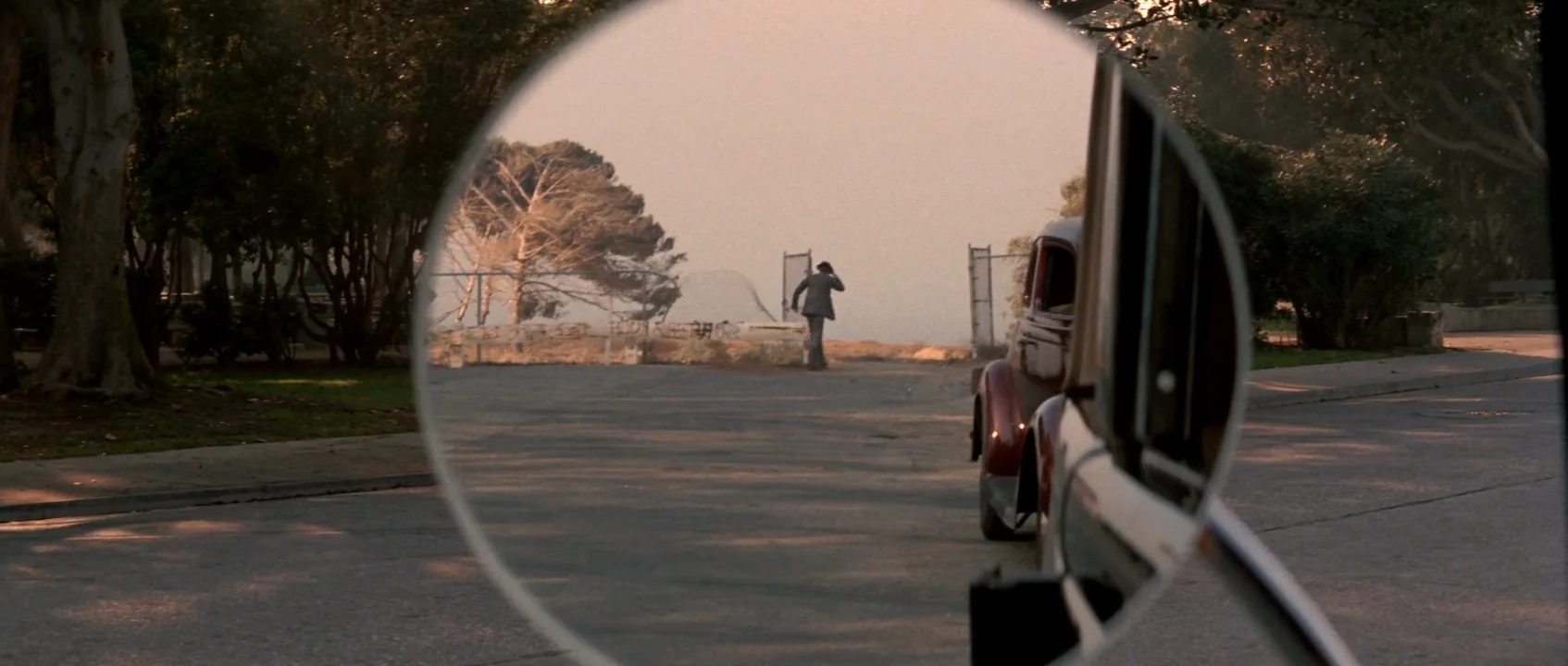
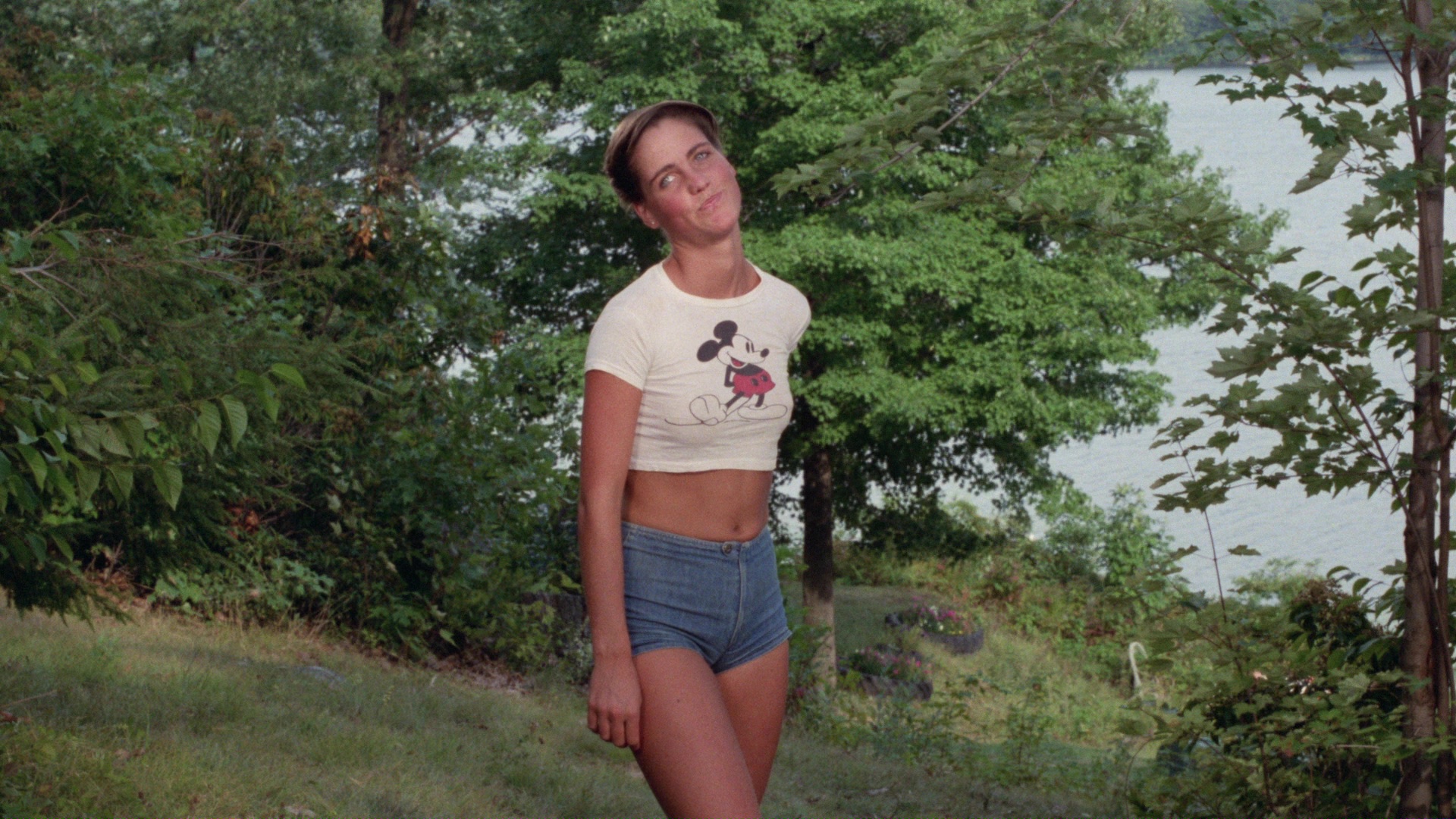
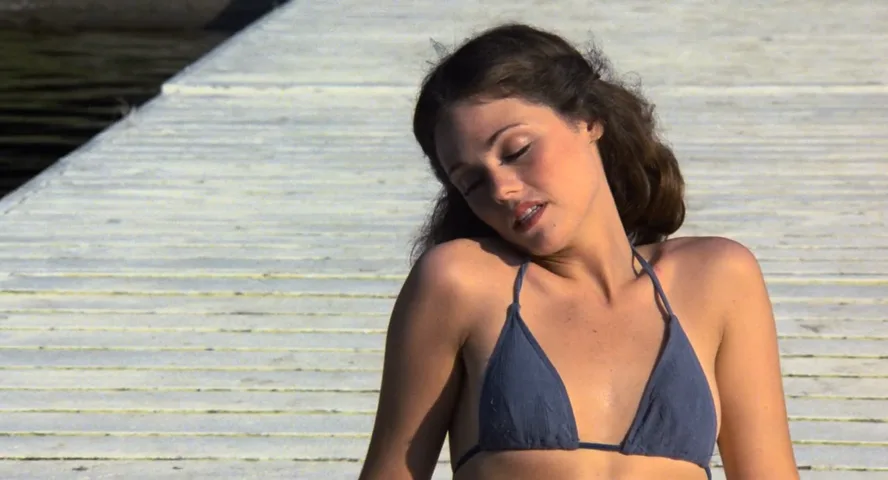
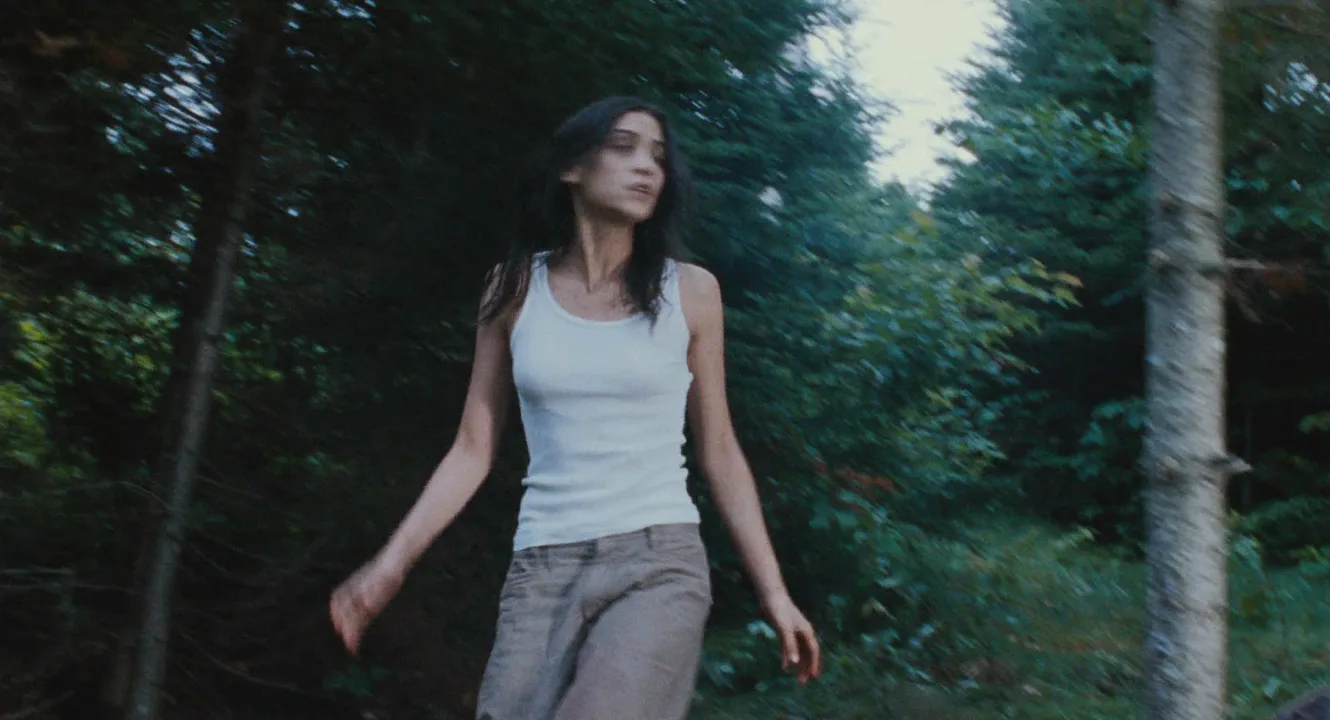
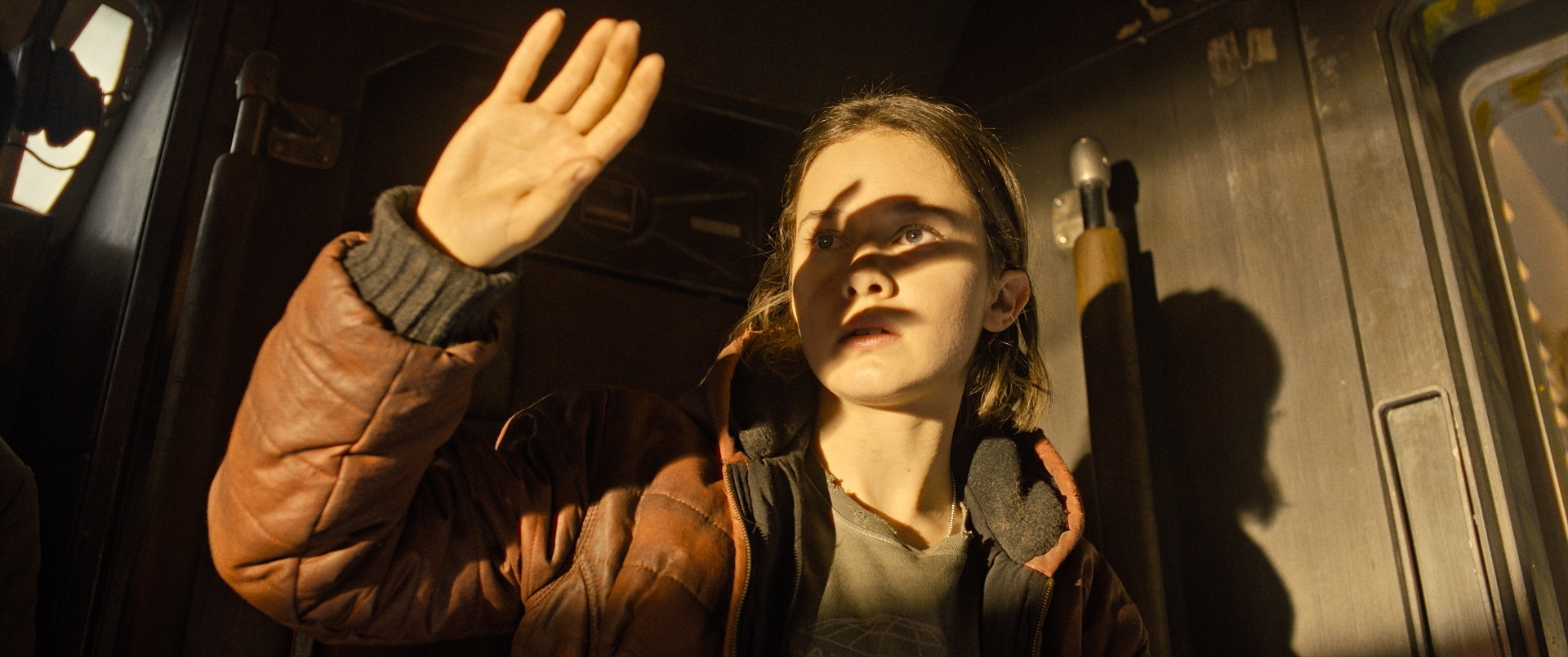
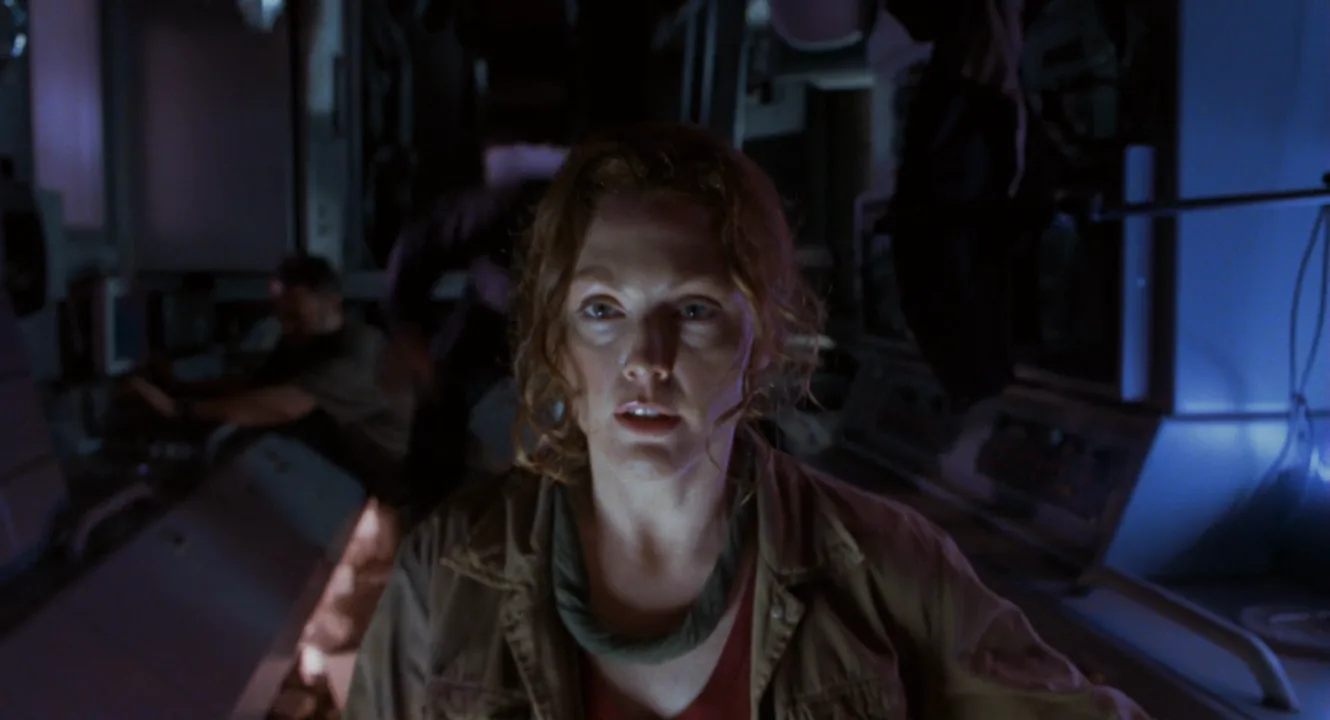
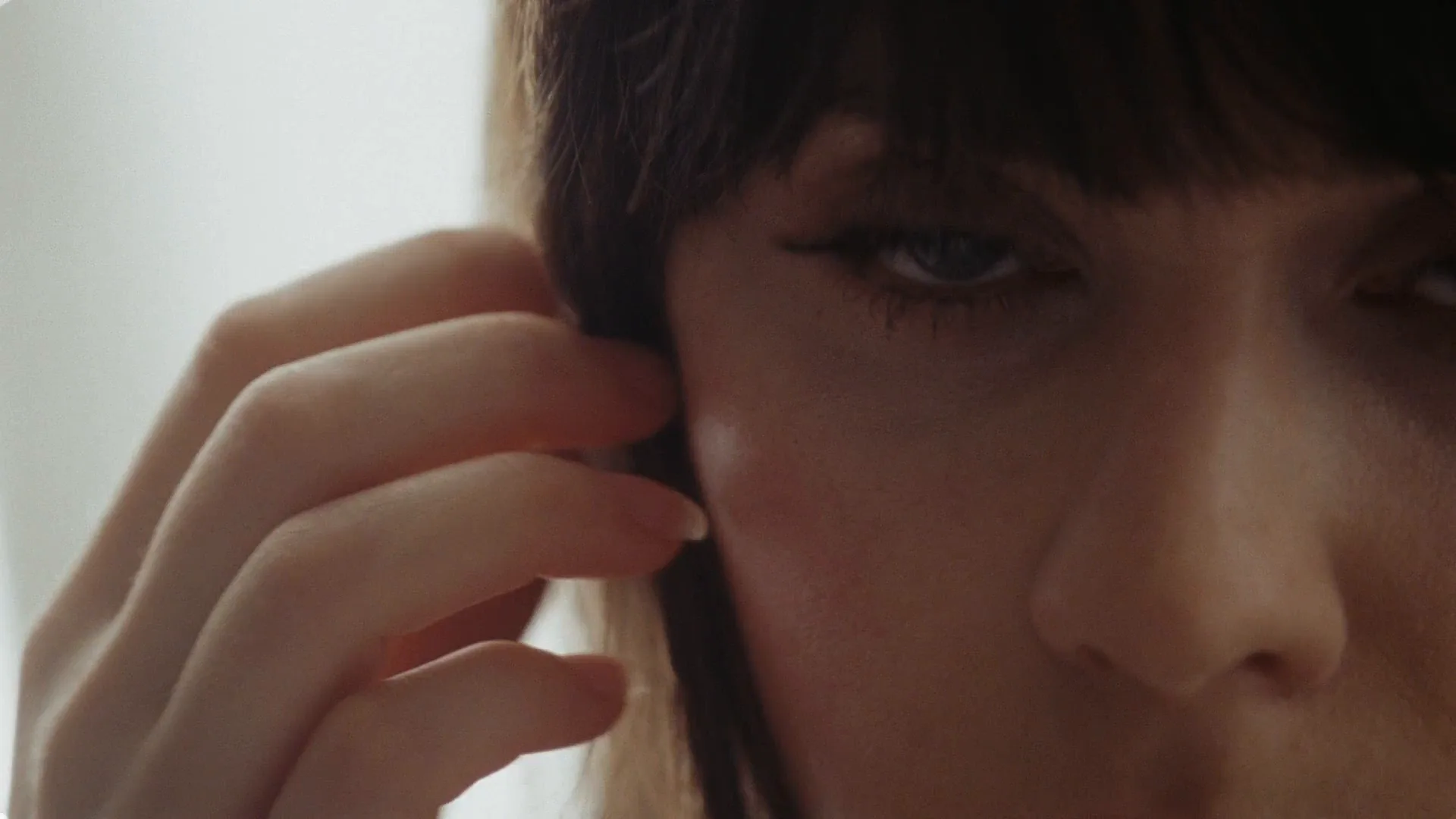
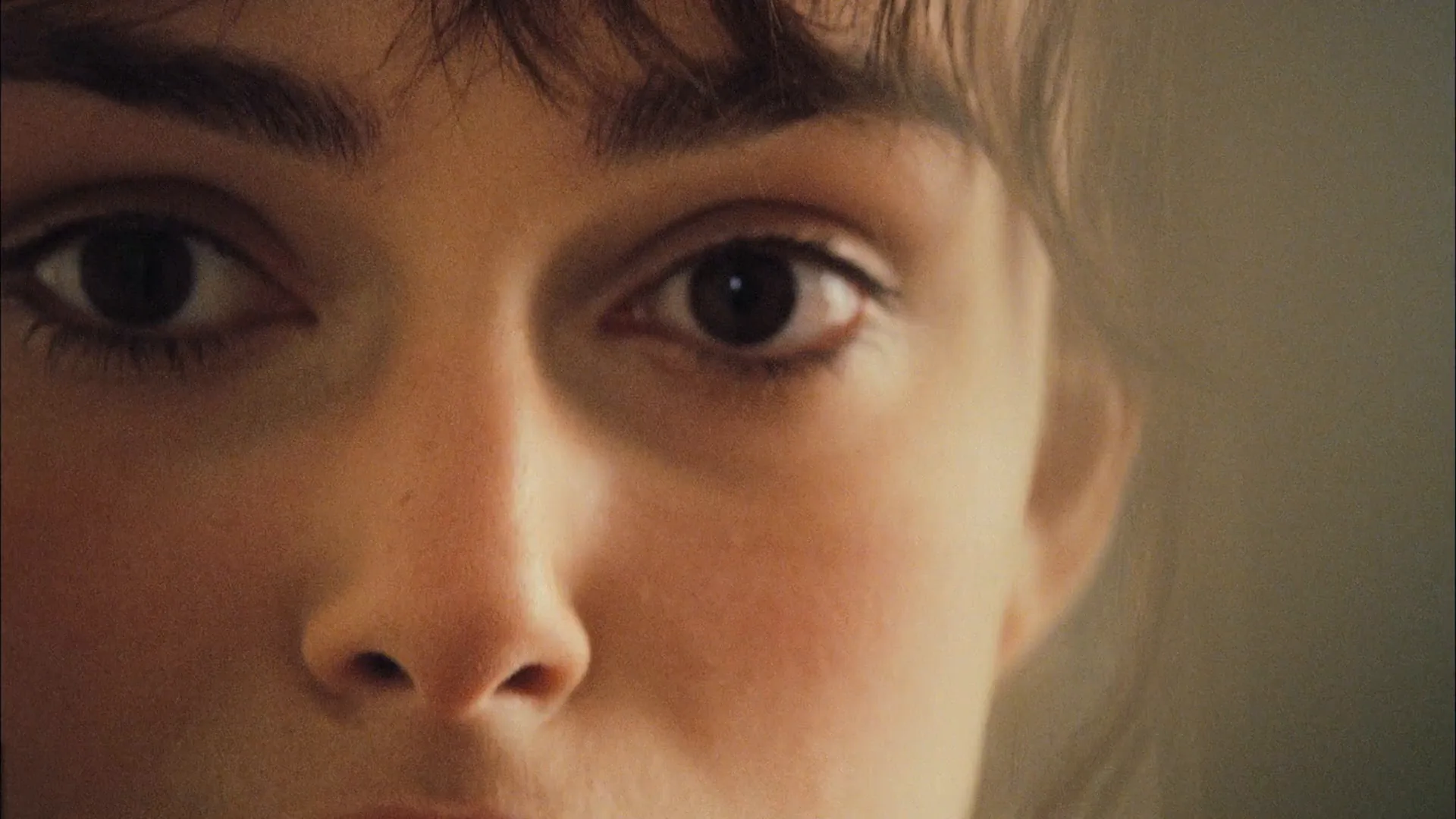
8 framesConventions at work: noir surveillance, the slasher's lakeside setup, horror's woods and corridors, romance's close-up.
How to create a genre conventions with AI
4 promptsModels know genres as bundles of conventions, so name them as concrete nouns: setting, costume, face, light, lens, color. A genre word alone gives a generic average. On a FlashBoards board, keep the reference frames, both genre takes and the animated shot side by side. The fourth prompt re-shoots a real film shot from a text description alone, and the original plays next to the result so you can compare.
Neo-noir film still, medium close-up from the passenger seat, 50mm lens. A fictional private investigator in his fifties with a crooked broken nose, gray stubble and a rumpled tan trench coat sits in a parked 1970s sedan at night, watching the street through a rain-streaked windshield. Red neon smears in the raindrops and lights one side of his face; the other side falls into deep shadow. A round side mirror at frame right reflects a woman in a pale raincoat under a distant streetlamp. Low-key hard light, 35mm film grain.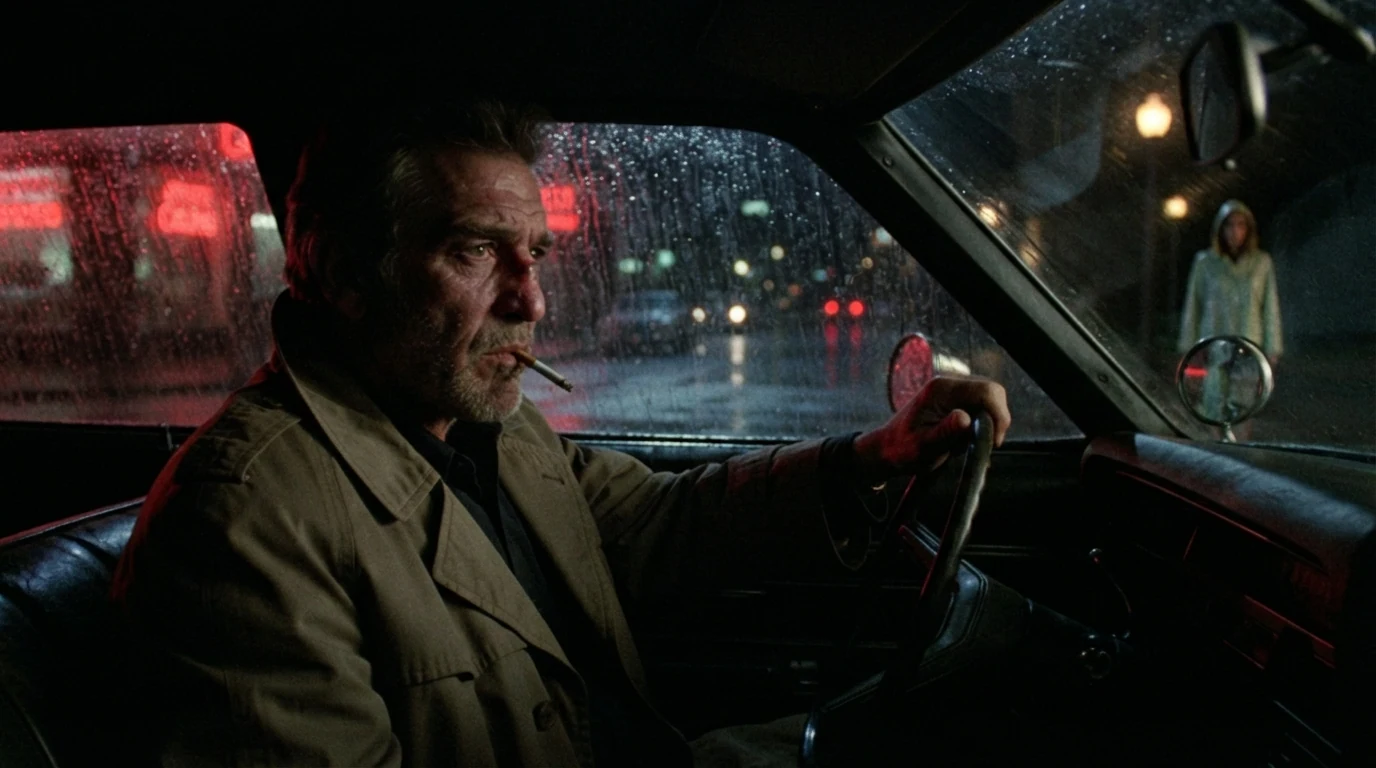
Each clause is a noir convention: trench coat, surveillance from a parked car, rain, neon, a face split by shadow. The broken nose keeps the man clearly fictional.
Open FlashBoardsSlasher film still, 2.39:1 wide shot from inside a pine tree line, 28mm lens at eye level, bright summer afternoon. A fictional camp counselor, about nineteen, with a sunburned nose, a long copper braid and a faded yellow T-shirt lies on a wooden dock reading, in the left third of frame. Calm lake, an overturned red canoe, empty cabins on the far shore. Soft-focus foreground at frame right: dark pine branches and the shoulder of a motionless figure in a dark work jacket, facing her. Warm saturated late-1970s color.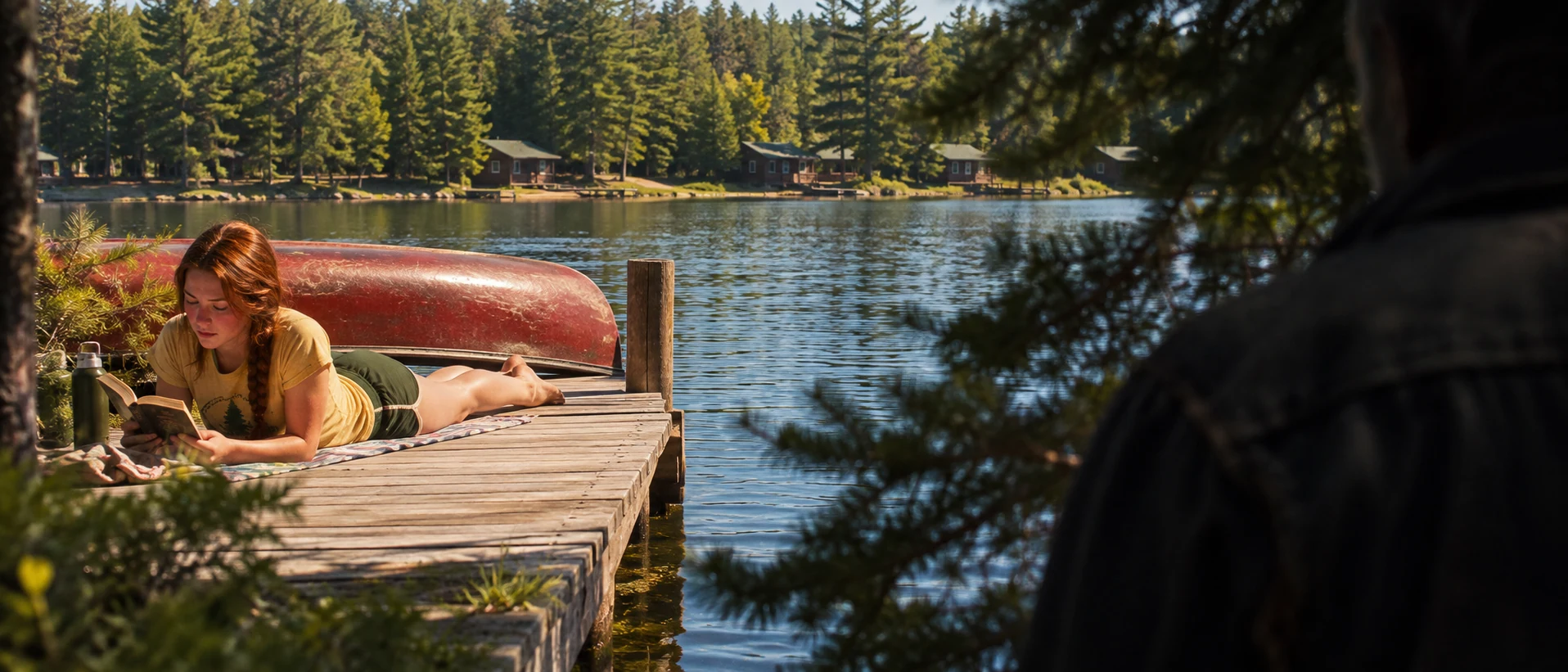
Same method, different genre. The soft-focus shoulder in the foreground turns a summer postcard into a slasher frame; without it you get a pleasant lake.
Open FlashBoardsCamera: a slow, steady push-in from the passenger seat toward the investigator's face, moving for the whole shot. Action: rain is already running down the windshield and the neon flickers in the drops. He shifts his eyes to the side mirror, where the woman in the pale raincoat starts walking away. He leans forward, then reaches for the key in the ignition and turns it. His face stays half in shadow.Running rain makes the shot alive from the first frame; the action is the noir beat itself, told only with things already in the frame.
Open FlashBoards{
"output": "Full-screen live-action shot from Chinatown (1974), from its very first frame: one continuous locked-off shot, no cuts. 1970s 35mm anamorphic look of a 1930s Los Angeles detective story: late-afternoon coastal haze, soft pink-gold light, muted warm palette, fine film grain.",
"characters": {
"S1": {
"name": "Hollis I. Mulwray, played by Darrell Zwerling",
"look": "slight middle-aged man in a gray three-piece suit and a dark fedora, seen only from behind as a small far-off figure inside the mirror",
"voice": "silence: he never speaks"
}
},
"shots": [
{
"shot": 1,
"camera": "static, no camera movement at all: eye level from the driver's seat of a parked 1930s car, long lens. A large round chrome side mirror fills the middle of the frame, its reflection sharp; the car's black door frame and window post curve down the right edge of the frame; around the mirror, dark park trees at left, a green hedge and a gray road, all slightly softer.",
"action": [
"BEGINNING: alive from the first frame, the round mirror shows the empty road behind the car: a wind-bent pine at the left of the mirror, a low white stone wall, a chain-link fence with two tall gate posts and an open gap between them at mirror centre-right, the rear of a parked maroon sedan at the mirror's right edge, pale pink sea haze beyond; nothing moves.",
"THEN: S1 walks in from the left edge of the mirror, tiny and far away, and crosses the road from screen left to screen right at an unhurried pace, both arms swinging, the pine behind him.",
"THEN: still walking right with his back half to the camera, he lifts his screen-left hand to the brim of his fedora and holds it there, as if against the sea wind.",
"THEN: he stops in the gap between the two gate posts, back fully to the camera, raises his screen-right hand to the brim too and stands shading his eyes with both hands, looking out at the hazy sea.",
"THEN: he stays there, turning his head slightly left and right along the horizon; his feet stay planted and nothing else in the mirror moves.",
"END: he lowers his screen-right arm, keeps the screen-left hand on his hat brim and walks on toward screen right along the cliff edge, away from the camera, still a small figure inside the round mirror."
],
"dialogue": [],
"voice": "silence: nobody speaks in this shot, no voice at all"
}
],
"sound": {
"ambience": "soft coastal breeze, distant surf heard from far below, faint birds, the quiet tick of a cooling car engine",
"speech": "no words in this video; the only human sounds are breaths and movement",
"never_spoken": "no narration and no voice-over: the descriptions, performance notes and step words of this prompt are never spoken aloud",
"music": "a film score under the scene, always below the voices: a lone muted trumpet in a slow, melancholy 1930s-noir line over soft sustained low strings",
"subtitles": "none"
}
}Remakes the side-mirror surveillance shot from Chinatown (1974): the prompt carries over the locked-off view from Gittes's car, the round mirror, Mulwray crossing the road and shading his eyes at the fence gap, and the silence under a noir trumpet score.
The camera line puts the convention first: a locked-off view from a parked car, with a round side mirror as a frame inside the frame. The only motion is Mulwray, small and far off, walking to the fence gap and shading his eyes at the sea, so the viewer watches the way a private eye does.
Open FlashBoardsCommon mistakes
- Genre labels alone give stock imagery; name the conventions instead.
- Models brighten everything. For noir or horror write “single hard light from the side” and “half the face in shadow”.
- Hidden-watcher shots flatten into ordinary wides unless the watcher is placed in the foreground.
- Several genres in one prompt blur each other; use one set per take.
Keep the reference frames, prompts and every generated take side by side — images and video in one canvas.
FAQ
4 questionsWhat are genre conventions in film?
The recurring elements audiences expect from a type of film: settings, character types, plot beats, props, costumes, lighting, music and sound. A western promises open landscape and a showdown; horror promises isolation, darkness and a hidden threat. Filmmakers use them to set expectations fast, then follow, bend or break them.
What are the conventions of the horror genre?
Typical horror conventions: an isolated location, a group that splits up, a threat kept off-screen and revealed through reactions, low-key lighting, empty space in the frame, silence before a scare, and a last survivor who fights back. Subgenres add their own, such as the slasher's masked killer and body count.
What are genre codes?
Genre codes is the media-studies name for conventions. Technical codes are camera, lighting, editing and sound choices, like the hard side light of noir. Symbolic codes are what objects mean within the genre, like a mask, a Stetson or a spaceship corridor. Reading them is how audiences recognize a genre within seconds.
Why do filmmakers subvert genre conventions?
A known convention creates a prediction, and breaking it produces surprise, humor or shock. Killing the apparent lead early, as Psycho does, works only because the audience expects the opposite. Subversion also refreshes tired genres and can comment on the genre itself.
Related terms
6- Romance TropesGenres
Romance tropes are the recurring situations of love stories — meet-cute, enemies to lovers, fake relationship, love triangle, the airport dash — that audiences recognize and enjoy seeing replayed.
- Genre IconographyFilm History & Theory
In film studies, iconography is the set of recurring objects, costumes, settings and star images that signal a genre at a glance — the Stetson and six-shooter of the western, the fedora and rain-slick street of noir.
- Character ArchetypeStorytelling
A character archetype is a recurring role that audiences recognize across cultures — the mentor, the trickster, the shadow, the herald — which writers adapt rather than copy.
- Hybrid GenreGenres
A hybrid genre film fuses the conventions of two or more genres — sci-fi horror, western musical, romantic comedy-thriller — so that each genre's expectations reshape the other's.
- HomageStorytelling
A homage openly recreates a shot, scene, line or style from another film as a sign of respect, trusting the audience to recognize the source.
- Film GenresGenres
A film genre is a category of films that share recognizable conventions of story, setting, character and style — western, horror, musical, noir — letting audiences know what to expect and filmmakers play with it.
Further reading
Rick Altman, Film/Genre (BFI, 1999). Thomas Schatz, Hollywood Genres: Formulas, Filmmaking, and the Studio System (1981). Steve Neale, Genre and Hollywood (Routledge, 2000).