 FlashBoards Learn
Lighting · Film language
Golden Hour
Also called: magic hour, golden hour cinematography
Golden hour, which film crews call magic hour, is the short window after sunrise and before sunset when the sun sits low in the sky. Its light is warm, soft and nearly horizontal, with long shadows and glowing edges, and on screen it reads as memory, longing and something about to end.
- What it does
- Low, warm, raking sunlight that flatters faces, rims every edge and makes a scene feel fleeting and remembered.
- Use it when
- Romance, farewells, homecomings, endings and any moment the audience should feel is precious because it cannot last.
- Watch out
- You get 20–60 minutes of usable light a day: block and rehearse beforehand, shoot the wides first and have a plan to match the close-ups.
- Try this prompt
golden hour, sun low behind her shoulder, warm rim light in her hair, long shadows toward camera, dust in the air, 50mm, eye level
What is golden hour in film?
Golden hour is the stretch of the day when the sun is only a few degrees above the horizon, roughly within six degrees of it, just after sunrise and just before sunset. It is a specific state of natural light, and three things change at once:
- Color. Sunlight crosses far more atmosphere at a low angle, which scatters away the blue end of the spectrum. Direct sun drops from about 5,600 K at midday to something like 2,500–3,500 K, so skin, wood, grass and stone all turn amber. That is why golden hour is the natural home of the warm color palette.
- Direction. The light comes in almost horizontally. It reaches under hat brims and into eye sockets, rakes across every surface, and throws shadows many times longer than the objects that cast them.
- Quality and contrast. The same atmosphere that warms the light also weakens it, so the sun is gentler than the hard light of noon, while the sky becomes a large, cool fill. The difference between the lit side and the shadow side shrinks, and the sky holds detail at nearly the same exposure as the land.
Filmmakers say magic hour more often than golden hour, and they usually mean a slightly longer window: the last direct sun plus the minutes after sunset, when the sun is gone but the sky still glows. Strictly, those after-sunset minutes are twilight, and the deep blue that follows is the blue hour. The two are covered separately below, because they light a scene in very different ways.
Despite the name, golden hour is rarely exactly an hour; its length depends on latitude and season (see the FAQ). It is covered on the film lighting hub alongside the other natural sources.
Why do filmmakers shoot at magic hour?
Because the light does emotional work that is hard to buy with lamps. Everyone has watched a sunset and knows the light is about to go, so golden hour arrives on screen already carrying a sense of time running out. Directors use it for:
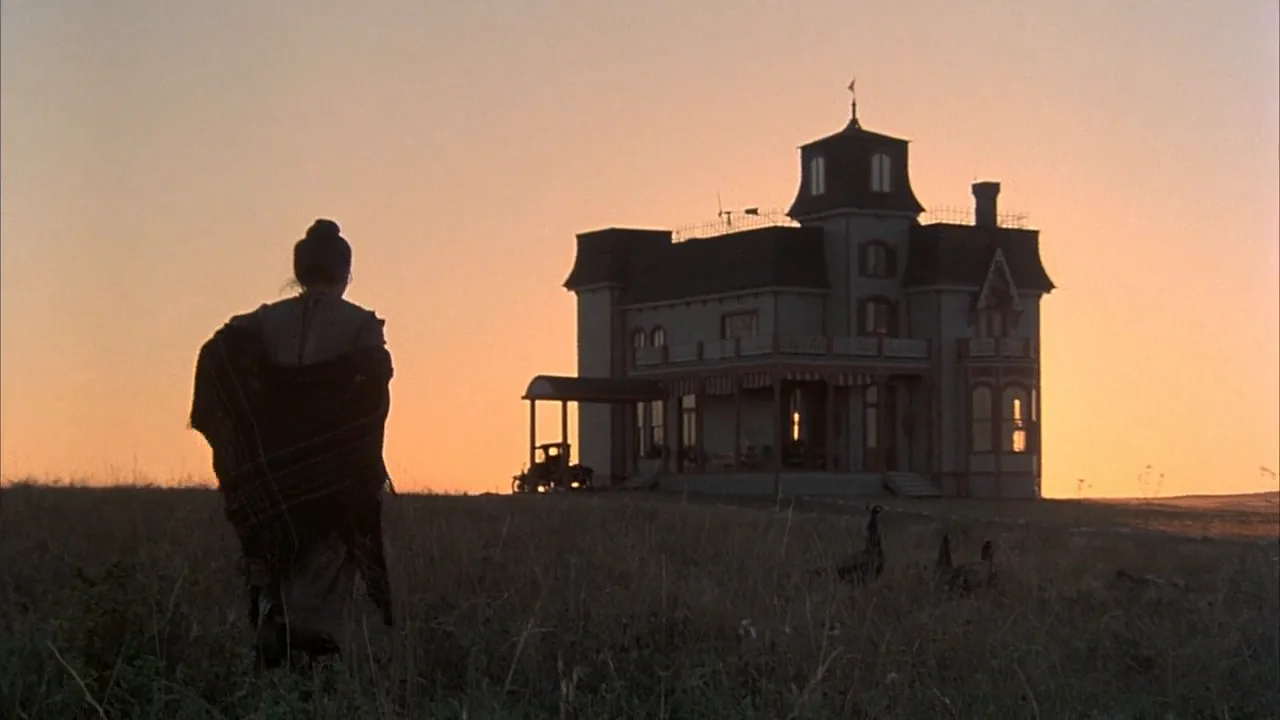
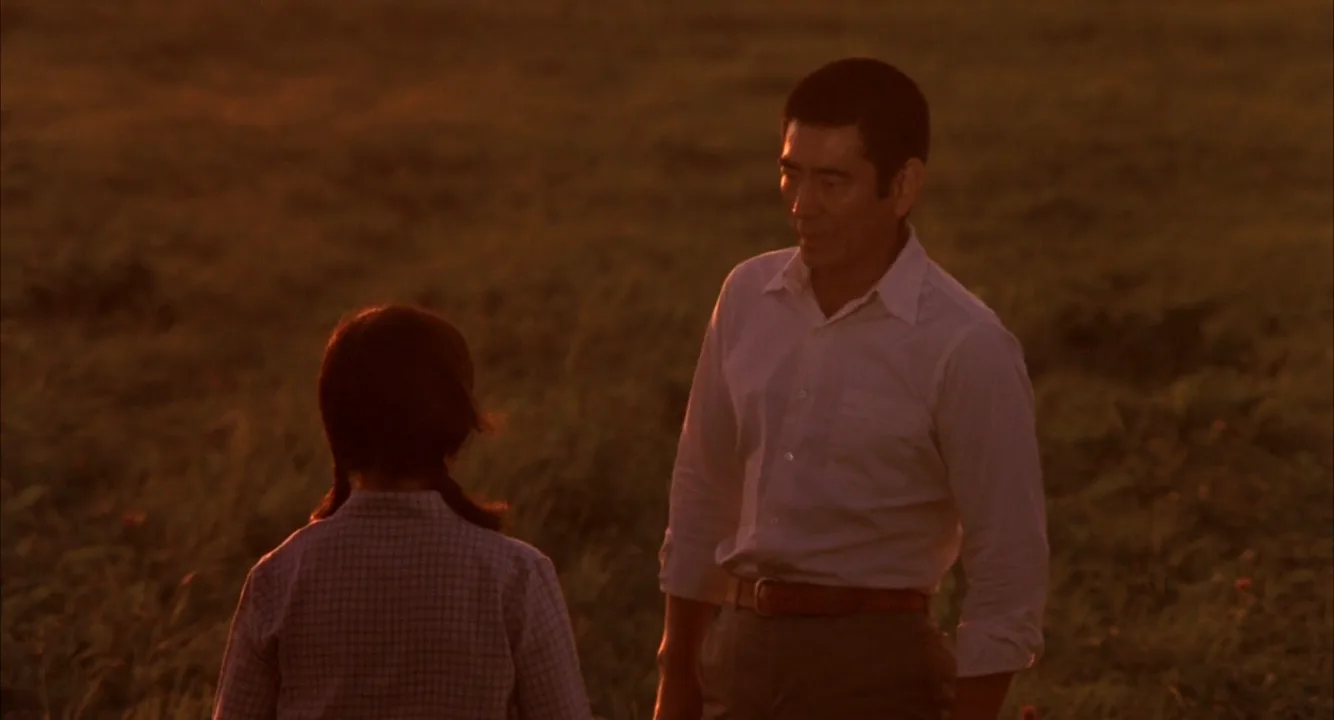
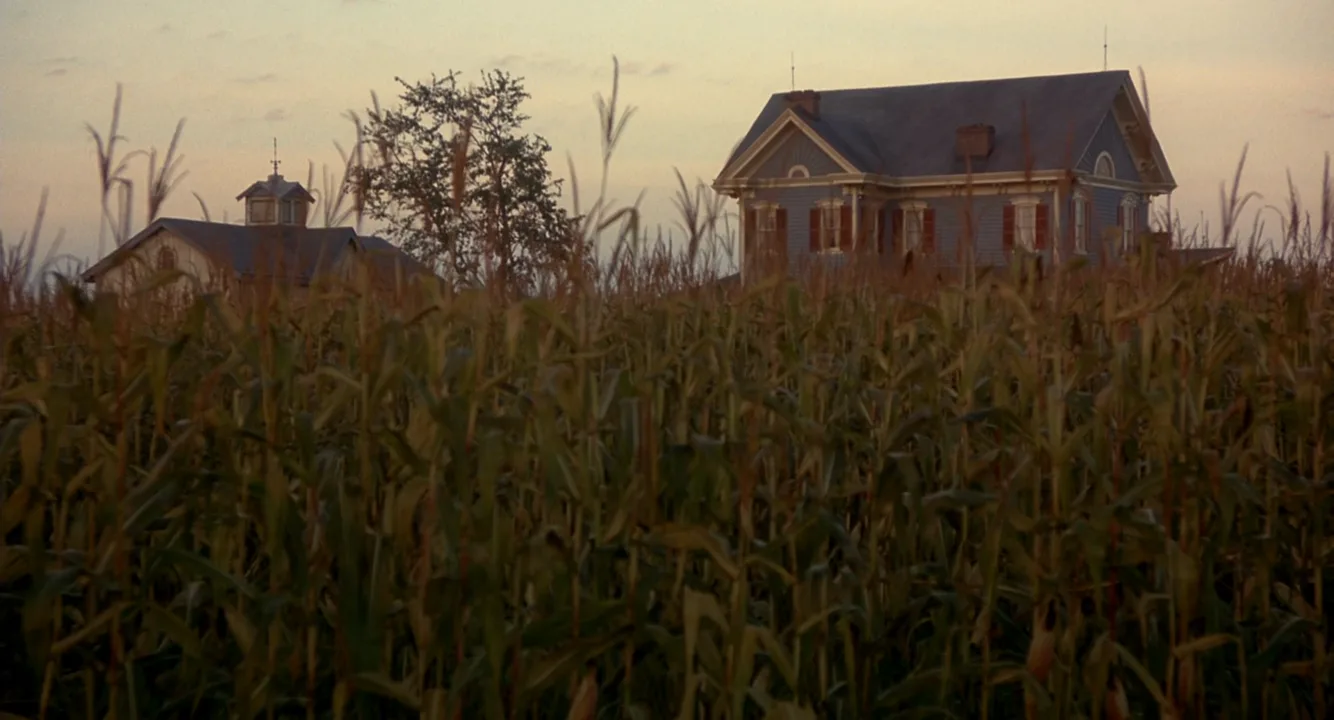
- Memory and nostalgia. Warm, low light looks like a remembered afternoon. Days of Heaven (1978) is the textbook case: Terrence Malick and cinematographer Néstor Almendros shot much of it in the last light of the day, and the whole film plays like someone looking back on a lost summer.
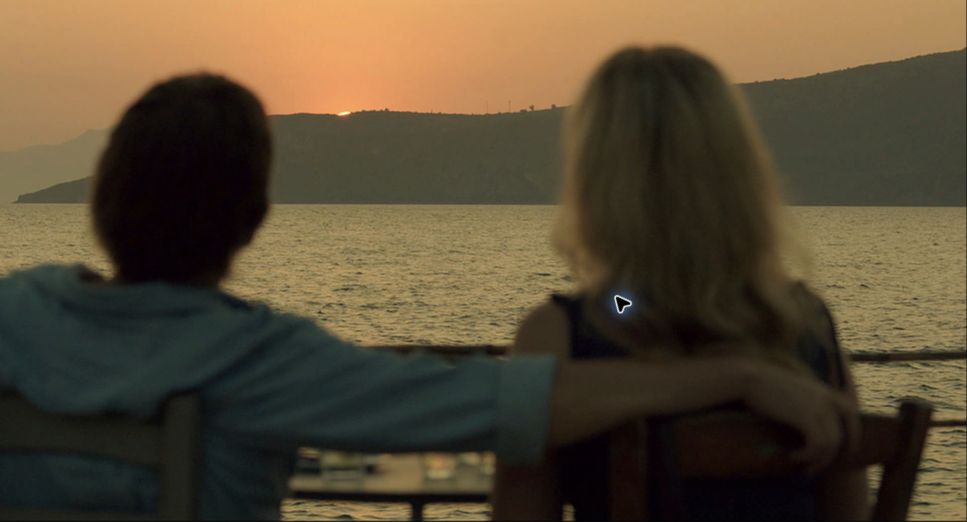
- Romance. Golden hour flatters faces and slows a scene down. The Before trilogy keeps returning to low sun, and in Before Midnight (2013) the couple simply watch the sun go down.
- Endings and elegies. A scene lit by a sun that is visibly leaving tells us something is ending: a relationship, a way of life, a day that will not come back.
- Grandeur. Long shadows reveal every fold in a landscape. Westerns and epics have always waited for low sun to make open country look sculpted.
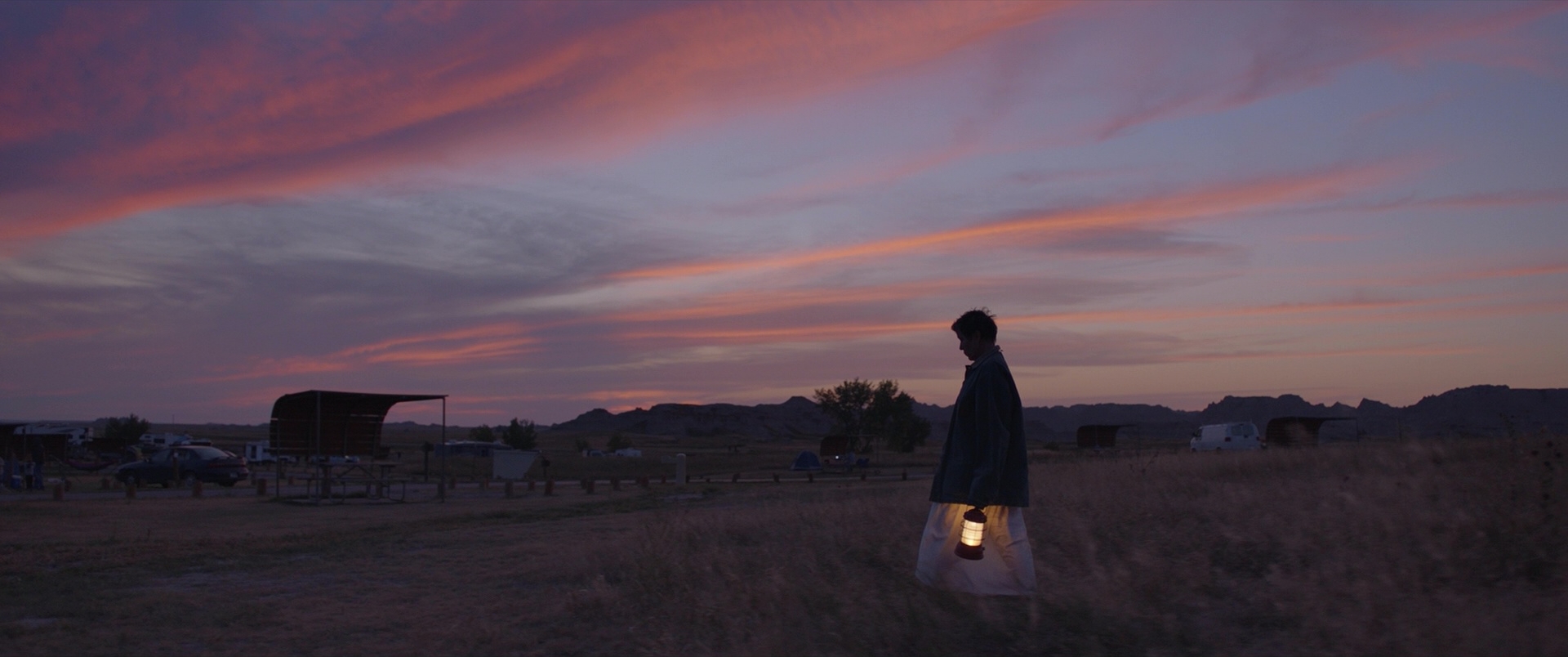
- Realism with beauty. The Revenant (2015) and Nomadland (2020) leaned heavily on real light at the edges of the day, getting images that feel both documentary and painterly.
There are practical reasons too. Low sun lets the camera look straight into the light for backlighting and flare, and because sky and land are close in brightness, one exposure holds a face, a landscape and a colored sky.
How to shoot golden hour
Magic hour rewards planning and punishes improvisation. The light changes from minute to minute, so the day is built around it.
Scout the sun, not just the location. Use a sun-path app and a compass: note where the sun will set, what it will pass behind (hills, trees, buildings can end your golden hour thirty minutes early) and where its last light will fall. Stage the scene so the actors face, flank or turn their backs to that point on purpose.
Rehearse in the afternoon. Block, light and rehearse in full daylight, then shoot only when the light arrives. Treat the window like a stunt: everyone knows the order before it starts.
Shoot the widest shots first. The sky and the long shadows only work while the sun is in play. Shoot masters and landscapes on the best light, then move to tighter coverage, which is easier to match later with a lamp and a bounce.
Run two cameras. Covering two sizes at once doubles what you get from one sunset. Some scenes still take several evenings.
Manage exposure as the light falls. The level can drop several stops within half an hour. Start with heavy ND on the lens and pull filters as the sun sinks to hold the same aperture and depth of field, then ride the ISO at the very end. Expose for skin and protect the sky: a clipped sun is fine, a clipped face is not.
Choose a white balance on purpose. Set the camera to about 5,600 K and the warmth records as the eye sees it. Set it lower, toward 4,300 K, to calm the orange; set it higher to push it. See color temperature for how the numbers relate. Keep one setting for the whole scene so the grade has something consistent to work with.
Fill gently. With the sun behind the actors, a white or unbleached muslin bounce brings back faces without killing the rim. A gold reflector adds warmth but can look cheap if overdone; bounce lighting covers the choices.
Lens choice. Longer lenses (85–200 mm) stack the setting sun large behind a subject and compress the haze into a glowing wall; wider lenses (24–35 mm) keep the sky and the long shadows in the frame. Leave the front of the lens uncovered when you want flare; flag it when you do not.
Backlight, side light or front light at golden hour
The low sun can hit the subject from any side, and each direction gives a different film.
Backlight is the classic choice: the sun sits behind the actors, just out of frame or partly hidden by a head or shoulder. Hair, ears and shoulders get a bright warm outline, which is a natural rim light, grass and dust glow, and the faces are lit by the soft sky and whatever bounce you add. Put a little haze or dust in the air and the sunbeams become visible.
Silhouette is backlight without fill. Expose for the sky and the figures go to black shapes against orange; see silhouette. It is the right choice when posture and outline tell the story better than faces.
Side light comes from 90 degrees and rakes across the scene. Texture jumps out: stubble, wrinkles, bark, corn husks, brickwork. Half of each face goes into a cool shadow filled only by the sky, which makes side lighting the moodiest version.
Front light puts the sun behind the camera and fully on the actors. Faces turn glowing amber, eyes catch a big warm highlight and the landscape behind is lit to the horizon. Actors will squint, so this works best in the last minutes when the sun is weak enough to look into.
Many scenes cut from a backlit wide to a front-lit close-up; because color and softness stay the same, audiences rarely notice the jump.
Can you fake golden hour?
Yes, and most films do for at least part of a scene. The window is too short for dialogue coverage, and a cloud can take it away completely.
- Extend it with a big lamp. A large HMI placed low and far away, gelled with half or full CTO, can play the sun for close-ups after the real one has gone. Keep it at the height and direction of the real sun in the wide shots so the shadows match. See lighting gels.
- Build it on a stage. A single hard, warm source low through a window, plus a soft cool fill from the opposite side, reads as late sun indoors. A little haze in the room sells the shafts of light.
- Grade toward it. Warming a flat afternoon gets the color but not the direction: short shadows and top light still read as midday with a filter. Shoot with the sun low if you want the grade to finish the job.
The reverse trick exists too: day for night uses low sun behind the actors as a stand-in for the moon.
Golden hour vs. blue hour
The two are often lumped together as magic hour, but they are different light:
| | Golden hour | Blue hour | |---|---|---| | When | Sun a few degrees above the horizon, after sunrise and before sunset | Sun just below the horizon, before sunrise and after sunset | | Source | Direct low sun plus sky | Sky only, no direct sun | | Color | Amber, orange, gold | Deep blue and violet, warm glow left at the horizon | | Shadows | Long and defined | Almost none | | Feel | Warm, nostalgic, romantic | Quiet, melancholy, suspended |
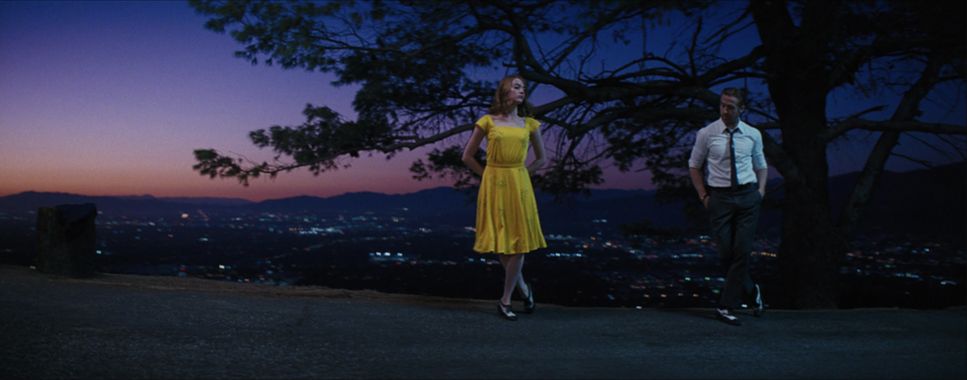
Between them come a few minutes of afterglow, when the sun has set but the horizon still burns orange and the upper sky turns blue. This is the look of the dance in La La Land (2016) and many scenes in Nomadland: faces lit softly by the sky, with warm and cool color in the same frame. The blue hour itself is short and dark, so crews often let city lights, car headlights or lanterns do the work, which turns it into mixed lighting.
A quick test on a still: if you can see a sun or a clear shadow, it is golden hour. If the light has no direction and the sky is the brightest thing in the frame, it is twilight or blue hour.
Golden Hour examples in film
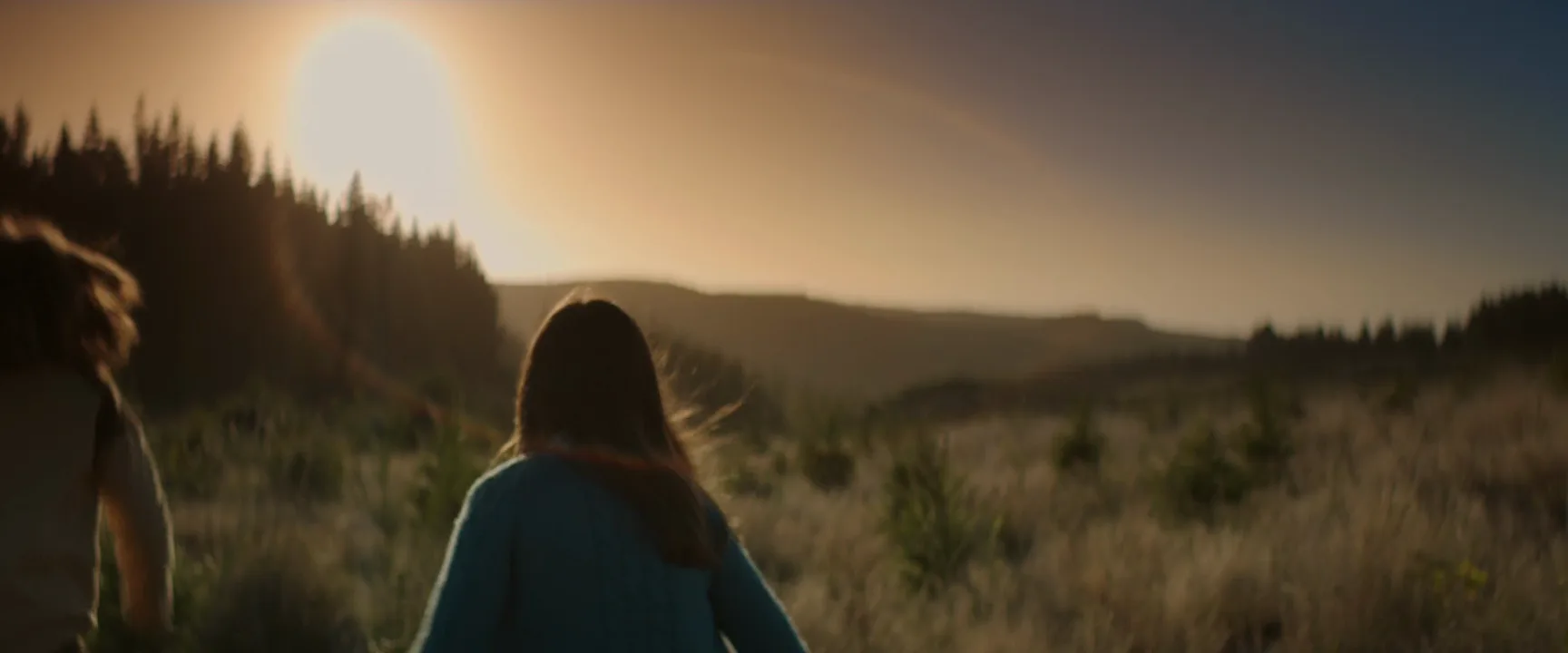
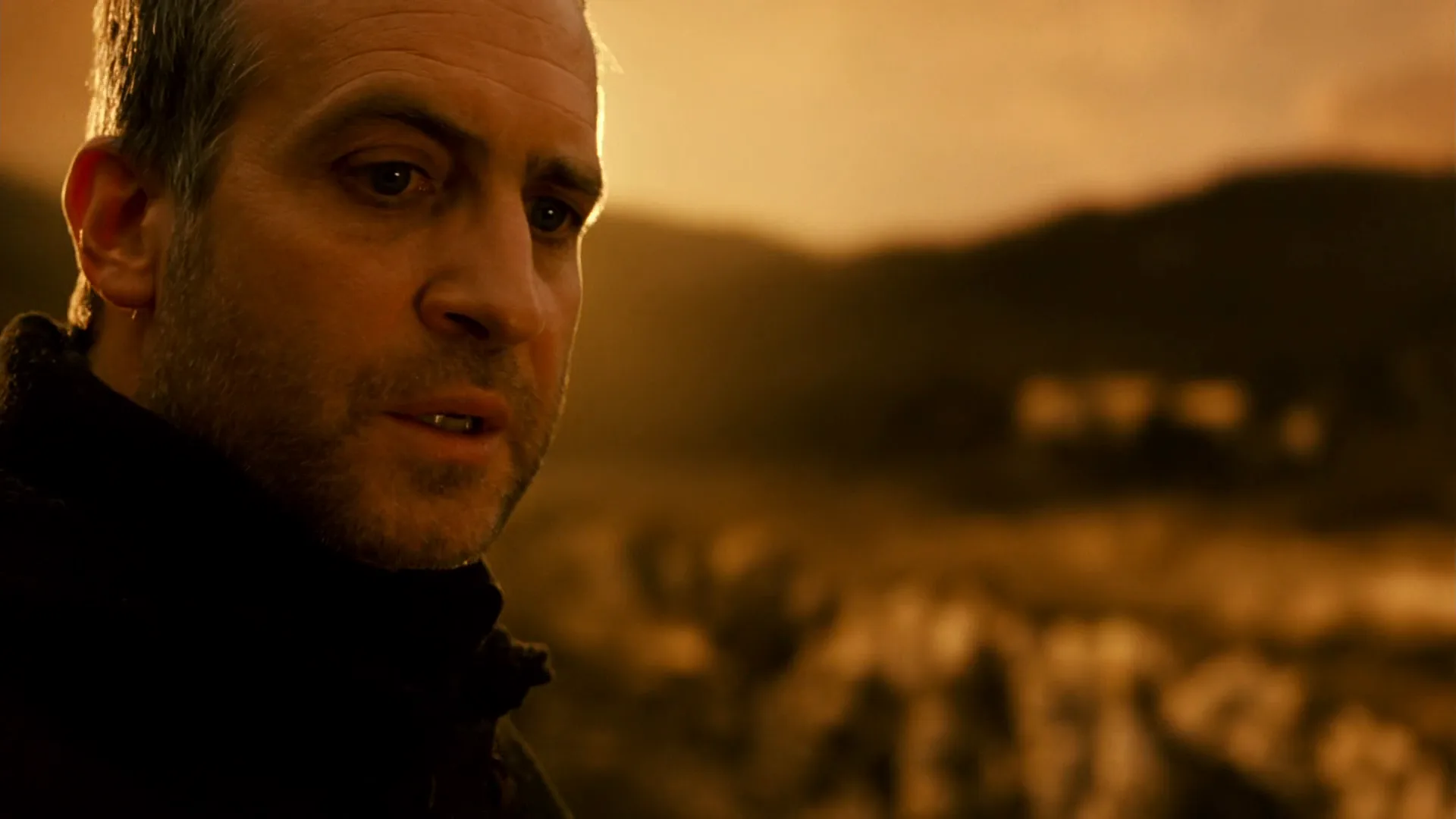
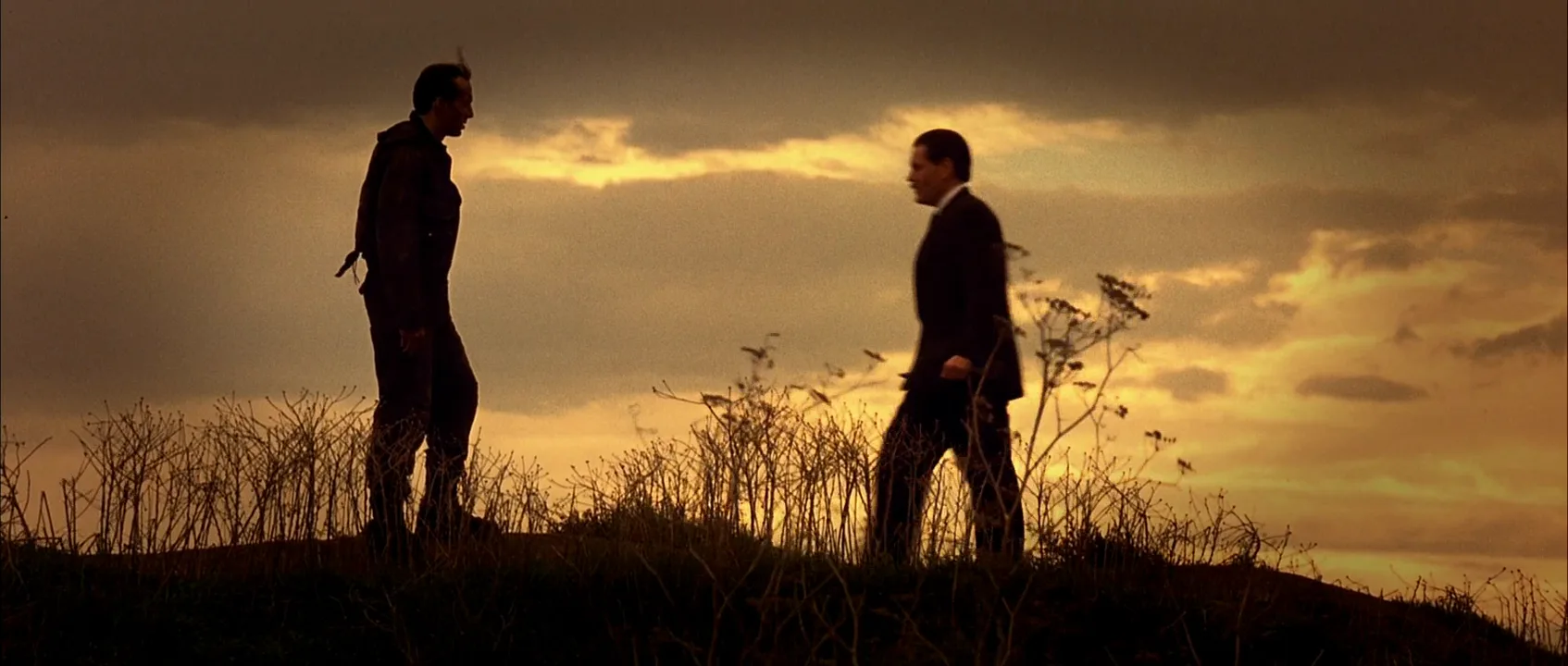
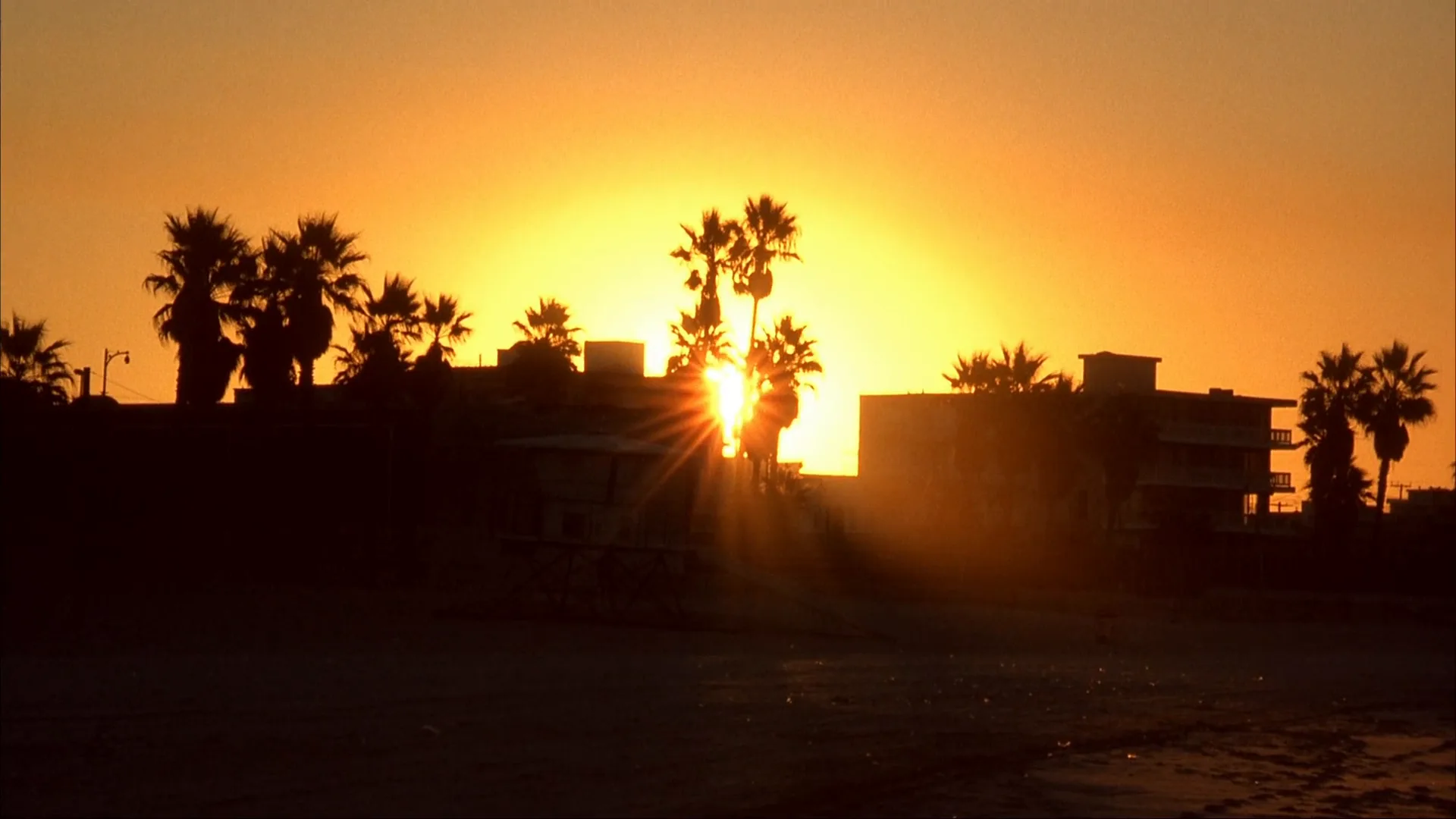
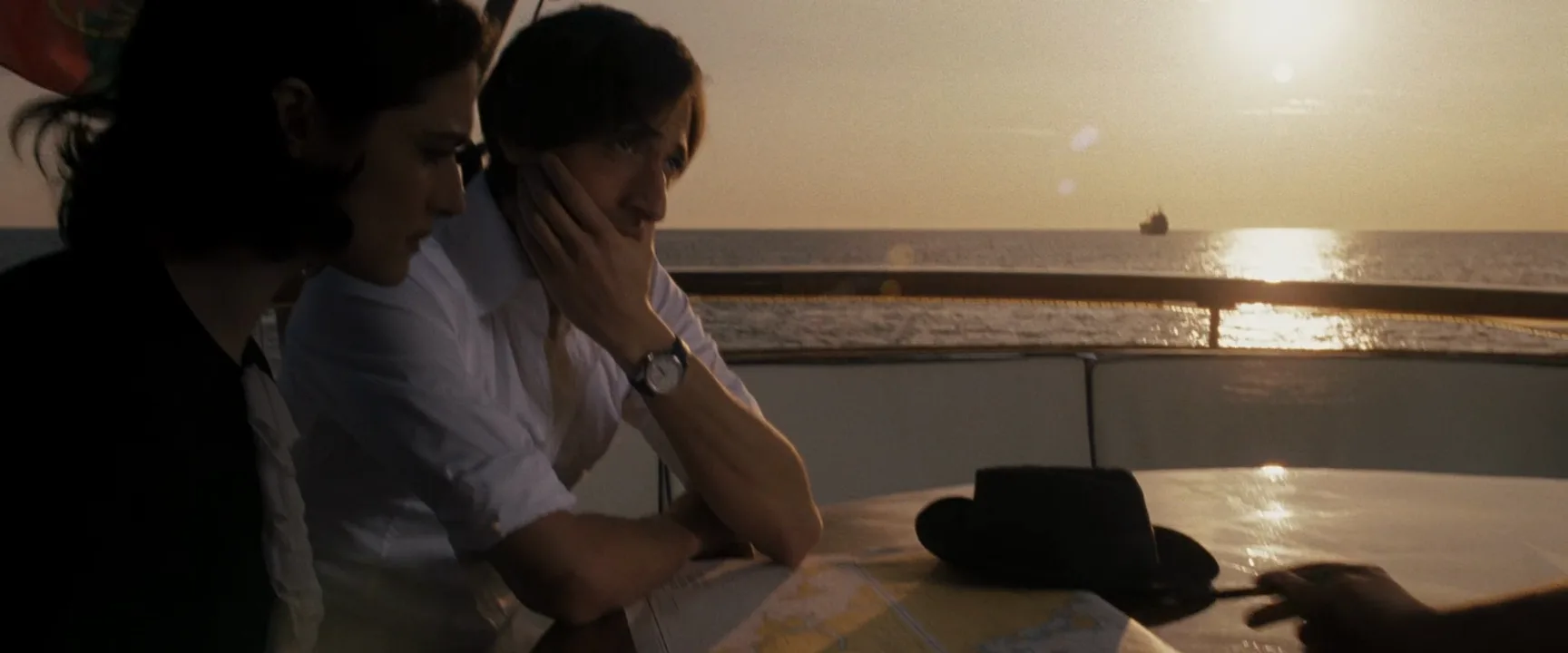
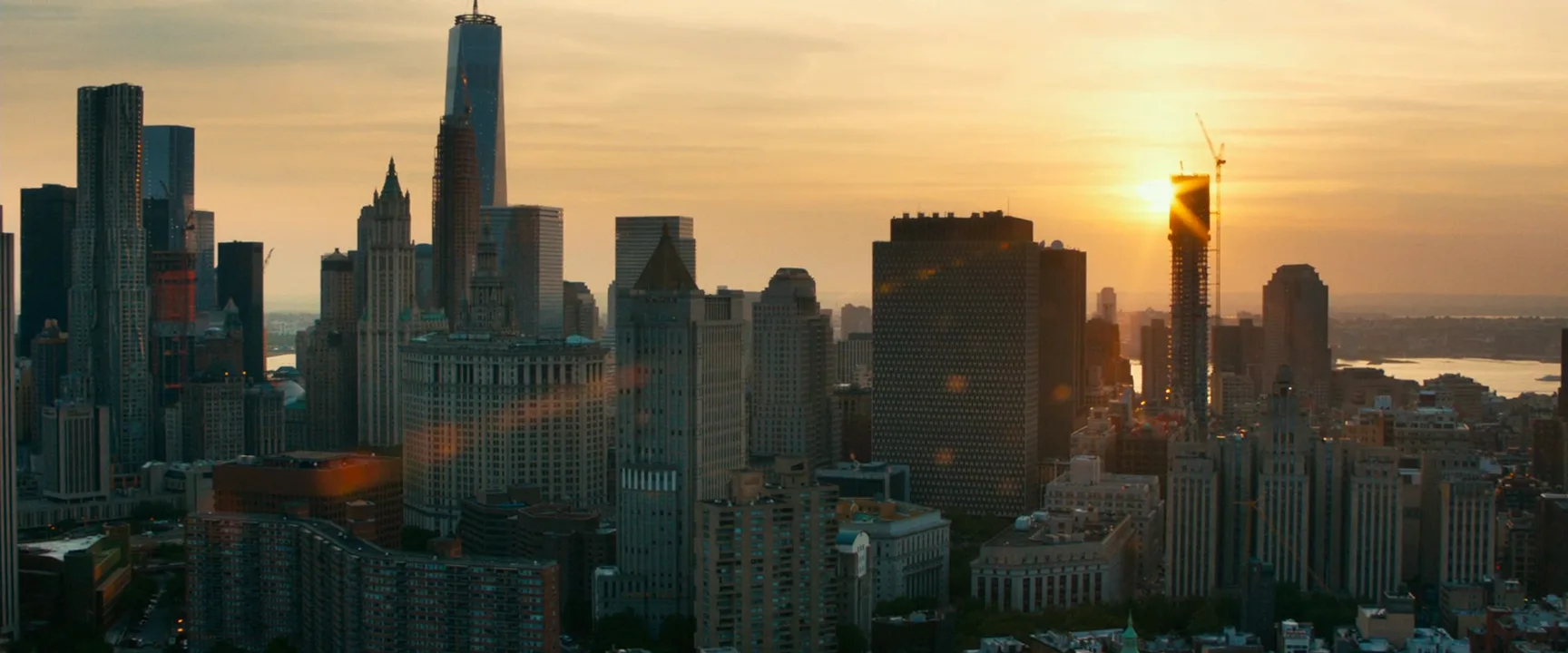
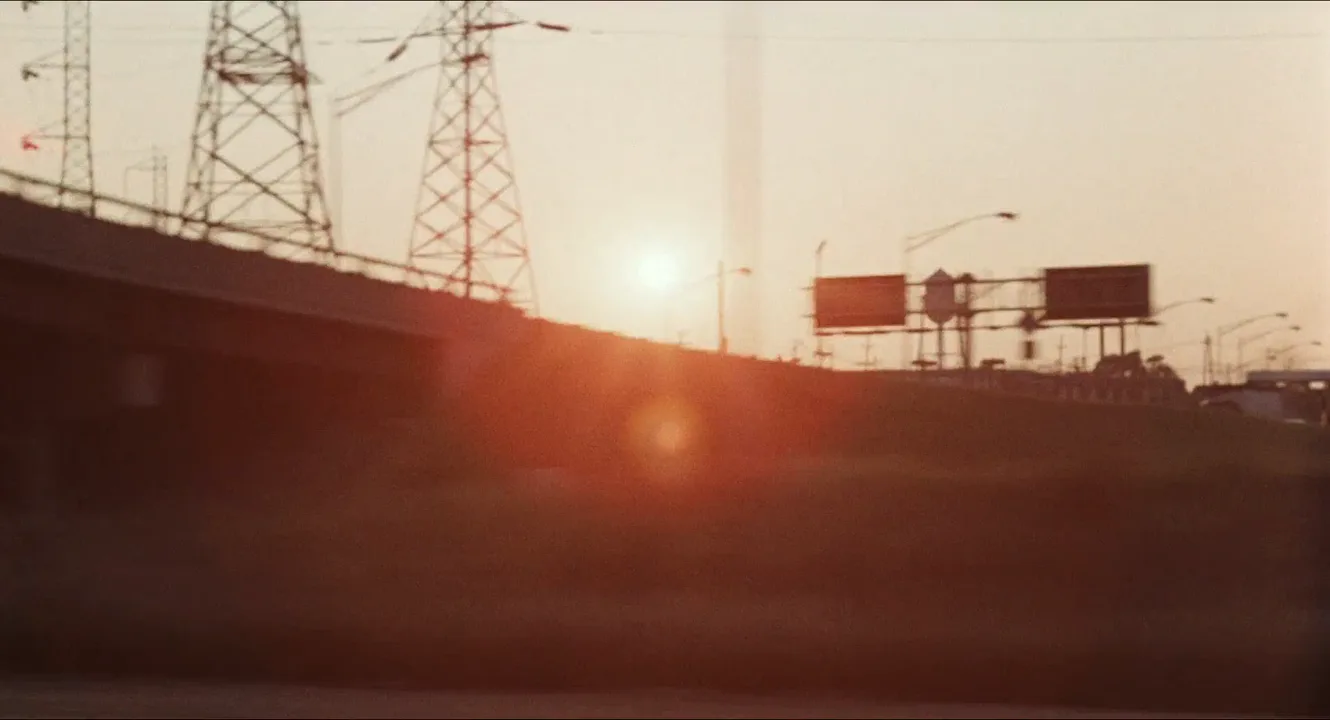
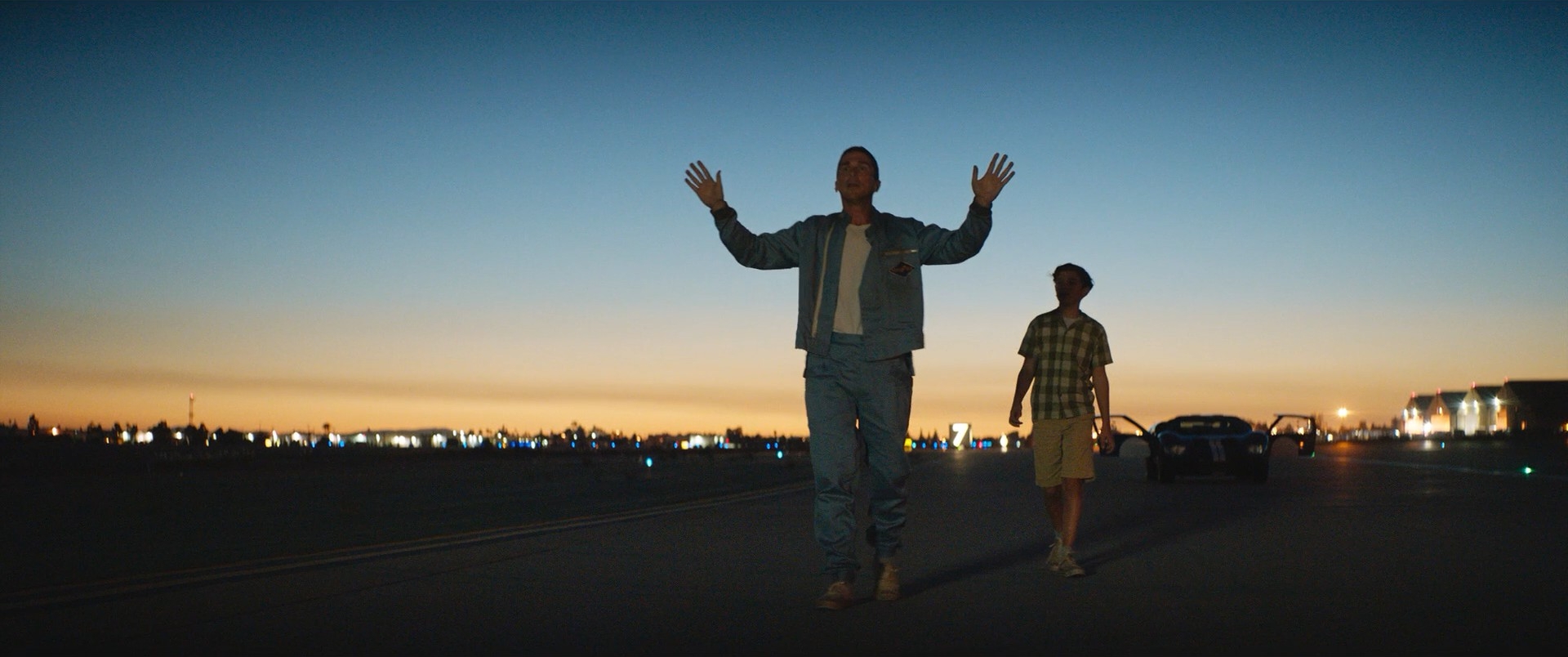
14 framesFrames from films that waited for low sun, from the last direct light to the afterglow.
How to create a golden hour with AI
4 promptsImage models know golden hour well, but they tend to reduce it to an orange filter over a midday picture. Direct it the way a cinematographer would: say where the sun sits (height and side), what it does to the subject (rim, rake, silhouette) and how long the shadows are. Keep your reference frames, takes and sun-direction notes on one FlashBoards board and compare takes side by side. The fourth prompt re-shoots a real film shot from a text description alone, and the original plays next to the result so you can compare.
Cinematic medium-wide shot at golden hour, ten minutes before sunset: a woman in her late thirties with a short black bob, a thin scar through her left eyebrow and a faded blue denim work shirt walks through a waist-high wheat field. The sun is low behind her right shoulder, partly hidden by her head, throwing a warm gold rim around her hair and shoulders and a long shadow toward the camera. Her face is softly lit by the pale sky, the wheat heads glow amber, fine dust hangs in the backlit air, gentle lens flare at frame right. 50mm lens at eye level, shallow depth of field, warm and nostalgic.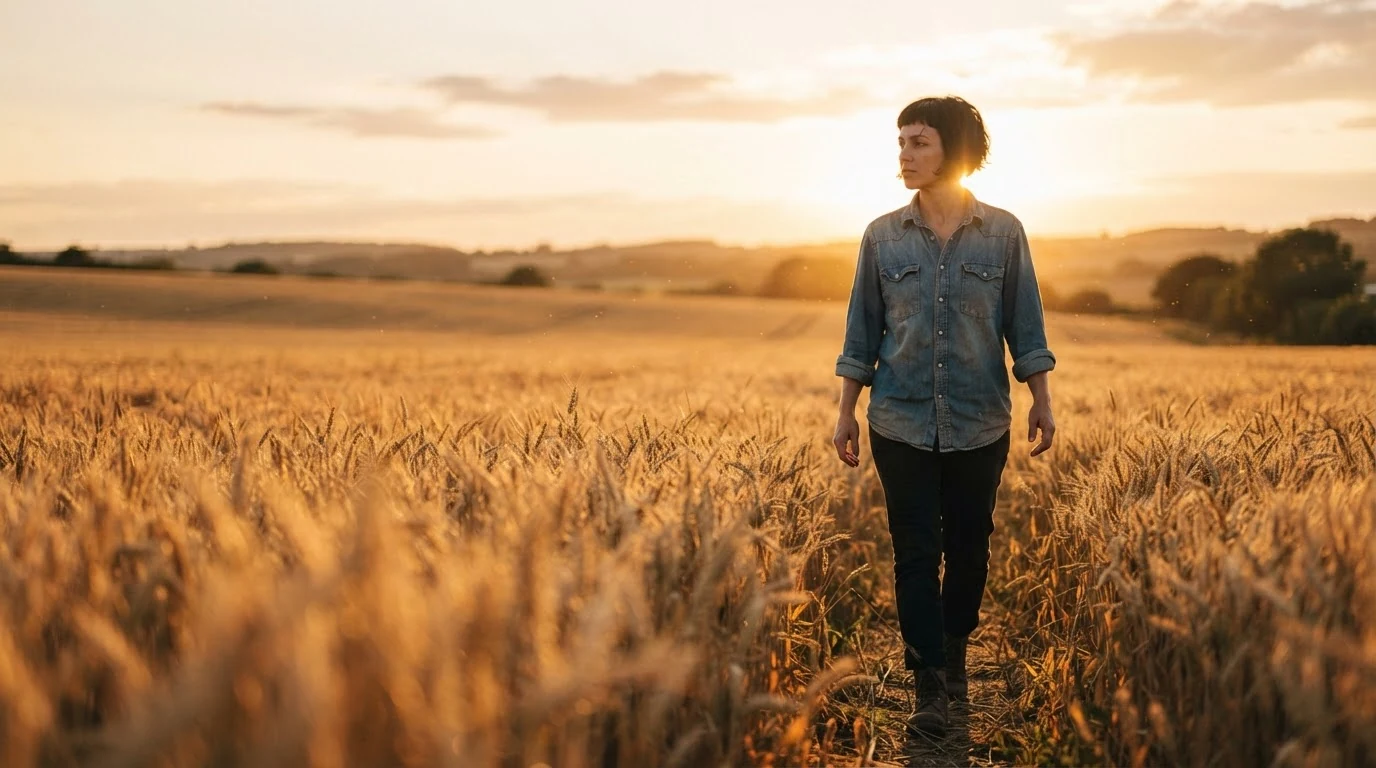
"Ten minutes before sunset" and "sun low behind her right shoulder" fix the height and direction, so the model draws low backlight instead of an orange tint. "Long shadow toward the camera" confirms it, and "face softly lit by the pale sky" stops the face from dropping into silhouette.
Open FlashBoardsWidescreen golden hour portrait on a stone harbor wall: an old fisherman with a square-cut white beard, a small gold hoop in his left ear and a navy wool cap sits mending a net. Low evening sun from directly camera left, at his eye level, rakes across his face and hands: every wrinkle and strand of the net sharp and warm amber, the right side of his face in cool blue shade from the sky. His shadow stretches far across the wall behind him. Calm sea in the background, soft haze at the horizon. 85mm lens, camera at seat height, quiet and weathered.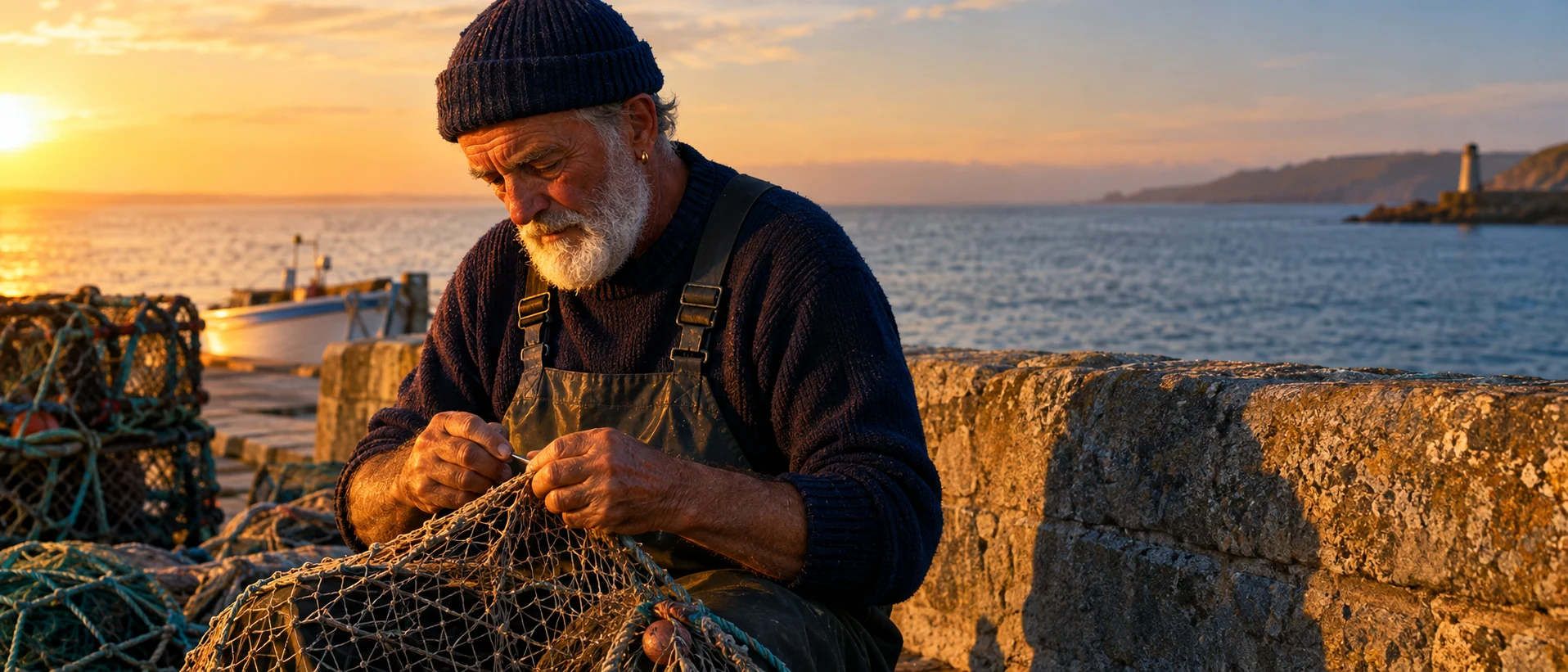
A second take with a different direction: side light instead of backlight. "From directly camera left, at his eye level" produces the raking angle, and "cool blue shade from the sky" gives the warm-and-cool split that makes golden hour look real rather than graded.
Open FlashBoardsCamera: smooth sideways tracking move from left to right at walking pace, staying level with her, keeping the low sun behind her shoulder for the whole shot. Action: She is already walking through the wheat, her open hand brushing the tops of the stalks as the dust drifts in the backlight. Halfway through she turns her head toward the sun and the gold rim spreads across her cheek while the flare flickers past her hair. At the end she slows to a stop, her shadow long across the wheat, and looks toward the horizon.The walk and the brushing hand begin in the first frame, so the clip is alive at once. The sun is named as staying behind her shoulder, which keeps the backlight consistent through the move, and every element (wheat, dust, flare, shadow) is already in the start frame.
Open FlashBoards{
"output": "Full-screen live-action scene from Days of Heaven (1978), from its very first frame: one continuous shot. 1970s 35mm film, fine grain, soft contrast, just after sunset on an open Texas prairie: the sun is below the horizon behind the house, the sky a smooth gradient from peach-orange at the horizon to pale gray-blue above, every figure and building a dark silhouette against it, the tall grass deep brown-green with no direct light on it.",
"characters": {
"S1": {
"name": "Abby, played by Brooke Adams",
"look": "slim young woman, dark hair pinned up in a small bun, dark patterned blouse, a dark wool shawl bunched in both arms against her front, seen from behind",
"voice": "soft, a little breathless, apologetic"
},
"S2": {
"name": "The Farmer, played by Sam Shepard",
"look": "lean man in a dark work shirt and trousers, a small dark silhouette far away",
"voice": "silence: he does not speak in this video"
}
},
"shots": [
{
"shot": 1,
"camera": "smooth fluid-head move from one fixed spot at crouching height: it starts as a low medium close-up behind S1's head and shoulders, lens looking slightly up at her against the empty glowing sky; the camera stays in place and slowly pans right and tilts down as she walks away, ending at eye level on a still wide frame with the horizon low and the house right of centre",
"action": [
"BEGINNING: alive from the first frame, S1 fills the left-centre of the frame from behind, head turned in profile toward screen right, eyes lowered, both arms holding the bunched shawl against her front, already stepping forward.",
"THEN: she turns her head forward, away from the camera, and walks on into the grass; only the back of her head and shoulders is seen.",
"THEN: as the camera pans right, a tall lone wooden farmhouse with a square tower on the roof slides in from frame right, a black shape against the orange afterglow, two ground-floor windows glowing warm yellow.",
"THEN: S1 keeps walking away toward the house, shrinking into a small silhouette in the left third, the shawl swinging at her side; a few geese peck in the grass in front of the house.",
"THEN: far to the right of the house, a small dark shape crouched in the grass slowly stands up: S2, facing S1 across the field, arms at his sides.",
"END: wide and still, S1 small at left with her back to camera, the dark house centre, S2 standing motionless at right; nobody moves toward the other."
],
"dialogue": [
{
"speaker": "S1",
"on_screen": true,
"when": "only at the very end, after S2 has fully stood up; her back stays to the camera",
"delivery": "soft, embarrassed, voice carrying across the grass",
"line": "<d>[English] Excuse me. I forgot where I was.</d>"
}
]
}
],
"sound": {
"ambience": "evening prairie wind through tall grass, crickets, the swish of her skirt and footsteps in the grass, a goose honking far off",
"speech": "exactly this spoken phrase, said once, at the very end",
"never_spoken": "no narration and no voice-over: the descriptions, performance notes and step words of this prompt are never spoken aloud",
"music": "a film score under the scene, always below the voices: slow, wistful sustained strings with a soft harp figure",
"subtitles": "none"
}
}Remakes the afterglow shot from Days of Heaven (1978), where Abby walks away toward a lone farmhouse silhouetted against a peach sky; the prompt kept the low start behind her, the pan right, the lit windows, the farmer rising from the grass and her line.
Putting the sun below the horizon behind the house, with the grass unlit, gives afterglow silhouettes, not an orange filter. The camera line keeps the original's pan right and tilt down, and the one line of dialogue is Abby's own from the film.
Open FlashBoardsCommon mistakes
- Orange filter, midday light. "Golden hour" alone often gives short shadows and top light with warm color. Add the sun's height and side: "sun just above the horizon behind her left shoulder, long shadows toward camera".
- Everything is orange. Real golden hour has cool shadows and a blue upper sky. Write "shadow side cool blue from the sky".
- Blown sun disc. A sun in frame can flood the image. Hide it: "sun partly hidden behind her shoulder" or "sun just out of frame".
- Golden hour and blue hour mixed up. If you want the afterglow, say "after sunset, no direct sun, faces lit by the glowing sky" instead of "sunset light".
- Faces lost to silhouette. Backlit prompts can black out the subject; add "face softly lit by the sky" or "warm bounce on her face".
- Video drifts to a new light. Restate the sun's position in the Camera line so it stays put through the move.
Keep the reference frames, prompts and every generated take side by side — images and video in one canvas.
FAQ
5 questionsWhat is golden hour in film?
Golden hour is the short period after sunrise and before sunset when the sun is low enough to give warm, soft, almost horizontal light with long shadows. Cinematographers schedule scenes around it because it flatters faces, separates figures from the background with a warm rim, and gives images a nostalgic, fleeting mood that is hard to reproduce with lamps.
Is magic hour the same as golden hour?
Mostly. Photographers usually say golden hour; film crews say magic hour and often include the minutes after sunset when the sky still glows. Strictly, golden hour is the time of direct low sun, while the period after sunset is twilight, followed by the deep blue hour. They light a scene differently, so it helps to say which one you mean.
How long does golden hour last?
It depends on latitude and season. Near the equator the sun sets steeply and the warm light lasts perhaps twenty to thirty minutes. At mid-latitudes it is closer to an hour, and in far northern summers it can last for hours. On set, the usable part for a given shot is often much shorter, because hills, trees and buildings take the sun early.
What camera settings work best for golden hour?
Set a fixed white balance, around 5,600 K, to keep the warmth as you see it, and hold it for the whole scene. Expose for skin and let the sun clip. Start with ND filters and remove them as the light falls to keep the same aperture, and raise ISO only at the very end. A bounce restores faces when the sun is behind the actors.
How do you fake golden hour lighting?
Place a large, hard source such as an HMI low and far from the subject, gel it with half or full CTO, and match its height and direction to the real sun. Add a soft, cool fill for the shadow side and a little haze. Grading alone warms the color but cannot lengthen the shadows or lower the light, so shoot the angle, then warm it in the grade.
Related terms
5- Natural LightLighting
Natural light is light from the sun, sky and moon rather than from lamps; its direction, color and softness change with the hour and the weather, and shooting with it is a hallmark of realist cinema.
- BacklightingLighting
Backlighting places the light behind the subject, facing the camera: it outlines hair and shoulders, separates the figure from the background, makes smoke and dust glow and, with no light from the front, turns people into silhouettes.
- SilhouetteLighting
A silhouette shows a subject as a dark, featureless shape against a brighter background — sky, window, fire — exposed for the background, so only the outline tells us who they are and what they are doing.
- Warm Color PaletteColor
A warm palette is dominated by reds, oranges, ambers and yellows; it usually reads as intimacy, nostalgia, heat, comfort — or, pushed hard, danger and sickness.
- Day for NightLighting
Day for night shoots night scenes in daylight and sells them as night by underexposing, keeping the sun behind the actors as a 'moon', avoiding the sky and grading everything dark and cool.
Further reading
Néstor Almendros, A Man with a Camera — the chapter on photographing Days of Heaven. Blain Brown, Motion Picture and Video Lighting — chapters on daylight and exterior work.