 FlashBoards Learn
Genres · Film language
Werewolf Film
Also called: werewolf movie, lycanthrope film
A werewolf film is a horror subgenre about a person who turns into a wolf-like beast, usually under a full moon and against their will. The curse stands in for losing control of your own body and mind, and the transformation scene is the set piece every werewolf movie is judged by.
- What it does
- Turns an ordinary person into the monster and makes the audience fear, and pity, the same character.
- Use it when
- Your story is about a divided self: rage, puberty, addiction, grief or any change the hero can't stop.
- Watch out
- Showing the full beast too early and too long; the creature is scariest as eyes, shadow and sound.
- Try this prompt
cinematic close-up, gaunt man mid-transformation, yellow wolf eyes, stretched jaw with sharp teeth, cold moonlight from above, dark barn, 50mm
What is a werewolf film?
A werewolf film is a branch of horror built around lycanthropy: a human who becomes a wolf or a wolf-man hybrid, then turns back. Unlike a movie that merely features a werewolf, here the curse drives the main conflict: the hero is both victim and threat.
Cinema, more than folklore, fixed the rules: a bite passes the curse on, the full moon triggers it, silver ends it, and the victim wakes with no memory. Most werewolf movies obey this checklist or break one item of it on purpose. It sits among the film genres next to vampire and zombie cycles.
Why do filmmakers keep returning to werewolves?
Because the werewolf is a metaphor you can photograph: the body changes on screen, so an inner state becomes visible. The beast is a doppelgänger living inside the same skin.
The tone of that metaphor defines the film. The Wolf Man (1941) plays it as tragedy: a decent man who can't escape fate. An American Werewolf in London (1981) mixes horror with black comedy. Ginger Snaps (2000) maps the curse onto a teenage girl's puberty. Dog Soldiers (2002) drops it into a siege movie, with soldiers trapped in a farmhouse.
How is a werewolf transformation scene filmed?
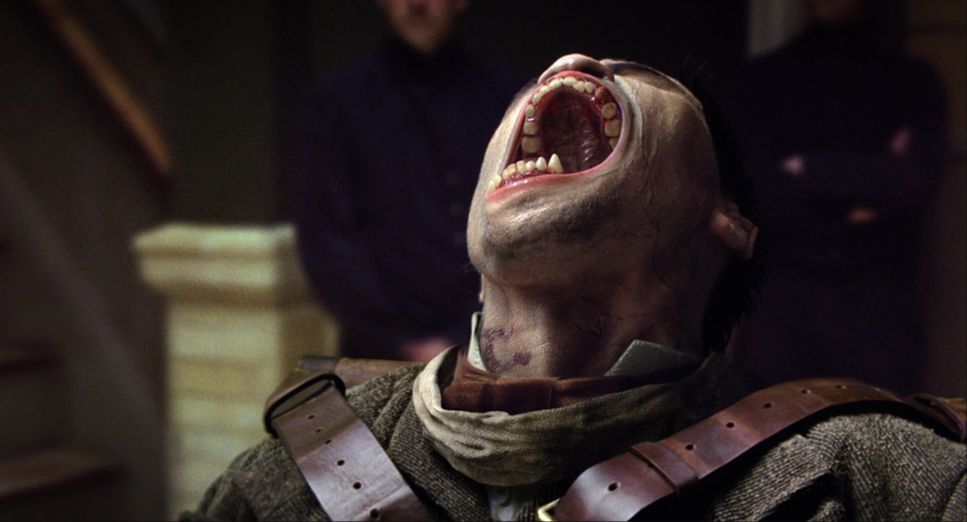
- Dissolves. In The Wolf Man the change is built from a locked-off camera and stacked dissolves between makeup stages, so hair seems to grow while the actor holds still.
- Practical effects. In 1981 The Howling and An American Werewolf in London did the change in camera with practical effects: air bladders under latex skin and mechanical hands and heads that stretch. Rick Baker's American Werewolf work won the first competitive makeup Oscar.
- Hybrid. Later films blend prosthetics with CG for stretches rubber can't do.
The grammar holds across eras: cut between the parts that change (hands, spine, teeth, eyes) and the face in pain, and let cracking bone on the soundtrack carry what the image withholds.
How to shoot a werewolf film
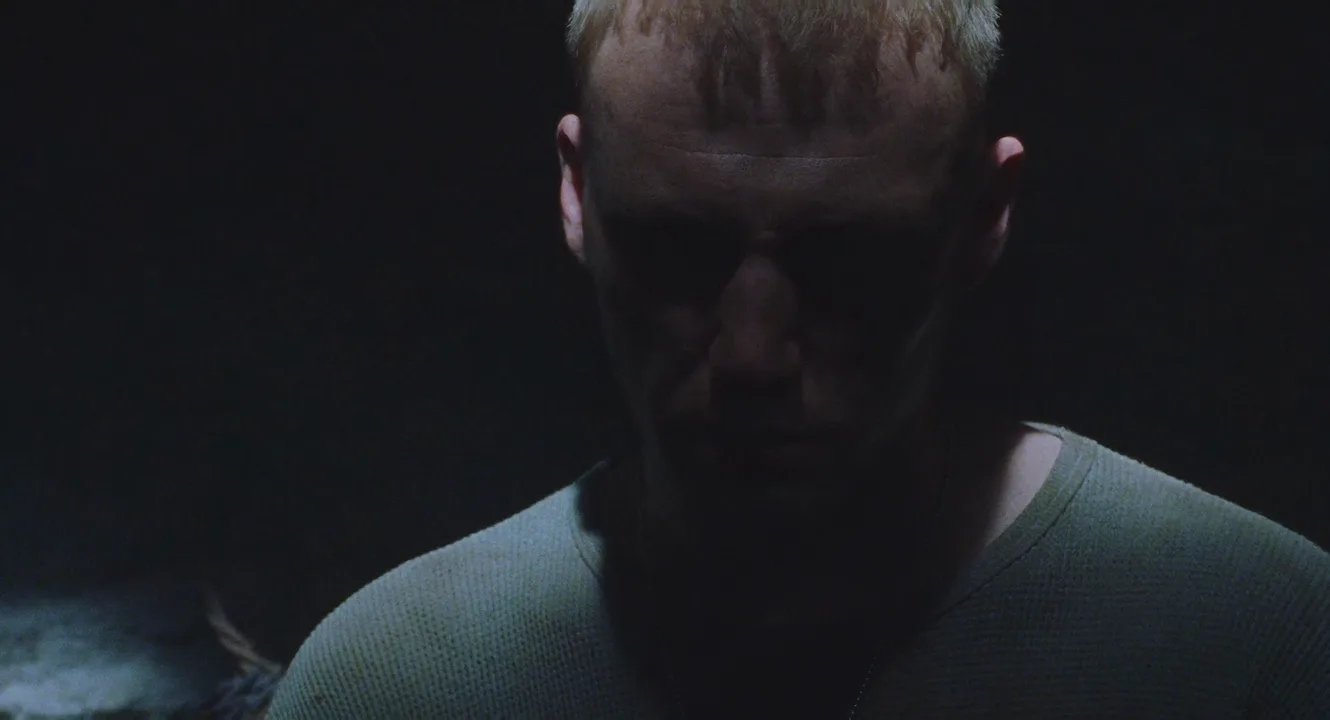
- Hold the reveal. Show fragments (eyes in the dark, a shape crossing a window) and keep the full creature for the last act.
- Light for night. A hard moonlight key from high behind the subject, with a small warm practical inside (a lantern), gives you the genre's two worlds; steep low-key lighting lets the beast live in the black.
- Lenses. Wide lenses (18–25mm) up close distort the muzzle; long lenses (85–135mm) turn the woods into a solid wall.
- Point of view. A low, fast handheld POV at about 60cm off the ground shows the hunt without the hunter.
Werewolf film vs. creature feature
A creature feature pits humans against an outside monster, like a shark or an alien. A werewolf film puts the monster inside one of the humans. So the camera keeps returning to the cursed person's face, before and after. If the story works unchanged with an ordinary wolf, it's a creature feature.
Werewolf Film examples in film
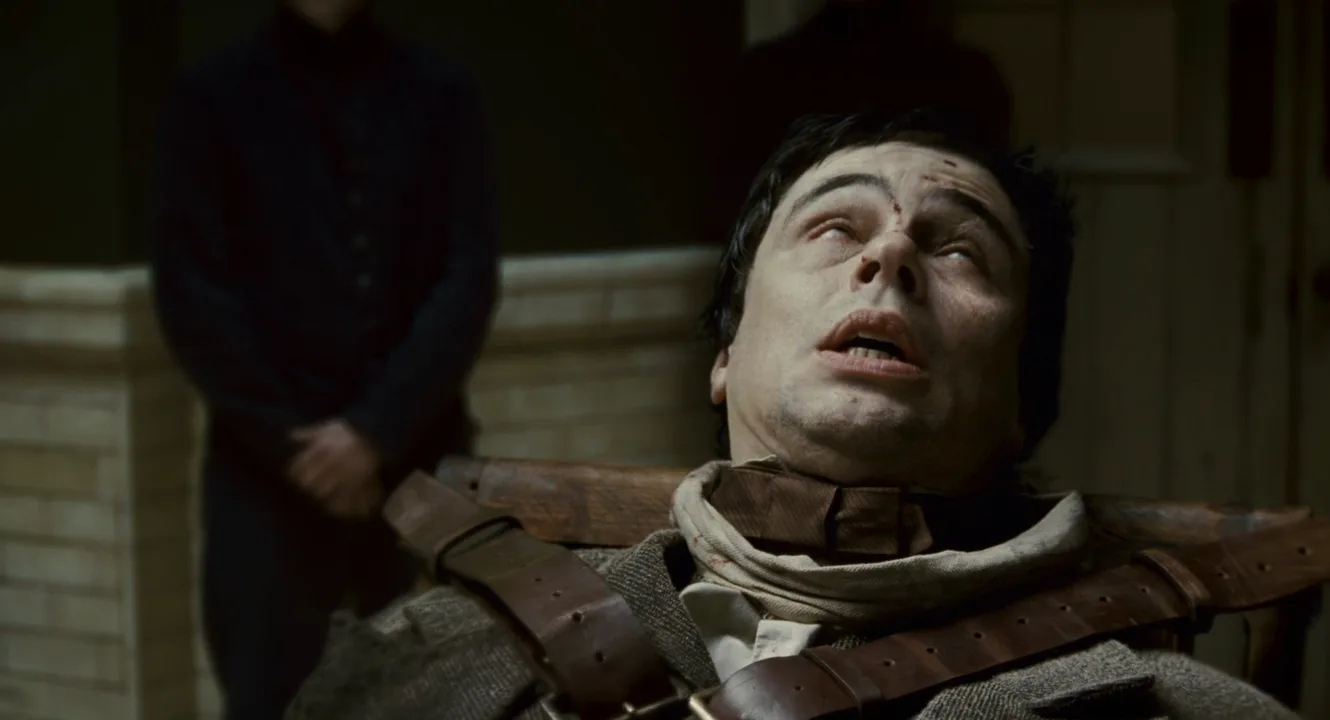
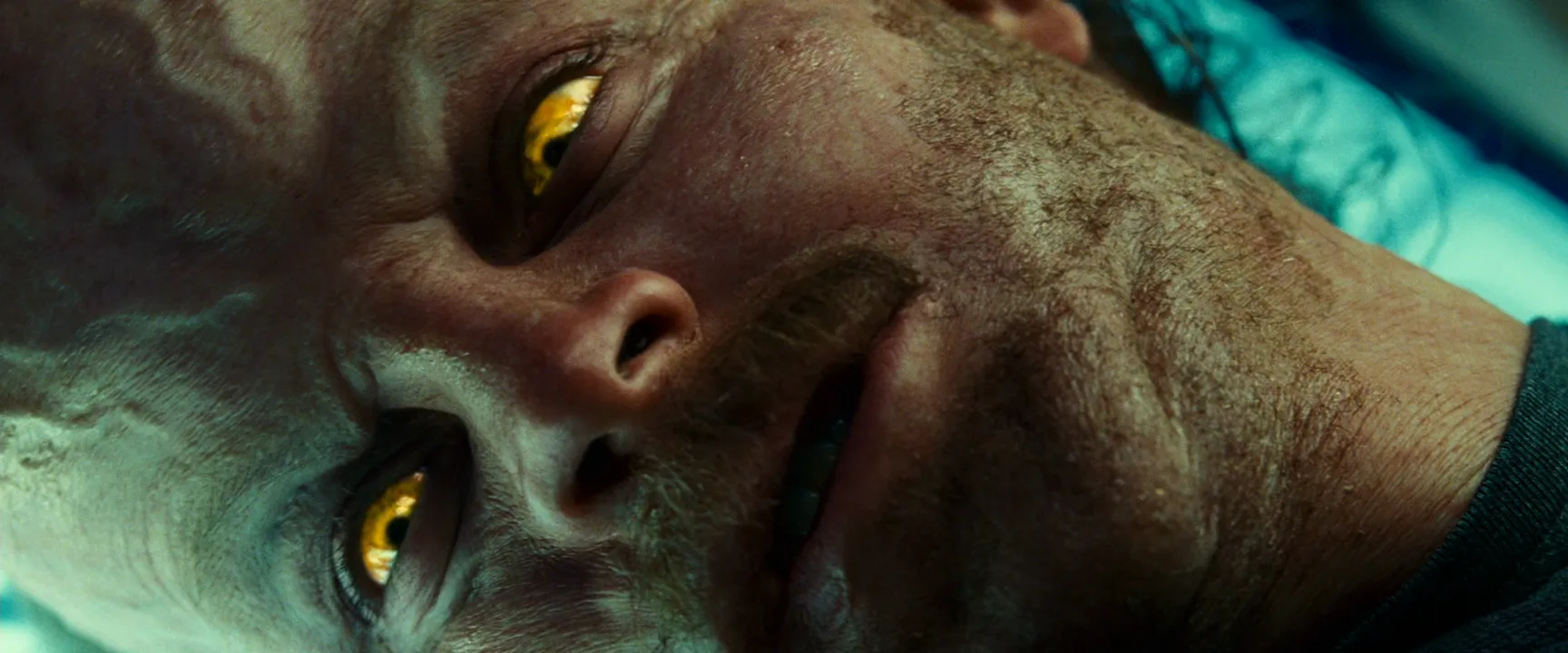
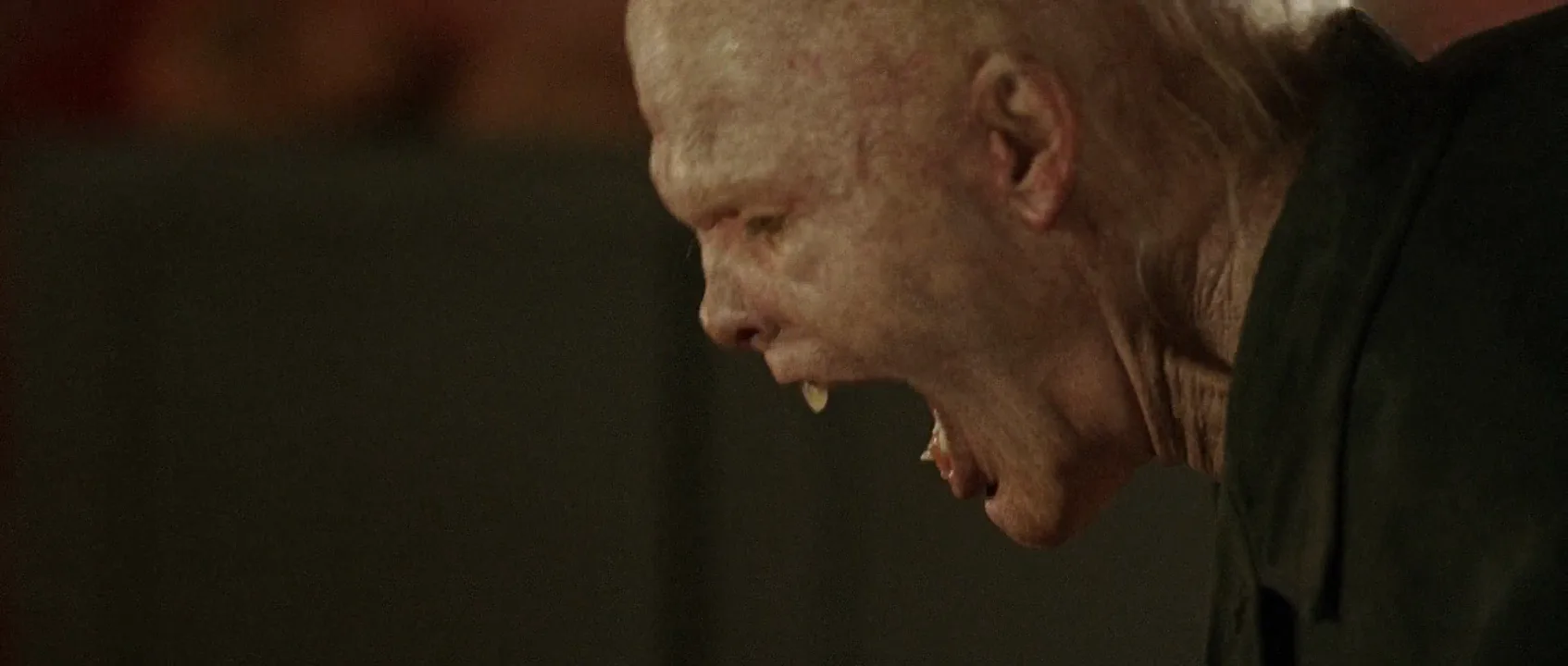
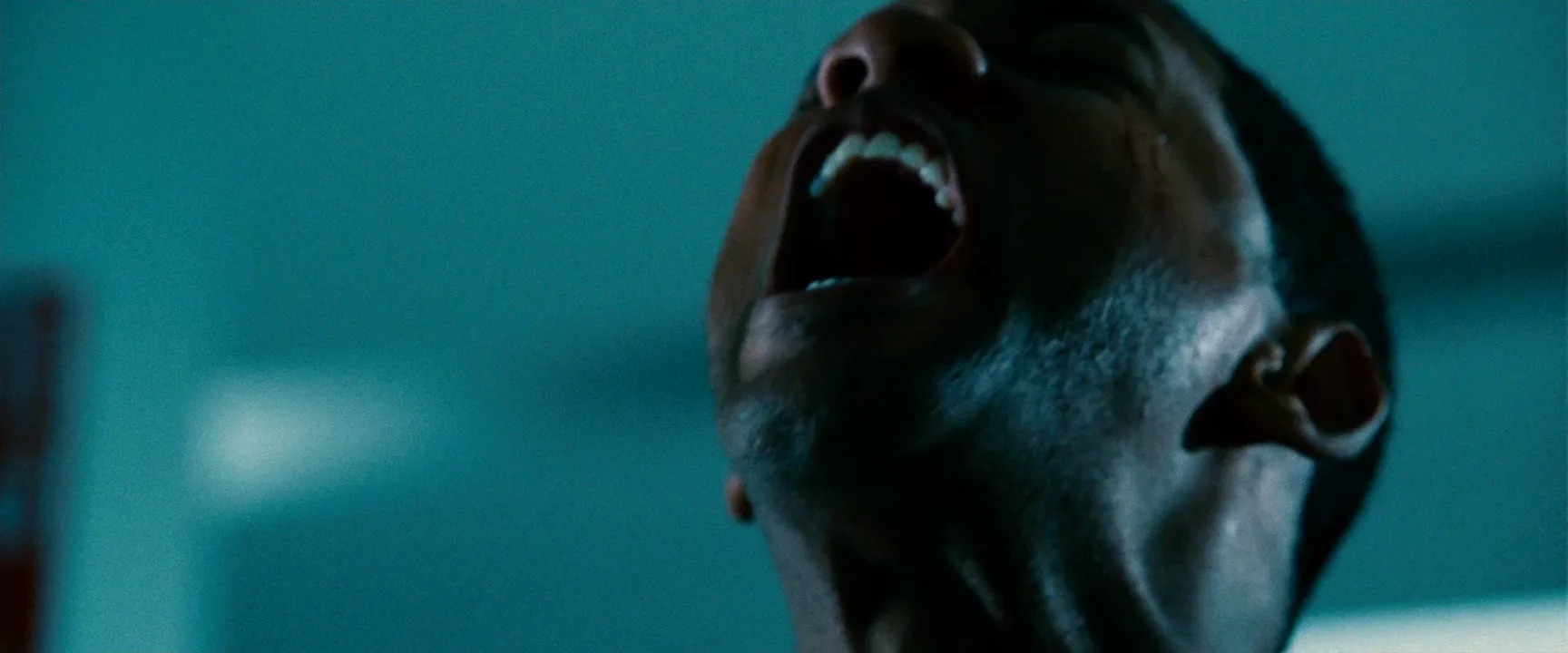
6 framesThe first frames come from werewolf films; the rest show the same transformation grammar (animal eyes, bared teeth, a scream thrown back) in other genres.
How to create a werewolf film with AI
4 promptsDirect a werewolf film the way you'd storyboard it: the half-changed face, the creature in its landscape, then the change in motion. Keep frames, makeup references and notes on one FlashBoards board so every take keeps the same eyes, fur and moonlight. The fourth prompt re-shoots a real film shot from a text description alone, and the original plays next to the result so you can compare.
Cinematic close-up of a gaunt man in his forties mid-transformation into a werewolf, shaved head, crooked broken nose, short gray chin beard, coarse dark hair spreading up his neck and cheeks, eyes already glowing amber, lips pulled back over lengthening canine teeth, head tilted back in pain. Night in an old barn, hard cold moonlight from a high window behind him rim-lighting the hair, a small warm lantern low at frame left. 50mm lens at eye level, practical prosthetic makeup look, film grain.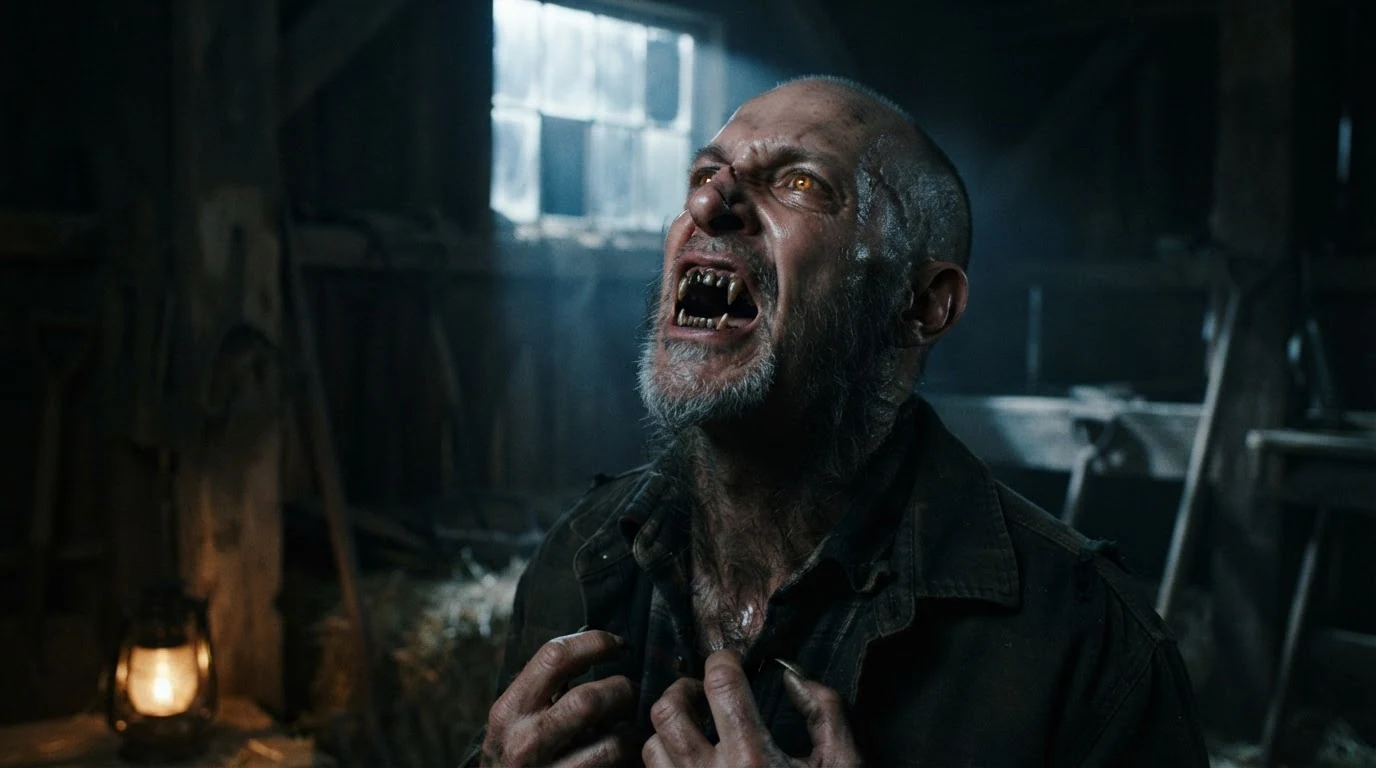
“Mid-transformation” plus a split description (human face and beard, animal eyes and teeth) stops the model from jumping to a full wolf. The moonlight rim and warm lantern set the genre's two-color night; “practical prosthetic makeup look” pushes the skin toward latex rather than a glossy digital creature.
Open FlashBoardsAnamorphic wide shot at night: a tall werewolf silhouette standing on a rocky ridge above a pine forest, hunched shoulders, long arms, pointed ears, a huge full moon low behind it filling a third of the frame. In the foreground valley, a small farmhouse with one warm lit window. Cool blue moonlight, long lens compression, 135mm, no visible facial detail on the creature.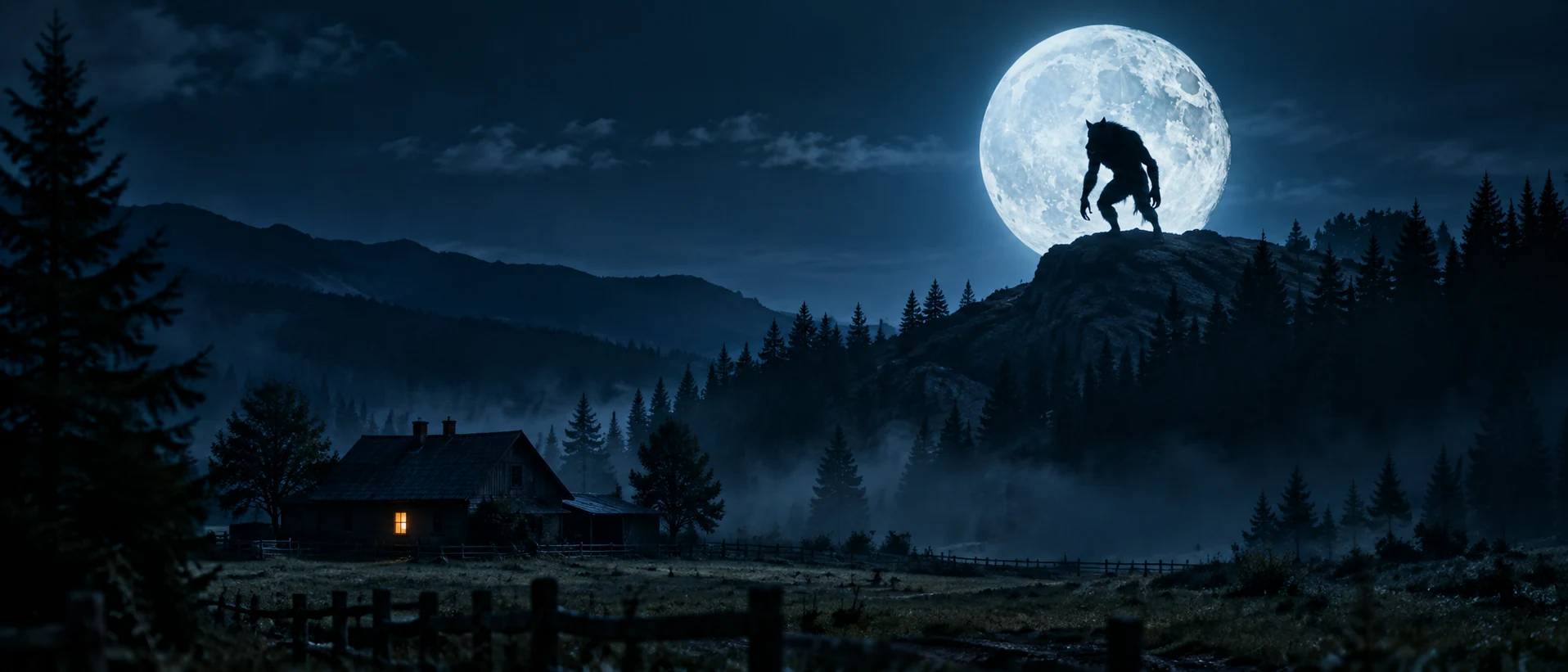
The reveal-by-withholding take: the beast is only a shape against the moon, and the viewer fills in the rest. “Long lens compression, 135mm” stacks moon, ridge and farmhouse into one plane; the lit window gives scale and stakes.
Open FlashBoardsCamera: a slow, steady push-in from the first frame toward the man's face, ending on a tight close-up of his eyes and mouth. Action: the man is already convulsing, shoulders jerking and chest heaving as he gasps. His jaw stretches forward and the canine teeth grow longer while dark hair creeps up over his cheeks. He drops his chin and stares straight into the lens with glowing amber eyes, breathing hard, as the lantern flame flickers.“Already convulsing” starts the motion on the first frame, so the clip doesn't open on a frozen still. The action names only what is in recipe 1's frame, so the model doesn't invent a background. Ending on the eyes aims the threat at the audience.
Open FlashBoards{
"output": "Full-screen live-action shot from The Wolfman (2010), from its very first frame: one continuous locked-off shot. Gothic Victorian period horror on 35mm with fine grain, an asylum lecture theater at night, dim soft light from above, sickly pale skin with a sheen of sweat, a desaturated palette of olive green, leather brown and dirty ivory. The man's face stays fully human the whole time: a sweating man in agony at the moment before the change.",
"characters": {
"S1": {
"name": "Lawrence Talbot, played by Benicio del Toro",
"look": "man in his forties, dark damp tousled hair falling onto his forehead, heavy dark brows, pale clammy skin, dark stubble, a line of small scabbed cuts down the bridge of his nose; a cream cloth wrap around his neck under a thick brown leather strap buckled across his throat; a coarse gray-brown tweed coat pinned by two broad brown leather belts with iron buckles crossing his chest, strapping him into a high-backed wooden chair",
"voice": "silent; only ragged breathing"
},
"S2": {
"name": "an asylum attendant",
"look": "man in a long black buttoned coat standing behind S1; his head and shoulders are cut off by the top edge of the frame, so only his dark torso and his hands clasped in front of his waist are visible",
"voice": "silent"
}
},
"shots": [
{
"shot": 1,
"camera": "locked-off, lens a little below S1's eye level, three-quarter front view, medium close-up: S1's tipped-back head and strapped chest fill the right two-thirds of the frame, his face right of centre; S2 stands soft-focus in the background at the left third; behind them a cream glazed-brick dado up to chest height, a dark olive wall above and a dark wooden door frame at the right edge; shallow focus on S1; the camera never moves, S1's face grows huge only because he lurches toward the lens",
"action": [
"BEGINNING: alive from the first frame, S1 slumps with the back of his head pressed against the chair back, face tipped up and turned slightly toward the right side of the frame, eyes closed, mouth hanging open; S2 stands motionless at the left, hands clasped.",
"THEN: S1's head rolls upright while staying tipped back; his eyelids lift halfway and his eyes roll up until mostly the whites show, brows raised, mouth open, taking shallow trembling breaths.",
"THEN: he holds that dazed upward stare, head quivering slightly against the chair, the belts keeping his shoulders and chest pinned; S2 does not move at all.",
"THEN: his chin lifts higher and his head presses back hard, his mouth stretching wide in a gasp, his eyes squeezing almost shut.",
"THEN: suddenly he wrenches his head forward and down toward the lens, turning it toward the left side of the frame, straining against the strap at his throat.",
"END: his face fills most of the frame in extreme close-up, three-quarter profile turned to the left side of the frame, eyes now open and looking down toward the lower left, brow knotted, lips parted, breathing hard; the room behind him is a soft blur."
],
"dialogue": [],
"voice": "silence: nobody speaks in this shot, no voice at all"
}
],
"sound": {
"ambience": "the hushed room tone of a large hall, the creak of leather straps and the wooden chair as he strains, his ragged breathing",
"speech": "no words in this video; the only human sounds are breaths and movement",
"never_spoken": "no narration and no voice-over: the descriptions, performance notes and step words of this prompt are never spoken aloud",
"music": "a film score under the scene, always below the voices: low tense strings with a slow heavy pulse that swells as he lurches forward",
"subtitles": "none"
}
}Remakes Lawrence Talbot's strapped-chair close-up from The Wolfman (2010), dir. Joe Johnston, DP Shelly Johnson, keeping the locked-off frame, the rolled-up eyes, the gasp and the sudden lurch into the lens just before the change.
This is the before half of the change, so output keeps the face fully human and the action carries the curse: eyes rolling up, a gasp, then a lurch toward the lens against the throat strap. A locked-off camera makes that lurch the only move in the shot, and the empty dialogue with a low string pulse keeps it silent and tense.
Common mistakes
- Models jump to a finished wolf. Say “mid-transformation” and name the parts that are still human.
- “Werewolf” alone gives a glossy, cartoonish creature. Add “practical prosthetic makeup look, coarse matted fur, film grain.”
- Night comes out flat gray-blue. Name one hard moonlight source and a warm practical.
- In video, big changes melt the face. Change two or three parts per clip and generate the next stage as a new shot.
Keep the reference frames, prompts and every generated take side by side — images and video in one canvas.
FAQ
5 questionsWhat are the best werewolf movies?
Start with The Wolf Man (1941) for the classic tragic curse, An American Werewolf in London (1981) and The Howling (1981) for landmark practical transformations, The Company of Wolves (1984) for a fairy-tale take, Ginger Snaps (2000) for the coming-of-age metaphor and Dog Soldiers (2002) for werewolves as a siege action movie.
What is a lycanthrope film?
“Lycanthrope film” is simply a more formal name for a werewolf movie. Lycanthropy is the mythic ability or curse to turn from a human into a wolf. Critics sometimes use it for stories where a character may only believe they are changing, but both labels describe the same subgenre.
What makes a good werewolf transformation scene?
Pain and specificity. The best transformation scenes show the change in body parts you recognize (hands stretching, the spine bending, teeth pushing out) and cut back to the human face suffering through it. Sound matters as much as image: cracking and heavy breathing sell the effect.
Why are werewolves tied to the full moon?
The moon gives the curse a clock. Tying the change to the full moon lets a film count down to a known night, build dread in the days before and stage the change under a single strong light source. It also makes the curse cyclical: something the hero can't escape keeps coming back.
Is a werewolf film always horror?
Mostly, but not always. Werewolves turn up in comedies such as Teen Wolf (1985), in romantic fantasy and in action franchises. What keeps a film in the werewolf genre is that the curse drives the story; when the werewolf is one monster among many, the film only borrows the imagery.
Related terms
3- Horror FilmGenres
Horror is the genre designed to frighten — through threat, the uncanny and the grotesque — and it relies on darkness, negative space, sound and withheld information as much as on monsters.
- Practical EffectsPost-Production & VFX
Practical effects are created physically on set — animatronics, prosthetic makeup, miniatures, pyrotechnics, rain and wind machines — and captured by the camera rather than generated with CGI in post.
- MoonlightLighting
Moonlight lighting imitates the moon with a single high, directional source — usually cool or neutral, often from behind — plus controlled underexposure, so the scene reads as night while faces and space stay legible.