 FlashBoards Learn
Genres · Film language
Horror Film
Also called: horror, horror movie, scary movie
A horror film is a genre built to frighten: it puts characters under threat from violence, the supernatural or the unknown and makes the audience feel that threat physically. Its cinematography works by withholding — darkness, empty frame space, off-screen sound and delayed reveals — so the viewer's imagination does most of the scaring.
- What it does
- Turns darkness, empty space and withheld information into fear the audience feels in the body.
- Use it when
- Your story is about a threat the characters can't fully see, understand or escape.
- Watch out
- Showing the monster too early and too brightly kills dread faster than any budget limit.
- Try this prompt
Horror film still, wide shot, 21mm lens, woman with a flashlight in a dark farmhouse hallway, black empty doorway filling half the frame, single cold moonlight key, haze, 35mm grain
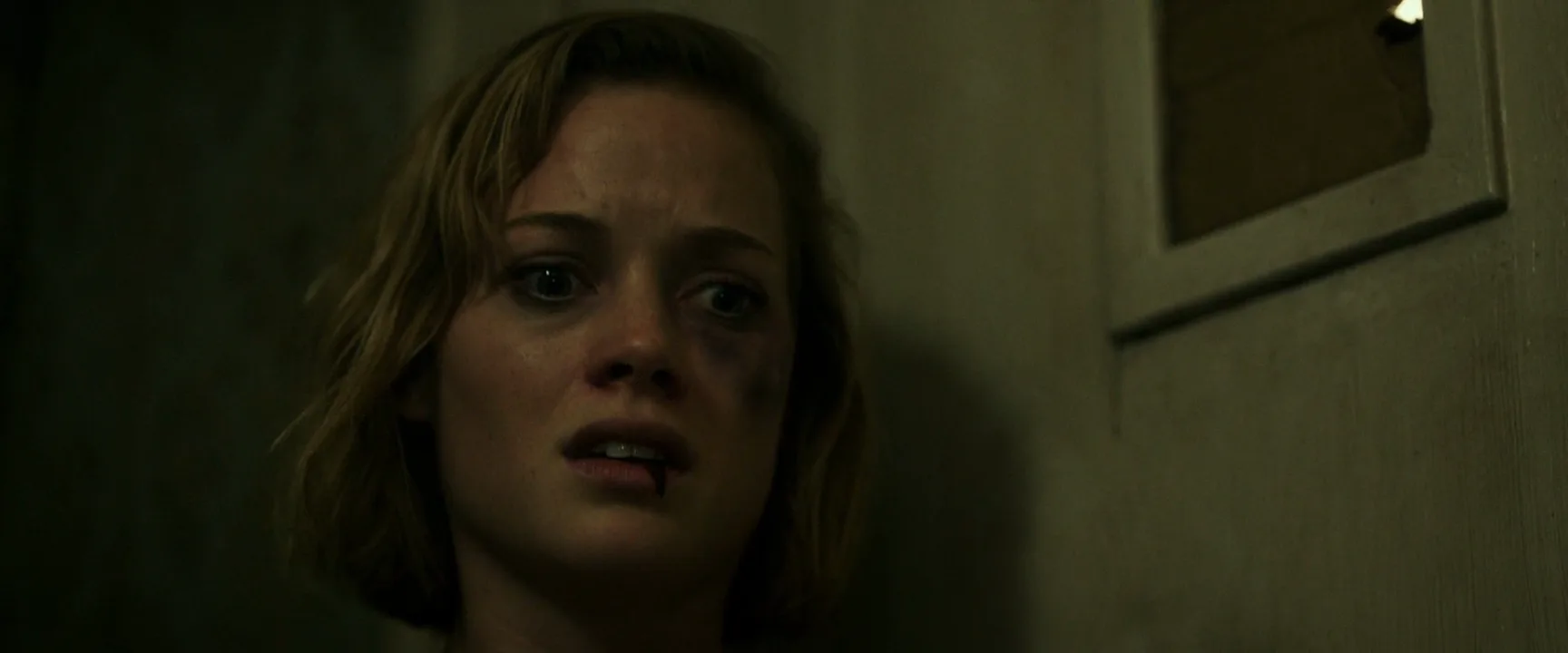
What is a horror film?
Horror is one of the oldest film genres: stories designed to produce fear, dread, shock or disgust. The threat can be a killer, a ghost, a creature, a disease, a cult or the character's own mind, but the contract with the audience is always the same — something is coming, and you will feel it before you understand it.
What separates horror from action or adventure with a monster in it is point of view on the threat. An action film invites you to beat the danger; horror makes you sit inside the helplessness. That is why the genre's visual language is mostly about limits: limited light, limited information, limited exits.
The core conventions have been stable for a century:
- Darkness and shadow. From the shadow of the vampire climbing the stairs in Nosferatu (1922) to the hazy streetlamp silhouette in The Exorcist (1973), horror treats darkness as a space where anything could be.
- Isolation. Remote houses, ships, stations, forests, basements — places where help can't arrive.
- The uncanny. Familiar things made slightly wrong: a child who doesn't blink, a house that is bigger inside, a face that is almost human.
- The body. Wounds, transformation, possession, infection — horror is the genre most willing to show what can happen to flesh.
- Withheld information. The audience hears, glimpses or infers the threat long before seeing it clearly.
The German silent films of the 1920s — The Cabinet of Dr. Caligari (1920), Nosferatu — set the template with painted shadows and distorted sets, and German Expressionism still echoes through every hard-lit staircase in the genre.
Why does horror work? The tools that make audiences afraid
Fear on screen is built from a handful of repeatable tools.
Darkness and low-key light
Low-key lighting is the genre's default: one hard source, little or no fill, faces carved into fragments. The shadow side of the frame is not empty — it is the part the viewer searches. Moving the key under the chin gives you under lighting, the campfire-story look that makes even a friendly face uncanny.
Negative space and the edges of the frame
Horror leaves room. A character framed off-center with a dark doorway or an empty hallway filling the rest of the shot turns negative space into a question: what will appear there? Halloween (1978) used its widescreen frame this way, parking the killer in the background of calm suburban shots. It Follows (2014) makes every wide shot a scan for a slow walker in the distance.
Point of view
The opening of Halloween is a long subjective shot through the killer's eyes, and the POV shot has belonged to the genre ever since — the stalker's view through bushes and windows, the victim's view down a dark corridor, the night-vision goggles in the finale of The Silence of the Lambs (1991). Found-footage films like The Blair Witch Project (1999) and the V/H/S anthology (2012) turn the whole movie into a character's POV, so the camera itself can drop, shake and miss the thing that matters.
Delay and the reveal
Jaws (1975) kept its shark mostly off screen, and Alien (1979) shows its creature in fragments and darkness. The imagined monster is always worse than the one on screen. The horror version of suspense is the long hold before the reveal, with the camera refusing to cut away.
Sound
Turn the picture off and a horror film still works; turn the sound off and it often doesn't. Psycho (1960) is remembered for its shrieking strings; A Quiet Place (2018) builds a whole film around the fear of making diegetic sound. The jump scare — a sudden loud sting on a cut — goes back at least to the hissing bus in Cat People (1942).
What are the main horror subgenres?
Horror splits into subgenres with their own threats and visual habits.
- Slasher. A masked or unstoppable killer and a shrinking group of victims — Halloween, Black Christmas (1974), Scream (1996). See the full breakdown of the slasher film: stalker POV, the final girl, the killer in the background of the frame.
- Supernatural and haunted house. Ghosts, demons, possession: The Exorcist, The Shining (1980), Hereditary (2018). Slow camera, symmetrical rooms, empty corners that don't stay empty.
- Creature feature. A monster the characters have to survive: Jaws, Alien, The Thing (1982 and 2011). Budget and craft go into the reveal.
- Werewolf and transformation. The body turns against its owner; the werewolf film lives on its transformation scene and on practical effects that make change look physical.
- Body horror. Infection, mutation, surgery — The Fly (1986), the medical scenes of Prometheus (2012). Often bright and clinical rather than dark, because the horror is in plain sight.
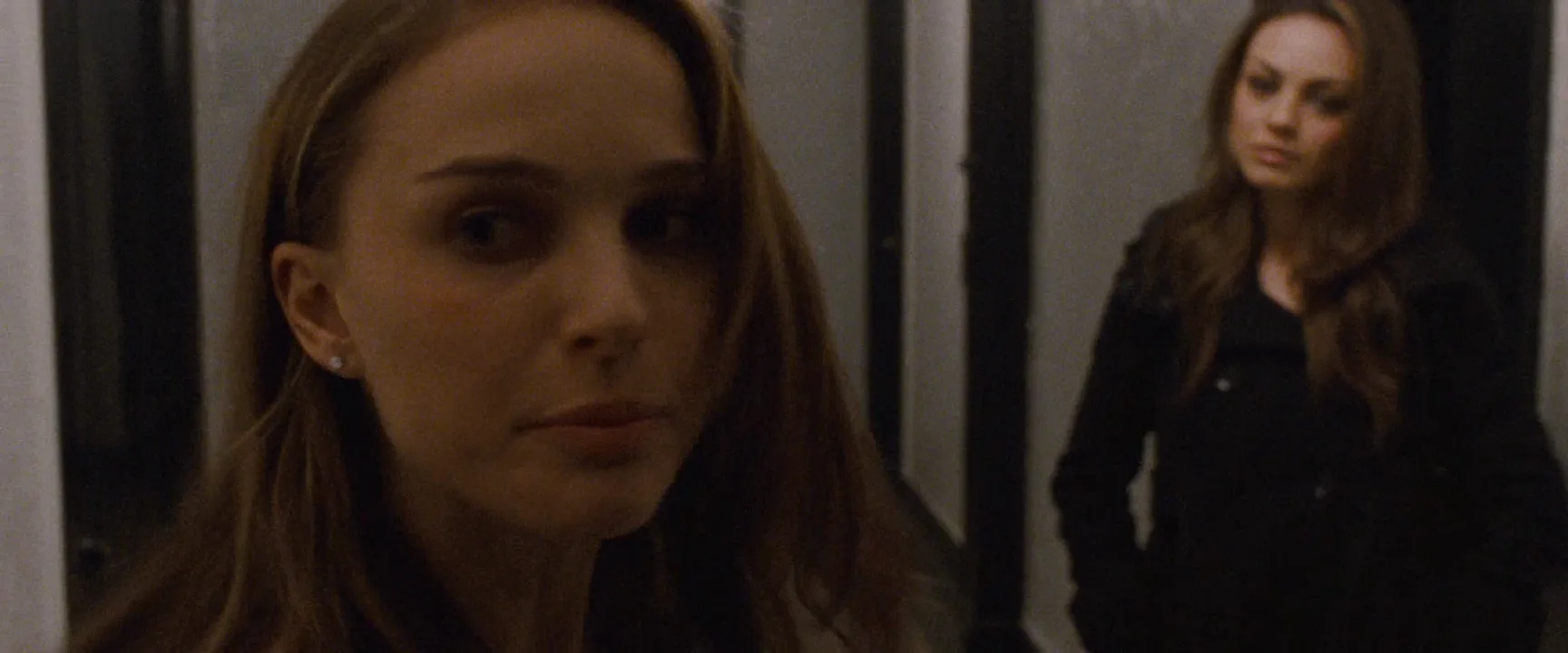
- Psychological horror. The threat may be in the character's head: Repulsion (1965), Black Swan (2010). Doubles, mirrors and unreliable framing.
- Folk horror. Isolated communities and old rituals — The Wicker Man (1973), Midsommar (2019). It often happens in daylight, proving horror doesn't need darkness.
- Found footage and screen horror. The Blair Witch Project, Paranormal Activity (2007), V/H/S: the camera is a prop in the story, and its limits become the frame's limits.
- Home invasion and survival horror. Don't Breathe (2016), Panic Room-style siege stories: a known space becomes hostile, and the geography of the house is the whole plot.
How to shoot a horror film: lighting, lenses and framing
Darkness has to be designed. A practical starting kit:
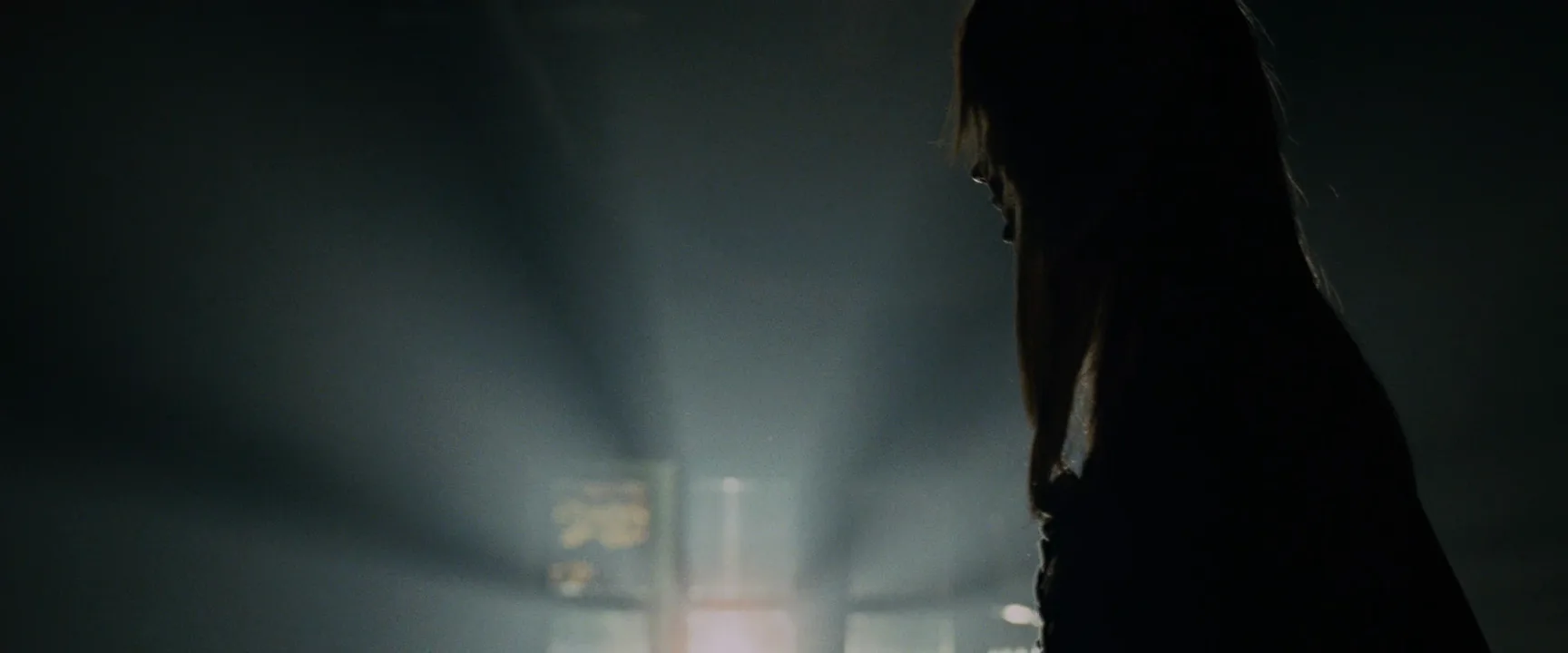
Lighting. Start from a single motivated source — a window, a lamp, a flashlight, a phone screen — and let it fall off hard. Contrast ratios of 8:1 to 16:1 between key and shadow side are common; push further for moments of maximum dread. Use practicals in frame so the dark reads as real, not as underexposure. A little haze gives flashlight beams and window light a shape and makes backlit figures read as silhouettes. Keep true black somewhere in every frame — lifted, milky shadows kill fear faster than anything.
Exposure. Expose for the highlights you care about and let the rest go. On digital cameras, protect skin at roughly one to two stops under middle gray for night scenes and check that the blacks still hold detail where the audience needs to search.
Lenses. Wide lenses (18–24mm) close to the face distort features slightly and exaggerate the depth of a corridor behind the actor; long lenses (85–135mm) compress a hallway so the far end feels closer than it is. Shallow depth of field lets something move in the soft background before the audience can identify it.
Camera height and angle. A high angle makes a character small and trapped; a low angle turns the threat into a looming shape. A Dutch angle is useful sparingly — as a signal that the world has slipped, not as a default.
Framing and blocking. Frame characters off-center and leave the larger part of the shot to a doorway, window or dark corner. Block the threat in the background or at the edge of frame, slightly out of focus. Let eyelines go off-screen: a close-up of someone staring into the dark is often scarier than the thing they see.
Movement. Slow push-ins build dread; long, steady tracking shots behind a character make the audience a follower. Handheld belongs to panic and found footage. Long holds make the audience scan the frame for what's wrong.
Color. Cold cyan or sickly green for dread, sodium amber for decay, saturated primaries for the stylized nightmare of Suspiria (1977).
Horror vs. suspense: what's the difference?
Horror is a genre; suspense is a technique. Suspense is the anticipation created when the audience knows or fears what is coming and has to wait — Hitchcock's bomb under the table. Thrillers, heist films and dramas use it constantly without being horror.
Horror uses suspense as one of its engines, but it adds things suspense alone doesn't need:
- The payoff has to disturb, not just resolve. A thriller releases tension when the bomb is defused; horror often releases it into shock, gore or an image you can't unsee.
- The threat is frequently irrational. Ghosts, curses and creatures break the rules of the world, so the audience can't reason its way to safety.
- Surprise is a legitimate tool. Hitchcock preferred suspense to surprise; horror happily uses both, alternating long waits with jump scares.
A simple test: if you removed the supernatural or grotesque element and the film still worked as a tense chase, it is a thriller with horror styling. If the fear depends on dread of the unknown, the body or the uncanny, it is horror.
Horror Film examples in film
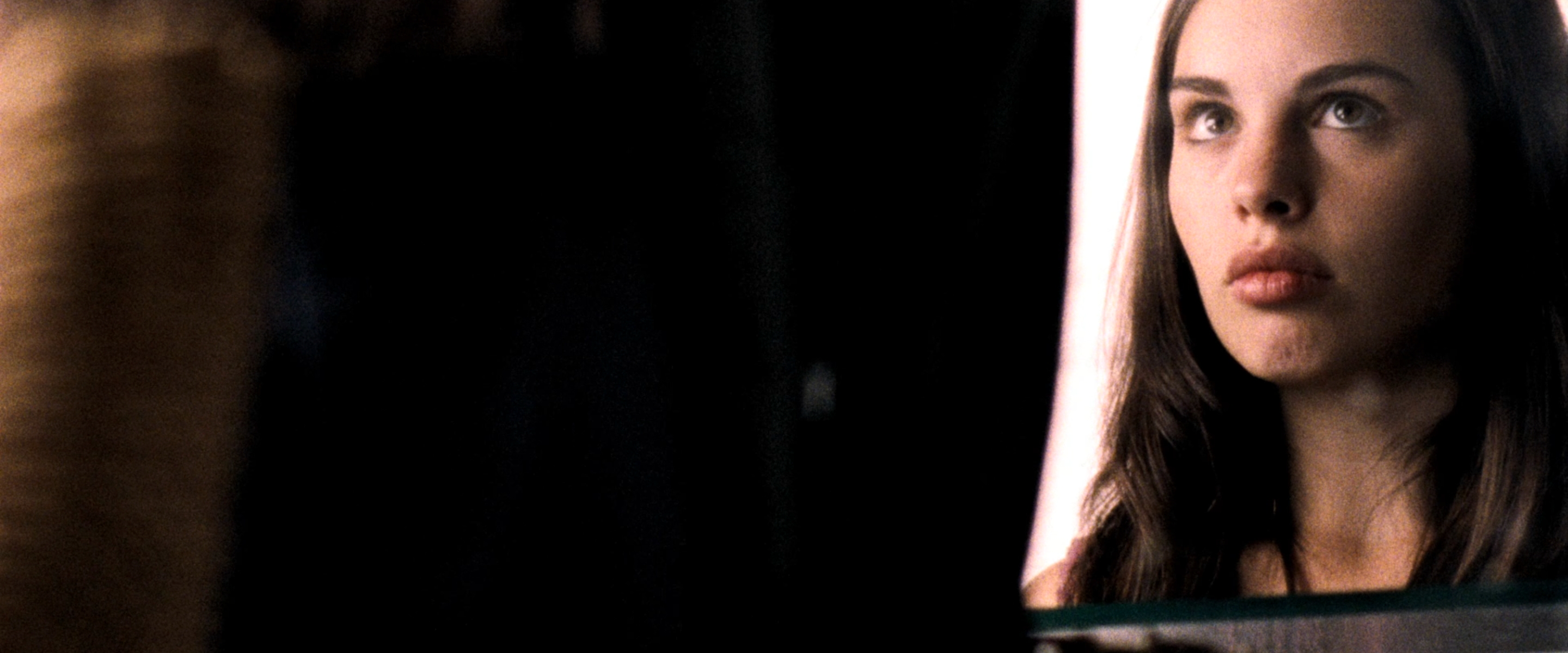
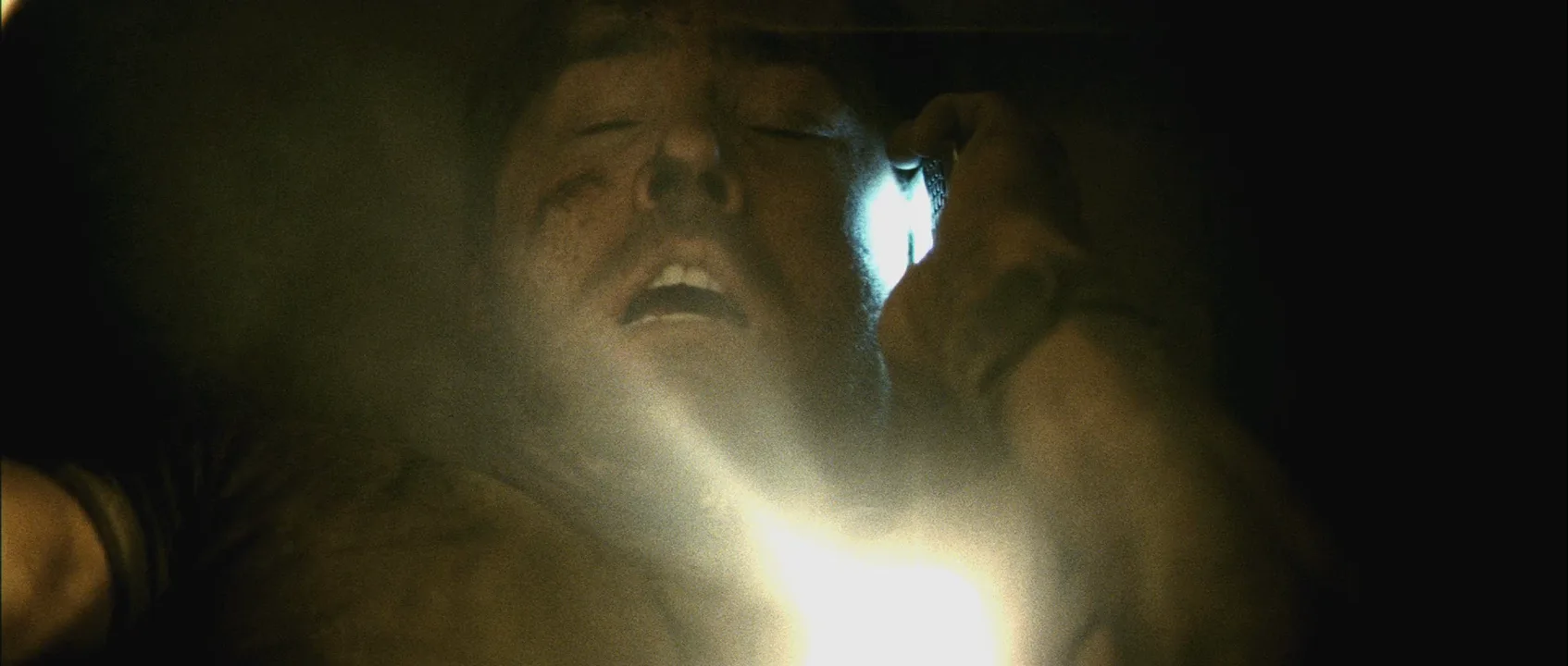
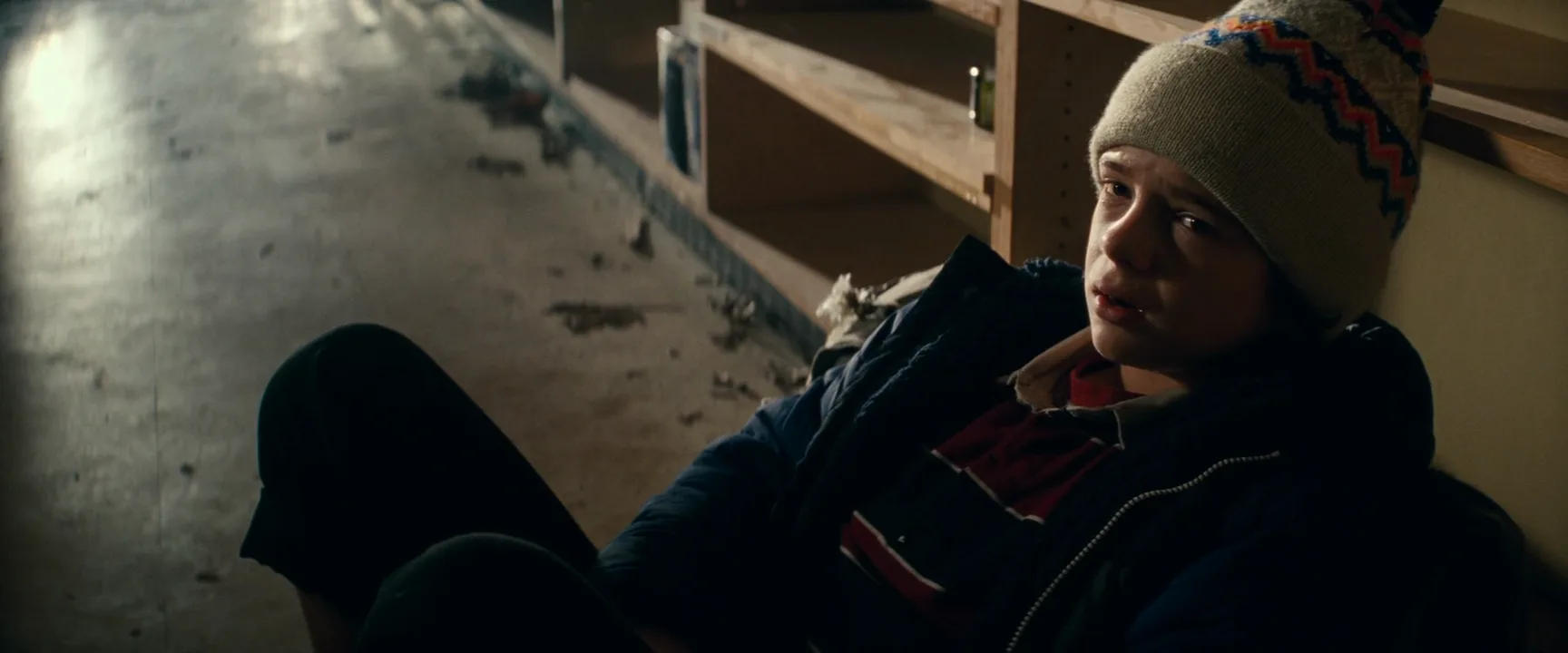
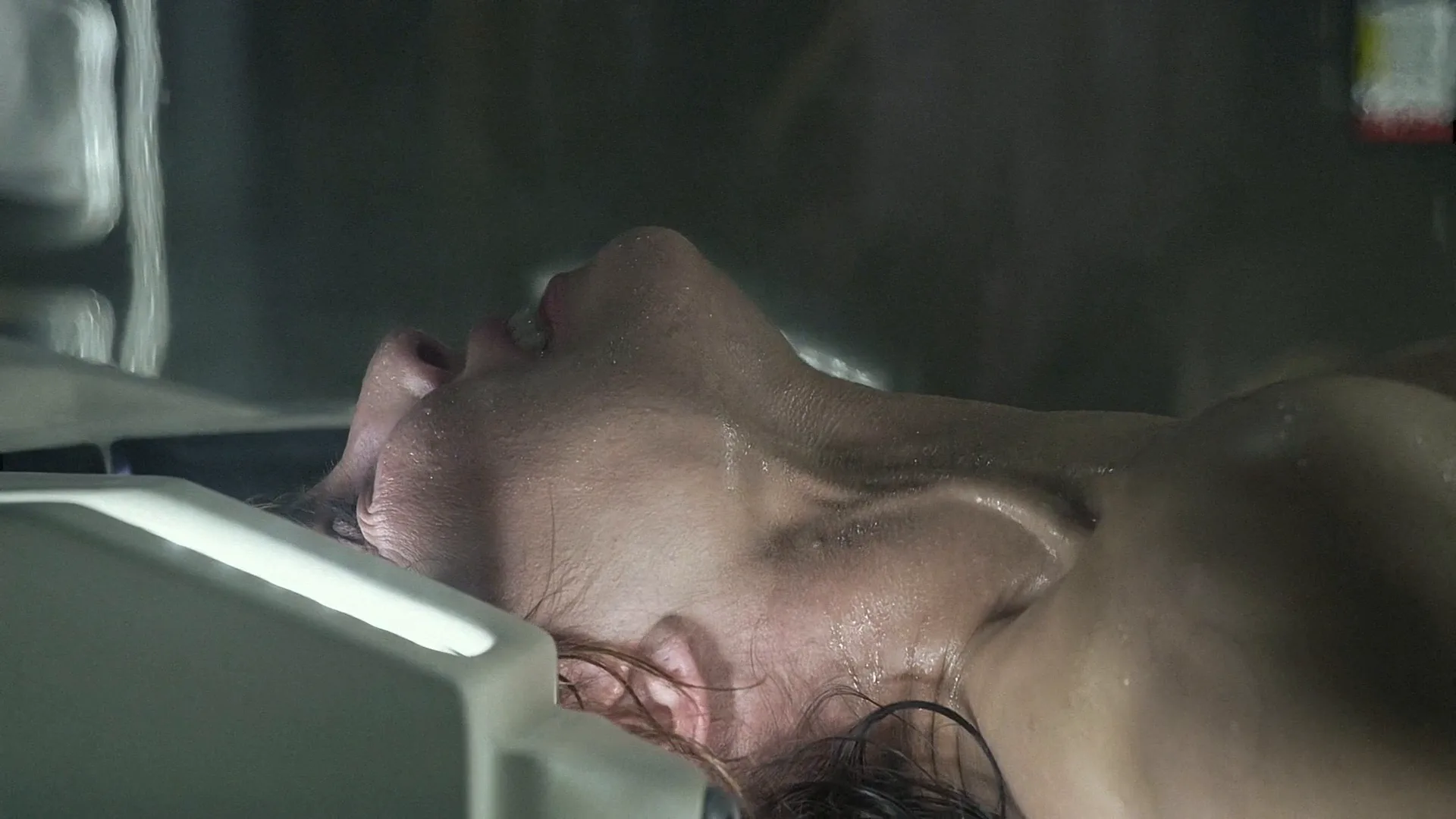
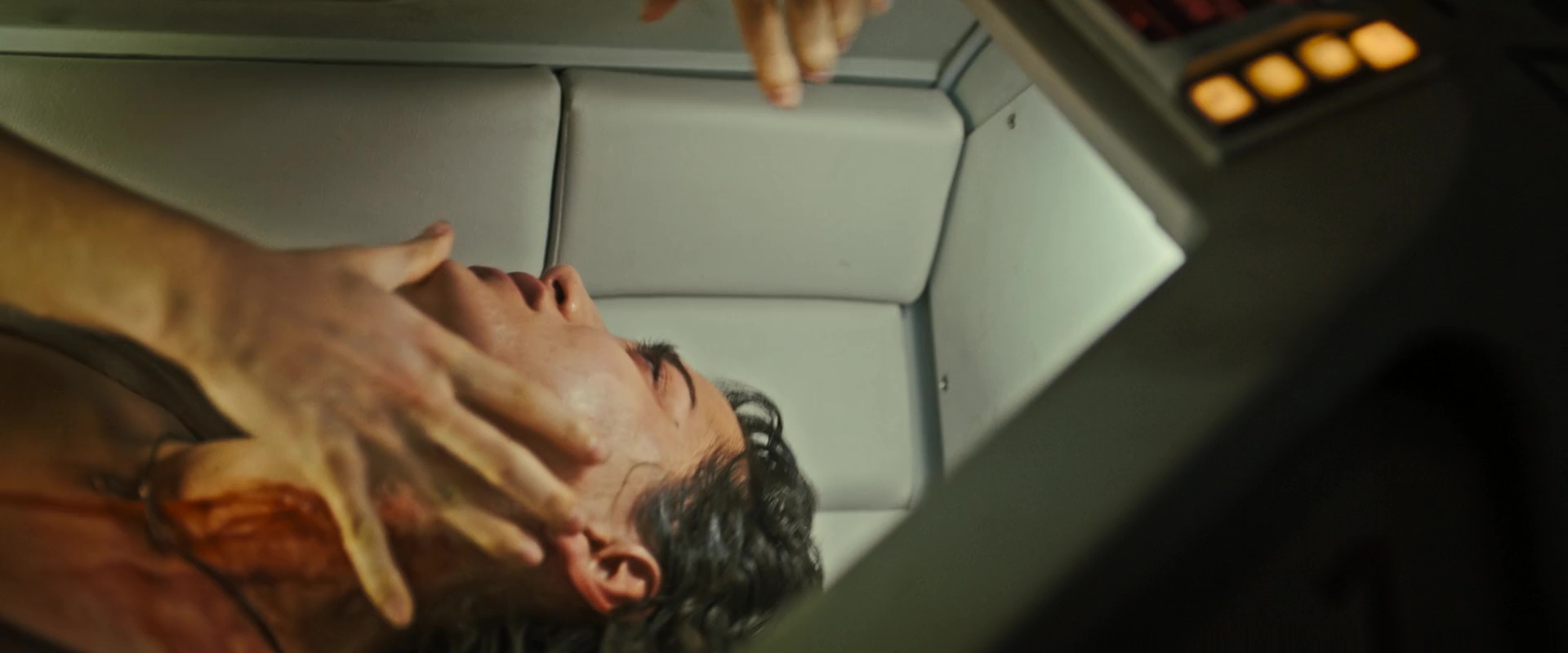
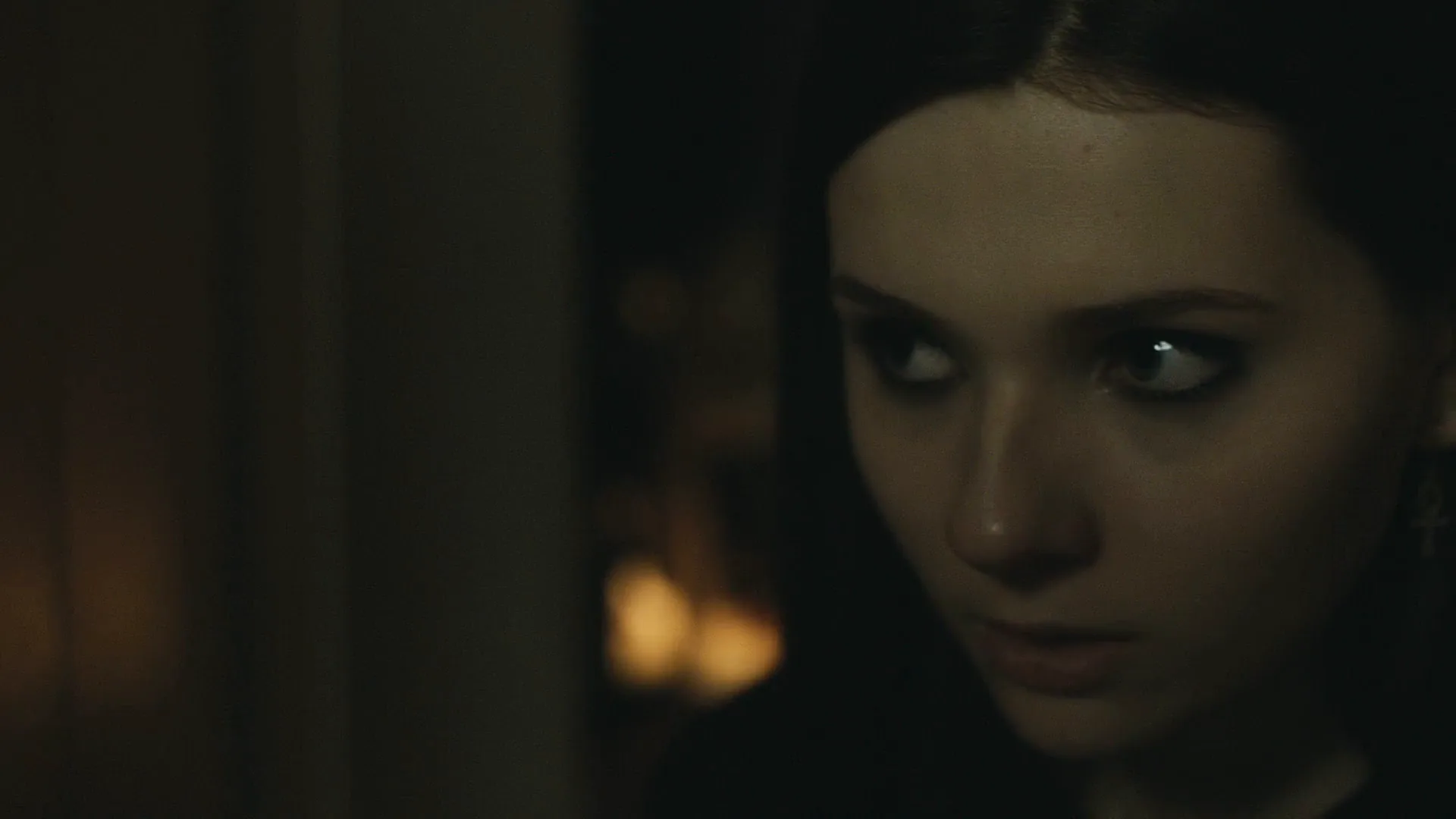
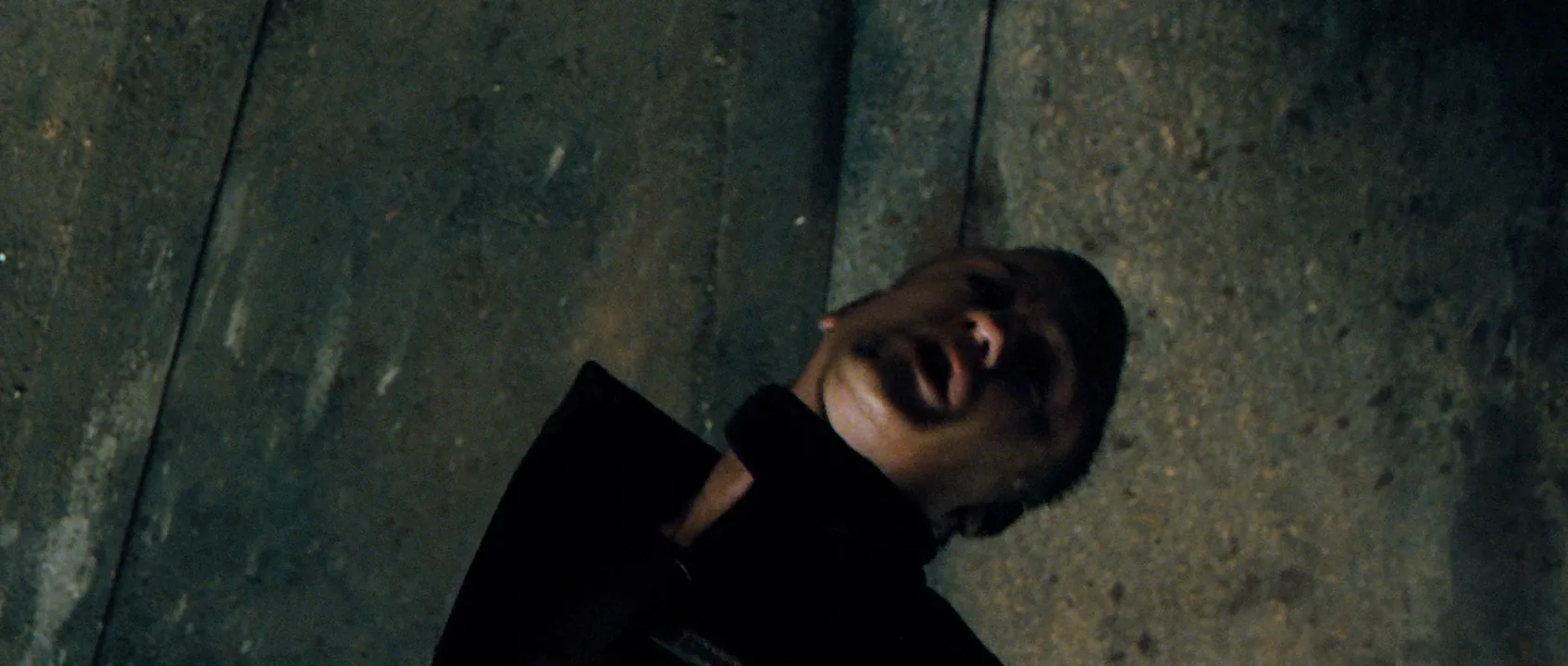
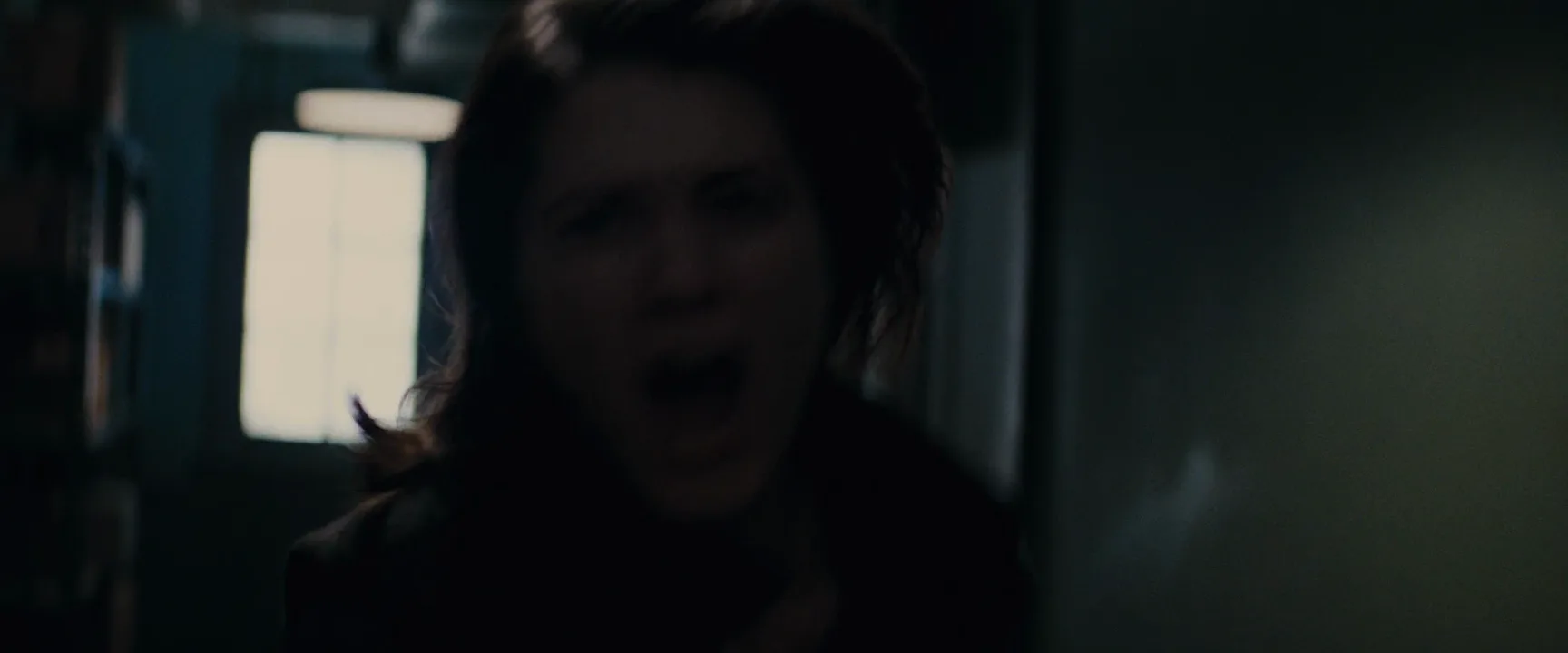
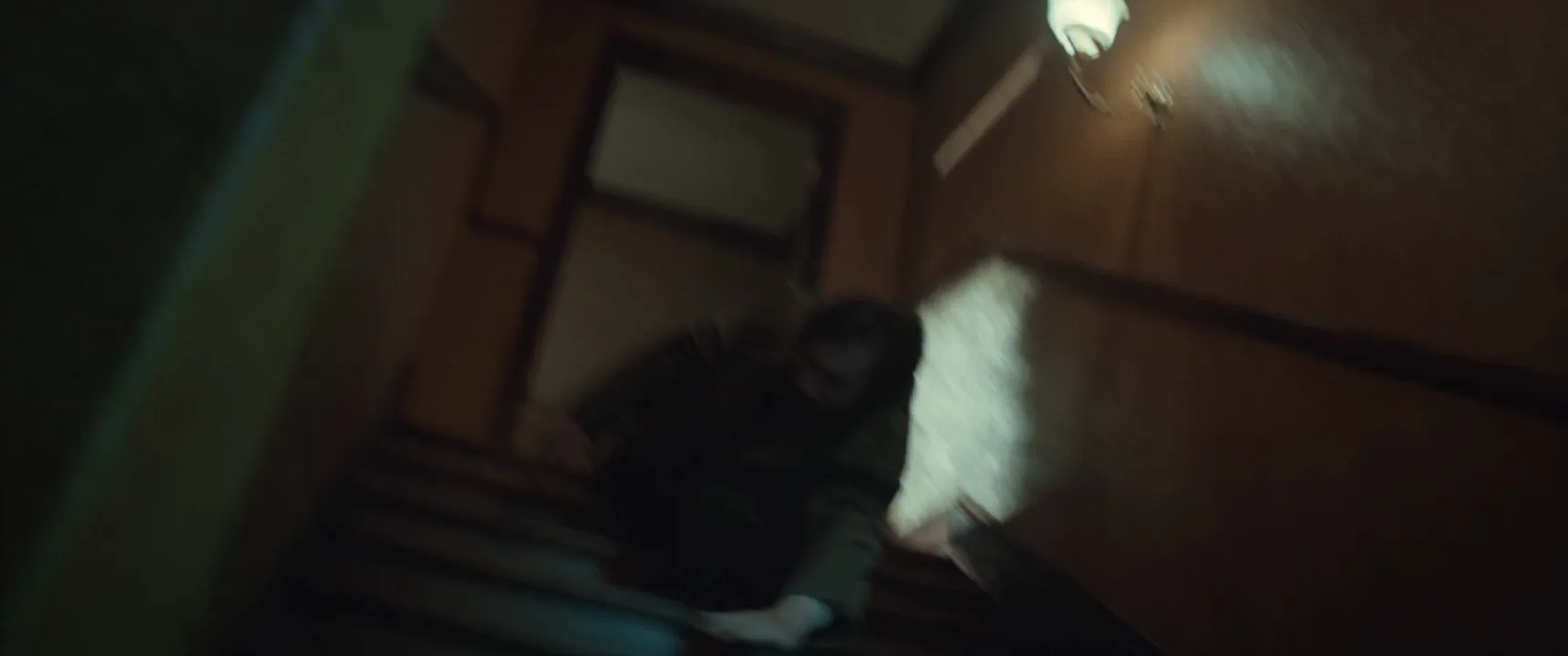
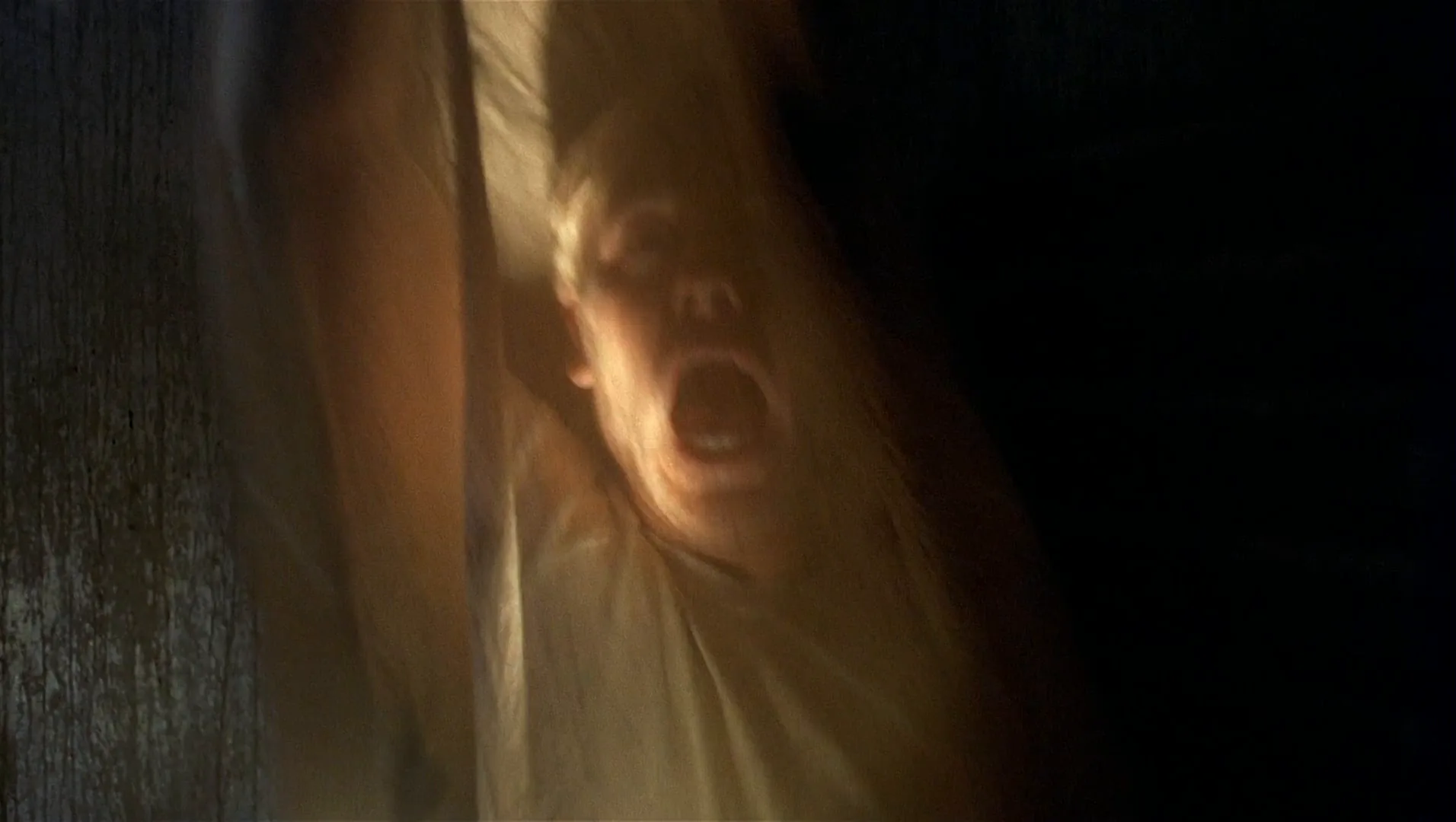
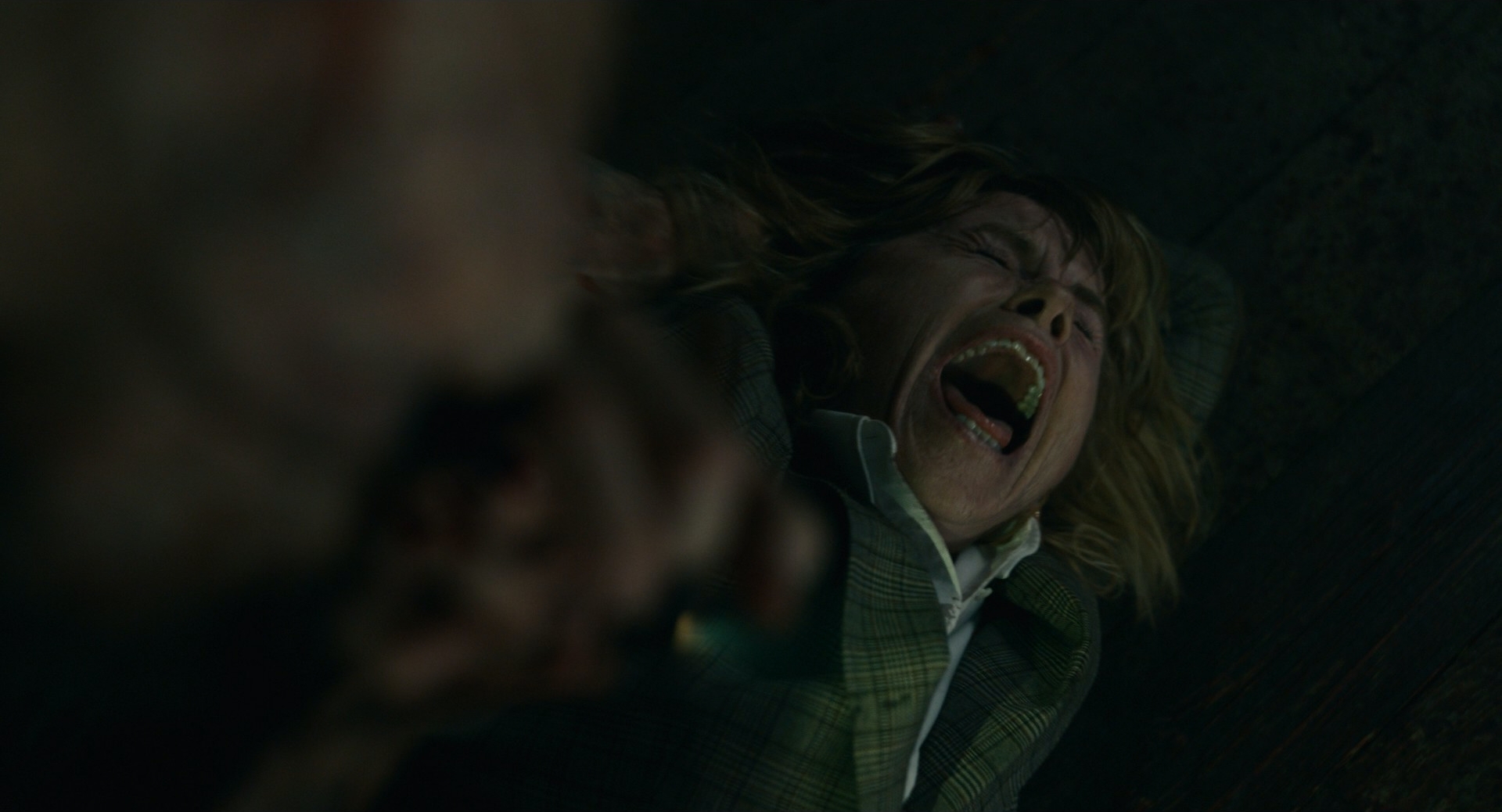
14 framesFrames from horror, sci-fi horror and psychological thrillers. Watch where each one hides information: in shadow, in empty space, behind an obstruction, or just outside the frame.
How to create a horror film with AI
4 promptsWith AI models, horror lives or dies on what you tell the model to hide. Describe one motivated light source, where the darkness falls, and which part of the frame stays empty; then give the video model a slow move and small, specific actions. On a FlashBoards board you can keep your reference frames next to every take, compare darkness levels side by side and animate the best start frame without leaving the canvas. The fourth prompt re-shoots a real film shot from a text description alone, and the original plays next to the result so you can compare.
Horror film still, wide shot, 21mm lens at chest height. A fictional woman in her late thirties with close-cropped gray hair, a thin scar through her left eyebrow and a mustard knit cardigan stands at the right edge of frame in a farmhouse hallway at night, holding a small flashlight pointed at the wooden floor. The left two thirds of the frame is a long, empty, dark hallway ending in a half-open door with blackness behind it. Single cold moonlight from a window at frame right as hard key, deep shadows falling to true black, light haze catching the flashlight beam, desaturated teal and faint amber, 35mm film grain, quiet and tense.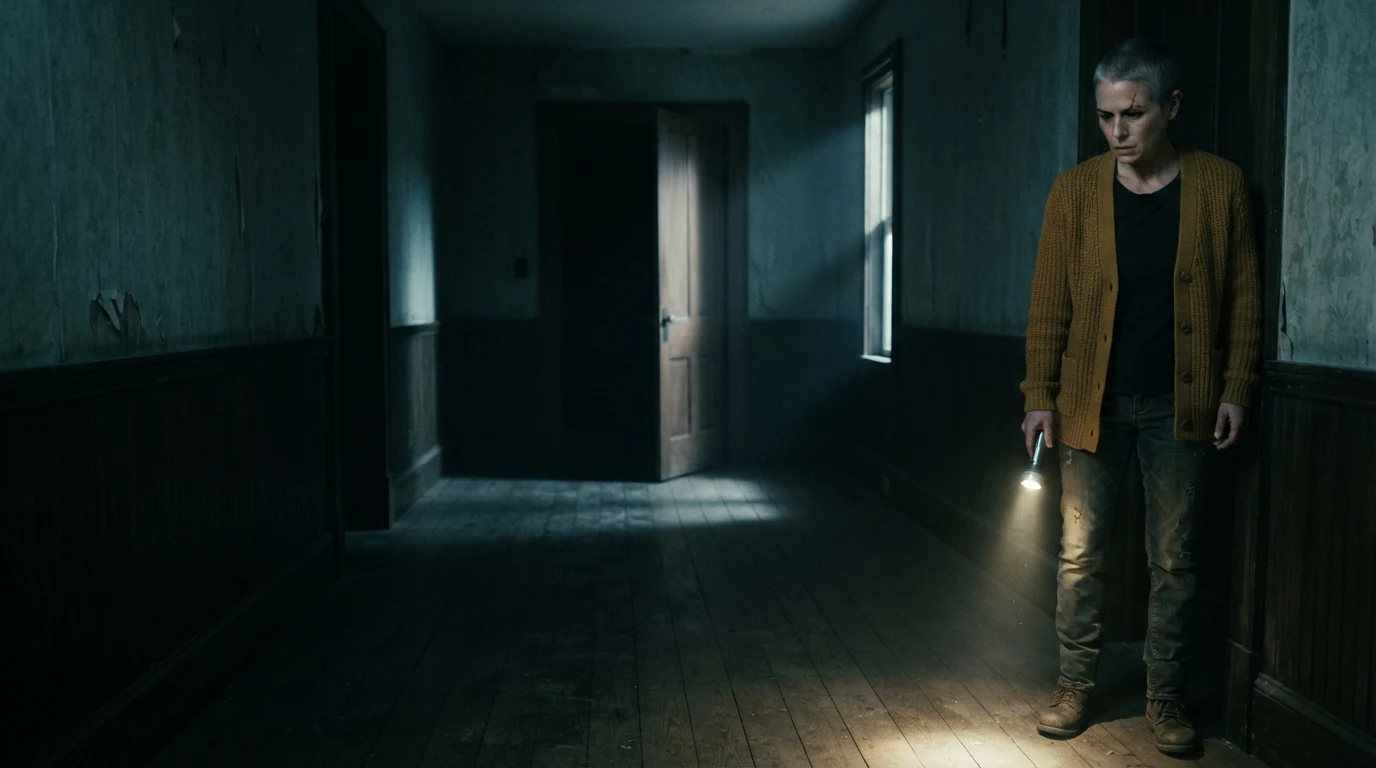
"Left two thirds of the frame is a long, empty, dark hallway" builds the negative space the whole shot depends on — without it, models center the subject and fill the frame. "Single cold moonlight … hard key" and "shadows falling to true black" keep the image low key instead of evenly lit. The specific face and cardigan make the character clearly fictional and consistent across takes.
Open FlashBoardsFolk horror film still, 2.39:1 anamorphic frame, low-angle close-up from chest height looking up. A fictional man in his sixties with a long white beard braided into two strands, deep-set pale gray eyes and a weathered wool cloak stands inside an old timber chapel at night, holding an oil lantern at waist height so the flame lights his face from below. Shadows climb upward from his nose and brows onto his forehead. Behind him the roof beams disappear into blackness. Warm orange lantern light against deep black, slight film grain, stillness, unsettling calm expression.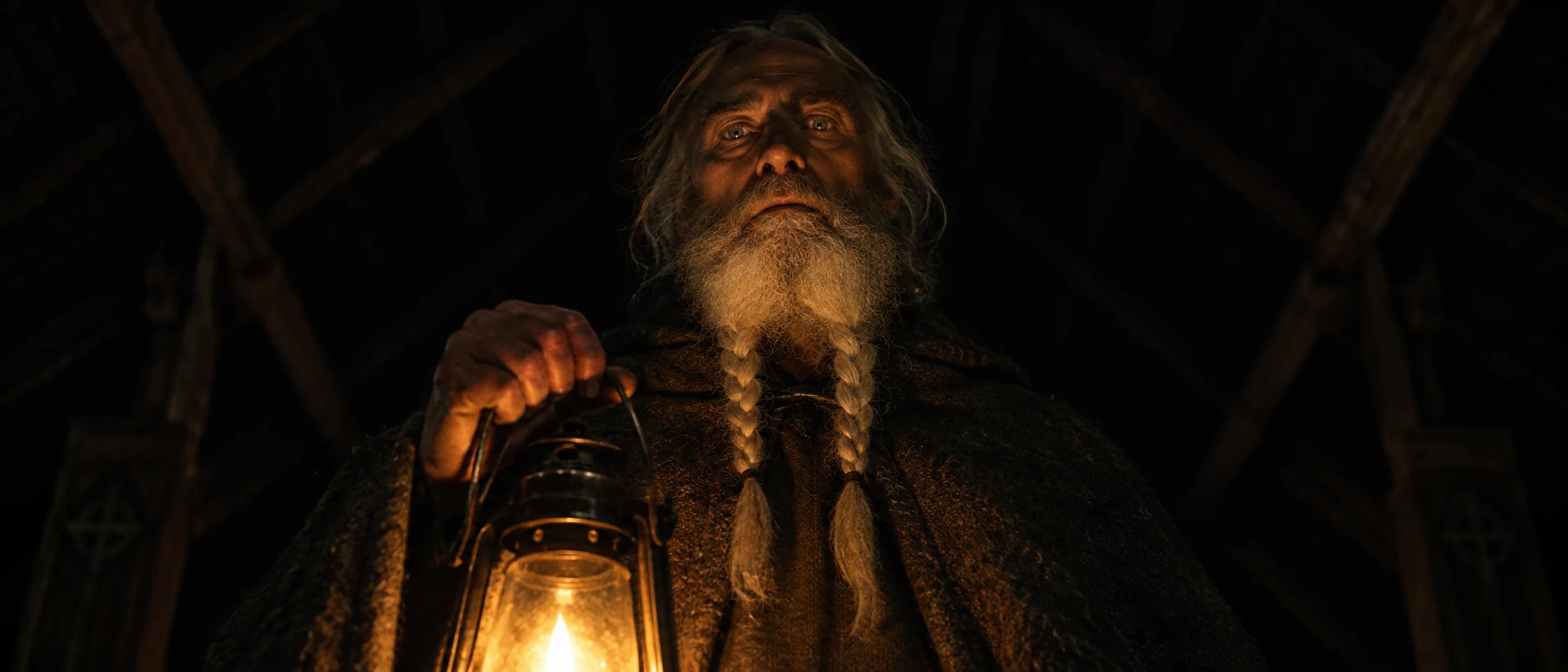
This second take swaps negative space for under lighting: "lantern at waist height so the flame lights his face from below" plus "shadows climb upward" states the direction twice, because image models tend to add a flattering top light. The low angle and the beams vanishing into black give the figure menace without any monster in the frame.
Open FlashBoardsCamera: a very slow, steady push-in from the wide shot toward the woman and the dark hallway, moving continuously for the whole shot at chest height. Action: she is already turning her head toward the hallway as the shot begins; she raises the flashlight and its beam slides along the wooden floor into the haze; the half-open door at the far end slowly swings wider into the blackness; she freezes, holding the flashlight steady, breathing visibly. The moonlight stays the only light, the hallway stays dark and her face stays half in shadow."Already turning her head" makes the shot alive from the first frame, so the model doesn't drift into a zoom on a still. The scare comes from something already in the frame — the half-open door — so nothing new has to be invented in the background. The last sentence restates the lighting in positive terms, because video models tend to brighten dark shots as the camera moves.
Open FlashBoards{
"output": "Full-screen live-action shot from Haunter (2013), a horror film, from its very first frame: one single continuous shot. Muted early-2010s 35mm look, night interior of an old house, low-key light with deep near-black shadows, a small warm amber firelight glow far behind, cold greenish-gray tones, fine film grain, quiet dread.",
"characters": {
"S1": {
"name": "Lisa, played by Abigail Breslin",
"look": "teenage girl, pale skin, long dark-brown hair parted in the middle and pulled back behind her ears, dark eye makeup, small silver ankh earring hanging from her left ear, plain black top",
"voice": "silence: she never speaks, only shallow breaths"
}
},
"shots": [
{
"shot": 1,
"camera": "eye level, 35mm lens, smooth dolly. It opens very close on a pale cream wood-panelled door that fills the whole frame, trucks left along it while panning right, then keeps arcing clockwise around S1 and ends on a close-up of her face turned toward frame left, dark wall and the pale door edge behind her at frame left.",
"action": [
"BEGINNING: alive from the first frame, the camera already gliding sideways across the pale panelled door, which fills the entire frame.",
"THEN: a dark gap opens at the right edge of frame and widens as the pale door slides away to frame left, revealing S1 at frame right pressed behind the door edge in the dark, only half her face lit, eyes wide and turned toward frame left, the amber fire glow low in the background at frame left.",
"THEN: she holds still, peering past the edge; her eyes flick toward frame left while the camera circles closer and she moves to frame centre.",
"THEN: she turns her head toward frame left into three-quarter profile, lips slightly parted, the ankh earring swinging at frame right; a single tear shines on her cheek.",
"END: close-up, she lowers her head and gaze toward the floor at frame left, brow tight, still listening to the dark; her hands stay out of frame."
],
"dialogue": [],
"voice": "silence: nobody speaks in this shot, no voice at all"
}
],
"sound": {
"ambience": "old house creaks, a faint crackle of a distant fire, her shallow breathing",
"speech": "no words in this video; the only human sounds are breaths and movement",
"never_spoken": "no narration and no voice-over: the descriptions, performance notes and step words of this prompt are never spoken aloud",
"music": "a film score under the scene, always below the voices: low sustained dissonant strings with a faint slow heartbeat pulse",
"subtitles": "none"
}
}Remakes the reveal from Haunter (2013), dir. Vincenzo Natali, DP Jon Joffin: the prompt names Lisa, played by Abigail Breslin, and keeps the blank door wiping aside, the half-lit face peering past its edge, the clockwise arc, the tear and her silence.
The shot hides its subject behind a blank foreground before revealing her, so the camera line spells out that it opens very close on a pale door that fills the whole frame and only then slides aside. Naming where the darkness sits (half her face, the wall behind her) and where she looks (toward frame left, then down) keeps the threat outside the frame, while the per-shot silence and a low string score carry the dread without a word.
Open FlashBoardsCommon mistakes
- Everything gets lit. Models default to readable, evenly exposed images. Name one source, its direction and say shadows fall "to true black"; add a lighting ratio if the result is still flat.
- The subject drifts to center. Negative space only appears if you say which part of the frame is empty and how big it is ("left two thirds").
- The monster steals the shot. Asking for a creature usually produces a fully lit, centered creature. Describe a silhouette, a shape in the doorway or just the character's reaction instead.
- Negatives backfire. Writing "no figure in the doorway" tends to draw one. Describe what IS there: "the doorway is black and empty".
- Video brightens and settles. Image-to-video often lifts shadows and slows to a static push. Restate the light at the end of the prompt and give the character a movement that starts immediately.
Keep the reference frames, prompts and every generated take side by side — images and video in one canvas.
FAQ
5 questionsWhat defines a horror film?
A horror film is defined by its intent: to frighten, disturb or disgust the audience. It sets characters against a threat — a killer, a supernatural force, a creature, a disease or their own mind — and stages that threat through darkness, isolation, withheld information and sound. The genre is less about the monster itself than about the dread of not knowing when or how it will appear.
What are the main horror subgenres?
The most common horror subgenres are slasher, supernatural and haunted house, creature feature, werewolf and transformation, body horror, psychological horror, folk horror, found footage and home invasion. Each has its own threat and visual habits — stalker POV for slashers, clinical light for body horror, daylight rituals for folk horror — and many films combine two or three of them.
How is horror movie cinematography different from other genres?
Horror cinematography is built on withholding. It uses low-key lighting with hard contrast, lots of empty or dark space in the frame, off-screen eyelines, slow push-ins and long holds that make the audience search the image. Where most genres light and frame to show information clearly, horror deliberately limits what the viewer can see, so imagination fills the gaps.
Is a scary movie the same as a thriller?
Not quite. Thrillers and horror films both rely on suspense, but a thriller usually resolves its tension through action and a rational threat, like a criminal or conspiracy. Horror adds dread of the unknown, the uncanny or the body, and often releases tension into shock or gore rather than relief. Many films sit between the two and borrow each other's visual style.
Can you make a horror film without showing the monster?
Yes, and many of the scariest films mostly do. Jaws keeps its shark largely off screen, and The Blair Witch Project never shows its witch. Sound, character reactions, shadows and empty doorways let the audience imagine a threat that is worse than any effect. When the monster finally appears, a brief, partial reveal usually works better than a long, well-lit look.
Related terms
7- SuspenseStorytelling
Suspense is anticipatory tension created when the audience knows or fears what may happen and waits for it — Hitchcock's bomb-under-the-table example: show the bomb, and a dull chat becomes unbearable.
- Slasher FilmGenres
A slasher is a horror subgenre in which a masked or unstoppable killer stalks and murders a group of young people one by one until a 'final girl' confronts him — Black Christmas, Halloween, Scream.
- Werewolf FilmGenres
A werewolf film is a horror subgenre built around a human who turns into a wolf-like beast — the transformation scene, the full moon and the curse stand in for loss of control and a divided self (The Wolf Man, An American Werewolf in London).
- Low-Key LightingLighting
Low-key lighting keeps most of the frame in shadow, with a strong key, little or no fill and a high lighting ratio, so only fragments of faces and objects emerge from the dark — the language of noir, thrillers and horror.
- Negative SpaceComposition & Framing
Negative space is the empty area around a subject — sky, wall, darkness, water — deliberately left large so the subject feels isolated, small, lonely or expectant, and the eye settles on it.
- Under LightingLighting
Under lighting places the key below the face, reversing the natural direction of daylight: shadows climb upward from nose and brows, making faces look uncanny, sinister or theatrical — unless motivated by a campfire or a screen.
- Film GenresGenres
A film genre is a category of films that share recognizable conventions of story, setting, character and style — western, horror, musical, noir — letting audiences know what to expect and filmmakers play with it.
Further reading
Carol J. Clover, Men, Women, and Chain Saws: Gender in the Modern Horror Film (Princeton University Press, 1992). Noël Carroll, The Philosophy of Horror, or Paradoxes of the Heart (Routledge, 1990).