 FlashBoards Learn
Lighting · Film language
Low-Key Lighting
Also called: low key, low-key
Low-key lighting is a style where most of the frame sits in shadow: one strong key, little or no fill and a lighting ratio of 8:1 or higher, so only fragments of faces and objects come out of the dark. It makes the viewer lean in, feel uneasy and wonder what the darkness is hiding.
- What it does
- Hides most of the frame in shadow and shows only what the key light touches, so the scene reads as tense, secretive or dangerous.
- Use it when
- Noir and crime, thrillers, horror, interrogations, confessions, night interiors lit by one lamp, any scene built on what the audience can't see.
- Watch out
- Dark is not the same as low key: keep one clean highlight and a way to separate the subject from a black background, or the image turns to mud.
- Try this prompt
low-key lighting, single hard lamp as key from the side, no fill, shadow side of the face falls to black, background 4 stops under the face, deep blacks
What is low-key lighting?
In the vocabulary of film lighting, low key describes the overall tonality of a frame, not one lamp. A low-key image is dominated by dark tones: the largest areas are shadow, and the bright parts are small and deliberate — a cheekbone, a hand, a lamp shade. The opposite, high-key lighting, fills the frame with light tones and shallow shadows.
The name sounds as if the key light is weak. It isn't: "key" means the tonal key of the picture, as in music. In practice a low-key frame usually has a strong, clearly directional key and almost nothing else. What is missing is fill light, the light that would soften the shadow side.
That makes the lighting ratio the working definition. The ratio compares the lit side of a face (key plus fill) with the shadow side (fill alone):
- 2:1 — one stop of difference, the soft, even look of sitcoms and commercials.
- 4:1 — two stops, standard dramatic modelling for most feature films.
- 8:1 — three stops, the threshold where the shadow side starts to read as black; low-key territory.
- 16:1 and beyond — four stops or more, often with no fill at all; the shadow side and the background disappear.
The second ingredient is the background. A face lit at 4:1 against a bright wall is just contrasty portrait light; against a wall three to five stops darker than the skin it becomes low key. Low key is therefore a question of contrast across the whole composition, not only across one face.
Why do filmmakers use low-key lighting?
Darkness is information withheld. When most of the screen is black, the eye rests on the lit fragments and the mind guesses at the rest. That is the core effect of low key: tension, secrecy and the sense that something is present outside the light.
It directs attention with no ambiguity. In a low-key frame you decide exactly what is readable — one face, one hand, one object.
It makes characters morally unreadable. Film noir built a whole visual grammar on this: detectives and killers lit the same way, faces cut by the stripes of venetian blinds in Double Indemnity (1944), shot by John F. Seitz. In The Godfather (1972), Gordon Willis lit Marlon Brando largely from above and let his eye sockets fall into shadow, so the Don's eyes are often unreadable at the moments his power is greatest. In Apocalypse Now (1979), Vittorio Storaro keeps Kurtz almost entirely in darkness, his head surfacing into light and sinking back.
It builds fear. Horror relies on low key because it turns every dark corner into a possible threat. The shadow play of German Expressionism, like the vampire's shadow on the stairs in Nosferatu (1922), passed into Hollywood horror and noir. The payoff is a reveal: a flashlight swings, a face steps into the key.
It sets night and isolation. A room lit only by a bedside lamp says it is late and the person is alone. Modern thrillers such as Se7en and No Country for Old Men lean on exactly that: one motivated source, everything else left to fall away.
Low-key lighting from noir to modern thrillers
The look came from style and necessity. Émigrés from the German studios brought expressionist shadow to Hollywood, and B-picture crews found darkness was cheap: a few hard units, flagged tightly, could light a set that was never fully built. Nicholas Musuraca's work on Cat People (1942) and John Alton's crime pictures made shadow the main event — Alton even wrote a book about it, Painting with Light (1949).
Noir low key usually meant hard light: small fresnels, bare bulbs, streetlamps throwing crisp shadows on walls. Robert Krasker's The Third Man (1949) is the textbook — wet night streets, long shadows, and Harry Lime revealed in a doorway when a window light suddenly falls on his face.
From the 1970s on, cinematographers moved toward motivated low key: the light seems to come from a real lamp, window or streetlight, and everything else falls away. Gordon Willis's top light, Jordan Cronenweth's smoke-filled shafts in Blade Runner (1982) and the lamp-lit rooms of David Fincher's thrillers all follow that logic. Digital sensors see deep into shadow, so modern low key is often a practical or two, careful negative fill and the grade.
The extreme, sculptural end of the style has its own name — chiaroscuro, borrowed from Baroque painting: one hard side or top source carving a face out of black. All chiaroscuro is low key; not all low key is chiaroscuro.
How to light a low-key scene
Low key is built by controlling where light doesn't go.
1. Choose one motivated key. Decide where the light comes from in the story — a lamp, a window, a flashlight — and put your key on that side. Classic low-key positions are 60–90° to the side (side lighting) or high overhead (top lighting); both leave large parts of the face in shadow. A frontal key near the lens flattens the face and fights the style.
2. Kill the fill. Turn off the bounce, and add negative fill: a black floppy or duvetyne on the shadow side, 1–2 m from the actor, absorbs light the room would throw back.
3. Keep the key off the background. Use a spot fresnel, a snoot or a grid on a soft source, and flag the spill. Distance helps too: light falls off with the square of distance, so a wall four times farther from the lamp than the face sits about four stops darker.
4. Separate dark from dark. A dark coat against a dark wall disappears. Add a thin rim light on the shoulders, place a practical lamp or a lit window behind the subject, or add light haze so a backlight draws the outline. A full silhouette against a brighter patch is low key too.
5. Expose for the highlights. Set exposure so the lit side of the face sits at normal skin value or a little under, then let the shadows land where they fall. With false color or a spot meter, aim for the shadow side 3–5 stops below the key side and the background near black but not clipped. Keep a little detail in the blacks: crushing is a grading decision you can't undo.
6. Design for darkness. Dark costumes, deep-toned walls and matte surfaces help the frame hold black. One bright object, such as a white shirt or the lamp shade, anchors the eye and shows the darkness is intentional.
Low-key vs. high-key lighting
The two styles are the ends of one scale, and the ratio is the dial.
| | Low key | High key | |---|---|---| | Lighting ratio | 8:1 and higher, often no fill | about 1:1 to 2:1 | | Dominant tones | black, deep shadow, small highlights | light, pale, soft shadows | | Typical sources | one hard or narrow key, practicals, flags | large soft sources, bounce, overhead soft light | | What the viewer sees | only what the key touches | nearly everything | | Mood | tense, secretive, intimate, dangerous | open, safe, cheerful, sometimes sterile | | Genres | noir, thriller, horror, crime drama | comedy, romance, musicals, commercials |
The practical difference is control of information. High key shows the whole room; low key decides what the audience is allowed to know. Most films live in between, around 3:1 or 4:1.
Is low-key lighting the same as underexposure?
No. Underexposure means too little light reached the sensor for the image as a whole: every tone slides down, faces go muddy, blacks turn noisy and there is no clean highlight anywhere. Low key is a distribution of light — a correctly exposed highlight with deep shadows around it. A good low-key frame has a full tonal range, from the brightest point on the lamp shade to true black.
A quick test: find the brightest skin in the frame. If it sits at a healthy value and the darkness surrounds it, you are looking at low key. If the brightest skin is itself dim and gray, the shot is simply underexposed. Likewise, darkening a flat, evenly lit image in the grade never produces the sculpted shadows of a single key with no fill.
Low-Key Lighting examples in film
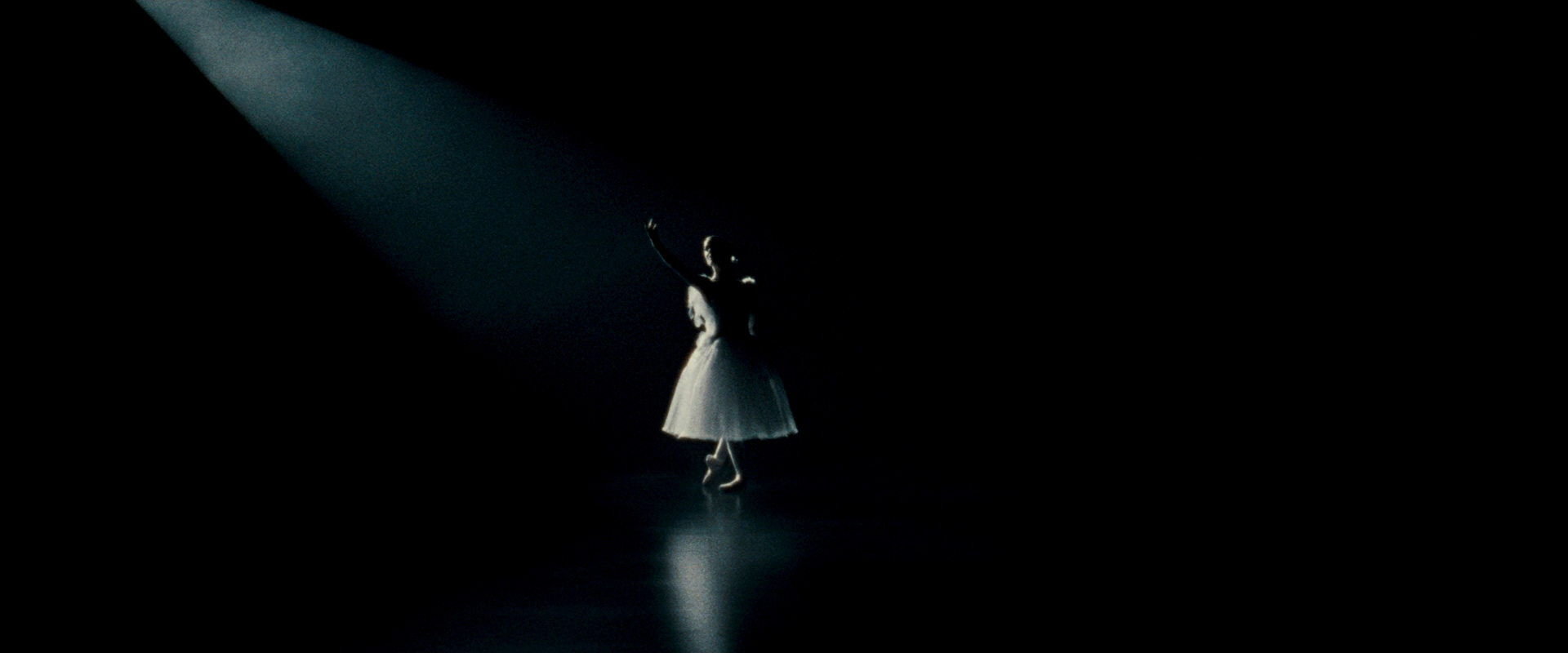
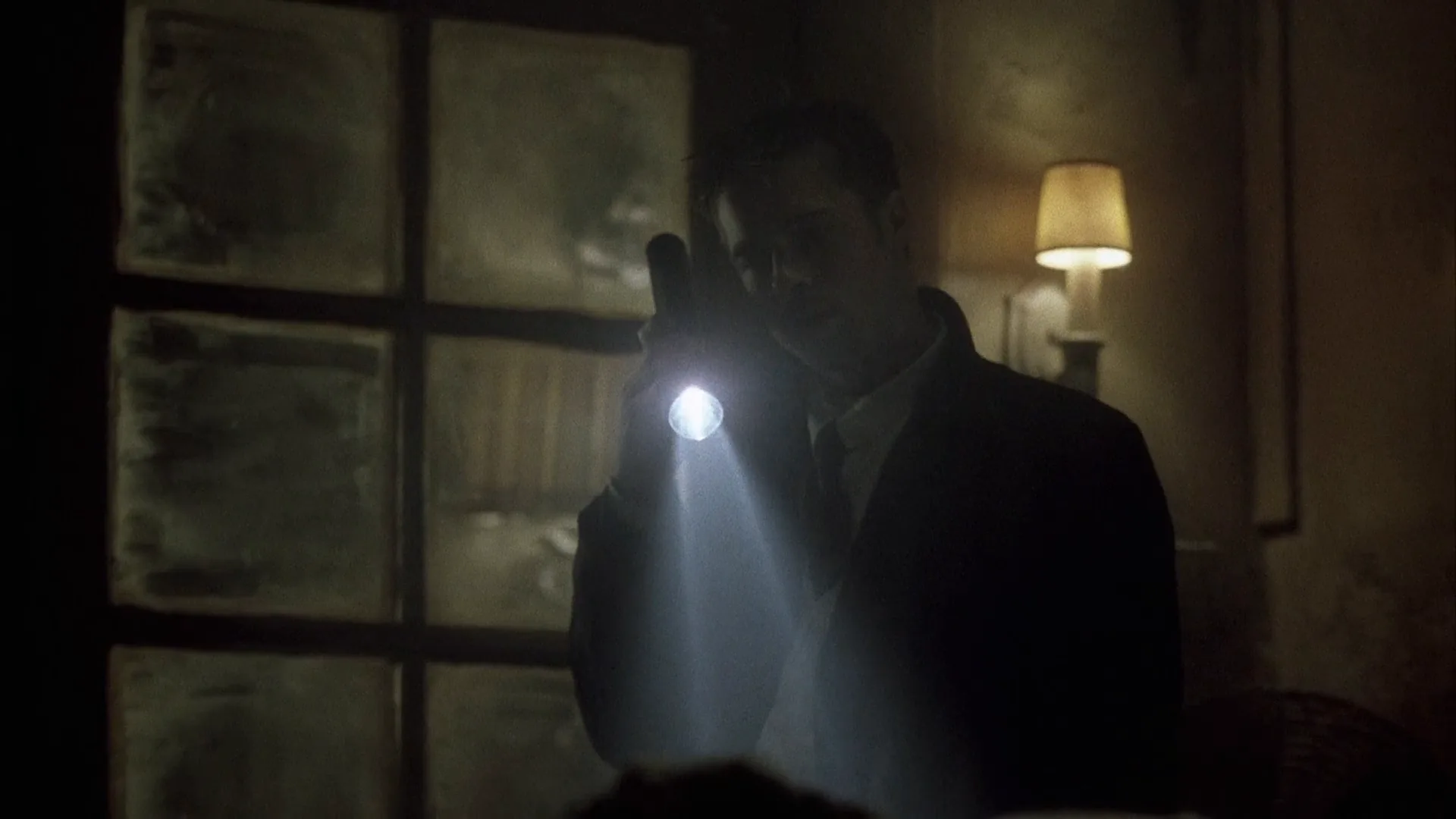
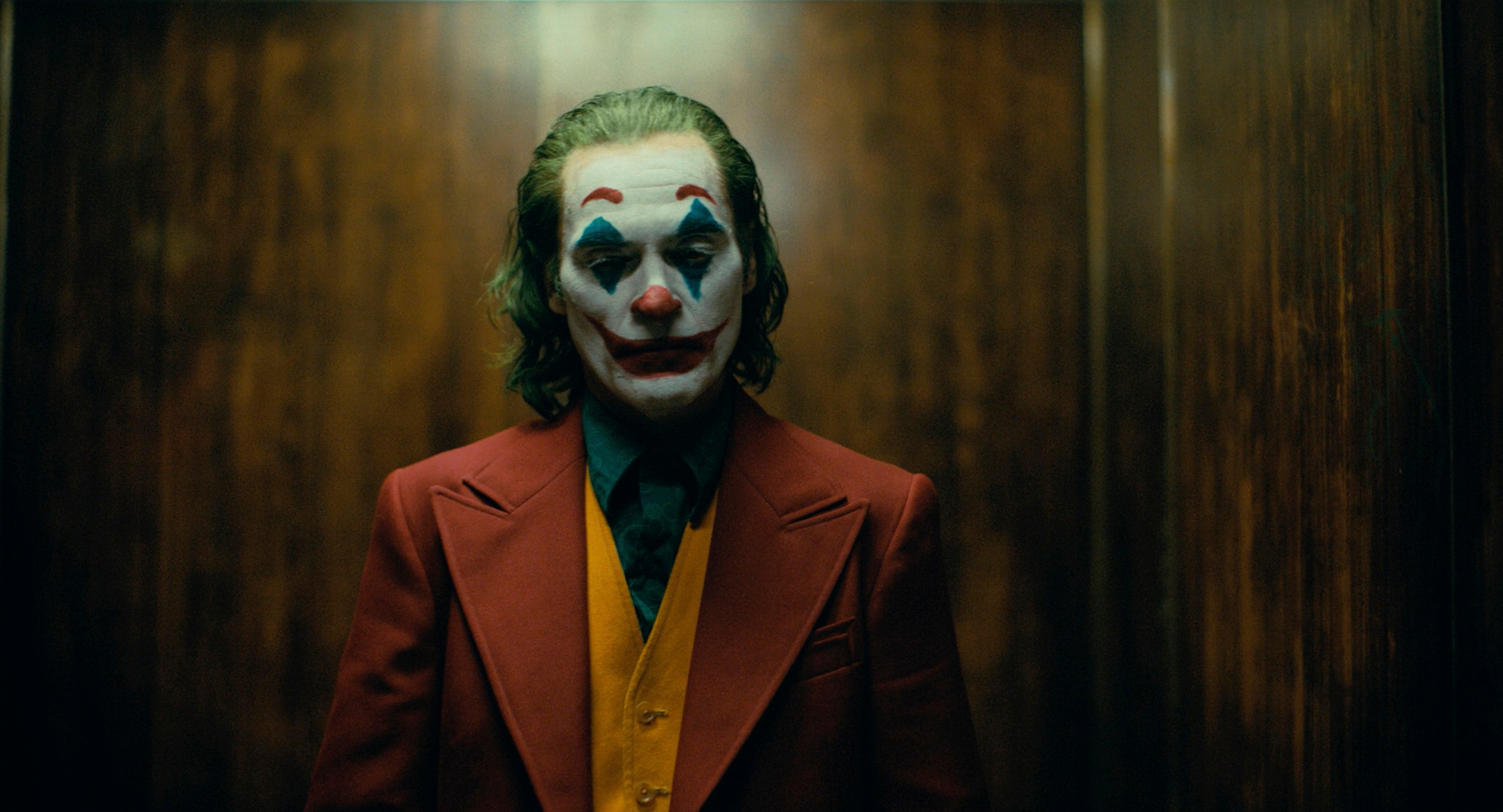
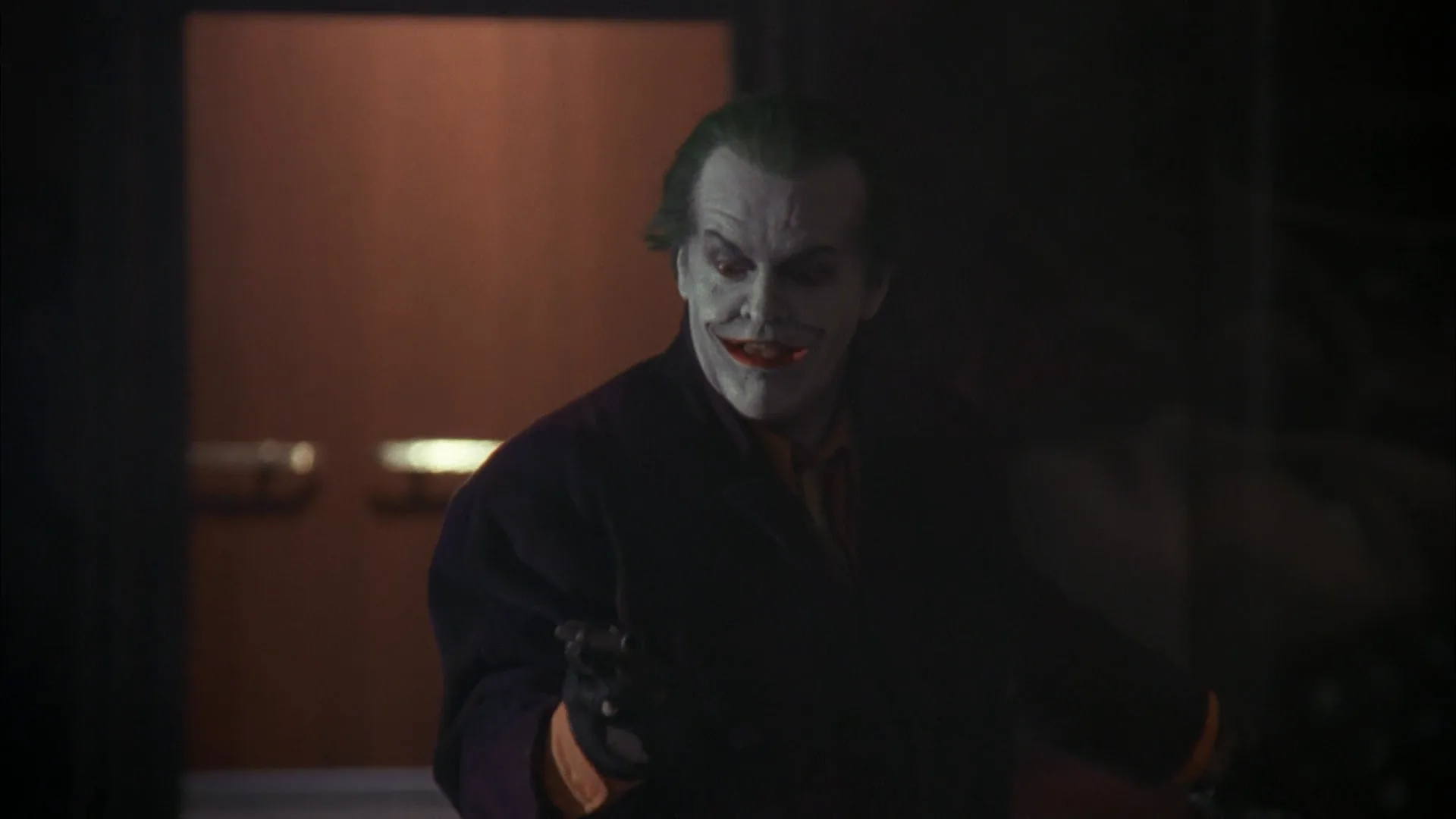
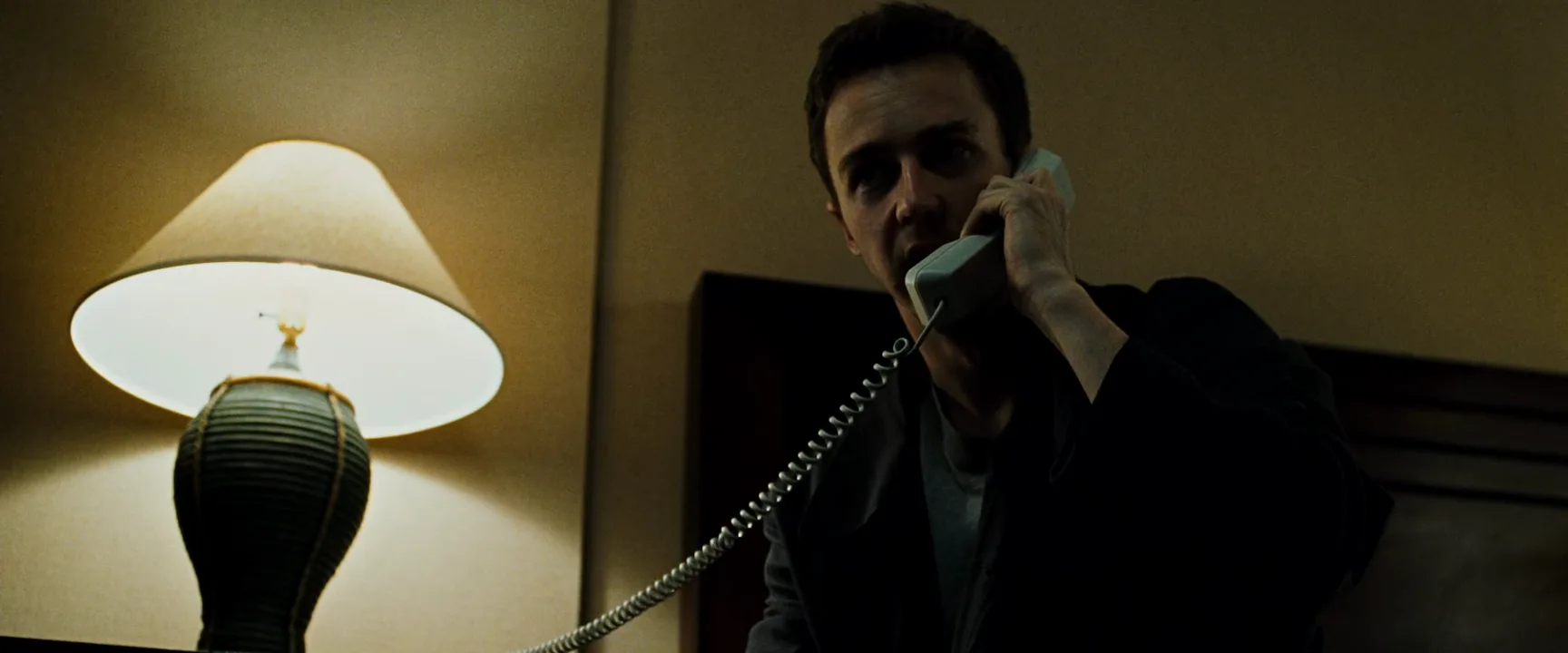
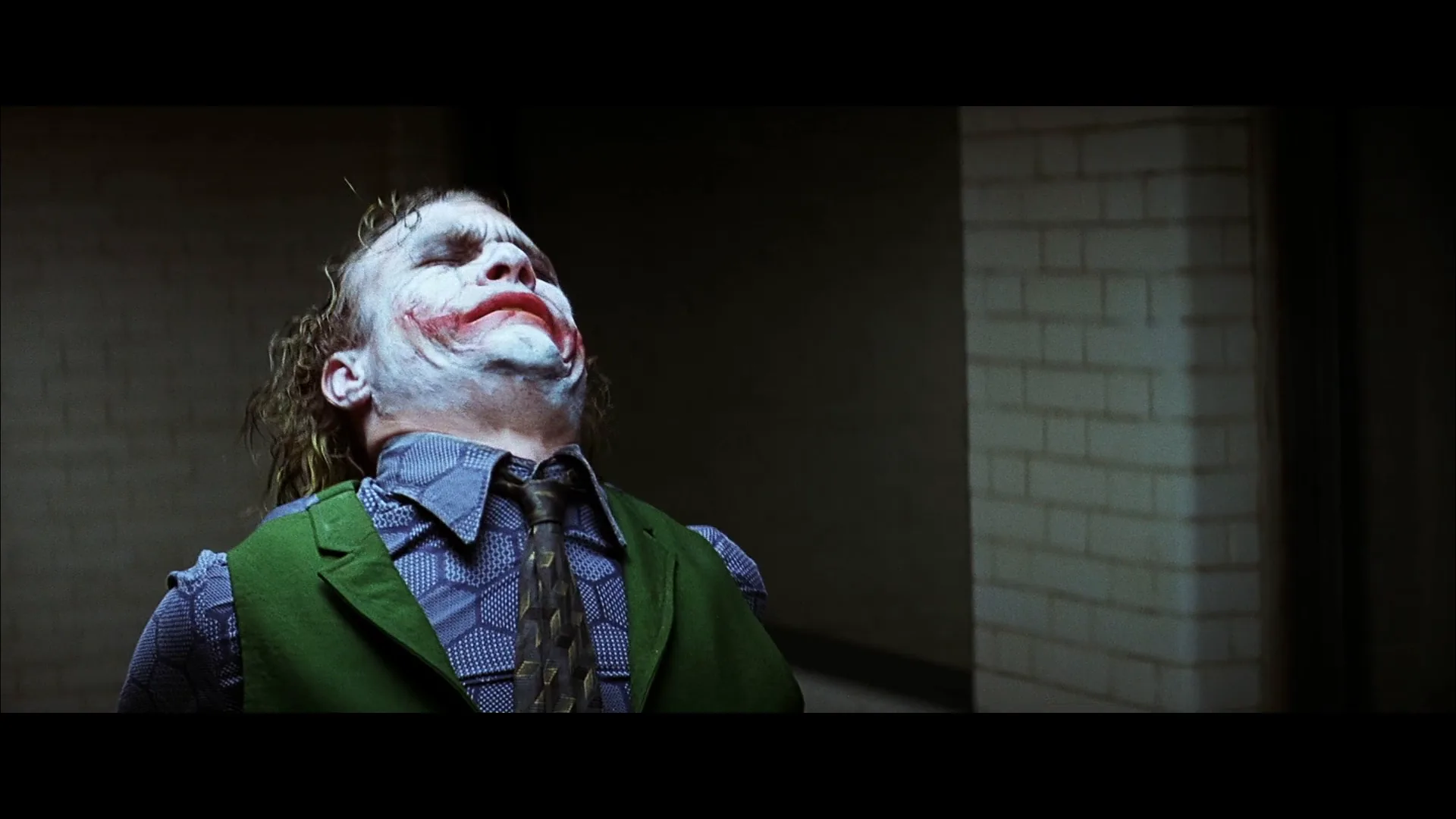
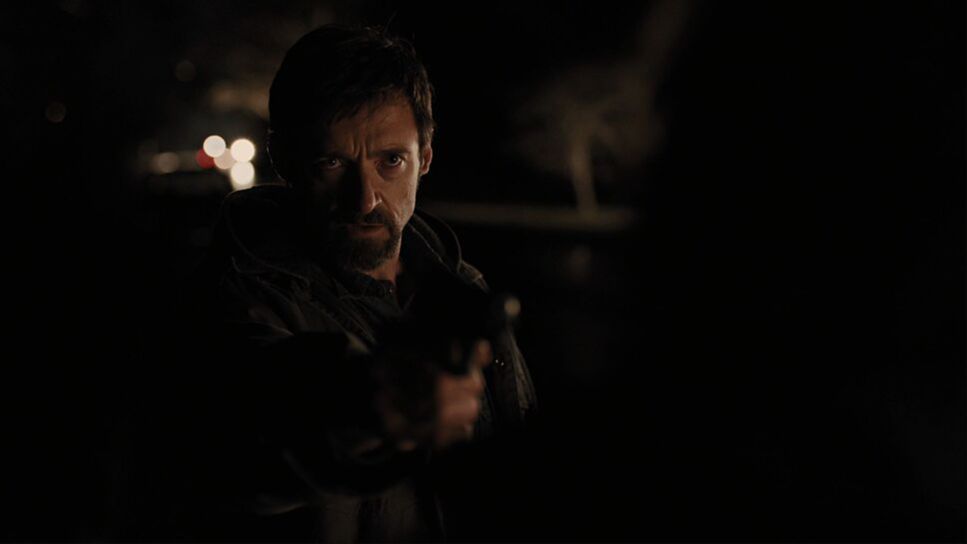
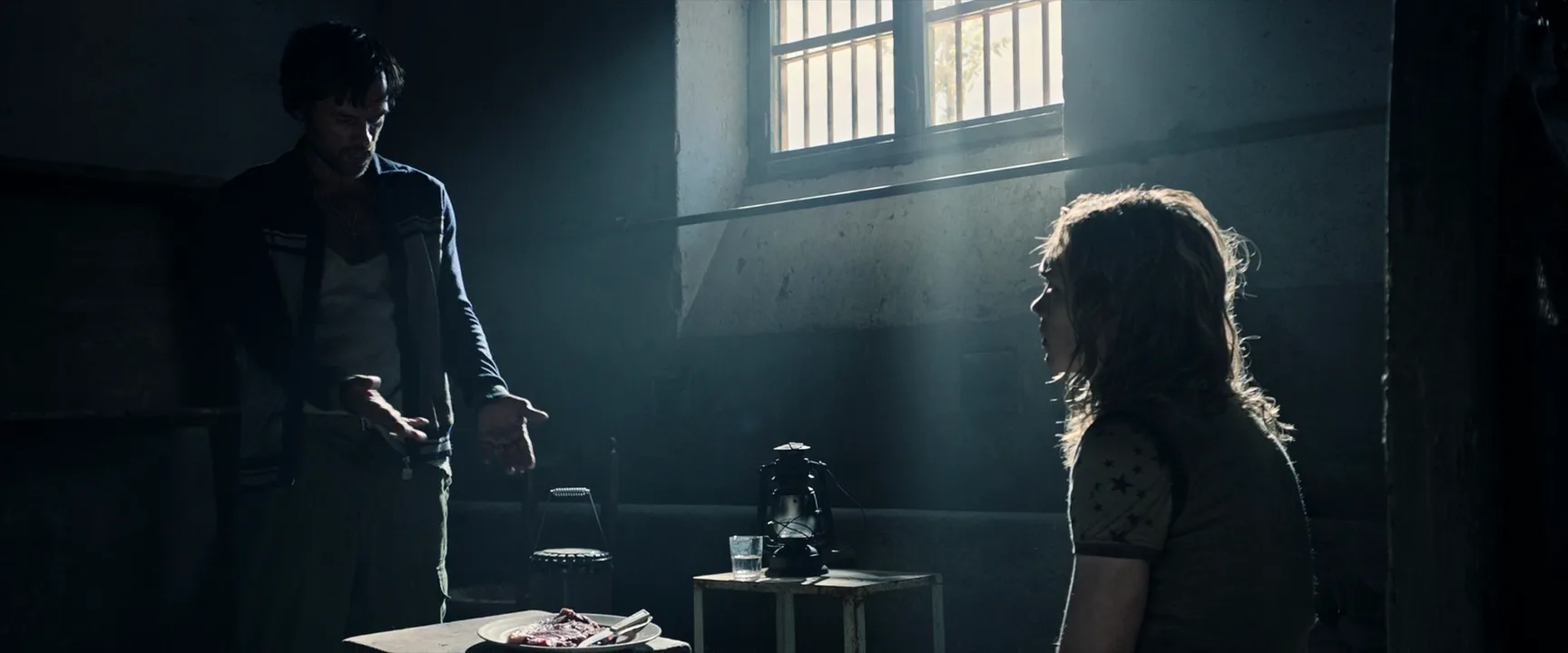
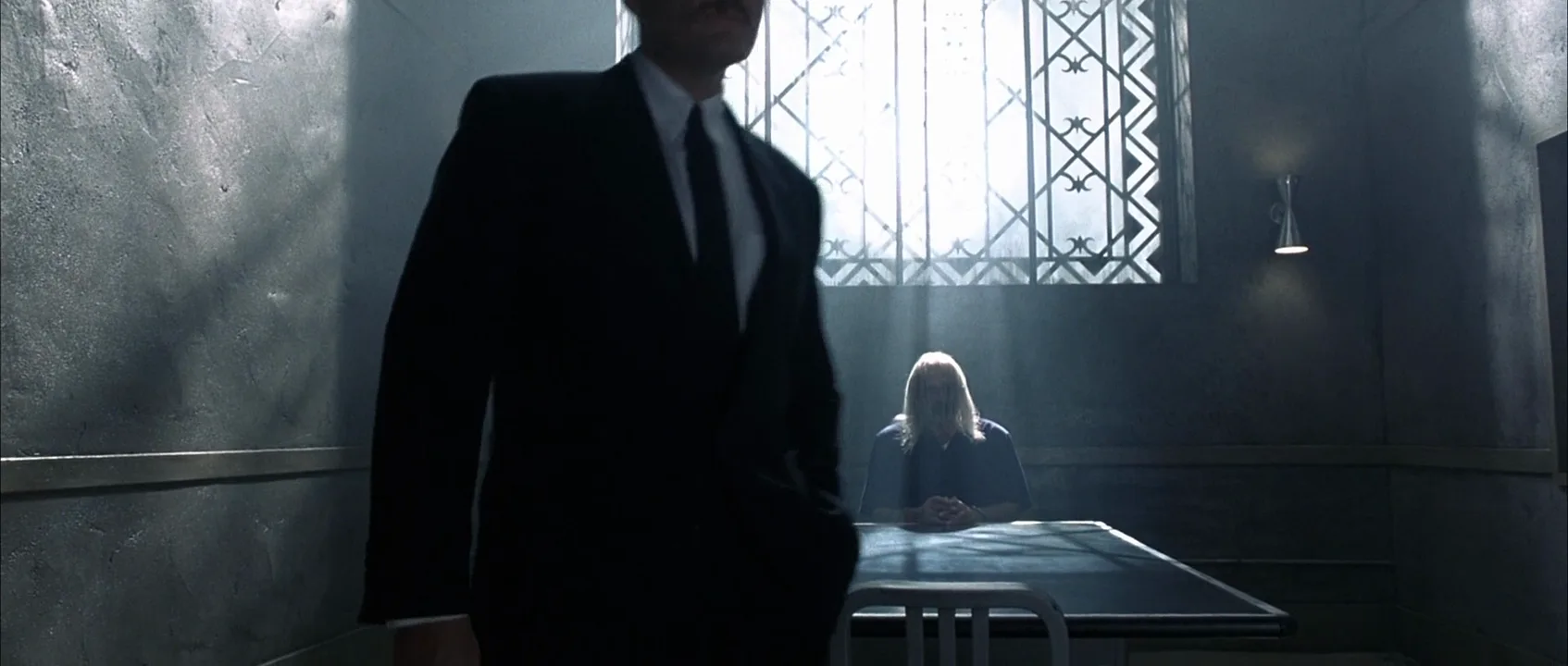
14 framesFourteen frames from neo-noir, thrillers and dark dramas. Look for the single source, how little fill reaches the shadow side, and what the filmmakers left in the dark.
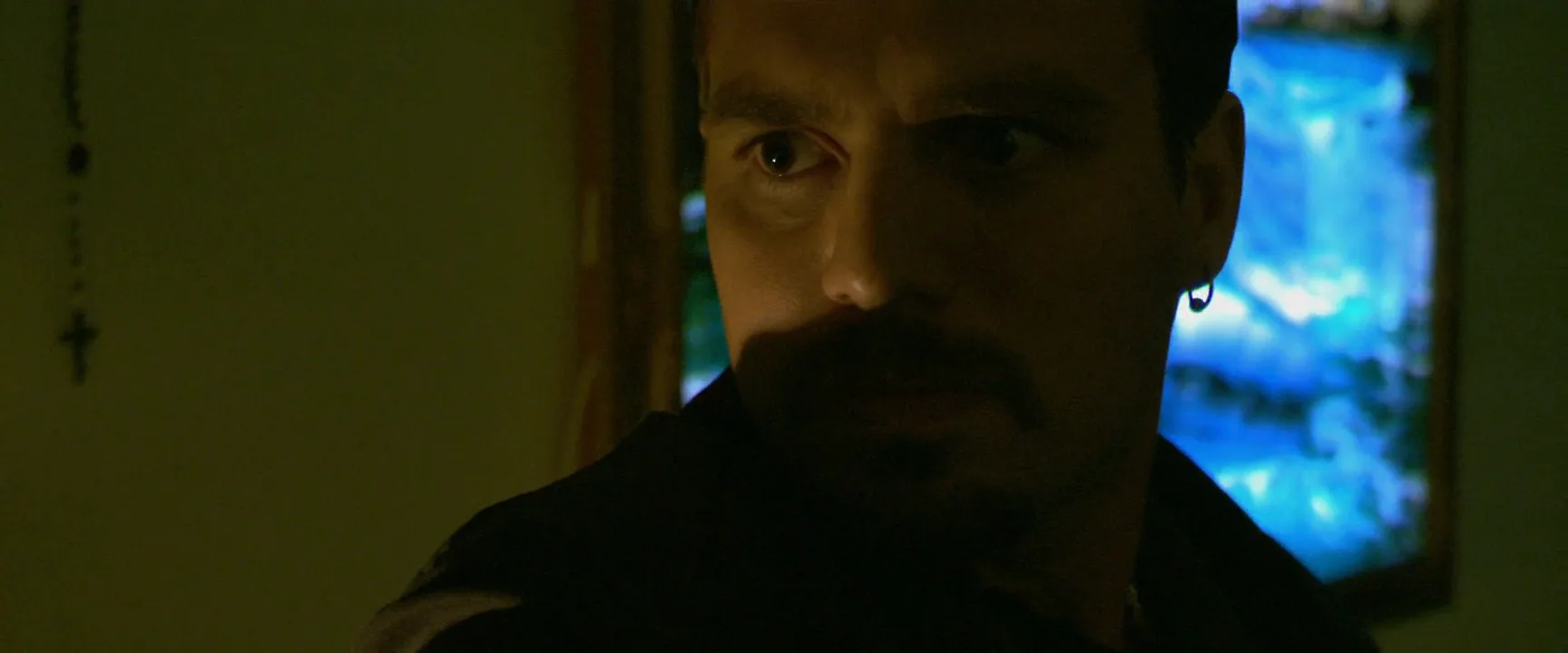
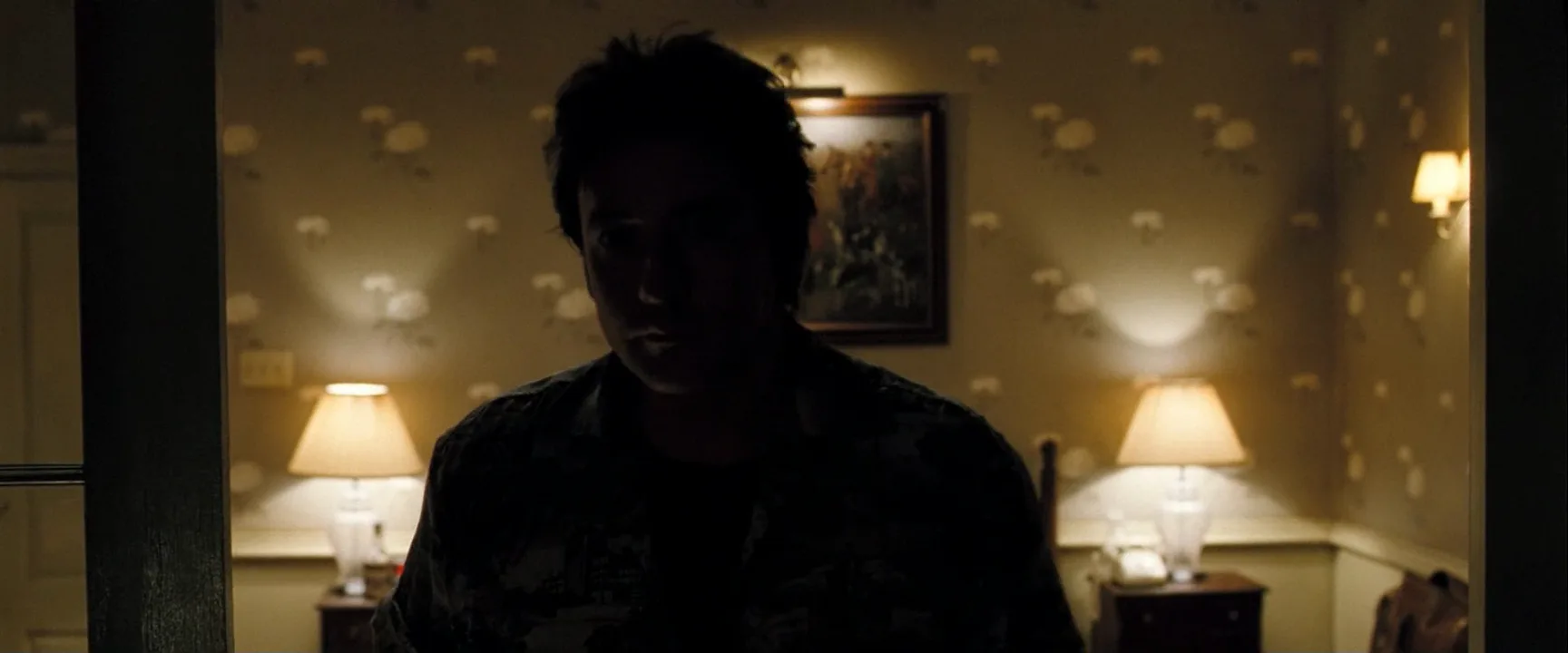
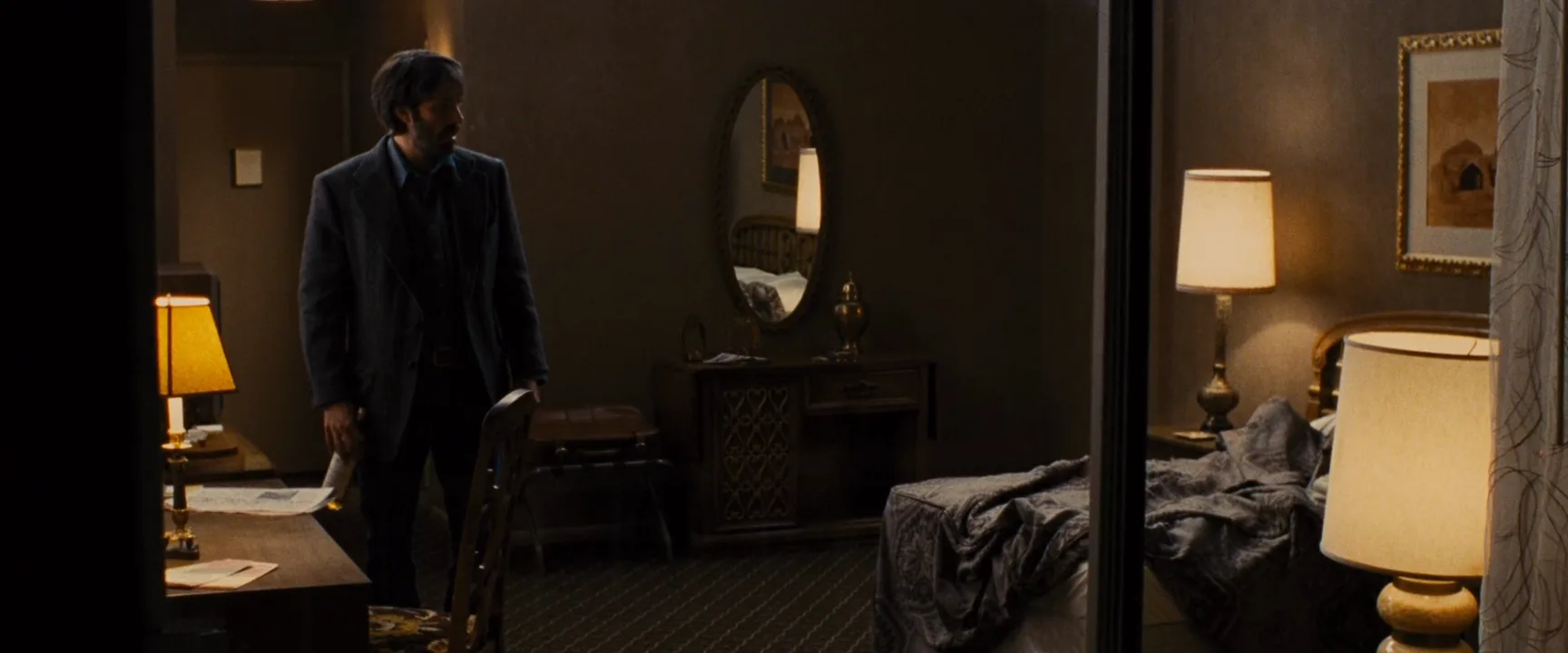
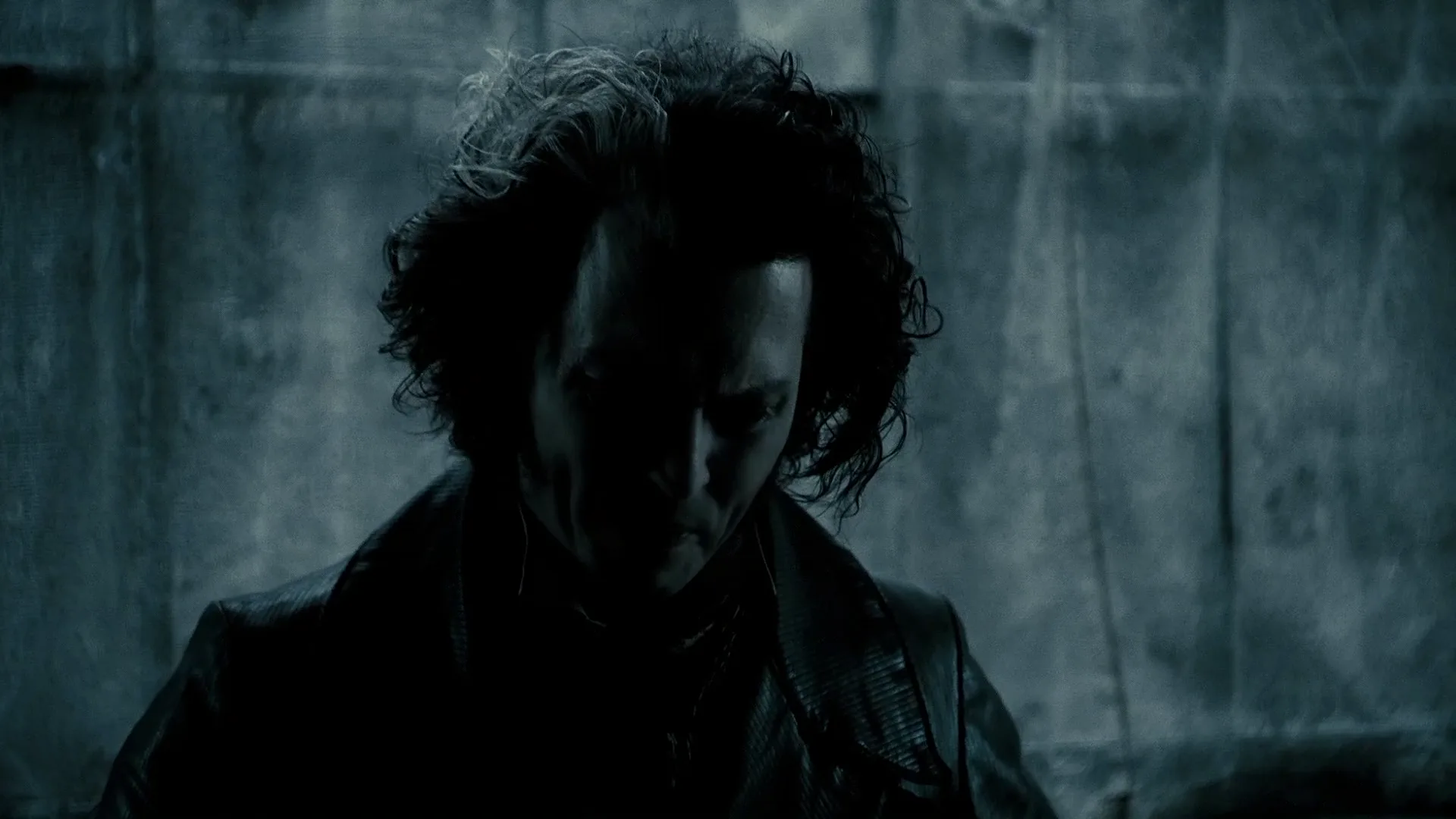
How to create a low-key lighting with AI
4 promptsImage models either light everything and add a vignette, or darken the whole frame into gray mud. The fix is to describe the setup: one named source, its side, the ratio, the background in stops. Build the start frame with Nano Banana 2 Lite, try a different take with GPT Image 2.5, then animate the frame with MiniMax H3 Max Turbo, keeping the film references above on the same FlashBoards board so you can compare shadow depth side by side. The fourth prompt re-shoots a real film shot from a text description alone, and the original plays next to the result so you can compare.
Low-key lighting, cinematic film still, night interior. Medium close-up at eye level, 50mm lens. A fictional man in his forties with a shaved head, a short salt-and-pepper beard, a small silver hoop in his left ear and a dark navy work jacket sits at a wooden kitchen table holding a folded handwritten letter. The only light is a small table lamp with a cream fabric shade at frame left, close to his face: warm hard key on the left side of his face, the right side falls into deep shadow, key-to-fill ratio about 16:1. The wall behind him sits four stops darker than his face, nearly black with faint texture. Highlights only on the lamp shade, his forehead, cheekbone and the white letter; catchlight in his left eye. Deep blacks, fine film grain, tense and quiet.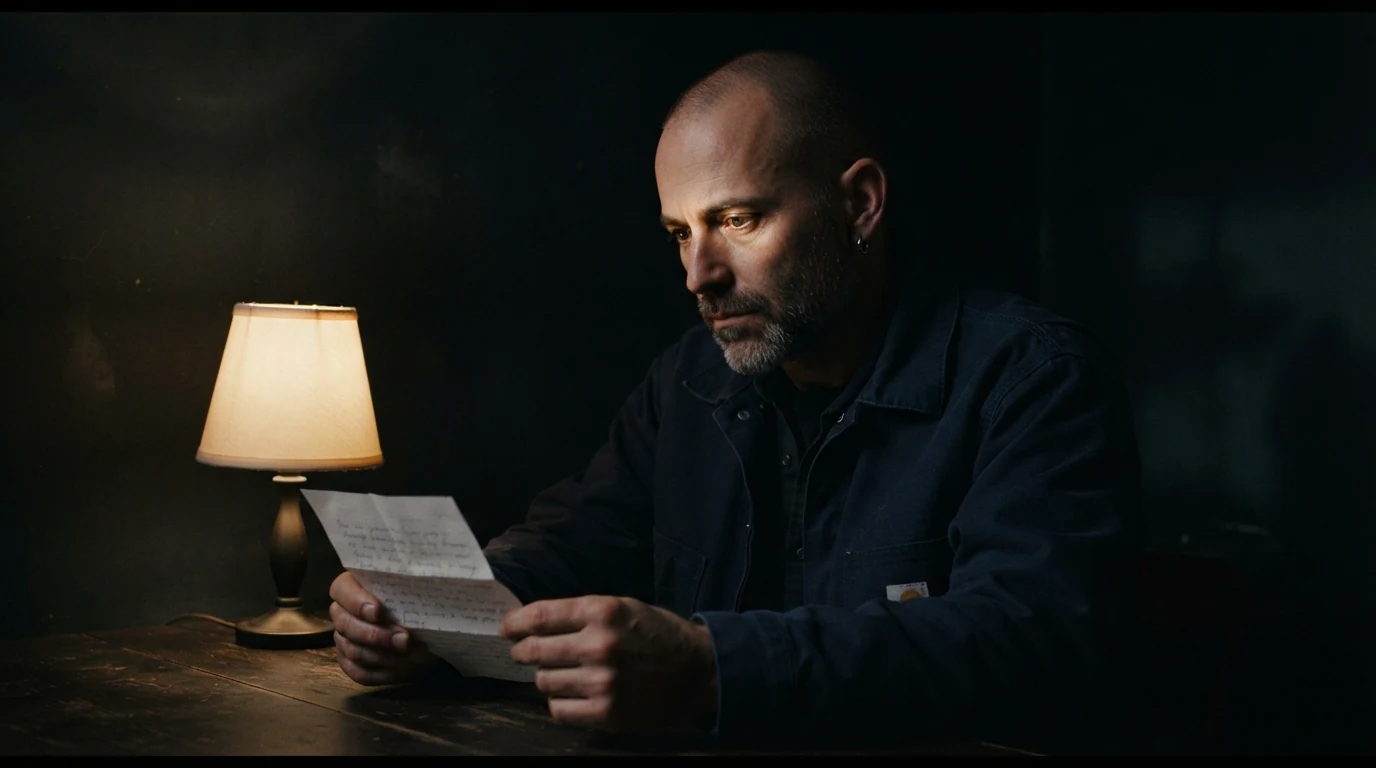
"Low-key lighting" names the look, but the setup words carry it: "the only light is a small table lamp", "hard key on the left side" and "key-to-fill ratio about 16:1" stop the model from adding a soft fill. "Four stops darker… with faint texture" puts the background in the dark without turning it into a flat black card. Listing where the highlights go keeps the face readable instead of muddy.
Open FlashBoardsWide cinematic frame, low-key lighting in a long concrete service corridor at night, 32mm lens at chest height. Three hard overhead lamps make separate cones of light on the floor with deep black gaps between them; thin haze makes each cone visible. A fictional young woman with a cropped silver-blonde undercut, a round face with a small mole on her chin and an oversized mustard-yellow raincoat stands in the middle cone, top-lit: light on her hair, cheekbones and shoulders, her eyes in soft shadow, her raincoat glowing against the darkness. Walls and ceiling between the lamps fall to black. Cold greenish-white light, desaturated palette apart from the raincoat, high contrast, suspenseful stillness.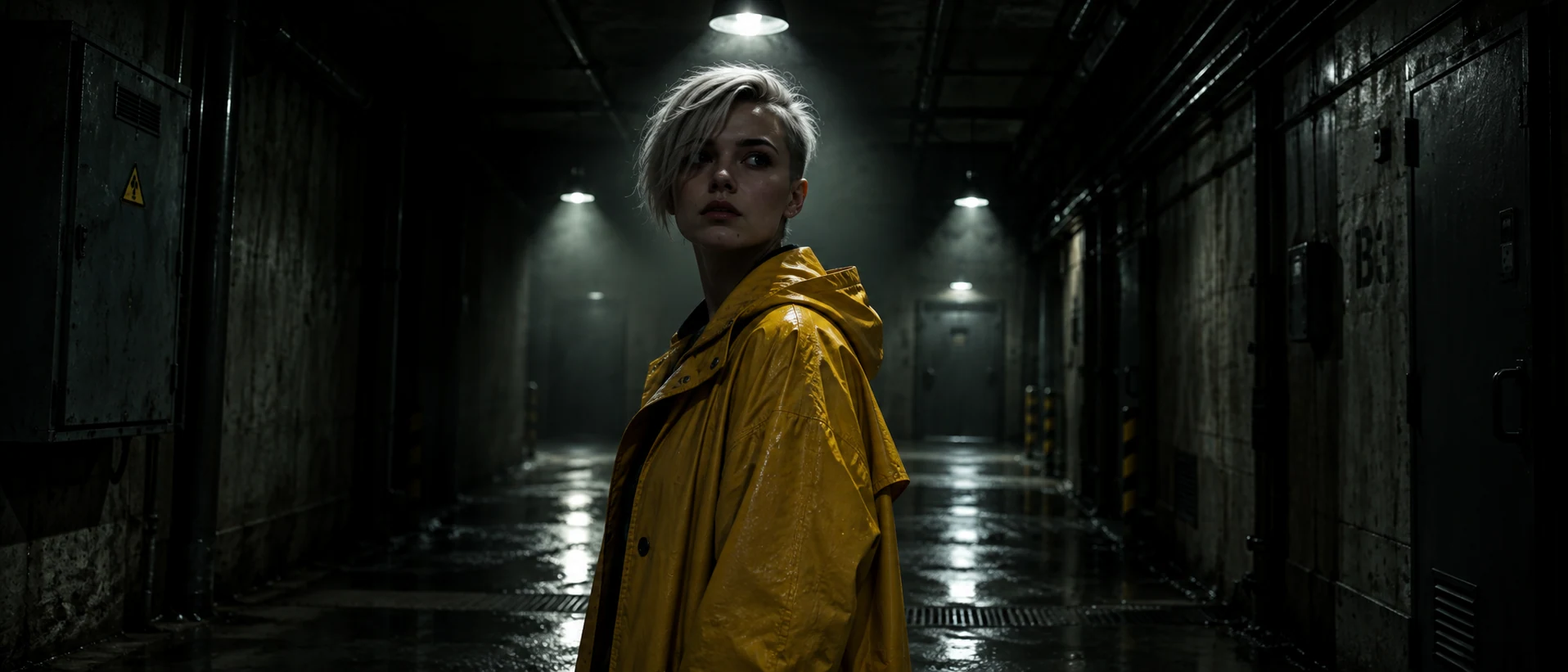
This take moves low key from a lamp-lit face to space and top light. "Separate cones… with deep black gaps" tells the model where darkness goes, and "thin haze makes each cone visible" lets the beams separate a dark set from a dark background. "Top-lit… eyes in soft shadow" adds menace without hiding the face; the raincoat is the one saturated highlight.
Open FlashBoardsCamera: a very slow, steady push-in at eye level from the medium close-up toward his face, moving continuously for the whole shot. Action: he is already unfolding the letter as the shot begins; he reads it, his jaw tightens and he breathes out slowly; he lowers the letter onto the table and leans forward into the lamp light, so more of his face is lit, then turns his head to look into the darkness at frame right. The table lamp stays the only light: the right side of his face stays in deep shadow and the wall behind him stays nearly black."Already unfolding the letter" makes the shot alive from the first frame, so the model doesn't settle into a static zoom on a still. Leaning "into the lamp light" moves the face from shadow to light instead of changing the light. The last sentence restates the lighting in positive terms, because image-to-video models tend to lift shadows and add fill as the camera moves.
Open FlashBoards{
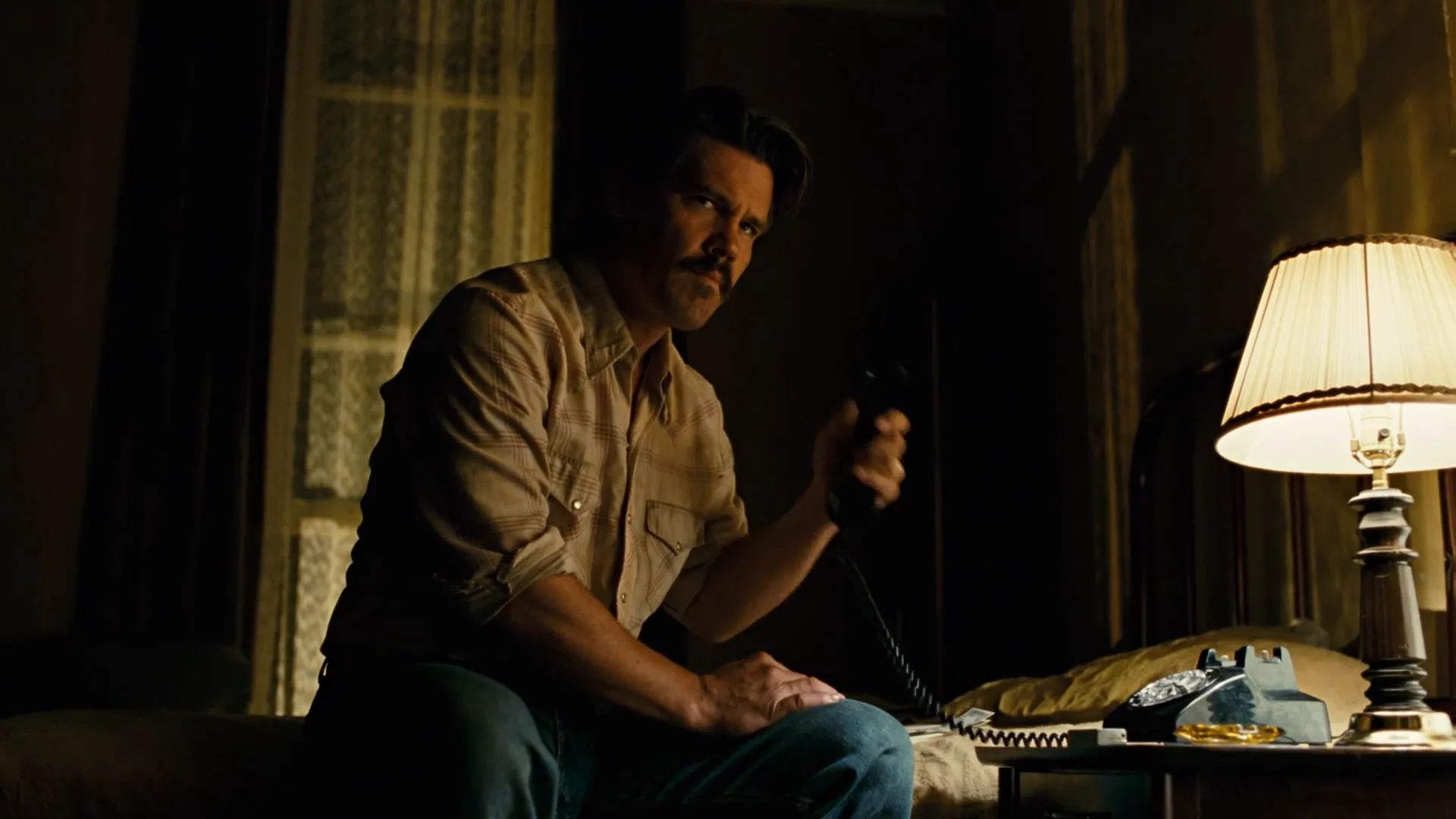
"output": "Full-screen live-action shot from No Country for Old Men (2007) from its very first frame: one single continuous shot, no cuts. 2000s 35mm film look with fine grain, deep low-key lighting: a cheap motel room at night lit only by one bedside table lamp, dark underexposed frame, warm amber-brown palette, most of the frame in brown-black shadow.",
"characters": {
"S1": {
"name": "Llewelyn Moss, played by Josh Brolin",
"look": "lean man in his late thirties, dark hair combed back, thick dark mustache, tan plaid western shirt with pearl snaps and sleeves rolled to the forearm, faded blue jeans, gold wedding ring on his left hand",
"voice": "silence: he only listens, he never speaks"
}
},
"shots": [
{
"shot": 1,
"camera": "static, locked-off, low angle from about the height of his knees, normal lens, medium-wide frame with headroom; the framing never changes from the first frame to the last",
"composition": "S1 sits on the edge of the bed slightly left of centre, body angled toward frame right; behind him at left a pale lace sheer curtain panel glows dimly between dark drapes; at the right edge a bedside table with a pale blue-gray rotary telephone with a black receiver and a coiled black cord, and a table lamp with a pleated cream shade trimmed in brown on a turned dark-wood base, the whole shade in frame; a yellowish pillow at the head of the bed behind the table",
"action": [
"BEGINNING: alive from the first frame, S1 already holds the black receiver to his left ear with his left hand (the frame-right side of his face), left elbow bent close to his chest, the coiled cord hanging down across the frame to the telephone; his right forearm lies across his lap, the right hand resting still on his left knee; he looks up past the camera toward the upper right of frame, listening, brow slightly drawn, mouth closed and still",
"THEN: for several seconds he keeps listening without moving: no nod, the right hand stays still on his knee",
"THEN: he lowers the receiver from his ear with his left hand and holds it out at chest height, the cord swinging, his eyes staying on the same point beyond the camera at frame right",
"THEN: he leans forward and stretches his left arm to the right toward the telephone on the bedside table, his forearm and hand moving into the lamp light, the right side of his face coming out of the dark into warm light",
"THEN: he sets the receiver down into its cradle with a small clack",
"END: he stays leaning forward, left hand resting on the receiver in the cradle, right hand still on his knee, eyes fixed past the camera toward frame right, face motionless, half of it in shadow"
],
"lighting": "the table lamp at frame right is the only light in the room, key-to-fill ratio about 16:1: hard warm light from frame right catches the right side of his face, his mustache, his shirt front, his reaching arm and the telephone; the left side of his face and his left shoulder sink into near-black; the drapes and the wall behind him sit four stops darker than his face, brown-black with faint fold texture; the glowing lamp shade is the brightest point in the frame and the image is mostly dark",
"voice": "silence: nobody speaks in this shot, no voice at all",
"dialogue": []
}
],
"sound": {
"ambience": "quiet motel room hum, a faint electric buzz from the lamp, the cord rustling, the plastic clack of the receiver landing in the cradle, a distant car passing heard from outside",
"speech": "no words in this video; the only human sounds are breaths and movement",
"never_spoken": "no narration and no voice-over: the descriptions, performance notes and step words of this prompt are never spoken aloud",
"music": "a film score under the scene, always below the voices: a barely audible low sustained string drone, cold and uneasy, with no melody",
"subtitles": "none"
}
}Remakes the locked-off lamp-lit phone shot of Llewelyn Moss (Josh Brolin) from No Country for Old Men (2007), dir. Ethan Coen and Joel Coen, DP Roger Deakins: the bedside lamp at frame right as the only key, the man seated in half shadow, the brown-black drapes and the receiver hung up in the cradle are carried over.
The low key lives in the lighting field: the only light in the room, a key-to-fill ratio about 16:1 and drapes four stops darker than his face. Locked-off keeps the frame still, so the one change is the arm reaching into the lamp light, and the shot has no lines, so the prompt asks for silence and a quiet drone.
Common mistakes
- "Low-key" read as "casual". In everyday English low-key means relaxed, and some models return a calm, softly lit scene. Write "low-key lighting" and add the setup: one source, its side, no fill, the ratio.
- Dark instead of low key. "Dark, moody" often darkens every tone evenly — gray faces, no highlight. Name the brightest points (a lamp shade, a cheekbone, a white paper) and say the face on the key side is correctly exposed.
- Fill and rim appear from nowhere. State that the lamp is the only light and the shadow side falls into deep shadow; choose separation yourself (haze, a lit window behind).
- Eyes lost in black. With top or steep side light the eyes can vanish. Ask for a catchlight in one eye or "eyes in soft shadow" to keep the character readable.
- Video brightens as it moves. Over a push-in, shadows often lift. End the prompt by restating what stays dark.
Keep the reference frames, prompts and every generated take side by side — images and video in one canvas.
FAQ
5 questionsWhat is low-key lighting in film?
Low-key lighting is a style in which most of the frame is dark: a strong key light, little or no fill and a lighting ratio of roughly 8:1 or higher, so the shadow side of faces and most of the background fall to black. Only small parts of the image are bright. It is the signature look of film noir, thrillers and horror.
What is the difference between high-key and low-key lighting?
The difference is the lighting ratio and the dominant tones. High key uses plenty of fill, ratios around 1:1 to 2:1 and bright backgrounds, so the frame is light and open — comedy, commercials, romance. Low key uses a strong key with little fill, ratios of 8:1 or more and dark backgrounds, so the frame is mostly shadow — noir, crime, horror. High key shows everything; low key chooses what you see.
What are some examples of low-key lighting in movies?
Classic examples include Double Indemnity (1944) and The Third Man (1949) from the noir era, Gordon Willis's top-lit interiors in The Godfather (1972), Kurtz's scenes in Apocalypse Now (1979) and Blade Runner (1982). Modern examples include Se7en (1995), Fight Club (1999), No Country for Old Men (2007), The Dark Knight (2008) and Prisoners (2013).
Why is it called low key if the key light is strong?
"Key" in low-key refers to the tonal key of the whole image, a term borrowed from music and photography, not to the brightness of the key light. A low-key picture is dominated by dark tones. The key light is usually strong and hard; what is removed is the fill.
How do you make low-key lighting with one light?
Place a single light 60–90° to the side of the subject or high above, as close as the frame allows, so the background falls off quickly. Turn off any bounce, add black fabric on the shadow side as negative fill, and flag the light off the walls. Expose for the lit side of the face and let everything else go dark.
Related terms
8- High-Key LightingLighting
High-key lighting is bright and even, with plenty of fill and a low key-to-fill ratio, so the frame is dominated by light tones and gentle shadows — the look of sitcoms, comedies, commercials and dreamlike heavens.
- ChiaroscuroLighting
Chiaroscuro, borrowed from Renaissance and Baroque painting, is dramatic modelling with strong light and deep shadow — usually one hard side or top source carving faces out of darkness — the backbone of German Expressionism and film noir.
- UnderexposureLenses, Focus & Exposure
Underexposure is when too little light reaches the film or sensor: shadows sink into black and noise rises; controlled, it hides information and builds dread in night, thriller and horror scenes.
- Film NoirFilm Movements & Styles
Film noir is the cycle of 1940s–50s American crime films — named by French critics — defined by fatalistic plots, morally compromised heroes, femmes fatales and low-key black-and-white lighting full of hard shadows.
- ContrastLighting
Contrast is the difference between the brightest and darkest parts of an image — set on set by the ratio between key and fill — and ranges from flat, gentle low contrast to hard, graphic high contrast.
- Hard LightLighting
Hard light comes from a small or distant source — a bare bulb, an open fresnel, the midday sun — and throws crisp, sharp-edged shadows with an abrupt jump from light to dark.
- Rim LightLighting
A rim (edge) light sits behind and to the side of the subject, drawing a thin bright line along the edge of the head, shoulders or profile to pull it off a dark background.
- Film LightingLighting
Film lighting is the craft of shaping light for the camera — its direction, quality, color and contrast — to model faces, build space, set the time of day and carry the mood of a scene.
Further reading
John Alton, Painting with Light (1949; University of California Press reprint, 1995). Blain Brown, Motion Picture and Video Lighting, 3rd ed. (Routledge, 2018).