 FlashBoards Learn
Lighting · Film language
Moonlight Lighting
Also called: moonlight effect, night exterior lighting
Moonlight lighting imitates the moon with a single high, directional source, usually cool and often behind the actors, combined with controlled underexposure. The scene reads as night, yet faces, silhouettes and the depth of the space stay legible, which real moonlight almost never allows on camera.
- What it does
- Sells night with one motivated overhead or back source, cool edges and deep but readable shadows.
- Use it when
- You need a night exterior or a dark room lit through a window, and the audience must still see faces and geography.
- Watch out
- Several moons casting crossed shadows, or a flat blue wash with no direction, instantly look fake.
- Try this prompt
night exterior, single high moonlight from behind, cool silver rim on hair and shoulders, faces in soft dim fill, deep blue shadows, light mist, 35mm
What is moonlight lighting?
In film lighting, moonlight is a convention, not a measurement. A full moon is roughly 18 to 19 stops darker than direct sun. So cinematographers build a stand-in: one strong, directional source set high and a little behind the actors, with the whole frame exposed well under normal. It is the night branch of natural lighting.
Three signatures give it away. One direction: there is only one moon, so shadows fall the same way across the set. Edge before face: hair, shoulders and wet ground catch a bright outline while faces sit in dim fill. Shadows deep but not dead: unlike pure low-key lighting, moonlight keeps enough detail in the dark to read the space.
Why do filmmakers light night scenes with a moon?
Legibility without breaking night. Pitch black reads as nothing. A motivated moon gives the audience shapes, a horizon and the actors' eyes.
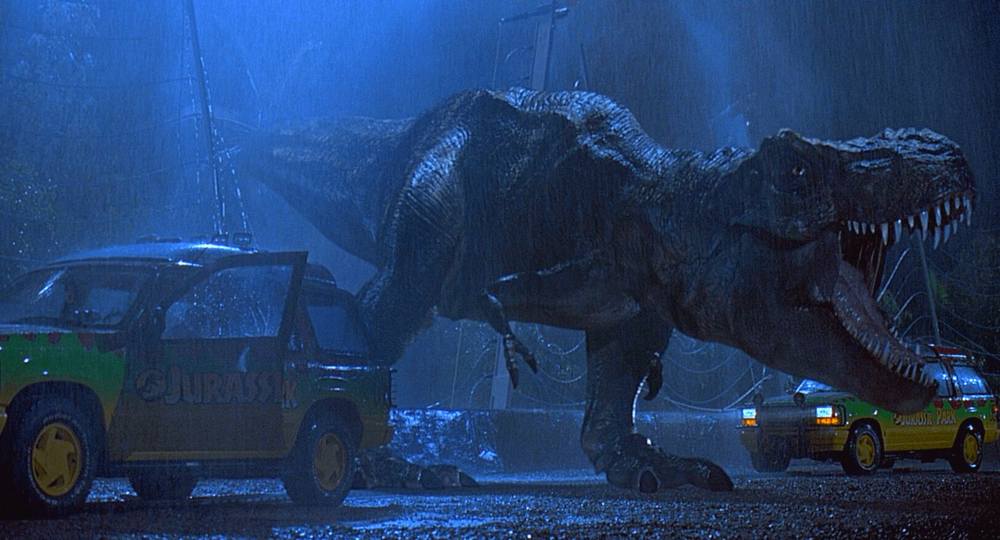
Separation. Placed behind the actors, the moon works like backlighting: figures peel off the background, rain turns to silver streaks, mist becomes visible. The rain-soaked T. rex attack in Jurassic Park (1993) runs on that logic.
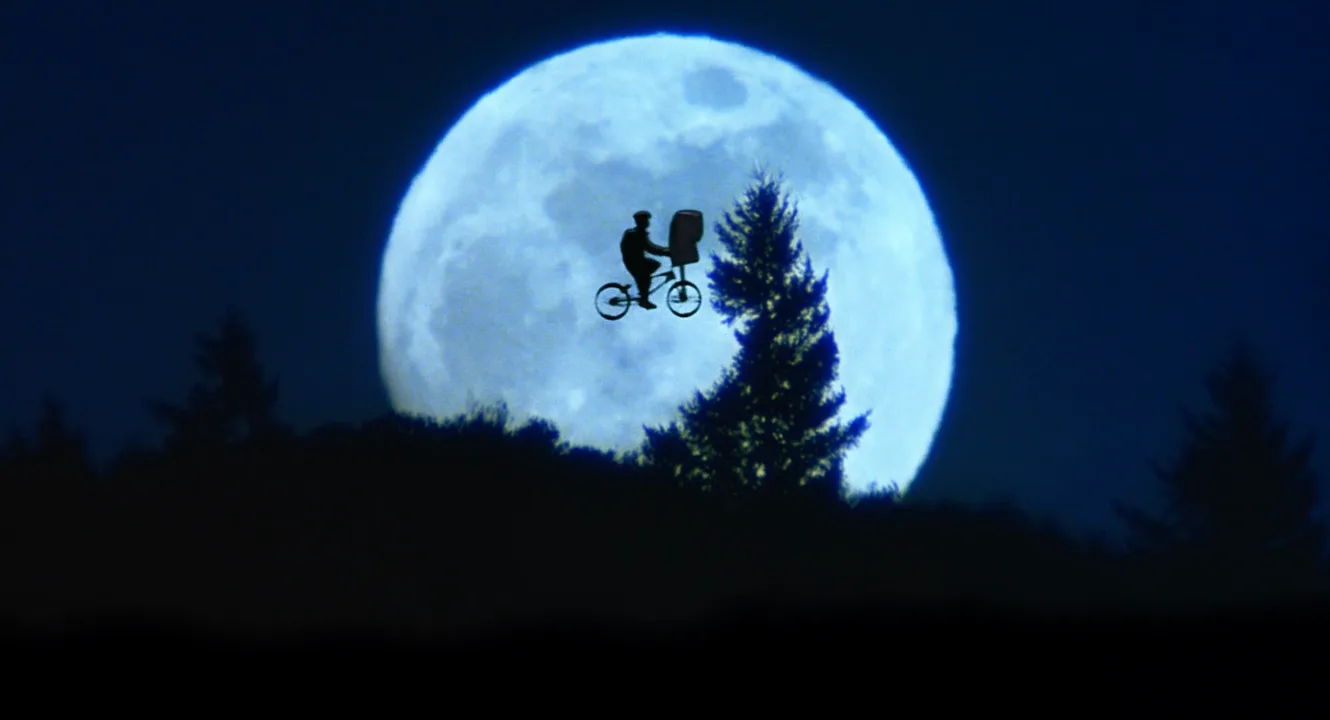
Emotional temperature. Cool moonlight reads as quiet, lonely, uncanny or dreamlike. In E.T. the Extra-Terrestrial (1982) the moon itself becomes the backlight and the image becomes wonder.
How to light a night scene with moonlight
Height and direction. Put the moon 30 to 60 degrees above the actors and three-quarter behind them: a large HMI or LED head on a condor or crane, or a balloon light for a softer, wider moon. Keep it far away so falloff stays gentle.
One shadow. Extra fixtures should only extend the same moon. Fill is soft and directionless: a big bounce or a dim overhead.
Ratios. A common start: the edge at or just above normal exposure, faces 1.5 to 3 stops under, background 3 to 5 stops under. That is controlled underexposure.
Surfaces. Wet down streets, add thin haze, keep leaves in the backlight.
Protect the blacks. Leave a little light in the shadows so the grade can go darker without crushing into noise.
What color is moonlight in film?
Physically, moonlight is reflected sunlight and slightly warm. Films paint it blue because in real darkness the eye shifts toward rod vision, which favors blue-green and sees little color. Audiences have learned that blue means night.
The classic method is a daylight source (about 5600K) with the camera balanced near 3200K, or tungsten lamps with half or full CTB. Saturated blue feels classical and belongs to a cool color palette; a silvery, desaturated moon with near-natural skin feels modern and realistic.
Moonlight lighting vs. day for night
Both aim at a believable night from opposite ends. Moonlight lighting shoots at real night and adds light. Day for night shoots in daylight and takes it away: underexposure, the sun behind the actors as a fake moon, no sky, a dark cool grade.
Use real-night moonlight when lit windows, streetlights, headlights or fire must appear in frame. The night sequences of Mad Max: Fury Road (2015) are a well-known modern example of day for night pushed to deep blue.
Moonlight Lighting examples in film
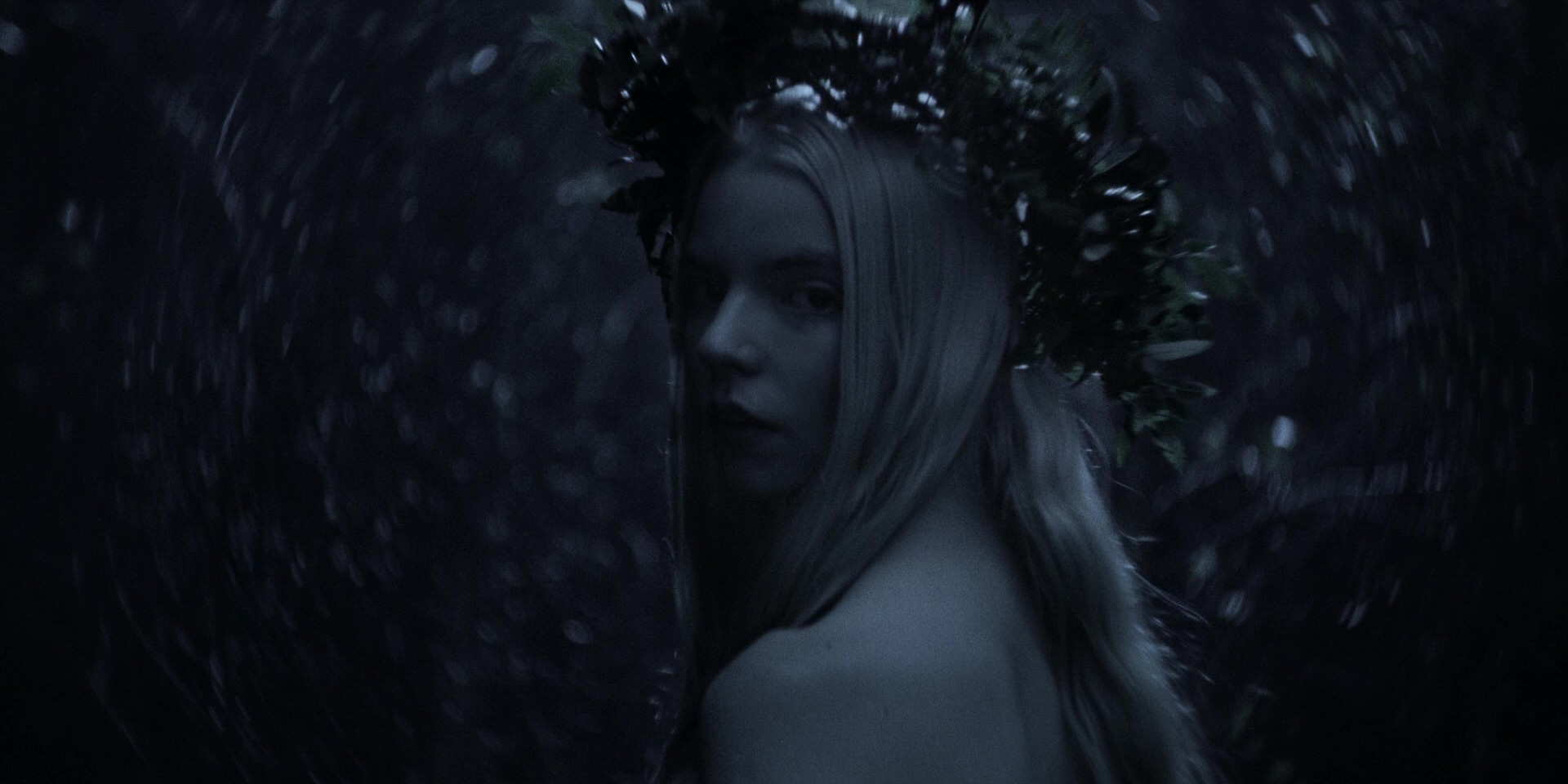
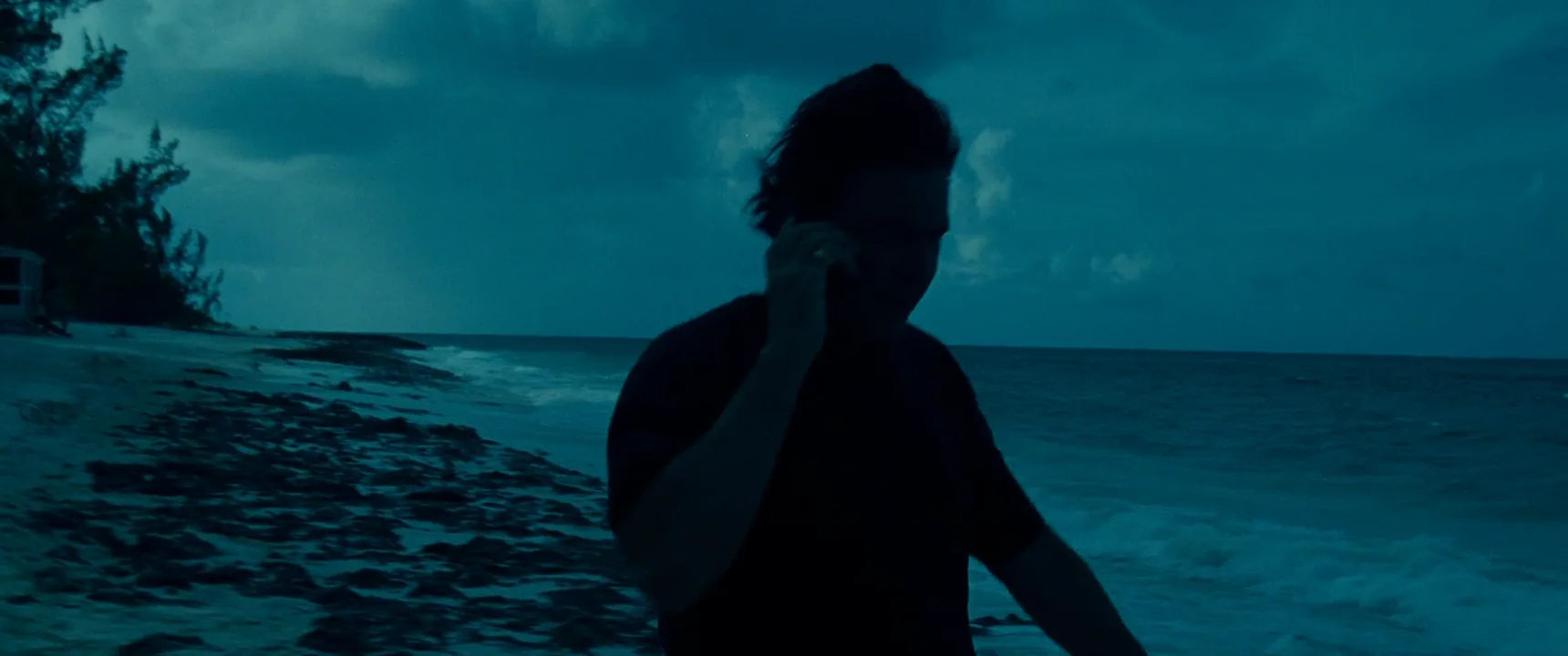
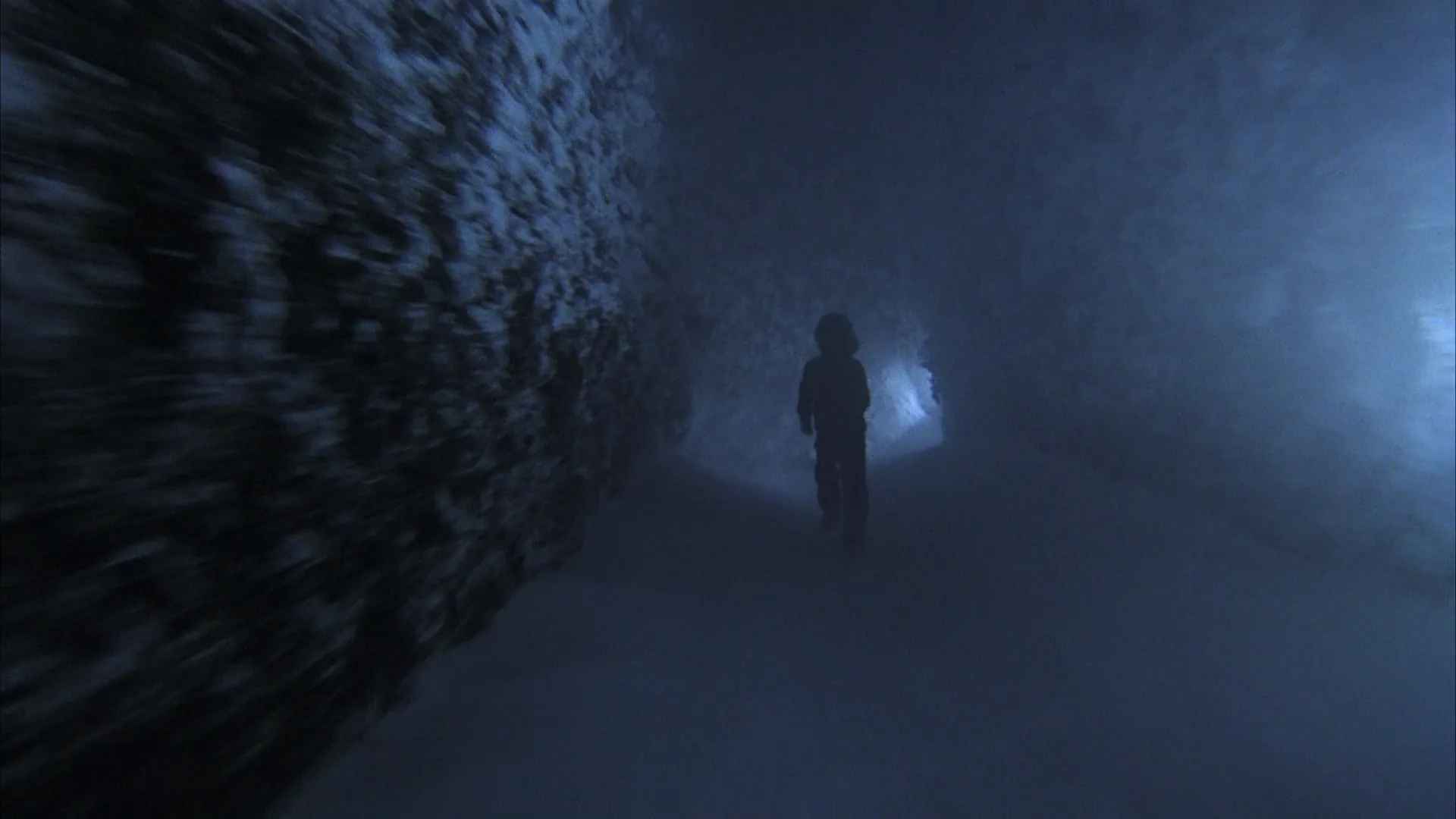
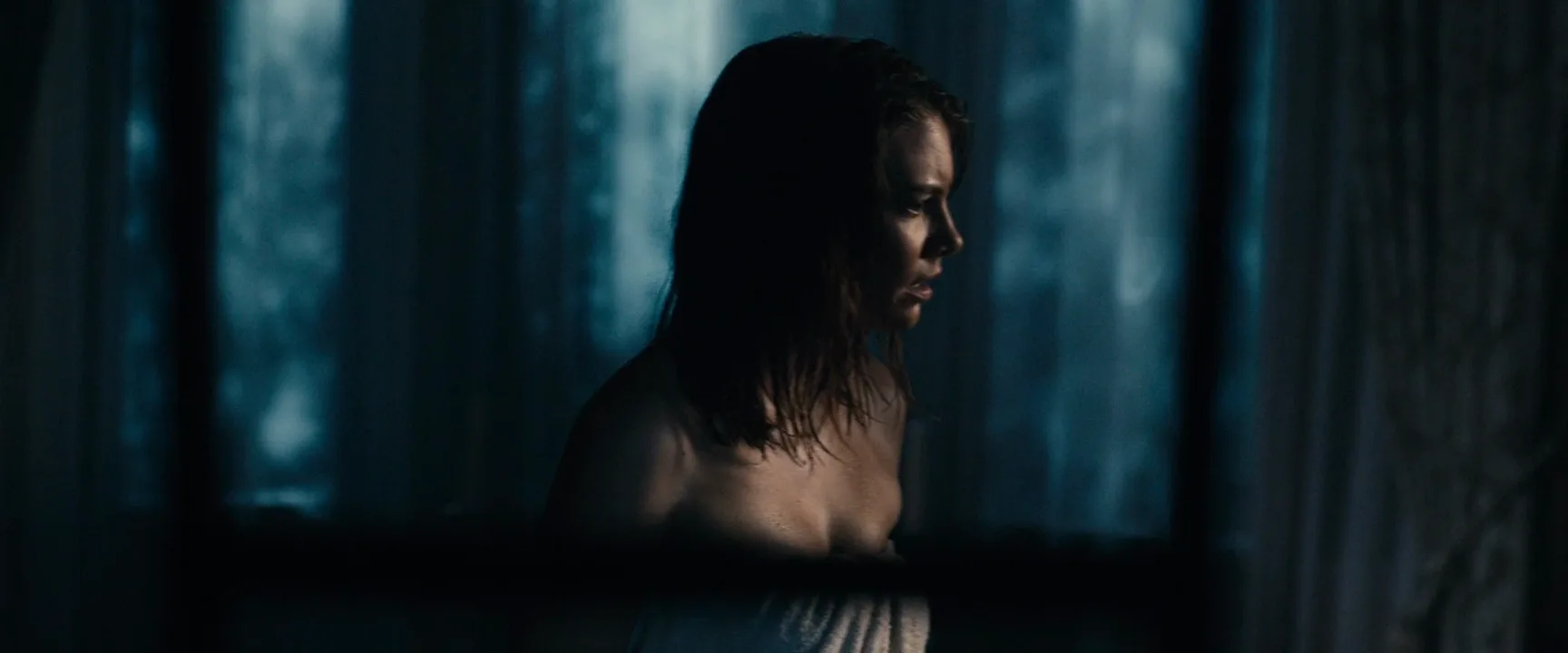
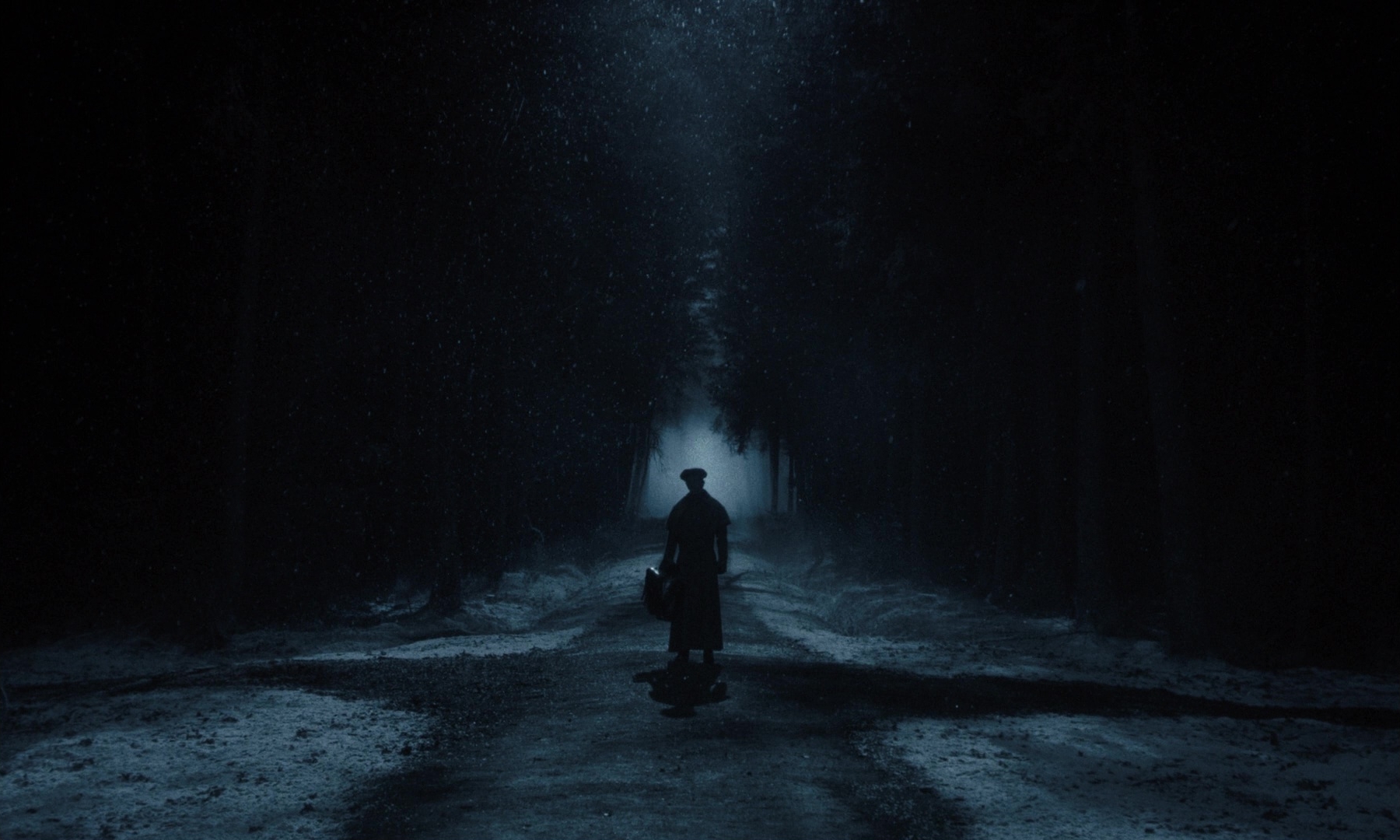
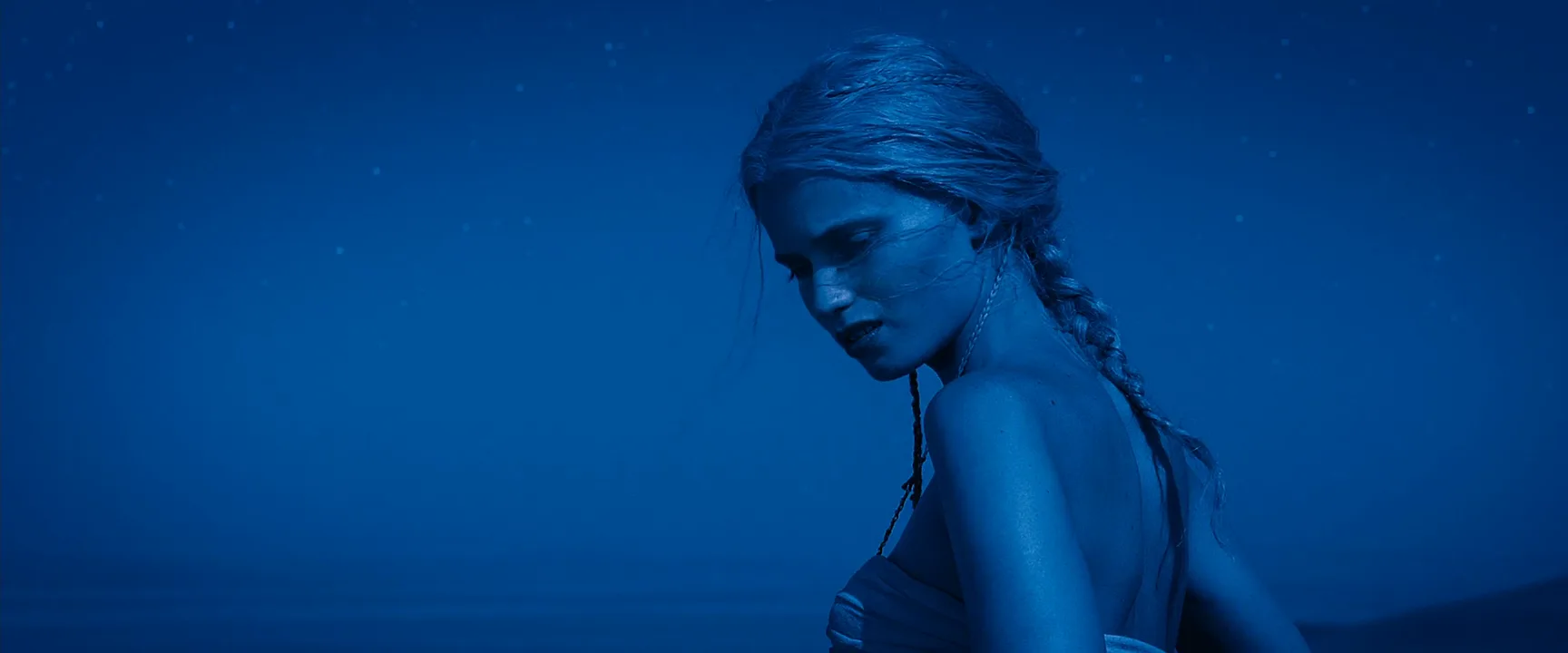
8 framesFrames lit as if by the moon: one direction, bright edges on hair, water or rain, and shadows that stay dark without swallowing shapes.
How to create a moonlight lighting with AI
4 promptsImage models know night is dark and blue but rarely commit to one moon. Name where the source is, what it catches and how dark faces sit against that edge. Keep all three takes on one FlashBoards board to compare shadow density side by side. The fourth prompt re-shoots a real film shot from a text description alone, and the original plays next to the result so you can compare.
Cinematic night exterior, medium wide shot. A fictional woman in her late 50s with a long grey braid and a heavy oilskin coat walks a wet gravel lane beside an old wooden fence. The only light is a high moon out of frame behind her left shoulder: a cool silver edge traces her braid, shoulders and the fence rails, and puddles glint. Her face is in soft dim fill, two stops under the edge, eyes readable. Thin ground mist, trees in blue shadow. 35mm lens at chest height, fine film grain.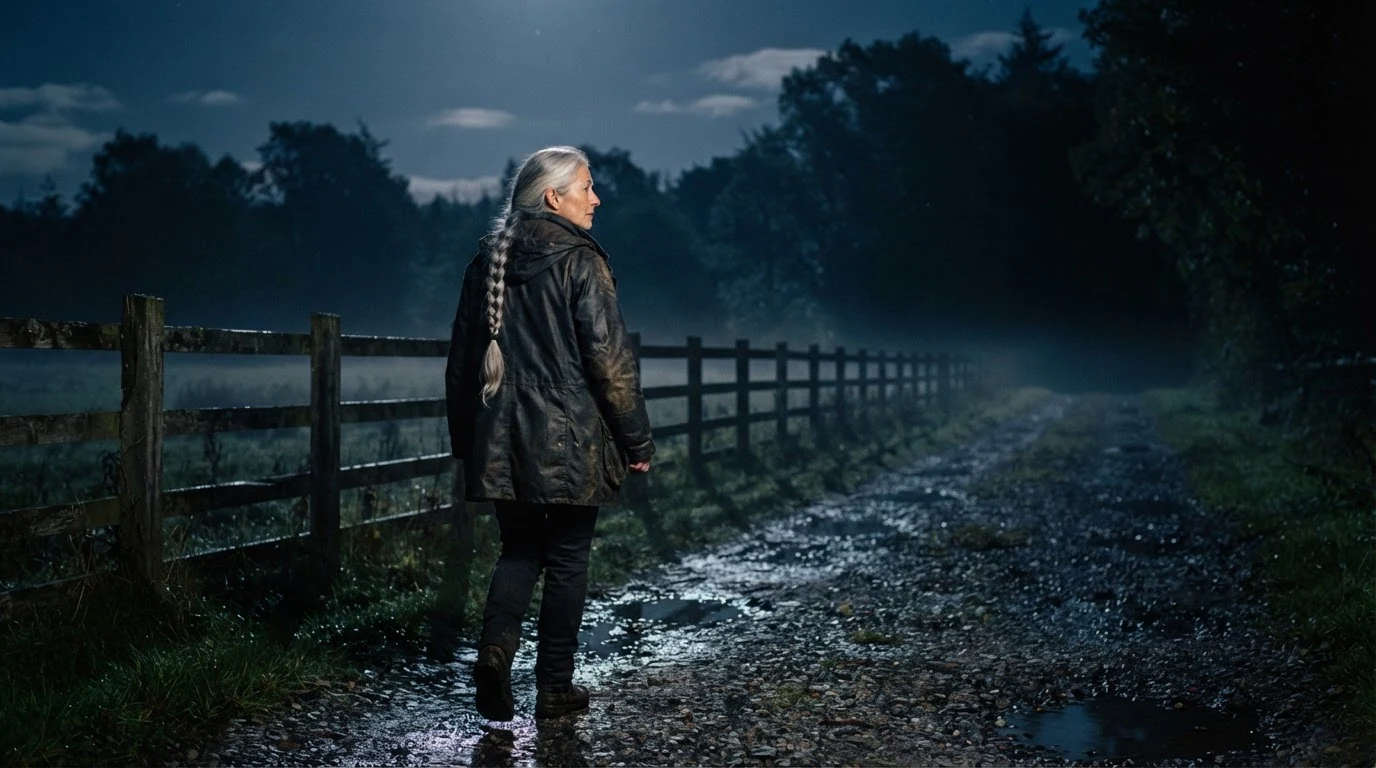
"The only light is a high moon out of frame behind her" fixes one direction and one shadow. Naming the surfaces that catch the edge gives the light something to do, and "two stops under, eyes readable" stops the model from flooding or crushing the face.
Open FlashBoardsWide 21:9 night interior, small farmhouse kitchen. A fictional young man in his twenties with a shaved head, a thin red beard and a mustard knitted sweater sits at a wooden table. Cool moonlight through a four-pane window on the left casts a sharp window pattern across the table and floor and grazes the side of his face. The room is deep blue-grey shadow; a small warm glow from an iron stove touches the far wall. Low saturation, 50mm lens at seated eye level.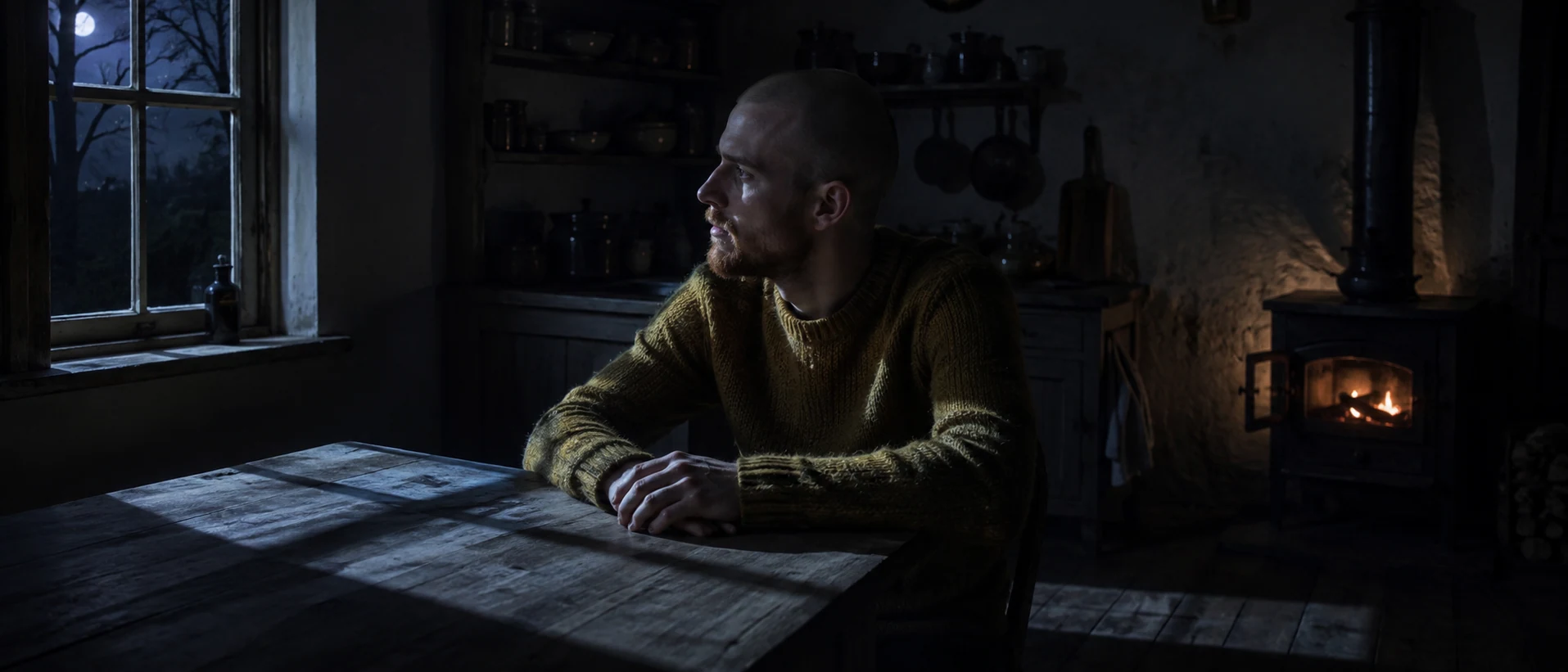
This take moves the moon indoors. "Sharp window pattern" makes the source hard and motivated, "grazes the side of his face" keeps it directional, and the warm stove gives the cold light a contrast.
Open FlashBoardsCamera: a slow, steady track to the right at walking pace, level at chest height, moving from the first frame to the last. Action: She walks along the wet lane from the start, the silver edge sliding over her braid with each step while mist drifts low across the gravel. Midway, her breath forms a pale cloud that catches the backlight. At the end she stops by the fence and lifts her face toward the sky.Walking, drifting mist and a moving camera start at once, so the model animates the shot instead of creeping in on a still. Everything named is already in recipe 1.
Open FlashBoards{
"output": "Full-screen live-action scene from The Boy (2016) from its very first frame: one continuous shot. Modern 35mm horror look, night interior of an old English manor bedroom lit only by cool moonlight coming through a tall window with pale sheer curtains behind the woman: one high silver-blue source behind her, thin bright edges on her wet hair and shoulders, her face in dim soft fill about two stops under, the room in deep teal-black shadow, low saturation, fine film grain.",
"characters": {
"S1": {
"name": "Greta Evans, played by Lauren Cohan",
"look": "American woman around thirty, slim, dark-brown shoulder-length hair soaking wet and hanging in strands, bare wet shoulders glistening, a white bath towel wrapped around her chest",
"voice": "silence: she does not speak"
}
},
"shots": [
{
"shot": 1,
"camera": "locked-off, eye level, long lens, shallow depth of field, the camera never moves. A dark wooden frame stands very close in the foreground: one thick vertical rail near the left edge, one horizontal rail across the lower fifth of the image; a soft dark curtain fills the right fifth of the frame. Beyond the rails, the tall window glows blue-green through pale curtains. Framing at the end: medium close-up of S1, head and bare shoulders, in the centre of the frame, the towel edge just above the lower rail.",
"action": [
"BEGINNING: alive from the first frame, the dark foreground rails are sharp and the room beyond is a soft blur of cool window light; the frame opening is empty.",
"THEN: S1 walks in from frame right as a blurred shape, moving right to left behind the rails, her head turned back in profile toward frame right, where she came from.",
"THEN: she stops in the centre of the frame in front of the glowing window, still in profile looking toward frame right, and stands without moving, arms down and out of frame, only her shoulders rising slowly with her breath.",
"THEN: focus racks slowly from the foreground rails to her; the rails go soft and dark while her profile becomes sharp: a thin silver edge of moonlight along her wet hair, jaw and shoulders, droplets glinting on her skin, her face dim.",
"THEN: she slowly turns her head from profile to face the camera, wet strands swinging across her cheek, eyes staying wide and wary.",
"END: she stands still facing the camera and looks straight into the lens, lips closed, brow slightly tense, no nod, the silver edge light holding on her hair and shoulders while her face stays in soft shadow."
],
"dialogue": [],
"voice": "silence: nobody speaks in this shot, no voice at all"
}
],
"sound": {
"ambience": "quiet old house at night, faint creak of floorboards, soft wind heard from outside",
"speech": "no words in this video; the only human sounds are breaths and movement",
"never_spoken": "no narration and no voice-over: the descriptions, performance notes and step words of this prompt are never spoken aloud",
"music": "a film score under the scene, always below the voices: low sustained strings with a faint high shimmer, slow and uneasy",
"subtitles": "none"
}
}Remakes the locked-off window shot from The Boy (2016), dir. William Brent Bell, DP Daniel Pearl: Greta Evans (Lauren Cohan) entering from the right behind the dark foreground rails, stopping in profile against the cool window and turning to the lens in silence, with the edge-lit wet hair over a dim face carried over.
The output field puts the only source behind Greta and sets the ratio: thin bright edges on her wet hair and shoulders, her face in dim soft fill about two stops under. The action steps walk her into that backlight and turn her to the lens, so the silver edge holds while her face stays a shade darker than the window.
Common mistakes
- Two moons. Write "the only light is" and name one position.
- Blue wash, no direction. "Night, blue" gives a flat tint; name the edge and what it touches.
- Crushed faces. Give a ratio and "eyes readable" when the face matters.
- Frozen mist in video. State motion in the air and on the subject from the first frame.
Keep the reference frames, prompts and every generated take side by side — images and video in one canvas.
FAQ
4 questionsHow do you light a night scene?
Pick one motivated source, usually a moon or a streetlight, and place it high and behind or beside the actors. Keep faces 1.5 to 3 stops under the edge, add only soft fill to hold detail, wet down surfaces so they reflect, underexpose the background, and add warm practicals in frame if the story allows.
What color temperature is moonlight in film?
Real moonlight is slightly warmer than daylight, but films show it cool. The usual trick is a daylight source around 5600K with the camera balanced near 3200K, or tungsten lamps with half or full blue gel. The result can be strongly blue or near-neutral and desaturated.
How do you create a moonlight effect indoors?
Place a hard, cool source outside the window, high and angled down, so it throws a window pattern across the floor and grazes the actor from the side. Keep the room dark with only soft ambient fill, and add a small warm practical if you want the cold window to read against the interior.
Is moonlight lighting the same as low-key lighting?
Not quite. Moonlight lighting is almost always low-key, but it has a specific motivation: one high, cool source from the sky and shadows that keep enough detail to read the space. Low-key lighting is broader and includes noir interiors, candlelit rooms and hard single-lamp setups.
Related terms
6- Day for NightLighting
Day for night shoots night scenes in daylight and sells them as night by underexposing, keeping the sun behind the actors as a 'moon', avoiding the sky and grading everything dark and cool.
- BacklightingLighting
Backlighting places the light behind the subject, facing the camera: it outlines hair and shoulders, separates the figure from the background, makes smoke and dust glow and, with no light from the front, turns people into silhouettes.
- UnderexposureLenses, Focus & Exposure
Underexposure is when too little light reaches the film or sensor: shadows sink into black and noise rises; controlled, it hides information and builds dread in night, thriller and horror scenes.
- Low-Key LightingLighting
Low-key lighting keeps most of the frame in shadow, with a strong key, little or no fill and a high lighting ratio, so only fragments of faces and objects emerge from the dark — the language of noir, thrillers and horror.
- Cool Color PaletteColor
A cool palette is dominated by blues, cyans and cold greens; it tends to read as distance, calm, loneliness, night or clinical control.
- Natural LightLighting
Natural light is light from the sun, sky and moon rather than from lamps; its direction, color and softness change with the hour and the weather, and shooting with it is a hallmark of realist cinema.
Further reading
Blain Brown, Motion Picture and Video Lighting (Focal Press). Harry C. Box, Set Lighting Technician's Handbook (Focal Press).