 FlashBoards Learn
- Learn
- Lenses, Focus & Exposure
- Lens Distortion
Lenses, Focus & Exposure · Film language
Lens Distortion
Also called: barrel distortion, pincushion distortion, optical distortion
Lens distortion is the way a lens bends lines that are straight in real life. Wide and fisheye lenses bow them outward like the staves of a barrel; some long lenses pinch them inward like a pincushion. Filmmakers either correct it so the world looks neutral or push it so a space feels warped and unstable.
- What it does
- Curves straight lines toward or away from the center of the frame, so walls, floors and horizons bow.
- Use it when
- A room should feel like it is closing in, a character is losing their grip, or power makes people look small.
- Watch out
- Lines through the center stay straight; tilt the camera and the horizon arches, and VFX plates need the distortion measured.
- Try this prompt
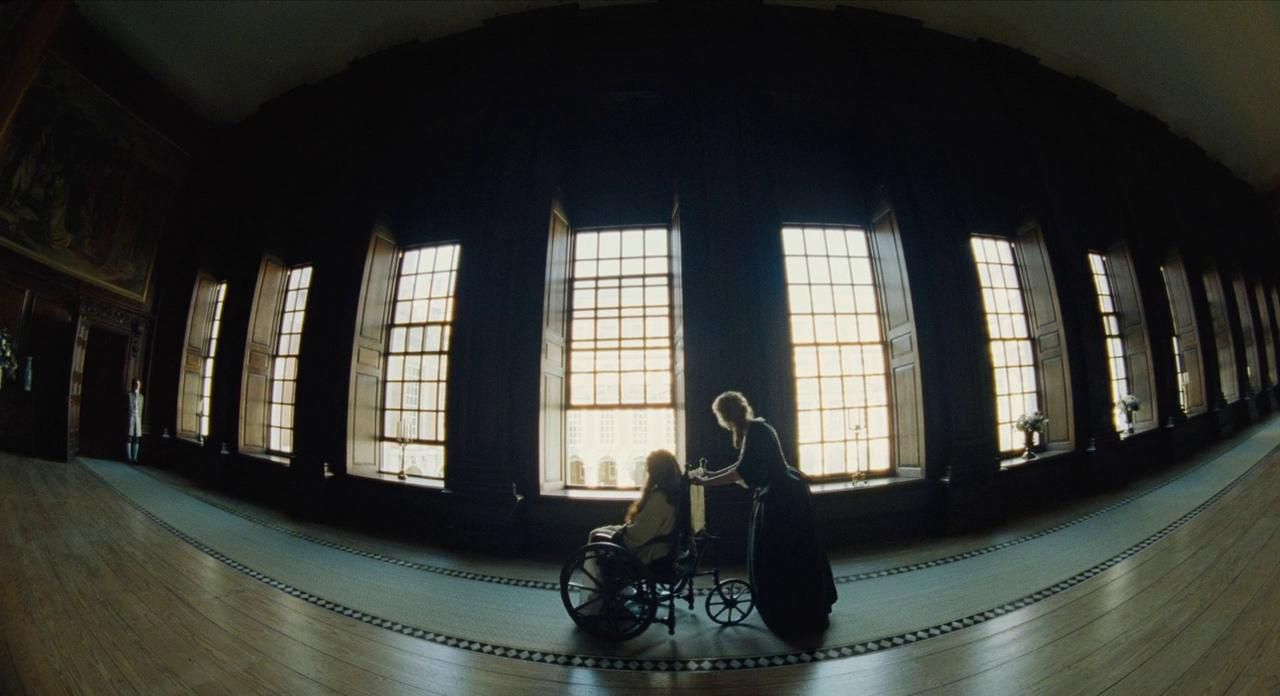
Ultra-wide barrel distortion, centered palace corridor, window frames bowing outward, floor curving up at the edges
What is lens distortion?
Among the optical traits in lenses, focus and exposure, distortion is purely geometric. A lens maps a 3D scene onto a flat sensor, and magnification changes slightly from the center to the edges, so a straight line that misses the center comes out curved. A lens can be razor sharp and still bend a doorframe into an arc.
How much depends on the design and the focal length. Wide lenses push lines outward, zooms often flip types across their range, and a fisheye lens gives up straight lines on purpose. One rule explains most of what you see: lines through the optical center stay straight; lines near the edges bend the most.
Barrel vs. pincushion distortion
- Barrel. Magnification falls toward the edges, so the middle bulges and straight lines bow outward. Typical of wide and fisheye lenses; it feels swollen.
- Pincushion. Magnification rises toward the edges, so lines bow inward. Found on some telephoto lenses and long zoom settings; usually subtle.
- Mustache. A mix of both that makes a horizon wavy, the hardest to correct.
An anamorphic lens adds uneven, mostly horizontal bending that gives widescreen interiors a wrapped feel.
Why do filmmakers use lens distortion?
Usually a cinematographer fights distortion, because curving architecture draws attention to the camera. Chosen on purpose, it changes how a space feels.
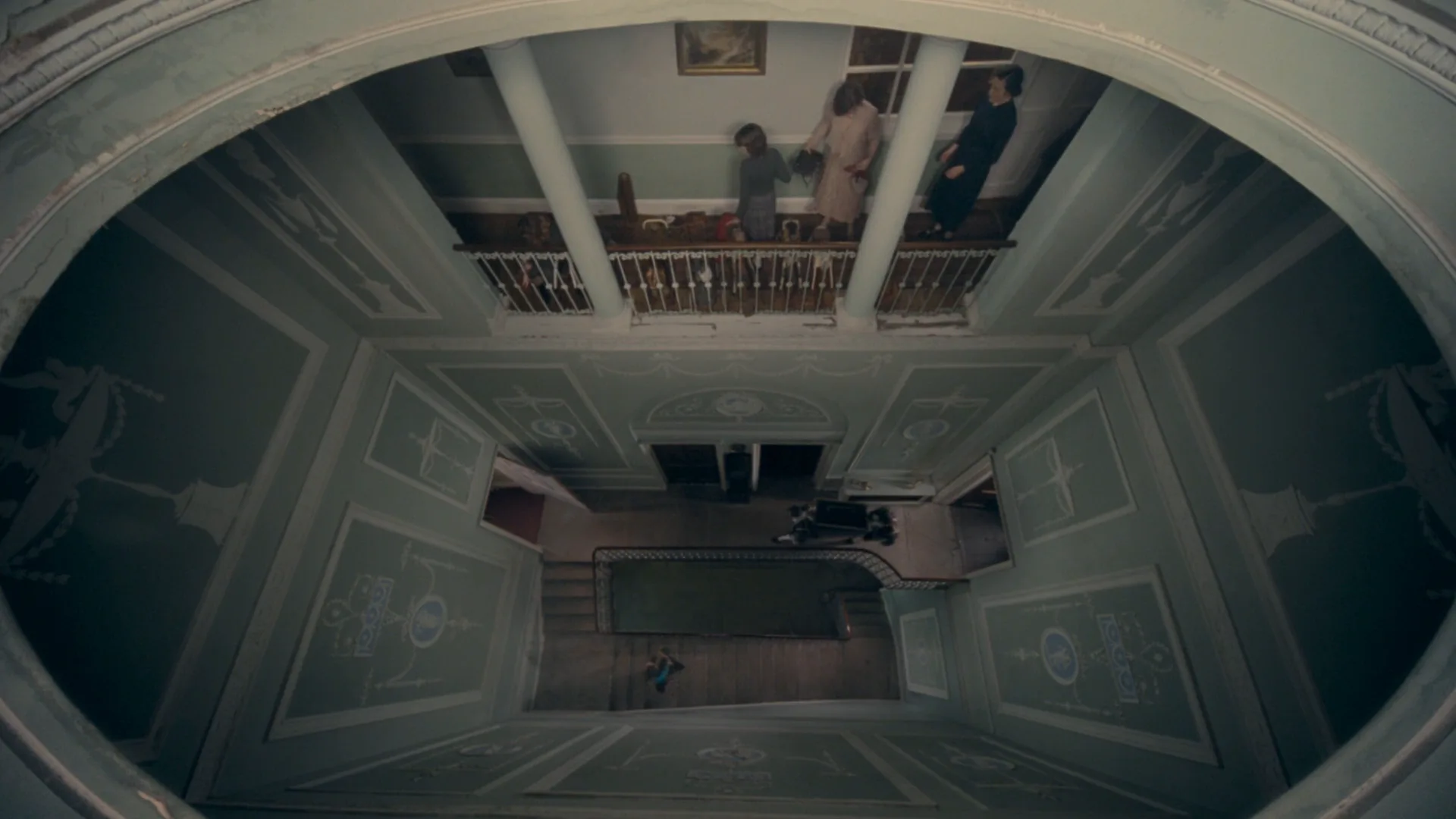
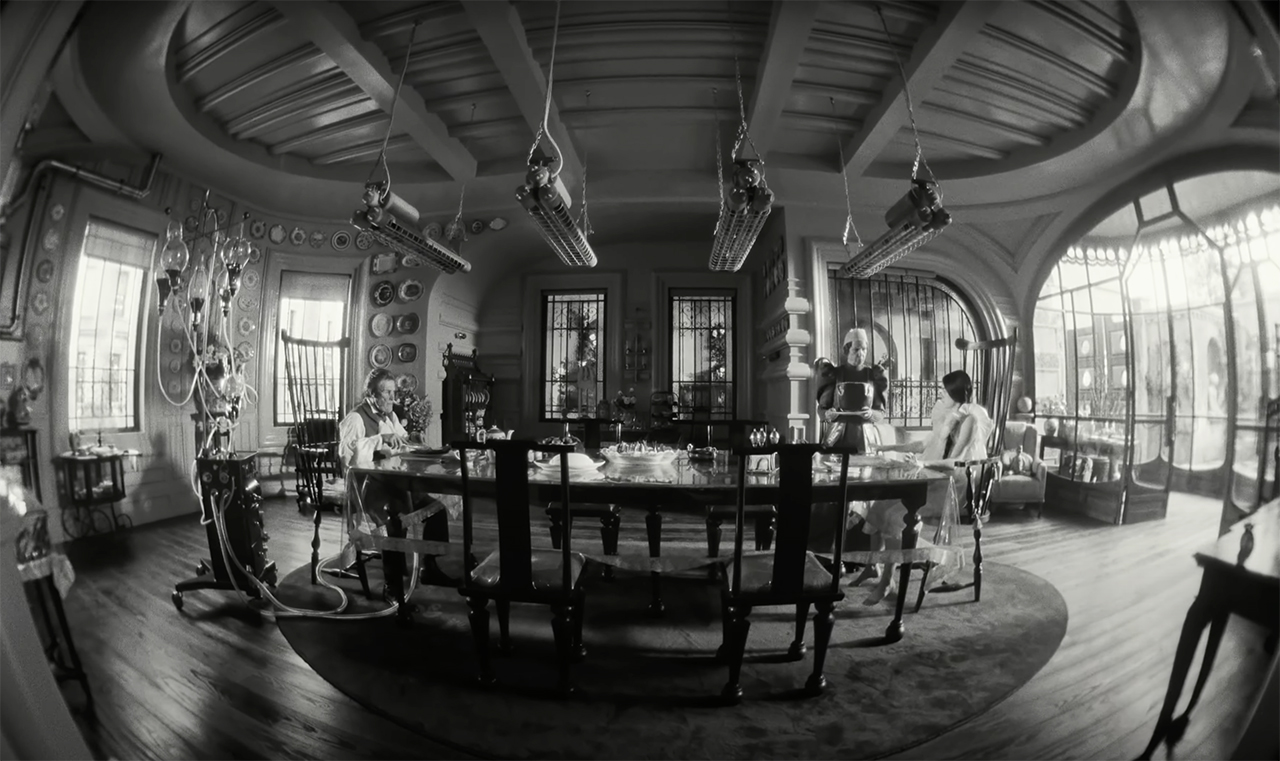
Power and absurdity. In The Favourite (2018), Yorgos Lanthimos and Robbie Ryan used extreme wide lenses so palace corridors curl up at the edges and the courtiers look small inside a closing building. Poor Things (2023) pushes it further.
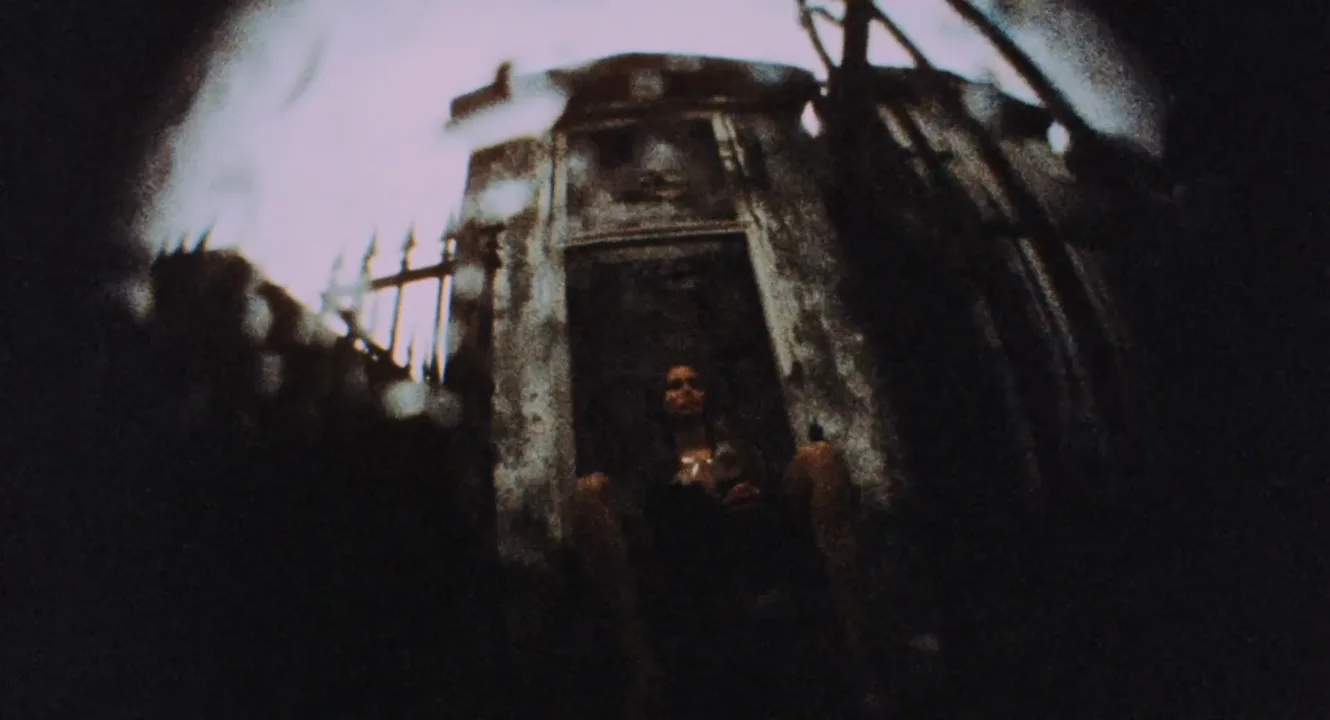
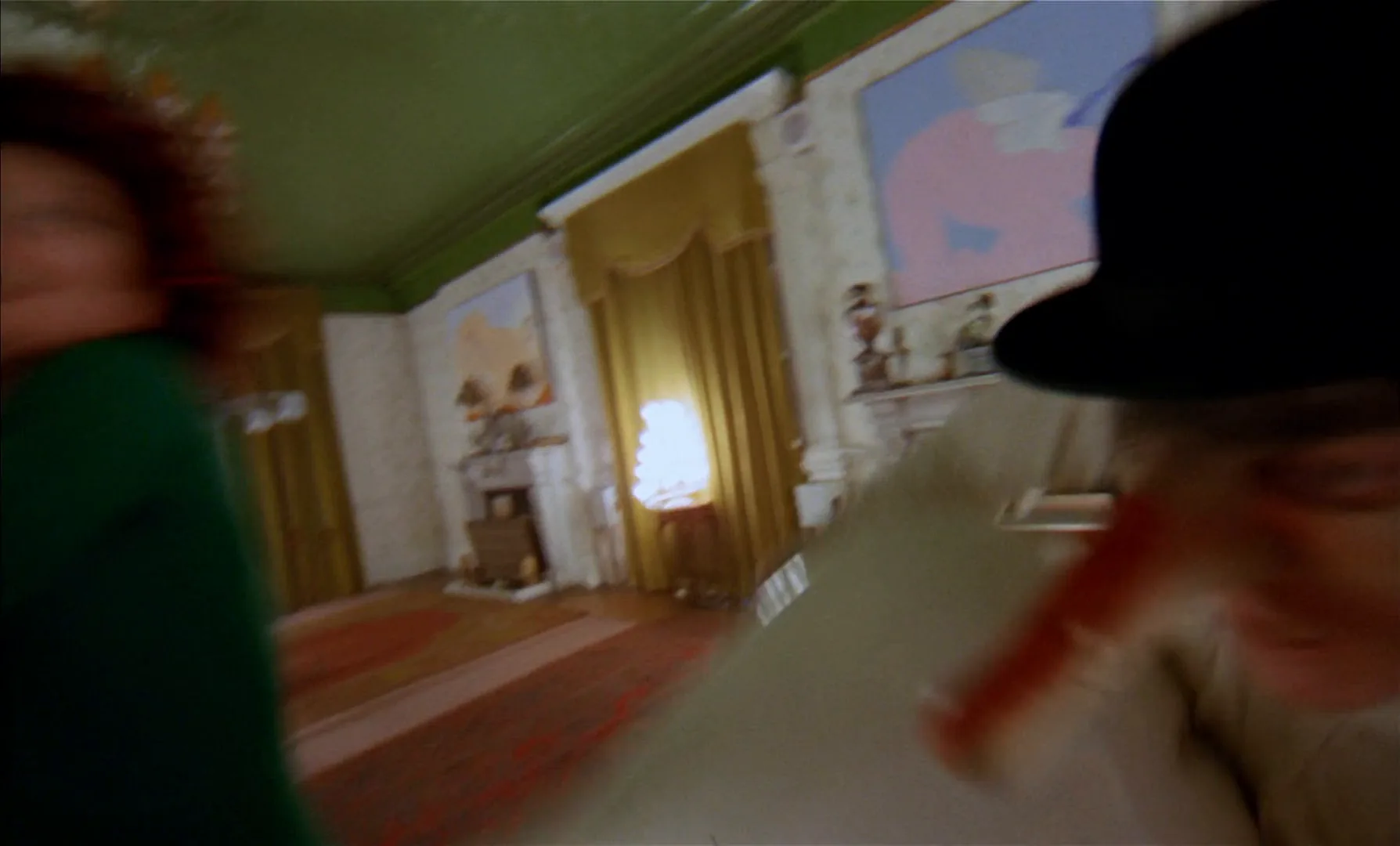
Unease and altered states. Kubrick's very wide lenses in A Clockwork Orange (1971) make rooms stretch and bodies smear near the lens. The cemetery trip in Easy Rider (1969) bends tombs into bulging shapes.
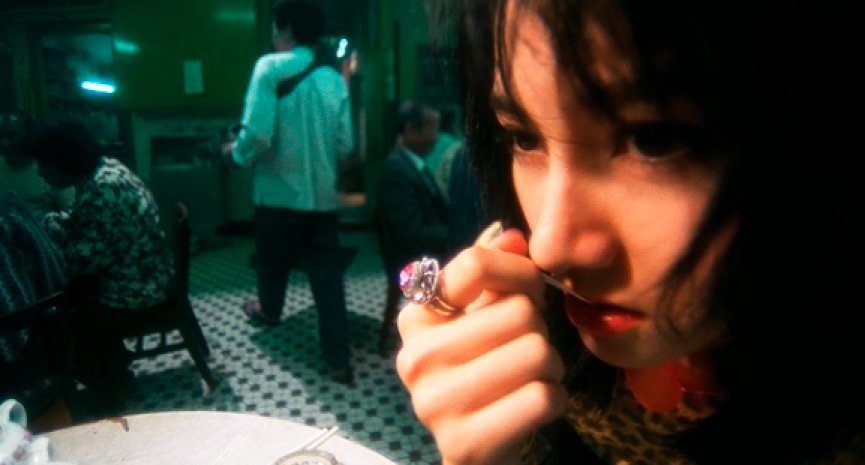
Too-close intimacy. In Fallen Angels (1995), Wong Kar-wai and Christopher Doyle put ultra-wide lenses inches from faces, so the room behind stretches away.
How to shoot (or control) lens distortion
Choose the amount. For a clean look, use rectilinear primes of about 25 mm and longer on Super 35. For visible bending, go to 8–14 mm, older wide primes or a diagonal fisheye. Test on a grid chart first.
Use the center. Keep the horizon, doors and faces near the middle; put ceiling lines, window rows and floorboards near the edges.
Watch the tilt. Tilt down and the floor becomes a dish; tilt up and walls curve inward. An overhead in a stairwell turns the room into an oval.
Plan for post. For VFX, shoot a distortion grid per lens so plates can be undistorted and re-curved. Lens-profile correction straightens lines but crops the edges.
Lens distortion vs. image distortion
Image distortion is any deliberate warping — mirrors, rigs, digital warps. Lens distortion is one optical cause of it.
Separate it from perspective distortion too. A big nose in a close-up on a wide-angle lens comes from camera distance, not from the lens bending lines. Lens distortion is about straight lines turning into curves. Ultra-wide close-ups combine both.
Lens Distortion examples in film
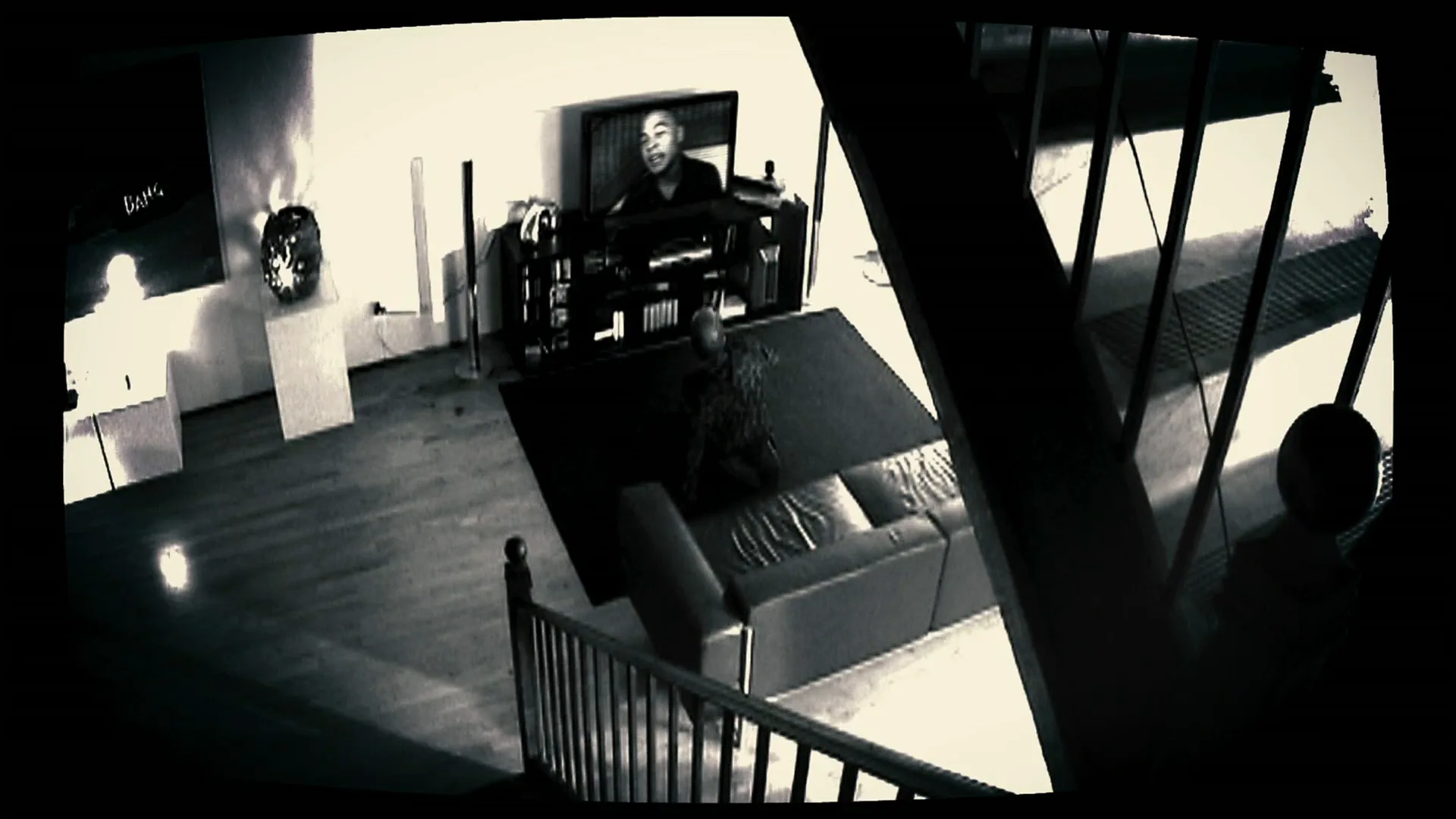
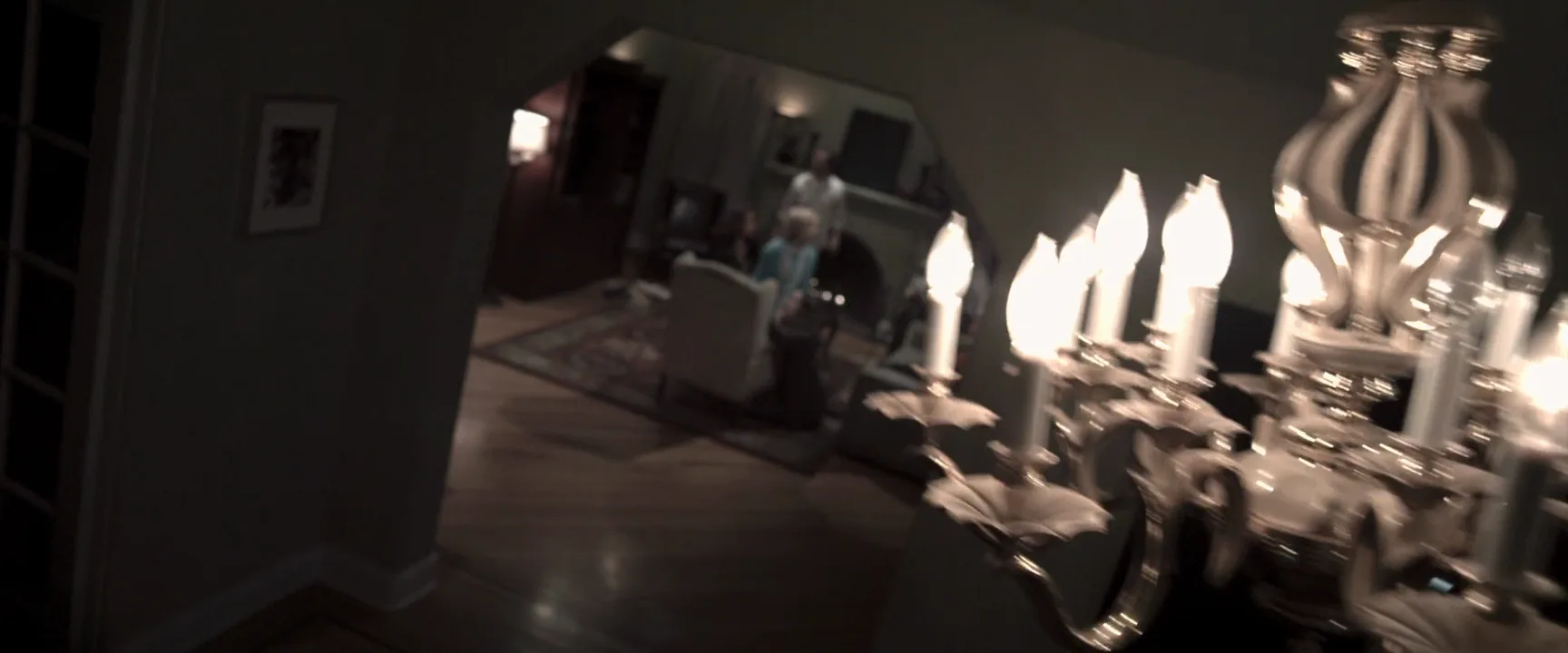
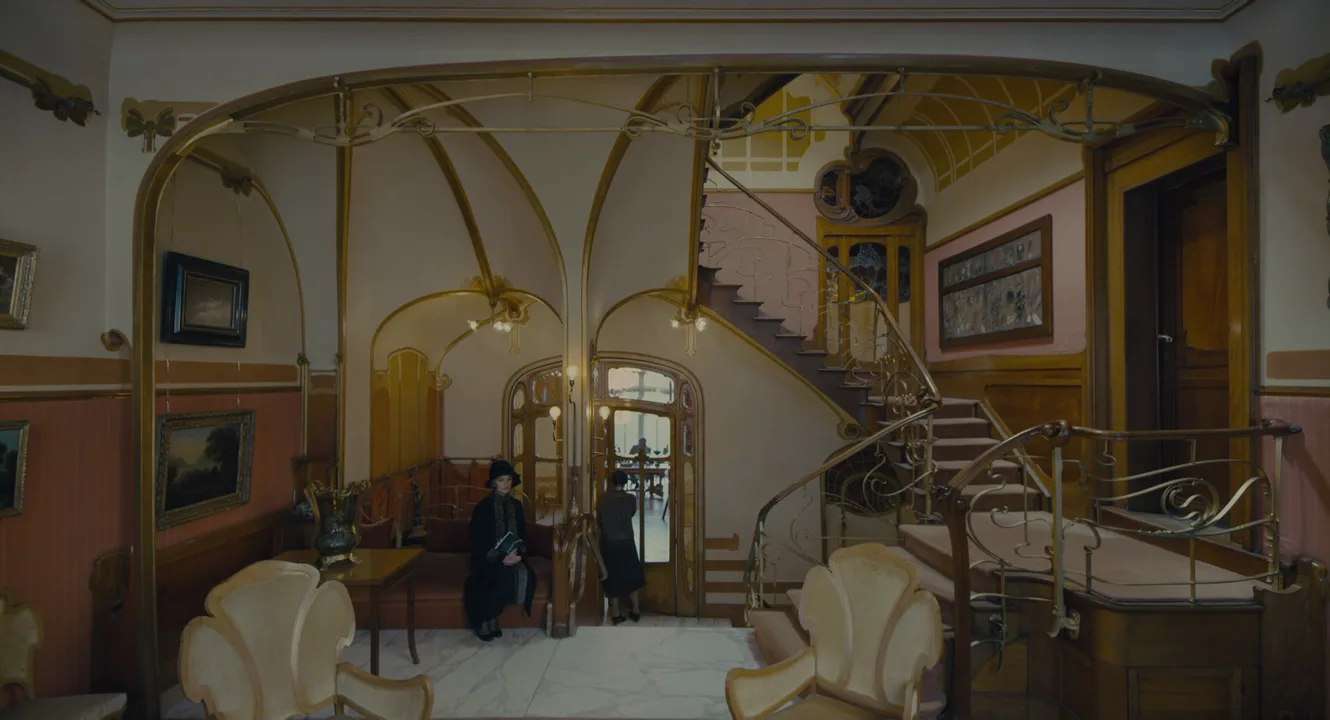
9 framesWatch the lines near the frame edges: where window rows and railings curve, the lens is bending the space.
How to create a lens distortion with AI
4 promptsImage models default to a corrected lens, so name the bending and say where it happens. On a FlashBoards board, keep these frames beside your takes before animating the best one. The fourth prompt re-shoots a real film shot from a text description alone, and the original plays next to the result so you can compare.
Cinematic film still, ultra-wide lens with strong barrel distortion, camera centered at waist height in a long 18th-century palace corridor, tall windows on the left bowing outward, floorboards curving up at both frame edges. A young woman with a cropped copper bob, freckles and a dark green velvet coat walks away down the exact center. Cold daylight, dark vignette in the corners.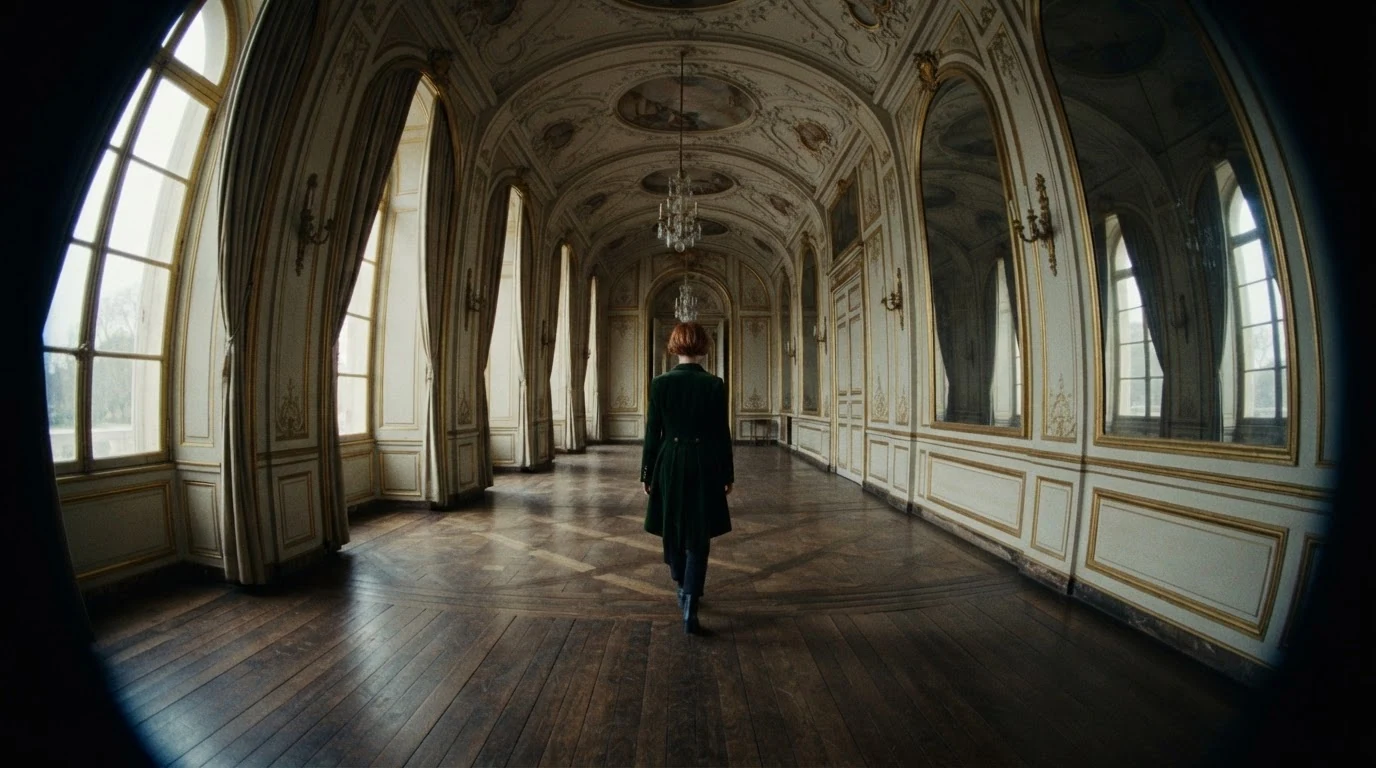
"Strong barrel distortion" names the effect; "windows bowing outward" and "floorboards curving up" tell the model which lines bend. "Exact center" keeps her in the straight zone, so the curve reads as the lens.
Open FlashBoardsExtreme wide-angle lens with visible barrel distortion, low camera at the bottom of a narrow tiled subway stairwell looking up. Tile lines and both steel handrails curve outward toward the frame edges; the center line of the stairs stays straight. At the top, dead center, a middle-aged man with a grey buzz cut, round wire glasses and a mustard raincoat. Fluorescent light, green-white tiles, 35mm grain.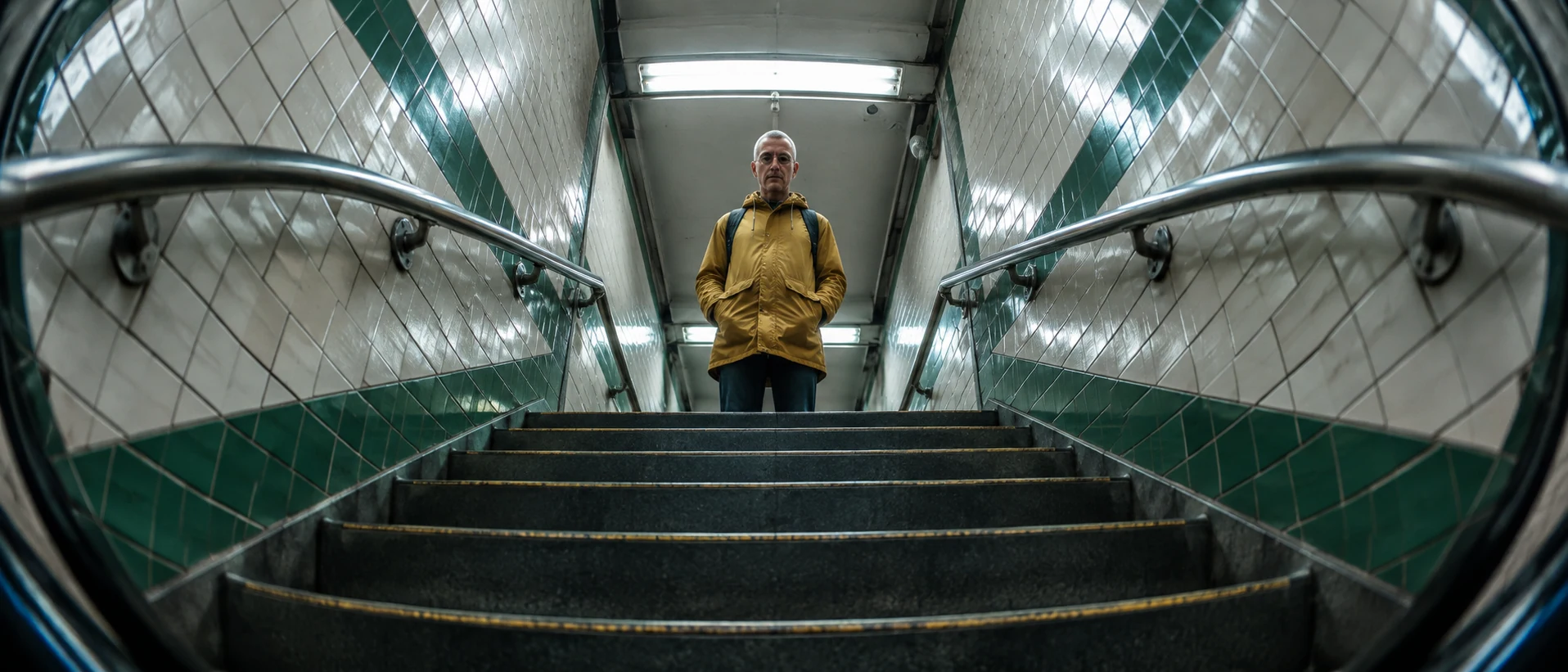
A low angle in a tight space makes the bend oppressive. Tiles and handrails give the model many straight edges to curve, and stating what stays straight stops it warping everything.
Open FlashBoardsCamera: a slow, steady, level push forward down the center of the corridor, same ultra-wide barrel-distorted lens throughout. Action: The woman in the green velvet coat is already walking away, coat swinging. The windows slide past on the left and bend outward as they reach the frame edge, the floorboards keep curving up at both sides. By the end she is further down the corridor, still in the center."Already walking" makes the shot alive from frame one. A straight push along the center line makes lines flow outward and bend at the edges, the way a real wide lens does.
Open FlashBoards{
"output": "Full-screen live-action period scene from The King's Speech (2010), from its very first frame: one single continuous locked-off shot, a single unbroken take. Muted 2010 35mm look with soft grain; a tall 1930s London townhouse stairwell seen from the very top, cold flat overcast daylight from above, sage green and grey-green painted walls with pale plaster moldings, dark polished wood stairs, desaturated cool palette with one warm blush-pink coat.",
"characters": {
"S1": {
"name": "Queen Elizabeth, played by Helena Bonham Carter",
"look": "slim woman, dark hair pinned up under a small hat, long pale blush-pink wool coat, seen from above",
"voice": "light, warm, brisk, a mother busy with her children"
},
"S2": {
"name": "Princess Margaret, played by Ramona Marquez",
"look": "small girl about six, dark bobbed hair, grey wool dress, white socks, seen from above",
"voice": "small, eager child's voice"
},
"S3": {
"name": "the elder daughter, an older girl",
"look": "girl about ten, dark curled hair, grey dress like her sister's, seen from above",
"voice": "bright, excited child's voice"
},
"S4": {
"name": "a maid",
"look": "woman in a long plain black dress, hair in a tight bun, hands clasped in front",
"voice": "silent: she never speaks"
},
"S5": {
"name": "removal men",
"look": "two or three men in dark work clothes carrying a long dark heavy piece of furniture, tiny far below",
"voice": "silent: they never speak"
},
"S6": {
"name": "a man on the lower stairs",
"look": "small dark-suited figure far below",
"voice": "silent: he never speaks"
}
},
"shots": [
{
"shot": 1,
"camera": "locked-off and perfectly still for the whole shot, looking straight down from the top of a tall square stairwell through an oval opening in the ceiling, extreme wide-angle lens with strong barrel distortion edge to edge: the thick pale plaster rim of the oval bows outward and wraps around all four frame edges like a dark vignette, the paneled walls lean inward and curve toward the center, the two white columns of the upper landing at the top of frame splay outward in a V; far below, the rectangular stairwell and hall floor at the center stay small and nearly straight",
"action": [
"BEGINNING: alive from the first frame, on the upper landing at the top of frame, behind a white balustrade lined with suitcases, bags and red bundles, S1 stands right of center between the two white columns facing the wall, S2 stands just to her left; at the far right by a white door S4 stands half hidden behind the right column; far below on the hall floor, S5 are already at the right edge carrying the long dark piece; on the lowest flight of stairs at the bottom of frame S6 walks slowly toward the left.",
"THEN: S1 turns from the wall to S2 and hands her a dark bundle with both hands; S2 takes it against her chest.",
"THEN: S4 steps out from behind the right column into the open on the right side of the landing and stops, facing the family, hands clasped, and stays still there to the end.",
"THEN: S2 turns to her left and bends down to the bags along the balustrade, rummaging; S1 holds a dark bundle at her left hip; far below S5 shuffle the long dark piece from right to left across the hall floor, reaching the middle.",
"THEN: S2 straightens up; S1 reaches her right hand out and touches S2's head.",
"END: S3 comes in from the left side of the landing holding up a dark toy horse with both hands; S1 leans left and stretches out her right arm to take it while S2 bends to the bags between them; below, S5 reach the left part of the hall and S6 disappears at the bottom-left of the stairs; the walls keep bending around the tiny figures and the camera never moves."
],
"dialogue": [
{
"speaker": "S1",
"on_screen": true,
"when": "from the first frame, as she turns from the wall toward the small girl",
"delivery": "cheerful, busy",
"line": "<d>[English] - I'm sure you'll love it. - There you go.</d>"
},
{
"speaker": "S1",
"on_screen": true,
"when": "while she hands the bundle over and the maid steps into view",
"delivery": "quick, affectionate, listing things",
"line": "<d>[English] Thank you, darling. Saddles. Margaret.</d>"
},
{
"speaker": "S2",
"on_screen": true,
"when": "while the small girl bends down to the bags",
"delivery": "eager, pleased",
"line": "<d>[English] - There's Montezuma. - Oh, here's one.</d>"
},
{
"speaker": "S3",
"on_screen": true,
"when": "as the older girl comes in from the left holding up the toy horse, near the end",
"delivery": "excited; the mother answers lightly",
"line": "<d>[English] - Mama, here's a horse and saddle. - Thank you. Oops.</d>"
}
]
}
],
"sound": {
"ambience": "hollow echo of a tall stairwell, footsteps on floorboards, rustle of coats and bags, heavy shuffling steps of the removal men far below",
"speech": "exactly these spoken phrases, each said once, in this order",
"never_spoken": "no narration and no voice-over: the descriptions, performance notes and step words of this prompt are never spoken aloud",
"music": "a film score under the scene, always below the voices: gentle warm chamber strings with a light, unhurried piano figure",
"subtitles": "none"
}
}Remakes the overhead stairwell shot from The King's Speech (2010): the prompt kept the locked-off top-down angle, the oval rim bowing around the frame, the film's own lines on the upper landing and the removal men crossing the hall below.
The camera field leads with "barrel distortion edge to edge", then names what bends (the oval rim, the leaning walls, the splayed columns) and what stays straight at the center. "Locked-off" keeps the curve steady while the family moves under it.
Open FlashBoardsCommon mistakes
- Everything gets straightened. Name the bending lines: "windows bowing outward".
- "Fisheye" becomes a circle. For a full frame say "edge to edge, strong barrel distortion".
- The subject warps. Say what stays straight in the center.
- The curve breathes in video. Avoid pans; push along the center line and repeat the lens description.
Keep the reference frames, prompts and every generated take side by side — images and video in one canvas.
FAQ
4 questionsWhat is barrel distortion?
Barrel distortion is a lens error where magnification drops toward the edges of the frame, so straight lines that miss the center bow outward like the sides of a barrel. It is typical of wide-angle and fisheye lenses and zooms at their widest. Filmmakers correct it in post or keep it to make a room feel swollen.
What is the difference between barrel and pincushion distortion?
They bend lines in opposite directions. Barrel distortion bows straight lines outward and mostly appears on wide lenses. Pincushion distortion bows them inward toward the center and shows up on some telephoto lenses and the long end of zooms. Mustache distortion mixes both into wavy lines.
Why do wide-angle lenses distort faces?
Mostly because of distance. To fill the frame with a face on a wide lens, the camera must be close, so the nose is much nearer than the ears and looks bigger. That is perspective distortion. Optical barrel distortion can add to it, bending features near the frame edges.
How do you fix lens distortion in post?
Most editing tools have a lens correction effect that bends the image back with a lens profile. Straightening barrel distortion pulls the edges inward, so you usually crop or scale up. For VFX, artists build an exact undistort from a grid shot with the same lens.
Related terms
5- Fisheye LensLenses, Focus & Exposure
A fisheye lens is an extreme wide-angle lens (often around 180°) that abandons straight-line perspective and bends lines into curves, producing a bulging, distorted image that feels claustrophobic, comic or hallucinatory.
- Wide-Angle LensLenses, Focus & Exposure
A wide-angle lens has a shorter focal length than normal: it takes in more space, exaggerates the distance between near and far, and enlarges whatever is close to the camera — from immersive interiors to unsettling, distorted close-ups.
- Anamorphic LensLenses, Focus & Exposure
An anamorphic lens squeezes a wide field of view horizontally onto film or a sensor, and the image is unsqueezed into widescreen later; its optical side effects — horizontal streak flares, oval bokeh and gently bending edges — became a signature of the big-screen look.
- Focal LengthLenses, Focus & Exposure
Focal length, measured in millimetres, sets a lens's angle of view: short focal lengths see wide and stretch space, long ones see narrow and compress it — which is why the same framing feels different on 24mm and on 135mm.
- Camera LensesLenses, Focus & Exposure
A lens gathers light and focuses it onto film or a sensor; its focal length, maximum aperture and optical character decide the field of view, perspective, depth of field and texture of the image.
Further reading
Rudolf Kingslake, A History of the Photographic Lens (Academic Press, 1989). Sidney F. Ray, Applied Photographic Optics (Focal Press, 3rd ed., 2002).