 FlashBoards Learn
- Learn
- Lenses, Focus & Exposure
- Anamorphic Lens
Lenses, Focus & Exposure · Film language
Anamorphic Lens
Also called: anamorphic artifacts, anamorphic look, anamorphic flare, anamorphic bokeh
An anamorphic lens squeezes a wide field of view horizontally onto film or a sensor, and the image is stretched back to widescreen, usually 2.39:1, in projection or post. Its optical side effects (horizontal streak flares, oval bokeh, gently bending edges) became the signature of the big-screen look.
- What it does
- Captures a widescreen frame on a narrower gate and gives it streak flares, tall oval bokeh and soft, bending edges.
- Use it when
- You want scale, a wide frame around faces, and a night world of lights that smear into lines and ovals.
- Watch out
- Flares and ovals are signatures, not seasoning: a streak on every shot stops meaning anything and starts looking like a filter.
- Try this prompt
Night close-up shot on anamorphic lenses, 2.39:1 widescreen, city lights behind her as tall vertical oval bokeh, a headlight throwing a thin horizontal blue streak flare across the frame
What is an anamorphic lens?
An anamorphic lens is a lens with cylindrical elements that compress the image along one axis only. It sees a wide horizontal field and squeezes it sideways to fit a narrower piece of film or sensor, while the vertical axis is left alone. Most camera lenses treat both axes equally; this one deliberately does not. On the negative, everyone looks tall and thin. A matching lens on the projector, or a desqueeze in the camera monitor and in post, stretches the picture back out, and the audience sees a wide frame with normal proportions.
The squeeze factor tells you how much compression happens:
- 2x is the classic 35mm standard. The 4-perf anamorphic film area is roughly 1.2:1; doubled, it becomes the familiar 2.39:1 "scope" aspect ratio.
- 1.33x turns a 16:9 sensor into about 2.37:1 without cropping.
- 1.5x to 1.8x is common on large-format sensors with a 3:2 shape, cropped to taste.
- 1.25x was used by Ultra Panavision 70 on 65mm film, the system revived for The Hateful Eight (2015) at an extremely wide 2.76:1.
Most classic anamorphics are front anamorphic: the cylindrical group sits in front of an ordinary spherical lens and does all the optical "damage" that people love. Rear anamorphics, common in zoom lenses, put a small cylindrical element behind the glass. They squeeze the image just the same, but their bokeh stays closer to round and their flares are milder.
The lens is also the reason widescreen became standard. The principle dates back to Henri Chrétien's Hypergonar in the 1920s, and 20th Century Fox built CinemaScope on it in 1953. From then on, a wide image no longer needed wider film. When that image is shown on a narrower screen, it comes back with black bars, which is letterboxing.
The anamorphic look: flares, oval bokeh and bending edges
Cinematographers often talk about "anamorphic artifacts". These are the side effects of the cylindrical elements, and they are the real reason people still choose these lenses when a sensor could simply be cropped to 2.39:1.
Streak flares. A bright point source (a headlight, a bare bulb, a flashlight, the sun at the edge of frame) spreads into a thin horizontal line, often running across most of the frame. The line is horizontal wherever the light sits, because the cylindrical elements spread light along one axis only. Coatings tint it: blue is the classic color, but amber, gold and neutral streaks exist too. The source also throws ghosts, a row of oval or crescent reflections along a diagonal through the center of the frame.
Oval bokeh. A front anamorphic effectively has two focal lengths, one horizontal and one vertical, so a defocused point blurs more vertically than horizontally. After desqueeze, out-of-focus highlights become tall ovals or capsules, not round discs. This is the most reliable tell: if the background bokeh is round, the shot was almost certainly made on spherical glass and cropped.
Bending edges. Wide anamorphics bow straight lines outward toward the frame edges. This is a mild barrel lens distortion that makes architecture curve and gives a room a slightly wrapped feel.
Faces and focus. Early anamorphics fattened faces at close focus, an effect crews nicknamed the "mumps"; later designs corrected it. Many anamorphics also breathe when you pull focus, and the background can seem to stretch or shrink during a focus pull.
Depth. Because the lens compresses horizontally, you use a longer focal length to cover the same width. A 50mm 2x anamorphic sees about as wide as a 25mm spherical lens on the same gate, but its focus falls off like a 50mm. The result is a wide frame with shallow depth of field, a combination spherical lenses struggle to give you.
Why do filmmakers shoot anamorphic?
Scale. A 2.39:1 frame makes landscapes, crowds and spaceship corridors feel wide in a way a 1.85:1 frame does not.
Faces with a world around them. A widescreen close-up can hold a face on one third and the city, the desert or a second character on the other two. Dialogue scenes can play in a single two-shot without cutting. Because the depth is shallow, the world stays readable as shape and color and doesn't compete with the face.
Texture and imperfection. Streaks, ovals and soft edges tell the viewer that a lens stands between them and the scene. Used on purpose, this adds glamour and a dreamlike quality to night scenes. Blade Runner (1982) turns city lights into a haze of streaks and glows. J.J. Abrams's Star Trek (2009) made blue horizontal flares part of its visual identity, so much that they became a joke about the style.
Period and genre signals. Because so many films of the 1970s to 1990s were shot anamorphic, oval bokeh and streaks now suggest that era, and they suggest big genre cinema: science fiction, action, the neon thriller. Useful when it fits; a cliché when it is decoration.
Why some cinematographers avoid it. Anamorphics are heavier, slower, softer at the edges and focus less closely. For handheld documentary work, tight spaces or deep-focus staging, cropped spherical glass is often the practical choice.
How to shoot with an anamorphic lens
Pick the squeeze for your sensor. Match the squeeze to the sensor shape: 2x on a 4:3 or 4-perf area, 1.33x on 16:9, 1.5x to 1.8x on large-format 3:2. Then set the camera's desqueeze display, so the operator frames the real picture instead of a skinny one, and put 2.39:1 frame lines on the monitor.
Choose the character on purpose. Vintage front anamorphics give strong blue streaks, pronounced ovals and heavy edge falloff; modern sets are cleaner, with controllable flares.
Stop down a little. Many anamorphics are soft and smeary wide open. T2.8 to T4 is a common working range that keeps faces sharp while the background still breaks into ovals. For strong ovals, keep the subject close and the lights far behind them.
Mind the minimum focus. Close focus is often around 0.9 to 1.5 meters (3 to 5 feet), and farther on older glass. For tighter close-ups, use a diopter or step up to a longer lens rather than walking closer.
Light for the artifacts you want. Streaks need a small, hard, bright source against a darker field: practical lights in frame, car headlights, a flashlight, a bare LED just past the edge of frame. Backlighting with the source near the lens axis gives the longest lines. A little haze spreads flares and glows. To kill a streak, flag the source off the front element with a matte box and flags.
Compose for the width. Put the eyes on the upper third, use the side thirds for the world, and keep architecture a few meters back from wide anamorphics unless you want the curve.
Cheaper ways to get the look. Spherical glass cropped to 2.39:1 with a streak filter (one of the lens filters made for flares) gives lines but not ovals; an oval aperture insert behind the rear element can shape the bokeh.
Anamorphic vs. spherical: can you just crop to 2.39:1?
A spherical lens has rotationally symmetric elements: it treats both axes the same, so bokeh is round and flares follow the shape of the iris and the reflections inside the lens. Crop a spherical image to 2.39:1 and you get the shape of scope, but none of the anamorphic signatures.
The difference shows in three places:
- Bokeh. Round discs from spherical glass, tall ovals from front anamorphic glass.
- Flares. Starbursts, polygon ghosts or veiling glow from spherical lenses; thin horizontal lines from anamorphics.
- Depth and resolution. For the same horizontal field of view, an anamorphic uses a longer focal length and the full height of the sensor, so the focus falloff is steeper and more of the capture area ends up in the final frame. A spherical crop throws away the top and bottom of the image and keeps deeper focus.
Shooting spherical and cropping is a legitimate choice when you want clean, neutral images, deep focus or light, fast lenses. Choose anamorphic when the artifacts are part of the story you are telling.
Anamorphic lens vs. CinemaScope
The two terms are often used as synonyms, but they sit on different levels. Anamorphic names the optical principle: cylindrical elements that squeeze one axis. CinemaScope was a specific branded system, 20th Century Fox's widescreen process launched with The Robe (1953). It combined anamorphic camera and projection lenses with 35mm film to deliver a 2.55:1 image at launch, narrowed to 2.35:1 once optical soundtracks were added.
Panavision's lenses became the industry standard and outlasted Fox's brand. Today "Scope" survives as shorthand for any 2.39:1 release, even one shot spherical and cropped, while "anamorphic" still means the lens itself and the look it leaves on the image.
Anamorphic Lens examples in film
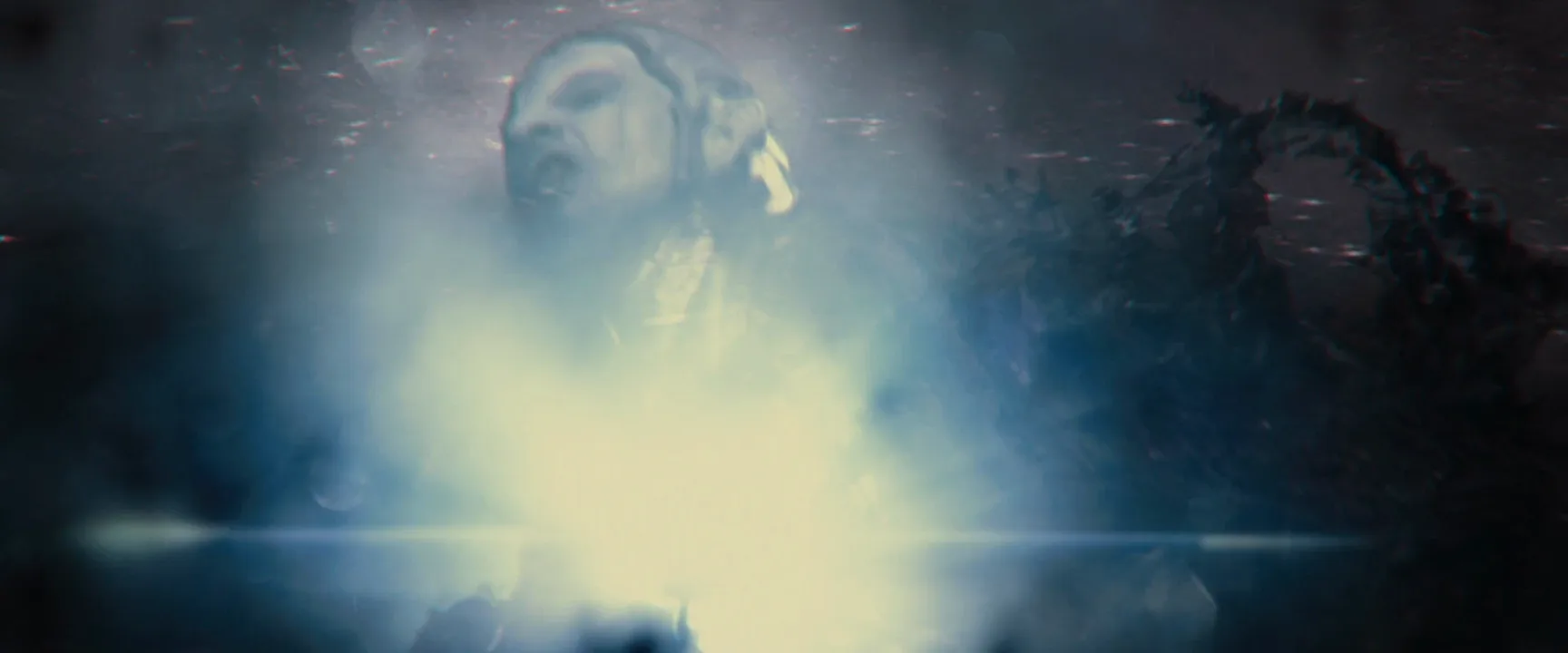
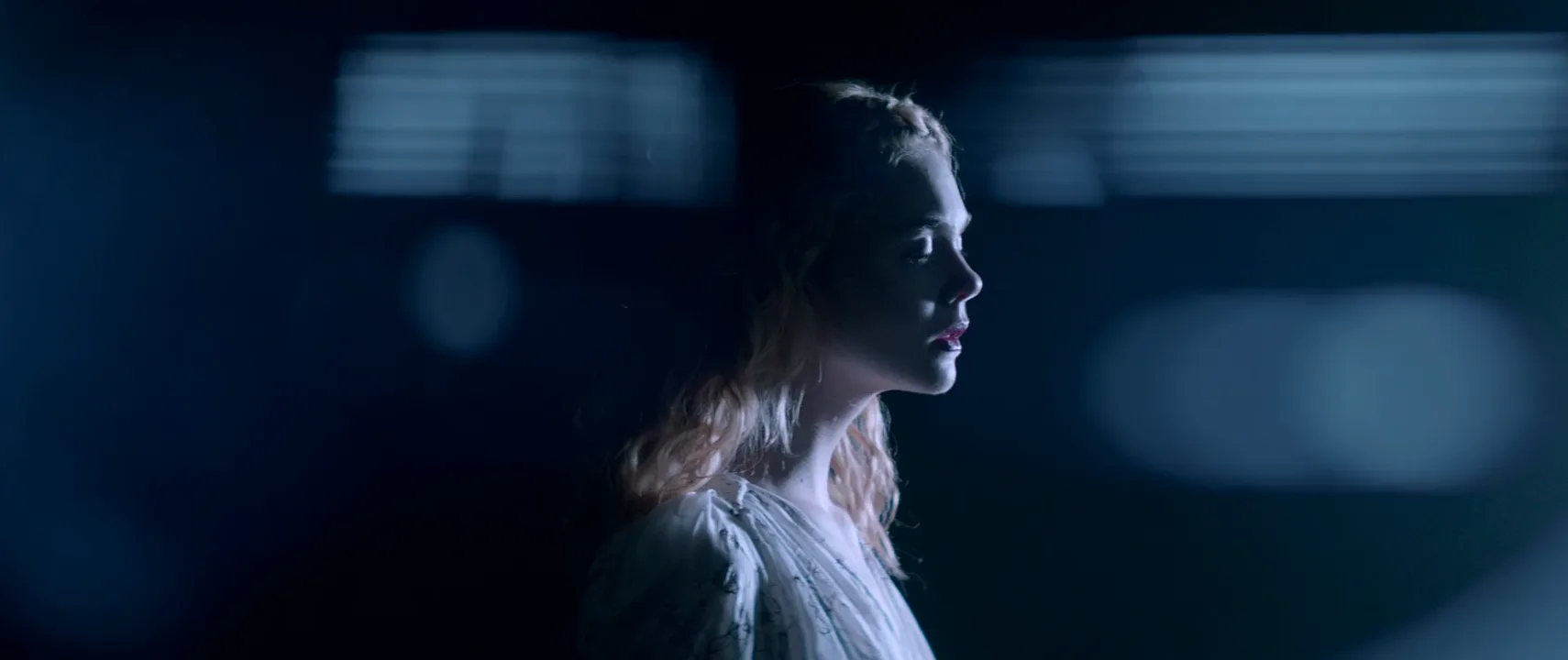
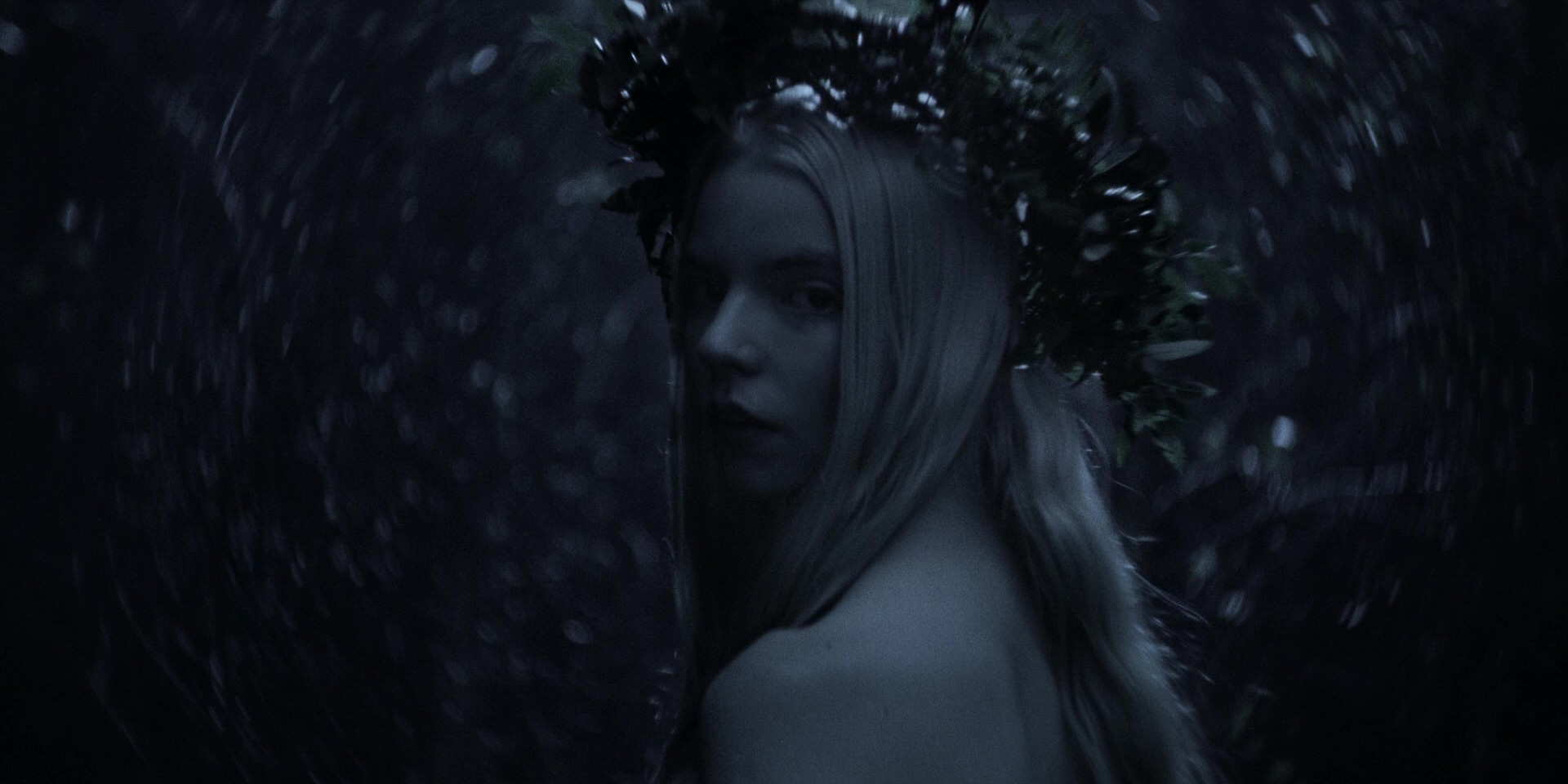
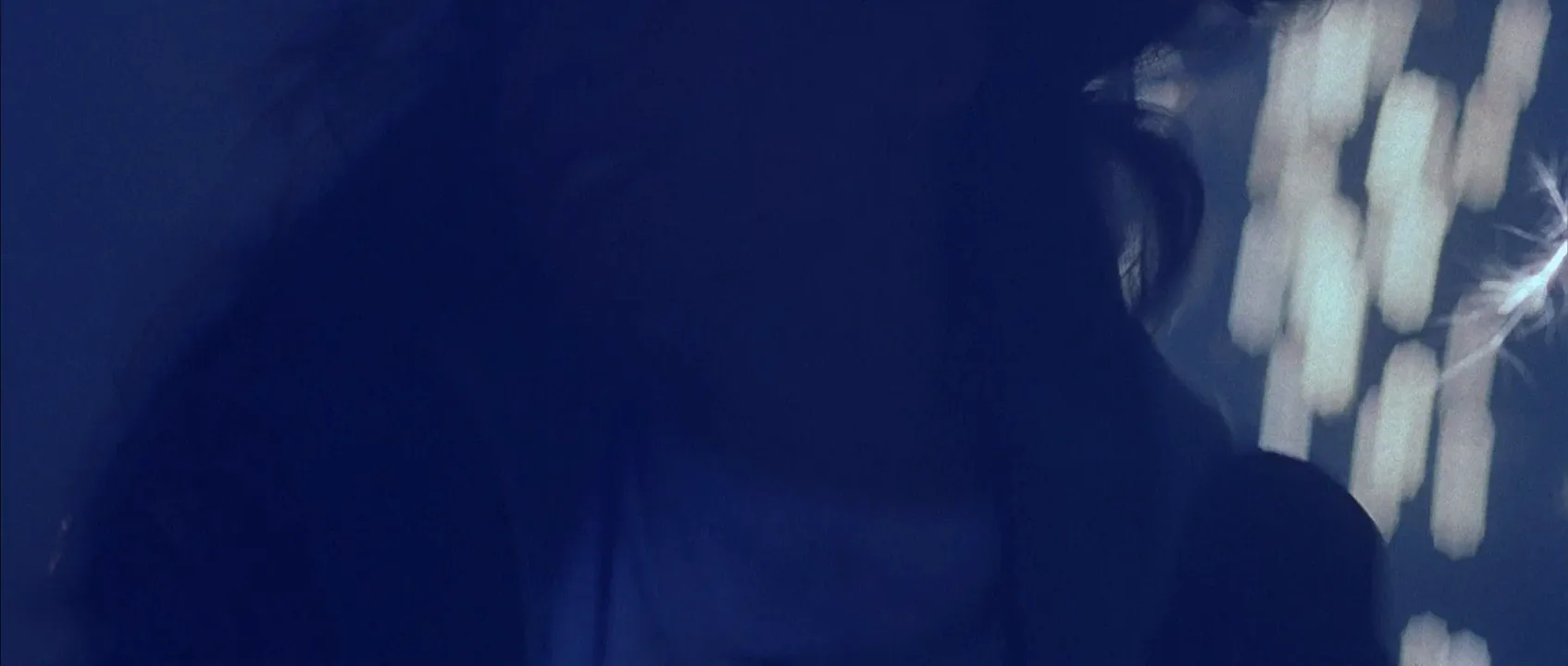
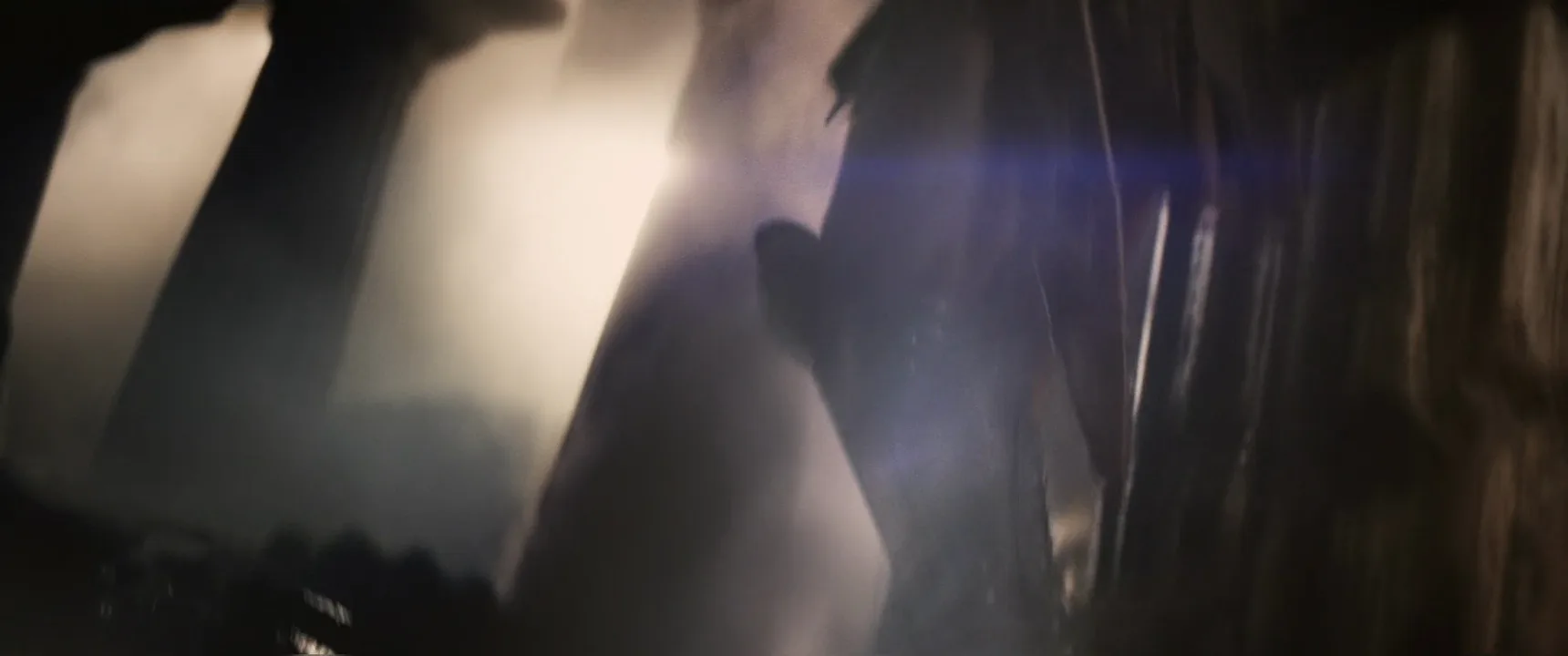
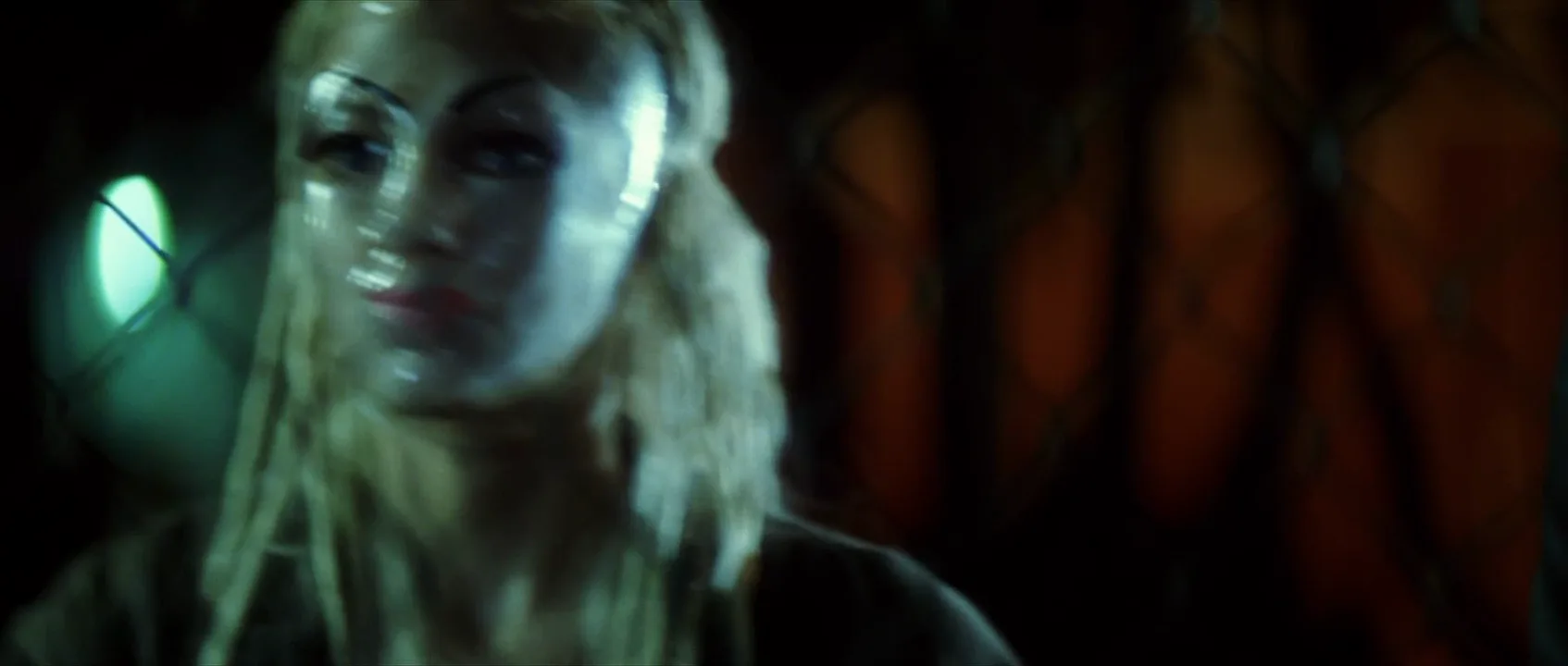
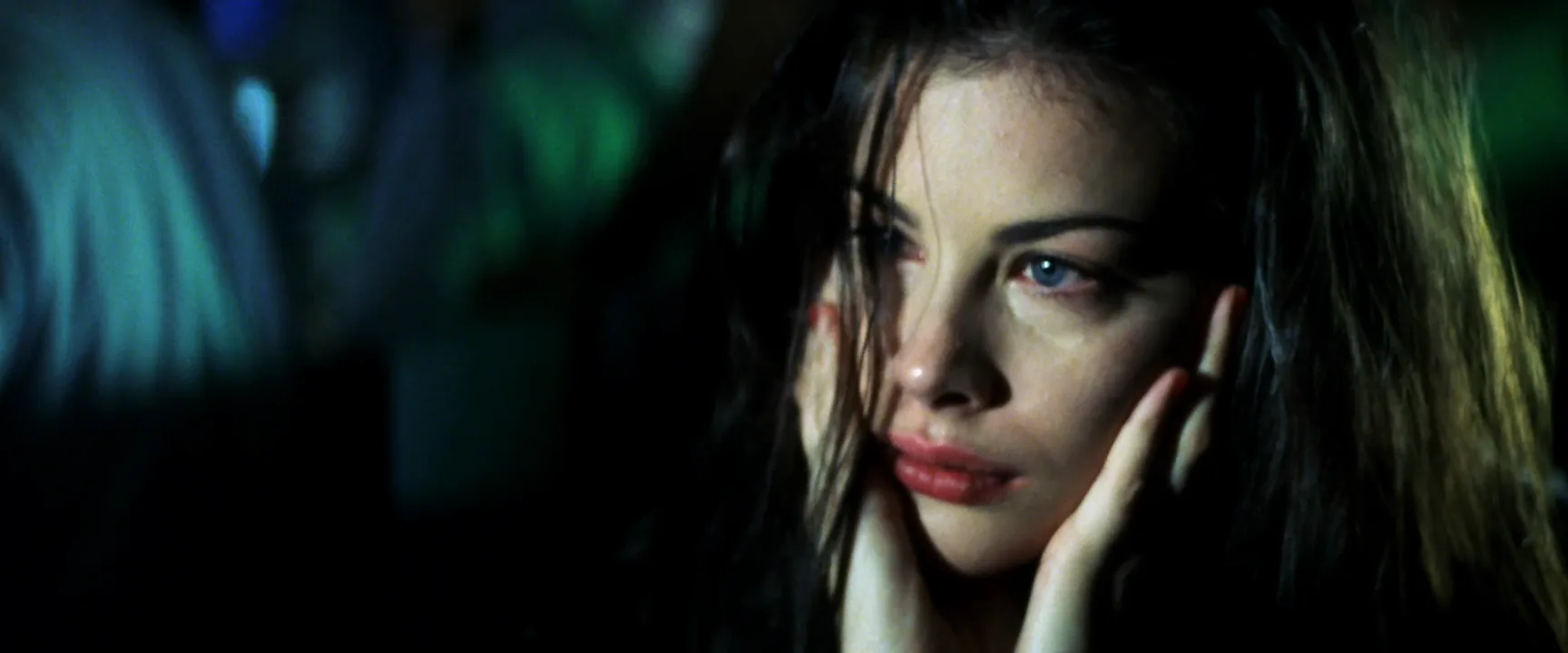
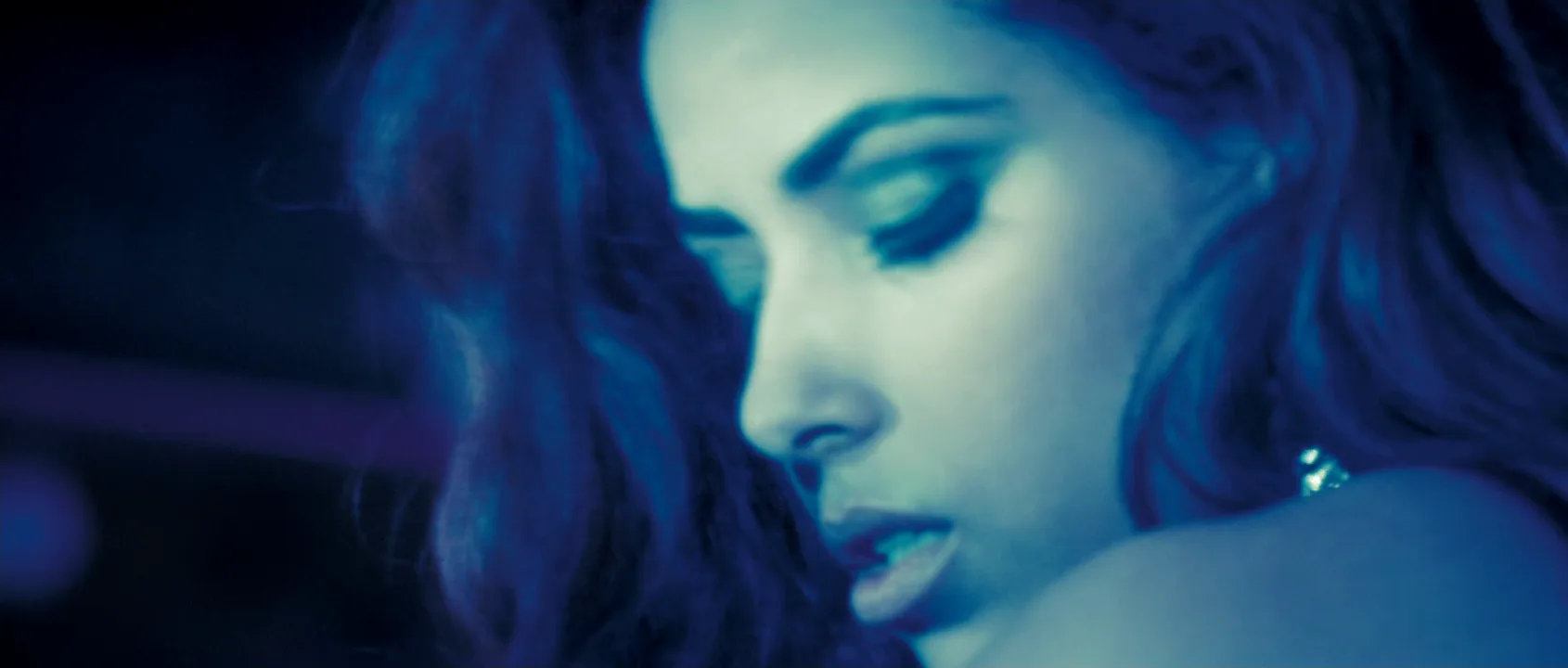
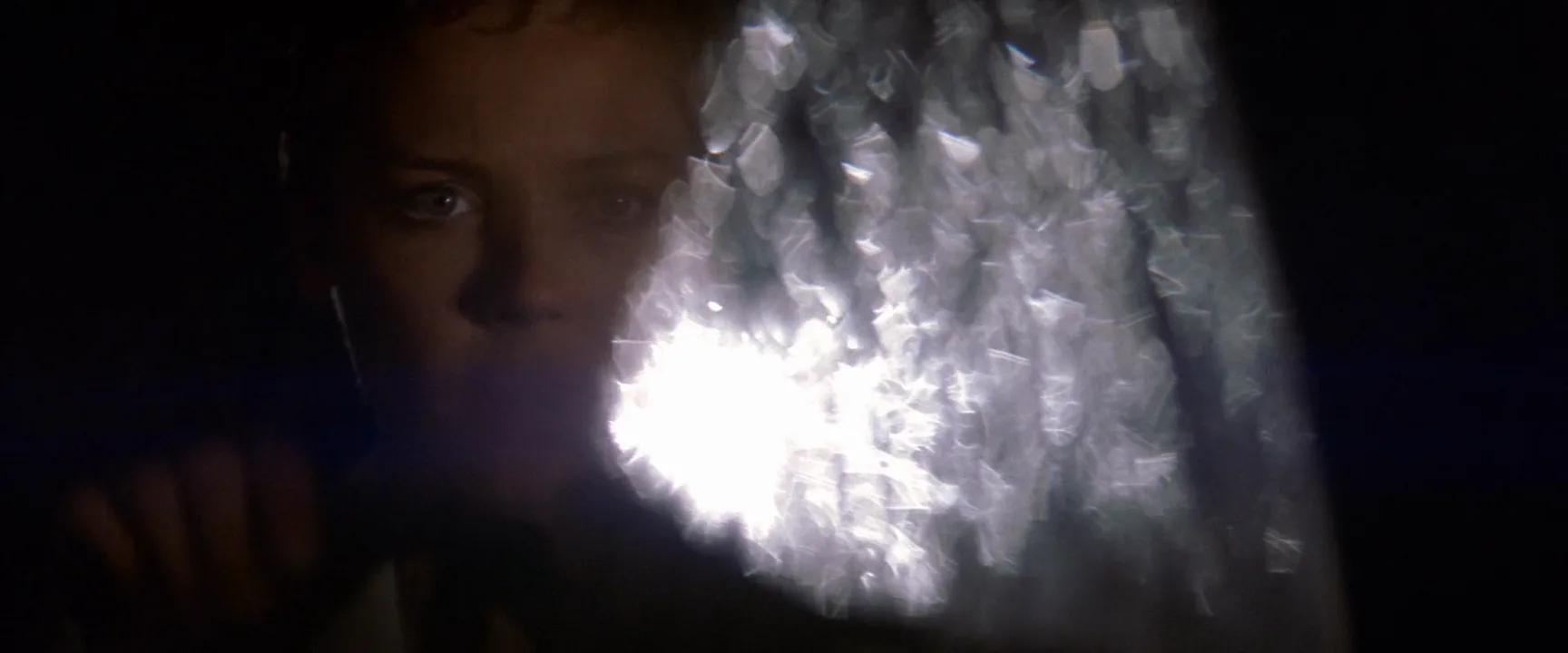
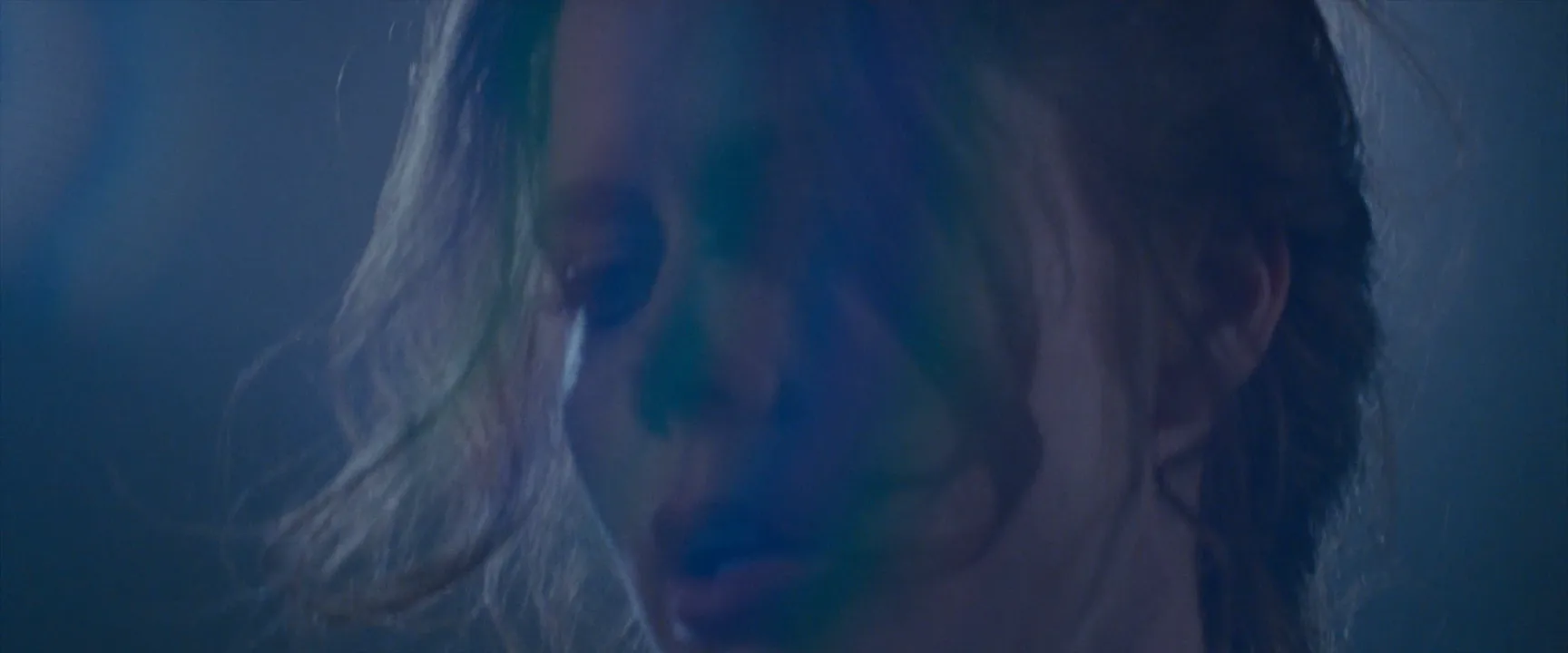
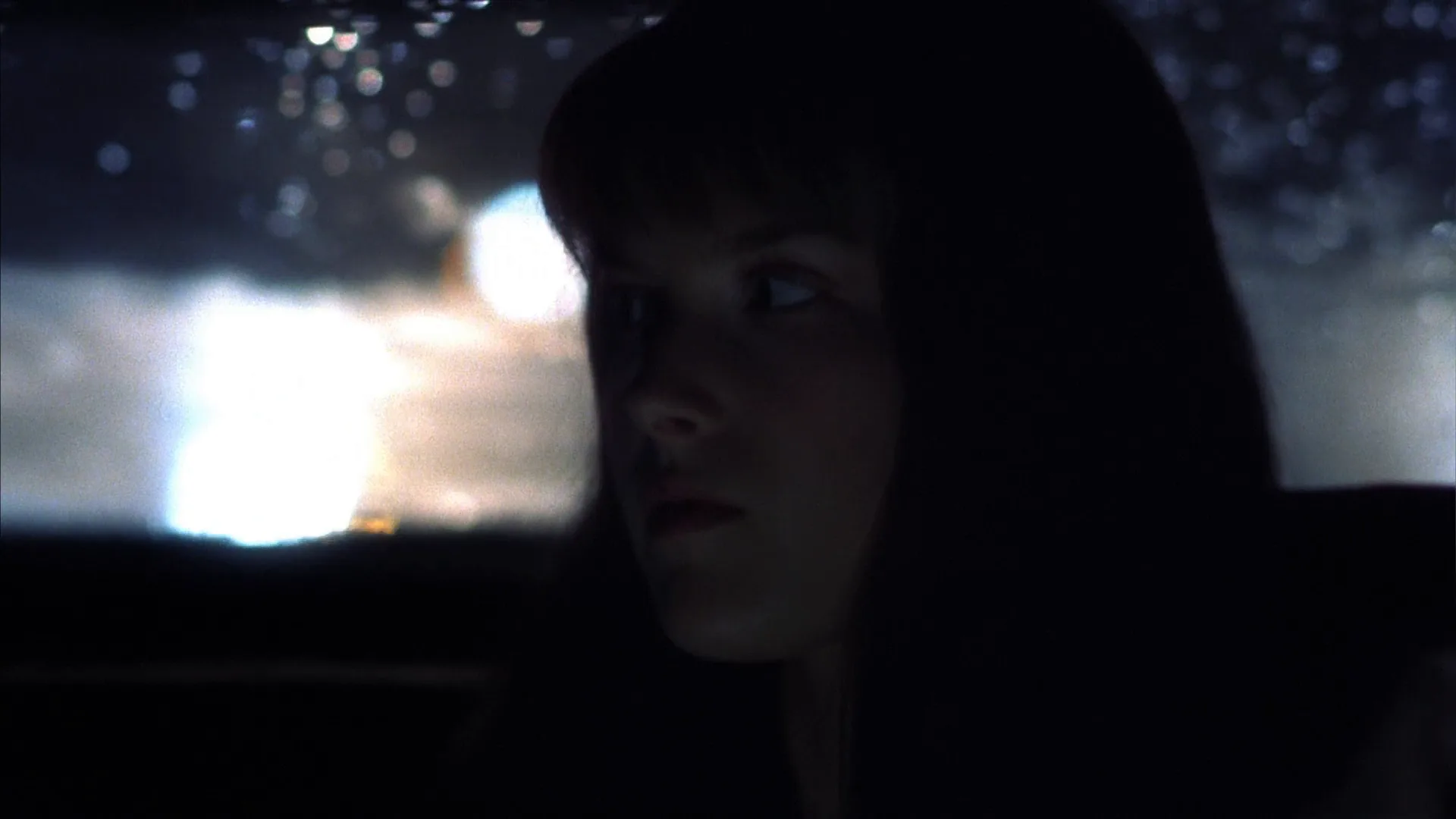
11 framesFrames from 1998 to 2022 where the lens itself shows up in the image: horizontal streaks, upright oval highlights, stretched lights, plus comparison frames shot on spherical glass or showing other kinds of flare. Look at the out-of-focus lights first, then at how bright sources break up.
How to create a anamorphic lens with AI
4 promptsImage and video models know the phrase "anamorphic", but they mostly return a wide frame with a random lens flare. To get the real look, describe each artifact and where it comes from: the shape of the bokeh, the source of the streak, the widescreen frame. In FlashBoards, build the start frame with Nano Banana 2 Lite, try a second take with GPT Image 2.5, then animate the best frame with MiniMax H3 Max Turbo, all on one board next to the film frames you pinned for reference. The fourth prompt re-shoots a real film shot from a text description alone, and the original plays next to the result so you can compare.
Cinematic night close-up shot on vintage anamorphic lenses, 2.39:1 widescreen frame. A woman in her late thirties with a shaved undercut, a thin scar through her left eyebrow and small silver hoop earrings stands at a rain-wet bus stop, face on the right third, looking off camera left. Behind her, out-of-focus neon signs and traffic lights render as tall vertical oval bokeh. A bare car headlight at the left edge of frame throws a thin horizontal blue streak flare across the full width of the image. 40mm anamorphic at T2.8, shallow focus on her eyes, straight lines bowing slightly at the frame edges, light haze, 35mm film grain.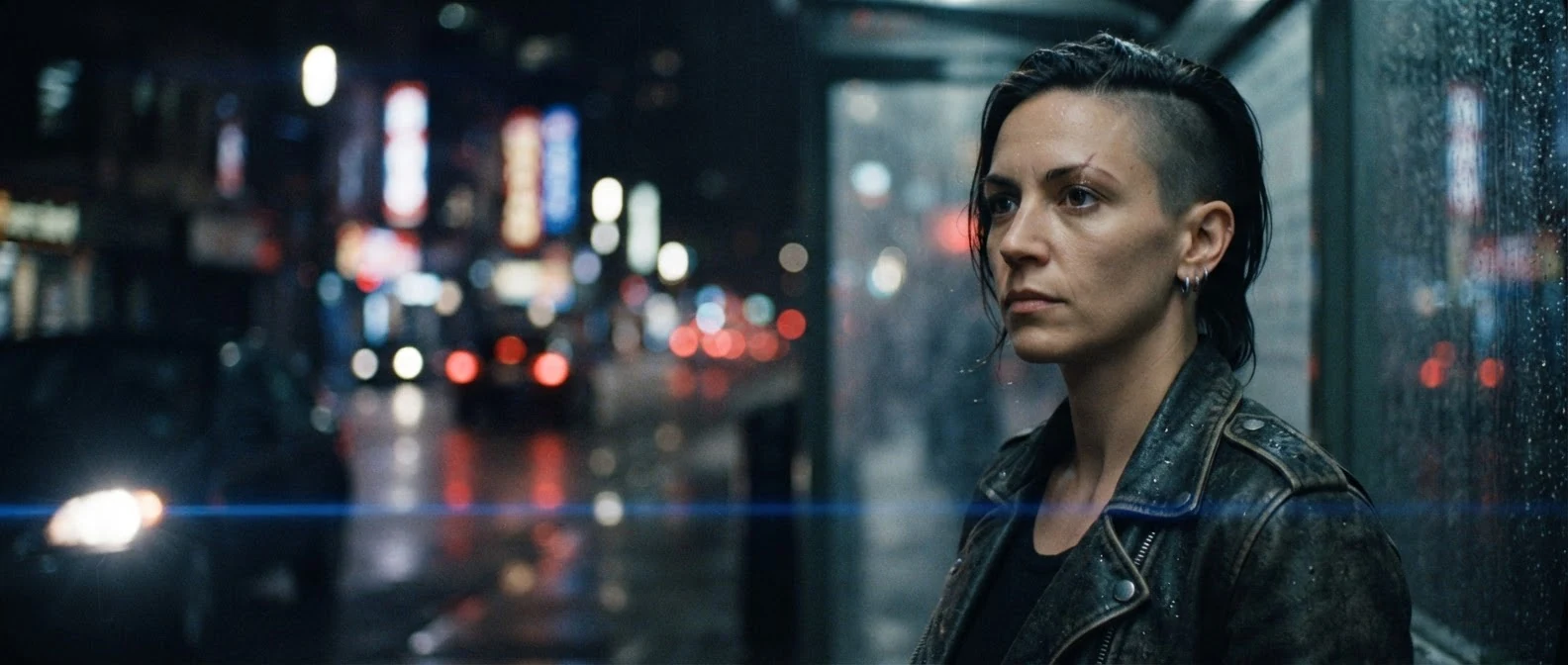
Every artifact is named with its cause: "tall vertical oval bokeh" from the neon behind her, a "horizontal blue streak flare" from a specific headlight. Without a source, models place a generic flare anywhere. "2.39:1 widescreen" plus the 21:9 setting fixes the frame, and "face on the right third" uses the width. This frame is the start frame for the video recipe.
Open FlashBoardsWide shot on a 2x anamorphic lens, 2.39:1 widescreen: an elderly rancher with a long white braided beard and a sun-faded red bandana leads a grey horse across cracked salt flats at golden hour. The low sun sits just outside the right edge of frame and throws a long horizontal amber streak flare and a row of soft oval ghost reflections diagonally across the image. The horizon line bows gently toward the frame edges, corners slightly soft, distant mountains in haze, 35mm film look with rich warm contrast.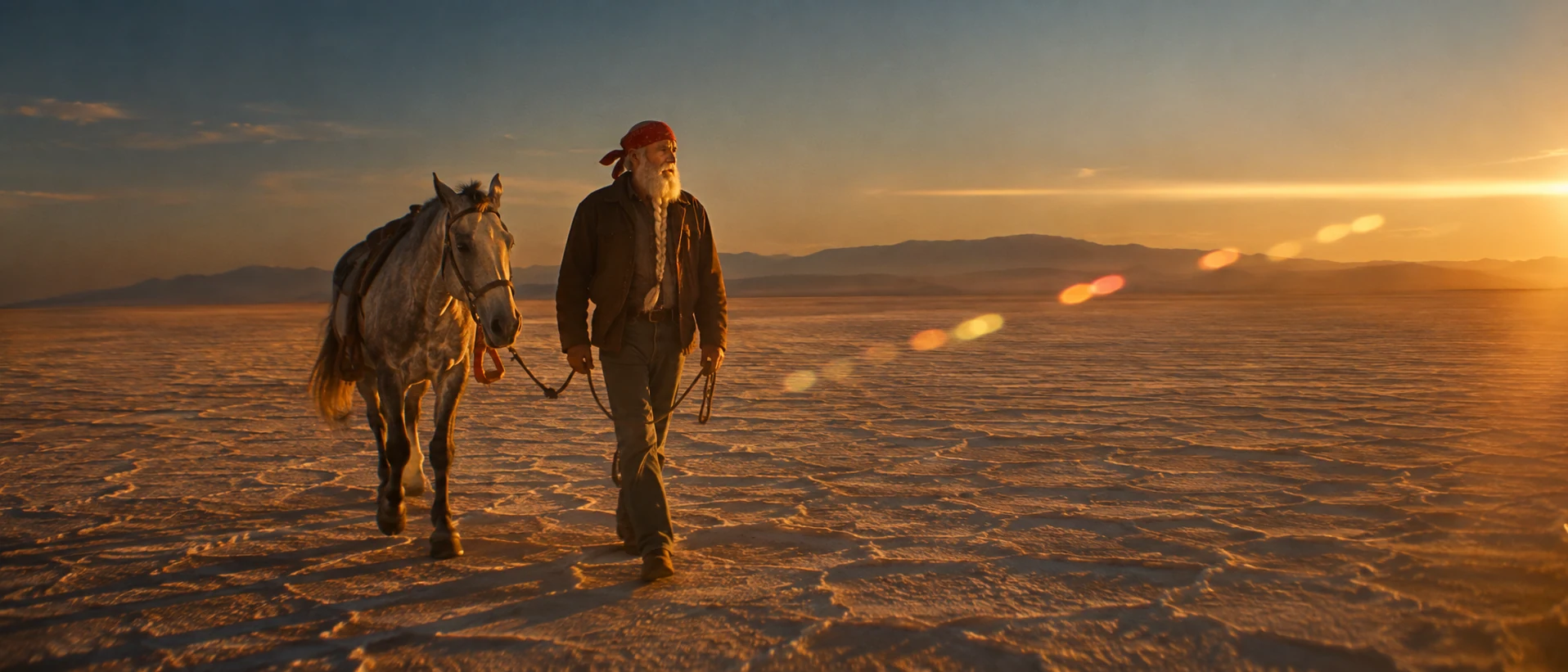
A second take in daylight and a wide shot, where the anamorphic look lives in the flare and the edges, not the bokeh. "Just outside the right edge of frame" is how a streak is really provoked on set, and it keeps the sun from becoming a white blob. "Horizon bows toward the frame edges" asks for the barrel bending that separates a real anamorphic wide from a cropped one.
Open FlashBoardsCamera: slow, steady push-in toward her face, from this close-up to a tighter close-up of her eyes and mouth, finishing as the move ends. Action: from the first frame, rain is falling and the headlight at the left edge is already sliding right, its thin blue horizontal streak moving across the frame with it. In the middle she turns her eyes toward the light and her jaw tightens. At the end the headlight passes out of frame, the streak fades, and the tall oval lights behind her keep glowing in soft focus.The video starts from recipe 1's frame, so lens, framing and light are already there. "Already sliding" makes the shot alive from the first frame. Tying the streak to the moving headlight ("moving across the frame with it") keeps the flare physically attached to its source instead of floating like a sticker, and the push-in gives the move a start, an end and a speed.
Open FlashBoards{
"output": "Full-screen live-action single continuous shot from Clash of the Titans (2010), from its very first frame, filmed on vintage 2x anamorphic lenses in a 2.39:1 widescreen frame. Grainy 35mm film, a dim ruined stone temple deep underground, amber firelight on the near wall, hard white haze light pouring between tall dark columns behind, drifting smoke, warm amber against cool blue-gray.",
"characters": {
"S1": {
"name": "Draco, played by Mads Mikkelsen",
"look": "lean man in his forties, long dark hair with thin braids falling past his shoulders, short dark beard, scuffed steel breastplate, a rough brown cloak slung over one shoulder, leather bracers, a long curved wooden bow",
"voice": "silence: he does not speak"
}
},
"shots": [
{
"shot": 1,
"camera": "very low angle from the foot of a ruined wall, medium-wide anamorphic lens, steady medium-speed tilt up: it starts on the firelit stone blocks and ends framing S1 from below in a medium shot, his head near the top of frame",
"action": [
"BEGINNING: alive from the first frame, the camera already tilting up across big sandstone blocks glowing amber in firelight, the broken top edge of the wall running diagonally across the frame, a thin trail of smoke drifting along it.",
"THEN: the tilt clears the edge and the white haze light between two dark columns shines straight into the lens; a thin blue-violet horizontal streak flare shoots sideways from that hot spot across the width of the frame while S1's arm and curved bow swing down through the foreground, a red glint running along the bow.",
"END: the tilt settles on S1 seen from below, bow drawn low across the bottom of frame, eyes fixed on something far off to the left, the white light now hidden behind the stone, the frame dim and warm again, smoke rolling past behind him."
],
"voice": "silence: nobody speaks in this shot, no voice at all",
"dialogue": []
}
],
"sound": {
"ambience": "low hollow echo of a vast stone chamber, fires crackling out of view, the creak of the bowstring and armor as he moves",
"speech": "no words in this video; the only human sounds are breaths and movement",
"never_spoken": "no narration and no voice-over: the descriptions, performance notes and step words of this prompt are never spoken aloud",
"music": "a film score under the scene, always below the voices: low dread-filled strings with a slow drum pulse building suspense",
"subtitles": "none"
}
}Remakes the tilt-up shot from Clash of the Titans (2010), dir. Louis Leterrier, DP Peter Menzies: Draco (Mads Mikkelsen) with his bow, the low angle, the upward tilt from a firelit wall and the blue horizontal streak from the backlight carried over.
The streak only reads as anamorphic when it has a source, so the prompt stages one: the low tilt clears the firelit wall into white haze light between two columns, and only then does a blue horizontal streak fire from that hot spot before Draco settles into frame.
Open FlashBoardsCommon mistakes
- Round bokeh. Models default to round discs. Write "tall vertical oval bokeh" or "capsule-shaped out-of-focus lights"; the word anamorphic alone is not enough.
- Flares without a source. A streak appears in the sky with nothing to cause it. Name the light ("a headlight at the left edge throws...") and keep it in or just outside the frame.
- Starbursts and rainbow rings. "Lens flare" invites spherical-style polygons. Say "thin horizontal streak flare" and give it a color.
- Literal squeezing. Words like "squeezed" or "stretched image" can distort faces. Describe the final, desqueezed picture: "2.39:1 widescreen" and normal proportions.
- Flares everywhere. A streak on every light looks like a filter pack. Ask for one dominant streak per frame and let the rest be ovals.
- Frozen start in video. A vague prompt gives a slow zoom on a still. Put motion in the first
Action:sentence and tie any flare to a light that moves.
Keep the reference frames, prompts and every generated take side by side — images and video in one canvas.
FAQ
5 questionsWhat is an anamorphic lens?
An anamorphic lens uses cylindrical elements to squeeze a wide horizontal field of view onto a narrower film frame or sensor. The image is stretched back in projection or post, usually to a 2.39:1 widescreen frame. Besides the width, it leaves visible traces: horizontal streak flares, tall oval bokeh, bending edges and a shallow depth of field for its field of view.
Why do anamorphic lenses make horizontal lens flares?
The cylindrical elements act on one axis only, so a bright point source is spread into a line along that axis instead of into a round glow. After desqueeze the line is horizontal wherever the light sits in frame. Lens coatings color it, most famously blue, and the brightest, hardest sources on a dark background give the longest streaks.
Why is anamorphic bokeh oval?
A front anamorphic lens behaves like two focal lengths at once, one horizontal and one vertical. Defocused points therefore blur more vertically than horizontally, and after the image is desqueezed, out-of-focus highlights become tall ovals instead of round discs. Rear-anamorphic designs, common in zooms, show much weaker ovals, which is why the effect varies from film to film.
What is the difference between anamorphic and spherical lenses?
A spherical lens treats both axes the same: round bokeh, flares shaped by the iris, no squeeze. An anamorphic lens compresses the horizontal axis, so it fills a sensor with a widescreen image and adds streak flares, oval bokeh and edge bending. Cropping spherical footage to 2.39:1 gives the frame shape but not those optical signatures.
Can you get the anamorphic look without anamorphic lenses?
Partly. Crop spherical footage to 2.39:1, add a streak filter for horizontal flares, and try an oval aperture insert for elongated bokeh. Anamorphic adapters in front of spherical lenses give a real squeeze but are slow to focus. In AI generation, describe each artifact and its source explicitly: tall oval bokeh, one horizontal streak from a named light, bowing edges.
Related terms
6- CinemaScopeFormats & Exhibition
CinemaScope was 20th Century Fox's anamorphic widescreen system, launched with The Robe (1953): a lens squeezed a wide image onto 35mm film and the projector lens unsqueezed it to about 2.35:1.
- Aspect RatioFormats & Exhibition
Aspect ratio is the width of the frame relative to its height — 1.33:1 (Academy), 1.85:1 (flat), 2.39:1 (scope), 1.43:1 (IMAX), 16:9 (HDTV); it decides how much space surrounds a character and how a composition breathes.
- BokehLenses, Focus & Exposure
Bokeh is the character of the out-of-focus areas of an image — above all how point lights melt into soft discs or ovals — shaped by the lens design, the aperture blades and how shallow the focus is.
- Lens DistortionLenses, Focus & Exposure
Lens distortion is the way a lens bends lines that should be straight — outward like a barrel on wide and fisheye lenses, inward like a pincushion on some long lenses; filmmakers either correct it or push it to make a space feel warped and unstable.
- Focal LengthLenses, Focus & Exposure
Focal length, measured in millimetres, sets a lens's angle of view: short focal lengths see wide and stretch space, long ones see narrow and compress it — which is why the same framing feels different on 24mm and on 135mm.
- Camera LensesLenses, Focus & Exposure
A lens gathers light and focuses it onto film or a sensor; its focal length, maximum aperture and optical character decide the field of view, perspective, depth of field and texture of the image.
Further reading
Blain Brown, Cinematography: Theory and Practice (Routledge). American Cinematographer Manual (ASC Press). John Belton, Widescreen Cinema (Harvard University Press).