 FlashBoards Learn
- Learn
- Lenses, Focus & Exposure
- Focal Length
Lenses, Focus & Exposure · Film language
Focal Length
Also called: lens focal length, lens millimeters
Focal length is the lens measurement, in millimetres, that sets how wide the camera sees. Short focal lengths such as 18–24mm take in a lot of space and stretch depth; long ones such as 85–200mm take in a narrow slice and compress it. It decides where the camera stands and how the audience feels space.
- What it does
- Sets the angle of view — and with it how far the camera stands and whether space looks stretched or compressed.
- Use it when
- Choose short focal lengths to show space and presence, long ones to isolate subjects and stack backgrounds.
- Watch out
- The same shot size on 24mm and on 135mm feels completely different — always name the lens, not just the framing.
- Try this prompt
Close-up on a 135mm lens, camera four meters away, background stacked and softly blurred behind her
What is focal length?
Focal length is the distance, in millimetres, between the optical center of a lens and the sensor (or film) when the lens is focused at infinity. It is engraved on the barrel, and it decides the lens's angle of view. A short focal length bends a wide cone of the world onto the sensor; a long one takes a narrow slice and magnifies it.
That is why cinematographers talk in millimetres: "put on the 24" tells the whole crew how much of the set will be in frame and where the camera will stand.
On a full-frame sensor (36 × 24 mm, the same width as the classic still-photo frame) the numbers work out like this:
| Focal length | Horizontal angle of view | Usual family | |---|---|---| | 14mm | about 104° | ultra-wide | | 24mm | about 74° | wide | | 35mm | about 54° | moderate wide | | 50mm | about 40° | normal | | 85mm | about 24° | short telephoto | | 135mm | about 15° | telephoto | | 200mm | about 10° | long telephoto |
Three families come out of this table, each with its own article: the wide-angle lens below roughly 35mm, the normal lens around 40–50mm, and the telephoto lens from roughly 85mm up. At the extreme short end, a fisheye lens gives up straight lines altogether. All of them live in the lenses, focus and exposure hub.
Format matters. Focal length is a physical property of the glass, but the angle of view depends on how big the sensor is. Most cinema cameras shoot Super 35, a sensor roughly 25 mm wide — about two-thirds the width of full frame. A 35mm lens on Super 35 frames about what a 50mm frames on full frame. When a DP says "mostly on a 40", ask which format.
How does focal length change the look of a shot?
Focal length changes three things the audience feels without naming: how much space surrounds the subject, how far apart near and far objects seem, and how a face is drawn.
Wide lenses stretch space. Because you must stand close to fill the frame, anything near the lens grows large and anything a few meters back shrinks fast. Rooms look deeper, corridors longer, and a character walking toward camera seems to rush forward. Put a face 40 cm from an 18mm and the nose swells while the ears slide away — the lens distortion that comedies and horror films use on purpose. Orson Welles and Gregg Toland built Citizen Kane (1941) on wide lenses and deep focus, so ceilings and far walls press into the drama.
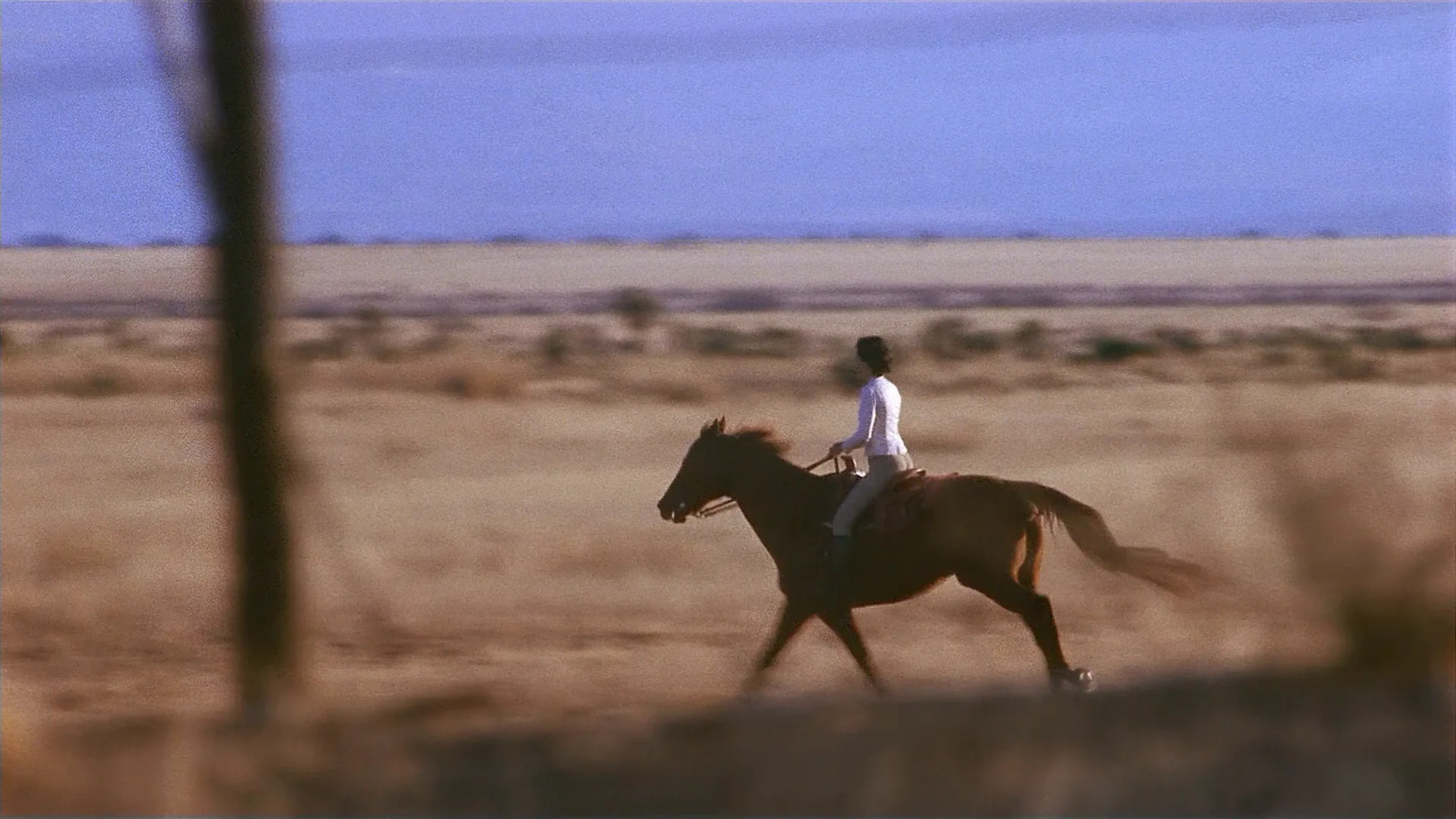
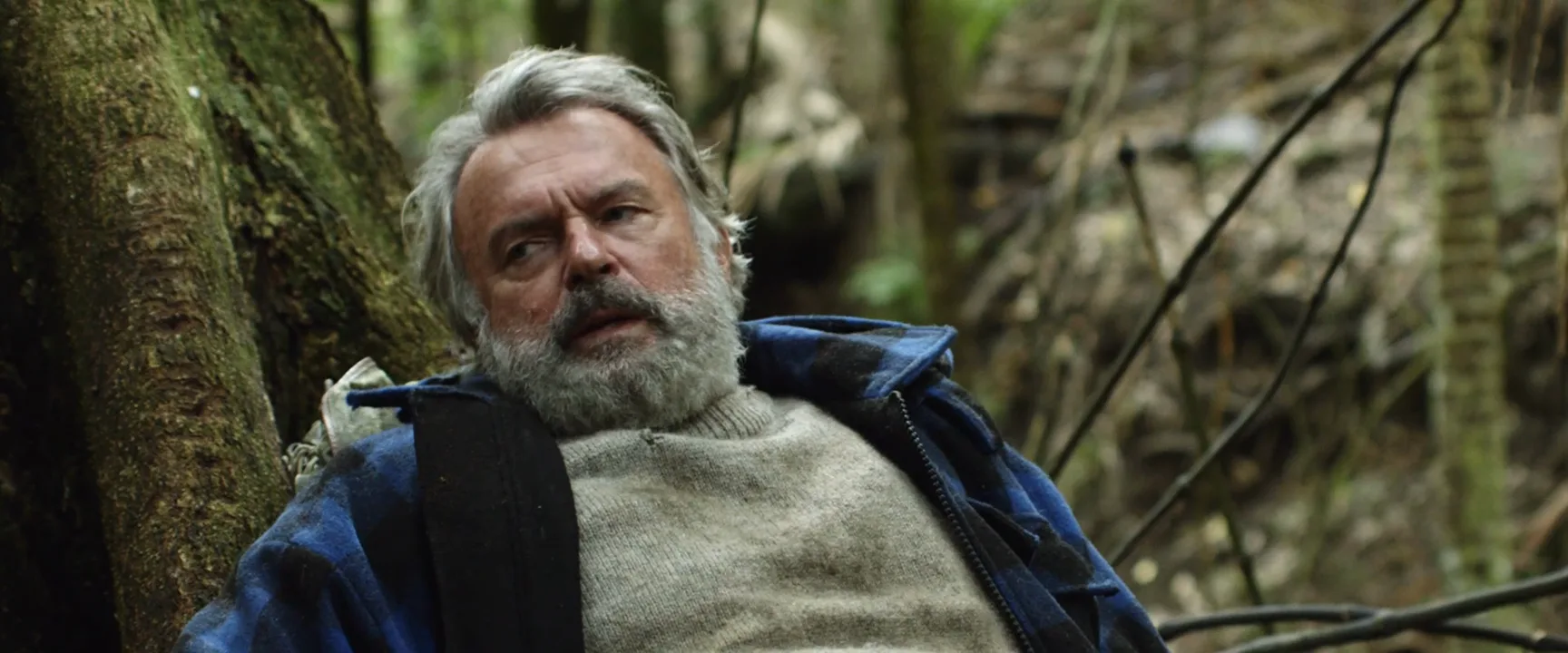
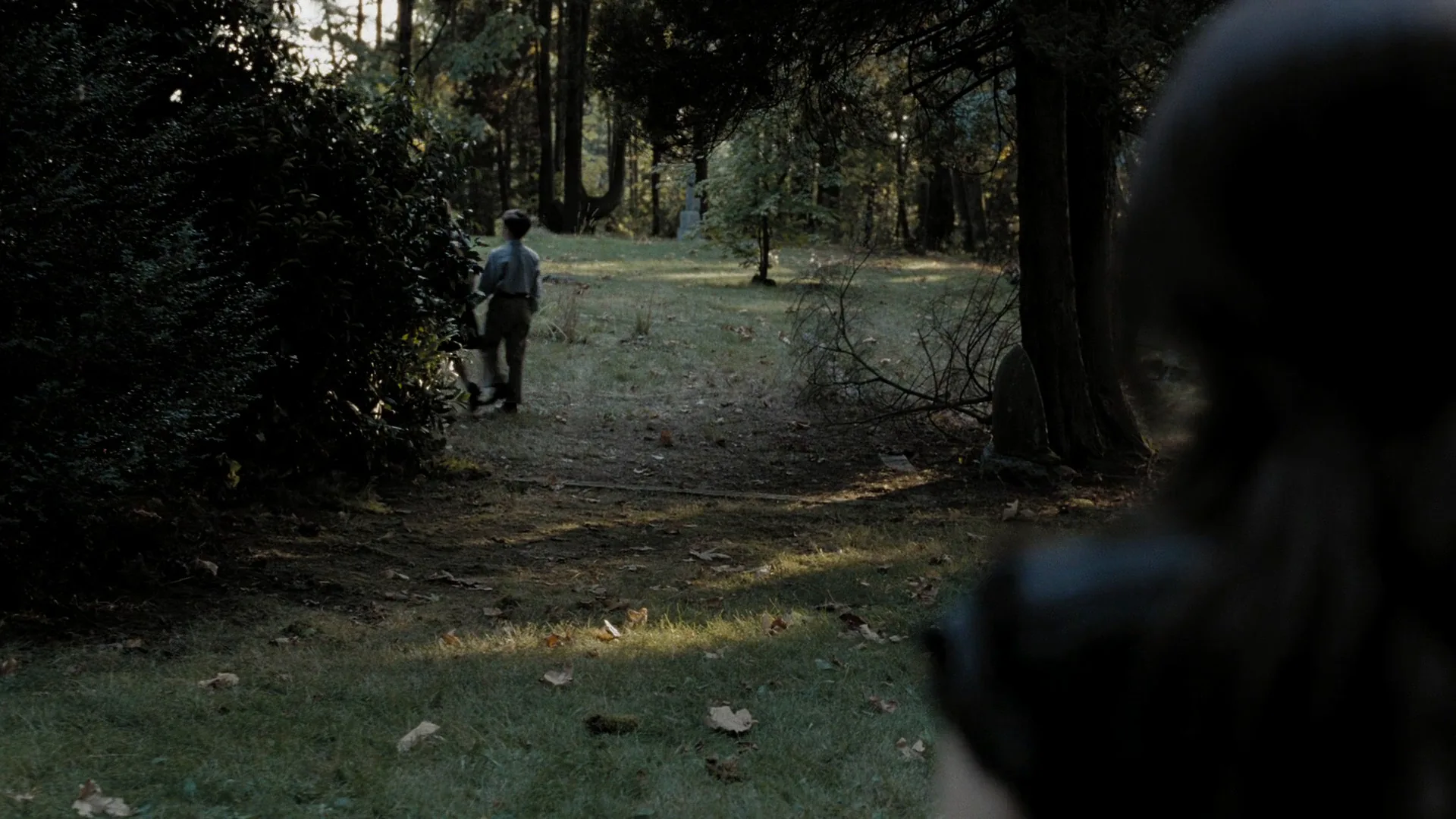
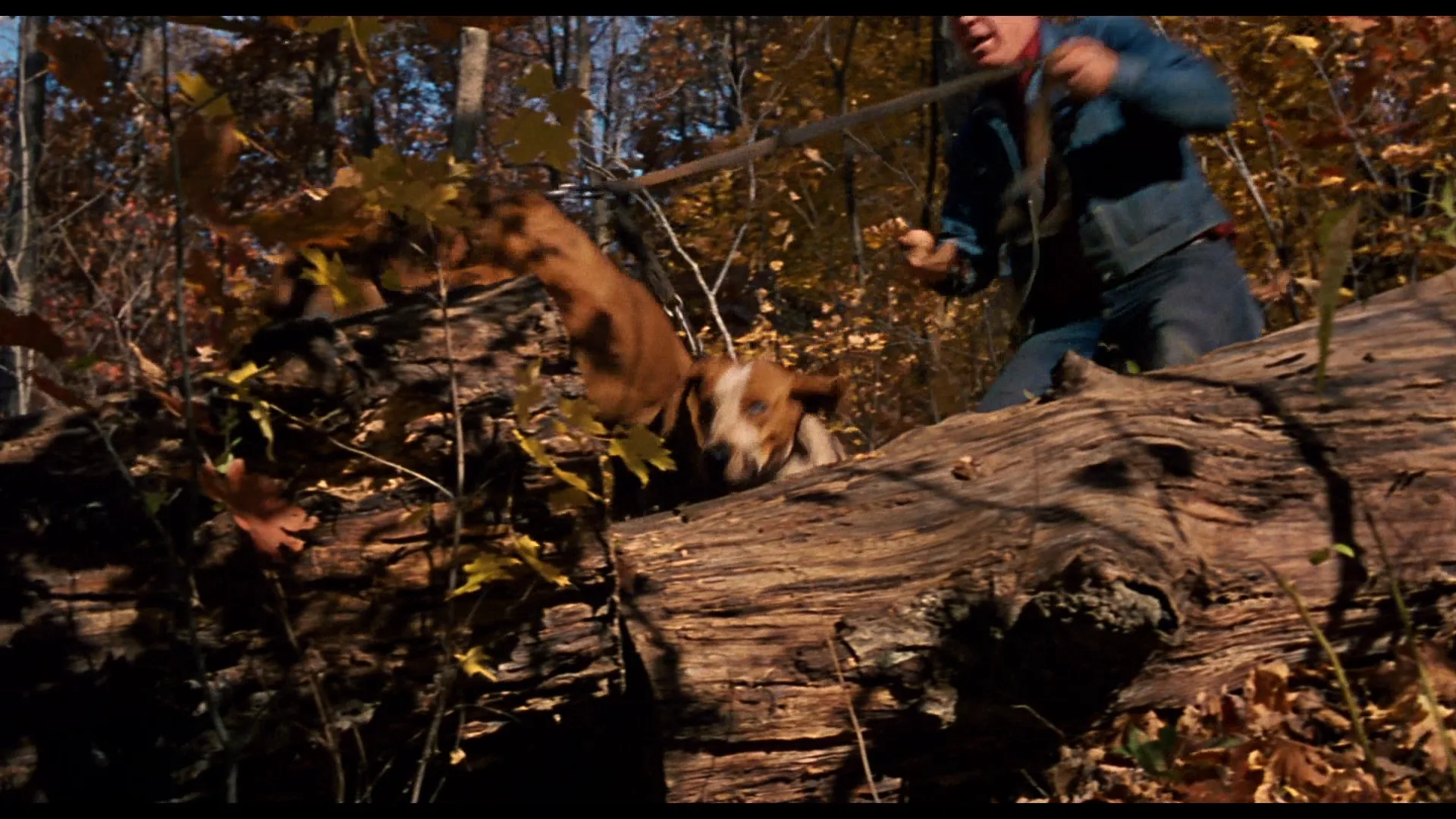
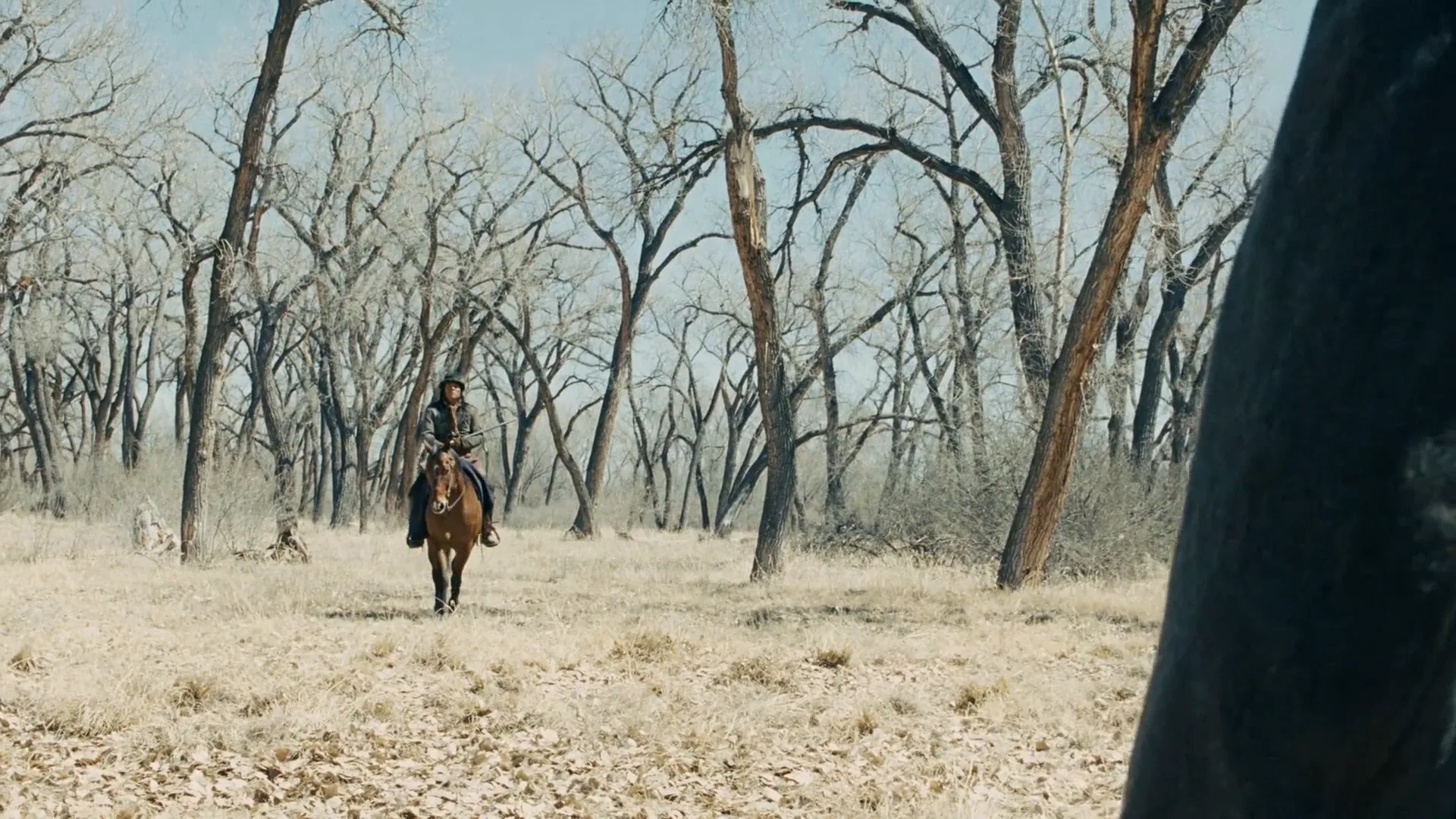
Long lenses compress space. From far away, the distance between a subject and what stands behind her is small compared with the distance to the camera, so both render at nearly the same size. Background buildings look stacked against the actor's shoulder, and a crowd becomes a wall. Movement toward the camera almost stops reading. The best-known case is the end of The Graduate (1967): Benjamin runs toward the camera on a very long lens and barely seems to get closer, which is exactly how the scene should feel. David Lean used an extremely long lens for Omar Sharif's approach out of the mirage in Lawrence of Arabia (1962), turning a rider into a shimmering dot that takes forever to arrive.
Normal lenses stay out of the way. Around 40–50mm on full frame, the frame neither exaggerates depth nor flattens it. Yasujirō Ozu shot much of his work on a 50mm, and the calm of his rooms owes a lot to that restraint.
Where the effect really comes from. Strictly speaking, perspective is set by camera distance, not by the lens. A 24mm frame cropped in the middle looks exactly like a 50mm frame from the same spot. But the lens decides where you must stand for the framing you want, so in practice choosing the lens is choosing the perspective.
35mm vs 50mm vs 85mm: what each one does
On full frame, these three primes cover most dialogue scenes ever shot.
- 35mm — the storyteller's wide. Wide enough to show the room and the actor together, tight enough that faces don't distort at a normal distance. It suits handheld following shots, two-shots, and medium shots that still say where we are. Get closer than about a meter to a face and the stretching starts to show.
- 50mm — neutral. The frame feels close to how you'd notice the scene standing there. It suits observational drama and can feel flat when a scene needs a point of view.
- 85mm — the portrait lens. The camera sits about one and a half meters away for a close-up, so facial proportions are flattering, the background enlarges and softens into bokeh, and the actor is isolated from the world.
The trade-off is the same at every step: shorter means more world and more presence; longer means less world and more isolation. Many DPs pick one "home" focal length for a film and leave it only when the story needs a change of feeling. On Super 35 the equivalent trio is roughly 25mm, 35mm and 55–60mm.
How to choose a focal length on set
Decide the feeling first, then the millimetres. Should the shot open space, leave it alone, or flatten it? Pick the family, then the exact lens.
Commit to a distance. For a close-up of a face, a 25mm puts the lens about half a meter from the nose; a 50mm about one meter; an 85mm about one and a half; a 135mm about two and a half. Mark the camera position before you argue about the lens.
Primes or zooms. Primes (fixed focal lengths) are faster and force you to move the camera to reframe, which keeps perspective intentional. Zooms let you find the frame without moving the tripod, and a slow zoom during a take is its own effect — the zoom shot changes magnification without changing perspective, the tell that separates it from a dolly. Combine the two in opposite directions and you get the dolly zoom, where the subject stays the same size while the background swells or shrinks.
Watch depth of field. At the same aperture and the same framing, focal length alone changes less than people think, but long lenses at a distance make backgrounds look much blurrier because they are magnified. The full picture — aperture, distance, format — is in depth of field. If you want everything sharp, a wide lens at T5.6–T8 is the easy path; for a face floating against color, an 85–135mm near its widest stop.
Mind the practical cost. Long lenses need space behind the camera (a 200mm close-up puts the camera three and a half meters from the face), a sturdy head, and a focus puller with a real monitor — focus becomes razor-thin and every vibration shows. Wide lenses show lights, stands and crew, and verticals lean as soon as you tilt.
Keep a lens logic across a scene. Two matching close-ups on a 32 and a 100 will feel mismatched. Match lens and distance for matching coverage.
Focal length vs. shot size: is a close-up a lens?
The two get mixed up because both change how "close" a shot looks.
A close-up is a shot size: how much of the subject the frame contains — for a person, chin to hairline. Focal length is a property of the lens: it describes how wide the lens sees. You can make the same close-up on a 24mm from half a meter or on a 135mm from two and a half meters. The size of the face in the frame will be identical; almost everything else will not.
On the 24mm the nose is enlarged, the ears recede, and behind the head you see the room — walls, a window, another actor — sharp enough to read. On the 135mm the face has flat, flattering proportions and the background is a small, magnified, soft patch of color. The first feels present, even invasive; the second, observed from afar.
So on a shot list, write both: "CU, 85mm" says what the audience sees and how it feels. "CU" alone leaves the most expressive decision to chance — and so does an AI prompt that names the shot size but no lens.
Focal Length examples in film
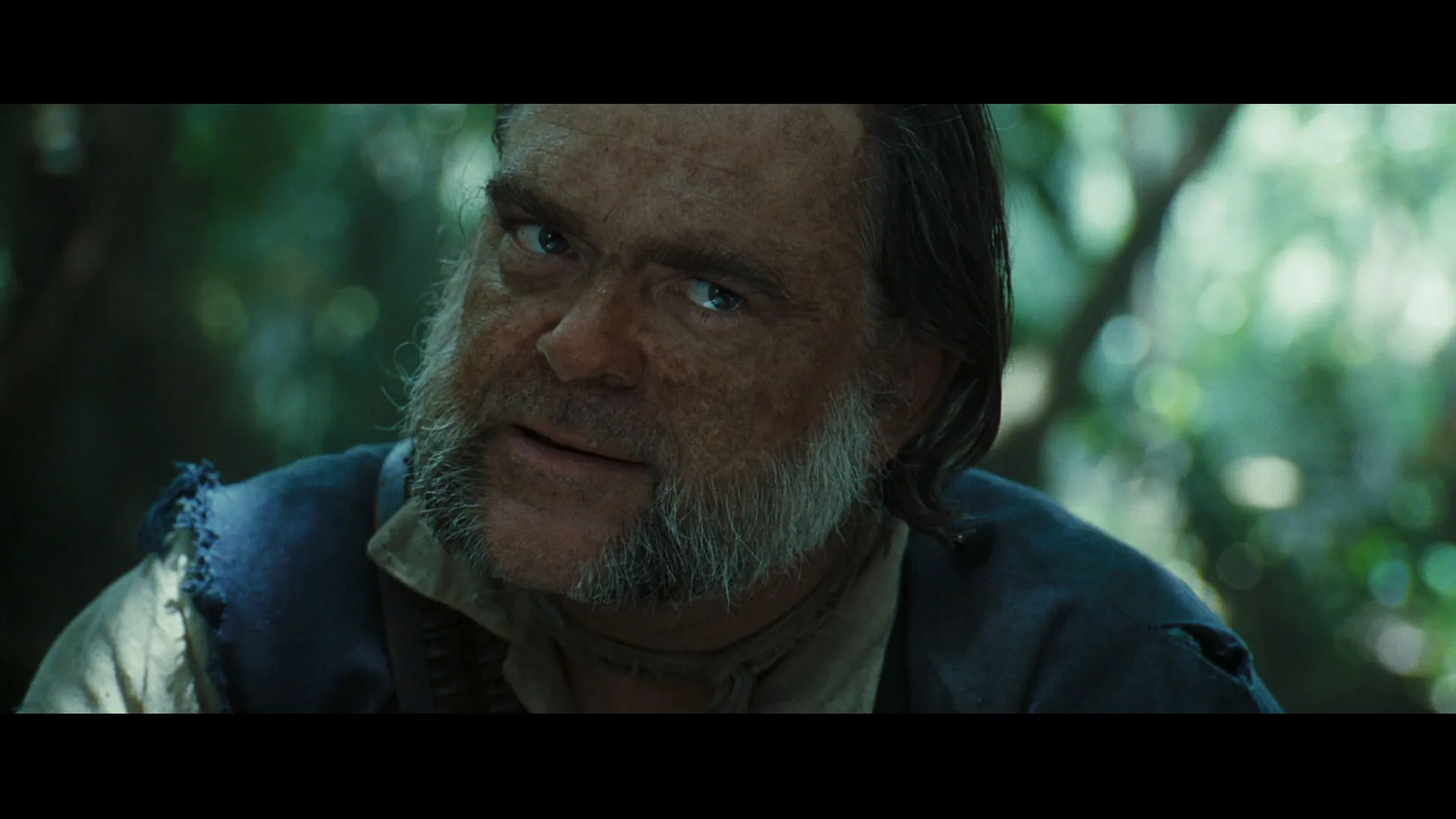
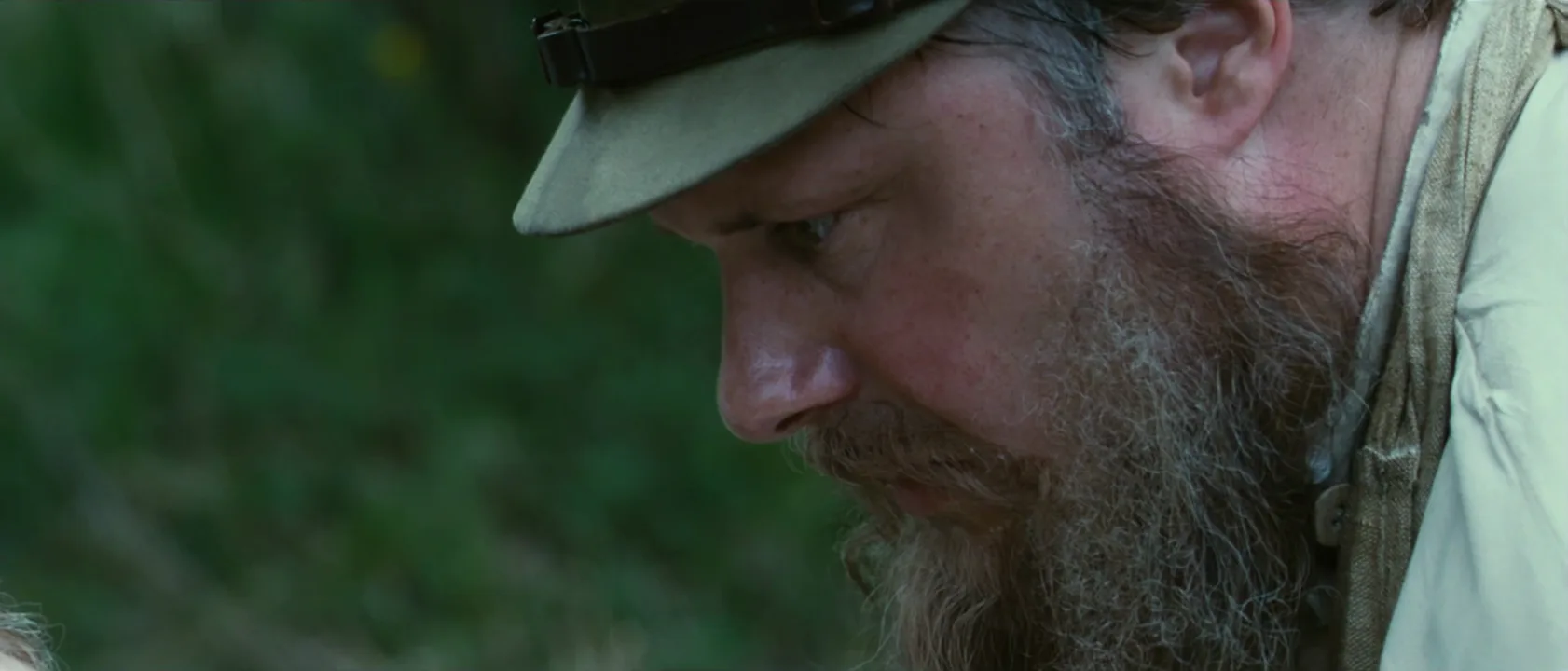
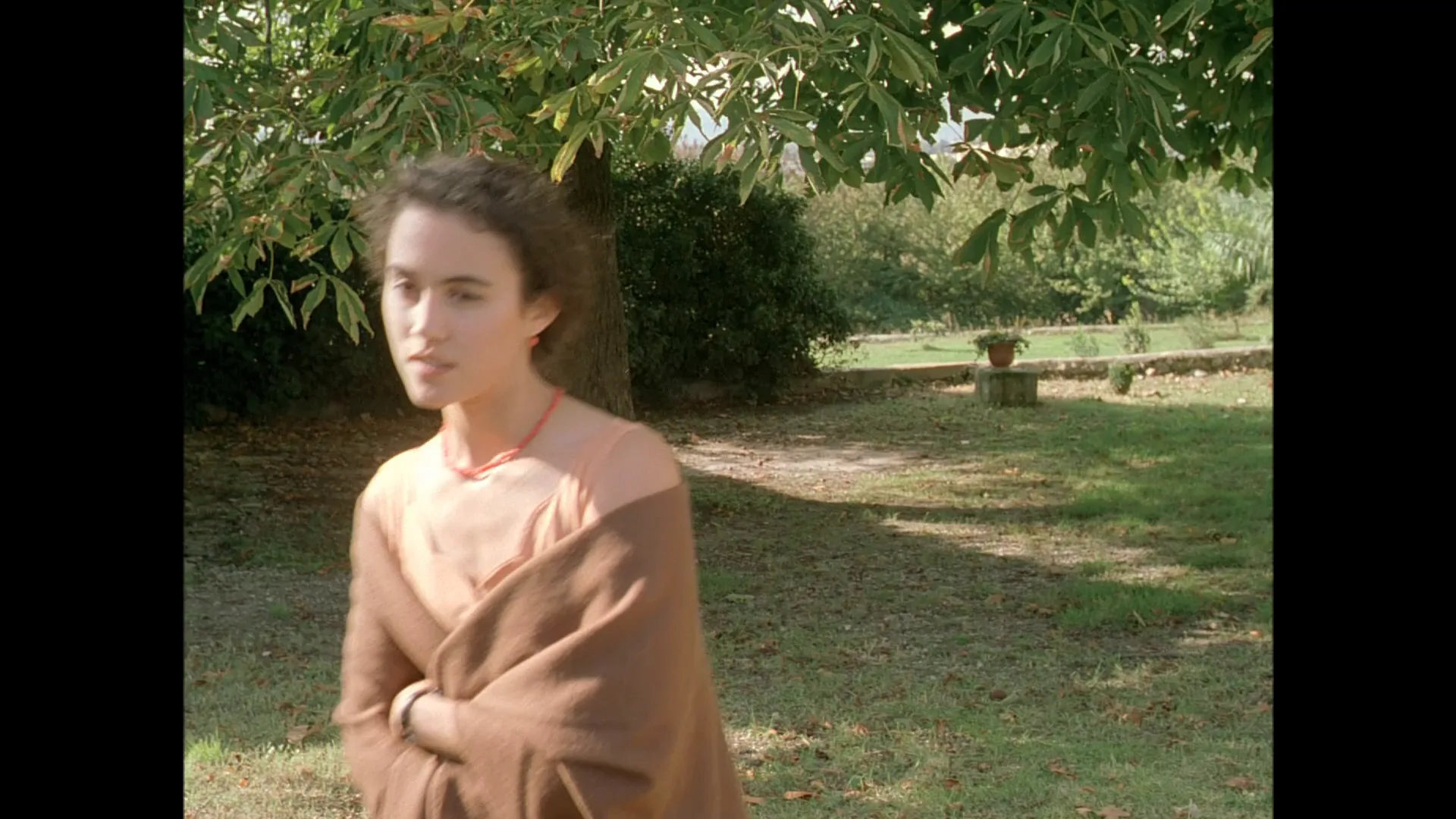
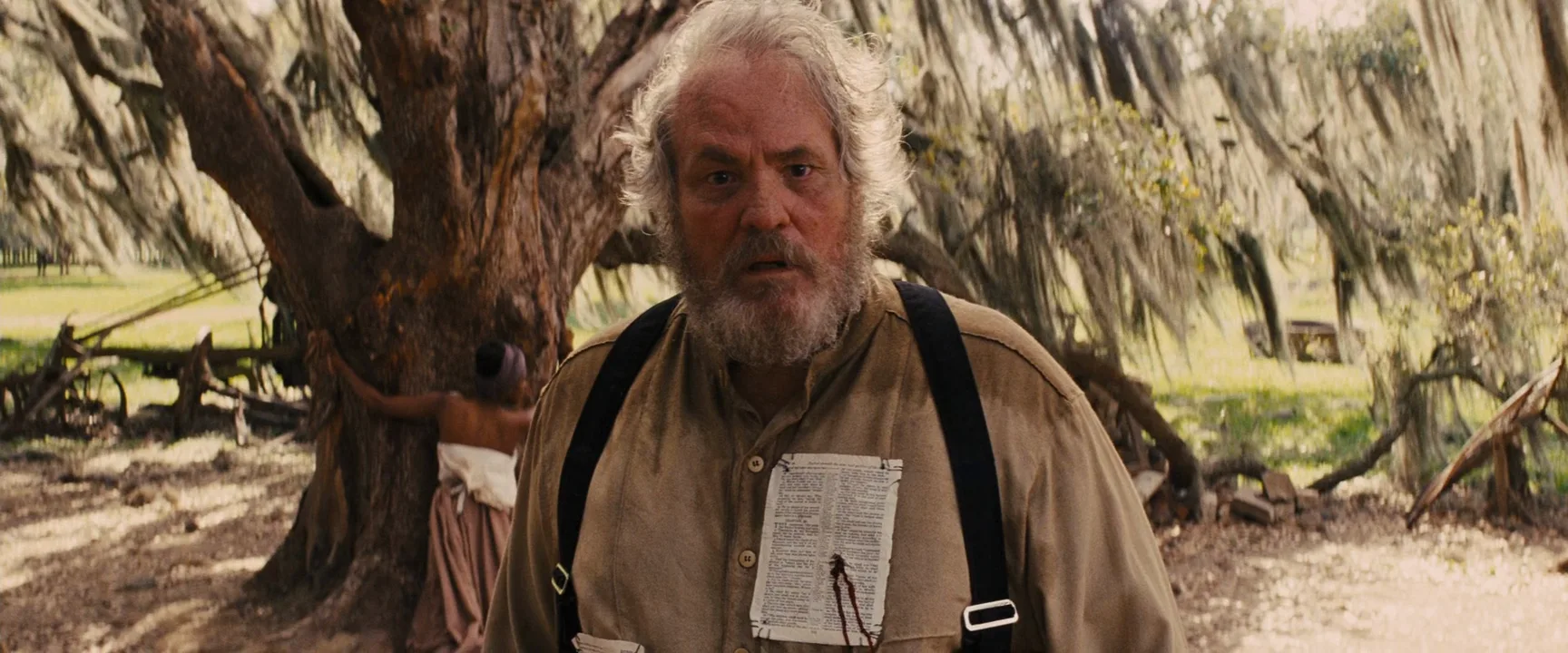
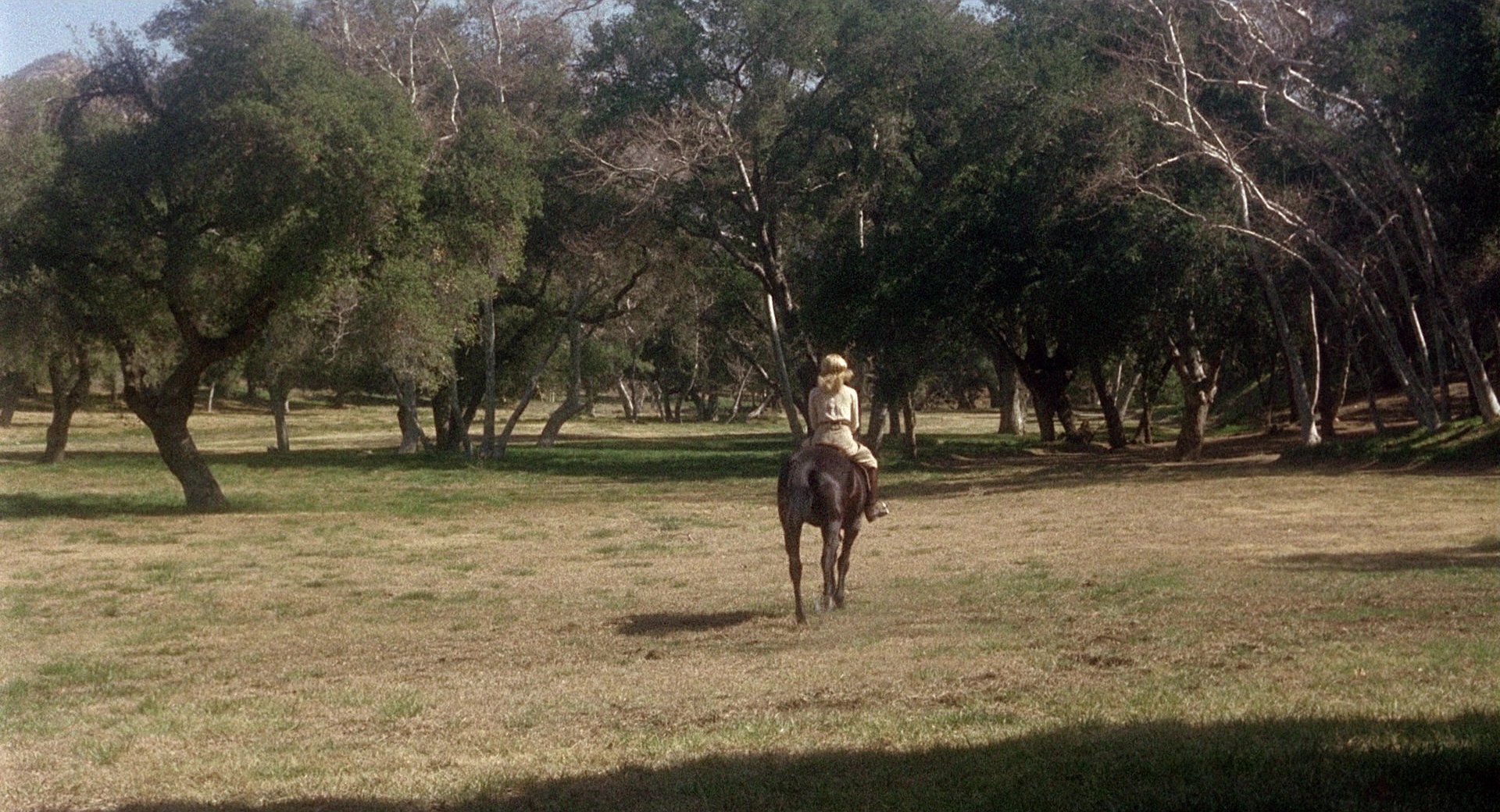
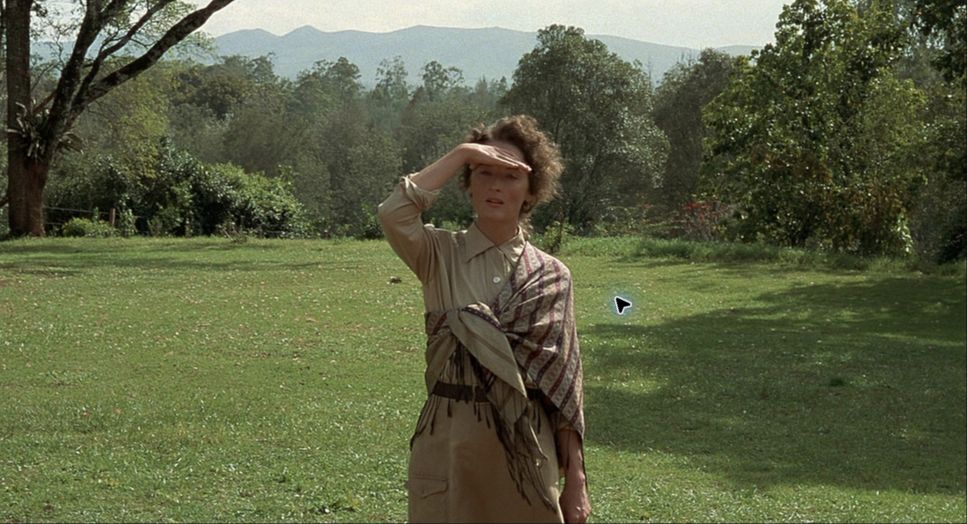
14 framesLong, normal and wide lenses in real films. Watch the background: its size next to the subject, its sharpness, and how far away it seems.
How to create a focal length with AI
4 promptsImage and video models understand focal length only when you spell out its consequences: how far the camera is, how big the background is, what is stretched or stacked. A bare "85mm" often reads as "nice portrait" and nothing more. In FlashBoards, pin the film frames you want to match next to your prompts, generate a long-lens start frame with Nano Banana 2 Lite, try the opposite lens with GPT Image 2.5, and animate the first frame with MiniMax H3 Max Turbo — takes stay side by side on one board. The fourth prompt re-shoots a real film shot from a text description alone, and the original plays next to the result so you can compare.
Telephoto street shot on a 200mm lens, camera about 12 meters away at eye level: a woman in her early thirties with a shaved head, a thin silver ring in her left eyebrow and an olive trench coat walks straight toward camera down the middle of a narrow market street, framed from the knees up, centered. Behind her, rows of red paper lanterns, shop signs and pedestrians are stacked tightly and look pressed against her back, strongly compressed perspective, background soft but readable, two pedestrians crossing the foreground as out-of-focus blurs at the frame edges, overcast late-afternoon light, 35mm film still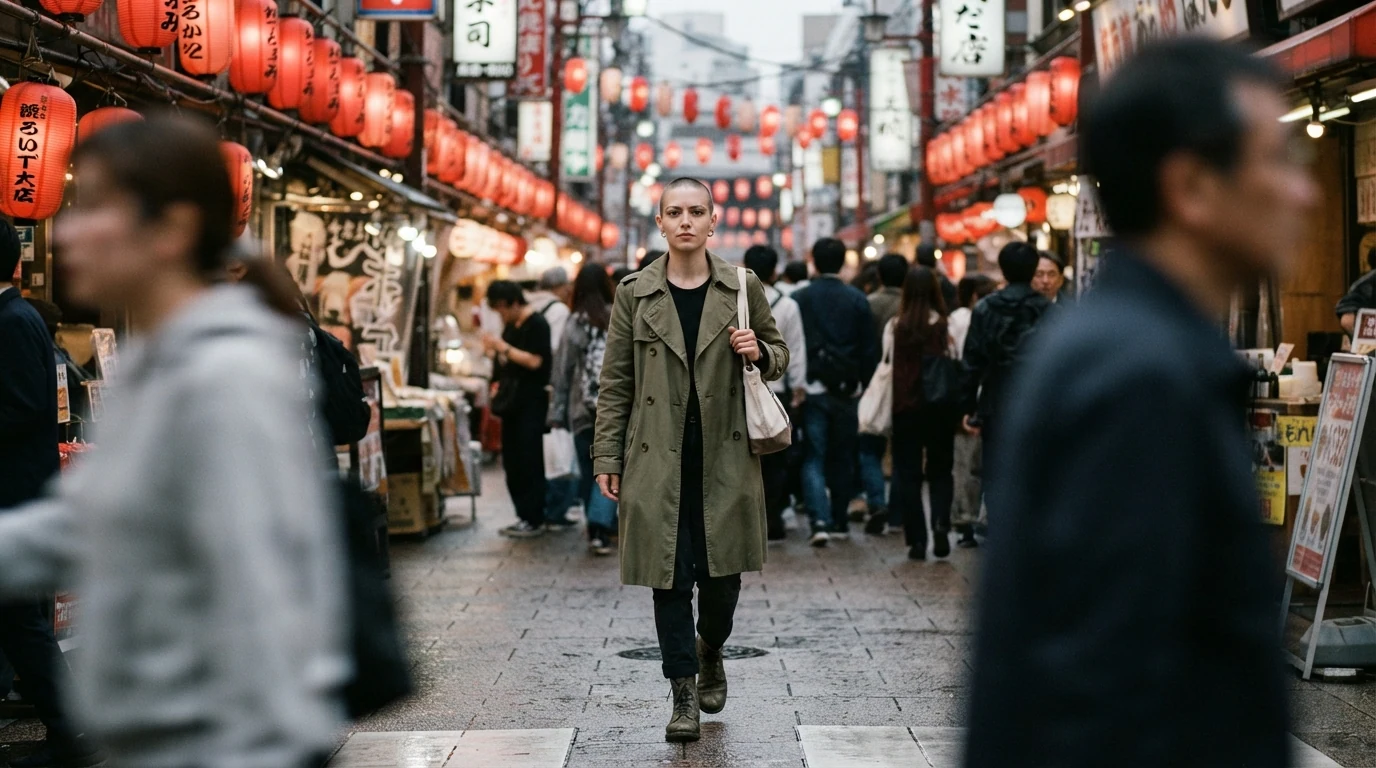
"200mm" plus "camera about 12 meters away" gives the model both halves of the effect: the lens and the distance that produce compression. "Stacked tightly", "pressed against her back" and "compressed perspective" describe what the viewer should see, which models follow more reliably than a number. The blurred foreground pedestrians sell the long lens. This frame is the start frame for recipe 3.
Open FlashBoardsUltra-wide 18mm lens, camera half a meter from the subject: an old fisherman with a white beard trimmed square, deep sun creases and a faded blue knit cap leans toward the lens inside a cramped wooden boat cabin, his right hand reaching toward camera and looking oversized, his face slightly stretched at the edges of the frame. The cabin behind him looks long and deep, a small round porthole far at the back, lines of the ceiling planks converging fast toward it, everything sharp from hand to porthole, warm oil-lamp light, 35mm film still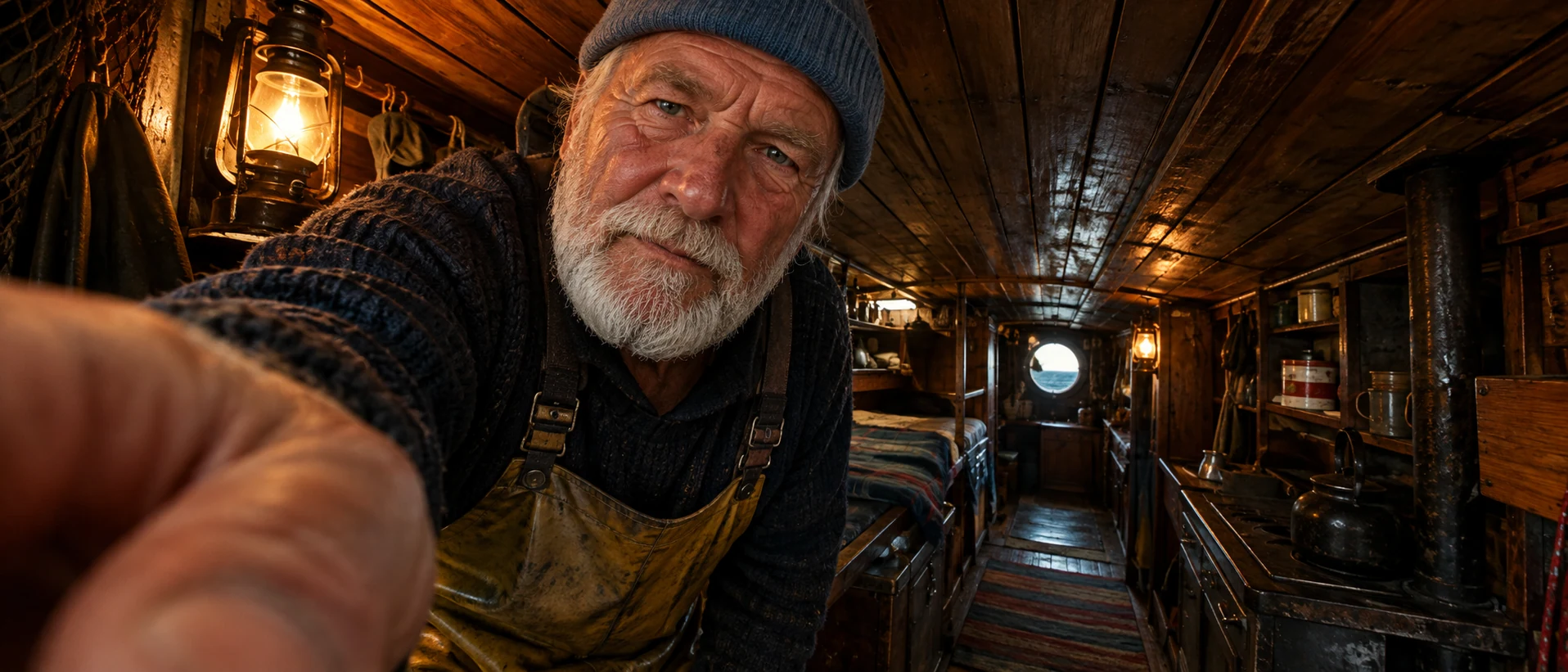
The opposite lens on a different subject. "Half a meter from the subject" is what makes a wide lens distort; without it the model draws a normal wide shot from across the room. "Hand reaching toward camera and looking oversized", "ceiling planks converging fast" and "everything sharp" name the three wide-lens symptoms — foreground magnification, stretched depth and deep focus — so the frame can't drift back to a neutral look.
Open FlashBoardsCamera: static telephoto frame, locked off at eye level for the whole shot, with a very slight handheld float. Action: from the first frame the woman is already mid-stride, walking steadily toward camera down the center of the market street while pedestrians cross the foreground as soft blurs. In the middle she keeps walking at the same pace, but she grows only a little in the frame and the lanterns behind her stay pressed close to her shoulders. At the end she lifts her eyes to the lens without slowing down. The overcast light stays even.The long-lens feeling in motion is the Graduate effect: someone walks toward camera and barely gets closer. "Already mid-stride" makes the shot alive from the first frame, "locked off" stops the model from zooming or dollying, and "grows only a little in the frame" states the compression as an outcome. Everything named is already in recipe 1's frame, so nothing new gets invented.
Open FlashBoards{
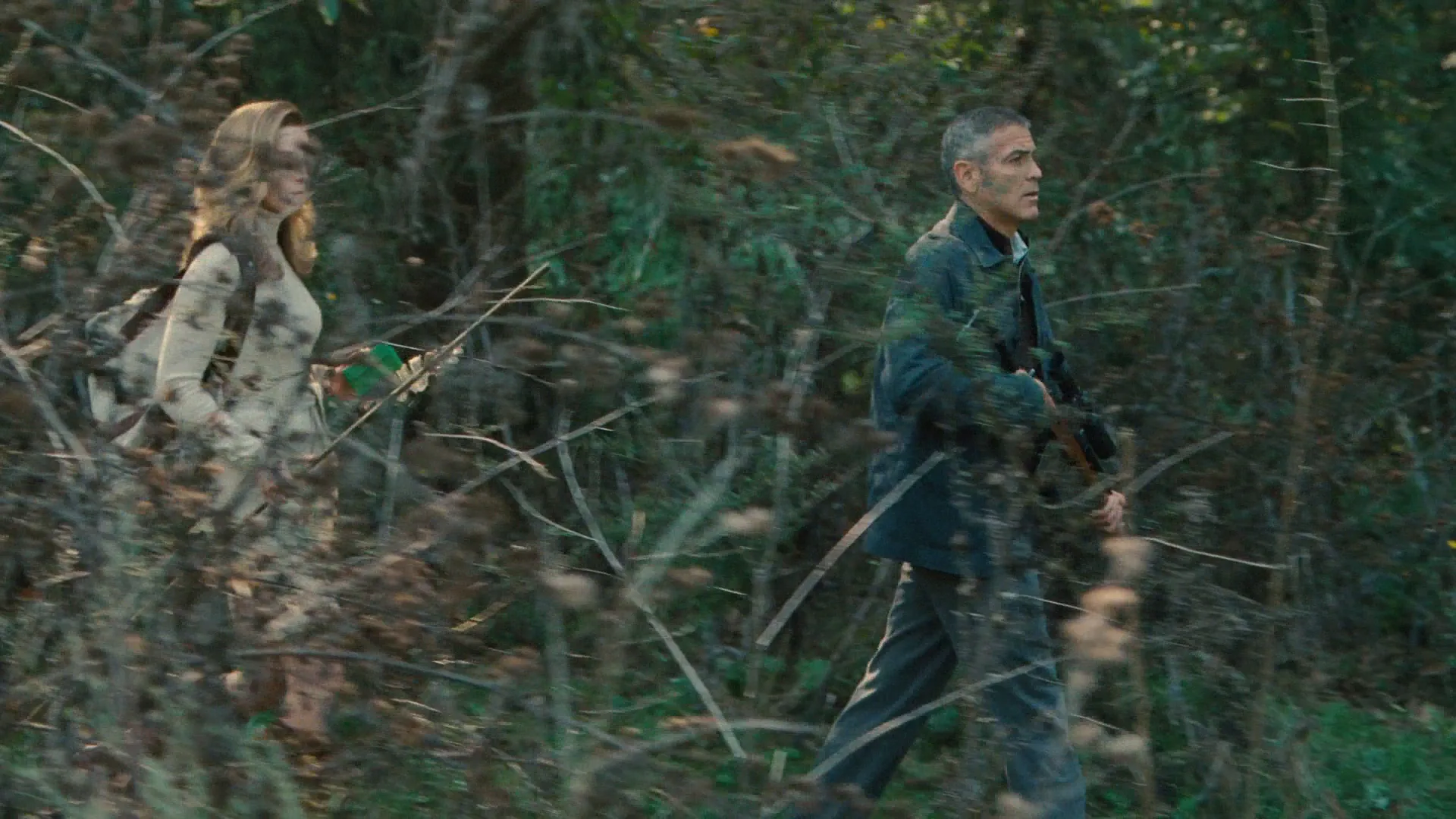
"output": "Full-screen live-action shot from The American (2010), alive from its very first frame: one continuous shot, no cuts. Photographed from far away on a long telephoto lens, 35mm film look with fine grain, soft overcast autumn light in an Italian hill-country thicket, muted olive and deep greens, rust-brown dry brush.",
"characters": {
"S1": {
"name": "Mathilde, played by Thekla Reuten",
"look": "slim woman, shoulder-length wavy blonde hair, cream long-sleeved knit sweater dress to mid-thigh with a tie belt, tall brown leather boots, pale canvas rucksack with dark leather straps on her back; carries a long thin fishing rod and, in her other hand, a small green tin with a sprig of pale dry leaves",
"voice": "silent"
},
"S2": {
"name": "Jack, played by George Clooney",
"look": "man in his late forties, short gray hair, clean-shaven, dark teal-green work jacket over a dark sweater and light blue collared shirt, gray-blue trousers; carries a scoped hunting rifle with a long dark suppressor, held diagonally across his body in both hands, muzzle pointing down and forward",
"voice": "silent"
}
},
"shots": [
{
"shot": 1,
"camera": "long telephoto lens from far across the thicket, eye level; the camera trucks right at walking pace, following the pair in profile; framing holds them full-figure to knees-up with S1 in the left third and S2 in the right-centre, a few steps ahead of her; the background bushes sit flat right behind them and stay softly out of focus; focus stays on the two walkers throughout",
"action": [
"BEGINNING: alive from the first frame, both already mid-stride walking left to right through tall dry brush, facing screen right; thick out-of-focus brown stems and seed heads fill the near foreground and cover most of both bodies, S1 only a pale blur on the left, S2's gray head and dark jacket showing between stems on the right.",
"THEN: the foreground brush keeps sliding past the lens from right to left as soft brown smears while the camera trucks with them; S2 walks steadily, head level, eyes fixed ahead to screen right, both hands holding the rifle across his chest.",
"THEN: the brush in front of S2 thins first and a wall of dark green bushes opens up behind him; S1 is still half hidden by pale stems on the left, her rucksack and cream dress flickering through them.",
"THEN: the last stems slide out of frame and both step into a small clearing of green grass, now seen clearly from the shins up, walking in step, S1 slightly behind S2.",
"END: both keep walking right in clean profile against the flat green wall, S1 holding the fishing rod angled up and forward at her hip with the hand nearer the camera and the green tin raised at chest height in the other hand, S2 carrying the rifle diagonally, muzzle down; neither looks at the other, both gaze ahead to screen right, both stay the same size in frame; a few tall dry weed stalks remain soft in the lower-left foreground."
],
"voice": "silence: nobody speaks in this shot, no voice at all",
"dialogue": []
}
],
"sound": {
"ambience": "dry stems brushing against clothes, boots in grass and dry leaves, faint birdsong across the countryside, a soft breeze",
"speech": "no words in this video; the only human sounds are breaths and movement",
"never_spoken": "no narration and no voice-over: the descriptions, performance notes and step words of this prompt are never spoken aloud",
"music": "a film score under the scene, always below the voices: sparse low piano notes over a soft sustained string pad, quiet and watchful",
"subtitles": "none"
}
}Remakes the walk through the brush from The American (2010), dir. Anton Corbijn, DP Martin Ruhe: Jack and Mathilde, the rifle and the fishing rod, the telephoto truck right, the blurred brush that clears into a grassy gap and the flattened green backdrop.
A long lens in motion is easiest to read when something passes between it and the actors. The prompt names the lens and the distance ("far across the thicket"), then lists the evidence beat by beat: foreground stems sliding past as soft smears, the pair half hidden, a green wall that "sits flat right behind them" and both walkers staying "the same size in frame" while the camera trucks right. The shot is silent, so the prompt says so and adds only a quiet score.
Open FlashBoardsCommon mistakes
- The number is ignored. Models often treat "35mm" as a film-stock mood and "85mm" as a generic portrait. Add the camera distance and describe the visible effect: "background stacked close behind her", "cabin looks long and deep".
- Long lens, short distance. "200mm close-up" without a distance can produce a normal-looking frame with a blurred background. Write "camera about 12 meters away" so compression has a reason to appear.
- Wide lens, no distortion. A wide prompt usually becomes a big, neutral landscape. For the stretched look, put the lens close: "half a meter from his face", "hand reaching toward camera looks oversized".
- Shot size swallows lens. "Close-up" alone tends to produce an 85mm-looking face. For a wide-lens close-up, describe the enlarged nose and the visible room behind.
- Video zooms instead of holding. Given a telephoto still and a vague prompt, the video model often creeps in. Write "static, locked off for the whole shot" and describe how the subject's size changes instead.
- Negatives backfire. "No distortion" invites distortion; write "natural facial proportions, camera three meters away" instead.
Keep the reference frames, prompts and every generated take side by side — images and video in one canvas.
FAQ
6 questionsWhat is focal length in simple terms?
Focal length is the number in millimetres on a lens that tells you how wide it sees. A small number, like 18mm or 24mm, takes in a wide view and makes space feel deep. A large number, like 135mm or 200mm, sees a narrow slice, magnifies it and makes space feel flat. It also decides how far the camera must stand to get a given framing.
35mm vs 50mm vs 85mm: which is best for filmmaking?
None is best; each gives a different feeling. On full frame, a 35mm shows the actor with the room around them and suits handheld and two-shots. A 50mm feels neutral and unobtrusive. An 85mm isolates faces with flattering proportions and soft backgrounds. Many films are built on one home lens, and the others are used when the story needs more world or more isolation.
Does focal length change perspective?
Not directly. Perspective — how big near and far objects look relative to each other — depends on the camera's distance from the subject. But to keep the same framing, a wide lens forces you close and a long lens forces you back, so in practice changing focal length changes perspective. That is why a close-up on a 24mm and on a 135mm look like different worlds.
What focal length is closest to the human eye?
On a full-frame sensor, lenses around 40–50mm are called normal because the perspective feels close to how we look at a scene, without stretching or flattening it. The eye's total field of view is much wider, but its area of sharp attention is narrow, so the "normal" range is a convention, not a measurement. On Super 35 cinema cameras the equivalent is roughly 28–35mm.
What is the difference between focal length and zoom?
Focal length is the property; a zoom lens is a lens that lets you change it, for example from 24mm to 70mm, without swapping glass. Prime lenses have a single fixed focal length. Zooming during a shot magnifies the image without moving the camera, so the perspective stays the same — the visual difference between a zoom shot and a dolly move.
Why does the same lens look different on different cameras?
Because the angle of view depends on the sensor size, not only on the lens. A smaller sensor records only the center of the image the lens projects, so the frame looks tighter. A 35mm lens on a Super 35 camera frames roughly like a 50mm on full frame. The focal length printed on the lens doesn't change; the crop does.
Related terms
8- Close-Up ShotCamera Shots
A close-up frames a subject tightly — for a person, usually the face from chin to forehead or the head with the top of the shoulders — so emotion, micro-expressions and small details dominate the screen.
- Wide-Angle LensLenses, Focus & Exposure
A wide-angle lens has a shorter focal length than normal: it takes in more space, exaggerates the distance between near and far, and enlarges whatever is close to the camera — from immersive interiors to unsettling, distorted close-ups.
- Normal LensLenses, Focus & Exposure
A normal lens has a field of view and perspective that feel close to natural vision for its format — roughly 40–50mm on 35mm film or full frame — so space looks neither stretched nor compressed.
- Telephoto LensLenses, Focus & Exposure
A telephoto (long) lens has a narrow angle of view that magnifies distant subjects; used from far away it compresses space, stacking the background onto the subject — the look of long-lens crowd shots, heat-haze chases and isolated faces.
- Fisheye LensLenses, Focus & Exposure
A fisheye lens is an extreme wide-angle lens (often around 180°) that abandons straight-line perspective and bends lines into curves, producing a bulging, distorted image that feels claustrophobic, comic or hallucinatory.
- Zoom ShotCamera Movement
A zoom shot changes the lens's focal length during the take, so the image grows or shrinks from a fixed camera position; because the camera doesn't move, perspective stays the same — the key difference from a dolly.
- Depth of FieldLenses, Focus & Exposure
Depth of field is the zone in front of and behind the point of focus that looks acceptably sharp; aperture, focal length, focus distance and format size decide whether it is razor-thin or stretches to the horizon.
- Camera LensesLenses, Focus & Exposure
A lens gathers light and focuses it onto film or a sensor; its focal length, maximum aperture and optical character decide the field of view, perspective, depth of field and texture of the image.
Further reading
Blain Brown, Cinematography: Theory and Practice (Routledge). Gustavo Mercado, The Filmmaker's Eye (Focal Press). American Cinematographer Manual (ASC Press) — field-of-view tables by format.