 FlashBoards Learn
Lighting · Film language
Lighting Gels
Also called: gel, color gels, CTO, CTB
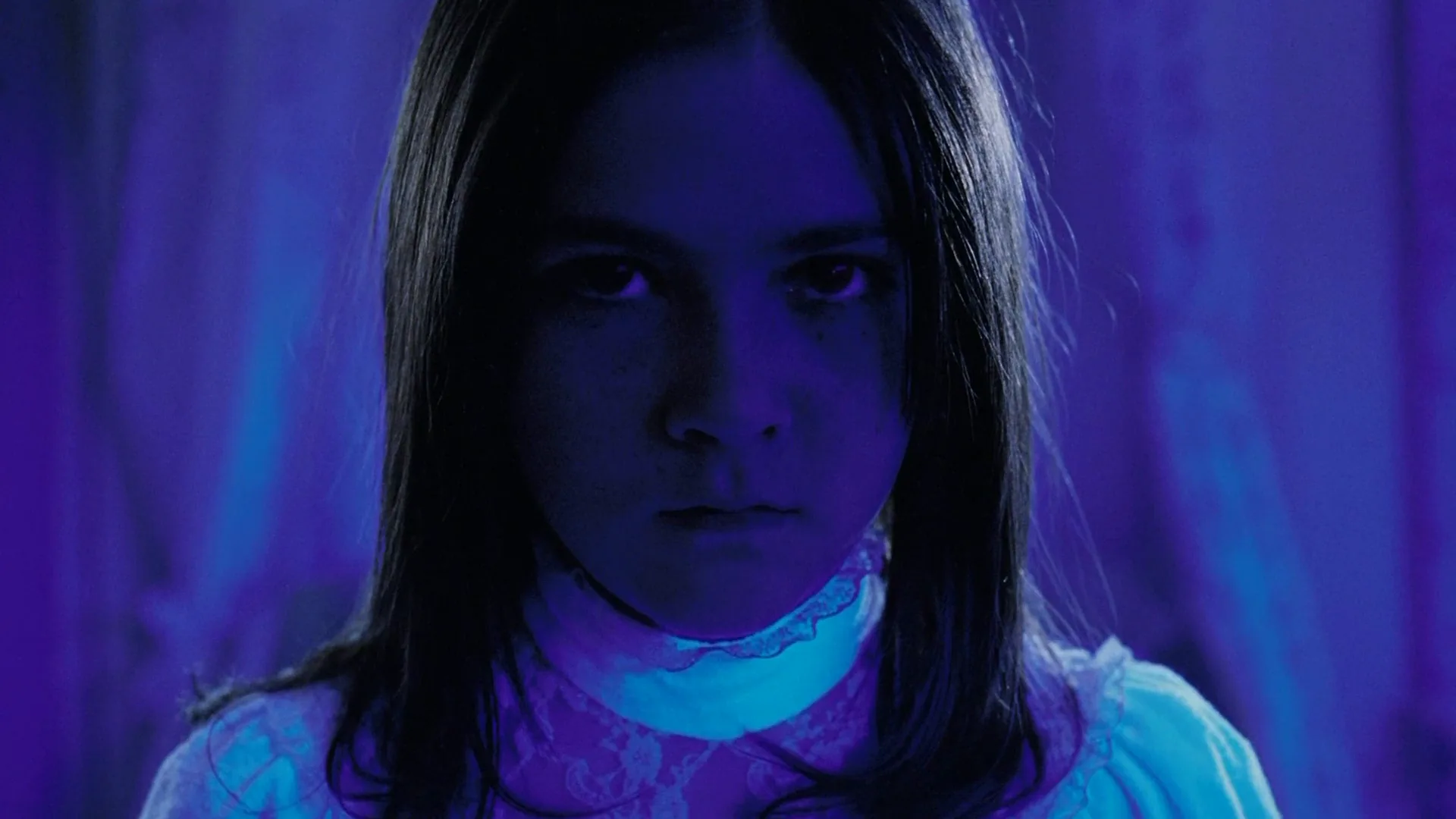
Lighting gels are sheets of heat-resistant colored film clipped in front of a lamp. Correction gels such as CTO and CTB shift a source toward tungsten or daylight so mixed lights match; saturated gels (deep red, magenta, congo blue) paint the scene outright, turning a practical room into a mood the audience feels before it reads.
- What it does
- Changes the color of a light at the source, either to match other lights or to give the scene a deliberate hue.
- Use it when
- Sources of different color temperature share a frame, or the story needs a room that is openly red, blue or magenta.
- Watch out
- Every gel eats light (full CTB costs well over a stop) and saturated gels fade or melt on hot lamps.
- Try this prompt
medium close-up, hard key through a deep red gel from frame left, cyan-blue gel on the back wall, black shadows, 50mm, 35mm film grain
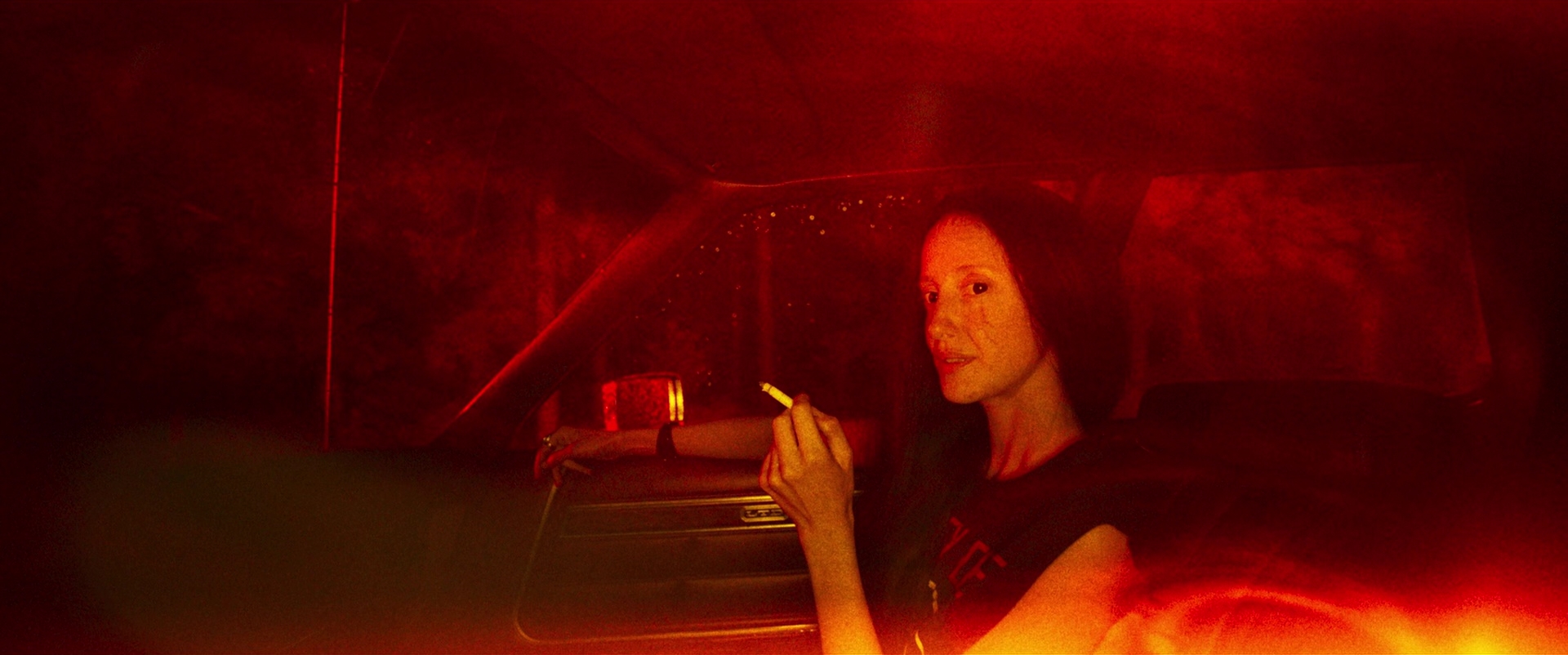
What are lighting gels?
A gel is a thin sheet of dyed, heat-resistant plastic placed in the beam of a light to change its color. The name dates from the days when the filters were made of gelatin; today they come in numbered rolls and sheets.
In film lighting gels fall into three families:
- Correction gels shift color temperature: CTO (color temperature orange) warms a source, CTB (color temperature blue) cools it, and Plus/Minus Green fix the green cast of fluorescents and some LEDs.
- Saturated gels such as primary red, magenta or congo blue paint a scene rather than correct it.
- Neutral density gels cut intensity without changing color, often taped over whole windows.
CTO and CTB: how correction gels work
Correction gels come in full, 1/2, 1/4 and 1/8 strengths. A full CTO turns roughly 5600K daylight into about 3200K tungsten; a full CTB pushes a 3200K lamp toward daylight.
Typical jobs: CTO on daylight LEDs or HMIs so they blend with warm household lamps; CTB on tungsten units to match a window; half CTB on a backlight to read as moonlight against a warm interior.
The cost is light. Full CTB swallows roughly one and a half stops, full CTO about two-thirds of a stop. When crews leave sources uncorrected on purpose, the result is mixed lighting: a warm-cool contrast chosen instead of fixed.
Why do filmmakers use colored gels?
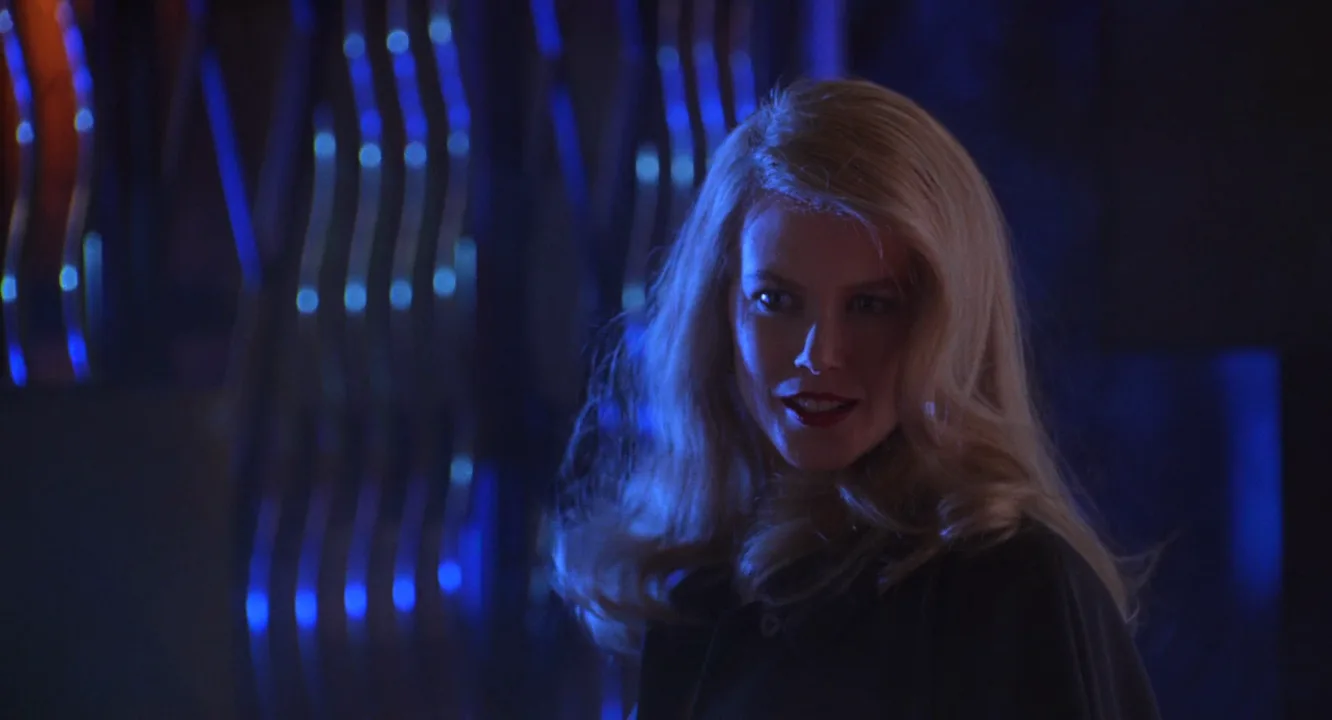
Emotion before information. A room in deep red reads as danger, heat or hell before anyone speaks; blue reads as cold, night or isolation. Suspiria (1977), shot by Luciano Tovoli for Dario Argento, is the textbook case: rooms in primary red, blue and green that no real source explains.
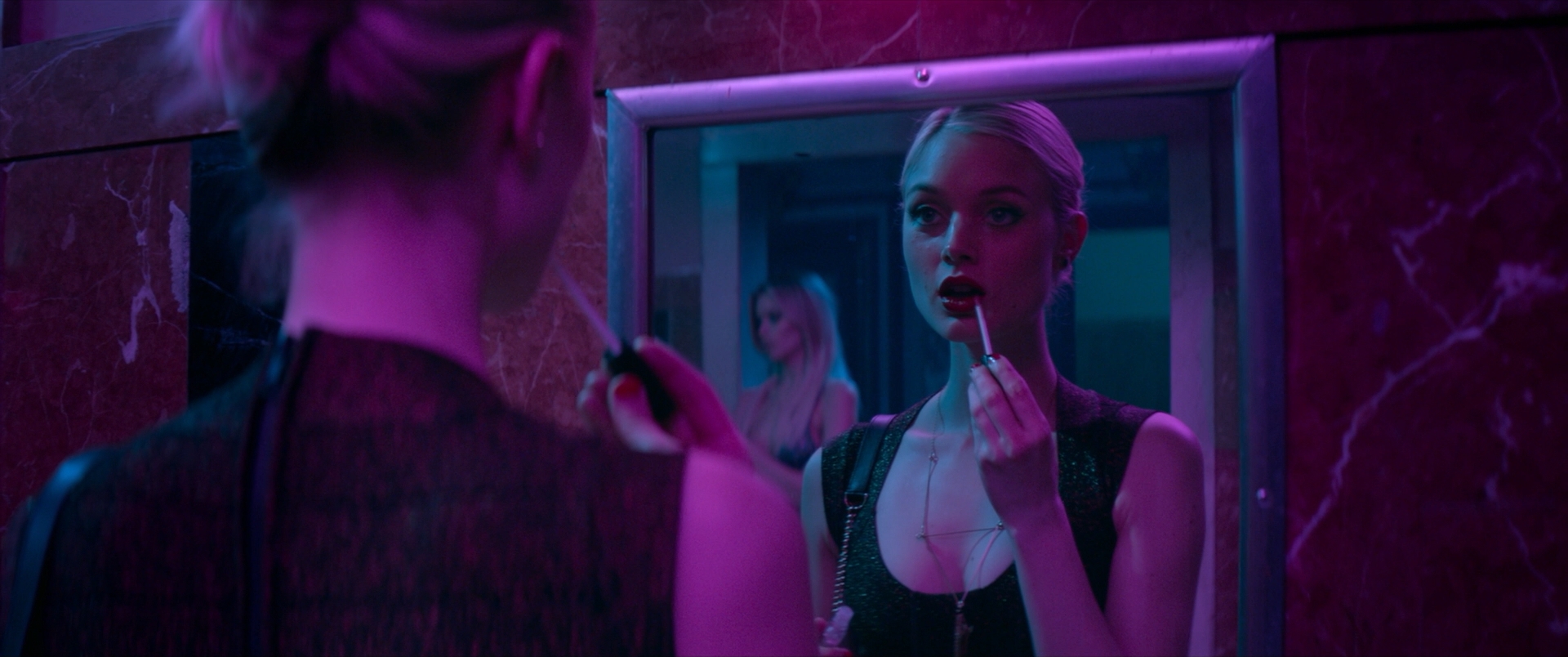
Motivated color. Gels also imitate the world: sodium-orange streetlight, a cyan TV spill, a red exit sign. Here gels meet neon lighting and the wider toolkit of colored lighting.
Separation by hue. A warm key against a cool background pulls a face forward even at equal brightness.
How to use gels on set
- Mount with an air gap. Clip the gel to barn doors or a gel frame with wooden clothespins, never flat against a hot lens. Deep reds and blues absorb the most heat and fade or burn through first.
- Underexpose saturated color. Rate a stop or so under the meter so the hue stays dense instead of washing to pink or white.
- Keep shadows black. Saturated color looks richest next to darkness; flag spill so each gel stays on its surface.
- Protect the eyes. Deep red or blue on a face flattens it. Keep a small neutral eye light, or put the strongest gel on the background.
How far to push is a question of color saturation: a primary gel on every lamp is a style, not a default.
Gels vs. RGB LEDs and color grading
RGB LED fixtures can dial any hue and even emulate numbered gels. Gels still earn their place: they fit any fixture, cost almost nothing, and a filtered full-spectrum lamp often renders skin more smoothly than an LED mixing a saturated color.
A grade colors the whole image; a gel colors only what its lamp hits, so a red key and a blue background stay separate.
Lighting Gels examples in film
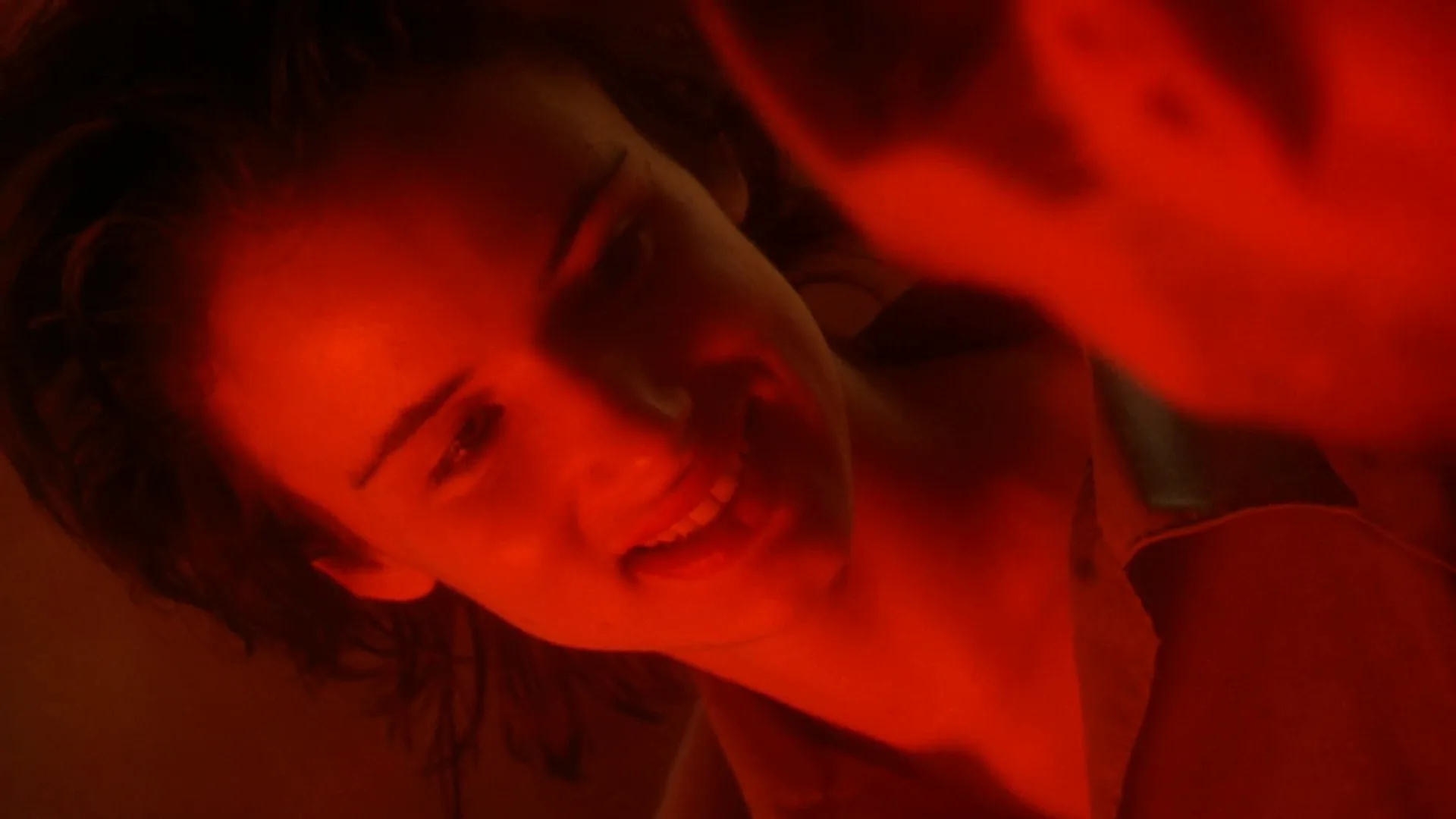
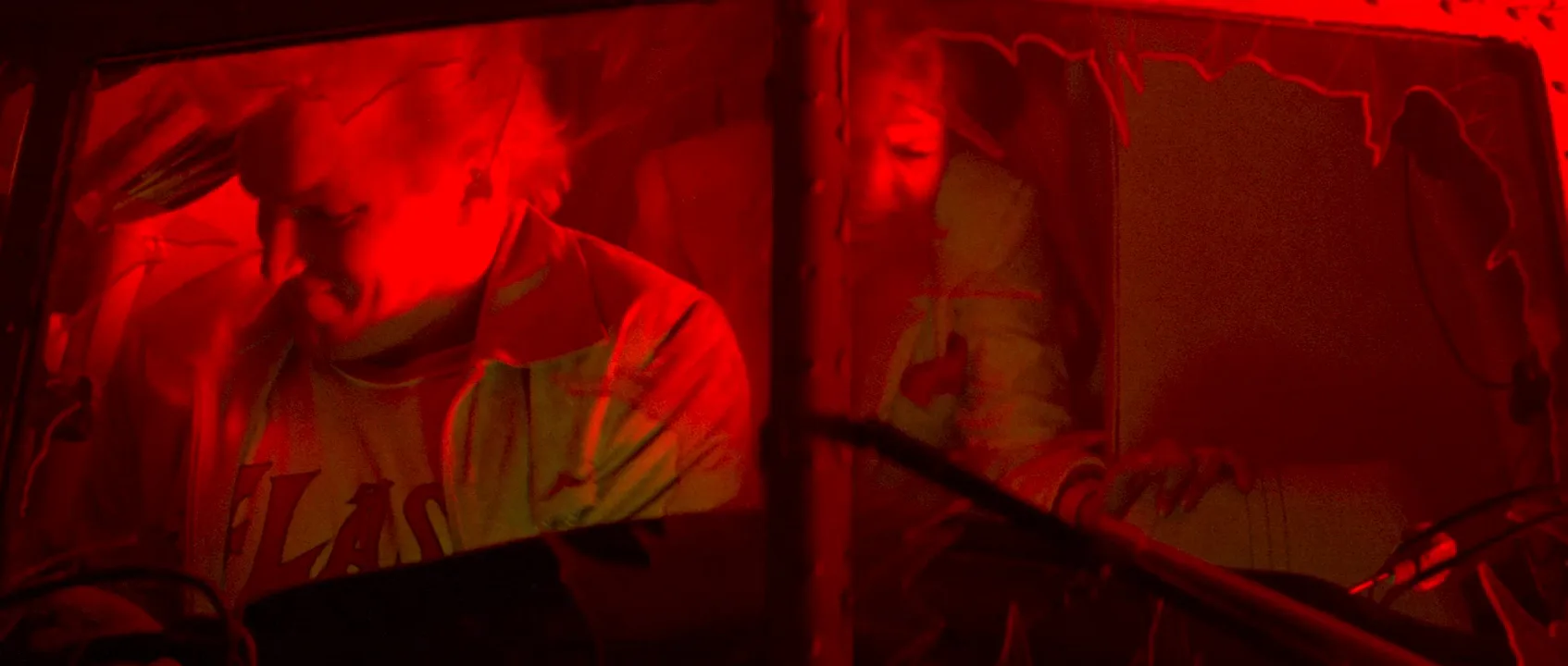
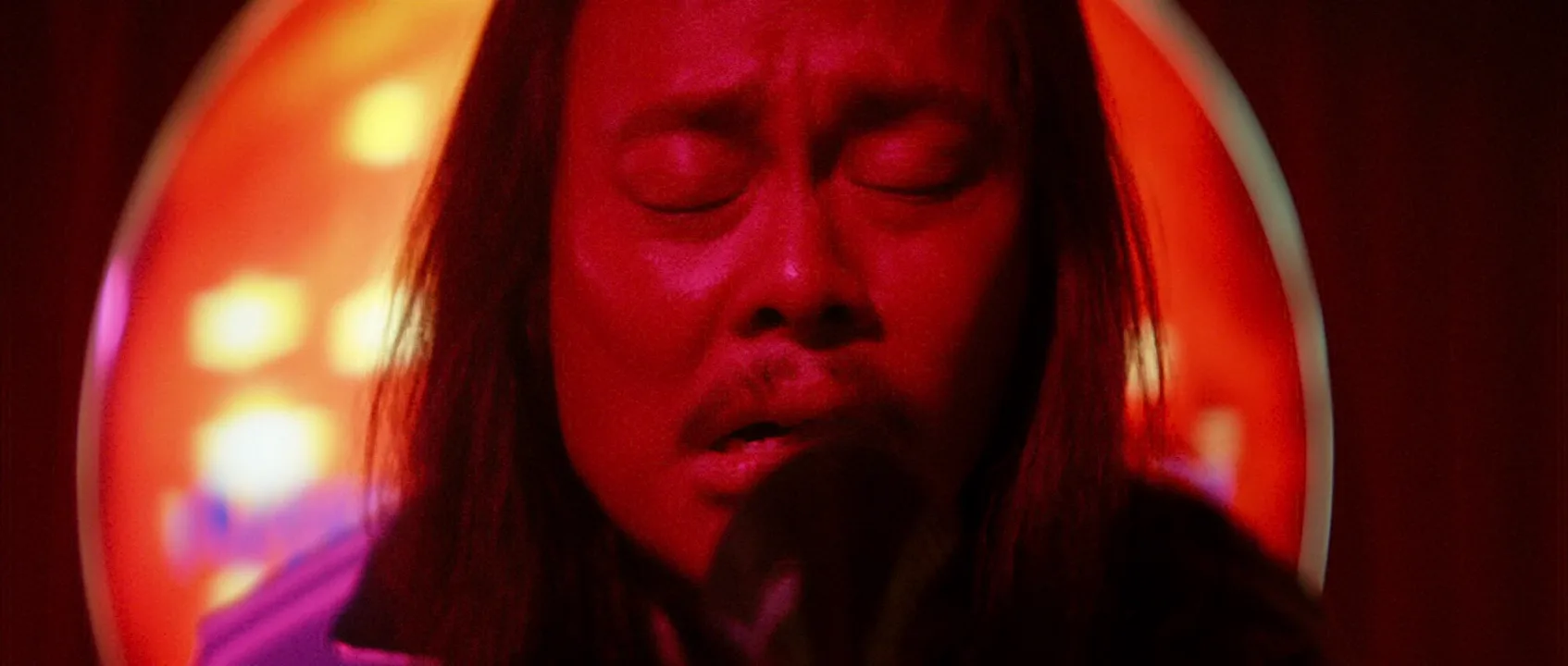
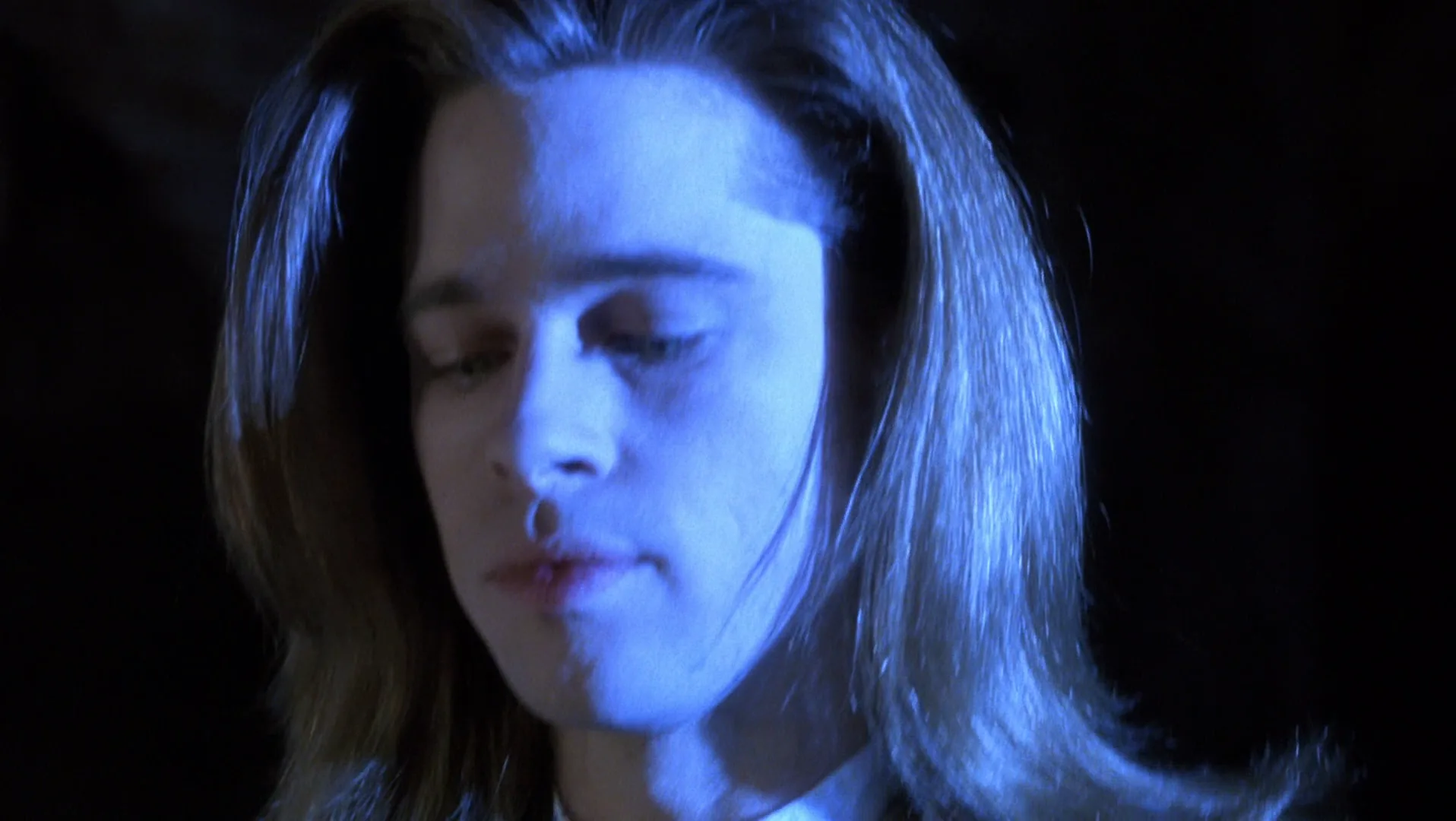
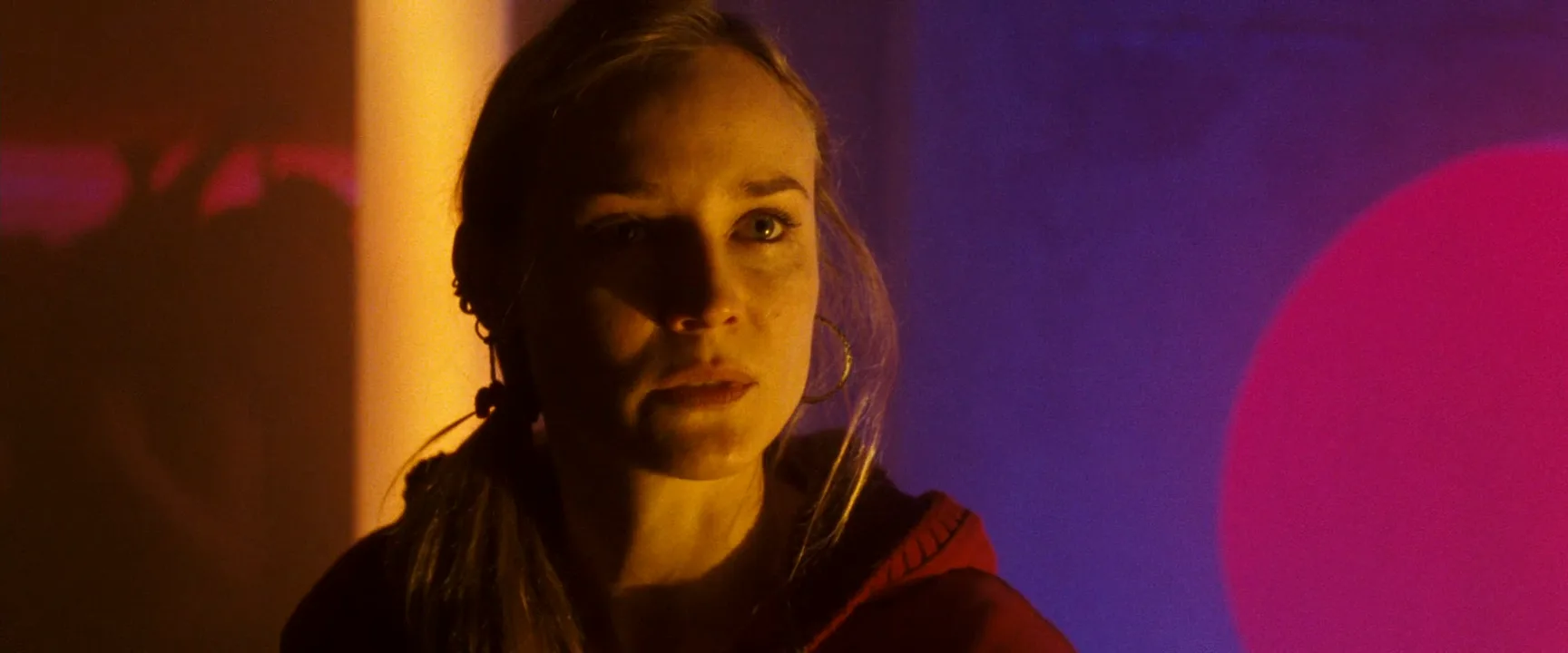
9 framesSaturated gels on faces and rooms, plus a warm-cool split where two colors share the frame.
How to create a lighting gels with AI
4 promptsModels handle gel color best when you name the source, its side and what it hits. Build the start frame, try a second palette, then animate the first frame, keeping every take side by side on one FlashBoards board. The fourth prompt re-shoots a real film shot from a text description alone, and the original plays next to the result so you can compare.
Cinematic medium close-up at night in a small motel room. A woman in her forties with a shaved head, freckles across her nose and a small silver hoop in her left ear, olive work jacket, sits by the window. Hard lamp through a deep red gel from frame left paints the left side of her face red; the wall behind her is lit cyan-blue. Deep black shadows, only red and blue. 50mm, eye level, 35mm film grain.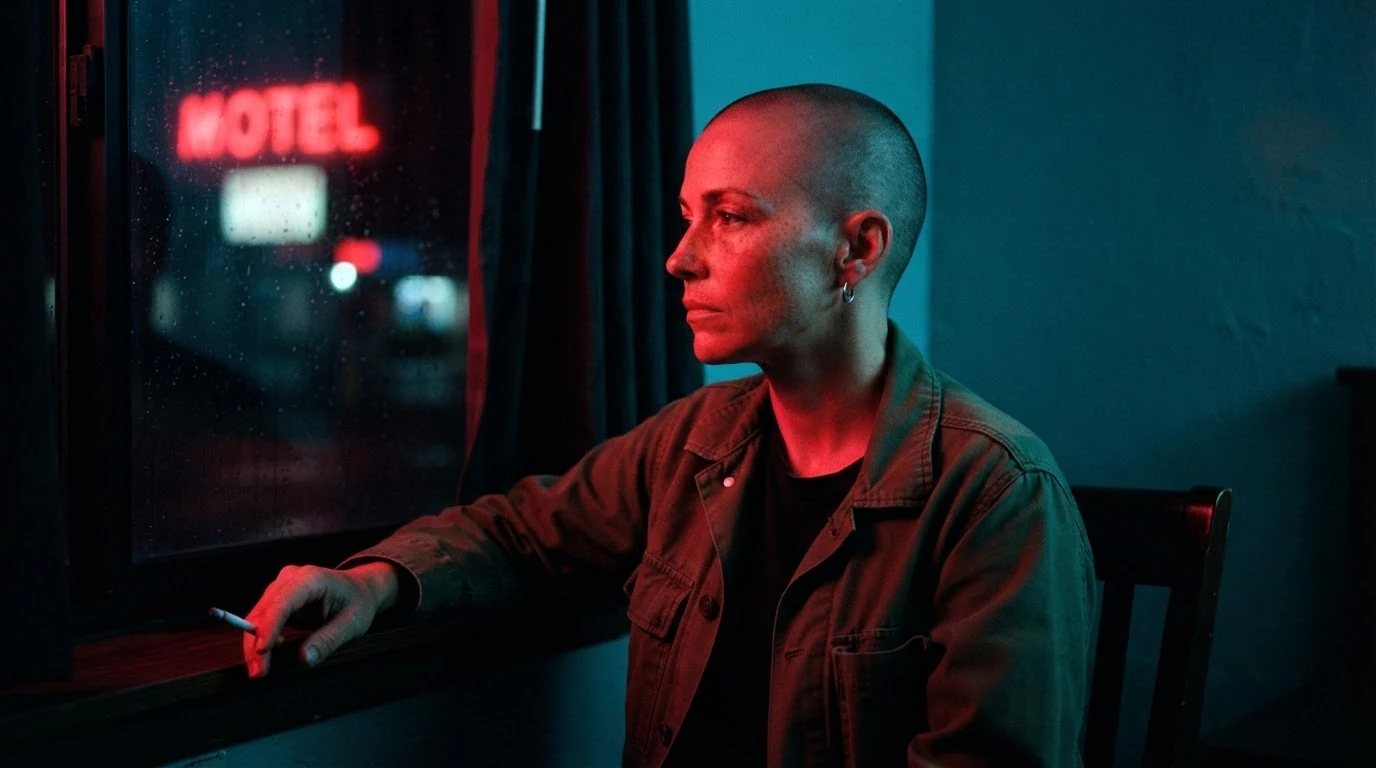
"Hard lamp through a deep red gel from frame left" gives a source and direction, so red lands on one side of the face. Giving cyan-blue to the wall keeps the colors separate; "deep black shadows" blocks neutral fill.
Open FlashBoardsWide cinematic shot of a narrow apartment kitchen at blue hour. A man in his sixties with a short gray beard, crooked nose, round wire-rimmed glasses and a brown cardigan stands at the stove. Cool blue daylight from the window at frame right falls on his back and the tiled wall; a warm orange tungsten lamp at 3200K lights his face from frame left. Clear warm-cool split, 35mm lens.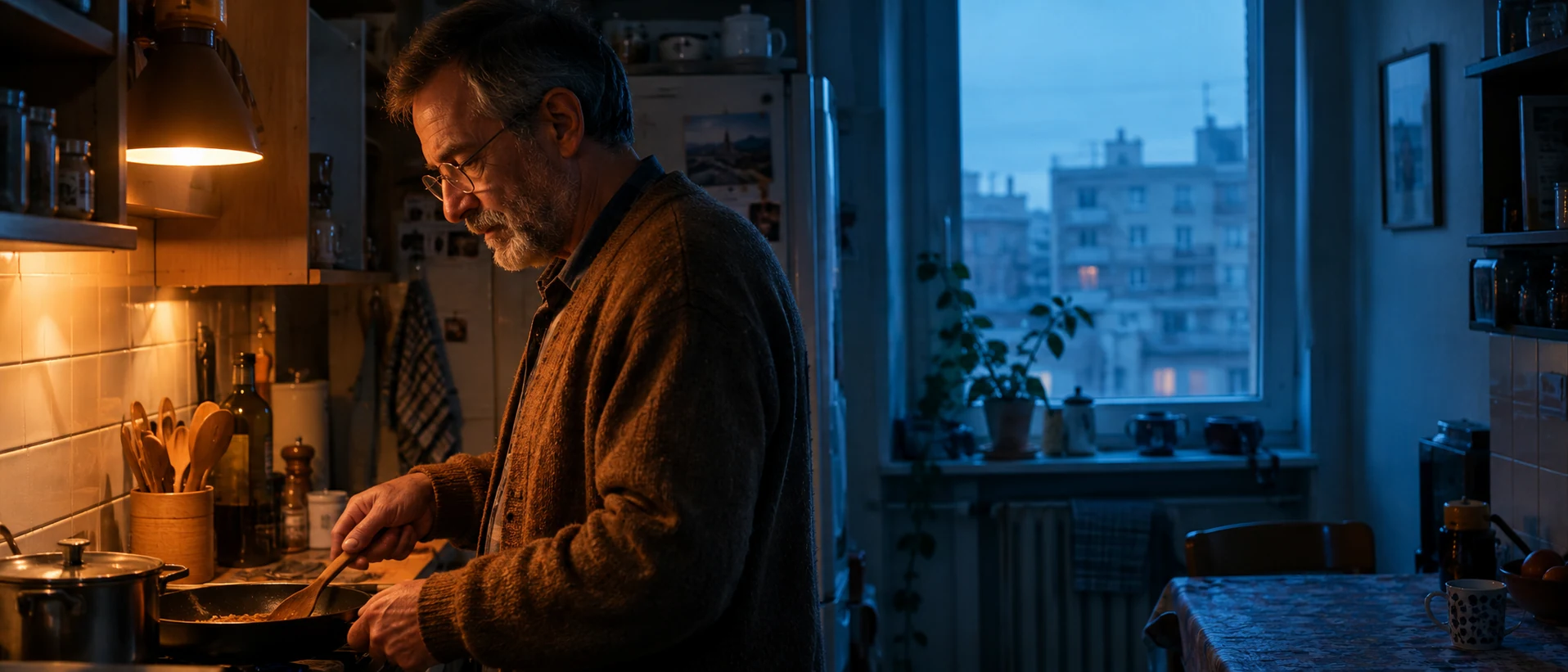
Correction gels as a look: each color temperature owns one side of the frame, so the model builds a split instead of averaging to neutral. Kelvin and "orange" work better than the bare abbreviation CTO.
Open FlashBoardsCamera: a slow, steady push-in from medium close-up to close-up at eye level. Action: the woman is already turning her head from the window toward the red lamp, and the red light slides across her face to her eyes. She exhales and the red lamp flickers once. At the end she looks down, her face deep red, the wall still cyan-blue, shadows black.The head turn starts in the first frame, so the red key visibly travels across the face. Restating the colors at the end keeps them from drifting toward neutral.
Open FlashBoards{
"output": "Full-screen live-action single continuous shot from its very first frame, a night interior from Interview with the Vampire (1994). Grainy 1990s 35mm, blue-gel moonlight: one hard, saturated cold-blue beam from high above frame right is the only light. Skin, hair and linen read icy blue-white where it lands; everything it misses falls to near black. Behind him a dark wall carries a faint diagonal lattice of shadow at upper frame left. Only deep blue and black from first to last frame.",
"characters": {
"S1": {
"name": "Louis, played by Brad Pitt",
"look": "young man, pale smooth face, long light-brown hair parted in the middle and falling past his shoulders, white collarless shirt buttoned to the throat with small buttons, pale linen coat over it",
"voice": "soft, low, weary American voice, heard only as voice-over"
}
},
"shots": [
{
"shot": 1,
"camera": "medium close-up at eye level, normal lens, his face centred slightly right of middle against the black wall, top of frame cutting through his hair; midway the camera pans left and tilts down to follow him as he sinks, ending on a slightly tighter close-up of his face in the right half of frame",
"action": [
"BEGINNING: alive from the first frame, S1 stands with his head bowed, eyes lowered toward lower frame left, lips closed and still; the blue beam lights the frame-right half of his face, his nose and the hair on frame right, while his frame-left cheek sits in deep shadow.",
"THEN: his head tilts slowly further toward frame left and his eyelids drop lower, mouth still closed, hands out of frame.",
"THEN: he lowers himself, sinking down and leaning toward frame left as if sitting; his hair swings forward around his face and the camera pans left and tilts down to keep him.",
"THEN: he settles; the frame is tighter now, his face larger, the blue light still splitting it: frame-right half bright icy blue, frame-left half in shadow.",
"END: he stays still, eyes half closed and cast down to frame left, lips closed; a small glassy object in the lower-left corner catches the same blue light, and the wall behind him is black."
],
"dialogue": [
{
"speaker": "S1",
"on_screen": false,
"when": "from the first frame, over the first third of the shot, while his lips stay closed",
"delivery": "voice-over, quiet and wistful, unhurried",
"line": "<d>[English] They make the night brighter than the day.</d>"
}
]
}
],
"sound": {
"ambience": "quiet room tone, the soft rustle of his linen as he sinks down",
"speech": "exactly this one spoken phrase, said once, as S1's voice-over; his lips never move",
"never_spoken": "no other narration and no other voice-over: the descriptions, performance notes and step words of this prompt are never spoken aloud",
"music": "a film score under the scene, always below the voices: slow, mournful low strings with a soft sustained choir note",
"subtitles": "none"
}
}Remakes Louis's blue night close-up from Interview with the Vampire (1994): the prompt carries over the hard cold-blue key from high frame right, the black surround, his voice-over line and the pan left and tilt down as he sinks.
The look names one hard blue beam, its side and what it hits, then says everything it misses falls to black, so the gel reads as night instead of a blue filter. Louis's one line runs as voice-over with his lips closed, and the camera follows the corpus label, pan left and tilt down, as he sinks.
Open FlashBoardsCommon mistakes
- Everything gets tinted. "Red lighting" often becomes a red filter over the whole image. Name the lamp, its side and what it hits.
- Colors blend to purple haze. Give each gel a surface: red on the face, blue on the wall.
- Abbreviations are ignored. Add "warm orange tungsten, 3200K" or "cool blue daylight" to CTO and CTB.
- Color drift in video. Repeat the colors and their positions in the last sentence.
Keep the reference frames, prompts and every generated take side by side — images and video in one canvas.
FAQ
4 questionsWhat are lighting gels used for in film?
Lighting gels change a lamp's color at the source. Correction gels like CTO and CTB match lights of different color temperature, such as a tungsten lamp and window daylight; saturated gels give a scene a deliberate hue, like red for danger or blue for night. Because a gel colors only what its lamp hits, it separates colors in a way a grade cannot.
What is the difference between CTO and CTB gels?
CTO (color temperature orange) warms a light: a full CTO converts roughly 5600K daylight to about 3200K tungsten. CTB (color temperature blue) cools it, pushing a 3200K lamp toward daylight. Both come in full, 1/2, 1/4 and 1/8 strengths, so you can shift a source slightly or all the way.
Do lighting gels reduce light output?
Yes. Full CTO costs around two-thirds of a stop, full CTB roughly one and a half stops, and dense saturated colors like primary red or congo blue can cost several stops. Plan bigger fixtures or closer placement for a heavily gelled lamp, and meter after the gel is on.
What color gel makes moonlight?
Moonlight on film is usually a cool blue source: half or full CTB on a tungsten lamp, a steel-blue effect gel, or an uncorrected daylight fixture against a warm interior. It is a convention, not a measurement; the blue only reads as night when the scene stays dark and a warmer light sits nearby for contrast.
Related terms
6- Color TemperatureLighting
Color temperature describes how warm or cool a light source is, measured in kelvin: candlelight around 1900K, tungsten about 3200K, daylight about 5600K, overcast and shade higher still.
- Neon LightingLighting
Neon lighting builds a scene from saturated colored tubes and signs — pinks, cyans, reds — reflected on wet streets and faces against deep shadow, a look tied to Hong Kong cinema and neo-noir.
- Mixed LightingLighting
Mixed lighting combines sources of different color temperature or spectrum in one scene — window daylight with tungsten lamps, fluorescent with neon — either corrected with gels or kept as a deliberate warm-cool contrast.
- Color SaturationColor
Saturation is how pure a color is — how far it sits from neutral grey; raising or draining it lets filmmakers build a vivid, heightened world or a muted, weary one.
- Colored LightingColor
Colored lighting gives a scene its hue at the source — through gels, RGB LEDs, practicals and neon — either motivated by the world or openly expressive.
- Film LightingLighting
Film lighting is the craft of shaping light for the camera — its direction, quality, color and contrast — to model faces, build space, set the time of day and carry the mood of a scene.
Further reading
Blain Brown, Motion Picture and Video Lighting (Focal Press). Harry C. Box, Set Lighting Technician's Handbook (Focal Press).