 FlashBoards Learn
Color · Film language
Colored Lighting
Also called: lighting color, color lighting, colored gels
Colored lighting gives a scene its hue at the source — through gels, RGB LEDs, practicals and neon — instead of adding it in the grade. Motivated by a sign or a screen, it places the viewer in a believable world; used openly, it tells them how to feel before anyone speaks.
- What it does
- Paints mood, separation and meaning into the frame with light that is deliberately not white.
- Use it when
- A scene needs an emotional temperature, a strong location identity or a face split between two worlds.
- Watch out
- Saturated colors clip skin in one channel and can turn a wide frame into a rainbow; keep the key near neutral.
- Try this prompt
Medium close-up at night, magenta sign light through blinds on one side of his face, cyan TV glow on the other, deep shadow between
What is colored lighting in film?
Colored lighting is any light on set deliberately pushed away from neutral white: a saturated gel on a fresnel, an RGB LED dialed to magenta, a green hotel sign outside a window, a television throwing blue across a face. It sits in the color toolkit, but it is a lighting decision first.
It is the opposite of correction. Warming a lamp with CTO is about color temperature, making sources agree so skin looks natural. Colored lighting makes sources disagree on purpose, so one zone reads red, another blue. Because the hue lands on real surfaces, it falls off, wraps around a cheekbone and reflects off wet floors, a texture a later grade cannot fully fake.
Why do filmmakers use colored light?
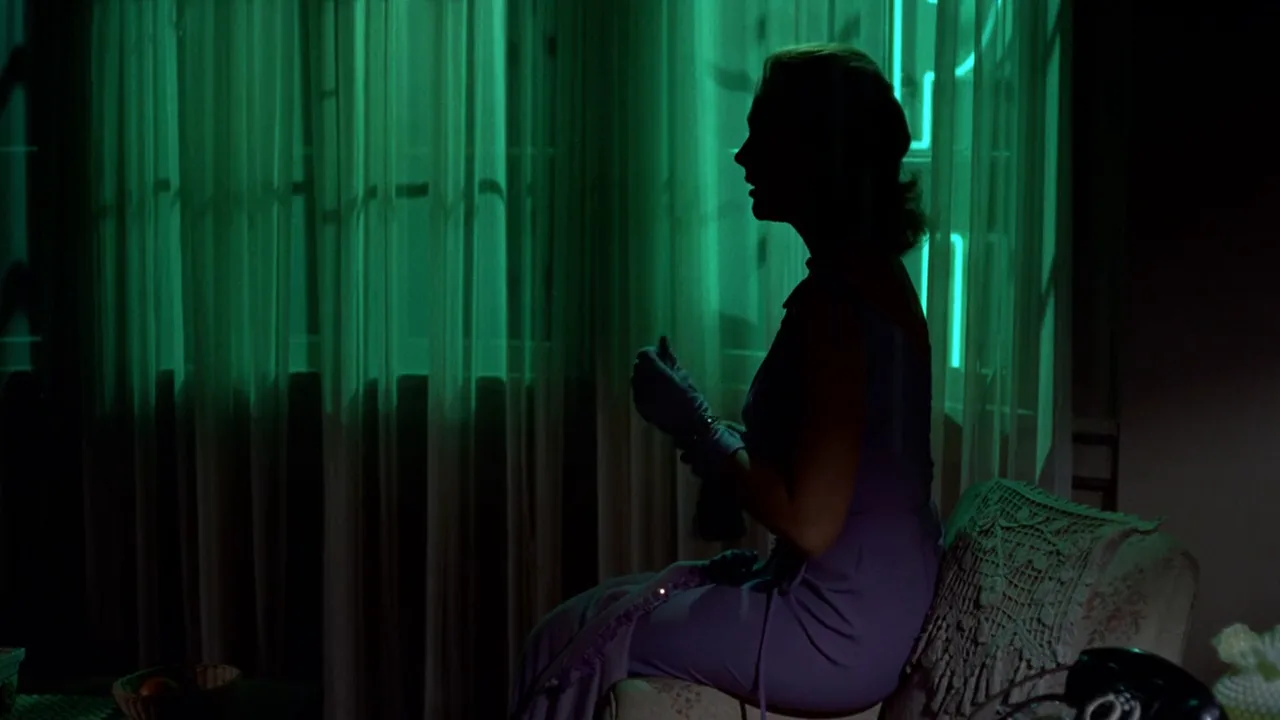
Motivated color comes from a source the audience believes in. In Vertigo (1958) a green hotel sign outside Judy's window soaks her room, and the same green haze surrounds her when she appears remade as Madeleine: uncanny, yet explained by the street. Practical lighting keeps even a saturated look grounded.
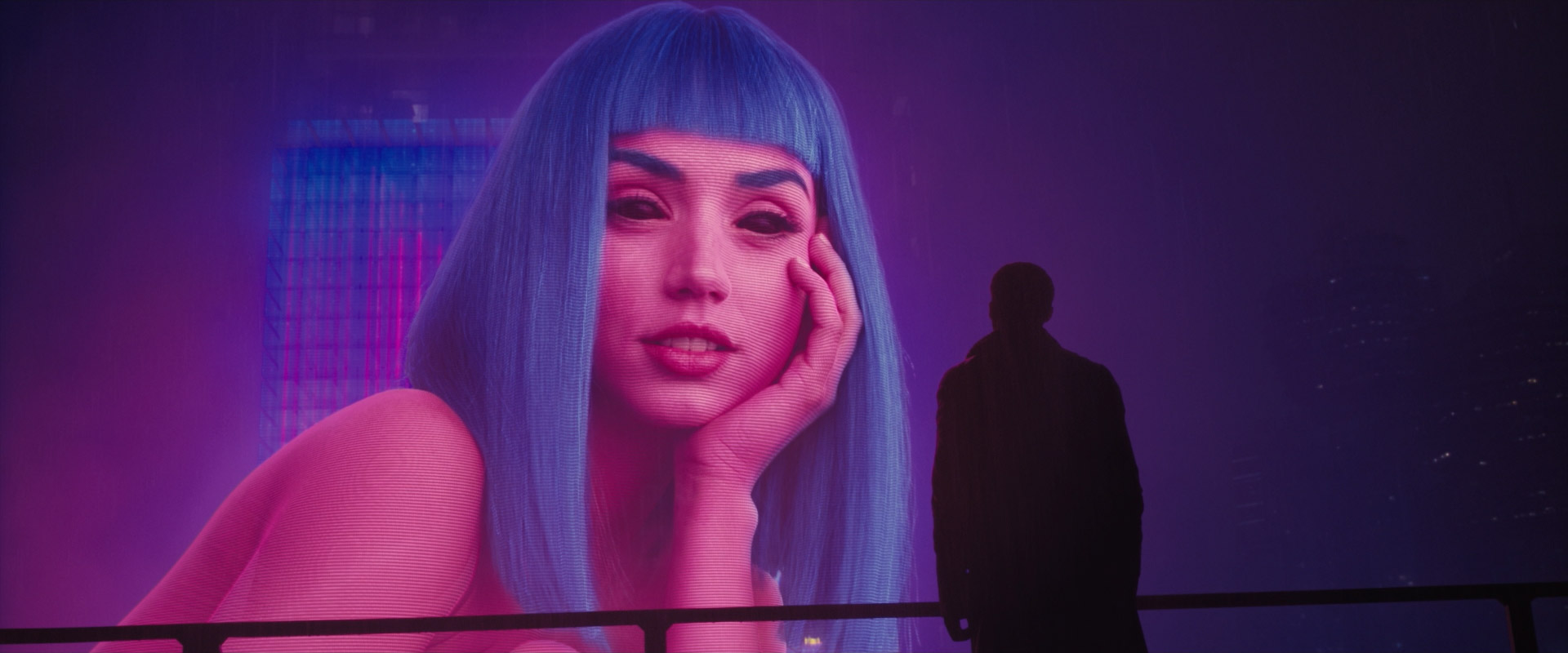
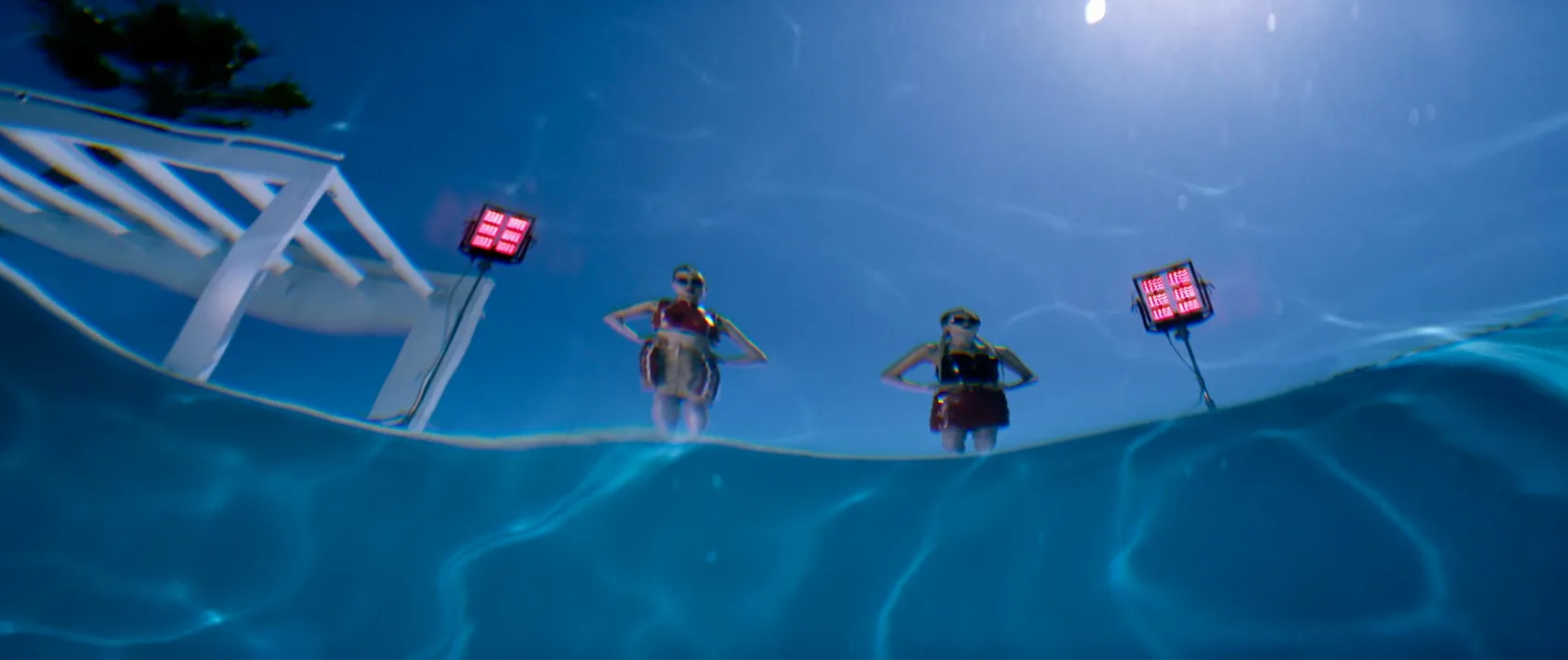
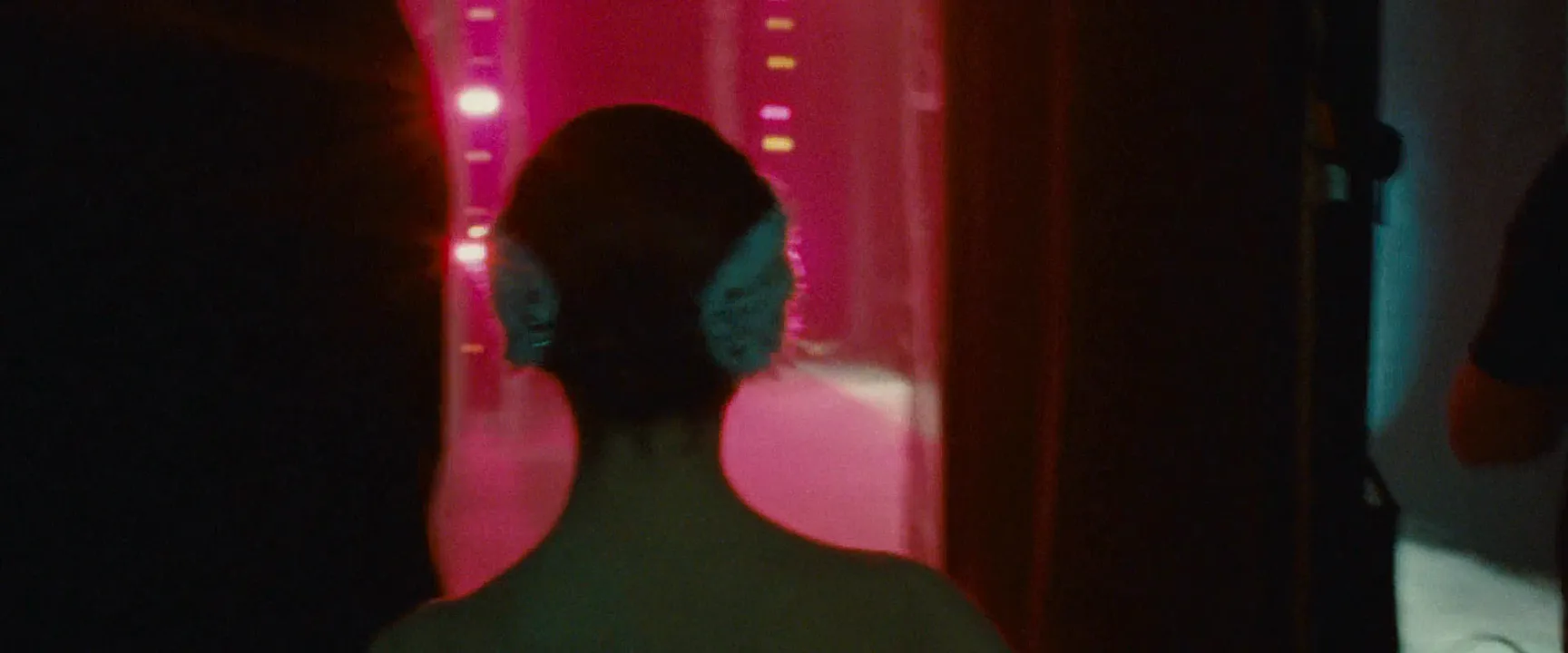
Expressive color needs no alibi. Dario Argento's Suspiria (1977) floods corridors with primary reds, blues and greens no building would produce; the color itself is the threat. The Neon Demon (2016) and Blade Runner 2049 (2017) build whole scenes as graphic fields of one hue.
What it does for the viewer:
- Mood before story. Red reads as heat or danger, blue as night or isolation, green as the uncanny. Context overrides any chart.
- Separation. A cool rim against a warmer key lifts a face off a dark background.
- Conflict. Two complementary colors on one face split it in half.
How to light a scene with colored light
Choose the tool. Lighting gels over tungsten or HMI heads give rich, stable color but eat output: a primary red costs a few stops, a deep blue far more. RGB LED panels and tubes dial any hue from a console and can flicker or crossfade on cue; judge their narrow-band colors on skin with a calibrated monitor. Practicals and neon justify the color in shot.
Build it in layers. Keep the key near neutral, then color what surrounds the face: the back wall, a rim, a slash across the set. Two workhorse setups: a warm key with a cool backlight about a stop over it, or two opposing hues from either side with dark falloff between.
Expose for the color. Saturated light looks richest slightly under, so let colored backgrounds sit about a stop below the key. Skin under red or magenta clips in one channel first; watch the red channel or false color. Lock white balance at 3200K or 5600K.
Give it something to hit. A touch of haze shows beams in the air; wet pavement, glass and chrome double the color. In close-ups on a 50–85mm lens one hue can fill the background; in wides, keep colored sources few and large.
Colored lighting vs. neon lighting
Neon lighting is one look inside colored lighting: pink, cyan and red tubes and signs against night shadow and wet streets, tied to Hong Kong cinema and neo-noir. Colored lighting also covers a gel-painted stage, a red darkroom safelight or a blue TV glow in a bedroom. If the color comes from signage and the city at night, it is neon; any deliberate hue at the source is colored lighting.
Colored Lighting examples in film
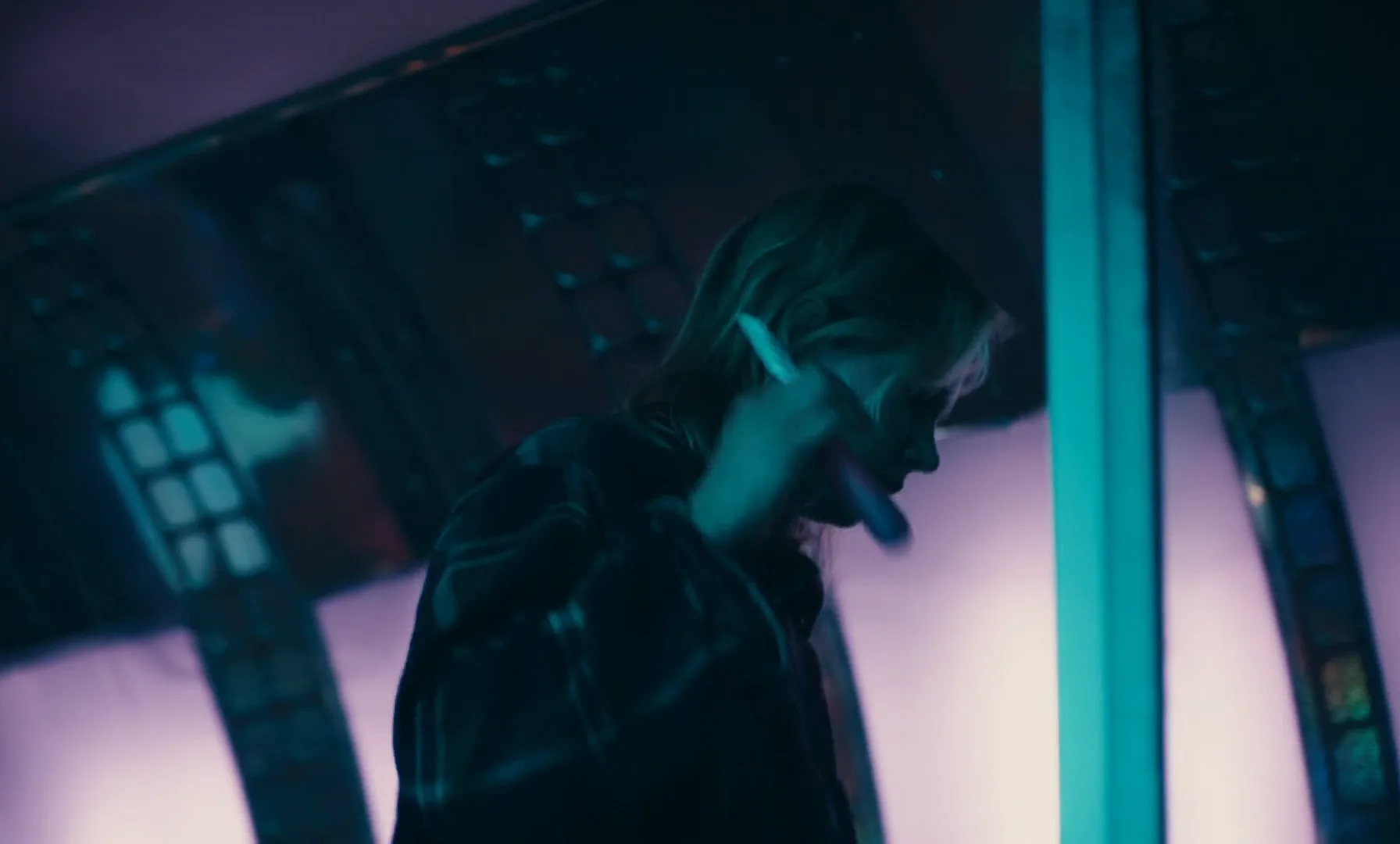
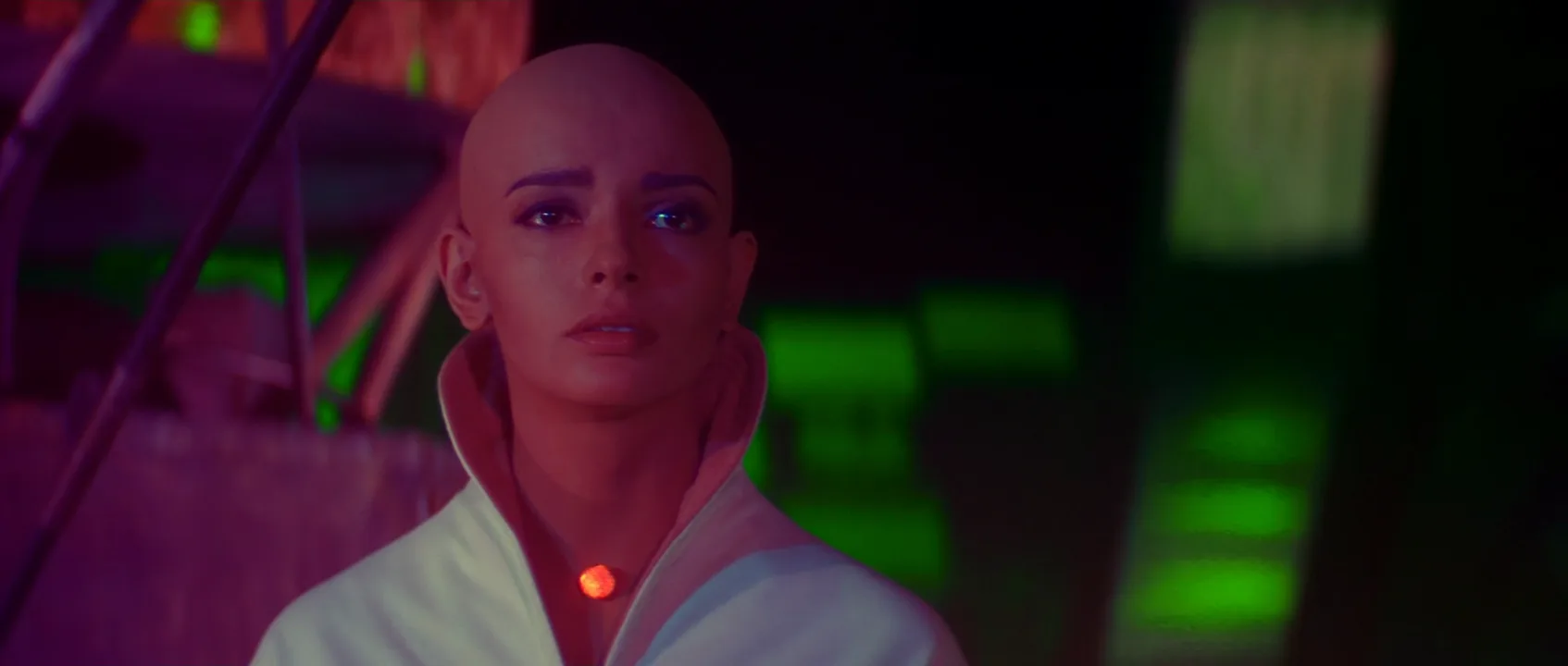
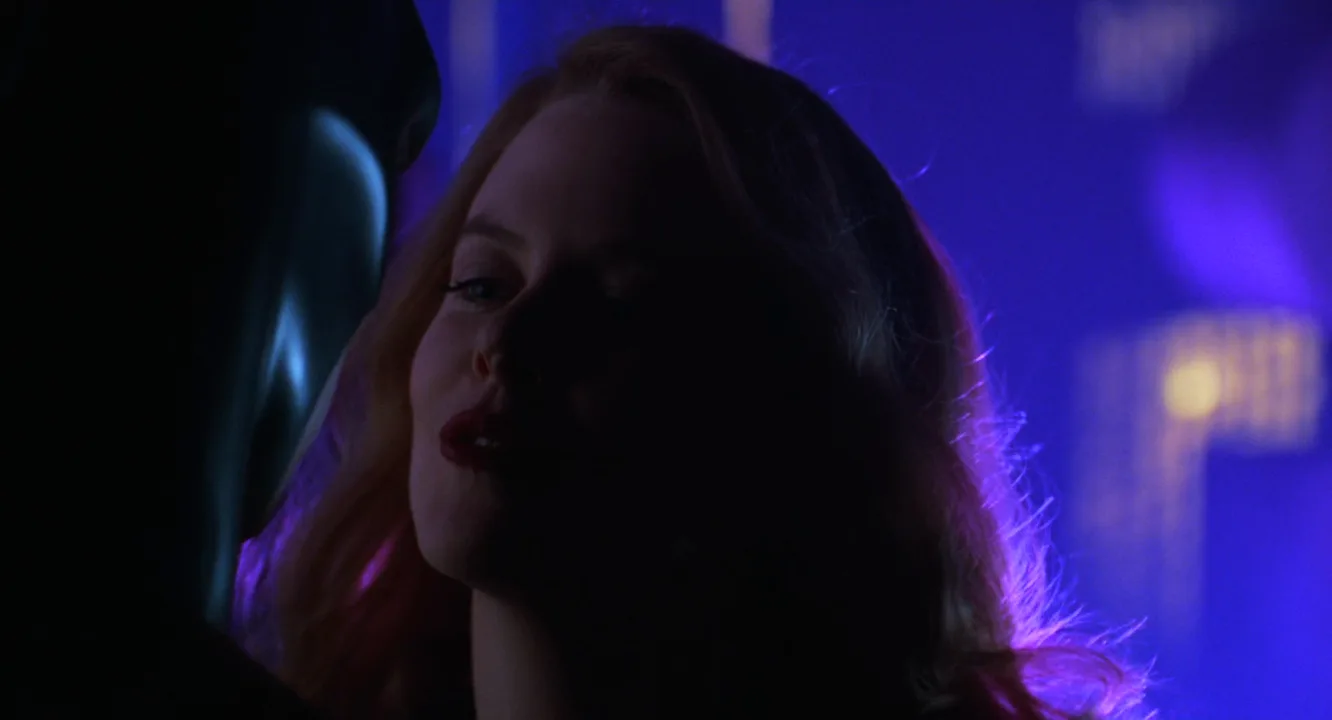
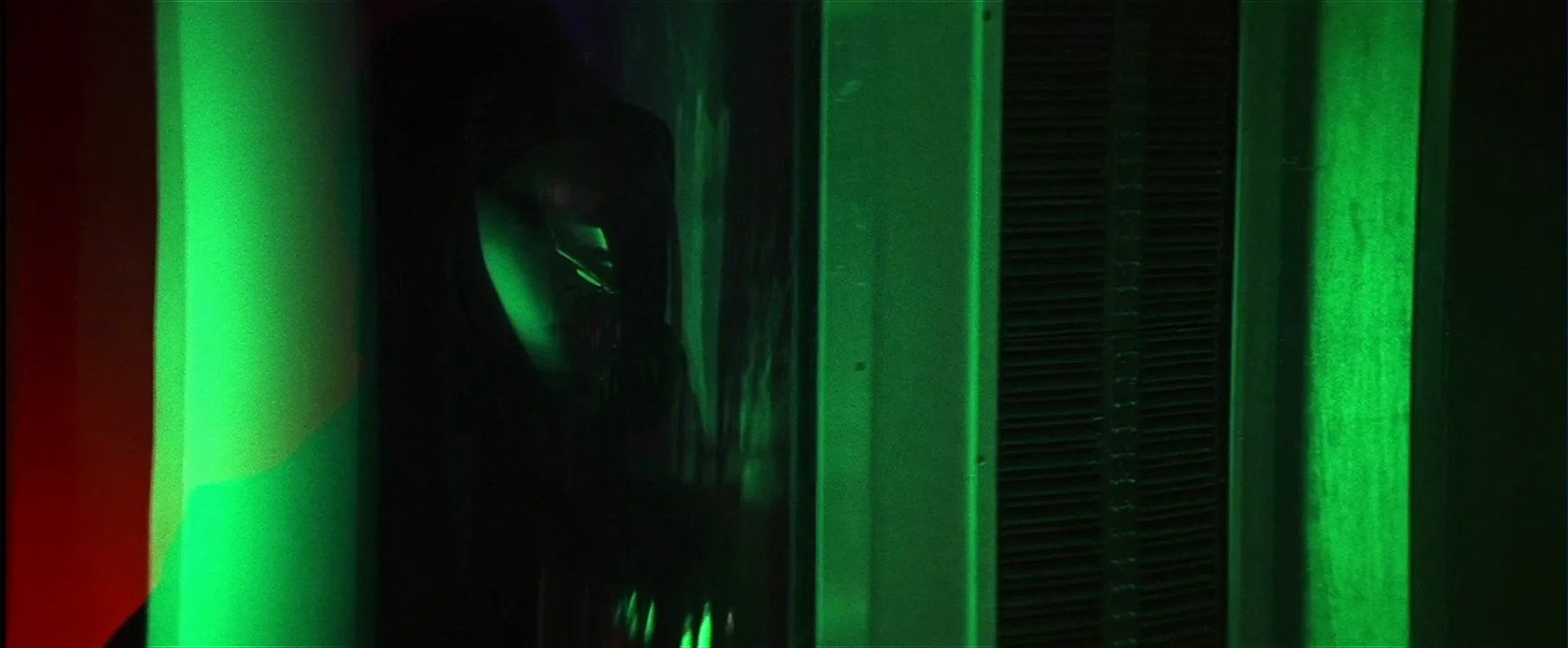
9 framesFrames where the hue comes from the light itself.
How to create a colored lighting with AI
4 promptsImage models drift toward neutral light unless each colored source is named with its position and target. Build the start frame, try an expressive take, then animate the first frame, keeping references and takes on one FlashBoards board to compare hue and falloff. The fourth prompt re-shoots a real film shot from a text description alone, and the original plays next to the result so you can compare.
Cinematic film still, medium close-up in a cheap motel room at night. A man in his forties with a shaved head, a thin scar through his left eyebrow and a mustard corduroy jacket sits on the bed. Through the blinds behind him, a magenta motel sign throws hard striped light across the wall and the back of his head. A strong cyan glow from a television just off-frame left washes over his face. Deep shadow between the two colors, skin still readable, 50mm lens at eye level, film grain.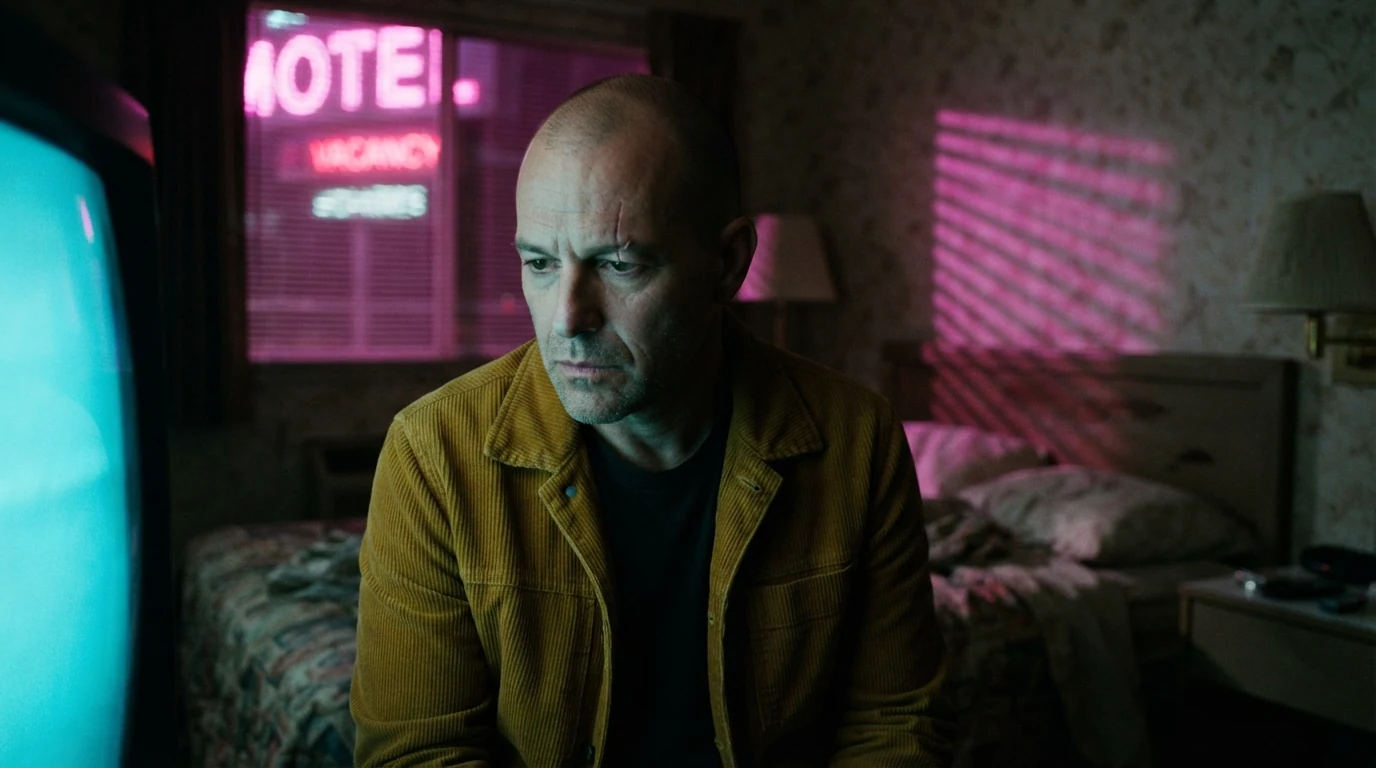
Each color has a motivated source and a target. "Deep shadow between the two colors" keeps them from blending into purple, and "skin still readable" protects exposure.
Open FlashBoardsWide anamorphic cinematic frame of an empty rehearsal hall at night. A dancer in her twenties with close-cropped black curls, a long neck and a charcoal leotard stands center frame on a wooden floor. Saturated red gelled light from high frame left paints the floor and her left side; a deep blue backlight from behind her rims her shoulders and glows in light haze. Dark walls, visible beams, 40mm anamorphic lens, camera at hip height.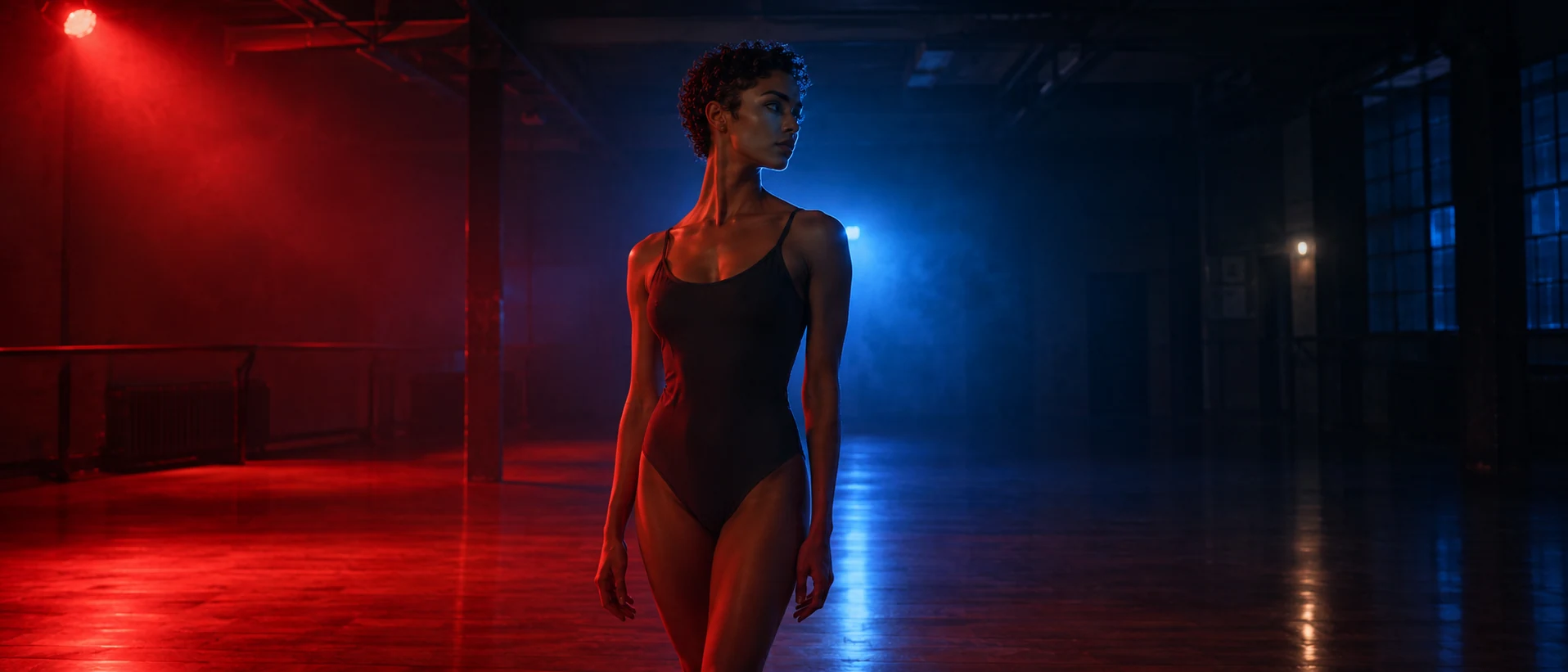
Expressive, not motivated: the gels are named outright. "Light haze" and "visible beams" give the color something to live in across the wide frame.
Open FlashBoardsCamera: slow push-in from the medium close-up toward a close-up of his face, starting immediately and moving steadily for the whole shot. Action: The man is already turning a motel room key over in his fingers while the cyan television glow flickers on his face. He stops, lifts his head and turns toward the window, and the magenta stripes from the blinds slide across his cheek. At the end he holds still, half cyan, half magenta.Motion starts in the first words, so the clip does not freeze. The head turn carries his face from one colored source into the other, and only elements from the start frame are named.
Open FlashBoards{
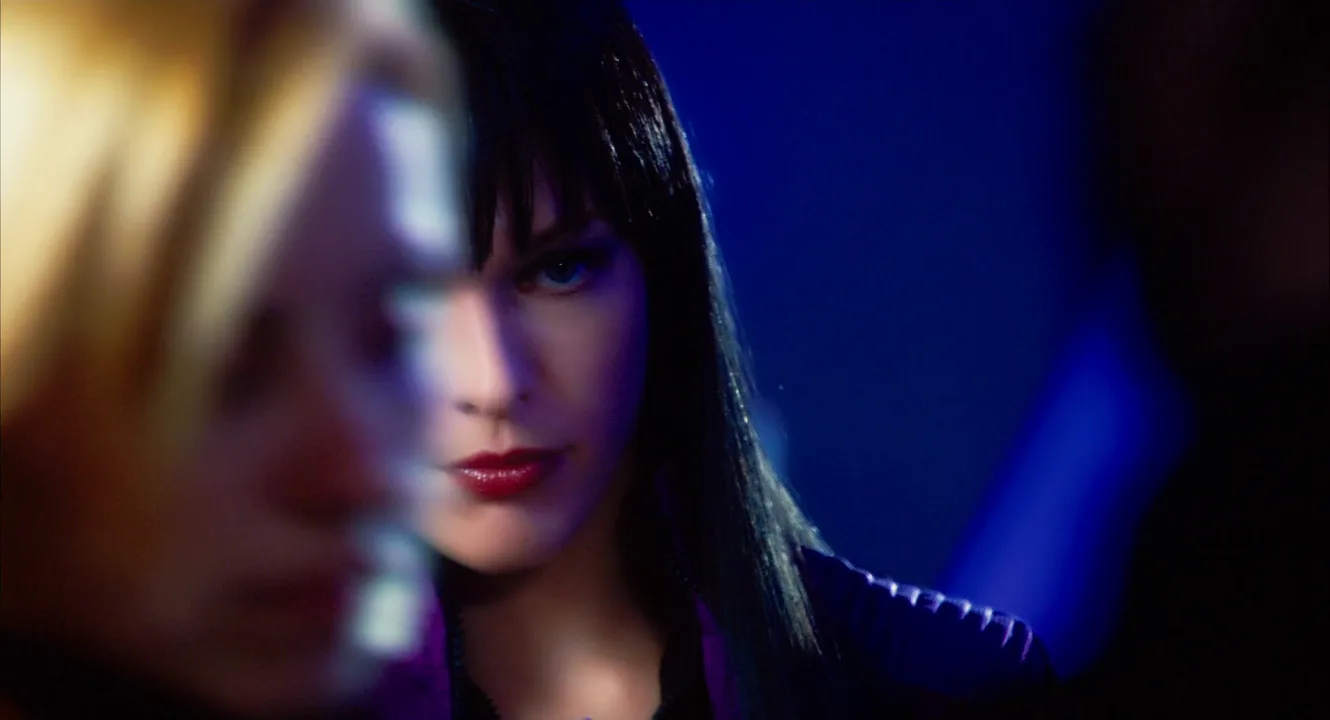
"output": "Full-screen live-action close-up from its very first frame: one continuous shot from Batman Forever (1995), the rooftop meeting at night. Glossy 1990s 35mm, hard low-key colored light and nothing neutral: the whole background is a flat field of saturated ultramarine-violet blue with soft out-of-focus city lights and a few warm yellow points at frame right; a hard violet-magenta backlight from behind her rims her hair in glowing pink-violet; a dim cold blue-violet key catches only her frame-left eye and cheek; the rest of her face falls into deep blue-black shadow; deep blacks, fine grain.",
"characters": {
"S1": {
"name": "Dr. Chase Meridian, played by Nicole Kidman",
"look": "late twenties, shoulder-length wavy strawberry-blonde hair that reads dark violet in this light, pale skin, dark red lipstick, black evening top; framed centre, near, her face turned up toward frame left",
"voice": "low, amused, flirtatious"
},
"S2": {
"name": "Batman / Bruce Wayne, played by Val Kilmer",
"look": "seen only from behind as a black glossy rubber cowl and caped shoulder at the far left edge of frame, near the lens and out of focus, faint cyan highlights on the rubber; his face never shows",
"voice": "deep, quiet, dry"
}
},
"shots": [
{
"shot": 1,
"camera": "static, locked-off, slightly below her eye line, long lens, shallow focus; close-up of S1 left of centre with the dark cowl of S2 filling the left edge of frame; the framing stays the same to the end",
"action": [
"BEGINNING: alive from the first frame, S1 looks up and to frame left at S2's hidden face, lips parted, head tilted back a little; the violet-magenta backlight from behind her right shoulder (frame right) glows pink-violet through the edges of her hair; the cold blue-violet key lights only her eye and cheek on the frame-left side of her face, the rest of her face in deep shadow; her skin takes the blue-violet color of the light, cool and dim; S2's cowl sits motionless at the left edge, a black shape against the blue.",
"THEN: while S2 speaks, she holds his gaze without moving, her mouth closed except for a small parting of the lips.",
"THEN: she lowers her head slightly and drops her eyes toward his chest, lids half closed, and her whole face sinks into blue-black shadow, only the violet rim on her hair still glowing, as she begins her answer.",
"THEN: she lifts her eyes back up to his face, her head rising toward frame left, and the violet rim light slides along her hair and jaw as she moves.",
"END: she holds still, chin raised, lips parted after the question, gaze locked on S2; her hands stay out of frame, S2 stays still at the left edge."
],
"dialogue": [
{
"speaker": "S2",
"on_screen": false,
"when": "just after the first frame, while she looks up at him",
"delivery": "quiet, dry, almost a murmur",
"line": "<d>[English] We all wear masks.</d>"
},
{
"speaker": "S1",
"on_screen": true,
"when": "right after his line, as she lowers her eyes and then lifts them back to him",
"delivery": "low, teasing, the last two words a light challenge",
"line": "<d>[English] My life's an open book. You read?</d>"
}
]
}
],
"sound": {
"ambience": "quiet night rooftop air, a faint distant city hum heard from far below",
"speech": "exactly these spoken phrases, each said once, in this order",
"never_spoken": "no narration and no voice-over: the descriptions, performance notes and step words of this prompt are never spoken aloud",
"music": "a film score under the scene, always below the voices: soft romantic strings with a low brooding horn, slow and restrained",
"subtitles": "none"
}
}Remakes the static close-up from Batman Forever (1995), dir. Joel Schumacher, DP Stephen Goldblatt: Chase Meridian (Nicole Kidman) against the blue night with Batman's cowl at frame left, carrying over the violet rim, the shadowed face, both corpus lines and her look down and back up.
The light is split into jobs, each with its own color: a saturated ultramarine-violet background, a hard violet-magenta backlight that rims her hair, and a dim cold key on one eye and cheek only. When she drops her eyes the face sinks into blue-black shadow while the rim keeps glowing, so the color does the storytelling, not the dialogue.
Open FlashBoardsCommon mistakes
- Wash instead of sources. "Purple lighting" tints everything; name each source, color and target.
- Mush. Two hues on one face blend; add "deep shadow between" or put them on opposite sides.
- Lost faces. Ask for "skin still readable" or a near-neutral key.
- Rainbow wides. Limit a wide to two or three colored sources.
Keep the reference frames, prompts and every generated take side by side — images and video in one canvas.
FAQ
4 questionsWhat is colored lighting in film?
Colored lighting is light on set deliberately tinted away from neutral white with gels, RGB LEDs, practical lamps or neon. The color is captured in camera, so it falls off, reflects and mixes like real light. Filmmakers use it to set mood, separate subjects from backgrounds and give locations or characters a recognizable identity.
How do you use color gels for lighting?
Clip heat-resistant gel to the barn doors or a gel frame, leaving a gap for airflow. Saturated gels cut a lot of output, so use a stronger unit than for white light. Keep faces closer to neutral and save the strongest colors for backgrounds, rims and accents motivated by practicals.
Are RGB LEDs better than gels?
RGB LEDs are faster: you dial hue and saturation from a console and can animate color on cue. Gels over tungsten or HMI give a fuller spectrum and often render skin more gracefully. Many crews use LEDs for backgrounds and gelled or white light on faces.
Can you add colored lighting in post?
Only partly. A colorist can tint the image and push hues, but cannot invent direction, falloff, rim light or reflections that were never recorded. Strong color added in post tends to look like a filter, so light the color on set and refine it in the grade.
Related terms
5- Neon LightingLighting
Neon lighting builds a scene from saturated colored tubes and signs — pinks, cyans, reds — reflected on wet streets and faces against deep shadow, a look tied to Hong Kong cinema and neo-noir.
- Lighting GelsLighting
Gels are sheets of heat-resistant colored film clipped over lamps: correction gels (CTO, CTB) match sources to tungsten or daylight, while saturated gels paint a scene red, magenta or blue.
- Practical LightingLighting
Practical lighting uses light sources visible in the shot — table lamps, neon signs, candles, TV screens — either as the real illumination or as the visible motivation for hidden film lights.
- Color TemperatureLighting
Color temperature describes how warm or cool a light source is, measured in kelvin: candlelight around 1900K, tungsten about 3200K, daylight about 5600K, overcast and shade higher still.
- Film LightingLighting
Film lighting is the craft of shaping light for the camera — its direction, quality, color and contrast — to model faces, build space, set the time of day and carry the mood of a scene.
Further reading
Blain Brown, Motion Picture and Video Lighting (Focal Press). Harry C. Box, Set Lighting Technician's Handbook (Focal Press).