 FlashBoards Learn
Lighting · Film language
Color Temperature
Also called: kelvin, light color temperature
Color temperature is how warm or cool a light source looks, measured in kelvin (K). Low numbers glow orange: candlelight near 1900K, tungsten at 3200K. High numbers turn blue: daylight around 5600K, shade higher still. Filmmakers mix these values to set time of day, place and mood.
- What it does
- Tints every light in the frame warm or cool, which the viewer reads as time of day, place, comfort or cold.
- Use it when
- You need to separate night from day, interior from exterior, or one story world from another with light alone.
- Watch out
- The number only means something relative to your white balance: 3200K light looks neutral at a 3200K setting and orange at 5600K.
- Try this prompt
cinematic interior at blue hour, cool 7000K window light on one side of her face, warm 2700K tungsten lamp on the other, 35mm
What is color temperature?
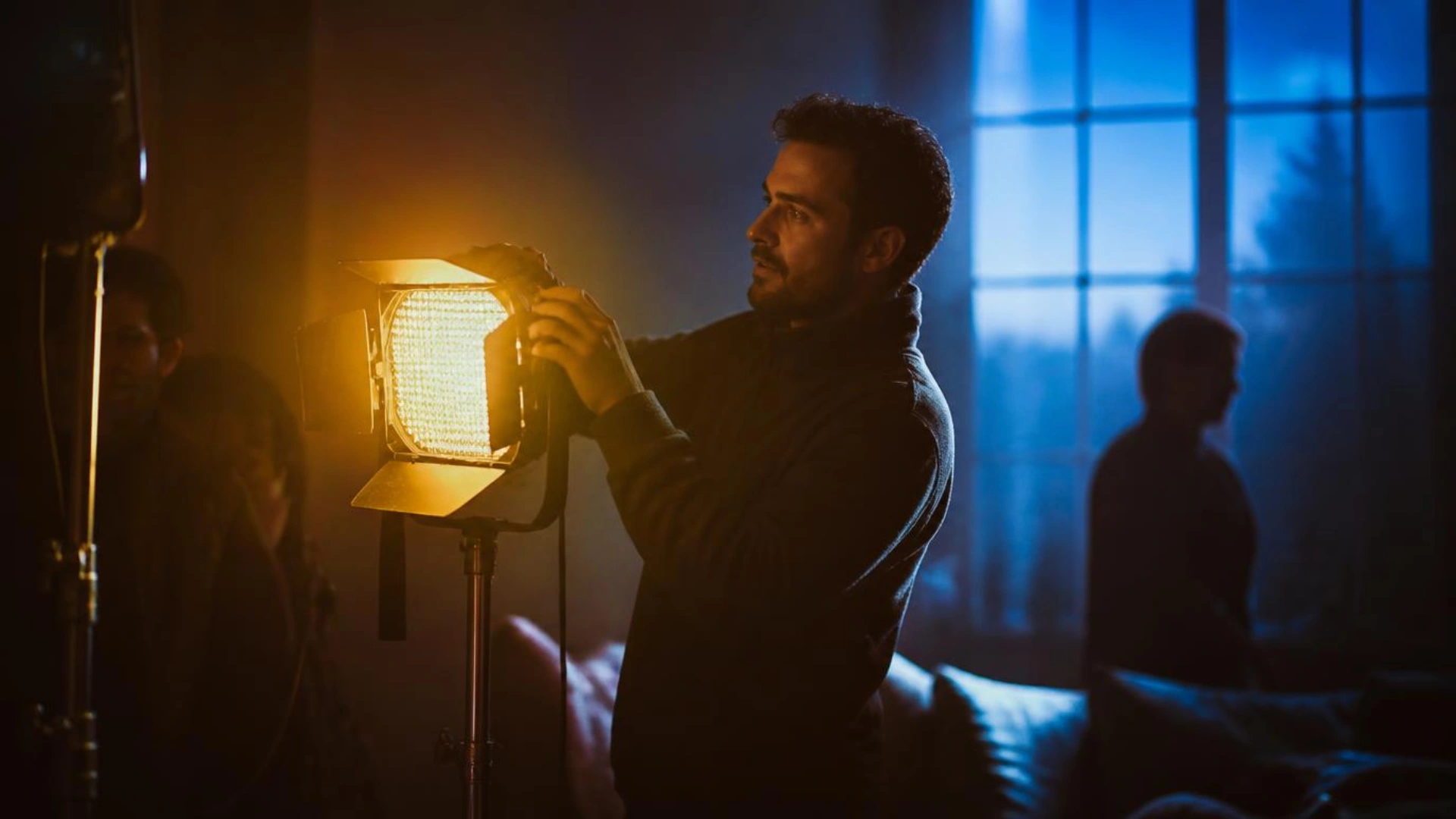
Color temperature describes the color of "white" light on a scale borrowed from physics. A heated black body glows red, then orange, then bluish white. In film lighting, a lamp's kelvin number is the temperature at which that body matches its color. The naming runs backwards: low kelvin looks warm, high kelvin looks cool.
A working kelvin chart:
- 1800–2000K: candle, match, oil lamp
- 2700–3000K: household bulbs, warm LEDs
- 3200K: tungsten film lamps, the indoor standard
- 5600K: noon sun plus sky, HMIs, daylight LEDs
- 6500–7500K: overcast sky
- 9000K and up: open shade under blue sky
Only sources that glow from heat (sun, flame, filament) sit close to this scale. Fluorescent tubes, sodium streetlights and cheap LEDs only approximate a kelvin value and add a green or magenta tint.
Why does color temperature matter in film?
Viewers don't know kelvin, but they read it instantly. Amber says fire, sunset, home; blue says night, screens, distance. Color temperature on set is where a film's warm color palette or cool color palette begins.
It also works as a map. Traffic (2000) pushes its Mexico scenes hot yellow and its Ohio and Washington scenes cold blue, so you know where you are from one frame. In Blade Runner 2049 (2017), Roger Deakins fills Las Vegas with orange haze against the cold blues of Los Angeles.
Inside a scene it marks time. Warm 2700K practicals against a deep blue window read as evening; let the window go low and amber and it becomes golden hour.
How to shoot with color temperature: 3200K vs 5600K
Start with one decision: which color counts as white. At a 3200K camera setting, tungsten looks neutral and window daylight turns blue. At 5600K, daylight looks neutral and tungsten glows orange. Pick the base that matches your dominant source, then push the rest on purpose.
- Correction gels. Full CTO turns 5600K daylight to roughly tungsten and costs about two-thirds of a stop. Full CTB turns tungsten into daylight but eats about a stop and a half. Half and quarter grades fine-tune; see lighting gels.
- Window gels. CTO or ND on the glass brings daylight down to match a tungsten interior.
- Bi-color LEDs. Most panels dial from about 2700K to 6500K, many with a green-magenta control.
Mixed color temperature: warm and cool zones in one frame
Mixed-source color puts lights of different temperatures, and often different spectra, in one frame: blue window daylight against amber lamps, green fluorescent overheads beside a sodium-orange street. The image splits into color zones, and faces get a warm side and a cool side.
Correct it by gelling everything to one base, or keep it as design: a warm foreground against a blue background pushes the background away. Decide which zone owns the skin: keep the key close to your white balance and let the contrasting color live in the background, rim or shadow side. For full setups, see mixed lighting.
Color temperature vs. white balance
Color temperature belongs to the light: a candle is 1900K whether anyone films it or not. White balance belongs to the camera: it sets which kelvin value renders as neutral.
The look lives in the gap. A 3200K lamp at a 3200K setting looks white; at 5600K it looks orange. Daylight recorded at 3200K turns deep blue, the basis of classic day-for-night.
A grade can move the whole balance later, as when the Coens and Deakins turned the green summer of O Brother, Where Art Thou? (2000) dry and golden in a digital intermediate. But a grade shifts everything together; only lighting puts two color temperatures in one frame.
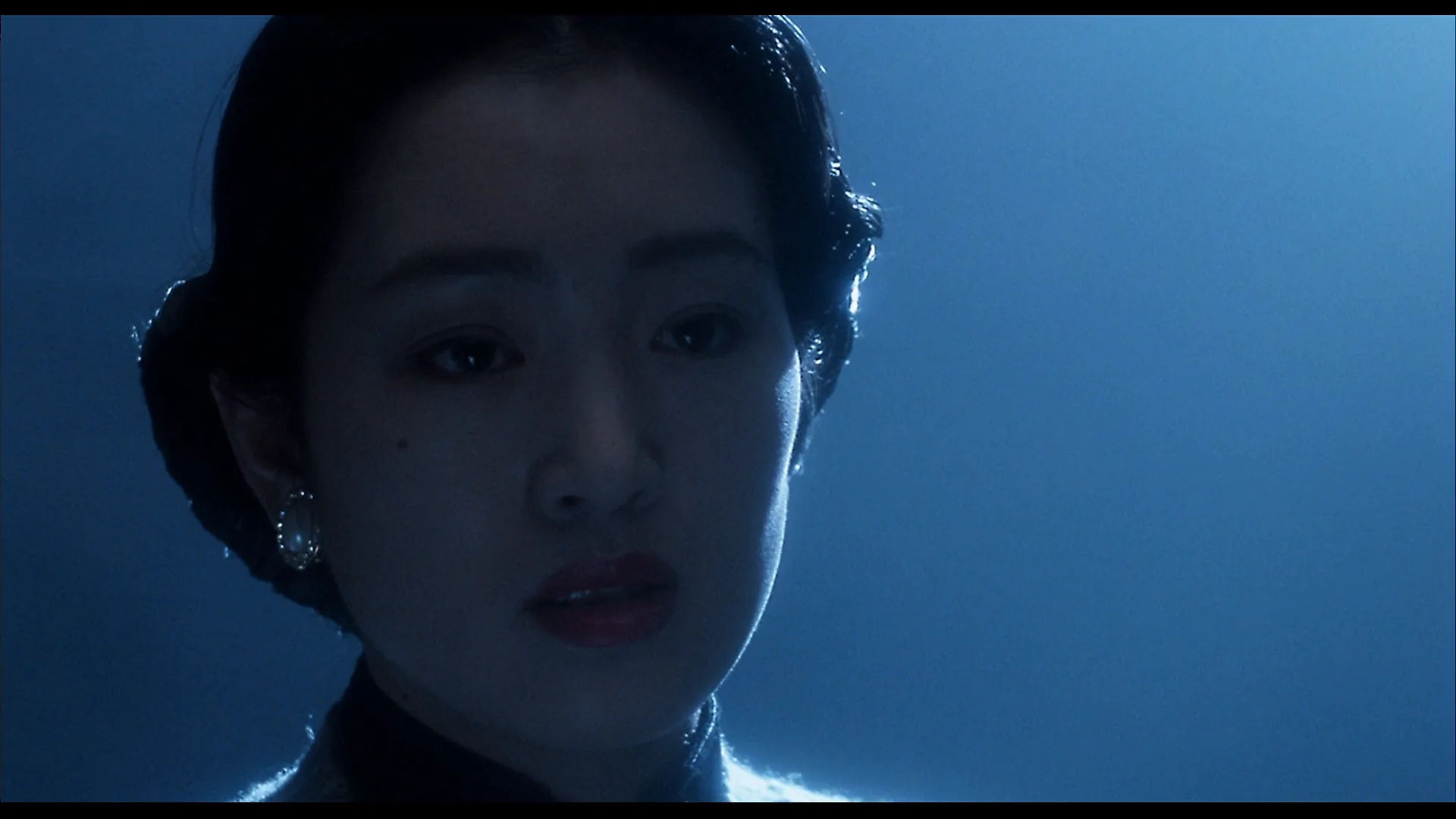
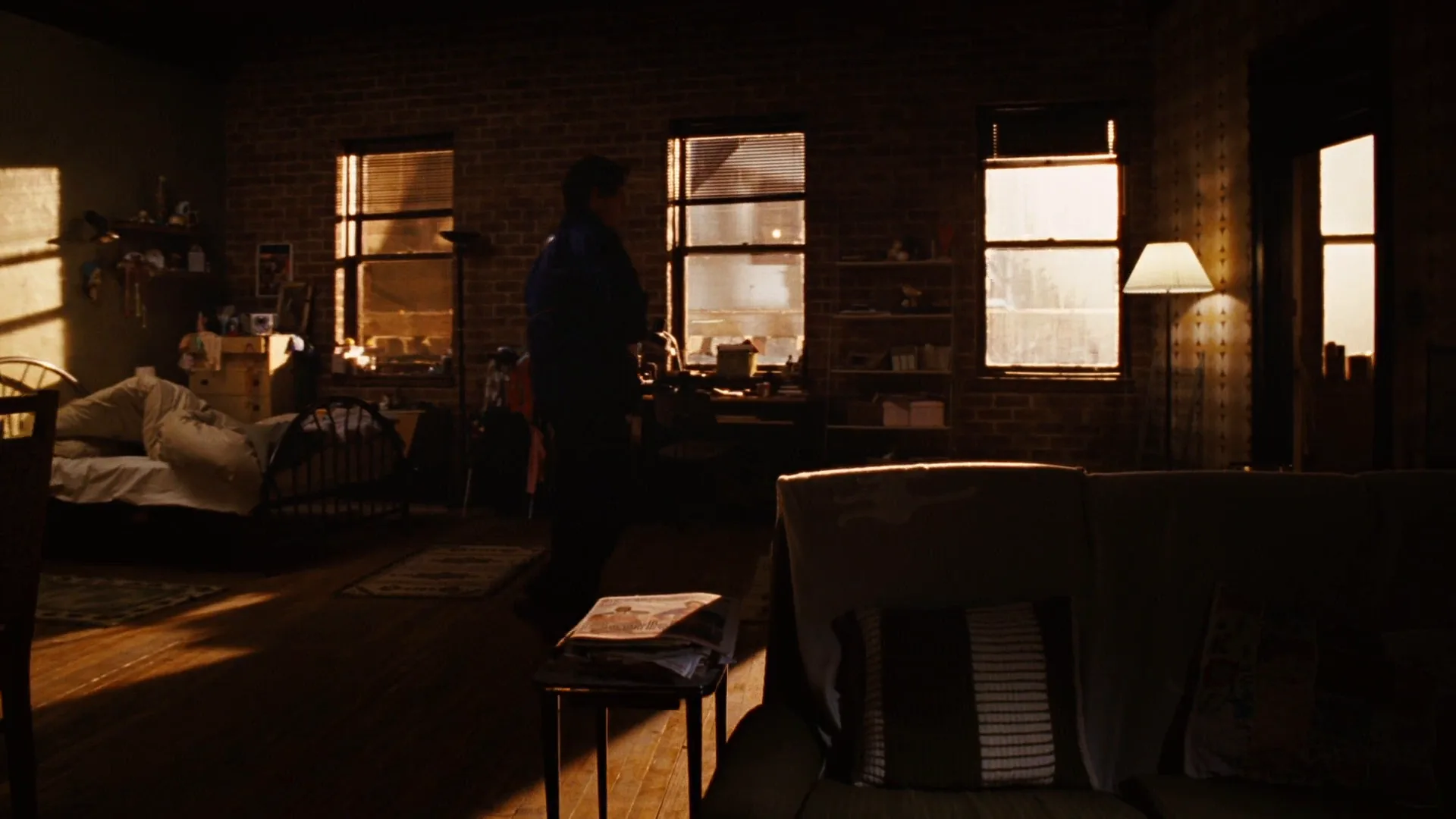
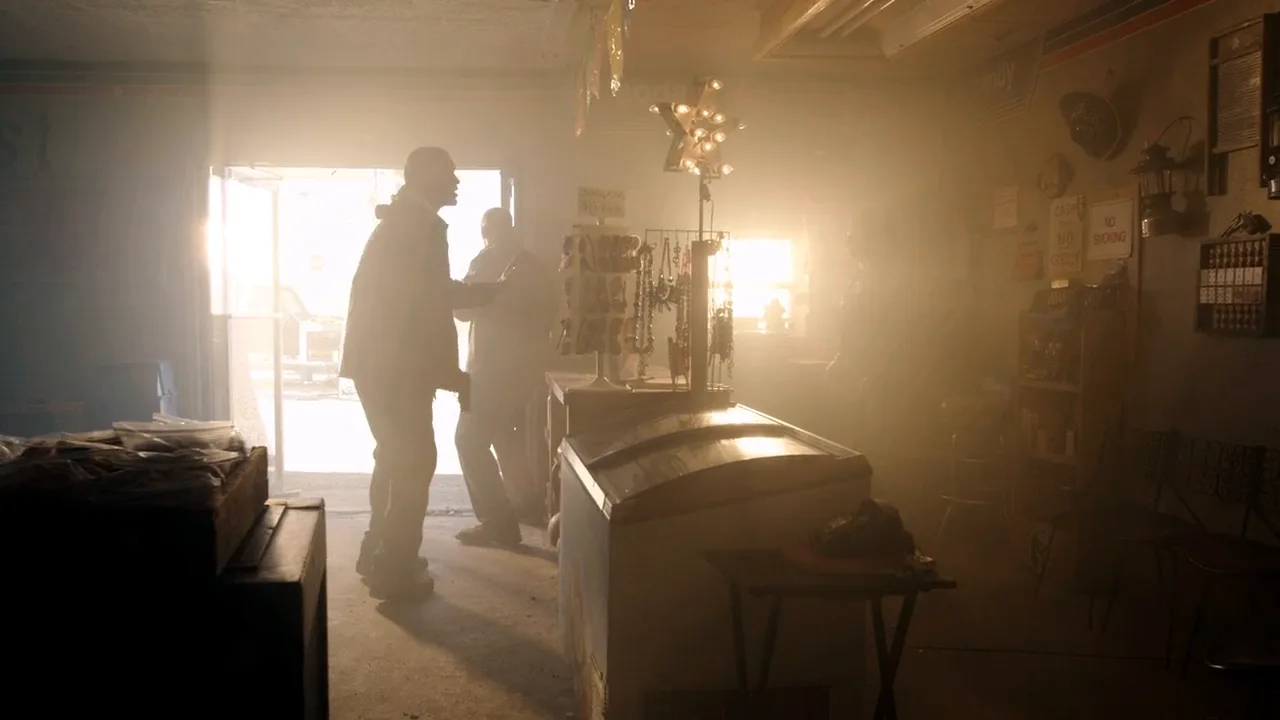
Color Temperature examples in film
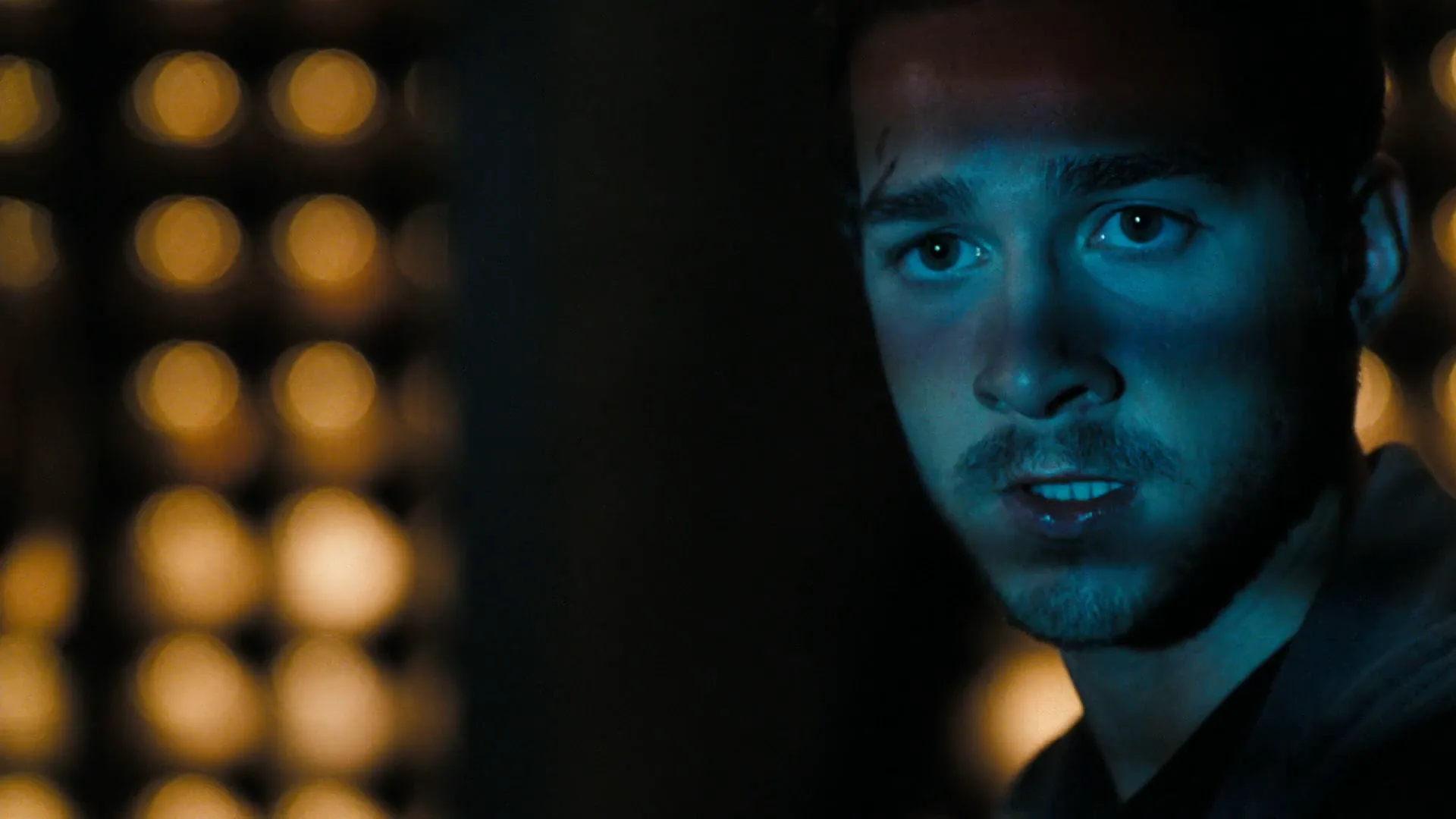
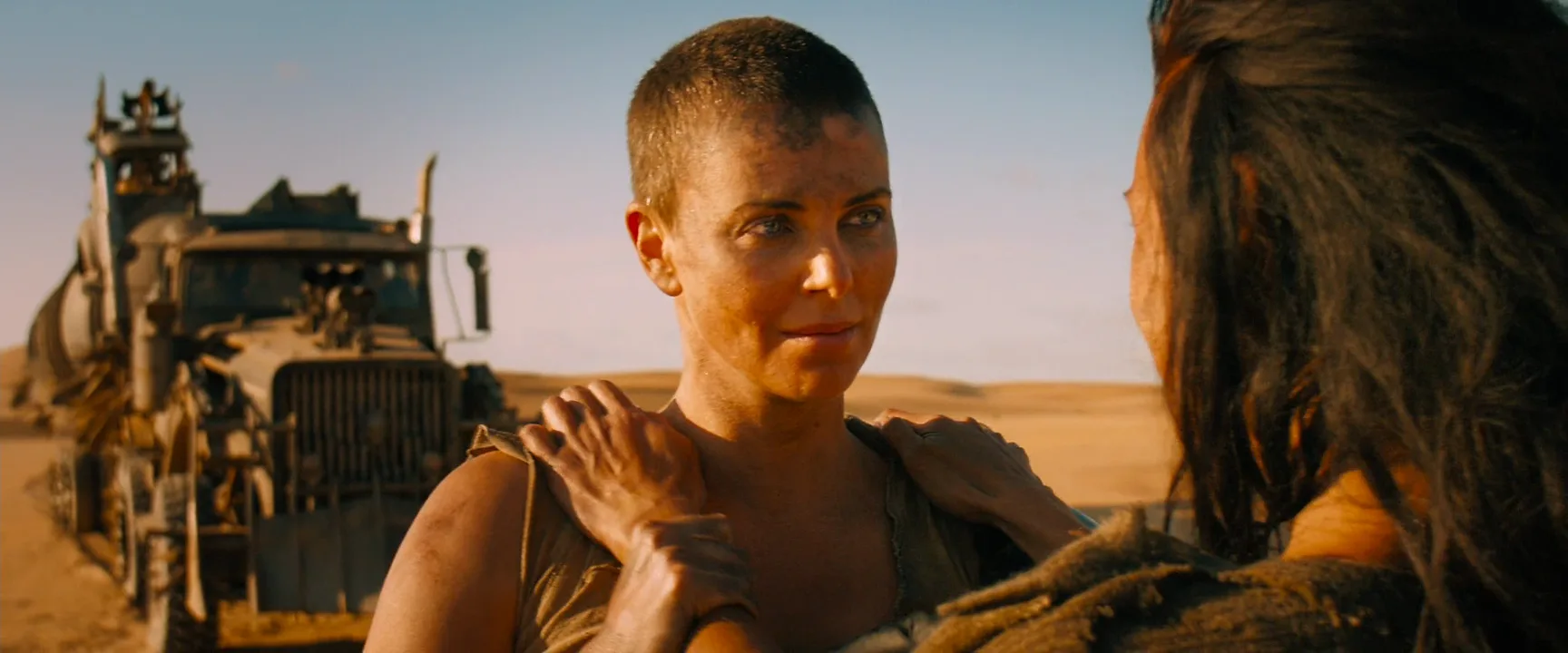
7 framesFind the source of each color: lamp, window or sky. Each sits at a different distance from the white balance.
How to create a color temperature with AI
4 promptsModels apply "warm" and "cool" like a filter over the whole image. To get lighting color temperature, name each source, its kelvin or color, and what it touches. Keep references and takes on one FlashBoards board to compare how warm or cool each take came out. The fourth prompt re-shoots a real film shot from a text description alone, and the original plays next to the result so you can compare.
Cinematic medium close-up at blue hour in a small kitchen: a woman in her late thirties with a cropped silver-dyed bob, freckles and a thin scar through her left eyebrow, in a rust knit sweater, holds a ceramic teapot over a cup. Cool 7000K blue dusk light from a window on camera-left lights the left side of her face; a warm 2700K tungsten pendant lamp above camera-right lights her right cheek and the teapot amber. Clean warm-cool split across her face, 40mm lens at eye level, 35mm film grain.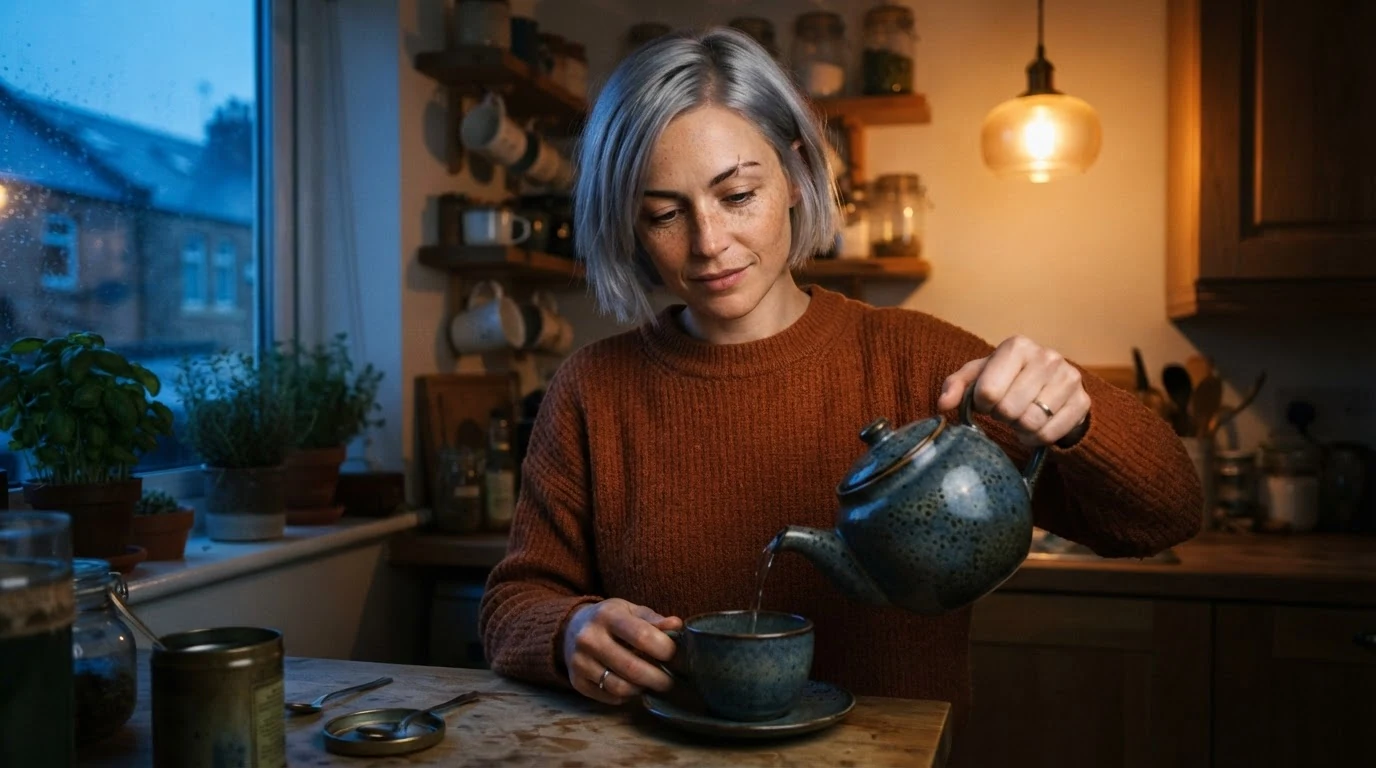
Two named sources with kelvin values, each assigned to one side of the face, make the model light zones instead of tinting the whole frame.
Open FlashBoardsWidescreen night at a rural bus stop: a lanky teenage boy with a shaved head, large ears, a faint mustache and a puffy lime-green jacket stands under the shelter. A blue-green fluorescent tube overhead lights his face cold cyan; behind him two sodium-vapor streetlights glow deep orange on wet asphalt. Dark blue sky, light rain, 28mm lens from waist height, lonely mood.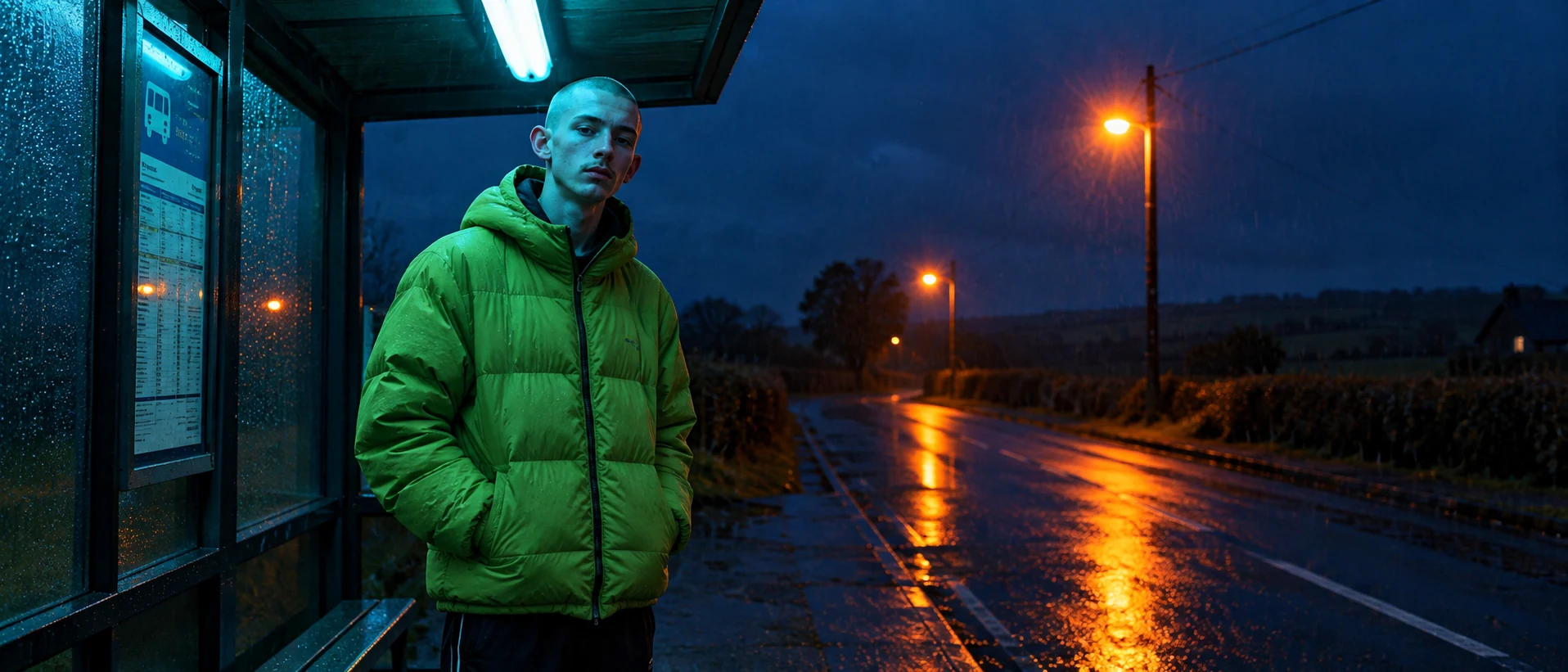
This take flips the layout: cool on the face, warm behind. Naming fluorescent and sodium sources gets their typical green and orange instead of a generic tint.
Open FlashBoardsCamera: slow push-in from medium close-up to close-up, at eye level. Action: She is already pouring tea into the cup, steam rising into the amber lamplight. She sets the teapot down and turns toward the window, so the blue dusk light moves across her face and the warm light slides onto her ear and hair. She holds still, looking out of the window, a warm edge on her cheek.Pouring starts on the first frame, so the clip is alive at once; the head turn moves both color temperatures across her face, and only objects from the start frame are named.
Open FlashBoards{
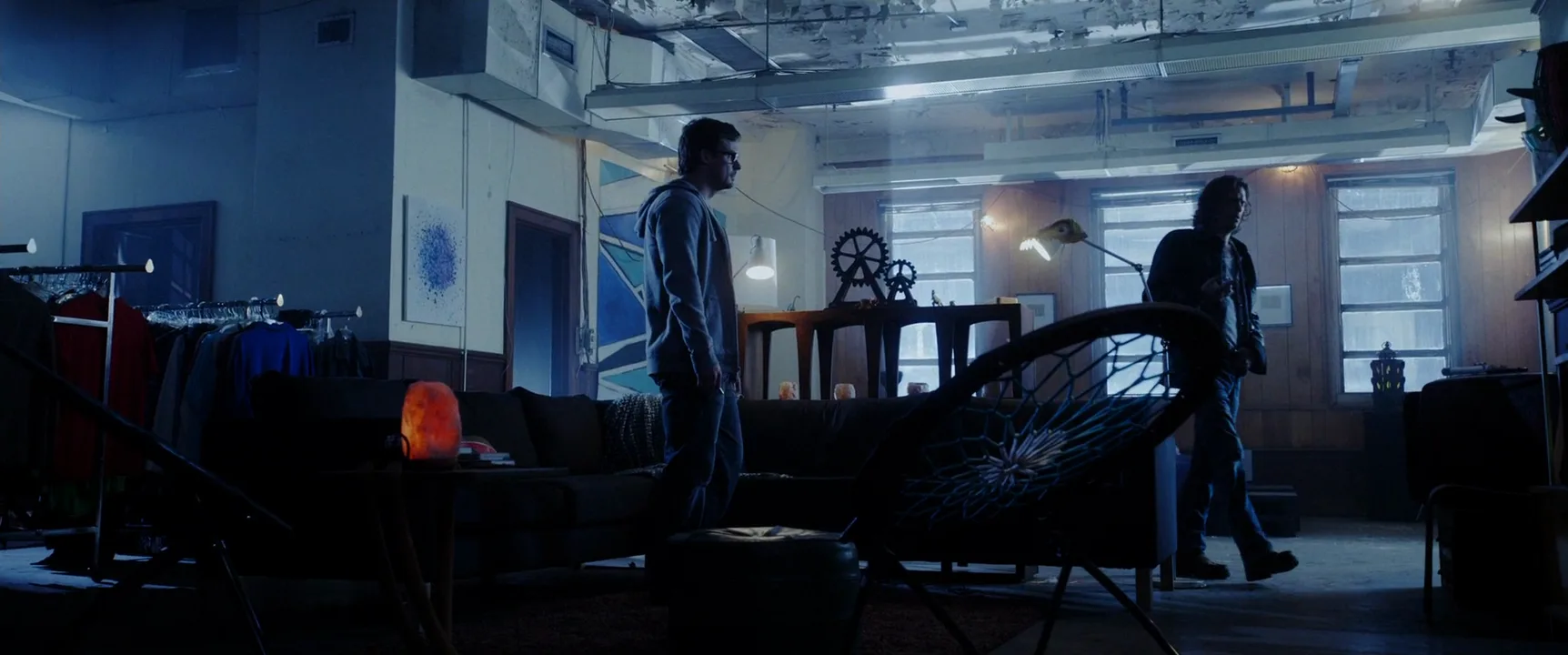
"output": "Full-screen live-action scene from Vice (2015), from its very first frame: one single continuous shot. Clean 2015 digital-cinema look with fine grain, 2.39:1 scope frame. Night in a large converted industrial loft: a wall of tall gridded factory windows at the back glowing pale steel blue, cool blue-white light grazing the high ceiling pipes, blue haze in the air, so the walls, floor and both figures read deep blue and cyan. Only two warm, low-kelvin points: an orange glowing salt-rock lamp on a low table at the left edge of the foreground, and a brass desk lamp throwing a small amber pool over a wooden desk at the back center-right. Deep blue-black shadows, strong warm-cool contrast.",
"characters": {
"S1": {
"name": "James, played by Brett Granstaff",
"look": "slim young man, short dark hair, light gray hooded sweatshirt, dark jeans; a cold blue silhouette",
"voice": "dry, slightly wary, mid-pitch"
},
"S2": {
"name": "Roy, played by Thomas Jane",
"look": "solid man in his forties, shoulder-length wavy hair, stubble, dark canvas jacket over a dark shirt, dark jeans",
"voice": "low, raspy, easygoing"
}
},
"shots": [
{
"shot": 1,
"camera": "low angle from near floor height, wide 24mm lens, whole room in a wide frame; a very slow dolly in from start to end, the framing stays wide; a round black wicker papasan chair in dark silhouette in the middle foreground right of center, the orange salt lamp glowing low at the left edge the whole time",
"action": [
"BEGINNING: alive from the first frame, S1 walks away from camera in the left third, his back to us, arms loose at his sides, heading toward the center; at the back center-right S2 sits bent over the desk inside the amber pool of the desk lamp, his face and hands lit warm orange.",
"THEN: S1 stops left of center and turns his body into profile facing screen right, looking toward the desk; he then stands still, hands hanging at his sides, no nod.",
"THEN: S2 rises from the desk and walks forward and to the right, away from the lamp; as he leaves the amber pool his face and jacket turn cold blue.",
"THEN: S2 stops in the right third, level with S1, and turns to face screen left toward S1; the black chair sits in the gap between them.",
"END: S2 lifts his right hand, palm up, in a loose open gesture toward S1 while he talks, then lets it sink to waist height; S1 stays still in profile, gaze fixed on S2's face; the orange salt lamp on the left and the amber desk lamp behind them remain the only warm points in the blue frame."
],
"dialogue": [
{
"speaker": "S1",
"on_screen": true,
"when": "from the first frame, while S1 walks with his back to the camera, finished as he turns into profile",
"delivery": "dry, half joking, a bargaining tone",
"line": "<d>[English] I take it I'll receive full immunity if you ever come calling again?</d>"
},
{
"speaker": "S2",
"on_screen": true,
"when": "as S2 walks away from the desk lamp toward the right, trailing off",
"delivery": "slow, thinking it over",
"line": "<d>[English] Why don't we...</d>"
},
{
"speaker": "S2",
"on_screen": true,
"when": "after he stops facing S1, with the open hand gesture, running to the last frame",
"delivery": "relaxed, a knowing half smile in the voice",
"line": "<d>[English] Let's just make it one of them things that never really happened.</d>"
}
]
}
],
"sound": {
"ambience": "quiet room tone of a big loft at night, a faint city hum heard from outside, soft footsteps on concrete, a chair creaks as S2 stands",
"speech": "exactly these spoken phrases, each said once, in this order",
"never_spoken": "no narration and no voice-over: the descriptions, performance notes and step words of this prompt are never spoken aloud",
"music": "a film score under the scene, always below the voices: a low, cool synth pad with a slow, muted electronic pulse",
"subtitles": "none"
}
}Remakes the loft shot from Vice (2015), dir. Brian A. Miller, DP Yaron Levy: the low wide angle, the slow dolly in, the blue-balanced room, the orange salt lamp in the foreground and the film's own three lines of dialogue.
The JSON balances the loft cold blue and names only two warm practicals, then walks Roy out of the amber desk lamp into the blue while the corpus lines play, so the warm-cool contrast moves inside one shot.
Open FlashBoardsCommon mistakes
- Filter instead of light. "Warm cinematic look" tints the window orange too. Name each source and the surface it lights.
- Colors turn to mud. Give each color its own side of the face and ask for a clear split.
- Kelvin ignored. Pair the number with a source: "2700K tungsten bulb", not "2700K".
- Color drift in video. Keep both sources in frame and describe the light moving across the face.
Keep the reference frames, prompts and every generated take side by side — images and video in one canvas.
FAQ
4 questionsWhat is the difference between 3200K and 5600K?
3200K is the standard for tungsten film lights; 5600K for daylight, HMIs and daylight LEDs. With the camera at 3200K, tungsten looks white and daylight blue. At 5600K, daylight looks white and tungsten orange.
Is a higher kelvin warmer or cooler?
Cooler. On the kelvin scale, higher numbers look bluer and lower numbers more orange. A 1900K candle is deep amber, 3200K tungsten is warm, 5600K daylight is roughly neutral, and open shade can pass 9000K.
What color temperature is daylight?
Film's daylight standard is 5600K, matching midday sun plus skylight. Real daylight moves: sunrise and sunset drop to roughly 2000–3000K, overcast sky sits near 6500–7500K, and open shade can climb past 9000K.
How do you mix tungsten and daylight in one shot?
Correct or commit. To correct, gel windows with CTO or lamps with CTB so every source matches one white balance. To commit, set white balance near the source lighting the face and let the other color sit in the background or on the shadow side.
Related terms
5- White BalanceCameras & Capture
White balance tells the camera which color of light to treat as neutral white — about 3200K for tungsten, 5600K for daylight — so skin and whites look natural, or are pushed deliberately warm or cool.
- Mixed LightingLighting
Mixed lighting combines sources of different color temperature or spectrum in one scene — window daylight with tungsten lamps, fluorescent with neon — either corrected with gels or kept as a deliberate warm-cool contrast.
- Warm Color PaletteColor
A warm palette is dominated by reds, oranges, ambers and yellows; it usually reads as intimacy, nostalgia, heat, comfort — or, pushed hard, danger and sickness.
- Cool Color PaletteColor
A cool palette is dominated by blues, cyans and cold greens; it tends to read as distance, calm, loneliness, night or clinical control.
- Film LightingLighting
Film lighting is the craft of shaping light for the camera — its direction, quality, color and contrast — to model faces, build space, set the time of day and carry the mood of a scene.
Further reading
Blain Brown, Motion Picture and Video Lighting — chapters on color temperature, gels and color balance. Harry C. Box, Set Lighting Technician's Handbook — correction gels, mireds and color meters.