 FlashBoards Learn
Lighting · Film language
Mixed Lighting
Also called: mixed light, mixed color temperature
Mixed lighting is a scene lit by sources of different color temperature or spectrum at once: blue window daylight with orange tungsten lamps, green fluorescent tubes with neon. Filmmakers either correct it with gels so everything matches, or keep the clash on purpose so warm and cool zones show where the light comes from.
- What it does
- Splits the frame into warm and cool zones tied to real sources, so the light itself shows inside vs. outside, safe vs. exposed.
- Use it when
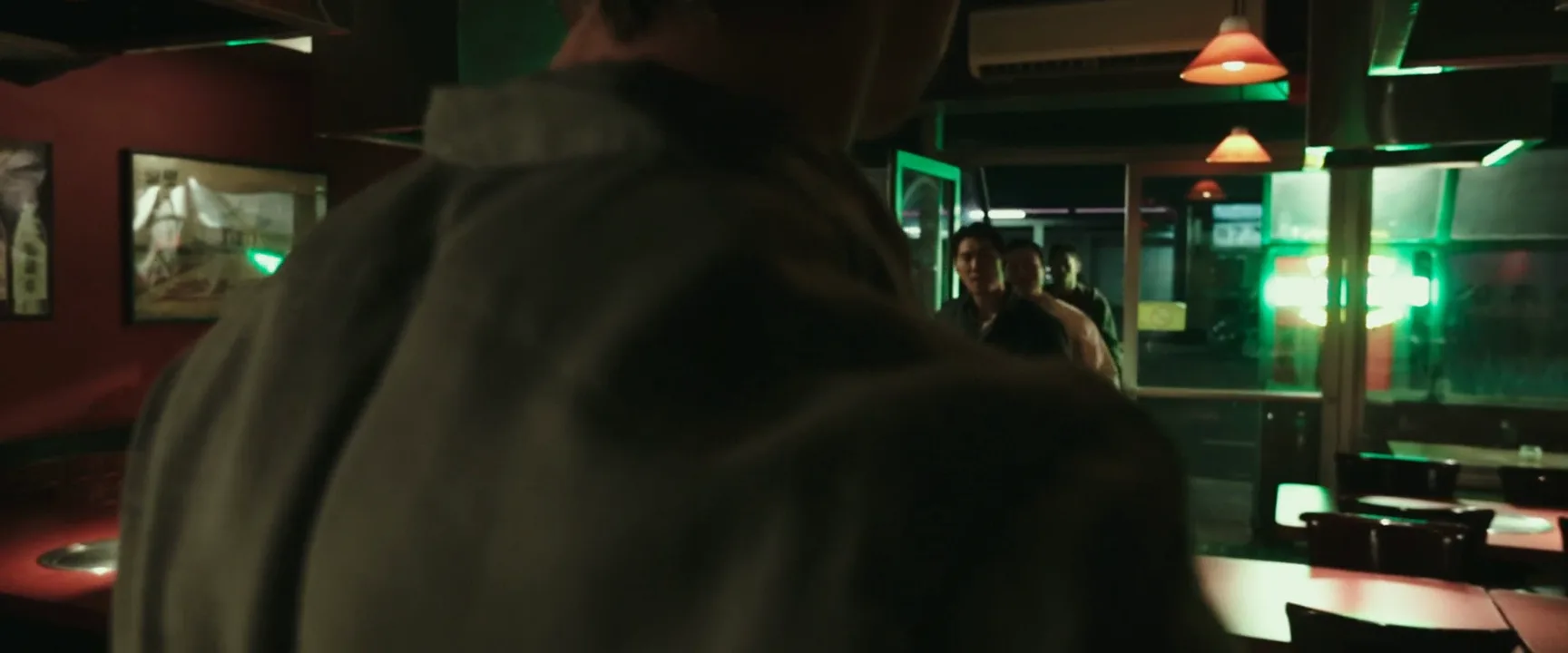
- A scene has windows plus lamps, a night street with neon and sodium light, or an office where fluorescent tubes meet daylight.
- Watch out
- Keep faces under one dominant source; a face split between orange and green reads as a mistake, not a choice.
- Try this prompt
night kitchen, cool blue moonlight through the window on the left, warm orange tungsten lamp above the table, mixed color temperature, 35mm
What is mixed lighting?
Every source has a color: tungsten bulbs around 3200K, daylight near 5600K, sodium streetlights around 2000K with a narrow orange spectrum, fluorescent tubes often with a green spike. When two or more light the same scene, you have mixed lighting.
The camera treats only one of them as white. Set white balance to 3200K and the lamps look neutral while the window turns blue; set 5600K and the lamps glow orange. The kelvin scale itself is covered in color temperature; this page is about several of them sharing a frame.
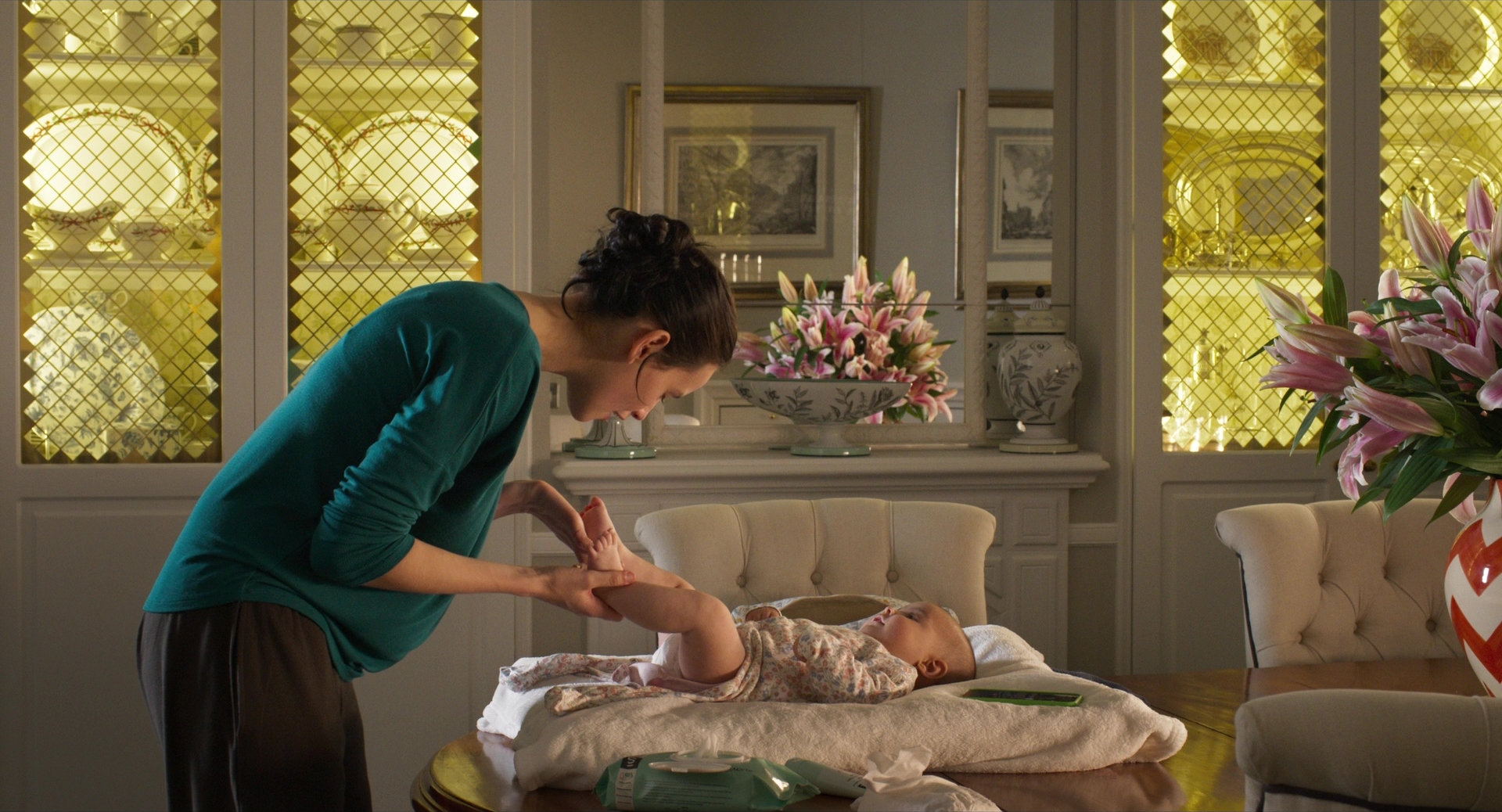
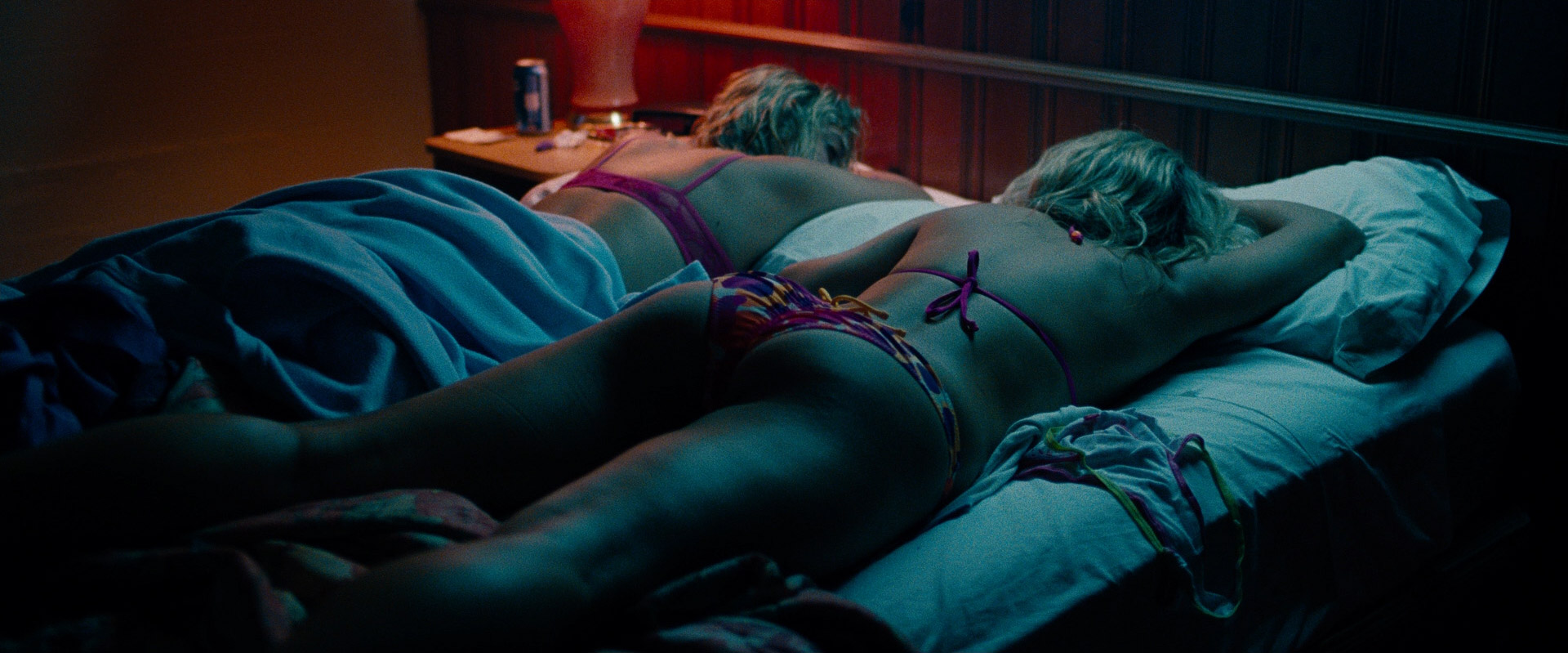
The test: each color zone traces back to a source. A red dress on a blue wall is a palette; a face cool on the window side and warm on the lamp side is mixed light.
Why do filmmakers keep mixed color temperatures?
Single-color light looks controlled; mixed light looks lived-in, because real rooms and streets are mixed before the eye corrects them.
- Geography. Warm interior against blue exterior shows where the walls are. Orange windows at dusk read as shelter; a figure outside in blue reads as an outsider.
- Mood and time. Blue daylight leaking into a lamp-lit room says dawn or dusk. Green fluorescent overheads feel institutional and unloved.
- Separation. A cool window rim behind a warm-keyed face pulls the subject off the background.
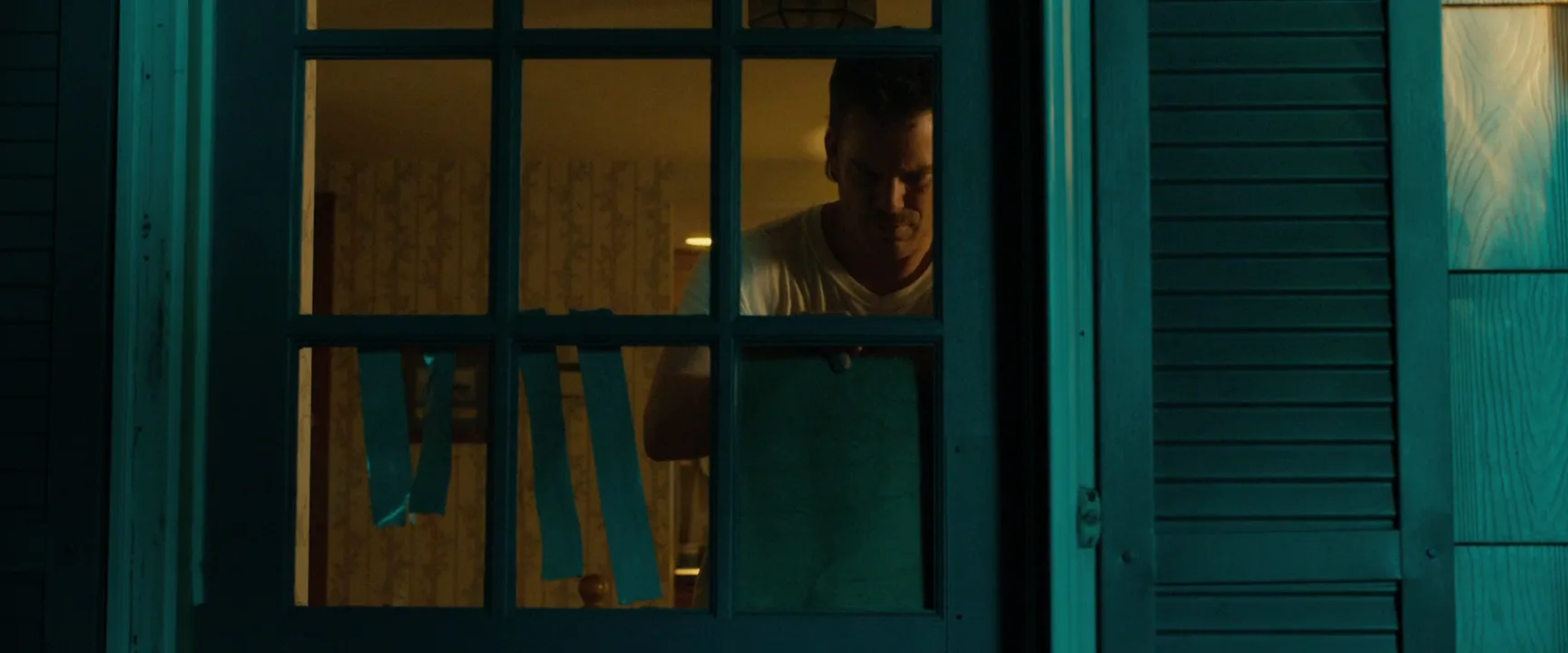
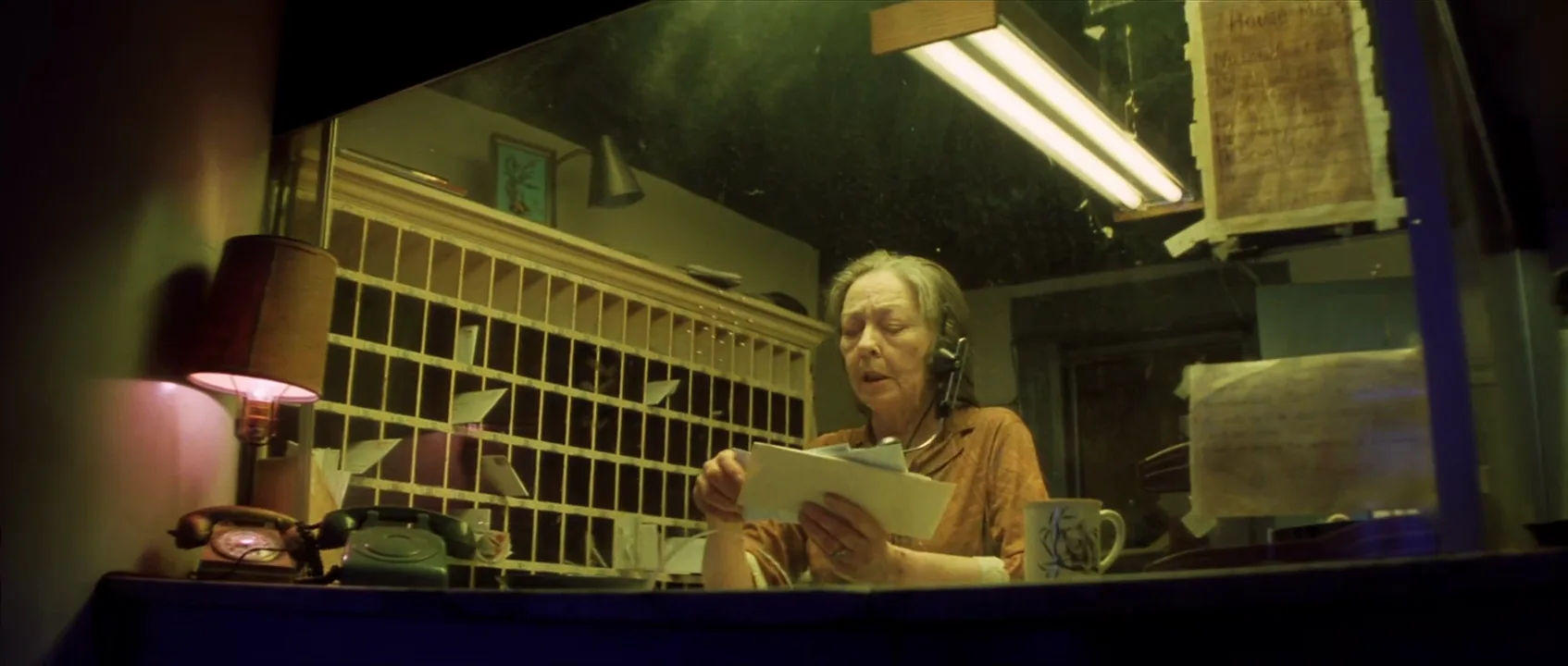
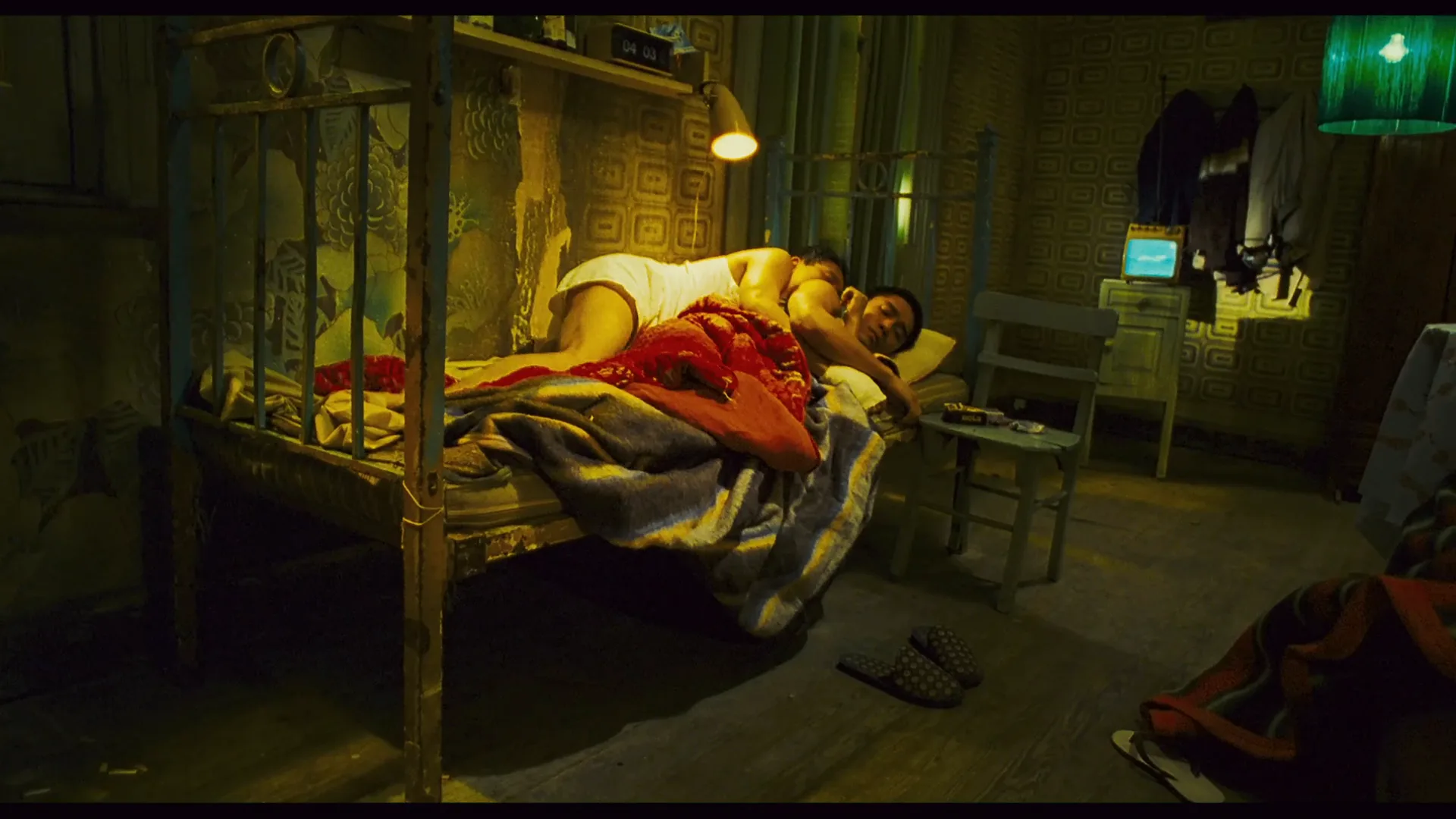
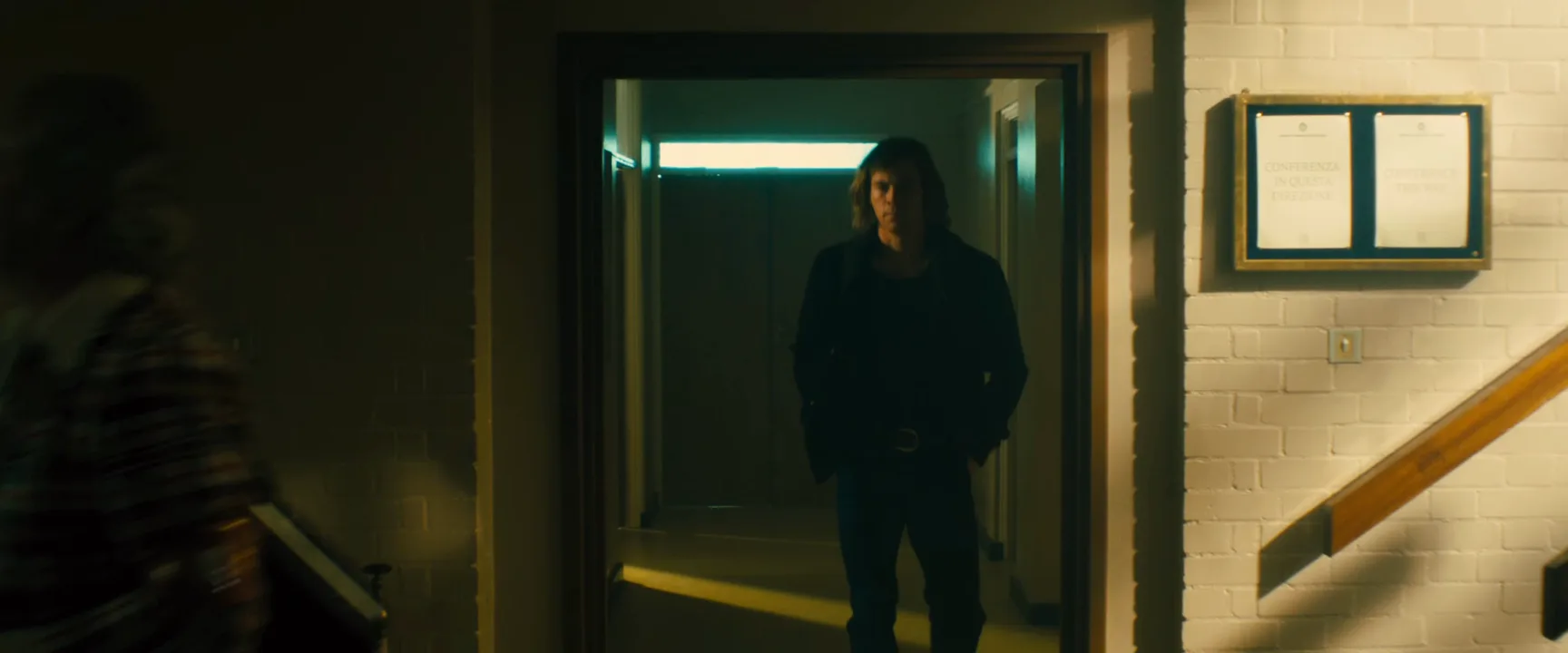
Wong Kar-wai and Christopher Doyle made green fluorescent against tungsten and neon a signature, and Michael Mann's night scenes often play cool green and cyan light against warm practicals.
Correct it or keep it: gels, filters and white balance
Before rolling, decide which source is "white" and whether the others match or clash.
Correct it. Match everything to one standard with lighting gels. Full CTO on a daylight fixture brings it close to 3200K; full CTB on tungsten pushes it toward daylight but eats well over a stop of output. For fluorescent green, add Plus Green to your film lights or Minus Green to the tubes.
Keep it. Set white balance between the sources, around 4300K, so the window goes slightly blue and the lamps slightly amber. Or balance for the faces and let the other source go fully off-color.
Meet halfway. Half or quarter CTO on a window keeps a hint of blue without turning skin cyan.
How to light a mixed-source scene
- Start from the practicals. Put real lamps, signs and tubes in frame first; practical lighting justifies every color you add.
- Give faces one dominant source. One color temperature owns the key side; the other works as rim, fill or background.
- Control the ratio. Keep the off-color source one to two stops under the key so it tints the shadows.
- Separate by depth. Put warm and cool in different planes: warm room in front, blue street through the window.
- Protect it in the grade. Neutralize the dominant source and let the other keep its color.
At night, mix sodium orange, cyan LEDs and neon lighting; indoors, the classic pair is tungsten against daylight or moonlight blue.
Mixed lighting vs. colored lighting
Mixed lighting comes from real sources: daylight, tungsten, fluorescent and sodium are all "white" light with different casts, and each cast means a place and a time. Colored lighting is a design choice: saturated gels or RGB fixtures paint the scene magenta or cyan whether or not a real source would.
A neon sign is both. Ask whether the audience believes the colors come from the world of the scene: if yes, it is mixed light; if they exist purely for mood, it is colored lighting. More techniques live in the lighting hub.
Mixed Lighting examples in film
8 framesIn each frame, trace every color back to its source.
How to create a mixed lighting with AI
4 promptsImage models handle mixed lighting once you name each source and its color; "cinematic lighting" alone gives one flat cast. In FlashBoards, keep film frames and every take on one board to see which version keeps skin clean while the background splits warm and cool. The fourth prompt re-shoots a real film shot from a text description alone, and the original plays next to the result so you can compare.
Cinematic medium shot, night kitchen. A woman in her forties with close-cropped silver hair and a small scar through her left eyebrow, in a mustard cardigan, sits at a wooden table with an open notebook. Cold blue moonlight through a large window on the left draws a bright blue rim along her cheek and silver hair; a warm orange tungsten pendant lamp above the table keys her face. Mixed color temperature, 35mm lens at eye level, film grain.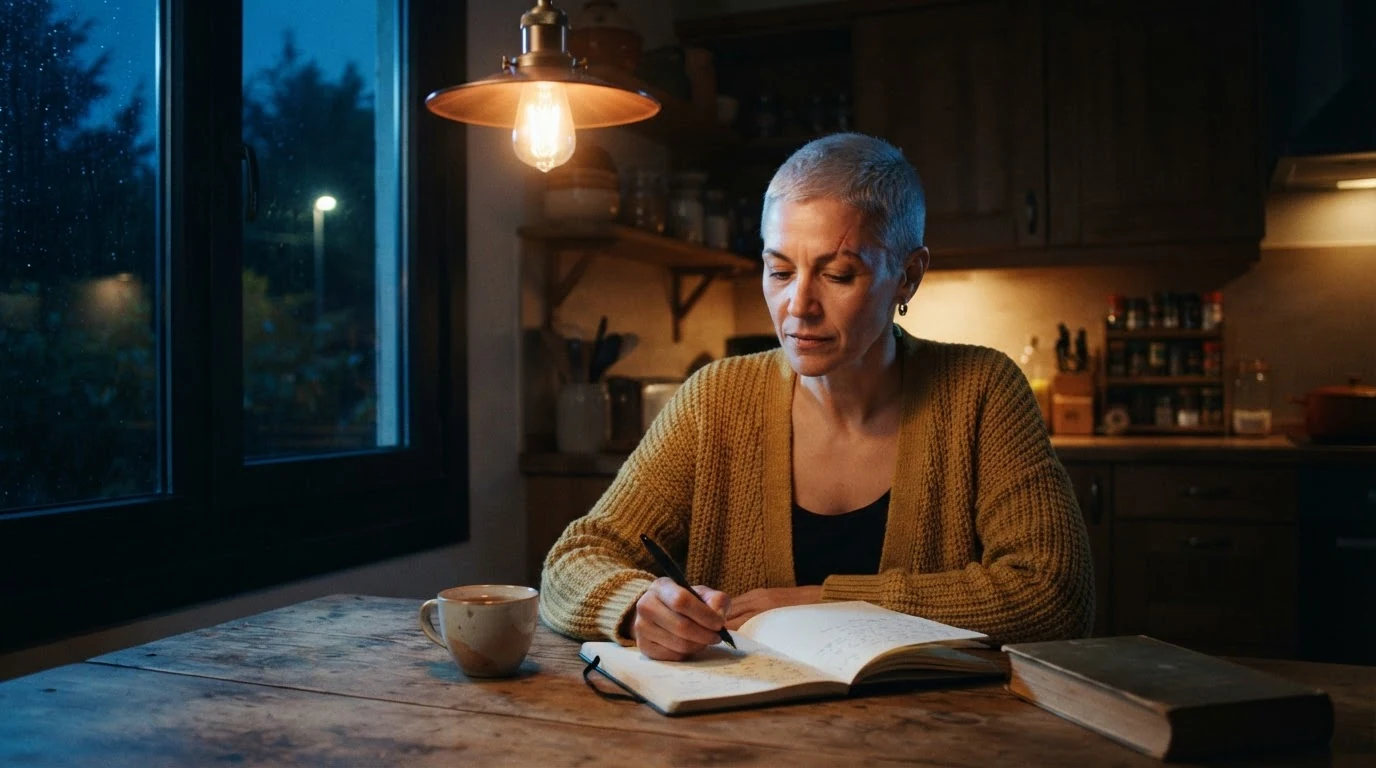
Each source gets a color and a job: blue window as edge, tungsten pendant as key. Naming the lamp as the face light keeps skin warm instead of split half blue.
Open FlashBoardsWide cinematic shot of an all-night laundromat seen from the street. Inside, washing machines under green-tinged fluorescent tubes; a young man with a shaved head and freckles, in a red windbreaker, folds towels alone. Outside, the wet sidewalk glows orange under a sodium streetlight. Mixed lighting, dark blue sky. 28mm lens, chest height.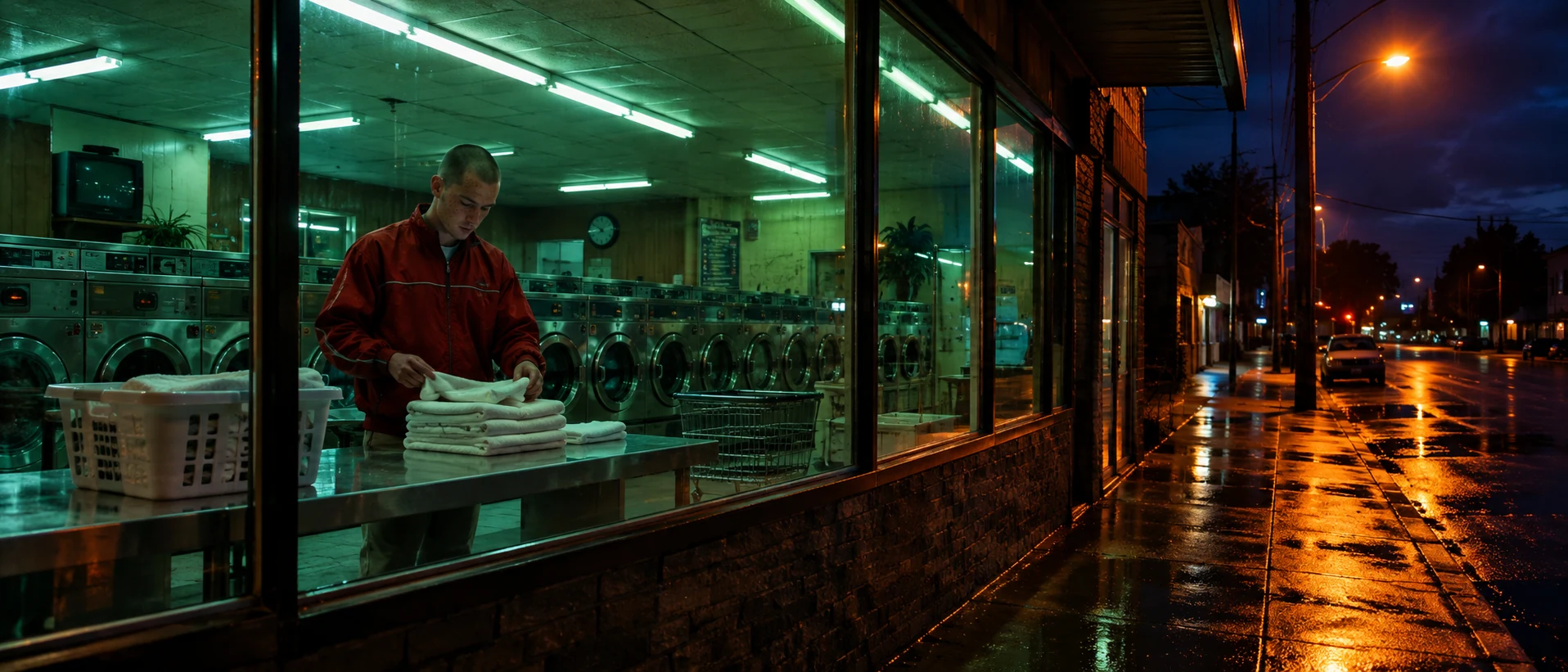
The second take moves to fluorescent against sodium, the classic urban pair; the shop window keeps each color in its own plane.
Open FlashBoardsCamera: slow lateral dolly from left to right at eye level. Action: The woman is already turning a page of the notebook under the warm pendant lamp. She lifts her head toward the window, so the blue moonlight slides across her face while the orange lamplight stays on her hair and hands. She leans back and rests her pen on the notebook.The page turn starts on frame one, so the clip is alive at once; the head turn moves her face between the two sources, and only objects from the start frame are named.
Open FlashBoards{
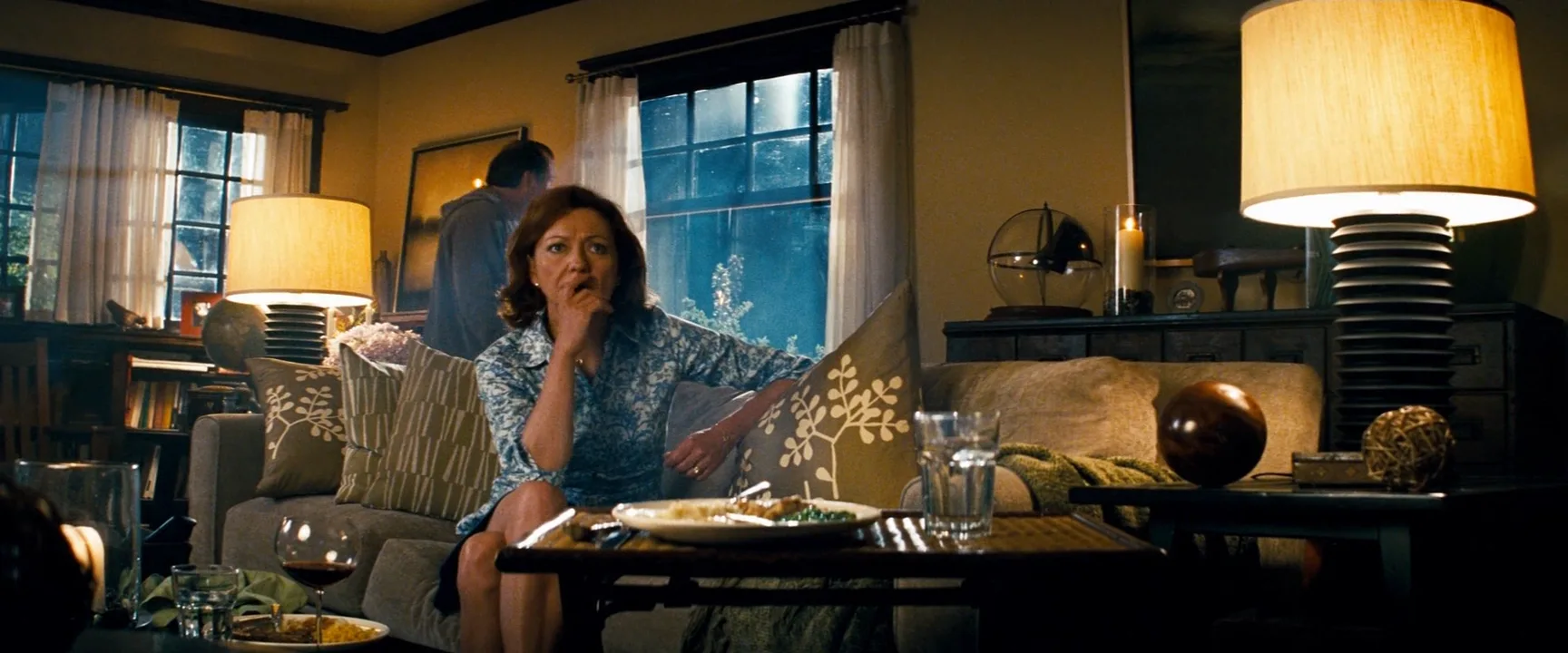
"output": "Full-screen live-action scene from Transformers (2007) from its very first frame: one continuous locked-off shot. Glossy 2000s 35mm anamorphic look, suburban family living room in the evening. Mixed color temperature: warm orange tungsten from two table lamps and a row of lit candles fills the room and the woman's face, while the tall paned windows behind her glow cold saturated blue with dark trees outside. Amber walls against blue glass, deep shadows under the furniture, fine film grain.",
"characters": {
"S1": {
"name": "Judy Witwicky, played by Julie White",
"look": "woman in her forties, shoulder-length wavy auburn hair, long-sleeved blue-and-white floral blouse, dark skirt",
"voice": "silent in this shot"
},
"S2": {
"name": "Ron Witwicky, played by Kevin Dunn",
"look": "stocky balding man in his fifties, gray zip jacket open over a white polo shirt with navy horizontal stripes, gray trousers",
"voice": "silent in this shot"
},
"S3": {
"name": "Sam, played by Shia LaBeouf",
"look": "never seen: only his voice is heard from off-screen",
"voice": "young man's voice, fast and agitated, heard from off-screen"
}
},
"shots": [
{
"shot": 1,
"camera": "locked-off, low angle from behind a cluttered coffee table, wide lens, wide shot of the whole living room. S1 sits on a pale sofa slightly left of centre, mid-ground. A large glowing table lamp with a wide pale drum shade on a ribbed dark base stands in the right foreground; a smaller glowing lamp stands behind the sofa on the left; lit candles on a sideboard behind; two tall paned windows filled with blue light behind S1. The framing stays exactly the same to the last frame.",
"action": [
"BEGINNING: alive from the first frame, S1 sits upright on the sofa, her left arm stretched along the sofa back to screen right, her right hand in her lap, head turned slightly to screen right, eyes fixed on something off-screen right, lips slightly parted, very still; S2 stands far back at the left edge of frame beside the small lamp, his back half to the camera, lit blue by the left window.",
"THEN: S2 starts walking slowly from screen left to screen right behind the sofa, head in profile, looking off to screen right; S1 lifts her right hand and presses her knuckles to her mouth, elbow propped, her eyes staying off-screen right.",
"THEN: S2 passes directly behind S1's head, his silhouette dark against the blue window, his face catching orange lamplight; S1 does not turn to him, her hand stays at her mouth, her brow tightens.",
"THEN: S2 keeps walking to the right side of the window, still in profile, looking off-screen right, then turns his body toward the camera.",
"END: S2 takes a step toward the camera and stops just behind the sofa on screen right, a little behind S1's shoulder, looking down past her toward the room; S1 stays motionless with her knuckles at her mouth, staring off-screen right, worried."
],
"dialogue": [
{
"speaker": "S3",
"on_screen": false,
"when": "from the first frame, already mid-sentence, heard from off-screen while neither person on screen moves their lips",
"delivery": "fast, defensive, a little breathless",
"line": "<d>[English] Okay, I saw it. The UFO landed right here and now it's gone.</d>"
},
{
"speaker": "S3",
"on_screen": false,
"when": "right after the first line, while S2 walks behind the sofa; nobody on screen moves their lips",
"delivery": "louder, indignant",
"line": "<d>[English] My moped's under there, man! Who's gonna pay for that?</d>"
}
]
}
],
"sound": {
"ambience": "quiet living-room tone, soft footsteps on carpet, a faint evening breeze heard from outside",
"speech": "exactly these spoken phrases, each said once, in this order, all from off-screen",
"never_spoken": "no narration and no voice-over: the descriptions, performance notes and step words of this prompt are never spoken aloud",
"music": "a film score under the scene, always below the voices: low uneasy strings with a soft suspended pulse",
"subtitles": "none"
}
}Remakes the living-room shot from Transformers (2007): the prompt kept the locked-off low wide frame, the big lamp in the foreground, blue windows behind, Ron pacing left to right behind Judy, and Sam's two off-screen lines word for word.
The prompt gives every source a color and a job: tungsten lamps and candles key the room and Judy's face, the windows stay blue behind her. Ron's walk carries him through both zones, so the mix reads in motion, while Sam's lines stay off-screen and the score sits low.
Open FlashBoardsCommon mistakes
- Models average the sources into one amber or teal cast. Name each source, its color and what it lights.
- Faces split evenly warm and cool look ill. Say which source keys the face and which only rims.
- "Neon" alone takes over the image. Ask for "a small neon sign in the background" and keep lamps in the foreground.
- In video the mix can drift. Keep the sources in frame and move the subject between them.
Keep the reference frames, prompts and every generated take side by side — images and video in one canvas.
FAQ
4 questionsWhat is mixed lighting in film?
Mixed lighting means a scene is lit by sources with different color temperatures or spectra at once, such as window daylight and tungsten lamps. A camera balances for one white point, so the other sources record warmer, cooler or greener. Cinematographers either correct the mismatch with gels or keep it to separate spaces and set a mood.
How do you fix tungsten and daylight mixed together?
Pick one standard and gel the other sources to it: CTO on windows and daylight fixtures to work at 3200K, or CTB on tungsten lamps to work at 5600K, accepting the light loss. Or set white balance around 4300K so neither source looks broken, and refine in the grade.
Is mixed color temperature lighting a mistake?
Only when it looks accidental. Orange on one cheek and green on the other at equal strength reads as a mistake. One dominant source on the face, with the other color in the background, through a window or as a rim, is a standard look in feature films.
What white balance should I use for mixed light?
Balance for the source lighting the face so skin looks natural, and let the others drift warm or cool. If both matter, pick a value between them, around 4000–4500K for tungsten plus daylight. RAW or log keeps room to shift later, but cannot separate two sources hitting the same surface.
Related terms
3- Color TemperatureLighting
Color temperature describes how warm or cool a light source is, measured in kelvin: candlelight around 1900K, tungsten about 3200K, daylight about 5600K, overcast and shade higher still.
- White BalanceCameras & Capture
White balance tells the camera which color of light to treat as neutral white — about 3200K for tungsten, 5600K for daylight — so skin and whites look natural, or are pushed deliberately warm or cool.
- Lighting GelsLighting
Gels are sheets of heat-resistant colored film clipped over lamps: correction gels (CTO, CTB) match sources to tungsten or daylight, while saturated gels paint a scene red, magenta or blue.
Further reading
Blain Brown, Motion Picture and Video Lighting — chapters on color balance, gels and working with mixed sources. Harry C. Box, Set Lighting Technician's Handbook — correction gels, window gelling and fluorescent green.