 FlashBoards Learn
- Learn
- Post-Production & VFX
- Superimposition
Post-Production & VFX · Film language
Superimposition
Also called: superimpose, image overlay
Superimposition in film layers one image over another so both are visible at once: a face over a landscape, a ghost in a room, a memory over the present. Made in camera, on the optical printer or in compositing, the overlap tells the viewer the two images belong together.
- What it does
- Shows two images, places or times in the same frame at once, so the viewer reads them as connected.
- Use it when
- You need a memory, vision, ghost or inner state on screen without cutting away from the face.
- Watch out
- Two busy, equally bright layers turn to mush; one layer must be darker or simpler than the other.
- Try this prompt
Film still, a close-up face at half opacity superimposed over a night harbor, both images clearly visible, 35mm grain
What is superimposition in film?
Superimposition is any image in which two or more pictures share the frame at once, each partly transparent. The word names the result, not the tool. Georges Méliès did it in camera in The One-Man Band (1900), rewinding the negative and exposing it again until he became a whole band. Studio films later did it on the optical printer, rephotographing two strips of film onto a third. Today it is a layer with lowered opacity or a screen blend.
So it is not only a post-production effect; it runs through the whole chain. The constant is additive light: bright areas of either image win, dark areas let the other image through.
Why do filmmakers use superimposition?
It says these belong together without a cut.
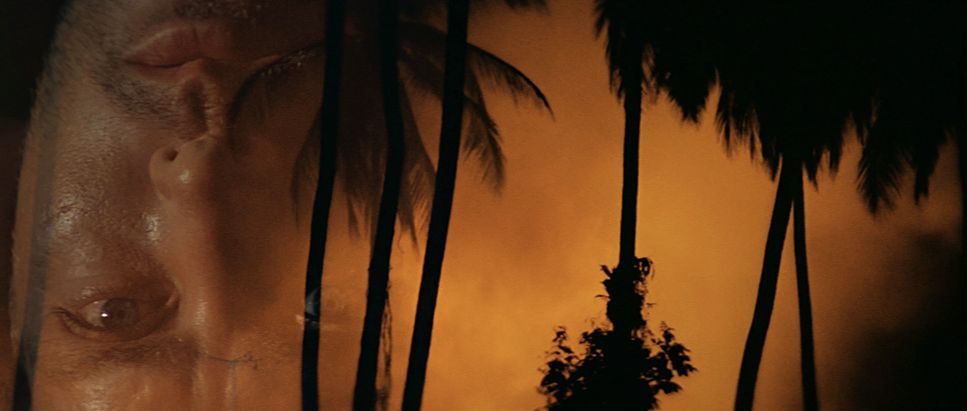
- Inner state. The opening of Apocalypse Now (1979) lays Willard's upside-down face over burning palm trees, so the jungle plays as what fills his head.
- Memory and vision. A face over the place it remembers is the fastest way into a flashback or a dream.
- The uncanny. A translucent figure reads as present and absent at once. Near the end of Psycho (1960), a skull flickers over Norman's face.
- Parallel action. Title sequences and montages stack newspapers, maps and faces.
The eye treats the brighter, sharper layer as real and the fainter one as thought.
How to create a superimposition
Plan the layers as a pair. Match lens family and eyelines between base and overlay. Put the overlay's key element where the base is dark: a face over black sky, not a white wall.
In camera. On film, expose each pass about one stop under so the sum isn't blown out. For motion, a 50/50 beam-splitter glass at 45° in front of the lens mixes a lit subject into the scene live, the old stage-ghost trick.
In post. Shoot overlay plates against black so a screen or add blend drops the background. Start at 30–50% opacity for a ghost, 60–80% for a hard vision. Feather the edges with a mask, grade both layers toward one palette, and hold the overlap 2–3 seconds or more; shorter reads as a dissolve.
Superimposed titles and graphics
A "super" is also text over picture: a place, a date, subtitles. The text is the bright layer, so keep the image under it calm. Photos, drawings or type layered with live action as a style become mixed media.
Superimposition vs. double exposure: what's the difference?
Double exposure names a capture method: two exposures on one frame, in camera or imitated with a blend. Superimposition names the result of layering images by any means, including titles, optical printing and compositing. Every double exposure is a superimposition; not the other way round.
A dissolve is a superimposition that moves in time. Hold its midpoint and you have a superimposition; let it resolve and it was a transition.
Superimposition in motion
5 clipsEach clip keeps two images on screen at once, either as a double exposure or as a dissolve that stops halfway and holds. Watch which layer arrives second, how long both stay visible, and where the dark areas of one let the other through.
Superimposition stills
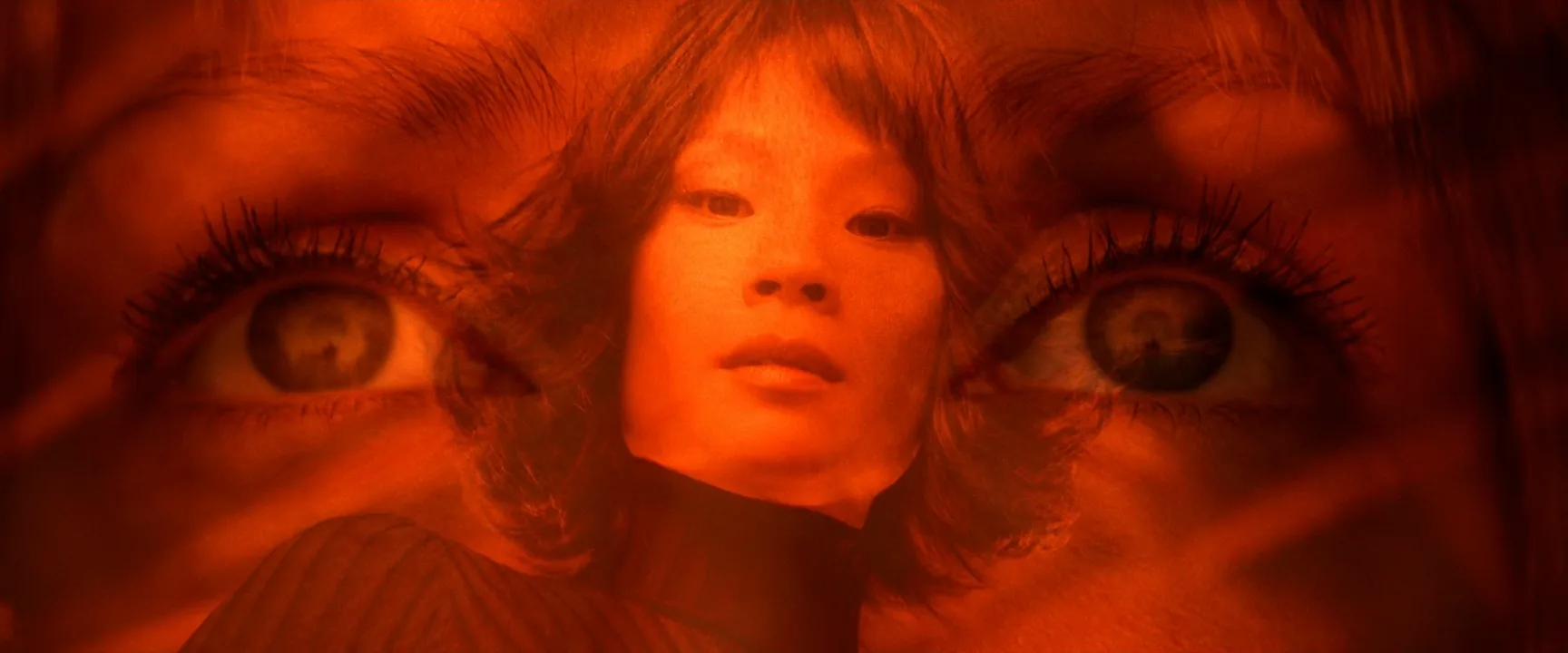
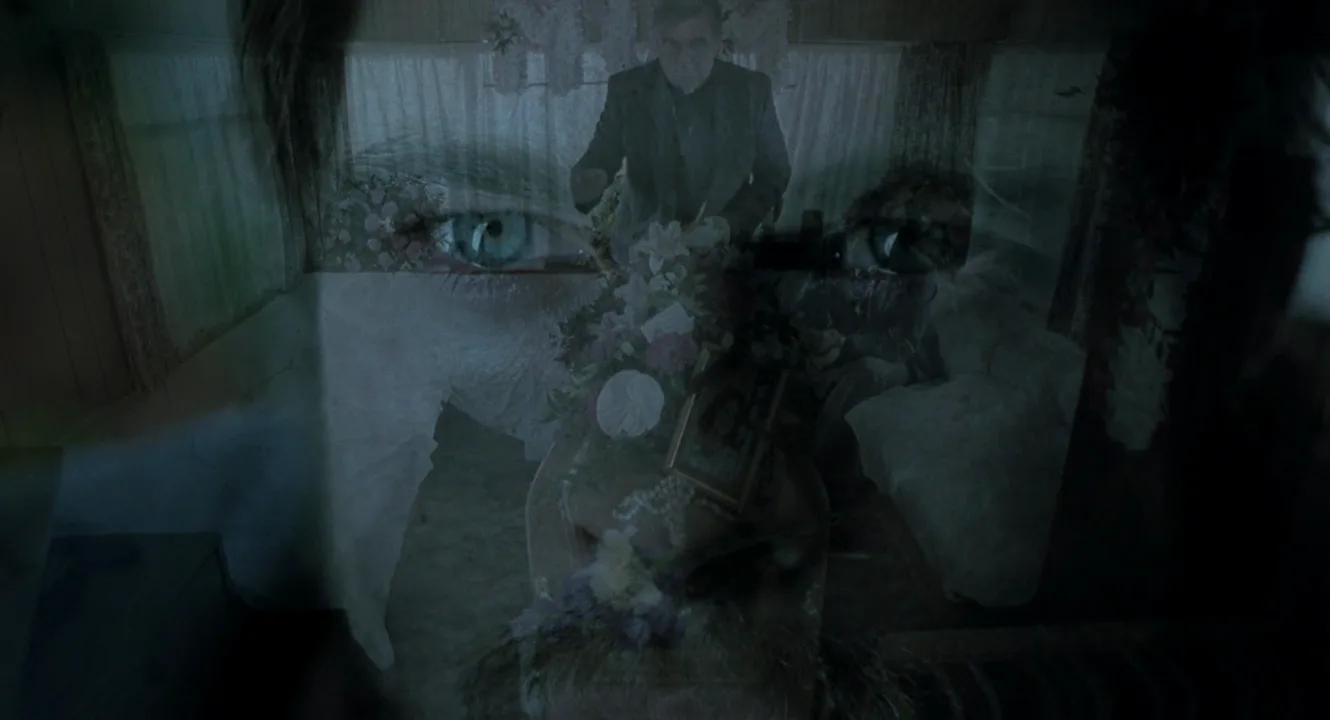
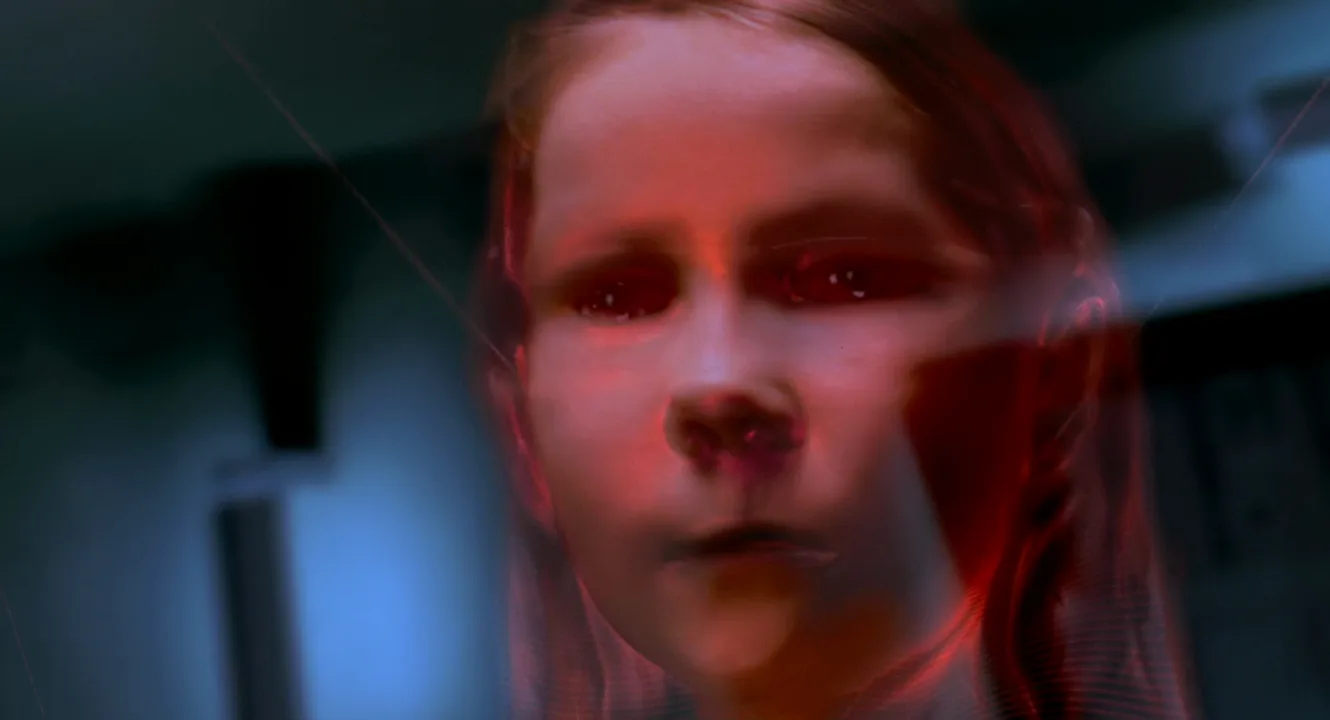
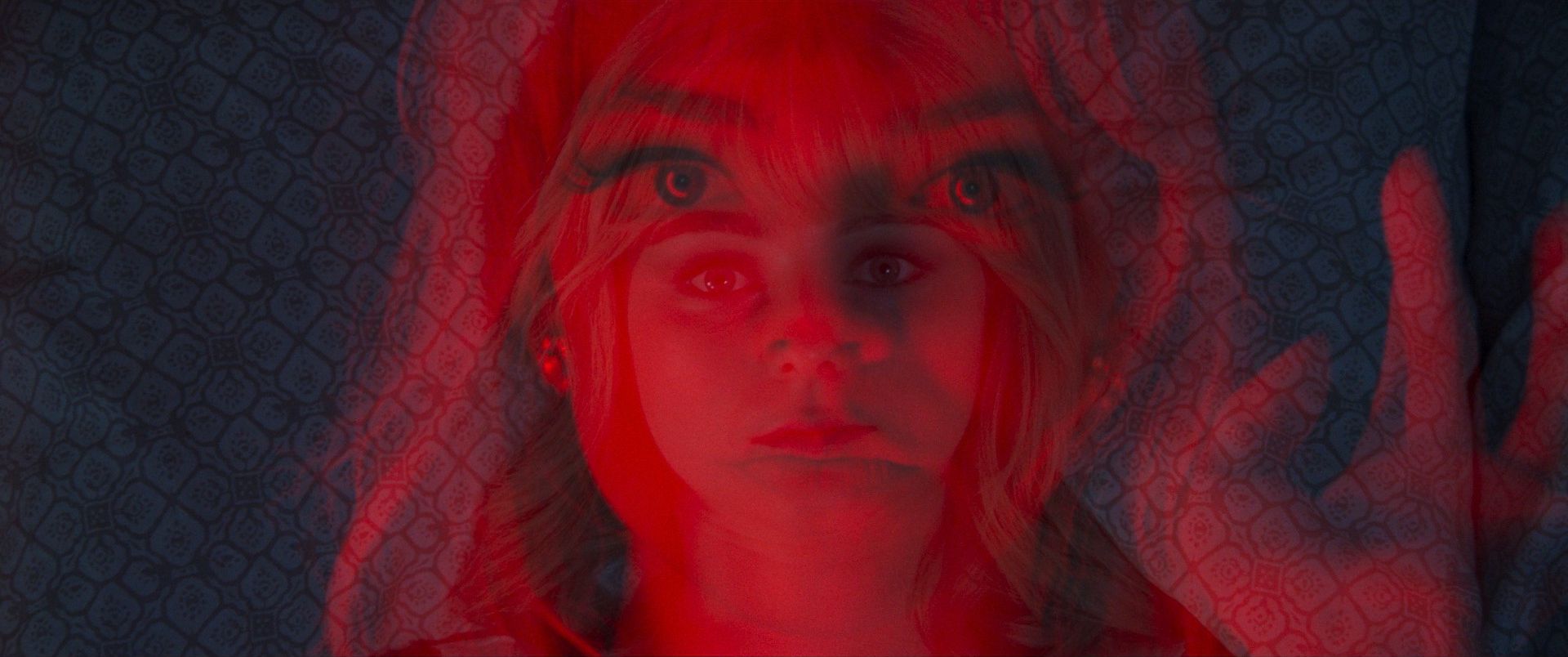
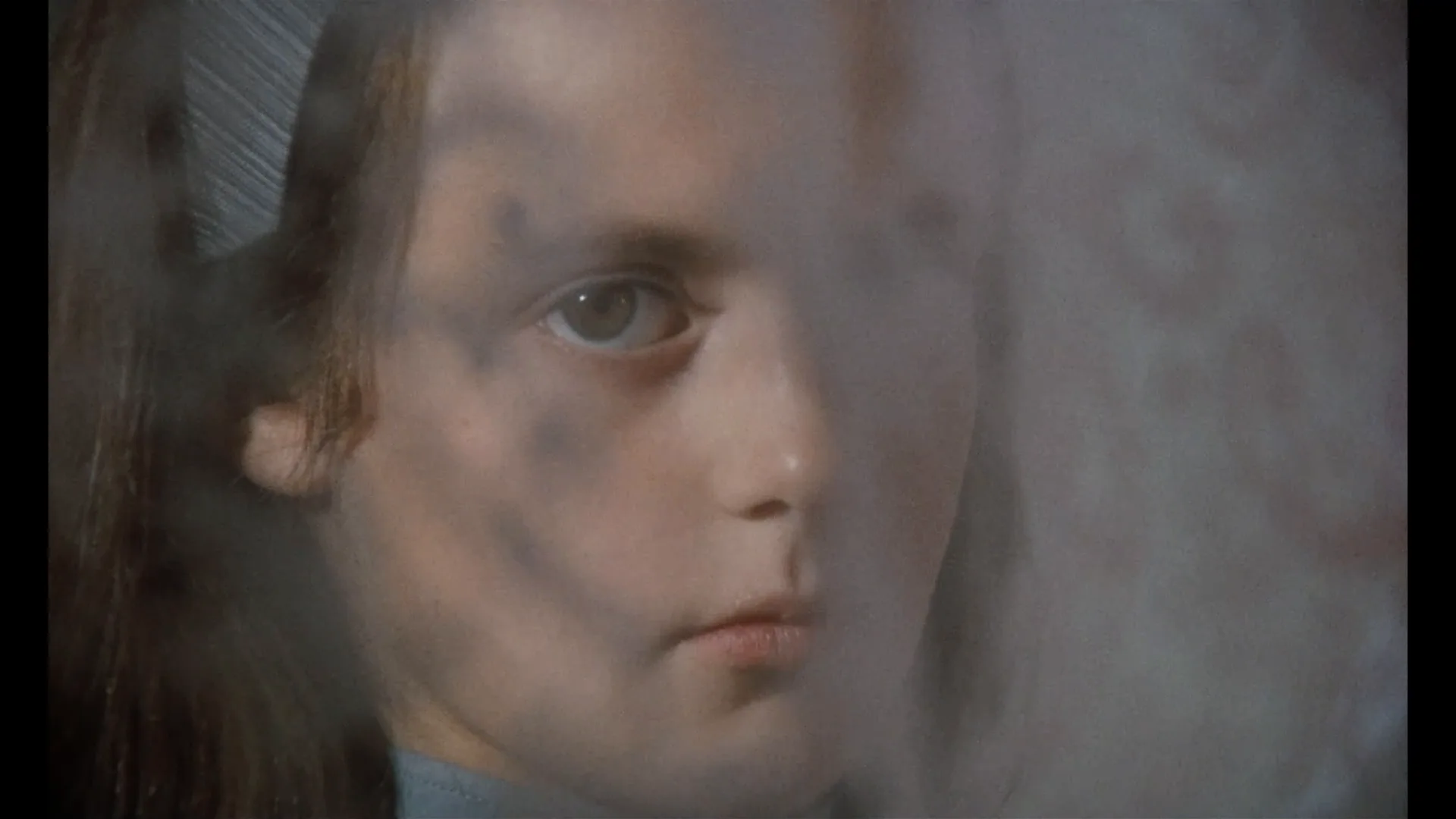
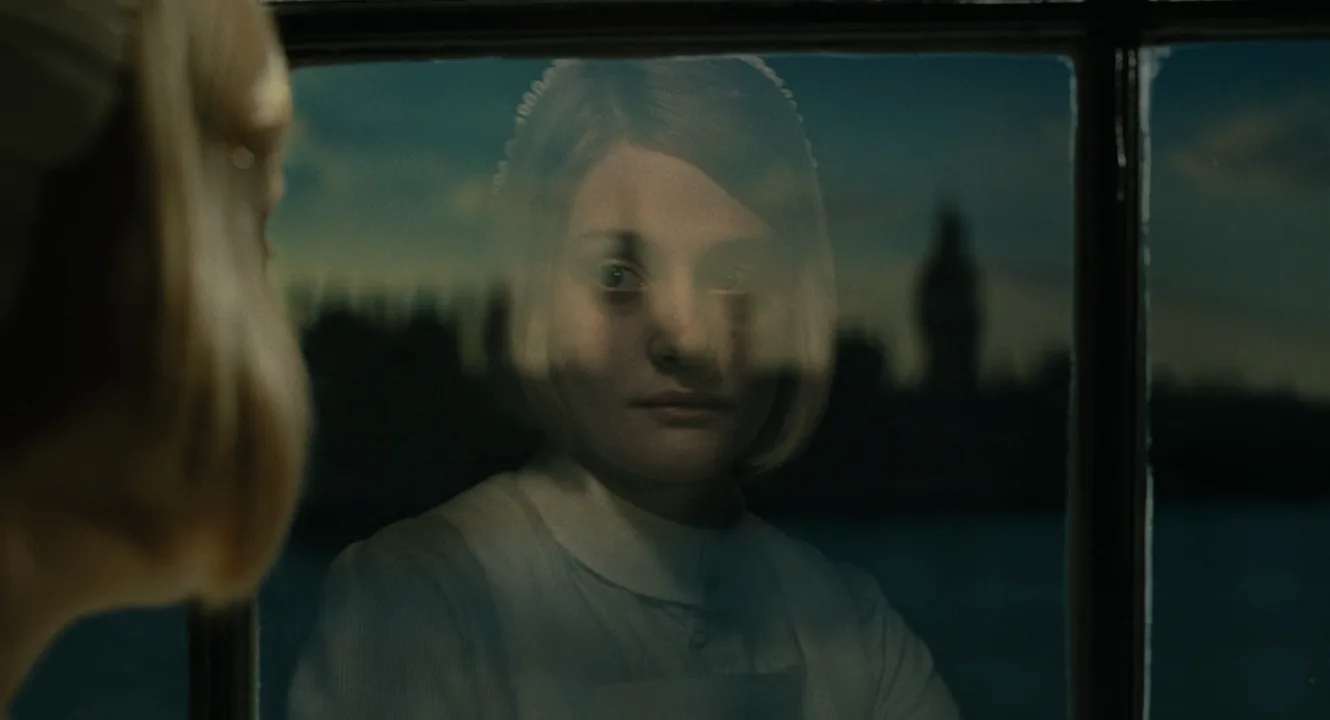
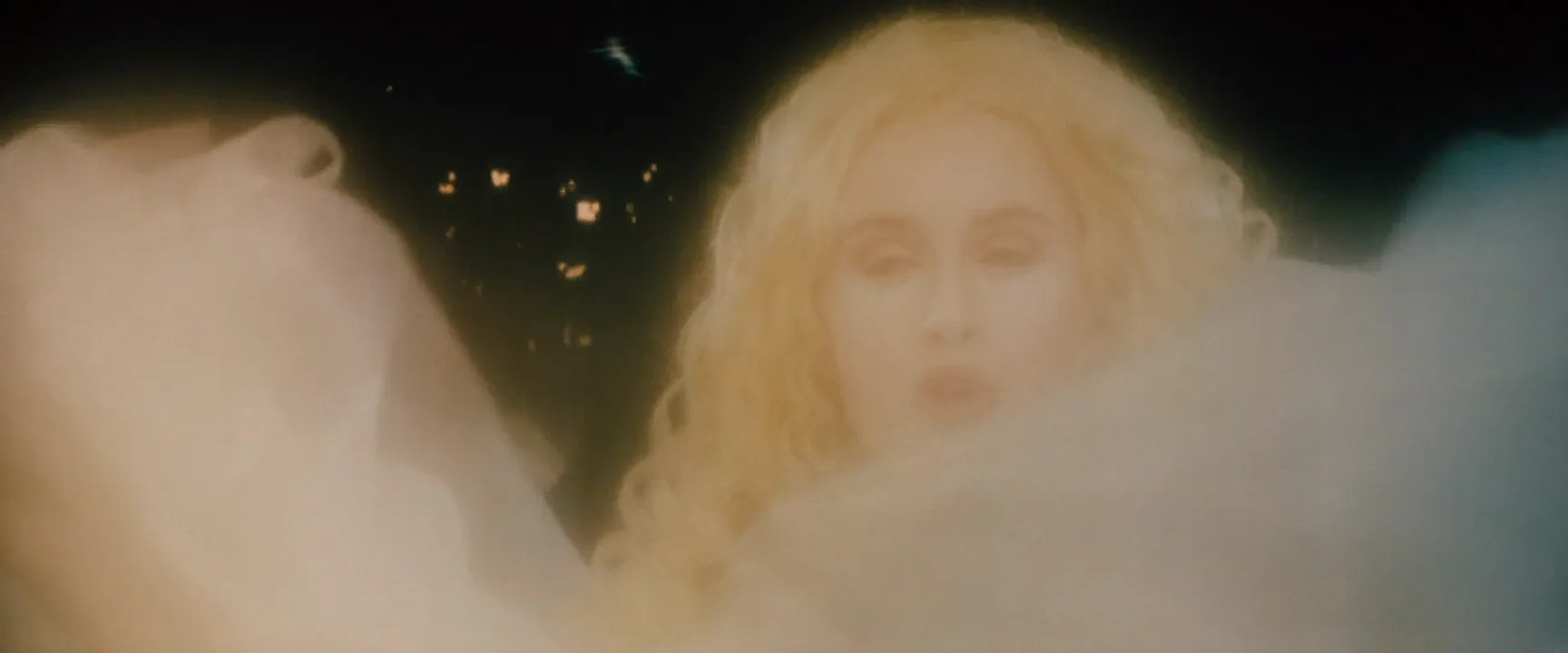
8 framesTwo images share each frame. Notice which layer is brighter and where dark areas let the other through.
How to create a superimposition with AI
4 promptsImage models know "superimposed" but often fuse two images into one hybrid. Name both layers, say which is fainter, and put the overlay where the base is dark. Keep references and takes on one FlashBoards board to compare them side by side. The fourth prompt re-shoots a real film shot from a text description alone, and the original plays next to the result so you can compare.
Film still, optical superimposition of two separate images. Base image: a night harbor in light rain, a small ferry with warm cabin lights on black water, dark sky filling the upper half. Second image at 40% opacity: a close-up of a fictional woman in her fifties with a broad freckled face, dark curly hair streaked with gray pinned up, small silver hoop earrings and a green wool scarf, eyes lowered, placed over the dark sky on the right. Harbor lights show through her cheek. Teal and amber grade, 35mm grain.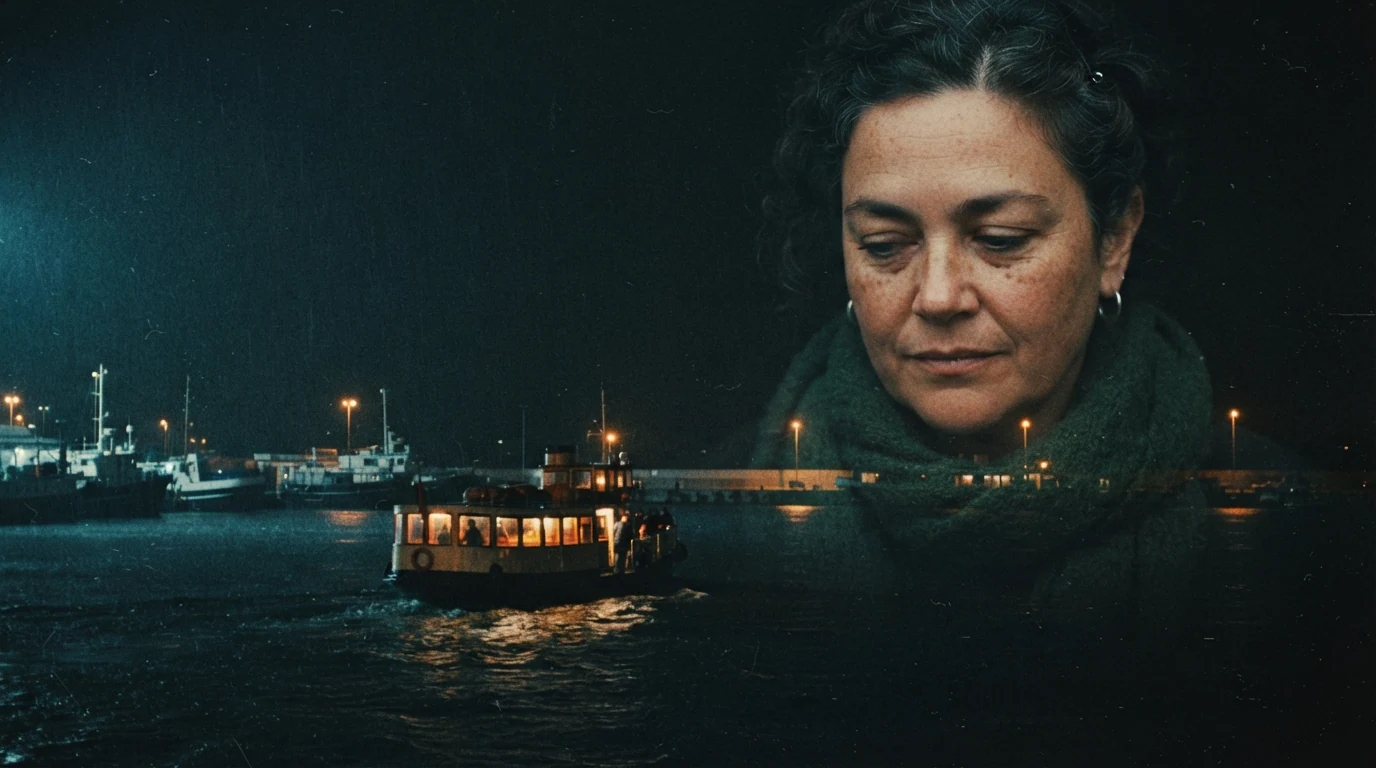
"Two separate images" and "second image at 40% opacity" stop the model from blending her into the scenery. "Over the dark sky" follows the additive rule; lights showing through her cheek prove the transparency.
Open FlashBoardsAnamorphic film frame, superimposed memory. Base image, sharp and fully lit: a fictional man in his sixties, bald, with round wire glasses and a short gray beard, rinsing a cup at a kitchen sink at dusk. Second image, faint and warm, across the right half: a boy of about eight in a red raincoat running along a pebble beach at one-third strength, kitchen tiles visible through him. Soft tungsten light.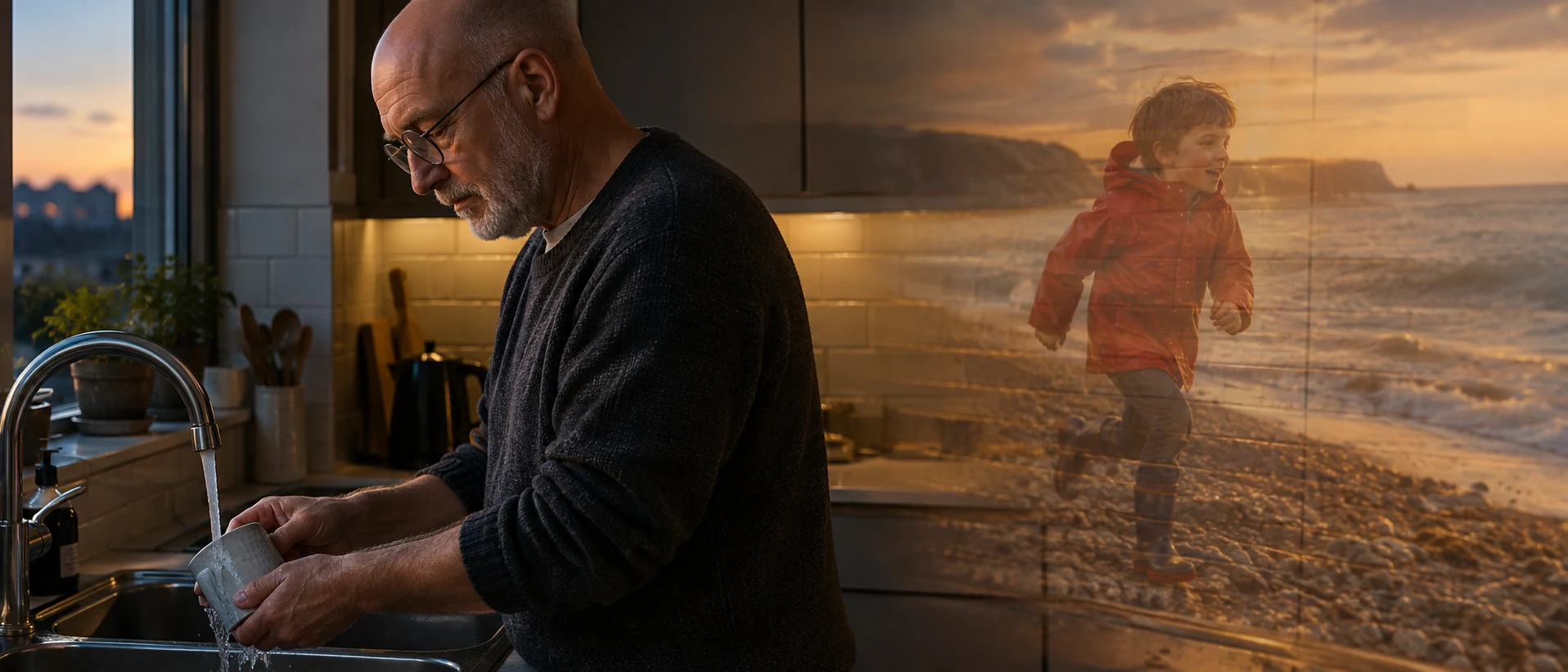
"Sharp and fully lit" marks the present, "faint and warm" the memory. Pinning the boy to the right half keeps the man's face clean; tiles showing through make it an overlay, not a window.
Open FlashBoardsCamera: a very slow, steady push in toward her face, starting immediately and ending slightly tighter. Action: From the first frame, rain streaks fall across the harbor and the ferry glides left to right on the black water, its cabin lights sliding behind her transparent cheek. She raises her eyes slowly and looks off to the left. The ferry keeps moving as her face stays faint and still over the dark sky.Rain and the moving ferry make the shot alive from frame one. Only the base layer travels while her face barely moves, so the layers don't separate; "stays faint" holds the opacity.
Open FlashBoards{
"output": "Full-screen live-action scene from Cries and Whispers (1972), from its very first frame: one single continuous shot on a locked-off camera with an optical dissolve inside it, so that for a long moment two images of the same girl show at once, superimposed on each other. Early-1970s 35mm color with soft grain, 1.66:1 frame, a late-19th-century manor at night: the first image is almost black, lit only by warm candle flames; the second image is pale, cool and grey-blue, daylight through a sheer lace curtain.",
"characters": {
"S1": {
"name": "Agnes as a girl of about twelve, the child in the grown Agnes's memory",
"look": "pale oval face, straight dark-brown hair falling past the shoulders, a wide white headband pulling the hair back from the forehead, a white blouse with a ruffled lace collar and small dark dots",
"voice": "silent: she never speaks and her lips never move"
},
"S2": {
"name": "Agnes, played by Harriet Andersson",
"look": "never seen: only her voice, a voice-over remembering her childhood",
"voice": "an adult woman's soft, low, intimate voice with a light Swedish accent, reading slowly as if from a diary"
}
},
"shots": [
{
"shot": 1,
"camera": "static camera, no movement at all, eye level, normal lens. First image: medium close-up of S1 from the chest up, centred, candle flames behind her. Second image: a much tighter extreme close-up of her face, taken from a slightly different angle, that dissolves in on top of the first; the frame itself never moves, only the images cross-fade",
"action": [
"BEGINNING: alive from the first frame, S1 sits perfectly still in the centre of the dark room, head tilted a little down toward frame left, eyes lowered toward lower frame left, mouth closed; one tall candle burns just left of her shoulder and several small out-of-focus flames glow behind her on frame right; nothing else moves but the flames.",
"THEN: a second image begins to fade in on top of the first: a cool grey-blue wash spreads over the whole frame, and a giant eye and brow of her own face appear faintly across her forehead and white headband.",
"THEN: both images are clearly visible at the same time, each half transparent: the small candlelit girl with her lowered eyes and white collar still shows through the huge pale face laid over her, the candle flames glowing through the big cheek.",
"THEN: the second image grows stronger and the candlelit room slowly fades out underneath it: extreme close-up of S1's face in three-quarter view, her face on the left half of the frame, a strand of dark hair at the far left edge; the right half of the frame and the right side of her face are covered by a sheer pale lace curtain whose soft floral pattern lies across her cheek like a veil.",
"END: she stays hidden behind the lace, completely still, eyes open and fixed toward frame left, as if secretly watching someone out of sight, lips closed; the lace pattern still drifts faintly over her face until the last frame."
],
"dialogue": [
{
"speaker": "S2",
"on_screen": false,
"when": "from the first frame, already mid-sentence, while the girl sits still in the candlelight",
"delivery": "soft, wistful voice-over",
"line": "<d>[English] I was the only one who couldn't join in the merriment.</d>"
},
{
"speaker": "S2",
"on_screen": false,
"when": "as the second image fades in over the first",
"delivery": "slow, remembering",
"line": "<d>[English] Another time, I remember it was autumn...</d>"
},
{
"speaker": "S2",
"on_screen": false,
"when": "once the close-up behind the lace has taken over, running on to the last frame",
"delivery": "hushed, confiding, with a pause at the dots",
"line": "<d>[English] I hid behind the curtain... and in secret watched her.</d>"
}
]
}
],
"sound": {
"ambience": "the hush of a large quiet house at night, a slow clock ticking heard from another room",
"speech": "exactly these spoken phrases, each said once, in this order, all in the same woman's voice-over; the girl's lips never move",
"never_spoken": "no narration and no voice-over other than those three lines: the descriptions, performance notes and step words of this prompt are never spoken aloud",
"music": "a film score under the scene, always below the voices: a slow, hushed solo cello line in a minor key",
"subtitles": "none"
}
}Remakes the candlelit shot from Cries and Whispers (1972) where a close-up of the girl behind a lace curtain dissolves in over her; the prompt keeps the locked-off frame, the candles, the overlap and Agnes's voice-over lines.
Video models treat a dissolve as a transition and rush it, so the action gives the overlap its own step: both images half transparent, the small candlelit girl showing through the huge face. The corpus lines stay verbatim as an off-screen voice-over, so the girl's lips never move.
Open FlashBoardsCommon mistakes
- One fused image. Write "two separate images" and name base and overlay.
- Overlay too solid. Give a number: "40% opacity", "one-third strength".
- Overlay over highlights. It vanishes; place it "over the dark sky".
- Reflection instead. "Ghostly" can draw a window reflection; say "optical superimposition".
- Layers drift in video. Keep the move small and animate one layer.
Keep the reference frames, prompts and every generated take side by side — images and video in one canvas.
FAQ
5 questionsWhat is superimposition in film?
Superimposition layers two or more images in the same frame so all stay partly visible. Filmmakers use it for memories, visions, ghosts or a character's inner state without cutting away. It can be made in camera by exposing film twice, on an optical printer, or digitally by lowering a layer's opacity or using a screen blend.
What are some examples of superimposition in movies?
Georges Méliès multiplied himself into a band in The One-Man Band (1900). Psycho (1960) flashes a skull over Norman's face near the end. Apocalypse Now (1979) opens with Willard's inverted face over burning palms. Title sequences and montages stack maps, newspapers and faces.
Is superimposition the same as double exposure?
Not exactly. Double exposure is a method: two exposures on the same frame, or a blend imitating that. Superimposition is the broader result of layering images by any means, including optical printing, compositing and text over picture. Every double exposure is a superimposition, but a superimposed title is not a double exposure.
How do you superimpose one video over another?
Put the overlay clip on a track above the base, then lower its opacity to about 30–60% or set its blend mode to screen or add. Overlays shot against black work best, because black drops out. Place the overlay's subject over a dark part of the base, feather its edges with a mask and grade both clips toward one palette.
What does superimpose mean in a script?
In a screenplay, SUPER or SUPERIMPOSE introduces text over picture, such as a place or date: SUPER: "Lisbon, 1974." It tells the editor to lay the words over the running shot, not on a black card. For image overlays, writers describe the effect in the action lines.
Related terms
3- Double ExposureCameras & Capture
Double exposure records two images on the same piece of film — or blends them in post — so both show through at once, often a face merging with a landscape; in camera it was the classic way to create ghosts and visions.
- DissolveEditing
A dissolve blends one shot into the next: the first fades out while the second fades in over the same frames, briefly overlapping — often to mark passing time or link two ideas.
- FlashbackStorytelling
A flashback interrupts the present story to show an earlier event, usually signalled by a dissolve, a change of color or grade, or a sound cue, to reveal backstory or motive.
Further reading
Raymond Fielding, The Technique of Special Effects Cinematography (Focal Press) — optical printing and multiple exposure. David Bordwell & Kristin Thompson, Film Art: An Introduction (McGraw-Hill) — superimposition among editing and optical transitions.