 FlashBoards Learn
- Learn
- Storytelling
- Antagonist
Storytelling · Film language
Antagonist
Also called: opposing force
The antagonist is the force that stands between the protagonist and their goal: a person, a group, nature, society or the hero's own flaw. It creates the conflict that makes a story move. A strong antagonist wants something concrete, pushes exactly where the hero is weakest and forces the choices that define them.
- What it does
- Supplies the opposition that turns a goal into a story and tests who the protagonist really is.
- Use it when
- Building conflict, planning the climax, or deciding what the hero's weakness should be tested against.
- Watch out
- An antagonist with no goal of their own is just an obstacle; give them a want that collides with the hero's.
- Try this prompt
Low-angle two-shot in a dark mill, a still woman in a long charcoal coat on an iron catwalk above a young man looking up, single hard backlight
What is an antagonist?
The protagonist carries the goal; the antagonist carries the opposition. It is defined by function, not morality: the shark in Jaws (1975), the computer HAL 9000 in 2001: A Space Odyssey (1968), or a decent lawman. In The Fugitive (1993), Samuel Gerard hunts an innocent man because it's his job, and he is still the antagonist.
The best antagonists are built backward from the hero. In The Dark Knight (2008), Batman's one rule is that he doesn't kill, and the Joker's plan is designed to make him break it. The antagonist asks the question the hero's character arc has to answer.
What are the types of antagonists?
The common storytelling categories, by what the opposing force is:
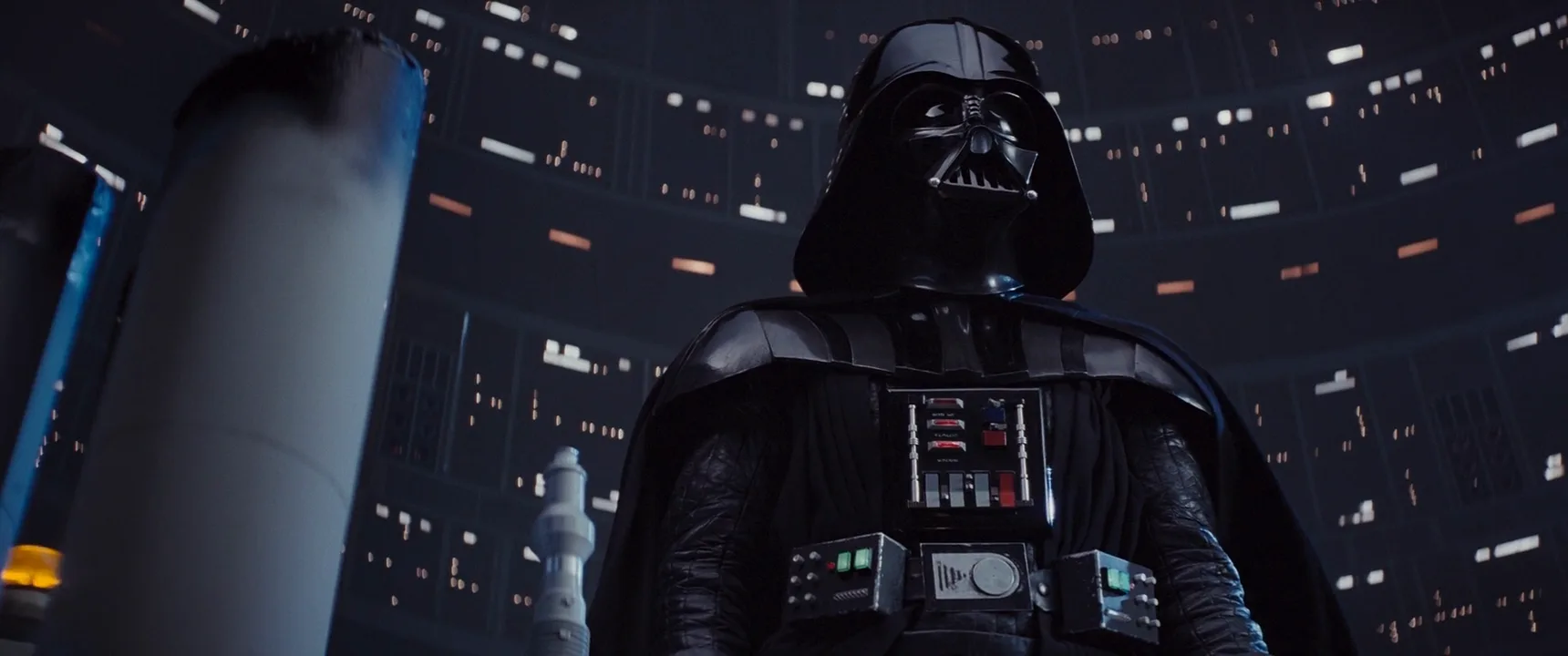
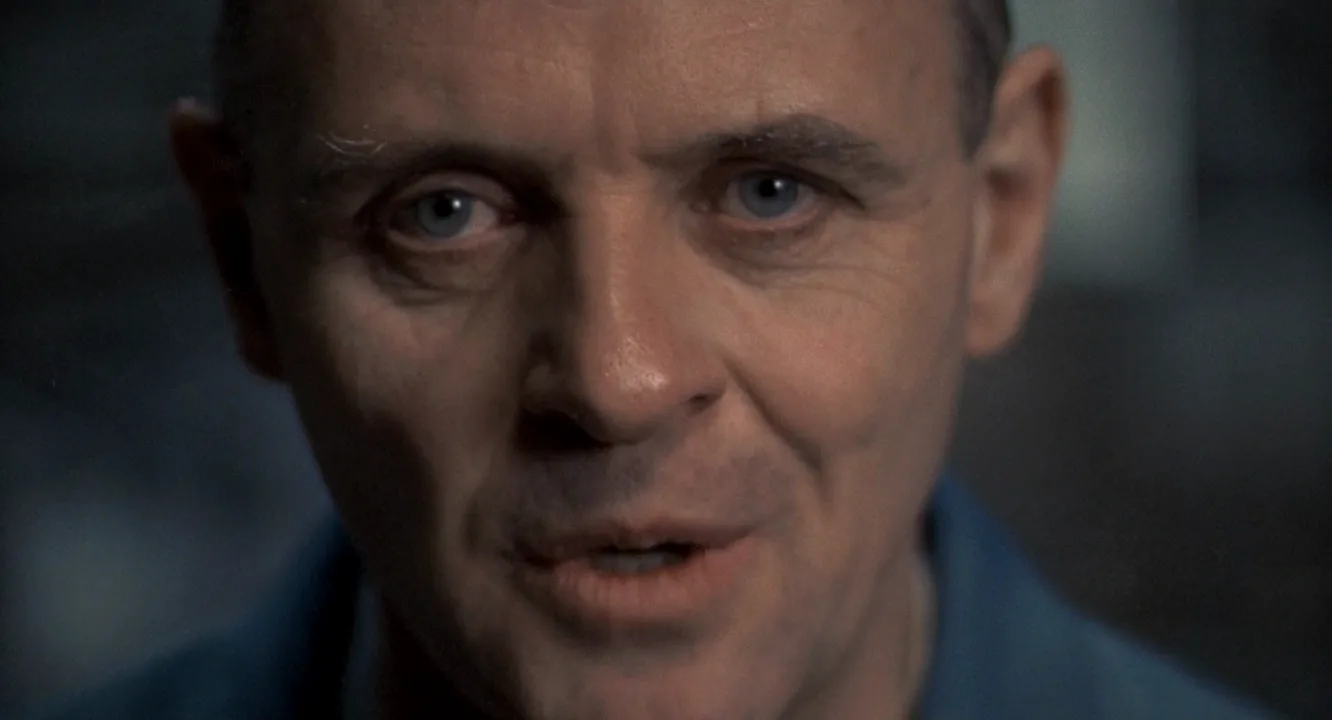
- A person. The easiest to film: Hannibal Lecter, Darth Vader.
- A group or institution. A gang, a company, an army. It usually gets one face, like Nurse Ratched for the hospital in One Flew Over the Cuckoo's Nest (1975).
- Nature. Sea, weather, space, an animal. Gravity (2013) sets a woman against orbit itself.
- Society. Laws, class or prejudice.
- The self. In Black Swan (2010), Nina's real opponent is her own perfectionism.
- The supernatural or technology. Curses, machines.
Most films layer an outer antagonist over an inner one. The anti-villain is a special case: a sympathetic goal pursued by wrong means, like General Hummel in The Rock (1996), who seizes Alcatraz to force reparations for Marines killed on covert missions.
Protagonist vs. antagonist
The protagonist's goal drives the story; the antagonist blocks it. Neither label says who is good: in a heist film we ride with the thieves, and the detective is the antagonist.
The pairing works best as a mirror: the two share a skill, a wound or a want, and made different choices. The reveal in The Empire Strikes Back (1980) hits because Vader, Luke's father, is the hero's possible future.
Antagonist vs. villain
Every villain is an antagonist, but not every antagonist is a villain. A villain has malicious goals or methods; an antagonist only has to be in the way.
The Silence of the Lambs (1991) splits the roles: Buffalo Bill is the villain Clarice must stop, while Lecter, who helps her, is the more memorable opponent because he tests her in every scene. Among the character archetypes, the antagonist often plays the shadow, the hero's darker reflection.
How to put an antagonist on screen
- The introduction. The Silence of the Lambs reveals Lecter standing perfectly still in the middle of his cell.
- Height. A low-angle shot or a raised position, like a catwalk or the top of the stairs, gives the antagonist the frame. Keep the hero lower.
- Stillness. Let the hero move while the antagonist barely does. Control reads as threat.
- Light. Hard backlight or a face half in shadow; save the fully lit close-up for when the mask drops.
- Absence. Jaws keeps the shark mostly unseen, carried by underwater POV and a two-note motif.
On a FlashBoards board, pin the antagonist's frames opposite the protagonist's to check the mirror, then generate the introduction shot at several heights and compare.
Antagonist examples in film
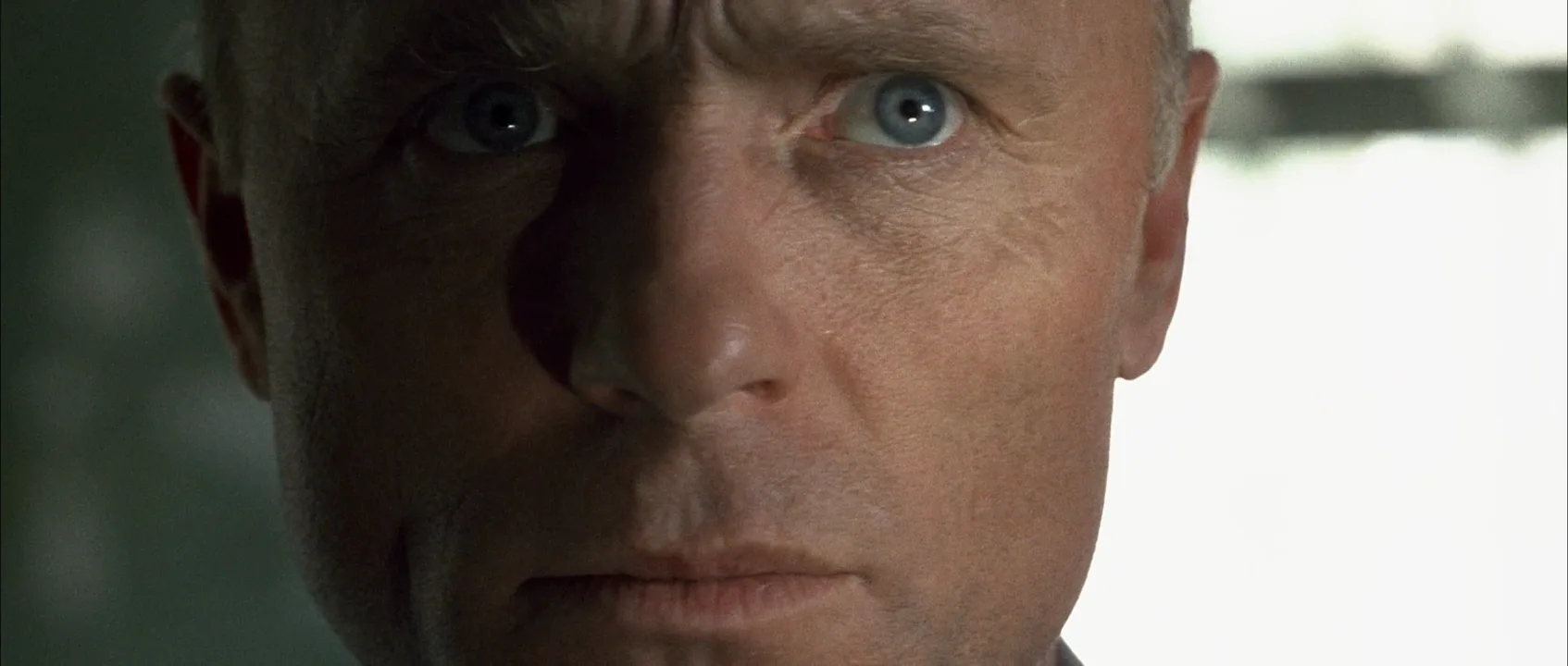
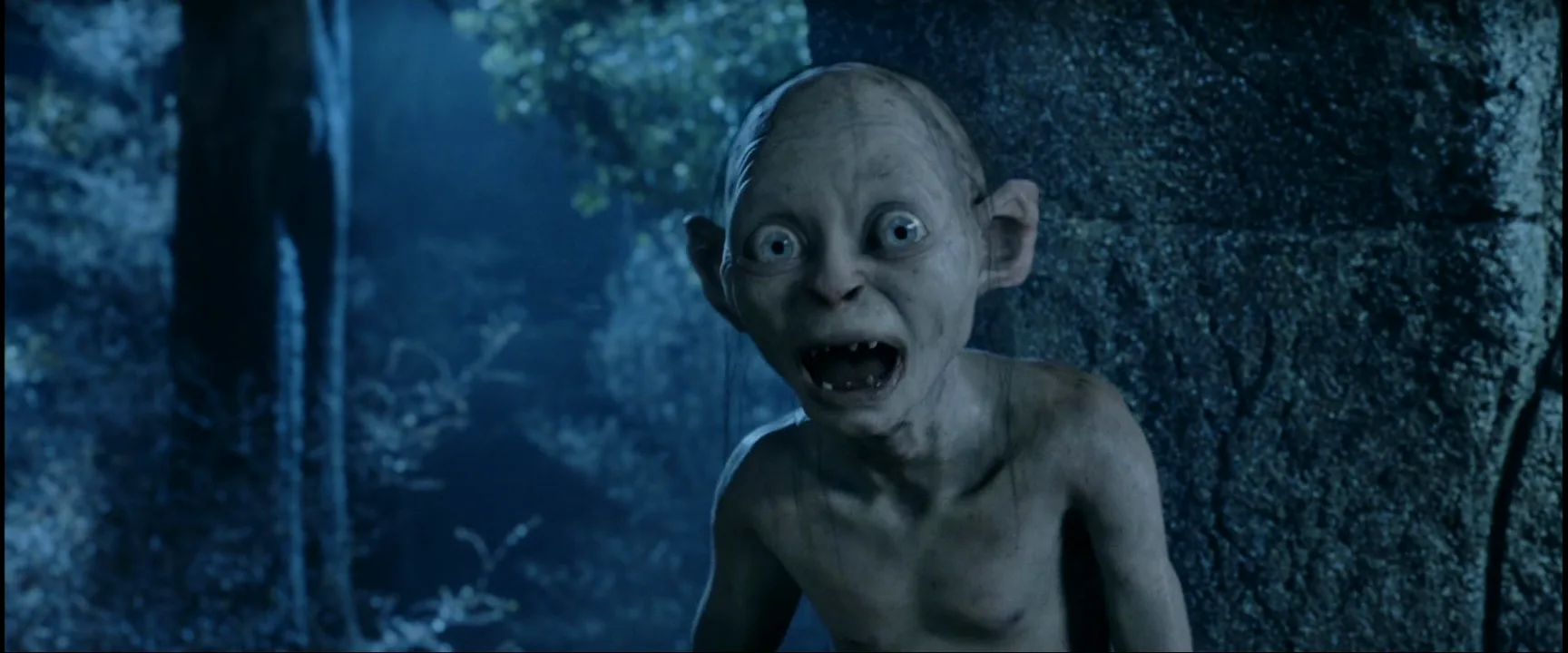
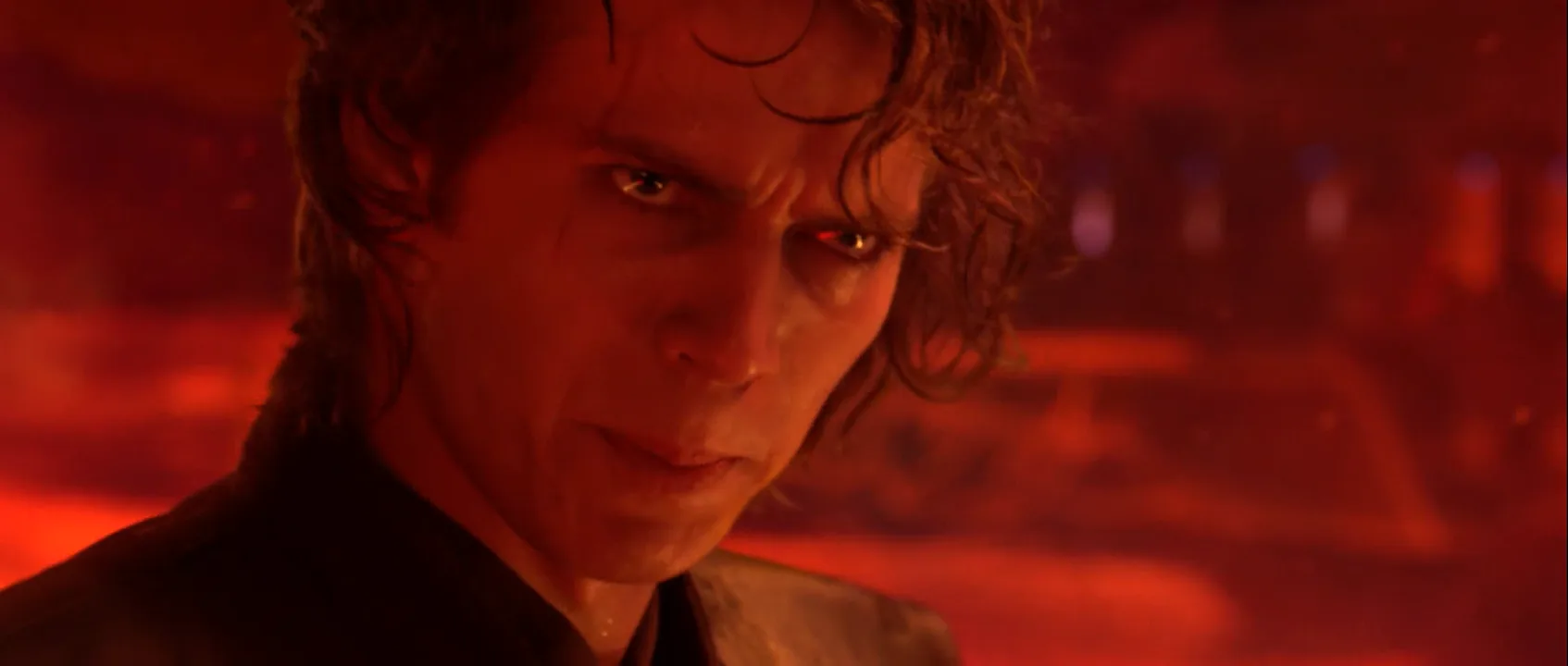
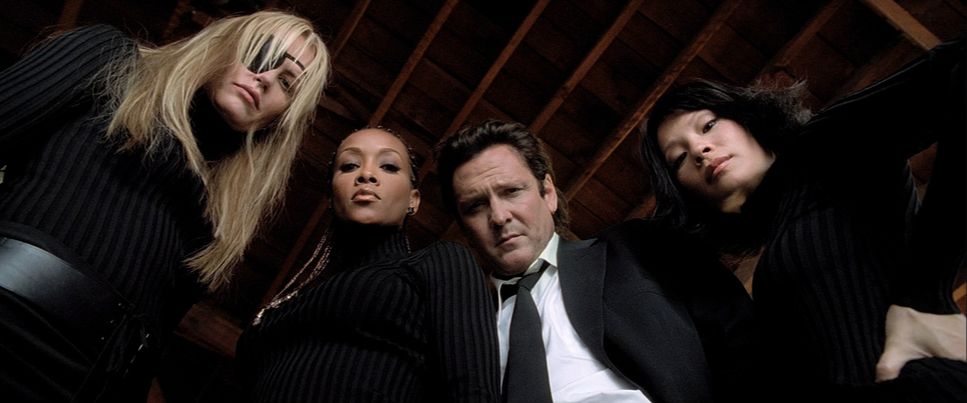
6 framesWatch how angle, light and stillness set the balance of power before a line is spoken.
How to create a antagonist with AI
4 promptsDirect an antagonist as a balance of power inside one frame. Nano Banana 2 Lite stages the confrontation, GPT Image 2.5 renders a non-human opponent, and MiniMax H3 Max Turbo animates the first frame. Keep all three on one FlashBoards board next to your references. The fourth prompt re-shoots a real film shot from a text description alone, and the original plays next to the result so you can compare.
Low-angle two-shot inside a disused textile mill at night, 28mm lens, camera at waist height behind a young man's shoulder. Foreground left, soft: a man in his twenties with curly red hair, freckles and a torn denim jacket, looking up. On an iron catwalk above, sharp and centered: a tall woman in her fifties with a silver buzz cut, a thin scar through her left eyebrow and a long charcoal wool coat, standing perfectly still, looking down at him. Single hard lamp behind her, dust in the beam, 35mm film still.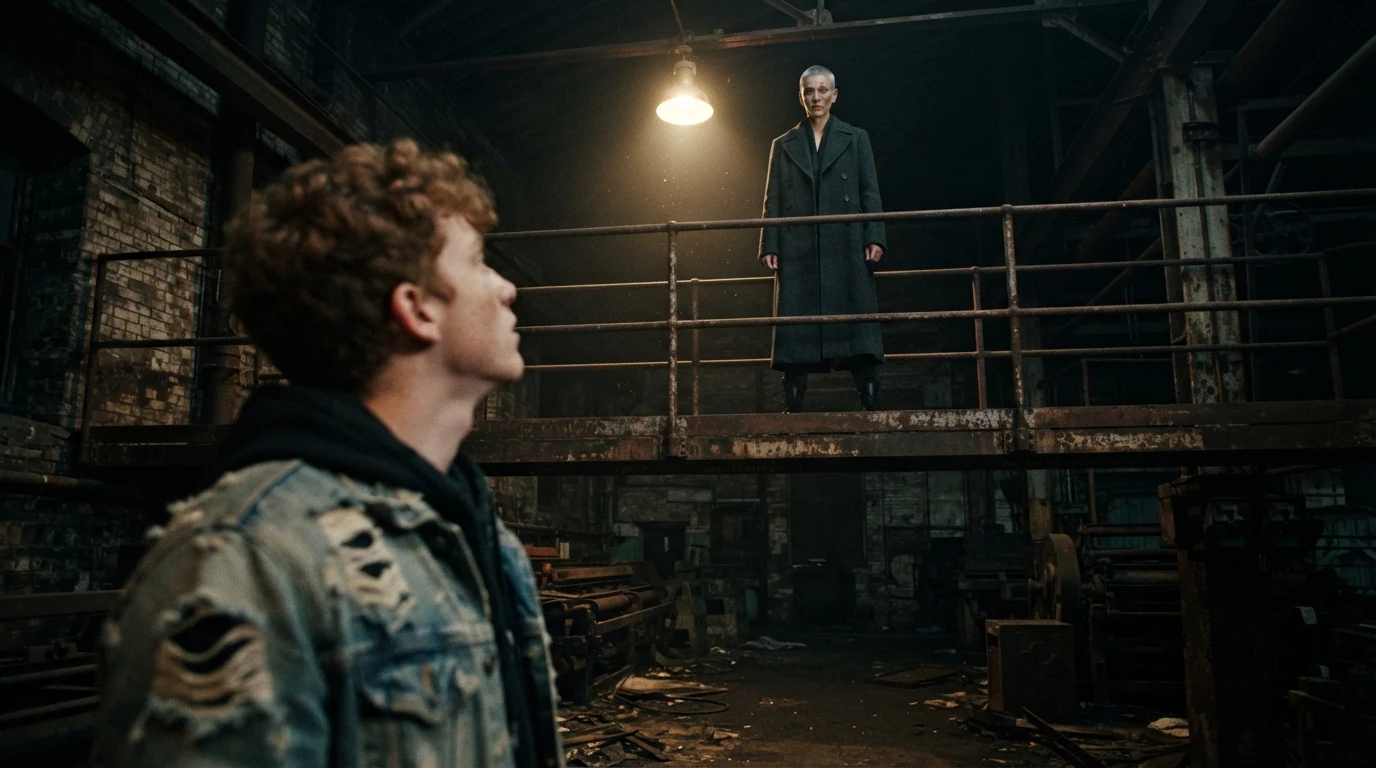
The power is in the geometry: camera at waist height, on an iron catwalk above, looking down at him. Perfectly still plus the hard lamp behind her reads as control, not a sneer.
Open FlashBoardsExtreme wide shot from the water. A small wooden fishing boat in the lower right third, one gray-bearded man in his sixties in a yellow oilskin jacket gripping the tiller. Filling the rest of the frame: a towering black storm front over a gray sea, a wall of rain, one streak of lightning. Cold desaturated light, spray, anamorphic film still.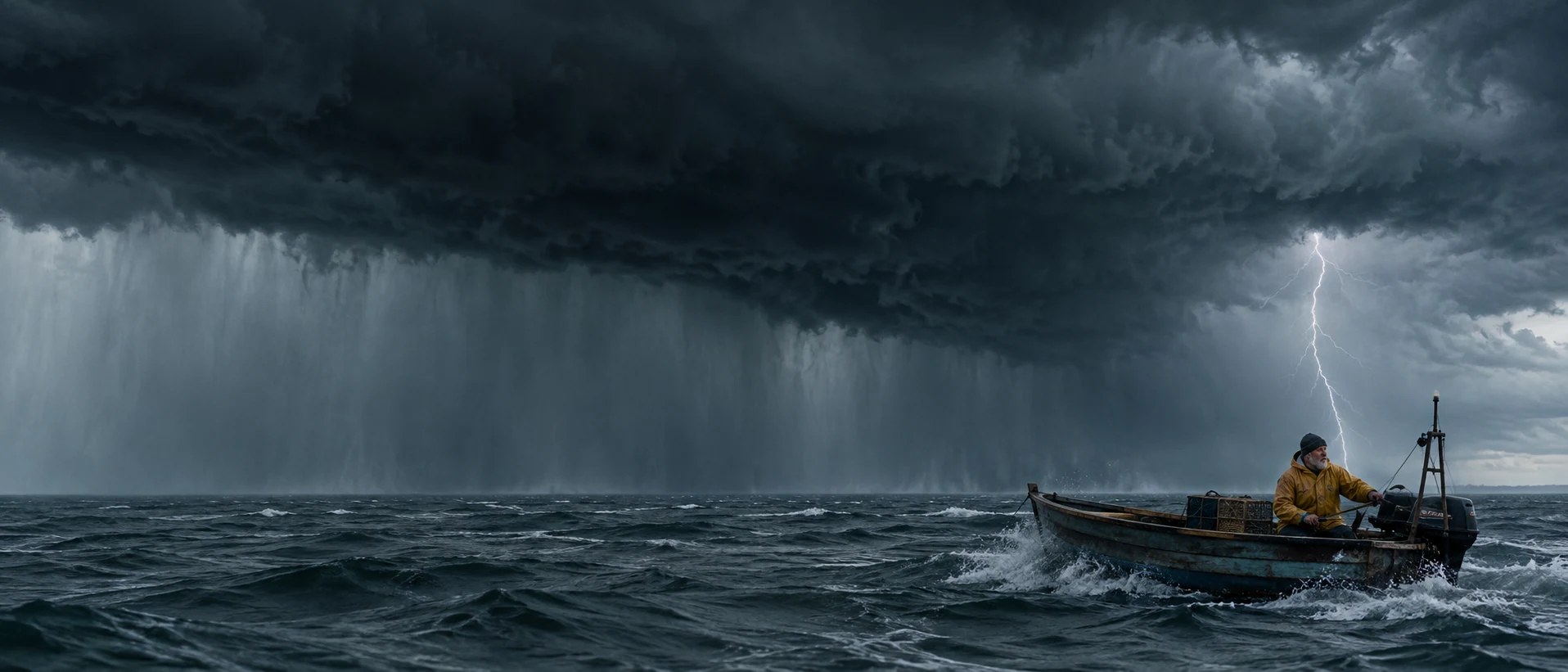
The antagonist is nature, so scale does the work: small, lower right third, filling the rest of the frame. The yellow oilskin is the only warm color, keeping the eye on the human.
Open FlashBoardsCamera: a slow, steady push-in from behind the young man's shoulder, tilting up slightly toward the catwalk. Action: The woman is already walking slowly along the railing, eyes on the young man. She stops directly above him and rests both hands on the railing. He takes one step back, still looking up. Dust drifts through the lamp beam.Already walking keeps the shot alive from the first frame. She advances, he retreats: the blocking acts out the conflict using only what the start frame contains.
Open FlashBoards{
"output": "Full-screen live-action single continuous shot from its very first frame, one unbroken take with no cuts, a scene from The Silence of the Lambs (1991). 35mm film look with fine grain, soft cool frontal light on the face, the background a dark, heavily blurred blue-gray wall with nothing readable in it, muted steel-blue palette with pale skin.",
"characters": {
"S1": {
"name": "Dr. Hannibal Lecter, played by Anthony Hopkins",
"look": "man in his fifties, pale skin, thin slicked-back hair receding from a high forehead, pale blue eyes, light blue prison jumpsuit with an open collar",
"voice": "soft, precise, faintly amused, unhurried"
}
},
"shots": [
{
"shot": 1,
"camera": "locked-off, lens at his eye level, straight-on extreme close-up: the top of his head is cropped by the frame edge, his face fills almost the whole frame height from mid-forehead to the jumpsuit collar, nose on the vertical center line, very shallow focus; the framing stays the same from start to end, only a barely perceptible creep",
"action": [
"BEGINNING: alive from the first frame, S1 stares straight into the lens with a faint smile, then slowly closes his eyes and tips his head down, looking at something below the frame.",
"THEN: still looking down, he starts to speak; his eyes lift first, then his head rises until his gaze locks straight into the lens, directly at the viewer.",
"END: holding the viewer's gaze without blinking, he finishes the question with a thin smile, head perfectly still."
],
"dialogue": [
{
"speaker": "S1",
"on_screen": true,
"when": "just as his eyes start to lift from looking down, continuing as his gaze locks into the lens",
"delivery": "soft, courteous, quietly mocking, the question almost tender",
"line": "<d>[English] That expires in one week. You're not real FBI, are you?</d>"
}
]
}
],
"sound": {
"ambience": "near-silent room tone of a stone corridor, a faint low electrical hum",
"speech": "exactly these spoken phrases, each said once, in this order",
"never_spoken": "no narration and no voice-over: the descriptions, performance notes and step words of this prompt are never spoken aloud; the person he is talking to stays silent",
"music": "a film score under the scene, always below the voices: a low sustained cello drone with a faint, uneasy high string note",
"subtitles": "none"
}
}Remakes Lecter's extreme close-up in The Silence of the Lambs (1991), keeping the locked-off frame, the lowered eyes, the slow return of the gaze into the lens and his exact line from the film.
The whole antagonist beat lives in one locked-off extreme close-up: eyes down, then his gaze locks straight into the lens while Lecter asks his question. The JSON gives the camera, the action phases and the verbatim line separate slots, so the framing holds and the look lands on the words.
Open FlashBoardsCommon mistakes
- "Villain" pulls clichés: horns, sneers, black leather. Describe posture, stillness and light.
- Image models drift to eye level. State camera height and who stands above whom.
- Video models escalate into a fight. Give the clip one controlled action.
Keep the reference frames, prompts and every generated take side by side — images and video in one canvas.
FAQ
5 questionsIs the antagonist always the villain?
No. The antagonist is whoever or whatever opposes the protagonist's goal; a villain is an antagonist with malicious aims or methods. Samuel Gerard, the marshal in The Fugitive (1993), is an antagonist without being evil.
What are the main types of antagonists?
A person, a group or institution, nature, society, the protagonist's own self, and the supernatural or technology. Many films combine an outer antagonist on screen with an inner flaw underneath.
What is the difference between a protagonist and an antagonist?
The protagonist's goal drives the story. The antagonist is the force blocking that goal. The labels describe story function, not morality: in a heist film the detective can be the antagonist.
Can a story have more than one antagonist?
Yes. In The Silence of the Lambs (1991), Buffalo Bill is the killer Clarice must stop, while Hannibal Lecter opposes and tests her in every scene. Keep one opposition primary so the climax has a clear target.
Can the antagonist be the main character?
Sometimes the story follows the hero as they become the opposing force. The Star Wars prequels follow Anakin until he becomes Darth Vader, the antagonist of the original trilogy.
Related terms
3- VillainStorytelling
A villain is an antagonist driven by malicious goals or methods; the memorable ones believe they're right, want something concrete and test exactly the protagonist's weakness.
- ProtagonistStorytelling
The protagonist is the main character whose goal drives the story and whose choices the audience follows; they don't have to be good, just central.
- Character ArchetypeStorytelling
A character archetype is a recurring role that audiences recognize across cultures — the mentor, the trickster, the shadow, the herald — which writers adapt rather than copy.
Further reading
Robert McKee, Story: Substance, Structure, Style and the Principles of Screenwriting (1997). Christopher Vogler, The Writer's Journey (1992).