 FlashBoards Learn
- Learn
- Storytelling
- Protagonist
Storytelling · Film language
Protagonist
Also called: main character, hero, lead character
The protagonist is the main character whose goal drives the story and whose choices the audience follows. They don't have to be good or likable, only central: the plot happens because they want something, and every obstacle tests what they will do to get it.
- What it does
- Gives the audience someone to follow and a goal that turns events into a story.
- Use it when
- Deciding whose story this is, whose eyes the camera shares and who makes the choice at the climax.
- Watch out
- A passive lead who only reacts to events stalls the film; the protagonist has to make the decisive choices.
- Try this prompt
Medium close-up, a young courier in a mustard raincoat walking against a blurred crowd, 85mm, she is the only sharp face
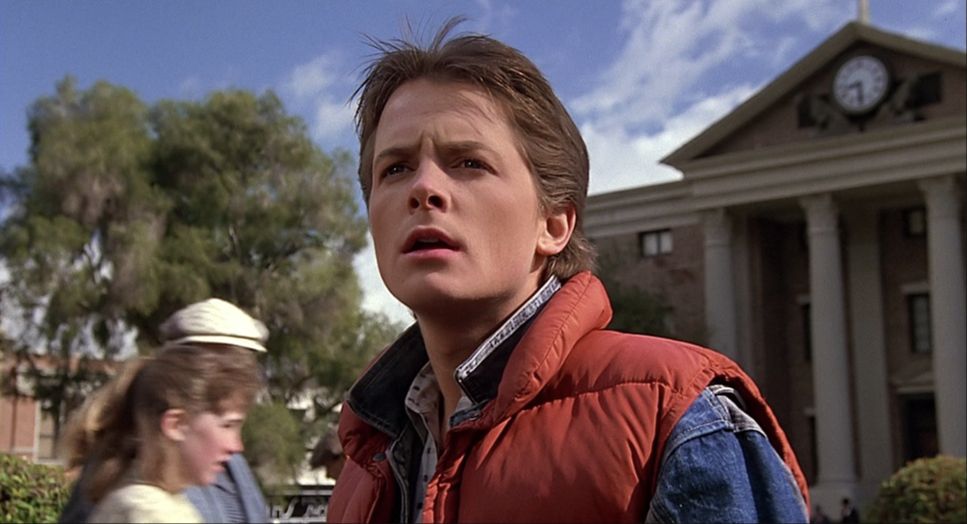
What is a protagonist?
The protagonist is the person the story belongs to. Take them out and the plot collapses, because the plot is their pursuit of a goal. Luke Skywalker wants off Tatooine in Star Wars (1977); Woody wants to stay Andy's favorite toy in Toy Story (1995).
The word is about function, not virtue. Walter White in Breaking Bad goes from chemistry teacher to drug manufacturer and never stops being the protagonist. "Hero" implies admirable qualities; a protagonist needs none. On screen the role goes to the lead actor.
What makes a strong protagonist?
- A concrete want. Something the audience can check off: win the race, find the daughter.
- A deeper need. What they don't know they lack. The gap between want and need drives the character arc.
- Active choices. If the climax is resolved by luck or by someone else, the story loses its spine.
- Stakes. What they lose if they fail, stated early.
- A flaw the opposition can press on. The antagonist works best aimed at exactly that weakness.
Likability is optional. Audiences follow a character they understand who wants something badly, which is why an anti-hero can carry a film.
What are the types of protagonists?
Common storytelling variants:
- The hero. Brave and morally clear: Neo in The Matrix (1999).
- The anti-hero. Compromised or selfish, still the one we follow.
- The tragic hero. Brought down by their own flaw.
- The reluctant protagonist. Pulled in against their will, then chooses to stay.
- Dual protagonists. Two leads share the story: Thelma & Louise (1991), La La Land (2016).
- Ensemble. Several characters split screen time, each with a goal.
- The false protagonist. Psycho (1960) follows Marion Crane for its first act, then kills her in the shower.
Protagonist vs. antagonist
The protagonist pursues the goal; the antagonist blocks it. Neither label says who is good: in a heist film we ride with the thieves, so the detective becomes the antagonist.
The roles define each other. A goal without opposition is a to-do list; opposition without a goal is just an obstacle. Write both wants side by side and make sure they collide at the climax.
How to put a protagonist on screen
The camera tells the audience whose story it is before the dialogue does.
- The introduction shot. A clean single, a readable action and one detail that shows the want or the flaw.
- Coverage. The protagonist gets the most close-ups and the reaction shots at key moments.
- Point of view. A POV shot puts the viewer in their position. Rear Window (1954) almost never leaves Jeff's apartment, so we see only what he sees.
- Composition. Centered framing, the sharpest focus plane, the one warm color in a cold palette.
In FlashBoards, keep the protagonist's reference frames, costume notes and every generated take of their introduction on one board, so face, wardrobe and palette stay consistent from first scene to last.
Protagonist examples in film
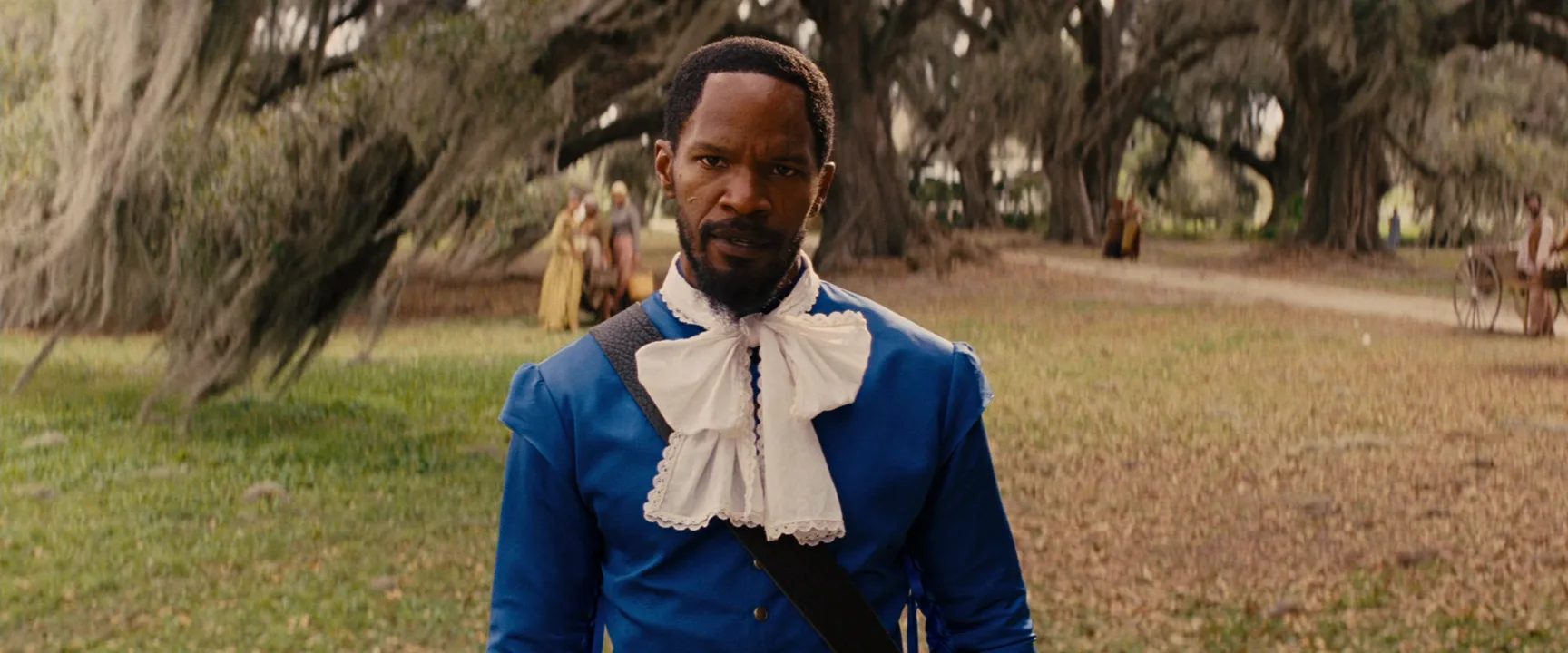
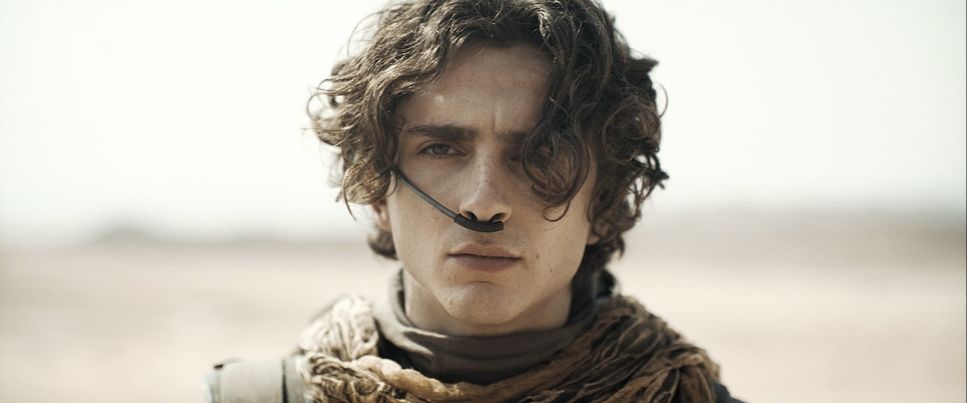
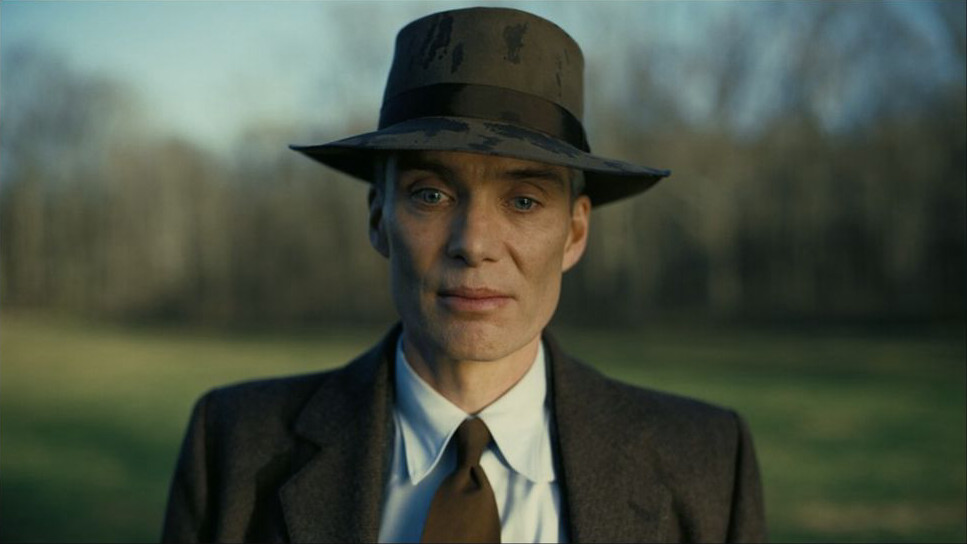
6 framesHow films single out the person whose story it is.
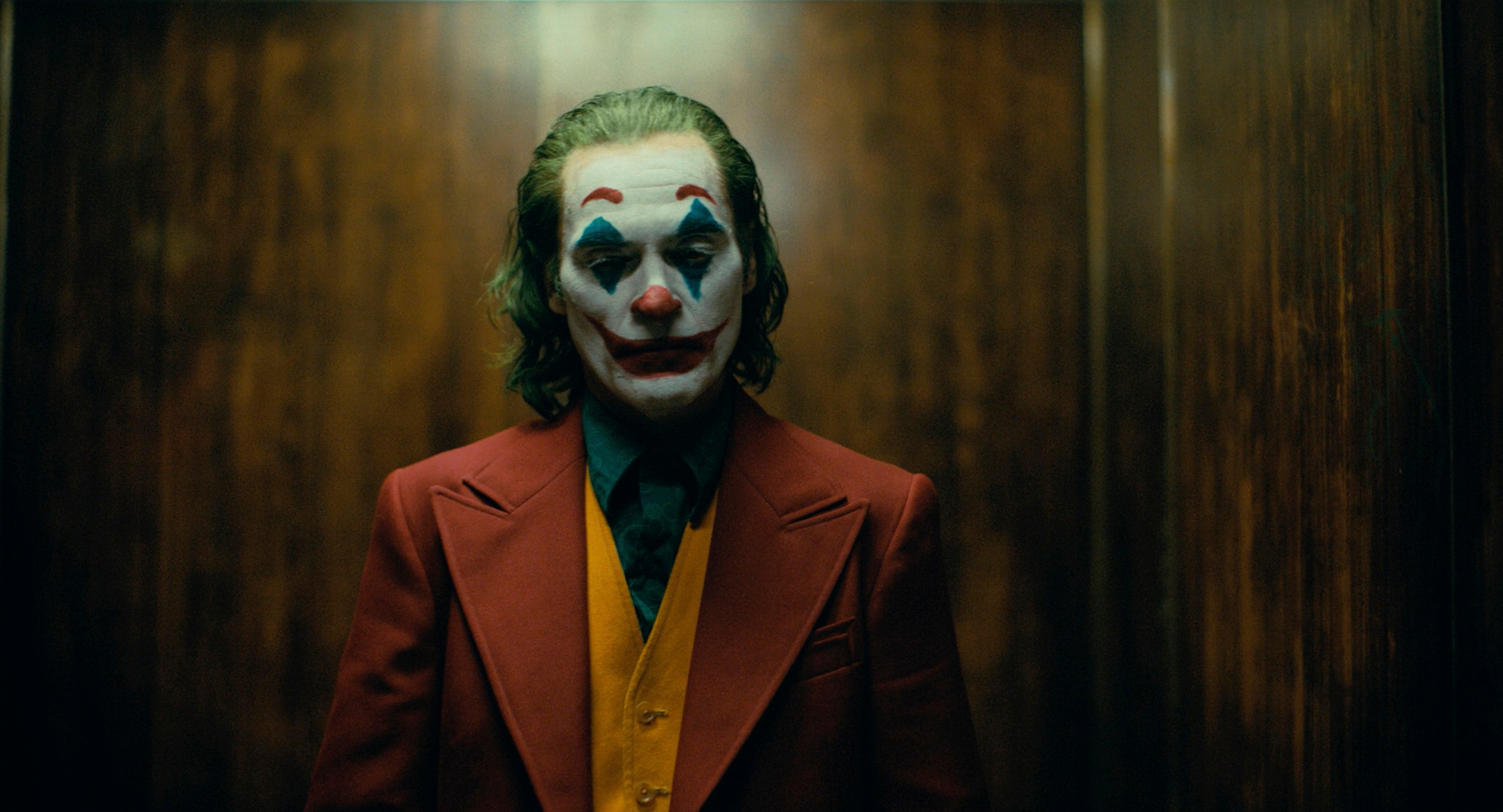
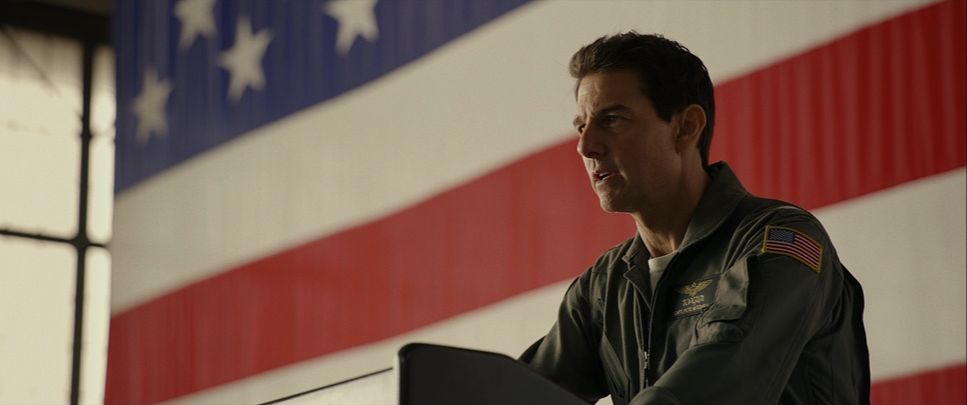
How to create a protagonist with AI
4 promptsDirecting a protagonist with AI means designing their introduction shot: one specific face the frame points to. Nano Banana 2 Lite builds the start frame, GPT Image 2.5 tries a wide variant where light and color single the lead out, and MiniMax H3 Max Turbo animates the first frame. Keep all three on one FlashBoards board beside your references. The fourth prompt re-shoots a real film shot from a text description alone, and the original plays next to the result so you can compare.
Medium close-up on a crowded city sidewalk at dusk, 85mm lens at eye level, shallow depth of field. Centered and sharp: a woman in her late twenties with a shaved head, a small silver hoop in her left nostril, a mustard-yellow raincoat and a courier bag strap across her chest, walking toward camera, jaw set, eyes fixed ahead. Around her, commuters in gray and navy coats walking the other way, soft and out of focus. Wet pavement, cool blue ambient light, warm shop-window glow on her face, 35mm film still.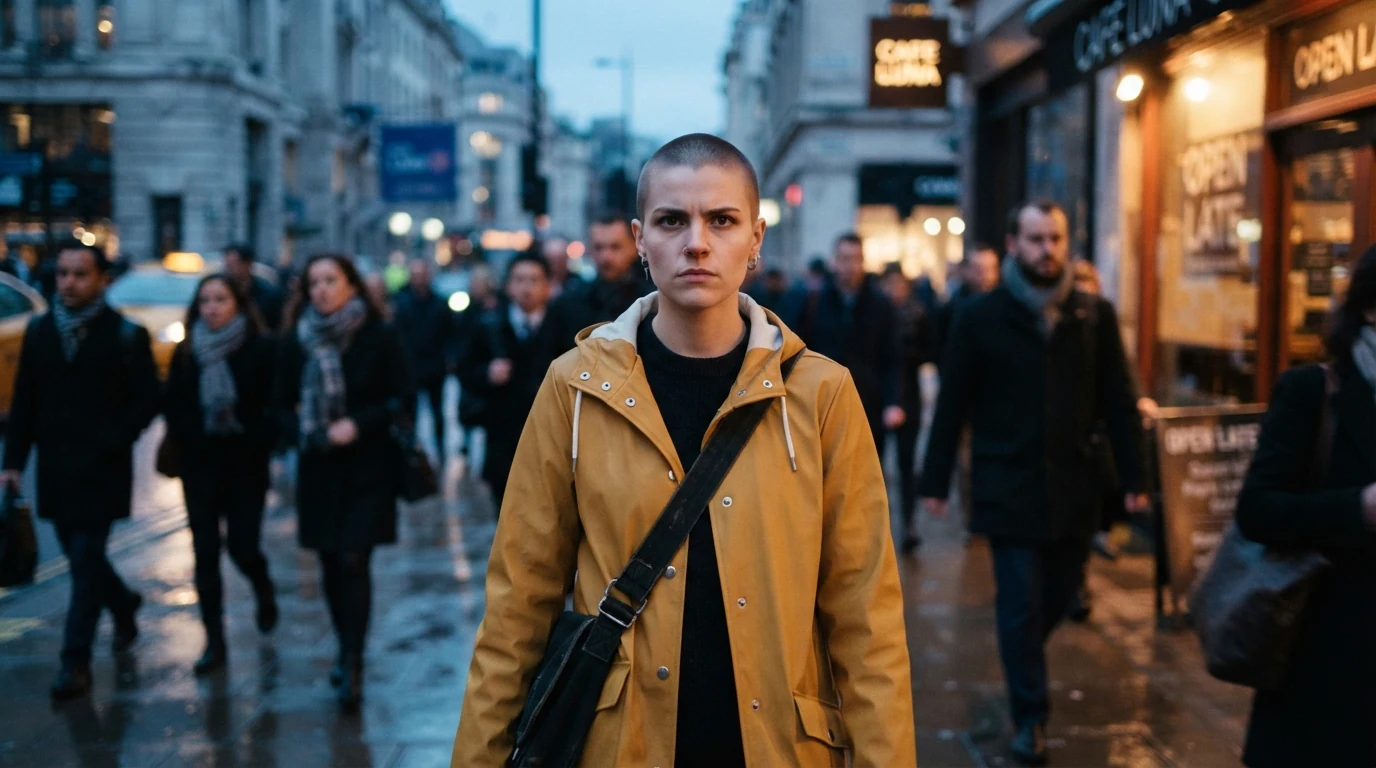
Centered and sharp with soft and out of focus around her builds the hierarchy; walking the other way makes her the only one with a direction. The mustard coat is the one warm color, and jaw set, eyes fixed ahead shows the want without dialogue.
Open FlashBoardsExtreme wide shot of an empty bus station at night, camera high in the corner of the hall. Rows of plastic seats in cold fluorescent green light. In the only pool of warm tungsten light, left third: a man in his sixties with a white goatee, round tortoiseshell glasses and a rust-red wool coat, sitting upright with a brown suitcase on his knees, looking at the departures board. Anamorphic film still.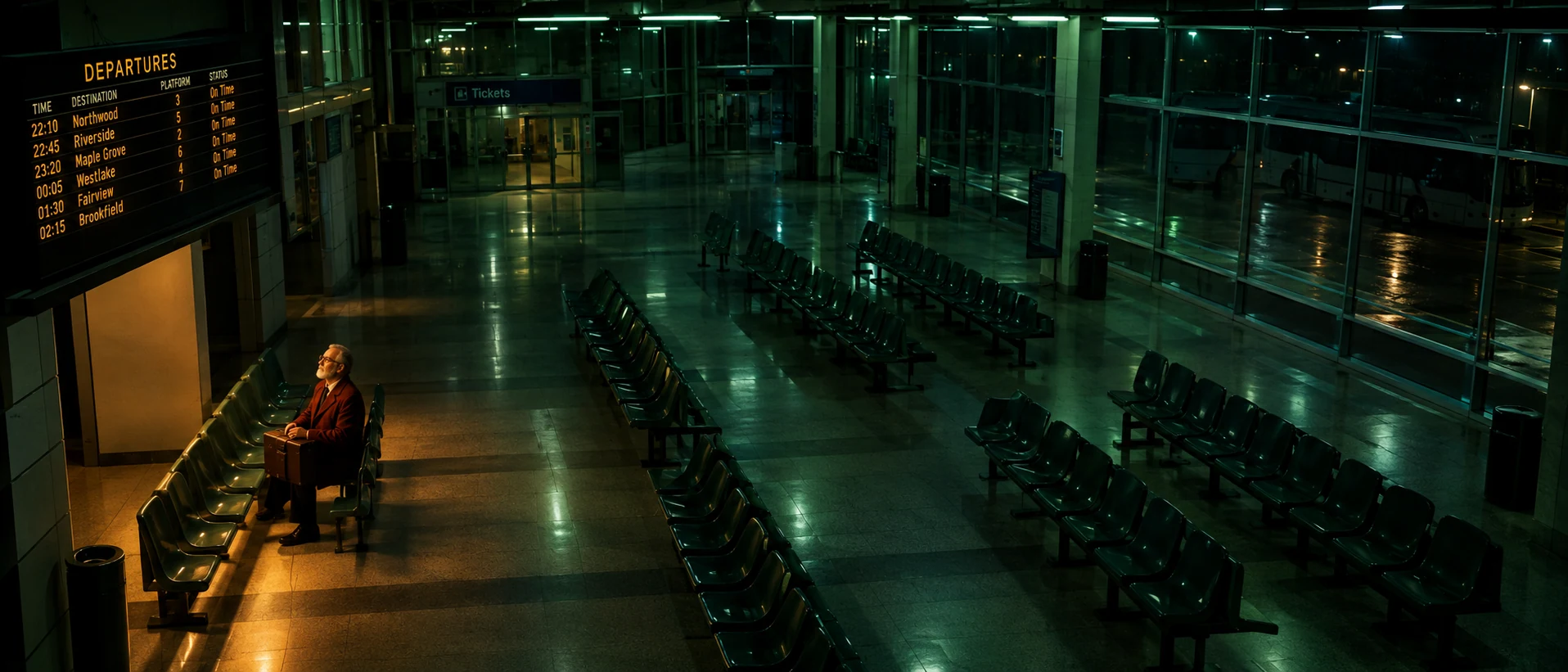
The lead is small, so light and color do the job: only pool of warm tungsten light and a rust-red coat against fluorescent green. Looking at the departures board hints at a goal.
Open FlashBoardsCamera: a steady tracking shot moving backward at her walking pace, keeping her centered in medium close-up for the whole shot. Action: The woman is already striding toward camera through the crowd. She turns her shoulder to slip between two commuters, tightens her grip on the bag strap and speeds up. The commuters keep flowing past her the other way, blurred.Already striding keeps the shot alive from the first frame. The backward track keeping her centered holds the hierarchy; gripping the strap and speeding up give her an urgent goal using only what the start frame contains.
Open FlashBoards{
"output": "Full-screen live-action single continuous shot from its very first frame, one unbroken take with no cuts, a scene from Miller's Crossing (1990). 35mm film look with fine grain, a dense forest of tall straight pine trunks under a flat overcast sky, soft shadowless daylight, muted palette of dark pine green, gray bark and brown forest floor, his black hat and dark coat the darkest shape in the frame.",
"characters": {
"S1": {
"name": "Tom Reagan, played by Gabriel Byrne",
"look": "lean man about forty, pale face, dark hair hidden under a black felt fedora with a wide black band and a small bow on the band at frame right, the brim pulled low so it shades his eyes; heavy charcoal-black wool overcoat buttoned up, its wide lapels framing a pale gray-blue shirt and a brown-and-gold paisley tie; 1929 gangster wardrobe",
"voice": "silent in this shot"
}
},
"shots": [
{
"shot": 1,
"camera": "slow backward dolly at his walking pace, the camera retreating in front of S1 as he walks toward it, lens at his eye level, normal lens with the pines behind him softly out of focus; medium close-up, S1 dead center from mid-chest to the top of the hat, the hat crown just below the top frame edge; his size in frame stays the same from the first frame to the last",
"action": [
"BEGINNING: alive from the first frame, S1 is already walking straight toward the camera between tall pine trunks, head bowed, the hat brim throwing his eyes into shadow, his gaze lowered to the ground a few steps ahead of him.",
"THEN: he keeps walking at the same slow, steady pace; his shoulders rock gently from side to side with each step and the heavy coat shifts on his frame, while his head stays bowed and his eyes stay on the ground.",
"THEN: his face stays blank and set: mouth closed, lips pressed together, jaw firm, no glance up, no change of expression; both arms hang at his sides below the frame.",
"END: still walking, still dead center and the same size in frame, eyes still down, the pine trunks drifting slowly behind him as the camera keeps backing away."
],
"voice": "silence: nobody speaks in this shot, no voice at all",
"dialogue": []
}
],
"sound": {
"ambience": "his slow footsteps crunching on dry pine needles and twigs, a soft wind high in the pine tops, a few distant birds",
"speech": "no words in this video; the only human sounds are breaths and movement",
"never_spoken": "no narration and no voice-over: the descriptions, performance notes and step words of this prompt are never spoken aloud",
"music": "a film score under the scene, always below the voices: low, grave strings holding a slow, mournful Irish-folk melody over a quiet sustained bass note",
"subtitles": "none"
}
}Remakes Tom Reagan walking Bernie into the woods to kill him in Miller's Crossing (1990), dir. Joel Coen and Ethan Coen, DP Barry Sonnenfeld, keeping the backward dolly that holds him centered, the bowed head under the fedora, the pine forest and the silence before his choice.
The camera commits to one person: a slow backward dolly at his walking pace keeps Tom dead center and the same size in frame, so the forest drifts and he never does. His head bowed with no glance up keeps the decision he is walking toward inside him, and the silent shot lets the footsteps and score carry it.
Open FlashBoardsCommon mistakes
- "The hero" produces a generic face. Give age, hair, one distinctive detail and a wardrobe color you can repeat in every take.
- Crowds come out equally sharp. State the lens, shallow depth of field and who is soft and out of focus.
- In video, the lead tends to stop and pose. Give them an action with a direction from the first frame.
Keep the reference frames, prompts and every generated take side by side — images and video in one canvas.
FAQ
5 questionsWhat is a protagonist in simple terms?
The protagonist is the main character: the person the story follows and whose goal drives the plot. A protagonist doesn't have to be good or likable; Walter White in Breaking Bad stays the protagonist even as he becomes a criminal.
What is the difference between a protagonist and an antagonist?
The protagonist wants something and pursues it; the antagonist stands in the way. Both labels describe story function, not morality. The antagonist can be a person, a group, nature, society or the protagonist's own flaw, and their collision produces the conflict that moves the story.
Is the protagonist always the hero?
No. A hero has admirable qualities; a protagonist only has to be central. Anti-heroes, tragic heroes and criminals can all be protagonists as long as the story follows their goal and their choices shape the outcome.
Can a story have two protagonists?
Yes. Dual protagonists share the lead, as in Thelma & Louise (1991) or When Harry Met Sally... (1989), usually with linked goals. Ensemble films split screen time among several characters, each with a goal of their own.
Does the protagonist have to change?
Not always. Most protagonists have a character arc, learning or losing something by the end. Some stay the same and change the world around them instead, a flat arc common in detective films. Either way, the protagonist must make the decisive choices.
Related terms
4- AntagonistStorytelling
The antagonist is the force that stands in the protagonist's way — a person, a group, nature, society or the hero's own nature — and gives the story its conflict.
- Character ArcStorytelling
A character arc is the inner change a character goes through over the story — from a flaw or false belief to a new understanding (or a fall) — driven by the choices the plot forces on them.
- Anti-HeroStorytelling
An anti-hero is a protagonist who lacks conventional heroic qualities — selfish, cynical or morally compromised — yet still carries the story and the audience's attention.
- Character ArchetypeStorytelling
A character archetype is a recurring role that audiences recognize across cultures — the mentor, the trickster, the shadow, the herald — which writers adapt rather than copy.
Further reading
Robert McKee, Story: Substance, Structure, Style and the Principles of Screenwriting (1997). Christopher Vogler, The Writer's Journey (1992).