 FlashBoards Learn
- Learn
- Storytelling
- Anthropomorphism
Storytelling · Film language
Anthropomorphism
Also called: anthropomorphic character, personification
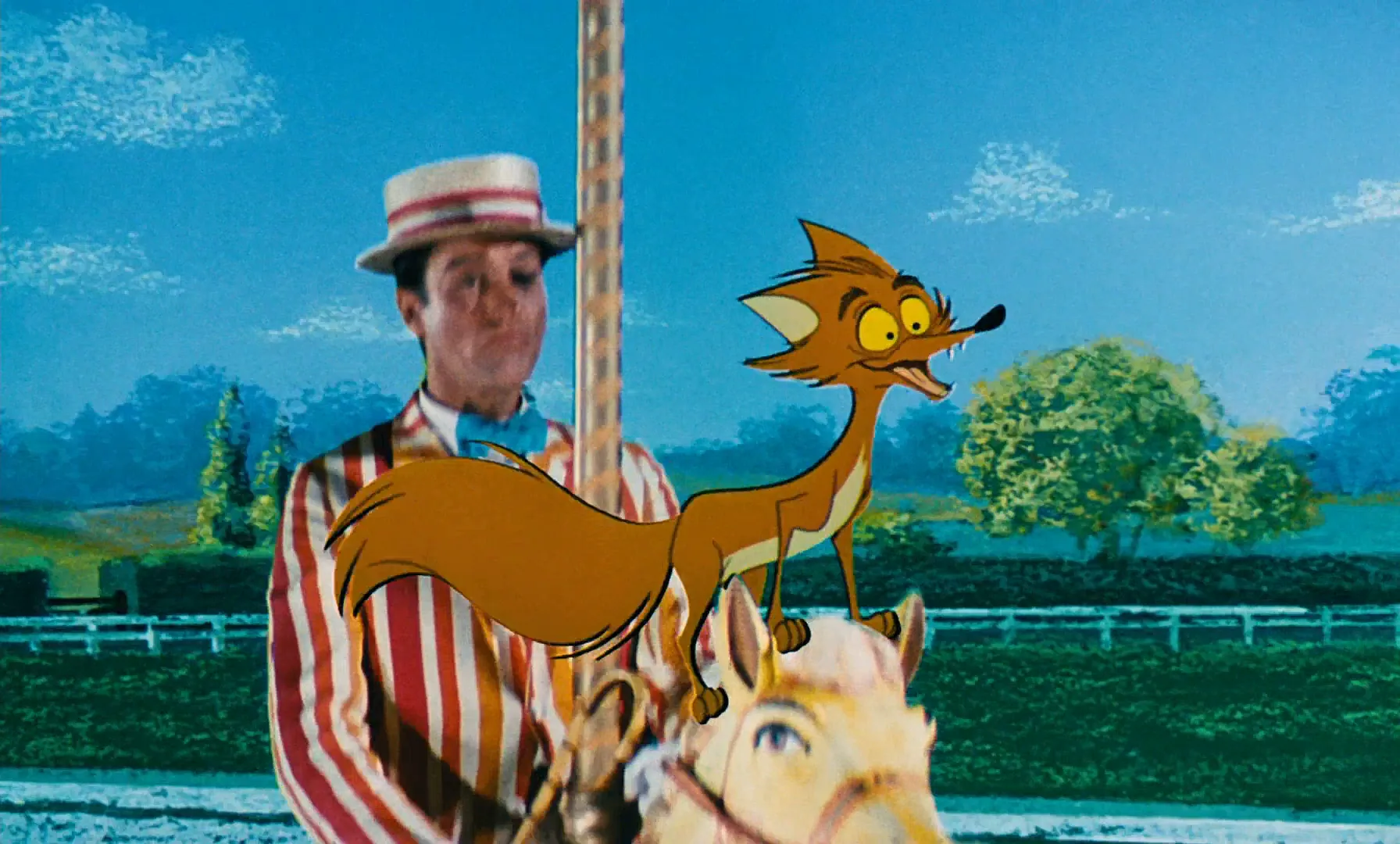
Anthropomorphism gives an animal, object or machine human traits (emotions, speech, posture, clothes, intentions) so the audience reads it as a character. On screen it lets a story talk about people from a safe distance: we laugh, grieve and judge through a fox in a suit or a robot with two camera eyes.
- What it does
- Turns a non-human thing into a character the audience can empathize with, judge and root for.
- Use it when
- You want fable-like distance, comedy, or empathy for a figure that could not be a person.
- Watch out
- Too human and the creature stops being interesting; too animal and nobody reads its feelings.
- Try this prompt
A grey heron standing upright on a dusk railway platform, conductor's cap, checking a pocket watch with a worried head tilt, eye-level 50mm film still
What is anthropomorphism in film?
Anthropomorphism is a core device of storytelling with non-human characters: it transfers human psychology or a human social role onto something that is not human. It works on a scale:
- Behavior only. The creature stays physically itself but reacts like a person, like the curious hopping lamp in Pixar's Luxo Jr. (1986).
- Body and costume. It stands upright, wears clothes and holds a job.
- Full character. It speaks, plans and carries a character arc of its own.
Speech is not required. WALL-E, in WALL-E (2008), manages with a few words and a pair of binocular eyes. What matters is that viewers believe there is a mind behind the face.
Why do filmmakers use anthropomorphic characters?
Distance. Animals acting like people are the oldest vehicle for a moral, from the fable to modern allegory. A film can handle class or prejudice through species, as Zootopia (2016) does with a whole animal city.
Empathy on demand. A small, readable face earns sympathy fast. Toy Story (1995) makes us worry about plastic figures within minutes.
Comedy. The gap between animal body and human manners is funny by itself.
Projection. Sometimes a human character does the anthropomorphizing. In Cast Away (2000) a stranded man paints a face on a volleyball and names it Wilson; its loss hurts because we watched him give it a personality.
How to direct an anthropomorphic character
Decide which human traits the character gets and which animal traits it keeps. Kept traits hold the charm: a fox that still digs, a dog that cannot talk.
- Eyes first. The audience reads a mind through the eyeline. Let the character look at other characters, not only at things.
- Shoot it like an actor. Camera at its eye level, close-ups, reaction shots, over-the-shoulder coverage. A creature shot only from human height stays a pet.
- Posture and costume. Standing upright and holding objects signal personhood; a waistcoat or uniform adds job and class.
- Pick the technique. Animation, stop-motion, puppets and animatronics (practical effects), trained animals with VFX, or performance capture, as with Andy Serkis playing the ape Caesar in Rise of the Planet of the Apes (2011).
Lock the design on a character sheet. In FlashBoards, pin that sheet next to animal reference photos, voice notes and AI takes, so the team sees how human the character may get.
The talking animal
The most literal form of anthropomorphism; the method sets the tone:
- Voice over a real animal, mouth still. Homeward Bound: The Incredible Journey (1993) gives real, unaltered pets voiced thoughts.
- Real animals with replaced mouths. Babe (1995) combined trained animals, animatronic doubles and digital lip-sync.

- Fully built characters. Stop-motion in Fantastic Mr. Fox (2009), CG in Paddington (2014).
Then set the rules: can humans understand the animal, or only other animals? Babe talks to sheep, not to the farmer. Voice acting carries the personality the face can only suggest.
Anthropomorphism vs. personification
The terms overlap and are often used as synonyms. A useful working split: anthropomorphism makes a non-human thing literally behave as a person inside the story (the fox really wears the suit), while personification gives an abstract idea human form. Death playing chess with a knight in The Seventh Seal (1957) is personification: mortality becomes a man in black.
Anthropomorphism in motion
3 clipsThese loops show anthropomorphism in motion, where a still frame can't: watch how the effect plays out over a few seconds.

Anthropomorphism stills
4 framesFrames where posture, costume, eyeline or framing make a non-human figure read as a character.
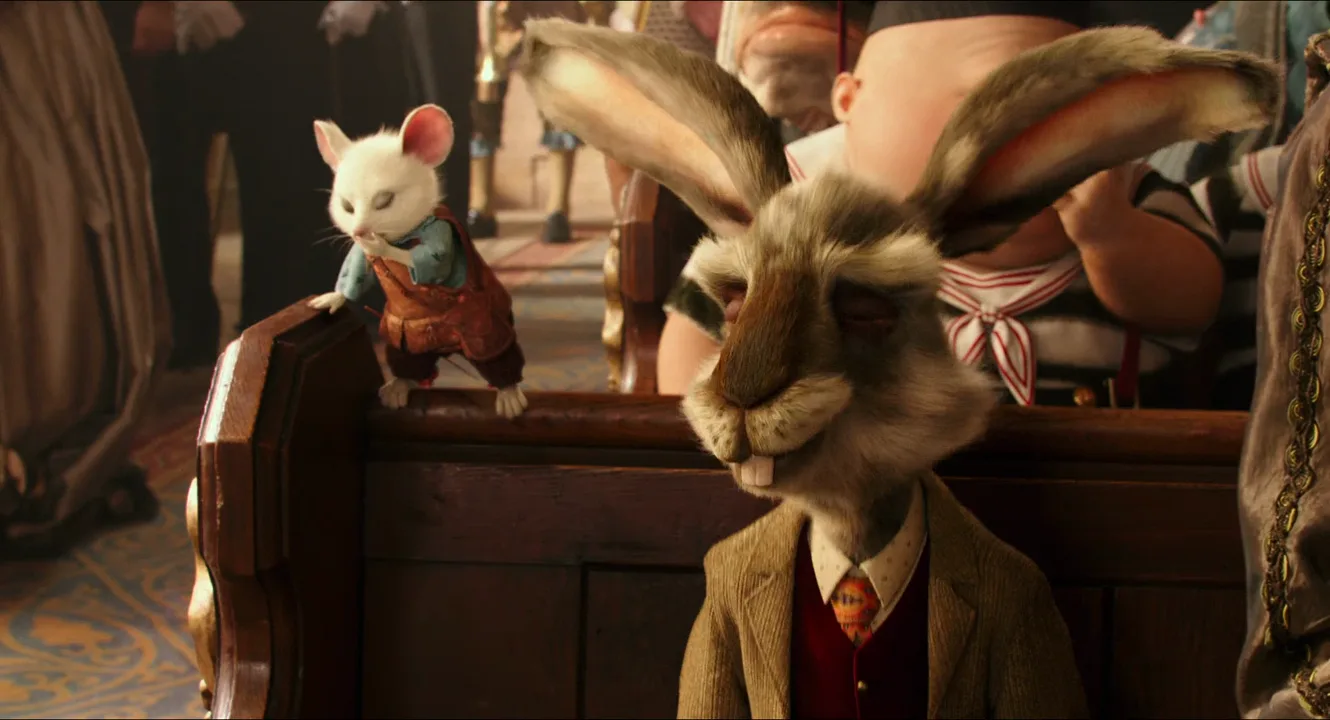
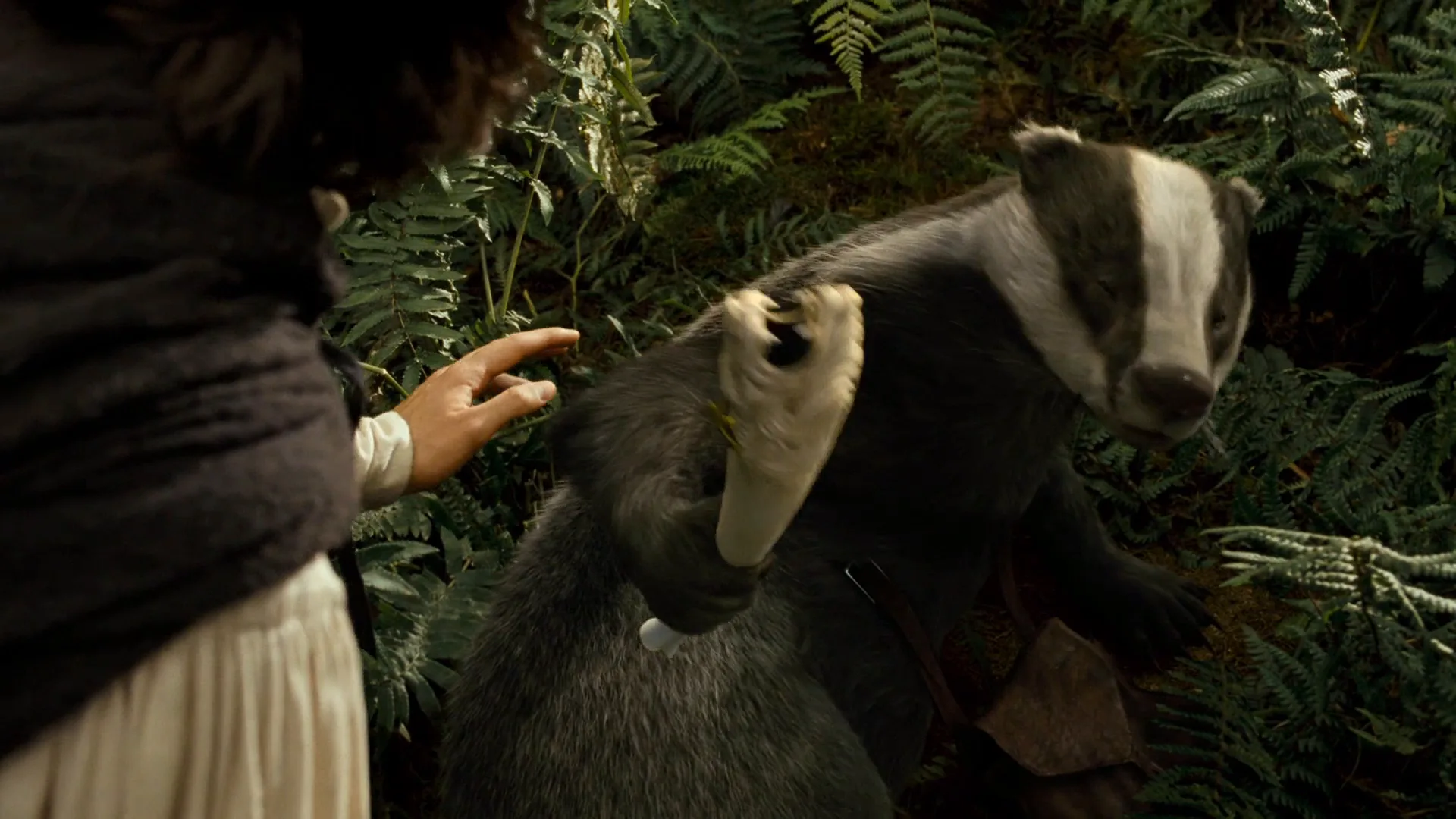
How to create a anthropomorphism with AI
4 promptsImage models know anthropomorphic mostly as cartoon mascots. For a filmic result, describe a real animal body and add only the chosen human traits: posture, costume, a prop, one expression. Compare the takes side by side on one FlashBoards board. The fourth prompt re-shoots a real film shot from a text description alone, and the original plays next to the result so you can compare.
Medium shot at the bird's eye level: a grey heron with realistic feathers standing upright on an empty rural railway platform at dusk, wearing a navy conductor's cap and a brass-buttoned waistcoat, a pocket watch pinched in its wingtip feathers, head tilted, looking worried. Sodium platform lamps, rails fading into mist, 50mm lens, shallow depth of field, cinematic film still.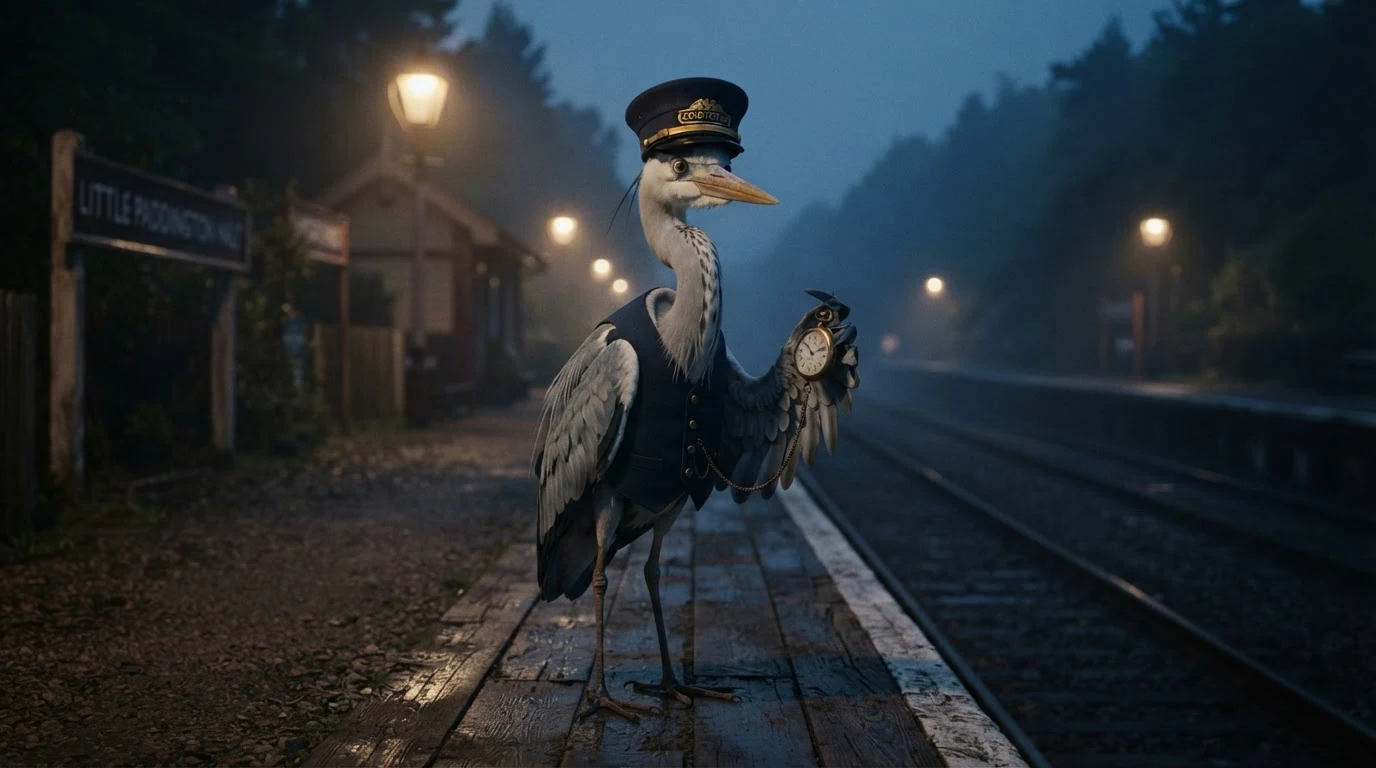
Realistic feathers keeps the animal real; cap, waistcoat and pocket watch give it a job; looking worried adds the mind. At the bird's eye level frames it as a character, not wildlife.
Open FlashBoardsStop-motion miniature set, wide shot: a felt-and-wire mole in a knitted mustard cardigan and round spectacles sits at a tiny wooden desk in an underground burrow, reading a letter by candlelight, shoulders slumped. Roots hang from the earthen ceiling. Warm candle key light, visible handmade textures, 35mm lens.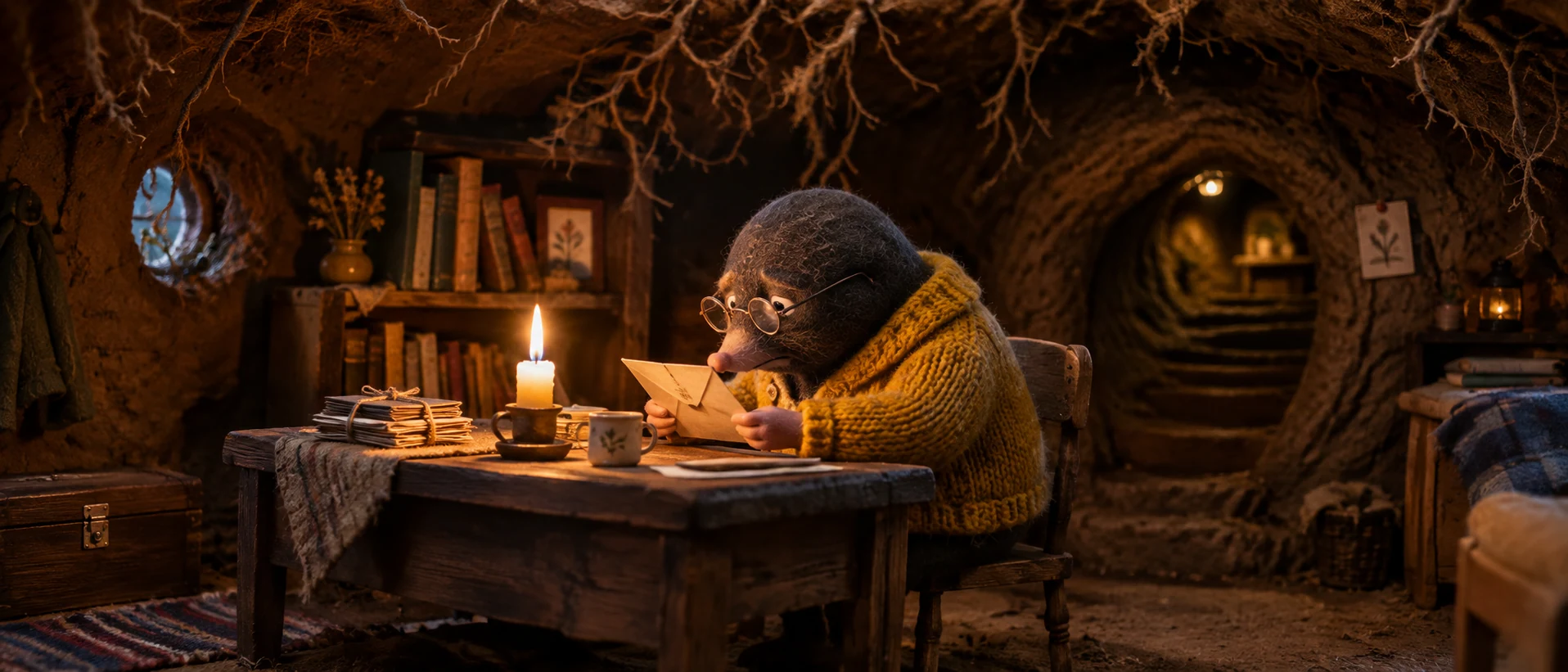
A second take in another technique: stop-motion miniature and handmade textures set the style, while shoulders slumped carries the emotion through posture alone.
Open FlashBoardsCamera: slow steady push-in from the medium shot toward a medium close-up of the heron, moving from the first frame. Action: the heron is already tapping the pocket watch with its beak. It snaps the watch shut, turns its head to look down the empty rails, then straightens its cap with one wingtip and settles its feathers with a small shrug.Starting mid-tap keeps the shot alive. The shrug and the cap adjustment are human gestures performed with bird anatomy.
Open FlashBoards{
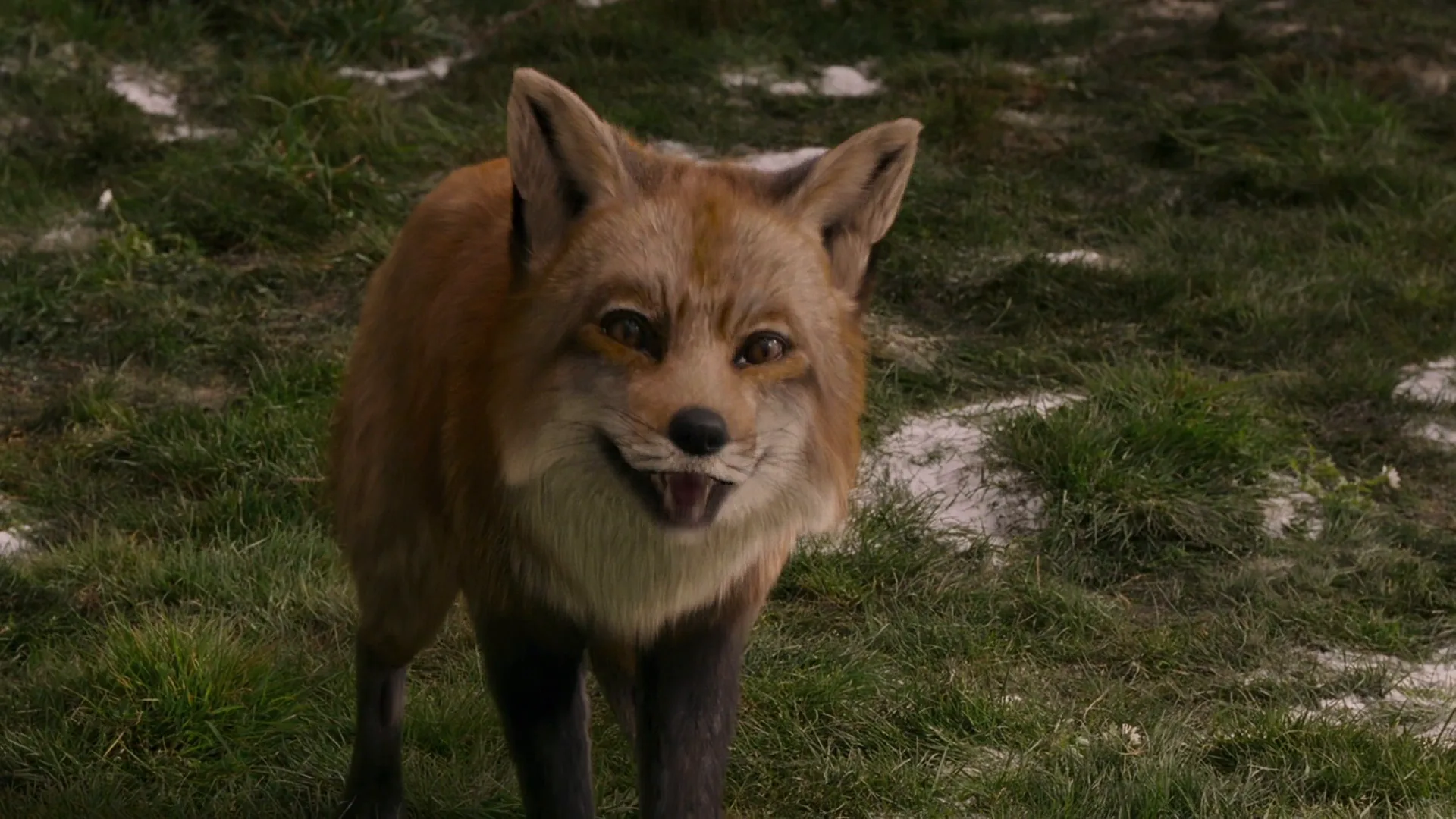
"output": "Full-screen live-action shot from The Chronicles of Narnia: The Lion, the Witch and the Wardrobe (2005), from its very first frame: one continuous locked-off shot. Photoreal fantasy feature on 35mm, overcast late-winter afternoon, soft even daylight from above, muted green and russet palette, a sloping meadow of short damp grass with small pale patches of melting snow.",
"characters": {
"S1": {
"name": "the Fox, played by Rupert Everett",
"look": "a real adult red fox with realistic dense russet fur, cream chest and muzzle, black legs, amber eyes, natural fox anatomy standing on four legs",
"voice": "refined, cultured English male voice, smooth and politely dry"
}
},
"shots": [
{
"shot": 1,
"camera": "locked-off, low camera close to ground level, normal lens, medium shot of S1 from ears to front paws, S1 slightly left of center and facing the lens; the grassy slope fills the whole background",
"action": [
"BEGINNING: alive from the first frame, S1 already stands square to the lens, eyes squeezed shut in a broad human grin, already talking.",
"THEN: S1 opens its eyes and looks straight into the lens, the mouth shaping each word like a person, head tilting and bobbing gently with the rhythm of the sentence.",
"END: S1 finishes the line, lowers its head a little and holds a narrow, knowing look into the lens, ears forward."
],
"dialogue": [
{
"speaker": "S1",
"on_screen": true,
"when": "from the first frame, finishing shortly before the end of the shot",
"delivery": "polite, faintly amused, a gentle correction",
"line": "<d>[English] Not to seem rude, but I wasn't actually talking to you.</d>"
}
]
}
],
"sound": {
"ambience": "quiet open meadow, light breeze in the grass, a few distant birds",
"speech": "exactly these spoken phrases, each said once, in this order",
"never_spoken": "no narration and no voice-over: the descriptions, performance notes and step words of this prompt are never spoken aloud",
"music": "a film score under the scene, always below the voices: soft, playful woodwinds over light pizzicato strings",
"subtitles": "none"
}
}Remakes the locked-off talking-fox shot from The Chronicles of Narnia: The Lion, the Witch and the Wardrobe (2005), dir. Andrew Adamson, DP Donald McAlpine: the low centered framing on a thawing meadow, the squinting grin that opens into speech, the look into the lens and the Fox's own line carried over.
The animal stays real in look: realistic dense russet fur and natural fox anatomy standing on four legs. Only the face is humanized: the broad human grin at the start, the mouth shaping each word like a person. The Fox's real line, quoted verbatim, and the locked-off low camera make it address the viewer as a character.
Common mistakes
- Anthropomorphic fox often returns a human with fox ears. Name the real species and anatomy, then list only the human traits you want.
- Wings and paws turn into hands when they hold props. Say how the object is held: pinched in its wingtip feathers.
- In video, mouths start flapping. For a silent character write beak closed and give it a physical action.
Keep the reference frames, prompts and every generated take side by side — images and video in one canvas.
FAQ
5 questionsWhat is anthropomorphism in film?
It is giving an animal, object or machine human traits such as emotions, speech, upright posture, clothes or intentions, so the audience treats it as a character. It ranges from a dog with human reactions to a fully talking, dressed animal with its own arc.
What are examples of anthropomorphism in movies?

The toys of Toy Story (1995), the robot in WALL-E (2008), the pig in Babe (1995), the dressed foxes of Fantastic Mr. Fox (2009), the animal city of Zootopia (2016) and Gromit, the silent, expressive dog of the Wallace & Gromit films.
What is the difference between anthropomorphism and personification?
They are close and often used interchangeably. Anthropomorphism usually means a non-human thing literally acts human inside the story, like a fox in a suit. Personification gives an idea human form, like Death as a man in black in The Seventh Seal (1957).
How do films make animals talk?
Three main routes: a voice-over on a real animal whose mouth does not move, real animals with digitally replaced mouths or animatronic doubles, and fully animated characters in hand-drawn, stop-motion or CG animation. The voice performance carries much of the personality.
Does an anthropomorphic character have to speak?
No. Gromit, WALL-E and the lamp in Luxo Jr. barely speak or never do, yet read as characters through eyes, posture, timing and reactions. Silence can strengthen the effect, because the audience does the work of reading the mind behind the face.
Related terms
2- Voice ActingActing & Casting
Voice acting is performing a character with the voice alone — for animation, games, dubbing or narration — where timing, pitch and texture have to carry the whole performance.
- Character SheetScreenwriting
A character sheet is a one-page reference that fixes who a character is: for writers it lists traits, goals and history; for artists it shows the face, costume and turnaround views so every drawing, shot or AI generation stays consistent.
Further reading
Frank Thomas and Ollie Johnston, The Illusion of Life: Disney Animation (1981).