 FlashBoards Learn
- Learn
- Storytelling
- Allegory
Storytelling · Film language
Allegory
Also called: allegorical story
An allegory is a story in which the characters, places and events stand, as a whole system, for something else: a political order, a moral idea, a historical moment. The literal plot works on its own, but every part of it also maps onto a second meaning that runs from the first scene to the last.
- What it does
- Lets a film talk about power, faith or history at a distance, so the audience recognizes the real subject without being lectured.
- Use it when
- The subject is too large, too painful or too dangerous to name directly, and a built world can hold it.
- Watch out
- If the literal story stops making sense on its own terms, the film turns into a decoding exercise.
- Try this prompt
Wide shot of gray-coated workers carrying water buckets up an endless stone stairway to a glass greenhouse with one green tree, dusty desert light
What is an allegory in film?
An allegory is a comparison carried by the entire story: a world whose rules, conflicts and outcome correspond to something outside the film.
- A consistent mapping. Characters and places line up with real forces: the train in Snowpiercer (2013) is a class society, the poor packed into the tail cars, the rich at the front.
- A story that holds up literally. You can watch Invasion of the Body Snatchers (1956) as a pure alien-invasion thriller; the allegory rides on top.
- A second meaning that lasts. The parallel runs from setup to ending, so allegory shapes the theme and the whole setting.
In storytelling terms, allegory is a cousin of the parable and the fable.
What are the main types of allegory?
- Political. Metropolis (1927) splits its city vertically, workers underground and the privileged in gardens above. District 9 (2009) uses aliens in a Johannesburg camp to evoke apartheid.
- Historical. A real period in disguise. Godzilla (1954) is widely read as Japan's answer to the atomic bombings; The Crucible uses the Salem witch trials to talk about the McCarthy hearings.
- Religious and moral. In The Seventh Seal (1957) a knight back from the Crusades plays chess with Death while plague spreads, and the game becomes a question about God's silence.
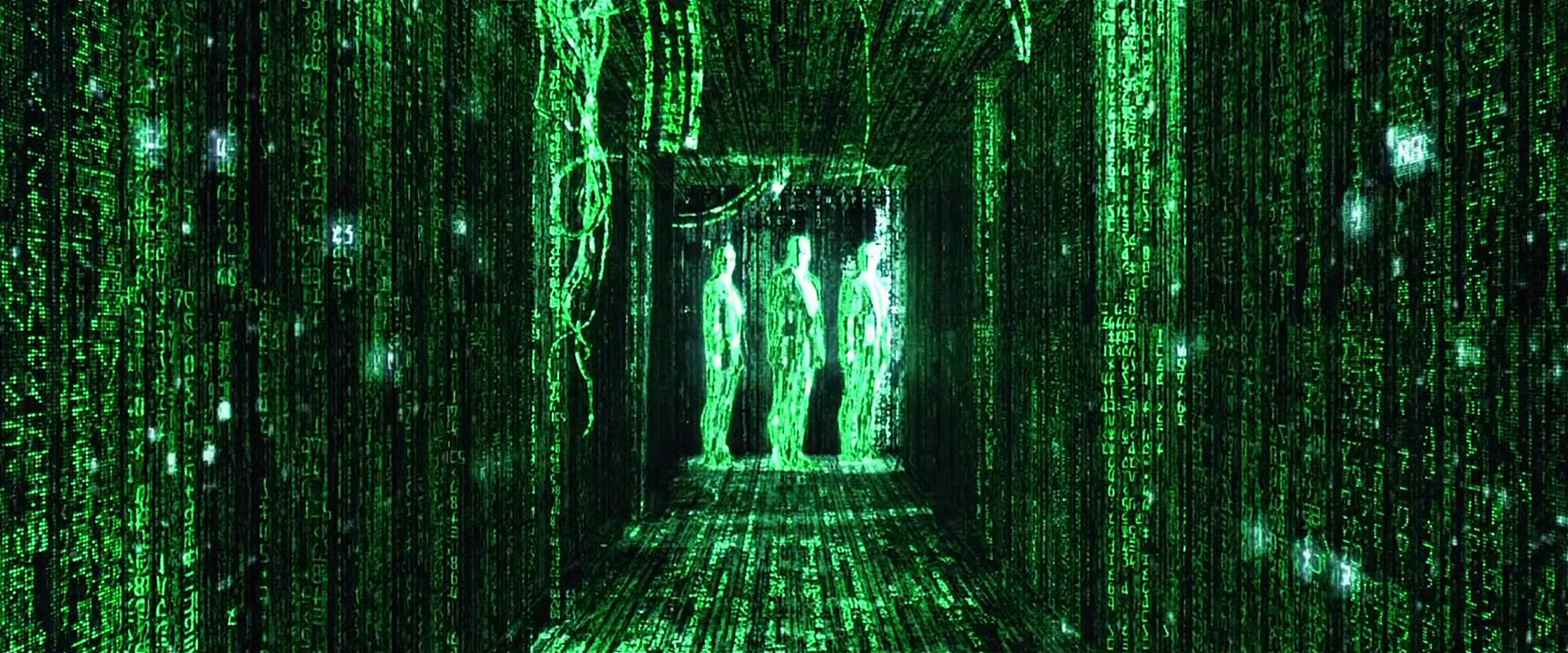
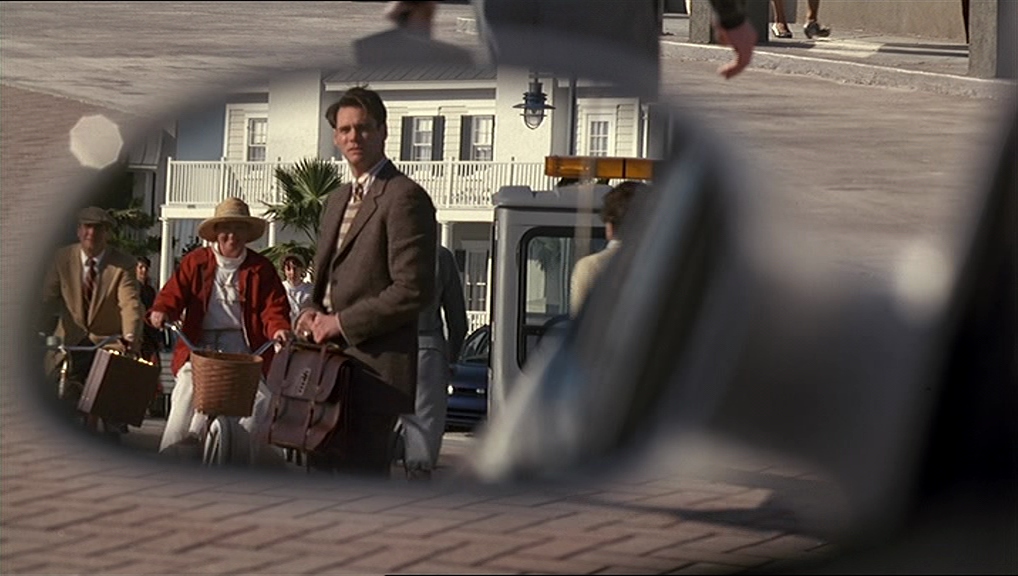
- Philosophical. The Matrix (1999) and The Truman Show (1998) both rebuild Plato's cave; see the allegory of the cave.
- Social. Get Out (2017) wraps race in horror; Parasite (2019) turns two houses at two heights into a class map.
Why do filmmakers use allegory?
Distance. An invented world lets the audience see its own situation without defending against it.
Safety. Under censorship, the forbidden subject goes into a fairy tale, a period piece or science fiction.
Longevity. A film pinned to one headline dates; an allegory about power keeps finding audiences who map it onto their own moment.
How to build an allegory on screen
- Start from the real subject, then invent the world. Write the mapping privately: "the tail section is the working class." The audience should never see the list.
- Give the world one physical rule that carries the idea. Height for class, walls for control, a clock for mortality. Repeat it as a motif in sets and blocking: low and crowded for the oppressed, high and open for the powerful.
- Let characters want concrete things. Curtis in Snowpiercer wants to reach the engine, not to "overthrow capitalism."
- Design with restraint. Color can split the worlds, as the code-green of The Matrix separates the simulation from the real.
On a FlashBoards board, keep the mapping notes, reference frames and generated key frames of your world side by side, so the designer and DP work from the same rules.
Allegory vs. symbolism vs. visual metaphor
All three make an image mean more than itself; the difference is scale.
| | Scale | Example | |---|---|---| | Symbolism | One object, color or place | The red coat in Schindler's List (1993) | | Visual metaphor | One image or cut presents A as B | Sheep cut to workers in Modern Times (1936) | | Allegory | The whole story and world | The train in Snowpiercer as class society |
An allegory is built from symbols and metaphors whose relationships also map onto reality. Remove a symbol and the plot still works; remove the allegory and the film loses its second meaning.
Allegory examples in film
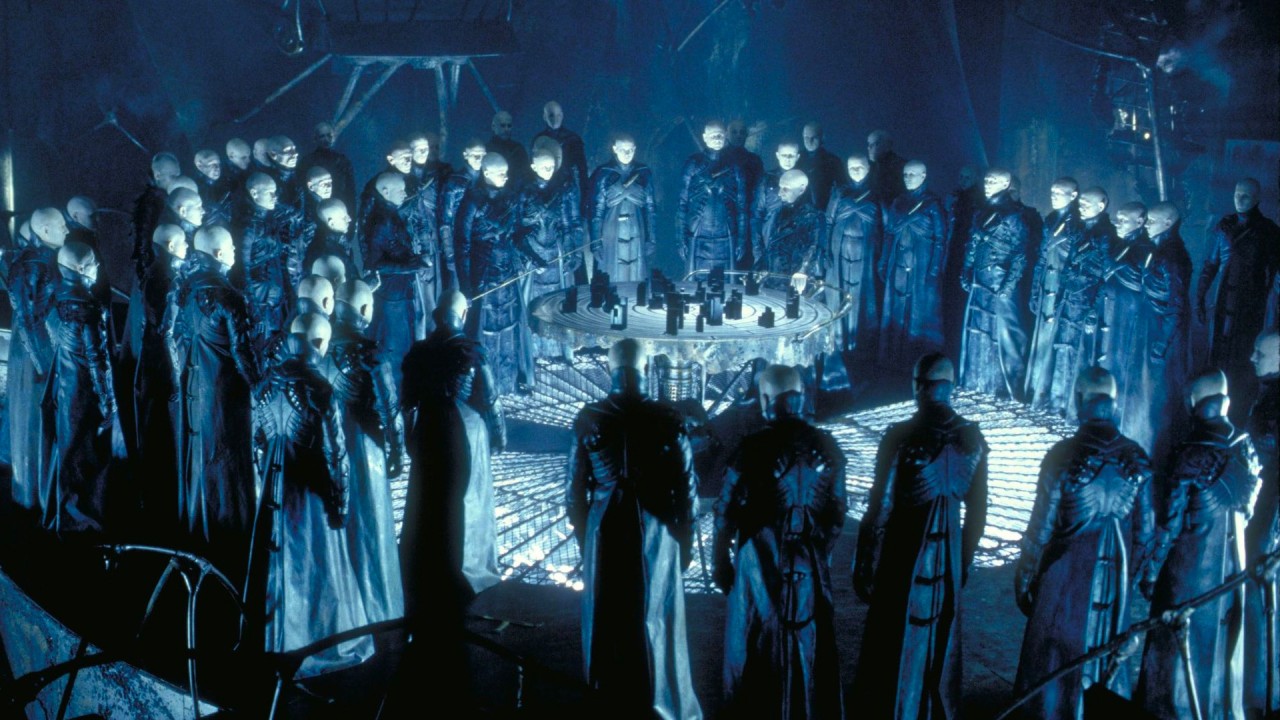
4 framesAllegorical films make their second meaning physical: a world with visible walls, a manufactured sky, rulers who rearrange reality.
How to create a allegory with AI
4 promptsAn allegory can't fit in one frame, but its world can: the physical rule that carries the second meaning. Nano Banana 2 Lite builds the key image, GPT Image 2.5 tries another allegory, and MiniMax H3 Max Turbo animates the first frame. Keep them on one FlashBoards board beside your mapping notes. The fourth prompt re-shoots a real film shot from a text description alone, and the original plays next to the result so you can compare.
Wide shot, camera low at the foot of an endless worn stone stairway rising up a desert cliff. A single-file line of identical workers in gray coats carries tin buckets of water up the steps. At the very top, small and bright, a glass greenhouse holds one lush green tree. In the foreground, a tall woman in her thirties with a shaved head and a burn scar on her left cheek pauses mid-step, bucket in hand, looking up. Hazy ochre light, 28mm lens, film still.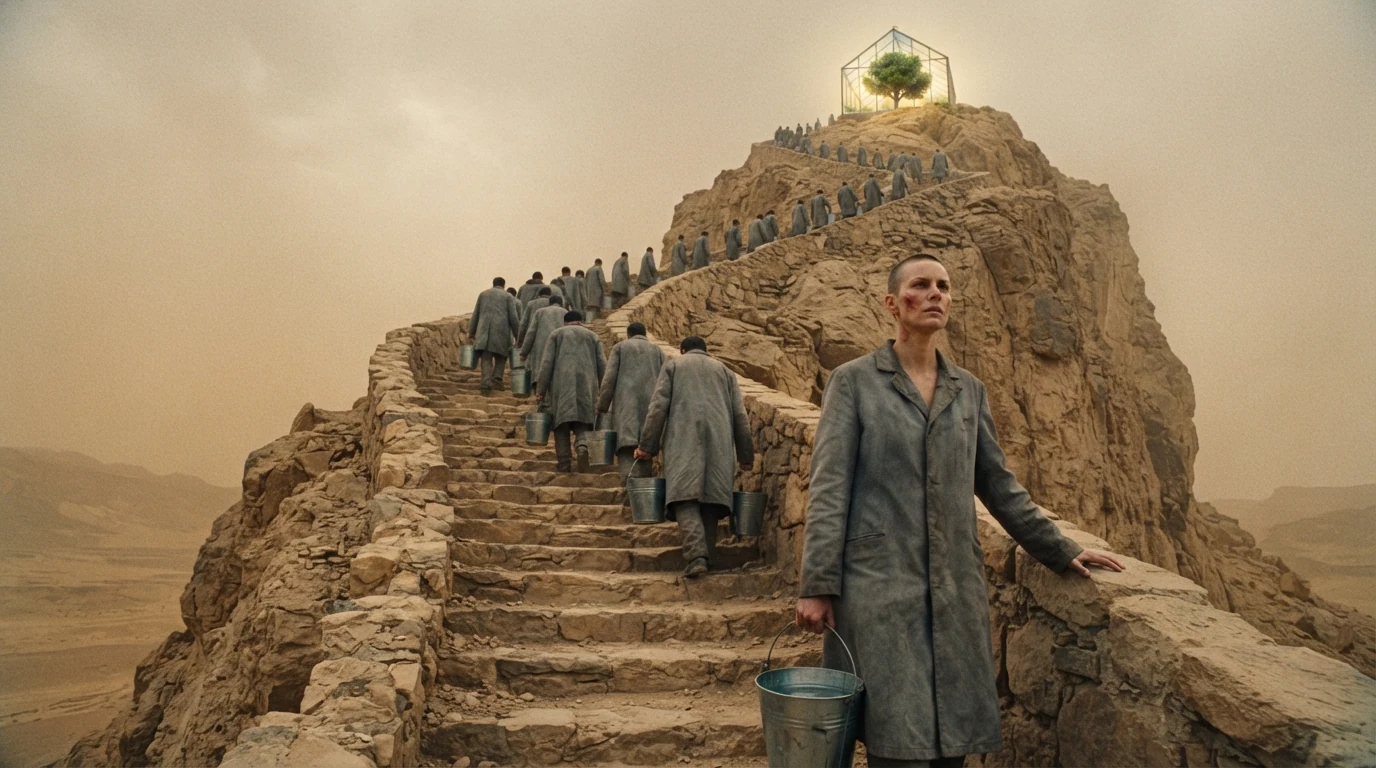
The rule is vertical: identical workers below, one lush tree on top, and camera low makes the climb endless. The woman who pauses, looking up gives the story a protagonist.
Open FlashBoardsWide 21:9 shot on the tilted deck of a sinking ocean liner at dusk. Well-dressed guests at a long candlelit banquet table keep eating and toasting while seawater covers their ankles. At the far end, a young waiter with red curly hair, freckles and a white jacket holds a tray, the only one looking at the water. Cold blue sky, warm candlelight, eye level, 35mm lens, film still.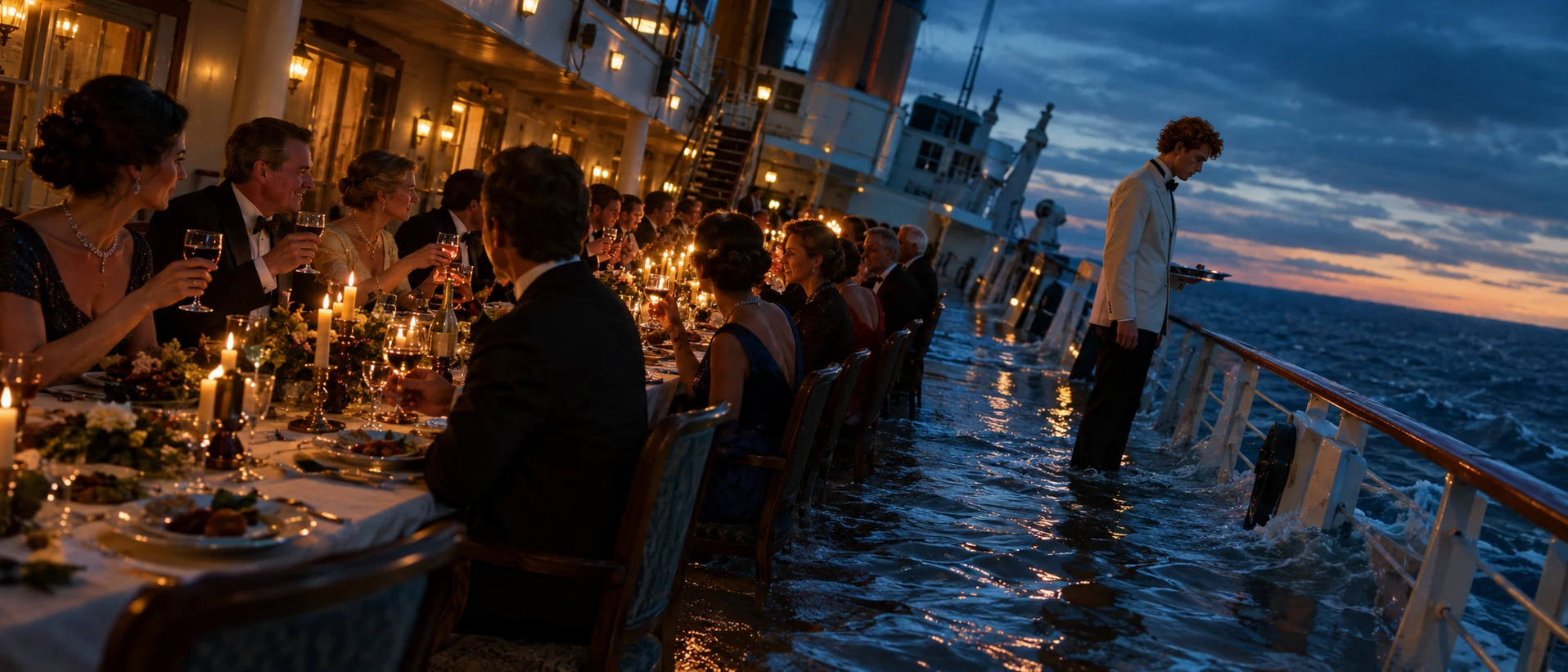
A dinner party and a society ignoring disaster in one image. Seawater covers their ankles states the rule; the only one looking at the water makes the waiter our stand-in.
Open FlashBoardsCamera: a slow, steady crane up and tilt up along the stairway, from the woman in the foreground toward the greenhouse at the top. Action: The line of gray-coated workers is already climbing, buckets swinging. The woman sets her bucket down on the step and keeps looking up. Workers behind her step around her without stopping. Water from her bucket trickles down the stone steps.Already climbing keeps the frame alive, and the crane travels the distance between labor and reward. Only recipe 1's elements are named, so nothing new gets drawn.
Open FlashBoards{
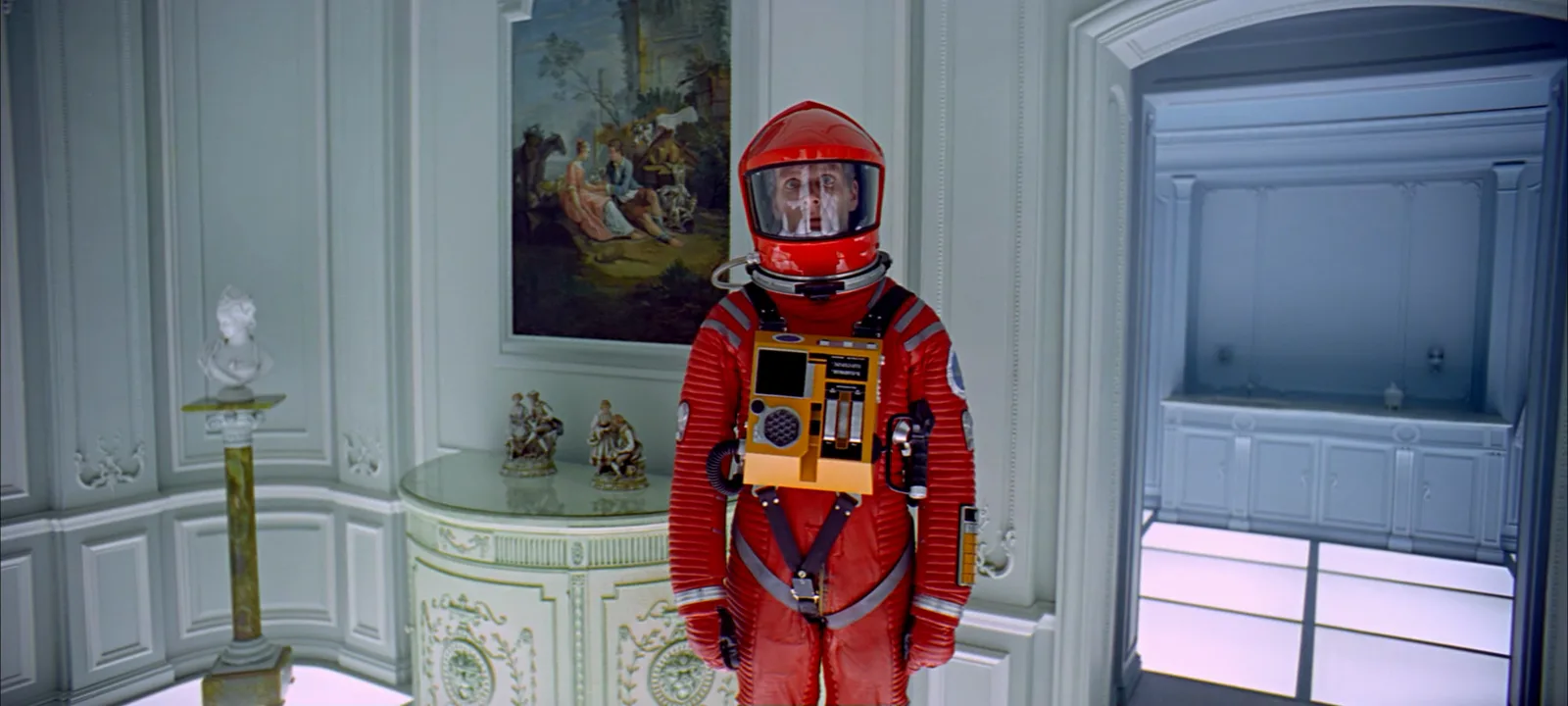
"output": "Full-screen live-action scene from 2001: A Space Odyssey (1968) from its very first frame: one continuous locked-off shot, no cuts. Late-1960s Super Panavision 70mm look, fine grain, soft shadowless white light glowing up from a luminous floor, cool pale palette of white, pale mint and powder blue with one saturated red spacesuit just left of center.",
"characters": {
"S1": {
"name": "Dr. David Bowman, played by Keir Dullea",
"look": "gaunt man with pale, drawn skin and wide staring eyes, face lit inside the clear visor of a glossy red rounded helmet; red ribbed pressure suit with a boxy mustard-yellow chest control unit, dark gray harness straps, red gloves",
"voice": "silence: he does not speak, only slow shallow breathing inside the helmet"
}
},
"shots": [
{
"shot": 1,
"camera": "static, locked-off, eye level, wide lens, medium-wide frontal framing: S1 stands just left of center from helmet to knees; the frame stays exactly the same from start to end",
"action": [
"BEGINNING: alive from the first frame, S1 already stands still in an ornate pale-mint Louis XVI room: carved white wall panels, a gilt-framed oil painting of aristocrats picnicking in a garden hangs on the wall behind his helmet, two small porcelain figurine groups stand on a curved white-and-green marble commode behind his left shoulder, a small white marble bust sits on a tall green onyx pedestal at frame left, and at frame right a tall arched doorway opens onto a pale blue-white room with a glowing floor.",
"THEN: he breathes shallowly, his chest unit barely rising, his eyes wide and fixed, mouth slightly open, only his gaze drifting a little across the room.",
"END: he stays rooted to the spot, arms hanging at his sides, staring ahead in stunned quiet, a spaceman placed like an exhibit in a room built to look like home."
],
"voice": "silence: nobody speaks in this shot, no voice at all",
"dialogue": []
}
],
"sound": {
"ambience": "a deep, even room hush and the faint hiss of air inside the helmet",
"speech": "no words in this video; the only human sounds are breaths and movement",
"never_spoken": "no narration and no voice-over: the descriptions, performance notes and step words of this prompt are never spoken aloud",
"music": "a film score under the scene, always below the voices: a soft, eerie choral drone of sustained voices with no words, slowly shifting",
"subtitles": "none"
}
}Remakes the static shot from 2001: A Space Odyssey (1968) of Dave Bowman standing silent in the period room at the end of his journey, keeping the red suit, frontal locked-off framing, painting, bust and bright doorway.
The ornate Louis XVI room around a man in a red pressure suit is the whole allegory: a traveler kept like an exhibit in a copy of home. A locked-off frame and nobody speaks leave the viewer to read the room.
Open FlashBoardsCommon mistakes
- Models decorate instead of structure: state one clear physical rule (height, walls, water).
- Crowds come out varied: write identical and name one shared costume so they read as a class.
- Naming the real subject ("capitalism") produces posters and slogans; describe only the invented world.
Keep the reference frames, prompts and every generated take side by side — images and video in one canvas.
FAQ
4 questionsWhat is an allegory in a movie?
An allegory in a movie is a story whose characters, settings and events stand for something outside the film: a political system, a moral idea or a historical period. The plot works literally, but its whole structure carries a second meaning. In Snowpiercer, a train's cars represent social classes.
What are some famous allegorical movies?
Often cited: Metropolis (1927) on class, Godzilla (1954) on the atomic age, The Seventh Seal (1957) on faith and death, The Truman Show (1998) and The Matrix (1999) on manufactured reality, and Parasite (2019) on inequality.
What is the difference between allegory and symbolism?
Symbolism works on one element: an object, color or place that stands for an idea. Allegory works on the whole story, so characters, places and their relationships together map onto another system.
Is The Matrix an allegory?
Yes. The Matrix is commonly read as a modern version of Plato's allegory of the cave: people mistake a projected world for reality until one is freed and sees the truth.
Related terms
4- SymbolismStorytelling
Symbolism is using a concrete object, color, place or action to stand for an abstract idea — a key, a staircase, rain, a red coat — so the image carries meaning beyond itself.
- Visual MetaphorStorytelling
A visual metaphor presents one thing as another through images or editing — a caged bird for a trapped heroine, a cut from a crowd to a herd — so the audience grasps an idea without it being stated.
- Allegory of the CaveFilm History & Theory
Plato's Allegory of the Cave — prisoners mistaking shadows on a wall for reality — is a classic metaphor for cinema itself and a template for films about escaping a manufactured world, like The Truman Show and The Matrix.
- ThemeStorytelling
Theme is the idea a story explores — what it says about love, power, guilt or freedom — expressed not as a slogan but through the protagonist's choices and their consequences.
Further reading
Angus Fletcher, Allegory: The Theory of a Symbolic Mode (Cornell University Press, 1964). Fredric Jameson, "Third-World Literature in the Era of Multinational Capitalism" (Social Text, 1986), on national allegory.