 FlashBoards Learn
- Learn
- Storytelling
- Motif
Storytelling · Film language
Motif
Also called: recurring motif, visual motif
A motif is an image, object, sound, color or line of dialogue that recurs through a film and gathers meaning each time it returns. Alone it is a detail; repeated and varied, it becomes a thread the audience follows toward the film's theme without anyone stating it.
- What it does
- Turns a repeated detail into a thread of meaning that tracks the theme and the characters' change.
- Use it when
- The film has an idea you never want a character to say out loud.
- Watch out
- A motif that returns unchanged, or too often, stops meaning anything and starts to feel like a gimmick.
- Try this prompt
Overcast gray beach, girl in a gray-green raincoat flying a bright red kite, the kite the only saturated color, wide shot, 35mm
What is a motif in film?
A motif is any element a film deliberately repeats so that the repetition itself means something. The first appearance is quiet; by the third, the audience has learned to notice it, and each return carries what the earlier ones picked up.
Motifs come in several forms:
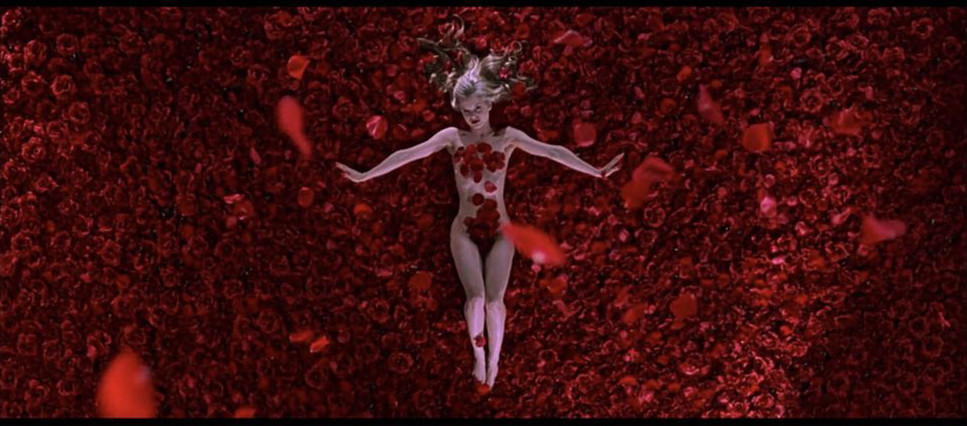
- Objects and images: rose petals, stuffed birds, shoes, mirrors.
- Colors: a hue tied to a character or idea, the territory of color symbolism.
- Compositions: a character framed through a doorway again and again.
- Sounds and lines: a phrase that returns in a new context. A recurring musical theme is a leitmotif.
- Gestures: a habit repeated until the one time it isn't.
It is one of the quietest narrative techniques.
How a motif gathers meaning
A motif works through repetition with variation. The element stays recognizable while its context, size, light or state changes, and that change tracks what happens to the characters.
- In American Beauty (1999), red roses move between the garden, the dinner table and Lester's fantasies, standing for beauty, desire and suburban perfection at once.
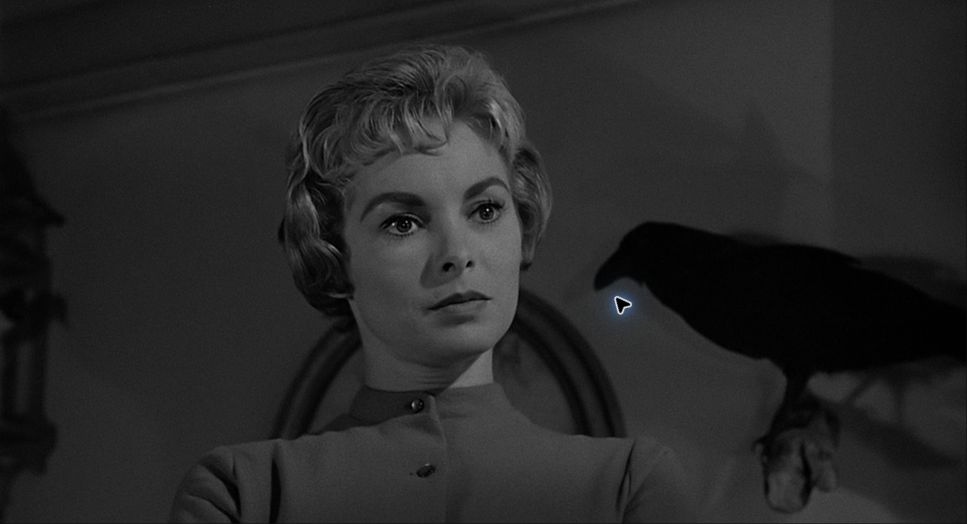
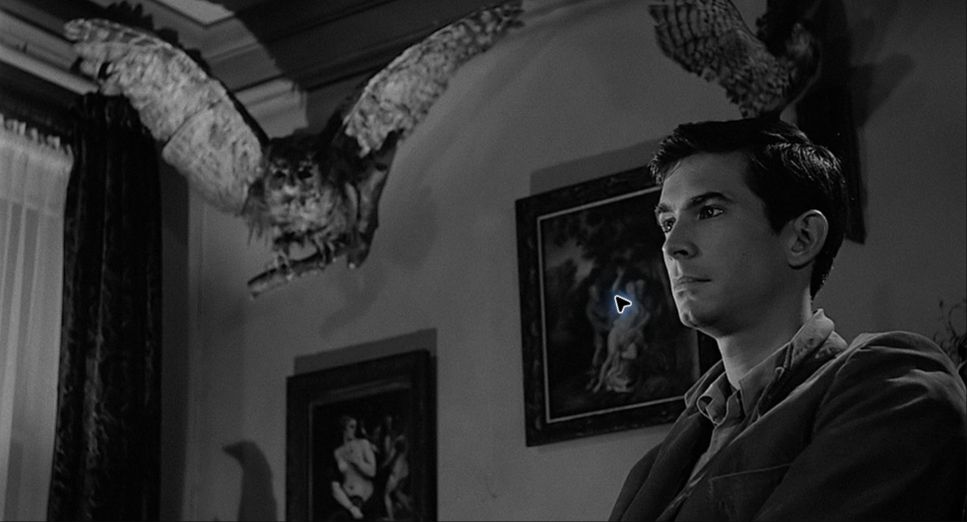
- In Psycho (1960), birds keep returning: Marion's surname is Crane, and Norman's parlor is full of stuffed owls and crows. Eyes recur too.
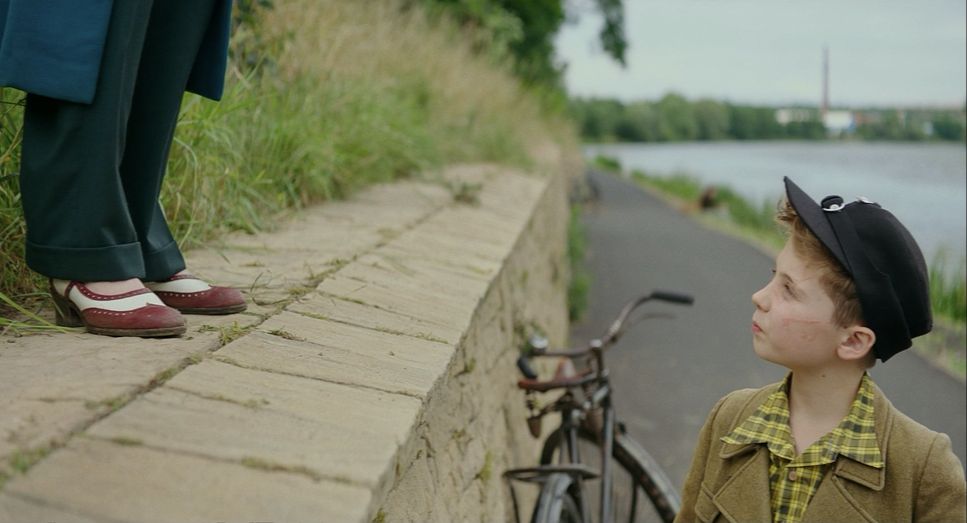
- In Jojo Rabbit (2019), the camera keeps dropping to shoe level, and that repetition pays off in the film's hardest moment.
The last, changed return of a motif is often the clearest statement of the theme the film ever makes. When it comes at the very start and end, it overlaps with bookends.
Visual motifs: doors, mirrors, stairs and color
A visual motif is one the audience sees: an object, shape, color or way of framing. Common ones:
- Doors and windows: thresholds, confinement, a world seen but not entered.
- Mirrors: divided identity, as in Black Swan (2010).
- Stairs: class, ascent and descent.
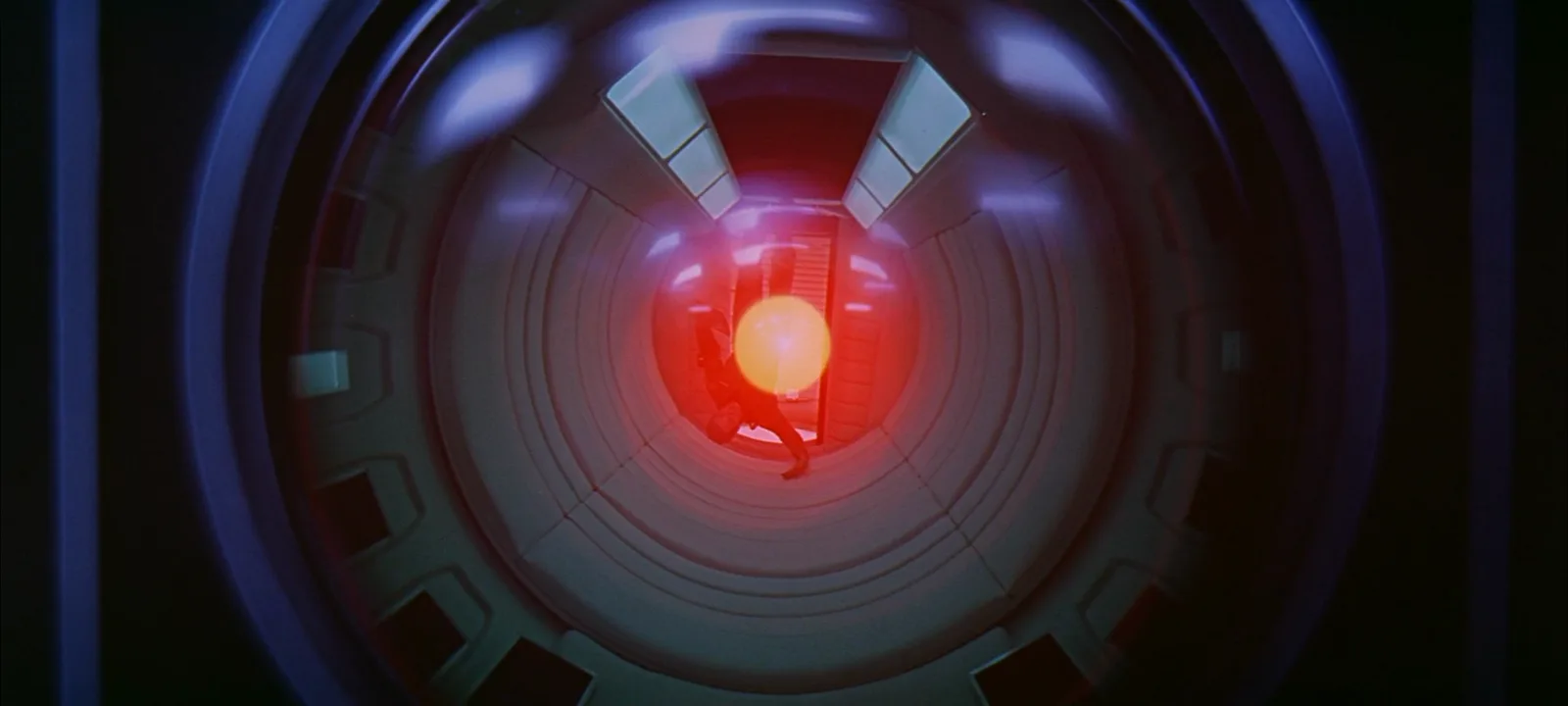
- Circles and eyes: surveillance, like HAL's red lens in 2001: A Space Odyssey (1968).
- A single saturated color in a muted palette.
What turns an object into a motif is consistent treatment: similar framing and screen position, with one variable that changes.
How to build a motif on set and in the edit
- Start from the theme. Pick one element that can carry the central idea.
- Give it a cover story. The first appearance should read as set dressing or a character habit.
- Plan three to five returns at turning points, not in every scene.
- Vary one thing each time: condition (fresh, wilted, broken), size in frame, light, or who holds it.
- Rhyme the camera. Repeat lens, angle and screen position so memory links the appearances; a match cut can join two directly.
- Protect it in design and the grade. If the motif is a color, keep that color out of the rest of the frame.
Tracking motifs in FlashBoards. Give each motif a row on the board: reference frames, then every planned appearance in script order, noting what changes. A missing variation shows at a glance.
Motif vs. theme vs. symbol
| Term | What it is | Example | |---|---|---| | Theme | The idea the film explores | Desire versus conformity | | Motif | A recurring element that builds toward the theme | Roses returning across American Beauty | | Symbol | One element standing for an abstract idea | A single rose as desire |
A theme can be stated in a sentence; a motif exists only through repetition. A symbol can appear once; repeat it with variation and it becomes a motif. A motif can also plant a later event, where it overlaps with foreshadowing.
Motif examples in film
6 framesEach frame is one appearance of a motif the film repeats.
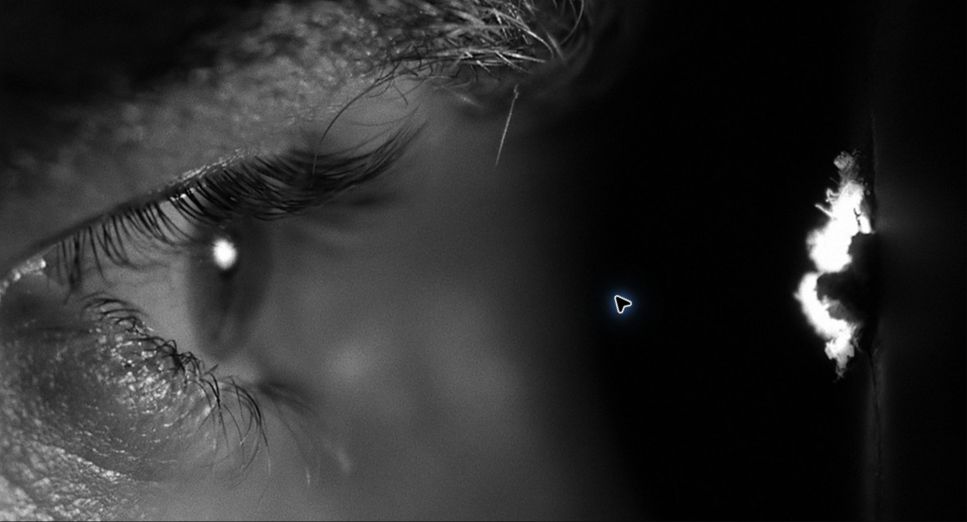
How to create a motif with AI
4 promptsA motif lives across shots, so generate its appearances as a set: same object, placement and palette, one variable changing. Keep them side by side on a FlashBoards board to check the motif reads the same every time. The fourth prompt re-shoots a real film shot from a text description alone, and the original plays next to the result so you can compare.
Wide shot on a windy overcast beach: a nine-year-old girl with a short black bob, a gap in her front teeth and a gray-green raincoat runs along wet sand holding the string of a bright red diamond-shaped kite. The kite flies in the upper left third of the frame and is the only saturated color in the image. Muted blue-gray palette, 35mm lens at f/5.6, camera at waist height, soft diffused daylight, film grain.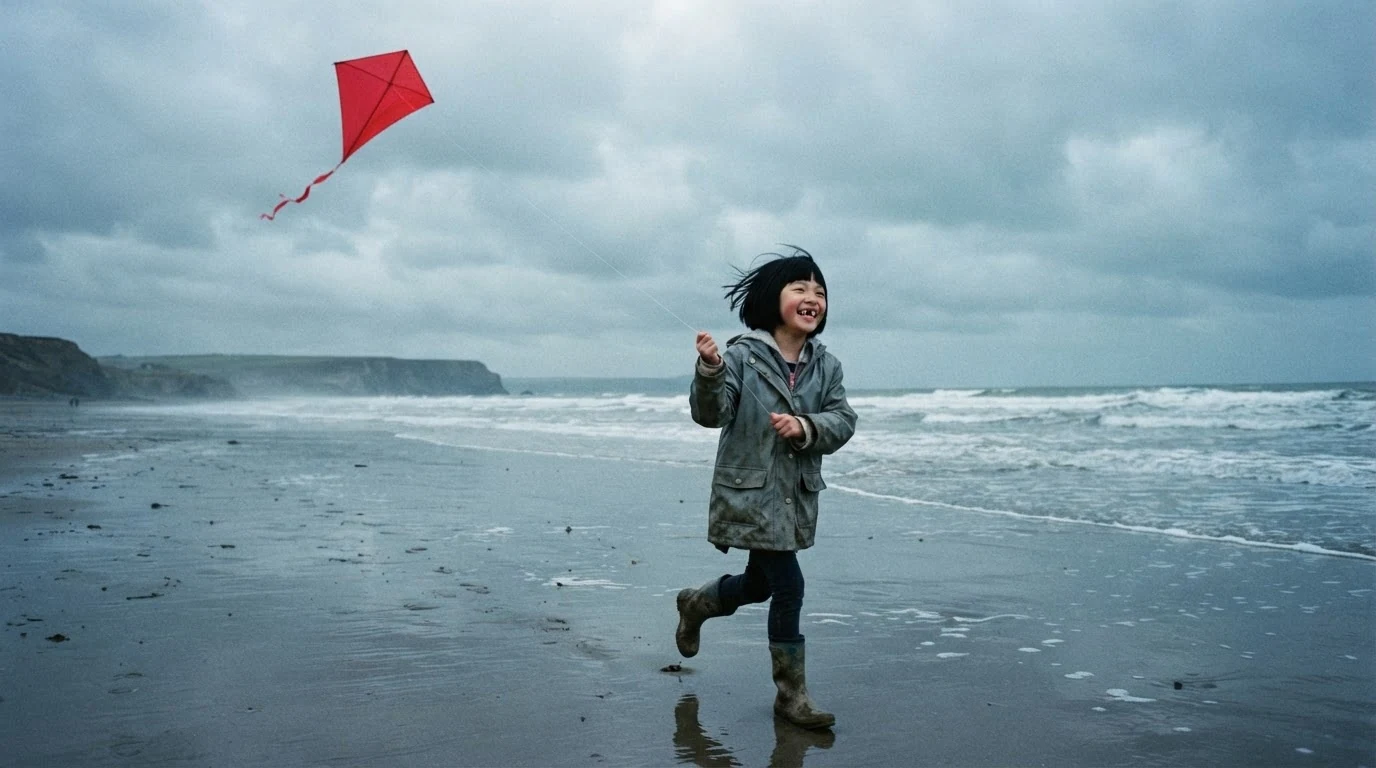
The only saturated color isolates the kite so it can become a motif; upper left third fixes a screen position to repeat later.
Open FlashBoardsThree film stills side by side in one horizontal strip, thin black gutters, same muted blue-gray palette, one bright red diamond-shaped kite as the only saturated color. Left: a nine-year-old girl with a short black bob in a gray-green raincoat flies the kite on an overcast beach. Center: the same girl as a teenager sits alone in a pale hospital corridor, the folded kite across her knees. Right: a woman in her forties, black bob streaked with gray, ties a new red kite to a small boy's wrist on the same beach. Kite in the left third of every panel, matching wide compositions, 35mm lens, film grain.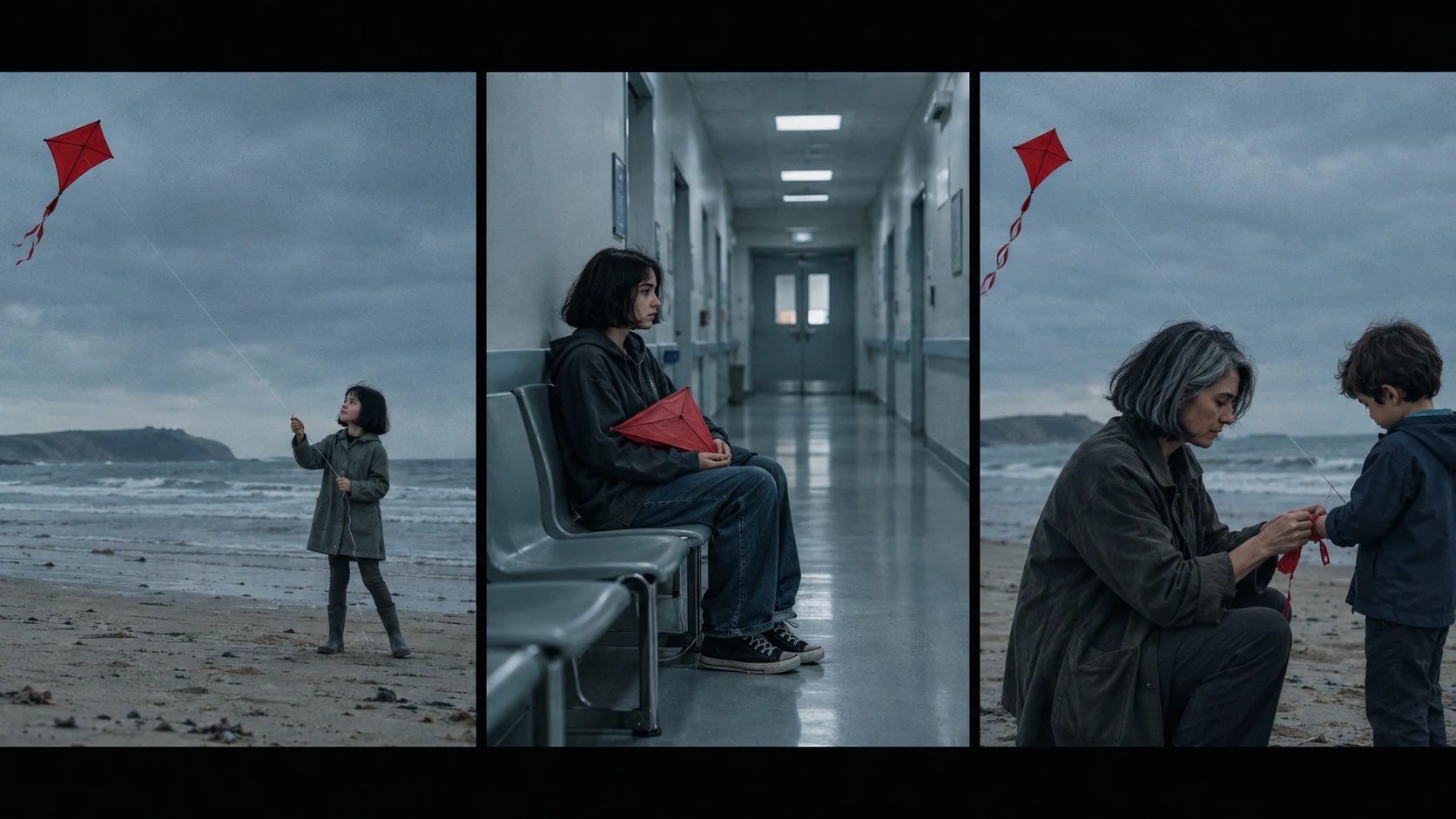
One image shows the motif's arc: same kite, placement and palette, while its state and holder change. Matching wide compositions is the camera rhyme.
Open FlashBoardsCamera: tracks sideways alongside the girl at running pace, then tilts slightly up at the end to hold the red kite against the gray sky. Action: the girl is already running as the shot begins, raincoat flapping; the kite dips toward the sand, she pulls the string and it climbs again; she slows and looks up at it, laughing.Already running keeps the shot alive from the first frame; ending the tilt on the kite hands the last image to the motif.
Open FlashBoards{
"output": "Full-screen live-action shot from 2001: A Space Odyssey (1968) from its very first frame: one continuous locked-off extreme close-up of the camera eye of HAL 9000, the spaceship's computer, framed dead centre. 65mm film clarity with fine grain, dark near-black surroundings, a glowing red iris with a hot yellow-white centre, cool blue-violet highlights on the curved glass, and the pale white curved interior of the ship's rotating centrifuge reflected in the lens.",
"characters": {
"S1": {
"name": "a Discovery crew member, seen only as a small reflection in the lens",
"look": "slim man in a dark one-piece flight suit, short hair, carrying a flat rectangular board in one hand",
"voice": "silence: he says nothing"
}
},
"shots": [
{
"shot": 1,
"camera": "locked-off, perfectly static, eye level with the lens, extreme close-up: the round convex glass lens fills the full height of the frame in the centre, thin black panel edges with vertical blue-violet trim at the left and right sides of the frame; the camera never moves, never zooms, never refocuses",
"action": [
"BEGINNING: alive from the first frame, the red iris glows steadily in the exact centre of the frame with a small bright yellow-white core; the convex glass reflects the curved white ribbed wall of the centrifuge like a fisheye, bent into a ring around the red centre; a wedge of two long white ceiling light panels is reflected at the two o'clock position, upper right of the red core; a row of soft blue-violet highlights sits along the top rim of the glass.",
"THEN: the reflection slowly turns counterclockwise as if the curved room behind the camera were revolving: the wedge of white light panels glides from upper right up to twelve o'clock, straight above the red core; the red glow never flickers and the lens itself never moves.",
"THEN: a tiny dark human figure appears in the reflection just below the red core, upside down because of the curved glass, walking toward the lens along the curved floor; he is only a few pixels tall at first.",
"THEN: the light panels keep turning counterclockwise to the upper left, ten o'clock; the figure grows larger as he approaches, drifting from below the core to its lower right, still upside down, the flat board visible in his hand, arms swinging slightly with each step.",
"END: the wedge of white light panels sits at nine to ten o'clock on the left of the red core; the dark upside-down figure fills the lower right of the reflection close to the red core, flat board held low; the red eye still glows dead centre, unblinking, exactly as in the first frame."
],
"voice": "silence: nobody speaks in this shot, no voice at all",
"dialogue": []
}
],
"sound": {
"ambience": "the low steady electronic hum of the spaceship's machinery and soft air circulation, the faint muffled rhythm of footsteps on a padded floor heard from far away",
"speech": "no words in this video; the only human sounds are breaths and movement",
"never_spoken": "no narration and no voice-over: the descriptions, performance notes and step words of this prompt are never spoken aloud",
"music": "a film score under the scene, always below the voices: a single sustained low synthetic drone with a faint cold high tone, slowly swelling",
"subtitles": "none"
}
}Remakes the shot of HAL's red lens from 2001: A Space Odyssey (1968), dir. Stanley Kubrick, DP Geoffrey Unsworth: the static dead-centre framing, the reflected ceiling panels turning counterclockwise and a crew member growing upside down in the glass, with no dialogue and a low drone score.
HAL has no face, so the camera field carries the performance: a locked-off extreme close-up with the red eye framed dead centre. The action steps move only the reflection, the light panels turning counterclockwise and a figure growing upside down in the glass, and the END step repeats that the eye is unblinking, exactly as in the first frame. The motif is the one thing that never changes.
Common mistakes
- The motif changes shape between takes. Repeat the exact description, down to diamond-shaped and bright red.
- Color bleeds. Models add red elsewhere; say the only saturated color.
- Placement drifts. Name the frame third in every prompt.
Keep the reference frames, prompts and every generated take side by side — images and video in one canvas.
FAQ
4 questionsWhat is a motif in film?
A motif in film is a recurring element, such as an image, object, color, sound or line, that returns through the story and gains meaning with each appearance. It supports the theme without stating it, as the roses do in American Beauty or the birds in Psycho.
What is the difference between motif and theme?
A theme is the abstract idea a film explores, like guilt or freedom. A motif is a concrete element that keeps returning to express that idea. You can state a theme in a sentence; a motif can only be shown, and only through repetition. Many motifs can serve one theme.
What are some examples of motifs in movies?
Well-known motifs include roses in American Beauty (1999), birds and eyes in Psycho (1960), spirals in Vertigo (1958), mirrors in Black Swan (2010), moths in The Silence of the Lambs (1991) and shoes in Jojo Rabbit (2019). Each returns in changed form as the story turns.
What is a visual motif?
A visual motif is one the audience sees: an object, shape, color or composition that recurs through a film, such as doors, mirrors, stairs or a single saturated color. It becomes a motif through consistent framing across appearances, with one element changing to track the story.
Related terms
5- ThemeStorytelling
Theme is the idea a story explores — what it says about love, power, guilt or freedom — expressed not as a slogan but through the protagonist's choices and their consequences.
- SymbolismStorytelling
Symbolism is using a concrete object, color, place or action to stand for an abstract idea — a key, a staircase, rain, a red coat — so the image carries meaning beyond itself.
- LeitmotifSound & Music
A leitmotif is a short musical theme tied to a character, place or idea that returns — often varied — every time that element appears or is evoked.
- Color SymbolismColor
Color symbolism uses colors as signs — red for love, danger or power, green for envy or sickness — but in film the meaning is set by context and repetition inside the story, not by a universal chart.
- BookendsStorytelling
Bookends are matching scenes or images at the start and end of a film that rhyme with each other, so the ending reads as a measure of how much the characters or world have changed.
Further reading
David Bordwell and Kristin Thompson, Film Art: An Introduction. François Truffaut, Hitchcock/Truffaut (1966).