 FlashBoards Learn
- Learn
- Storytelling
- Symbolism in Film
Storytelling · Film language
Symbolism in Film
Also called: film symbolism, visual symbolism
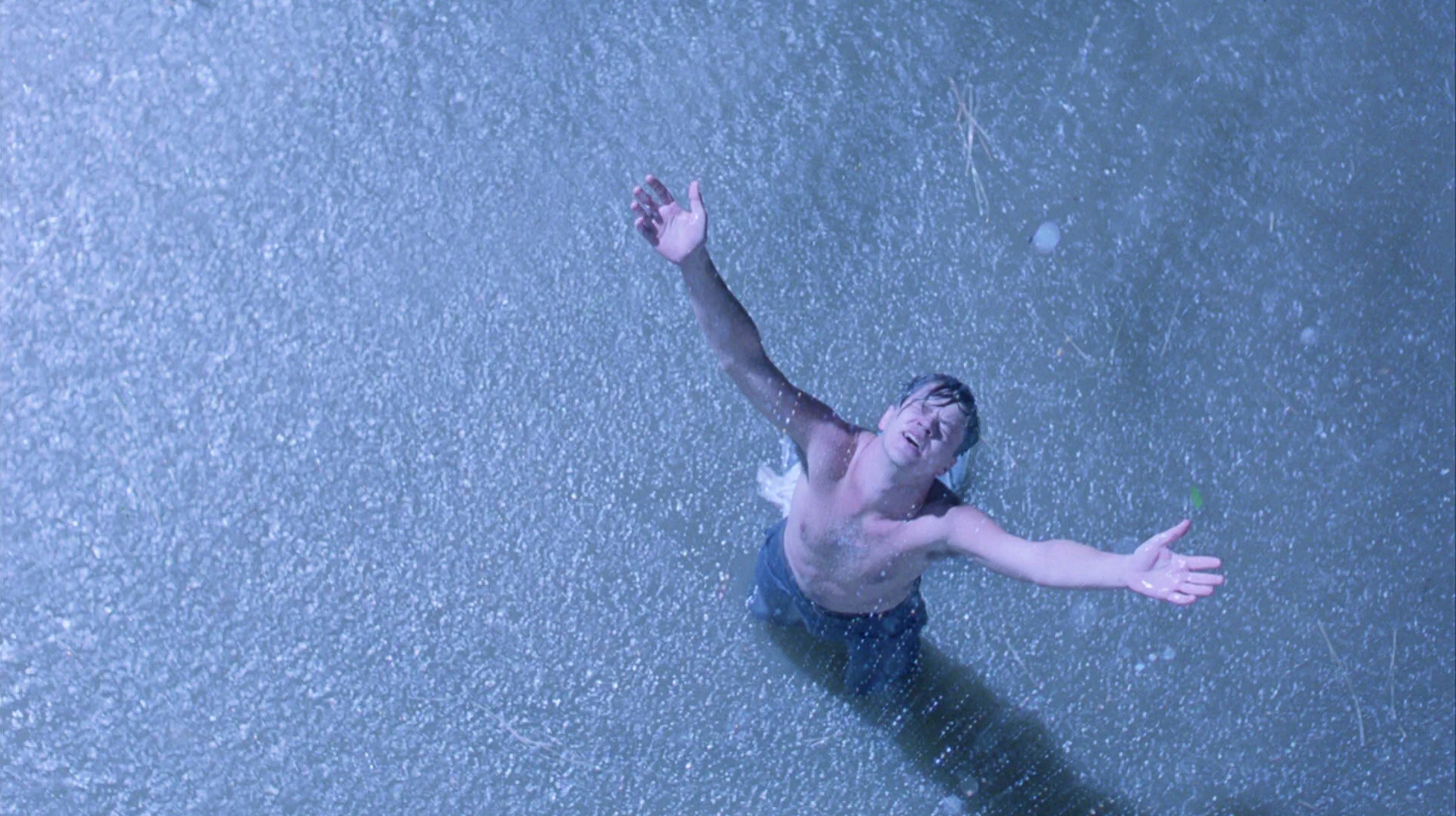
Symbolism in film is using a concrete object, color, place or action to stand for an abstract idea: a sled for lost childhood, a green light for longing, rain for rebirth. The image still works literally, but it also carries a second meaning the audience feels before they can name it.
- What it does
- Compresses an idea like hope, guilt or class into one image the audience can see, remember and read again.
- Use it when
- A theme is too big or too private to say out loud, and a single object or place can hold it.
- Watch out
- A symbol nobody can see is wasted, and one the camera shouts about becomes a sign. Establish it clearly, then trust it.
- Try this prompt
An old woman with cropped white hair holds a brass key on a red string up to a cold window, key sharp in the foreground, packed boxes behind, 50mm film still.
What is symbolism in film?
A symbol is a physical thing on screen that points past itself. It can be:
- An object: a key, a sled, a spinning top, a feather.
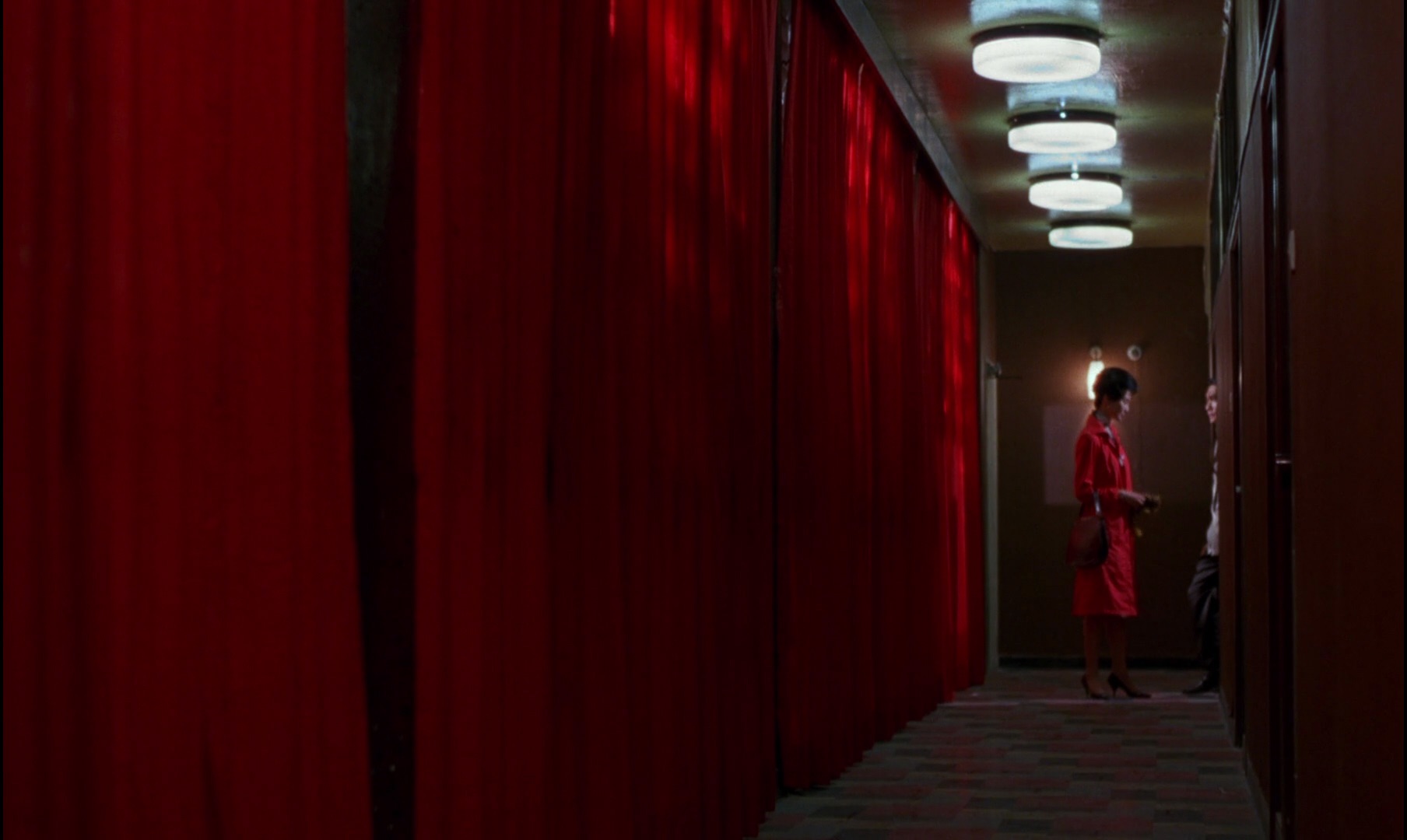
- A color: a red coat in a black-and-white film, a craft of its own covered in color symbolism.
- A place: a staircase, a basement, a house on a hill.
- Weather and nature: rain, snow, the sea.
- An action: washing hands, opening a door, climbing.
Context, not the object, makes the symbol. A key is just a key until the film shows what it opens and what losing it would cost. The camera can isolate an object with framing, focus and light, so the meaning arrives as an image rather than a sentence. That is why symbolism sits at the heart of visual storytelling and of storytelling on screen.
Why filmmakers use symbolism
It carries the theme without a speech. A theme like "the cost of ambition" can't be photographed, but a lonely man and a toy he left behind decades ago can.
It works on feeling first. Rain on a freed man's face lands as relief before anyone thinks the word "baptism."
It rewards rewatching. The object that looked like set dressing turns out to hold the whole film.
It gives the crew a brief. Design, costume and lighting know which object must read in every frame.
Movie symbolism examples
- ***Citizen Kane* (1941).** "Rosebud" is a child's sled: the investigation into a powerful man's life ends on the childhood he lost.
- ***American Beauty* (1999).** Red rose petals mark Lester's fantasies of escape and desire.
- ***The Great Gatsby* (2013).** The green light on Daisy's dock stands for everything Gatsby wants and cannot reach.
- ***The Matrix* (1999).** The red and blue pills turn a choice between truth and comfort into something you hold in your palm.
- ***Forrest Gump* (1994).** A white feather drifts in at the start and floats away at the end, framing a life carried by chance.
- ***Inception* (2010).** The spinning top tests reality; the final shot turns it into a symbol of doubt.
- ***Everything Everywhere All at Once* (2022).** The everything bagel stands for nihilism; the googly eyes answer it with kindness.
How to build a symbol on screen
- Introduce it cleanly. Give the object its own shot the first time, an insert or a rack focus from actor to object, readable in one second.
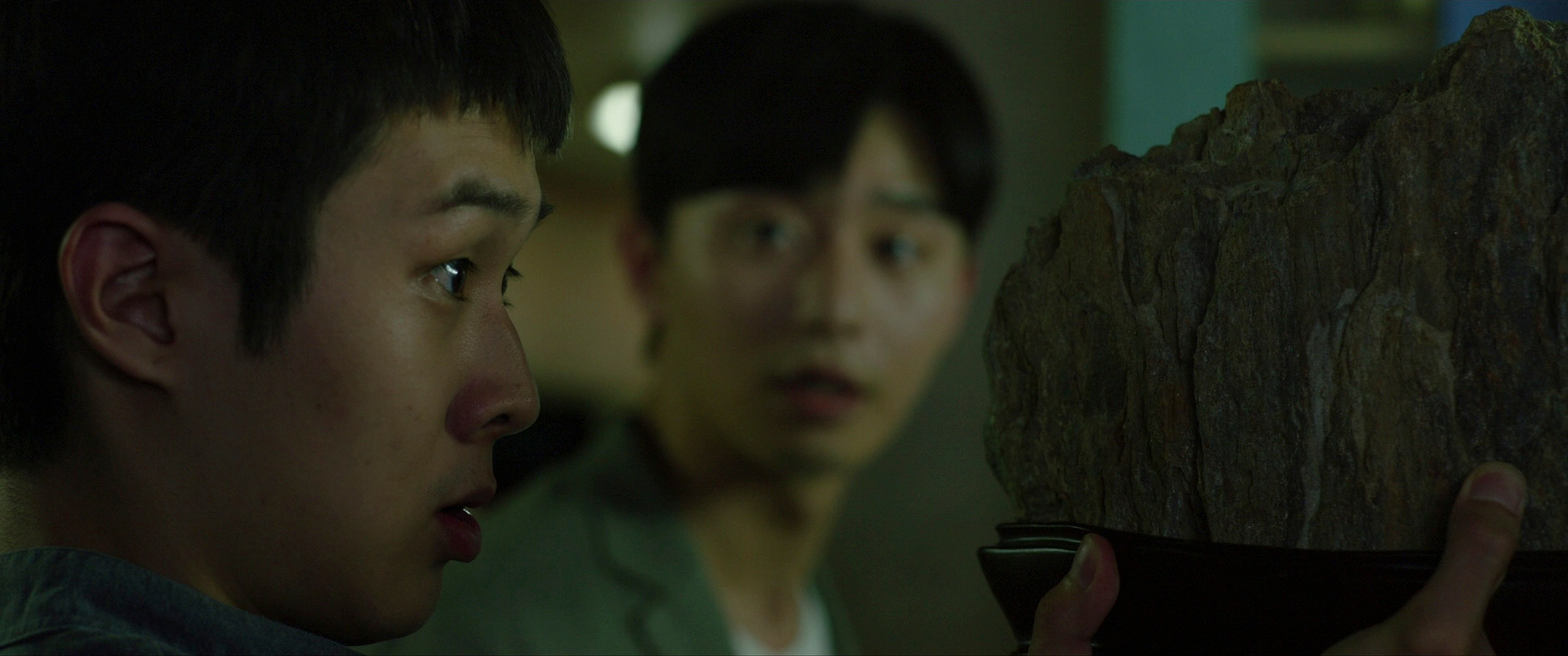
- Attach the meaning. Tie it to a character's want or wound through action, not dialogue. The Parasite rock arrives as a gift promising wealth.
- Give it visual priority. Foreground placement, the sharpest focus, the only warm highlight in a cool scene, or a color nothing else shares.
- Change its state. The key is lost, the plant dies, the rain returns. The change is the story beat.
- Pay it off once, with the least explanation.
In FlashBoards, keep the symbol's reference frames and generated takes on one board next to the storyboard, with notes on where it appears and how it changes, so it stays consistent from first insert to payoff.
Symbolism vs. motif vs. allegory
The three work at different scales.
- Symbol: one image standing for an idea. It can appear once, like the sled in Citizen Kane.
- Motif: an element that recurs and gathers meaning through repetition, like the oranges near danger in The Godfather (1972). A symbol repeated often enough becomes a motif.
- Allegory: the whole story stands for something else, so every character and event carries a second meaning.
A visual metaphor presents one thing as another, often through a cut; a symbol simply lets an object mean more than itself.
Symbolism in Film examples in film
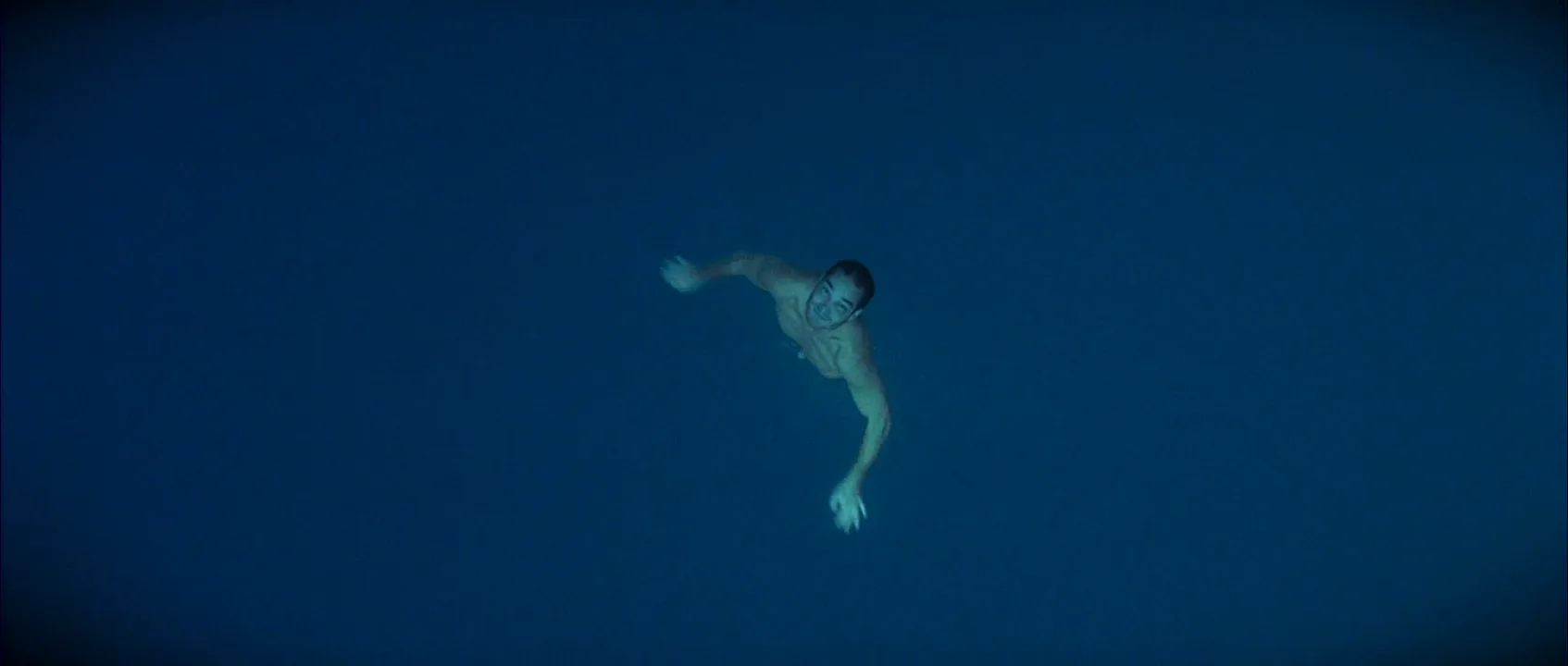
4 framesFour frames where one object, color, place or element carries a second meaning.
How to create a symbolism in film with AI
4 promptsA model can't render "symbolism," but it can render what makes an object read as one: foreground placement, sharp focus, a unique highlight and a character's attention. Keep every take on one FlashBoards board to check the object stays identical. The fourth prompt re-shoots a real film shot from a text description alone, and the original plays next to the result so you can compare.
In the foreground, close to the lens, an old brass house key on a faded red string hangs from a woman's fingers, large in frame, in sharp focus and catching the only warm highlight. Behind it, out of focus, the woman, in her late sixties with cropped white hair, deep smile lines and a moss-green cardigan, sits among taped cardboard boxes in a bare room, her eyes on the key. Medium close-up, 50mm lens, very shallow depth of field, cold overcast window light, 35mm film still.
"Foreground, sharp focus" and "the only warm highlight" turn the key into the home she lost; the boxes give context. Start frame for the video.
Open FlashBoardsA teenage boy with curly red hair, freckles and an oversized grey school blazer stands at the foot of a long, steep concrete staircase in the rain, small in the lower left of the frame. The stairs climb to a glowing glass house on a hill at top right. Wide shot, 24mm lens, low camera, wet steps reflecting warm lights, cold blue dusk, anamorphic film still.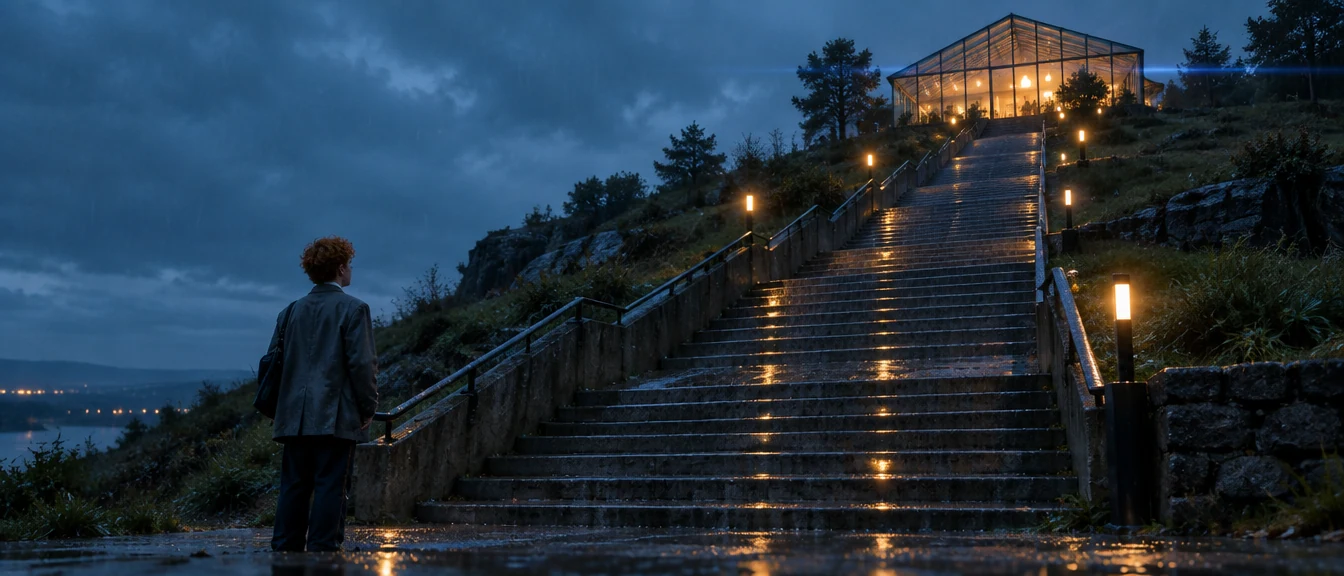
A place as symbol: "small in the lower left" against the warm house top right makes the staircase a class ladder.
Open FlashBoardsCamera: a slow, steady push-in from the medium close-up to a close-up of the key and her hand. Action: from the first moment she slowly turns the brass key between her fingers so it catches the window light. Midway she lowers her eyes to it. At the end she closes her hand around the key and draws it to her chest.The push-in says the key matters; closing the hand is the state change. Motion starts at once, so the clip doesn't stall.
Open FlashBoards{
"output": "Full-screen live-action underwater shot from The Big Blue (1988) from its very first frame: one continuous locked-off shot looking straight down into deep open sea. 35mm film grain, anamorphic scope frame, a single even field of deep ultramarine and teal blue filling the whole frame edge to edge, soft diffuse daylight filtering down from the surface behind the camera, gently darkened corners, cold monochrome blue palette with pale cyan skin tones.",
"characters": {
"S1": {
"name": "Jacques Mayol, played by Jean-Marc Barr",
"look": "lean, athletic free diver in his late twenties, short dark hair, clean-shaven, bare chest and arms, small pale swim trunks, bare face, bare hands and bare feet",
"voice": "silence: he says nothing, holding his breath the whole time"
}
},
"shots": [
{
"shot": 1,
"camera": "static, locked-off, looking straight down from just under the surface into the depth; it never moves, never tilts and never zooms, so S1 grows in the frame only by swimming up toward the lens. Wide scope framing: at the start S1 is a tiny pale figure just above the centre of the frame, surrounded on every side by empty blue; at the end he fills the lower centre of the frame in a close-up",
"action": [
"BEGINNING: alive from the first frame, S1 is already a tiny pale figure far below, just above centre, rising head-first toward the camera with slow breaststroke pulls, both arms sweeping out to the sides and back in.",
"THEN: he spreads both arms wide in a long glide, his body a small pale star in the blue, then draws them back to his chest and kicks, legs trailing behind him toward the top of the frame.",
"THEN: he keeps rising in the centre of the frame and slowly grows larger; his face turns up toward the lens and becomes readable, eyes open and looking straight up at the camera, mouth closed, calm.",
"THEN: two more wide breaststroke pulls; his outstretched arms reach from the left edge to the right third of the frame as he glides closer, shoulders and chest now large and lit pale cyan from above.",
"THEN: a thin line of small bubbles escapes from his nose and drifts up past his head toward the lens.",
"END: his head and shoulders fill the lower centre of the frame in a close-up, a faint serene smile, eyes on the lens, and one open hand reaches up from screen left toward the camera, fingers spread, soft and out of focus as it touches the frame."
],
"dialogue": [],
"voice": "silence: nobody speaks in this shot, no voice at all"
}
],
"sound": {
"ambience": "muffled deep-water hush, a low pressure hum, the soft rush of his strokes through the water and a few small bubbles rising",
"speech": "no words in this video; the only human sounds are breaths and movement",
"never_spoken": "no narration and no voice-over: the descriptions, performance notes and step words of this prompt are never spoken aloud",
"music": "a film score under the scene, always below the voices: slow, weightless synthesizer pads with a distant, dreamy melody that swells as he rises",
"subtitles": "none"
}
}Remakes Jacques Mayol's ascent from The Big Blue (1988), dir. Luc Besson, DP Carlo Varini: the locked top-down view into open blue, the tiny swimmer rising by breaststroke into a close-up, the bubbles, the calm smile and the hand to the lens, with no dialogue and a dreamy score.
The symbol here is the sea itself, so the prompt spends its words on the empty blue: filling the whole frame edge to edge, a locked camera looking straight down, and a diver who grows only by swimming up. The END step, the smile and the hand reaching for the lens, carries the pull of the deep.
Open FlashBoardsCommon mistakes
- "Symbolic" adds nothing. Describe the object, its place in the frame and its light.
- Small objects sink into the background: state foreground and sharp focus.
- Extra props compete with the symbol. Name only what the scene needs.
- The object drifts between takes. Reuse the exact same description in every prompt.
- In video, keep hand actions simple so small props don't warp.
Keep the reference frames, prompts and every generated take side by side — images and video in one canvas.
FAQ
4 questionsWhat is an example of symbolism in a movie?
The sled in Citizen Kane (1941). The film chases the meaning of a dying man's last word, "Rosebud," and the answer is a childhood sled, a symbol of the innocence he lost. Others: the green light in The Great Gatsby and the spinning top in Inception.
What is the difference between symbolism and a motif?
A symbol is a single image standing for an idea and can appear once. A motif recurs through a film and gathers meaning with each return. They overlap: a symbol that keeps coming back becomes a motif. The difference is repetition, not the kind of image.
How do you spot symbolism in a film?
Watch for objects the camera singles out: an insert, a rack focus, a close-up held longer than the plot needs, or a prop that returns changed. Ask what it is tied to, a character, a desire or a loss. If the ending gives it new weight, it was a symbol all along.
Do directors always intend the symbolism viewers find?
Not always. Some symbols are planned in the script and built into production design; others are found by audiences after release. For filmmakers, the useful rule is to choose one or two symbols that carry the theme and make them unmistakable on screen.
Related terms
6- MotifStorytelling
A motif is an image, sound, object or line that recurs through a film and gathers meaning with each return, supporting the theme.
- AllegoryStorytelling
An allegory is a story whose characters and events stand, as a whole, for something else — a political system, a moral idea, a historical moment — so the literal plot carries a second meaning throughout.
- Visual MetaphorStorytelling
A visual metaphor presents one thing as another through images or editing — a caged bird for a trapped heroine, a cut from a crowd to a herd — so the audience grasps an idea without it being stated.
- Color SymbolismColor
Color symbolism uses colors as signs — red for love, danger or power, green for envy or sickness — but in film the meaning is set by context and repetition inside the story, not by a universal chart.
- Genre IconographyFilm History & Theory
In film studies, iconography is the set of recurring objects, costumes, settings and star images that signal a genre at a glance — the Stetson and six-shooter of the western, the fedora and rain-slick street of noir.
- Visual StorytellingStorytelling
Visual storytelling conveys story, character and emotion through images — framing, blocking, light, color, objects and cuts — instead of dialogue; it's the core skill behind every storyboard and AI-generated shot.
Further reading
David Bordwell and Kristin Thompson, Film Art: An Introduction. Louis Giannetti, Understanding Movies.