 FlashBoards Learn
- Learn
- Storytelling
- Passage of Time
Storytelling · Film language
Passage of Time
Also called: time passing, showing time pass
Showing the passage of time means telling the audience that hours, seasons or years have gone by between two moments on screen. Filmmakers do it with montage, dissolves, time-lapse, title cards, changing light and aging faces. Done well, the viewer feels the gap without anyone explaining it.
- What it does
- Compresses story time so a film can cover a night, a season or a lifetime in two hours.
- Use it when
- What happens between two scenes matters less than the fact that it happened and changed someone.
- Watch out
- Stacking cues (dissolve plus caption plus voice-over) feels like a lecture; one clear signal is usually enough.
- Try this prompt
Locked-off wide shot of a sunlit kitchen table with fresh yellow tulips, hard morning light, time-lapse feel, 16:9.
What is the passage of time in film?
Every film runs on two clocks: story time (how long the events take) and screen time (how long we watch them). Most cuts skip something unnoticed. The passage of time becomes a technique when the gap is the point: a child is now an adult, a marriage has gone cold, winter has turned to spring. The audience must know that time passed and roughly how much, or the next scene reads as a continuity error. It is a basic tool of storytelling on screen, in linear narratives as much as in films that jump around.
How do filmmakers show time passing?
- Montage. A time-passing montage squeezes weeks or years into a minute of short shots. The breakfast-table sequence in Citizen Kane (1941) plays years of a marriage in a few exchanges; the opening of Up (2009) covers a whole life together.
- Dissolves. A slow dissolve between two shots of the same place signals "later." The longer the overlap, the bigger the gap feels.
- Time-lapse. Time-lapse shows the clock itself: shadows sweep, clouds race.
- Match cuts. The bone-to-spacecraft match cut in 2001: A Space Odyssey (1968) jumps millions of years in one splice.
- Title cards. "Five years later" is blunt but precise. La La Land (2016) divides its story into seasons with on-screen titles.
- Light and seasons. Snow on a street that was green a scene ago needs no caption.
- Faces. Aging makeup, recasting, growing hair. Boyhood (2014) filmed the same cast over twelve years.
- Props and design. Cars, phones and wallpaper date each scene.
Why does the passage of time matter to the story?
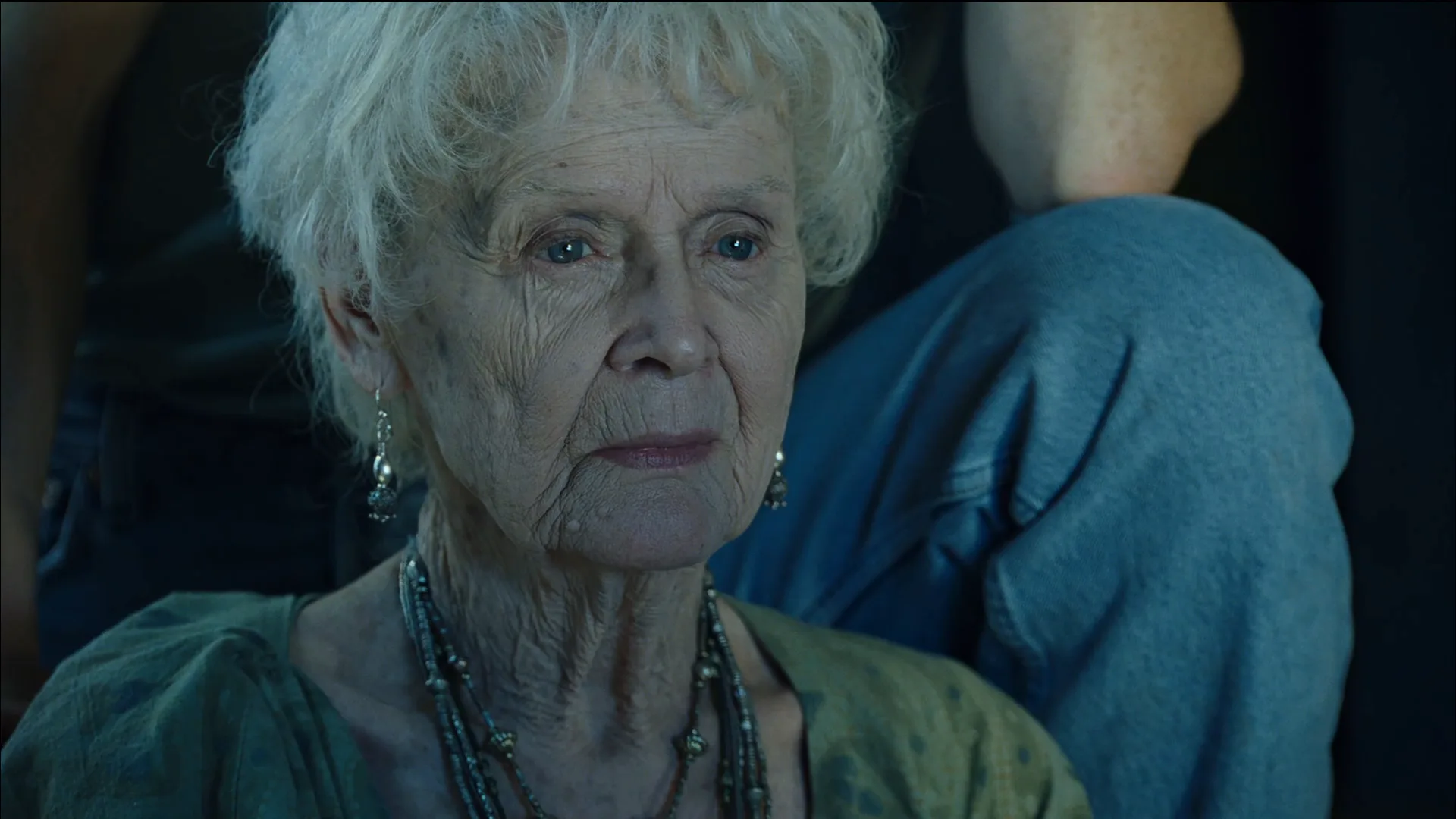
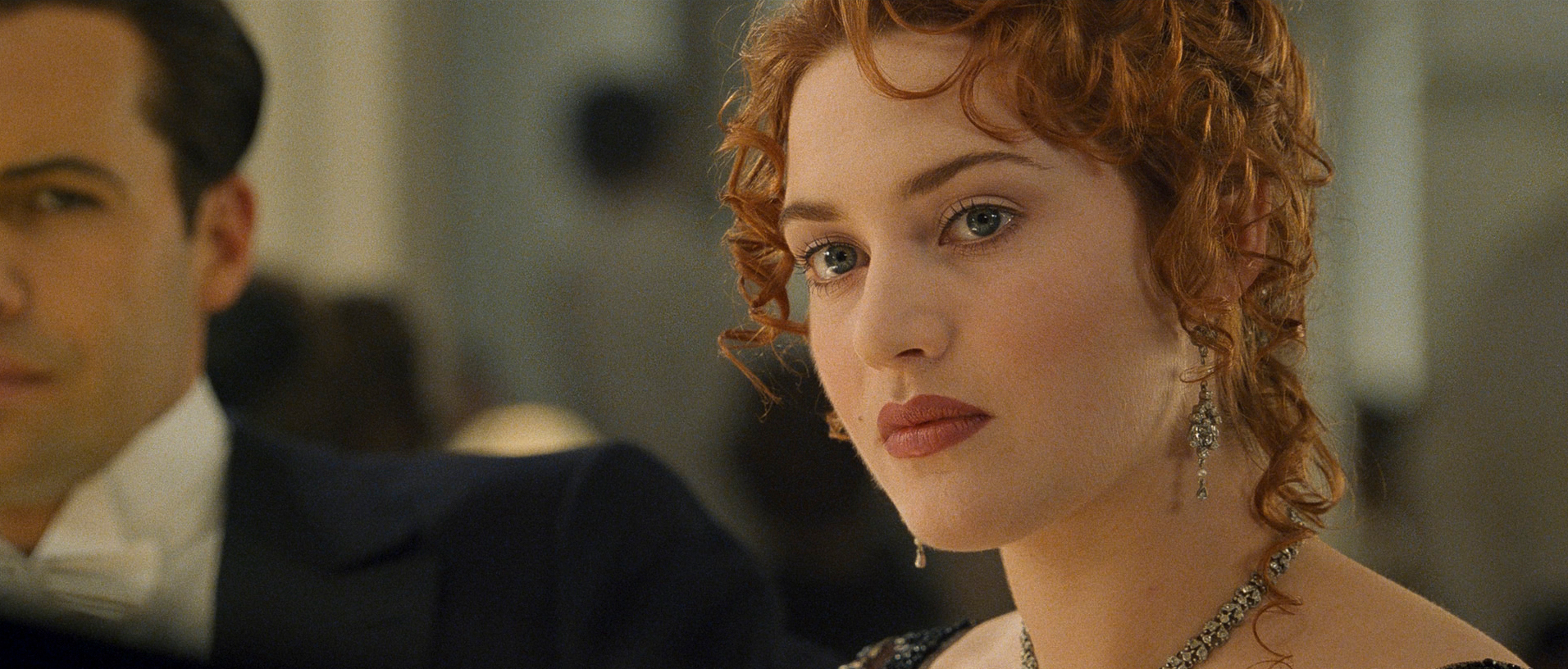
Skipping time is how a feature fits a life into two hours, but the cue also carries meaning. A fast montage says the in-between was routine; a long dissolve on an empty room says something was lost. A frame story built on an old face, as in Titanic (1997), makes every return to the past feel like memory, the engine of a flashback.
How to plan and shoot a time jump
Decide how much time passes and which single change will prove it, then design both shots around it:
- Lock the frame. Same camera position, height and lens for before and after (mark the tripod feet), so only time differs.
- Change one strong variable. Light direction and color, season, set dressing or the actor's age. Grade the periods differently if the gap is years.
- Choose the transition in prep. A dissolve needs 2–3 seconds of handles at each end; a match cut needs matching shape or movement.
- Bridge with sound. A song or clock carried across the cut ties the images together.
In FlashBoards, lay the before and after frames side by side with your reference stills and generate the missing end until the framing matches.
Passage of time vs. real time
They are opposites. A time jump makes screen time shorter than story time; a real-time sequence makes them equal. Rope (1948) hides its cuts so the evening seems to unfold in one stretch. Real time builds pressure because nothing is skipped; the passage of time builds scope, letting consequences arrive years after their causes.
Passage of Time in motion
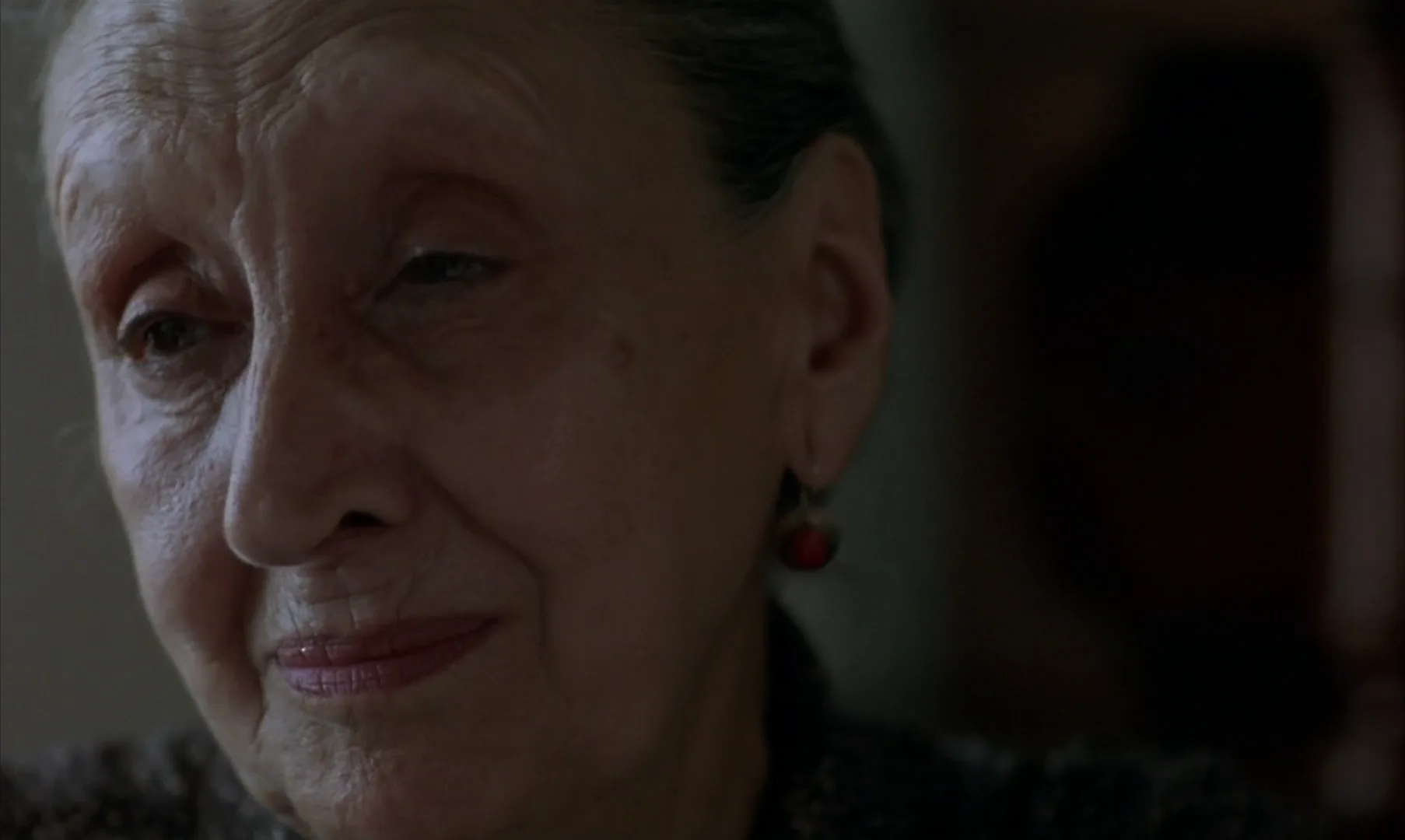
7 clipsWatch for the bridge between two times: a dissolve that holds two eras in one frame, a face aged by decades, or an old narrator whose present surrounds the flashback. The Frequency clip crosses thirty years in a single move.
Passage of Time stills
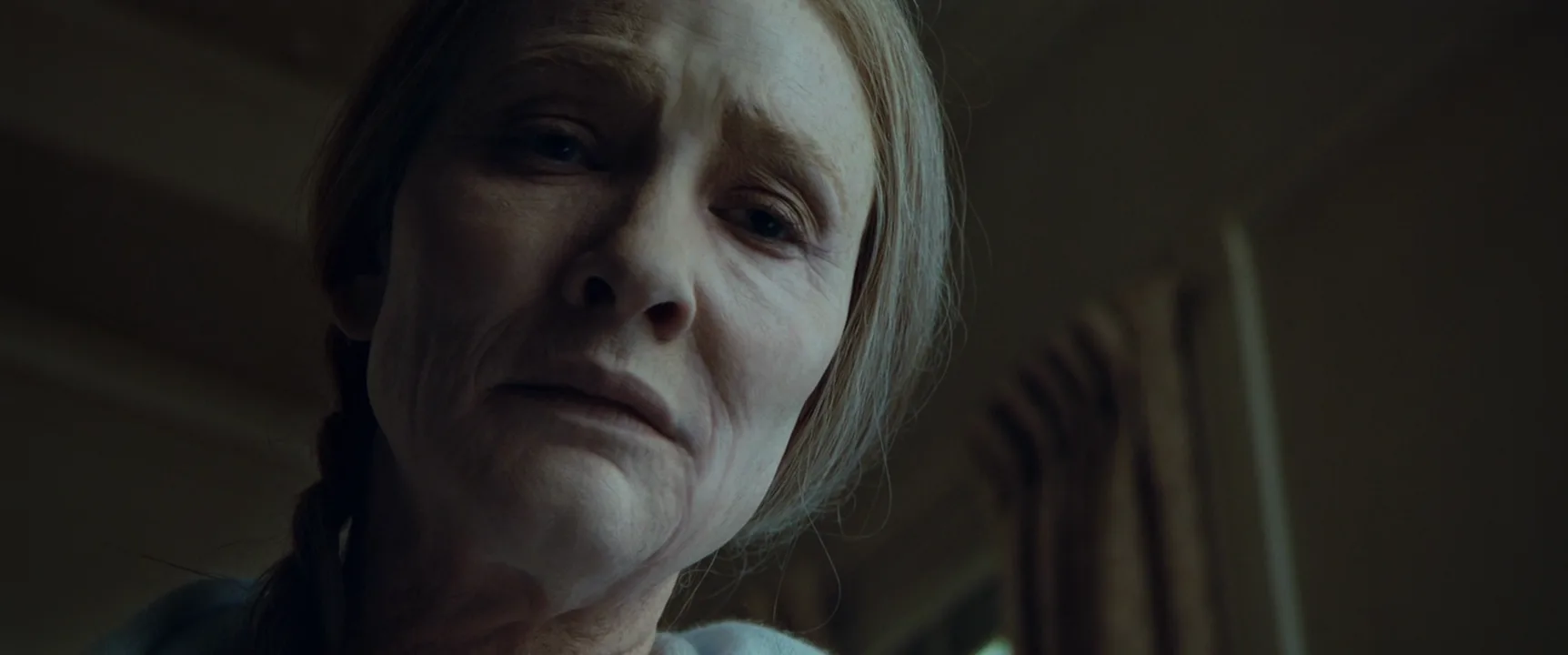
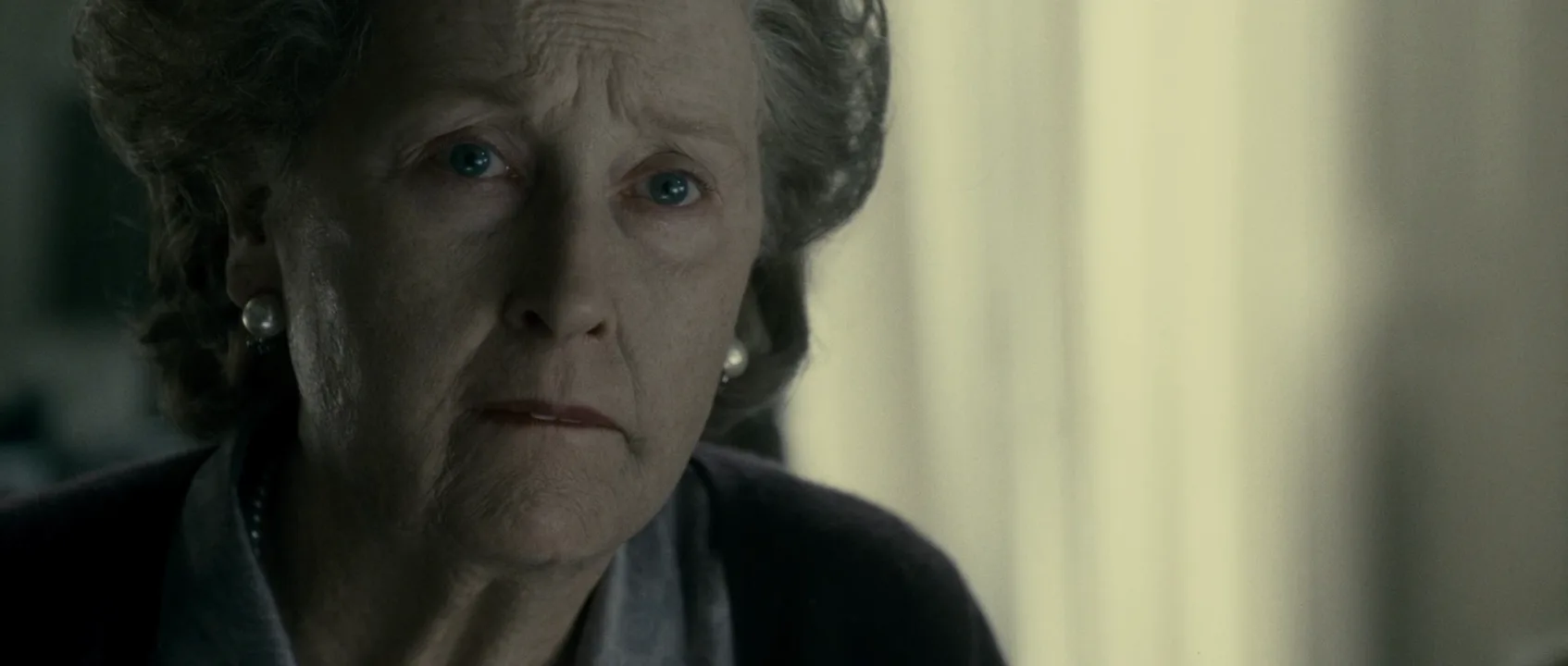
5 framesA strong time cue is a face: the same character at two ages, or a frame story that keeps an older face on screen.
How to create a passage of time with AI
4 promptsA time jump is a relationship between frames, so generate them as a set: a locked-off start frame, a matched "later" pair, and a clip where the light shows time moving. In FlashBoards, keep all three beside your reference stills and compare takes side by side. The fourth prompt re-shoots a real film shot from a text description alone, and the original plays next to the result so you can compare.
Locked-off wide shot of a small wooden farmhouse kitchen in early morning. A round oak table under a window, a clear glass vase of fresh yellow tulips standing upright and a white mug beside it. Hard low sunlight from the left window throws a bright rectangle across the tabletop and the pale green wall. Tripod at seated eye height, 28mm lens, deep focus. Cinematic film still.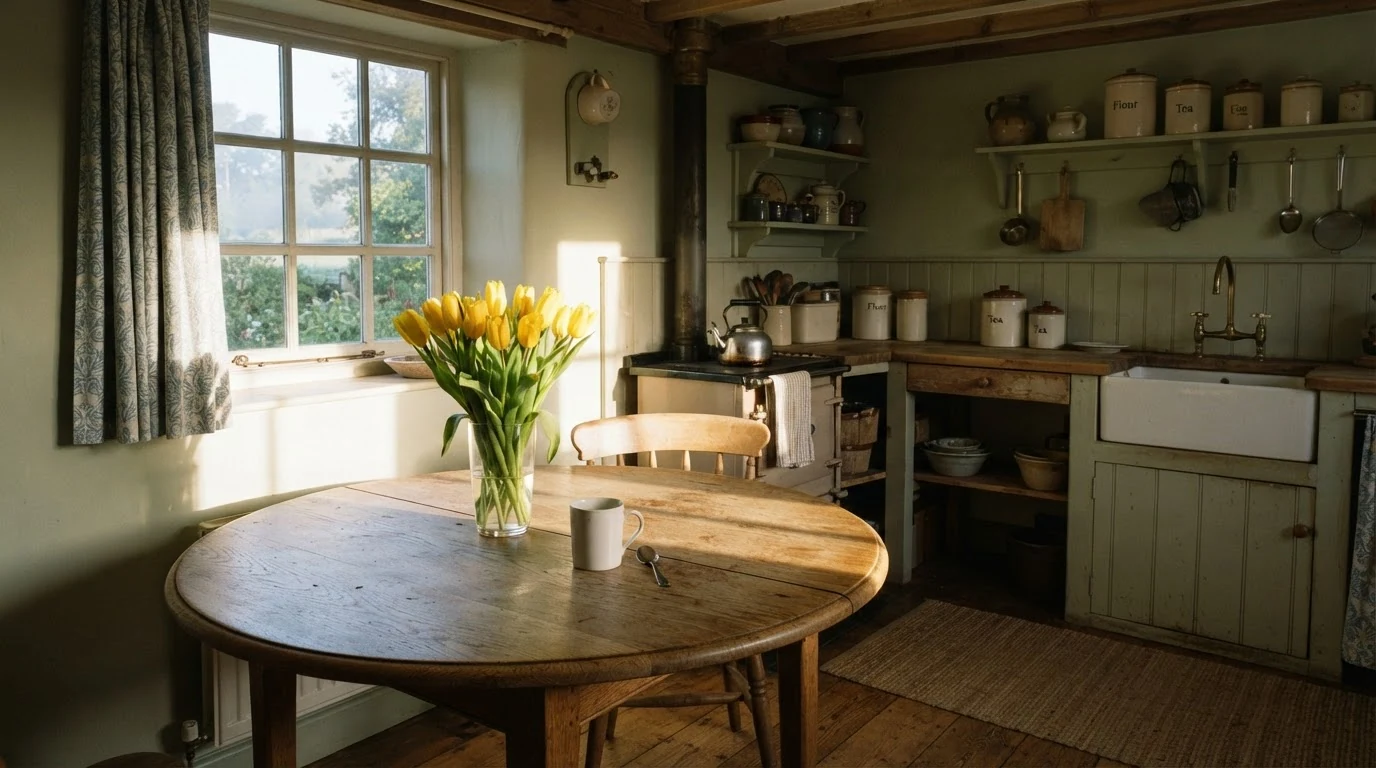
"Locked-off" and "tripod" fix the frame so time does the moving. The sunbeam and the upright tulips are the two clocks the video recipe will change.
Open FlashBoardsStoryboard pair for a match dissolve across fifty years, two panels with identical framing. Left: a woman of about 25 with a long auburn braid over her right shoulder, a small mole under her right eye and a gap between her front teeth, on white porch steps, summer light. Right: the same woman at about 75, braid now white, same mole and gap-toothed smile, on the same steps with weathered grey paint and autumn leaves, low golden light. Medium shot, eye level, 50mm lens. Cinematic film stills.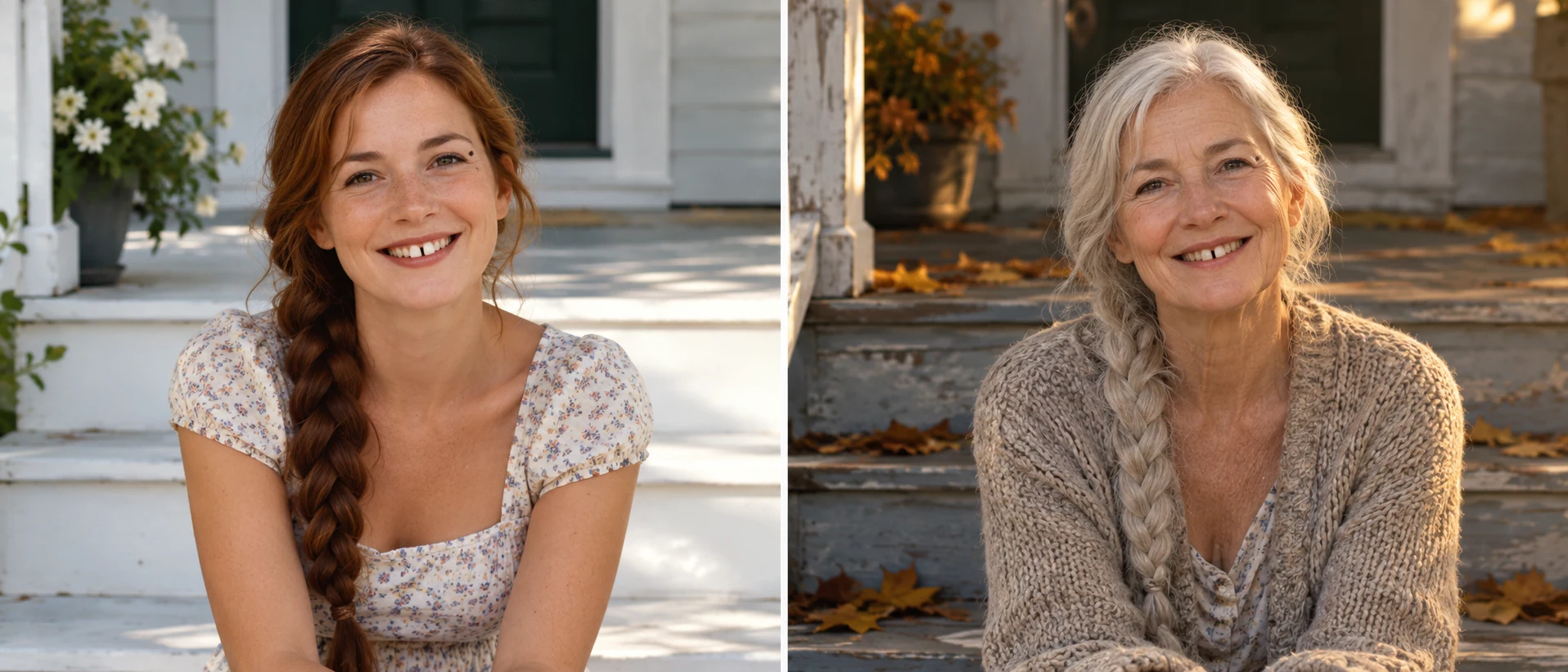
"Identical framing" keeps the panels aligned for a dissolve. The mole, gap tooth and braid anchor identity across fifty years; paint, leaves and light carry the change.
Open FlashBoardsCamera: completely locked off on a tripod for the whole shot. Action: time-lapse from the first frame. The rectangle of sunlight is already sliding quickly across the oak table and climbing the green wall. In the middle the light turns deep amber and the yellow tulips bend and drop petals onto the table. At the end the kitchen falls into cool blue dusk beside the white mug."Already sliding quickly" keeps the clip alive from the first frame instead of a slow push-in. Everything that changes is already in recipe 1's frame.
Open FlashBoards{
"output": "Full-screen live-action scene from Frequency (2000) from its very first frame: two shots joined by one hard cut, and inside the second shot one slow dissolve that carries the same house from 1969 to 1999. 35mm film grain; shot 1 warm tungsten lamplight in a late-1960s living room at night, amber and brown with a red dress; shot 2 the same room's glass door, warm lamp glow dissolving into cold blue night.",
"characters": {
"S1": {
"name": "Frank Sullivan, played by Dennis Quaid",
"look": "late thirties, short dark hair, white crew-neck T-shirt, khaki trousers, holding a black-and-white spotted Dalmatian puppy against his chest with both arms",
"voice": "silent in this scene"
},
"S2": {
"name": "Julia Sullivan, played by Elizabeth Mitchell",
"look": "early thirties, dark shoulder-length wavy hair, short-sleeved red dress, bare legs, an open magazine in both hands",
"voice": "silent in this scene"
},
"S3": {
"name": "John Sullivan, played by Jim Caviezel",
"look": "early thirties, short dark hair, grey-blue button shirt open over a dark T-shirt",
"voice": "silent in this scene"
},
"S4": {
"name": "a television newscaster",
"look": "black-and-white picture on the console TV: a man in a dark suit and tie, head and shoulders, talking to camera",
"voice": "calm, measured 1960s broadcast voice coming out of the TV speaker"
}
},
"shots": [
{
"shot": 1,
"camera": "locked-off wide shot at seated eye level, deep focus, the whole living room and the dining room behind it; the camera does not move",
"action": [
"BEGINNING: alive from the first frame. Left foreground: a wooden console TV glowing with S4 in black and white, a wall sconce lit above it. Right third: S2 reclines in a floral armchair, magazine open in both hands, legs stretched toward screen left with her crossed feet on a red ottoman, an orange-shaded table lamp glowing beside her. Behind: a round dining table with a white cloth, a small chandelier, French windows. S1 is already mid-stride in the centre, carrying the puppy against his chest with both arms, grinning down at S2.",
"THEN: S1 keeps walking from left to right across the room in front of S2's armchair; S2 lifts her head and smiles up at him, hands still on the magazine.",
"THEN: S1 leaves the frame past the right edge, close to the lens; the puppy goes with him.",
"END: S2 stays in the armchair, still smiling, and lowers her eyes to the magazine; S4 keeps talking on the TV."
],
"dialogue": [
{
"speaker": "S4",
"on_screen": true,
"when": "from the first frame, from the TV set while S1 crosses the room",
"delivery": "calm news-report tone",
"line": "<d>[English] Not just the aurora. The sunspots are going to have a serious impact on radio communication for the next six or seven days.</d>"
},
{
"speaker": "S4",
"on_screen": true,
"when": "at the very end of this shot, just before the cut",
"delivery": "same calm tone, continuing",
"line": "<d>[English] In fact,<scenetrans></d>"
}
]
},
{
"shot": 2,
"cut_at": "00:02.040",
"camera": "close shot of a glass-paned interior door with a painted wooden frame, eye level; the camera drifts slowly to the right and tilts slowly up, then turns left to follow S3 as he walks away",
"voice": "only the TV newscaster's voice continues, now off screen; S3 says nothing",
"action": [
"BEGINNING: right after the cut: the glass panes of the door fill the frame, a thin curved streak of reflection down the left pane, a warm orange lampshade glowing through the lower right pane, darkness around the frame.",
"THEN: behind the glass on the right, S3 slowly fades in like a ghostly double exposure, standing still, right hand raised to his mouth, eyes turned toward screen left.",
"THEN: the door swings slightly open toward screen left and the panes tilt; S3's faint figure fades away again while the warm lamp glow dims.",
"THEN: the whole room slowly dissolves into cold blue night: the same room now dark, lit only by bluish light through a window with blinds.",
"THEN: S3's head enters from the right edge in the dark foreground, in profile, facing screen left, his face in shadow.",
"END: S3 walks away from the camera toward the blue window with blinds; the camera follows; he ends as a dark silhouette of head and shoulders, back to camera, left of centre."
],
"dialogue": [
{
"speaker": "S4",
"on_screen": false,
"when": "right after the cut to this shot, never before the cut, continuing to the last frame, heard from the TV in another room",
"delivery": "calm, measured, slightly distant",
"line": "<d>[English] <scenetrans>quantum theory tells us that the rigid notions of past, present and future, although useful in day-to-day life, may dissolve and be replaced by a complex formulation, in which time is far more fluid than anybody would have imagined.</d>"
}
]
}
],
"sound": {
"ambience": "quiet house at night: soft room tone, the puppy's paws and S1's footsteps on the wooden floor in shot 1, faint night air heard from outside in shot 2",
"speech": "exactly these spoken phrases, each said once, in this order",
"never_spoken": "no narration and no voice-over: the descriptions, performance notes and step words of this prompt are never spoken aloud",
"music": "a film score under the scene, always below the voices: soft sustained strings with a slow, wistful piano figure that swells gently as the room dissolves",
"subtitles": "none"
}
}Remakes the 1969-to-1999 dissolve through the Sullivans' glass door in Frequency (2000), keeping the cut time, the man crossing left to right with a puppy, the fading son and the TV newscaster's exact lines.
The cut sits at the original's 2.04 s, and the dissolve is broken into steps: the son fades in behind the glass, the lamp dims, the room turns night blue. The newscaster's verbatim lines bridge both eras.
Open FlashBoardsCommon mistakes
- "Time passing" alone does nothing. Name a visible change: a moving sunbeam, falling petals, an older face.
- The camera drifts. State "locked off on a tripod" or the time-lapse reads as a push-in.
- Aged faces become someone else. Repeat two or three specific features in both prompts.
- People in fast time-lapse turn to mush. Keep figures out or have them hold still.
Keep the reference frames, prompts and every generated take side by side — images and video in one canvas.
FAQ
4 questionsHow do you show the passage of time in a film?
Use montage, dissolves, time-lapse, match cuts, title cards, changes in light or season, aging makeup, or props that date each scene. Match the cue to the size of the gap: a dissolve for hours, seasons or a montage for months, a title card or an older face for years.
What is a time-passing montage called?
Usually just a montage, or a time-compression montage: a series of short shots, often set to music, showing stages of a longer process such as training, a romance or a renovation in a minute or two. It compresses weeks or years while keeping the emotional arc visible.
How can you show time passing without a montage?
Keep the camera in the same position and change one thing between two shots: the light, the season, the set dressing or the character's age, then join them with a dissolve or a cut. A sound bridge, a caption such as "Three years later" or a time-lapse of moving shadows also works.
What is the difference between story time and screen time?
Story time is how long events take inside the fiction; screen time is how long the audience watches them. Most films have far more story time than screen time because cuts skip the uneventful parts. When the two are equal, the sequence plays in real time.
Related terms
3- MontageEditing
A montage is a sequence of short shots, usually set to music, that compresses time or builds an idea — weeks of training, a relationship, a city waking up — in a minute or two.
- Time LapseCameras & Capture
A time lapse captures frames at long intervals — one every few seconds or minutes — and plays them at normal speed, so clouds race, cities pulse and flowers open in seconds.
- DissolveEditing
A dissolve blends one shot into the next: the first fades out while the second fades in over the same frames, briefly overlapping — often to mark passing time or link two ideas.
Further reading
David Bordwell and Kristin Thompson, Film Art: An Introduction (story time vs. screen time). Walter Murch, In the Blink of an Eye.