 FlashBoards Learn
- Learn
- Camera Angles
- Trunk Shot
Camera Angles · Film language
Trunk Shot
Also called: car trunk shot, boot shot
A trunk shot puts the camera inside an open car trunk, looking up at the people leaning over it. The raised lid frames them against the sky, and the audience takes the place of whatever lies in the trunk — a weapon, money or a captive. It is Quentin Tarantino's best-known signature angle.
- What it does
- Makes the viewer the thing in the trunk, looked down on by characters who decide its fate.
- Use it when
- Characters open a trunk to take out weapons, check on a captive or stash something they shouldn't have.
- Watch out
- The sky behind them is several stops brighter than their faces — plan fill light from below.
- Try this prompt
trunk shot, camera on the floor of an open car trunk looking straight up, raised lid framing two people leaning in against a pale sky, 18mm
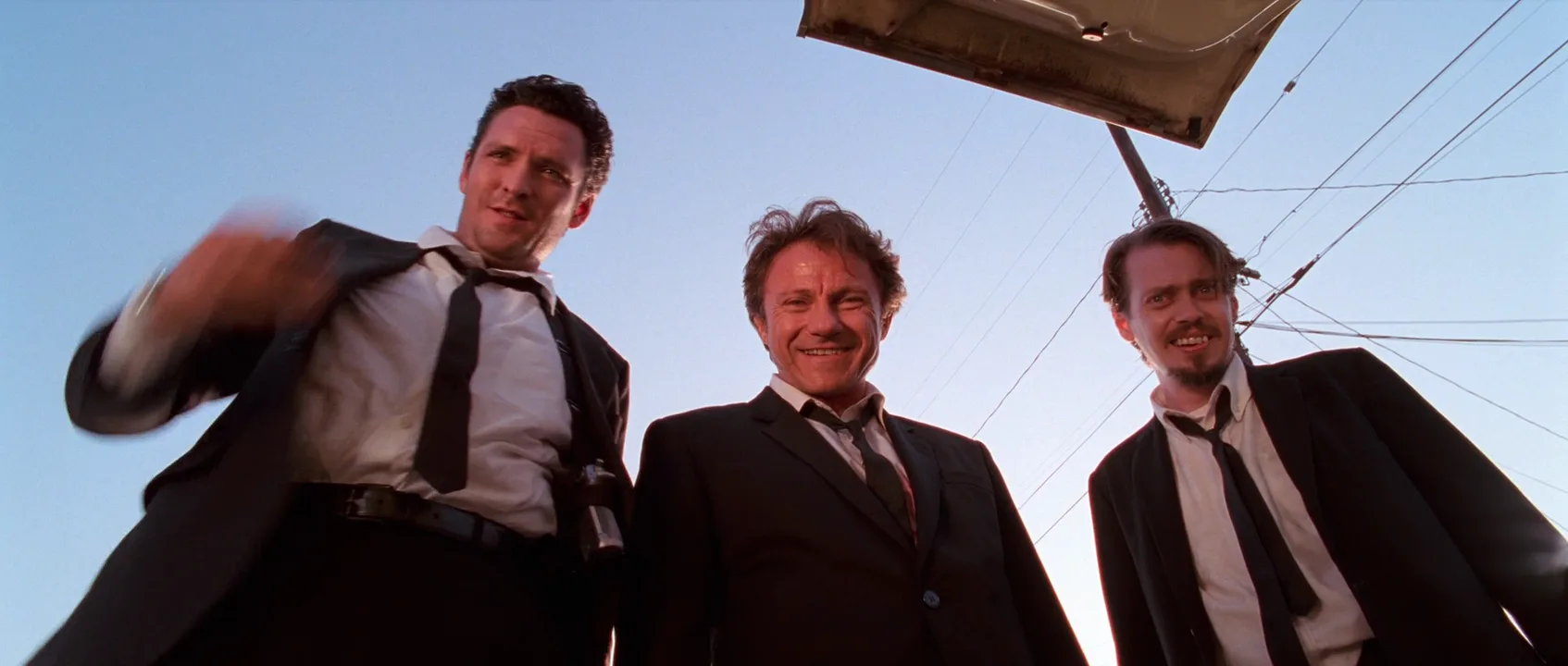
What is a trunk shot?
A trunk shot (a "boot shot" in British English) is a specific low-angle shot: the lens sits on the floor of a car trunk and looks up at characters standing at the bumper. Three signs:
- The lid border. The raised lid's underside cuts across the top of frame, often with the trunk rim at the bottom — a ready-made frame within a frame.
- Faces against the sky. The background is sky, trees or power lines.
- Looking down into the lens. The actors look at the camera or just below it.
Among the camera angles it is defined by a place, not just a height: the camera is the cargo.
Why is the trunk shot a Tarantino signature?
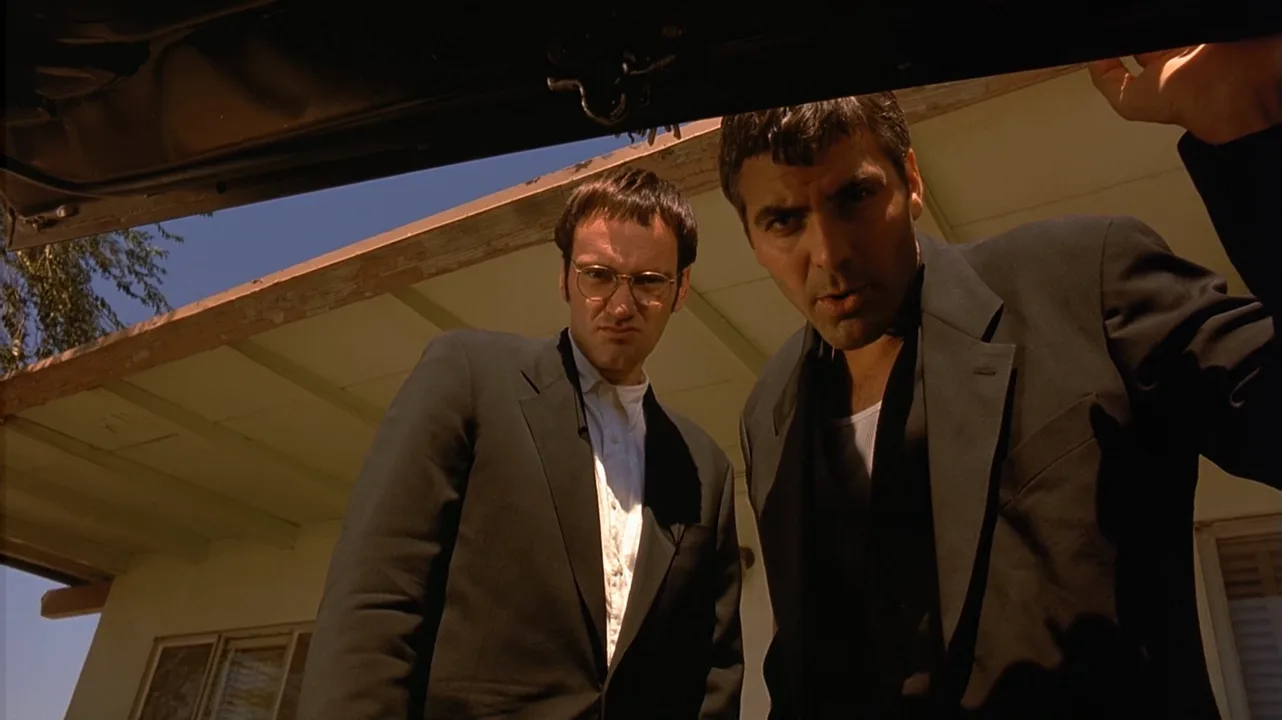
Tarantino used it in his first feature and kept coming back. In Reservoir Dogs (1992) three men in black suits look down into the trunk; in Pulp Fiction (1994) Jules and Vincent take pistols from it; Jackie Brown (1997) and Death Proof (2007) repeat the setup, and From Dusk Till Dawn (1996), which he wrote, has one too.
- Power. The characters loom over us while deciding something; the viewer holds the weakest position.
- Complicity. If the trunk holds weapons, we are the tools of what comes next; if it holds a person, we share their helplessness.
- A clean graphic frame. Lid above, sky behind, faces between: it reads instantly in a fast cut.
How to shoot a trunk shot
Position. Camera on the trunk floor, lens 10–30 cm above it, tilted up 45–70°. A small body on a sandbag fits most sedans; many productions cheat with a cut-away trunk (lid and rim on a rig) so the operator can reach the camera.
Lens. A wide-angle lens, 14–25 mm on Super 35, keeps lid and heads in frame and stretches hands reaching toward the lens; 25–32 mm gives calmer faces.
Blocking. Stack the actors across the opening, heads just inside the lid line, leaning in.
Light. The sky is often 2–3 stops over the faces. Keep the sun behind the actors as a rim and fill from below with a bounce card or small LED panel on the trunk floor. At night a flashlight or the taillights can be the key.
Cut. Keep it short. The slammed lid is a built-in cut to black.
Trunk-style shots without a car
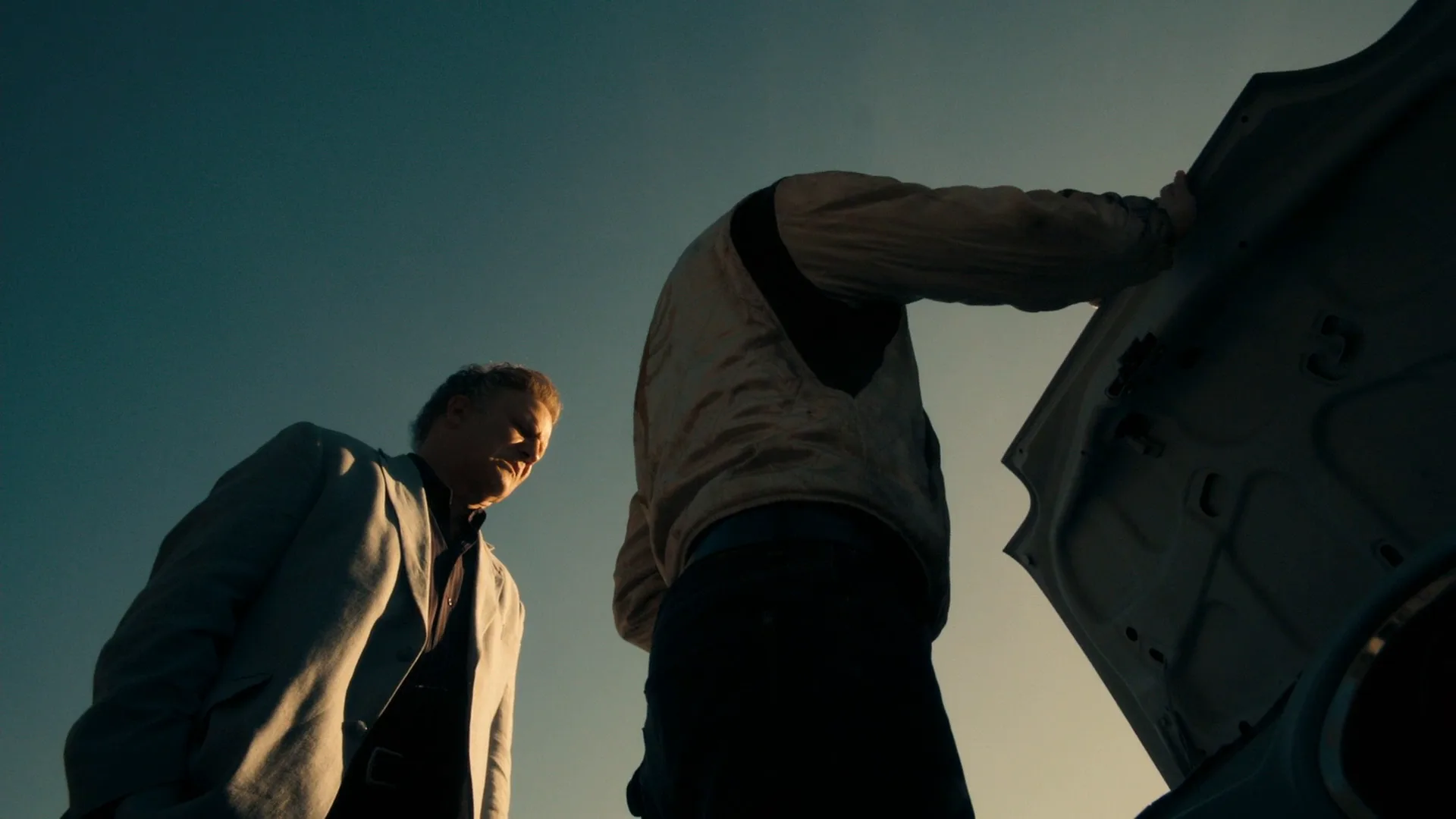
Put the camera where something or someone lies and let characters lean into the lens: Kill Bill: Vol. 1 (2003) has four assassins looming over the lens under wooden rafters. A raised hood, a grave or a crate can serve as the "trunk".
It is close to a worm's-eye view or a ground-level shot; the difference is that people bend toward the camera and an object frames the edges.
Trunk shot vs. POV shot
A POV shot shows exactly what a character sees. A trunk shot is a POV only when someone is in the trunk — a captive watching the kidnappers, which needs a reverse shot of that person. When the trunk holds guns or a bag, it is an object's view: nobody is watching, and the shot stands alone, marking the moment the characters arm themselves or make a choice.
Trunk Shot in motion
4 clipsThese loops show trunk shot in motion, where a still frame can't: watch how the effect plays out over a few seconds.




Trunk Shot stills
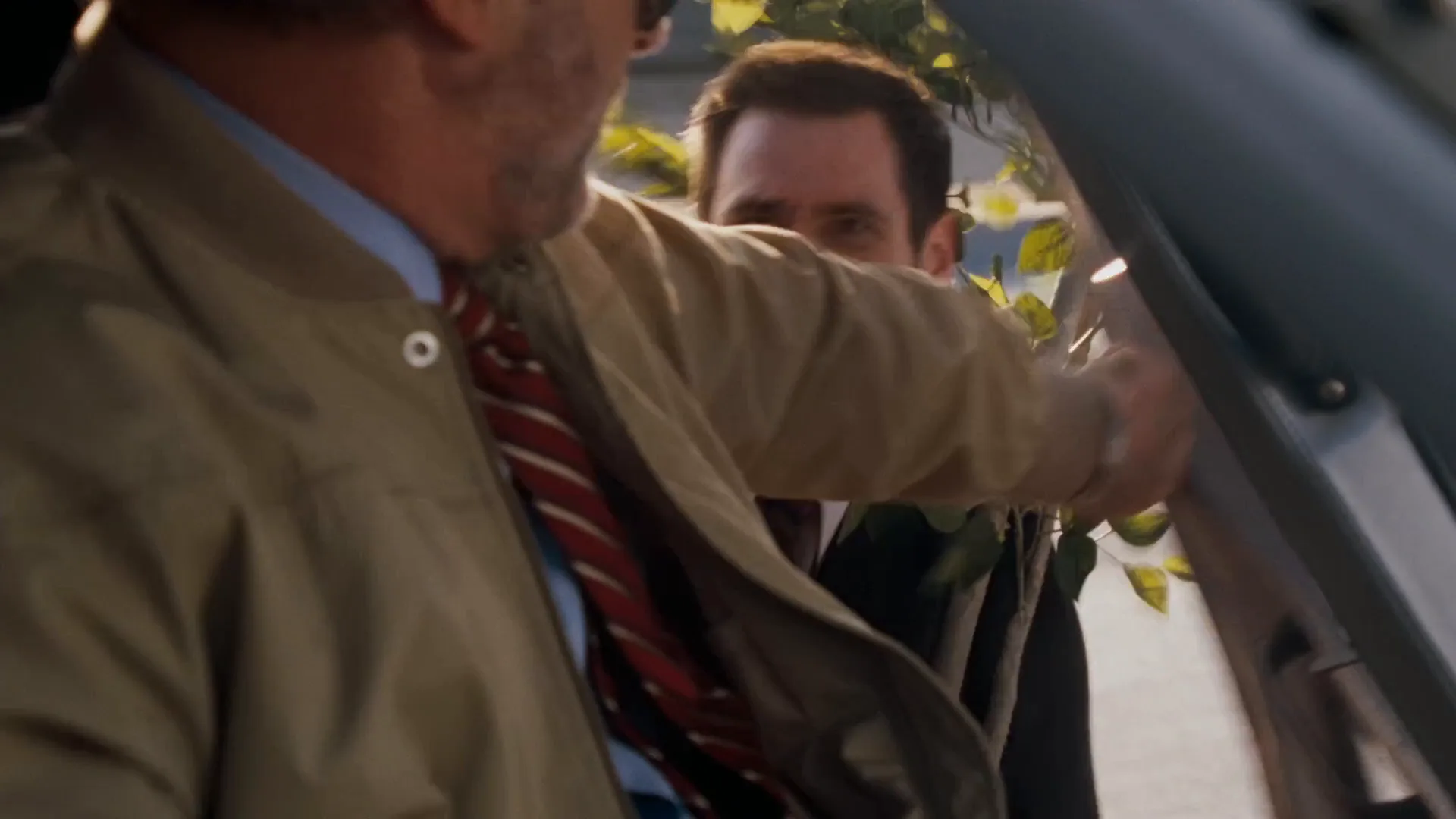
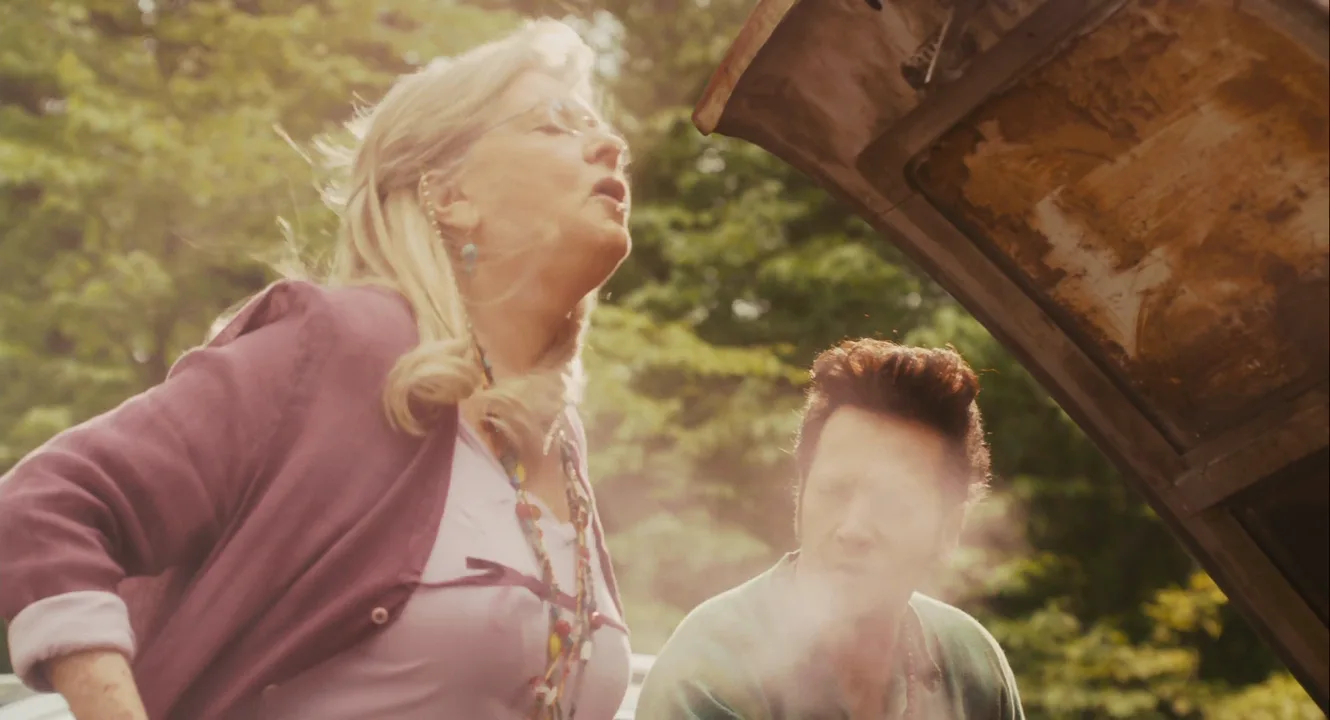
5 framesFrames from inside the trunk, or wherever the "cargo" lies. Watch the lid border and the faces against the sky.
How to create a trunk shot with AI
4 promptsModels know "trunk shot" only loosely, so describe the camera's physical place: trunk floor, looking straight up, lid across the top. In FlashBoards, keep the reference frames on the board beside your takes and animate the one that holds the lid border. The fourth prompt re-shoots a real film shot from a text description alone, and the original plays next to the result so you can compare.
Trunk shot, camera lying on the floor of an open car trunk looking straight up, the underside of the raised trunk lid forming a dark border across the top of the frame, trunk rim soft at the bottom edge. Two people lean in over the lens: a heavyset man in his fifties with a shaved head and a grey horseshoe mustache, and a lanky woman in her thirties with a copper braid and a black leather vest. Pale blue sky and power lines behind them, faces lit softly from below, 18mm lens, film grain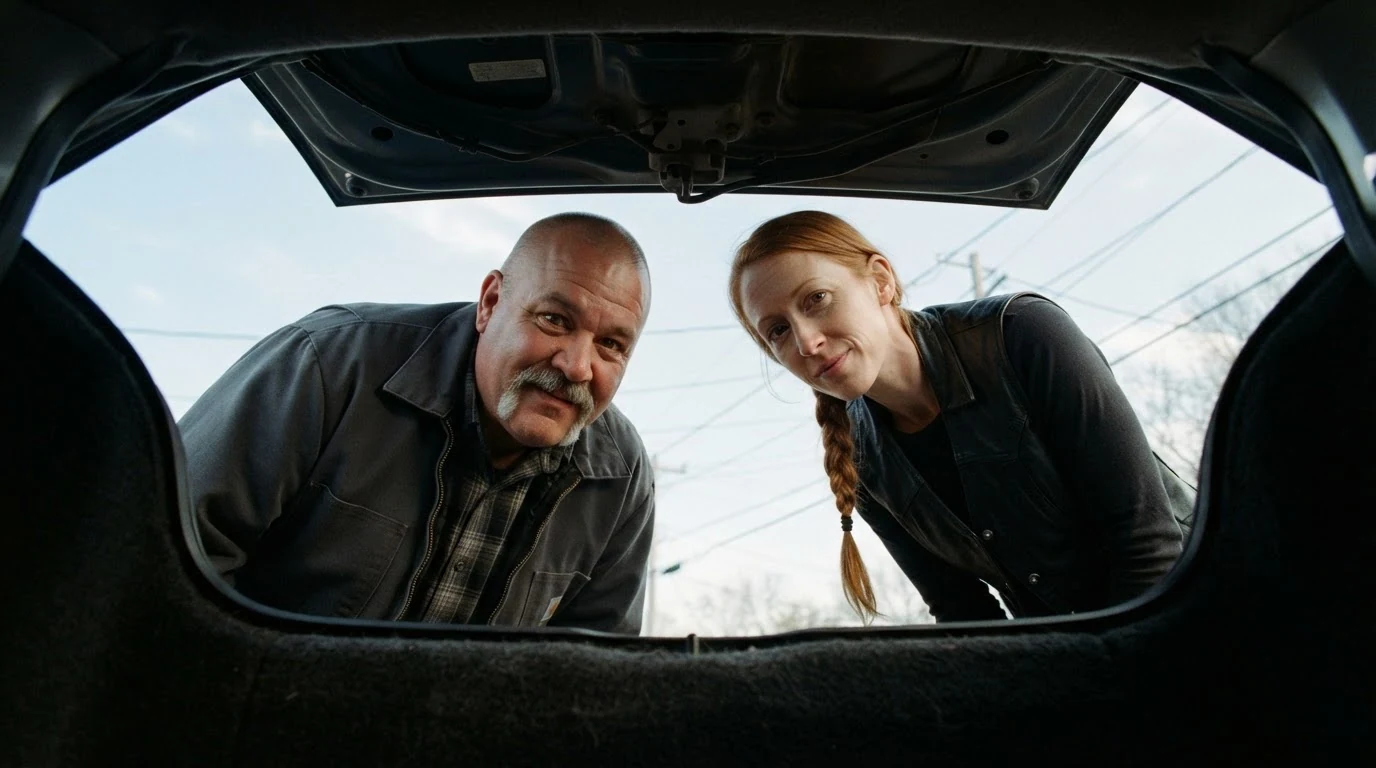
"Camera lying on the floor of an open car trunk looking straight up" places the lens; "underside of the raised trunk lid" draws the border; "faces lit softly from below" prevents silhouettes.
Open FlashBoardsNight trunk shot from inside the trunk of an old sedan, camera on the trunk floor looking steeply up, the raised lid framing the top, red taillight glow on the trunk rim. A young man with a bleached buzz cut and a small star tattoo under his left eye points a flashlight down at the lens; beside him an older woman with curly silver hair and horn-rimmed glasses looks down. Light rain, black sky, 16mm lens, high contrast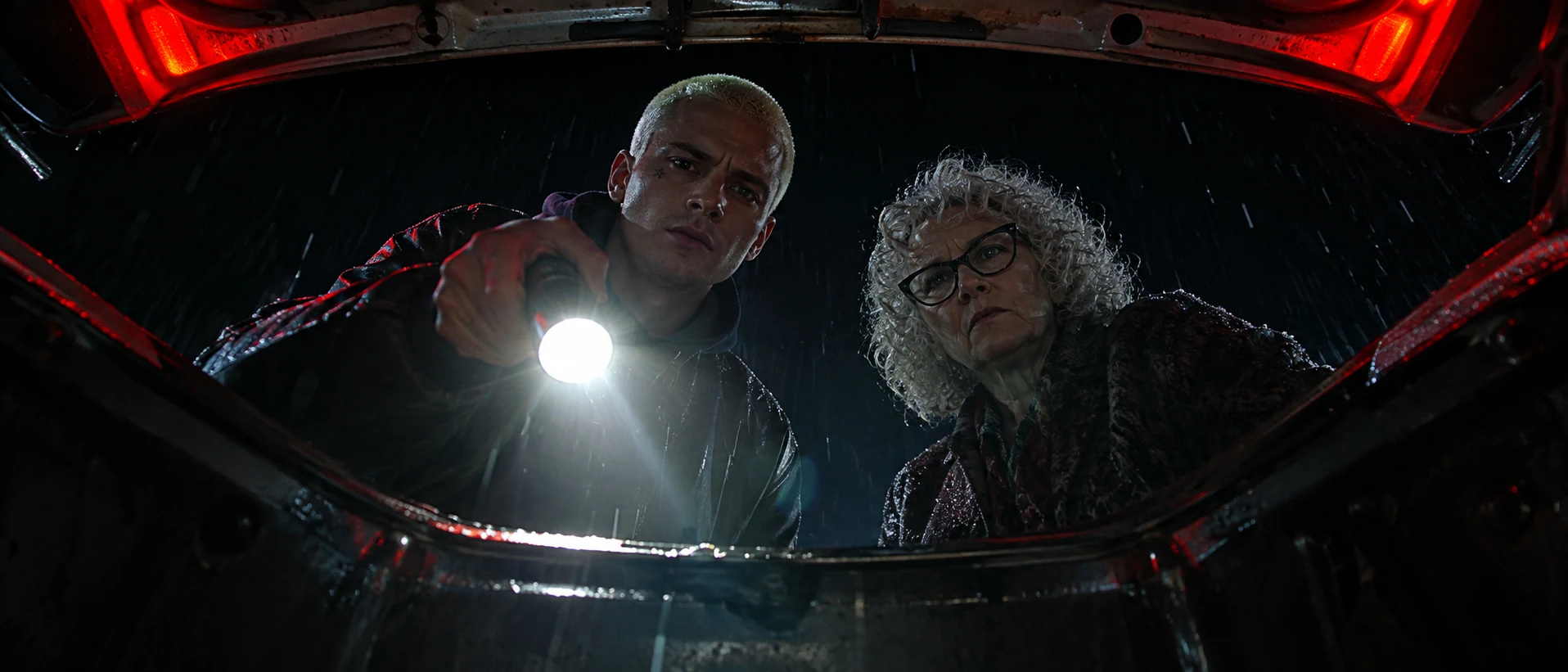
A second take at night: the flashlight is the key and the taillights paint the rim. 21:9 widens the opening so the lid reads as a letterbox.
Open FlashBoardsCamera: static, locked on the trunk floor, looking straight up for the whole shot. Action: from the first frame both are already leaning in; the man reaches down toward the lens and lifts something out of frame. In the middle the woman glances over her shoulder, then back at the lens. At the end the man grabs the raised lid and swings it down fast; the lid fills the frame and the image goes dark."Already leaning in" makes the shot alive from the first frame. The lid slam uses an object already in frame and gives the clip the trunk shot's natural ending, a cut to black.
Open FlashBoards{
"output": "Full-screen live-action 35mm film shot from Reservoir Dogs (1992), one continuous shot from its very first frame: a trunk shot, the camera lying on the floor of an open car trunk looking straight up. Hard late-afternoon sun, pale blue cloudless sky, a wooden telephone pole and power lines behind the men, warm grain.",
"characters": {
"S1": {
"name": "Mr. Blonde, played by Michael Madsen",
"look": "broad-shouldered man, slicked-back dark hair, black suit, white shirt, thin black tie; screen-left, nearest the lens",
"voice": "silence: he never speaks in this shot"
},
"S2": {
"name": "Mr. White, played by Harvey Keitel",
"look": "older man, swept-back greying hair, black suit, white shirt, black tie; centre, a step back",
"voice": "silence: he never speaks in this shot"
},
"S3": {
"name": "Mr. Pink, played by Steve Buscemi",
"look": "thin man, dark hair, black suit, white shirt, loose black tie; screen-right, leaning in",
"voice": "thin, nasal, disgusted"
}
},
"shots": [
{
"shot": 1,
"camera": "static, locked on the trunk floor, wide lens pointing straight up at the sky; the dark underside of the trunk lid fills the top edge, the trunk rim along the bottom",
"action": [
"BEGINNING: alive from the first frame, the trunk lid is closed and the frame is dark metal; the lid swings up and away toward the top of frame, sunlight floods in",
"THEN: S1 at screen-left stands with one arm raised high, holding the lid up, looking down into the lens; S2 in the centre and S3 at screen-right lean over the opening and stare down",
"THEN: S1 lowers his raised arm and lets his hand fall to his side, the open lid stays as a dark border across the top of frame; S1 grins widely down into the trunk",
"THEN: S2 gives a small smile, head tilted down, hands out of frame; S3 leans his head toward screen-left and pulls a face of disgust",
"END: all three hold, looking down into the trunk, S1 still grinning, S3 speaking with visible lips"
],
"dialogue": [
{
"speaker": "S3",
"on_screen": true,
"when": "near the end, after S1 has lowered his arm",
"delivery": "disgusted, half-laughing",
"line": "<d>[English] Jesus Christ!</d>"
}
]
}
],
"sound": {
"ambience": "quiet street outside, distant traffic, the creak of the trunk hinge as the lid swings up",
"speech": "exactly these spoken phrases, each said once, in this order",
"never_spoken": "no narration and no voice-over: the descriptions, performance notes and step words of this prompt are never spoken aloud",
"music": "a film score under the scene, always below the voices: a dry, low twangy bass line with a slow menacing pulse",
"subtitles": "none"
}
}Remakes the lid-opening trunk shot from Reservoir Dogs (1992); the prompt carries over the upward lens, the lid border and Mr. Pink's single line.
The camera block pins the lens to the trunk floor, and the action steps carry the reveal: lid up, three faces lean in, one line of dialogue.
Open FlashBoardsCommon mistakes
- Camera behind the car. "Looking into the trunk" gives the reverse angle; write "camera on the trunk floor looking straight up".
- Missing lid. Name the lid's underside across the top, or you get a generic low angle.
- Silhouettes. Add "faces lit softly from below" or an overcast sky.
- Invented cargo. Describe the bottom edge so the model doesn't add bags or bodies.
Keep the reference frames, prompts and every generated take side by side — images and video in one canvas.
FAQ
4 questionsWhat is a trunk shot in film?
A trunk shot is a low-angle shot from inside an open car trunk, looking up at characters leaning over it. The raised lid frames the top of the image and sky fills the background. The viewer takes the place of the trunk's contents, weapons or a captive, which makes the characters look powerful and the moment dangerous.
Which Tarantino movies have a trunk shot?
Tarantino uses it in Reservoir Dogs (1992), Pulp Fiction (1994), Jackie Brown (1997) and Death Proof (2007); From Dusk Till Dawn (1996), which he wrote, has one too. Kill Bill: Vol. 1 (2003) uses the same staging without a car, the villains looking down into a lens on the floor.
Is a trunk shot the same as a POV shot?
Only when a person is inside the trunk and we see the kidnappers through their eyes. When the trunk holds guns, money or luggage, it is an object's view: no one is watching, but the audience is placed in the trunk anyway. That object view is the more common Tarantino use.
What is a boot shot?
"Boot shot" is the British name for a trunk shot, since the trunk is called the boot in the UK. The technique is identical: the camera inside the open boot looking up, the lid framing the top of the picture, characters leaning over the lens against the sky.
Related terms
3- POV ShotCamera Angles
A POV shot shows exactly what a character sees by placing the camera at their eyes — usually right after a shot of them looking — so the audience shares their perspective, including movement, obstruction or distortion.
- Low-Angle ShotCamera Angles
A low-angle shot looks up at the subject from below eye level, making them loom larger against the ceiling or sky — used for power, menace or heroism, or to make a space feel monumental.
- Frame Within a FrameComposition & Framing
Frame within a frame uses a doorway, window, mirror, arch, corridor or shadow inside the shot as a second border around the subject, isolating it, adding depth or suggesting entrapment.
Further reading
Blain Brown, Cinematography: Theory and Practice. Joseph V. Mascelli, The Five C's of Cinematography.