 FlashBoards Learn
- Learn
- Camera Shots
- Long Shot (Wide Shot)
Camera Shots · Film language
Long Shot (Wide Shot)
Also called: wide shot, WS, LS
A long shot, also called a wide shot, shows a person from head to toe with generous space around them, so the viewer reads the body language and the place at the same time. The character is still clearly a person rather than a speck, and the setting is part of the story, not a backdrop.
- What it does
- Puts the whole body in its environment, so posture and place tell the story together.
- Use it when
- Where a character stands, moves or stands alone matters as much as their face.
- Watch out
- Too much space and it turns into an extreme long shot; too little and it becomes a full shot.
- Try this prompt
Long shot, a lone woman standing head to toe in an empty train station, figure about half the frame height, 32mm lens, eye level, soft haze.
What is a long shot?
A long shot (LS), or wide shot (WS), frames a character's entire body with clear space above the head, below the feet and on both sides. As a rule of thumb, a standing adult occupies somewhere between a third and two-thirds of the frame height. The person is small enough that the location reads, and big enough that you can still see how they stand, which way they face and what they are doing with their arms.
On the camera shots scale it sits between two neighbors that are easy to blur into it:
- The full shot also shows the whole body, but trims the frame close to the head and feet. The body dominates and the setting is secondary.
- The extreme long shot pulls back until people are tiny or absent. The environment dominates, and scale and isolation become the subject.
The long shot is the balance point: figure and place carry roughly equal weight.
Two usage notes. On set, “the wide” can mean the loosest angle of any scene, which in a car interior may be barely a medium long shot; here long shot means the full figure with surroundings. And a long shot is a shot size: it says nothing about duration or focal length.
Long shot vs. full shot vs. extreme long shot
All three can include the full human figure, so the difference is the ratio of person to space:
| Shot | Person in frame | What dominates | Typical job | |---|---|---|---| | Full shot | Head to toe, fills most of the height | Body, costume, movement | Dance, fights, a character reveal | | Long shot / wide shot | Head to toe, roughly ⅓–⅔ of the height | Body and place in balance | Blocking, entrances, isolation, physical comedy | | Extreme long shot | Tiny or absent | Landscape, city, scale | Epic scale, loneliness, geography |
A quick test: if you can read the character's posture but the room or landscape tells you as much as the posture does, it is a long shot. If the setting is only a background to the body, it is a full shot. If you have to search the frame for the person, it is an extreme long shot.
A long shot is also not automatically an establishing shot. Establishing is a job, telling the audience where we are, and it is often done with an extreme long shot of a building or skyline.
Why do filmmakers use long shots?
Body language that the face can't carry. Slumped shoulders, a confident stride, two people standing too far apart: these read in a long shot and vanish in a close-up.
Physical comedy. A line often attributed to Charlie Chaplin says life is tragedy in close-up and comedy in long shot. Silent comedians played their gags in wide frames so the audience could see there was no cheat. When the house facade falls around Buster Keaton in Steamboat Bill, Jr. (1928), the wide frame is what proves the stunt. Jacques Tati staged nearly all of Playtime (1967) in wide shots, so the audience finds the jokes themselves.
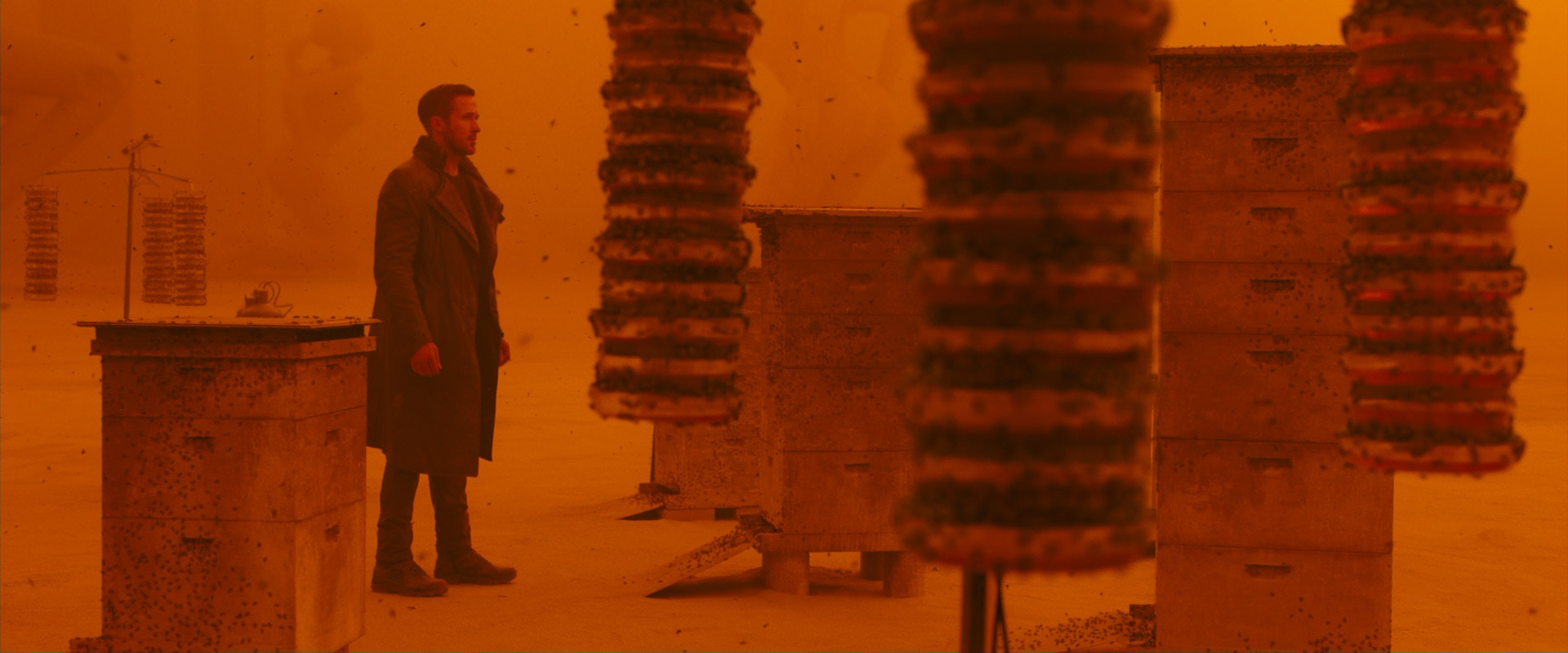
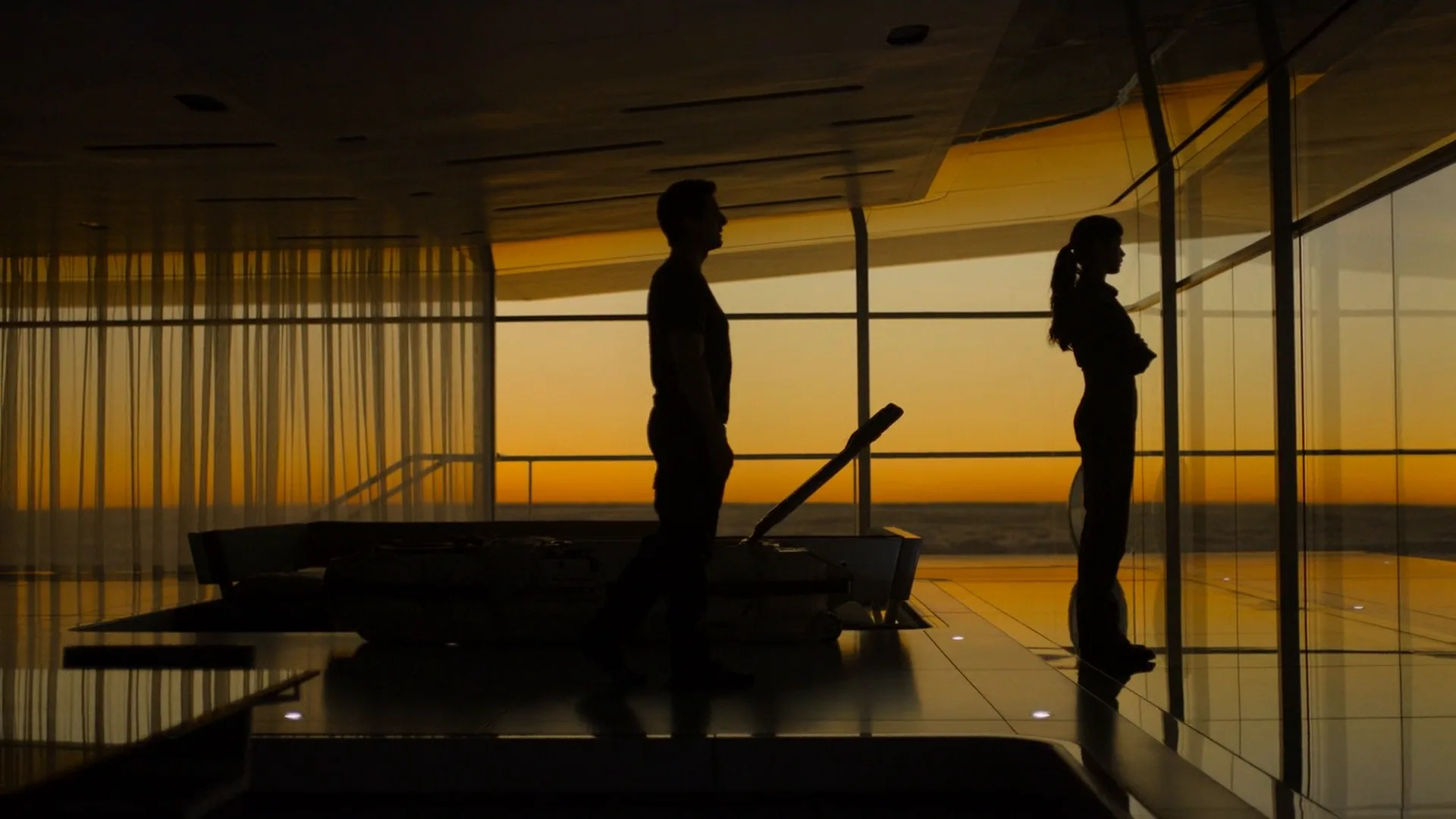
Isolation and scale. Surround a figure with empty floor, wall or haze and it looks alone. The Blade Runner 2049 and Shame frames in the gallery do this with very little else in the picture.
Staging and geography. A long shot shows where everyone is and how they move through a set, which is why a scene's master shot is usually a long shot. Fights, dances and chases need it so the audience understands the space before the cutting gets fast.
Beginnings and endings. Opening wide on a character lets the audience find them in a place. Ending wide, as The Searchers (1956) does with John Wayne framed in a doorway before he turns away, closes a story by stepping back from it.
How to shoot a long shot
Size the figure first. Decide how tall the person should be in frame, then choose lens and distance. For a standing adult at about half the frame height in 16:9 on a Super 35 sensor, you need a frame roughly 13 feet tall and 23 feet wide. That is about a 24mm lens at 22 feet, a 32mm at 30 feet, or a 100mm at around 90 feet.
Pick the perspective, not just the size. A wide lens up close keeps the background small and deep, and exaggerates movement toward or away from the camera. A telephoto lens from far away stacks the background up behind the figure, making a wall or a mountain loom over them. Same shot size, very different feeling.
Camera height. Eye level (about five feet) is neutral. Dropping to hip height, around three to four feet, shows more ground and makes the figure feel more grounded in the space. Going high reveals floor patterns and the geography of the blocking.
Keep the feet. Never trim the feet in a long shot; the gap under them is what separates it from a full shot. Give the floor or ground real estate and dress it, because the art department's work is now half the frame.
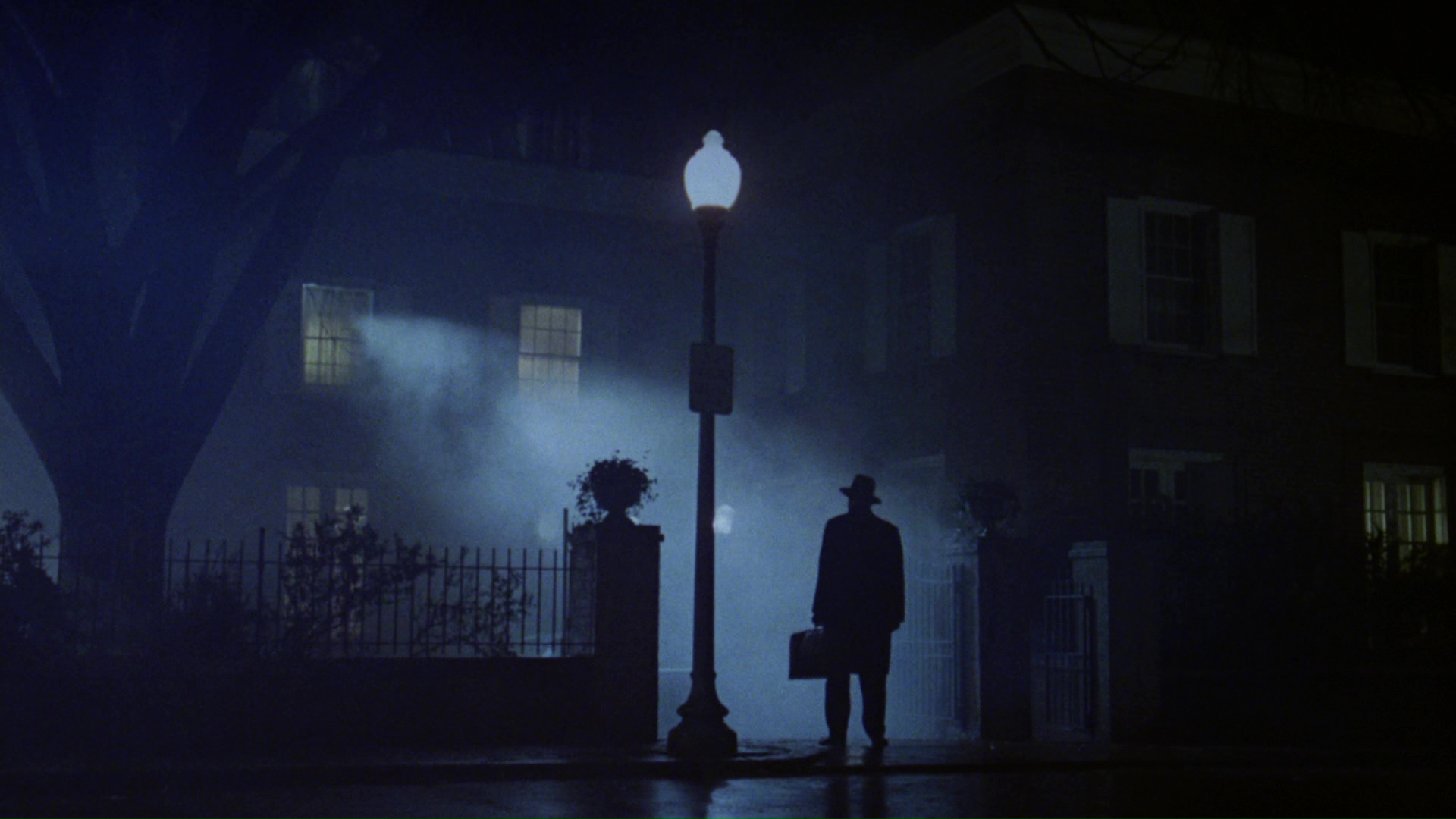
Light the space. You are lighting a place, not a face. Work with large sources, practicals in the set, and backlight or haze to separate the figure from the background; the frames from The Exorcist and Blade Runner 2049 below rely on exactly that.
Focus and sound. At these distances a moderate stop holds much of the set sharp, and deep focus lets several planes of action play at once. Plan for wireless mics; a boom can't get close without entering the frame.
Is a wide shot the same as a wide-angle lens?
No. A wide shot describes how much of the scene is in the frame. A wide-angle lens describes the focal length used to get it. You can make a long shot on a 20mm lens from a few yards away or on a 200mm lens from across a field, and both frame the full figure with space around it.
The difference is perspective. The wide-angle version feels immersive: the foreground stretches, the background recedes, and a walk toward camera covers a lot of screen. The telephoto version feels observational and compressed: the background seems close behind the figure, and a walk toward camera barely changes their size. Choose the lens for that feeling, then move the camera until the size is right.
This matters in prompts too. Writing “wide-angle” when you mean “wide shot” often gets you barrel-distorted edges and a figure far closer to the lens than you wanted.
Long Shot (Wide Shot) examples in film
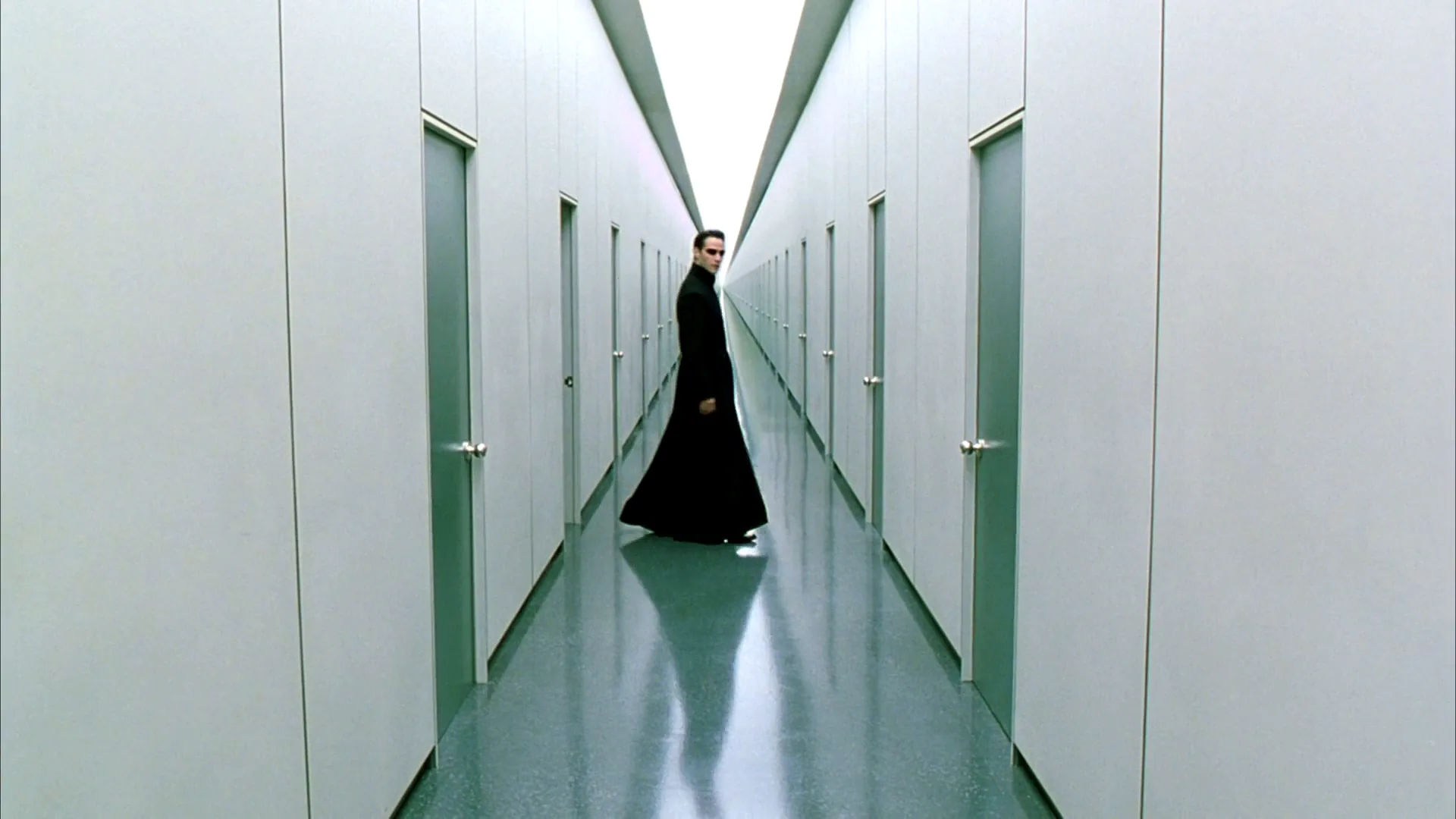
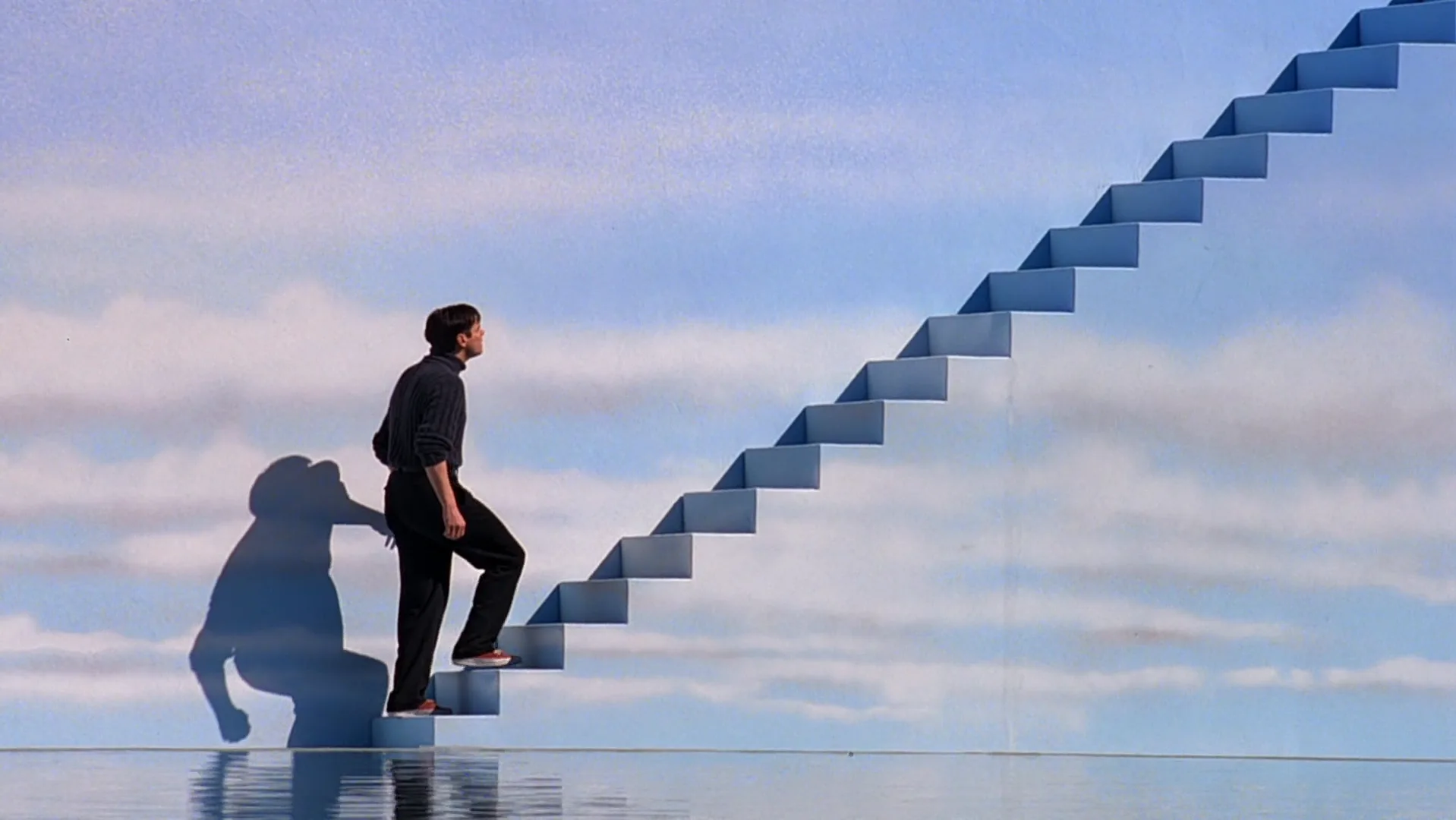
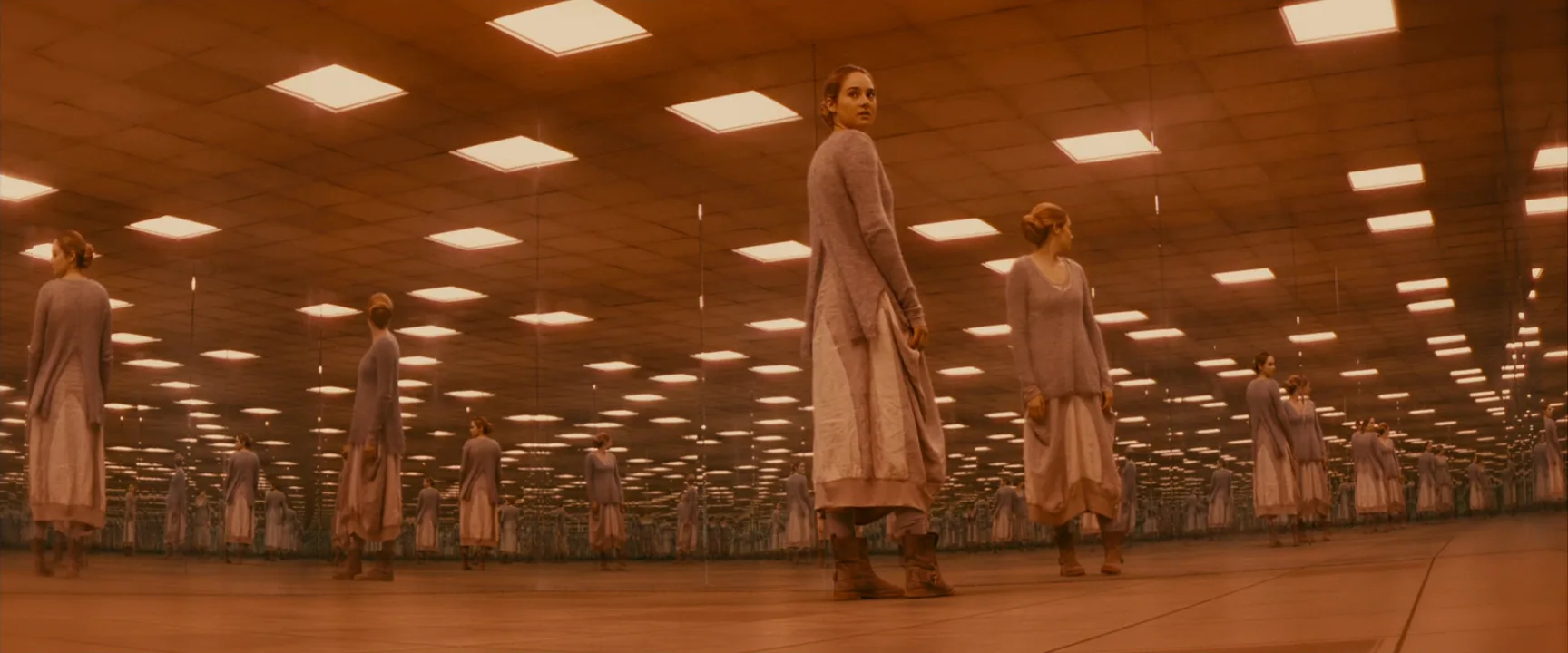
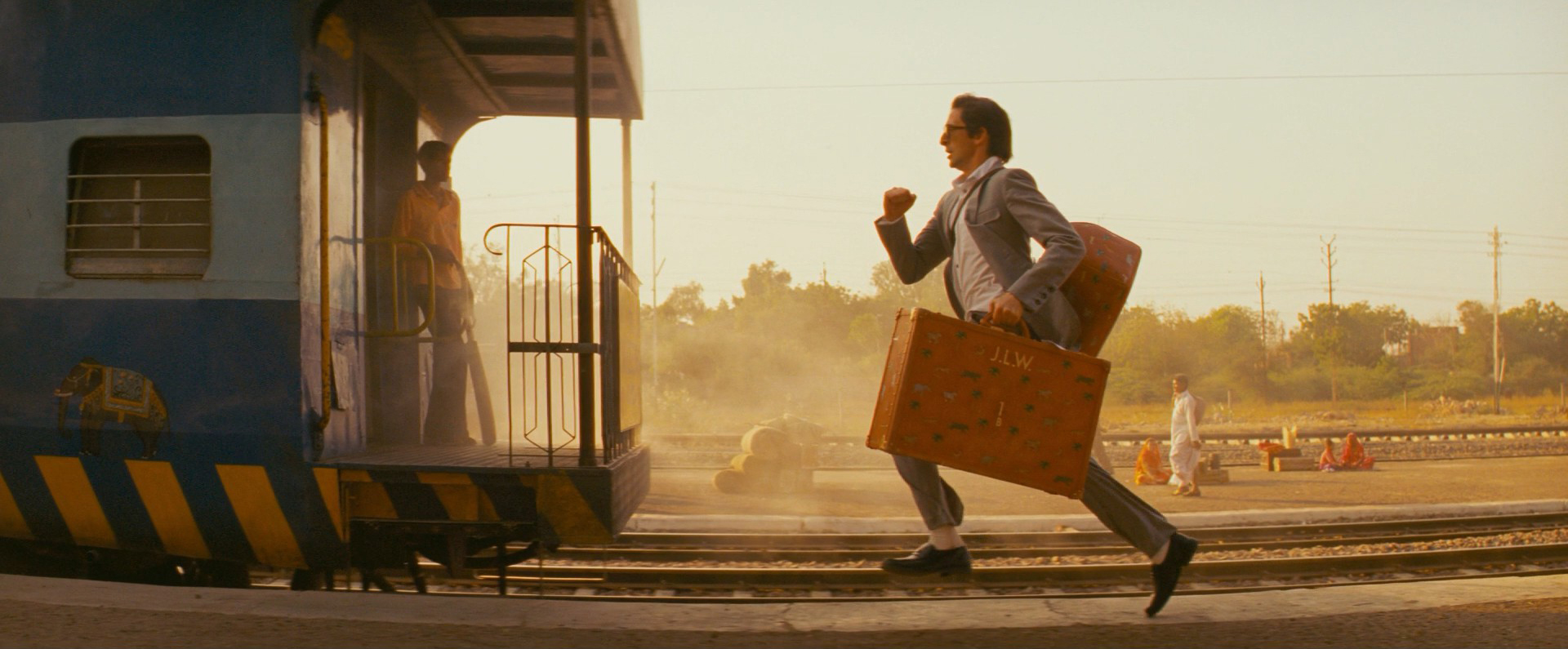
15 framesFifteen long shots from feature films. In each, check two things: are the feet in frame, and does the place say as much as the posture?
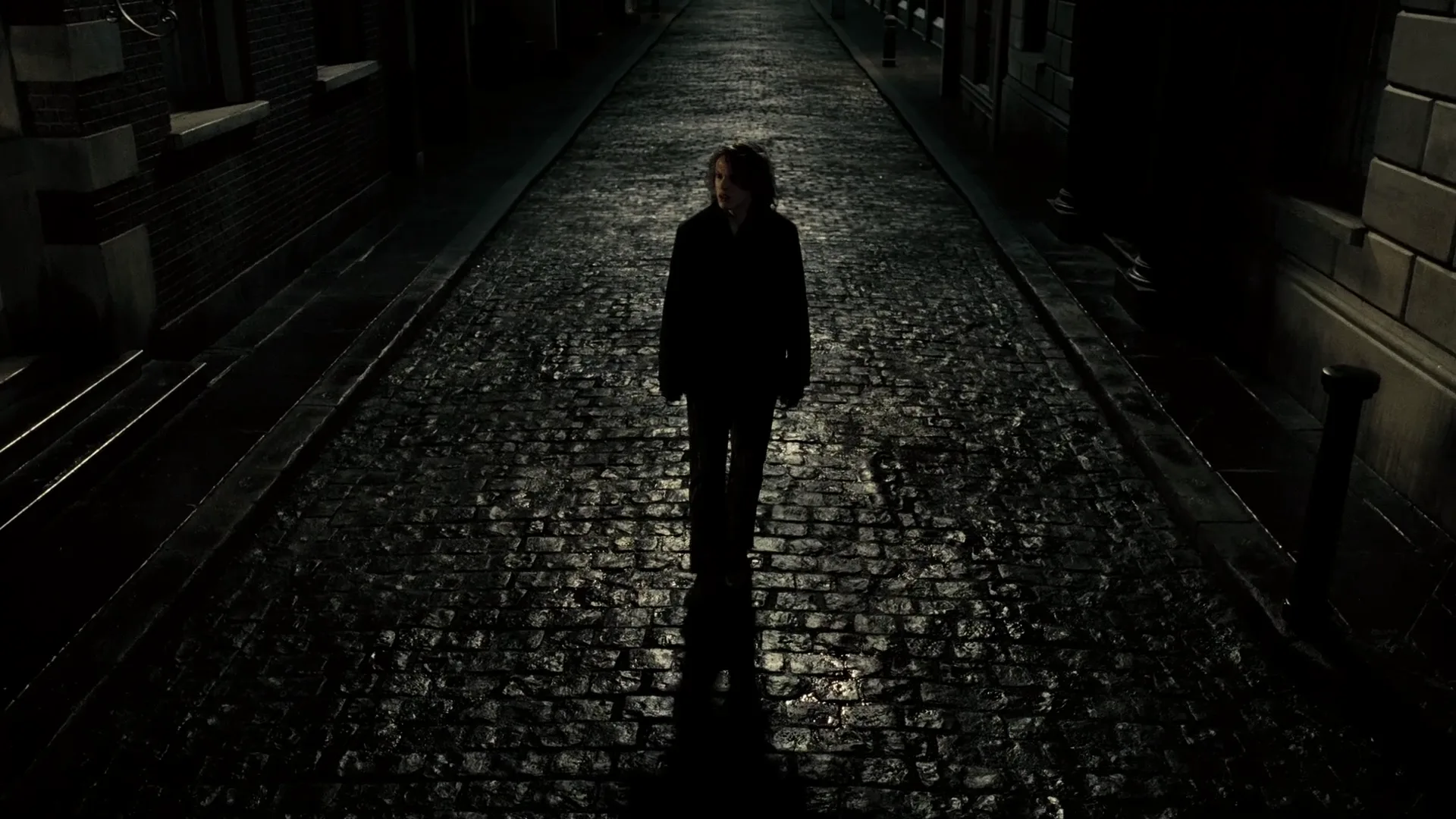
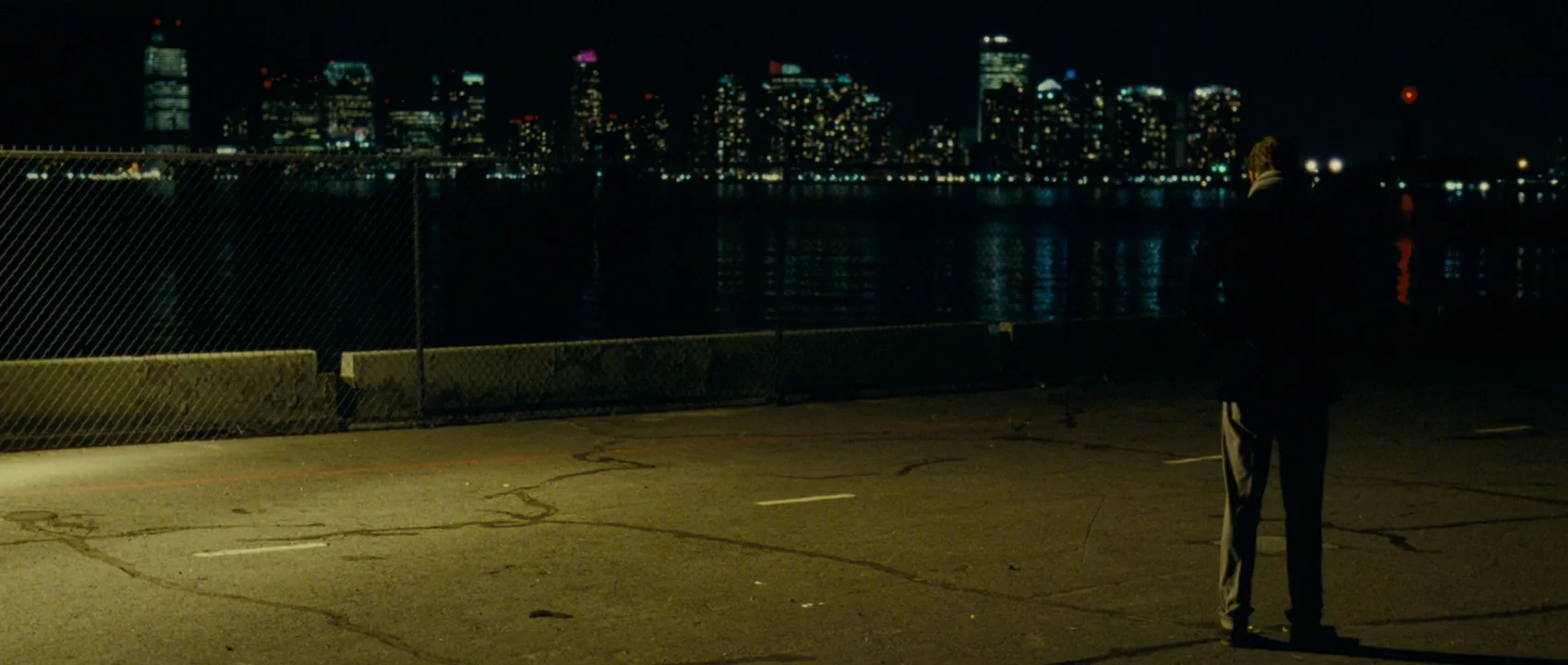
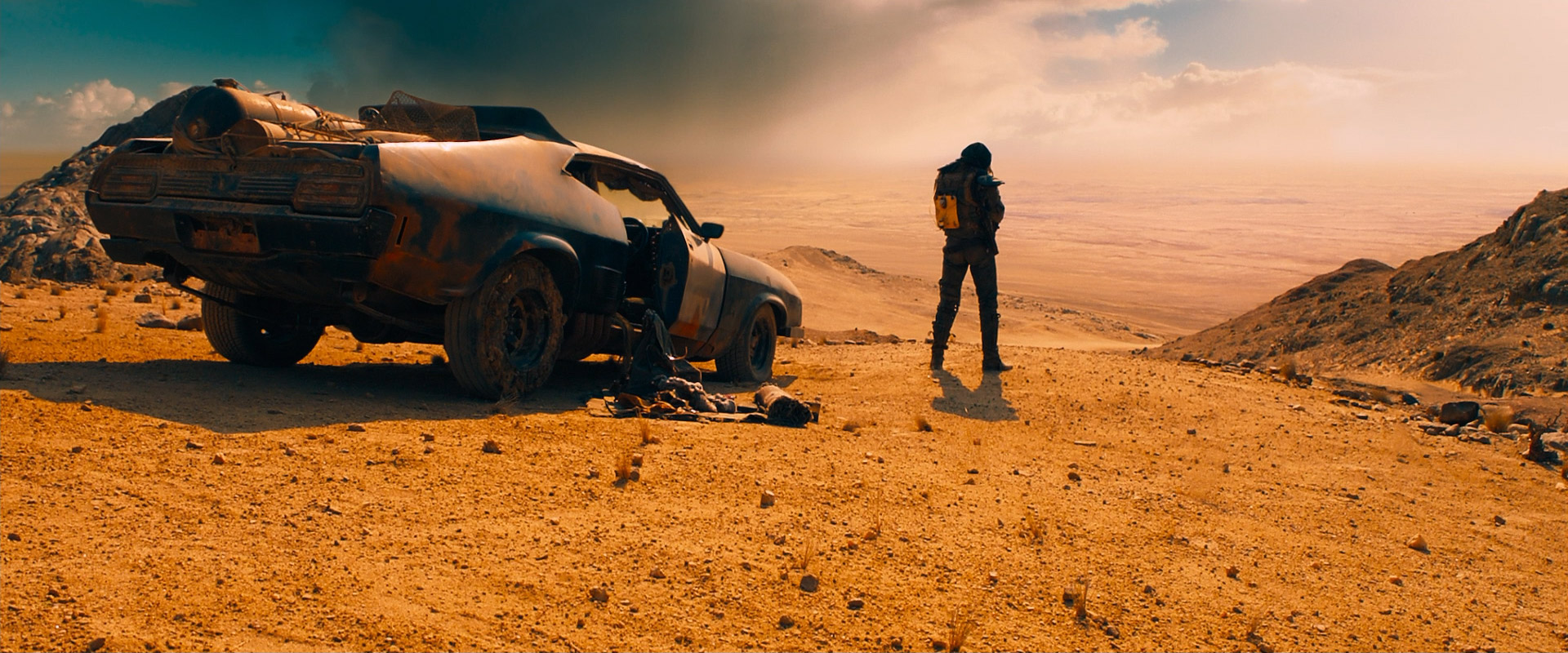
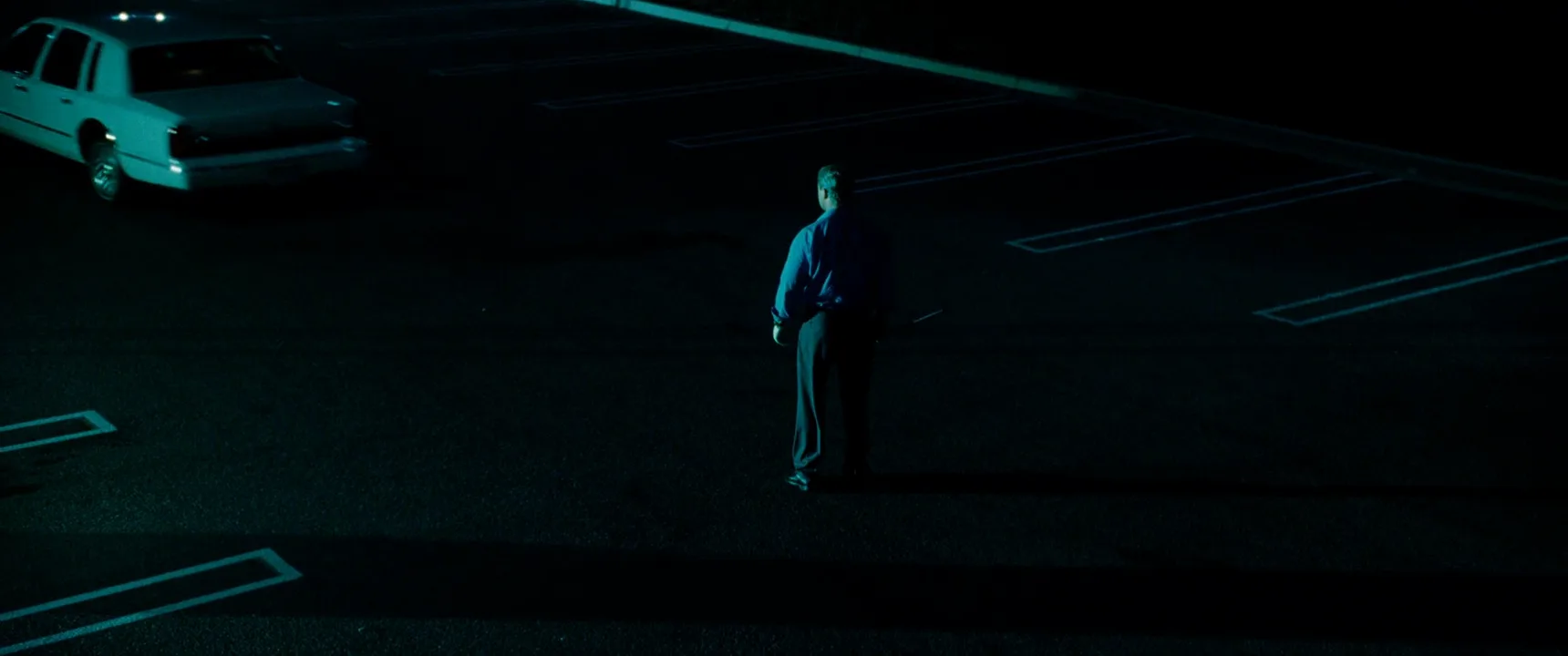
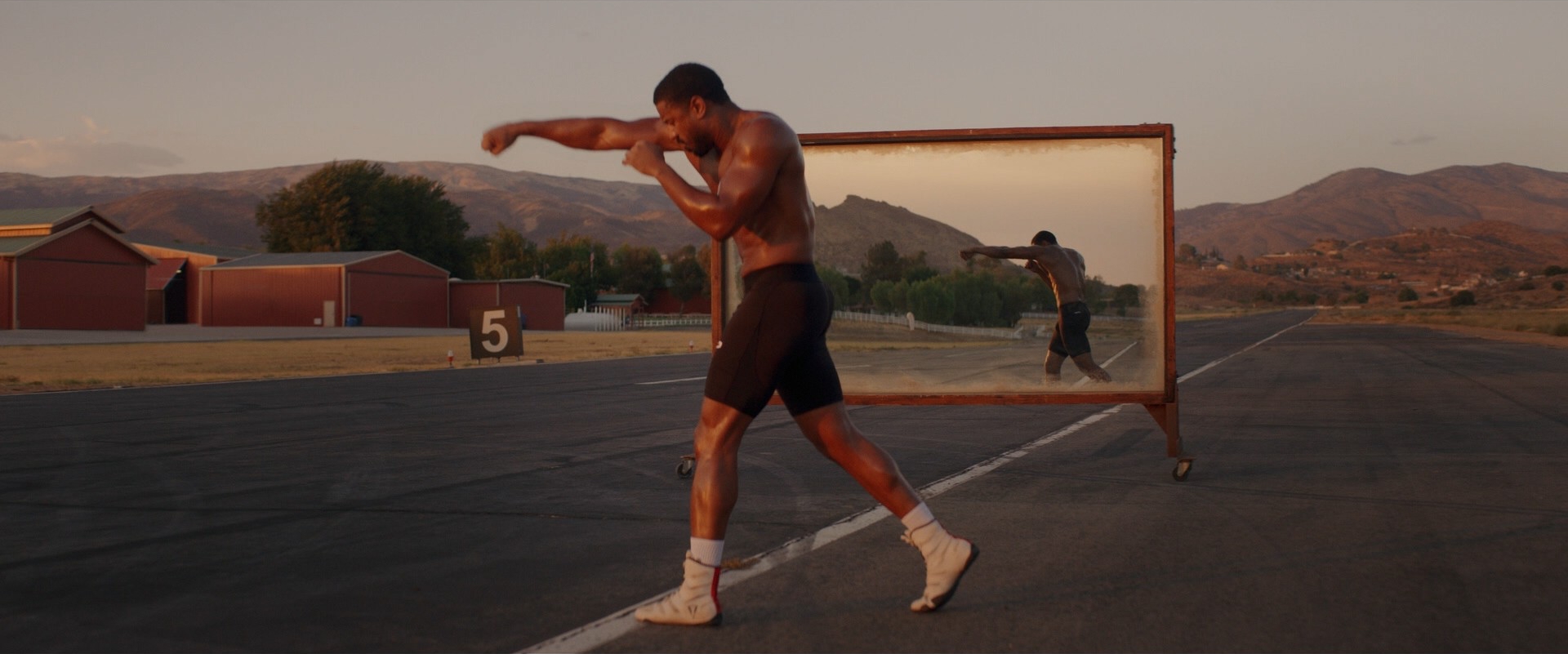
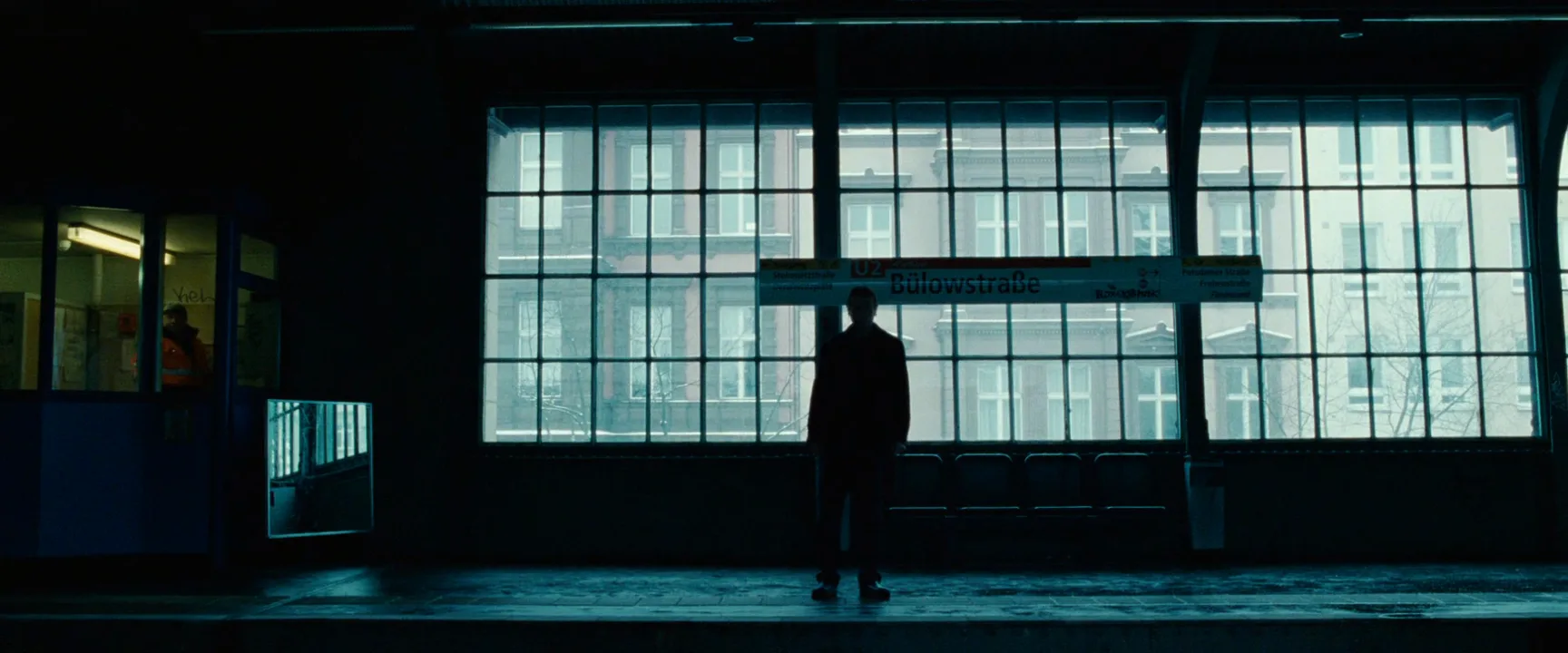
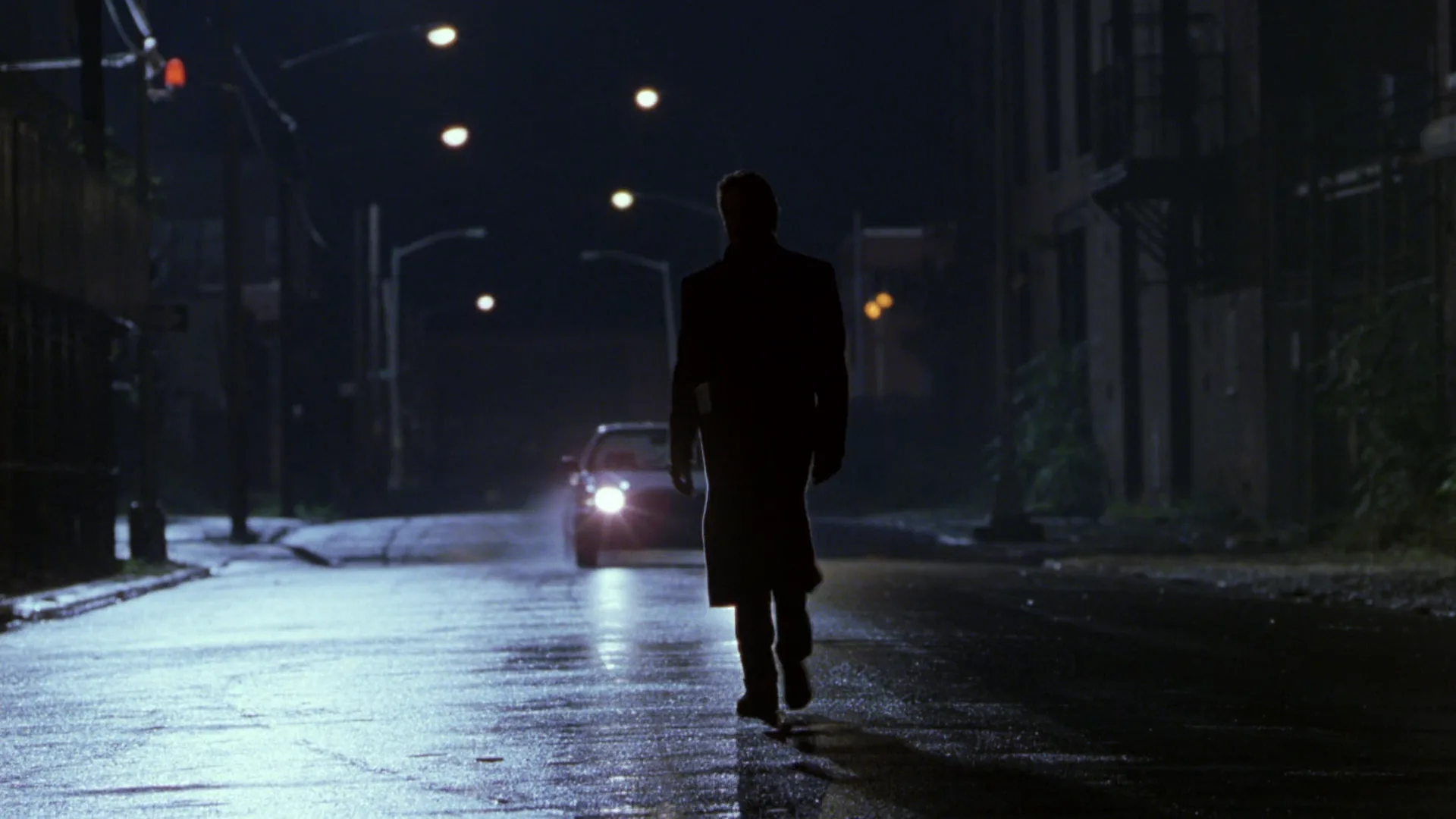
How to create a long shot (wide shot) with AI
4 promptsMost models know “wide shot,” but they read it loosely: some pull back to a tiny figure in a landscape, others give you a full shot with the feet cropped. What works is to state the figure's size in the frame and keep the feet and ground visible. In FlashBoards, build the start frame with Nano Banana 2 Lite, try a second take with GPT Image 2.5 and animate the frame with MiniMax H3 Max Turbo — on one board next to your reference frames and the tighter coverage of the same scene, so location, costume and light stay consistent from the wide to the close-up. The fourth prompt re-shoots a real film shot from a text description alone, and the original plays next to the result so you can compare.
Long shot of a young man in a grey coat standing alone in the middle of an empty parking garage at night, full body head to toe, figure about half the frame height, feet and wet concrete floor visible, rows of concrete pillars receding behind him. Eye-level camera, 32mm lens, sodium-vapor overhead lights, light haze, deep focus, cinematic film still.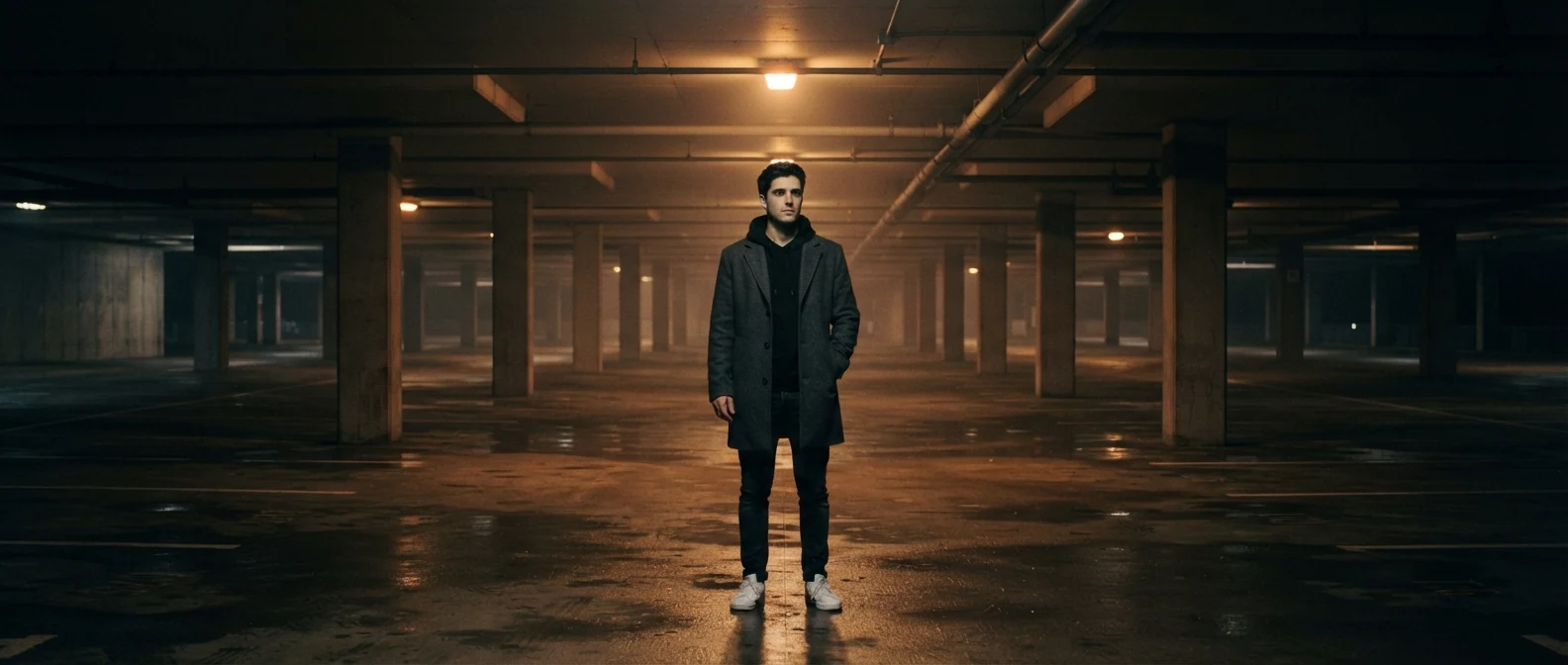
“Full body head to toe” and “figure about half the frame height” pin the size between a full shot and an extreme long shot. “Feet and wet concrete floor visible” stops the model from cropping, and the haze separates him from the pillars. This frame is the start frame for the video recipe below.
Open FlashBoardsWide shot, telephoto compression: a woman in a red dress walks along a harbor wall, full figure small in the lower third, a huge cargo ship hull looming directly behind her and filling the upper frame. Shot from far away on a 135mm lens, overcast light, muted palette, cinematic film still.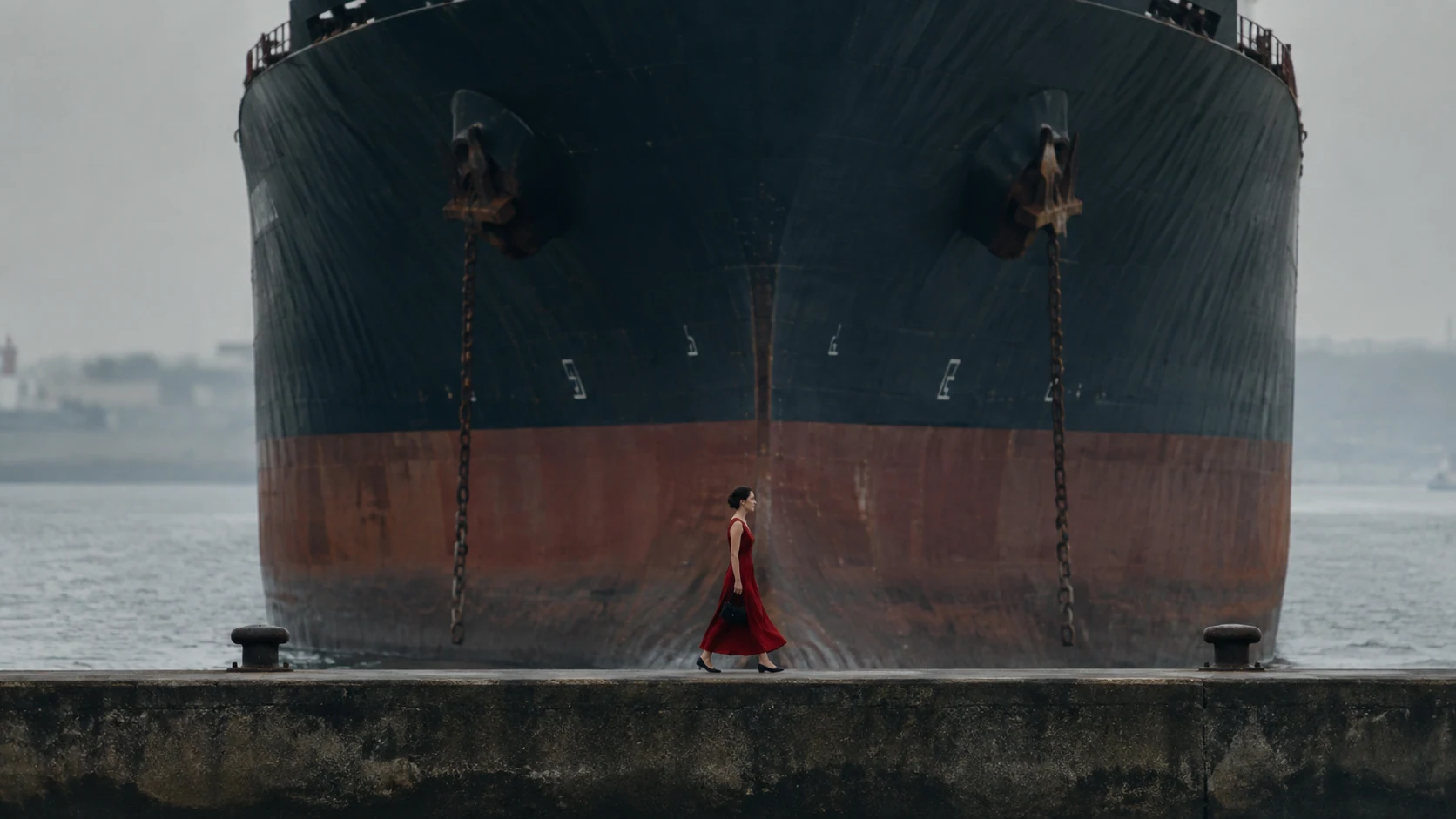
A second take on the same size with the opposite perspective. “Telephoto compression,” “from far away” and “135mm” flatten the space so the ship looms over her, which makes the point that a long shot is a size, not a lens. The red dress keeps the small figure readable against the grey hull.
Open FlashBoardsCamera: locked off at eye level for the whole shot, the framing never changes. Action: from the first frame the man is already walking slowly to the right across the wet concrete, crossing the frame sideways so his size stays the same, his reflection moving on the floor under him. In the middle he passes between two pillars, still visible head to toe. At the end he stops beside a pillar on the right third and looks back over his shoulder toward the dark end of the garage, while the haze drifts through the overhead light.Recipe 1's frame already sets the size, lens and light, so the prompt only describes change. “Already walking” makes the shot alive from the first frame instead of a still that slowly pushes in. “Locked off” and “crossing the frame sideways so his size stays the same” protect the long-shot size: a walk toward the lens would turn it into a full shot. Everything named — pillars, floor, haze — is already in the frame.
Open FlashBoards{
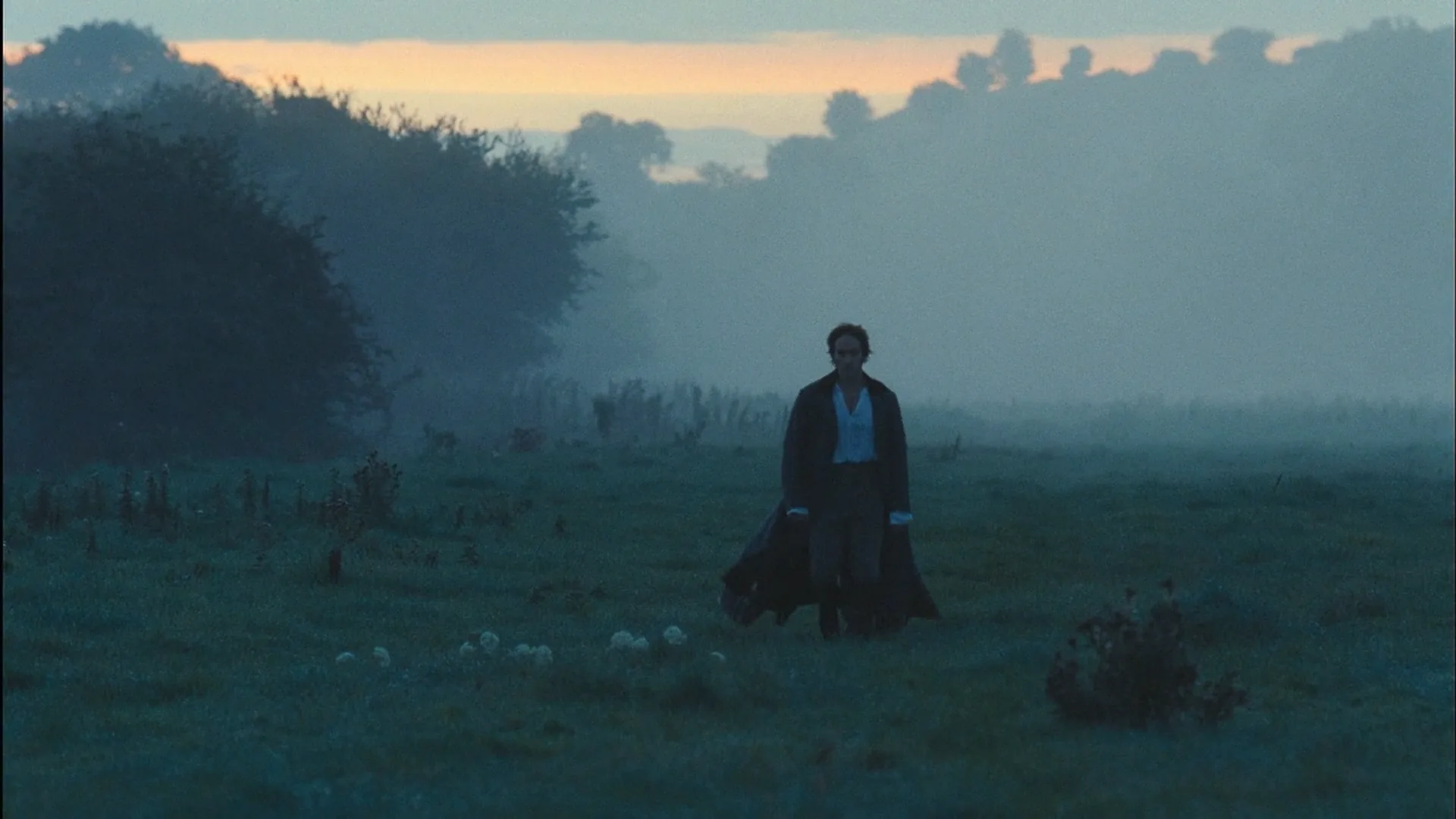
"output": "Full-screen live-action shot from Pride & Prejudice (2005) from its very first frame: one continuous long shot filmed from far across a field on a long telephoto lens. 35mm film grain, blue pre-dawn light over a misty English meadow, a thin strip of peach dawn sky along the top edge above a dark wooded ridge, soft low-contrast teal and slate palette, a band of ground mist across the middle distance.",
"characters": {
"S1": {
"name": "Mr. Darcy, played by Matthew Macfadyen",
"look": "tall, wavy dark hair, pale face; long dark greatcoat hanging open and reaching below the knee, open-necked white shirt, dark waistcoat, dark breeches and boots, white shirt cuffs showing at both wrists",
"voice": "silence: he says nothing"
}
},
"shots": [
{
"shot": 1,
"camera": "locked telephoto from about two hundred yards away at eye level; the camera never moves closer and never zooms in, it only tilts down very slowly and pans a touch left to keep S1 just right of centre. Wide framing throughout: S1 small and full-length in the middle of the frame, a broad band of wet grass below his boots all the way to the bottom edge, a dark mass of trees filling the left third of the frame, the mist and the pale sky filling the upper half",
"action": [
"BEGINNING: alive from the first frame, S1 is already walking straight toward the camera out of the mist, just right of centre, a small full-length figure about a quarter of the frame height; his open coat flares out to screen right behind his legs; a low dark shrub stands in the grass in the lower right of the frame, and a few white cow-parsley flower heads dot the grass in the lower left.",
"THEN: he keeps a steady, unhurried pace, both arms hanging loose at his sides with the white cuffs swinging slightly, face without expression, eyes fixed straight ahead toward the camera; the coat tails swing from side to side with each stride.",
"THEN: the camera tilts down very slowly, so the strip of dawn sky rises toward the top edge while S1 stays full-length in the same place in the frame; he is so far away that the telephoto compression makes each stride gain almost no ground, and his size barely changes.",
"END: S1 is still walking, still far from the camera, still small and full-length, only about a third of the frame height, head to boots, with a wide band of grass below his boots down to the bottom edge, open meadow on both sides of him, the shrub still to the lower right and the dark trees still on the left."
],
"voice": "silence: nobody speaks in this shot, no voice at all",
"dialogue": []
}
],
"sound": {
"ambience": "quiet dawn meadow, soft birdsong heard from far away, faint swish of wet grass and of the heavy coat with each stride",
"speech": "no words in this video; the only human sounds are breaths and movement",
"never_spoken": "no narration and no voice-over: the descriptions, performance notes and step words of this prompt are never spoken aloud",
"music": "a film score under the scene, always below the voices: a slow solo piano phrase over soft sustained strings, hushed and yearning, building very gently",
"subtitles": "none"
}
}Remakes Mr. Darcy's dawn walk from Pride & Prejudice (2005), dir. Joe Wright, DP Roman Osin: the telephoto walk toward camera across a misty meadow, the slow tilt down, the dark trees on the left and the full figure held small in the field, with no dialogue and a quiet score.
Text alone has no start frame to hold the size, so the camera field pins it: two hundred yards away, never moves closer and never zooms in, a broad band of wet grass below his boots. The shrub and the cow parsley anchor the space, and the END step states the size again. The figure still grows to about two-thirds of the height, the upper edge of a long shot.
Common mistakes
- Zooming out to an extreme long shot. Words like “epic,” “vast,” or “landscape” shrink the person to a dot. Give a size cue: “figure about half the frame height.”
- Cropping the feet. Many models default to a full shot or a medium long shot. Write “head to toe, feet and ground visible.”
- Wide-angle distortion. “Wide” can trigger a fisheye look. Say “wide shot” for size and name a lens (32mm, 50mm, 135mm) for perspective.
- A frozen start or a drifting camera. Given a still and a vague prompt, the video model slowly pushes in on a figure that barely moves, or adds a crane move. Write
Camera: locked offor the one move you want, and startAction:with motion that is already happening. - The figure walks into a full shot. A walk toward the lens changes the shot size. Move people across the frame, or say the size stays the same.
- Negatives that backfire. “No cars in the garage” tends to add cars. Describe what is there — “empty concrete floor, rows of pillars” — and nothing that is not in the frame.
- Mushy faces. Small faces smear. Let silhouette and posture do the work, and generate the close-up as a separate shot.
Keep the reference frames, prompts and every generated take side by side — images and video in one canvas.
FAQ
5 questionsWhat is a long shot in film?
A long shot frames a character from head to toe with plenty of space around them, so the viewer sees both body language and the environment. The person usually takes up a third to two-thirds of the frame height. It sits between the full shot, where the body fills the frame, and the extreme long shot, where the landscape dominates and people are tiny.
Is a long shot the same as a wide shot?
In most usage, yes: long shot (LS) and wide shot (WS) name the same framing, with the full figure plus surroundings. On set, though, “the wide” can also mean the loosest angle of any scene, even if it's only a medium long shot inside a car. When you need precision in a shot list or prompt, describe the figure's size in the frame.
What is the difference between a long shot and a full shot?
Both show the whole body, but a full shot keeps the frame close to the head and feet, so the body dominates and the setting is secondary. A long shot leaves clear space around the figure, and the place carries roughly equal weight. Use a full shot to show costume or movement, and a long shot to show where a character is and how they relate to the space.
Is a long shot the same as a long take?
No. A long shot is about framing: how much of the scene the camera sees. A long take is about duration: a single shot that runs uninterrupted for an unusually long time. A long take can be framed as a close-up, and a long shot can last a single second. They often go together, because wide framing lets a scene play out without cuts.
What lens should I use for a long shot?
Any lens can make a long shot; distance sets the size and the lens sets the perspective. A 24–35mm lens from 20–30 feet gives a deep, immersive space. A 85–135mm lens from much farther compresses the background and makes it loom behind the figure. Pick the perspective the scene needs first, then move the camera until the figure is the right size.
Related terms
5- Full ShotCamera Shots
A full shot frames a character from head to toe with little room above and below, so posture, costume and whole-body movement read clearly while the setting stays secondary.
- Extreme Long ShotCamera Shots
An extreme long shot shows a vast space in which people are tiny or absent — landscapes, cityscapes, battlefields — so environment, scale and isolation matter more than any character.
- Wide-Angle LensLenses, Focus & Exposure
A wide-angle lens has a shorter focal length than normal: it takes in more space, exaggerates the distance between near and far, and enlarges whatever is close to the camera — from immersive interiors to unsettling, distorted close-ups.
- Establishing ShotCamera Shots
An establishing shot opens a scene or sequence by showing where — and often when — it takes place, typically a wide view of a building, street, city or landscape before the film cuts closer to the characters.
- Medium Long ShotCamera Shots
A medium long shot frames a character from about the knees up, between a medium and a full shot, showing gesture and stance while leaving room for the setting and other people.
Further reading
Steven D. Katz, Film Directing Shot by Shot (1991). Daniel Arijon, Grammar of the Film Language (1976).