 FlashBoards Learn
- Learn
- Cameras & Capture
- Cinematography
Cameras & Capture · Film language
Cinematography
Also called: camerawork, cinematographic techniques
Cinematography is the art of making the moving image: choosing the camera, lens, framing, movement, light, exposure and color through which a script becomes pictures. It decides what the audience sees, how close they stand, where their eye goes and how a scene feels before anyone speaks a line.
- What it does
- Turns written scenes into images that carry mood, meaning and point of view.
- Use it when
- Always: every shot is a set of decisions about lens, frame, light and movement.
- Watch out
- A beautiful image that serves nothing in the story; pretty is not the same as right.
- Try this prompt
wide shot on a 32mm lens, lone fisherman at the end of a wooden pier at dawn, low sun behind him through sea mist, amber backlight, 2.39:1 frame
What is cinematography?
Cinematography is everything about a film's image that happens in front of and inside the camera. The cinematographer, or director of photography, designs it with the director and leads the camera, grip and electric crews. The director decides what happens in a scene; cinematography decides how it is seen.
Praise for a film's cinematography is praise for hundreds of small choices: a lens a few millimeters longer, a key light moved half a meter, a camera dropped to hip height. Together they are the look of the film, and the core subject of cameras and capture.
What are the elements of cinematography?
Most cinematography techniques come down to seven decisions made for every shot:
- Camera and format. Sensor or film stock, and the aspect ratio: 2.39:1 favors landscapes and groups, 1.33:1 favors faces.
- Lens. Focal length sets perspective: a 24mm stretches space, a 100mm compresses it.
- Framing. Shot size, angle, height and placement in the frame (film composition).
- Movement. Static, handheld, dolly, crane or drone (camera movement).
- Light. Direction, hardness, color and contrast (film lighting).
- Exposure and focus. Brightness, how much falls into black, and the depth of field the stop allows.
- Color. Palette in set and costume, color temperature of the light, and the grade.
How does cinematography shape what the audience feels?
The camera controls what the viewer cannot: distance, attention and time. Four classic examples:
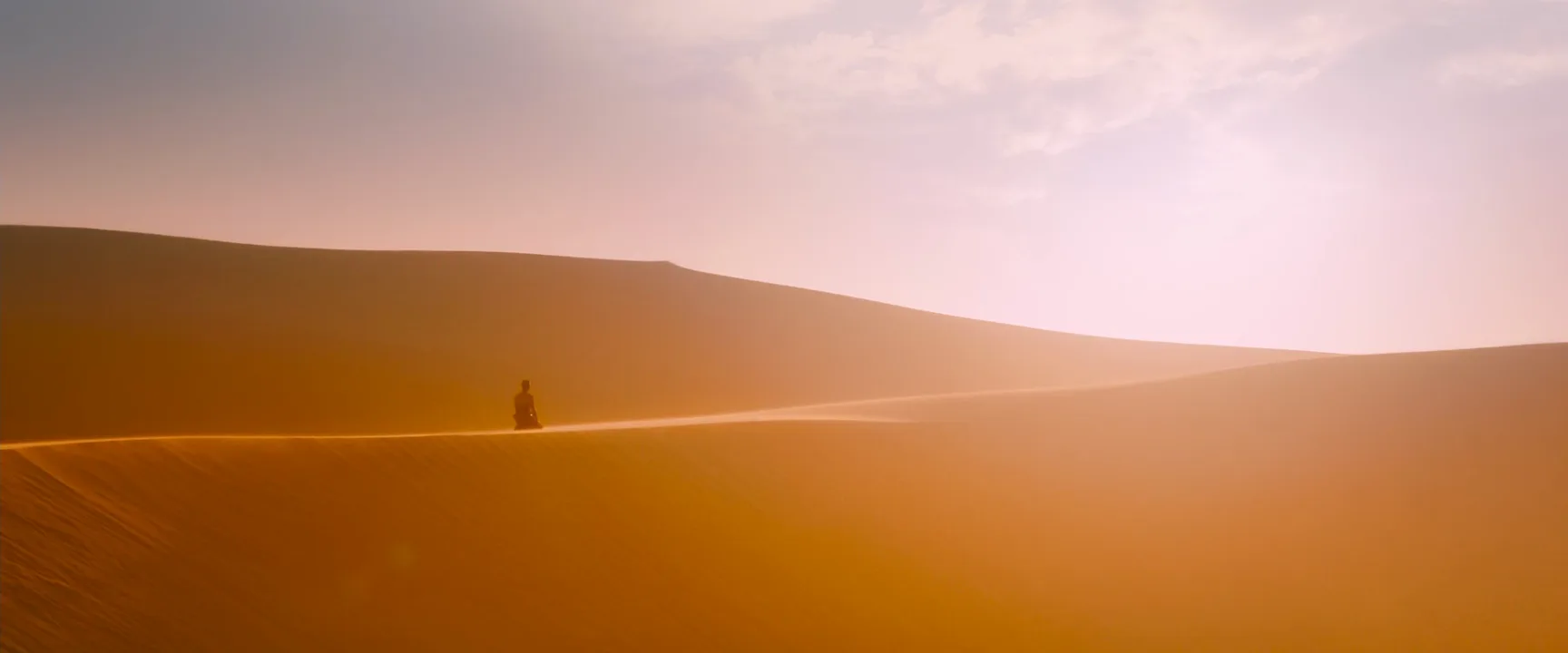
- Scale. Freddie Young shot Lawrence of Arabia (1962) in Super Panavision 70; its desert wides make one rider a speck against the horizon.
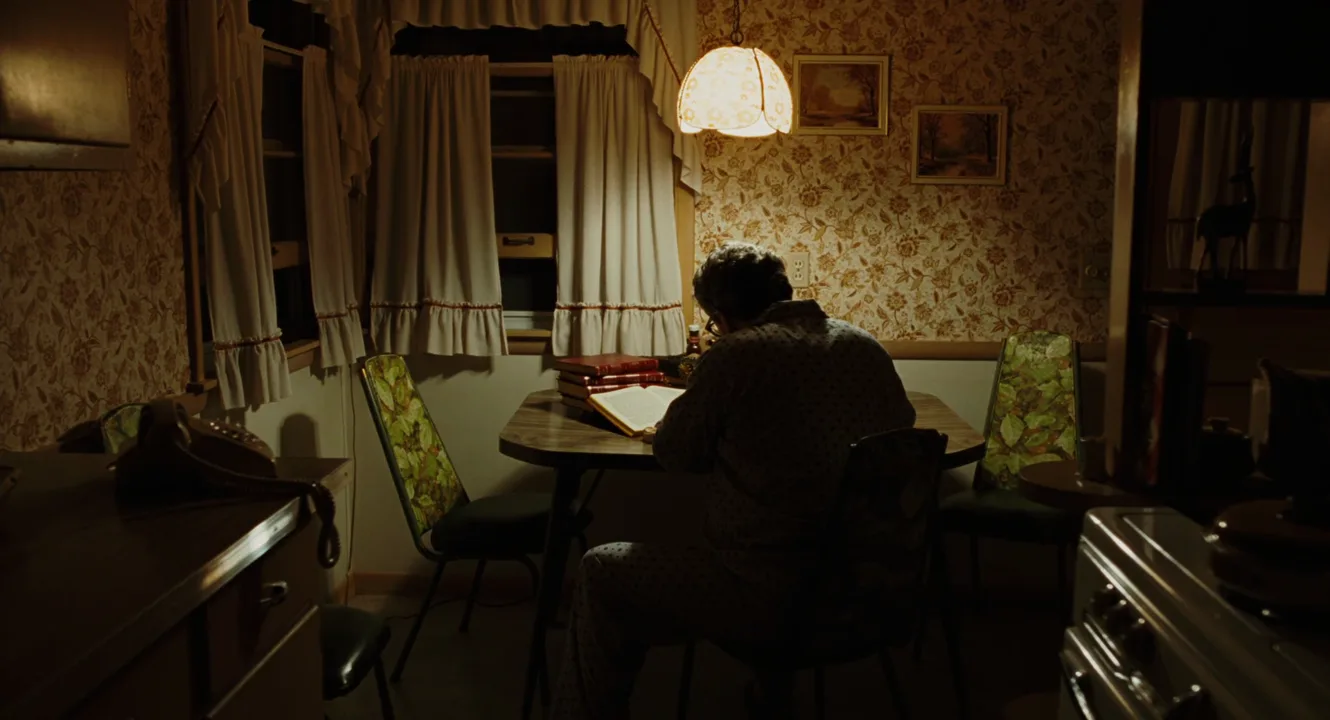
- Light as character. Gordon Willis lit The Godfather (1972) largely from overhead and let the eyes fall into shadow, so power reads as something hidden.
- Period through source. For the candlelit interiors of Barry Lyndon (1975), John Alcott used f/0.7 Zeiss lenses so real candles could light the scenes.
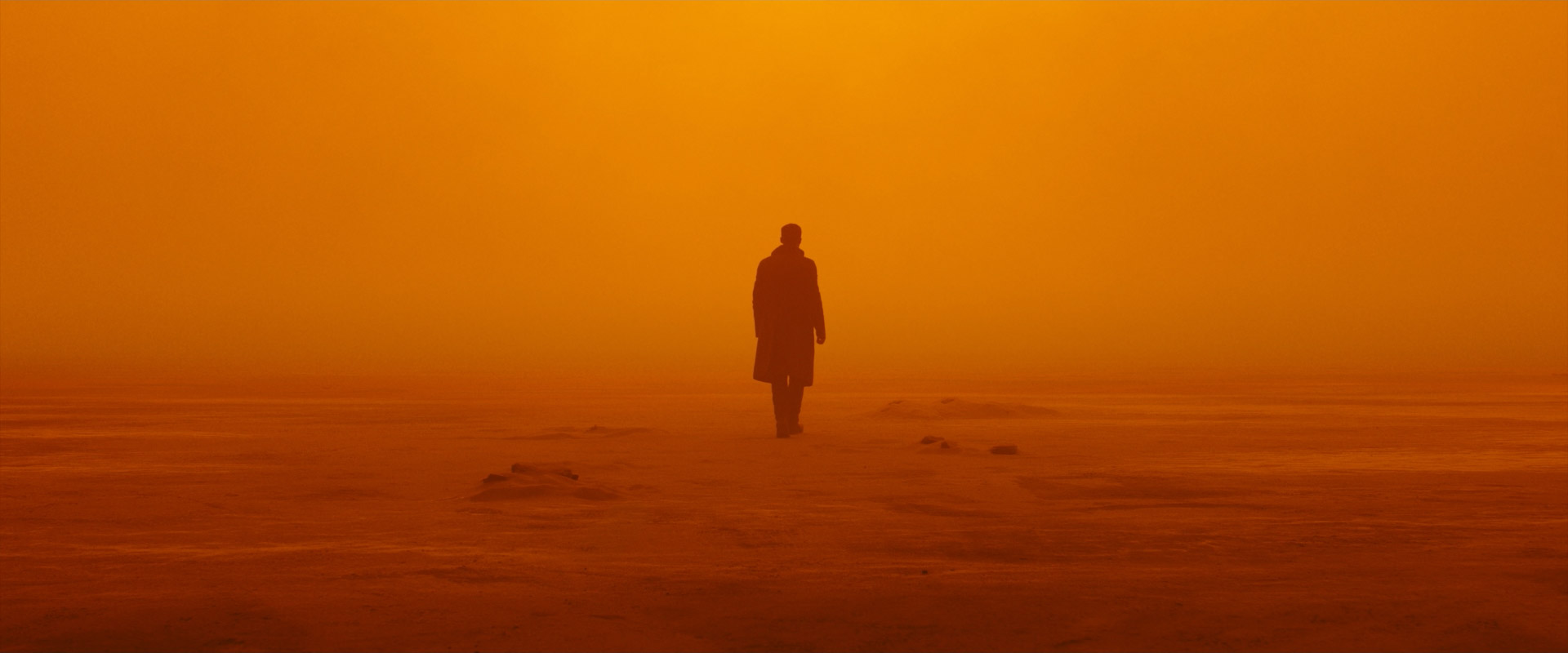
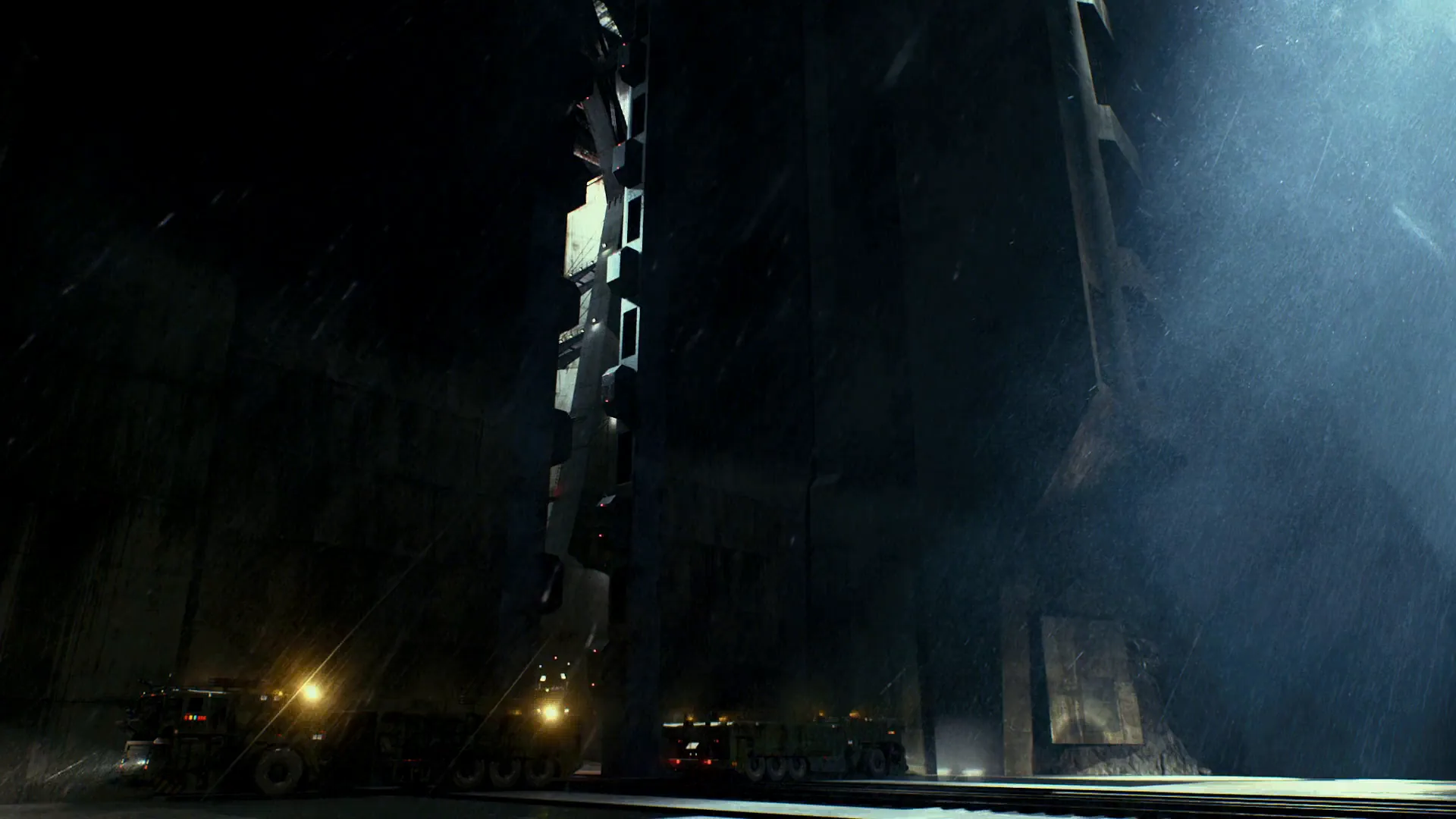
- Color and atmosphere. Roger Deakins built sequences of Blade Runner 2049 (2017) from one dominant hue and heavy haze, turning weather into emotion.
How to plan the cinematography of a scene
Work from story to gear.
- Find the scene's one idea: isolation, threat, intimacy, relief.
- Plan coverage before lenses: a wide to establish, a medium for the exchange, closer sizes for the turn.
- Choose a lens family. Most features live on 24, 35, 50 and 85mm (Super 35); one or two focal lengths per scene keep perspective coherent.
- Set camera height. Eye level is neutral; knee height makes figures loom.
- Light from a motivated source (window, lamp, sun). Start near a 4:1 key-to-fill ratio for drama, 2:1 for comedy, plus backlight for separation.
- Lock exposure rules. 24 fps with a 180-degree shutter (1/48 s); control brightness with stop and ND.
- Test the look with the real palette and a viewing LUT.
On a sensor instead of film, digital cinematography changes the exposure and color steps.
What makes great cinematography?
Lists of the best cinematography reward spectacle, but working DPs judge by fit. Great cinematography is consistent (rules of light and lens hold across the film), motivated (light and movement have a reason), legible (the viewer knows where to look) and specific (it could not be swapped into another film). A still wide lit by one window can beat a drone flight.
Cinematography examples in film
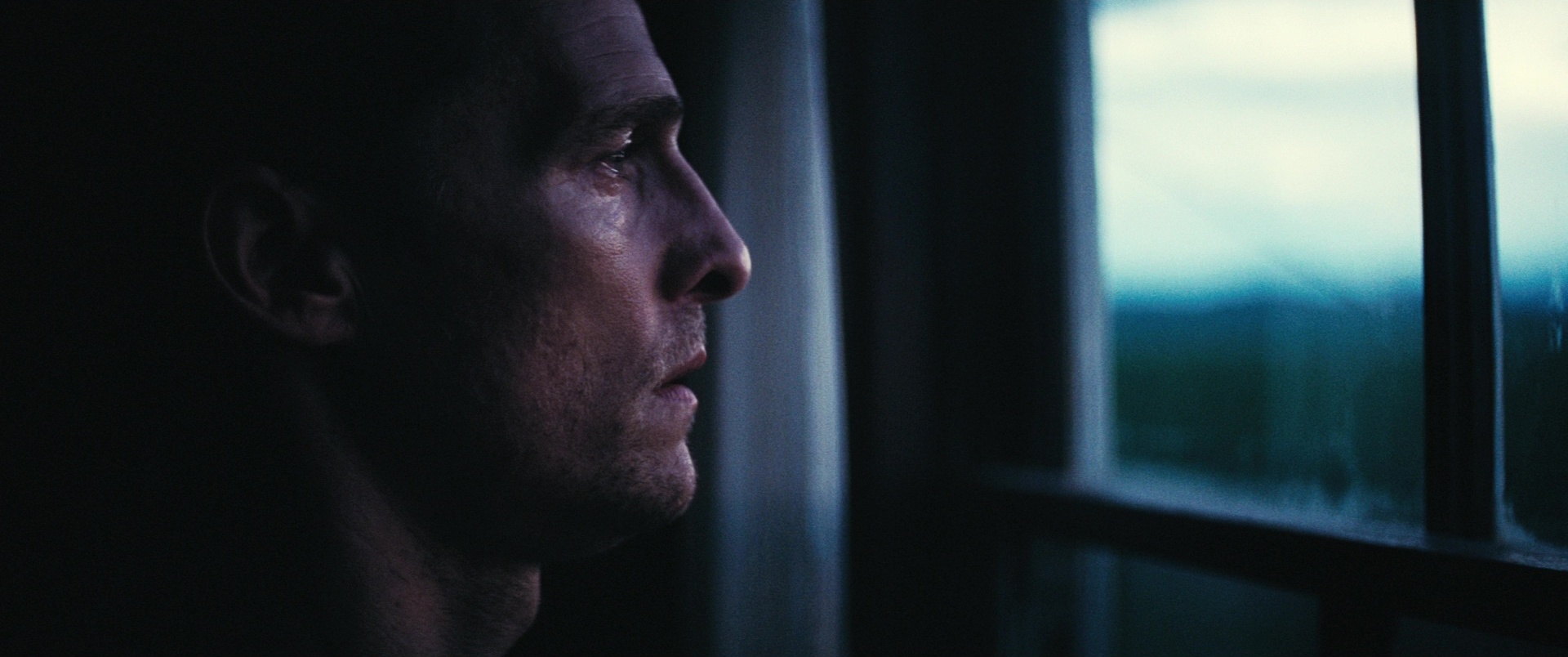
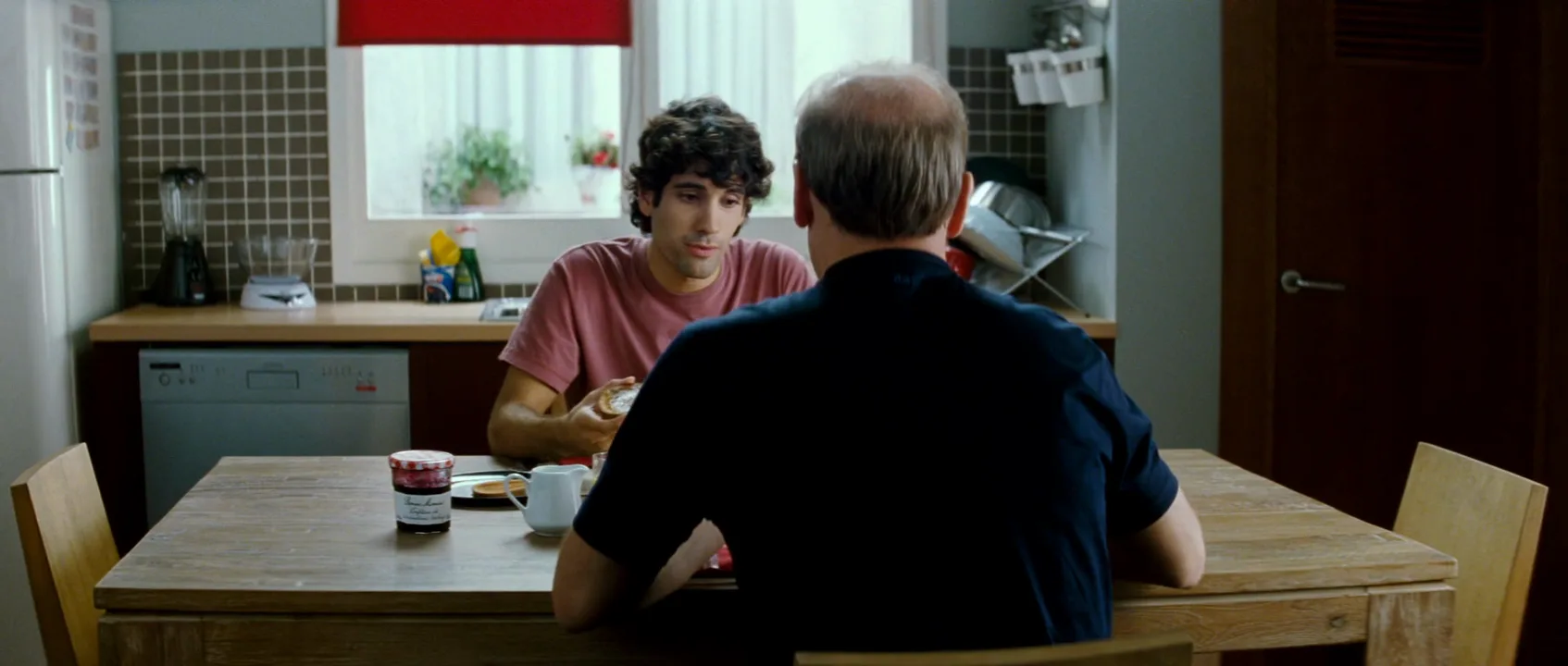
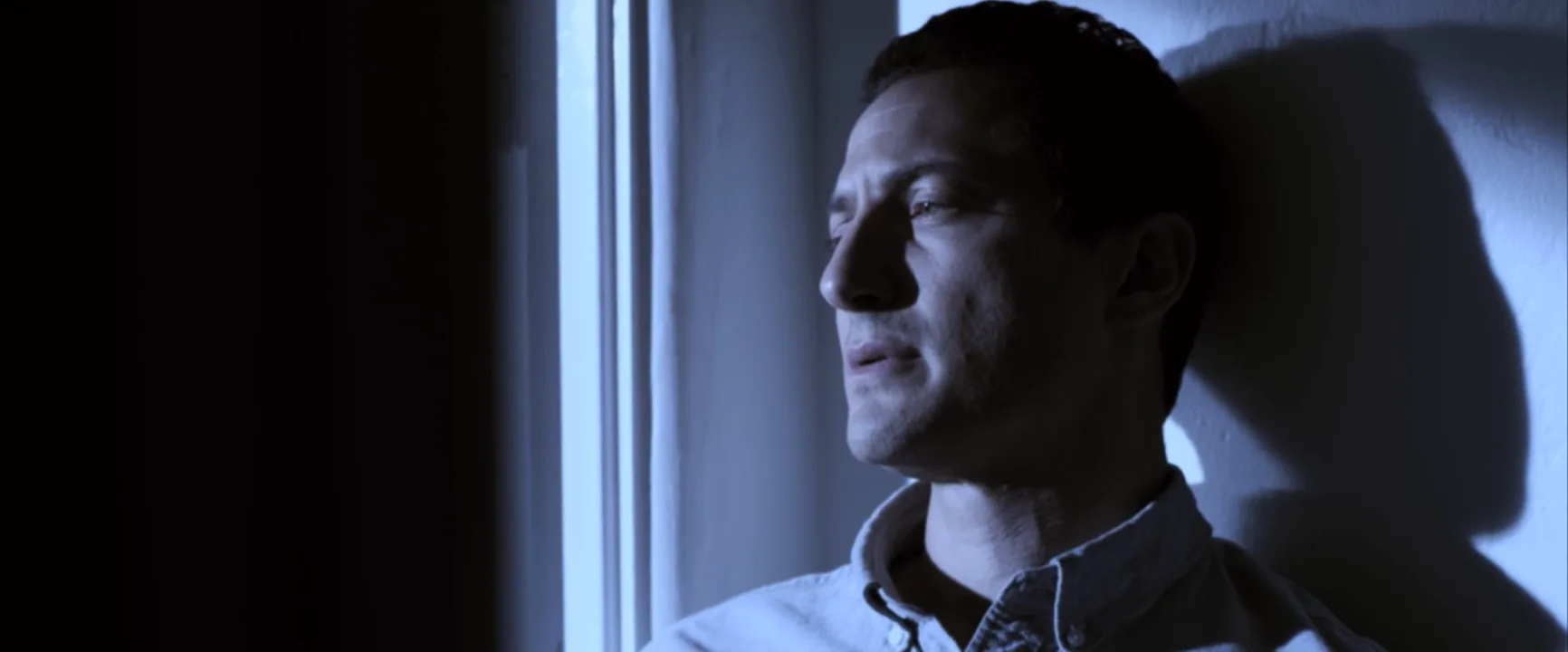
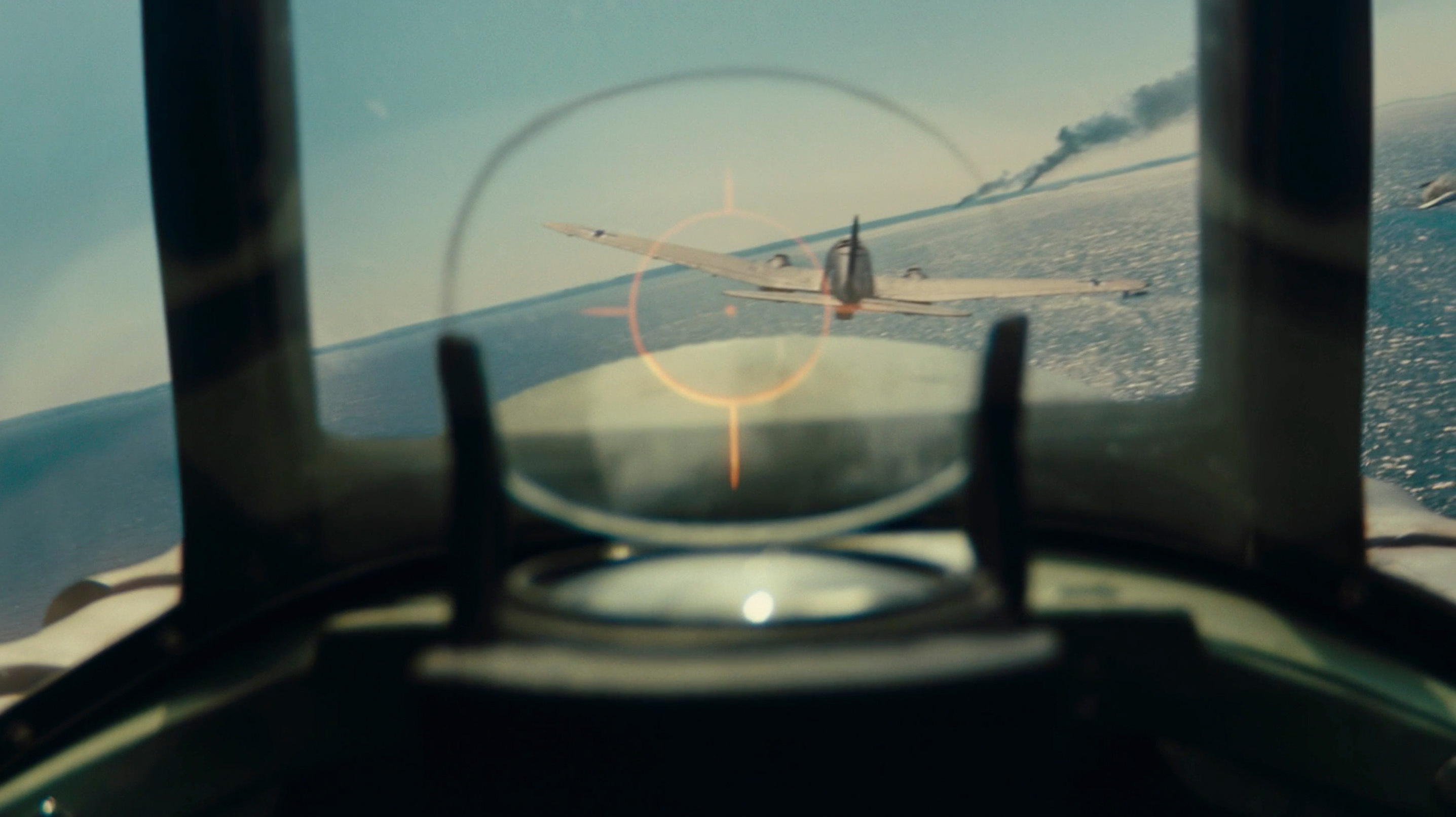
9 framesNine frames, each leaning on a different tool. Notice what each image makes you see first.
How to create a cinematography with AI
4 promptsWith AI you are the cinematographer in words: the model fills every decision you skip with a generic default. Name lens, camera height, light source and palette and keep the takes beside your film references on one FlashBoards board. The fourth prompt re-shoots a real film shot from a text description alone, and the original plays next to the result so you can compare.
Cinematic wide shot, 2.39:1, 32mm lens, camera at chest height. A fisherman in his sixties with a grey braided beard and a faded yellow oilskin jacket stands at the end of a long wooden pier at dawn, small in the right third of the frame. Low sun behind him through thick sea mist, warm amber backlight rimming his shoulders, planks leading toward him. Cool teal shadows in the water, haze lifting the blacks, fine film grain.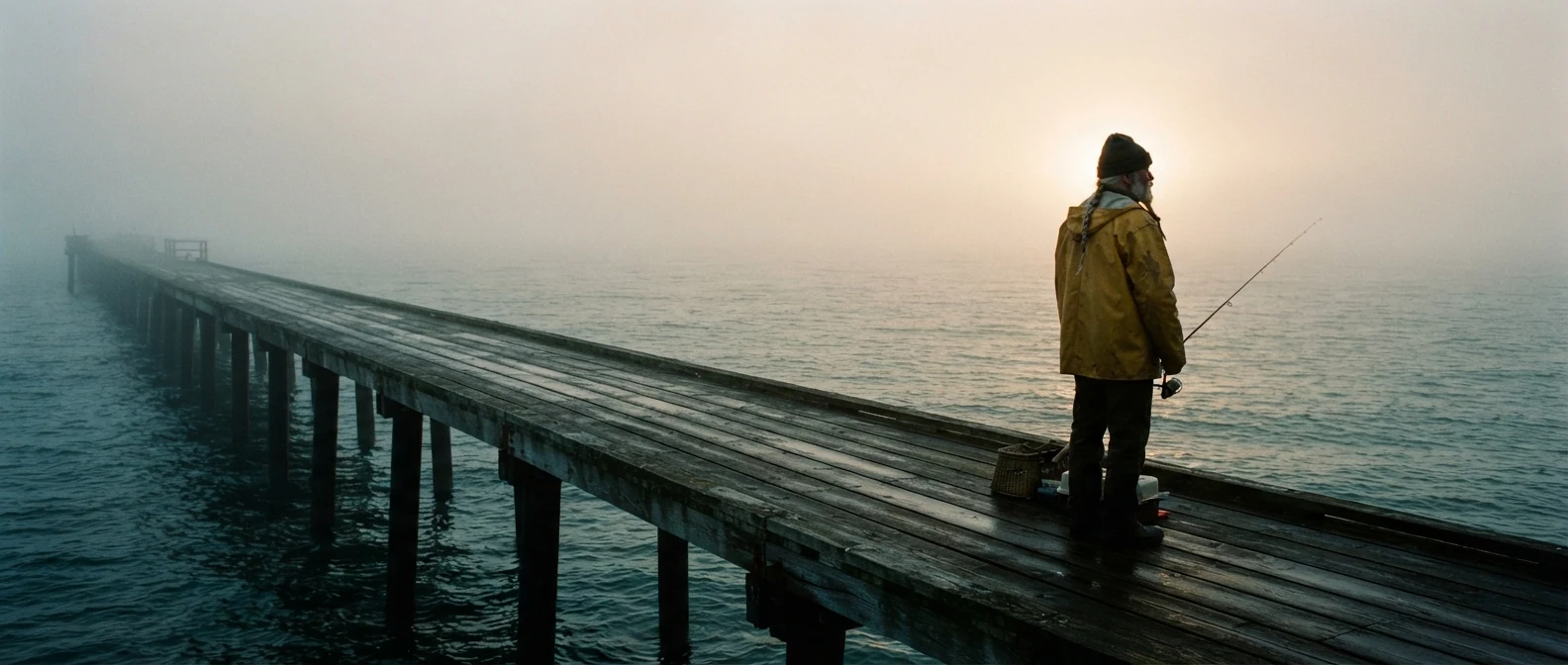
Each clause is a department: 32mm and chest height set perspective, right third sets composition, low sun behind him through sea mist sets the light, amber and teal set the palette.
Open FlashBoardsLow-key interior, high angle from near the ceiling, 40mm lens. A young bookbinder with a shaved head, round tortoiseshell glasses and an olive apron sits alone at a cluttered workbench at night, stitching a leather spine. The only light is a green-shaded desk lamp: a tight warm pool on his hands, walls of tools falling off into deep brown shadow. Olive, brass and umber palette, 1970s film stock look.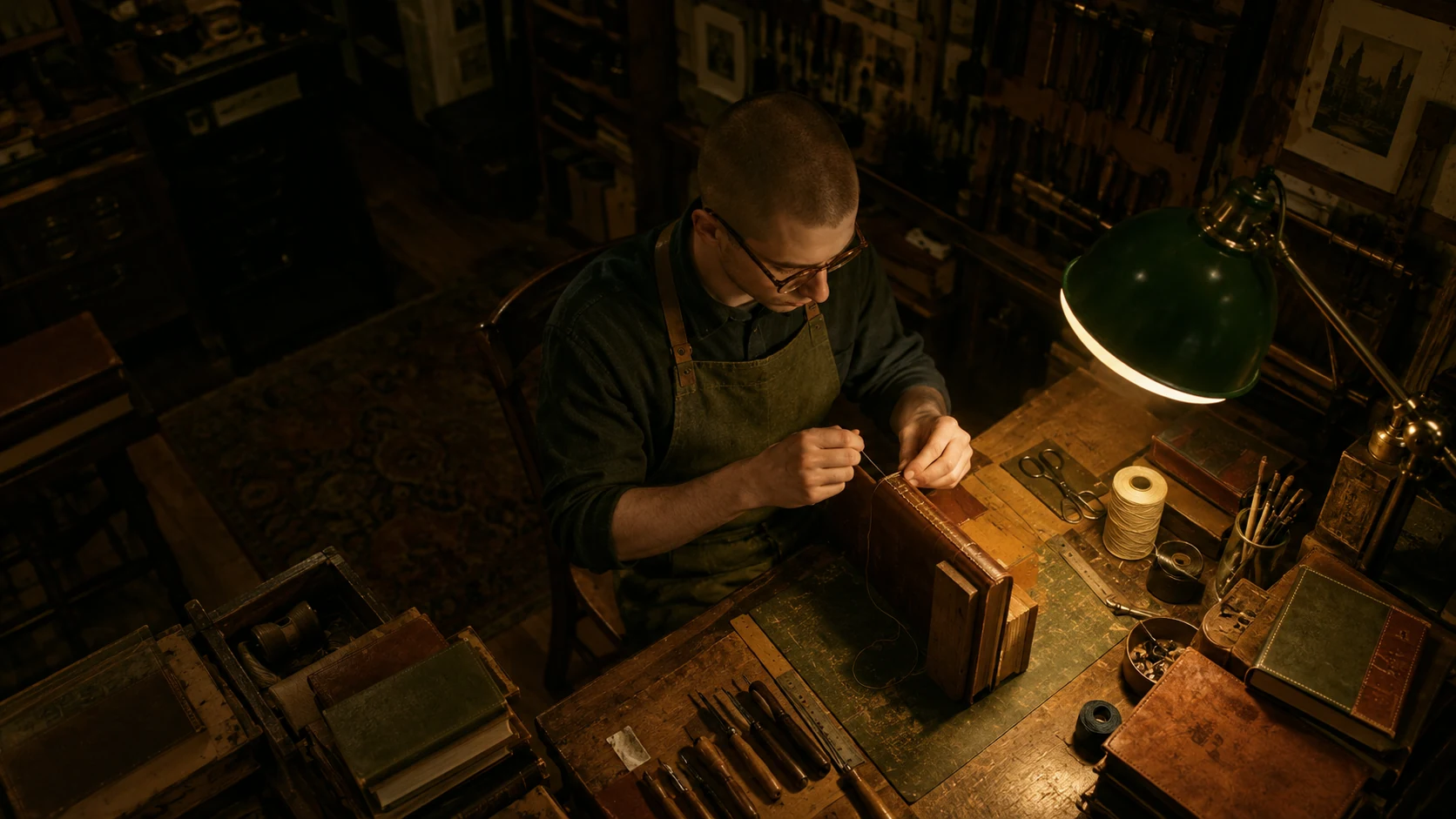
The contrasting approach: one practical instead of the sun, high angle instead of chest height. The only light is a green-shaded desk lamp gives a motivated source, and falling off into deep brown shadow stops the model filling the room with invisible soft light.
Open FlashBoardsCamera: slow lateral dolly to the left along the pier at walking pace, keeping the fisherman in the right third, ending with more pier in the foreground. Action: from the first frame sea mist drifts across the pier and his jacket moves in the wind. He lifts a coil of rope from his shoulder and lowers it to the planks. At the end he looks out to sea as the sun glows brighter through the mist.Mist and jacket move from frame one, so the shot is alive at once. Direction, speed and end framing are stated, and every action uses only what the first frame shows.
Open FlashBoards{
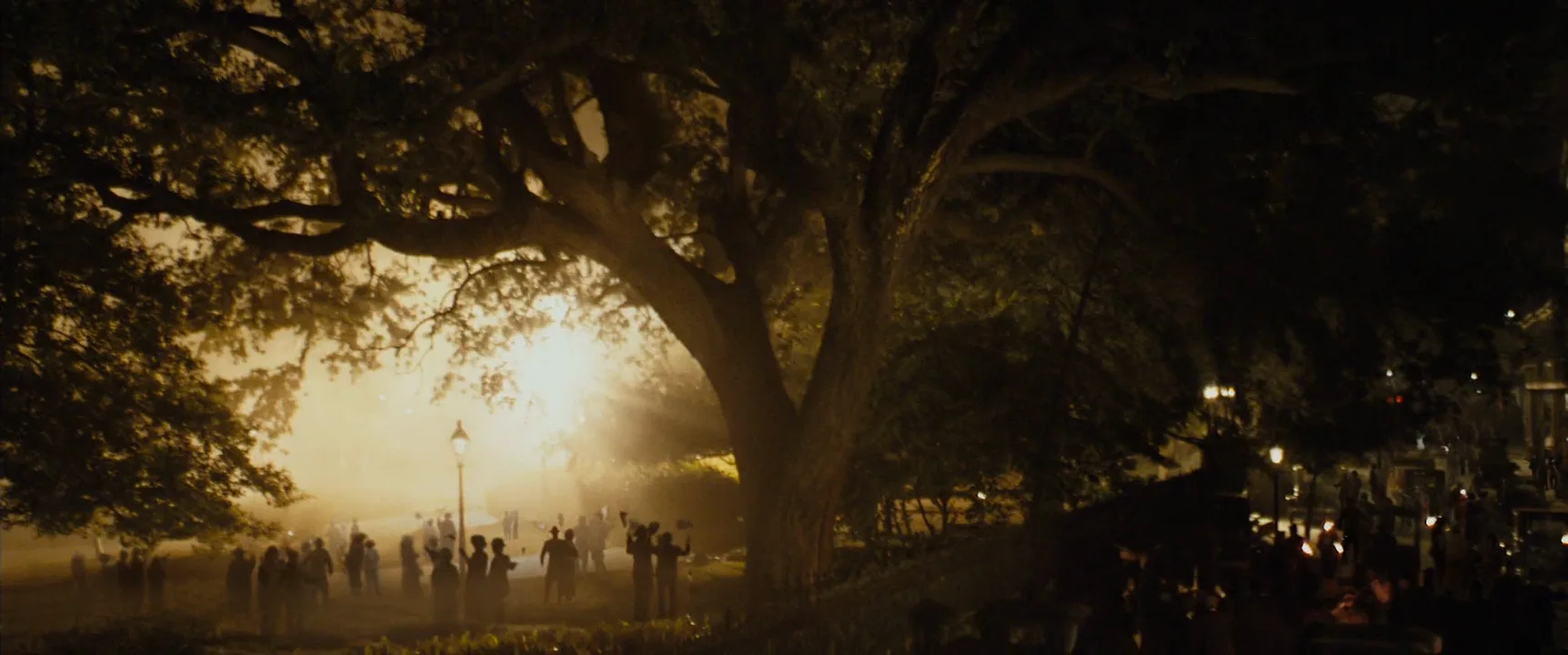
"output": "Full-screen live-action night scene from The Curious Case of Benjamin Button (2008) from its very first frame: one continuous shot. Low-key 35mm film look, heavily underexposed, warm sepia and amber palette, drifting smoke haze, tiny glowing gas lamps and strings of small lights as the only practical sources, fine grain, New Orleans in 1918 on the night the war ended.",
"characters": {
"S1": {
"name": "Benjamin Button, played by Brad Pitt",
"look": "never seen in this shot; he is heard only as the narrator's voice over the picture",
"voice": "calm, warm, soft Southern narrator, unhurried and a little wistful"
},
"S2": {
"role": "crowd of townspeople celebrating the end of the war",
"look": "dozens of small distant figures in long dark coats, hats and shawls, seen mostly as black silhouettes, some holding small lanterns",
"voice": "distant cheering murmur; one voice from the crowd shouts once"
}
},
"shots": [
{
"shot": 1,
"camera": "low angle extreme wide, 32mm feel; the camera pans right at medium speed while tilting down at medium speed the whole time. It starts on the dark canopy of a huge old oak whose black branches spread across the entire upper frame and ends lower and further right, on a street of tall brick townhouses with balconies and the crowd behind a black iron fence along the bottom of the frame.",
"action": [
"BEGINNING: alive from the first frame, the vast black branches of the oak fill the frame against a dim smoky sky; a row of tiny warm lights glows low beneath the canopy and a single gas lamp glows at the lower left corner; a faint warm flicker lights the haze at the far left edge and dies away.",
"THEN: the frame stays almost black as the camera keeps moving right and down; the tiny lights slide toward the left and more small lamps appear at the right edge.",
"THEN: a firework bursts low behind the trunk in the centre of the frame and a huge warm amber-white glow floods the haze for a moment, turning the trunk and branches into a crisp black silhouette and revealing S2 as dark figures standing on the lawn beneath the tree beside a lamp post.",
"THEN: the glow drops away almost at once and the frame falls back into near darkness.",
"END: the camera, still panning right and tilting down, brings in a row of tall brick townhouses with warm lit windows and railed balconies on the right third; S2 crowds along a black iron fence across the bottom of the frame, small figures shifting and turning, lanterns bobbing among them; the oak's dark branches still hang over the left two thirds."
],
"dialogue": [
{
"speaker": "S1",
"on_screen": false,
"when": "from the first frame, while the oak is still dark",
"delivery": "calm, reflective voice-over, gently amused",
"line": "<d>[English] The First World War had ended, and I've been told it was an especially good night to be born.</d>"
},
{
"speaker": "S2",
"on_screen": false,
"when": "near the end, as the townhouses slide in on the right, after the narrator's line",
"delivery": "one joyful voice shouting from inside the crowd",
"line": "<d>[English] Thank God it's over!</d>"
}
]
}
],
"sound": {
"ambience": "deep firework booms heard from far away, a large crowd murmuring and cheering softly, rustling leaves",
"speech": "exactly these spoken phrases, each said once, in this order",
"never_spoken": "no narration and no voice-over except Benjamin's one line above: the descriptions, performance notes and step words of this prompt are never spoken aloud",
"music": "a film score under the scene, always below the voices: soft, wistful solo piano over warm low strings, tender and a little melancholy",
"subtitles": "none"
}
}Remakes the night shot under the great oak in The Curious Case of Benjamin Button (2008), dir. David Fincher, keeping Benjamin's narrated line, its pan right and tilt down, the firework glow that silhouettes the branches, and the reveal of the street crowd.
Each department gets its own field: the camera line fixes lens, height and the pan-and-tilt direction, a THEN beat puts the firework glow behind the trunk so the tree turns to silhouette, the output line sets exposure, palette and haze, and Benjamin's narration comes straight from the film.
Open FlashBoardsCommon mistakes
- Everything lit evenly. Name one source and where the light falls off.
- Eye-level everything. State height: camera at knee height, high angle from near the ceiling.
- Lens words ignored. Pair focal length with its visible effect: 32mm, pier stretching into depth.
- Invented extras in video. Describe only what the first frame shows, or boats, birds and people appear.
Keep the reference frames, prompts and every generated take side by side — images and video in one canvas.
FAQ
4 questionsWhat is cinematography in simple terms?
Cinematography is how a film looks and how that look is made: the choice of camera, lens, framing, movement, lighting, exposure and color for every shot. The director decides what happens in a scene; cinematography decides how the audience sees it, how close they are and what they notice first.
What does a cinematographer do?
The cinematographer, or director of photography, designs the image with the director: shot lists, lenses, camera placement, lighting and the overall look. On set they lead the camera, grip and electric departments, and in post they usually supervise the color grade so the final image matches the plan.
What are the basic cinematography techniques?
Shot size and angle, lens choice, composition, camera movement, lighting direction and contrast, exposure, depth of field and color. Every shot combines them. The fastest way to learn is to change one variable at a time, such as moving only the key light, and compare the results side by side.
Which films are known for the best cinematography?
Often cited: Lawrence of Arabia (1962) for desert scale, Barry Lyndon (1975) for candlelit interiors, The Godfather (1972) for shadowed top light, and Blade Runner 2049 (2017) for color and atmosphere. Watch them with the sound off to see what the image alone carries.
Related terms
6- CinematographerFilmmaking Process & Crew
The cinematographer, or director of photography (DP), designs the film's image with the director — framing, lenses, lighting, exposure, camera movement and look — and leads the camera, grip and electric departments.
- Film LightingLighting
Film lighting is the craft of shaping light for the camera — its direction, quality, color and contrast — to model faces, build space, set the time of day and carry the mood of a scene.
- Camera MovementCamera Movement
Camera movement is any change of the camera's position or direction during a shot — pans, tilts, dollies, cranes, handheld and more — used to guide attention, reveal space and set the emotional rhythm of a scene.
- Film CompositionComposition & Framing
Composition is the arrangement of everything inside the frame — subjects, lines, shapes, light, color and empty space — to direct attention and express the meaning of a shot.
- Focal LengthLenses, Focus & Exposure
Focal length, measured in millimetres, sets a lens's angle of view: short focal lengths see wide and stretch space, long ones see narrow and compress it — which is why the same framing feels different on 24mm and on 135mm.
- Film CameraCameras & Capture
A motion-picture camera records a rapid series of images through a lens onto film or a digital sensor; its format, frame rate, weight and lens mount shape how a film can be shot.
Further reading
Blain Brown, Cinematography: Theory and Practice (3rd ed., 2016). American Society of Cinematographers, American Cinematographer Manual.