 FlashBoards Learn
- Learn
- Lenses, Focus & Exposure
- Depth of Field
Lenses, Focus & Exposure · Film language
Depth of Field
Also called: DOF
Depth of field (DOF) is the zone in front of and behind the point of focus that still looks acceptably sharp. Aperture, focal length, focus distance and format size decide whether that zone is a few millimeters deep or runs to the horizon, and with it, how much of the world the viewer is allowed to read.
- What it does
- Decides how much of the frame is sharp, and so where the audience looks and how much of the space it reads.
- Use it when
- Every shot: choose shallow to isolate a face or a detail, deep to stage action on several planes at once.
- Watch out
- Shallow focus with no plan behind it: missed marks, soft eyes, and every scene looking like the same portrait lens.
- Try this prompt
85mm at f/1.4, very shallow depth of field, woman's eyes in sharp focus, night platform lights melting into soft round discs behind her
What is depth of field?
A lens focuses perfectly on only one plane: the distance you set on the focus ring. Depth of field is the range around that plane where the blur is still too small for the eye to notice, so the image looks sharp. It has a near limit and a far limit, and the distance between them is what cinematographers mean when they say a shot has "a lot" or "no" depth.
Two things follow from that definition:
- Sharpness falls off gradually. There is no hard edge where focus ends. Just outside the zone things are slightly soft; far outside they dissolve into shapes and color. How that dissolved area looks is the subject of bokeh.
- "Acceptable" depends on viewing size. Depth-of-field math uses a circle of confusion, the largest blur spot that still reads as a point. A shot that looks sharp on a phone can show soft eyes on a cinema screen, which is why focus pullers judge on a large, calibrated monitor.
At normal shooting distances the zone is not centered on the focus point: roughly a third of it sits in front of the subject and two thirds behind. In close-ups and macro shots the split moves toward half and half, and the whole zone shrinks to millimeters.
Depth of field is one of the core tools in the lenses and focus toolkit and the practical half of camera focus: focus says where the sharp plane is, depth of field says how thick it is.
What controls depth of field?
Four variables set the depth of field of any shot.
- Aperture. The wider the opening, the shallower the zone. Each full stop closed (f/2 → f/2.8 → f/4) deepens it. On cinema lenses the scale is marked in T-stops, but for depth of field the geometry of the aperture is what counts.
- Focus distance. The closer the subject, the shallower the zone. Doubling the distance roughly quadruples the depth of field, which is why close-ups feel so much softer behind than wide shots at the same stop.
- Focal length. At the same camera position, a longer lens gives a much shallower zone. Framed to the same subject size, the zone around the subject is similar, but the longer lens enlarges the out-of-focus background, so it looks blurrier. That is part of what makes focal length such a strong choice.
- Format size. A larger sensor needs a longer lens for the same angle of view, so the same framing at the same stop has less depth. Full frame is about a stop shallower than Super 35; 16mm and small phone sensors are deeper.
Some worked numbers on Super 35, using a common cinema tolerance:
| Lens and stop | Focused at | Zone of sharpness | |---|---|---| | 85mm at f/2 | 2 m | about 5 cm: eyes sharp, ears already soft | | 50mm at f/2 | 3 m | about 35 cm: one actor, nothing behind | | 50mm at f/8 | 3 m | about 1.5 m: two actors a step apart | | 25mm at f/8 | 3.1 m | about 1.6 m to infinity |
That last row is the hyperfocal distance: focus there and everything from half that distance to the horizon is acceptably sharp. It is the working basis of deep focus.
Because aperture also sets exposure, depth of field is always tied to light: f/8 indoors takes a lot of it, f/1.4 in daylight takes ND filters.
How does depth of field shape what the audience sees?
The eye goes to the sharpest, brightest thing in the frame. Choosing the depth of field is choosing how much of the image is allowed to compete for attention.
- Shallow focus isolates. With only the eyes sharp, the world around a character turns to color and light. The shot feels subjective and intimate: we are inside someone's head, not surveying a room.
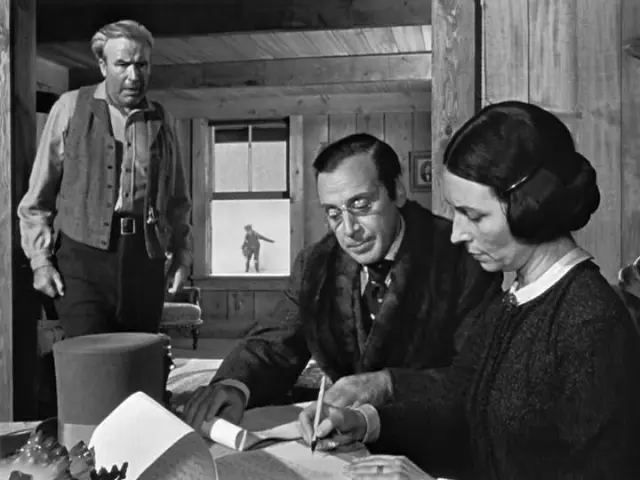
- Deep focus lets the viewer edit. When foreground, midground and background are all sharp, the director can stage several actions in one frame and let the audience choose. Citizen Kane (1941), shot by Gregg Toland for Orson Welles, is the textbook case: the adults decide the boy's future at the table while he plays in the snow, visible and sharp, through the window behind them.
- Moving the zone moves the story. A rack focus shifts the sharp plane from one subject to another inside the shot, handing attention across without a cut.
- Depth of field dates an image. Studio pictures of the 1940s and 1950s often held a lot of depth under bright stage lighting. From the 1970s on, faster lenses made shallow focus easier; Stanley Kubrick famously shot the candlelit scenes of Barry Lyndon (1975) on an f/0.7 Zeiss lens. Today large-format digital cameras make very shallow focus cheap, which is exactly why it now needs a reason.
Depth of field works together with depth layering: layering puts something on each plane; depth of field decides which of those planes the audience can actually read.
How to control depth of field on set
- Decide what must be sharp first. Name the planes: "eyes only," "both actors," "the whole kitchen." The stop, lens and light follow from that sentence, not the other way around.
- Pick the stop, then build the light around it. For shallow work, T1.5–T2.8, with ND in the matte box to hold that stop outdoors. For deep staging, T5.6–T11, which indoors means a lot of light or a faster ISO.
- Use distance as a control. Want more blur behind the subject? Pull the actor away from the wall, not just open the iris. Want the background to hold? Bring it closer, or back the camera off and frame on a slightly wider lens.
- Choose the lens for the look, not only the size. A telephoto lens from farther away gives a big, smooth background at the same framing; a wide-angle lens from close in keeps more of the room legible and exaggerates the space.
- Plan the focus pull. At T2 on an 85mm, a head turn can cross the whole zone. The 1st AC measures to marks, sets tape or laser, and rehearses with the actors. Keep blocking inside the zone or plan the rack.
- Cheat when optics can't do it. A split diopter holds a near object and a far face sharp in two halves of the frame; a tilt-shift lens angles the plane of focus so it runs along a table or a street instead of straight across the frame.
Shallow vs. deep depth of field
Two ends of the same dial:
- Shallow depth of field: a thin zone, usually wide open on a normal or long lens at close range. It isolates, softens, directs the eye to one detail, and makes the background an abstract field of light. Risk: it looks generic when used on every shot, and a missed focus mark is obvious.
- Deep focus: a zone from near the lens to far away, usually a wide lens stopped down, lots of light, or a hyperfocal setting. It shows relationships and geography and lets several actions play at once. Risk: without careful staging and lighting, the frame becomes a flat list of equally sharp things.
Most scenes live in between. A medium two-shot at T2.8–T4 keeps both faces sharp and lets the room fall off gently, which is often the most honest setting: the world is there, the people come first.
Depth of field vs. depth of focus
The names are close; the jobs are not. Depth of field is on the subject side of the lens: how much of the scene looks sharp. It is a creative choice that shapes every shot.
Depth of focus is on the camera side: the tiny tolerance, fractions of a millimeter, by which the sensor or film plane can sit away from the ideal position while the image stays sharp. It matters to technicians checking back focus. You never stage a scene with depth of focus. If an image is sharp nowhere, suspect the mount; if it is sharp in the wrong place, that's depth of field.
Depth of Field examples in film
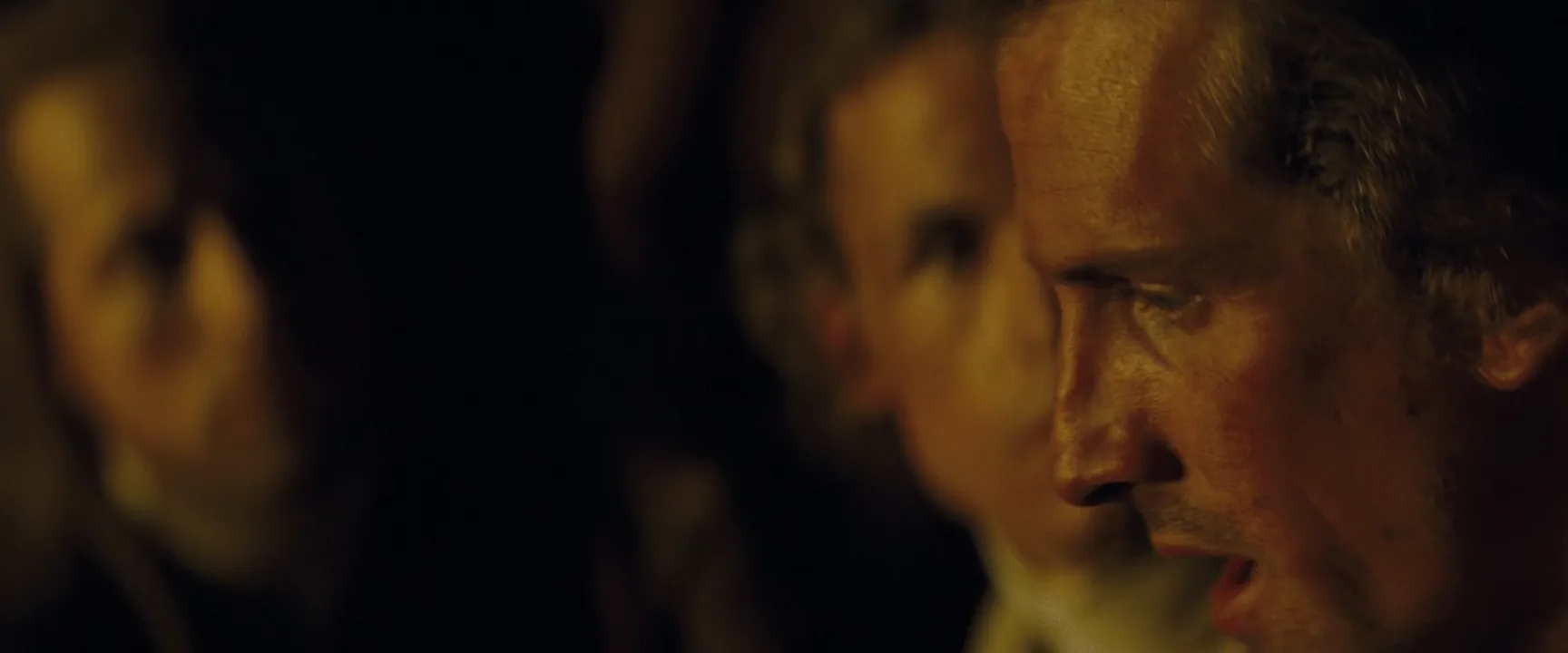
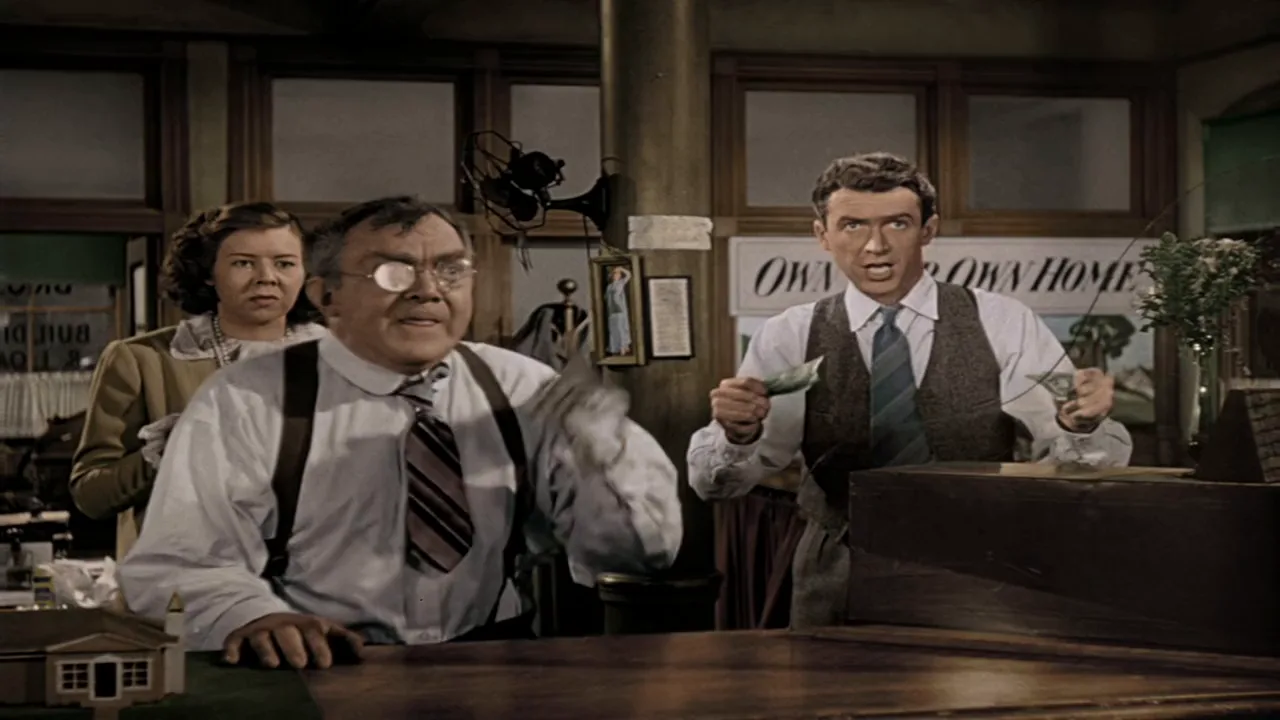
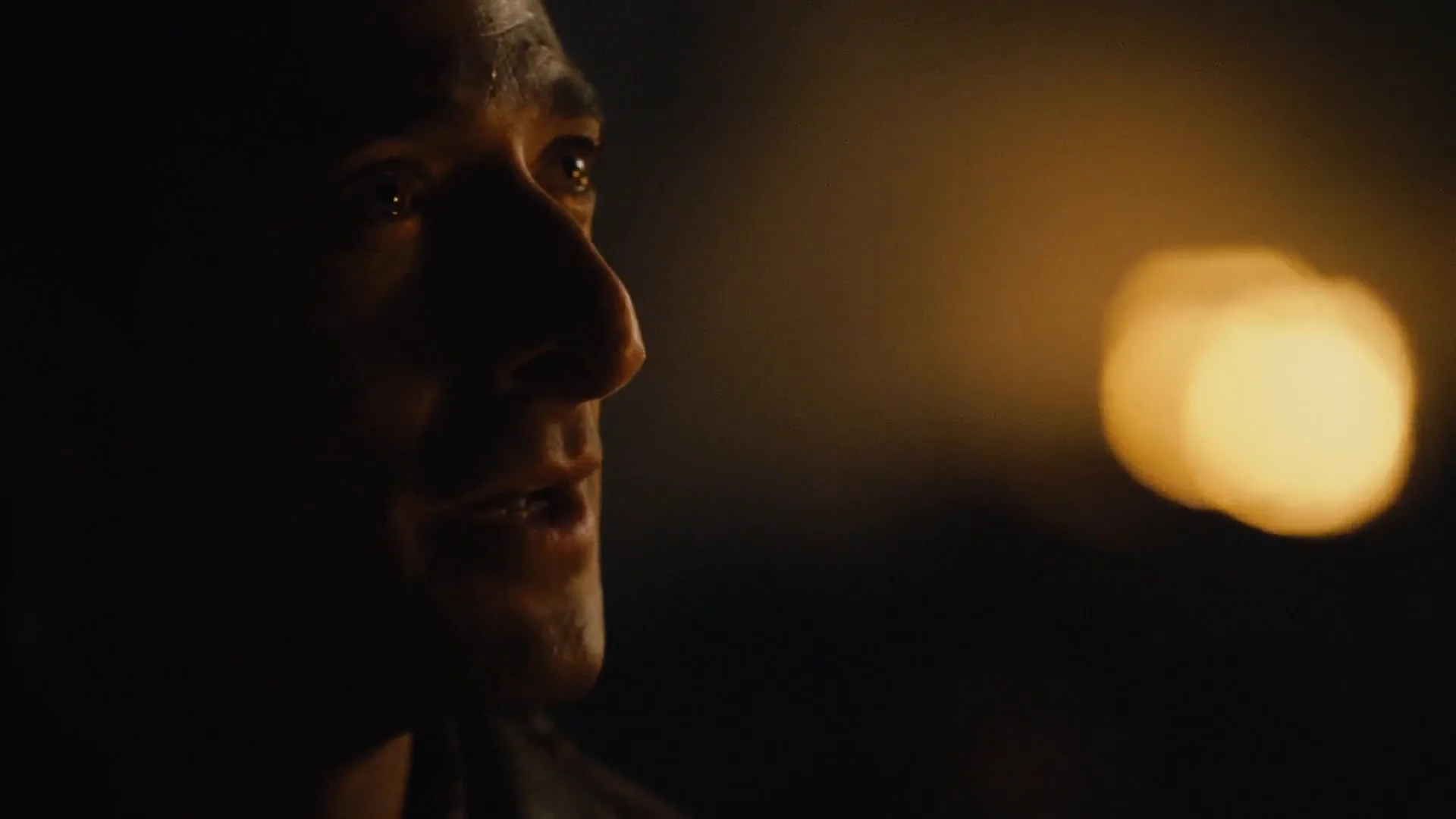
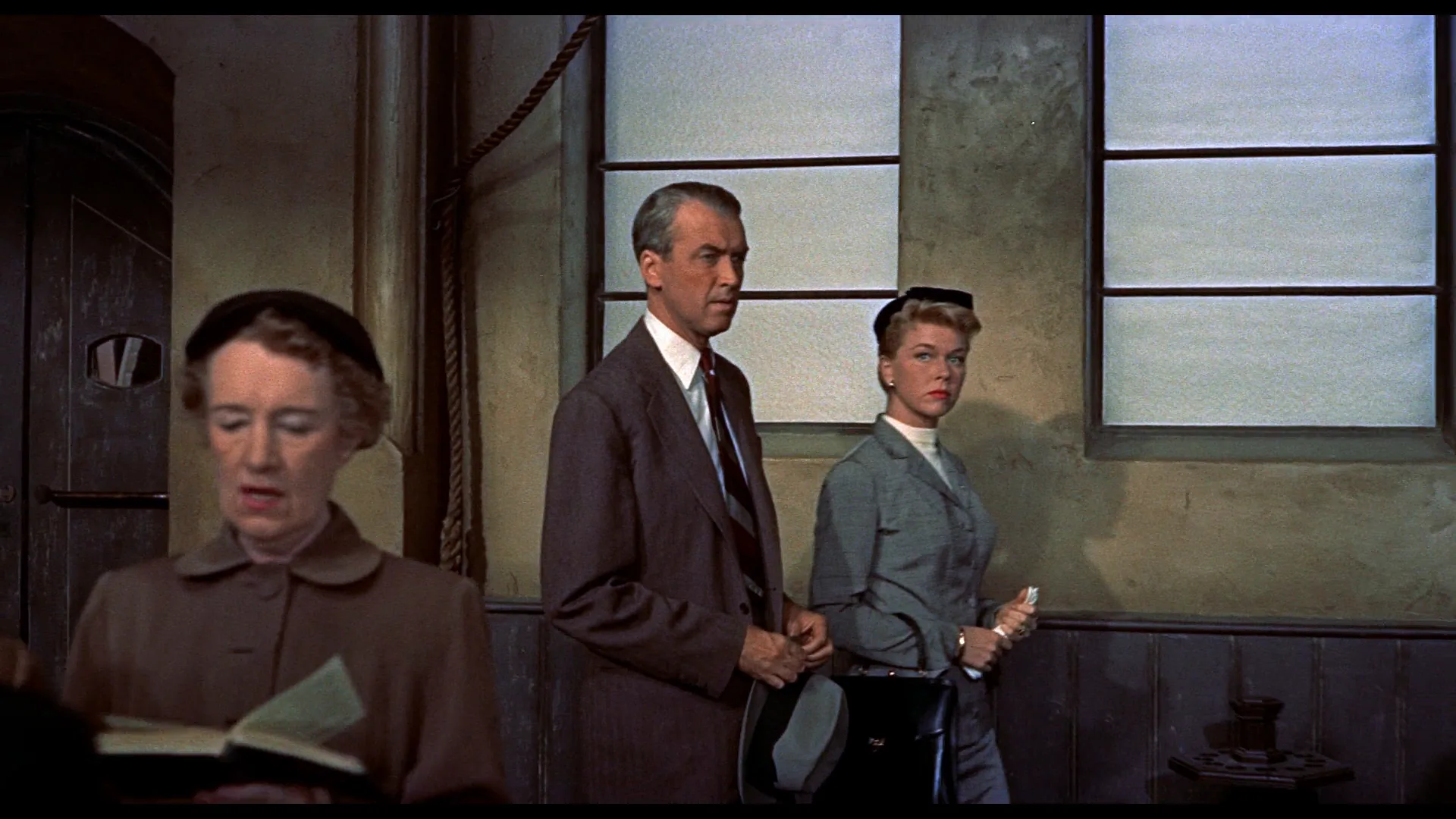
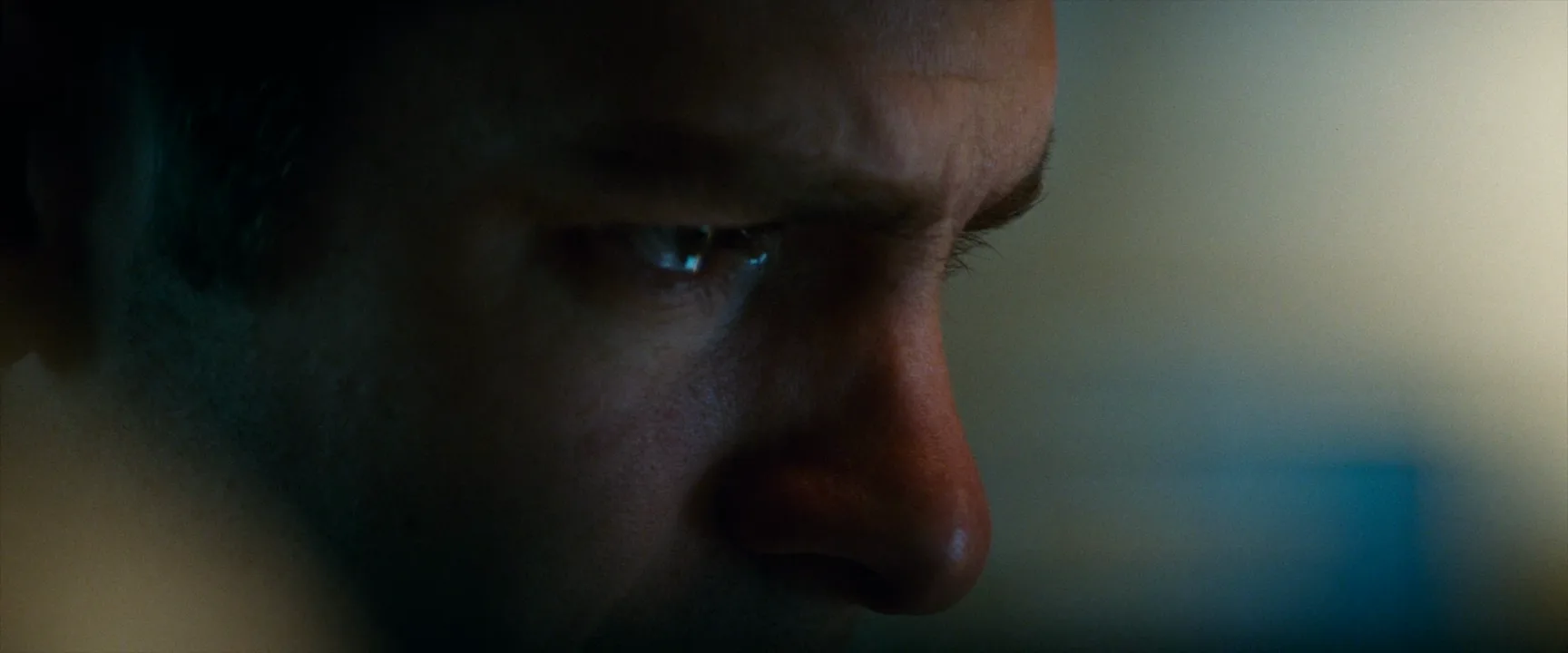
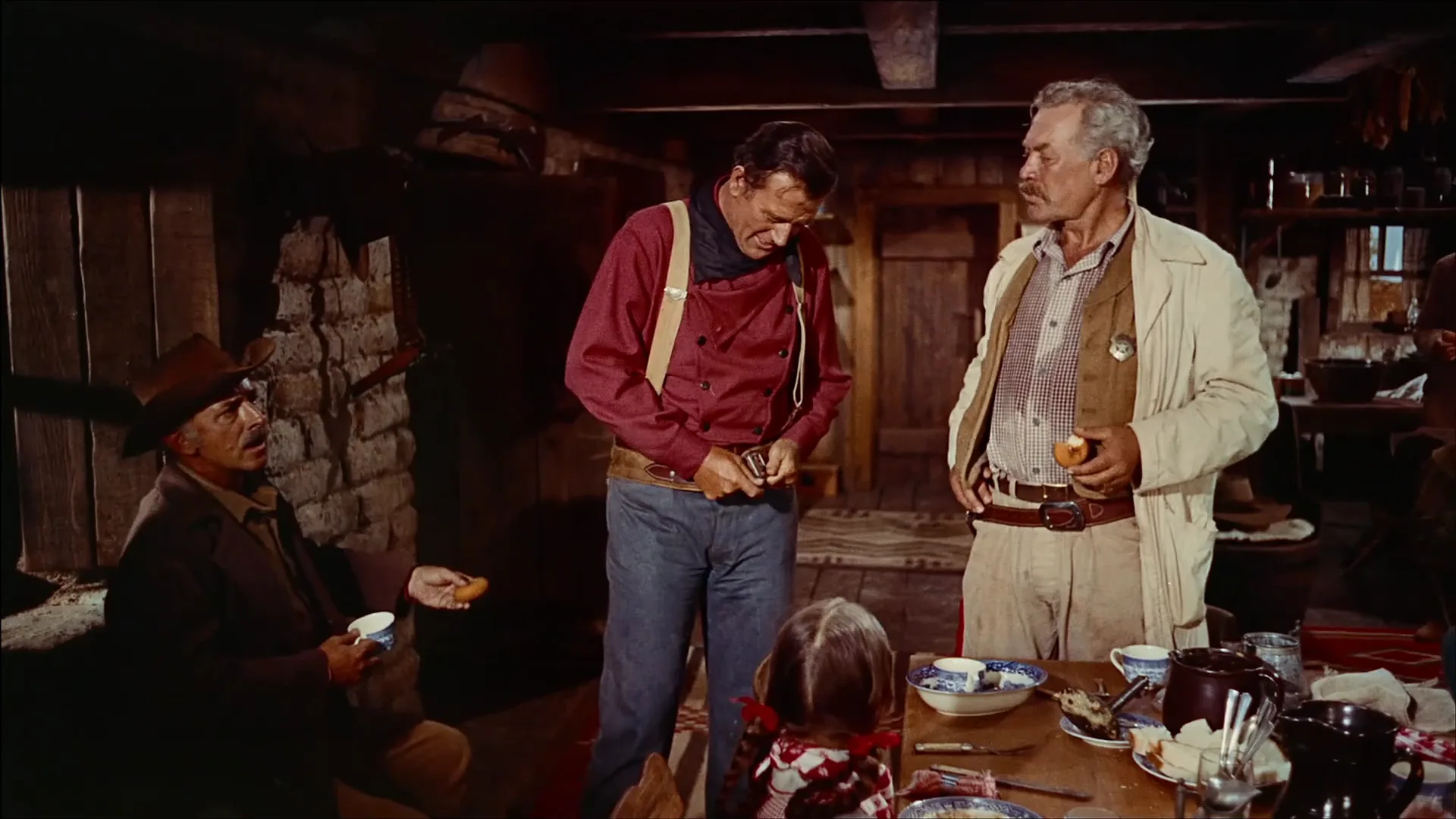
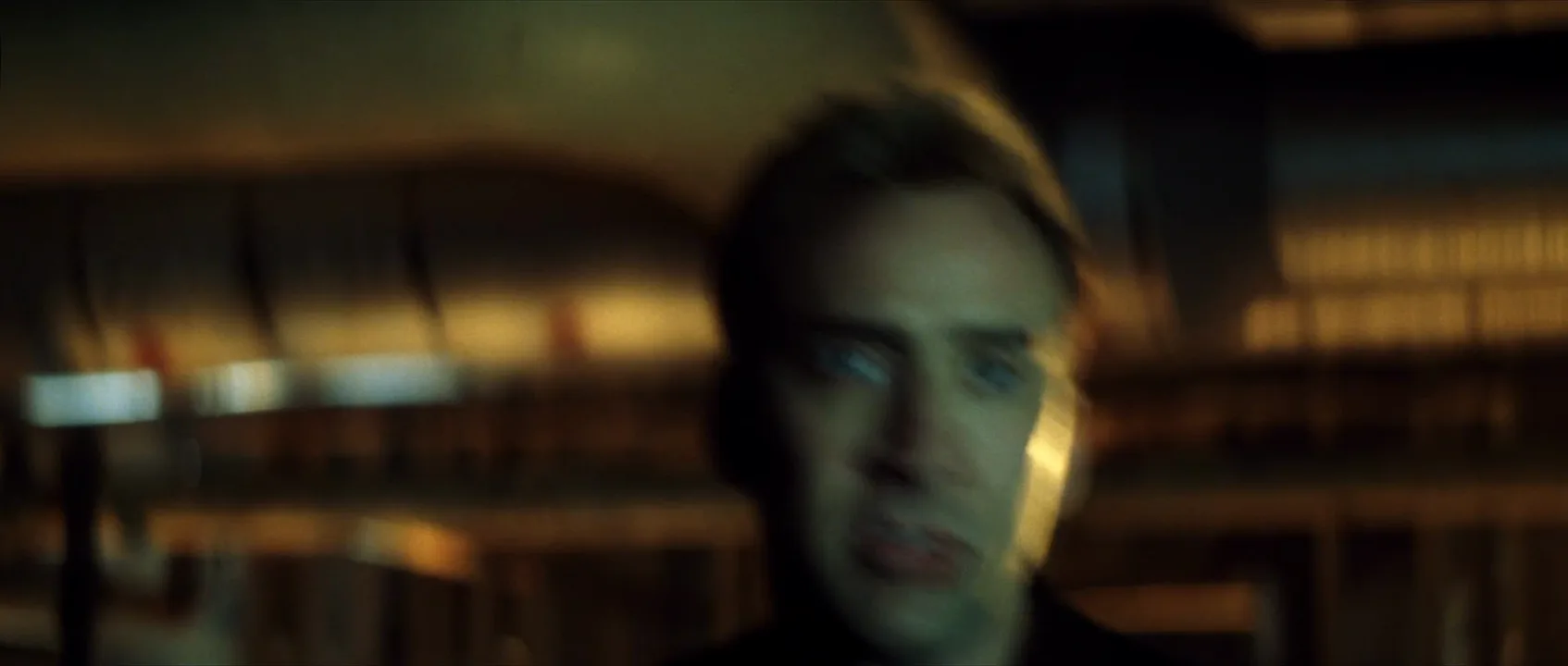
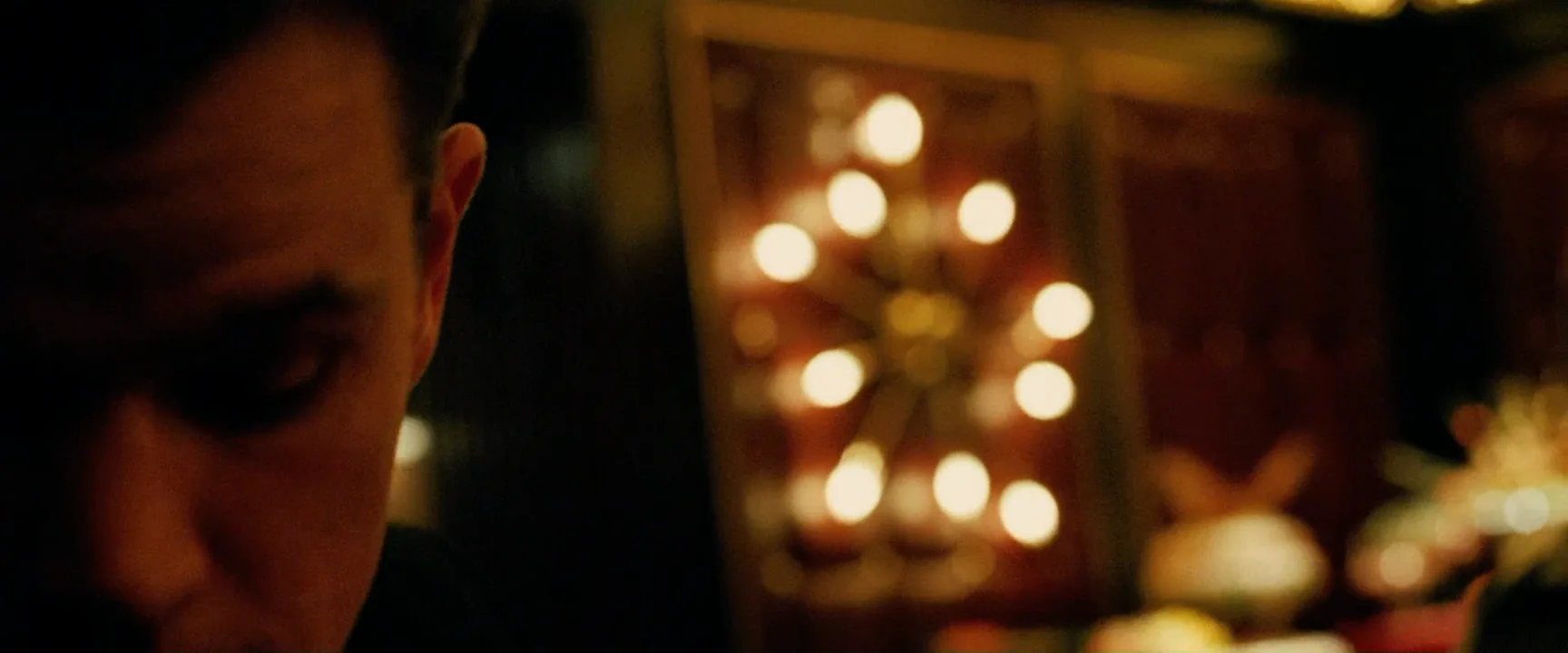
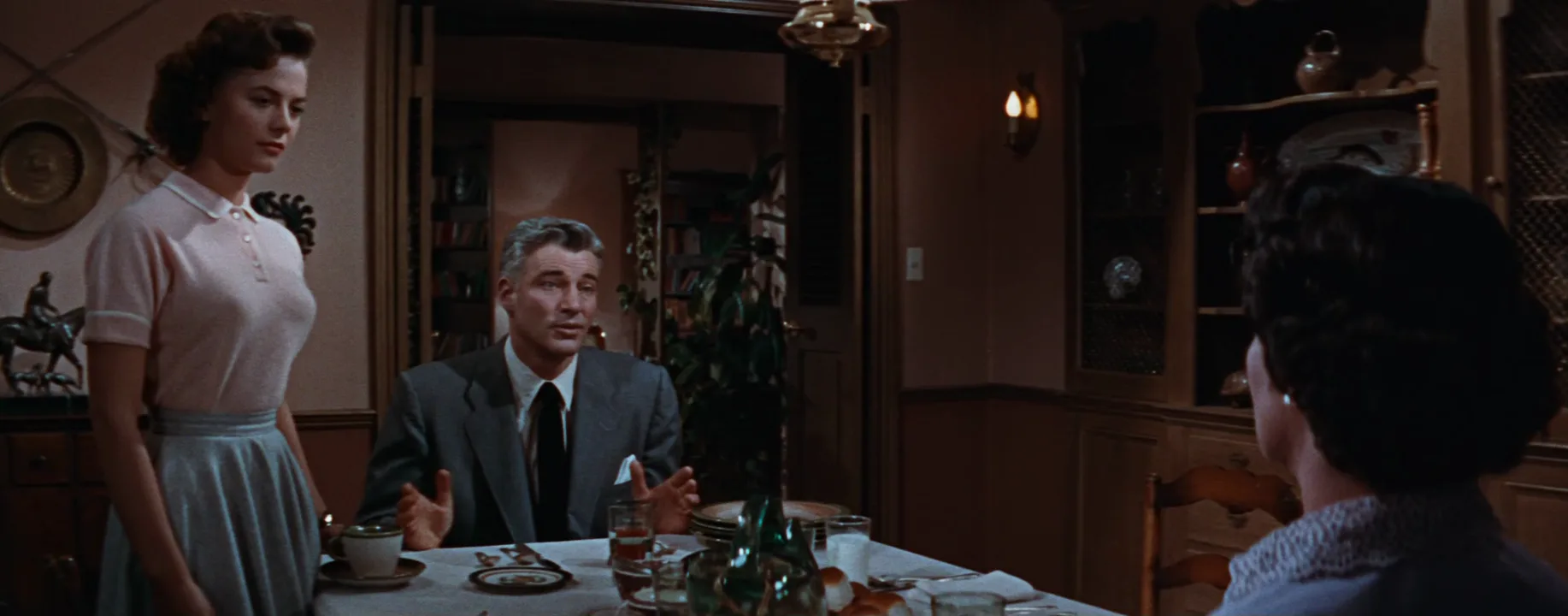
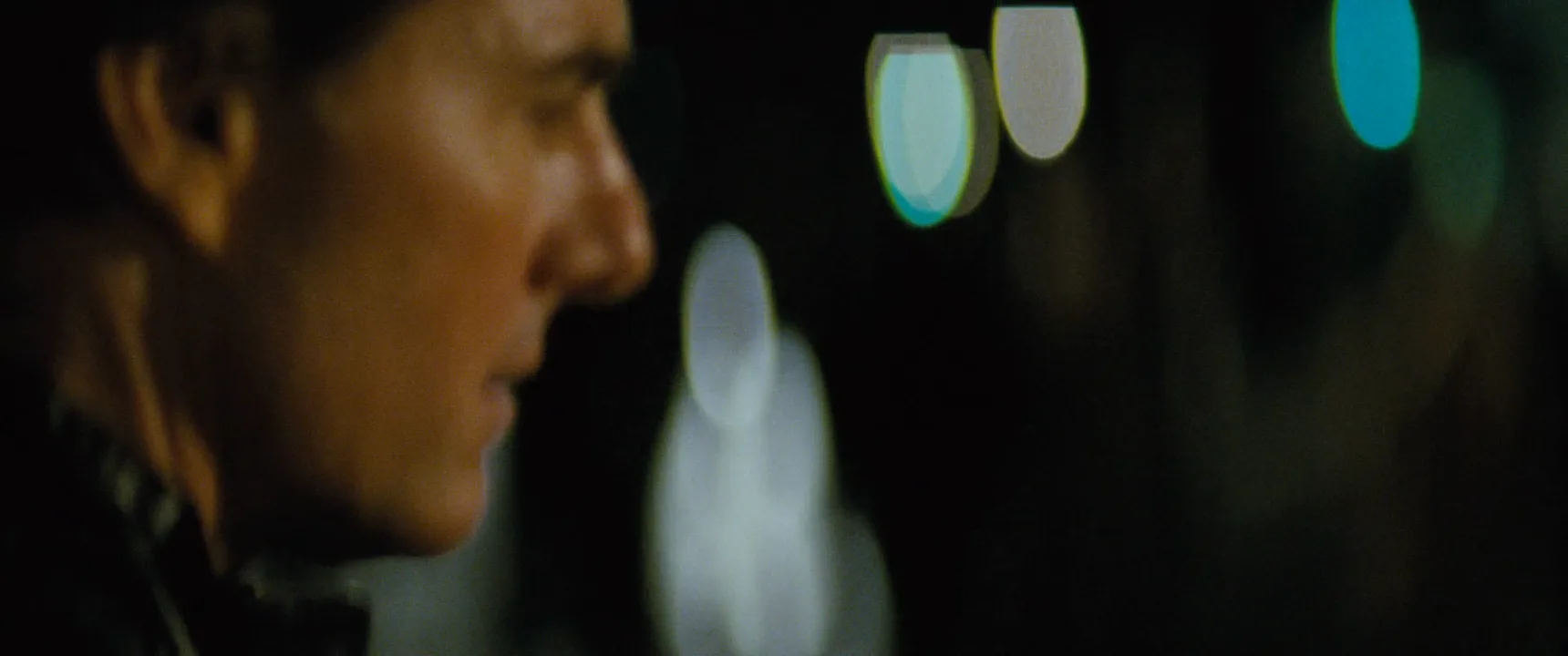
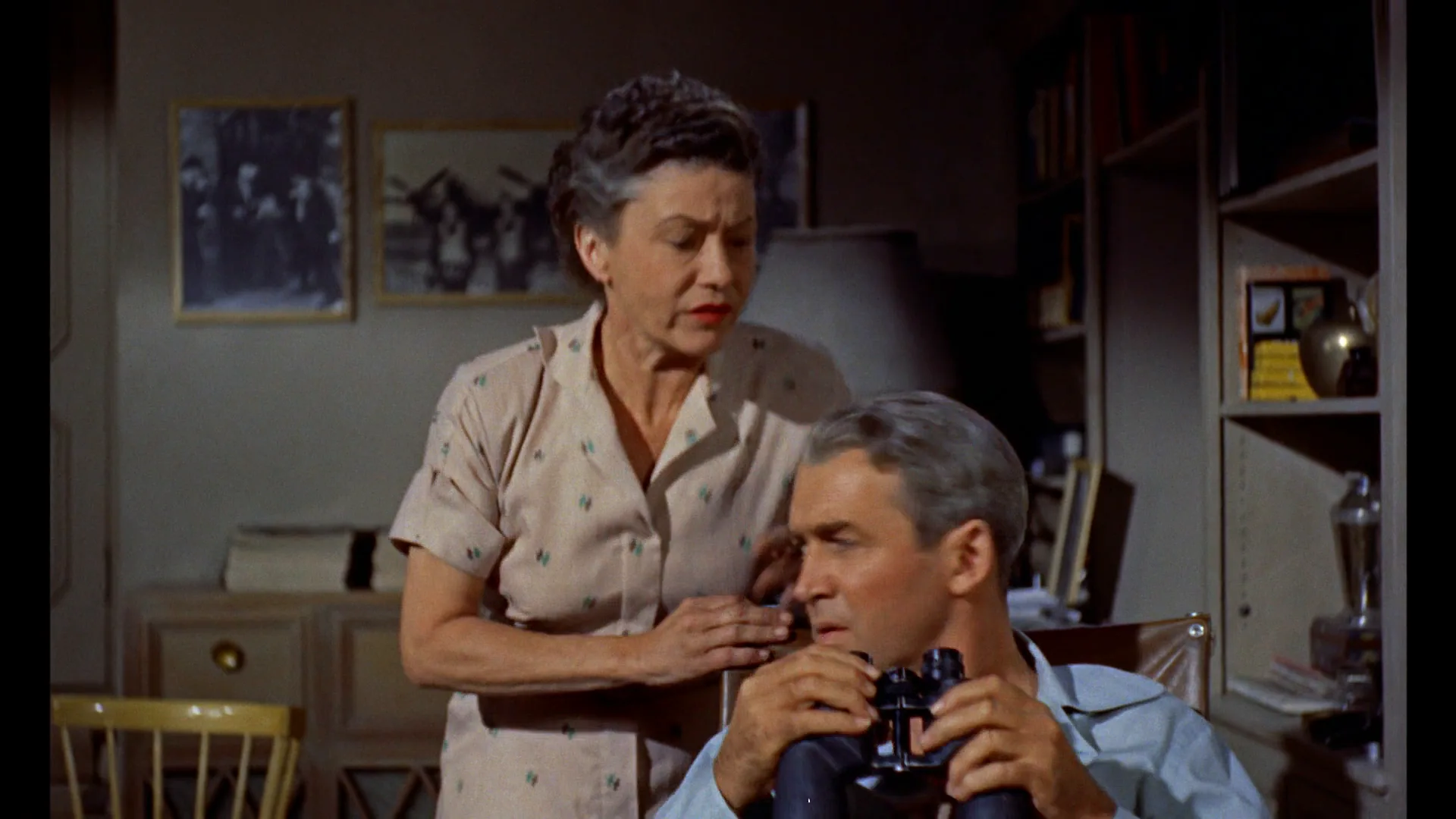
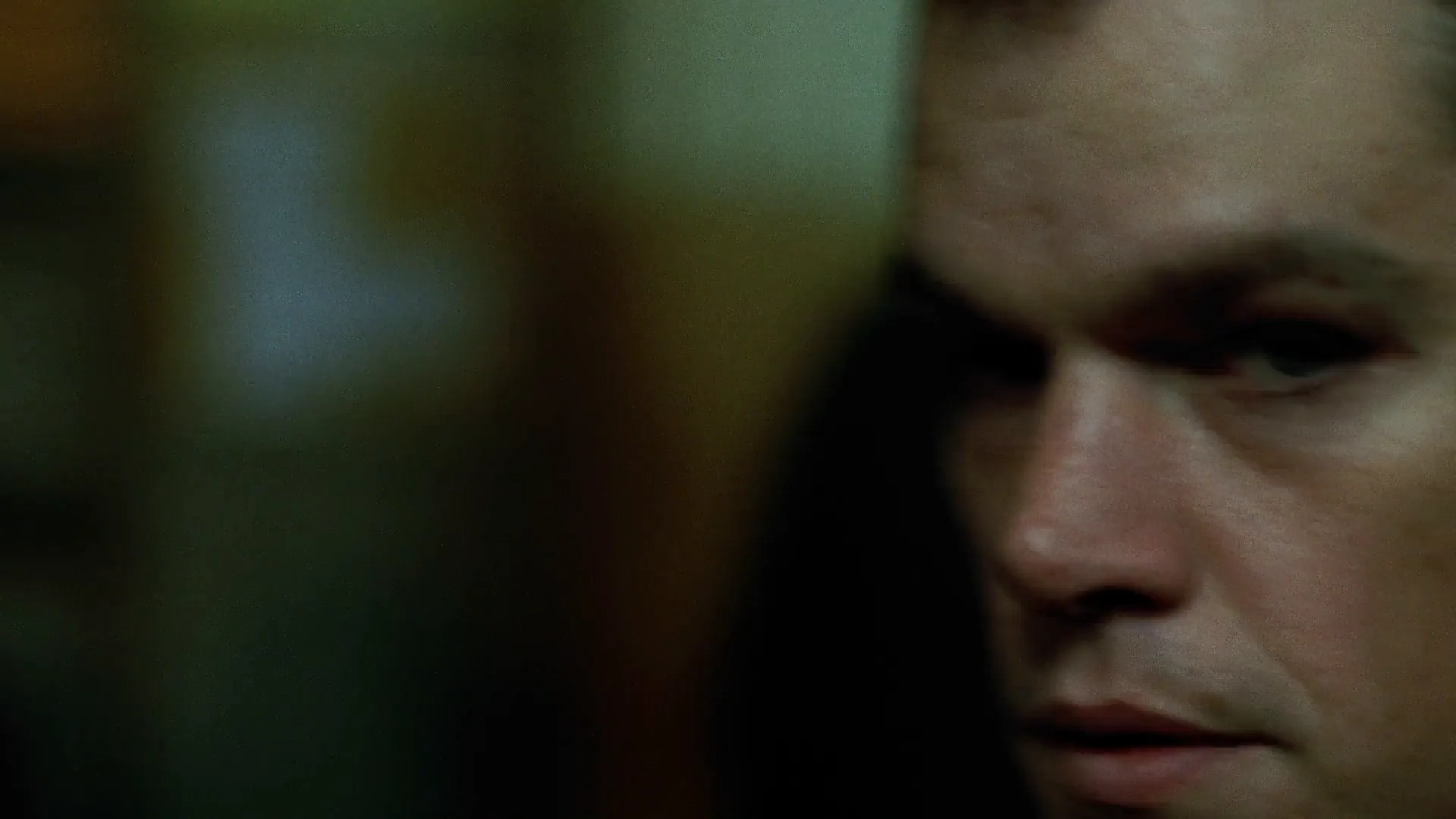
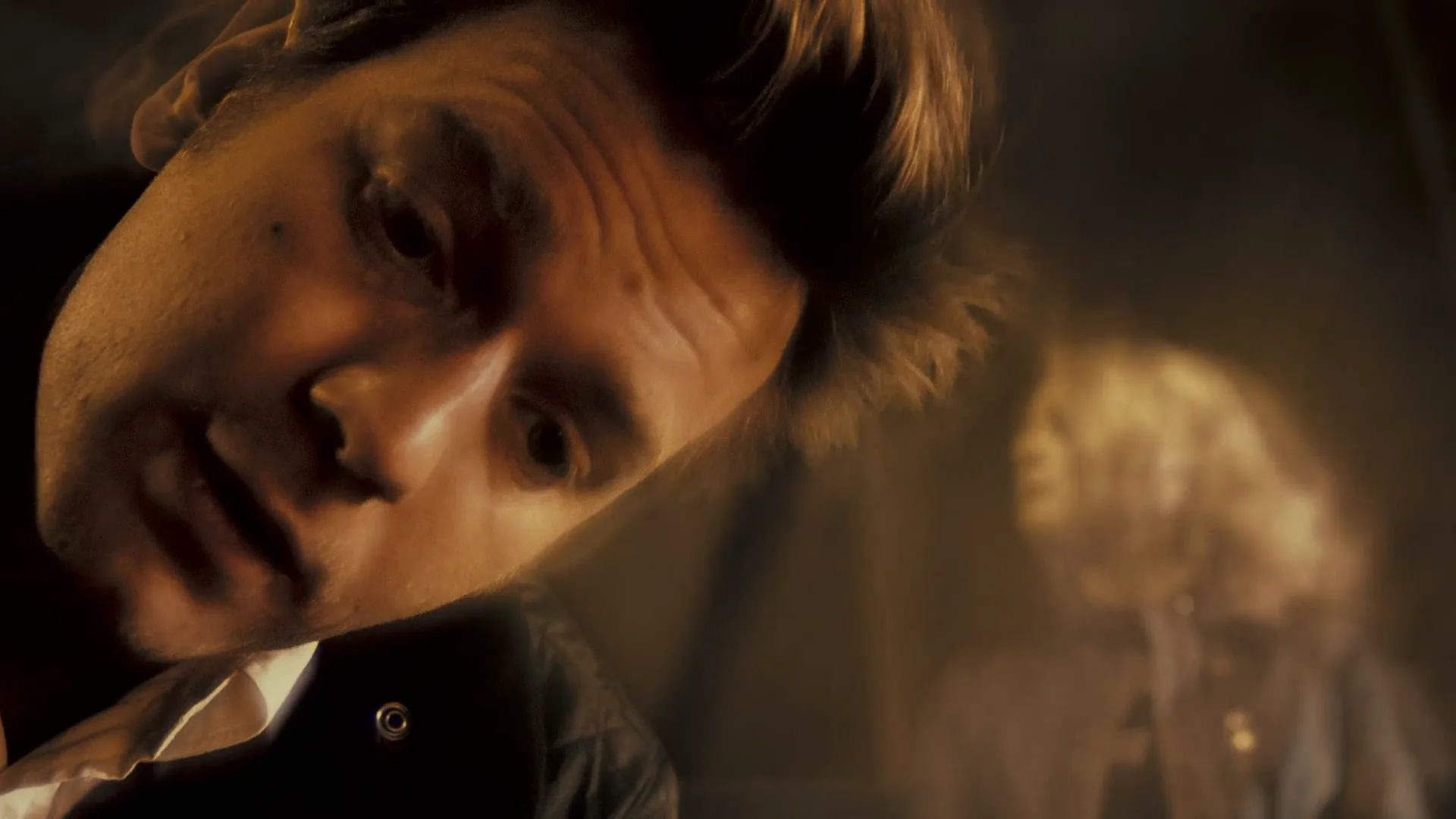
14 framesTwo families of frames: deep staging where several planes stay readable, and shallow focus where one plane carries the shot. In each, find the sharpest point first, then see how far the sharpness reaches.
How to create a depth of field with AI
4 promptsImage and video models have a default depth of field, usually a generic portrait blur, and they drift toward it unless the prompt pins the zone down. Name the lens, the stop, the plane that must be sharp and what the rest should look like. Build the shallow start frame in Nano Banana 2 Lite, a deep-focus counter-take in GPT Image 2.5, and animate the first frame with MiniMax H3 Max Turbo; keeping the takes next to your film references on one FlashBoards board makes it easy to see which one actually matches. The fourth prompt re-shoots a real film shot from a text description alone, and the original plays next to the result so you can compare.
Cinematic medium close-up on an 85mm lens at f/1.4, very shallow depth of field. A woman in her late thirties with a short black bob streaked with silver, a thin scar through her left eyebrow and a mustard wool coat stands on a night train platform; focus is locked on her eyes, and sharpness falls off gradually past her ears and shoulders. Twenty meters behind her, the platform lamps and the lit windows of a waiting train on the right dissolve into large, soft, round discs of warm and cool light. Warm sodium key light from the left, cool fill from the train windows, subtle film grain.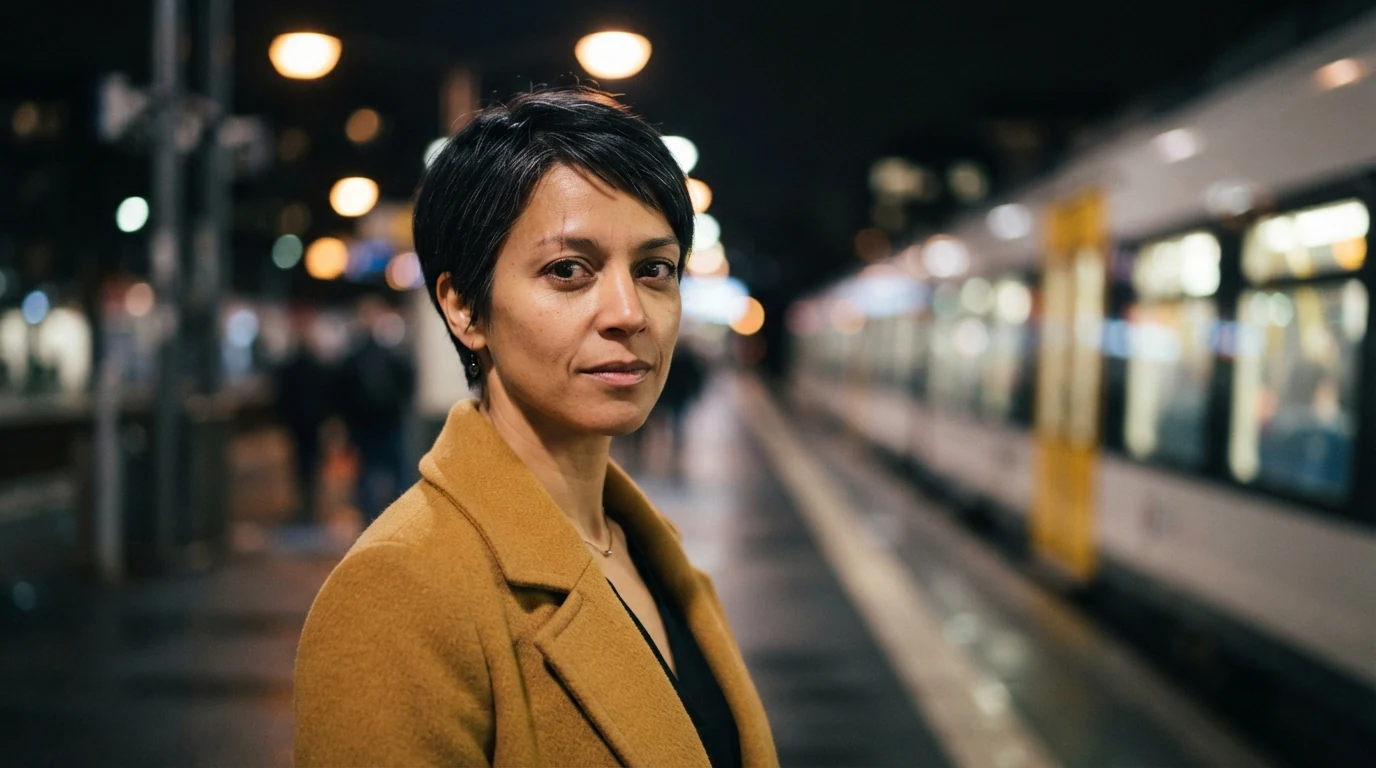
85mm at f/1.4 and very shallow depth of field set the look, but the work is done by focus is locked on her eyes (names the plane) and falls off gradually past her ears (stops the cut-out look). Twenty meters behind her gives distance, and large, soft, round discs tells the model what the blur should become.
Open FlashBoardsWide deep-focus interior in black and white, 24mm lens at f/11, everything sharp from one meter in front of the lens to the back wall. Foreground: an elderly watchmaker with a white walrus mustache, round wire spectacles and a leather apron leans over a brass clock movement on a workbench. Midground: his apprentice, a lanky teenage girl with curly red hair tied back, holds a ledger by a tall cabinet of drawers. Background: through an open doorway at the far end, a rainy street where a boy on a bicycle stops under a shop awning. Hard daylight from high windows, crisp detail on every plane, 1940s studio look.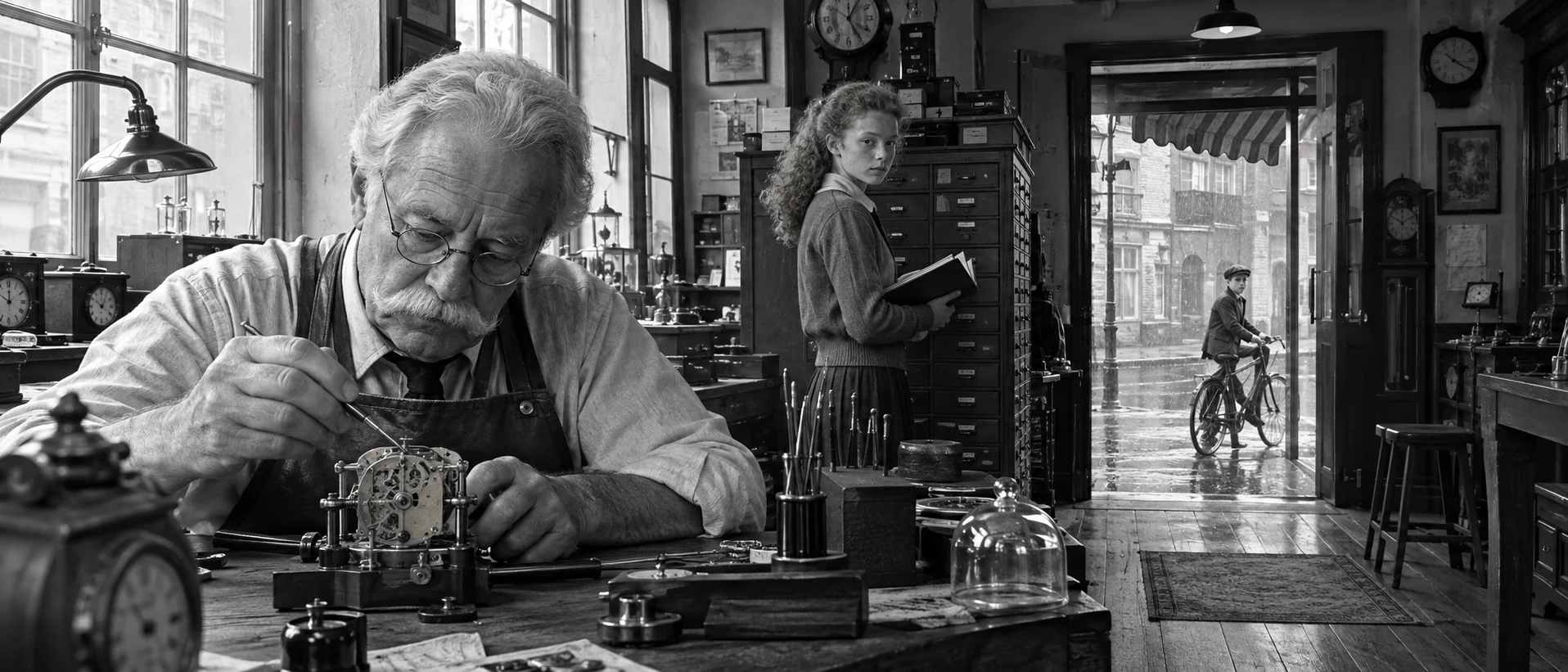
This take is the opposite end of the dial. 24mm at f/11 plus everything sharp from one meter to the back wall states the zone as a distance, which models follow better than an f-number alone. The Foreground / Midground / Background labels give each plane a job, and crisp detail on every plane repeats the goal in plain words.
Open FlashBoardsCamera: locked-off on a tripod for the first moment, then a very slow push-in of about half a meter toward her face, ending in a tighter close-up. Focus stays on her eyes for the whole shot. Action: from the first frame her coat collar stirs in the wind and she slowly turns her head toward the train on the right. In the middle the train begins to pull out, its lit windows sliding past behind her as soft streaks of blurred light. At the end she looks back toward the lens and breathes out, the background still a field of soft round lights.The motion starts at once (collar, head turn), so the model does not just drift in on a still. Focus stays on her eyes for the whole shot protects the shallow zone; the moving train is already in the frame, and describing it as soft streaks of blurred light keeps the background out of focus while giving it life.
Open FlashBoards{
"output": "Full-screen live-action scene from The Last of the Mohicans (1992), from its very first frame: one single continuous shot. Grainy early-1990s 35mm, 2.39:1 scope frame, night inside a crowded frontier fort in 1757, lit only by warm orange firelight from low frame left, deep black shadows, amber and umber palette, very shallow depth of field on a long telephoto lens wide open: only one face is sharp at any moment and everything off that thin plane melts into soft glowing smears.",
"characters": {
"S1": {
"name": "a militiaman of the settlements, not named in the film",
"look": "late thirties, gaunt pale face, long lank light-brown hair parted in the middle and hanging past his ears, light stubble, grimy white neckcloth, dark brown wool coat",
"voice": "worried, questioning, colonial accent"
},
"S2": {
"name": "a young militiaman, not named in the film",
"look": "early twenties, short brown hair, smooth round face, open cream linen shirt collar",
"voice": "silence: he never speaks"
},
"S3": {
"name": "Jack Winthrop, played by Edward Blatchford",
"look": "mid thirties, lean hollow-cheeked face, strong straight nose, dark unruly hair pushed back, several days of dark stubble, sweat and soot on his cheek, rough dark shirt",
"voice": "low, slow, deliberate, colonial accent"
}
},
"shots": [
{
"shot": 1,
"camera": "long telephoto lens wide open, slightly high angle, tight scope frame packed with three heads at three distances: S1 in the left third, mid-distance; S2 in the centre, a little closer, in profile facing left; S3 huge in the right third, very close to the lens, three-quarter profile facing left. Focus starts on S1, then pulls forward through S2 and lands on S3 and stays there. During and after the pull the camera pans slowly right and tilts slowly down, so S1 slides toward the left edge and S3's face grows to fill the right half.",
"action": [
"BEGINNING: alive from the first frame, S1's face is the only sharp thing; he tilts his head up and to the right and looks up toward the men on the right, eyebrows raised, and asks his question; S2 in the centre listens in profile, looking down-left at S1, head still; S3 in the right foreground is a large blurred orange shape of cheek and hair, still; a dark vertical musket barrel stands soft between S1 and S2.",
"THEN: S1 finishes and stays looking up to the right, mouth closed, waiting; S2 turns his head from S1 and lowers his eyes toward the ground in front of him.",
"THEN: S3 starts to answer while still soft; the focus pulls smoothly forward: S1 softens, S2's face turns crisp for a moment as the plane passes him, then S3's profile snaps sharp, every hair of stubble and bead of sweat readable, while S1 dissolves into a pale blur and S2 into a warm smear.",
"THEN: S3, head bowed, eyes lowered toward the ground ahead of him on the left, speaks slowly without turning his head; his lips move clearly; he pauses after the first half of his sentence, jaw working, then goes on.",
"END: S3 finishes his sentence, eyes still down, face set and grave; behind him the soft S2 lowers his head further, and at the left edge the blurred S1 still looks toward S3; the camera settles on the tight frame favouring S3's sharp profile."
],
"dialogue": [
{
"speaker": "S1",
"on_screen": true,
"when": "from the first frame, while he is the sharp face",
"delivery": "worried, questioning, rising at the end",
"line": "<d>[English] What do we do about being under Crown law?</d>"
},
{
"speaker": "S3",
"on_screen": true,
"when": "right after S1 stops, starting just before the focus reaches S3 and running to the end of the shot",
"delivery": "low, slow, measured, with a short pause after 'wish,'",
"line": "<d>[English] I believe if they set aside their law as and when they wish, their law no longer has rightful authority over us.</d>"
}
]
}
],
"sound": {
"ambience": "close crackle of a big fire, low murmur of many men heard around them in the dark",
"speech": "exactly these spoken phrases, each said once, in this order",
"never_spoken": "no narration and no voice-over: the descriptions, performance notes and step words of this prompt are never spoken aloud",
"music": "a film score under the scene, always below the voices: low sustained strings with a slow muffled drum pulse, brooding and restrained",
"subtitles": "none"
}
}Remakes the firelit militia shot from The Last of the Mohicans (1992), dir. Michael Mann, DP Dante Spinotti: three faces at different distances on a long lens, focus held on the man asking about Crown law, then pulled forward onto Jack Winthrop's profile as he answers, with the original lines and the slow drift right and down.
The depth of field is set once in output: long telephoto lens wide open and only one face is sharp at any moment. The camera field stacks three heads at three distances and orders the pull, starts on S1, then pulls forward through S2 and lands on S3; the THEN steps tie that pull to the handover of the dialogue, so the focus moves exactly when the answer begins.
Common mistakes
- Everything gets the same portrait blur. Models add background softness by default. For deep focus, say everything sharp from X meters to the back wall and crisp detail on every plane.
- The wrong plane is sharp. An f-number alone rarely places focus. Name the plane: focus locked on her eyes, focus on the letter in his hand.
- Cut-out subjects. A razor edge around hair and shoulders looks like a phone portrait mode. Ask for sharpness falls off gradually and give the background a real distance.
- Blur without distance. A wall right behind the actor should not melt into discs. Put the background far away in the prompt, as a set would.
- Focus drifts in video. Moving shots tend to re-soften or re-sharpen the frame. Repeat the focus instruction in the camera line and keep one focal plane per clip; a planned rack is a separate, simpler prompt.
Keep the reference frames, prompts and every generated take side by side — images and video in one canvas.
FAQ
5 questionsWhat is depth of field in simple terms?
Depth of field is how much of a picture looks sharp from front to back. A lens focuses on one distance, but a zone in front of and behind that point still looks crisp. When that zone is thin, only the subject is sharp and the rest blurs; when it is deep, the background stays clear too.
What does DOF mean in film?
DOF is short for depth of field, the range of distances that look acceptably sharp in a shot. In filmmaking it is a storytelling choice: shallow DOF isolates a character and tells the audience exactly where to look, while deep DOF keeps several planes sharp so actions can be staged together in one frame.
How do you get a shallow depth of field?
Open the aperture as wide as the lens allows, move the camera closer to the subject, use a longer focal length and put plenty of distance between the subject and the background. A larger sensor helps too. In daylight you will need ND filters to keep the wide stop without overexposing.
Does a longer lens always mean shallower depth of field?
From the same camera position, yes: a longer lens gives a much thinner zone. If you back up to keep the subject the same size in frame, the depth around the subject becomes similar, but the longer lens magnifies the out-of-focus background, so it still looks blurrier and simpler.
What is the difference between depth of field and bokeh?
Depth of field is the amount of the scene that is sharp. Bokeh is the quality of the part that is not sharp: whether out-of-focus lights become smooth round discs, busy rings or cat-eye shapes. Two lenses at the same stop can give the same depth of field but very different bokeh, because bokeh depends on the lens design and the shape of the aperture blades.
Related terms
7- Shallow Depth of FieldLenses, Focus & Exposure
Shallow depth of field keeps only a thin slice of the scene sharp — often just the eyes — while everything nearer and farther dissolves into blur, isolating the subject and steering attention.
- Deep FocusLenses, Focus & Exposure
Deep focus keeps foreground, middle ground and background sharp at the same time, so the director can stage action on several planes at once and let the viewer choose where to look.
- ApertureLenses, Focus & Exposure
Aperture is the adjustable opening inside a lens that controls how much light reaches the film or sensor; opening it up brightens the image and makes depth of field shallower, stopping down does the opposite.
- Focal LengthLenses, Focus & Exposure
Focal length, measured in millimetres, sets a lens's angle of view: short focal lengths see wide and stretch space, long ones see narrow and compress it — which is why the same framing feels different on 24mm and on 135mm.
- Rack FocusLenses, Focus & Exposure
A rack focus shifts focus during a shot from one subject to another at a different distance, moving the viewer's attention — and often revealing new information — without a cut.
- BokehLenses, Focus & Exposure
Bokeh is the character of the out-of-focus areas of an image — above all how point lights melt into soft discs or ovals — shaped by the lens design, the aperture blades and how shallow the focus is.
- Camera FocusLenses, Focus & Exposure
Focus is where the lens places its plane of sharpness; on set it is set and adjusted during the take by the focus puller (1st AC), and deciding what is sharp is one of the strongest ways to direct the viewer's attention.
Further reading
Blain Brown, Cinematography: Theory and Practice (3rd ed., 2016). American Society of Cinematographers, American Cinematographer Manual (depth-of-field and hyperfocal tables).