 FlashBoards Learn
Lighting · Film language
Practical Lighting
Also called: practical light, practicals, practical lamps
Practical lighting uses light sources that appear in the shot, such as table lamps, candles, neon signs, streetlights and TV screens. A practical either lights the scene for real or gives the audience a visible reason for the hidden film lights doing the work. It makes a set feel inhabited and tells the viewer where the light comes from.
- What it does
- Puts the light source inside the frame, so the lighting reads as part of the world rather than the film crew.
- Use it when
- You want night interiors, bars, bedrooms and streets to feel real, or a lamp, candle or screen to carry the scene's mood.
- Watch out
- Bulbs clip to white blobs and their light drops off within a meter or two; dim them, shade them and hide a helper light nearby.
- Try this prompt
cinematic medium shot at night, the only light is a table lamp in frame with a warm glowing shade, light falling across her face from frame left, room in deep shadow, 35mm
What is practical lighting in film?
A practical is any working light source that the camera can see: a table lamp, a bare bulb on a cord, a candle, a neon sign, a fridge light, a TV, a car's headlights, a streetlamp. Crews shorten it to "practicals" and treat them as props and electrics at the same time. The art department picks the lamp; the gaffer decides what bulb goes inside it and how bright it burns.
A practical can do two different jobs, and most scenes use both.
- Real illumination. The lamp actually lights the actor. At modern sensitivities a 60-watt-equivalent bulb under a shade can expose a face sitting half a meter away, and some films light entire scenes this way.
- Motivation. The lamp only explains the light. The real work comes from a hidden key light placed so its direction, color and softness match the lamp, and the audience believes the lamp did it.
Either way, the practical anchors the film lighting of the scene: once a lamp is visible at the left of the frame, light on faces had better come from the left, carry the lamp's warmth and fall off the way lamplight does.
Why do filmmakers use practical lights?
Belief. Audiences read an interior as real when they can see what lights it. A living room with no lamps and perfectly shaped faces looks like a stage; the same room with two lit lamps in the background looks like somebody lives there.
Depth and points of interest. Small bright sources scattered through the frame separate foreground, midground and background. A lamp in the back corner gives the eye a destination and keeps a dark set from reading as flat black. In low-key lighting the practicals are often the brightest things in the frame, so they shape the composition as much as the actors do.
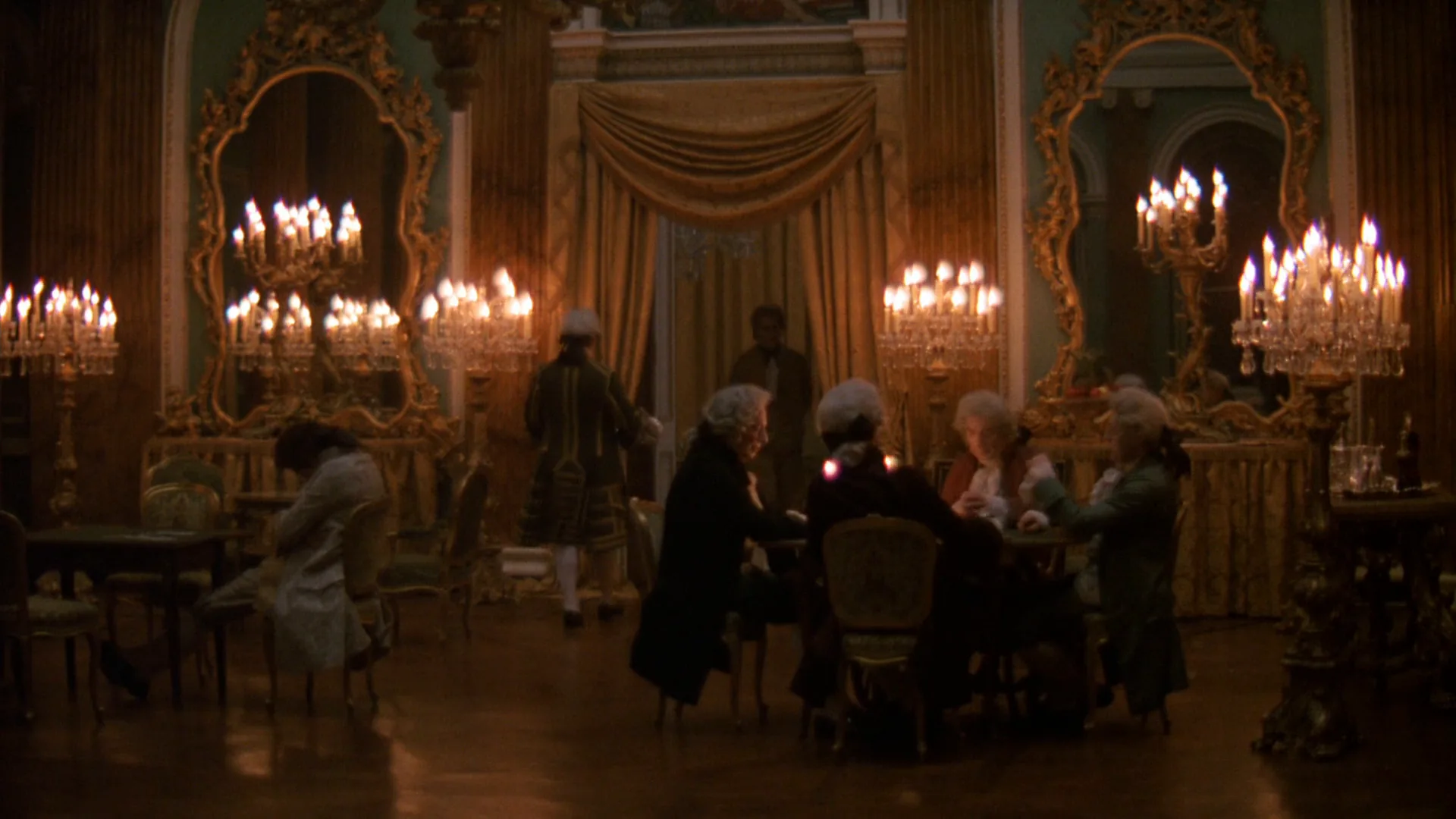
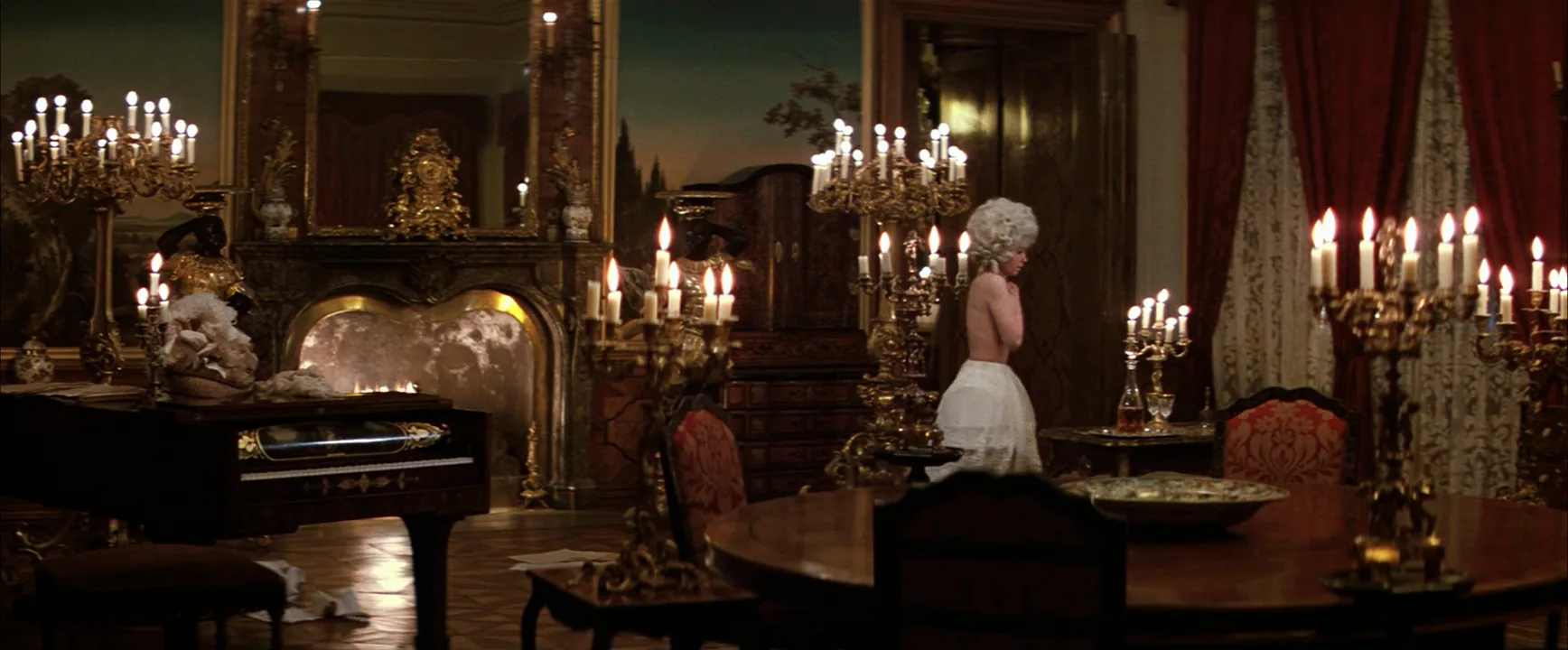
Period and place. Candles, gas lamps, fluorescent tubes, sodium streetlights and neon each belong to an era and a neighborhood. Barry Lyndon (1975) is the canonical case: Stanley Kubrick and DP John Alcott shot candlelit interiors by candlelight, using Zeiss f/0.7 lenses originally built for NASA, and the result still looks like an 18th-century painting come to life.
Mood and color. A green-shaded banker's lamp, a red bar lamp and a blue TV glow are three different emotional temperatures before anybody speaks. Practicals let the DP bring color into the frame with a motivation the audience accepts instantly, which is how many neon lighting looks work.
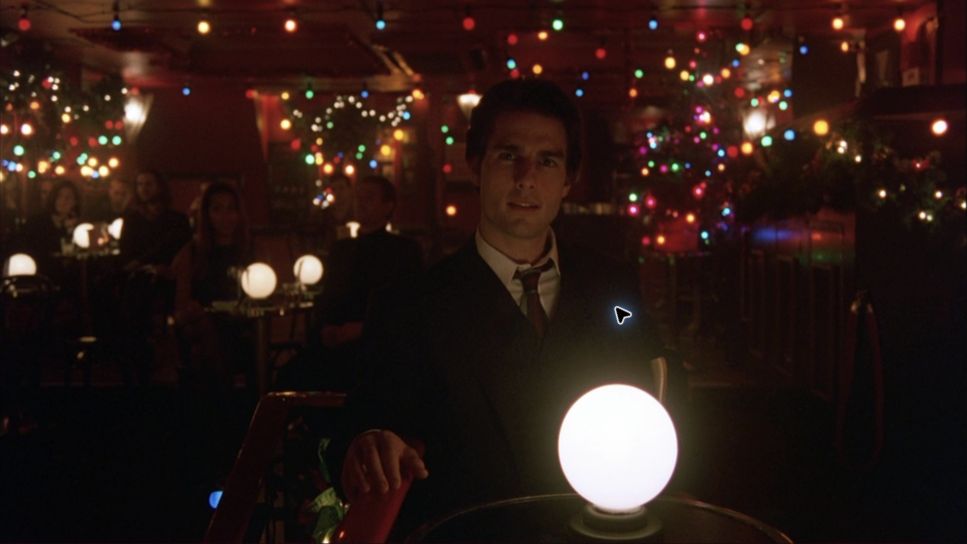
Story. Sometimes the light is the plot. In season one of Stranger Things a mother strings Christmas lights across her living room wall to talk with her missing son, and the practicals become the dialogue. Eyes Wide Shut (1999) fills almost every interior with Christmas lights, which gives the whole film its soft, glowing, slightly unreal color.
Freedom for actors and camera. When the room is lit by what is in it, there are fewer stands in the way. Actors can move 360 degrees, and the camera can turn around without relighting, a big reason handheld and documentary-style productions lean on practicals.
How to light a scene with practicals
1. Choose the lamps with the art department. Opaque or thick shades glow softly and hide the bulb; clear glass and bare filaments read as hard sparkle points. Lamps with open tops and bottoms throw useful pools of light on the table and ceiling. Place them where the light should come from for the blocking, not just where they look nice.
2. Control the bulb. The number one practical problem is a lampshade that blows out to a white blob. Swap to a lower-wattage bulb, put the lamp on a dimmer, or tape a layer of neutral density or diffusion gel inside the shade on the side facing the lens. A shade usually looks best one to two stops over the key on the face: bright enough to read as the source, with texture still visible. A dimmable LED bulb with adjustable color is now the default on most sets.
3. Match color. Household tungsten sits around 2700K, warmer than a 3200K film lamp. Decide whether the practical should look amber, neutral or cool, and set your hidden units to agree. Mismatches are fine when intentional, and that is the territory of mixed lighting, but set them on purpose using color temperature and lighting gels.
4. Add the helper. Lamplight falls off fast: move an actor from 50 cm to 1 m away and they lose roughly two stops. Hide a small soft source (an LED panel behind the lamp, a bulb clipped inside the shade facing the actor, a bounce card on the table) to extend the lamp's pool onto the face. Keep it on the same side and at the same height as the practical, so the direction stays honest.
5. Expose for the glow. Practical-heavy scenes live at fast apertures and high ISO: f/1.4 to f/2.8 on large-sensor cameras, ISO 800 to 3200, so that small sources carry the room. That brings shallow depth of field and turns out-of-focus lamps into bokeh. Check the shade and the face on false color, because a camera's dynamic range decides whether you can hold both.
6. Watch flicker and screens. Cheap LED bulbs and fluorescent tubes can flicker on camera at certain shutter angles; test them before the shoot. TV and monitor screens are usually replaced with playback or a lit panel so their brightness can be dialed in.
Practical vs. motivated lighting. The two phrases are often confused. A practical is the visible source; motivated lighting is any film light placed to imitate a source the story implies, whether that source is visible (a lamp in shot) or not (a window off-screen). Most practicals in feature films are motivators: the lamp glows, a hidden unit does the heavy lifting, and nobody in the audience notices the trick.
Common practical light sources and what they give you
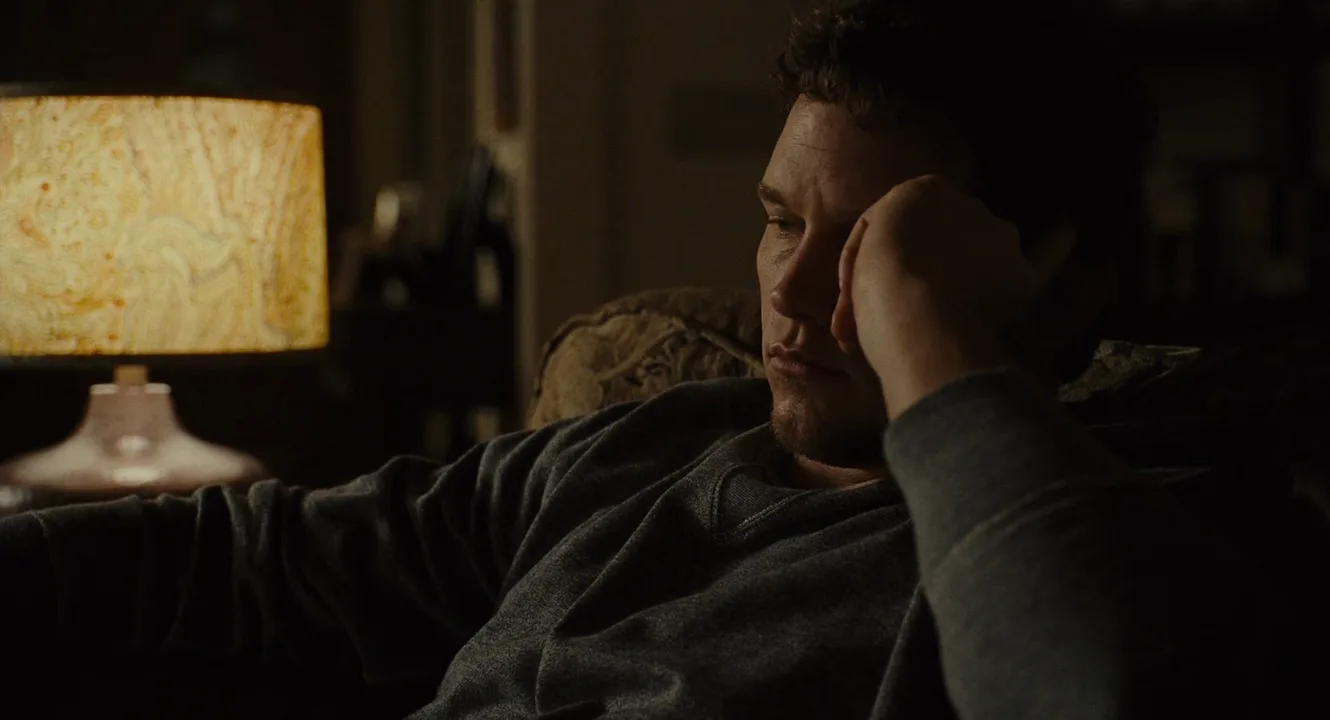
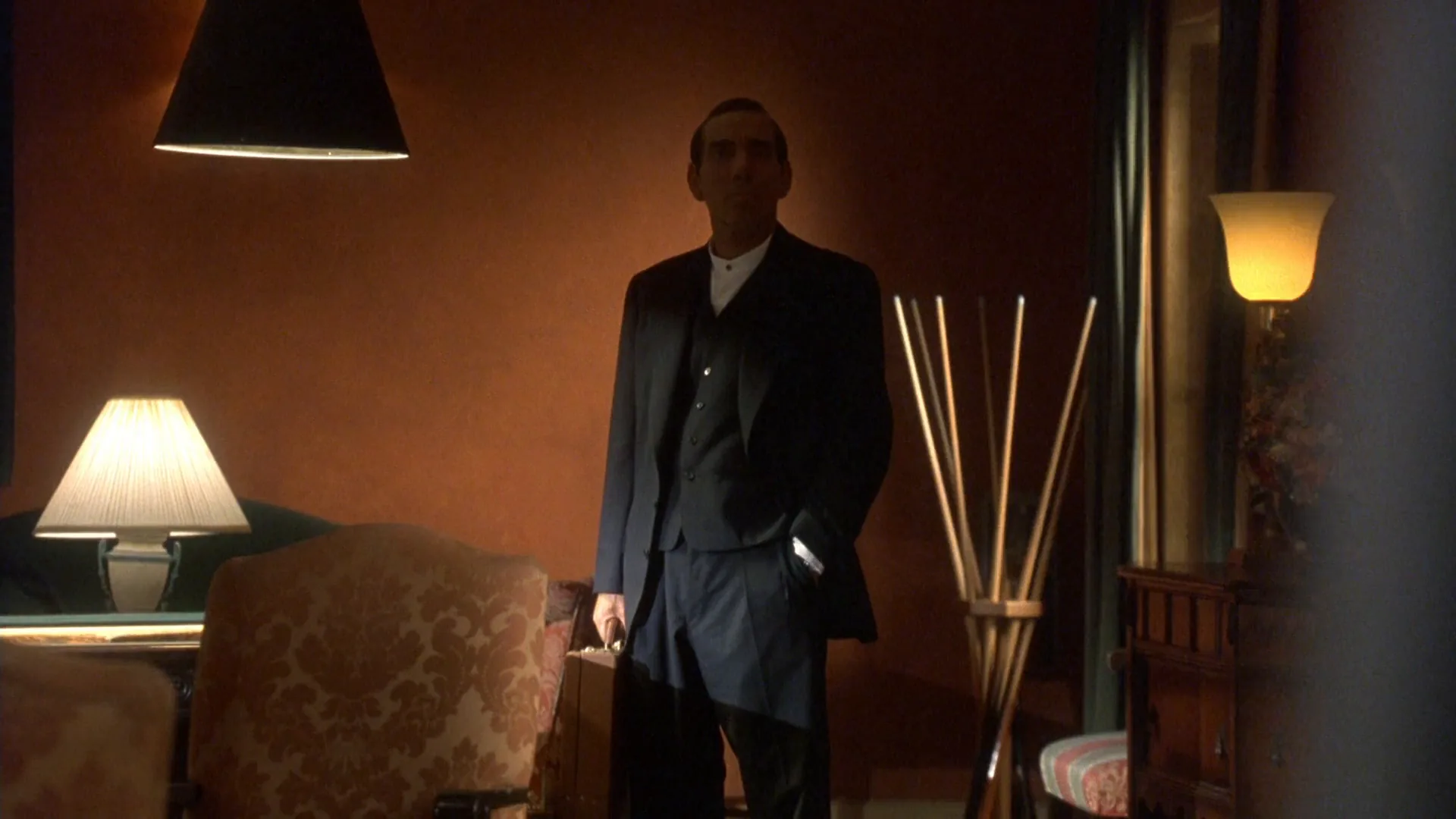
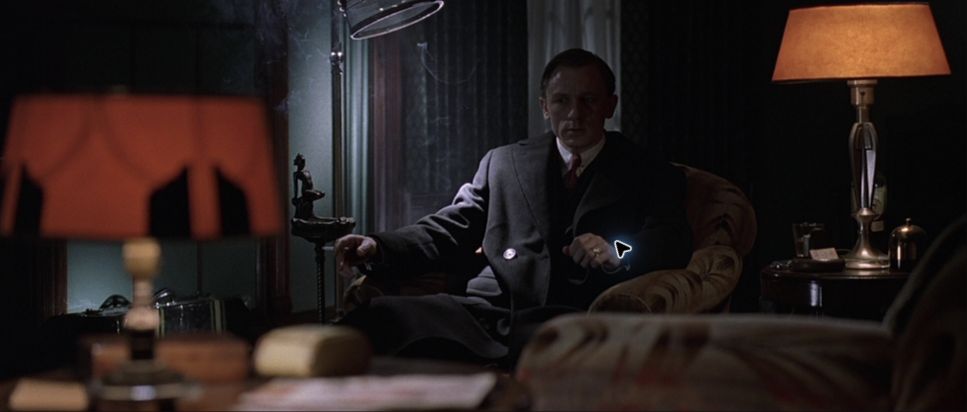
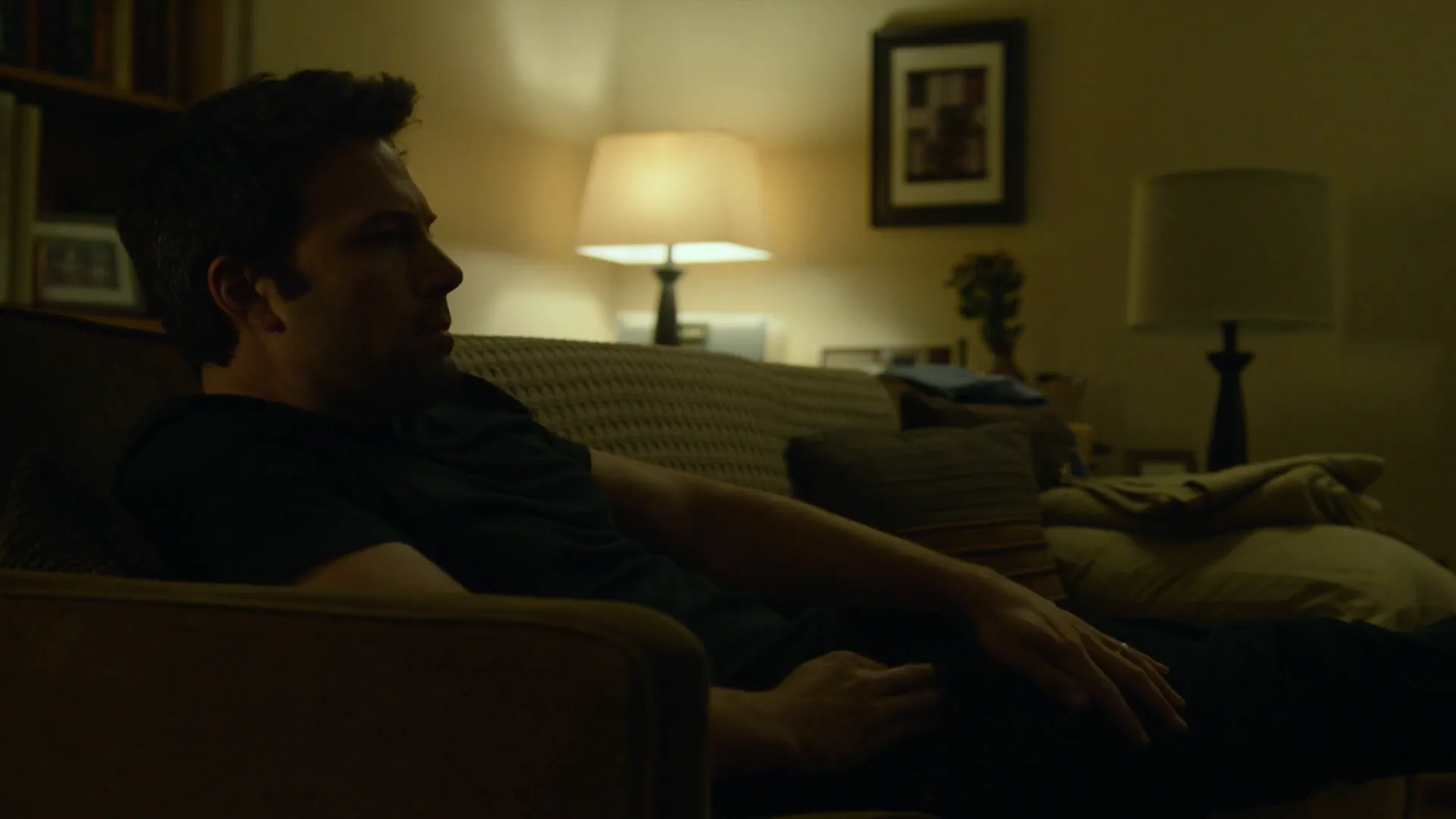
- Table and floor lamps. The workhorse. Warm, soft, low, placed at face height, and perfect for domestic intimacy. Road to Perdition, Moneyball and Gone Girl build whole scenes around them.
- Pendants, bare bulbs and sconces. Hanging bulbs make top light and hard pools on tables; wall sconces add a row of points that give a corridor or bar its depth.
- Candles and fire. Low, orange and flickering, with very fast falloff. It is usually boosted by dimmed tungsten lamps on a flicker box; see firelight for the full technique.
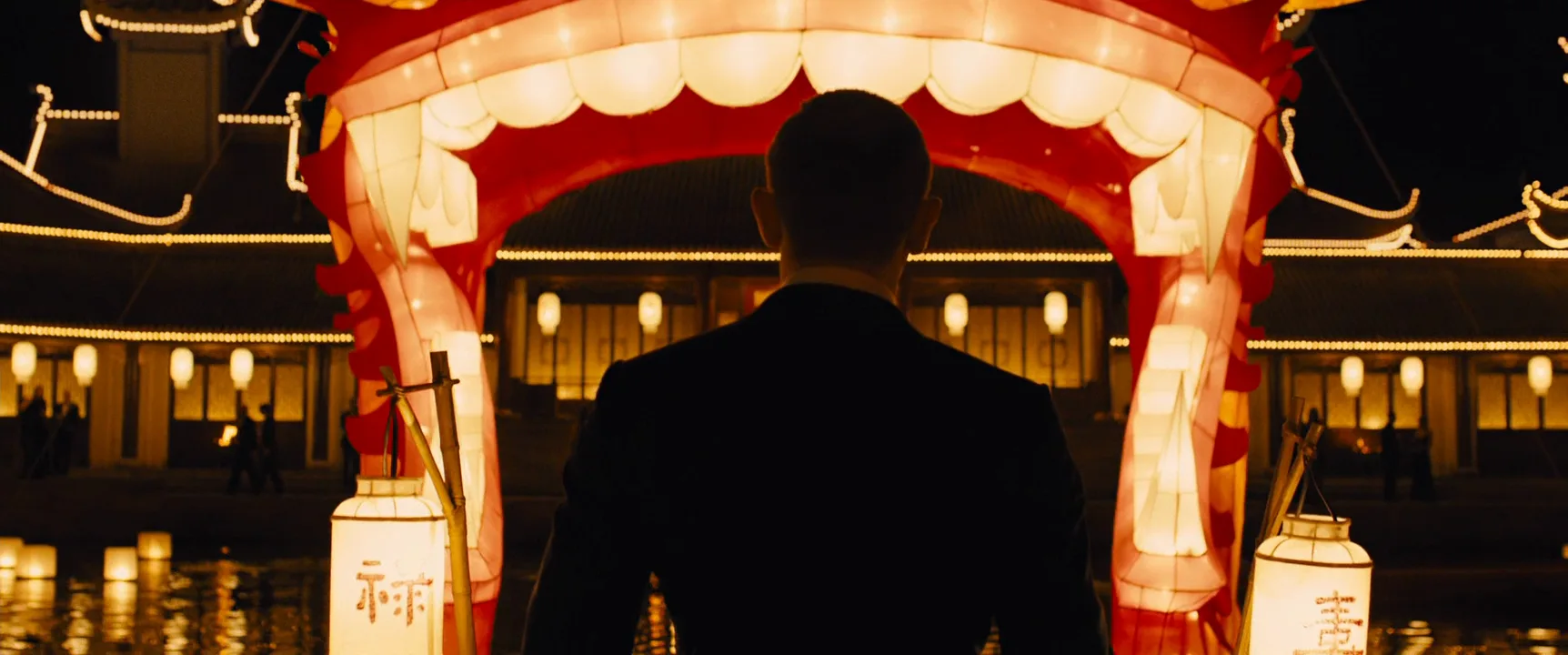
- Neon and signs. Saturated color from outside a window or behind a bar, often reflected on wet streets. Bright and graphic, but rarely enough to light a face without help.
- Screens. TVs, monitors and phones give cool, shifting light on faces in dark rooms. Productions often cheat the screen brightness with a small panel just below frame.
- Streetlights, headlights and car interiors. The practicals of exterior night. Sodium orange, mercury green and LED white each date a street instantly.
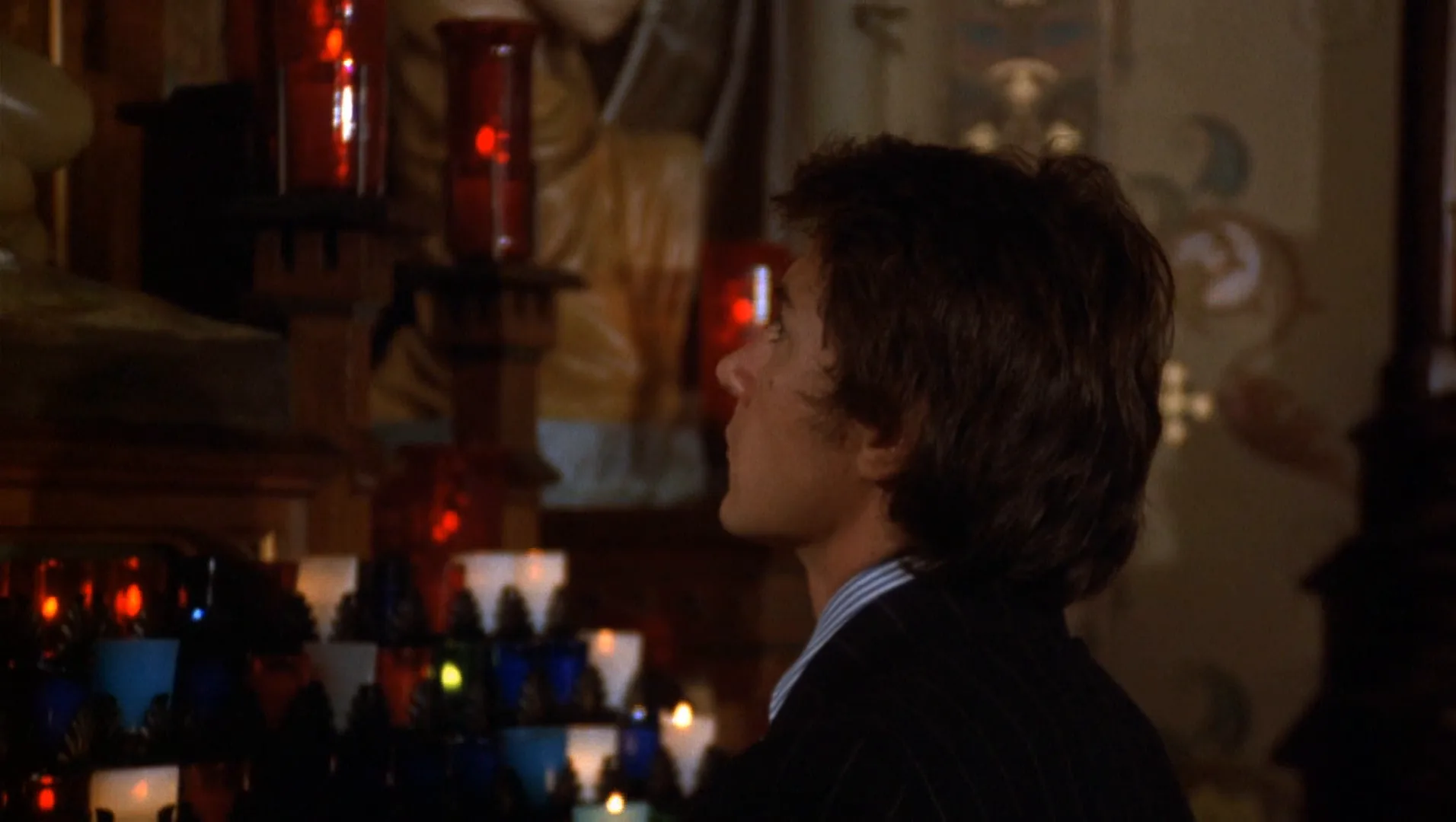
- String lights and Christmas lights. Hundreds of tiny points, little real exposure, huge atmosphere, especially when thrown out of focus by a long lens.
Practical lighting vs. ambient light
Ambient light is whatever light already exists at a location before the crew adds anything: daylight through windows, the shop signs across the street, the office's overhead fluorescents. Practical light is narrower. It means sources that are in the frame and under the crew's control, whether they came with the location or were placed by the art department.
| | Practical light | Ambient light | |---|---|---| | Visible in the shot | Always, by definition | Often not: a window or the sky may be off-screen | | Who controls it | Gaffer and art department: bulbs, dimmers, placement | The location, until the crew shapes or overpowers it | | Typical job | Motivating the key, adding depth and color points | Base exposure and the general level of the room | | Main risk | Clipped shades, fast falloff | Unwanted color casts, changing daylight |
The overlap is real: a streetlamp outside a café is ambient light when you walk in with a camera, and becomes a practical the moment you frame it, swap its bulb or rely on it to motivate the key. The useful question on set is simple: can I see it, and do I control it?
Practical Lighting examples in film
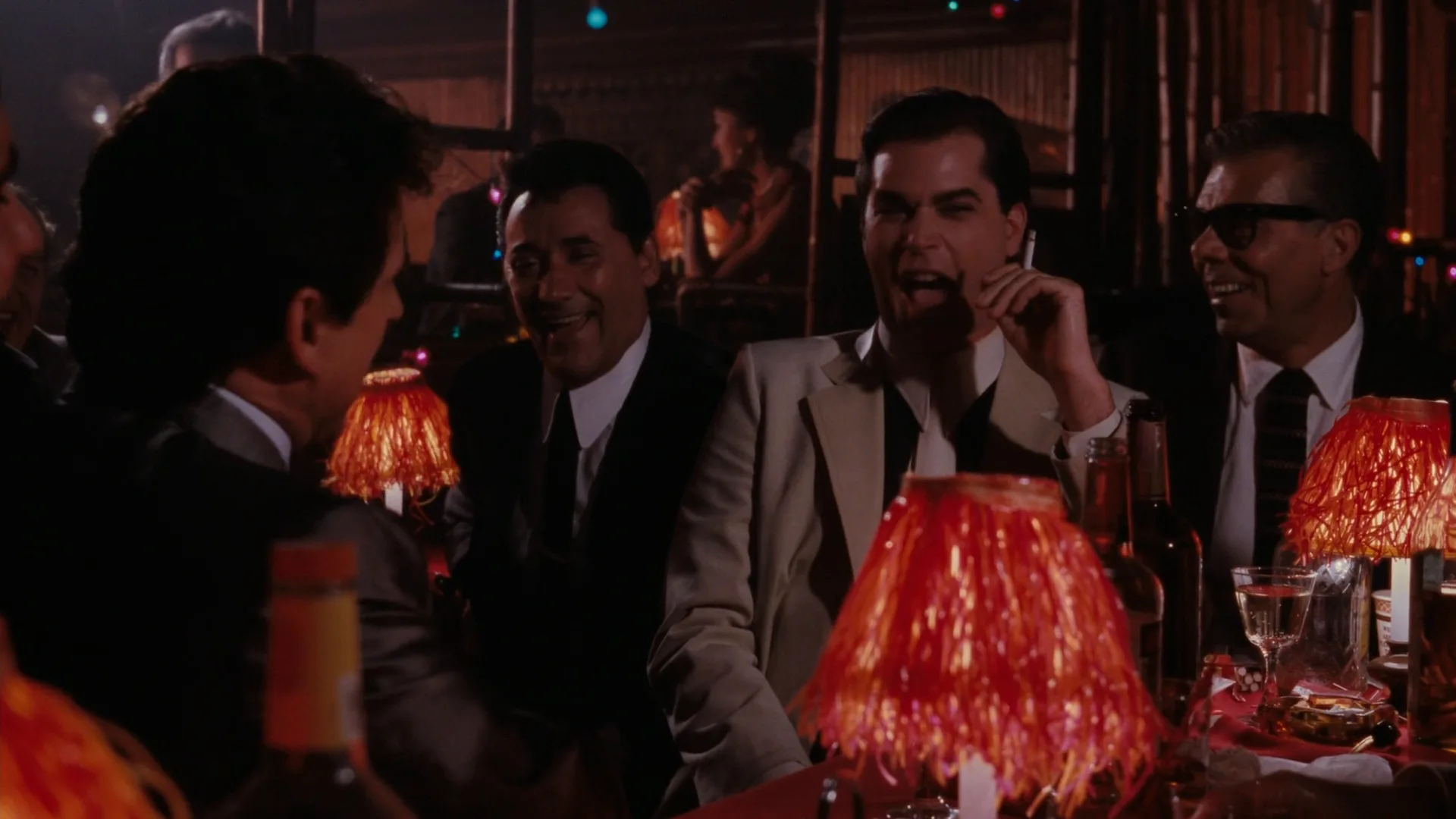
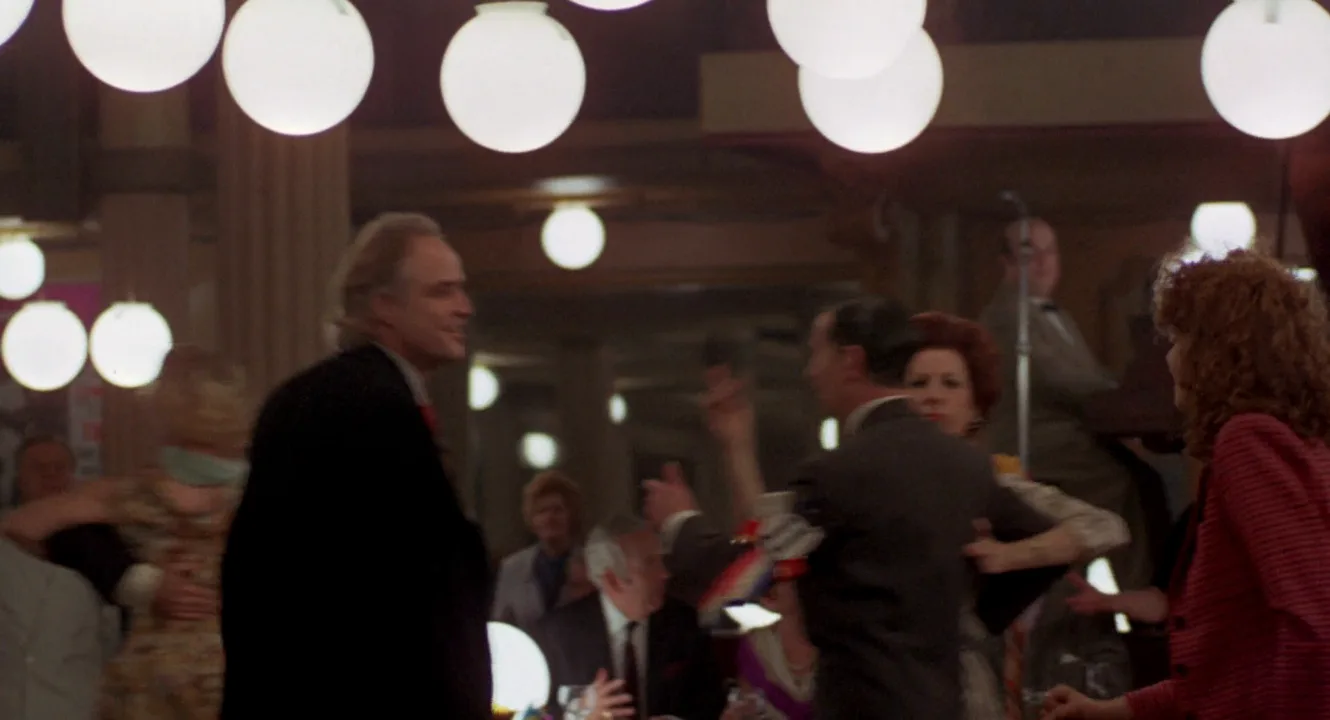
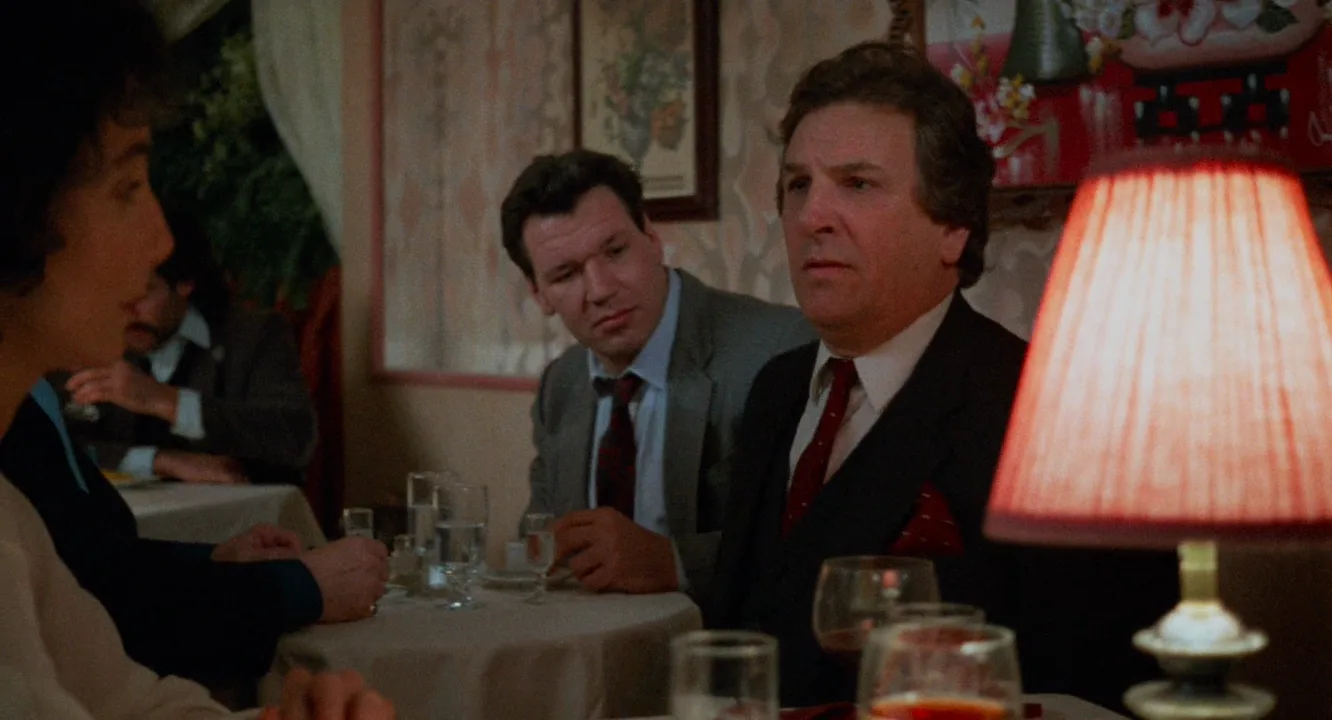
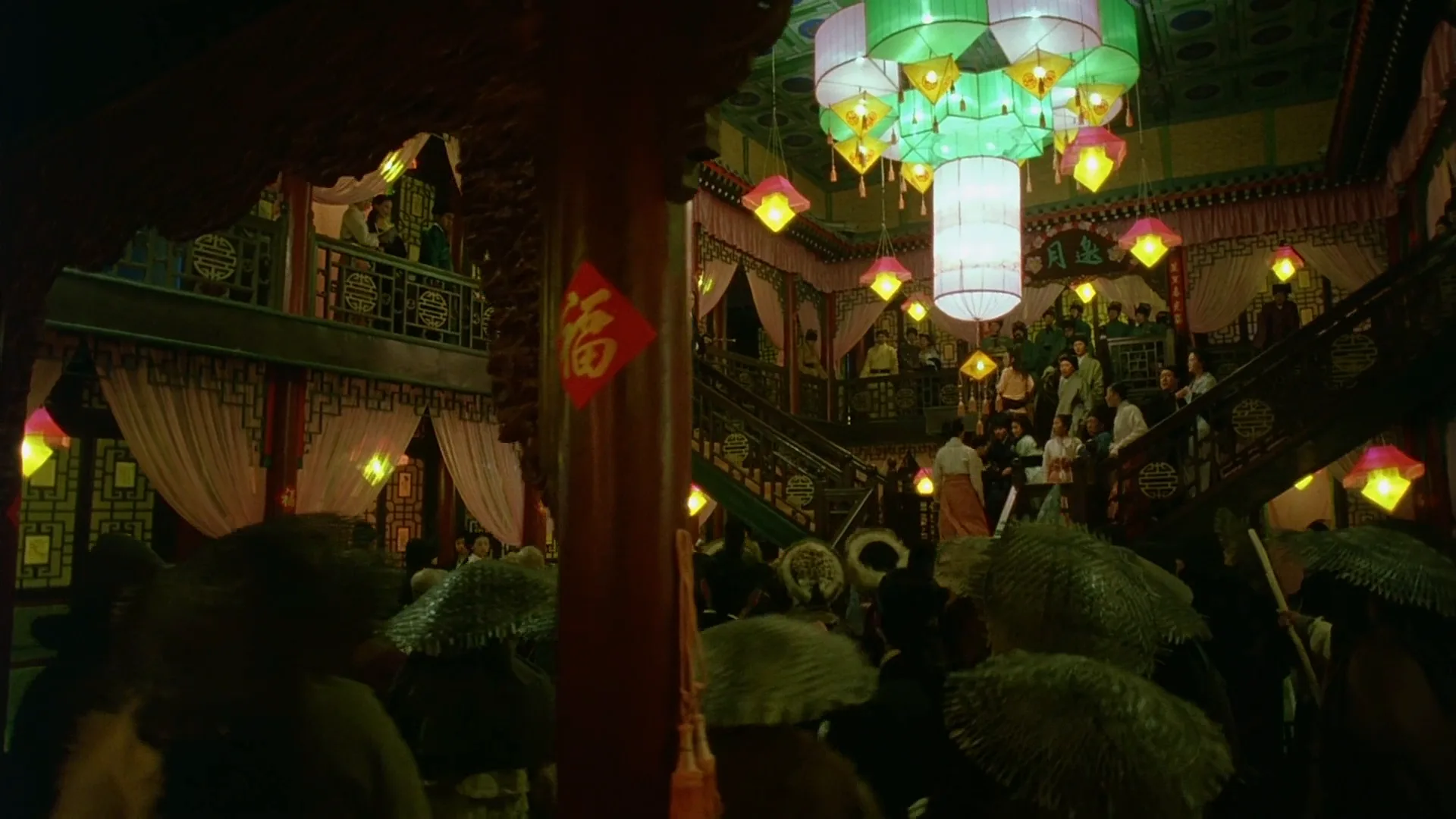
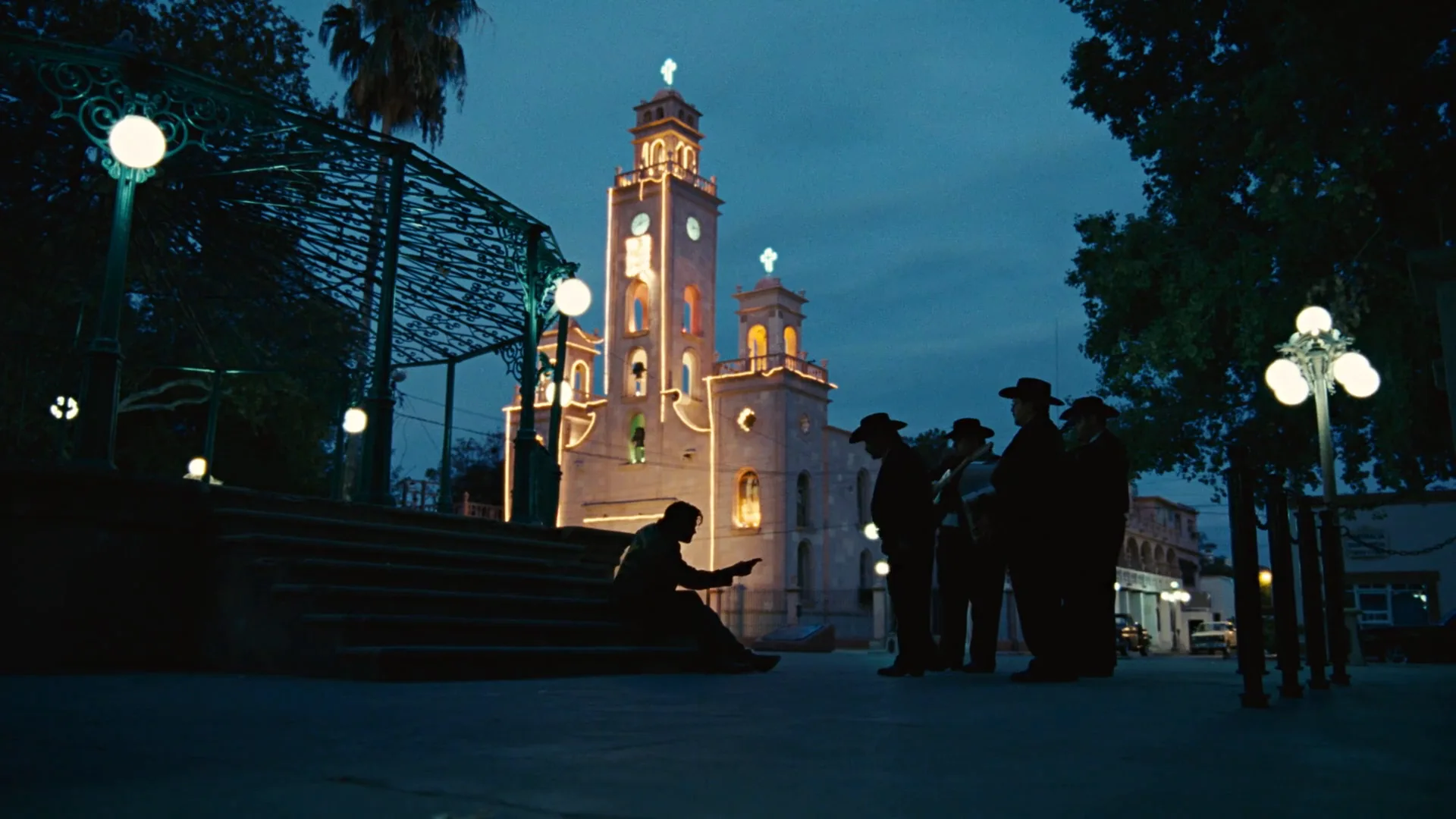
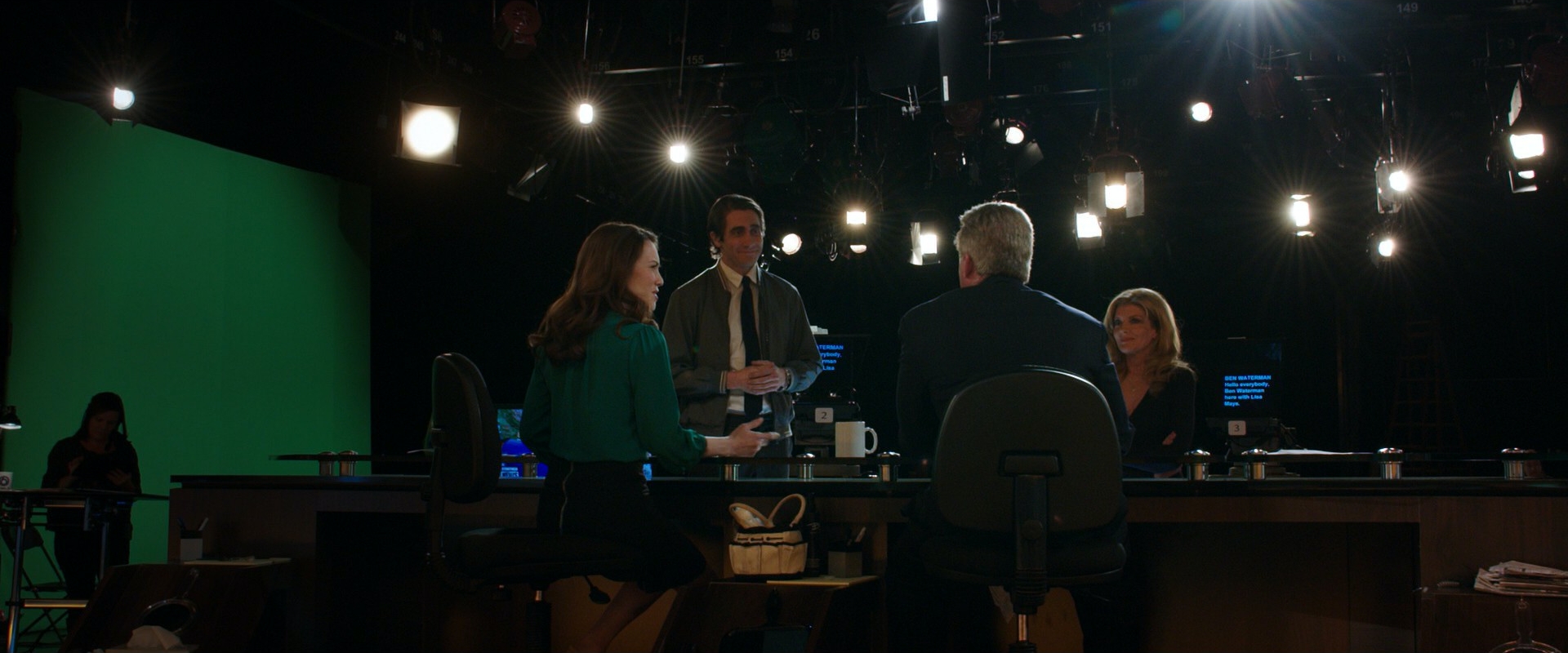
15 framesFrames where the source is in the shot. Look for the lamp, candle or sign, then check where its light lands: faces lit from the lamp side, pools on tables, and rooms that fall into shadow beyond the practical's reach.
How to create a practical lighting with AI
4 promptsImage models light everything evenly unless told otherwise, so the prompt has to name the practical, place it in the frame and say that it is the only source. Generate the start frame, try a second take with a different room and lens, then animate the first frame so the light behaves like lamplight. On a FlashBoards board you can keep these takes next to the film frames above and compare how the falloff looks. The fourth prompt re-shoots a real film shot from a text description alone, and the original plays next to the result so you can compare.
Cinematic film still, medium shot at night: a woman in her fifties with a short gray pixie cut, a thin scar through her left eyebrow and a mustard knit cardigan sits at a small kitchen table reading a handwritten letter. The only light in the room is a brass table lamp with a cream fabric shade standing on the table at frame left. Warm 2700K lamplight falls across the left side of her face and the letter; the right side of her face drops into soft shadow, and the room behind her fades into dark brown. The lampshade glows softly with texture visible, bulb hidden. 35mm lens, eye level, shallow depth of field, fine film grain.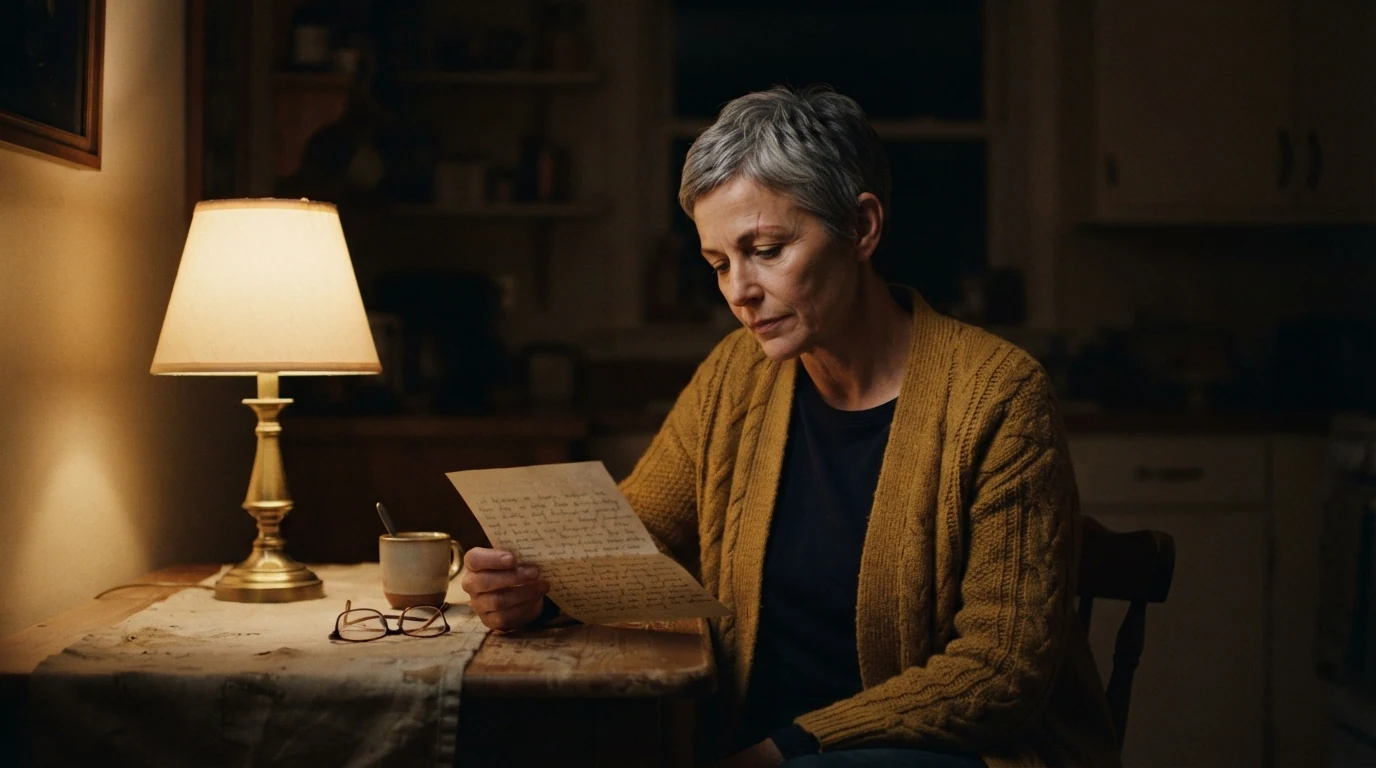
"The only light in the room is" stops the model from adding an invisible soft key, and putting the lamp "at frame left" plus "falls across the left side of her face" ties the direction of the light to the visible source. "Glows softly with texture visible, bulb hidden" prevents a clipped white shade, and "fades into dark brown" gives the fast falloff that makes lamplight read as real.
Open FlashBoardsWide anamorphic cinematic frame of a nearly empty all-night diner at 3 a.m. A young man with freckles, a shaved head and a faded green work jacket sits alone at the counter over a cup of coffee. Three pendant lamps with green enamel shades hang low above the counter, each casting a hard pool of warm light onto the counter and onto his hands and face from above. Behind him a red neon OPEN sign in the window throws a thin red edge onto his shoulder. The booths in the background sit in darkness. Practical lighting only, deep shadows, 40mm anamorphic lens, eye level, subtle blue oval bokeh from the street outside.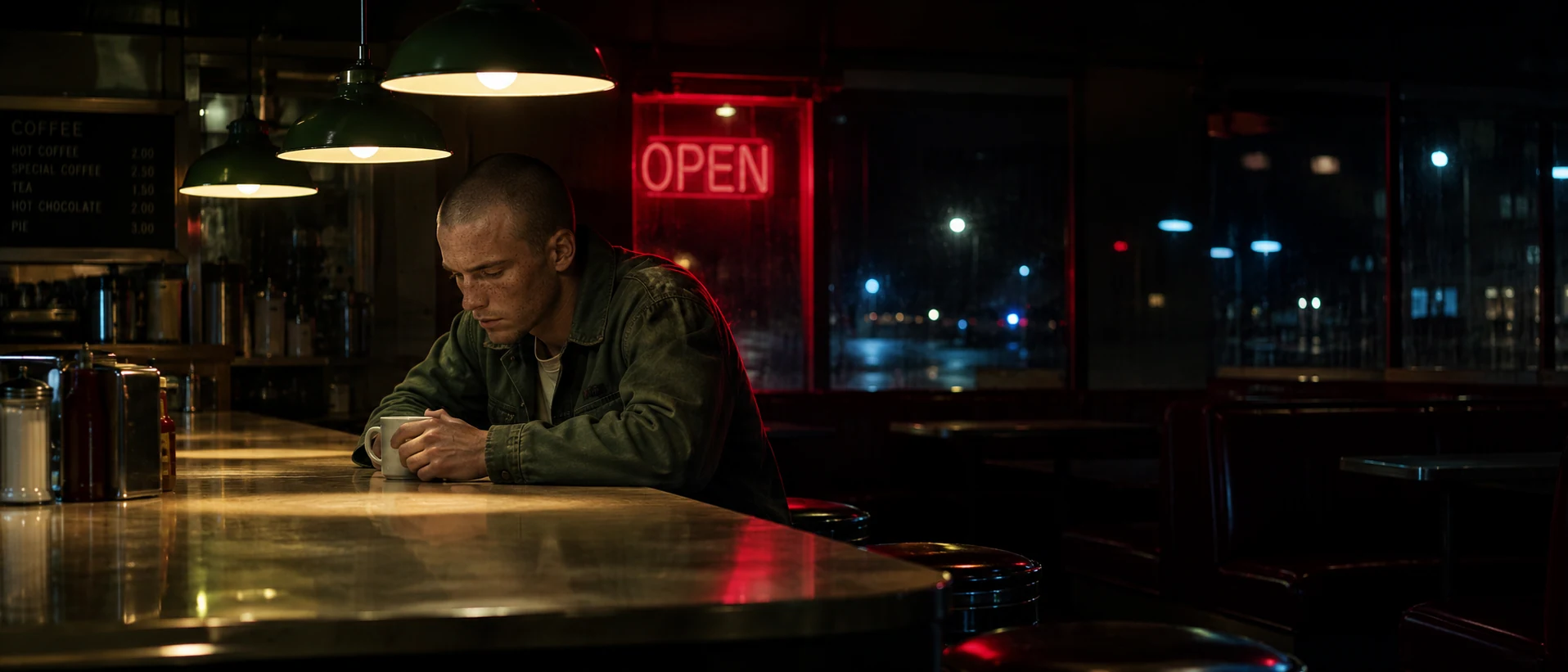
This take moves the practicals overhead and adds a colored one. "Hang low above the counter, each casting a hard pool" produces top light with visible pools instead of general brightness, and naming the neon sign's job ("a thin red edge onto his shoulder") makes the model use it as a rim rather than just decoration. "Practical lighting only, deep shadows" keeps the booths dark.
Open FlashBoardsCamera: slow, steady push-in from the medium shot toward her face, starting immediately and ending in a medium close-up. Action: She is already leaning forward toward the lamp as the shot begins, bringing the letter closer to the shade to read it, and her face grows brighter and warmer as it enters the lamplight. In the middle she pauses and reads, the lamplight steady on her cheek and the paper. At the end she sits back slowly, her face sliding out of the pool of light into soft shadow while the lampshade keeps glowing at frame left.The action is built around the one thing that proves a practical is real: falloff. Leaning toward the shade brightens the face, and sitting back dims it, which only happens if the model treats the lamp as the source. Motion starts in the first words ("already leaning forward"), and the prompt describes only the woman, letter and lamp that are in the start frame.
Open FlashBoards{
"output": "Full-screen live-action shot from Moneyball (2011), alive from its very first frame: one continuous locked-off shot, no cuts. Night interior of a dim suburban living room lit by a single table lamp in frame. 35mm film stock, fine grain, warm amber and brown palette, deep shadow everywhere the lamplight does not reach.",
"characters": {
"S1": {
"name": "Scott Hatteberg, played by Chris Pratt",
"look": "stocky man around thirty, short dark curly hair, light stubble, loose charcoal-gray crew-neck sweatshirt, slumped low on a sofa with a dark patterned tapestry back",
"voice": "silent in this shot"
},
"S2": {
"name": "a local TV news reporter",
"look": "never seen: only a voice heard from off screen left",
"voice": "bright, upbeat newscaster voice, slightly thin and tinny as if from a small set across the room"
}
},
"shots": [
{
"shot": 1,
"camera": "static, locked-off, eye level, medium close-up, normal lens, the lamp soft but readable in the left foreground, S1 sharp in the right half of the frame",
"light": "the only light is the table lamp at frame left: a large drum shade of cream fabric with a mottled amber pattern glowing warm with texture visible, bulb hidden, on a squat pale ceramic base, filling the upper-left quarter of the frame. Its warm light rakes across the screen-left side of S1's face and the top of his outstretched arm; the screen-right side of his face, his raised hand and the room behind him fall into brown-black shadow; a dark door frame and shelves barely read in the background.",
"action": [
"BEGINNING: alive from the first frame, S1 sits sunk low on the sofa in the right half of the frame, turned three-quarters toward screen left. His left hand (screen right) is a loose fist propped against his temple and cheek, holding up his head; his right arm (screen left) lies stretched along the top of the sofa back toward the lamp, still. He stares toward screen left and slightly down, past the lamp, at something off screen, eyes heavy, mouth closed.",
"THEN: he blinks slowly, eyelids dropping and lifting, gaze staying on the same point off screen left.",
"THEN: his head settles a little lower against his fist, his brow tightening slightly; the lamplight stays steady on his cheek.",
"THEN: another slow blink; his outstretched arm on the sofa back does not move, his lips stay closed.",
"END: his head has slid a touch further down his fist, chin lower, still staring off screen left in the same flat, tired look, the lamp glowing unchanged at frame left."
],
"voice": "S1 says nothing; the only words come from the unseen reporter S2, his lips never move",
"dialogue": [
{
"speaker": "S2",
"on_screen": false,
"when": "from the first frame, while S1 stares off screen left",
"delivery": "cheerful local-news patter, heard from off screen left",
"line": "<d>[English] This is really the kickoff to the holiday season here in downtown Seattle.</d>"
},
{
"speaker": "S2",
"on_screen": false,
"when": "right after the first line, running to the end of the shot",
"delivery": "same upbeat tone, a small pause at the dots",
"line": "<d>[English] It took weeks of planning... to lead up to the big event, but it was well worth it.</d>"
}
]
}
],
"sound": {
"ambience": "quiet room tone of a house at night, the faint rustle of the sweatshirt against the sofa",
"speech": "exactly these spoken phrases, each said once, in this order, only by the unseen reporter",
"never_spoken": "no narration and no voice-over: the descriptions, performance notes and step words of this prompt are never spoken aloud",
"music": "a film score under the scene, always below the voices: a sparse, melancholy solo piano with soft sustained strings",
"subtitles": "none"
}
}Remakes the Moneyball (2011) shot from the gallery, Hatteberg slumped by a table lamp at frame left, carrying over the single-lamp lighting, the locked-off medium close-up, his pose and the off-screen news voice.
The light field does the work: it names the lamp, pins it to frame left and says which side of the face its light rakes and where the shadow starts, so the model lights the man from the visible source instead of adding a soft key. The action steps keep him nearly still, with blinks and a slow slide down his fist, and the reporter's lines come from off screen so his lips never move.
Common mistakes
- Invisible studio key. Models add a soft frontal light on the face even with a lamp in frame. Write "the only light in the room is the lamp" and describe which side of the face it lights.
- Wrong direction. The lamp stands at frame left while the face is lit from the right. Name the lamp's position and the lit side in the same sentence.
- Blown shades. Lampshades render as flat white shapes. Ask for "shade glowing softly with texture visible, bulb hidden" or give the lamp a thicker, colored shade.
- Everything lit. Backgrounds stay evenly bright. State where the light ends: "the room behind her fades into darkness".
- Pulsing video. In image-to-video, room brightness can breathe or the lamp can flicker at random. Say "the lamplight steady" and tie any change in brightness to a motion (the actor moving toward or away from the lamp).
- Candles and neon need their own words. For flame, ask for "low, orange, flickering light"; for neon, name the color and what it reflects on.
Keep the reference frames, prompts and every generated take side by side — images and video in one canvas.
FAQ
5 questionsWhat are practicals in film?
Practicals are working light sources visible in the shot: table lamps, candles, bare bulbs, neon signs, TV screens, streetlights, car headlights. They are chosen as set dressing but rigged by the electric department with controlled bulbs and dimmers. A practical either provides real exposure for the scene or motivates a hidden film light that matches its direction and color, so the audience accepts the lighting as natural.
What is an example of practical lighting?
The candlelit interiors of Barry Lyndon (1975) are the textbook case: Stanley Kubrick and DP John Alcott shot scenes lit by candles using f/0.7 lenses. Everyday examples are everywhere, such as a bedside lamp lighting a face in a night scene, red table lamps in a mob bar in GoodFellas (1990), or the Christmas lights that fill almost every interior of Eyes Wide Shut (1999).
Do practical lights actually light the actors?
Sometimes. With fast lenses and high ISO, a dimmed household bulb can expose a face within a meter or so, and some scenes are shot that way. More often the practical sets the look and a hidden film light does most of the work, placed on the same side, at the same height and with the same color as the lamp. The audience reads the lamp as the source either way.
What is the difference between practical and motivated lighting?
A practical is a light source you can see in the frame. Motivated lighting is film light arranged to imitate a source that the story implies, visible or not: a lamp in shot, a window just off-screen, the moon. A practical is often the motivation, and a motivated key is often hidden next to it, so the two terms describe different parts of the same setup.
How bright should a practical lamp be on camera?
A lampshade usually looks right about one to two stops brighter than the key on the actor's face: clearly the brightest area near the subject, but with its fabric texture still visible. If it clips to pure white, lower the bulb wattage, dim it, or tape neutral density or diffusion gel inside the shade on the camera side. Check it on false color or a waveform before rolling.
Related terms
6- Ambient LightLighting
Ambient (available) light is whatever light already exists at a location — sun through windows, street lamps, shop signs — before the crew adds its own; DPs either shoot with it as it is or shape and supplement it.
- Neon LightingLighting
Neon lighting builds a scene from saturated colored tubes and signs — pinks, cyans, reds — reflected on wet streets and faces against deep shadow, a look tied to Hong Kong cinema and neo-noir.
- FirelightLighting
Firelight is light from — or imitating — flames: candles, fireplaces, torches, campfires; warm, low and flickering, it falls off quickly into darkness, and on set is often faked with flicker effects on dimmed tungsten lamps.
- Key LightLighting
The key light is the main light on a subject: it sets the direction, hardness and color of the illumination, and every other source — fill, back, practicals — is balanced against it.
- Mixed LightingLighting
Mixed lighting combines sources of different color temperature or spectrum in one scene — window daylight with tungsten lamps, fluorescent with neon — either corrected with gels or kept as a deliberate warm-cool contrast.
- Film LightingLighting
Film lighting is the craft of shaping light for the camera — its direction, quality, color and contrast — to model faces, build space, set the time of day and carry the mood of a scene.
Further reading
Kris Malkiewicz and M. David Mullen, Cinematography (3rd ed.); Harry C. Box, Set Lighting Technician's Handbook; Blain Brown, Motion Picture and Video Lighting.