 FlashBoards Learn
- Learn
- Composition & Framing
- Diagonal Composition
Composition & Framing · Film language
Diagonal Composition
Also called: diagonal lines, diagonal framing
Diagonal composition builds the frame on one strong slanted line — a staircase, a road, a hillside, a body or a shaft of light — that runs from corner to corner. The eye travels along it, so a still frame feels like it is moving, climbing or falling, even when the horizon stays perfectly level.
- What it does
- Turns a static frame into motion and tension by sending the eye corner to corner.
- Use it when
- A scene needs momentum, effort, danger or instability without tilting the camera.
- Watch out
- A diagonal that stops short of the edges, or a tilted horizon, reads as sloppy rather than dynamic.
- Try this prompt
Level eye-level wide shot, steep staircase running from the bottom-left corner to the top-right corner, lone climber near the top, hard side light, 28mm
What is diagonal composition?
Diagonal composition structures the frame so its main line runs on a slant instead of parallel to the frame edges. Horizontals feel settled, verticals formal; a diagonal sits between them and feels unresolved, like something caught mid-motion.
The line can come from a staircase, a hillside, a road, a banister, a beam of light through smoke or a body lunging forward. What makes it diagonal composition is dominance: the slant organizes the frame, and the eye enters at one corner and exits near the opposite one.
It is a core structure of film composition and overlaps with leading lines — a diagonal that ends on the subject does both jobs. Unlike a tilted camera, the world stays level; the slant belongs to the scene.
Why do filmmakers use diagonal lines?
Energy. A diagonal implies direction, so the frame seems to be going somewhere. In the Odessa Steps sequence of Battleship Potemkin (1925), Sergei Eisenstein builds the massacre on slanted steps and descending ranks of soldiers, and the frames feel like they are sliding downhill.
Effort. A small figure on a steep slope reads as climbing against the landscape.
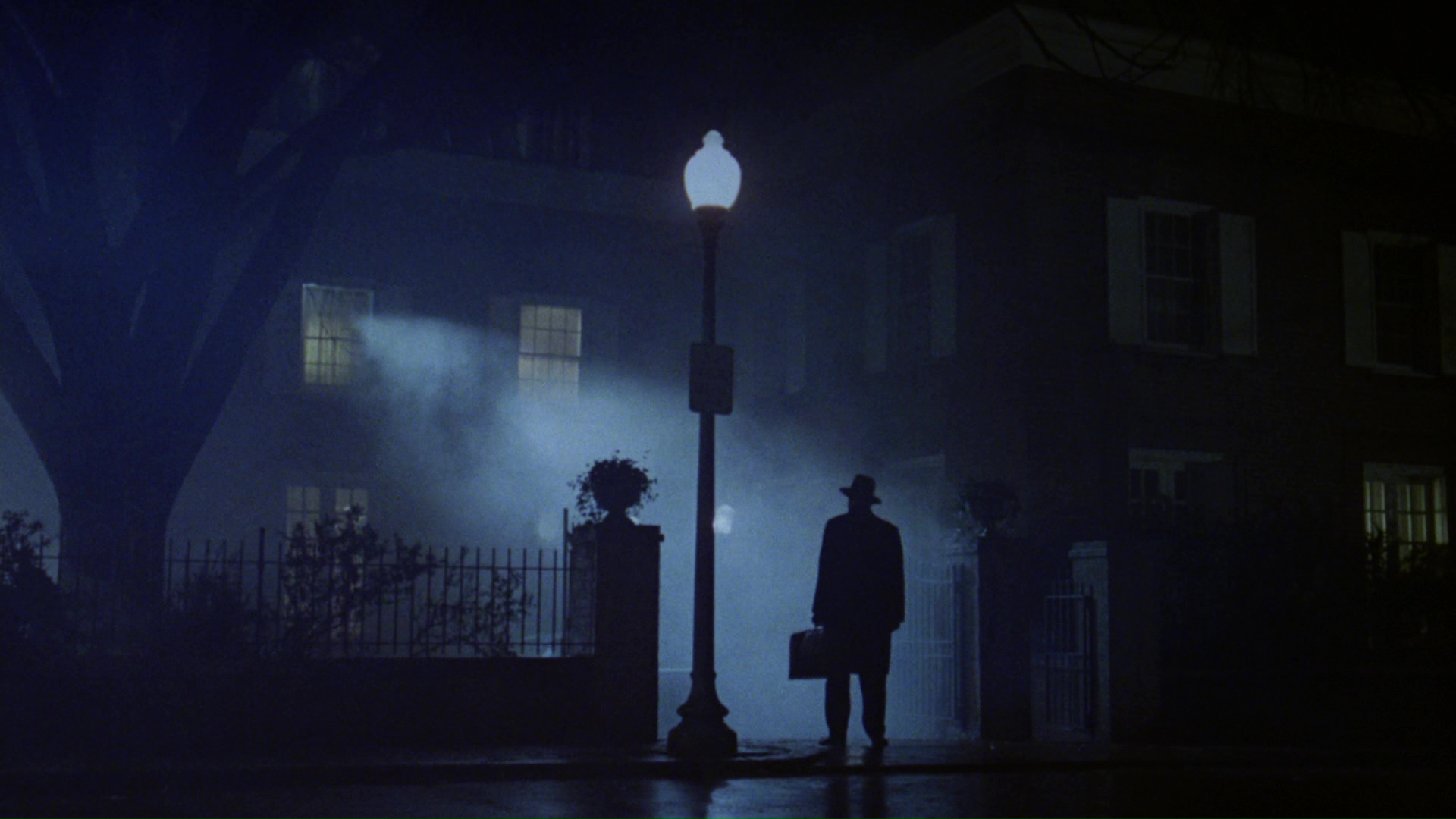
Tension. Hard or crossing diagonals feel sharp and unstable. The slanted light beam in The Exorcist (1973) gives a quiet street an edge.
Depth. A receding diagonal — a road, a floor, stairs seen from above — pulls the flat screen into three dimensions, which is why it pairs well with depth layering.
Direction. For left-to-right readers, a line rising to the right tends to feel like ascent, one falling like decline — a tendency, not a law.
How to shoot diagonal composition
Find the line, then place the camera. Moving the camera 30–45 degrees off-axis from a wall or road often turns a horizontal into a diagonal.
Keep the horizon level. The slant should come from the space, not from rolling the camera. Straight background verticals sell the difference.
Use height. A high angle over stairs or a street turns parallels into converging slants; a low camera on a slope makes the hill rise across the frame.
Choose the lens. A wide-angle lens (18–28mm on Super 35) steepens receding diagonals. A long lens (85mm and up) flattens them into graphic bands — good for hillsides and silhouettes.
Put the subject on the line, at its far end or where it crosses a rule of thirds point, so the eye lands there.
Light the slant. A hard source through a window plus haze makes light itself a diagonal; low side light repeats stair lines as shadow stripes.
Block along it. Movement with the diagonal doubles its energy.
Diagonal composition vs. Dutch angle
A Dutch angle rolls the camera around the lens axis. Everything tilts together — horizon, door frames, faces — so the world itself looks wrong, signaling disorientation or menace.
Diagonal composition keeps the camera level. Only the chosen line slants; floors, walls and horizons stay true. The frame reads as dynamic but stable.
Quick test: find a vertical in the background. If it leans, it's a Dutch angle. If it stands straight and something else slants, it's diagonal composition. Combining them multiplies the instability, so do it deliberately.
Diagonal Composition examples in film
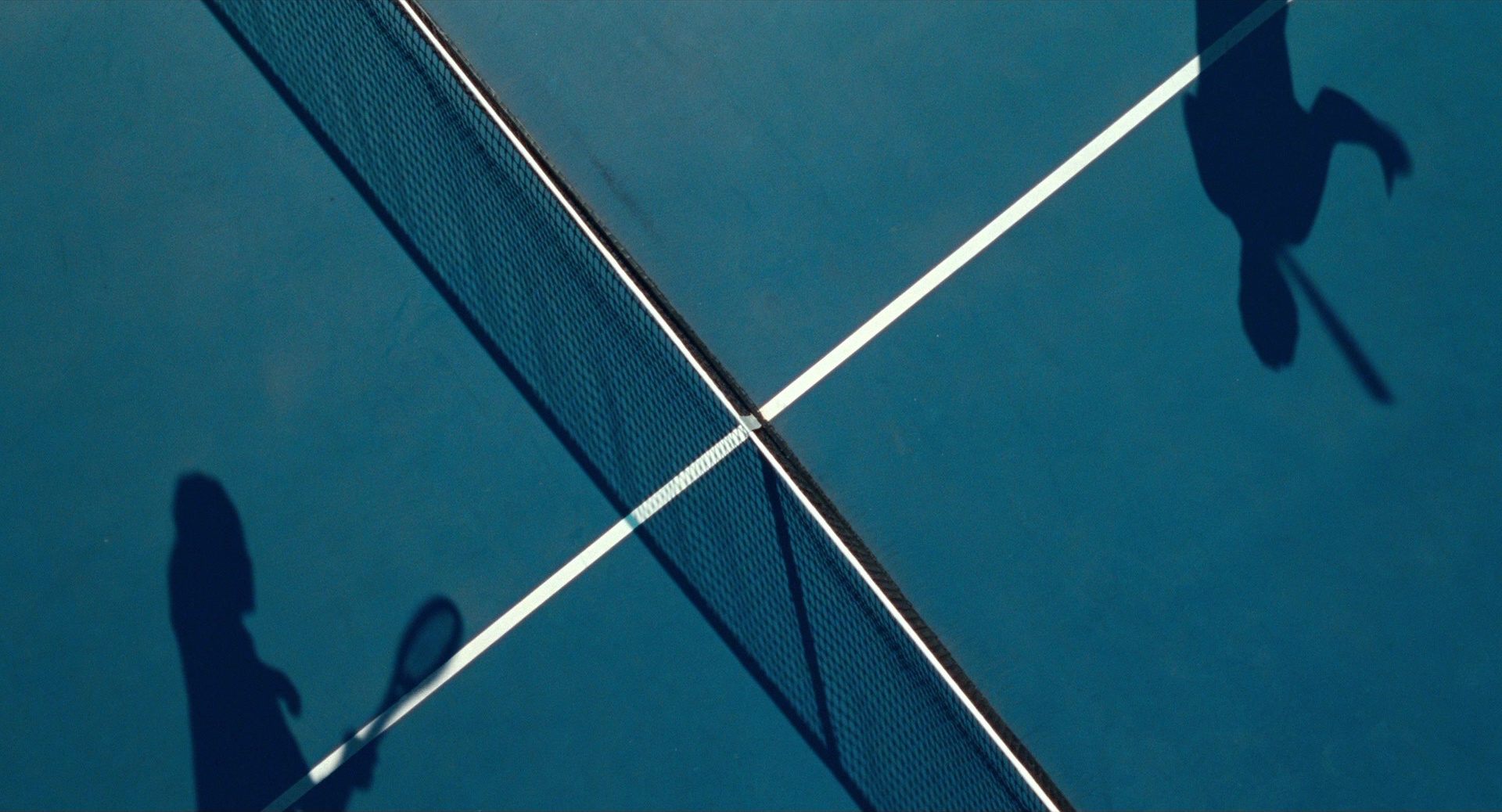
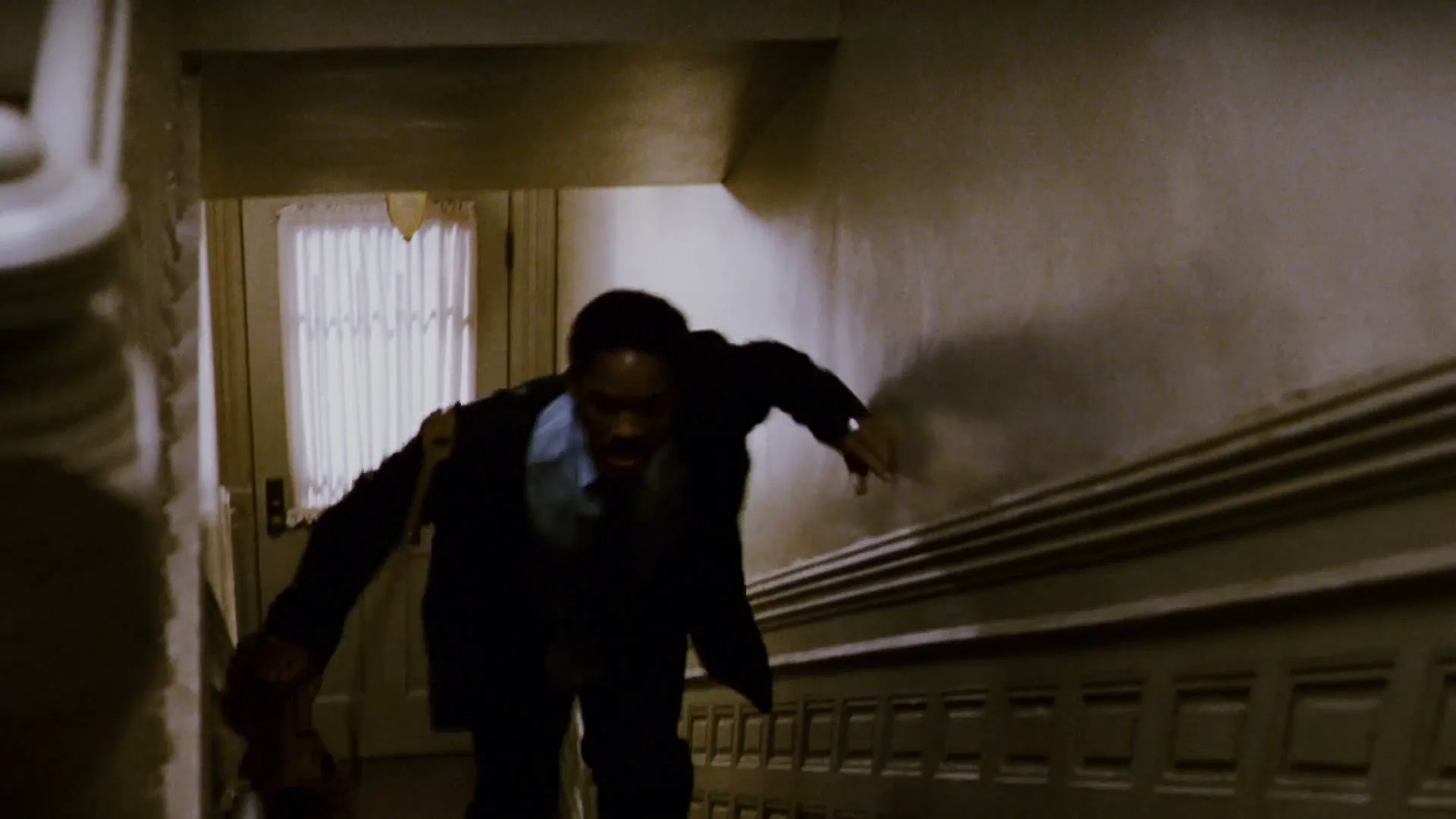
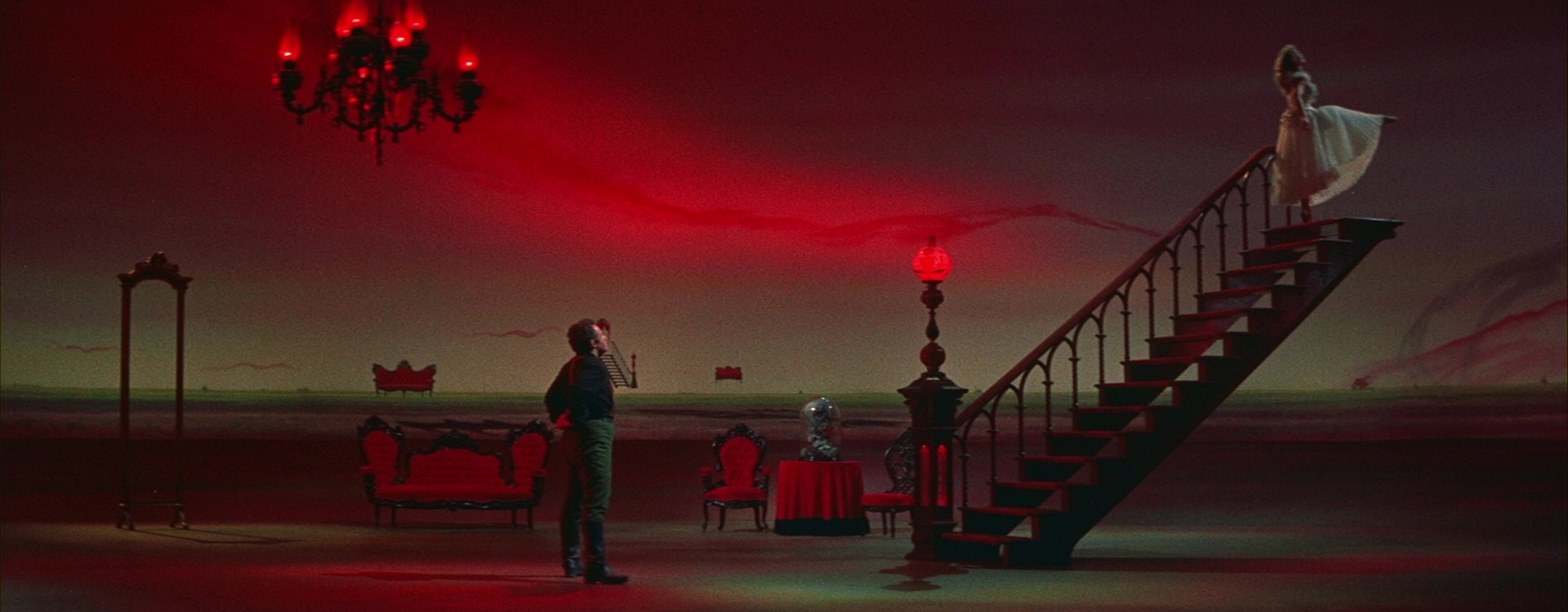
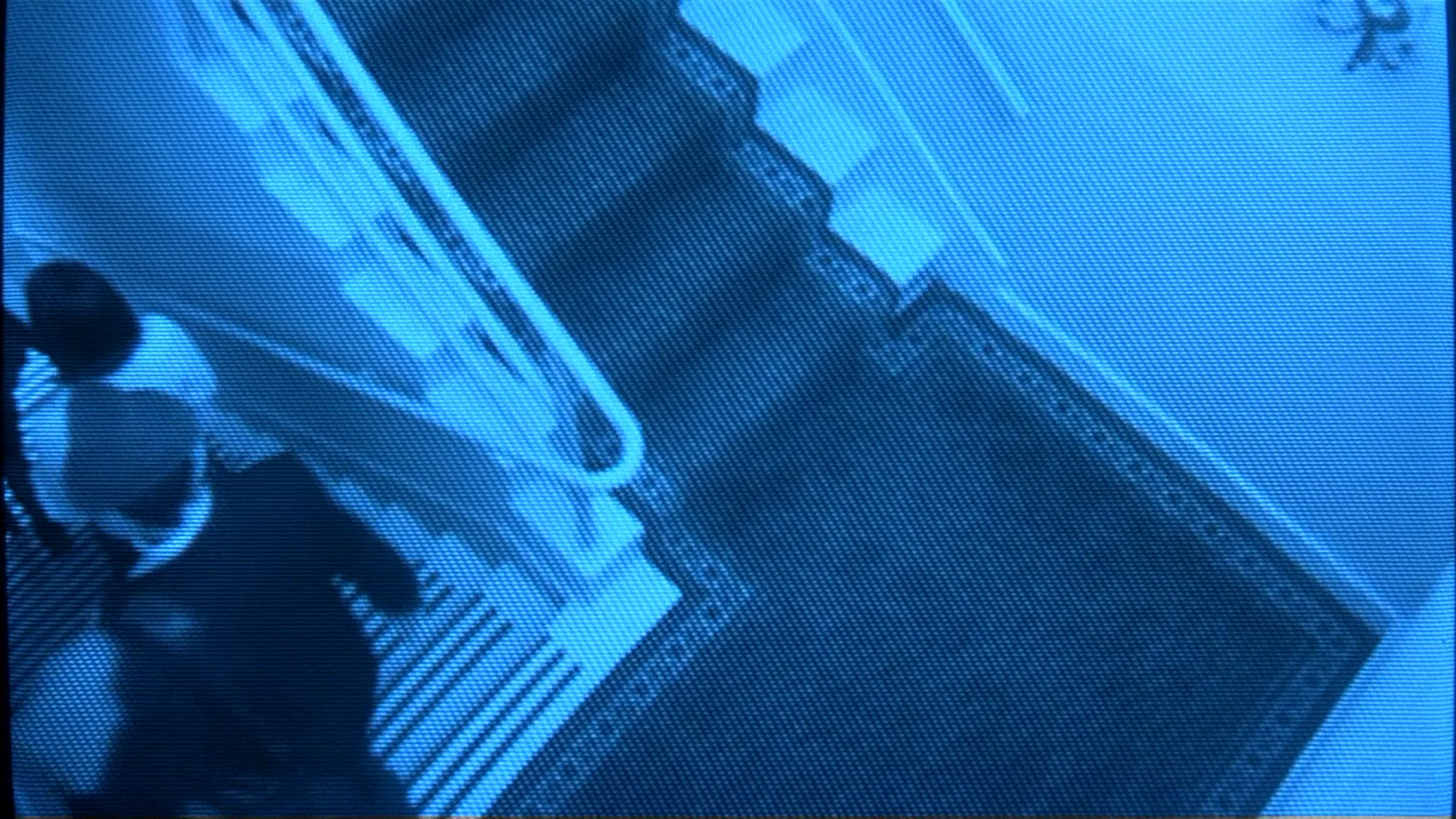
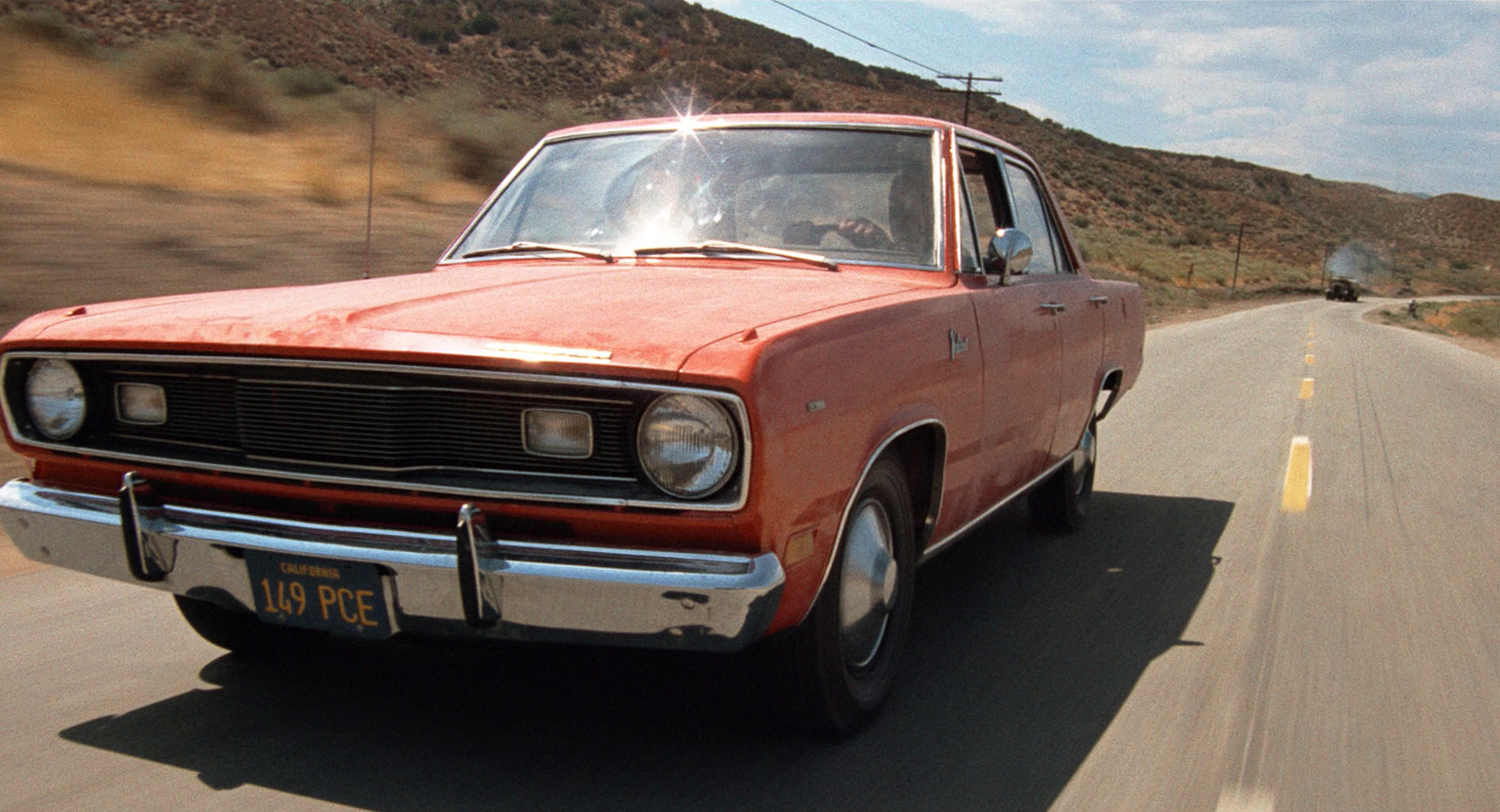
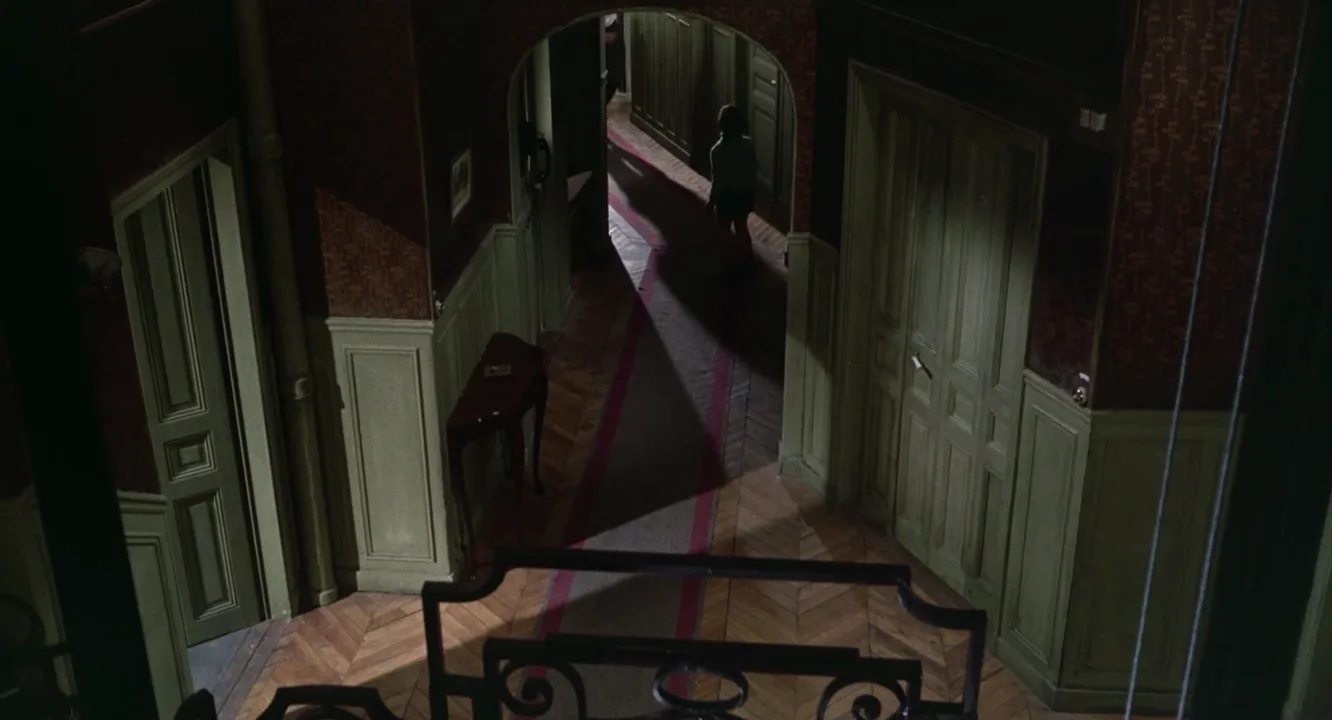
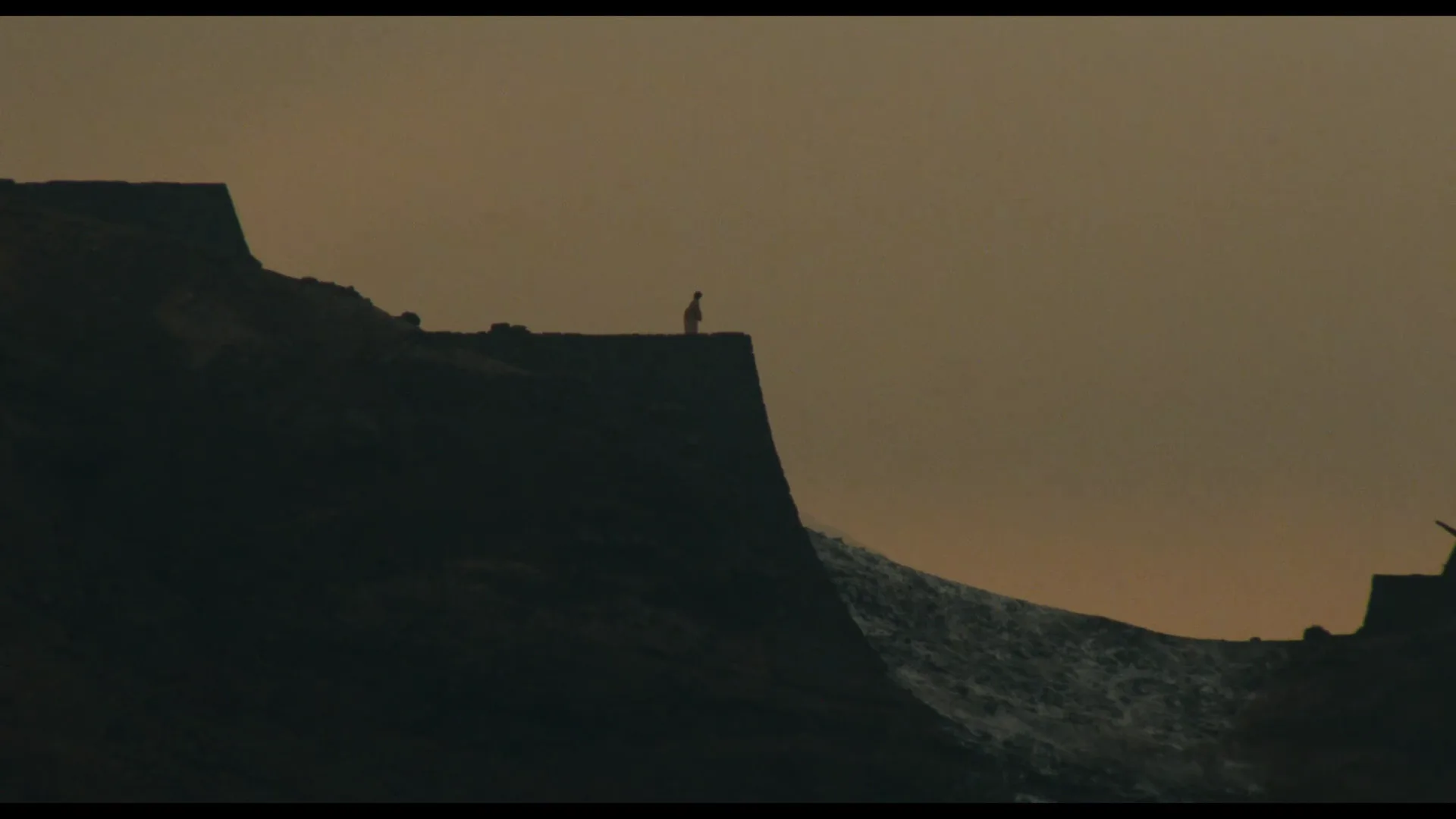
9 framesFrames where one slanted line — terrain, stairs, a road, a beam of light — carries the whole composition.
How to create a diagonal composition with AI
4 promptsImage models default to level, centered, frontal frames, so spell the diagonal out as geometry: which corner the line starts in, which it ends in, and that the horizon stays level. In FlashBoards, keep reference frames next to your generations on one board and compare takes side by side. The fourth prompt re-shoots a real film shot from a text description alone, and the original plays next to the result so you can compare.
Cinematic wide shot, camera at eye level, perfectly level horizon, vertical walls straight. A steep concrete outdoor staircase runs diagonally from the bottom-left corner to the top-right corner of the frame, its metal handrail one unbroken slanted line. A fictional courier, a wiry woman in her thirties with a shaved head, a silver eyebrow hoop and a faded red windbreaker, climbs two steps at a time near the top. Hard late-afternoon sun from the right casts the stair shadows as parallel diagonal stripes. 28mm lens, deep focus, teal and rust palette, film grain.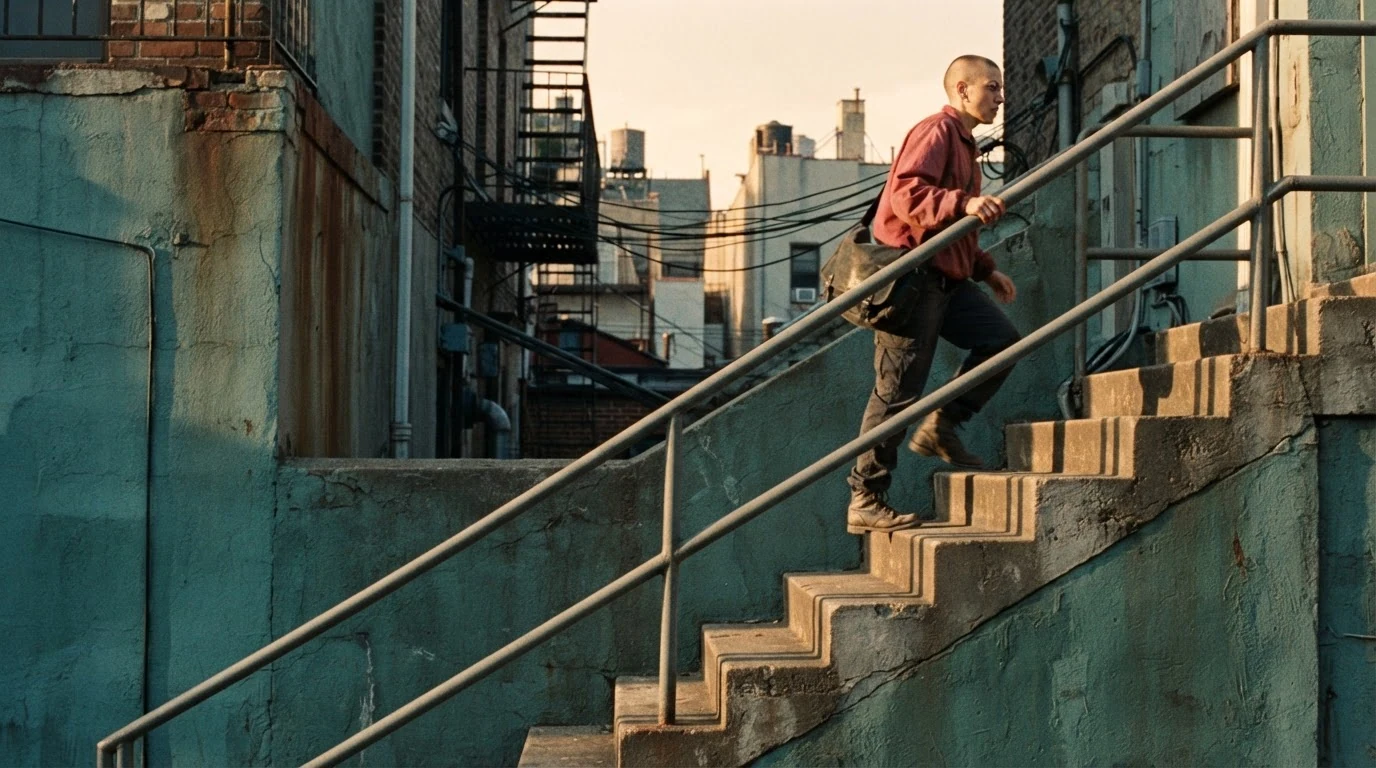
"From the bottom-left corner to the top-right corner" fixes the path; "level horizon, vertical walls straight" prevents a Dutch angle. Shadow stripes repeat the line, and the 28mm lens steepens it.
Open FlashBoardsAnamorphic widescreen film still, camera at chest height, level, 40mm lens. In a dim brick boxing gym, one hard shaft of morning light falls from a high window in the top-left corner to the floor in the bottom-right of the frame, a bright diagonal band with dust in it. A fictional boxing coach, tall and stooped, white beard trimmed square, round tortoiseshell glasses, grey cardigan, stands where the beam hits the floor holding worn red mitts. Haze, deep shadows, warm amber light against cool blue.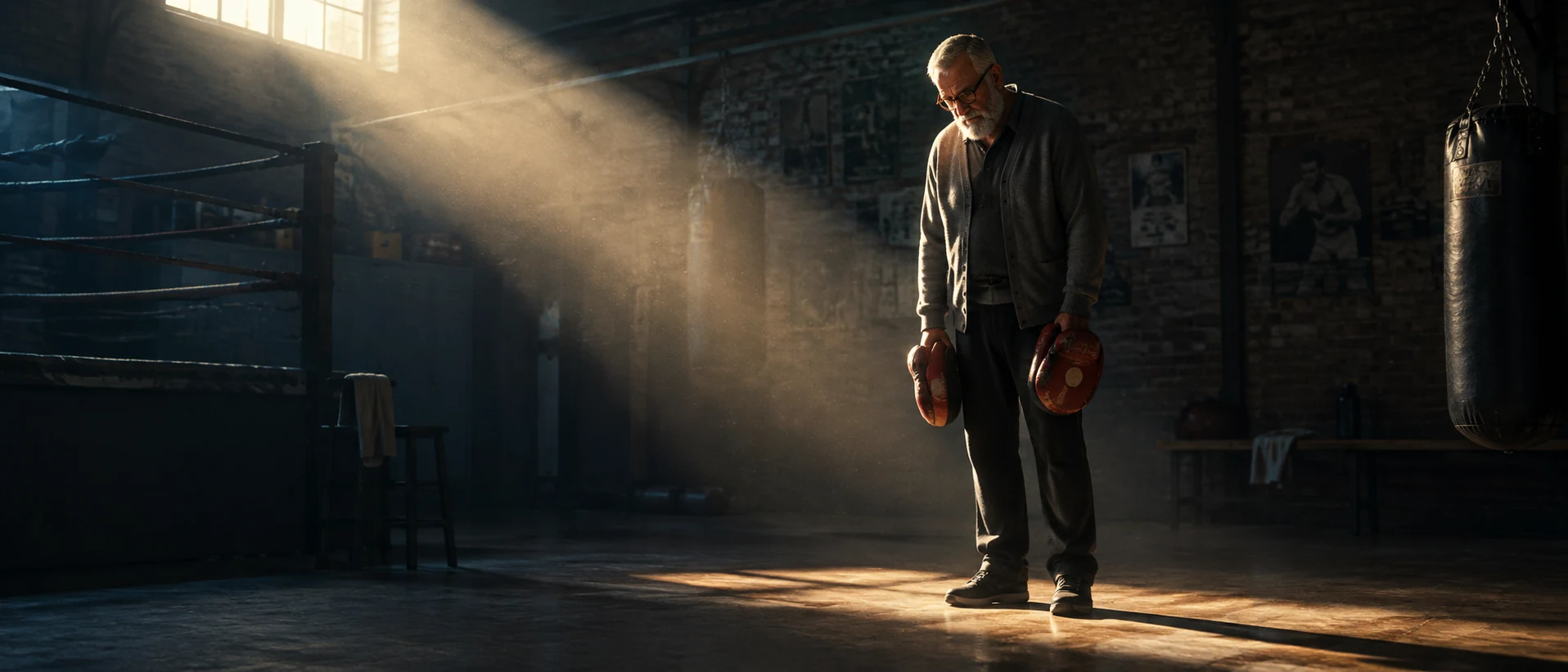
The diagonal is light, not architecture. Naming both corners sets the slant, haze makes the beam visible, and the coach gives the line a destination.
Open FlashBoardsCamera: eye level, horizon level, verticals straight; the camera glides slowly up and to the right exactly along the slant of the staircase, keeping pace with her, so the handrail stays one unbroken line from the bottom-left corner to the top-right corner for the whole shot. Action: the courier in the red windbreaker is already mid-stride, climbing two steps at a time up the diagonal, her jacket flapping. She reaches the top step, grabs the metal handrail with one hand and turns to look back down the stairs, breathing hard.Video models drift with a moving subject, so give the camera a move along the diagonal itself: the rail stays corner to corner. Action starts in the first frame.
Open FlashBoards{
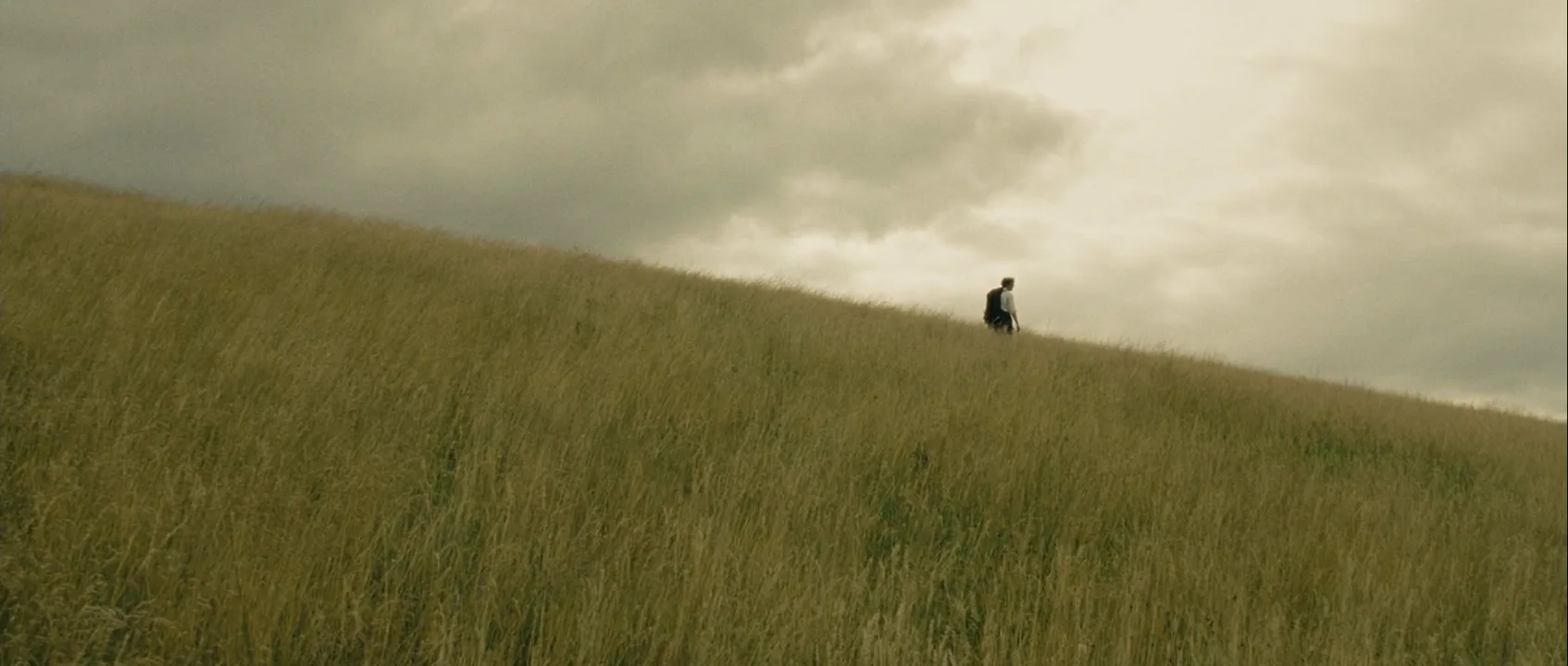
"output": "Full-screen live-action scope widescreen shot from One Day (2011) from its very first frame: one continuous locked-off shot, no cuts. Muted 2010s 35mm film look with soft fine grain, overcast late afternoon on a steep grassy hill, flat diffuse light from high behind the clouds, olive-green and straw-yellow grass under a creamy, pale gray sky that darkens toward the top left corner.",
"characters": {
"S1": {
"name": "Dexter, played by Jim Sturgess",
"look": "a small, distant figure: slim man, short dark tousled hair, loose white shirt, dark trousers, a black backpack on his back",
"voice": "never speaks in this video"
},
"S2": {
"name": "Jasmine, Dexter's young daughter",
"look": "a tiny, distant figure: girl of about seven, dark bob haircut, dark sleeveless dress over a pale top",
"voice": "never speaks in this video"
},
"S3": {
"name": "Emma, played by Anne Hathaway",
"look": "never seen in this video: only her voice is heard, from off screen",
"voice": "young woman, soft Yorkshire accent, light and a little defensive"
}
},
"shots": [
{
"shot": 1,
"camera": "locked-off tripod low in the grass at the foot of the slope, looking slightly up, level camera, long-lens feel, wide scope framing; the grassy hillside fills the lower left of the frame and its crest is one long straight slanted line running from a quarter of the way down the left edge to below the middle of the right edge, so the frame splits corner to corner into grass below the line and a big overcast sky above it; the camera never moves, pans or tilts",
"action": [
"BEGINNING: alive from the first frame, S1 and S2 stand on the slanted crest just right of the center of the frame, tiny against the sky, S1 on the left seen from behind in three-quarter view with his backpack toward camera, head turned down toward S2; S2 a step to his right, facing him; tall grass in the foreground ripples in a steady wind.",
"THEN: S2 lifts her left hand toward S1 and takes his right hand; they stand holding hands on the crest while S1 looks down at her.",
"THEN: S2 lets go and steps around behind S1, and her small figure disappears behind his body, so only one silhouette is left on the line.",
"THEN: S1 stands alone on the crest, shifting his weight, his head turning slowly from the girl hidden beside him toward the right, the way the crest slopes down.",
"END: S1 is a single small dark figure on the diagonal crest right of center, still standing; the slanted line of the hill and the wind-bent grass carry the frame while the clouds drift slowly."
],
"dialogue": [
{
"speaker": "S3",
"on_screen": false,
"when": "starting a little past the middle of the shot, after the girl has stepped behind S1, and running on to the very last frame",
"delivery": "quiet off-screen voice from another place and time, not coming from the figures on the hill, whose lips never move; a little embarrassed, casual",
"line": "<d>[English] I don't want you thinking I'm bothered or anything about last night.</d>"
}
]
}
],
"sound": {
"ambience": "steady wind hissing through tall grass, a faint skylark high and far away",
"speech": "exactly this one spoken phrase, said once, by the off-screen woman only",
"never_spoken": "no narration and no voice-over: the descriptions, performance notes and step words of this prompt are never spoken aloud; the only voice is the off-screen woman saying her one line",
"music": "a film score under the scene, always below the voices: a slow, wistful piano melody over soft sustained strings, tender and bittersweet",
"subtitles": "none"
}
}Remakes the static hillside shot from One Day (2011): the prompt carries over the corner-to-corner grass crest, the locked-off low camera, the girl vanishing behind Dexter and Emma's off-screen line under a wistful score.
The camera block pins the crest as one straight line from high left to low right on a still, level camera, so the diagonal does the work. The key beat carries over: the girl slips behind her father and one tiny figure is left on the slope.
Open FlashBoardsCommon mistakes
- The camera tilts instead of the scene. "Diagonal shot" often yields a Dutch angle; say "level horizon, verticals straight" and put the slant in an object.
- The line stops short. Name both corners it should touch.
- Symmetry creeps in. Stairs get rendered head-on; add "seen from the side, 45 degrees off-axis."
- Video drifts. Lock the camera off, or state the move along the line.
Keep the reference frames, prompts and every generated take side by side — images and video in one canvas.
FAQ
4 questionsWhat is diagonal composition in film?
A framing structure where the dominant line runs on a slant, usually from one corner toward the opposite one. Staircases, roads, hillsides, rails, bodies and beams of light can all form it. The diagonal pulls the eye across the frame and adds energy, tension or depth while the horizon stays level.
What do diagonal lines mean in film?
Diagonals read as movement and instability. A rising line can suggest effort or ascent, a falling one decline or danger, and crossing diagonals suggest conflict. Receding diagonals also create depth. The meaning depends on context: who stands on the line, which way they move and how the scene is lit.
Is diagonal composition the same as a Dutch angle?
No. A Dutch angle rolls the camera, so everything tilts, including the horizon and door frames. Diagonal composition keeps the camera level and finds a slanted line inside the scene. If a background vertical leans, the camera is tilted; if it stands straight, the diagonal comes from the composition.
How do you create diagonal lines when a location has none?
Move the camera before changing the set. Shooting a wall, table or road 30–45 degrees off-axis turns horizontals into slants, and raising or lowering the camera makes floors and ceilings converge. You can also light a diagonal with a hard source through a window and haze, or block actors along a slanted path.
Related terms
2- Dutch AngleCamera Angles
A Dutch angle tilts the camera sideways around the lens axis so the horizon and verticals run diagonally, making the world look off-balance — a classic signal of unease, madness, intoxication or danger.
- Leading LinesComposition & Framing
Leading lines are lines in the frame — roads, rails, corridors, fences, architecture, beams of light — that carry the viewer's gaze toward the subject or deeper into the space.
Further reading
Bruce Block, The Visual Story (Focal Press) — chapter on line and shape. Joseph V. Mascelli, The Five C's of Cinematography — composition chapter.