 FlashBoards Learn
- Learn
- Composition & Framing
- Directing the Viewer's Eye
Composition & Framing · Film language
Directing the Viewer's Eye
Also called: guiding the eye, visual hierarchy, eye trace
Directing the viewer's eye is the set of tools filmmakers use to decide what the audience looks at first, second and third inside a shot: contrast, focus, color, lines, movement, faces and placement. Done well, the viewer reads the frame in the intended order without noticing that anyone was steering.
- What it does
- Sets the order in which the audience reads a frame, so the story point lands in the first second.
- Use it when
- A shot is busy, a cut is fast, or one small detail has to be noticed or deliberately missed.
- Watch out
- Two strong pulls in different places (a bright window and a moving extra) split attention and blur the point.
- Try this prompt
Crowded night station, grey commuters motion-blurred, one still woman in a red coat under the only warm light pool, 85mm, cinematic still
What does directing the viewer's eye mean?
Every frame has a reading order, planned or not. The audience finds one first stop, then follows a short path through the image. Directing the eye means designing that path: a visual hierarchy with a clear number one, a supporting number two and a quiet background.
It is the combined result of the whole composition: lighting, lens, blocking and color all add or subtract attention. Editors call the result across cuts eye trace.
What pulls the viewer's eye first?
Roughly from strongest:
- Movement. One moving thing in a still frame wins.
- Faces and eyes. People look at people, then where those eyes look. A character's gaze is an arrow.
- Brightness and contrast. The eye goes to the brightest area and the hardest light-dark edge.
- Focus. A sharp subject against a soft background reads first; a rack focus moves attention without a cut.
- Color. One saturated accent in a muted frame stands out at once.
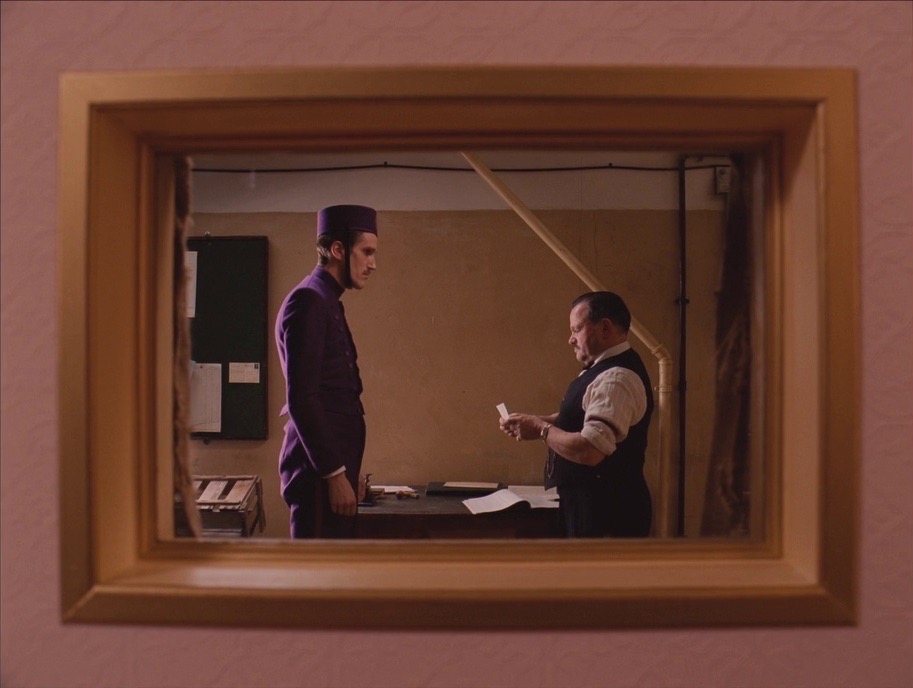
- Lines and shape. Leading lines and a frame within a frame funnel attention to a point.
- Isolation. A subject alone in empty space becomes the focal point.
Strong frames align several cues on one spot. When cues compete, the loudest wins, often not the one you meant.
Why does eye trace matter to filmmakers?
Because an audience cannot rewind a cut. A two-second shot allows one read; if it lands on the wrong thing, the beat is gone. If the subject ends shot A in the right third, placing the next subject near the same spot lets the eye land without searching.
The toolkit also works in reverse. Horror pulls attention to one part of a wide frame while something waits in a dark corner; Hereditary (2018) is known for figures half-hidden in the shadows of its rooms.
How to direct the eye on set
- Decide the hierarchy before you light. Name the first and second read for every setup.
- Light the subject above the room. Keep it one to two stops brighter than the surroundings, and flag bright windows far from it.
- Use depth of field as a spotlight. A 50–85mm lens at T2–T2.8 separates a subject from a busy background; at T8 on a wide lens everything competes.
- Place one accent color. Keep wardrobe and set in a narrow range; give the subject the one saturated note.
- Block with gaze and movement. Have extras look at the subject. Stop a crowd, move one person, and that person owns the shot.
- Check the frame. Squint at the monitor: whatever still stands out is your real first read.
Directing the eye vs. visual balance
Visual balance is how weight is distributed across the frame, stable or tipped. Directing the eye is about order: what is read first and where attention travels next. A symmetrical frame can have no clear first read, and a lopsided one a sharp one. Set the hierarchy first, then tune balance to support it.
Directing the Viewer's Eye examples in film
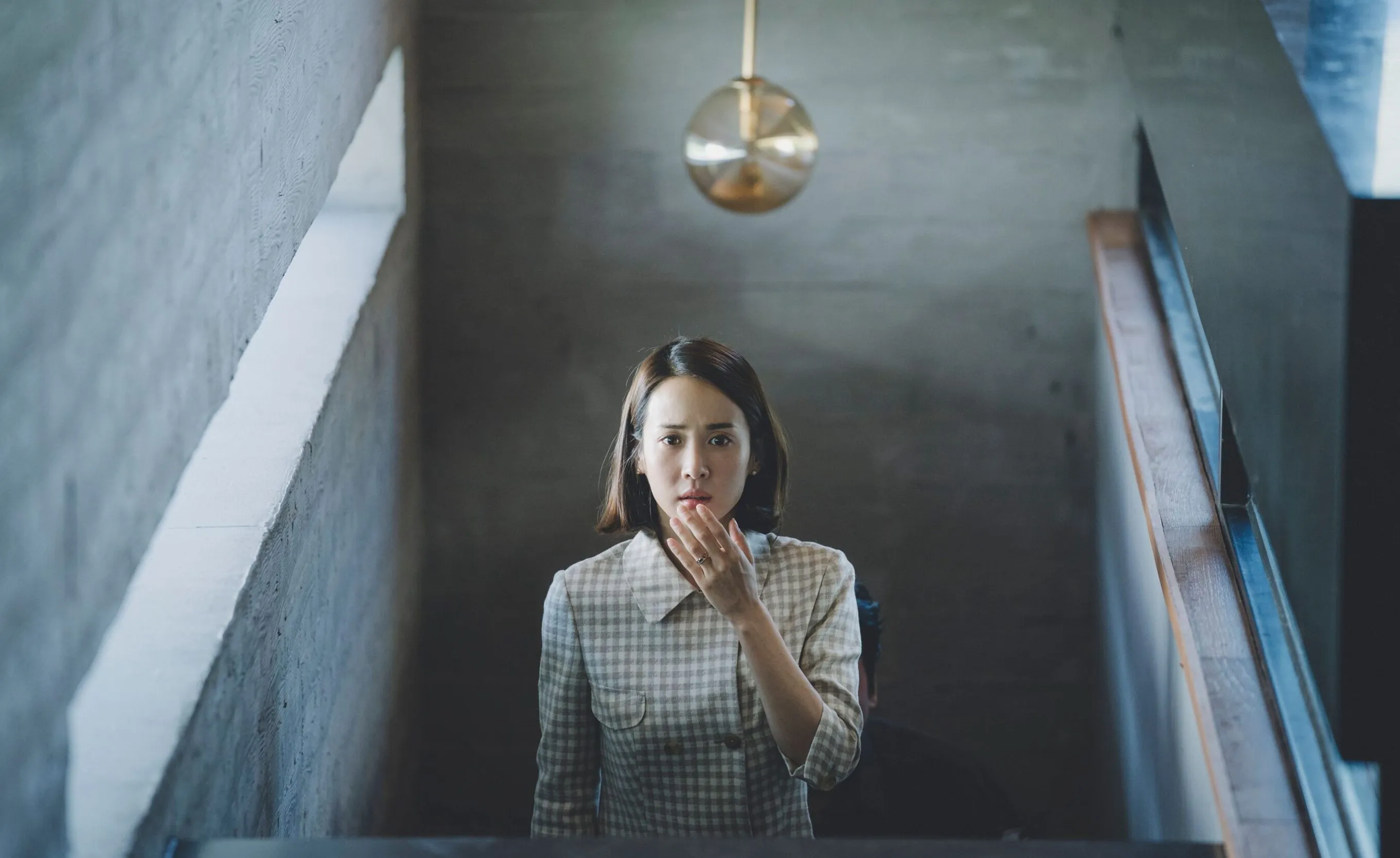
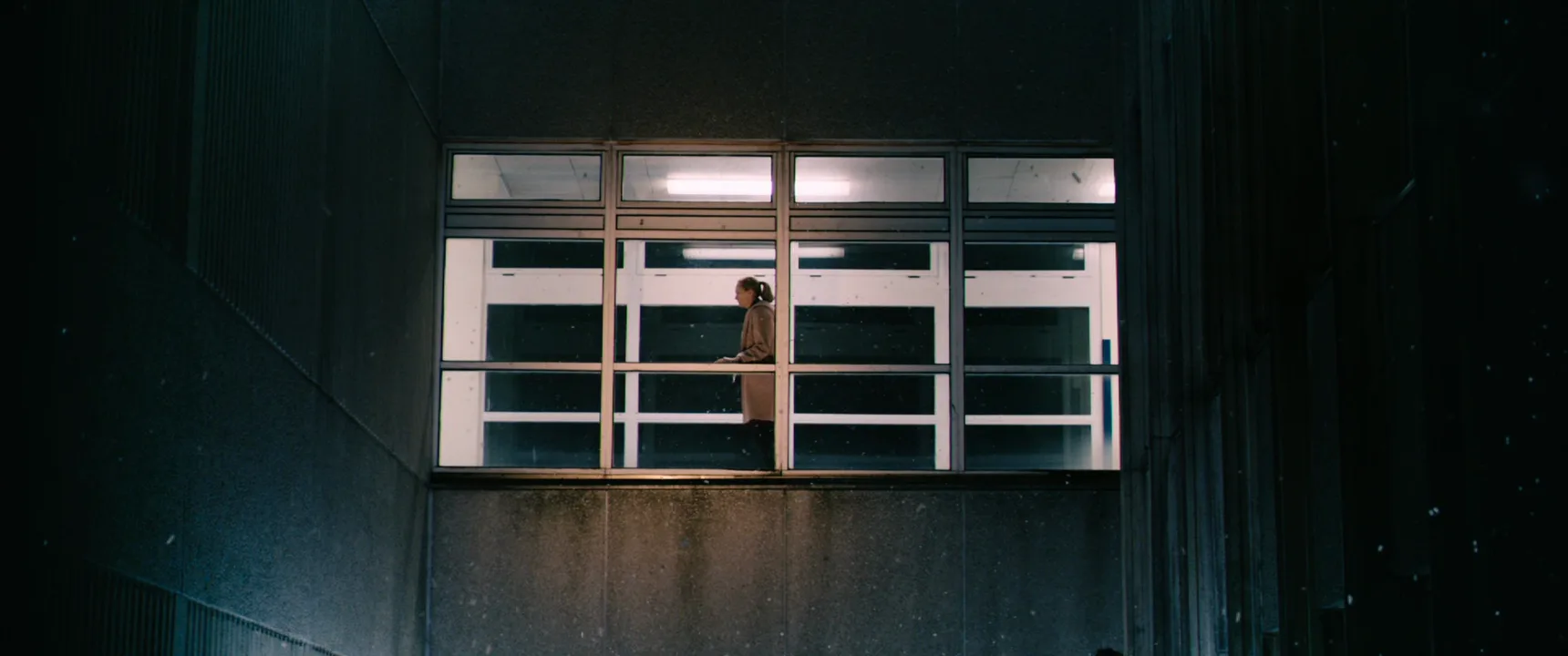
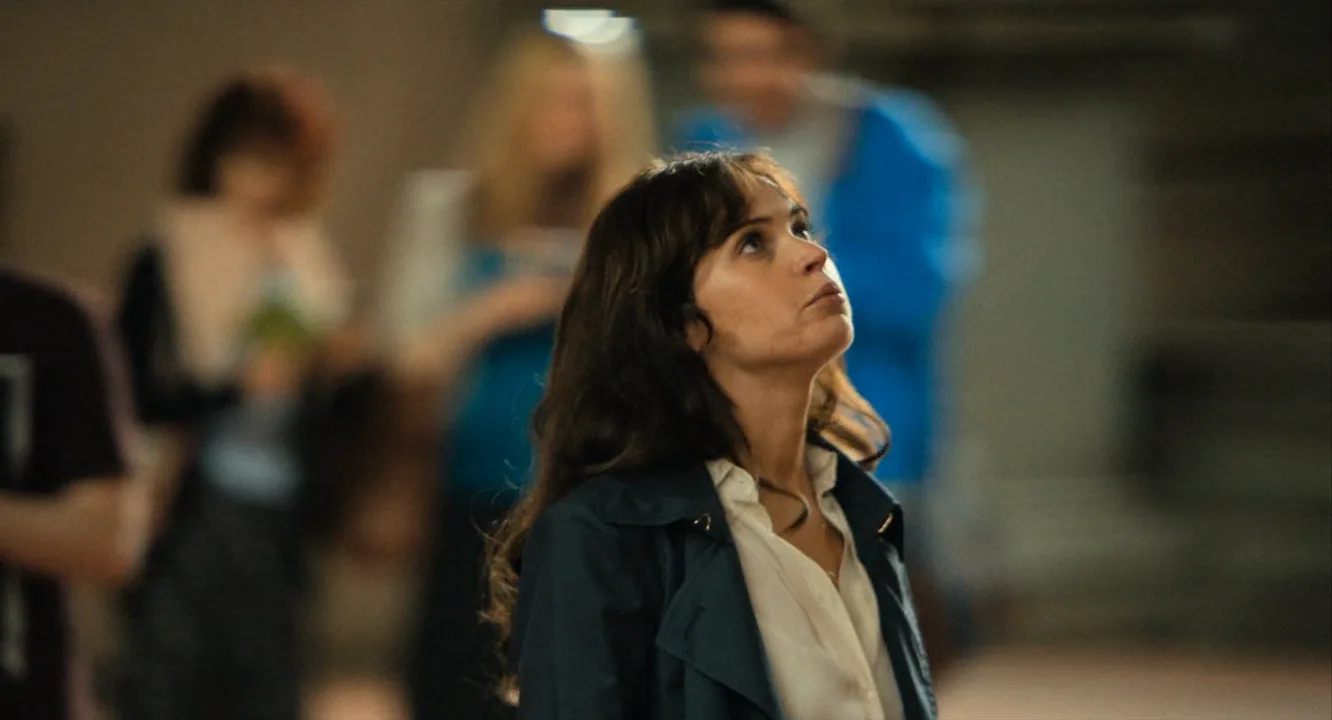
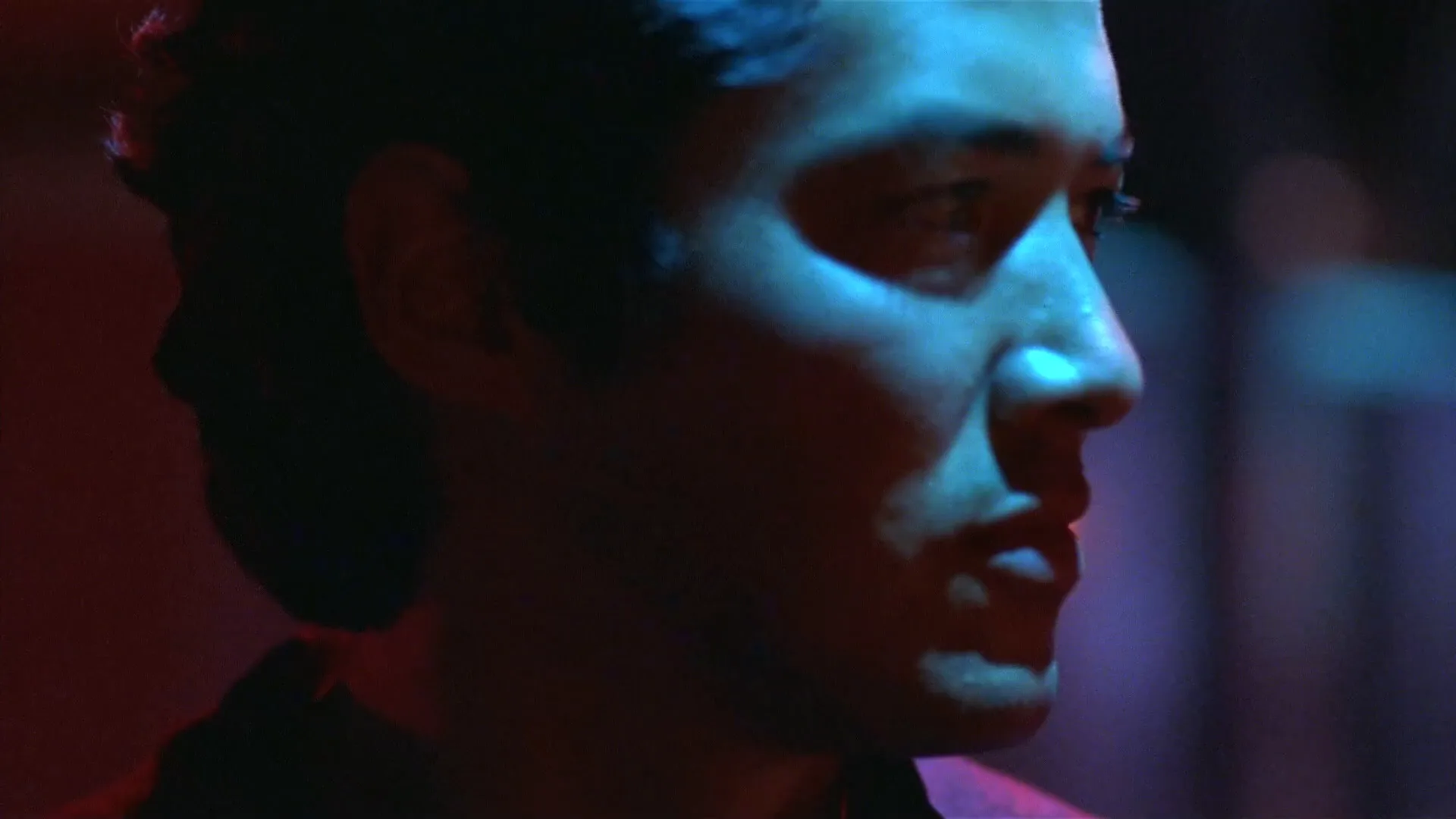
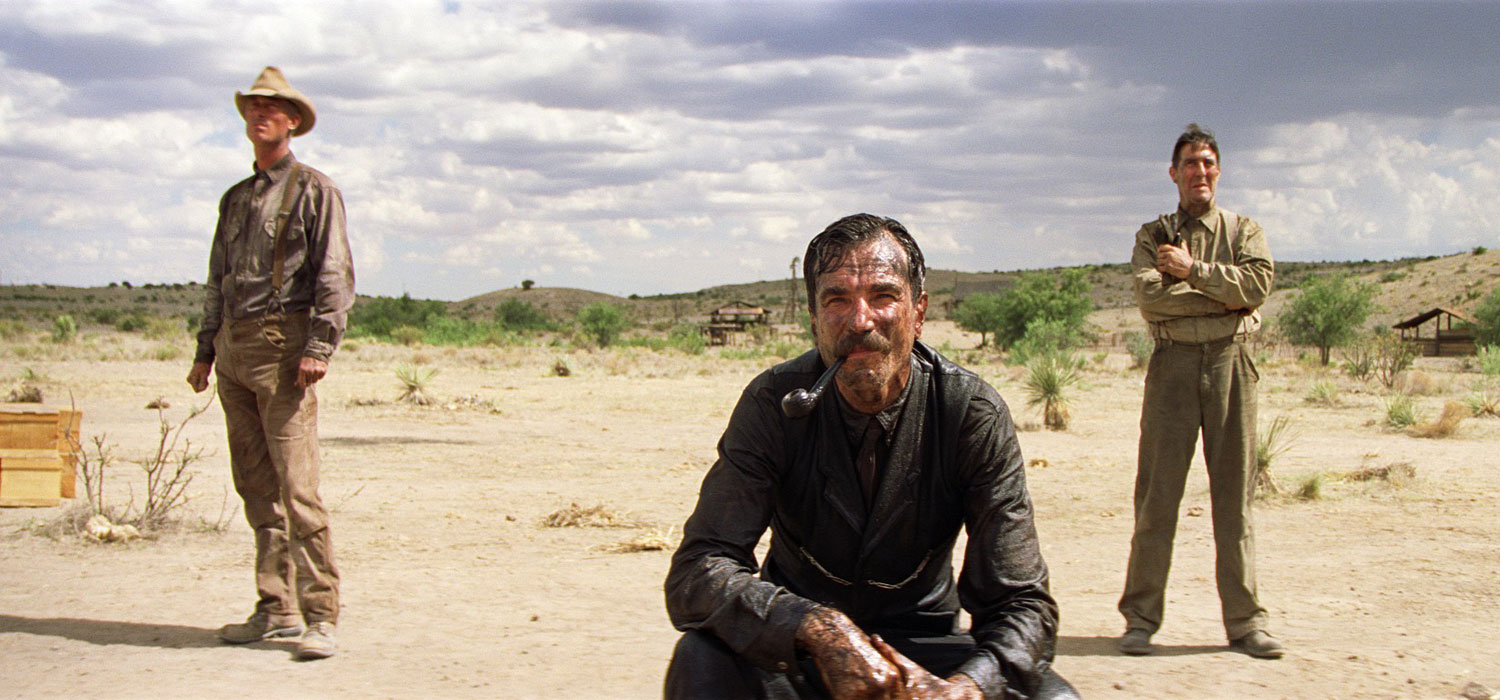
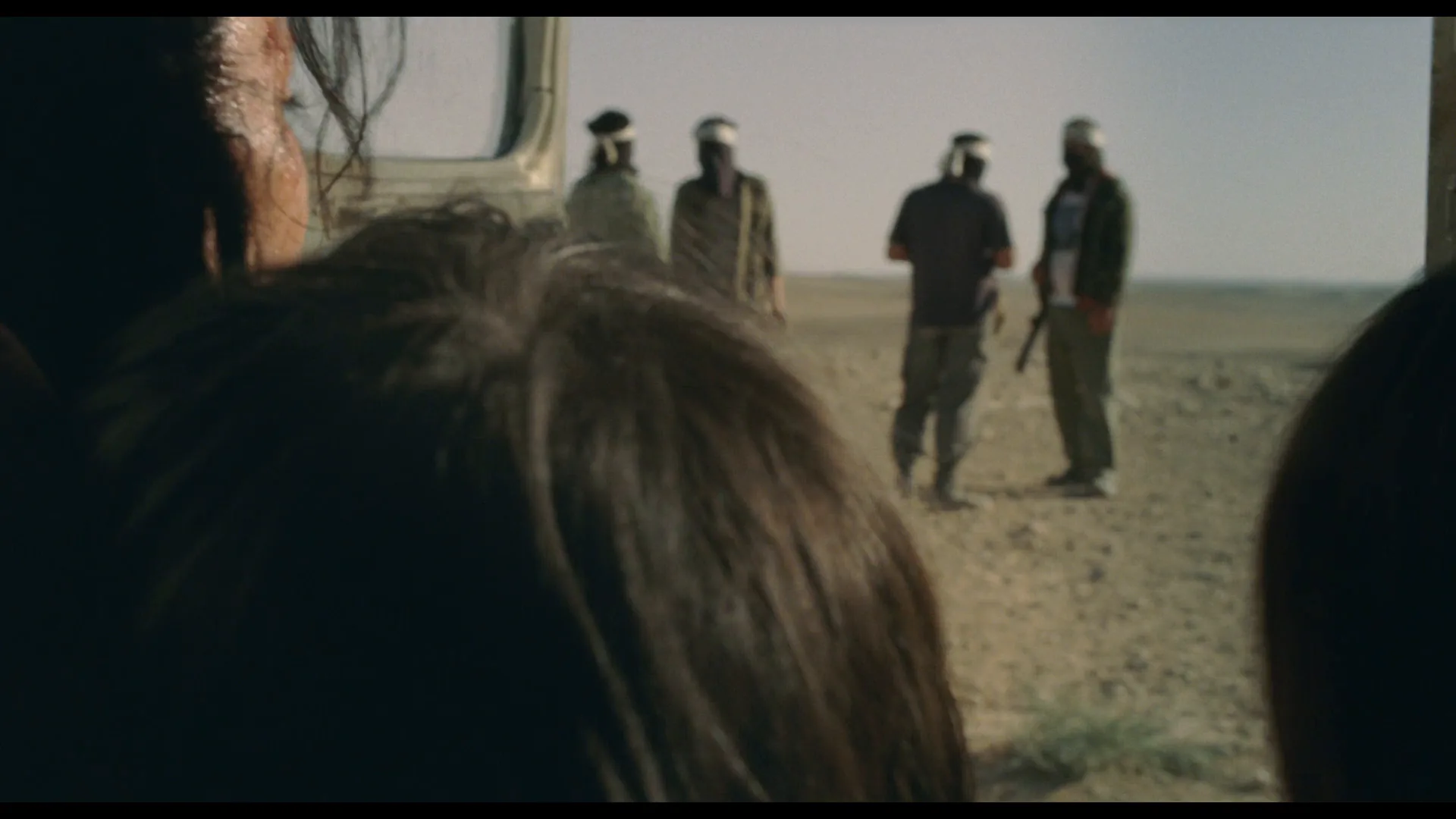
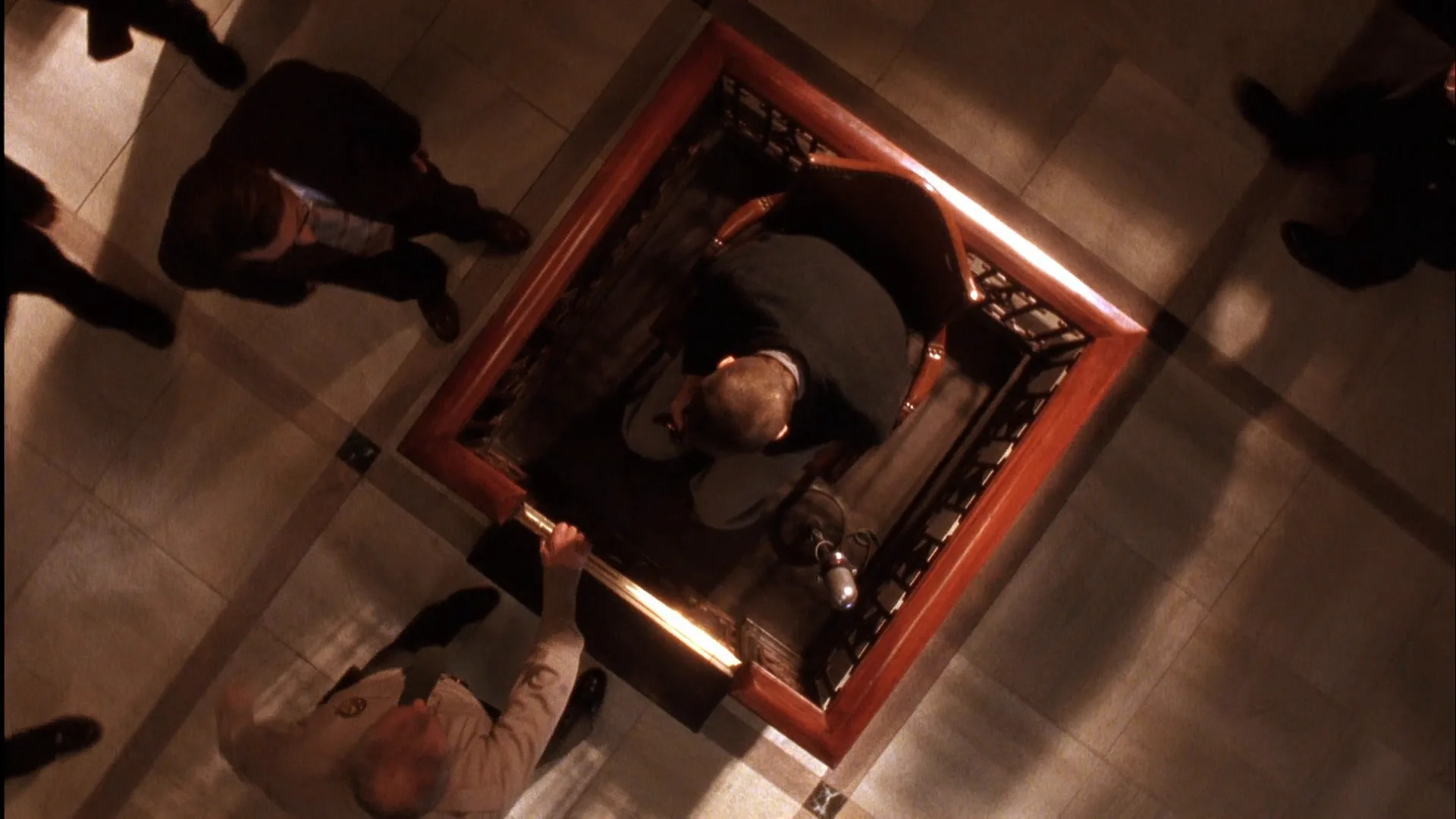
9 framesIn each frame, notice where your eye lands first, then trace which cue put it there.
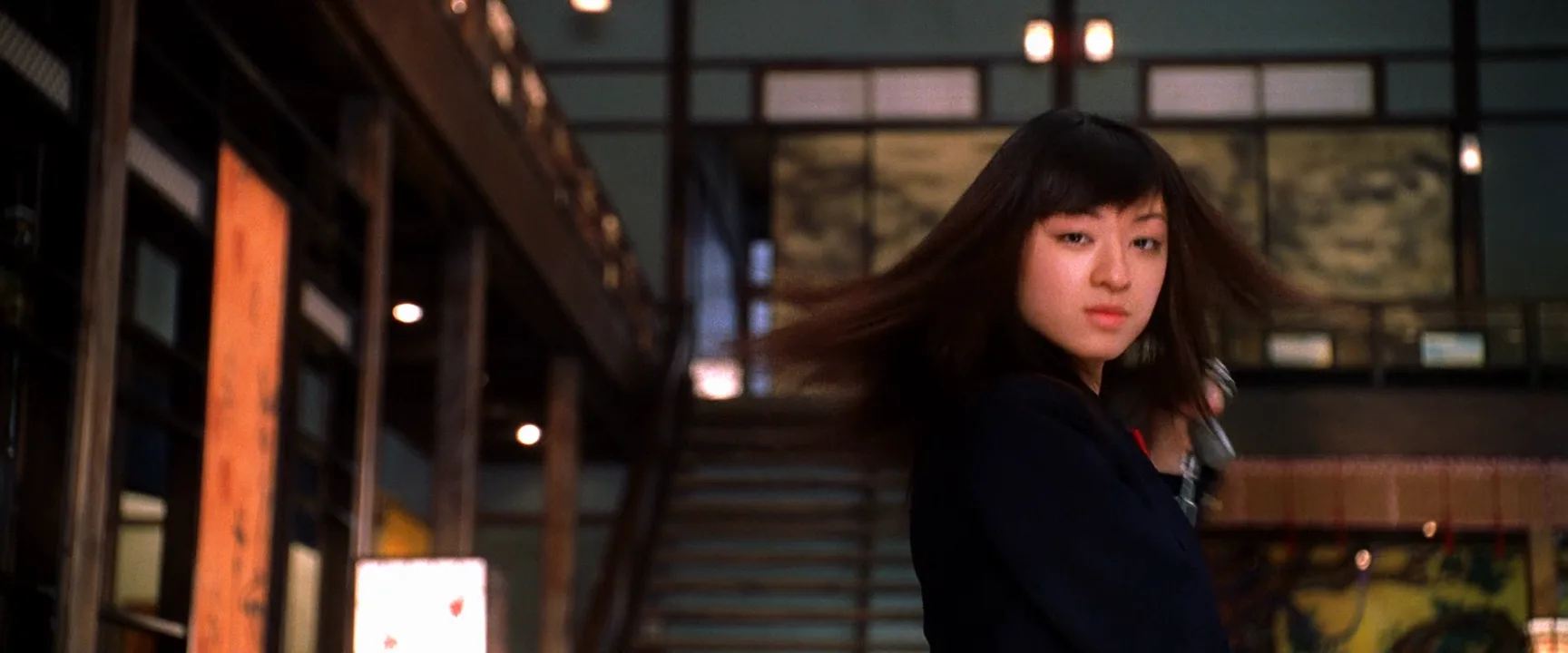
How to create a directing the viewer's eye with AI
4 promptsImage models spread light and detail evenly, so name the physical causes of attention: where the light falls, what is sharp, which one color is saturated, what moves. In FlashBoards, keep the film frames and your takes on one board and compare them side by side. The fourth prompt re-shoots a real film shot from a text description alone, and the original plays next to the result so you can compare.
Wide cinematic shot of a crowded train station hall at night, dozens of commuters in charcoal and grey coats walking past, motion-blurred. On the right third one woman stands completely still: in her fifties, silver bob haircut, round tortoiseshell glasses, saturated red wool coat. She stands in the only pool of warm overhead light; the rest of the hall is two stops darker and cool blue-grey. 85mm lens, only the woman in sharp focus, eye-level camera, film grain.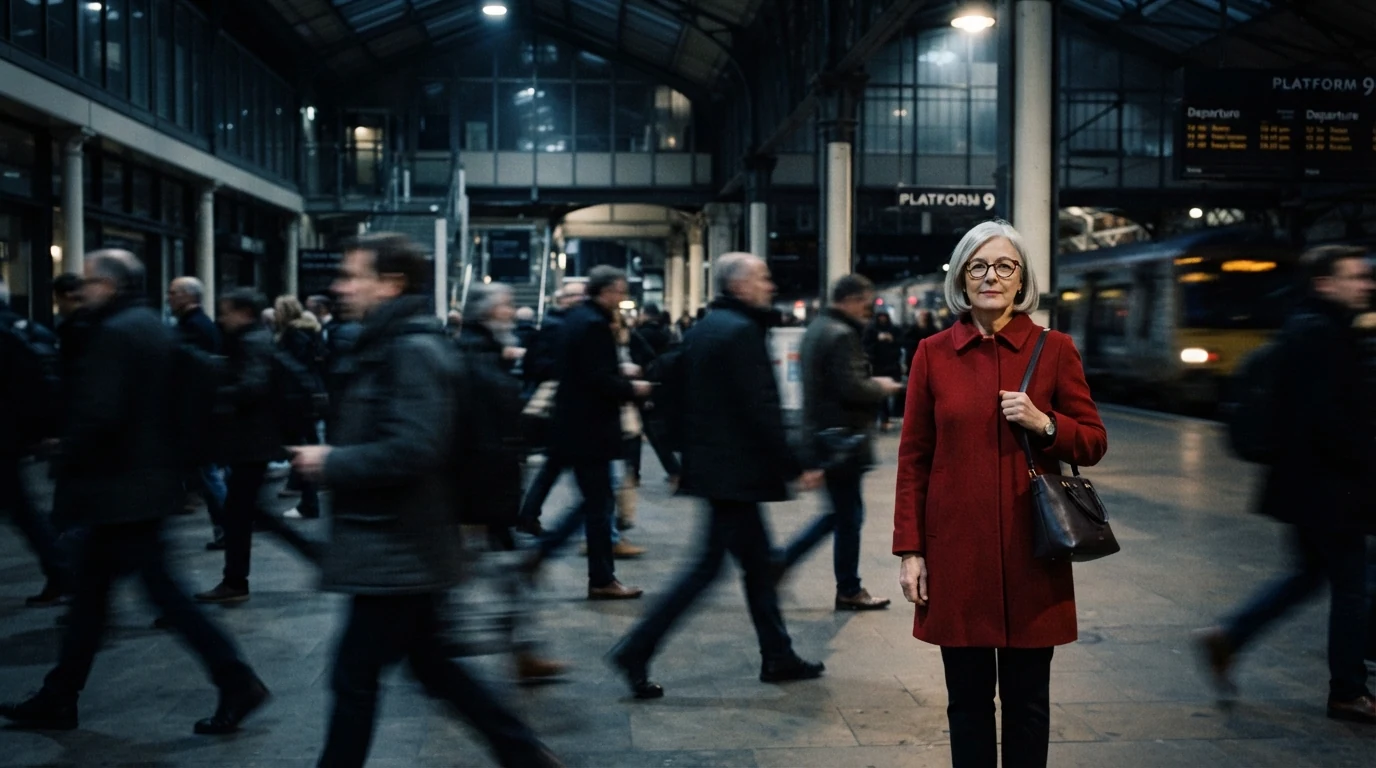
Four cues point at one spot: stillness against blur, the single red coat, the only warm light and the only sharp focus. "Two stops darker" stops the model lighting the crowd evenly.
Open FlashBoardsSymmetrical one-point perspective down a long, dim library aisle, tall dark wooden bookcases converging toward a doorway at the far end. In the doorway, backlit by bright white daylight, stands a ten-year-old boy with a shaved head in a yellow raincoat, the only saturated color in the image. Everything else muted brown and grey, 28mm lens, deep focus, camera at chest height.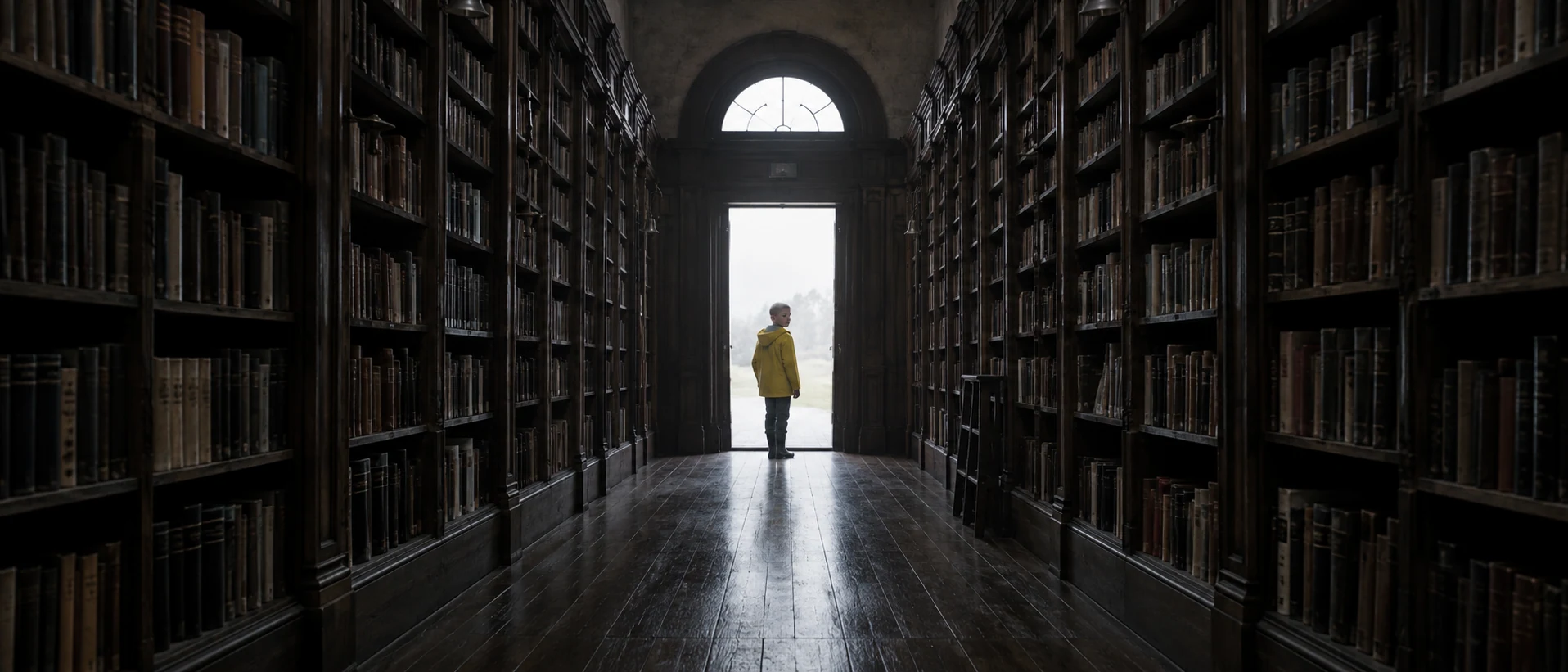
A second take built on geometry instead of focus: converging bookcases act as leading lines, the doorway frames the boy, and the brightest area and the only accent color sit at the vanishing point.
Open FlashBoardsCamera: locked-off on a tripod at eye level, the framing stays the same for the whole shot. Action: from the first frame the grey-coated commuters are already streaming past in both directions, blurred, while the woman in the red coat stands perfectly still under the warm light. The crowd keeps flowing around her and she slowly lifts her head. At the end a gap opens in the crowd and she looks straight into the lens.With the camera fixed, attention follows contrast of motion: everyone moves except her, so her one small action becomes the strongest event. The crowd moves from frame one, so the shot is alive immediately.
Open FlashBoards{
"output": "Full-screen live-action single continuous shot from its very first frame, no cuts, from A Long Way Down (2014). 2010s digital cinema with fine grain, winter night in a narrow concrete light well between tall dark buildings; almost the whole frame is near-black concrete, cold blue-teal on the walls, and the only bright area is one lit glass corridor in the middle of the frame, white fluorescent interior, a warm amber spill on the concrete just below it; tiny snowflakes drift slowly through the dark air.",
"characters": {
"S1": {
"name": "Maureen, played by Toni Collette",
"look": "woman in her forties, small in the frame and seen only in profile, fair hair pulled back in a ponytail, long oatmeal-beige wool coat reaching below the knee, dark trousers",
"voice": "silence: she never speaks"
}
},
"shots": [
{
"shot": 1,
"camera": "locked-off on a tripod, static for the whole shot, slightly low angle from the dark courtyard, long lens, flat frontal framing; the lit corridor is a wide band of four glass bays with pale metal frames and a row of transom panes above, centred in the frame and taking about a third of its width; dark concrete walls fill the left and right edges, a plain concrete wall fills the lower third under the glass; through the near glass the far glass wall of the corridor and its white frames are visible; the framing, exposure and focus never change",
"action": [
"BEGINNING: alive from the first frame, S1 is already inside the lit corridor in the third bay from the left, walking slowly from screen right toward screen left, seen in profile facing screen left, arms loose at her sides.",
"THEN: she keeps the same slow pace and passes behind the vertical metal frame between the third and second bays, disappearing behind it for a moment.",
"THEN: she comes out into the second bay from the left and stops just left of that frame, still in profile facing screen left.",
"THEN: she lifts the hand nearest the camera and lays it flat on the horizontal rail in front of her; her head tips slightly down, her gaze going down and out through the glass toward screen left.",
"END: she stands completely still with the hand resting on the rail and the head slightly bowed, no further steps; only the snow keeps drifting through the dark foreground, and she is the only thing that moved in the whole frame."
],
"voice": "silence: nobody speaks in this shot, no voice at all",
"dialogue": []
}
],
"sound": {
"ambience": "still winter night in a concrete courtyard, the faint electric hum of fluorescent tubes, a distant city murmur heard from far away",
"speech": "no words in this video; the only human sounds are breaths and movement",
"never_spoken": "no narration and no voice-over: the descriptions, performance notes and step words of this prompt are never spoken aloud",
"music": "a film score under the scene, always below the voices: a slow, sparse solo piano over a soft sustained low string, melancholy and hushed",
"subtitles": "none"
}
}Remakes the night shot from A Long Way Down (2014), dir. Pascal Chaumeil, keeping the locked low angle, the dark wall, the single lit glass corridor and her slow right-to-left walk that ends with a hand on the rail.
The camera line locks the frame and keeps almost all of it dark concrete, so the one lit glass corridor is the brightest area; the only movement is her slow walk and stop, so the eye finds her without any close-up.
Open FlashBoardsCommon mistakes
- Everything lit and sharp. Models default to even light and deep focus. State the ratio ("the rest two stops darker") and "only the subject in sharp focus".
- Too many accents. Ask for a red coat and red signs may appear. Describe the rest of the palette: "everyone else in charcoal and grey".
- Video: the crowd wins. Fast, sharp extras pull attention from the lead. Keep background motion blurred and give the subject one clear action.
Keep the reference frames, prompts and every generated take side by side — images and video in one canvas.
FAQ
4 questionsWhat does directing the viewer's eye mean in film?
It means designing the order in which the audience reads a frame: what they notice first, second, and what they ignore. Filmmakers do it with light, focus, color, lines, faces, movement and placement, so the story point lands in the first second even in a busy frame or a fast cut.
How do filmmakers guide the viewer's eye?
By stacking cues on the subject: the brightest or highest-contrast area, the only sharp element, the one saturated color, the one thing moving or standing still, the point where lines converge. Actors' eyelines add direction, because viewers follow a character's gaze. The more cues agree, the faster the audience finds the subject.
What is eye trace in film editing?
Eye trace is the path attention follows within a shot and across a cut. If the subject ends one shot in the left third, placing the next subject near the same spot lets the eye land without searching, keeping fast cutting smooth. Jumping the focal point across the frame creates a deliberate jolt.
Does the eye always go to the brightest part of the frame?
Not always. Brightness is a strong pull, but movement and faces usually beat it: a moving figure in a dim corner or a face in shadow can still win the first read. That is why filmmakers flag or darken bright spots far from the actor instead of relying on light alone.
Related terms
6- Leading LinesComposition & Framing
Leading lines are lines in the frame — roads, rails, corridors, fences, architecture, beams of light — that carry the viewer's gaze toward the subject or deeper into the space.
- Visual BalanceComposition & Framing
Visual balance is how visual weight — size, brightness, color, faces, movement — is distributed across the frame; it can be symmetrical or asymmetrical and makes a shot feel stable, or deliberately tipped and uneasy.
- Negative SpaceComposition & Framing
Negative space is the empty area around a subject — sky, wall, darkness, water — deliberately left large so the subject feels isolated, small, lonely or expectant, and the eye settles on it.
- Rack FocusLenses, Focus & Exposure
A rack focus shifts focus during a shot from one subject to another at a different distance, moving the viewer's attention — and often revealing new information — without a cut.
- Film CompositionComposition & Framing
Composition is the arrangement of everything inside the frame — subjects, lines, shapes, light, color and empty space — to direct attention and express the meaning of a shot.
- Frame Within a FrameComposition & Framing
Frame within a frame uses a doorway, window, mirror, arch, corridor or shadow inside the shot as a second border around the subject, isolating it, adding depth or suggesting entrapment.
Further reading
Bruce Block, The Visual Story (Focal Press). Walter Murch, In the Blink of an Eye (Silman-James Press).