 FlashBoards Learn
- Learn
- Composition & Framing
- Mirror Shot
Composition & Framing · Film language
Mirror Shot
Also called: mirror reflection shot, reflection shot
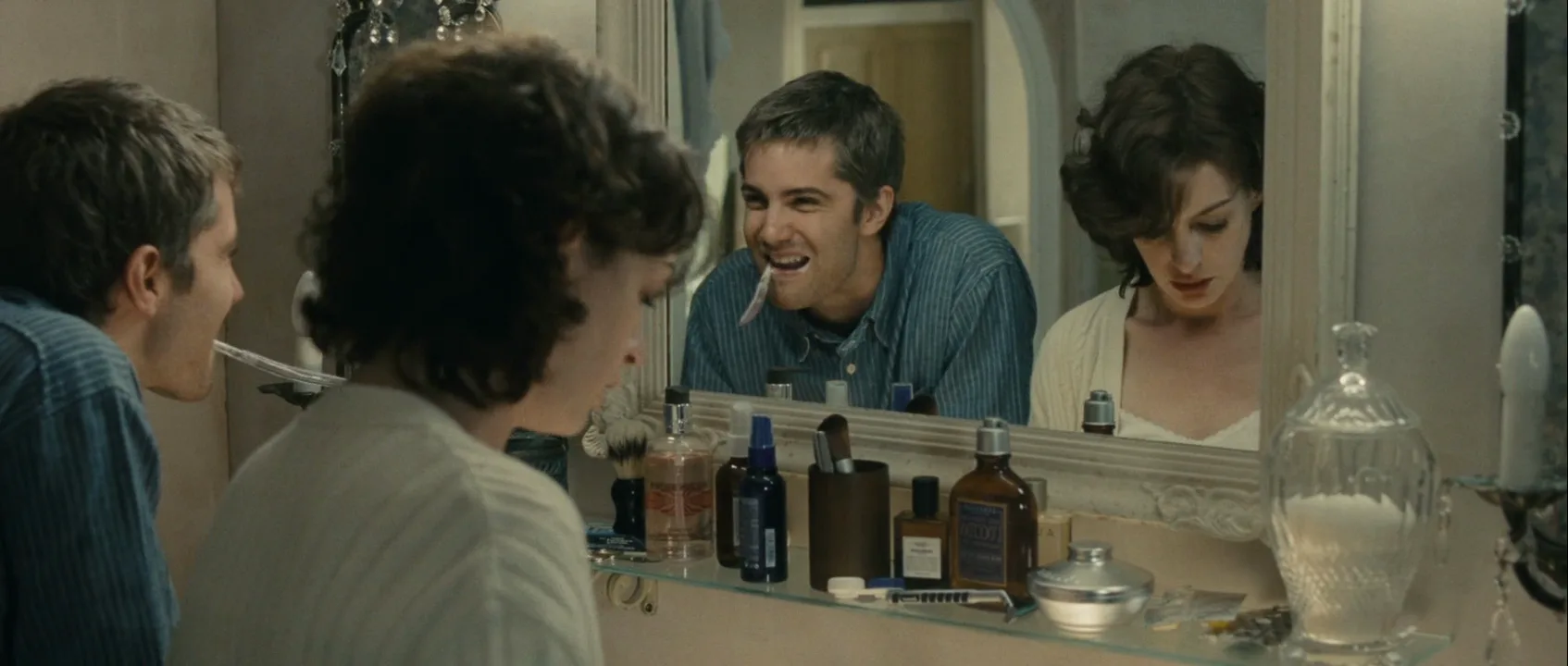
A mirror shot builds the frame around a mirror so the audience sees a character's reflection, often next to the character, while the camera stays out of the glass. It turns one person into two images, which is why filmmakers use it for self-examination, a divided self or a hidden second viewpoint.
- What it does
- Doubles a character inside one frame, so the reflection can show what the direct view hides.
- Use it when
- A character is judging, rehearsing or splitting from themselves, or the glass can reveal off-screen space.
- Watch out
- Camera, crew and lights are one wrong angle away from appearing in the glass; find the angle before you light.
- Try this prompt
Mirror shot from behind her shoulder at a 35-degree angle to a bathroom mirror, her face visible only in the reflection, reflection sharp, 40mm
What is a mirror shot?
A mirror shot is a composition where a mirror carries part of the story: the character's reflection, the space behind the camera, or a person the direct view cannot see.
The test is whether information lives in the glass. In Taxi Driver (1976), Travis Bickle rehearses a confrontation with his reflection; in The Shining (1980), a word scrawled on a door becomes legible only in a mirror. That load makes the mirror one of the most charged tools in film composition.
Why do filmmakers use mirror shots?
- The divided self. A person beside their reflection reads as two sides of one character; Black Swan (2010) repeats the image until mirrors become a motif.
- Self-examination. Shaving, makeup or a hard stare give a character a reason to judge themselves.
- A second angle without a cut. One setup shows an actor's back and face.
- Hidden viewpoints. The glass reveals someone behind the character, a horror staple.
- Fractured identity. Mirror mazes multiply a figure, as in the shootout of The Lady from Shanghai (1947).
Mirrors read as symbolism almost by default, so decide what the reflection says first.
How to shoot a mirror shot without catching the camera
The angle in equals the angle out. Point the lens straight at the glass and it sees itself; swing it 30 to 45 degrees off the mirror's axis and it sees the opposite side, where the actor goes.
- Hide the lens behind the actor. Over the shoulder, the head blocks the one line where the camera would appear.
- Go longer and farther back. A 50 to 85mm lens keeps you outside the reflected cone; wide lenses show your crew.
- Focus on the reflection. It sits at camera-to-mirror plus mirror-to-subject distance: 2 m plus 1 m means 3 m. At T2 shoulder and reflection won't both be sharp, so stop down or plan a rack focus.
- Light what the mirror sees. A soft key near the glass, just out of frame, lights the reflected face.
- Cheat. Tilt the mirror, use dulling spray, stage a double in a mirrored set, or paint the rig out.
Mirror cam: the camera takes the mirror's place
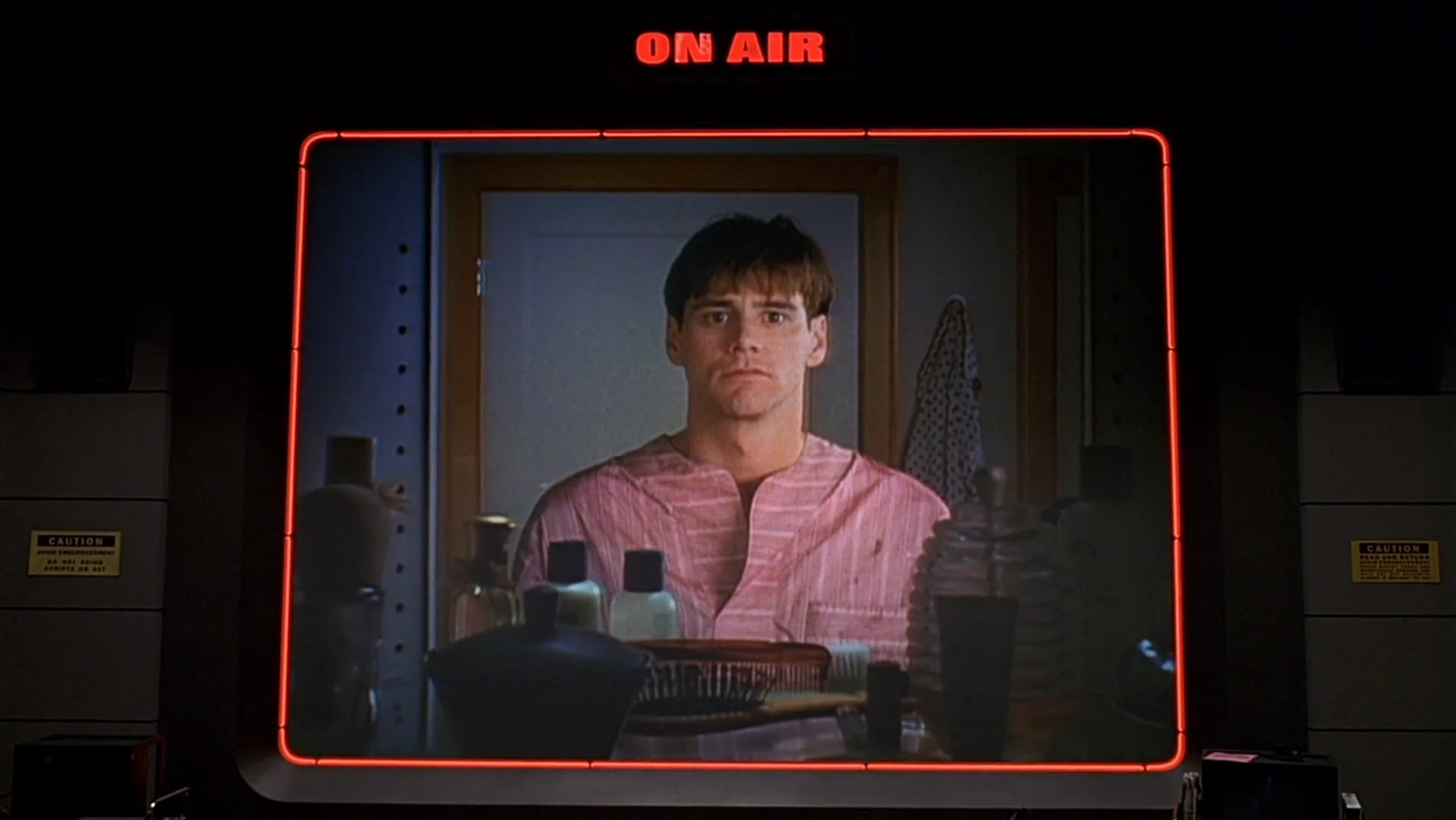
The mirror cam puts the lens where the mirror would be. The actor stares straight into the camera, and we understand they are looking at their reflection: a POV shot from the mirror's side. Shoot through an empty frame or a two-way mirror. The Truman Show (1998) makes it plot: the bathroom mirror really is a hidden camera. Keep the eyeline dead on the lens.
Reflection shots: glass, water, metal
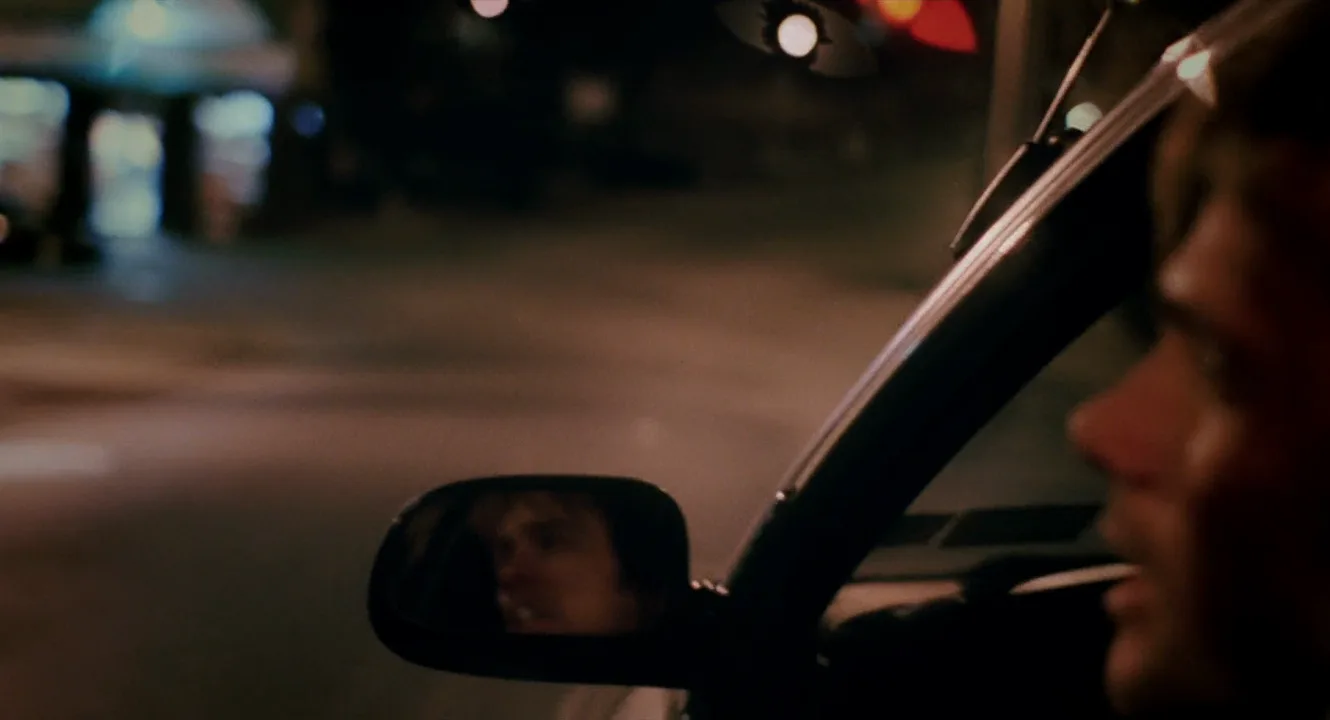
Reflection shots use any reflective surface: shop windows, car mirrors, puddles, sunglasses. They are the wider family; a mirror shot needs an actual mirror and a composition built around it. A car window can hold the driver's face and the street in one plane, adding foreground and background layers without moving the camera. Water distorts the image and reads as memory.
Mirror shot vs. frame within a frame
A mirror's edges often act as a frame within a frame. The difference is what the border holds: a doorway frames real space, a mirror frames a reversed image, often of the space behind the camera. Use a frame within a frame to isolate a character; use a mirror shot when the reflection itself must say something.
Mirror Shot in motion
1 clipsThese loops show mirror shot in motion, where a still frame can't: watch how the effect plays out over a few seconds.
Mirror Shot stills

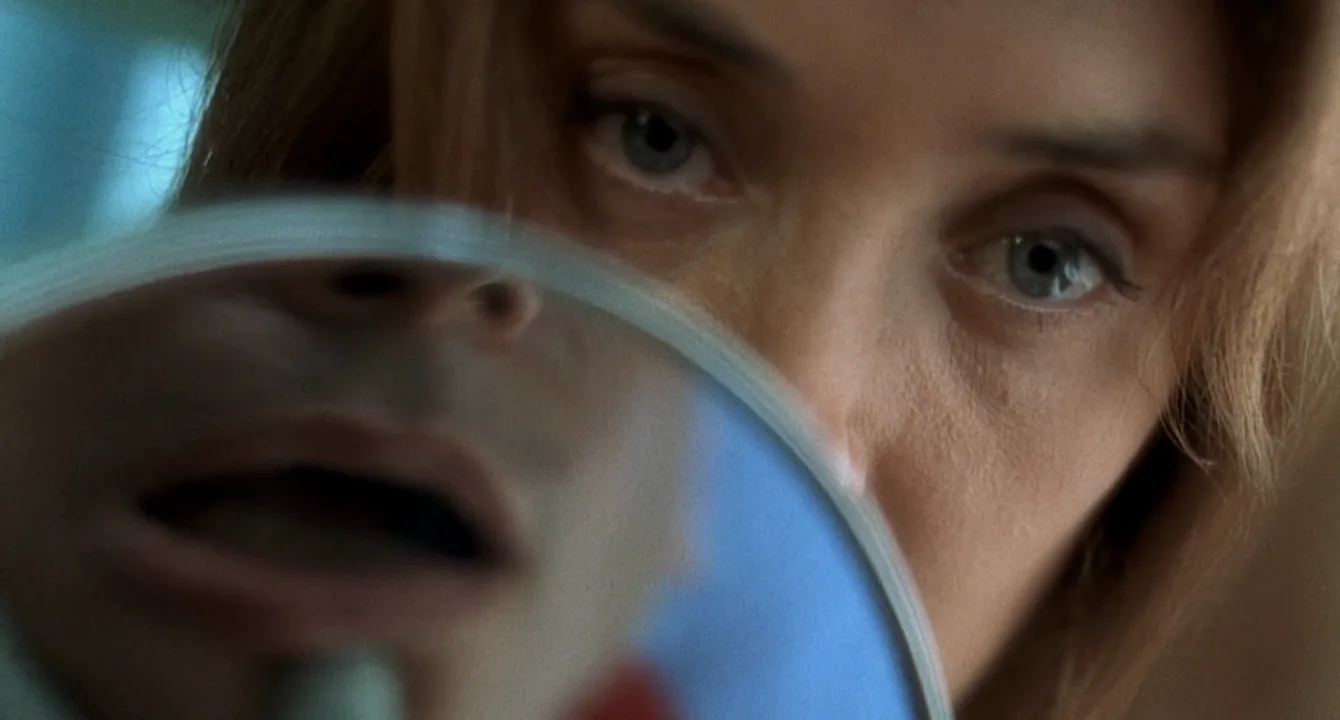
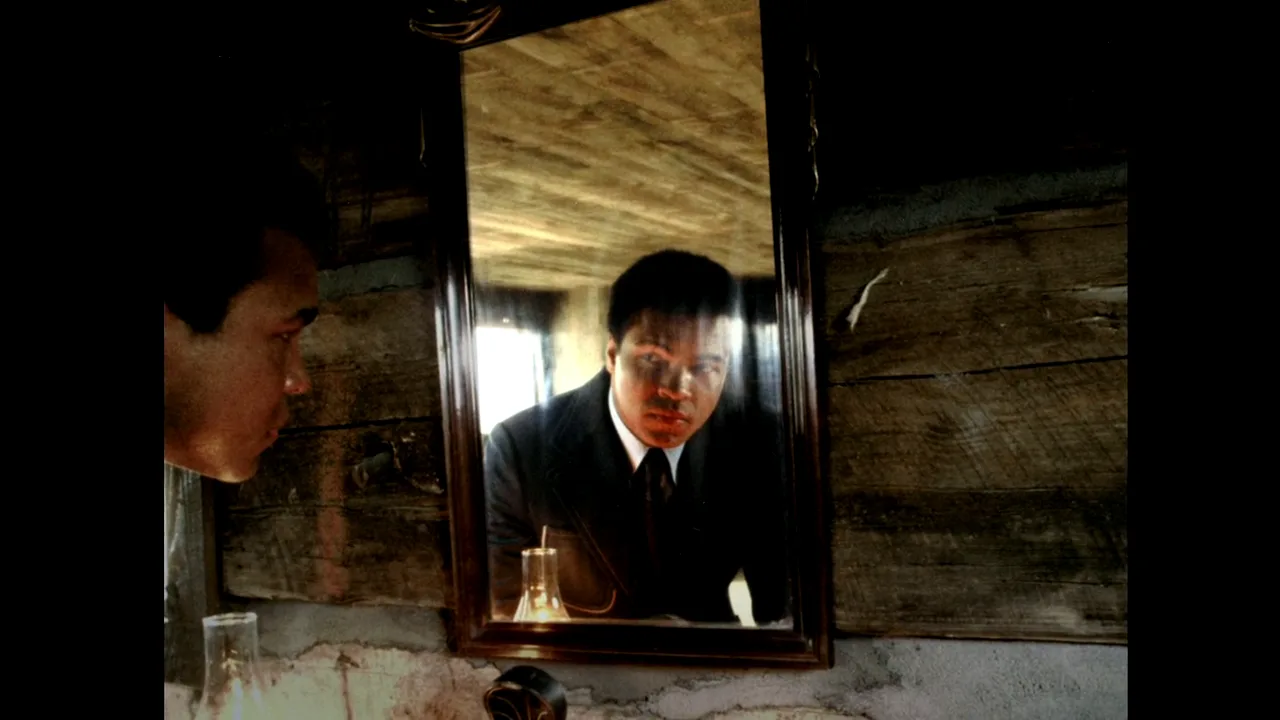
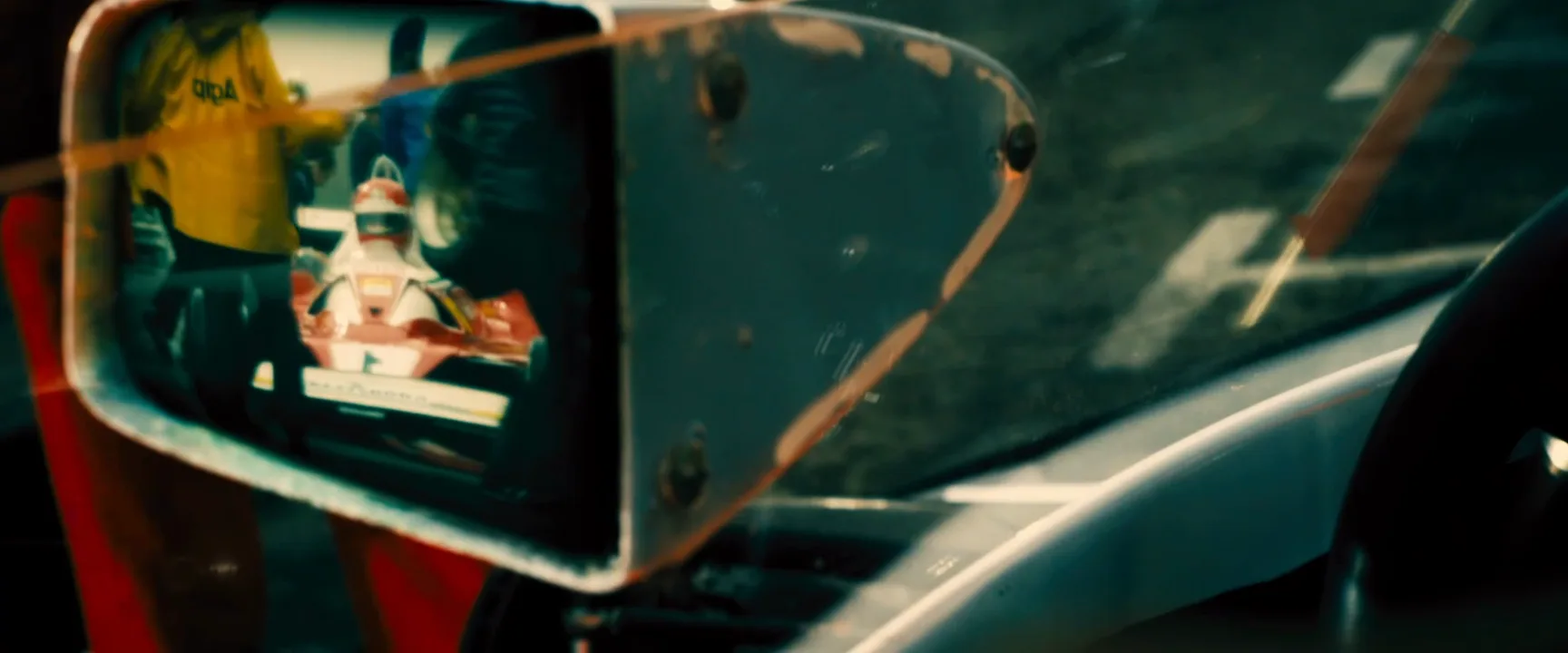
7 framesMirrors, wing mirrors and a camera hidden behind the glass.
How to create a mirror shot with AI
4 promptsImage models know what a mirror is but not where the camera stands, so state the angle to the glass and what the reflection contains. Build the start frame, try a mirror cam take, then animate recipe 1, with every take side by side on one FlashBoards board. The fourth prompt re-shoots a real film shot from a text description alone, and the original plays next to the result so you can compare.
Cinematic mirror shot in a small green-tiled bathroom at night. A fictional woman in her late thirties with a cropped silver-gray bob, a thin scar through her left eyebrow and a mustard knit sweater stands at the sink. Camera behind her right shoulder at a 35-degree angle to the mirror, 40mm lens. The back of her head is soft in the foreground; her face appears only in the mirror, sharp, lit by one warm bulb. The reflection shows her face and the tiled wall.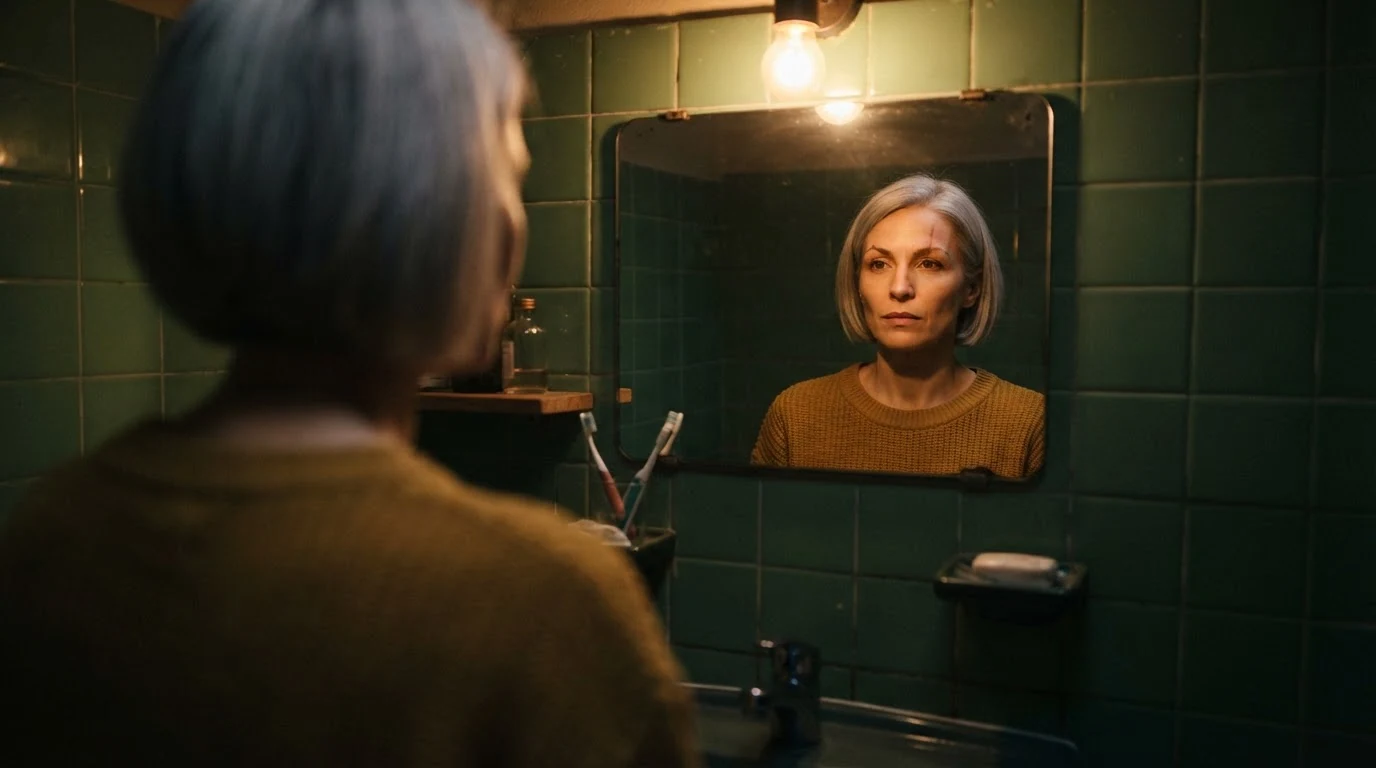
35-degree angle to the mirror and her face appears only in the mirror set the geometry. Listing what the reflection shows keeps a camera out of it; soft foreground, sharp reflection sets focus.
Open FlashBoardsMirror cam shot: the camera sits where a bathroom mirror would be, facing a fictional man in his twenties with a shaved head, a small gold hoop in his right ear and a faded olive tank top. He leans on the sink with both hands and stares into the lens as if into his own reflection. Symmetrical frontal framing, 32mm at eye level, dark wooden mirror frame soft along the edges, cool fluorescent light.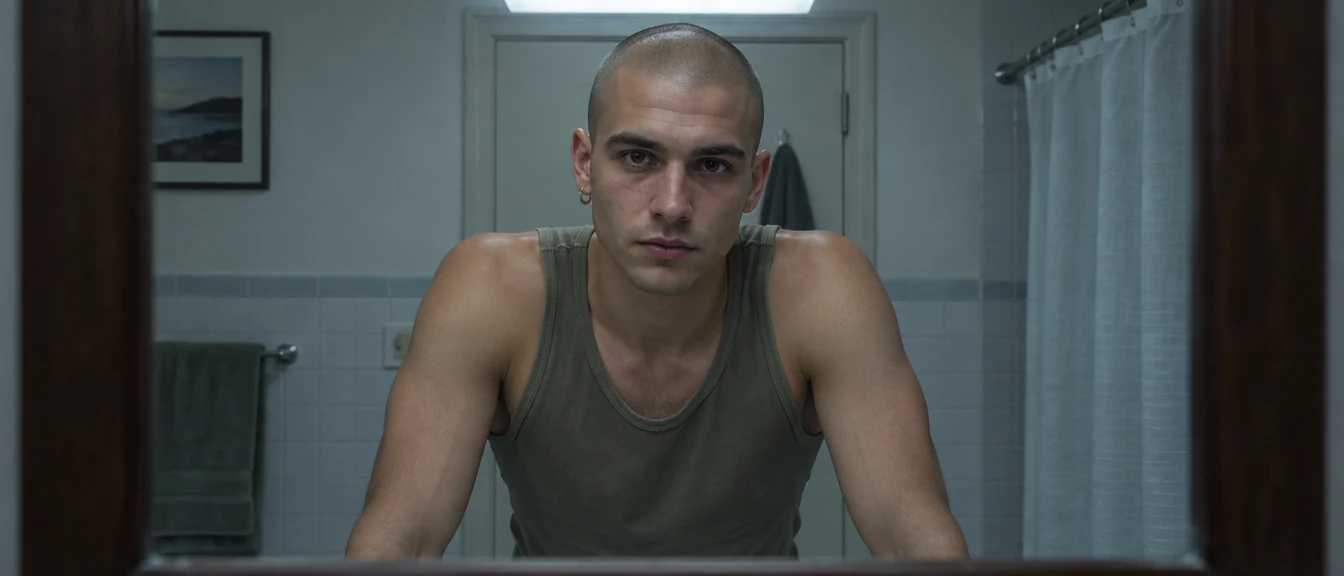
Where a bathroom mirror would be and as if into his own reflection make it a mirror cam. The soft frame edges place the lens behind the glass; both hands on the sink avoids a selfie look.
Open FlashBoardsCamera: a slow, gentle push toward the mirror from the first frame, keeping the same angle to the glass; her reflection grows while the soft back of her head stays in the left foreground to the last frame. Action: From the first frame, she scoops water from the sink and splashes it on her face with both hands, and the reflection repeats every movement. In the middle, she lifts her wet face and meets her own eyes. At the end, she holds her gaze, water dripping from her chin.The same angle to the glass keeps the geometry, and stays in the left foreground to the last frame stops the push from sliding past her. The reflection repeats every movement keeps body and image in sync.
Open FlashBoards{
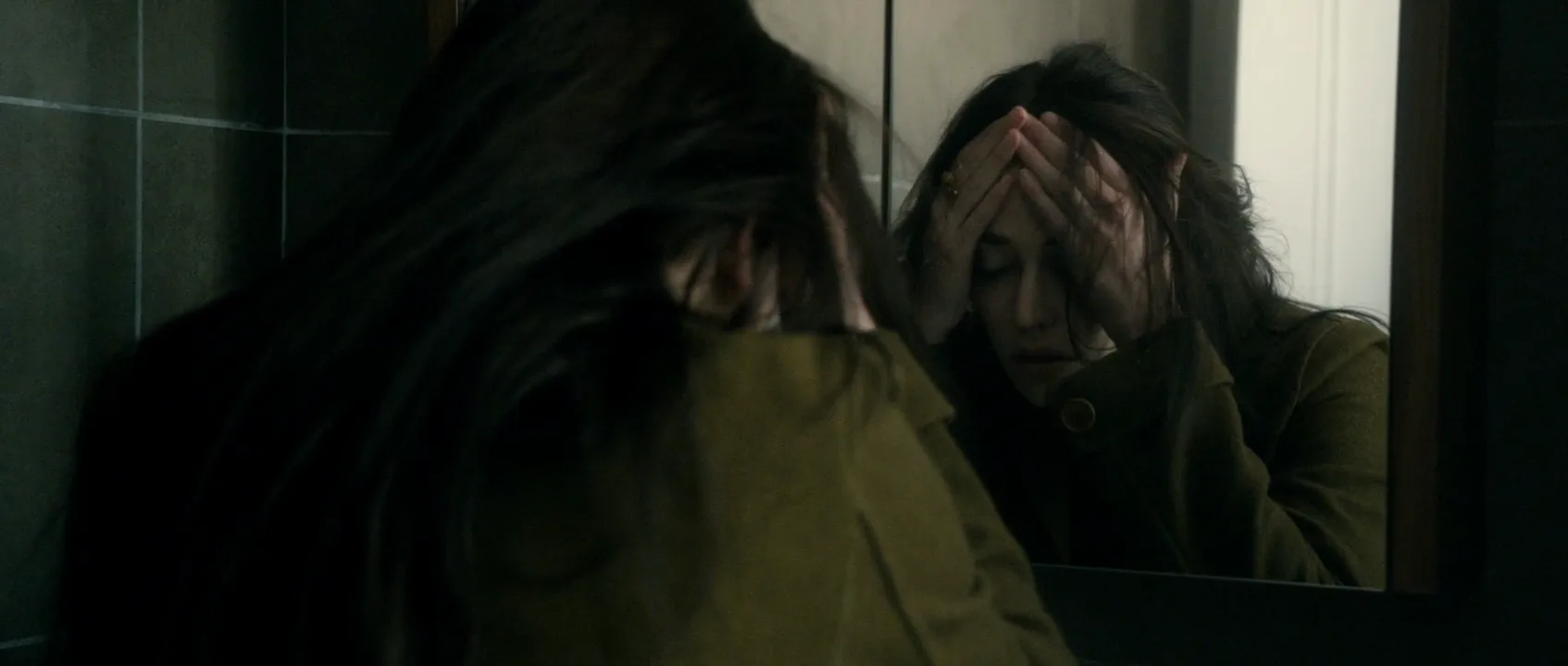
"output": "Full-screen live-action single continuous shot from its very first frame, one take, from Perfect Sense (2011). Muted 35mm film look, soft gray daylight from a tall frosted window strip on the right side of the reflection, dark bottle-green wall tiles on the left edge, pale beige tiles behind her in the mirror, desaturated olive, green and gray palette, quiet and heavy.",
"characters": {
"S1": {
"name": "Susan, played by Eva Green",
"look": "woman in her thirties, long dark-brown hair, loose and tangled, falling over her shoulders, pale bare-faced skin, olive-khaki wool coat buttoned over a dark shirt",
"voice": "silence: she never speaks, only uneven breaths"
}
},
"shots": [
{
"shot": 1,
"camera": "almost locked-off, chest height, 50mm lens, wide-screen framing with a barely perceptible slow drift: the camera stands just behind S1's left shoulder at an angle to a wall mirror. The left half of the frame is the back of S1's dark head and her olive coat shoulder, very close and soft out of focus; the right half is the mirror, where her reflected face and upper body are sharp in a medium close-up. The reflection shows only her and the beige tiled wall with the bright window strip behind her. Focus stays on the reflection throughout.",
"action": [
"BEGINNING: alive from the first frame, S1 stands at the mirror with her head bowed; in the reflection her eyes are lowered to the basin, hair falling forward over both cheeks, arms down, shoulders still.",
"THEN: she leans a little toward the mirror, the blurred back of her head sliding right in the foreground, and lifts one hand to her face, pressing the palm over her eyes and nose; the reflection repeats the movement exactly.",
"THEN: the second hand joins; she rubs her eyes and forehead with both palms, head sinking lower, fingers spread over her brow.",
"THEN: she pushes both hands up and back into her hair at the temples, elbows raised, eyes shut, face tipped up, drawing the hair away from her face.",
"THEN: one hand drops past her shoulder, a soft blur passing through the left foreground, while the other lingers at her cheek and jaw; she exhales, lips parted.",
"THEN: that hand falls too; she raises her head and looks straight into her own reflected eyes, lips parted, breathing slowly, no nod, no smile.",
"END: she holds the look for a moment, then her eyes sink back down toward the basin, head tilting slightly forward, hands out of frame, the back of her head still soft on the left."
],
"voice": "silence: nobody speaks in this shot, no voice at all",
"dialogue": []
}
],
"sound": {
"ambience": "quiet tiled room tone, the soft rustle of her coat sleeves and of fingers in hair, a faint hum from the building",
"speech": "no words in this video; the only human sounds are breaths and movement",
"never_spoken": "no narration and no voice-over: the descriptions, performance notes and step words of this prompt are never spoken aloud",
"music": "a film score under the scene, always below the voices: slow, melancholy low strings with a few sparse piano notes",
"subtitles": "none"
}
}Re-shoots Susan's (Eva Green) locked-off bathroom mirror shot from Perfect Sense (2011), carrying over the soft shoulder on the left, the sharp reflection on the right and the hands-over-face beat that ends on her own gaze.
The camera block pins the geometry: just behind her left shoulder, the back of her head soft on the left, the reflection sharp on the right. The reflection shows only her keeps the lens out of the glass, and the THEN beats move body and image together.
Open FlashBoardsCommon mistakes
- The camera lands in the mirror. State the angle and list what the reflection shows.
- Person and reflection drift apart. Write the reflection repeats every movement.
- Wrong layer in focus. Say reflection sharp, foreground soft.
- Mirror cam becomes a selfie. Give the hands a job, such as resting on the sink.
Keep the reference frames, prompts and every generated take side by side — images and video in one canvas.
FAQ
4 questionsWhat is a mirror shot in film?
A mirror shot is a composition built around a mirror so the audience sees a character's reflection, often beside the character, without seeing the camera. The reflection carries what the direct view cannot: a face shot from behind, a person entering behind them, or a second self.
How do you film a mirror without the camera in the reflection?
Place the camera 30 to 45 degrees off the mirror's axis, since the glass reflects at the angle the lens looks in. Hide the remaining line of sight behind the actor's head and use a longer lens from farther back. Failing that, tilt the mirror or paint the rig out.
What is a mirror cam shot?
A mirror cam places the camera where the mirror would be, so the actor looks straight into the lens as if into their own reflection. It is shot through an empty frame or a two-way mirror. The Truman Show (1998) turns the bathroom mirror into an actual hidden camera.
What are famous mirror scenes in movies?
Travis Bickle talking to his reflection in Taxi Driver (1976), echoed in La Haine (1995); the hall-of-mirrors shootout in The Lady from Shanghai (1947); the mirror room fight in Enter the Dragon (1973); the word read in a mirror in The Shining (1980); the doubles of Black Swan (2010).
Related terms
3- Frame Within a FrameComposition & Framing
Frame within a frame uses a doorway, window, mirror, arch, corridor or shadow inside the shot as a second border around the subject, isolating it, adding depth or suggesting entrapment.
- SymbolismStorytelling
Symbolism is using a concrete object, color, place or action to stand for an abstract idea — a key, a staircase, rain, a red coat — so the image carries meaning beyond itself.
- MotifStorytelling
A motif is an image, sound, object or line that recurs through a film and gathers meaning with each return, supporting the theme.
Further reading
Blain Brown, Cinematography: Theory and Practice (Routledge) — lens angle, focus distance and set lighting. David Bordwell and Kristin Thompson, Film Art: An Introduction (McGraw-Hill) — mise-en-scène and framing.