 FlashBoards Learn
Editing · Film language
Shot, Scene and Sequence
Also called: shot, scene, sequence
A shot is one uninterrupted run of the camera between two cuts. A scene is continuous action in one place and time, usually built from several shots. A sequence is a group of scenes that forms one dramatic unit with its own beginning, middle and end. Together they are the three building blocks of film structure.
- What it does
- Gives every frame a place in the film: which shot, inside which scene, inside which sequence.
- Use it when
- Breaking down a script, writing a shot list, scheduling a shoot or judging the pacing of a cut.
- Watch out
- A new location means a new scene even when the action is continuous, and a take is not the same thing as a shot.
- Try this prompt
Wide master shot of a rainy roadside diner at night, two strangers in a window booth, 28mm lens at eye level, neon and tungsten light, cinematic still
What is the difference between a shot, a scene and a sequence?
The three words describe one film at three scales, each nested inside the next.
| Unit | Defined by | Ends when | |---|---|---| | Shot | One continuous run of the camera | There is a cut | | Scene | One place, one continuous stretch of time | Location or time changes | | Sequence | One dramatic question or goal | That question is answered |
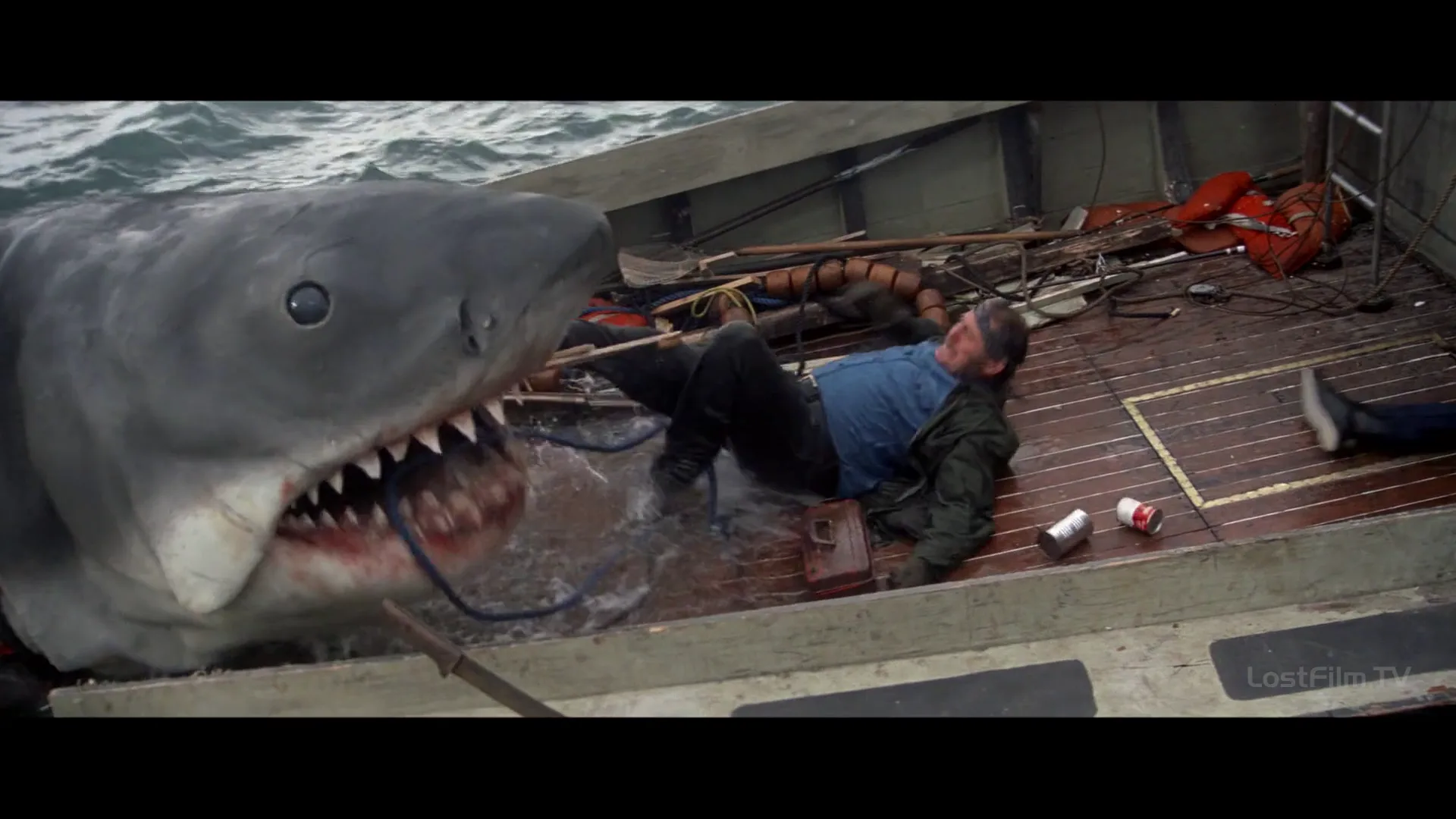
Take the finale of Jaws (1975). The shark lunging onto the stern is a shot. Everything on that boat in one continuous stretch of time is a scene. The whole hunt, from leaving harbor to the shark's end, is a sequence: one goal, many scenes, hundreds of shots. This hierarchy is the backbone of film editing.
What counts as one shot?
In the finished film, a shot is everything between one cut and the next, described with the vocabulary of camera shot types. On set the word splits in three:
- Setup — one camera position and lighting arrangement.
- Shot — one planned piece of the scene, a line on the shot list.
- Take — one recorded attempt at that shot.
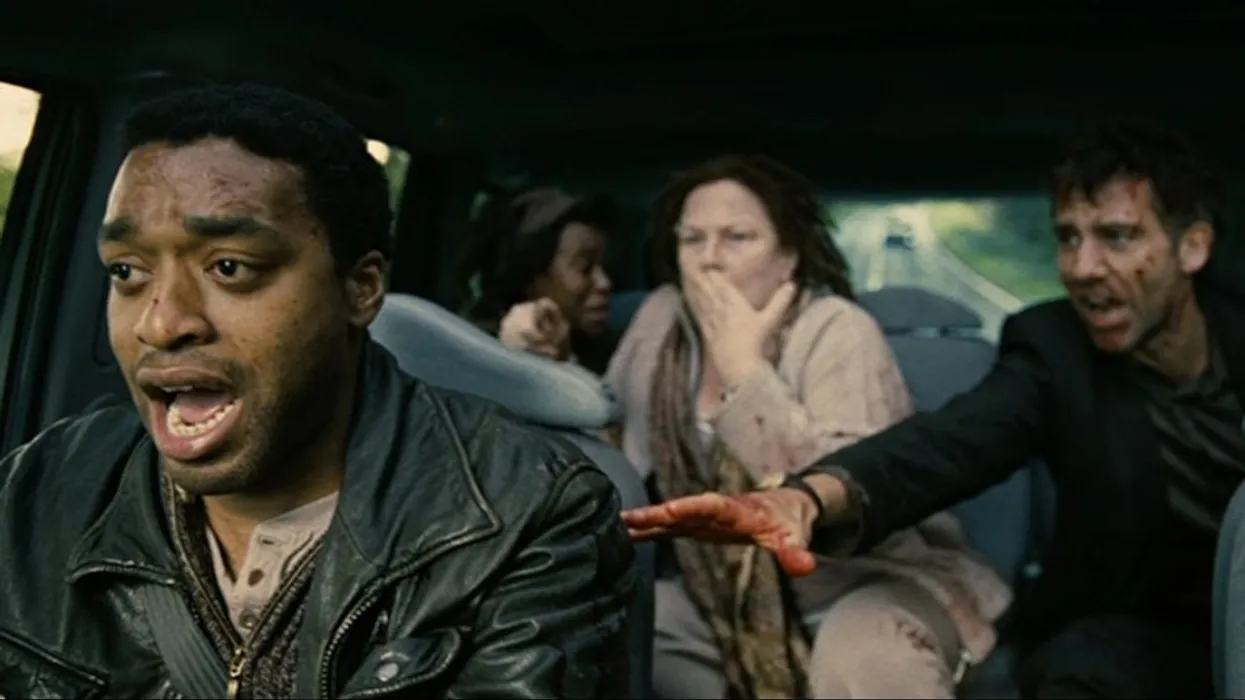
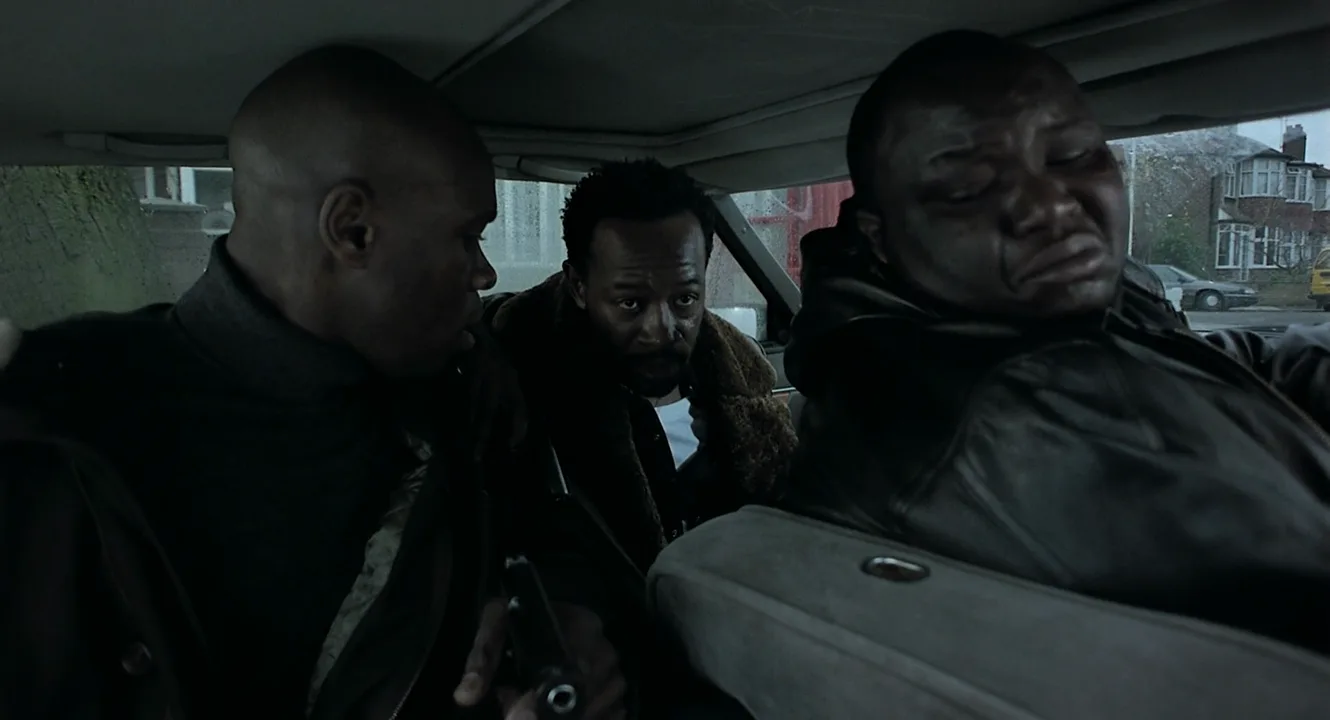
A shot can also be a whole scene. The car ambush in Children of Men (2006) plays as one continuous shot inside a moving car, so the audience never gets the relief of a cut.
What makes a scene a scene?
A scene is defined by place and time, not content. Every scene in a screenplay starts with a scene heading such as INT. DINER - NIGHT. When the characters walk out to the parking lot, a new heading starts a new scene, even if the conversation never stops; writers mark that CONTINUOUS.
On set, a scene is usually filmed as a master shot of the whole action plus closer coverage, then cut so it reads as one unbroken piece of time. A good scene also turns something: a relationship, a piece of information, a balance of power.
What is a sequence in film?
A sequence is a run of scenes built around one dramatic question: will they escape, will the heist work? It can cross several locations and ends when the question is answered. Common forms:
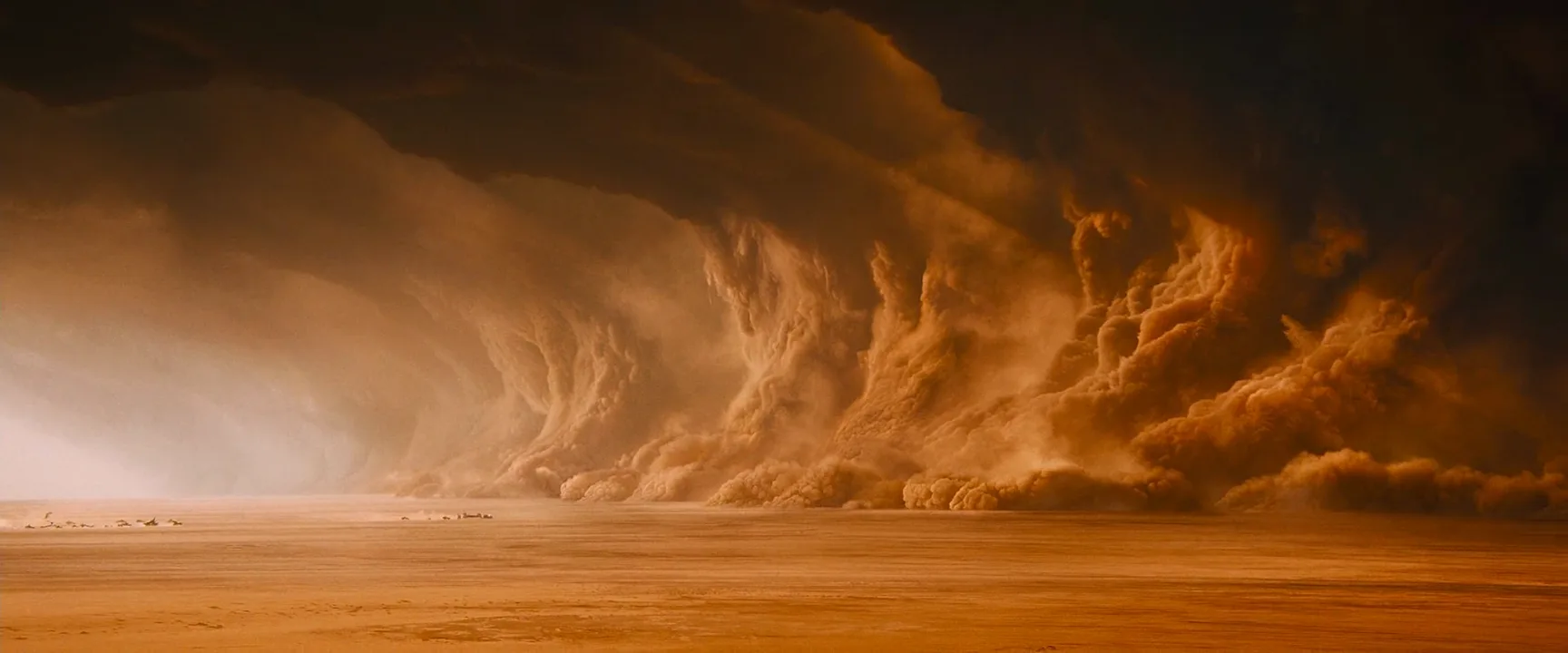
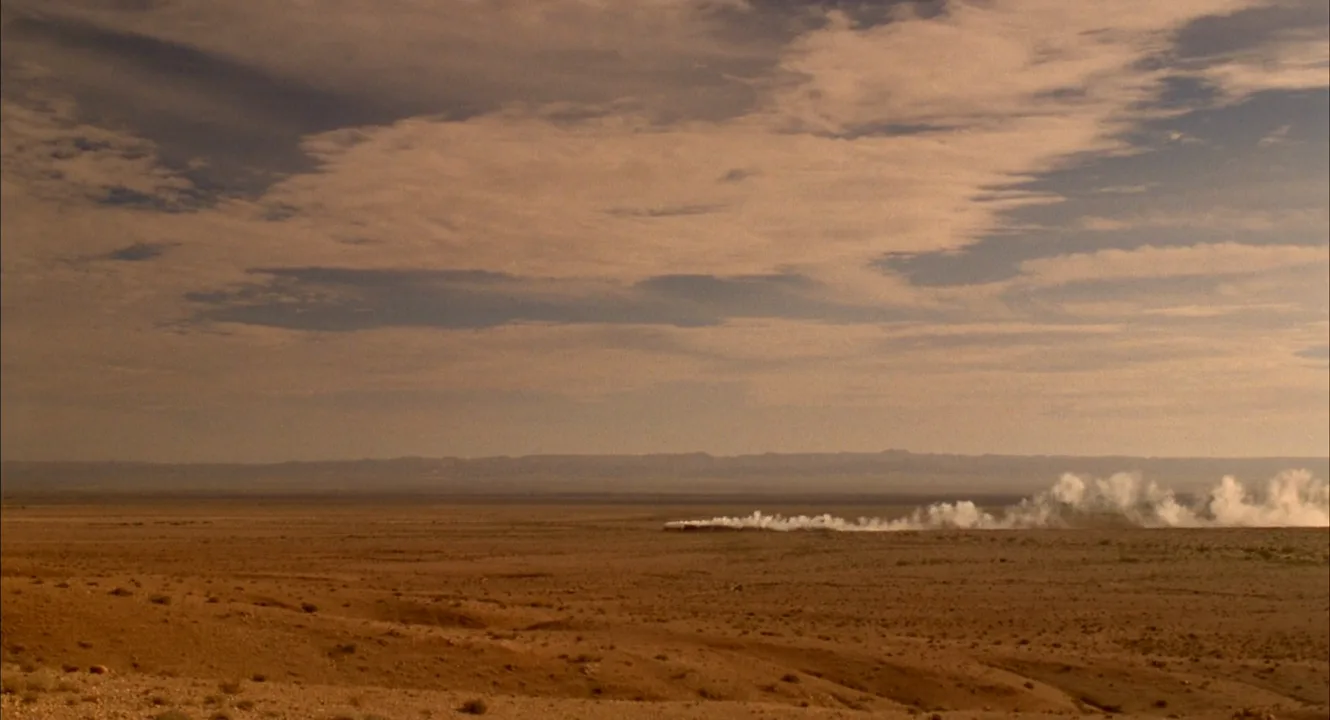
- Set pieces — a chase moving through many places, like the War Rig's run toward the sandstorm in Mad Max: Fury Road (2015).
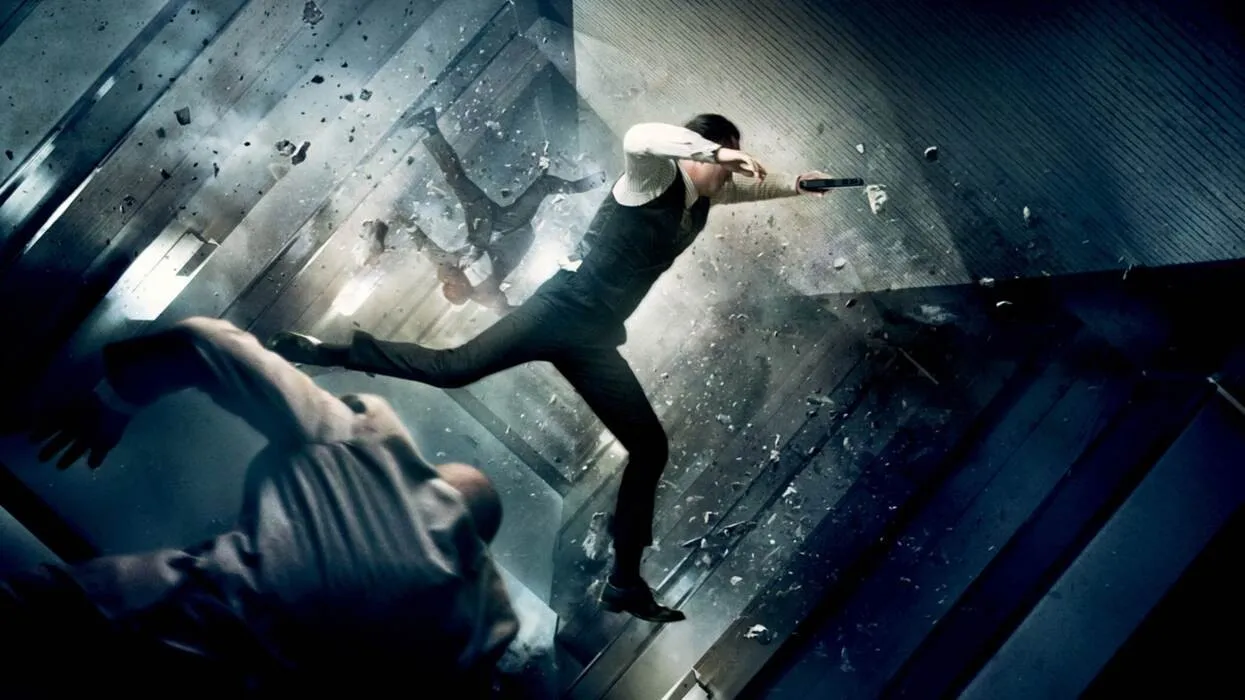
- Cross-cut sequences — lines of action intercut to pay off together, like the dream levels in Inception (2010).
- Montage sequences — short shots that compress weeks into a minute.
How to plan and edit with shots, scenes and sequences
In prep, number the scenes first: schedule, call sheets and slates are all keyed to scene numbering. Then list shots per scene. A two-page dialogue scene might need 6–12 setups; a one-shot scene needs one setup and much more rehearsal.
On the day, the slate reads scene, shot and take (42A, take 3) so the editor can find any piece.
In the edit, assemble scene by scene, then watch whole sequences. Pacing problems rarely show inside one scene; they appear when three slow scenes sit in a row.
Scene vs. sequence: where does the line fall?
Ask two questions. Did the place or time change? Then it is a new scene. Is the characters' immediate goal still the same? Then it is the same sequence. A getaway from a bank vault to a stairwell to a car is three scenes and one sequence.
Shot, Scene and Sequence examples in film
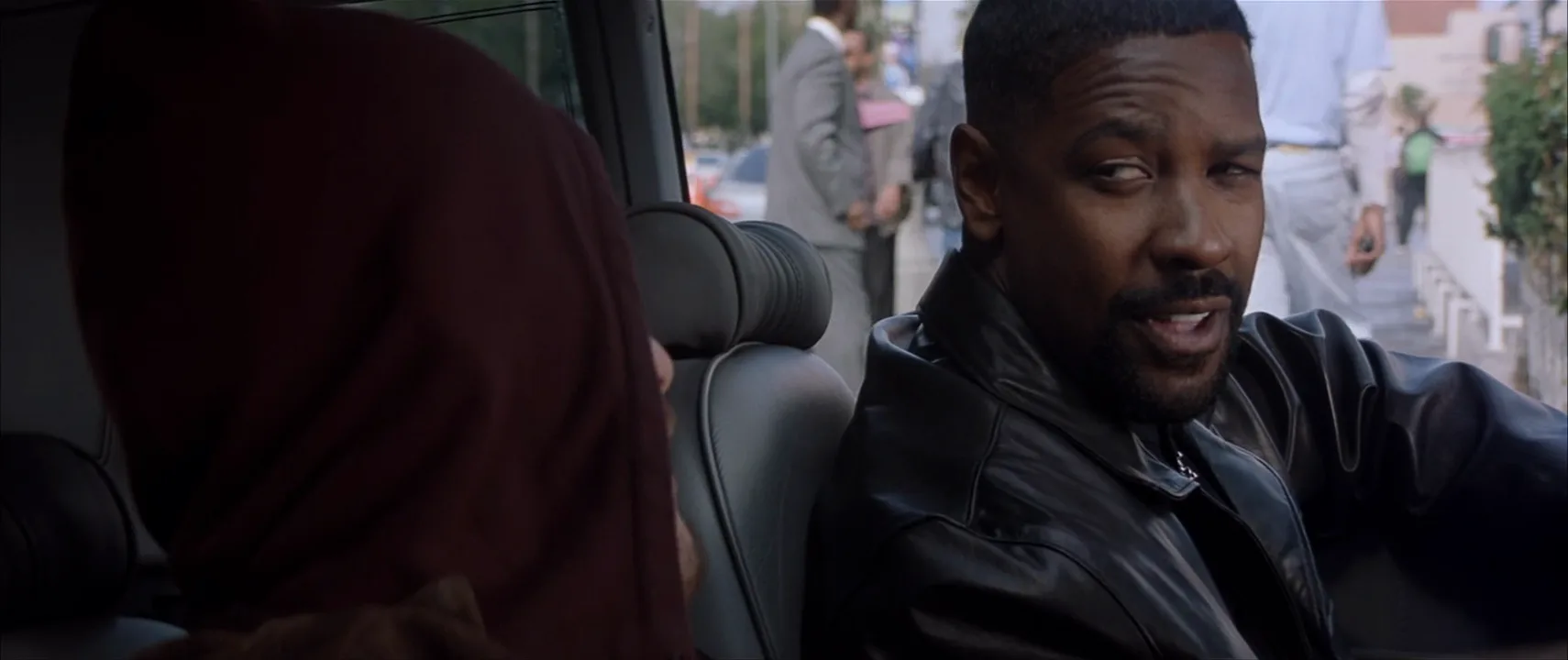
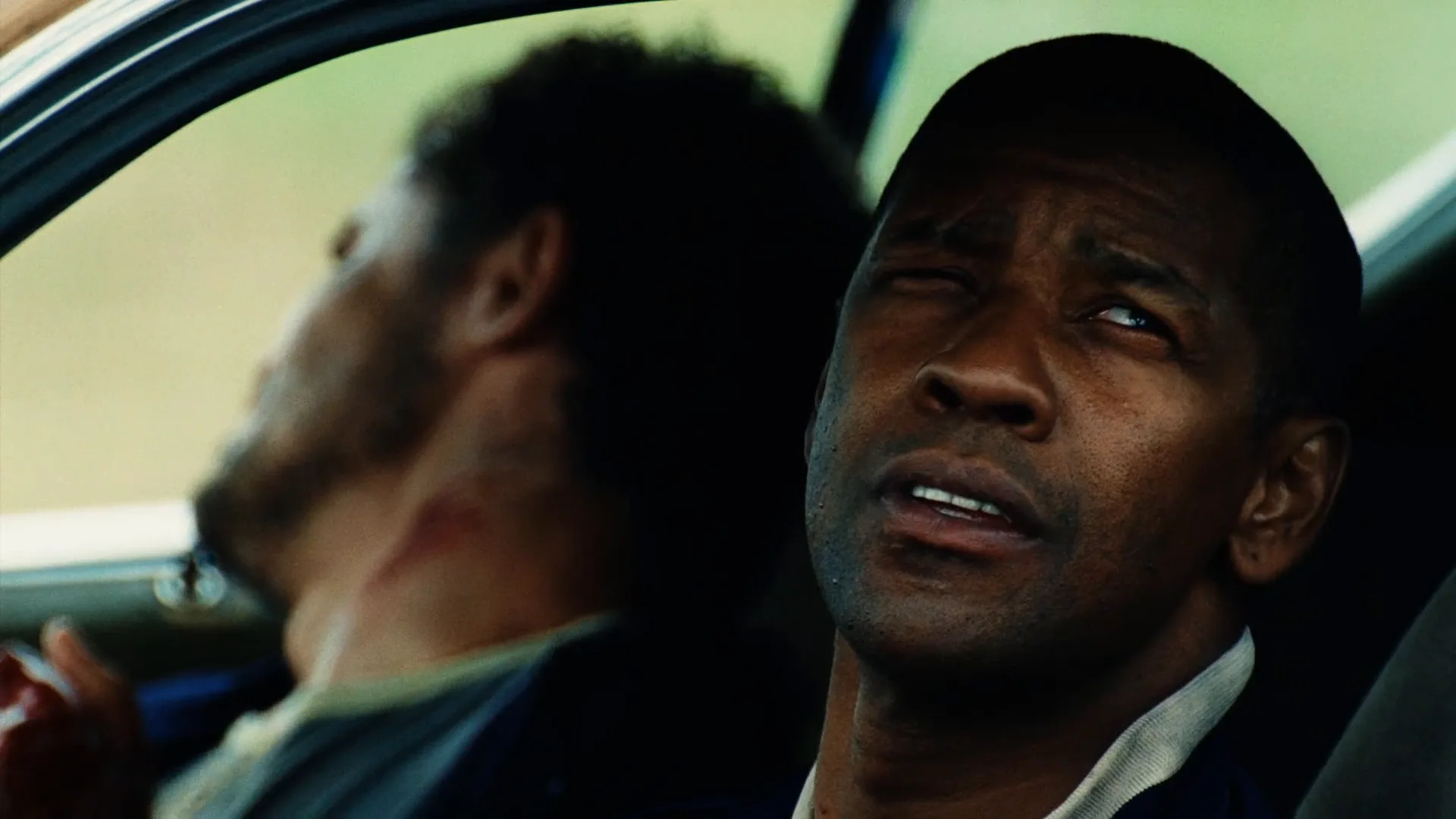
8 framesEach still is a single shot; the caption places it in its scene or sequence.
How to create a shot, scene and sequence with AI
4 promptsAI models generate one shot at a time, so design a scene as a set of shots sharing place, light and characters. Lay them out in scene order on a FlashBoards board and compare takes side by side before animating. The fourth prompt re-shoots a real film shot from a text description alone, and the original plays next to the result so you can compare.
Cinematic wide master shot of a roadside diner at night, a woman in her fifties with a cropped silver undercut, a thin scar through her left eyebrow and a mustard corduroy jacket sits in a window booth opposite a young man with curly red hair, freckles and a faded denim work shirt, rain streaking the window, 28mm lens at eye level, whole booth and counter visible, warm tungsten light inside, red neon glow outside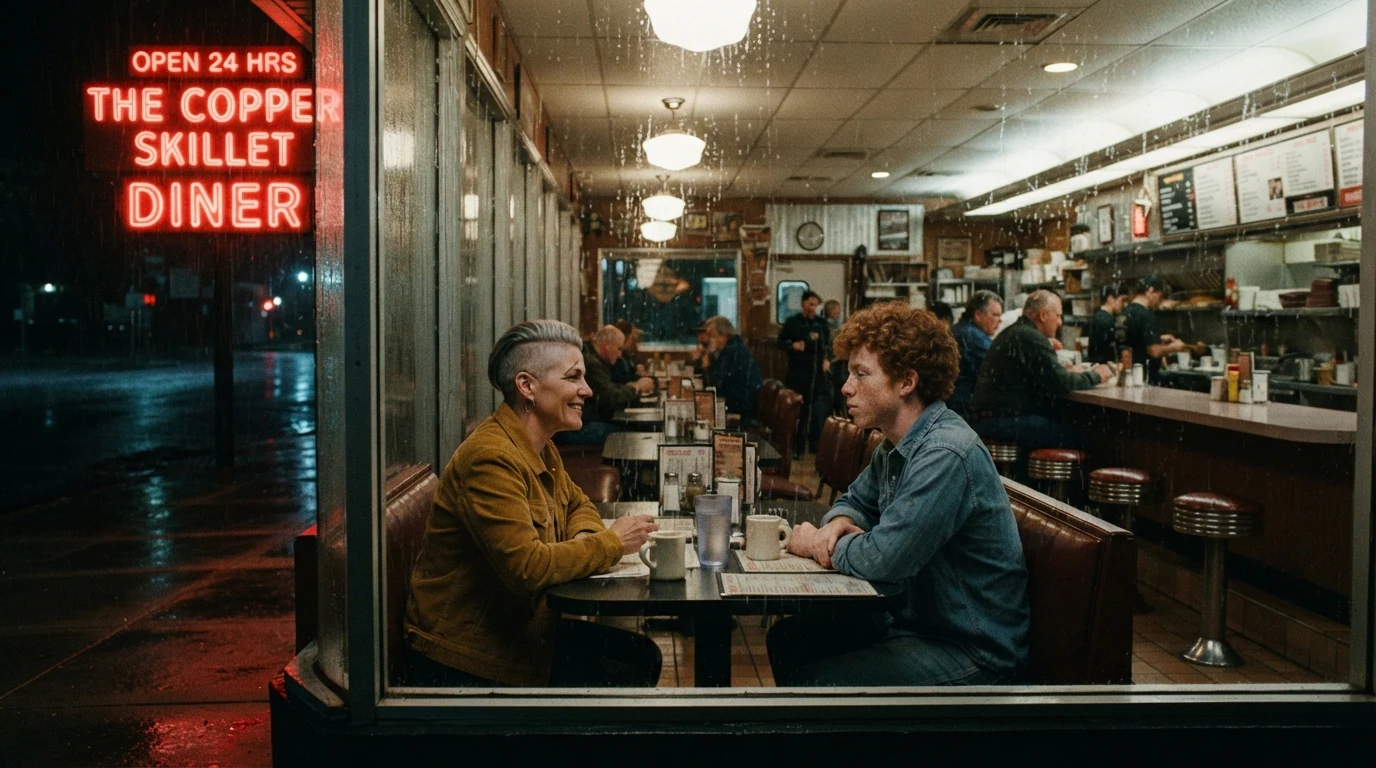
Wide master shot and whole booth and counter visible establish place and characters, which is what defines the scene. Rain, tungsten and red neon are continuity anchors every later shot must repeat.
Open FlashBoardsCinematic close-up in a roadside diner at night, a woman in her fifties with a cropped silver undercut, a thin scar through her left eyebrow and a mustard corduroy jacket, over the blurred shoulder of a young man with curly red hair in a faded denim work shirt, steady tired expression, 85mm lens at eye level, warm tungsten key light, red neon reflection on the rainy window behind her, shallow depth of field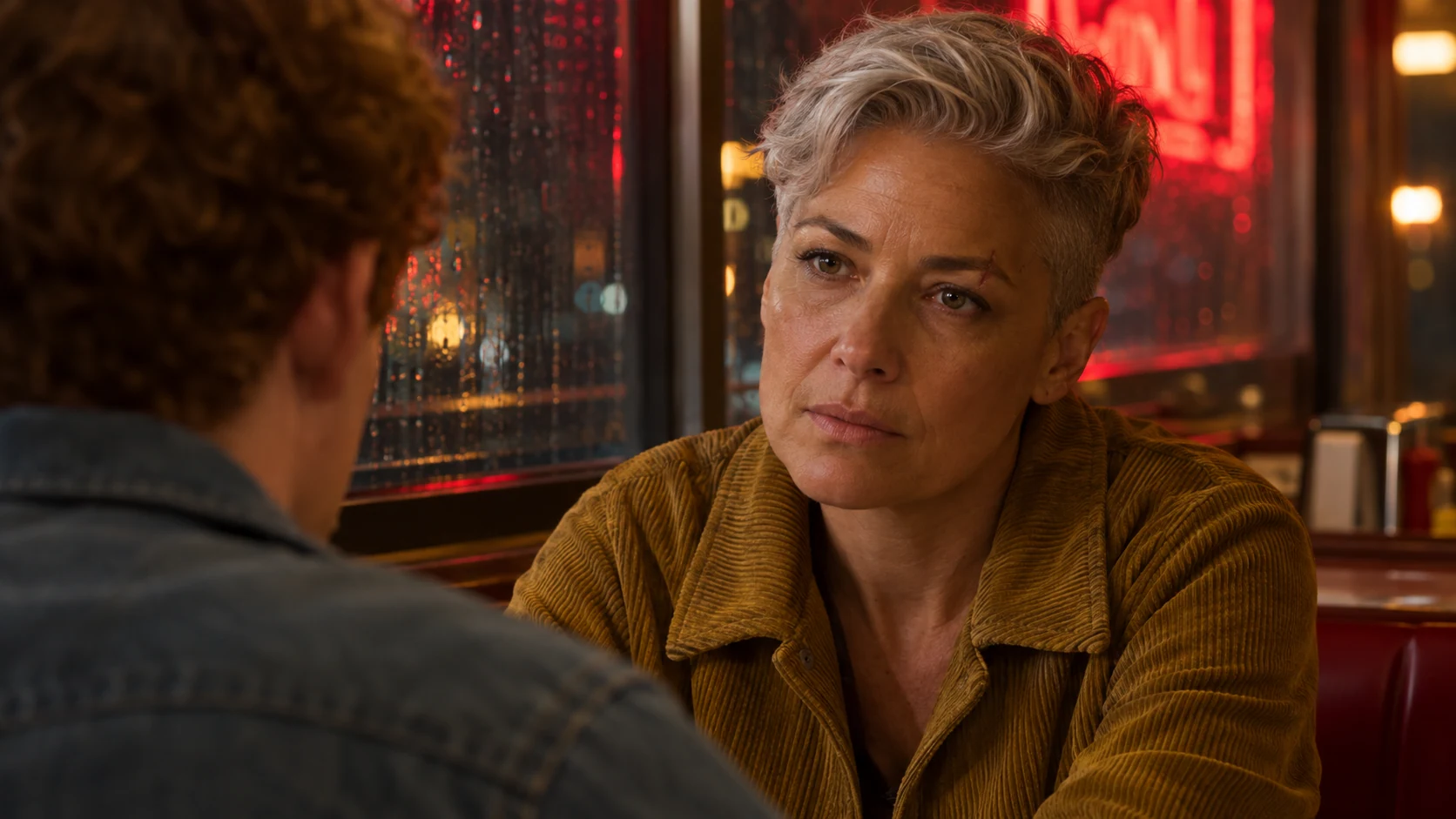
The next shot of the same scene. Both character descriptions and the tungsten, neon and rain words are repeated; only size and lens change (close-up, over the shoulder, 85mm). Same place and time, new shot: that is coverage.
Open FlashBoardsCamera: slow, steady dolly in toward the booth from the first frame, ending in a medium wide shot of both characters. Action: rain is already running down the window and the neon flickers. The woman slides a folded paper napkin across the table. The young man looks down at it, hesitates, then picks it up. She turns her head and looks out at the rain.From the first frame and the rain already running keep the shot alive. The action has a start, middle and end, and her turn to the window gives the editor a clean cut to recipe 2's close-up.
Open FlashBoards{
"output": "Full-screen live-action scene from Man on Fire (2004), from its very first frame: three shots joined by two hard cuts. Grainy high-contrast 35mm with punchy saturated color, hazy afternoon sun, a grassy roadside above a blue-green valley in Mexico.",
"characters": {
"S1": {
"name": "John W. Creasy, played by Denzel Washington",
"look": "tired man in his late forties, close-cropped graying hair and short gray-flecked beard, dark jacket over a white open-collar shirt, sweat and fatigue on his face",
"voice": "low, hoarse, exhausted"
},
"S2": {
"role": "wounded man slumped beside him",
"look": "curly dark hair, stubble, dark shirt, a raw bloody scrape along the side of his neck, a blood-stained hand",
"voice": "silent, unconscious"
},
"S3": {
"role": "blonde woman waiting outside by a car",
"look": "woman in her thirties, blonde bob with a heavy fringe, black blazer, pale drawn face",
"voice": "silent, listening"
}
},
"shots": [
{
"shot": 1,
"camera": "static long-lens extreme long shot from far across a field, eye level, very slow drift to the left; out-of-focus leafy branches cross the right third of the foreground",
"action": [
"BEGINNING: alive from the first frame, a boxy dark-brown 1980s sedan stands on the grass in the left half of the frame, its front doors and right rear door open; a second dark sedan is parked further right, half hidden behind the blurred branches; tiny figures, no faces readable.",
"THEN: a small figure rises out of the open front door on the left side of the car and stands up behind it.",
"THEN: a second figure bends into the open rear door on the right side of the car, pulling at someone inside.",
"END: both figures stay at the car; the branches sway gently in the foreground; the second sedan never moves."
],
"voice": "silence: nobody speaks in this shot, no voice at all",
"dialogue": []
},
{
"shot": 2,
"cut_at": "00:01.480",
"camera": "close two-shot from just outside the car, looking in through the open side window, eye level, long lens, shallow focus; the curved dark window frame cuts across the top-left corner; a slow, slight sway as if the camera is gripped to the car",
"action": [
"BEGINNING: S2 fills the left half in the foreground, soft and out of focus, profile facing screen left, head tipped back against the headrest, eyes closed, the bloody scrape on his neck toward camera, his stained hand low in the bottom-left corner; S1 is sharp in the right half, head resting back against the seat, eyes squinting up toward the upper left of frame, brow creased in pain, mouth slightly open.",
"THEN: S1 blinks slowly, still gazing up to the upper left, breathing heavily through his open mouth.",
"THEN: S1 starts to speak, his lips visibly moving, his head sinking a little lower in frame, eyes never leaving the upper left.",
"END: S1 is mid-sentence, eyes half closed against the light; S2 never moves."
],
"dialogue": [
{
"speaker": "S1",
"on_screen": true,
"when": "in the second half of this shot, well after the cut, running into the next cut",
"delivery": "hoarse, weary, slow",
"line": "<d>[English] Pita's kidnapper,<scenetrans></d>"
}
]
},
{
"shot": 3,
"cut_at": "00:03.640",
"camera": "static close-up of S3, eye level, long lens; she sits just right of centre; behind her shoulders the soft dark curve of a car roof and a blurred green field",
"action": [
"BEGINNING: S3 stands outside facing camera, head turned a little toward screen left, eyes lowered toward screen left, lips slightly parted; a light wind lifts strands of her fringe.",
"THEN: her brow tightens and she swallows, lips pressing together, listening.",
"END: her gaze drops further toward screen left, mouth closed; her lips never move."
],
"dialogue": [
{
"speaker": "S1",
"on_screen": false,
"when": "right after the cut to this shot, never before the cut, finishing over her face",
"delivery": "hoarse, trailing off",
"line": "<d>[English] <scenetrans>Daniel...</d>"
}
]
}
],
"sound": {
"ambience": "wind over the open field, leaves rustling, the faint creak of a car seat",
"speech": "exactly these spoken phrases, each said once, in this order",
"never_spoken": "no narration and no voice-over: the descriptions, performance notes and step words of this prompt are never spoken aloud",
"music": "a film score under the scene, always below the voices: a low, mournful sustained synth pad with a slow, heavy pulse",
"subtitles": "none"
}
}Remakes the roadside scene from Man on Fire (2004): the prompt keeps the wide, the in-car two-shot and the close-up of the woman, both cut points and Creasy's line running over the second cut.
The scene is written as three shots with cut times, not one camera run: a wide that places the cars, a two-shot inside, then a close-up of the listener. The one line of dialogue is split across the cut, so sound ties the shots into one scene.
Open FlashBoardsCommon mistakes
- Shots that drift apart. Change light or weather and they stop reading as one scene. Repeat the place, time and light words.
- Characters that change. Copy the full description (age, hair, scar, jacket) into every prompt and keep the first good frame as a reference.
- Every shot the same size. Name size and lens per shot, or the cut feels like a jump.
Keep the reference frames, prompts and every generated take side by side — images and video in one canvas.
FAQ
4 questionsWhat is the difference between a shot and a scene?
A shot is one continuous run of the camera, from one cut to the next. A scene is continuous action in one place and time, usually made of several shots edited together: a wide master, closer coverage and inserts. A scene can be a single long take, but one shot cannot span two scenes.
What is a sequence in film?
A sequence is a group of scenes organized around one dramatic goal or question, such as a chase, a heist or a courtship. It can move across several locations and times and ends when that question is resolved, usually with a small climax of its own.
Is a take the same as a shot?
No. A shot is a planned piece of a scene from one setup, as listed on the shot list. A take is one recorded attempt at that shot. A director may film a shot eleven times; those are eleven takes, and the editor usually uses part of one.
Is a montage a scene or a sequence?
A montage is a type of sequence. It strings short shots from many places and times into one unit, usually over music, to compress time or build an idea. Because place and time keep changing it is not a single scene, but it serves one dramatic purpose.
Related terms
4- Types of Camera ShotsCamera Shots
Shot types classify a single shot by how much of the subject it shows (shot size), how many people it holds and what job it does in the story — from extreme wide to extreme close-up, singles to group shots, establishing shots to inserts.
- CutEditing
A cut is the instant change from one shot to the next with no transition effect — the basic unit of editing, from invisible continuity cuts to jarring jump and smash cuts.
- Shot ListFilmmaking Process & Crew
A shot list is a scene-by-scene table of every planned setup — shot size, angle, movement, lens, action and notes — that tells the crew exactly what to capture and in what order on the day.
- MontageEditing
A montage is a sequence of short shots, usually set to music, that compresses time or builds an idea — weeks of training, a relationship, a city waking up — in a minute or two.
Further reading
Karel Reisz and Gavin Millar, The Technique of Film Editing. David Bordwell and Kristin Thompson, Film Art: An Introduction. Paul Joseph Gulino, Screenwriting: The Sequence Approach.