 FlashBoards Learn
- Learn
- Film Movements & Styles
- Surrealism in Film
Film Movements & Styles · Film language
Surrealism in Film
Also called: surrealist cinema, surreal film, dream logic
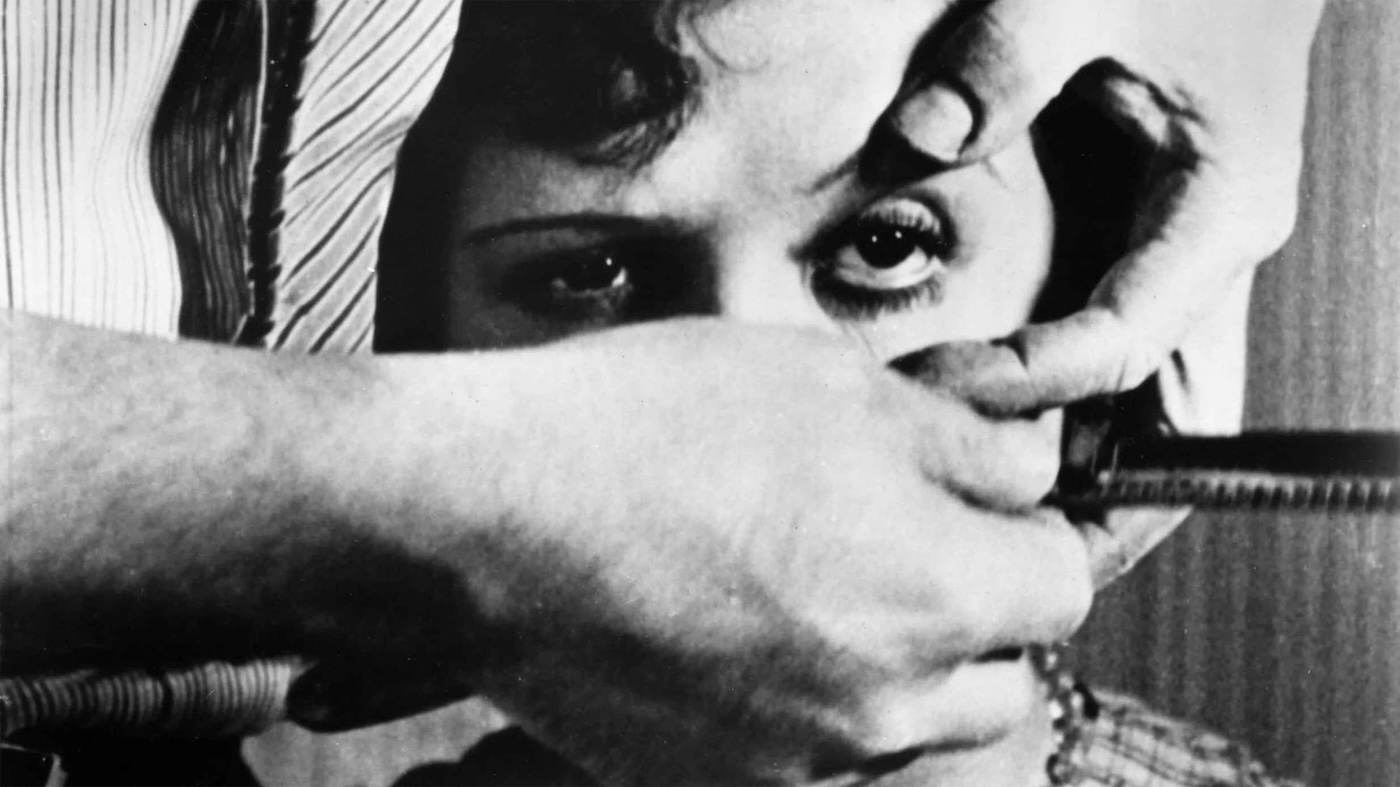
Surrealism in film is cinema that follows dream logic instead of story logic. Born in 1920s Paris with Un Chien Andalou, it puts impossible images, irrational juxtapositions and shock cuts on screen as if they were ordinary, so the viewer feels the unconscious at work rather than watching a plot explain itself.
- What it does
- Makes the familiar strange: real-looking images that obey the rules of a dream, so the viewer reacts before they can reason.
- Use it when
- Dreams, desire, trauma, guilt, memory, madness, satire of social ritual — anything a character can't or won't put into words.
- Watch out
- Random weirdness is not surrealism; the power comes from one impossible element filmed with calm, realistic craft.
- Try this prompt
35mm film still, flat empty beach at low tide, a tall wooden wardrobe standing in shallow water, doors open, overcast daylight, static wide shot, realistic, deadpan
What is surrealism in film?
Surrealism started as a literary and art movement: André Breton published the Surrealist Manifesto in Paris in 1924, calling for art that bypassed reason and let the unconscious speak. Cinema, watched in the dark one image at a time, was the closest art to dreaming.
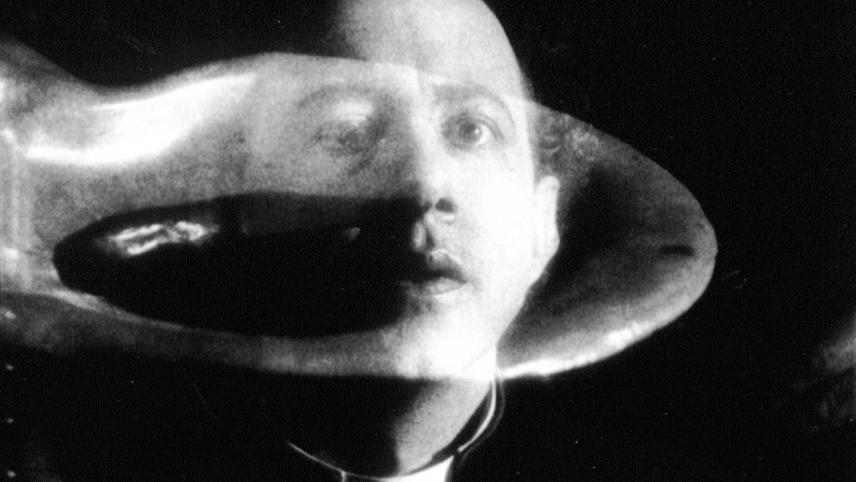
The first films claimed by the movement came fast. Germaine Dulac's The Seashell and the Clergyman (1928), written by Antonin Artaud, followed a priest's erotic fixations through distorted lenses and dissolving spaces. A year later Luis Buñuel and Salvador Dalí made Un Chien Andalou (1929), a short built on purpose from images that refuse to add up: a razor and an eye, ants swarming from a hole in a palm, a man dragging pianos loaded with dead donkeys. Buñuel followed it with L'Âge d'Or (1930), whose attack on church and bourgeois morality caused a scandal in Paris.
As an organized movement, surrealist cinema was small and short-lived. As a way of building images it never went away. Surrealism in film today means a set of choices you can recognize and use: dream logic over cause and effect, collisions of objects that don't belong together, the body and the eye as recurring targets, and a camera that records the impossible without comment. It overlaps with avant-garde film but is not the same thing — avant-garde work often experiments with pure form, while surrealism nearly always stays figurative and recognizable, so that the strangeness lands on real things.
What are the characteristics of surrealist film?
Surrealist films look very different from one another, but they share a handful of habits.
- Dream logic. Scenes connect by association, not causality. A door in one room opens onto another place; a character dies and returns without explanation; time jumps are announced and then contradicted.
- Irrational juxtaposition. Two things that have no business together share a frame or a cut: a piano and a carcass, a bedroom and a beach. The meaning comes from the collision, and the viewer supplies it.
- The everyday made strange. Surrealists rarely invent monsters. They take a coat, a staircase, a dinner party and give it one wrong property. The more ordinary the object, the stronger the effect.
- Deadpan realism. The camera is usually calm: stable framing, normal lenses, clear exposure. Characters often react to the impossible with indifference. That flat tone is what makes it disturbing — the world isn't treating this as strange, so you are alone with the feeling.
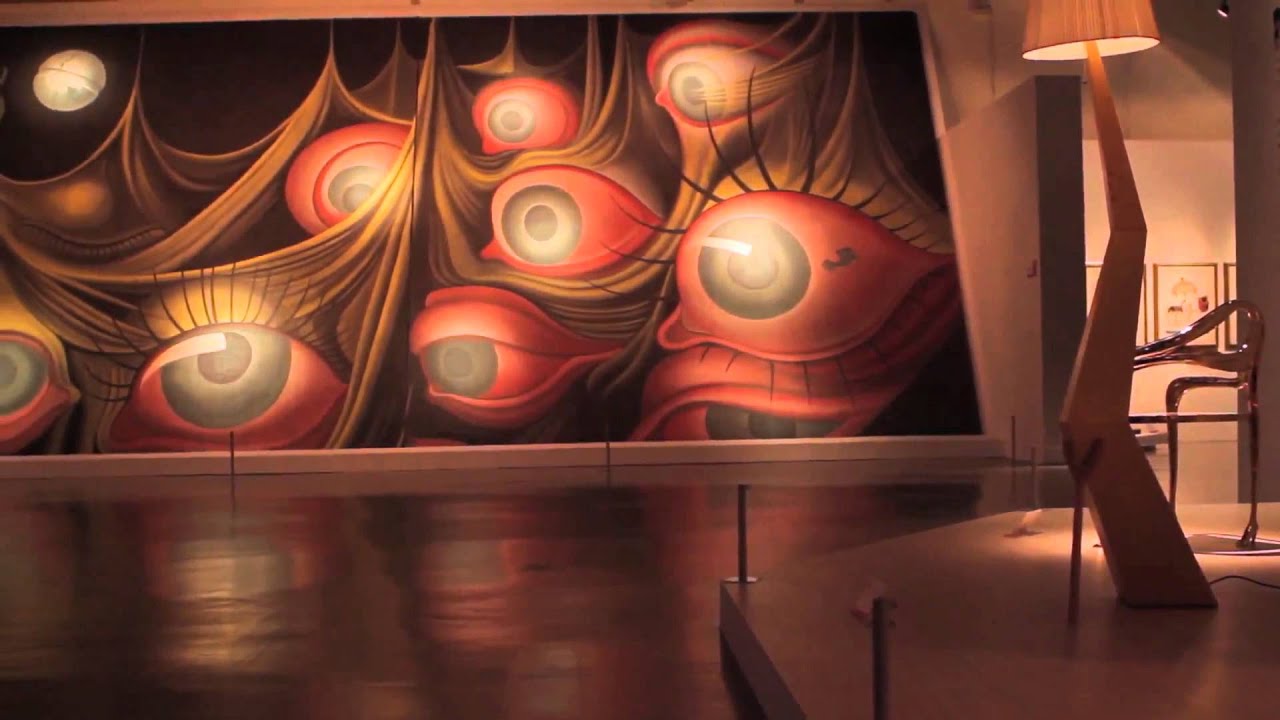
- Eyes, bodies and desire. Eyes appear everywhere: sliced, painted on curtains, staring out of screens. Bodies melt, swap parts or turn into objects. Sexual desire and violence sit close to the surface, as they do in dreams.
- Shock cuts and graphic rhymes. Editing links unrelated shots through shape — the thin cloud crossing the moon that rhymes with a blade crossing an eye — an early form of the match cut used to jolt rather than smooth.
- Optical tricks. Dissolves, superimposition, reverse motion and stop tricks were the silent-era toolkit for making objects appear, vanish or merge — in camera then, often in compositing now.
Why filmmakers still use surrealism
Surrealism reaches states that realistic coverage can't show: a nightmare, a mind coming apart, a society whose rules have stopped making sense. The image makes the audience feel what the character can't say.
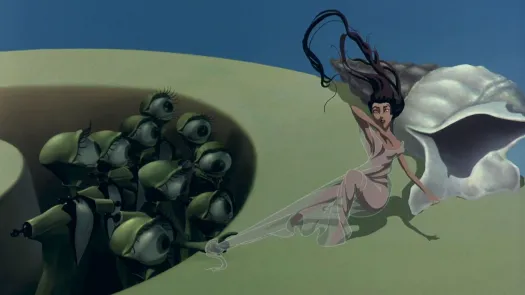
The line from Buñuel runs straight through film history. Alfred Hitchcock hired Dalí to design the dream in Spellbound (1945): curtains painted with giant eyes, huge scissors, a faceless figure. In the same years Maya Deren and Alexander Hammid made Meshes of the Afternoon (1943), where a woman keeps re-entering the same house and meeting herself. Disney and Dalí began Destino in 1945; the short was shelved and only completed in 2003.
Buñuel himself returned to surrealism late in life with sharper satire: in The Exterminating Angel (1962) dinner guests find they cannot leave a room, and in The Discreet Charm of the Bourgeoisie (1972) a group of friends try to have a meal and never manage it. Federico Fellini opened 8½ (1963) with a director trapped in a traffic jam who floats out of his car and flies — until he is pulled down by a rope tied to his leg.
David Lynch is the most direct modern heir. Eraserhead (1977) gives us the Lady in the Radiator singing on a tiny stage; Mulholland Drive (2001) stops the story at Club Silencio, where a singer collapses and her voice keeps going. Terry Gilliam's Brazil (1985) sends a clerk flying in winged armor to escape bureaucracy, and Being John Malkovich (1999) hides a portal into an actor's head behind a filing cabinet. Its habits sit beside the distorted sets of German Expressionism, inside the subjective cinema that puts us in a character's head, and the internet aesthetics of dreamcore and weirdcore — all of them in the film movements family.
How to shoot a surreal scene
The rule most beginners miss: the impossible element should be the only thing that's wrong. Everything around it — light, lens, performance, sound — should play it straight.
Design one wrong thing. Pick an ordinary location and add a single object or behavior that breaks it: a wardrobe standing in the sea, a staircase that ends in a ceiling, a clock with no hands. Set design and props photographed for real have weight and shadow, which makes the impossibility hit harder.
Keep the camera calm. Normal focal lengths (35–50mm on Super 35) and eye-level or chest-height framing make the scene feel documented. A locked-off wide shot, held longer than comfortable, gives the viewer time to notice what is wrong. Save distortion (very wide lenses, fisheye, Dutch angles) for moments when the dream should visibly bend.
Light it like reality — almost. Use motivated sources: window light, overcast sky, practical lamps. Then break one rule: a shadow that falls the wrong way, sunlight inside a windowless room, a night exterior lit like noon. Overcast daylight at f/5.6–f/8 keeps the strange object and the ordinary background equally sharp.
Use in-camera tricks. Reverse motion makes smoke return to a cigarette; a stop trick makes a person vanish between frames; a double exposure lets a face float over a landscape. Forced perspective makes a giant hand or a tiny house believable without a render farm.
Cut by association. Link shots through shape, color or sound instead of action. Break continuity deliberately — the character exits a bedroom and enters a forest — with no transition.
Direct the actors to underreact. When a fish falls from the ceiling and the characters keep talking, the audience does the reacting.
Let sound disagree. A room tone that belongs to another place, a voice that continues after the singer stops, silence where there should be noise — sound can carry dream logic even when the picture is fully realistic.
Surrealism vs. magical realism
Both put impossible things in a realistic world. The difference is how the film treats the impossible.
Magical realism folds the miracle into everyday life and asks you to accept it. In Like Water for Chocolate (1992), a cook's emotions pass into the food and affect everyone who eats it; the story treats this as a fact of the household, and the plot proceeds logically from it. The magic is stable and has rules.
Surrealism refuses stable rules. The impossible arrives without cause, changes shape and disappears; the logic is the logic of a dream, and the film wants to unsettle you, not charm you. In Un Chien Andalou nothing is explained and nothing is consistent from scene to scene.
A quick test: if you could write down the rules of the strange event and the film would obey them, it's magical realism. If the film breaks its own rules as soon as you think you've found them, it's surrealism. Magical realism is usually warm; surrealism is funny, erotic or disturbing.
Surrealism in Film examples in film
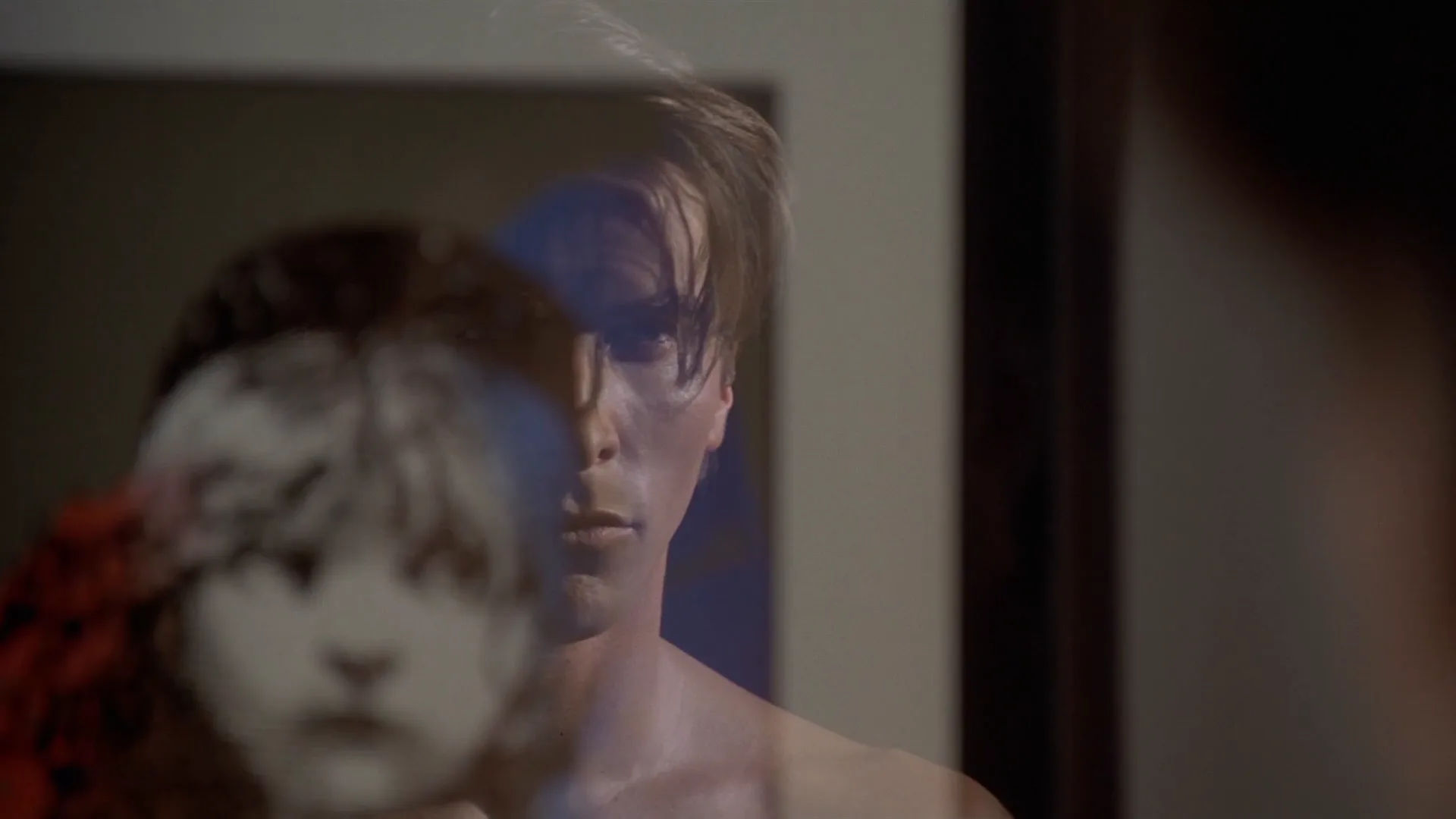
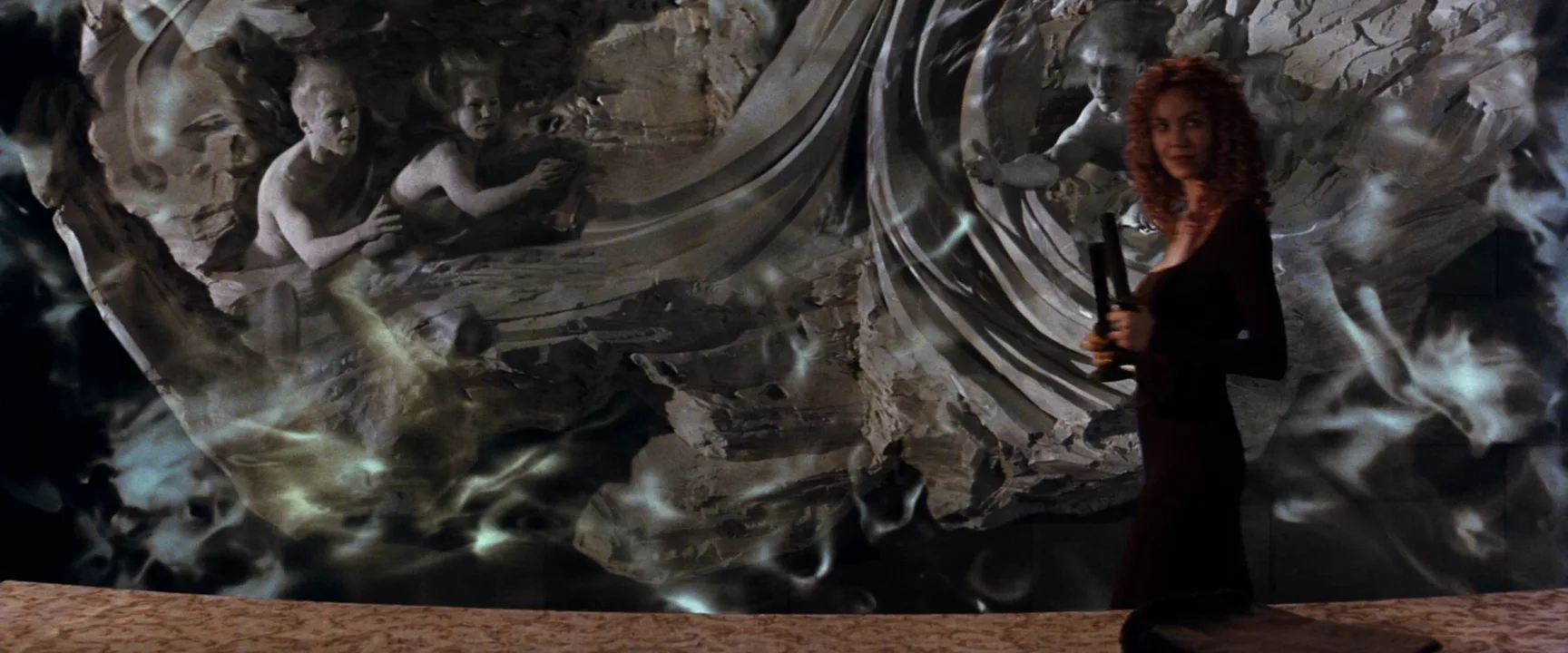
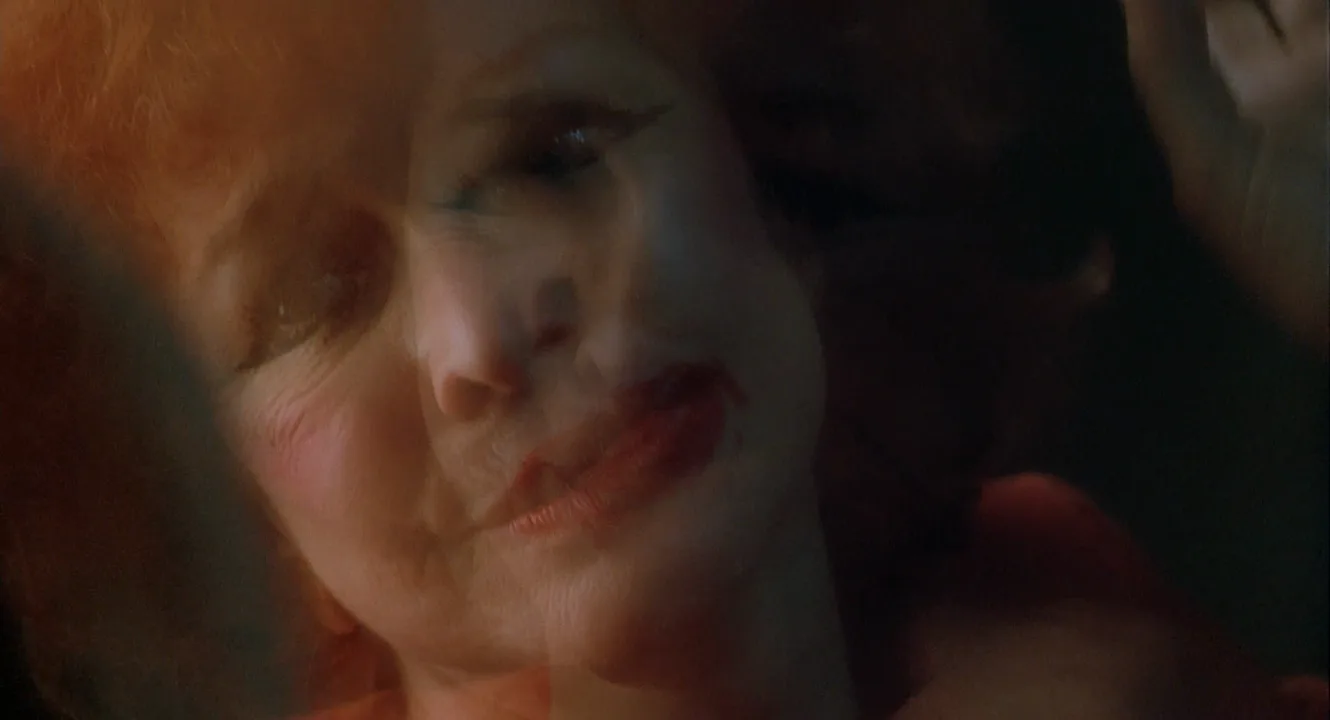
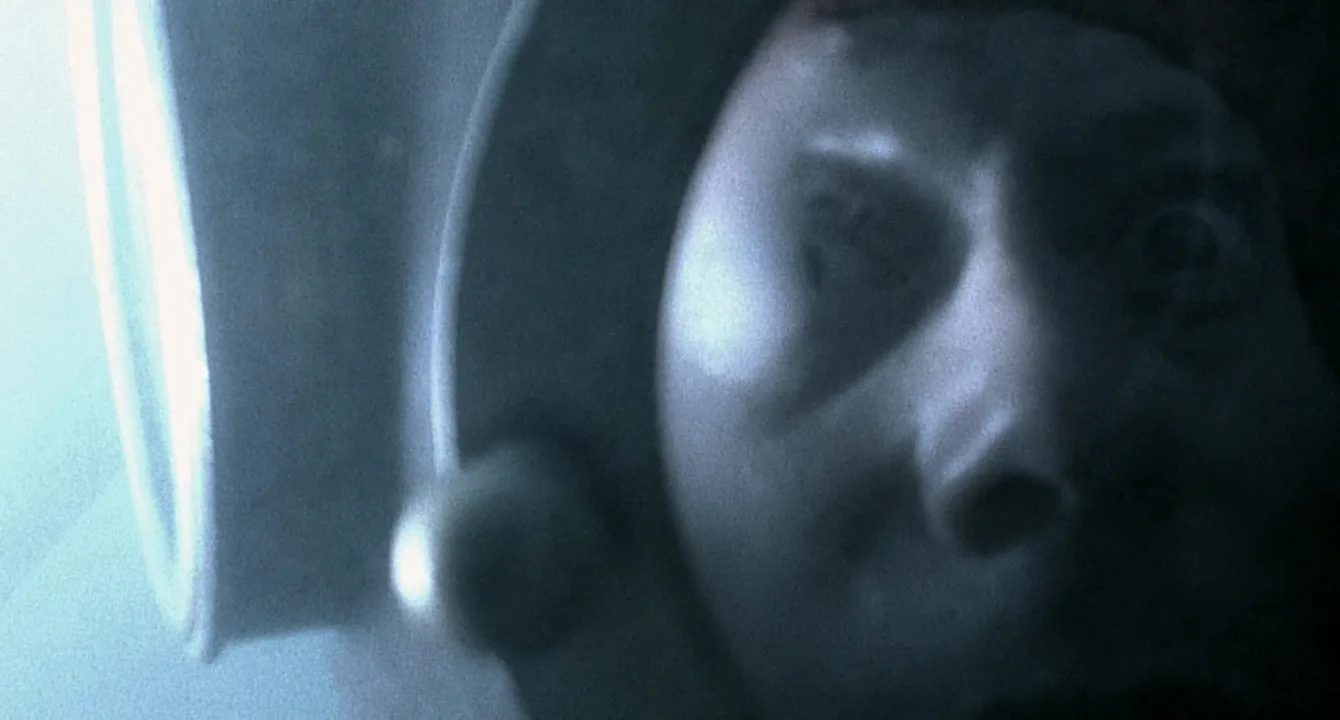
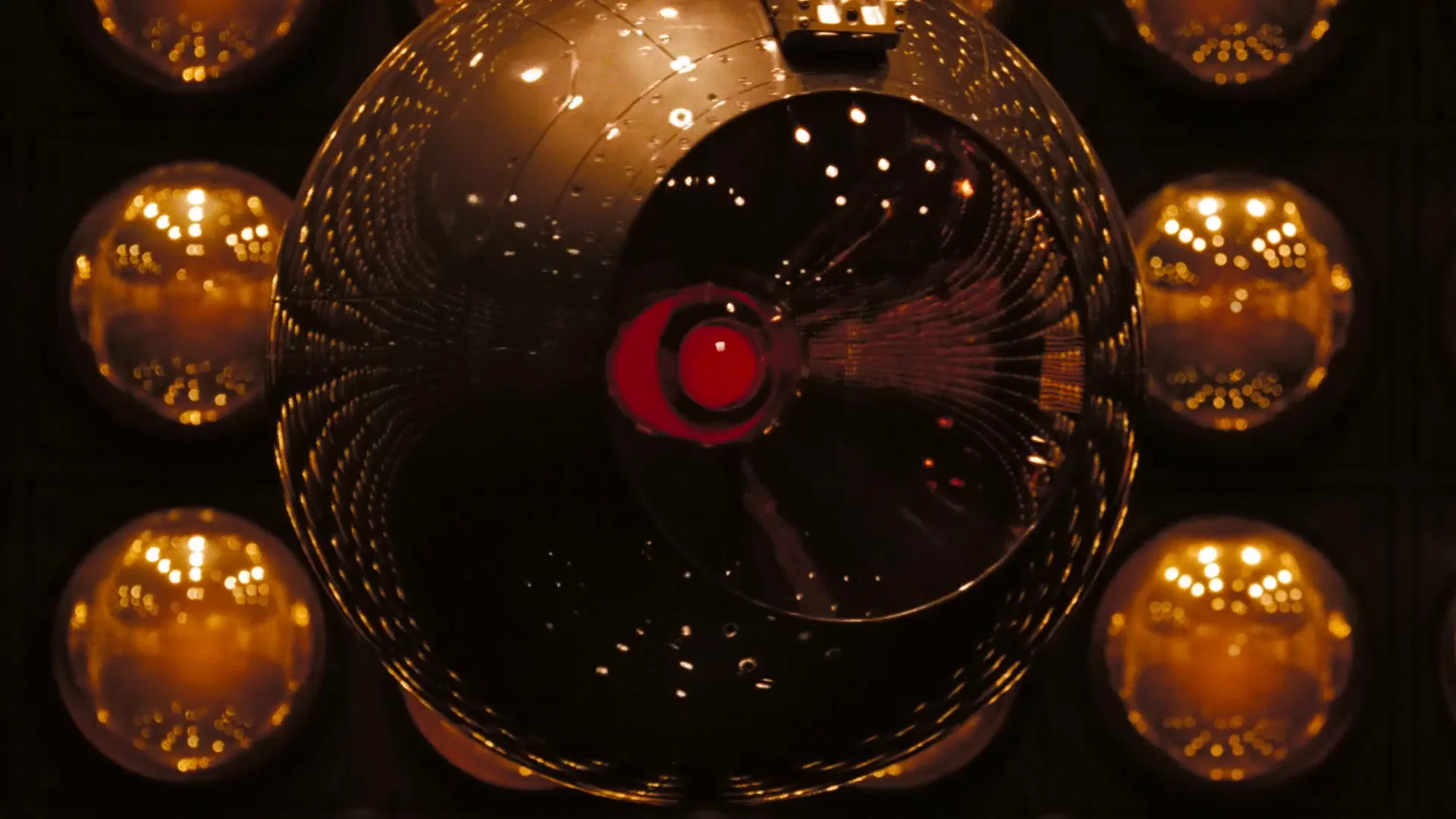
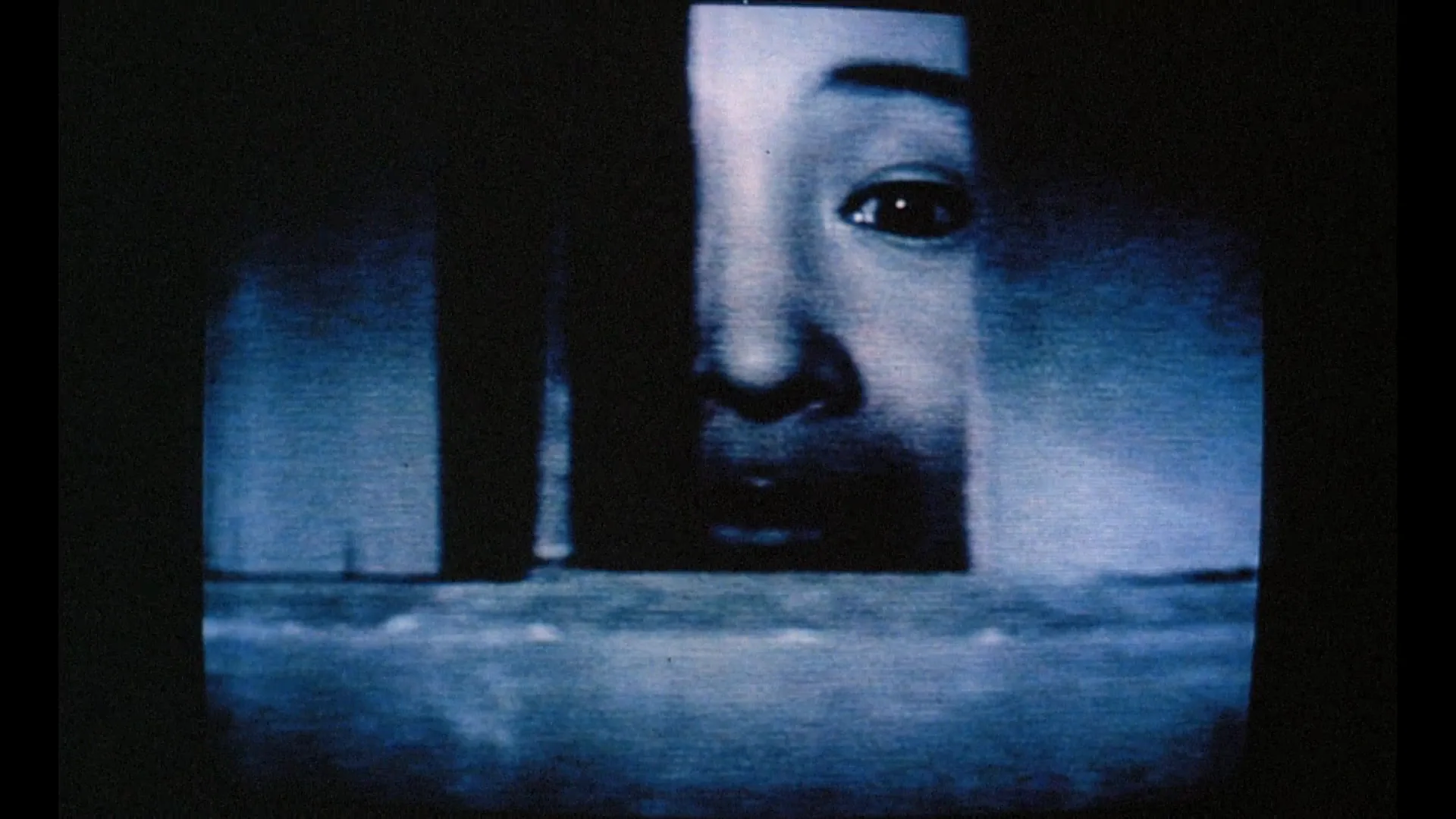
14 framesFrom the 1920s originals to later films that borrow the same moves: eyes as targets, living walls, doubled faces and dream-tinted color.
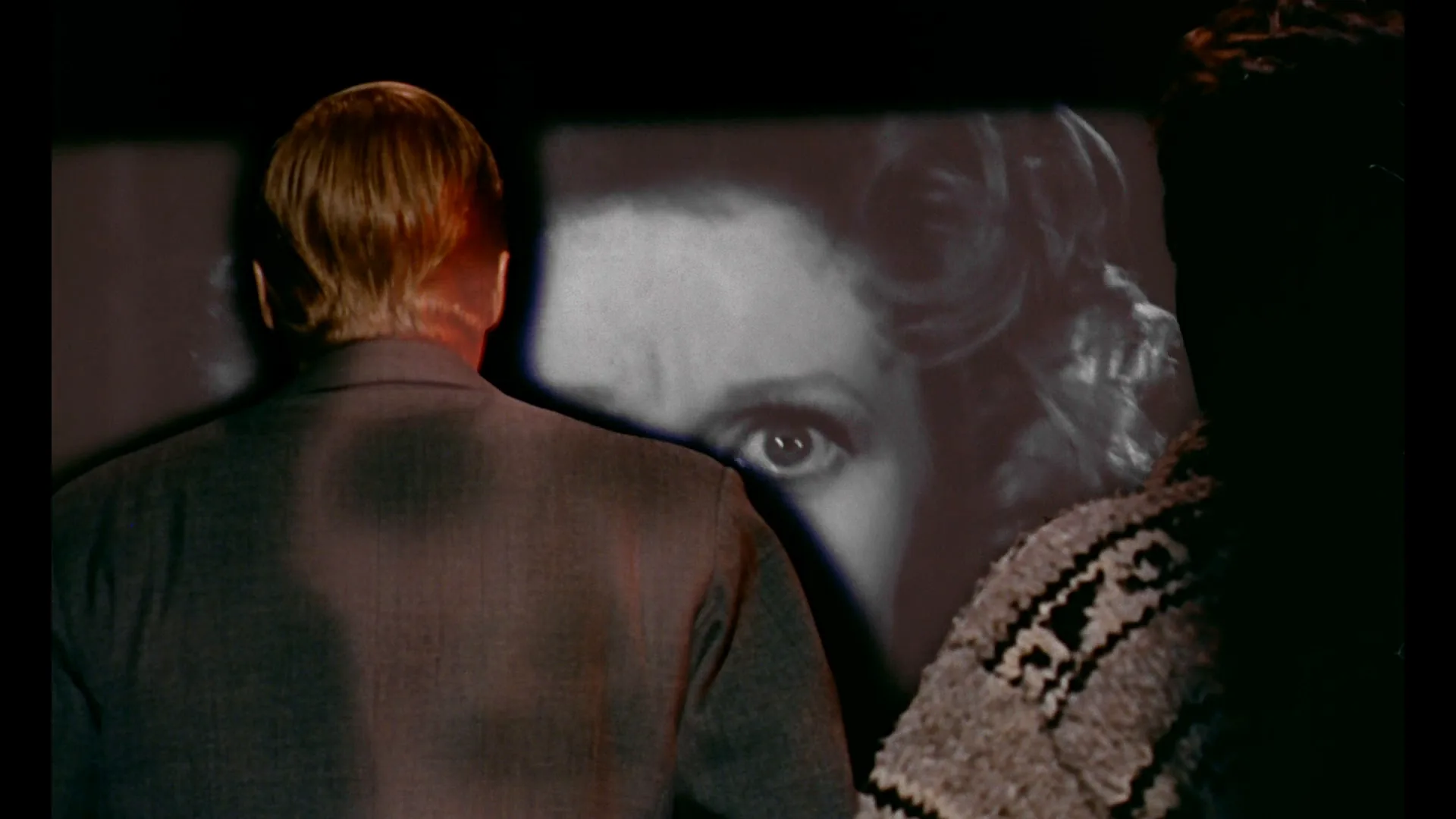
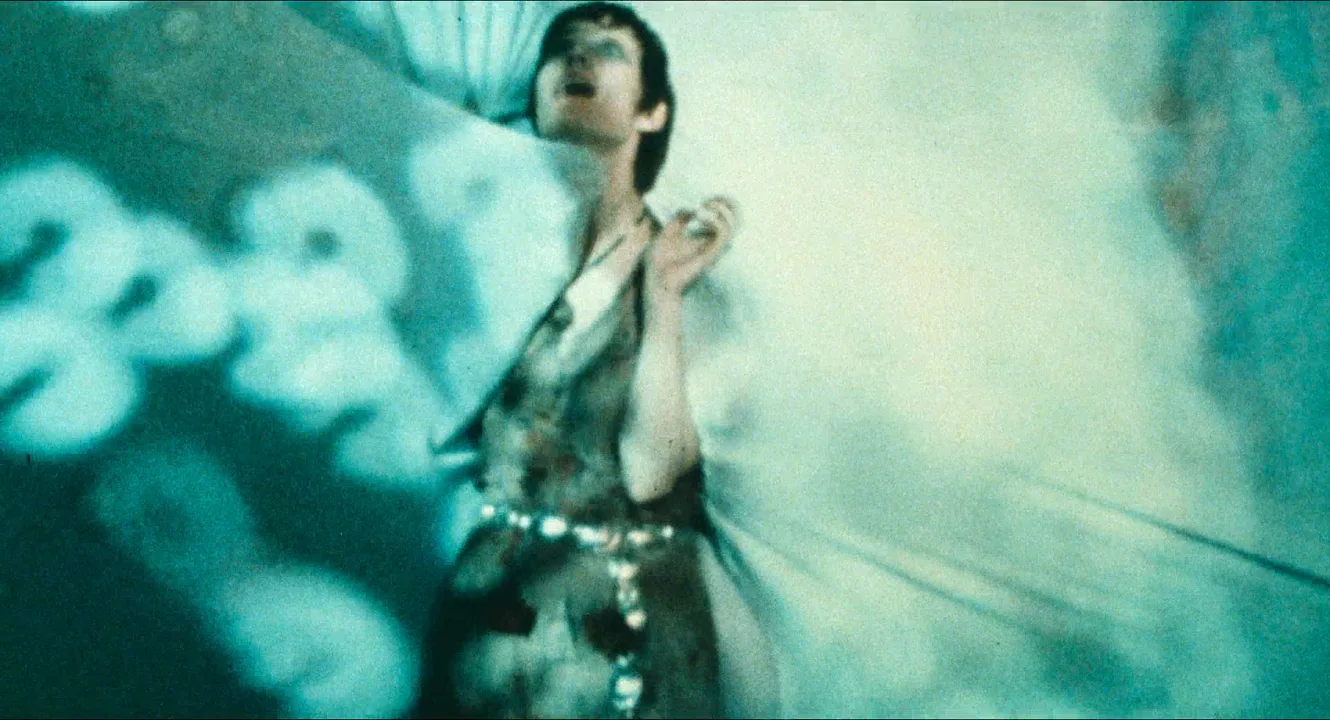
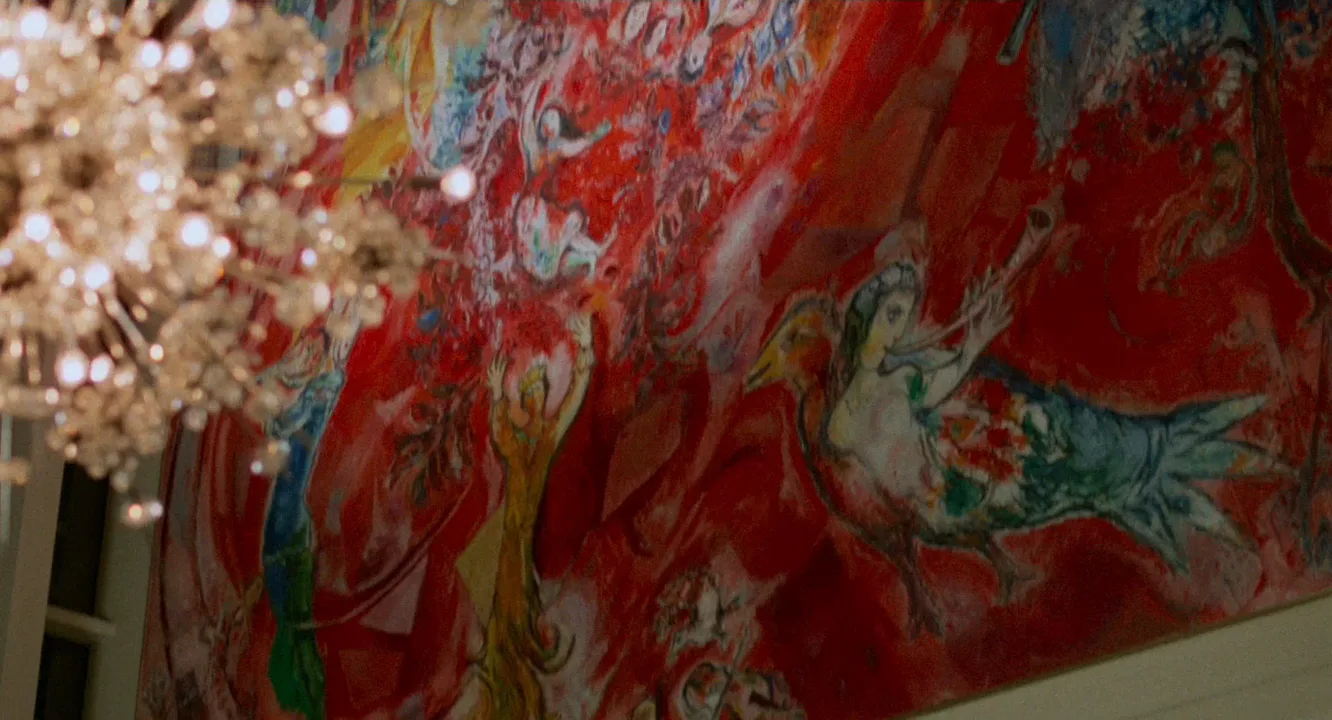
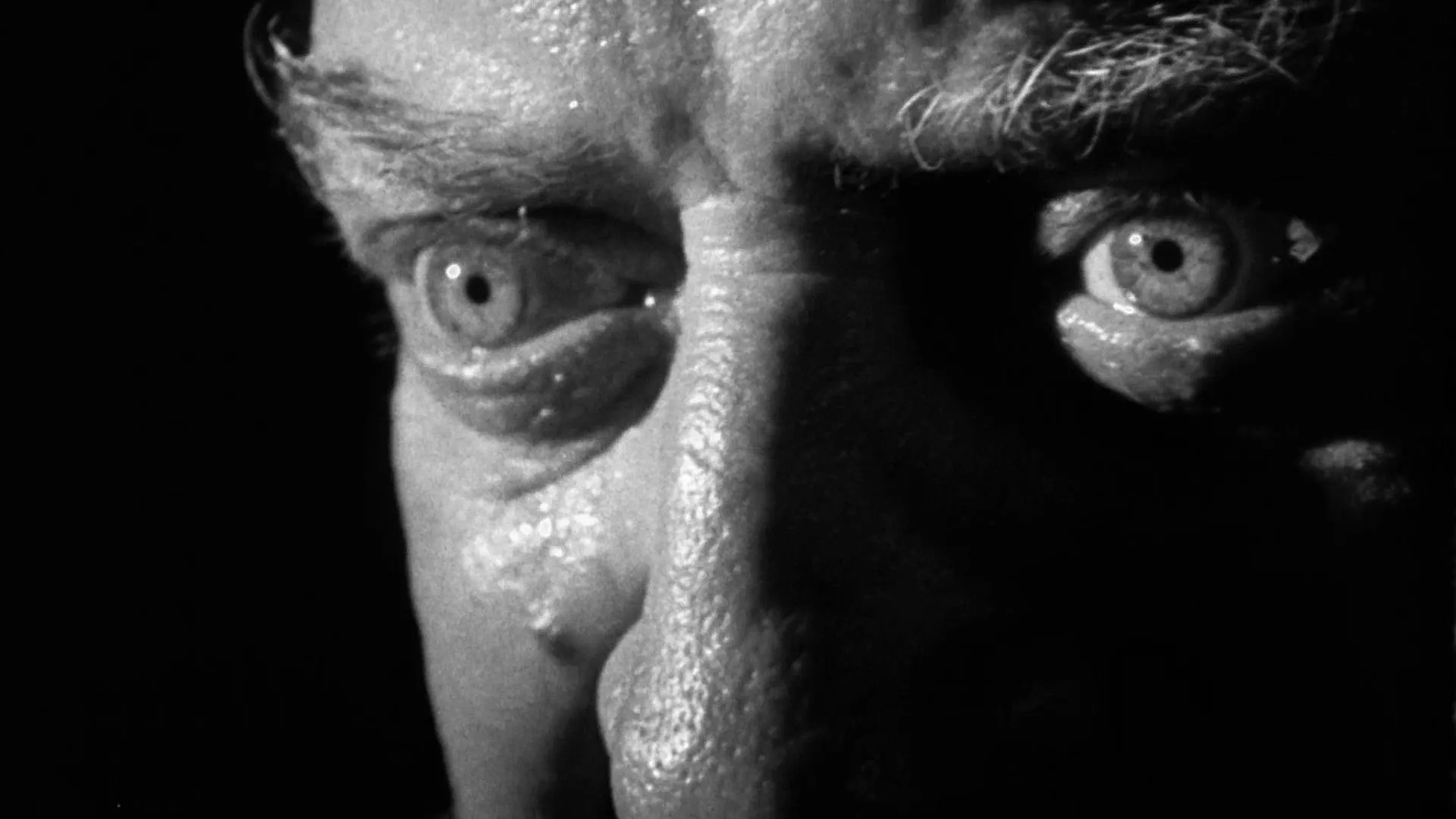
How to create a surrealism in film with AI
4 promptsImage models know the word “surreal”, but alone it tends to return glossy fantasy art: melting clocks, floating islands, purple skies. The surrealist effect comes from the opposite direction — a realistic photograph with one impossible element, described as plainly as a crime scene. In FlashBoards, pin frames from Buñuel, Hitchcock and Lynch next to your takes on one board, build the start frame with Nano Banana 2 Lite, try a second dream with GPT Image 2.5, and animate the best frame with MiniMax H3 Max Turbo. The fourth prompt re-shoots a real film shot from a text description alone, and the original plays next to the result so you can compare.
35mm color film still, realistic. A flat, empty beach at low tide under a heavy overcast sky. In the shallow water, twenty meters from the camera, stands a tall dark wooden wardrobe with carved doors, both doors open, warm yellow lamplight glowing from inside it and a row of wool coats hanging on the rail. A fictional woman in her fifties with close-cropped silver hair, a long neck, a small gap between her front teeth and heavy black eyebrows, wearing a mustard wool coat and bare feet, stands in ankle-deep water beside the wardrobe, facing it calmly. Static wide shot, 40mm lens, camera at chest height, deep focus, soft even daylight, muted gray-green palette, fine grain, deadpan and quiet.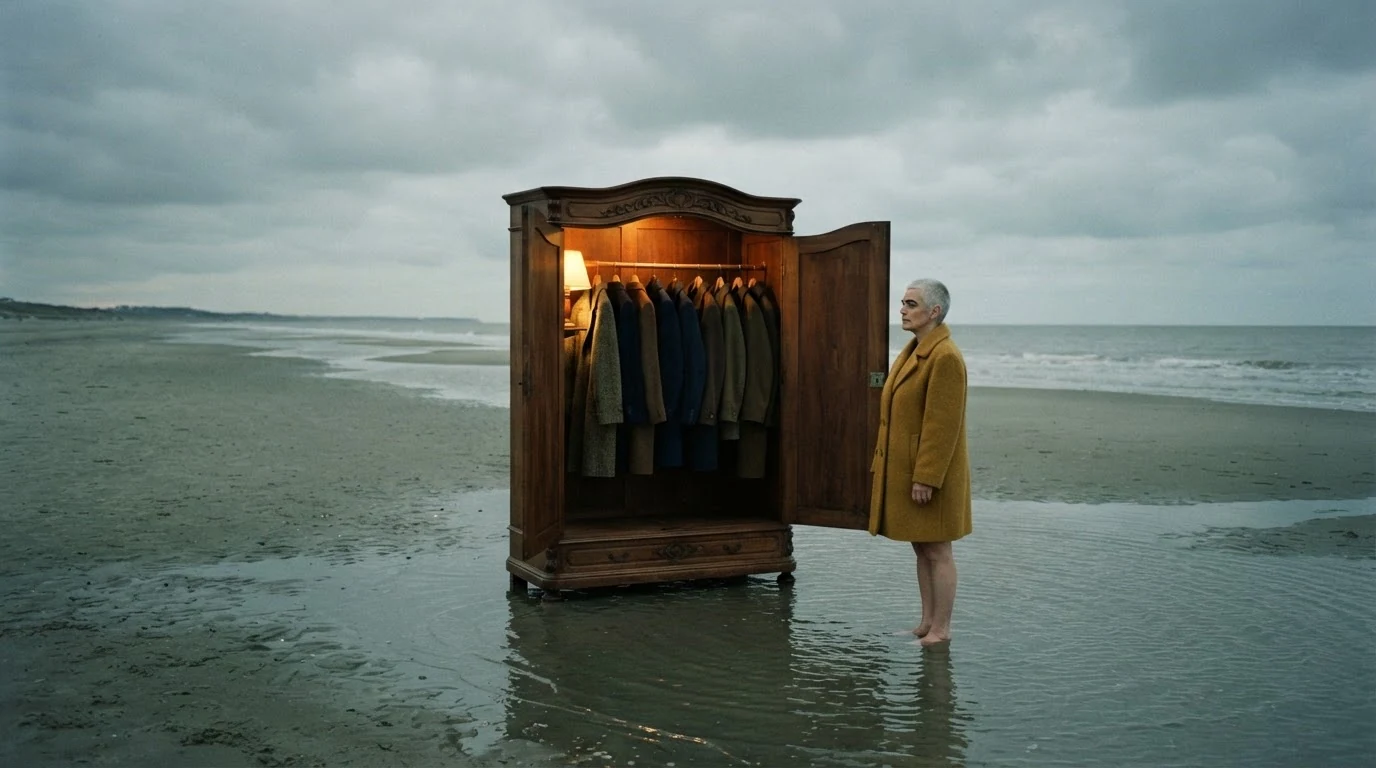
“Realistic”, “35mm film still”, “static wide shot” and “soft even daylight” keep the model in photographic mode instead of fantasy illustration — the calm frame is what makes the wardrobe feel wrong. The single impossible element is described with ordinary details (carved doors, coats on the rail, lamplight), so it reads as a real object in the wrong place. “Facing it calmly” gives the deadpan reaction, and the open doors and water give the video something to move.
Open FlashBoardsColor film still of a formal dinner party in a grand dining room with dark green walls and two crystal chandeliers. The parquet floor is covered by still, ankle-deep water that reflects the chandeliers perfectly. A long table set with white linen, silver and candles stands in the water; a thin birch tree grows straight up through the middle of the table and its branches touch the ceiling. At the head of the table sits a fictional man in his thirties with a shaved head, a thick copper-red beard and round wire glasses, in a gray three-piece suit, reading a folded newspaper, trousers rolled to the knee. Four other guests in evening dress are seen from behind, eating calmly. Symmetrical wide shot, 32mm lens, camera at seated eye level on the table's axis, warm candlelight and cool window light, sharp focus, realistic.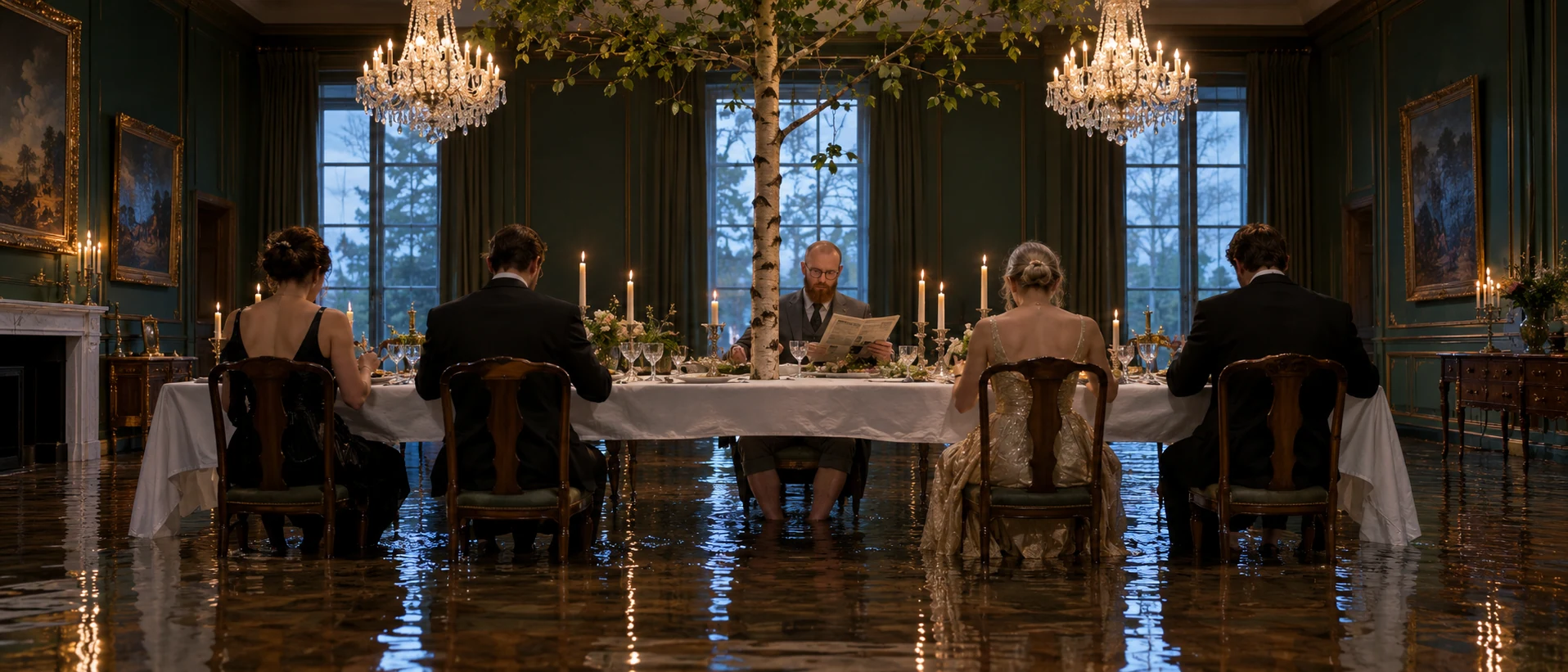
This take moves the dream indoors and stacks two quiet impossibilities — water instead of floor, a tree through the table — inside a strict social ritual, the territory of Buñuel's dinner-party films. “Symmetrical wide shot on the table's axis” gives a formal, composed frame, and “reading a newspaper” and “eating calmly” supply the deadpan. The 21:9 ratio holds the full length of the table so the reflections and the tree read in one look.
Open FlashBoardsCamera: locked-off static wide shot on a tripod for the whole shot, no camera movement. Action: Small waves are already washing around the woman's bare feet and the base of the wardrobe, and the wind is moving her coat and the coats hanging inside. She walks slowly through the shallow water to the wardrobe, steps up into it between the hanging coats, turns to face the beach, and pulls both doors closed from the inside. The lamplight glows through the gap between the doors. The wardrobe stands alone in the sea while the waves keep washing around it and the wind keeps blowing across the water.The shot is alive from the first frame — waves and wind are “already” moving — so the model doesn't drift into a slow push-in on a still. The locked-off camera is the surrealist choice: the impossible event plays out in one unbroken, documentary frame. The action uses only what exists in recipe 1 (the woman, the wardrobe, the coats, the lamplight, the water), so nothing new gets invented, and the ending — a closed wardrobe alone in the sea — gives a clean final image.
Open FlashBoards{
"output": "Full-screen live-action shot from American Psycho (2000), one continuous shot with no cuts, alive from its very first frame: a slow push-in on a framed theatre poster whose glass reflects a man's face, so a painted child's face and a living man's face fuse into one image. Late-1990s 35mm colour, dim warm apartment light, cool blue in the reflection, muted browns and cream.",
"characters": {
"S1": {
"name": "Patrick Bateman, played by Christian Bale",
"look": "late twenties, bare shoulders, slicked-back dark hair falling over his forehead, still expressionless face; seen only as a faint reflection in the poster glass, tinted blue",
"voice": "calm, flat, precise male voice-over, close to the microphone"
}
},
"shots": [
{
"shot": 1,
"camera": "locked-off frame on the wall that zooms in slowly and steadily for the whole shot, eye level; a dark blurred shape of a door frame and a head in soft focus fills the right third of the frame",
"action": [
"BEGINNING: alive from the first frame, a framed poster fills the left two thirds: cream border, a line of printed capitals along the top, and a painted portrait of a small girl with tousled hair and a red flag behind her left shoulder (screen left); over the right half of her face the glass reflects the man's face, bluish and semi-transparent, his eyes level with hers",
"THEN: the zoom keeps pushing in; the printed letters slide up and out of the top of frame, the red flag moves toward the left edge",
"THEN: the two faces grow larger and softer together; the man's reflected eye sits beside the girl's eye as one face with two halves; neither face moves, no blink, no change of expression",
"END: the fused face nearly fills the left two thirds, slightly out of focus, the dark blurred shape still on the right edge"
],
"voice": "only the voice-over below, from off screen; no lips move",
"dialogue": [
{
"speaker": "S1",
"on_screen": false,
"when": "soon after the shot begins",
"delivery": "voice-over, calm and flat",
"line": "<d>[English] My name is Patrick Bateman. I'm 27 years old.</d>"
},
{
"speaker": "S1",
"on_screen": false,
"when": "after a short pause, running into the last moment of the shot",
"delivery": "voice-over, same even tone",
"line": "<d>[English] I believe in taking care of myself in a balanced diet and a rigorous exercise routine.</d>"
}
]
}
],
"sound": {
"ambience": "quiet room tone of an expensive apartment, faint hum",
"speech": "exactly these spoken phrases, each said once, in this order",
"never_spoken": "no narration and no voice-over except the lines above: the descriptions, performance notes and step words of this prompt are never spoken aloud",
"music": "a film score under the scene, always below the voices: a cool, sparse synth pad with a slow, glassy pulse",
"subtitles": "none"
}
}Remakes the reflected-poster shot from American Psycho (2000), carrying over the slow zoom, the fused faces and Bateman's voice-over lines.
The surreal effect here is fusion: a child's painted face and a man's reflected face become one image while the camera slowly closes in. The prompt keeps the reflection, the push-in and the flat voice-over, so the strangeness comes from the image, not from action.
Open FlashBoardsCommon mistakes
- Fantasy art instead of surrealism. “Surreal” alone pulls toward glowing skies and floating islands. Ask for a “film still”, “realistic”, a real lens and plain daylight, and describe the impossible element as an ordinary object.
- Too many wonders. Models pile on extra weirdness. Name one or two impossible elements and describe everything else as normal — the contrast is the effect.
- The model “fixes” the impossible. A wardrobe in the sea can turn into a beach hut, a tree through a table can move beside it. State the exact placement: “stands in shallow water”, “grows straight up through the middle of the table”.
- Characters react too much. Image and video models add shock and wide eyes. Write the reaction you want — “calmly”, “reading a newspaper”, “without looking up”.
- Frozen video. If the first moment of the prompt is static, the clip starts as a slow zoom on a still. Put motion — water, wind, smoke, a hand already moving — in the first sentence.
Keep the reference frames, prompts and every generated take side by side — images and video in one canvas.
FAQ
6 questionsWhat is surrealism in film?
Surrealism in film is a style that follows dream logic instead of cause and effect. It grew out of the 1920s Paris art movement led by André Breton, and its founding films are The Seashell and the Clergyman (1928) and Buñuel and Dalí's Un Chien Andalou (1929). Surrealist films show impossible images and irrational collisions of objects with a calm, realistic camera, so the viewer feels the unconscious rather than follows a plot.
What was the first surrealist film?
Two films usually share the title. Germaine Dulac's The Seashell and the Clergyman (1928), written by Antonin Artaud, is often called the first surrealist film. Luis Buñuel and Salvador Dalí's Un Chien Andalou (1929) is the most famous and the one the surrealist group embraced most fully. Buñuel's L'Âge d'Or (1930) followed as the movement's first feature-length provocation.
What are some famous surrealist movies?
The classics are Un Chien Andalou (1929), L'Âge d'Or (1930), The Exterminating Angel (1962) and The Discreet Charm of the Bourgeoisie (1972) by Luis Buñuel. Later films with strong surrealist sequences include Hitchcock's Spellbound (1945), Fellini's 8½ (1963), David Lynch's Eraserhead (1977) and Mulholland Drive (2001), Terry Gilliam's Brazil (1985), Jan Švankmajer's Alice (1988) and Being John Malkovich (1999).
Is David Lynch a surrealist filmmaker?
Lynch never belonged to the historical movement, but he is its most important modern heir. His films use dream logic, deadpan performances, displaced sound and ordinary places that turn menacing — the Lady in the Radiator in Eraserhead (1977), Club Silencio in Mulholland Drive (2001). Like Buñuel, he rarely explains an image and trusts the audience to feel it before understanding it.
How do you make a surreal film look real?
Keep everything normal except one element. Use real locations, practical props, motivated light and normal lenses around 35–50mm, and frame with a calm, often locked-off camera. Let actors underreact to the impossible. Build the strange object practically or with in-camera tricks such as reverse motion, double exposure or forced perspective, so it carries real weight and shadow. The realism of the frame is what makes the dream disturbing.
What is the difference between surrealism and dreamcore?
Surrealism is a historical art and film movement from the 1920s that uses dream logic to reach desire, fear and social satire, often with shock. Dreamcore is a recent internet aesthetic that imitates the look of dreams — soft pastel light, empty playgrounds, clouds and eyes in odd places — to create nostalgia and mild unease. Dreamcore borrows surrealist imagery but is mostly mood, not provocation.
Related terms
6- Magical RealismGenres
Magical realism presents impossible events inside an otherwise ordinary, realistic world and treats them matter-of-factly — no one in the story finds the magic strange (Like Water for Chocolate).
- Avant-Garde FilmFilm Movements & Styles
Avant-garde film rejects commercial narrative to experiment with form itself — rhythm, abstraction, collage, dream logic — from 1920s European movements (Un Chien Andalou) to American experimental cinema like Meshes of the Afternoon.
- JuxtapositionEditing
Juxtaposition places two contrasting images side by side — in one frame or across a cut — so their collision creates a meaning neither has alone.
- DreamcoreFilm Movements & Styles
Dreamcore is an internet-born surreal aesthetic that imitates the feel of dreams: pastel skies, empty playgrounds and hallways, soft glow, eyes and clouds in odd places — nostalgic and slightly unsettling.
- Match CutEditing
A match cut joins two different shots through a shared shape, movement, composition or sound — the bone that becomes a satellite in 2001 — so the cut draws a link between them.
- SuperimpositionPost-Production & VFX
Superimposition layers one image over another so both are visible at once — a face over a landscape, a ghostly figure, a memory over the present — made optically or in compositing.
Further reading
André Breton, Manifestoes of Surrealism (University of Michigan Press). Luis Buñuel, My Last Sigh (autobiography). Linda Williams, Figures of Desire: A Theory and Analysis of Surrealist Film.