 FlashBoards Learn
- Learn
- Film Movements & Styles
- German Expressionism
Film Movements & Styles · Film language
German Expressionism
Also called: expressionism, expressionist film, Weimar cinema
German Expressionism is the Weimar-era film movement of roughly 1919–1927 that put a character's inner state on the outside: painted, tilted sets, jagged lines, hard light carving deep shadow and stylized, mask-like acting. It makes the viewer feel dread and madness directly, and it shaped horror and film noir for a century.
- What it does
- Turns the set, the light and the actor's body into a picture of fear, guilt or madness.
- Use it when
- The story lives inside a disturbed mind, a nightmare, a tyranny or a haunted place.
- Watch out
- Tilting the camera alone is not Expressionism; the world itself has to be built crooked.
- Try this prompt
1920s silent film still, painted crooked street of leaning houses, a gaunt figure in a black coat, hard low light throwing his long shadow up the wall, black and white
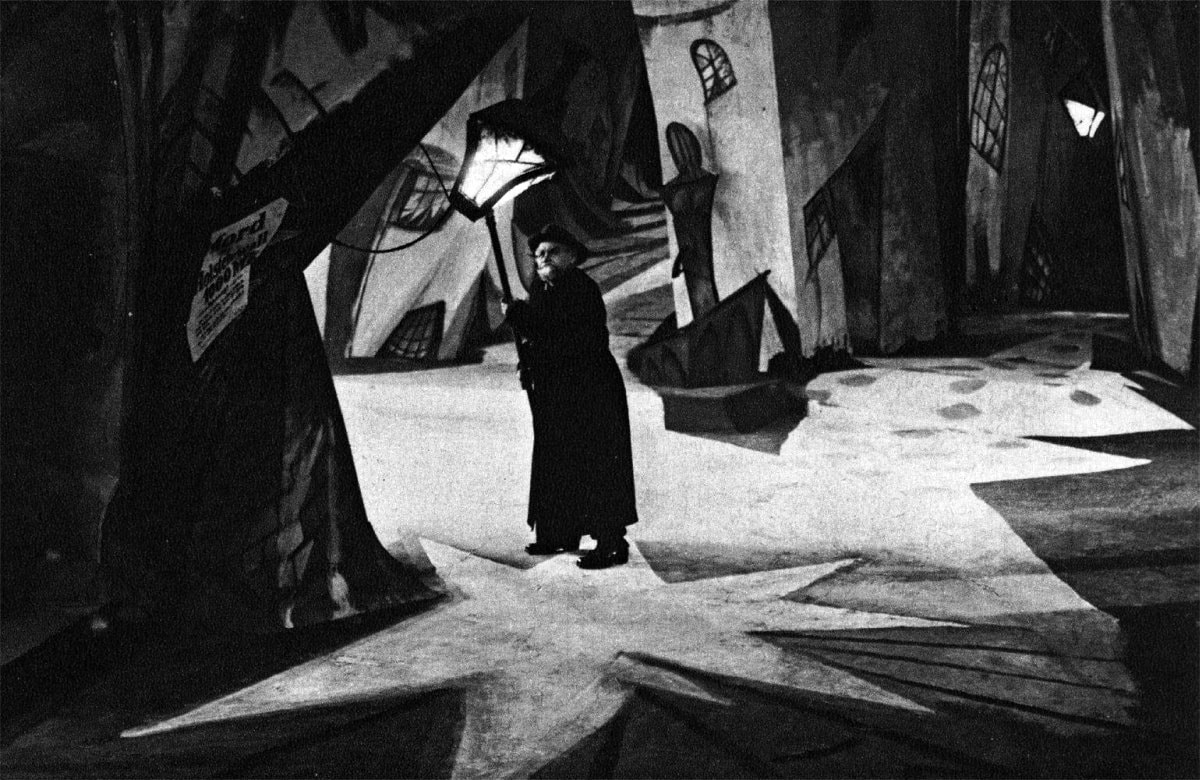
What is German Expressionism?
German Expressionism is a style of Weimar cinema, made in Germany in the years after the First World War, in which the film world is deliberately distorted so that it looks the way a character feels. Streets lean, doorways narrow to points, shadows are longer than the people who throw them, and actors move like figures in a nightmare. Realism is not the goal. The image is a state of mind.
The word came from painting and theater. Expressionist painters of groups like Die Brücke and Der Blaue Reiter had already swapped faithful description for violent color and warped form, and stage directors were building abstract sets lit by single hard lamps. Film borrowed both. The starting gun was The Cabinet of Dr. Caligari (1920), directed by Robert Wiene, whose designers Hermann Warm, Walter Reimann and Walter Röhrig painted the town of Holstenwall on canvas flats: crooked houses, zigzag streets, and streaks of light and shadow painted straight onto walls and floors.
The core years run from about 1919 to 1927, in German studios, above all Ufa. The films most people mean by the term:
- The Cabinet of Dr. Caligari (1920, Robert Wiene) — the painted-set manifesto.
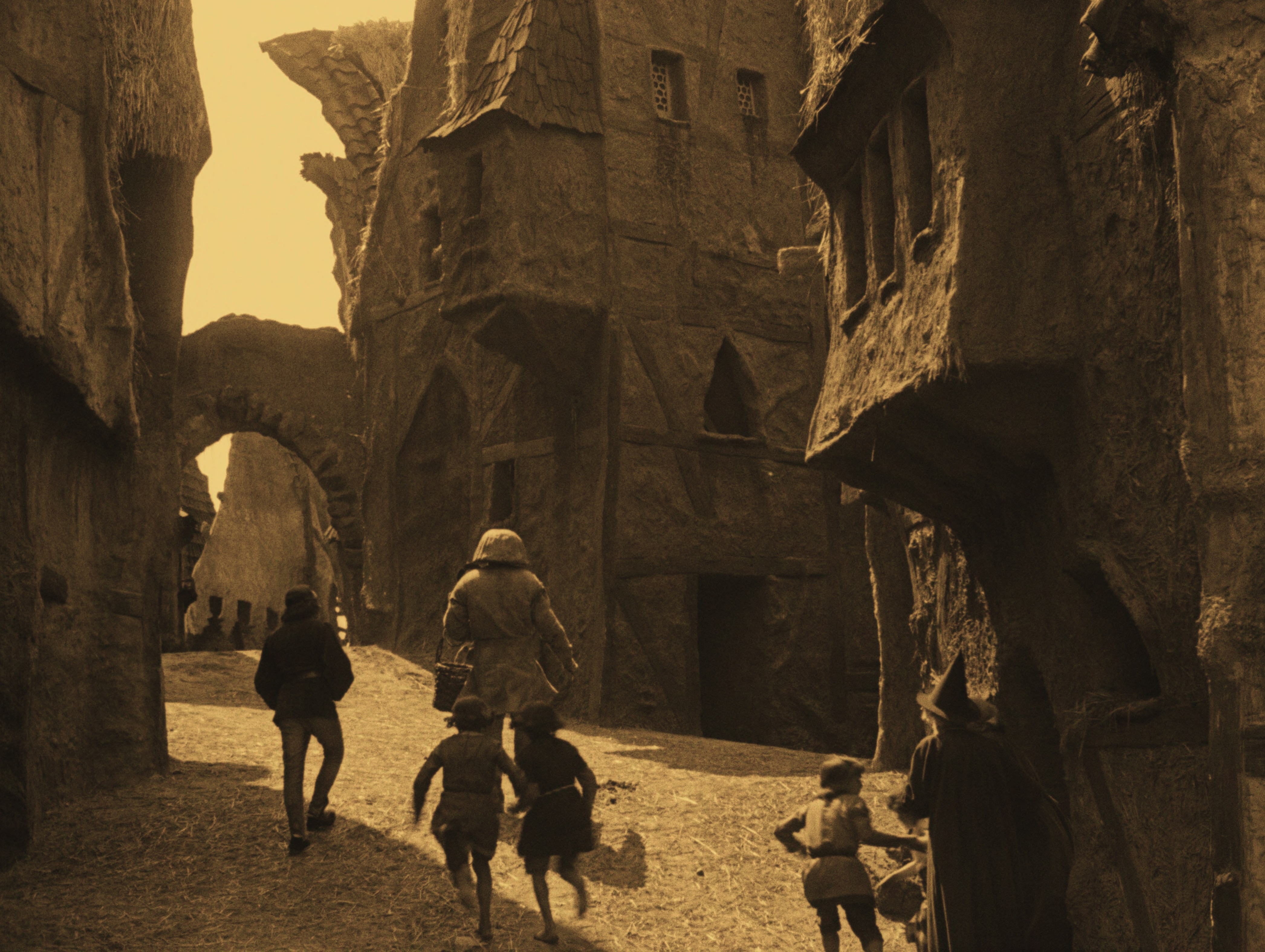
- The Golem: How He Came into the World (1920, Paul Wegener and Carl Boese) — a medieval ghetto built as bulging, organic architecture.
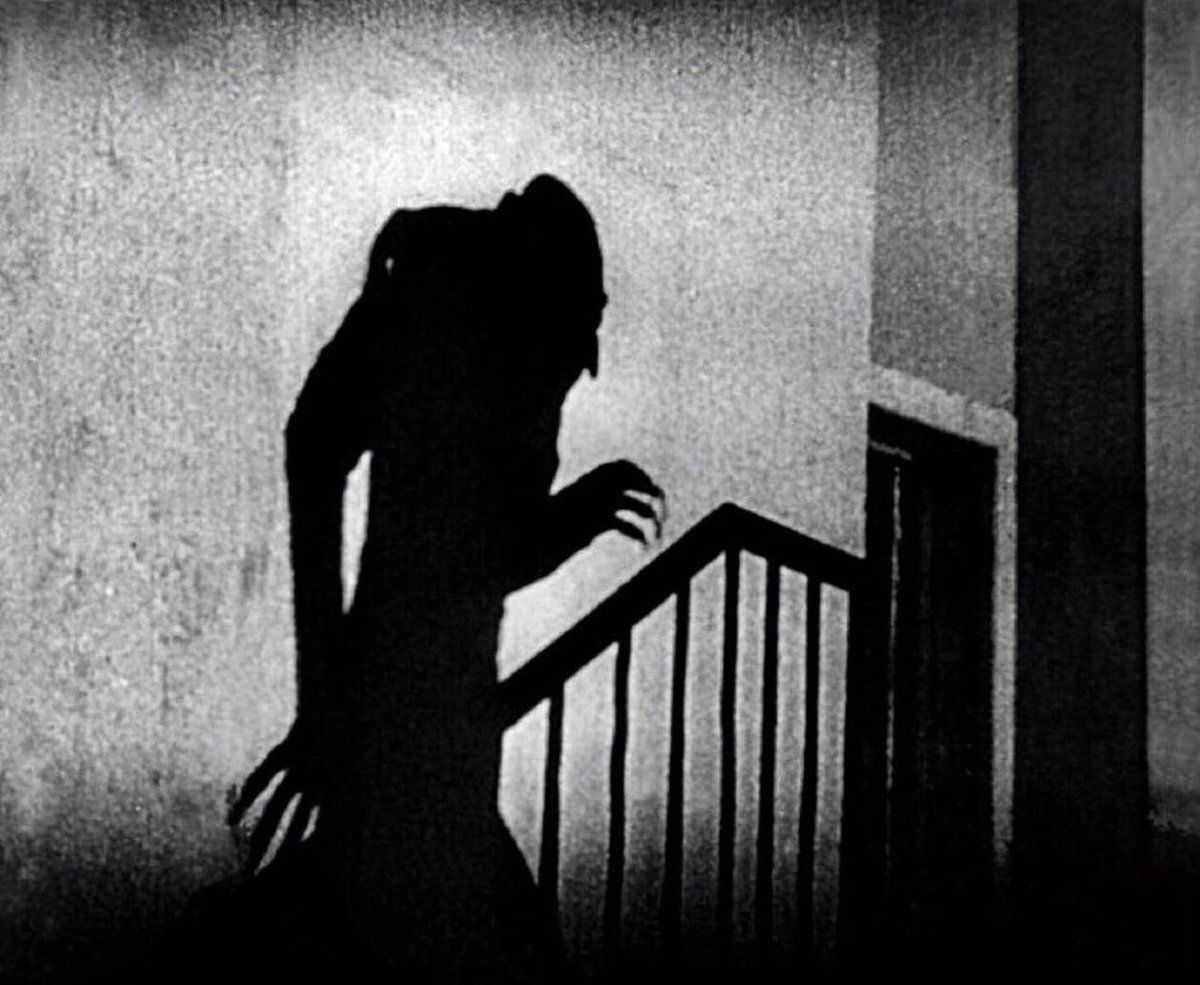
- Nosferatu (1922, F. W. Murnau) — shadow and silhouette as the vampire's real body.
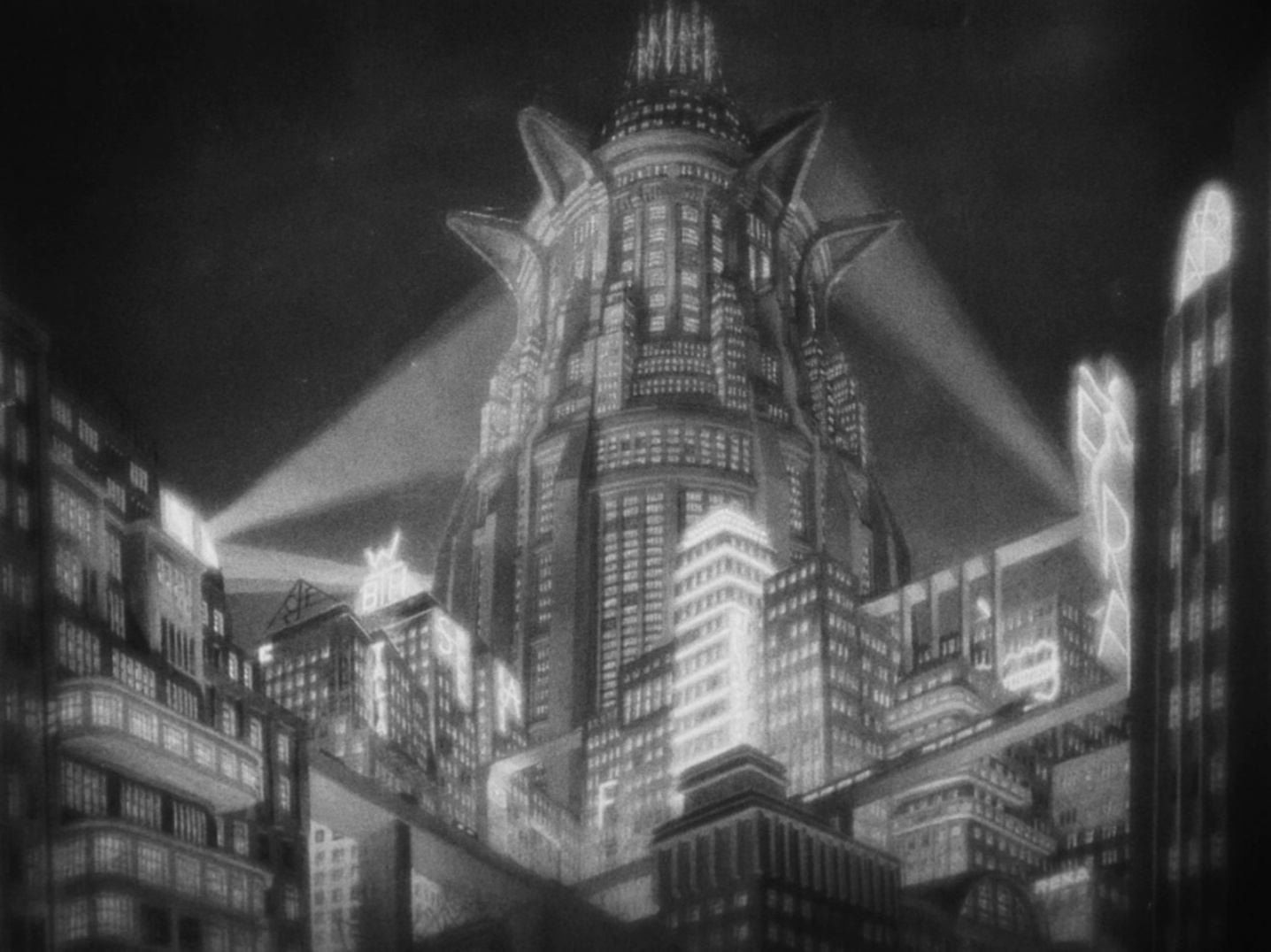
- Dr. Mabuse the Gambler (1922) and Metropolis (1927, both Fritz Lang) — the master criminal and the monumental city.
- Warning Shadows (1923, Arthur Robison) and Waxworks (1924, Paul Leni) — shadow play and stylized fantasy.
- The Last Laugh (1924) and Faust (1926, both Murnau) — the moving camera and light as spectacle.
Expressionism was the most visible current of a wider Weimar cinema that also made chamber dramas and street films. By the sound era the painted style had faded, though Lang's M (1931) keeps much of it in lighting and staging. Among film movements it is short-lived, yet few styles have been copied as often.
What are the characteristics of German Expressionism?
An Expressionist frame combines several traits; a tilted camera alone does not make the style.
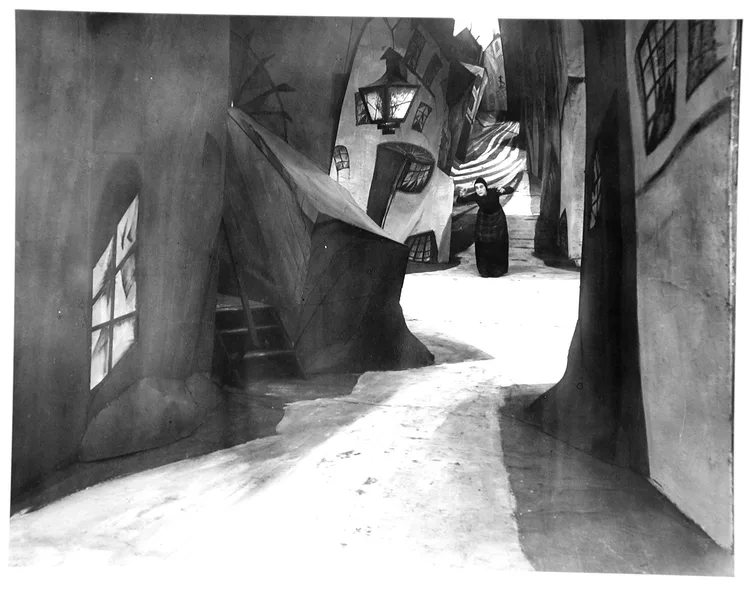
Distorted, artificial sets. Walls lean, windows are trapezoids, stairs climb at impossible angles, and perspective is exaggerated with painted lines and forced perspective. In Caligari even the light is paint.
Hard light and deep shadow. Lighting is low-key and high-contrast, usually one hard light source with little fill. Faces are carved in chiaroscuro, and cast shadows often play a character on their own: the shadow arrives before the man, grows larger than him, or does what he cannot. Light from below, under lighting, turns faces into masks.
Diagonals and unstable composition. Oblique lines dominate the frame. Horizons and verticals rarely sit straight, and when a camera tilts in later films the Dutch angle is a direct inheritance.
Stylized performance and makeup. Actors move in slow, angular, dance-like gestures; eyes are darkened, faces whitened, hands spread into claws. Conrad Veidt's sleepwalker Cesare in Caligari glides along walls as if he were part of the set.
Themes of the unstable mind. Madness, hypnosis, doubles, tyrants who control other people's bodies, the monster in the house, the crushing city. Frame stories and unreliable narrators are common: Caligari famously reframes its whole nightmare in its final minutes.
Silent-film grammar. Stories are told through image, pantomime and intertitles, in black and white that was often tinted in release prints. Everything the dialogue would say has to be visible in the mise-en-scène.
Why filmmakers still borrow from Expressionism
Expressionism lets a director show what cannot be photographed: fear, guilt, obsession, a world that has stopped making sense. When the set itself is wrong, the viewer feels it in the tilt of a wall before any character reacts.
That is why the style traveled. Many of its artists left Germany in the 1920s and 1930s. Murnau went to Hollywood and made Sunrise (1927); cinematographer Karl Freund shot Dracula (1931) for Universal, and Paul Leni directed The Cat and the Canary (1927) there. The Universal monster cycle and much of American horror were built on Expressionist shadows, crooked sets and painted-looking castles. A decade later émigré directors and cinematographers helped define the look of film noir: venetian-blind shadows, wet streets, faces half swallowed by black.
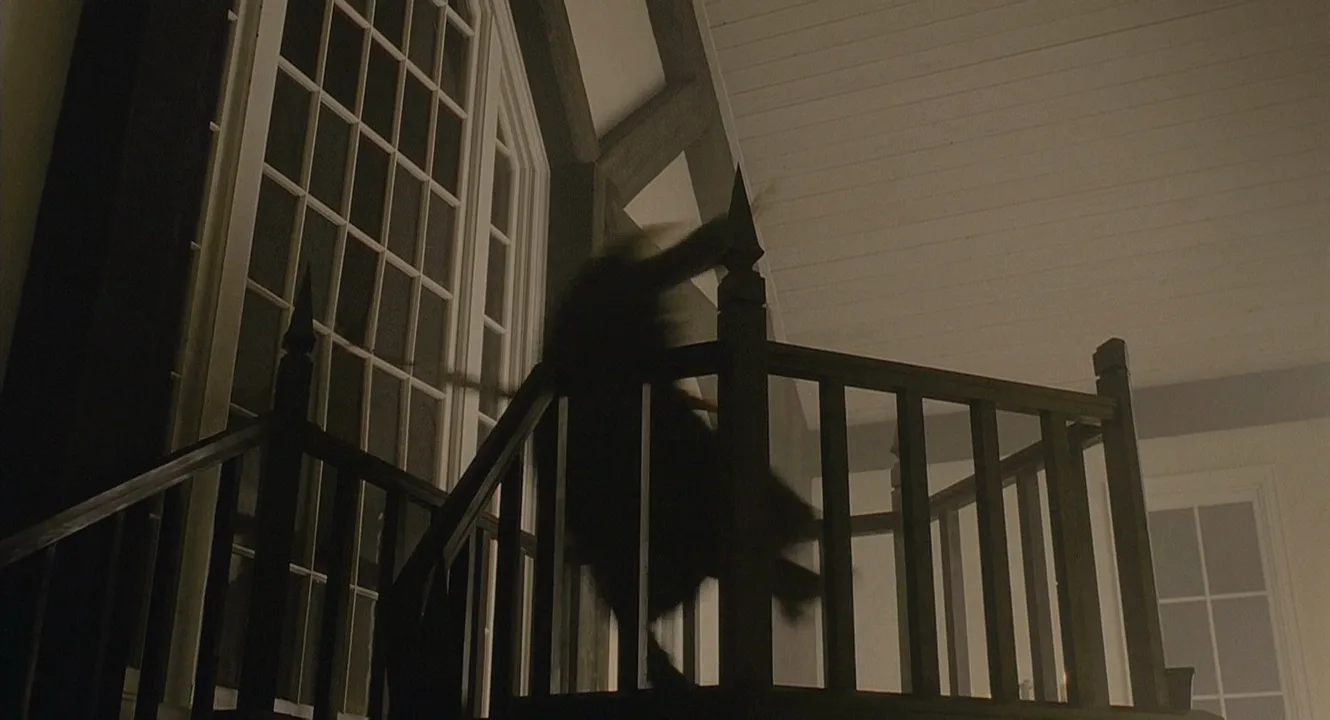
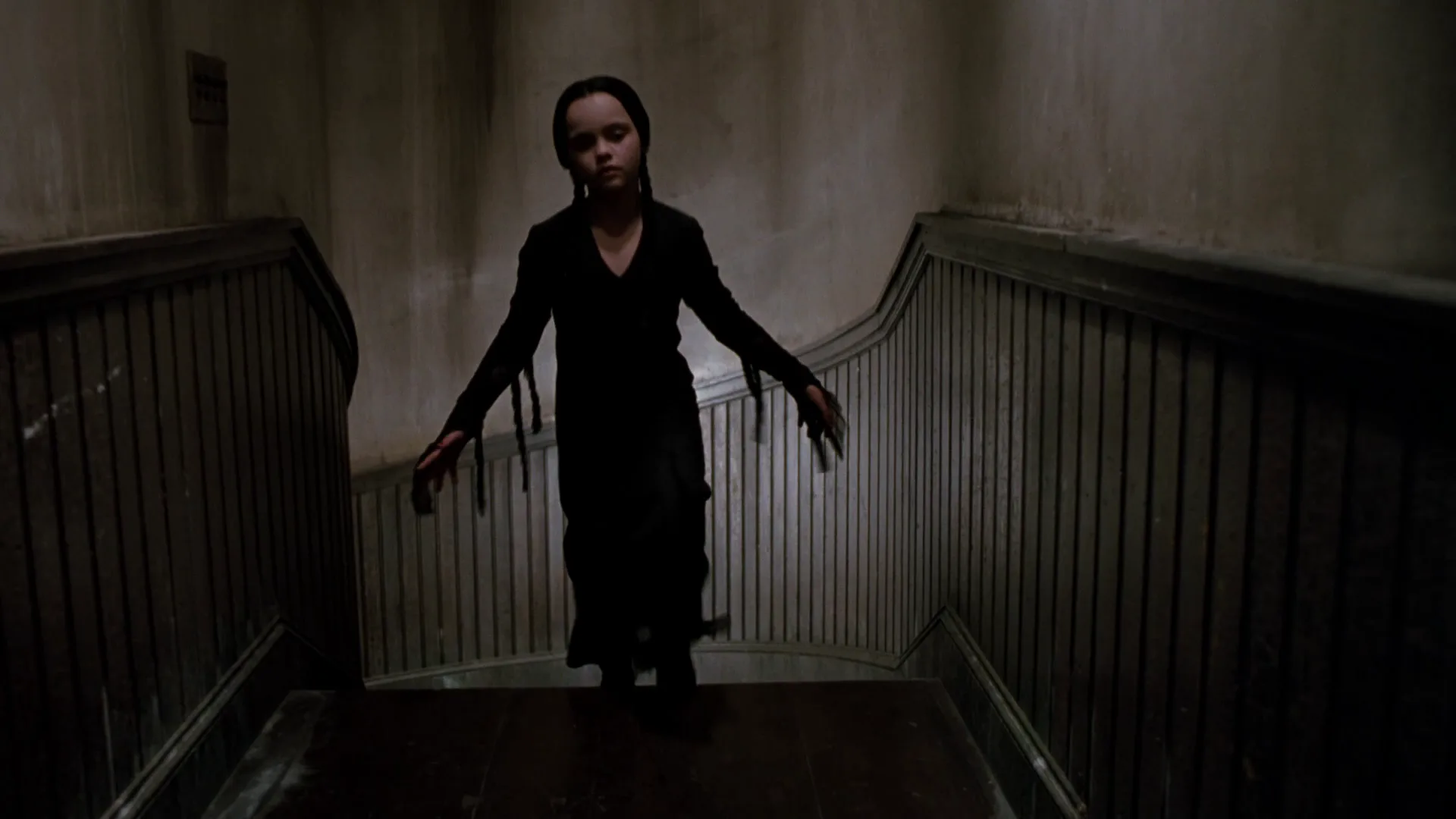
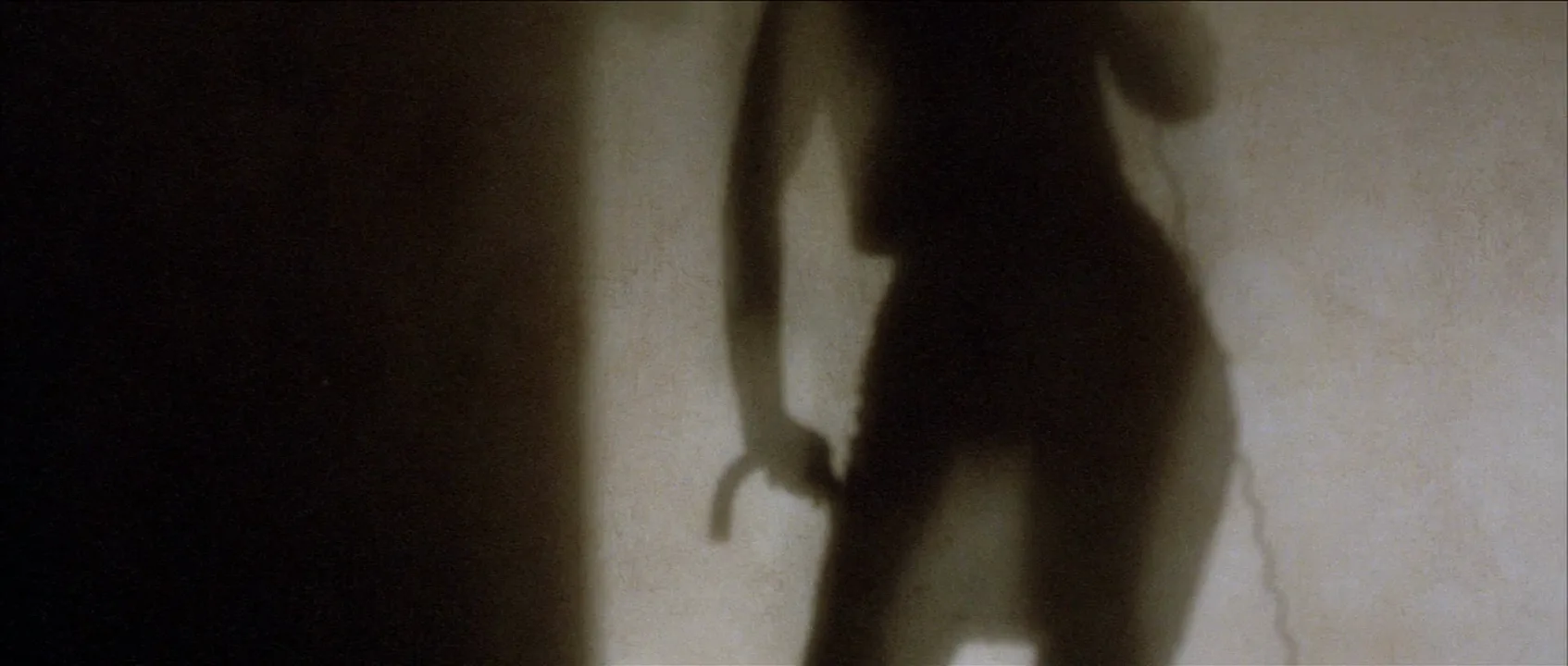
The influence runs straight through modern cinema. Tim Burton's films, from Edward Scissorhands (1990) to Sleepy Hollow (1999), are open tributes, with crooked houses, spiral stairs and gaunt, pale heroes. Blade Runner (1982) and its ziggurat skyline descend from Metropolis. David Lynch uses a single projected shadow to make an ordinary room feel threatening.
Use the style when the audience should share a character's distorted perception, or when a place should feel alive and hostile. Avoid it when you need a believable, everyday reality: the artifice is the message.
How to shoot an Expressionist look today
Expressionism starts in the art department, not in the grade.
Design the distortion into the set. Build or dress the space so its lines are wrong: flats that lean 10–20 degrees, door and window openings cut as trapezoids, floors painted with converging stripes, staircases that narrow as they rise. On location, pick architecture with strong diagonals (stairwells, fire escapes, attic beams).
Light with one hard source. A bare Fresnel or a small LED with the lens open, flagged hard, and very little fill. Aim for ratios of 8:1 or more between the lit side and the shadow side. Put the source low or far to the side so shadows are long and climb walls; a unit near floor level gives the classic giant shadow on a staircase. Cut cookies or flags into jagged shapes to throw painted-looking patterns onto walls, as the Caligari designers painted theirs.
Choose lenses that stretch space. Wide lenses (18–25mm on Super 35) exaggerate the leaning lines and the depth of a corridor. Shoot low, around knee or hip height, looking up at a figure framed by slanted walls, or high and steep down a stairwell. Tilt the camera only when the set supports it, and keep it locked off: most classic Expressionist shots are static tableaux, and the move happens inside the frame.
Direct the body, not just the face. Ask for slower, larger, angular gestures; hold poses; let hands and shadows do the acting. Pale base makeup with darkened eye sockets reads strongly under a single hard key. Solid black or white costumes turn the figure into a shape.
Finish in monochrome or near it. Black-and-white with crushed blacks and clean highlights is the default; a single amber, sepia or blue-green tint evokes tinted silent prints. The shapes should carry the look even without added grain.
German Expressionism vs. film noir
The two share a visual vocabulary and many of the same people. The difference is where the distortion lives.
| | German Expressionism | Film noir | |---|---|---| | Era and place | Germany, about 1919–1927 | United States, about 1940–1958 | | Sound | Silent, intertitles | Sound, voice-over, hardboiled dialogue | | Sets | Artificial, painted, visibly distorted | Mostly realistic cities, studio streets and real locations | | Where the distortion comes from | The world itself is built crooked | Light, angles and shadow bend a realistic world | | Typical stories | Madness, tyrants, monsters, doubles | Crime, betrayal, fate, the femme fatale | | Acting | Stylized, pantomimic | Naturalistic, cool, clipped |
Put simply: Expressionism paints the nightmare into the architecture; noir keeps the architecture real and lets the lighting do the damage. If a frame's walls literally lean, you are looking at Expressionism or a tribute to it. If the walls are straight but slatted shadows cut across a detective's face, it is noir. Both, at their best, use silhouette and darkness to show that the characters are trapped.
German Expressionism examples in film
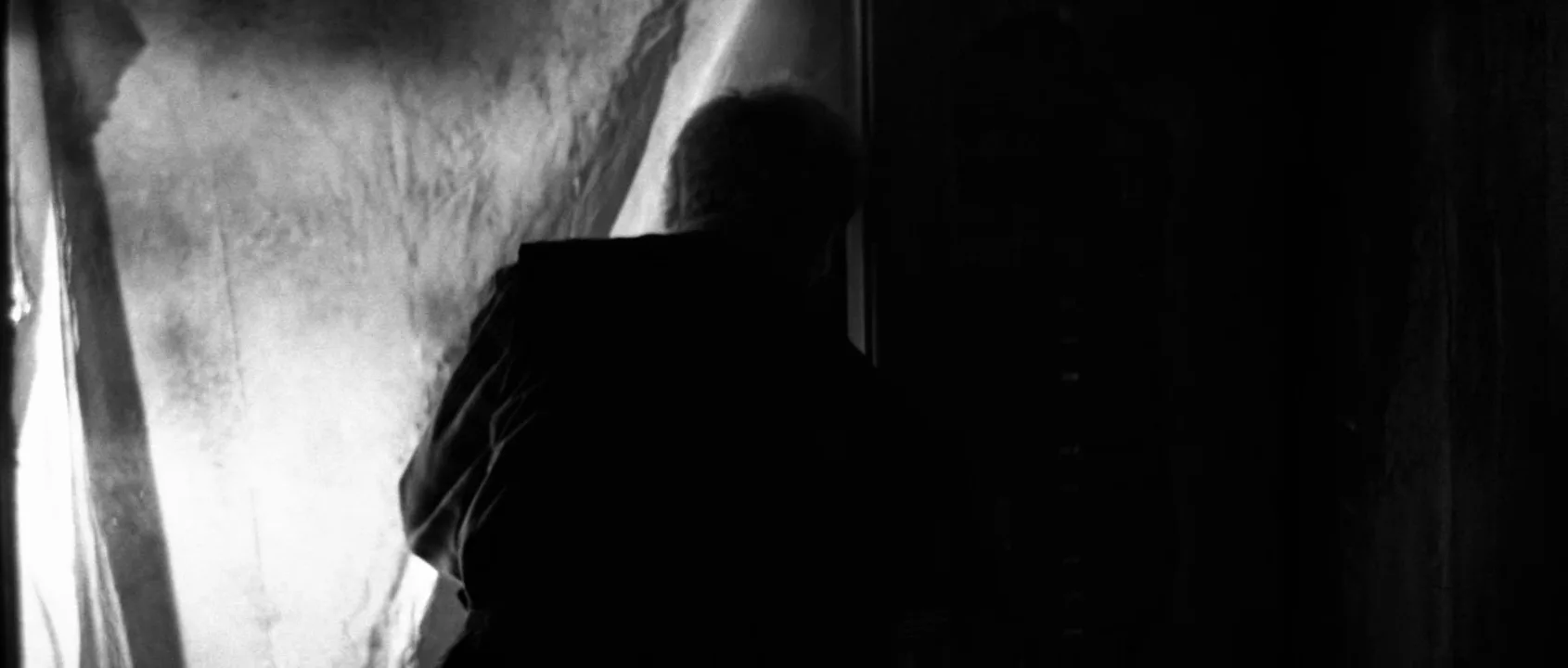
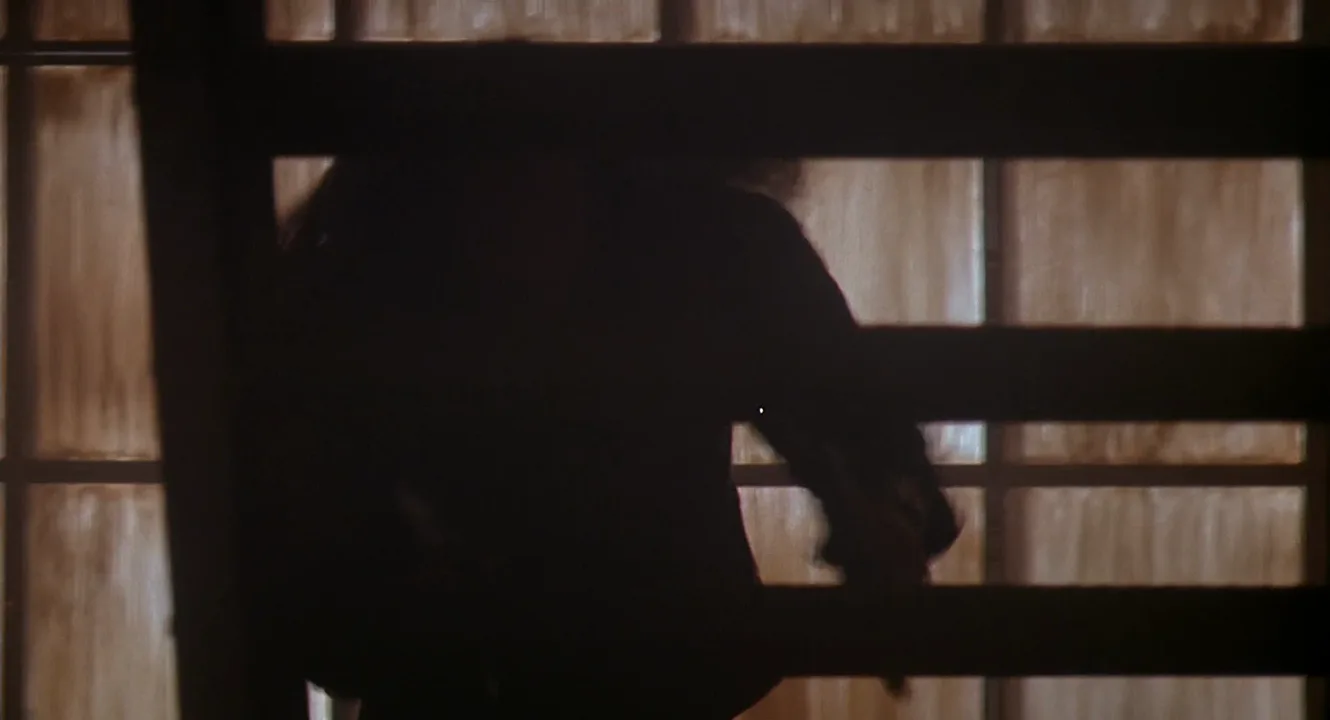
15 framesFive frames from the Weimar originals, then ten later films where the toolkit resurfaces: crooked sets, giant cast shadows, hard single-source light and tilted compositions.
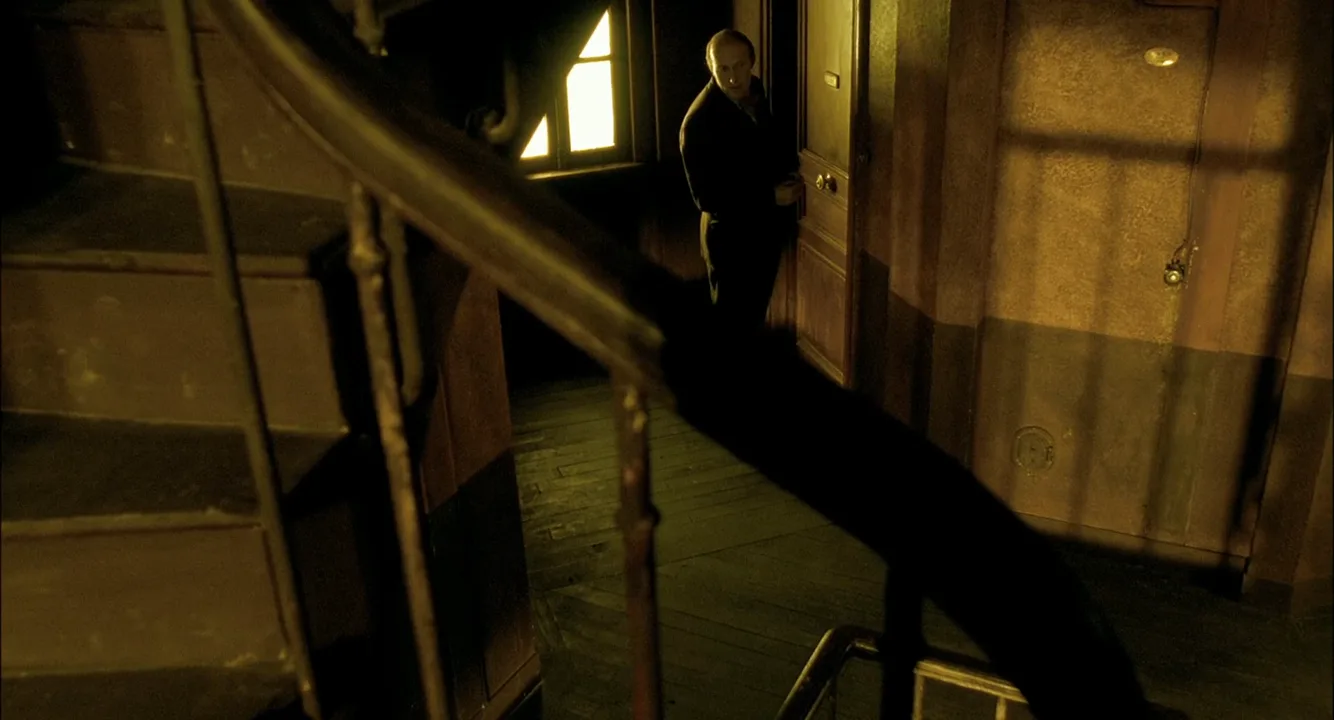
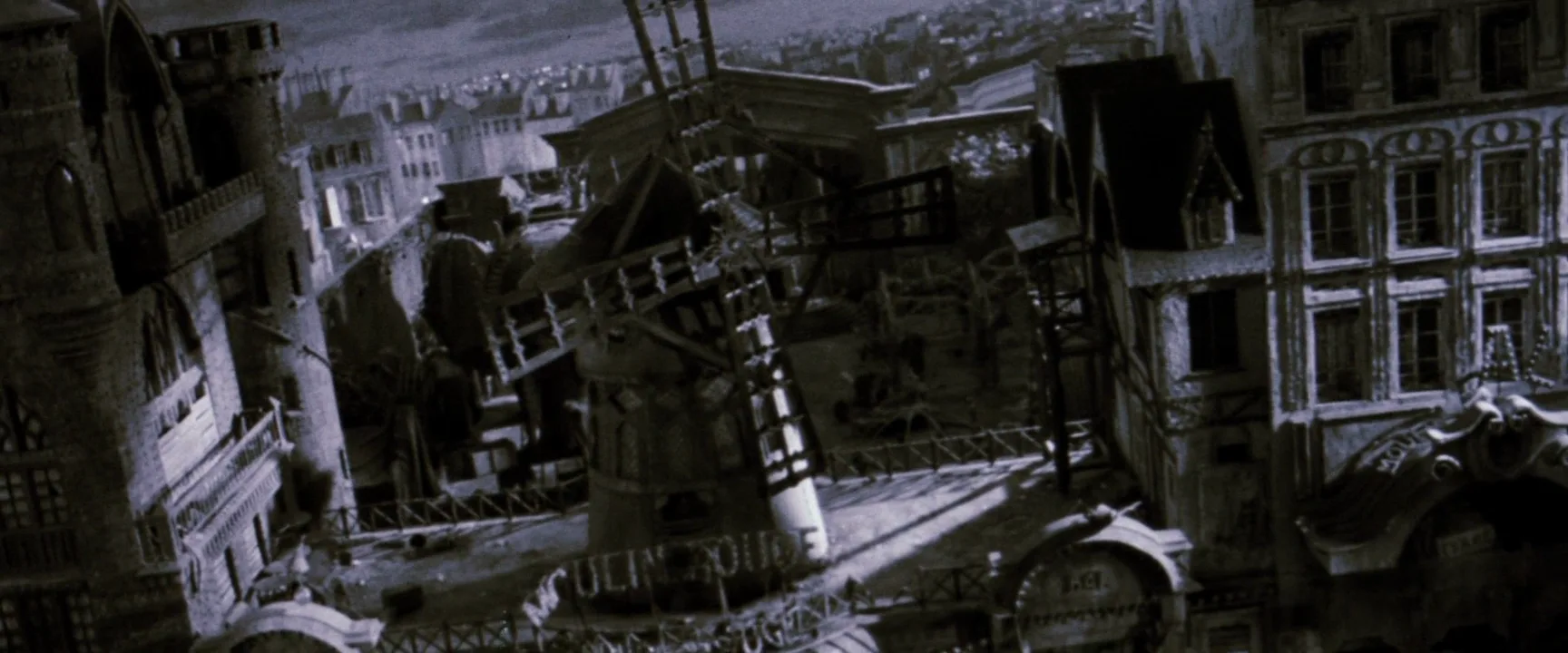
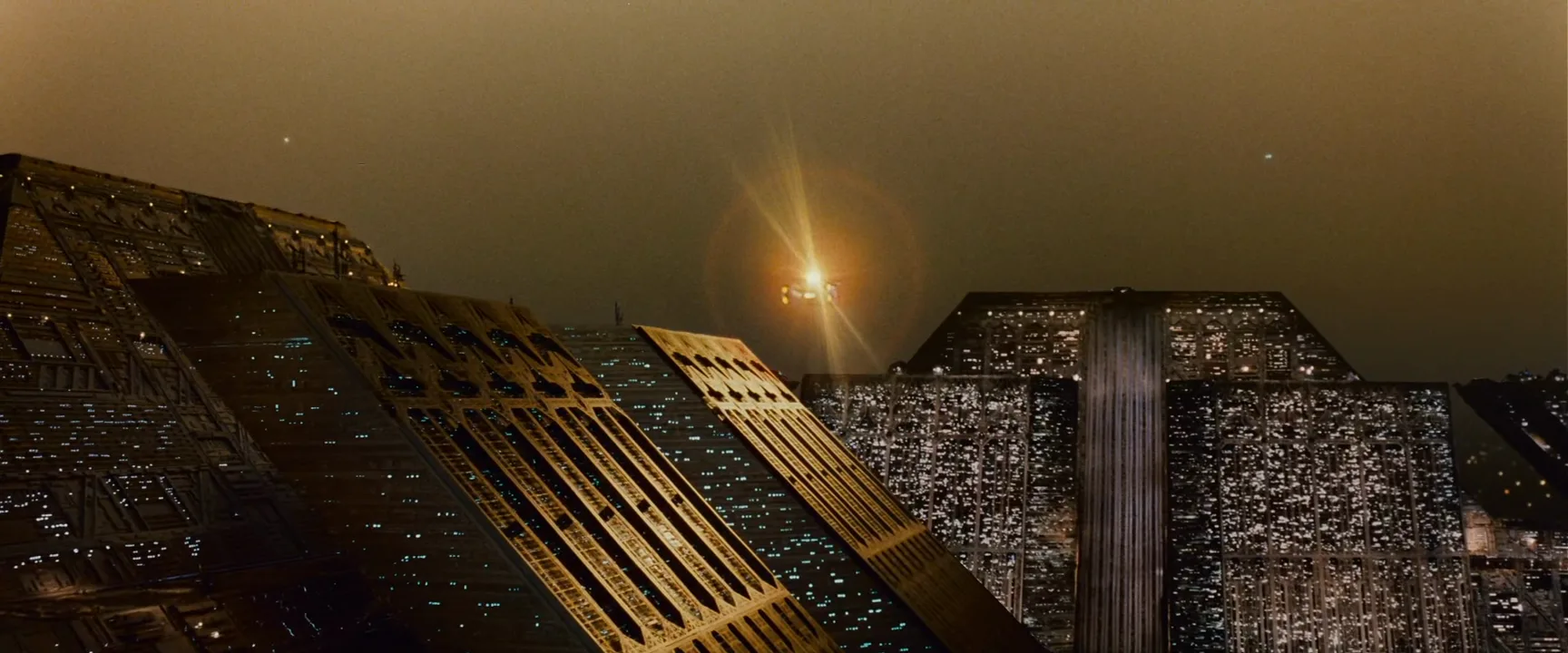
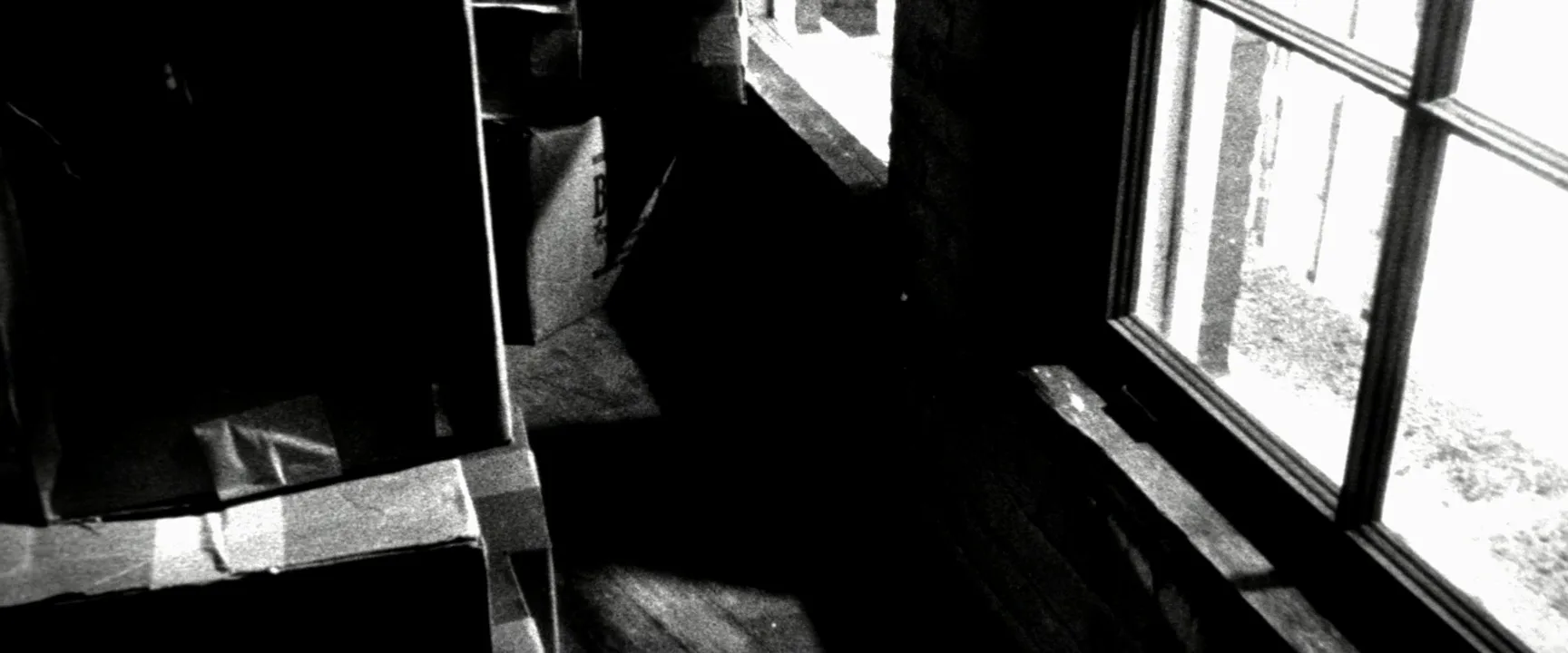
How to create a german expressionism with AI
4 promptsImage models know the phrase "German Expressionism", but on its own it tends to produce a woodcut or an oil painting rather than a film still, or a normal room shot at a slight tilt. The look comes from naming the parts: a painted, crooked set, one hard low source, a giant cast shadow, a stylized figure, and black-and-white silent-film texture. On a FlashBoards board you can pin the reference frames next to your takes, generate the start frame with Nano Banana 2 Lite, try a second variation with GPT Image 2.5, and animate the strongest frame with MiniMax H3 Max Turbo. The fourth prompt re-shoots a real film shot from a text description alone, and the original plays next to the result so you can compare.
1920s German Expressionist silent film still, black and white with a faint amber tint, soft film grain. A fictional gaunt lamplighter in his fifties with a shaved head, hollow cheeks, whitened face, heavily darkened eye sockets and long thin fingers, wearing a black ankle-length coat, walks with stiff angular steps down a narrow studio street. The street is built from painted canvas flats: houses lean inward at sharp angles, windows are skewed trapezoids, the rooftops are jagged, and white zigzag stripes of painted light cut across the dark floor. Wide shot, camera at hip height, horizon tilted about ten degrees. One hard light from low camera-left throws his long black shadow up the wall beside him, twice his height. Deep blacks, no fill, theatrical and uncanny.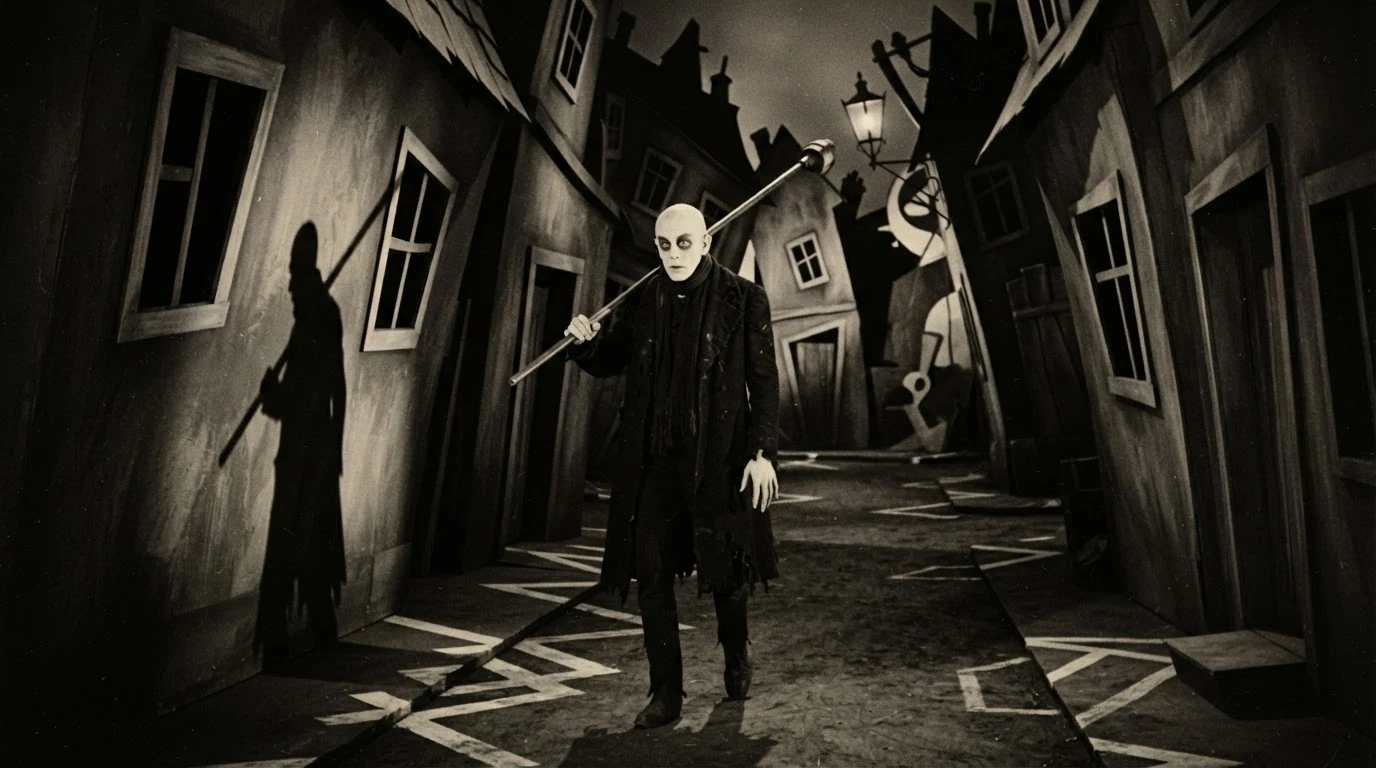
"Silent film still" plus "painted canvas flats" keeps the model in cinema instead of illustration, and listing the distortions (leaning houses, trapezoid windows, painted zigzag light) builds the set crooked rather than only tilting the camera. "Hard light from low camera-left" and "shadow twice his height" produce the signature cast shadow. The detailed, fictional face and makeup make the figure stylized without resembling any real actor.
Open FlashBoardsNeo-expressionist color film still, modern horror, inspired by Weimar cinema. A fictional night-shift nurse in her thirties with a sharp black bob haircut, a long narrow face and a pale green uniform climbs a steep, narrow hospital stairwell whose walls lean inward and whose steps narrow as they rise. Wide shot, 21mm lens, camera low at the bottom of the stairs looking up. A single bare bulb on the floor behind her casts an enormous sharp shadow of her figure and outstretched hand up the pale wall ahead of her, bigger than she is. Hard edges, deep blue-black shadows, sickly green highlights, strong diagonals, everything outside the light falls to black.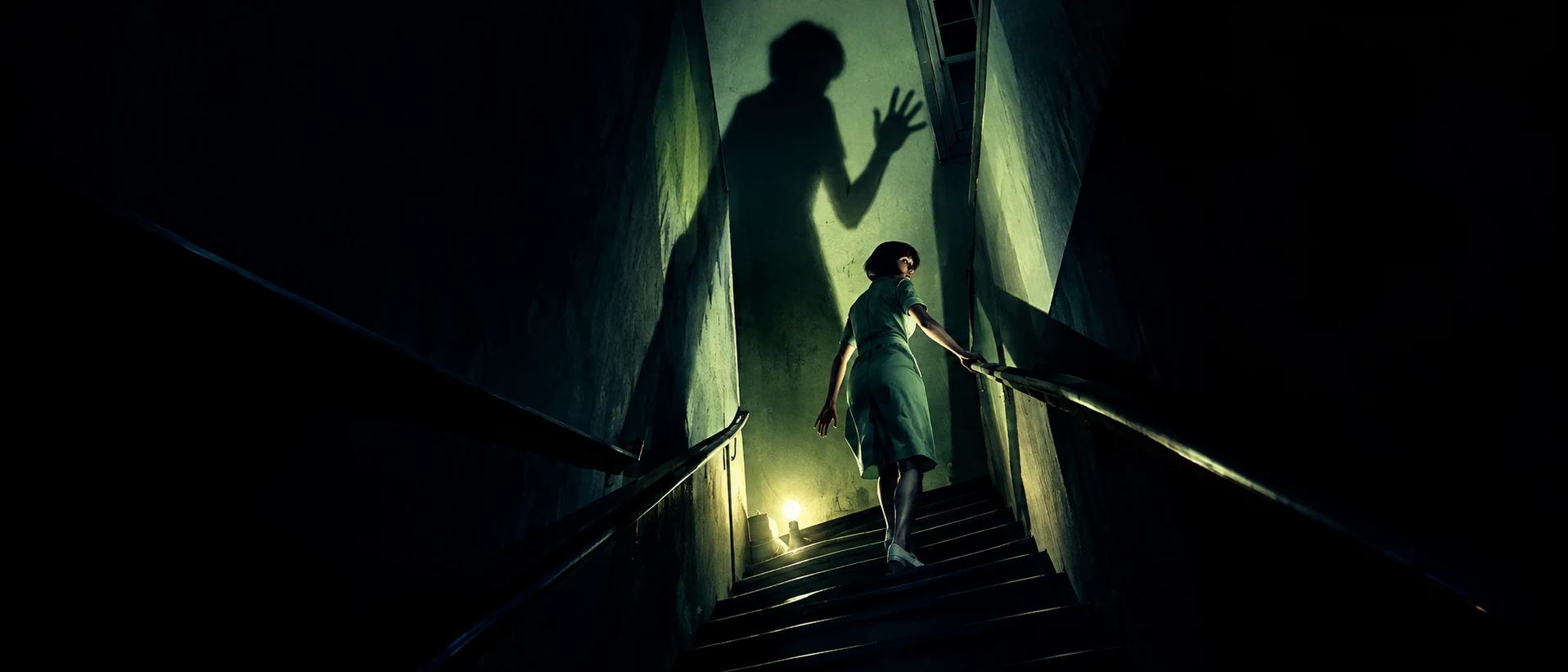
This take moves the style into color and a present-day setting, the way modern horror borrows it. "Walls lean inward" and "steps narrow as they rise" keep the architecture distorted, "21mm lens, camera low" stretches the stairwell, and "single bare bulb on the floor behind her" places the source low and behind so the shadow runs ahead of her. The 21:9 frame leaves room for the shadow to dominate.
Open FlashBoardsCamera: completely static, locked-off wide shot on a tripod, like a 1920s studio camera, for the whole shot. Action: The gaunt lamplighter is already walking down the crooked painted street in slow, stiff, angular steps, his long black shadow sliding up the leaning wall beside him. Halfway along he stops abruptly, lifts both hands to his chest with his long fingers spread, and his shadow freezes with him. He turns his head slowly toward the camera, eyes wide in the darkened sockets, and holds the pose as the film grain flickers.The walk starts in the first words ("is already walking"), so the shot is alive immediately instead of slowly pushing in on the still. A locked-off camera matches how Expressionist films staged action inside a static tableau. Everything named, the lamplighter, his shadow, the leaning wall, is already in the start frame, and the stiff, angular movement tells the model to avoid natural, modern motion.
Open FlashBoards{
"output": "Full-screen live-action single continuous shot from Wild at Heart (1990), alive from its very first frame, one unbroken take. Grainy 35mm in warm sepia monochrome: a bare pale plaster wall lit by one hard lamp placed low behind the camera, dense brown-black shadows, a thick black vertical door jamb filling the left third of the frame from top to bottom. The only figure is a woman's huge cast shadow on the plaster; she herself stands off-screen between the lamp and the wall.",
"characters": {
"S1": {
"role": "a woman seen only as her shadow on the wall",
"look": "slender silhouette, short tight slip dress ending high on the thighs, bare legs, high heels, shoulder-length hair; the shadow is dense black with slightly soft edges",
"voice": "silence: her shadow never speaks in this shot"
},
"S2": {
"name": "Mr. Reindeer, played by William Morgan Sheppard",
"look": "never seen; only his voice is heard, off-screen",
"voice": "older man, courtly Southern drawl, unhurried and calm"
},
"S3": {
"name": "Marietta, played by Diane Ladd",
"look": "never seen; only her voice is heard, off-screen",
"voice": "a woman's clipped Southern voice"
}
},
"shots": [
{
"shot": 1,
"camera": "one slow continuous tilt up along the wall for the whole shot, locked tripod at waist height, long lens, flat frontal view of the plaster; starts on the shadow's thighs and legs, ends on the shadow's head and shoulders",
"action": [
"BEGINNING: alive from the first frame, the shadow's thighs and legs stand on the pale wall just right of the black door jamb, the screen-left leg angled out diagonally, the screen-right leg straight; the screen-left arm hangs straight down along her side, its hand at hip height holding a hooked loop of telephone cord; the thin shadow of the coiled cord zigzags diagonally down the wall on screen-right.",
"THEN: the camera climbs over the hem of the slip and the hips; the screen-right arm appears bent at the elbow, the elbow jutting toward screen-right; the hanging hand stays still.",
"THEN: the legs drop out of the bottom edge; the slim waist and torso fill the wall, the long hanging arm runs down the screen-left edge of the shadow, and the hooked loop in its hand slides down and out of the bottom-left of the frame.",
"THEN: the shadow of the head and shoulders rises in from the top edge; the screen-right hand is raised to the side of the head, pressing a telephone receiver to the ear, the thin cord trailing from it toward screen-right.",
"END: the head, shoulder and raised receiver fill the upper frame as one giant black silhouette on the plaster; the shadow sways very slightly and holds the receiver still."
],
"dialogue": [
{
"speaker": "S2",
"on_screen": false,
"when": "from the first frame, while the camera is still on the legs",
"delivery": "calm, courtly, unhurried instruction",
"line": "<d>[English] In fact, send Reggie and Drop Shadow over, for the silver dollar and the papers.</d>"
},
{
"speaker": "S3",
"on_screen": false,
"when": "right after his line ends, while the camera passes the waist",
"delivery": "one sharp, clipped word",
"line": "<d>[English] Now.</d>"
}
]
}
],
"sound": {
"ambience": "quiet room tone, a faint hiss of a telephone line, the soft creak of a floorboard",
"speech": "exactly these spoken phrases, each said once, in this order",
"never_spoken": "no narration and no voice-over: the descriptions, performance notes and step words of this prompt are never spoken aloud",
"music": "a film score under the scene, always below the voices: a slow, smoky low saxophone over a dark droning bass",
"subtitles": "none"
}
}Remakes the slow tilt up a woman's cast shadow on a pale wall from Wild at Heart (1990), dir. David Lynch, DP Frederick Elmes; the prompt kept the off-screen body, the looped phone cord, the receiver at the ear, the upward tilt, the sepia two-tone light and the scene's off-screen lines.
The whole shot is a shadow, so the prompt keeps the woman off-screen between a low lamp and the wall and describes only what her shadow does, beat by beat: legs, hips, waist, then the head with the receiver at the ear. The slow tilt up comes from the original's camera move, the two off-screen lines are the film's own dialogue, and "sepia monochrome" plus the black door jamb keep the hard two-tone frame.
Open FlashBoardsCommon mistakes
- It becomes a painting or a woodcut. "German Expressionism" alone pulls toward Kirchner-style art. Add "silent film still", "studio set", "film grain", and describe camera height and lens.
- Only the camera tilts. Models often render a normal, realistic street at a Dutch angle. Name what is distorted in the set itself: leaning walls, trapezoid windows, painted light on the floor.
- Soft, modern lighting. Without instructions you get gentle fill and a flat face. State one hard source, its position (low, camera-left, behind), "no fill" and "deep blacks".
- The shadow doesn't match the figure. If the cast shadow comes out small or points the wrong way, place the source explicitly relative to the subject and the wall, and give the shadow a size ("twice his height").
- Recognizable faces. Naming classic films or characters can pull the output toward their famous actors. Describe an original, fictional face and makeup instead of referencing one.
- Video that moves too naturally. Image-to-video tends to add a smooth camera drift and realistic walking. Lock the camera in the prompt and ask for stiff, angular, deliberate movement with pauses and held poses.
Keep the reference frames, prompts and every generated take side by side — images and video in one canvas.
FAQ
6 questionsWhat is German Expressionism in film?
German Expressionism is a movement of German silent cinema from about 1919 to 1927 that distorted sets, light and performance to show inner states such as fear and madness. Its hallmarks are painted, crooked sets, hard light with deep shadows, oblique angles and stylized acting. The best-known examples are The Cabinet of Dr. Caligari, Nosferatu and Metropolis.
What are the main characteristics of German Expressionism?
The main traits are artificial, visibly distorted studio sets with leaning walls and jagged shapes; low-key, high-contrast lighting with long cast shadows; diagonal, unstable compositions; stylized, pantomimic acting with heavy makeup; and stories about madness, doubles, tyrants and monsters, often with frame stories or unreliable narrators. The key is that several traits work together to show a state of mind.
Why is it called Weimar cinema?
Weimar cinema refers to films made in Germany during the Weimar Republic, the period between the end of the First World War in 1918 and 1933. German Expressionism is its most famous current, but Weimar cinema also includes chamber dramas, street films, mountain films and early sound films such as Fritz Lang's M (1931).
How did German Expressionism influence Hollywood?
Many German directors, cinematographers and designers moved to Hollywood in the 1920s and 1930s, bringing hard-shadow lighting, stylized sets and oblique angles with them. Their influence shaped the Universal horror films of the 1930s and then film noir in the 1940s. Later filmmakers such as Tim Burton, Ridley Scott and David Lynch openly borrow its crooked sets, cast shadows and uncanny figures.
Is film noir the same as German Expressionism?
No. Film noir is an American crime cycle of the 1940s and 1950s with sound, realistic cities and naturalistic acting. It inherited Expressionism's hard shadows, low-key light and oblique angles, but applied them to real-looking streets. In Expressionism the set itself is distorted; in noir the world is realistic and the lighting and angles make it feel threatening.
How do I get a German Expressionist look with AI images?
Describe the parts instead of the label: a silent film still in black and white, a studio set of painted flats with leaning walls and skewed windows, one hard light placed low and to the side, a giant cast shadow on the wall, and a stylized fictional figure with pale makeup and dark eyes. Add camera height and lens so it reads as a film frame.
Related terms
5- Film NoirFilm Movements & Styles
Film noir is the cycle of 1940s–50s American crime films — named by French critics — defined by fatalistic plots, morally compromised heroes, femmes fatales and low-key black-and-white lighting full of hard shadows.
- ChiaroscuroLighting
Chiaroscuro, borrowed from Renaissance and Baroque painting, is dramatic modelling with strong light and deep shadow — usually one hard side or top source carving faces out of darkness — the backbone of German Expressionism and film noir.
- Production DesignProduction Design
Production design is the creation of the entire physical world of a film — locations, sets, props, colors and textures — led by the production designer together with the director and cinematographer.
- Dutch AngleCamera Angles
A Dutch angle tilts the camera sideways around the lens axis so the horizon and verticals run diagonally, making the world look off-balance — a classic signal of unease, madness, intoxication or danger.
- Silent FilmFilm History & Theory
Silent film is cinema without synchronized recorded dialogue, dominant until the late 1920s: stories were told through pantomime, intertitles, expressive lighting and live music in the theater.
Further reading
Lotte H. Eisner, The Haunted Screen (1952). Siegfried Kracauer, From Caligari to Hitler (1947). Thomas Elsaesser, Weimar Cinema and After (2000).