 FlashBoards Learn
- Learn
- Film Movements & Styles
- Postmodernism in Film
Film Movements & Styles · Film language
Postmodernism in Film
Also called: postmodern cinema, postmodernist film
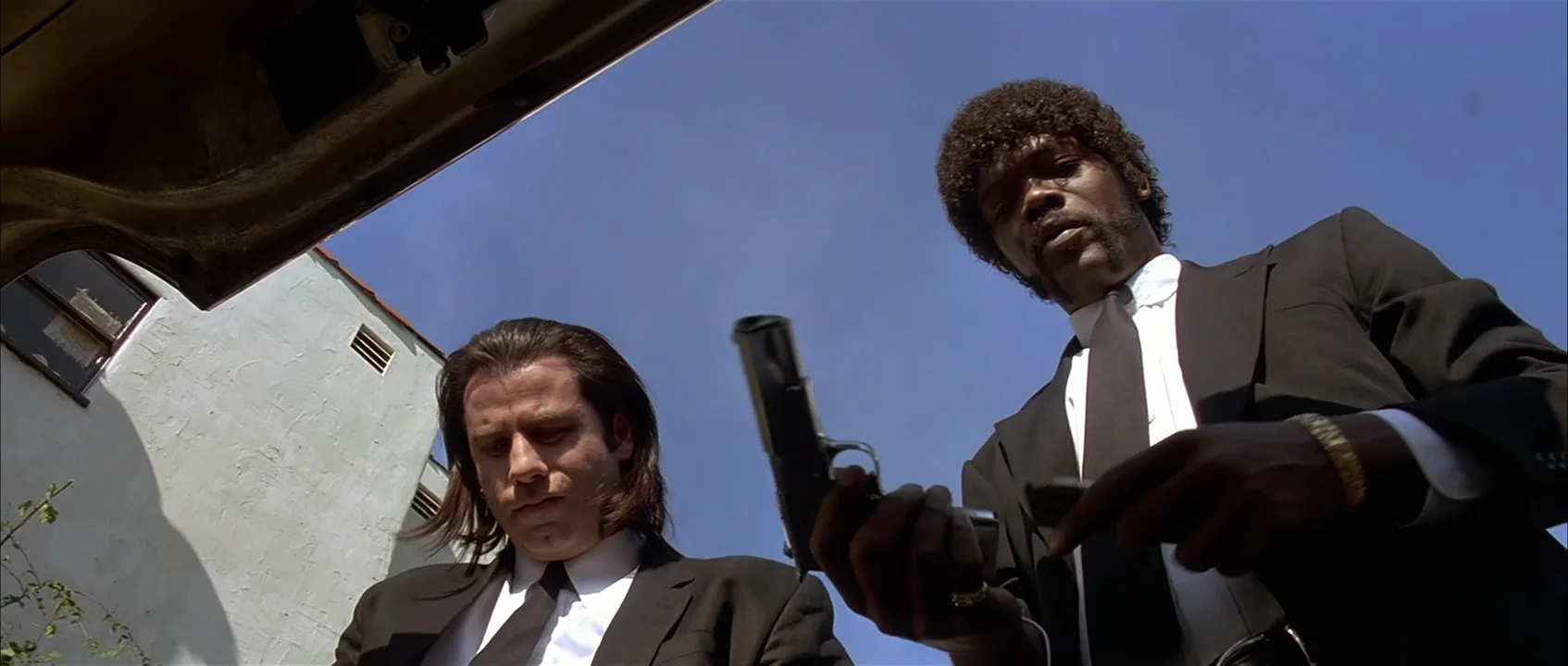
Postmodern film is cinema that knows it is cinema. It mixes genres, high art and pop trash, quotes and remixes older movies, scrambles chronology and lets the audience see the artifice. Pulp Fiction, Blade Runner and The Truman Show ask viewers to enjoy the story and the game of references at once.
- What it does
- Turns film history, genre rules and the fact of watching a movie into material for the story itself.
- Use it when
- Your idea is about media, memory, identity or genre, or your audience knows the references you want to play with.
- Watch out
- A pile of references is not a film. Every quote needs a job in the scene, or it reads as a trivia quiz.
- Try this prompt
Astronaut in a 1960s spacesuit eating pie at a chrome 1950s diner counter, painted Saturn backdrop, light stand visible at frame edge.
What is postmodernism in film?
Postmodernism is a loose label, not a school with a manifesto. In cinema it describes films, mostly from the late 1970s onward, that treat film and pop culture as a costume box: westerns, noir, kung fu, cartoons and commercials can share one frame.
The theory came from outside film. Fredric Jameson described pastiche, imitation without parody's mocking edge. Jean Baudrillard wrote about simulacra, copies with no original; The Matrix (1999) shows his book on Neo's shelf. It is a key entry among film movements and styles.
What are the key traits of postmodern film?
- Pastiche. Shots, lines, costumes and music are borrowed. Where a homage salutes one source, a postmodern film stacks dozens.
- Genre mixing. Detective noir in a sci-fi city: the hybrid genre becomes the default.
- High and low culture together. Philosophy next to diner chatter.
- Broken time. A nonlinear narrative of reshuffled chapters and erased memories, as in Eternal Sunshine of the Spotless Mind (2004).
- Self-reflexivity. Characters discuss genre rules, as in Scream (1996), or the film breaks the fourth wall.
- Hyperreality. Worlds that are sets or broadcasts, like the dome in The Truman Show (1998).
- Irony. Violence played as comedy.
Why do filmmakers use postmodern techniques?
Because audiences arrive fluent. A viewer recognizes a western standoff or a noir voiceover in two seconds, so filmmakers set up an expectation from one genre and pay it off with another.
The effect is double vision. In Pulp Fiction (1994) you care about Vincent and Jules while enjoying Tarantino's arrangement of crime-movie clichés, and because the chapters are out of order, a character who dies midway walks out alive at the end. Monty Python and the Holy Grail (1975) uses coconuts for hooves and ends with modern police shutting down the film. Austin Powers: International Man of Mystery (1997) turns 1960s spy films into parody.
How to shoot a postmodern film
Start with a reference board, then decide what each quote does.
- Pick two or three source genres and give each a visual code: western = wide lenses, 2.39:1, dust and high sun; noir = hard side light; 1950s diner = pastels and chrome.
- Collide them in one frame. Put a genre character in the wrong world, or light one actor as noir and the other in flat sitcom light.
- Show the artifice. Painted backdrops, a boom mic edge, rear projection, a chapter title card.
- Cut against time. Shoot chapters that can be reshuffled.
- Switch formats. Black-and-white, 16mm, VHS or an anime sequence (Kill Bill: Vol. 1, 2003) marks a change of source.
Postmodern vs. modernist film
Modernist cinema, from the French New Wave to Fellini's 8½ (1963), also breaks rules and exposes the camera, but in search of a deeper truth: the director's crisis, the texture of time.
Postmodern cinema drops the search for depth. It plays with surfaces. A quick test: if the self-awareness feels anxious and personal, it's modernist; if it feels playful and built from other movies, it's postmodern.
Postmodernism in Film examples in film
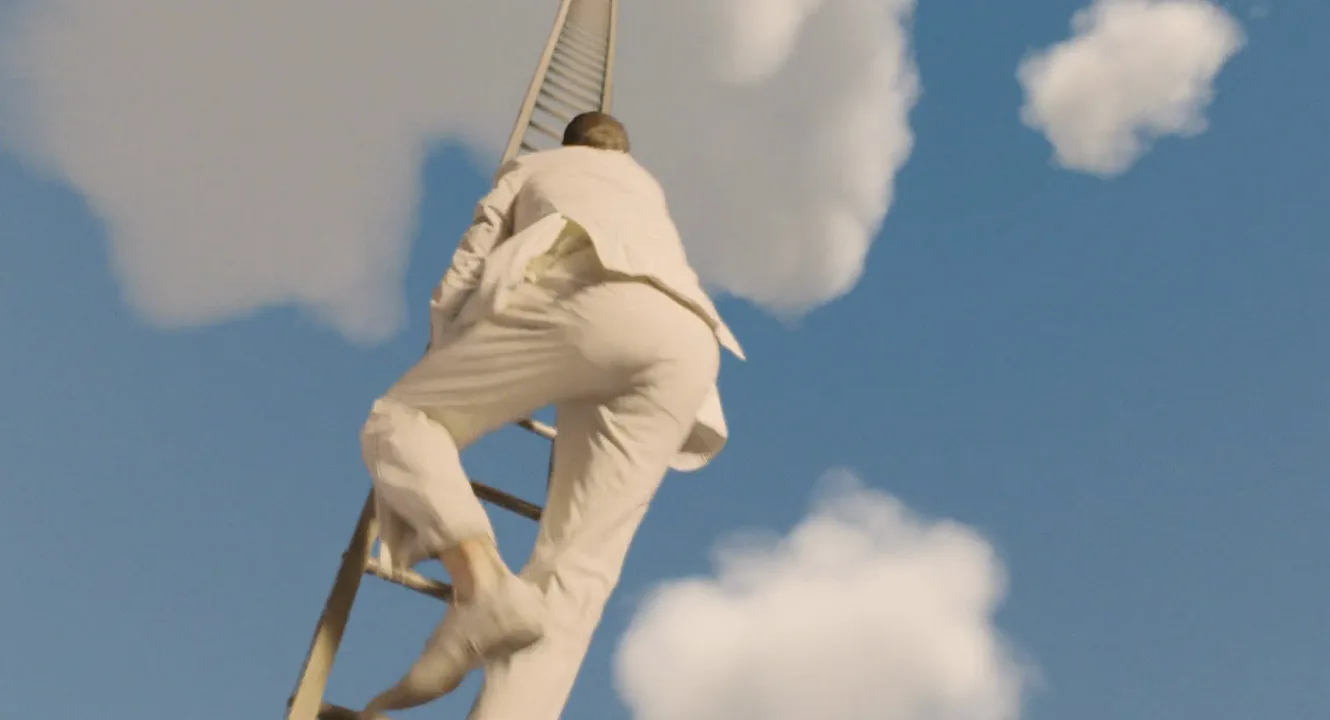
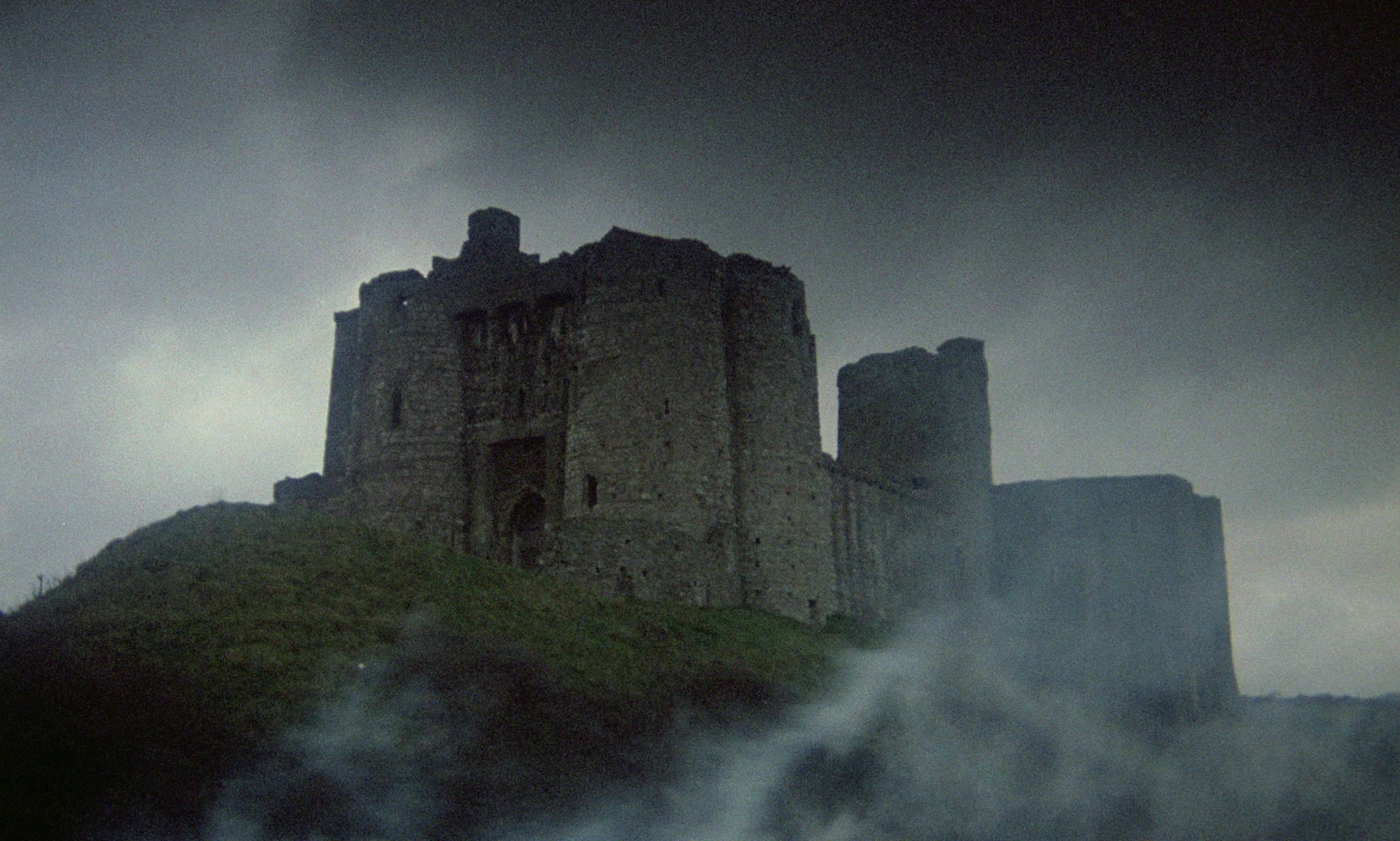
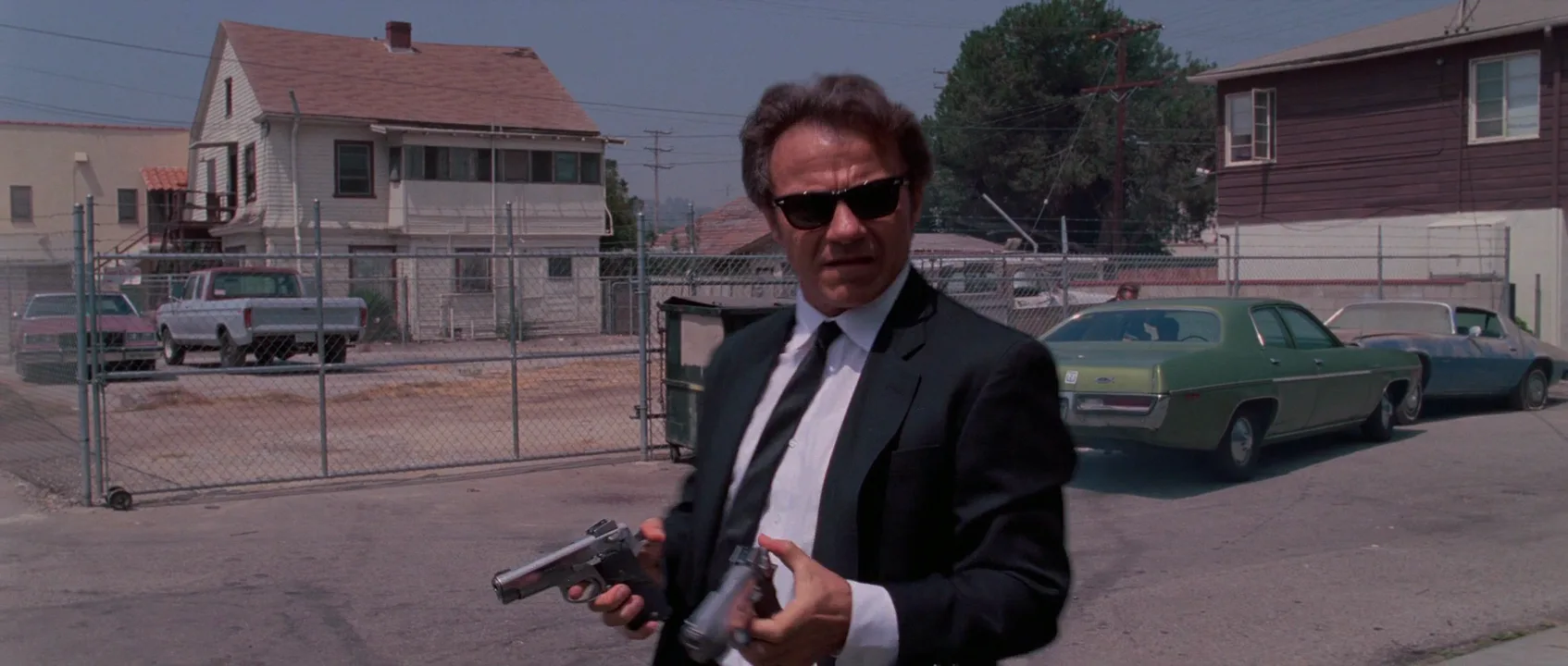
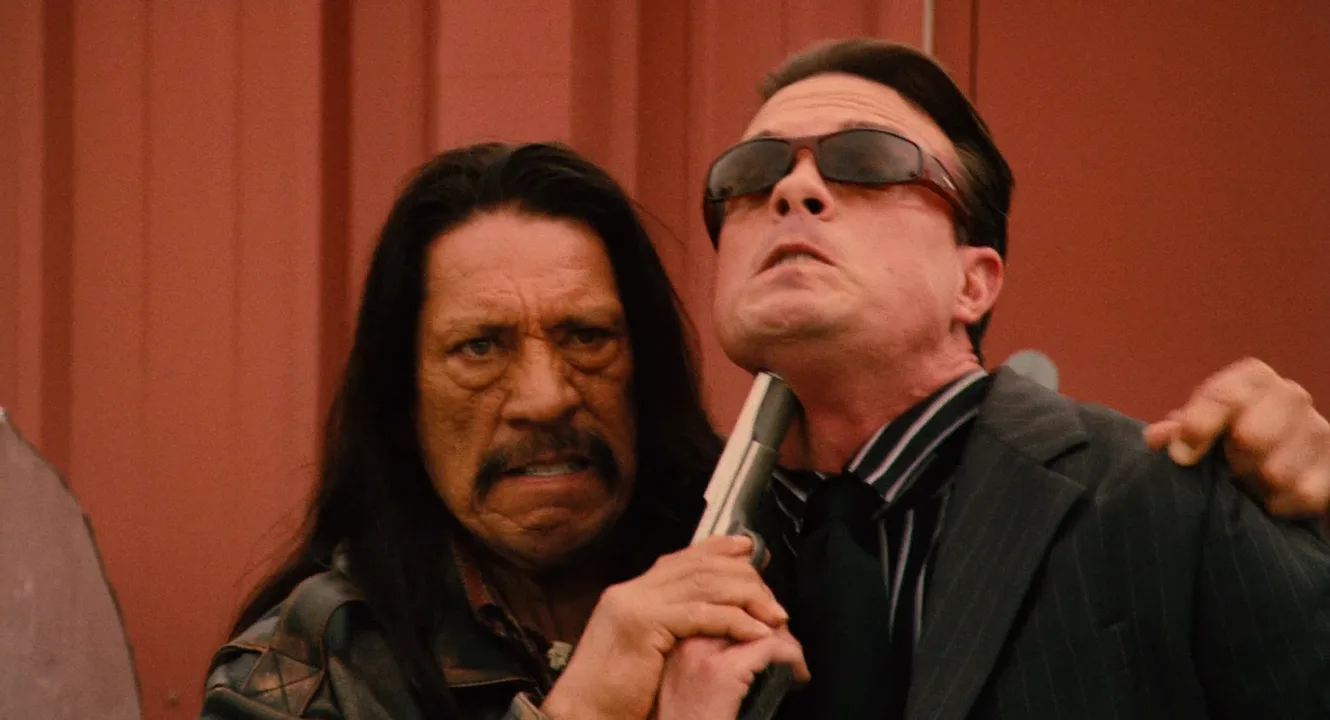
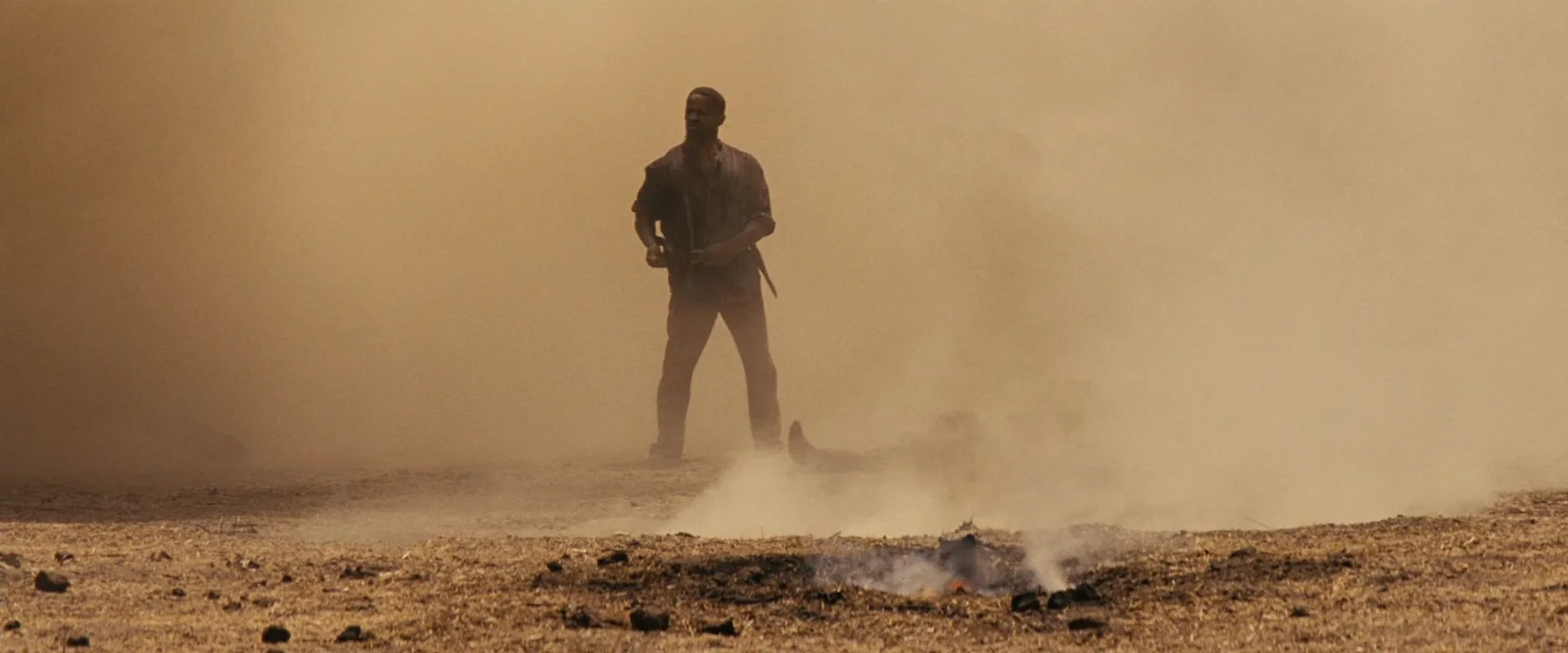
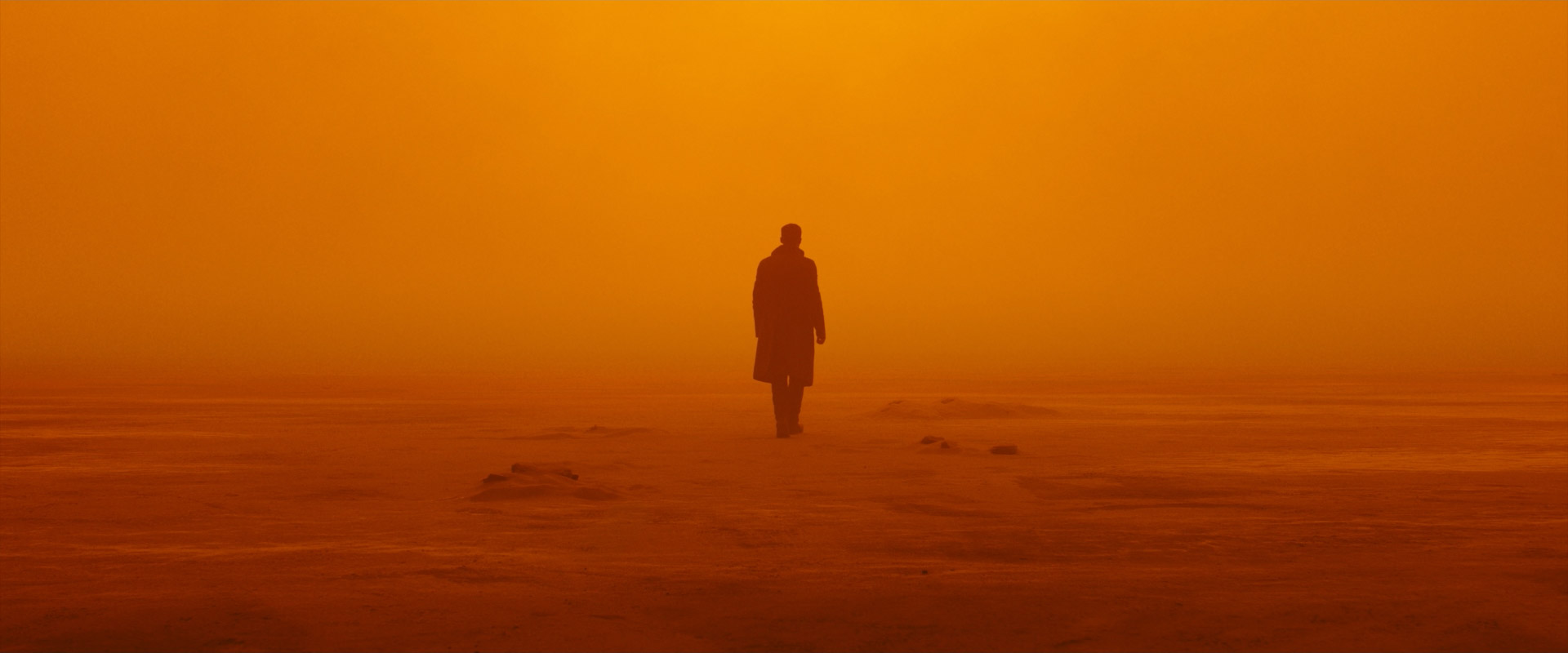
8 framesFrames where the image carries the game: borrowed iconography, staged skies and genre costumes.
How to create a postmodernism in film with AI
4 promptsImage models love clean, coherent worlds, so a postmodern shot is directed against that instinct: name each era or genre by concrete markers and name the visible artifice. Keep the reference board, takes and notes on one FlashBoards canvas to compare which quotes land. The fourth prompt re-shoots a real film shot from a text description alone, and the original plays next to the result so you can compare.
Wide shot, 35mm lens, eye level. A woman astronaut in her mid-thirties with cropped silver hair, freckles and a small scar through her left eyebrow, in a bulky white 1960s spacesuit, eats cherry pie at a chrome 1950s diner counter. Pink neon, checkerboard floor, red vinyl stools. Behind her the window is an obviously painted backdrop of Saturn with a visible seam. At the left frame edge a black light stand and a boom microphone dip into view. Saturated Technicolor palette, film grain.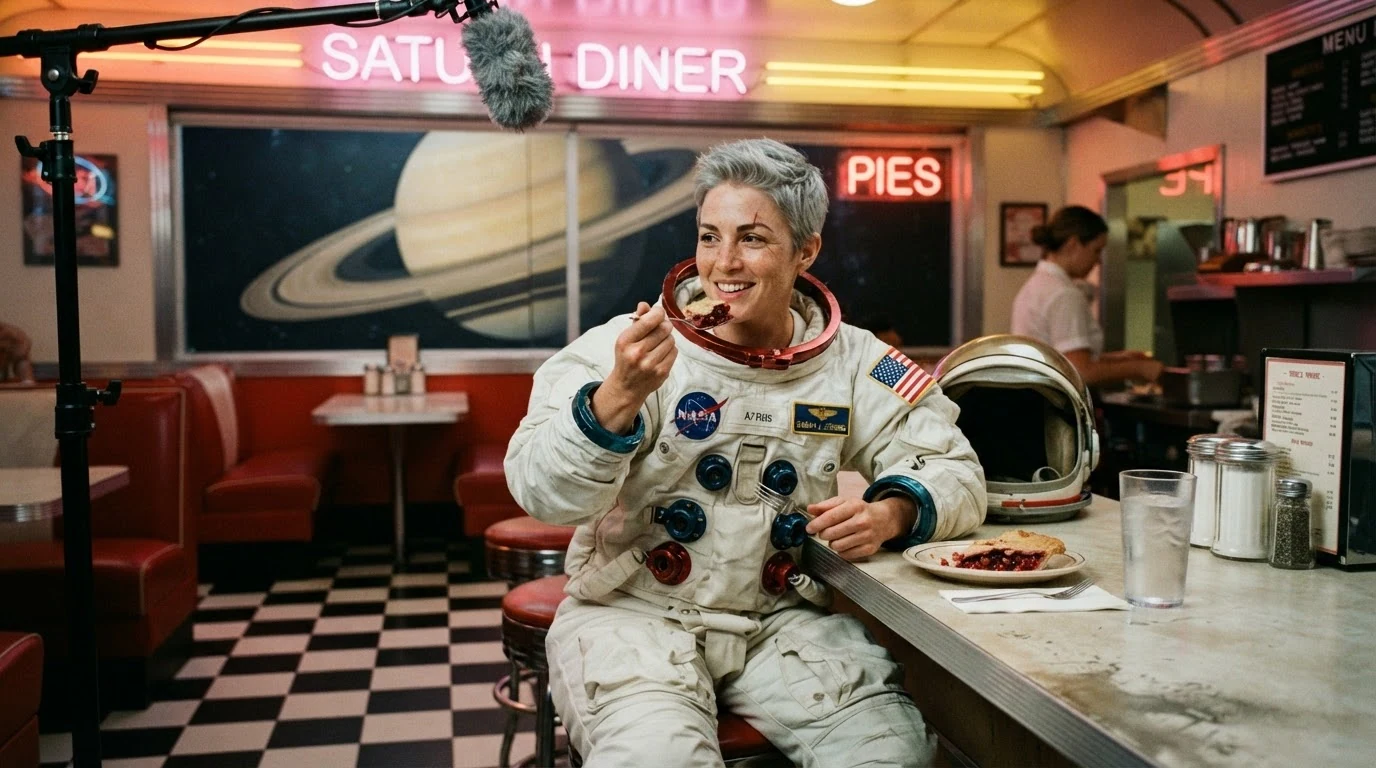
Two eras with specific markers force the genre collision. "Obviously painted backdrop", "visible seam" and the light stand put the artifice inside the frame, which makes it postmodern rather than just retro.
Open FlashBoardsAnamorphic western standoff on a rain-soaked neon street at night. Left: a gaunt gunslinger in his sixties with a braided white beard and a turquoise bolo tie, hand over his holster. Right: a young courier with a black bob haircut in a yellow rain poncho on roller skates, holding a paper bag of noodles like a weapon. Camera at hip height between them, wet asphalt reflecting magenta and cyan signs. White chapter title card in the lower third: "CHAPTER THREE: HIGH NOON AT MIDNIGHT".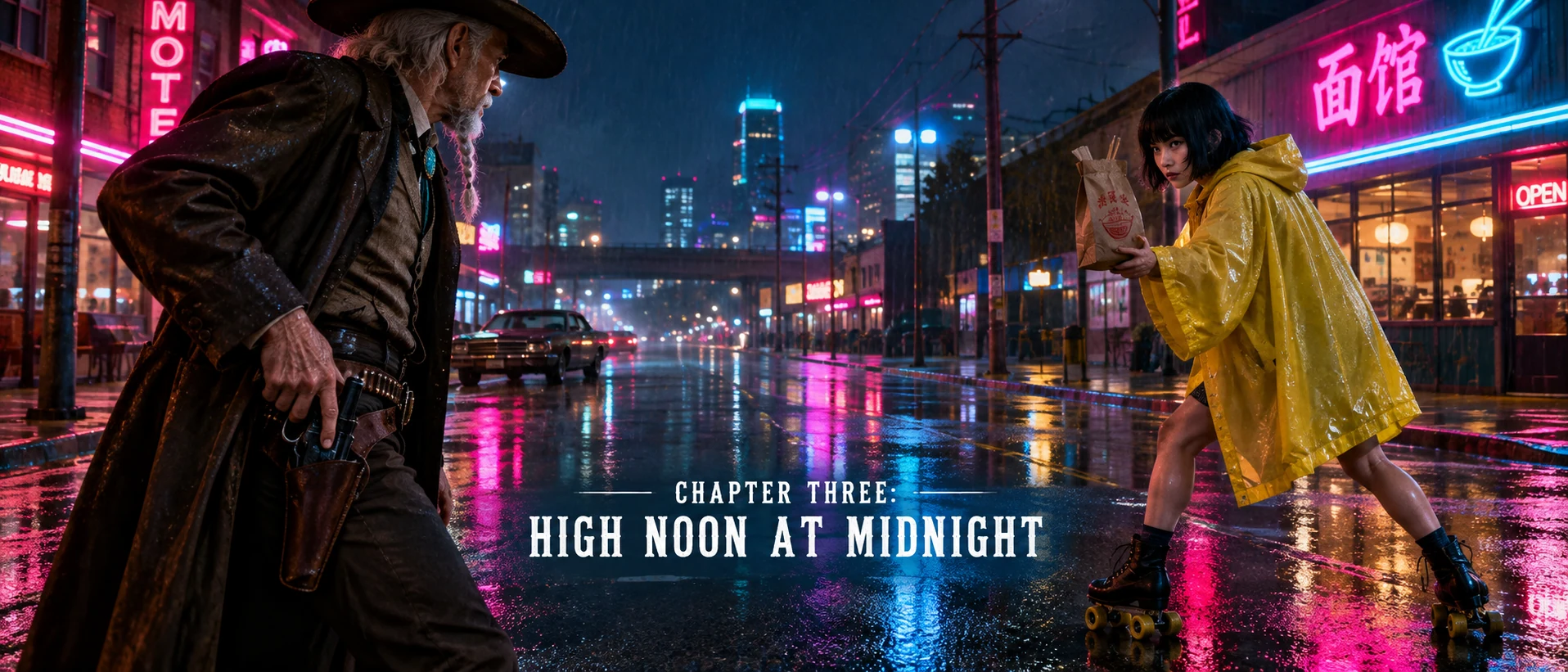
Western blocking and hip-height framing in a neon city mix genres instead of eras. The chapter card quotes the reshuffled structure; keep on-screen text under eight words.
Open FlashBoardsCamera: a slow, steady push-in starts immediately and ends on a medium shot of the astronaut. Action: She is already cutting another piece of pie. She turns her head, looks straight into the lens and raises her fork in a small dry salute. The pink neon flickers twice and the painted Saturn backdrop sways slightly as if bumped. She turns back to her pie.Motion starts from the first word so the shot doesn't freeze. The look into the lens adds the fourth-wall beat, and the swaying backdrop animates something already in frame instead of inventing new background.
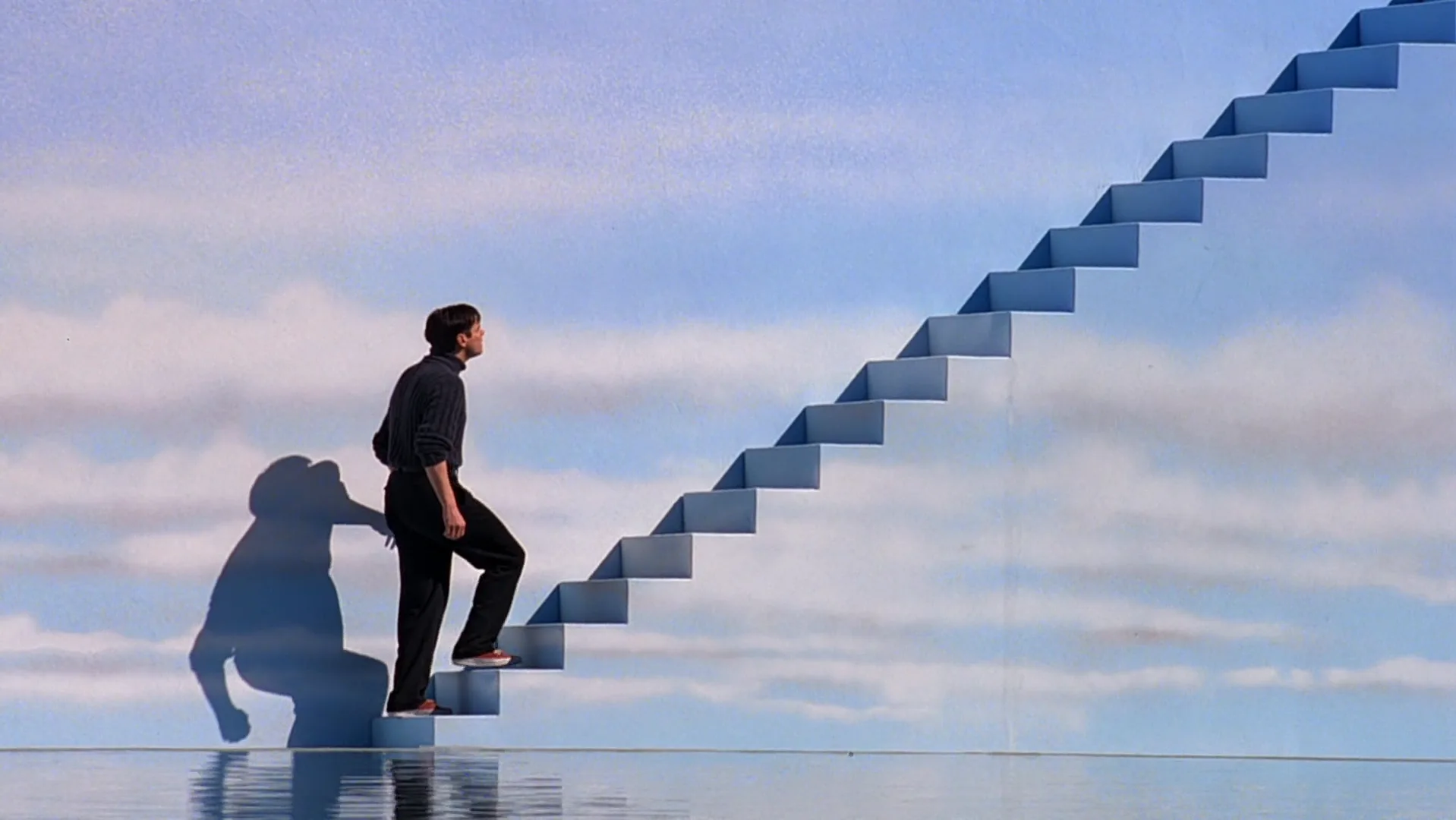
Open FlashBoards{
"output": "Full-screen live-action shot from The Truman Show (1998) from its very first frame: one continuous shot, no cuts. 1990s 35mm film, hard bright sunlight from the right of frame, a soft pastel palette of powder blue, white and pale pink, fine grain. The whole background is a vast flat studio wall painted as a sky: horizontal bands of soft white and pink clouds on pale blue, faint vertical seams between the painted panels, and every shadow lands on the painted clouds, so the sky reads as a wall.",
"characters": {
"S1": {
"name": "Truman Burbank, played by Jim Carrey",
"look": "slim man in his late thirties, short dark brown hair, a charcoal ribbed knit sweater, black trousers, dark sneakers with red soles; small in the frame, seen in full figure, in profile facing frame right",
"voice": "silent"
}
},
"shots": [
{
"shot": 1,
"camera": "wide full shot from slightly below his eye line, normal lens, S1 small in the left-centre of the frame with a lot of painted sky above him; a slow tilt up that follows him as he climbs, drifting slightly right, so he stays at the same place in the frame while the strip of water at the bottom edge slides down and out of the frame and the foot of the staircase moves to the lower left corner",
"action": [
"BEGINNING: alive from the first frame, S1 walks slowly to the right along a narrow ledge at the foot of the painted wall, just above a thin strip of calm water along the bottom of the frame that mirrors him; shoulders slumped, head bowed, eyes on the ground ahead, right hand hanging loose at his side. His huge dark shadow falls on the painted clouds behind him to the left. Just to his right a narrow staircase of plain sky-blue box steps, fixed flat against the wall, climbs diagonally from the bottom centre of the frame to the top right corner and out of frame.",
"THEN: he stops at the foot of the staircase, head still bowed, looking down at the first step; both hands stay still at his sides.",
"THEN: he steps up onto the first step, leans forward and climbs slowly, one step at a time, eyes still down on the steps.",
"THEN: after a few steps his head rises and he looks up the staircase toward the top right corner, chin lifted; he keeps the same slow, steady pace, and his shadow climbs the painted clouds beside him.",
"THEN: he raises his left arm, the wall-side arm, up above his head and lays his palm flat on the painted sky, fingers spread; his right arm hangs relaxed at his side.",
"END: he climbs on with his left palm sliding along the painted clouds, body turned slightly toward the wall so the camera sees more of his back, face tipped up toward the top of the stairs, a few steps up, still in the left-centre of the frame, the steps running on to the top right corner."
],
"voice": "silence: nobody speaks in this shot, no voice at all",
"dialogue": []
}
],
"sound": {
"ambience": "the soft lap of shallow water at the foot of the wall, the dull knock of his sneakers on each hollow step, his slow breathing",
"speech": "no words in this video; the only human sounds are breaths and movement",
"never_spoken": "no narration and no voice-over: the descriptions, performance notes and step words of this prompt are never spoken aloud",
"music": "a film score under the scene, always below the voices: a slow, hushed piano figure over softly rising strings, fragile and hopeful",
"subtitles": "none"
}
}Remakes the staircase shot from The Truman Show (1998), dir. Peter Weir: the prompt carries over the painted-sky wall with Truman's shadow on it, his slow climb under a tilt up, and the palm he lays flat on the painted clouds.
The shot is silent in the film, so the JSON names Truman Burbank, marks the shot as silence and keeps only a line of score. A vast flat studio wall painted as a sky and every shadow lands on the painted clouds carry the reveal: the model has to render the sky as a surface, the hyperreality the article describes. The slow tilt up comes from the original's camera label, and the palm laid on the painted clouds is the beat where Truman touches the edge of his world.
Open FlashBoardsCommon mistakes
- The model cleans up the artifice, blending a painted backdrop into real sky. Write "obviously painted", "visible seam" and place the light stand at a named frame edge.
- Eras average into bland retro. Give each source its own markers: suit, chrome, neon colors, film stock.
- Garbled title cards. Keep text short and quoted; use GPT Image 2.5 for text-heavy frames.
Keep the reference frames, prompts and every generated take side by side — images and video in one canvas.
FAQ
5 questionsWhat is postmodernism in film?
Postmodernism in film is a style, strongest from the late 1970s to the 2000s, that mixes genres and high and low culture, remixes other films, breaks linear time and plays openly with its own artifice, as in Pulp Fiction or The Truman Show.
What are some examples of postmodern movies?
Often cited examples: Blade Runner (1982), Pulp Fiction (1994), Scream (1996), The Truman Show (1998), Fight Club (1999), The Matrix (1999), Kill Bill: Vol. 1 (2003) and Eternal Sunshine of the Spotless Mind (2004). Monty Python and the Holy Grail (1975) is an early comic one.
Why is Pulp Fiction considered postmodern?
It reshuffles its chapters so a character who dies midway walks out alive at the end, builds its world from crime-movie and pop references, stages a dance contest in a restaurant themed on 1950s stars, and mixes brutal violence with casual comedy.
What is the difference between postmodern and modernist film?
Both break classical rules. Modernist films like 8½ do it to search for a personal, deeper truth. Postmodern films treat all styles as surfaces to recombine and favor irony and play. Anxious self-examination means modernism; a playful remix of other movies means postmodernism.
Is Blade Runner a postmodern film?
Yes. Blade Runner (1982) fuses detective noir with science fiction, fills its Los Angeles with signage and architecture from many eras and cultures, and centers on replicants, copies that seem more human than their makers. Critics treat its city as a model of postmodern space.
Related terms
4- HomageStorytelling
A homage openly recreates a shot, scene, line or style from another film as a sign of respect, trusting the audience to recognize the source.
- Nonlinear NarrativeStorytelling
A nonlinear narrative tells events out of chronological order — through flashbacks, parallel timelines or reshuffled chapters — so meaning comes from how the pieces are arranged.
- Hybrid GenreGenres
A hybrid genre film fuses the conventions of two or more genres — sci-fi horror, western musical, romantic comedy-thriller — so that each genre's expectations reshape the other's.
- Breaking the Fourth WallStorytelling
The fourth wall is the invisible barrier between the story and the audience; a character breaks it by looking into the lens and speaking to the viewer, or by acknowledging that they're in a film.
Further reading
Fredric Jameson, Postmodernism, or, the Cultural Logic of Late Capitalism (1991). Jean Baudrillard, Simulacra and Simulation (1981). Linda Hutcheon, A Poetics of Postmodernism (1988).