 FlashBoards Learn
Genres · Film language
Magical Realism
Also called: magic realism, magical realist film
Magical realism is a film genre that places one impossible event inside an ordinary, believable world and treats it as a plain fact. Nobody in the story is amazed: a grieving cook's tears pass into a wedding cake, a man ages backward. The viewer accepts the miracle because the world around it is so concrete.
- What it does
- Makes the impossible feel like a documented fact of daily life, so it carries emotional or social meaning instead of spectacle.
- Use it when
- A feeling, memory or history is too big for realism, but you want the story grounded in real places and real people.
- Watch out
- The moment the camera, score or actors react with wonder, it turns into fantasy; keep the miracle in the same visual register as the breakfast scene.
- Try this prompt
Wide eye-level shot of a small-town rooftop at noon, white bedsheets floating two meters above the laundry line, an older woman calmly pegging a pillowcase, natural daylight, 35mm film grain
What is magical realism in film?
Magical realism (also magic realism) is a rule of tone more than a set of props: the world is realistic, one thing in it is not, and nobody treats that thing as strange.
The German critic Franz Roh coined Magischer Realismus in 1925 for painting; the idea became famous through Latin American fiction, above all Gabriel García Márquez's One Hundred Years of Solitude (1967). Like Water for Chocolate (1992) is the textbook film: the heroine's emotions pass into her cooking, and her wedding cake leaves the guests weeping.
Among film genres it sits between realism and fantasy: realism's texture, plus one unexplained impossibility that works as a metaphor.
Why do filmmakers use magical realism?
Some truths are easier to show than to state. The impossible element usually stands for something real, which makes the genre a looser, warmer cousin of allegory.
- To externalize emotion. In Amélie (2001) the heroine literally dissolves into a splash of water when the man she likes walks away.
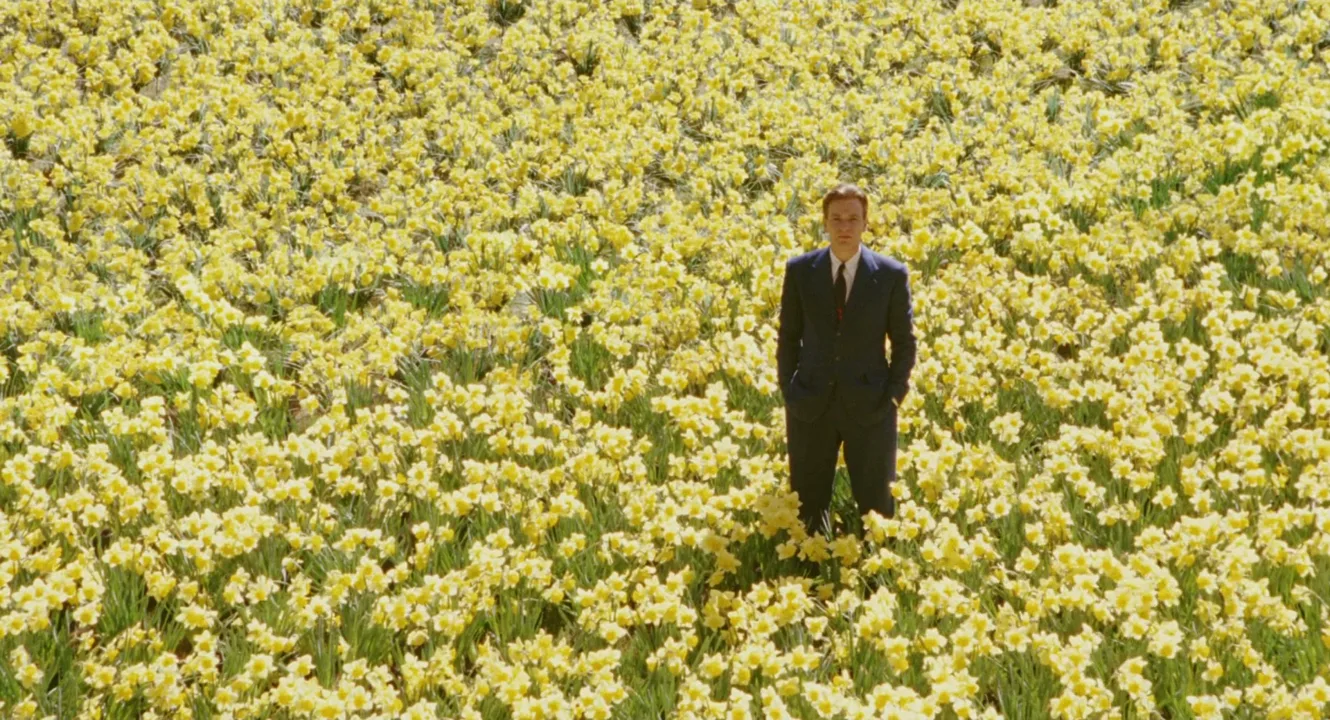
- To tell memory as it feels. Big Fish (2003) shoots a father's tall tales as saturated, sunlit memories against a cooler present and never says which parts were lies.
- To make one premise carry a life. The Curious Case of Benjamin Button (2008) asks one impossible question, a man aging in reverse, and answers it with ordinary scenes of love and loss.
- To let the dead share a room. In Uncle Boonmee Who Can Recall His Past Lives (2010) a ghost appears at dinner and the family keeps talking with her.
Because the film isn't surprised, the audience asks what it means, not how.
How to shoot magical realism
The craft is restraint: shoot the miracle with the grammar of the most boring scene in the film.
- Normal lens, normal height. 32–50mm at eye level, on sticks or a slow dolly. Ultra-wides and hard low angles announce spectacle; a normal perspective says this happened.
- Wide, with mundane detail. Let the impossible thing share the frame with a laundry basket or a tin bucket. Ordinary props sell it.
- Deadpan reactions. Characters respond as they would to rain: a practical adjustment, no gasp. Direct it as deadpan.
- Same light as the rest of the day. No sudden glow or colored rim; keep the motivated sun or window direction of the surrounding scene.
- In-camera when possible. Rigs, wires and practical effects share the real light of the set.
- No cue. Keep room tone running, skip the magic whoosh, and hold the grade constant across the miracle.
Magical realism vs. surrealism and fantasy
Surrealism breaks the whole world: dream logic, irrational cuts, images from the unconscious. Magical realism needs a stable reality; one rule bends, everything else stays put, and cause and effect continue.
Fantasy builds a separate world with its own system of spells and creatures, and usually explains it. Magical realism never explains.
A quick test: if the characters would call a doctor, a priest or the police, it's fantasy or horror. If they set out a bucket and carry on, it's magical realism.
Magical Realism in motion
2 clipsThese loops show magical realism in motion, where a still frame can't: watch how the effect plays out over a few seconds.


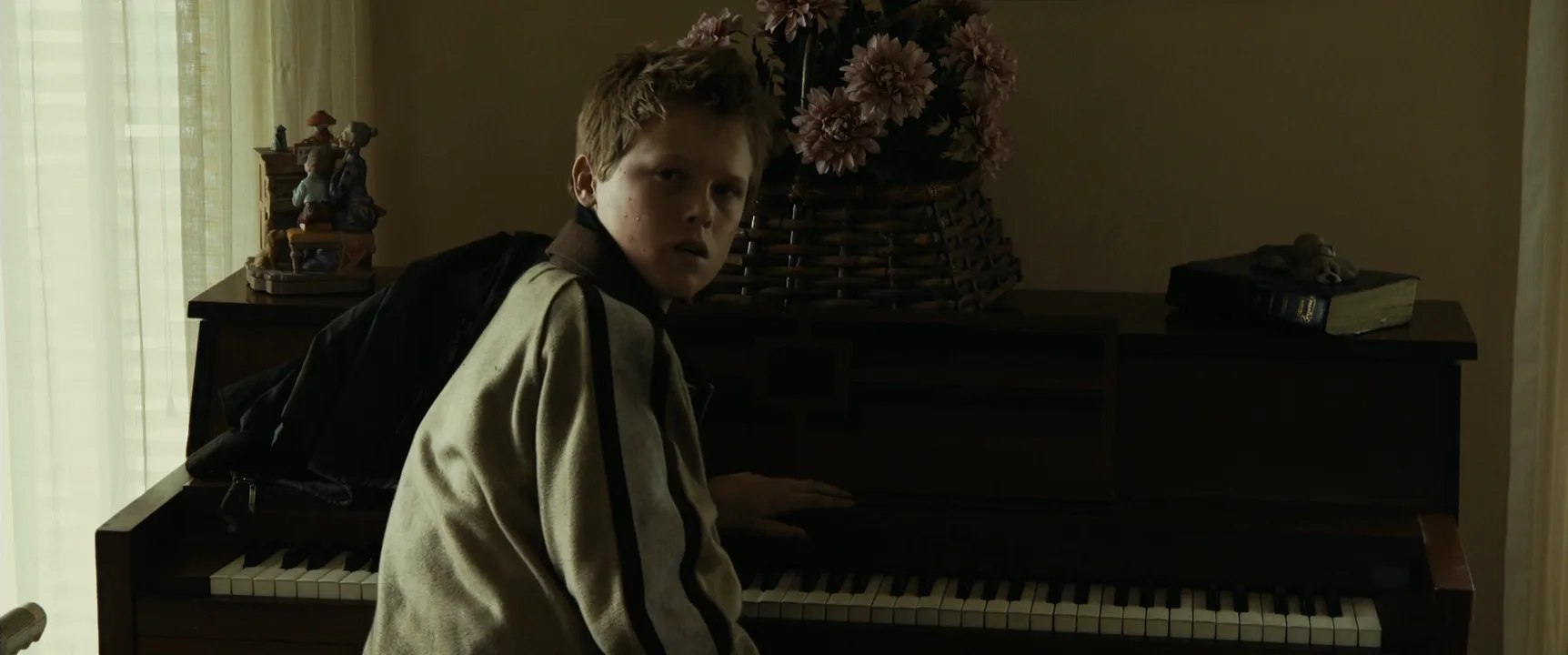
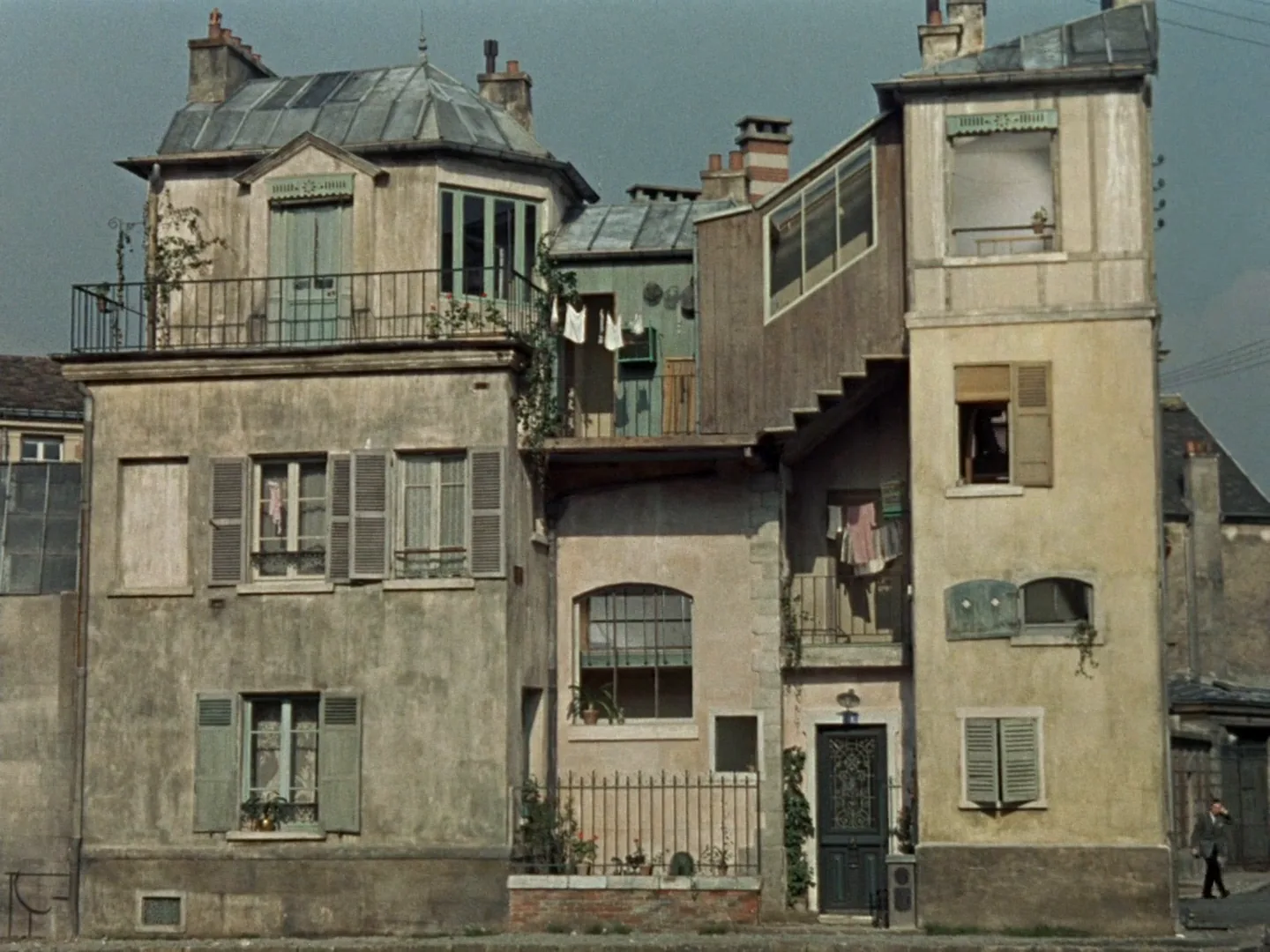
Magical Realism stills
4 framesOne impossible element inside a plain, ordinary frame; the last two frames show what the genre is not.
How to create a magical realism with AI
4 promptsImage models make magic look magical: glow, haze, sparkles. For magical realism, prompt like a documentary photographer and give the impossible thing weight, shadow and position. Keep the takes on one FlashBoards board next to your ordinary scenes to check they match. The fourth prompt re-shoots a real film shot from a text description alone, and the original plays next to the result so you can compare.
Wide eye-level shot, 35mm lens, flat rooftop of a whitewashed two-story house in a dusty small town at noon. A woman in her sixties with a short gray bob, freckled forearms and a faded blue housedress pegs a pillowcase to a laundry line, a woven basket at her feet. Three white bedsheets float motionless in midair two meters above the roof, attached to nothing, no line or pegs, casting soft shadows on the concrete. She does not look up. Plain natural daylight, muted warm colors, 35mm film grain, documentary realism.
Wide eye-level, 35mm keeps an unimpressed perspective. Casting soft shadows gives the sheets physics, she does not look up is the genre in four words, and documentary realism overrides the default fantasy glow.
Open FlashBoards21:9 interior of a small-town barbershop at dusk, 40mm lens at eye level. A heavyset bald barber with a gray horseshoe mustache and white tunic shaves a customer who reads a newspaper. A small gray rain cloud under the ceiling rains steadily into a dented tin bucket placed on the checkered floor. Tungsten practical lamps, a cracked mirror, a wall calendar, both men calm and absorbed in routine.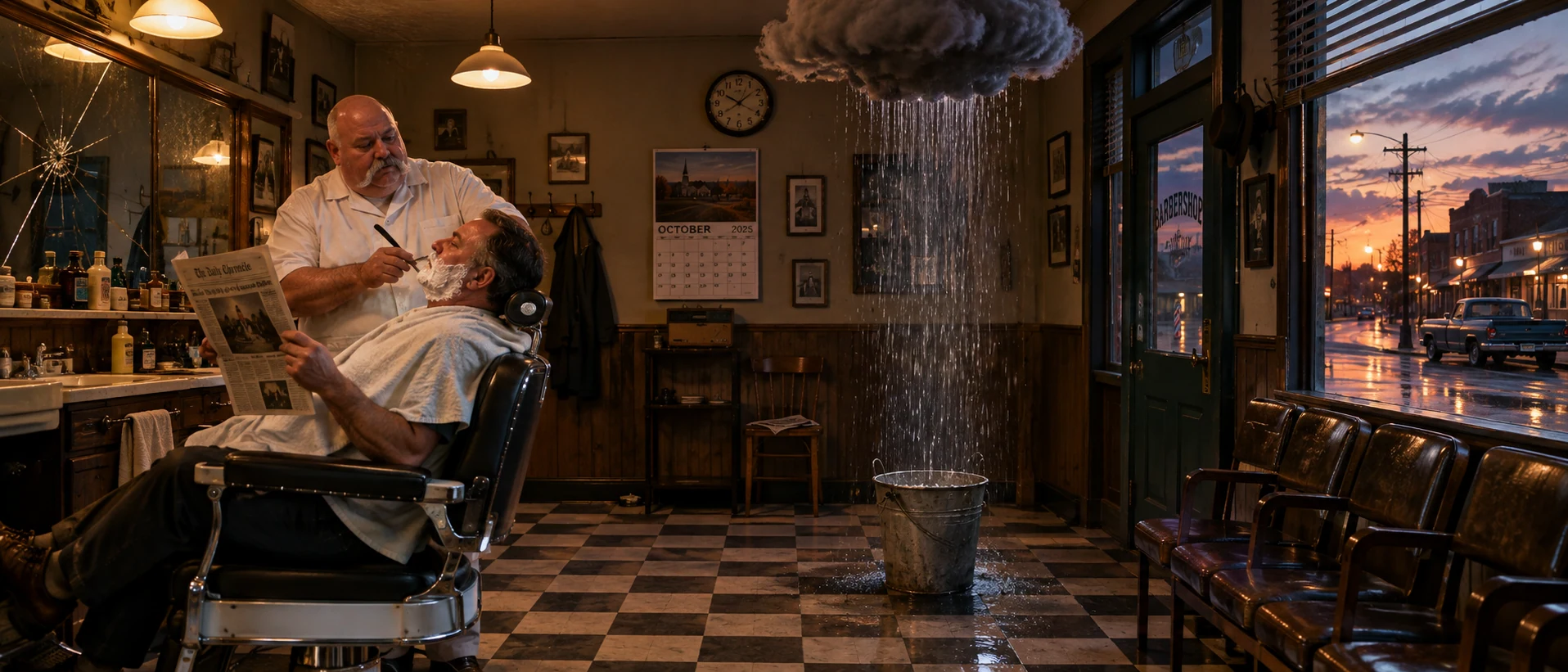
The tin bucket placed on the floor proves the characters have already accommodated the magic. Everyday props and tungsten practical lamps anchor the room, and calm and absorbed in routine prevents surprised faces.
Open FlashBoardsCamera: slow lateral dolly left at walking pace, from wide on the rooftop to the woman framed center-right. Action: From the first frame the three floating bedsheets ripple in the breeze and drift slowly upward, their shadows sliding across the concrete. The woman pegs the pillowcase and smooths it with both hands. She picks up the woven basket at her feet and walks calmly out of frame right, never glancing at the sheets, which keep rising into the bright sky.The sheets move immediately, so the shot is alive instead of slowly pushing in on a still. The action uses only objects already in recipe 1's frame, and never glancing at the sheets carries the deadpan into motion.
Open FlashBoards{
"output": "Full-screen live-action single continuous shot from its very first frame, a remake of the daffodil-field shot from Big Fish (2003). Early-2000s 35mm color film stock with fine grain, hard bright spring sunshine from high behind the man on the right, pale lemon-yellow and fresh green palette, a gently sloping field where thousands of pale yellow daffodils grow packed shoulder to shoulder in one solid carpet that fills the whole frame edge to edge, only blossoms in view, plain documentary realism.",
"characters": {
"S1": {
"name": "Young Edward Bloom, played by Ewan McGregor",
"look": "slim clean-shaven man around thirty, short neat brown hair, dark navy single-breasted suit, white shirt, dark narrow tie",
"voice": "silence: he does not speak"
}
},
"shots": [
{
"shot": 1,
"camera": "static locked-off camera high above the field, tilted steeply down, normal lens, wide framing; S1 small and full-figure in the right-centre of the frame, a little right of centre, his head in the upper third, daffodils crowding him on every side up to his shins; the framing never changes",
"action": [
"BEGINNING: alive from the first frame, S1 already stands upright and square to the camera in the daffodils, both hands pushed into his trouser pockets, elbows slightly out, head tilted back, eyes looking straight up into the lens, mouth closed, face calm and serious; a short dark noon shadow falls from his feet toward the lower left of the frame.",
"THEN: a faint breeze makes the nearest blossoms around his legs nod; S1 stays completely still, hands still in his pockets, gaze still fixed up at the lens, face still serious, head still.",
"END: S1 is exactly as at the start, standing motionless and looking up into the lens, the sea of daffodils filling the frame around him."
],
"voice": "silence: nobody speaks in this shot, no voice at all",
"dialogue": []
}
],
"sound": {
"ambience": "a soft breeze through thousands of flower stalks, faint birdsong far away",
"speech": "no words in this video; the only human sounds are breaths and movement",
"never_spoken": "no narration and no voice-over: the descriptions, performance notes and step words of this prompt are never spoken aloud",
"music": "a film score under the scene, always below the voices: a tender, rising orchestral waltz with warm strings and a light celesta",
"subtitles": "none"
}
}Remakes the high-angle daffodil-field shot from Big Fish (2003), keeping the static camera, Ewan McGregor's Edward standing right of centre with hands in pockets looking up, the flat sunlight and a silent, score-only soundtrack.
The static high angle and hard noon sunshine copy the original's plain, factual look, so the flowers read as a place, not a vision. Packed shoulder to shoulder makes the field impossible, and Edward's serious, unmoving gaze treats it as ordinary.
Open FlashBoardsCommon mistakes
- Magic glow. Models add sparkles and light rays to anything impossible. Give the object ordinary light (casting soft shadows) and name the look: documentary realism.
- Amazed faces. State what people are doing instead: calmly pegging laundry, reading a newspaper.
- Fairy-tale set. Add wear and clutter: dust, cracked plaster, a plastic bucket.
- Dramatic angle. Write eye level, 35mm explicitly, or the model stages a spectacle.
Keep the reference frames, prompts and every generated take side by side — images and video in one canvas.
FAQ
4 questionsWhat is magical realism in film?
Magical realism is a genre in which a realistic, everyday world contains one impossible element that the characters accept without surprise. The magic is never explained; it usually stands for an emotion, a memory or a piece of history. Classic examples are Like Water for Chocolate (1992), Big Fish (2003) and Amélie (2001).
What are some good magical realism movies?
Start with Like Water for Chocolate (1992), where a cook's emotions pass into her food; Wings of Desire (1987), where angels quietly listen to people in Berlin; Big Fish (2003); Amélie (2001); The Curious Case of Benjamin Button (2008); and Uncle Boonmee Who Can Recall His Past Lives (2010). Each keeps a grounded world around a single miracle.
What is the difference between magical realism and fantasy?
Fantasy builds a separate world with its own magic system and creatures, and characters know the magic is special. Magical realism stays in our world, with real places, jobs and politics; the one impossible thing is treated as ordinary and never explained. If the story needs a map with dragons on it, it is fantasy.
Is magic realism the same as magical realism?
Yes, the two terms are used interchangeably. Magic realism traces back to Franz Roh's 1925 term for a style of painting; magical realism became common through writing about Latin American novelists such as Gabriel García Márquez. In film criticism both mean a realistic story with a matter-of-fact supernatural element.
Related terms
5- Surrealism in FilmFilm Movements & Styles
Surrealism in film, born in 1920s Paris (Un Chien Andalou by Buñuel and Dalí), follows dream logic and the unconscious: irrational juxtapositions, impossible images and shocking cuts — a line that runs through Buñuel to David Lynch.
- RealismFilm Movements & Styles
Realism in film is the broad tradition — theorized by André Bazin — of showing the world as it is: long takes, deep focus, real places and restrained style that let reality speak rather than montage or spectacle.
- AllegoryStorytelling
An allegory is a story whose characters and events stand, as a whole, for something else — a political system, a moral idea, a historical moment — so the literal plot carries a second meaning throughout.
- DreamcoreFilm Movements & Styles
Dreamcore is an internet-born surreal aesthetic that imitates the feel of dreams: pastel skies, empty playgrounds and hallways, soft glow, eyes and clouds in odd places — nostalgic and slightly unsettling.
- Film GenresGenres
A film genre is a category of films that share recognizable conventions of story, setting, character and style — western, horror, musical, noir — letting audiences know what to expect and filmmakers play with it.
Further reading
Franz Roh, Nach-Expressionismus, Magischer Realismus (1925). Gabriel García Márquez, One Hundred Years of Solitude (1967). Wendy B. Faris, Ordinary Enchantments (2004).